COVID-19: A World Without Sport Podcast


Transcript

VINCE LARA: Hi, and welcome to another edition of A Few Minutes With, the podcast that showcases Illinois’s College of Applied Health Sciences. I’m Vince Lara. And today I’m speaking with Mike Raycraft and Jon Welty Peachey, professors in the Department of Recreation, Sport, and Tourism, to talk about the impact of a world without sport during the coronavirus outbreak.

All right. Jon Welty Peachey and Mike Raycraft are with me from Recreation, Sport, and Tourism. And we’re talking about the state of affairs due to the coronavirus, novel coronavirus, and how it’s impacting our world in terms of, this is the first time all three of us have been through work stoppages in all the sports. But this is the first time on a global scale where we’ve had no sports activity.

And I’m wondering, Jon, I’ll start with you on this, because you’ve worked on sport development and how it impacts countries. For you, can you tell us what kind of impact a world without sport has on– let’s even start with a really low, ground-level community, and then a city-state, and even a country.

JON WELTY PEACHEY: Sure. And besides the economic impact, which is certainly huge, one of the things that’s happened is, I like to think of it as we– in communities, we have what’s called a “third space.” We have home, we have work. And those are places that we spend a lot of time.

But we also need what are called “third spaces” or “third places.” And these are venues, places we go where we experience community, where we are social with others, where we bond, where we relax social norms in some ways, make connections. And we’re in an age right now where we don’t have these third places.

And sport provides those third places in many respects– when you think of the venues, the arenas, the stadiums, going to the local pub to watch the game, gathering at somebody’s house to watch the game. So right now we’re socially distancing. And we’re taking away these third spaces, these places, which I think is going to have some profound impact in terms of how people at the local level can experience community. Maybe some creative ways will emerge to do that.

I think there’s going to be impact broader, at the national, at the international levels, when you think about how sport has played a role in building community and bringing together disparate others from various backgrounds. And we don’t have that right now. Hopefully, we will again in the future. But we’ve removed that context at the present moment.

So I think the impact is going to be profound when you think about the social adjustments that we’re going to need to make in the very near future. My hope is that we come up with some creative ways, that we haven’t thought about yet, to perhaps provide that connection, whether it’s through sports or other types of leisure services that can still help people experience those third places which are so vital for us.

VINCE LARA: Jon, let me ask you another question. Do you think that if the sports leagues had decided to play without fans, there’d still be that element of– people would still be able to plug in, even without being able to attend?

JON WELTY PEACHEY: Well, I think so. But I’m not sure that that would have been the right thing to do, when you think about where we are right now, and the fact that we have athletes and coaches testing positive for the virus. You know, when we think of the broader picture, what I think we need to do to really help society deal with this pandemic, should we continue to provide that content and expose our athletes, and coaches, and referees, and trainers and such to potential long-term effects of the virus?

I’m not sure it would be worth it. Even though we’re missing this social element, I think we have to think about the greater good in some ways, and the health of the athletes, the coaches, and the staff that would still have to be involved and be in the stadiums and the arenas.

VINCE LARA: I wonder where– and either of you can answer this. What do you think of the IOC deciding not yet to pull the plug on the Olympics?

JON WELTY PEACHEY: I can leap in there again. And Mike can certainly fill in, too. But personally, I question that a little bit. I know why they’re hesitating, simply because of the magnitude of the scale of that decision. But one of the things that it does, though, is when you think about– where are the athletes training now, and how are they training?

And are we saying that we don’t care about their health right now? So essentially, if an athlete has been training all these years, and the Olympic games are still on, they still have to somehow keep that level of fitness and on-point readiness with their sport. And how are they going to do that and not be at risk?

So where do they train? How do they train? I think there’s a lot of questions there. So we’re saying, yeah, we’re going to still do the event, but you need to go on training as you normally would to be able to qualify and such. So I’m not sure I agree with that personally, when you look at the greater good.

And as well, all the other events that have canceled, not just in sport, but across the board, and concerts, and music festivals, and all of the really social places and events, big events that are postponing. I’m not sure about that decision. I’d be interested in Mike’s thoughts on that as well.

MIKE RAYCRAFT: Well, I was chatting the other day with a colleague of mine that was an Olympic athlete in 1980 on the US Olympic team. And so the president for the plug being pulled is there. And we talked about it, and here we are 40 years later.

And looking back, I think, you know, it was kind of agreed that was the right decision, that sometimes things are just bigger than a sport event. This is one of those.

VINCE LARA: Let me ask you– what do you guys think– is there a different impact depending on size of country when these events are canceled? In other words, the Olympics canceled in the United States, it’s certainly a big event here. But it’s not as big as it is in another country.

So does the cancellation depend on scale of country or importance?

MIKE RAYCRAFT: Oh, absolutely. I mean, the United States has got– with a high-end college and professional sports, they can focus on that. Or you get this in smaller countries around the world– the Olympics is the whole party. It’s their opportunity to compete on a national stage.

So yeah, I think it’s a bigger deal in other places. It’s a big deal here, too. But, you know, we have alternatives that other countries don’t.

JON WELTY PEACHEY: Yeah, I agree. I agree with Mike. You know, I think it is scalable. I think the impact, certainly for certain countries, as Mike said, you’re gearing up for an event where you do have perhaps a little bit of prominence. You excel in a certain sport or activity. And it provides that national identity. It provides that rallying point for citizens in a country and such.

So to remove that, I think the effect would be more pronounced for certain countries, whether it’s based on size, or based on how sports has been developed in that country. We have some countries that might be large in size but still, sports is not as developed as it is here in the United States.

So yeah, the impacts are going to really vary by a lot of different factors, I think, for nations here. But really, I think, we have to do what’s right, and think about we’re all in this together in many ways. And we don’t want to think that, I think, one event, such as the Olympic games, is more important than the health of the world. And I think that’s a very myopic view, to have that.

So perhaps we’ll still be able to host it in some modified fashion, based on how things go the next month or two. But I think we have to think about the greater good. And I hope our sport executives and those making decisions will do that, will keep the greater good of society in mind.

MIKE RAYCRAFT: One of the things that’s come up in my classes last week was a conversation about the Olympics, and how the future could be where it goes to having just from one host city to make it a worldwide event, where you host in wrestling one place, track and field one place, basketball one place, and kind of divide it up instead of having it in one host area. Which was interesting, because it seemed that it would provide more people the opportunity to go to live events. It would maybe help out in terms of security and whatnot.

And it kind of makes me think sometimes, is this the type of thing which could maybe trigger that type of a thought, where it’s a worldwide games where it’s spread out? Or one city isn’t taking all the expense and all the heat. You could spread her out across the globe.

VINCE LARA: You know, economically, obviously is the biggest hit that a world without sport delivers. But does it deliver a bigger hit to us psychologically or physiologically?

JON WELTY PEACHEY: Yeah, it’s a great question. And I think both. I’m not sure you can get into degrees. I think psychologically, it is very, very important, and when you think of the identity that many of us have with regards to sport– and not just athletes, but fans, and highly identified individuals, and those that work in the industry. When we have something removed from us that we’re so invested in, whatever that might be, that can lead to a lot of psychological challenges for people, from depression, to lethargy, to all kinds of things.

And I think we’re going to have to find ways to help people in this time think about, where do we get our identity from? And so you think of athletes that are so identified with their sport. And that’s all we have ever known and done. And then all of a sudden, in a matter of an hour your season’s over. Or these decisions are made that take away what you do.

If you’re so invested and identified in that sport that you have basically nothing else, I think that’s where the psychological impact is going to be, in my view, really pronounced, that I think we’re going to have a role for sports psychologists and other health care professionals and mental health professionals in the coming days to reach out and to help those that are really affected by this– and I’m talking athletes here right now– to provide some services, to really help them get through this. I think that’s going to be vital and important.

MIKE RAYCRAFT: One of the things that I’ve seen that I think is interesting is with youth, especially. Kids say under 20, esports, and online gaming, and whatnot has helped them a lot in terms of connecting. And the kids are able to play and be together that way and connect. Or I don’t think the younger generation is going to be as impacted, perhaps, as 20s, 25 on up. They’re finding an outlet.

And then that makes you wonder, hey, where does that go? And how does that impact kind of the role of e-gaming and esports in the next five years?

VINCE LARA: Jon, in terms of youth sport networks, since you deal a lot with this, and the construction of them, how long does a youth sport network have to wait to restart based on what the major league sports do? In other words, if baseball restarts in June, do Little Leagues, let’s say, they don’t start till July to make sure?

JON WELTY PEACHEY: Yeah, that’s a really good question. I think I’d like to see that there would be some pause, there would be some gap, or some time that we do wait. Particularly, when you think about children, and youth, and being in these spaces right now, I don’t think it’s imperative that it’s all aligned, that Little League must start, say if MLB goes back, or when the season might start, that that’s all aligned so much.

Again, I think we have to think bigger than that, and think really about the welfare, and safety, and the health of the kids and the youth. You know, if there is a little bit of a delay as we see– you know, as the CDC is saying, there could be multiple waves of this virus that kind of peaks and goes down, and then comes up and there’s– we want to be certain that we’re not exposing children and youth too early again.

So I don’t want to think we have to rush to go back to starting these leagues up again. Let’s be sure. And go by followwhat’s recommended by the CDC and other health bodies, not being so concerned that we have to align, say, with when the Major Leagues start, but really reflecting on what’s best for the population that we’re serving.

VINCE LARA: What kind of a role can a youth sports coach take in this time? Is it merely outreach? You know, do they send out emails to parents? Or do they just back off?

JON WELTY PEACHEY: No, I think they do need to be– not aggressive, but they do need to stay involved. Because there’s so much connection that the kids and parents have invested in their youth sport- time in the league. Because I’d be interested in Mike’s take on this as well.

I think, you know, we don’t want to send too much information. But we certainly want to be in touch, to express that we still have this community. Maybe there’s some creative blogs and some ways that some online connections can happen that leagues can implement, so that folks can stay in touch. Or maybe there’s some virtual gaming that can happen between and with teams, or ways that that sense of community that, this can continue to go on during this time.

You know, if kids are stuck at home. And so maybe leagues can see their role as trying to help create some spaces for their youth, for their children to continue to interact. Although it might have to be looked at differently right now. But I think those would be some ways that they can continue that connection point for them.

MIKE RAYCRAFT: One thing you’ve seen this week online are a lot of entertainment people doing musical concerts out of their living room. I watched one an hour ago with Brian Wilson. And frankly, it could be– from a marketing sense, it could be an opportunity for professional sports, athletes to market themselves to youth, in terms of, hey, we’re home. Your home here. Let’s connect. And today we’re going to do a session on understanding the fundamentals of baseball or whatnot.

You know, one of the audiences where I think pro sports have had a tough time in recent generations, that’s connecting with young people. It’s so expensive and whatnot. This could be their opportunity to connect and find new ways for kids to build bonds with their teams.

VINCE LARA: You know, one thing that this period, guys, of no sports has made me think about is, what would have been the impact of not having sports on our world? I mean, our vocabulary would be different. I was joking with Mike before we started recording about, how many cliches we use in everyday life.

Turnaround victory for a politician. A clutch comeback by Biden. You know, there’s so many things that sort of seep into everyday life. And for you– for both of you– how do you think life would be different if we didn’t have this infrastructure of sport?

MIKE RAYCRAFT: You know, to go back to what Jon said earlier about third space, I don’t think that’s going to– there’s always going to be a need for that, a connection. And so I don’t think that’s– I cannot imagine a world like that, because I don’t think we’re really built like that as human beings.

We need– there’s always that connection point. And we teach in RST of the whole leisure connection in terms of what is it that brings us all together. And what brings us all together is this is this drive to the third space, and what is this that motivates us.

So sports will always exist. Is it going to change and evolve? Yeah, it sure is. And just like we evolved after 9/11 in terms of how we look at spaces, and security, and travel, and whatnot. You know, we’re going to look at the world differently after this, too. And that’s not all bad, for sure.

JON WELTY PEACHEY: I agree with Mike. And I don’t know if we could ever have a world without sport and play. And if you look at the history of sport or play, which sport really is, and you’ll see that in every culture and every country, there is sport, and there is play. There’s not one culture that does not have it in one form or the other. It manifests differently, of course, with different types of play and sport.

But even in caveman times, there was play. There was this is element.

MIKE RAYCRAFT: I mean, you might see more of a growth and more of a prominence of individual sports or routine sports. That could be. That could be.

JON WELTY PEACHEY: Yeah. And I was out running this morning. And I think I saw more people outside than I ever remember on my running route. Because this is one space we can go right now.

But it’s an interesting question, Vince. Our answers aren’t great. But that’s because I think we’re having a hard time conceptualizing–

MIKE RAYCRAFT: Yeah, agreed.

JON WELTY PEACHEY: –a world without sport and play, and how that could come about. But certainly, if we didn’t have that there’d be a huge void. But there has to be some third place. I mean, there has to be these activities that provide meaning socially and such beyond the homes and beyond the work. And if you don’t have that, I don’t think we really have society in many ways.

So we have to creatively now continue to think about, how do we provide these spaces, whether it’s in RST, in sport, or entertainment, a variety of ways we continue to offer these spaces for people. Because it’s fundamental to society.

VINCE LARA: That’s a good point to jump to. Something that Mike and I talked about before we started recording, Mike, which was, you thought that there was a possibility of bringing about some kind of positive societal change. And I’m wondering if you would expound on that.

MIKE RAYCRAFT: Well, I think there is possible societal change in that we’re having the opportunity to spend some time at home with our families, and to rediscover some things that are fundamental to the human experience that maybe we’ve ignored, to bond and to make those connections. something And so– to read, to clean out your garage, maybe? To do things that are positive, and, frankly, to reassess.

You know, I stopped playing the piano 20 years ago because I got busy. Well, I can perhaps rediscover talents and interests that, you know, I haven’t really touched on in 20 years. And so I don’t think that’s all bad. I think we all walk out of this experience changed. And certainly, it’s, again, it’s not all bad.

VINCE LARA: Jon, I’m imagining you have similar feelings.

JON WELTY PEACHEY: Sure, I do. I agree totally with Mike. Just reflecting on the past couple of days for our family, and I’m exactly being able to re-establish or connect a little bit away from the frenzied life that we probably all feel like we’re normally in. And I think there are some ways that maybe this, when things get back to normal– whatever that normal might be– that we have emerged changed.

Or maybe we value things a little differently. We value family more, which would be a positive change. We value relationships. You know the old saying, you don’t know that you really value something till you don’t have it, till you miss it. And, you know, and maybe we’re going to re-evaluate, hopefully, the importance of people in our lives, not take people for granted.

I think there could be a lot of positive that comes out of this. And so I think that’s a hopeful thing.

MIKE RAYCRAFT: Yeah, I’d be very curious to see what happens on campus in the fall. Because I don’t think a lot of the undergraduates really understood what was going on. They have a tendency to live in their own world, and all of a sudden this whole thing kind of– the road got ripped up underneath them. And mom comes with the station wagon to pick up the bedding in the dorm, and we’re going home.

And they have five months to kind of assess what life is away from campus, and what value those campus life, and campus connections, and those relationships, and the scholarly part, et cetera, all have. So I think they’ll come back in the fall tremendously engaged, and tremendously excited to be back and part of the campus, and anxious to connect with people, probably be tired of talking on the phone and FaceTiming. And maybe we can get away from screens and then connect face-to-face.

VINCE LARA: You know, in closing I just want to ask you both about– you both will have students who have internships this summer in industries that are really affected– well, everything is affected but– are affected by this coronavirus crisis. And what kind of advice do you have for them?

Mike, you and I talked about it. So why don’t you answer that first?

MIKE RAYCRAFT: Well, I would say first and foremost, the University Illinois and Department of Rec, Sport, Tourism is going to do everything they possibly can to ensure that the students have a good experience, a meaningful experience, and will graduate on time according to their pace. Or in terms of working with the organizations, we have students that go out in all types of industries, sport being obviously a big part of them.

We’re waiting right now, I think, in terms of what does that look like, what does the experience look like. It’s a little bit early to tell for some. I know we’ve got some kids that are out now and doing spring internships. And a lot of them are doing exactly what we are. They’re continuing to work and contribute from their apartments, their homes, et cetera, a different way.

And so they’re certainly going to be learning. It’s very, very interesting time to be out on your internships for sure, because you entered one world, and you walked out of another one.

JON WELTY PEACHEY: Yeah. And I think there’s certainly going to be an impact, too, on if we think about, say, sport or RST, which is– certainly recreation, tourism, and sport have all been affected by this, but in terms of employment, and when and how organizations are going to be hiring, and what that means for our graduates, and how will job roles change, will there be more virtual options now for our graduates to come in on front line positions?

And so it is going to be interesting to see how that evolves a bit, and what the supply/demand is as we move forward a little bit. So I think I’m hopeful. But I think we’re– I come back to, we have to think outside the box and really be creative in terms of how we provide internships, what the nature of our job roles are, and how those may need to be redefined for the foreseeable future.

So that can be positive, too, in terms of changing how we do business. And it might be a time when businesses do reflect on how we engage with things, how we put on our product, how we stage our events. So we could emerge from this stronger, to put a positive spin on it.

MIKE RAYCRAFT: I agree with that. It’s certainly a great time to be creative. My advice to my students is to keep up, to read, to follow the news, to follow what’s going on in sport and related industries, and reflect on it a bit, and reassess and come, determine what role can they have. It’s kind of a new insight, new perspectives, because the whole industry is going to change. And frankly, they could be in front of it.

VINCE LARA: My thanks to Mike Raycraft and Jon Welty Peachey. For more podcasts on Illinois’ College of Applied Health Sciences, search “A Few Minutes With” on iTunes, Spotify, iHeart Radio, radio.com, and other places you get your podcast fix. Thanks for listening, and see you next time.

Related news

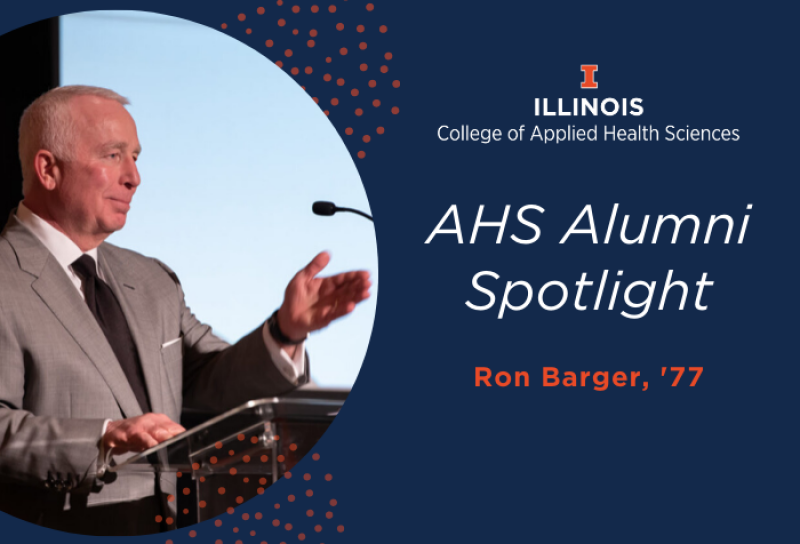
Alumni Spotlight—Ron Barger


Q: Why did you choose the University of Illinois?

A: I grew up in a very small town in Southern Illinois. I was the first kid from either side of my family to go to college. I was lucky enough and did well enough to receive a scholarship and was entered into the University of Illinois. I originally went to Illinois because my mom wanted me to be a doctor. In fact, my first year at Illinois was in premed. At the end of that first year, when I finished my freshman year at Illinois, I didn’t like what I was studying, and I was looking for something else I had such an affinity for sport and athletics and the things that I had been raised with that I looked at what was then the Applied Life Sciences school and enrolled in that, transferred into ALS. From there, it was a magical time, because for me, it ignited the passions that I had, something I didn’t have my freshman year. When I was growing up, Illinois was this wonderful university. It still is. But it was almost something so much greater than what I could expect and so for me, going to Illinois was like a dream come true.

Q: What about AHS inspired things in you? What was it about that program or whatever you saw? Was it a brochure you saw? Was there something on campus that said, hey, transfer into ALS?

A: No, I think I sought it out. I think you have to remember back in the ancient days, when I was in school, and this was in the early to mid ’70s, we didn’t have the Internet in the sense we have now. You didn’t have digital marketing. You didn’t have those kinds of things. I knew some people that were in the college. A lot of the things that it was, what I saw in terms of kinesiology and coaching and the aspects around sport, fit with where I was in my life at that point in time. So it seemed like a natural place to transfer and to then pursue that area of my life.

Q: Were there professors that had a profound impact on you from ALS?

A: Yes, yes. I was blessed. There were several that I think—and I still think about them from time to time. Marianna Trekell was there. Jim Meisner, and, I think, Don Arnold were both involved in the summer program that the college put on for the community that I participated in and helped in. But Jim Meisner, Don Arnold—Helga Deutsch was a professor I thought a great deal of—and Susan Greendorfer. There was a class I had, and I couldn’t tell you the name of it today, but it was along the lines of sociology and sport. I can remember the paper that I wrote. It was about it was about Althea Gibson and Billie Jean King and the impact that their lives and what they were doing, specifically in tennis and their larger role that they had in society because of that, because of their tennis and their recognition. I remember writing a paper in that class as sort of the capstone of that class with Dr. Greendorfer. For me, doing the research and the writing, I still have a very vivid memory of that experience.

Q: You got your law degree from SMU, so maybe AHS didn’t lead to your current career path. But what did you learn here that’s been instrumental to your career?

A: Vince, thank you for the question. I think there is something that I took away from Illinois—in specific, ALS at the time—a couple things, one of which was being exposed to different thoughts, different ways of seeing concepts. All those kinds of things contributed to where I wanted to go. Originally, as I graduated from Illinois, I wanted to go into politics and ultimately return to Southern Illinois and get into politics and represent that region. I ended up going to SMU and then went into a legal career, and from there, being in a large Dallas-based firm. Then I left after, I think, 17 years in private practice, and I went to a company that was being formed by Goldman Sachs called Archon, which was a real estate subsidiary of the firm and being in that organization that we grew to be worldwide, and very large. Then ultimately, I left Archon and went to a company called ORIX. In those roles, what I found is that my talent or my passion is building. It’s building people. It’s building organizations. It’s leading. A lot of the things I took from my time at ALS and some of the classes as well as student teaching at Urbana high school was, how do you coach people? What I found is that in business, the way you move the business is through people. You help them become the best expression of themselves, the fullest expression of who they are. So the same way that you build teams in a sport environment and the same way that you educate people in a classroom is the same way you lead a business—by building people, by building processes, by building organizations and letting them flourish and letting them succeed and how you motivate and how you inspire and how you give them vision and how you build them up and how you coach them and how you mentor them. All those things go into making a successful organization and a successful business. So while there is not a direct correlation to a specific class that I took, being immersed in those kinds of activities and those experiences ultimately is what made—the success that I’ve had as a business leader came based upon those foundations.

Q: As you said, there’s not a direct correlation between the law and what you learned at ALS. But clearly, there was the foundation in place from here and from those classes that you enjoyed. You talked about the courses you enjoyed the most. Were there any others that you could say really stood out to you?

A: I remember the anatomy classes I had. I loved cutting on the cadavers. I loved the labs, the exercise physiology labs that I had. Student teaching at Urbana High School was a wonderful classroom experience and working for a gentleman by the name of John Stergulz over there. Those kinds of things are life experiences that helped form me. I look at this stage in my life and in my career and it’s one in which you’re formed along the way by all those little experiences and people that touch you. One of my favorite philosophers—and a business philosopher, strangely enough—is John Wooden. Coach Wooden, if you’ve ever read any of his quotes, he didn’t think of himself as a basketball coach. He thought of himself as an educator. Some of the things that he said, and I still follow those, I’m trying to think of the exact quote, but something like, “Five years from now, you’re going to be the product of those people you’ve met and those books you’ve read.” I frankly think that goes from the beginning of your life until any point in time that you look at it you are the result of those people that are around you and the intellectual curiosity and the continued learning that you have to make you who that person that you are at that particular moment. I think all of my experiences, and Illinois is certainly formational for me in terms of helping me move from a small town in Southern Illinois to widening my horizons, thinking about things more broadly than that I had until that point in time, and then launching me into, ultimately, a legal career, which then launched into a business career. I’ve been blessed. I’ve been blessed by being associated with some amazing institutions and some amazing people.

Q: What were some of your favorite on-campus and then off-campus experiences?

A: I’m glad you phrased it like that. I can tell you there are a couple of experiences specifically to AHS that I remember. There was one summer that I was working for the recreation department and was sort of the gym supervisor for Huff Gym. And I can remember being in there late at night, not another person in the gym, and looking around and feeling the people and the events that had taken place in that facility and in that gym. And just sitting there in the dark and feeling it around you and knowing that at so many different times, during the time that Huff was being used as the basketball arena and the state high school basketball championships were played there, that it touched me very deeply. I take that with me. Something that I’ve found as well is just the relationships I had with some of the professors. And that’s what surprised me. For example, Don Arnold wrote a book with regard to, I think it was about the legal aspects of the administration of physical athletics or physical education and athletics in public schools. I was in law school when he sent me a draft of it and said, will you look at this for me now that you’re in law school? Having that sort of relationship was something that impacted me. Having professors that were very engaged with you, were very willing to be a part of your journey, and that’s something—I don’t have a specific recollection of a class. I can just tell you the way I felt is that they were engaged and willing to be partner, mentor and coach, and teach me along my journey. So that’s a wonderful thing. You ask about things that happened that were off-campus. I happened to be on-campus my freshman year when all the streaking was going on. So I can still remember that part of the college experience. I have just the fondest of memories of the University of Illinois. Walking down the quad late at night, I remember walking on campus as a freshman, feeling like you didn’t know a soul and when you walked away as a senior, you couldn’t pass five minutes walking down the quad without running into somebody and seeing a friend. At that time, I think you’re very impressionable. I think you’re very open to what is available to you as you’re in that part of your life and for me, it was a very formative time.

Q: In closing, I’d like to ask you what you would say to someone, a prospective student, to recommend the College of Applied Sciences?

A: I’ve been fortunate to be on the Board of Visitors and so I’ve had an opportunity to be around the college. I am deeply impressed with Dean Hanley-Maxwell. I think she is doing a phenomenal job guiding the college, expanding its reach, enhancing its reputation, looking at ways to integrate what the college is doing, what AHS is doing, into other parts of the university, other parts of the community, and frankly, other parts of the world. I’m really impressed with that and the depth of the areas that the college now touches is amazing. A good friend of mine has recently rejoined as the head of development, Jean Driscoll. I think she will be a wonderful return addition and an Illini coming back home to lead development for the college. Every time I go to a board meeting, and I listen to what is being done, I am amazed. I’m gratified by what I hear and frankly; I am just so thankful that I was able to be a graduate of that college and this University. So if you have a passion in this area, you can take this college, the curriculums that it provides to you, and do amazing things. I think it also prepares you for, if that is not where you necessarily see your journey ultimately taking you, it gives you a great foundation for going and following that dream, if you have something outside of it. I look at my undergraduate degree as being something that has been foundational for both my legal career and my business career. And I think that is probably even more enhanced today with the current state of AHS.

Editor’s note:

To reach Vince Lara-Cinisomo, email vinlara@illinois.edu.
 

Related news

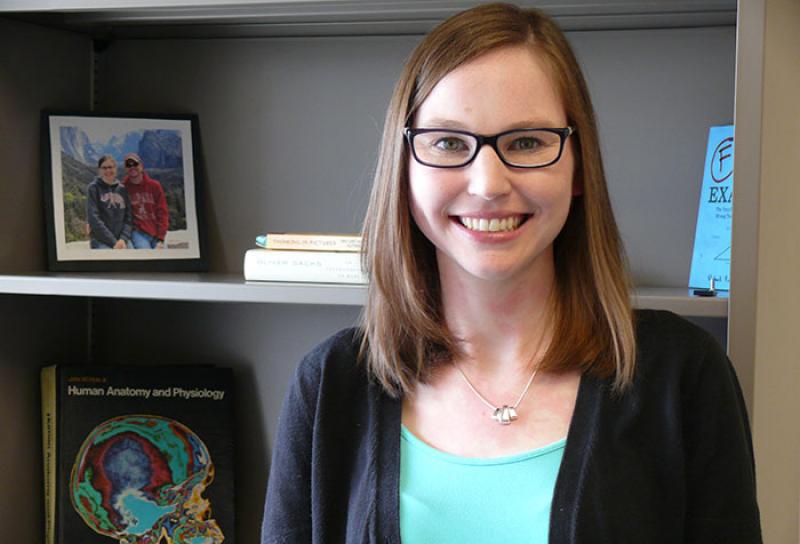
Podcast: A Few Minutes With … Marie Moore Channell


AHS media relations specialist Vince Lara speaks with Dr. Marie Moore Channell of the Speech and Hearing Science department to discuss her research on how language and communication skills develop in children with Down Syndrome and her plan to increase awareness of autism spectrum disorder in individuals with Down Syndrome.

Transcript

VINCE LARA: Hi, and welcome to another edition of A Few Minutes With, the podcast that showcases Illinois’ College of Applied Health Sciences. I’m Vince Lara, and today I’ll speak to Dr. Marie Moore Channell of the Speech and Hearing Science Department, who talks about her research on how language and communication skills develop in children with Down syndrome and her plans to increase awareness of autism spectrum disorder in individuals with Down syndrome.

All right, Dr. Channell, thank you for joining me on this edition of A Few Minutes With. And I typically ask all the guests on the show what led you to Illinois. So what led you here?

DR. MARIE MOORE CHANNELL: OK. Thanks for having me.

VINCE LARA: Sure.

DR. MARIE MOORE CHANNELL: Well, the goal of my research is to have a positive impact on the lives of individuals with disabilities. So for me the University of Illinois was a natural fit. This university and our College of Applied Health Sciences in particular has really paved the way for innovative strategies for supporting individuals with disabilities. So that was one reason.

And then, also within our department of speech and hearing science, the department is consistently one of the top speech language pathology programs in the country. So it has a great reputation. But also, the interdisciplinary approach to understanding and working with people with communication disorders, I thought that was really important. Because I think that our fields, our sort of subfields of expertise, really need to think about how we can work together to collectively have a stronger impact on the lives of people with disabilities.

VINCE LARA: Speaking of your research, typically there’s something in a researcher’s past that leads them– some sort of inspiration that led you to study what you study. What was it for you?

DR. MARIE MOORE CHANNELL: Oh, yes. For me, it was my brother. So my brother has a rare genetic disorder that causes intellectual disability. It’s not Down syndrome, but kind of like that, in that it causes intellectual disability and causes challenges with communicating. And so I think growing up with him and his peers really made me aware of the needs of individuals with different kinds of disabilities and their families. And so I knew I wanted to make a positive impact on their lives. And that’s really what led me to this field.

VINCE LARA: Now, when you started out, did you think about research first or teaching? Did you say to yourself, I want to be a teacher? Like, was there something about that profession?

DR. MARIE MOORE CHANNELL: I really didn’t think specifically about teaching or even research. I was really focused on the population that I wanted to work with.

VINCE LARA: OK.

DR. MARIE MOORE CHANNELL: And I was able to, as an undergraduate student, get involved in a research lab. And that’s where I realized that I liked research, and that I was good at it, and wanted to do it. And so, I realized that research was a way for me to help this population of children with disabilities. And I also got some teaching experience in graduate school and realized how much I really also like to shape the lives of students and future professionals and that teaching is a great avenue for that

VINCE LARA: Where’d you do your undergrad work and your grad work?

DR. MARIE MOORE CHANNELL: Oh, both actually at the University of Alabama.

VINCE LARA: Oh, OK. Great. Well, you mentioned that your research does focus primarily on development of language and other skills for people with Down syndrome, and you talked about your brother. One of your goals is to raise awareness of the autism spectrum disorder for people with Down syndrome. How do you propose to do that?

DR. MARIE MOORE CHANNELL: That’s a great question. So I think we can learn a lot from the greater autism community. So I think, as a whole, the autism community over the past several years has done a great job of advocating for the needs of individuals with autism and also for really raising public awareness of what autism looks like, some early signs and symptoms, so that people who may require more support can get services earlier and sort of the importance of early intervention. I think we can take that sort of as a model for what we need in Down syndrome.

What I think is a challenge in Down syndrome is that it carries this stereotype of people with Down syndrome are so social, and friendly, and always happy, and while certainly there are a lot of positive attributes to people with Down syndrome, I think that, just like all of us, people with Down syndrome have a range of emotions and a range of ability levels. And so they can also have autism. And so I think that’s going to be the challenge in sort of raising awareness and thinking about even understanding that someone with Down syndrome can have autism also.

And actually, the current research evidence suggests that autism is about at least five times more likely in someone with Down syndrome than in the general population.

VINCE LARA: That’s interesting. And you’ve said now, for individuals with Down syndrome, failing to provide early intervention for the autism spectrum disorder can have long-term consequences. I’m wondering what those would be.

DR. MARIE MOORE CHANNELL: Well, of course I’m going to say a lot more research is needed, but I would say that the current evidence points toward more cognitive difficulties, less developed language skills, and fewer adaptive skills, which is sort of skills that are needed to function independently in everyday life, in children who have Down syndrome and autism than in those who have Down syndrome only. And we know broadly, from developmental research, that the sooner you intervene and find learning strategies that work for a child, the more opportunities that child has to develop skills that will support their learning and their long-term sort of day-to-day function and independent living.

So if they have Down syndrome and they also have autism, they may need different strategies early on that kind of set them up for success long term.

VINCE LARA: You know, I’m curious about your intellectual disabilities communication lab. Tell me what projects you have going on there.

DR. MARIE MOORE CHANNELL: Sure. So my primary project right now examines how children with Down syndrome apply their cognitive, language, and social emotional knowledge to social interaction, specifically looking at how they understand and communicate their understanding of other people’s mental states. That’s how they understand, and interpret, and talk about people’s emotions, their thoughts, their intentions, et cetera. And that’s really something that we call mental state language.

And through a grant funded by the NIH while here at Illinois, I was actually able to collect samples of school-aged children with Down syndrome telling stories. And from those stories, we recorded the stories, and we can go back and sort of cull them for four content later, and we were able to see the different kinds of mental state language that they’re using in their stories. And that’s really important, because there’s so much variability from one child to the next, just like any child.

VINCE LARA: Sure.

DR. MARIE MOORE CHANNELL: But in kids with Down syndrome, you also see a lot of variability. So we are interested in finding out what may help explain why some kids with Down syndrome were using a lot of mental state language in telling these really engaging stories and others were not. And so far we’ve seen that it’s not about their IQ, and it’s not about how old they are. It is, of course, about, partially, at least, their general language abilities– so their other vocabulary and grammar skills– but also about their emotion knowledge.

So the kids who are more able to recognize other people’s emotions are also then able to talk about emotions and use mental state language in their conversations, and empathize with others, and use that kind of language in their narratives and their storytelling. So we have a lot to do. But the early results, I think, really do suggest that we should focus on emotion knowledge and not just sort of traditional language when working with this population to improve their communication.

VINCE LARA: Can you explain a little bit about what mental state language is?

DR. MARIE MOORE CHANNELL: Sure. So it’s really when we are able to talk about or discuss our emotions. And so when we’re able to basically put our emotions into words, instead of just maybe sort of acting out and not really completely articulating that, so able to articulate our own emotions, but also actually being able to recognize other people’s emotions, and sort of what they’re thinking, and we call it perspective taking sometimes– so being able to kind of put themselves in someone else’s mental shoes is also really important.

And we do that when we communicate– we empathize. I can tell you’re feeling really angry, can we talk about this, for instance. And that’s really what mental state language is.

VINCE LARA: Interesting. Now, as we are in R1 facility, so research is always top-of-mind. I’m sure you have projects going on. Are there any that you particularly want to talk about that are in the pipeline for you and maybe close to finished manuscript?

DR. MARIE MOORE CHANNELL: Sure. I have to choose which of those to discuss, right?

VINCE LARA: That’s usually what happens. Yeah.

DR. MARIE MOORE CHANNELL: I guess I’ll start going back to the mental state language study.

VINCE LARA: Sure.

DR. MARIE MOORE CHANNELL: So really those are preliminary findings that I talked about that are accepted for publication in the American Journal of Speech-Language Pathology. But I have some other papers in the pipeline. We actually– these were school-aged children with Down syndrome– in addition to getting samples of their storytelling, we also had them sit down with their mothers and go through a story book together and recorded how their interact and converse with them during that sort of shared storybook time. And so we have a lot to do with analyzing– we still need to analyze sort of what kinds of things a mother say and do that may help sort of facilitate mental state understanding and mental state language in their children. So that’s one.

And then I would say the other two kind of big projects that are stemming from this, one is– you already mentioned it earlier– this idea of raising awareness of autism and down syndrome. So with my research I’m always collecting measures of sort of autism symptoms in the individuals with Down syndrome that I’m studying, so that I can report on what they look like. And ideally, over time, we can figure out sort of what autism exactly looks like and what may be some signs of autism in individuals with Down syndrome. Because, like I mentioned earlier, it is challenging to identify when someone already has some communication difficulties.

VINCE LARA: Sure.

DR. MARIE MOORE CHANNELL: So that’s another line of research. And then, long term, really, all of this– if the goal of this research really is to not only improve communication but really improve sort of day-to-day functioning and independent living long term for this population, I’m really interested in looking sort of beyond the school age years that transition from high school to independent living in the community. That’s something that is really grossly understudied in Down syndrome.

And we do a lot in the schools to provide services for these individuals while they’re there and to kind of try to set them up for the next steps, but then we don’t really know what happens after that. And so I would also like to use my research to track that. And through that, actually, I’ve established a collaboration with Dr. Meghan Burke in the department a special education here on campus and Dr. Susan Loveall-Hague at the University of Nebraska-Lincoln, where we’ve put together a survey so that we can more broadly sort of describe what’s happening.

And we put together a survey for caregivers of young adults with Down syndrome who are in that transition phase, just to get sort of a first pass of what’s going on with these families. We know that caregivers do a lot to support their young adults during this time, and just to kind of represent their voice, and figure out where we need to go next with our research.

VINCE LARA: My thanks to Dr. Channell. For more podcasts on Illinois’ College of Applied Health Sciences, search A Few Minutes With on iTunes, Spotify, iHeart Radio, Radio.com. and other places you get your podcast fix. Thanks for listening, and see you next time.
Related news

Alumni Spotlight—Marty Morse


Q: Why did you pick AHS?

A: In 1980, my coach told me that the Department of Kinesiology at Illinois was the finest in the world. Also in 1980, the Director of Boston University’s Spinal Cord Injury Center, Dr. Murray Freed, recommended that I pursue my wheelchair athletics dreams at the Division of Disability Resources and Educational Services (DRES). I visited in 1980 with both kinesiology and DRES faculty. I fell immediately in love with the campus.

Q: Which professors had the most impact on you?

A: In kinesiology, it was Dr. Helga Deutsch and Dr. Richard Boileau. At DRES, it was Dr. Bradley Hedrick and Dr. Stephen Figoni. In kinesiology, I was surrounded by professors who knew of my goals and they became involved in making sure I reached or surpassed my academic dreams. At DRES, Doctor Hedrick and Figoni set the bar high for me in athletics and academics. Each day was crammed full with learning at the feet of these two giants in the field of athletics and academics.

Q: What course did you most enjoy?

A: Everything I was required to take in kinesiology I enjoyed. The same can be said for DRES. Hedrick and Figoni kept the learning challenging, but fun.

Q: Did you enter AHS knowing your career path, or did AHS help you decide?

A: I had no idea where I was going when I entered AHS other than the fact I would be coaching. Dr. Hedrick made sure I received a graduate assistantship at DRES. That alone set my career path in coaching at DRES.

Q: Did your AHS experience lead to your current job?

A: Yes. I was (the first) wheelchair track and field coach at DRES from 1984-2005.

Q:What is your current job?

A: I retired from full-time coaching in 2009.

Q: What was your favorite on-campus experience?

A: Day-to-day contact coaching Illinois student-athletes. There is a vibe being around Illinois student-athletes that can’t be found anywhere else. I thrived in that environment. Each day I was surrounded by the best and the brightest wheelchair athletes that come to the Urbana-Champaign campus to realize their academic and athletic dreams.

Q: What would you say to recommend AHS to a prospective student?

A: Kinesiology and DRES remain where I found them in 1981, the best. If you want to help people live an active, vigorous, healthy lifestyles, the College of AHS is the place to be. You will be challenged outside your current comfort level to achieve your dreams.

Editor’s note:

To reach Vince Lara-Cinisomo, email vinlara@illinois.edu.

Related news

College of Applied Health Sciences
110 Huff Hall
1206 South 4th Street
Champaign, IL 61820
(217) 333-2131