Leisure and recreation were ways of life for Payne and led to her passion and career
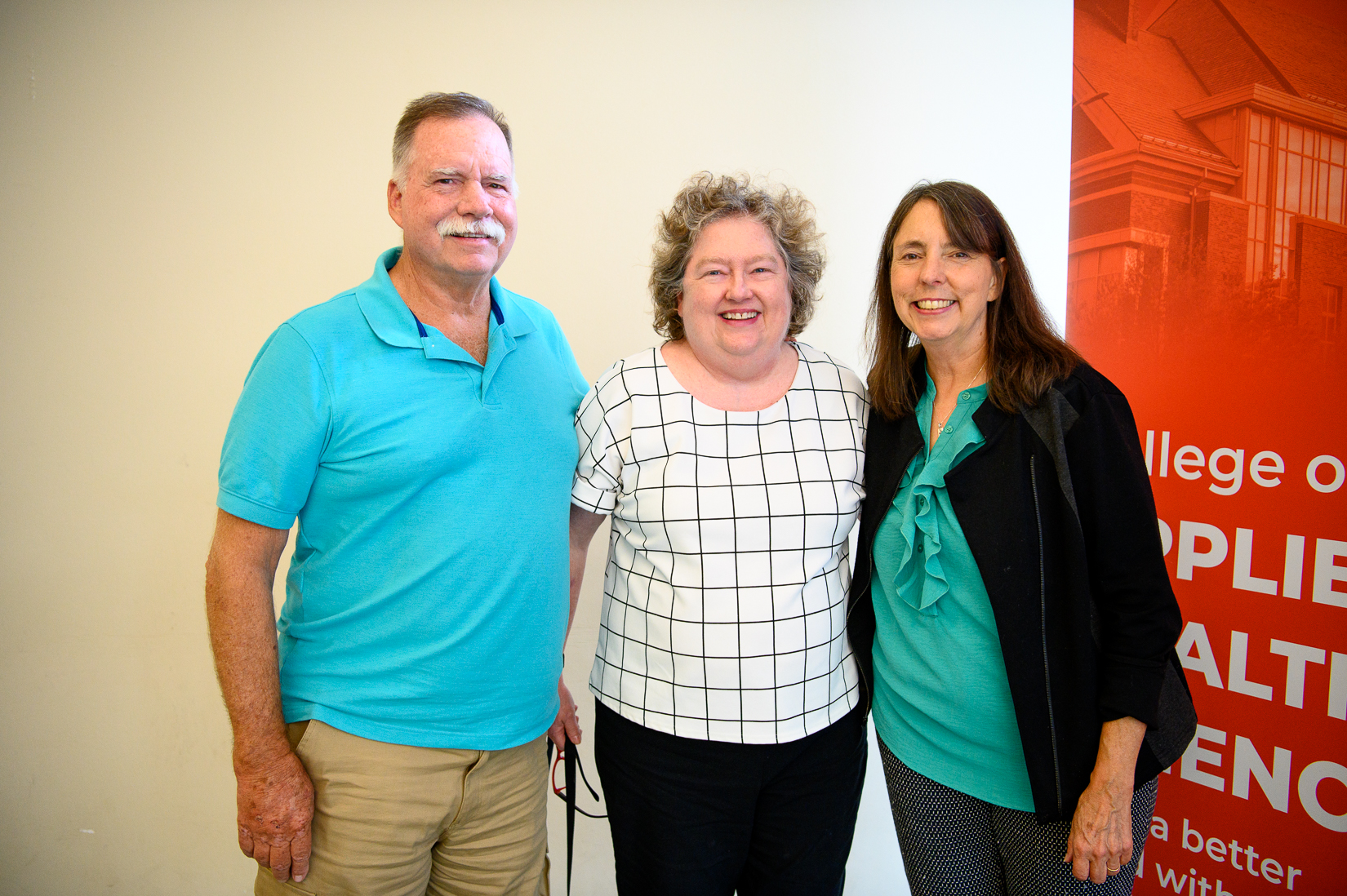
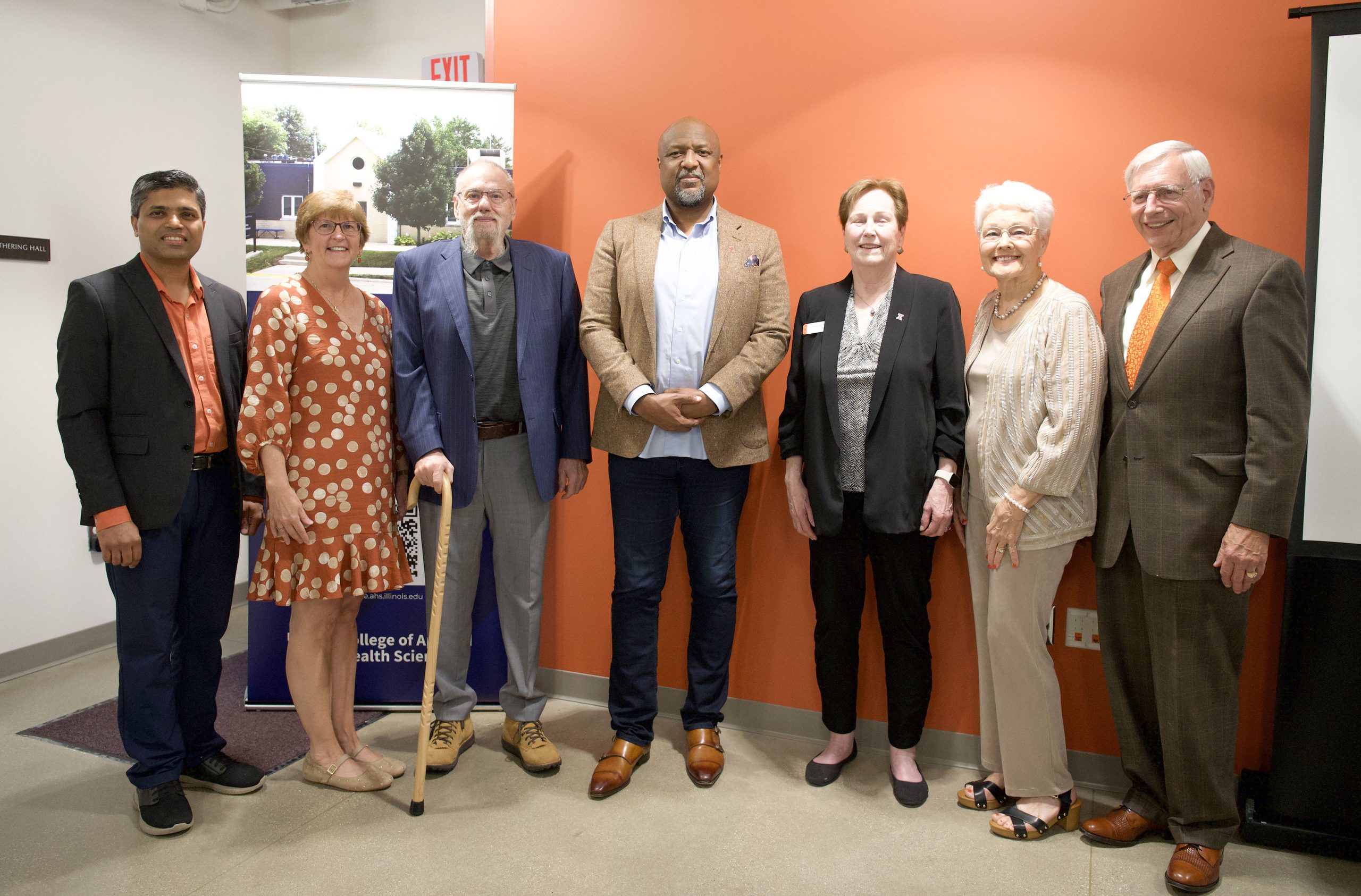
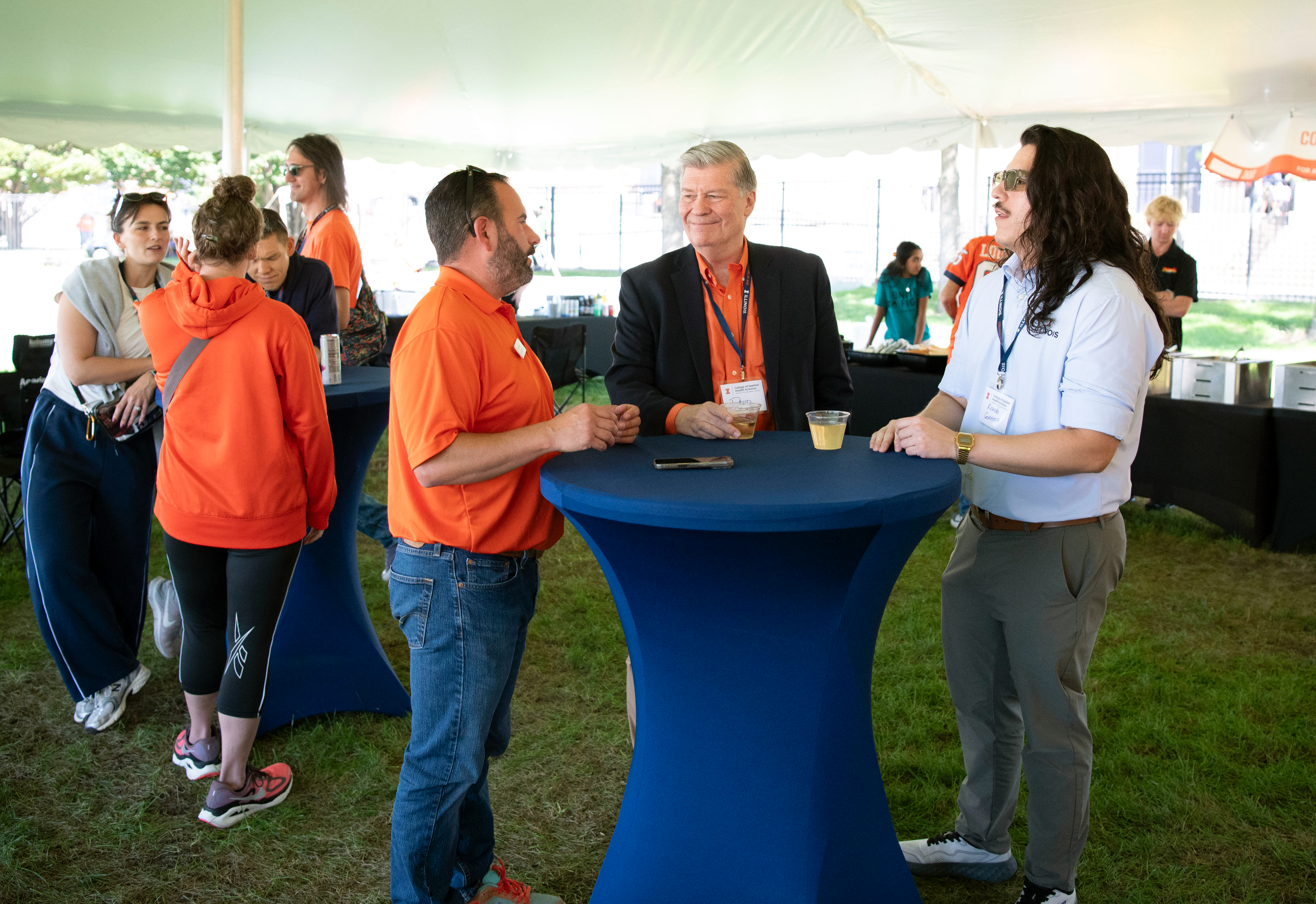
Laura Payne, right, was joined by brother Tom, left, and her cousin Mary Lynn O’Connor at the McCristal Lecture (Photo by Bridget Lee-Calfas)
For Laura Payne, the study of leisure is anything but idle work. It is a way to understand how people build identity, sustain relationships and protect their health across a lifetime, and how communities can make those benefits available to everyone.
That career-long commitment was celebrated as Payne was honored as the 2026 King James McCristal Distinguished Scholar in the College of Applied Health Sciences at the University of Illinois. The distinction recognizes outstanding scholarships and gives the college community an opportunity to learn from researchers whose work is shaping their fields and improving health and well-being.
Payne, whose scholarship explores how recreation affects quality of life, marked the honor with a lecture titled “Leisure, Health, and Well-Being: Expanding Research Impact Through Public Engagement.”
Her remarks traced the roots of her research from childhood experiences in suburban Chicago to questions about resilience, chronic disease and healthy aging.
“I’m really delighted and greatly appreciate this honor,” Payne said.
Growing up, she found that recreation helped shape her confidence and sense of self. Access to a park district opened a world of activities and eventually led to jobs at a swimming pool, first as a lifeguard and later as a pool manager. She did not realize recreation could become an academic field until she was well into an undergraduate communications degree. After several years at a Chicago management consulting firm, however, she knew she wanted to work with a mission that felt more personal.
Leisure and recreation had mattered deeply to Payne and her family. Over time, that understanding developed into an interest in aging, a subject she describes as inherently personal. One of the most important influences was her older brother, Tom, who was diagnosed in early adulthood with ankylosing spondylitis, a form of inflammatory arthritis. Payne watched him navigate disruptive symptoms, evolving treatments and changing lifestyle demands while remaining committed to the activities he loved.
She was struck by his resilience and by the grit of others who adapted cherished pursuits rather than surrendering them. “Tom, you were a big reason why I pursued this line of research,” she said during her remarks. Her mother’s concise philosophy offered another guide: “Healthy aging is about ‘adapt, adapt, adapt.’”
Those experiences helped Payne frame leisure not as an optional luxury but as an essential part of a good life. To prepare for her talk, she said she asked 25 people about what made a good day. Every participant named two leisure activities. Her research also found that people with broader leisure repertoires reported substantially better physical and mental health than those with fewer activities.
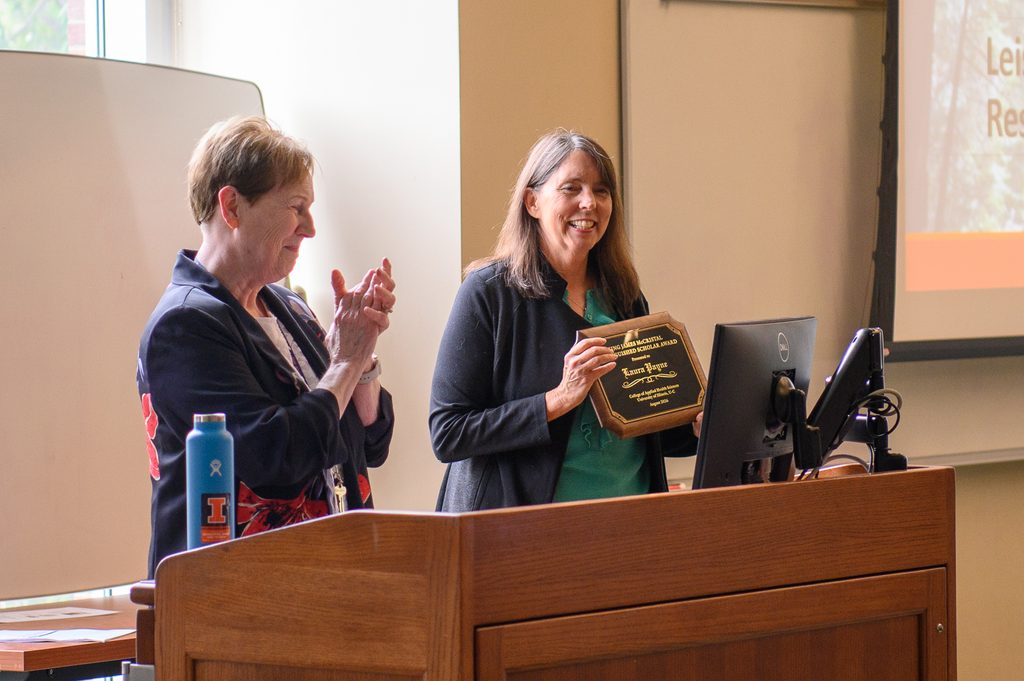
Laura Payne, right, accepts her plaque from Dean Cheryl Hanley-Maxwell (Photo by Bridget Lee-Calfas)
The findings carry increasing urgency as the population ages. Payne noted that people 100 and older are the fastest-growing segment of the older population, with many living more independently. Yet longer lives also bring challenges, including rising risk of developing chronic disease, uneven access to recreation and broader social conditions that affect whether people can pursue and define good health. Personal circumstances matter, too. Understanding healthy aging, in her view, requires attention to all of those forces and to what older adults are already doing well.
Cheryl Hanley-Maxwell, dean of the College of Applied Health Sciences, praised Payne as an accomplished scholar who has advanced understanding of leisure, health and well-being while ensuring that her research makes a difference beyond the university.
“Her work reflects a deep commitment not only to generating knowledge, but also to ensuring that research reaches beyond the university and makes a meaningful difference in the lives of individuals and communities,” Hanley-Maxwell said.
That public-facing commitment is especially visible in Payne’s leadership of the Office of Recreation and Park Resources, which she took over in 2020. Payne refreshed the office’s mission: to collaborate on recreation, sport and tourism initiatives that build healthy communities. Under her leadership, the office responds to community and industry needs, issues and trends while giving undergraduate and graduate students hands-on experience through projects.
Hanley-Maxwell said Payne’s approach demonstrates that research can have greater impact when scholars build relationships with communities, listen to the people their work is meant to serve and translate evidence into practices that are useful and accessible. That approach, the dean added, embodies the values of the McCristal honor.
The King James McCristal Scholar Award was established in 1988 to honor King McCristal, dean of AHS from 1961-1973.
“Dr. Payne’s research reminds us that leisure is far more than how we spend our free time,” Hanley-Maxwell said. “It can be an important contributor to health, quality of life, social connection and well-being, and a powerful avenue through which research can engage communities and create broader societal impact.”
For Payne, the recognition brings a career built around that idea full circle: from a child finding confidence through local recreation, to a scholar asking how leisure can help people adapt, connect and thrive, to a public-engagement leader working alongside communities to put that knowledge into practice.
After the hardest year of his life, this wheelchair basketball star is entering his senior season with a new perspective
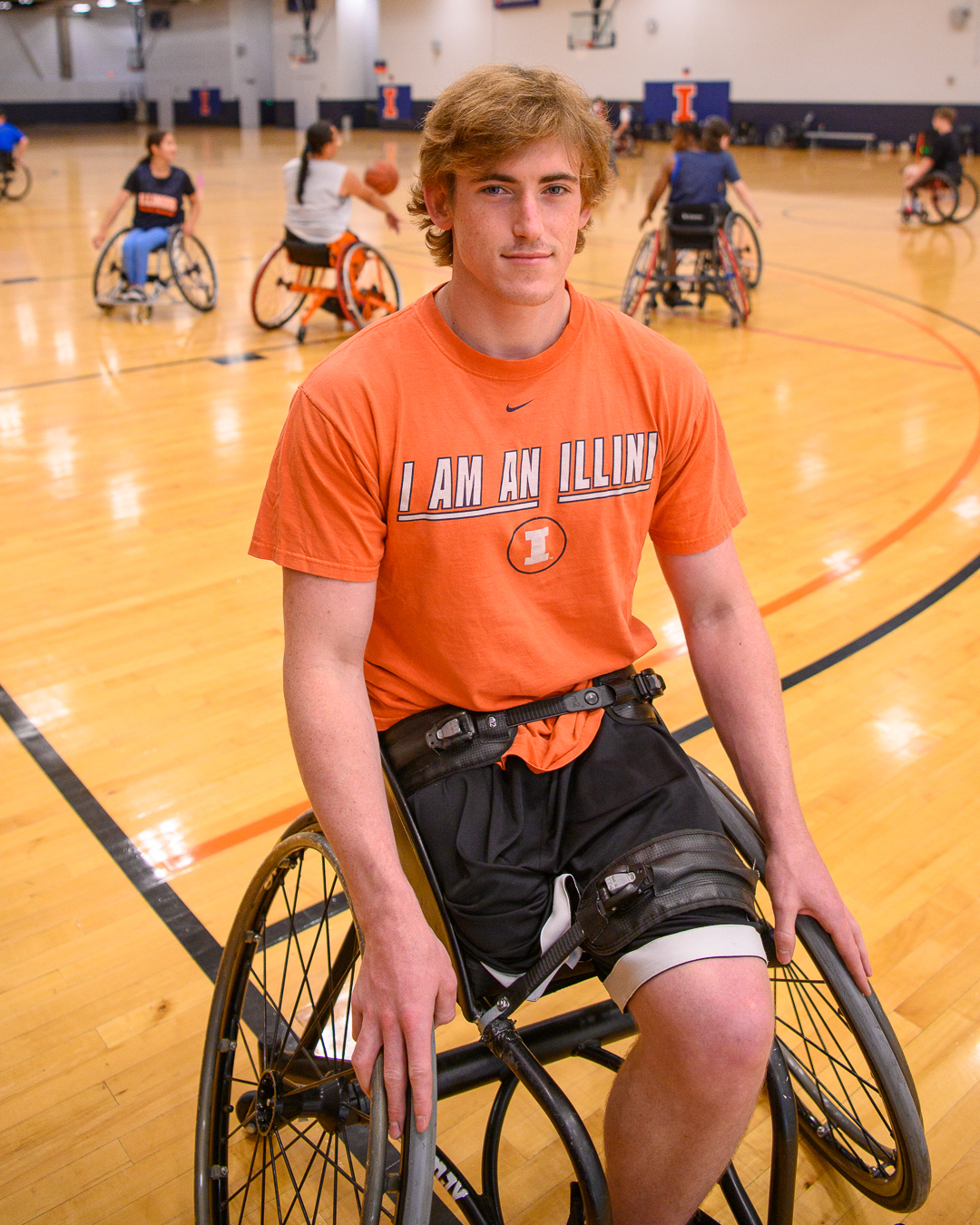
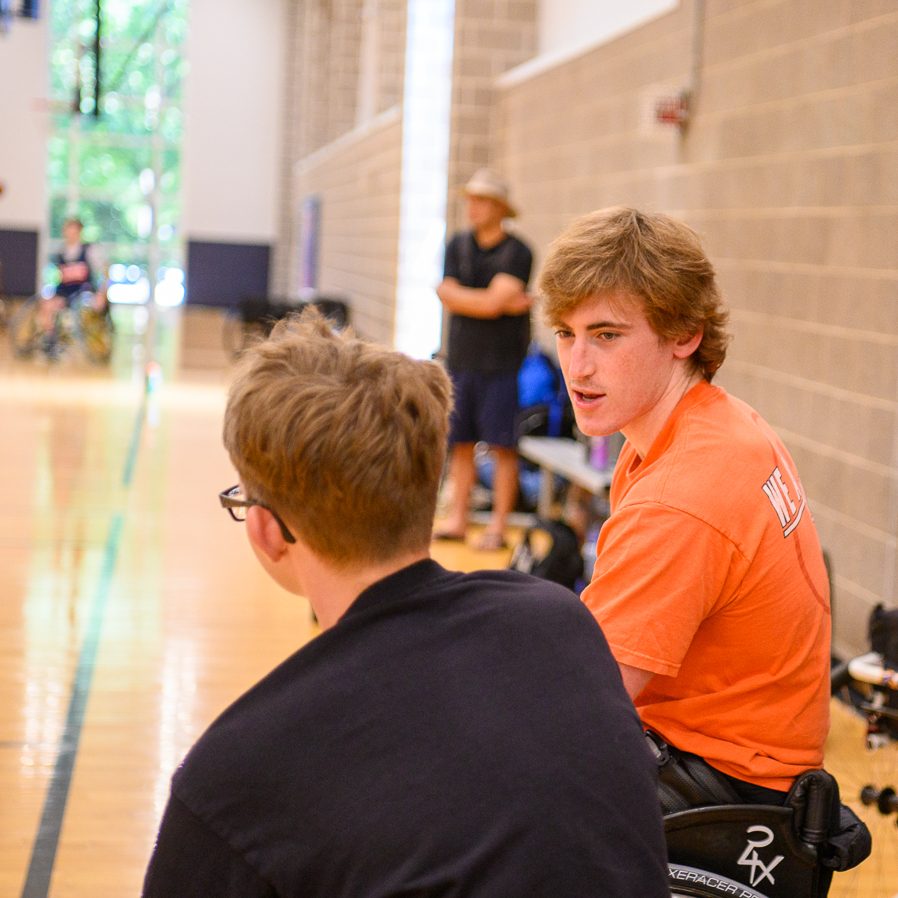
RJ Fitzpatrick, a senior in recreation, sport and tourism, at an Illinois wheelchair basketball skills camp this summer. (Photo by Ethan Simmons).
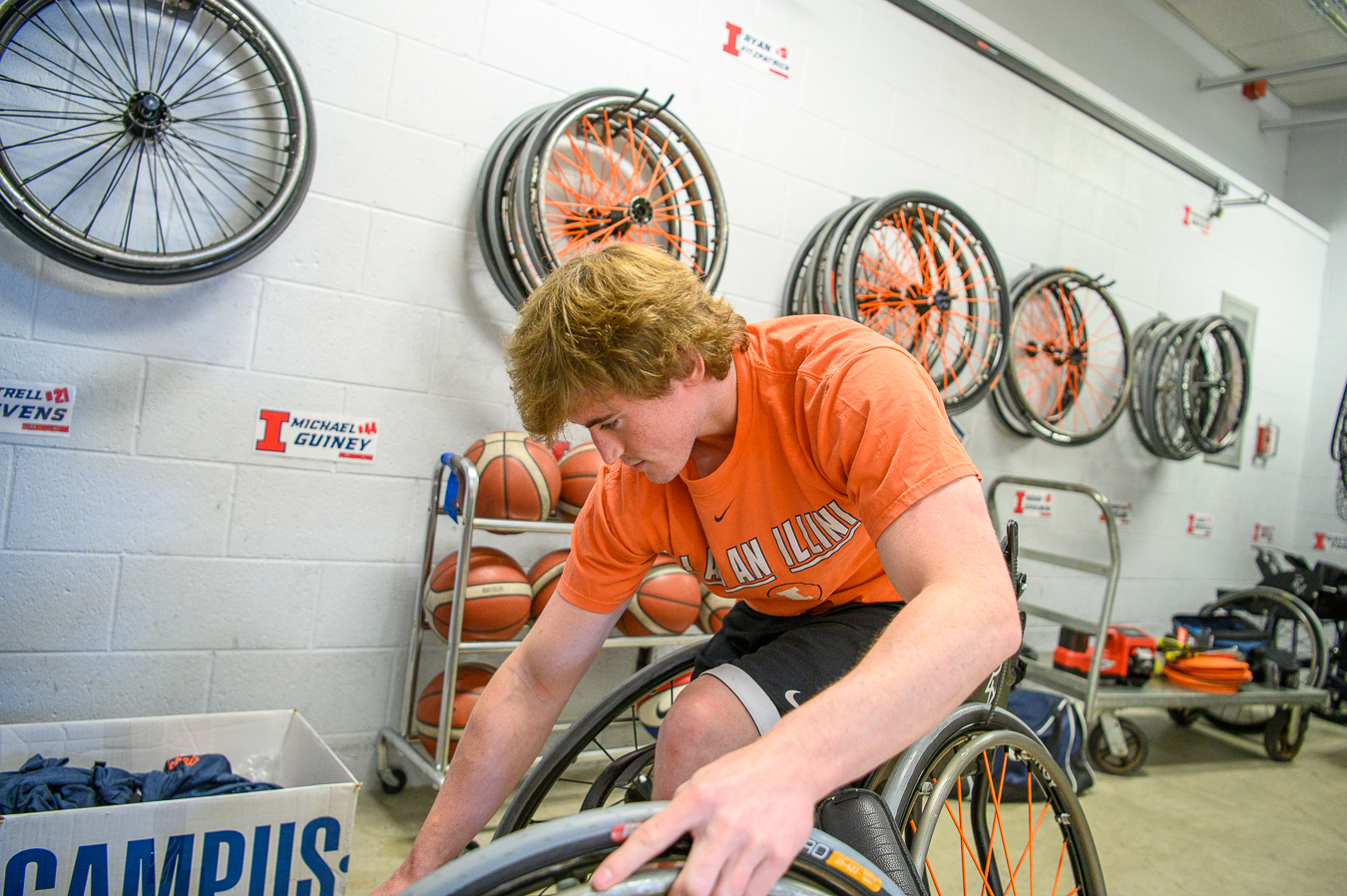
Against all odds, wheelchair basketball star RJ Fitzpatrick’s junior season at the University of Illinois Urbana-Champaign was a banner year on the court and in the classroom.
He helped bring the Fighting Illini to a third-place finish in the National Intercollegiate Wheelchair Basketball Tournament in April and won the 2025-26 NWBA Player of the Year, the highest honor for collegiate players. He even earned a 4.0 GPA in the spring semester, studying recreation, sport and tourism.
“It was really nice to achieve, and it’s also hard, too, because my dad would be so proud of me for that,” Fitzpatrick said. “It was really tough not having him there, not seeing him in the crowd, because that was like his number one thing. He loved watching wheelchair basketball.”
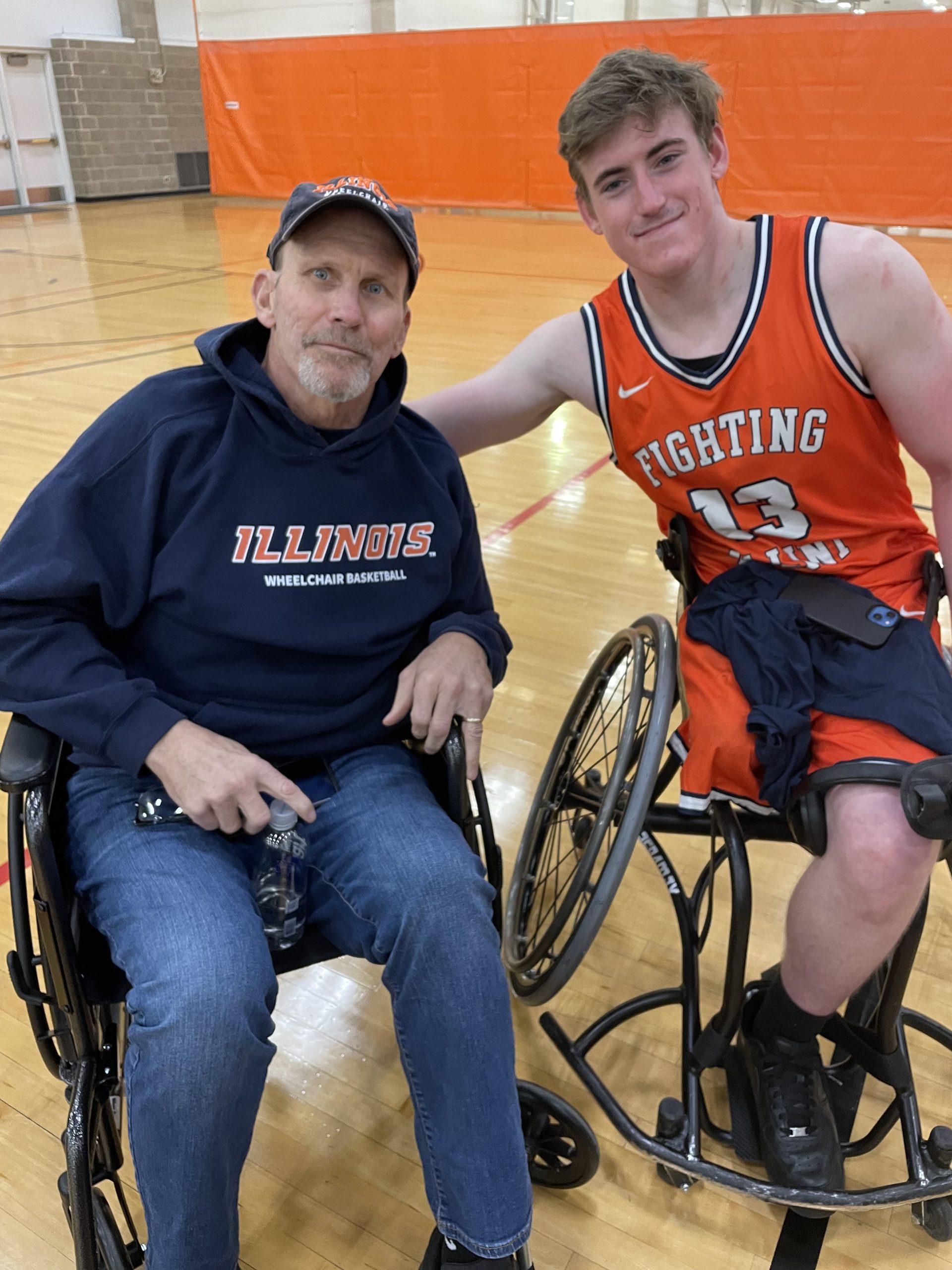
RJ Fitzpatrick is heading into his senior year at Illinois without his chief supporter: his father, Peter, who died in March after a two-year battle with brain cancer. The quintessential “sports dad,” Peter Fitzpatrick was his son’s biggest fan in the stands, though never quite his biggest critic.
“That’s RJ himself,” Illinois men’s wheelchair basketball coach Jacob Tyree said. “That loss was felt to a magnitude that can’t be put into words—Peter was just a really unique person to have been intertwined with my athletes’ lives.”
A new year brings new lessons and a new level of maturity for Fitzpatrick, a fierce competitor on the court with a kind, fun-loving presence in his daily life. And this year, he knows for sure: he’s not going it alone.
“The support from the whole wheelchair basketball program has just been huge,” he said. “Knowing I always have them in my corner, that just has made the whole thing a little bit easier, you know?
“It’s always going to be hard, but knowing I have them has been so special.”
Beginnings
Fitzpatrick’s brand of physical, polished play—bumping in his chair for rebounds, drilling threes and dumping off swift passes to the interior—might feel like a style he was born with.
But his story with wheelchair athletics began when he was an eighth grader attending Camp No Limits, a summer camp for kids with limb differences or limb loss. Fitzpatrick was born without his right leg, but he grew up playing able-bodied sports with his friends.
A camp mentor let Fitzpatrick try out his sports chair for a spin.
“I remember it was super hard, because I was so used to playing stand-up basketball,” Fitzpatrick said. “Trying to figure out how to push the chair and also dribble and shoot from two feet lower was crazy to me.”
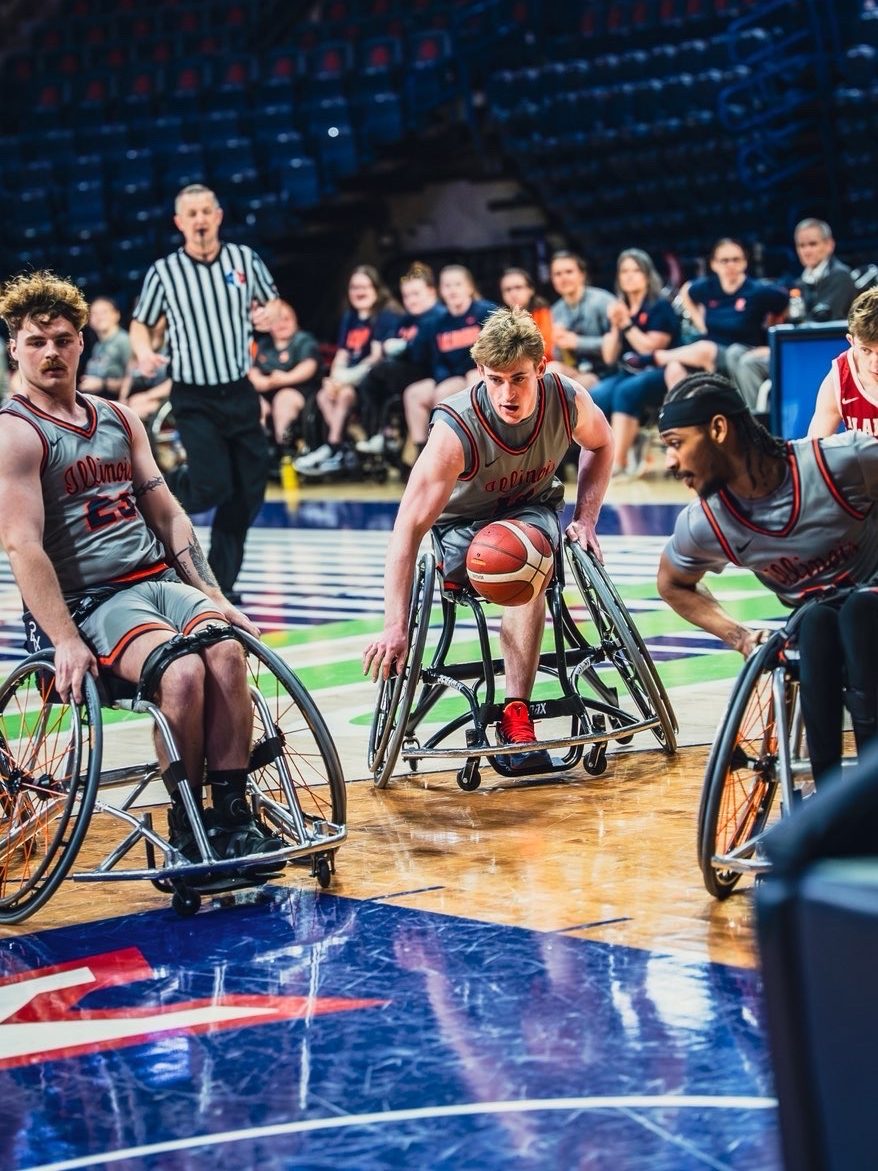
RJ Fitzpatrick (center) drives to the basket, flanked by teammates JM Davis (left) and Martrell Stevens. (Provided)
His high school hosted a wheelchair basketball exhibition game the following fall, and he gave it another shot.
“That’s where the love for it all started,” Fitzpatrick said. “Once I got in it, I realized how much it leveled the playing field for me. I thought, ‘I could be pretty good at this.’”
He went on to play wheelchair basketball for New Britain High School, which had an adaptive sports program through the Ryan Martin Foundation, while swimming and running cross country for New Fairfield High School, using a prosthetic to run. His growing basketball talent drew attention, and he was offered a scholarship to play for the University of Illinois, 900 miles from his hometown of Sherman, Connecticut.
He knew of the University of Illinois through one of his old Juniors Division teammates—recent RST graduate Martrell Stevens—who accepted an offer to play there. Its rich history of wheelchair athletics and accessibility through Disability Resources and Educational Services held broad appeal to Fitzpatrick.
“There was always a feeling I had that I wanted to end up here,” Fitzpatrick said. “Even before I got recruited, right when I got to campus that first time, I kind of knew this was where I wanted to be.”
Still, coming to the U. of I.’s 50,000-student campus from a town of 3,500 was a serious adjustment. Longtime teammates Grant Pierce and John Matthew “JM” Davis have formed his social bedrock while he’s been at the university. So much so, that they moved in together.
“They’re brothers—they bicker, they fight—getting them to work together can be the hardest or easiest thing I do,” Tyree said. Many of the team’s funniest and fondest memories stem from those three, Tyree said, and their own brand of brotherly love. Fitzpatrick is usually the one stirring the pot.
For the second year, the trio of big men will live in an Urbana house together for their senior season: “Those two, we’ve all just kind of stuck by each other’s side and been there for each other with anything that comes up,” Fitzpatrick said.
A trying tournament
After a two-year battle with glioblastoma, Peter Fitzpatrick—a longtime health and physical education teacher—passed away on March 9, 2026. His passing came just a week before the UTA College Classic in Arlington, Texas, a marquee wheelchair basketball tournament with seeding implications for nationals the next month.
“We were even debating, ‘Do we not go?’” Tyree said. Both Illinois wheelchair basketball teams were thinking of diverting their travel to Peter’s funeral instead.
“Of course, me and my dad would want them to play,” Fitzpatrick said. Across the country, the team thought of how they could show support without physically being there for RJ and his family.
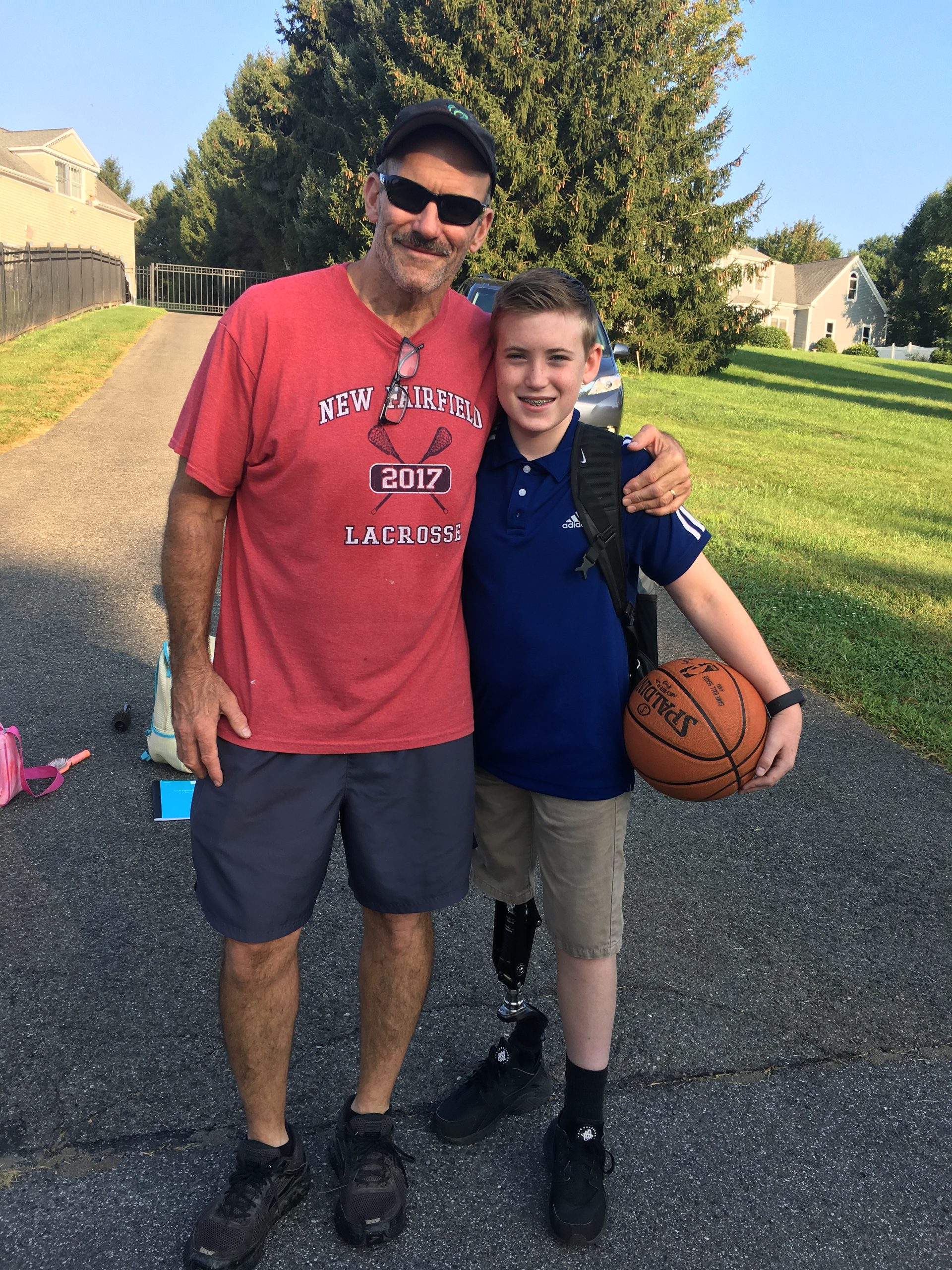
Peter and RJ Fitzpatrick in 2018. (Provided)
Halfway to Arlington, the team made a pit stop at a Walmart in Arkansas. After chatting with fellow coaches and DRES staff, Tyree went inside and grabbed a couple packages of black ribbon. Before the tournament games, members of the Illini men’s and women’s teams tied the ribbon around their chairs and wrists to pay respects to Peter, their biggest fan.
Through his grief, RJ felt how the experience transformed the team.
“Seeing how tight we were, as a whole program being one, those were some huge days for us to grow together,” Fitzpatrick said.
Peter’s impact on the team resonated beyond supporting his son. He was a constant presence in the stands, and a supporter for RJ’s future Illinois teammate Gavin Ford—a sophomore from North Reading, Massachusetts—helping to get him into adaptive sports in the first place.
The last time Peter saw his son play in person was at the fall alumni tournament, where Illinois wheelchair basketball players from years past came to battle the current-day roster.
“My whole family came, and it was a really special time,” Fitzpatrick said. “I’m involved with the [St. John’s Catholic] Newman Center, and one of the priests came as well. It was special to see all these influential figures in my life.”
It’s rare to find someone who excels in the classroom, as an athlete and in how he treats other people—but that’s exactly who RJ is.
Sarah Agate
Teaching Associate Professor in Recreation, Sport and Tourism
After his playing days, Fitzpatrick dreams of working in a front office role for an NBA team or starting a wheelchair basketball program of his own closer to home in Connecticut. Recreation, Sport and Tourism has always made a sensible fit for his academic program at Illinois.
Peter and RJ Fitzpatrick in 2025. (Provided)
He got a small taste of what it takes to run a sports event of any kind when he helped organize the U. of I.’s spring wheelchair basketball tournament for a class—a tournament he was scheduled to play in himself.
The courses Event Management and Implementation in Recreation, Sport and Tourism opened a “new world” of small, behind-the-scenes details, from what it takes to get coaches and players organized to the volunteer force that helps a tournament run.
And the class instructor, RST Teaching Associate Professor Sarah Agate, was understanding and flexible while Fitzpatrick and his family dealt with his father’s worsening illness and later grieved his passing.
“She was really there for me in a huge way, knowing I had the support from her, constantly going home to Connecticut,” Fitzpatrick said. “I’d always bring it up to my mom and my sister, just how kind and supportive she was. I really hope that’s a contact and connection I can continue to build with her for the future. “
In class, Fitzpatrick is “hard-working and responsible,” Agate said. “It’s rare to find someone who excels in the classroom, as an athlete and in how he treats other people—but that’s exactly who RJ is.”
His team-first attitude and humility were present in class. Agate didn’t even learn about Fitzpatrick’s Player of the Year honors until one of his classmates mentioned it to her.
“What makes his accomplishments even more meaningful is that he achieved all of this while carrying the weight of losing his father.”
Pushing forward
Two third-place finishes at the NIWBT stamped a successful season for Illinois wheelchair basketball, but Fitzpatrick thinks the team is built for more.
“I’m super confident with this group of guys we can finish even higher,” he said.
Underneath his placid demeanor is a competitive intensity that churns for the whole team.
“I tell people all the time, the character of who you are shows up on the court,” Tyree said. “You can watch a game of basketball, or any sport, and through an athlete’s actions you’ll see their core values embodied. Your actions, not intentions, reflect who you are to the world.
“He has a mentality—that when it’s honed and brought out in the right ways—we’re fighting back. I don’t care if we’re down 40 points, if we’re down 2 points, I don’t care if we’re up 10, we’re still fighting and we’re going to see it all the way through.
University of Illinois men’s wheelchair basketball senior RJ Fitzpatrick speaks to a camper at the Illini Premier Camp for young wheelchair basketball players on June 30, 2026.
“That’s something that’s really hard to ingrain in a player, and that’s where his character really shines.”
As he matures into his role as a team leader, Fitzpatrick is beginning to see himself as an ambassador for his sport and for the larger disability community.
“I’m trying to continue to grow my relationships with the people on campus,” Fitzpatrick said. “Being an amputee, I’m a little more ‘obvious,’ and that’s a great way for me to talk to somebody about wheelchair basketball, or adaptive sports, and open up that world for them.”
All those feelings were made fresh while he coached in this summer’s skill development camps for wheelchair basketball at the Activities and Recreation Center. Fitzpatrick turned in a few 12-hour days mentoring kids of all skill levels: some were new to the sport; others were vying for a collegiate roster spot.
“It’s special to see these dads come with their sons or daughters to camp and walk around campus; I remember doing that with my dad,” Fitzpatrick said. “Because those were some of the best years of my life, the excitement of finding a school—those moments really warmed my heart.”
In his experience, the grief “never really goes away.” But tender moments and new life lessons keep Fitzpatrick moving forward, with his father’s memories still held close.
“Trying to live a little bit more like him really inspires me to keep pushing.”
University of Illinois men’s wheelchair basketball star RJ Fitzpatrick helped run this year’s Illini Premier Camp for young wheelchair basketball players in late June. He’s heading into his senior year after a year of great accomplishments on the court, and one of his hardest years off of it.
Editor’s note:
Want to learn more about wheelchair basketball? Join the 8-week course: RST 265 Principles of Coaching Wheelchair Basketball, instructed by RST Graduate Student Morgan McCammon, four-year women’s wheelchair basketball player for Illinois.
Graduates reconnect through a trip visiting the country’s landmarks
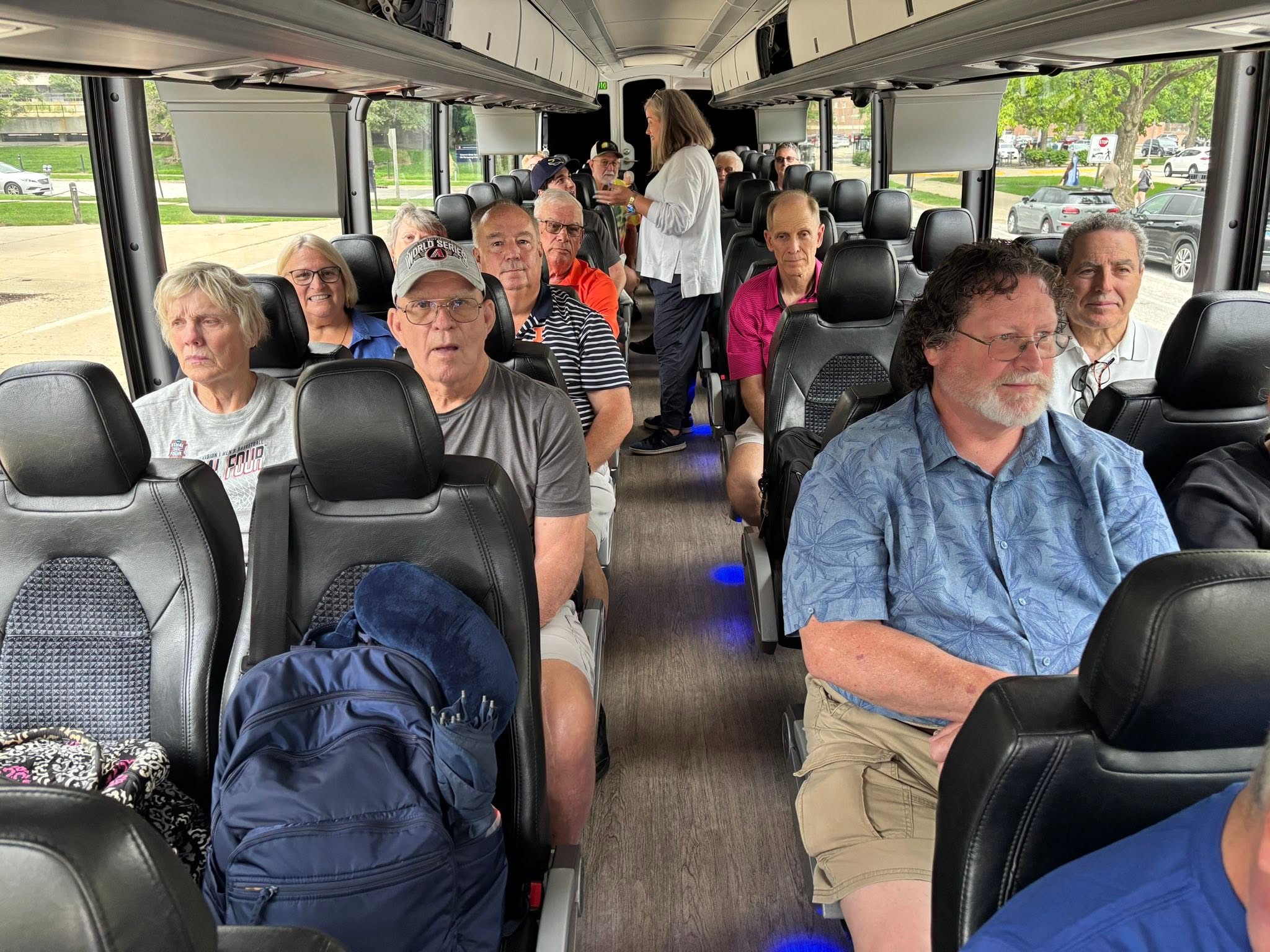
For 28 University of Illinois alumni, eight days on the road offered more than a chance to visit famous stadiums, museums and monuments. It became a traveling classroom—one built around shared history, new friendships and plenty of Illini pride.
Led by Recreation, Sport and Tourism Clinical Associate Professor Michael Raycraft, the Illini Alumni Roadtrippers embarked on a journey through some of the nation’s most historic sports and cultural institutions. The experience drew inspiration from Raycraft’s RST 180 Hall of Fame Tour, an RST course that brings the history and cultural influence of sports to life beyond the classroom.
The Illini Alumni Roadtrippers set off on a journey to some of America’s most historic cultural institutions (Photo provided)
The alumni version gave travelers an organized way to explore that history together, with transportation, lodging, admissions, meals and expert guidance incorporated into the itinerary.
Scott Williams said he registered for the experience through the University of Illinois Alumni Association, with travel organized by Sports and Entertainment Travel LLC. Every destination offered something worthwhile, he said, but one stop stood apart.
“I was most surprised and intrigued by Saratoga Springs and the extensive culture and history surrounding horse racing,” Williams said.
The itinerary took the group through a broad stretch of American history. Stops included the National Baseball Hall of Fame in Cooperstown, New York; Saratoga Springs and Niagara Falls in New York; the Pro Football Hall of Fame in Canton, Ohio; the NCAA Hall of Champions in Indianapolis, Indiana; and Indianapolis Motor Speedway.
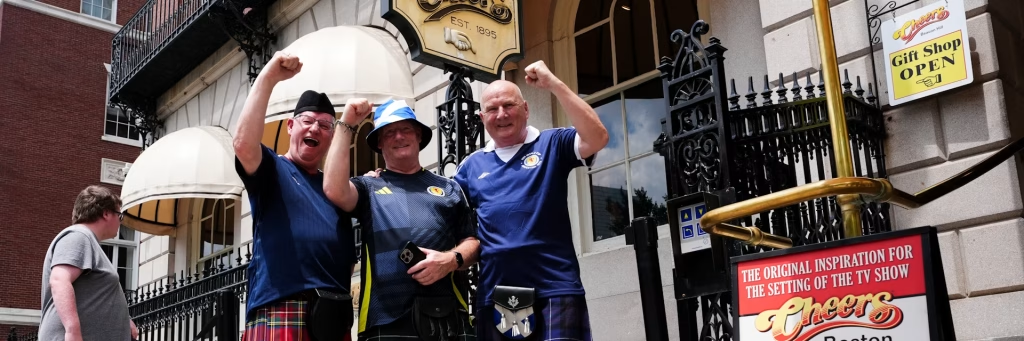
Two other popular spots for these travelers were the National Comedy Center and the Lucille Ball Desi Arnaz Museum in Jamestown, New York.
“For that group, it was pretty meaningful,” Raycraft said, noting that the students he takes on RST 180 likely are not familiar with the legendary TV show “I Love Lucy.”
The Ball Arnaz museum features a full-scale replica of Ricky Ricardo’s famous Manhattan nightclub, known as the Tropicana Room.
“We had dinner at the Tropicana,” Raycraft said. “(The Roadtrippers) really loved it; they really could connect with it.”
The mix was intentional. Rather than treating sports as a collection of scores and trophies, the journey placed athletic history alongside stories about communities, entertainment, nature and national identity.
For Mike Waldbusser, the chance to experience unfamiliar destinations without having to coordinate the details made the trip especially appealing.
“I am a sports fan and had never been to any of these places, so it was a great opportunity to see them on an organized, planned trip—especially with fellow alums,” Waldbusser said.
He had previously participated in senior alumni day trips organized by Lou Liay, the retired executive director of the University of Illinois Alumni Association. Liay helped develop the Roadtrippers concept with Raycraft but was unable to join the eight-day tour because of health concerns. His daughter, Alicia, traveled in his place and brought along a Lou Liay bobblehead.
She photographed “Little Lou” at the tour’s destinations and sent the pictures to her father, giving him a playful presence throughout the journey.
“So ‘Little Lou’ did actually make the trip,” Waldbusser said.
For Waldbusser, choosing a favorite destination proved difficult because each offered a different experience. Niagara Falls, however, had the biggest impact.
“The sheer power, magnitude and beauty of Mother Nature left an impression,” he said.
Waldbusser advised future travelers to bring dry socks and shoes and to “double bag” their belongings before entering the Cave of the Winds.
Saratoga Springs delivered another unexpected highlight. The group explored the city’s horse racing tradition, toured the Oklahoma Training Track and visited natural springs in Saratoga Spa State Park.
Waldbusser said he had not closely followed horse racing before the tour but came away with a new interest in the sport. After returning home, he found himself watching “Racing From the Spa” on television.
The group also encountered reminders of Illinois’ contributions to American sports history. At Cooperstown, travelers found former Illini baseball star Lou Boudreau. In Canton, they encountered connections to George Halas, Red Grange, Dick Butkus, Ray Nitschke, Bobby Mitchell and George “Papa Bear” Halas-era football history. At the NCAA Hall of Champions, they found former Illini basketball player Mannie L. Jackson, a donor to the College of Applied Health Sciences and the man who endowed the Illinois Academic Enrichment and Leadership Program, or I-LEAP.
Those discoveries connected nationally recognized institutions with the travelers’ own experiences at Illinois.
“Traveling with fellow alums and exchanging stories and experiences” created new friendships, Waldbusser said.
Raycraft added context at each stop, using questions and stories to encourage the group to look beyond exhibits. One discussion explored why the Baseball Hall of Fame was placed in Cooperstown and asked travelers to compare that community with Canton, home of the Pro Football Hall of Fame.
“I appreciated all of Mike’s insights and stories to enhance our trip,” Waldbusser said.
RST Clinical Associate Professor Mike Raycraft modeled this trip on his RST 180 trip, in which he takes students to some of the same historic spots. (Photo provided)
The Roadtrippers experience grew from conversations involving Raycraft, Liay and David Bambrey, president of the University of Illinois Alumni Association, according to Kristina Oncken-Cortez, associate director of alumni experiences for the association’s Explorers travel program.
Oncken-Cortez said she had not known about RST 180 until Raycraft explained the course to her. The alumni tour translated elements of the student experience for a different generation of Illini, retaining the emphasis on learning through firsthand encounters.
It also became part of a much larger alumni travel program. Oncken-Cortez said the association offers more than 50 Explorers tours each year.
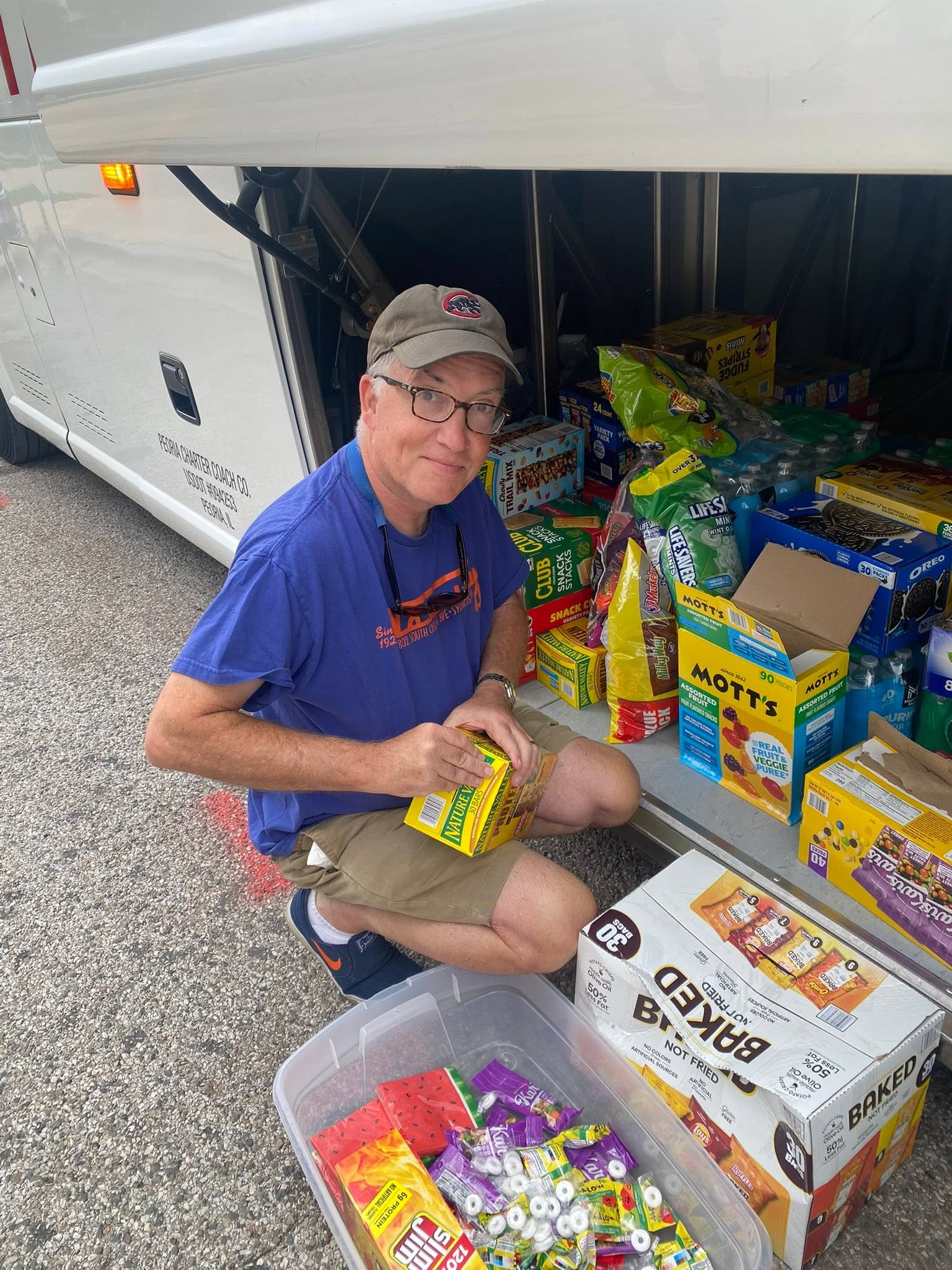
Life aboard the bus supplied its own memories. The travelers shared refreshments, meals, advice and jokes as the miles accumulated. Gary Earls, the group’s driver, kept the trip moving smoothly and offered one memorable recommendation: avoid the bus restroom while the vehicle was bouncing down the road.
Williams also said the combination of destinations and companionship made the experience easy to recommend.
“I’d encourage any Illinois alumni to experience this diverse collection of unique experiences in the effortless company of friendly fellow explorers,” he said.
Asked what he would tell another Illinois graduate considering a Roadtrippers journey, Waldbusser’s answer was direct.
“Go! Sign me up,” he said. “Everything is arranged—hotels, admissions, bus refreshments and most meals. Just get on the bus and leave the driving to Gary.”
After eight days, the lasting images were not limited to plaques, exhibits or celebrated landmarks. Waldbusser also remembered the sight of travelers enjoying one another’s company.
It was, he said, a “great, easy way to see all these venues,” guided by an experienced and knowledgeable leader and shared with “a great group of Illini.”
And that knowledgeable leader would love to do it again.
“I’m optimistic,” Raycraft said of a July 2027 trip. If alumni are interested in going on the trip, Raycraft encouraged them to email him at mraycraf@illinois.edu.
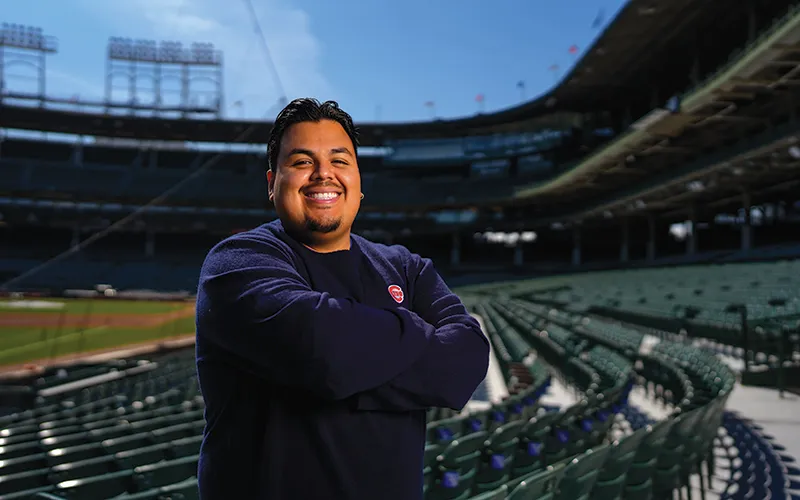
RST alum Fredy Quevedo Jr. enjoying the friendly confines of Wrigley Field. (Photo provided)
As the Spanish-language interpreter for the Chicago Cubs, Fredy Quevedo Jr. steps in front of cameras and reporters, knowing his role is far more than translating words. He’s translating trust. Culture. Confidence. As a media relations specialist, Quevedo helps players share their stories authentically, ensuring language is never a barrier to being heard.
It’s a role that feels tailor-made, even if the path there was anything but linear.
Born and raised in Elgin, Quevedo grew up deeply connected to his community. Long before he enrolled at Elgin Community College (ECC), he was already familiar with the campus through the Youth Leadership Academy program, attending sessions as early as middle school. “I came here all the time, so I already knew the buildings and the campus.”
After high school, Quevedo’s journey took a few turns. He attended college, took time away to work a variety of jobs, and even headed to Minnesota to briefly pursue college football. But by 2019, he found himself back home — and back at ECC, ready to reset and rebuild his confidence.
“I was everywhere, and then I came back home, which is ironic, but it’s the thing I’m most grateful for. You never know where the journey might take you, but you always come back home.”
At ECC, Quevedo completed his Associate in Arts in just one year, graduating in 2020. His time at ECC had a profound impact, as he found support through TRIO and worked closely with mentors who helped him map out clear, achievable next steps. “Being here helped me get right mentally for when I would transfer,” he said, adding that he initially pursued political science out of high school. “I [now] knew what I wanted to go after.”
That sense of care and support mattered. As a first-generation college student and the son of immigrants from Mexico, Quevedo had spent much of his life navigating systems that weren’t built with language access in mind. Growing up, he often translated for his mother at appointments, in offices, and in everyday moments. At the time, it was simply what needed to be done. In hindsight, it was the foundation of a future career.
After ECC, Quevedo transferred to the University of Illinois, Urbana-Champaign, where he earned a bachelor’s degree in recreation, sport and tourism with a concentration in sport management. It was there that his vision sharpened: he wanted to work in sports and use his language and culture as strengths — not side notes.
“I grew up watching sports and playing sports, and I didn’t even know jobs like this existed,” he said.
That clarity led him to take a leap and start applying for roles even when he felt underqualified. His first break came with the San Francisco 49ers, where he worked in marketing while finishing his final semester at U of I. When that role ended, he explored his options in the Bay Area. Then came the call from the Cubs in May of 2023, followed by a second move back home.
Today, Quevedo is one of just 30 Spanish interpreters across Major League Baseball — one per team — helping Spanish-speaking players navigate interviews, media obligations, and public life. But to him, the job is about more than words.
“My goal is to help players find their voices so their stories are told, they are heard, and they feel comfortable being themselves,” he said.
That responsibility feels personal. Quevedo knows how powerful it is to see someone who looks like you, sounds like you, thriving in a visible space. He carries that awareness into every interview and every interaction, hoping young people, especially ECC students, see possibility reflected back at them.
“Don’t ever be afraid to pursue an opportunity. Always be yourself and trust yourself.”
Looking back, Quevedo credits ECC with helping him build that willingness, along with humility, gratitude, and confidence. “ECC showed me the importance of community,” he said. “Of asking for help … of believing that where you start doesn’t limit where you can go.”
From Elgin classrooms to one of baseball’s most iconic ballparks, his journey has come full circle. He’s grounded in home, fueled by purpose, and driven by a belief that language access isn’t just a service. It’s a bridge that breaks down barriers and creates broader connections.
And thanks to Fredy Quevedo Jr., more voices are crossing it every day.
Editor’s Note: Reprinted from Elgin Community College’s website.
Anna Posbergh she learned to connect sport with broader questions about health
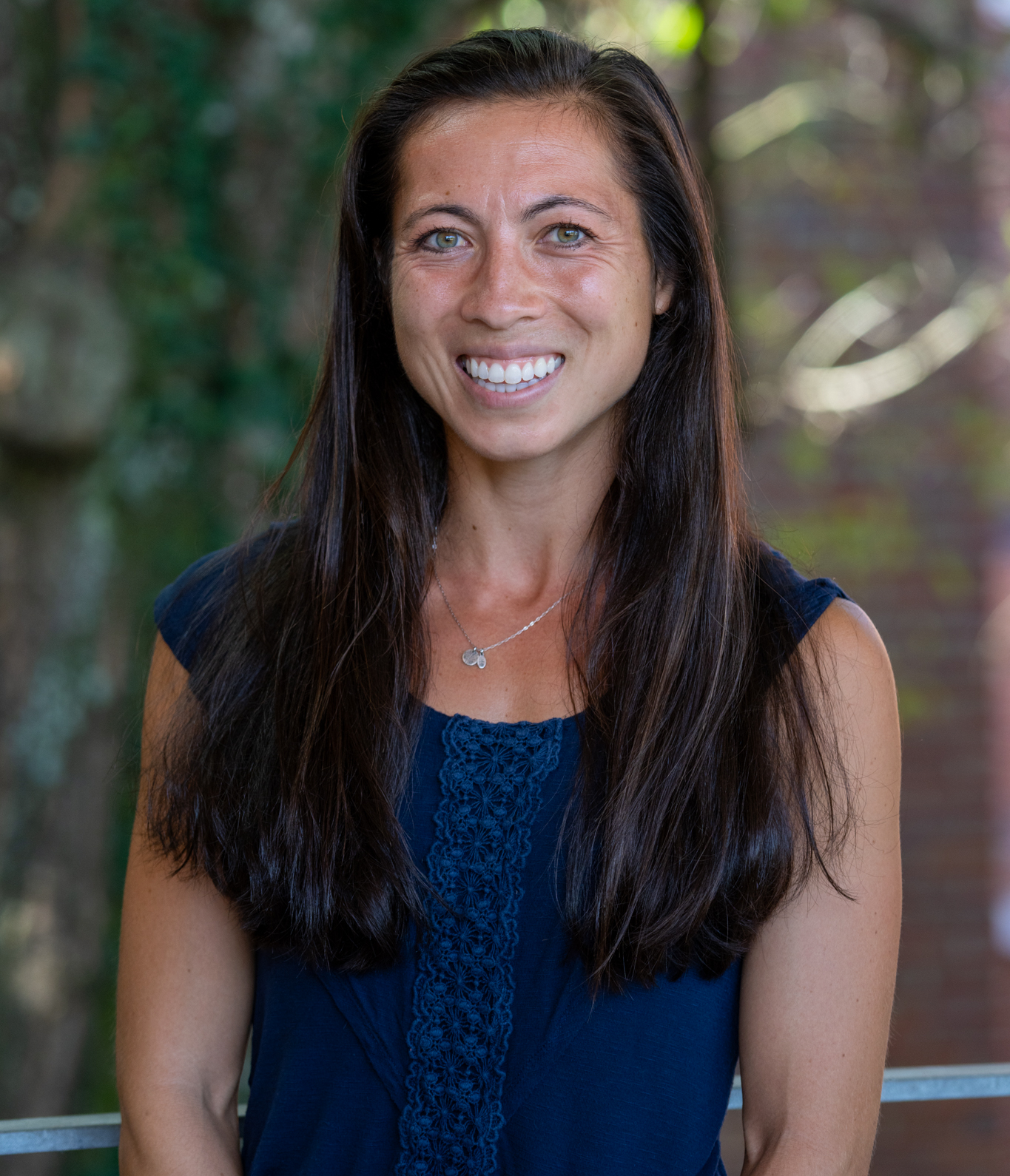
Anna Posbergh came to the University of Illinois from Florida State University (Photo provided)
When Anna Posbergh studies sport, she isn’t focused on the final score.
She’s interested in something less visible but just as influential: the rules that determine who gets to play, how those rules are written and why decision-makers arrive at the conclusions they do.
This fall, Posbergh joins the Department of Recreation, Sport and Tourism at the University of Illinois Urbana-Champaign as an assistant professor, bringing an interdisciplinary approach to sport policy that blends public health, governance, media studies and critical sport scholarship. Her work examines how evidence is selected, interpreted and translated into policies that shape opportunities for women athletes and the broader sport landscape.
For Posbergh, arriving at Illinois represents more than a new faculty appointment. It’s a return to the kind of academic environment where she believes her work can have the greatest impact.
“I truly feel most at home in a university college that is health science-focused,” she said. During her academic career, she has worked across colleges of education, liberal arts, humanities and public health, experiences that reinforced her belief that understanding sport requires perspectives from multiple disciplines.
That interdisciplinary foundation began during her doctoral studies in kinesiology at the University of Maryland, where she found herself immersed in a public health environment. Rather than viewing sport strictly through competition or performance, she learned to connect it with broader questions about health, community well-being and social systems.
Those ideas continue to shape both her research and teaching.
Before coming to Illinois, Posbergh spent three years as a faculty member at Florida State University. Although she enjoyed her work there, Illinois offered something she found difficult to ignore: a culture known for collaboration.
She was drawn by the university’s research reputation and membership in the Association of American Universities, but she says it was the people who ultimately convinced her.
“The culture in Recreation, Sport and Tourism in particular has a reputation, even outside Illinois, for consisting of brilliant individuals who wholly care about making the world a better place, becoming the best intellectuals and scholars they can be, and building each other up,” she said.
One lesson from her own mentors has stayed with her throughout her career: choose collaboration over competition. She sees that philosophy reflected throughout the College of Applied Health Sciences, where faculty members value interdisciplinary partnerships and practical scholarship.
That emphasis on application also aligns closely with her own goals. Whether communicating with students, policymakers, journalists or sport organizations, Posbergh wants her research to extend beyond academic journals and become useful to the people making decisions that affect athletes and communities.
In broad terms, Posbergh describes her research as examining the governance and representation of women athletes.
More specifically, she studies policymaking in sport, especially policies regulating women’s competition and athlete eligibility, asking which evidence policymakers choose, how they interpret it and why they arrive at particular conclusions.
Those questions have become increasingly relevant as debates surrounding women’s sport, athlete eligibility and transgender participation have moved from academic conferences into legislatures, governing bodies and national headlines.
Although policy remains her primary focus, Posbergh increasingly studies media and public opinion as well.
That’s because policymaking, she argues, isn’t simply a top-down process.
Public narratives, media coverage and societal beliefs often influence how scientific evidence is understood long before a policy is formally adopted. Decision-makers bring their own assumptions and interpretations into the process, making governance as much about people as documents.
She summarizes her work with characteristic humor.
“I read a lot of bylaws, laws and bills,” she said, “especially relating to girls’ and women’s sport and female/transgender eligibility, and I question how and why they arrived at that outcome.”
Posbergh’s path into sport policy began long before graduate school.
As an undergraduate at the University of Minnesota, she interned with the Tucker Center for Research on Girls & Women in Sport. The experience introduced her to research while exposing her to issues surrounding gender equity in athletics.
She describes that opportunity as career-changing. Her academic interests also reflected an unusual combination of disciplines. She studied English, mathematics and kinesiology, an academic mix that later proved invaluable when she encountered scholarship examining testosterone regulations in elite women’s sport.
The topic demanded quantitative reasoning, critical analysis and an understanding of sport, bringing together all three areas of her undergraduate education. She immersed herself in the literature, eventually building her dissertation around what she called “protective policies”—regulations designed to protect women’s sport through rules governing athlete eligibility, health and participation.
Posbergh argues that competing sport policies often claim to be guided by science while relying on different bodies of research or interpreting similar findings in dramatically different ways.
As public attention to these issues expanded dramatically over the following years, her research became increasingly timely.
One of Posbergh’s central research questions asks a deceptively simple question: What counts as evidence?
In her work examining transgender athlete policies, for example, she studies how policymakers select scientific literature to support predetermined policy approaches. Some policies emphasize research they interpret as demonstrating competitive advantages, while others prioritize public health evidence highlighting the benefits of sport participation and the harms associated with exclusion.
Her research has also compared how scientific studies are represented in policies and systematic reviews.
She says her findings raise broader questions about policymaking integrity, particularly when research is cited in ways that do not accurately reflect the original scientific conclusions. Although her work often centers on transgender athlete policies, she believes the implications extend much further.
For Posbergh, ensuring that policies accurately represent evidence matters not only for ethical governance but also for every athlete affected by those decisions.
Illinois offers opportunities to expand that work through collaboration. Given her focus on governance, Posbergh sees natural partnerships with scholars in law, political science and public policy, particularly around questions involving legal precedent, policymaking and regulation.
She also hopes to work closely with Illinois’ Division of Intercollegiate Athletics. Because athletic departments ultimately implement many of the policies she studies, collaborating directly with practitioners can help ensure research remains practical, relevant and accessible to those responsible for putting policy into action.
While her research tackles nationally debated issues, Posbergh says her goals in the classroom are straightforward. She doesn’t want students to memorize her conclusions.
Instead, she wants them to develop the habits of mind necessary to evaluate evidence, understand competing viewpoints and explain why they hold their own beliefs.
“I believe my responsibility is not to tell students what to think,” she said. “It’s my responsibility to help them understand why they believe what they believe.”
She hopes students leave her classes prepared to analyze complex issues thoughtfully, engage respectfully with differing perspectives and become ethical leaders within sport organizations and beyond.
As Posbergh begins her career at Illinois, she’ll continue asking difficult questions about some of sport’s most contested issues. But whether she’s studying policy, mentoring students or collaborating with colleagues across campus, her objective remains consistent: to better understand how evidence becomes action, and how thoughtful scholarship can help build stronger, more equitable systems for sport.
The 2026 World Cup has been a real moneymaker for FIFA. Revenues from TV broadcasting rights, ticket sales and other commercial sources are projected to amount to nearly US$11 billion, making it the most financially successful event in the international soccer governing body’s history.
But what about the cities that hosted the tournament’s games? Recreation, Sport and Tourism Professor Yuhei Inoue—with assistance from postdoctoral researcher Alessio Norrito and research assistant Yohan Lee—writes in The Conversation about how the key to answering this question lies in the intangible social outcomes of hosting the World Cup.
The theme of the 2026 Sapora Symposium was ‘the power of community.’ (Photo by Ethan Simmons)
The 2026 Sapora Symposium once again brought the RST community together in a powerful way—connecting students, alumni and industry leaders through meaningful engagement and shared learning.
Centered on this year’s theme, the power of community, the Symposium explored how civic engagement, marketing, and social and digital innovation shape professional pathways across recreation, sport, and tourism.
The series kicked off on January 29 in Chicago with keynote remarks by Michael Strautmanis of the Barack Obama Presidential Center, whose insights on leadership and community development set the tone for the weeks ahead.
The main event, held March 6 at the Illini Union, welcomed more than 130 undergraduate and graduate students and over 35 speakers and table hosts—most of them RST alumni. Throughout the day, students engaged directly with professionals, turning conversations into mentorship and networking into lasting connections.
We are deeply grateful to TSMGI for their continued partnership and to the outstanding group of speakers and guests who generously shared their time and expertise:
2026 Participating Speakers & Guests
Jordan Bressler – TSMGI
Reese Bressler – TSMGI
Jamie Bronska – Chicago White Sox
Glenn Eden – Chicago Civic Leader / Choose Chicago
Carly Eilian – TSMGI
Christian Evans – Indianapolis Pacers
Brian Floriani – Bernie’s Book Bank
Abri Forrest – TSMGI
Melissa Garritano – Special Olympics Illinois
Megan Gaseor – Chicago Cubs
Parker Gray – DIA Marketing Street Team
Joe Kennedy – Obama Presidential Center
Chris Marciani – TMRW Sports
Andrew McCarthy – TSMGI
Alexis McCay – KemperSports
Nick McDuffee – Village of Savoy Parks and Recreation
Brendon McGuire – DIA Football Video
Lauren Mroz – National Basketball Association
Alex Munoz – NASCAR
Tristan Nelson – Oklahoma City Thunder
Joe Ronovsky – Village of Bedford Park / Wintrust Sports Complex
Carmen Rossi – 8 Hospitality
Alex Roux – Big Ten Network
Rebecca Seldin – TSMGI
Liam Sise – La Grange Park District
Joey Spathis – TSMGI
Mark Steinberg – Excel Sports Management
Christine Stromberg – United States Tennis Association
Angela Tzortis – Chicago Cubs
Rachel Wright – TSMGI
Your collective engagement—spanning sport organizations, tourism and destination marketing, recreation and park systems, community development, nonprofit leadership, and agency work—created an exceptional experience for our students and reflected the full breadth of the RST field.
Norrito is preparing students to see sport not just as an industry, but as a powerful force for social good.
RST postdoc Alessio Norrito will primarily work with Professor Yuhei Inoue, while collaborating across the department.
The Department of Recreation, Sport and Tourism at the University of Illinois Urbana-Champaign is pleased to welcome Alessio Norrito as a postdoctoral research associate. Norrito brings with him an international perspective, interdisciplinary expertise and a deep belief in the power of sport to improve lives and communities. He will primarily work with RST Professor Yuhei Inoue, while developing collaborations with other RST faculty members.
“Alessio is an excellent addition to the department, as his research can effectively bridge sport management, recreation and tourism, advancing our understanding of how these interrelated fields can work together to address some of the grand challenges facing today’s society,” Inoue said. “In addition, given his international background and experience, Alessio can share valuable global perspectives with RST faculty and students, strengthening an important dimension of our department.”
Norrito earned his Ph.D. in sport sociology and management from Loughborough University, one of the world’s leading institutions for sport research. Before joining Illinois, he served as a senior lecturer at Manchester Metropolitan University. His academic path, however, is rooted in a broader professional journey that spans continents and industries. Prior to entering higher ed, Norrito worked in marketing and e-commerce within the food and beverage sector, with professional experiences in Shanghai, China and Turin, Italy. Those early roles, he notes, shaped his understanding of organizations, markets and people—insights that continue to inform his research and teaching today.
Norrito has contributed to international research projects supported by organizations such as the International Olympic Committee, UNESCO and UEFA. His work has been recognized by the European Association for the Sociology of Sport, which awarded him the Young Researcher Award for his contributions to the field. Across these projects, his research consistently examines how sport and leisure can enhance well-being and strengthen communities, with particular attention to how organizations pursue social purpose at the intersection of global contexts and local realities.
That interdisciplinary focus made the U. of I. a natural next step.
“I think the University of Illinois has a unique take on the way that sport management should be, which strongly aligns with my ideas,” Norrito said. “I position my work in between sociology and management, firmly believing that the two disciplines should be in constant dialogue for solving pressing global issues, creatively and innovatively finding alternatives that benefit people globally.” He added that he found “matching values in the RST department,” allowing him to contribute meaningfully through sport management while being “strongly supported in the development and realization of this work.”
At the heart of Norrito’s research is a simple idea: sport helps people connect. “At its simplest, sport helps us talk to each other and know each other better,” he said. “These interactions make us feel emotions that either unite or divide us.” His work emphasizes that when organizations learn to harness the positive side of sport, it can generate feelings of being “loved, hopeful and ambitious.” What is often overlooked, he notes, is how everyday experiences—like playing or watching sports—can help individuals and communities imagine a shared future. “Sometimes the simple pleasures of life, like sport, can give us a direction of where we want to go in the future, either [individually] or collectively,” he said. “According to my research, this pursuit can generate diverse forms of happiness.”
Norrito’s international research collaborations have also reshaped his understanding of how global sport organizations operate. “I was surprised the most [by] just how valuable research is for global sport organizations,” he said. “My belief prior to these experiences was that research was something ‘for academics.’”
For students interested in working in sport at a global level, Norrito’s advice is clear: engage deeply with organizations’ strategic plans and think proactively about how to fit within them. “Your time in [U. of I.] is key to developing your future self, and taking the right courses can be key to becoming the person that you need to be to land that dream job,” he said.
This semester, Norrito is teaching RST 210: Management in RST, where he introduces students to management and leadership across recreation, sport and tourism contexts. His approach to leadership resists simple formulas.
“I strongly do not believe in a one-size-fits-all approach,” he said. “Instead I encourage RST students to engage in reflexivity. Reflecting on yourself is a key practice to understand what skills you need to develop to be the leader you want to be in the future.”
That philosophy is closely tied to how he brings his research into the classroom.
“My research leads me to believe that behind every social problem there is always an opportunity to solve it,” Norrito said. “And when this social problem is solved, it benefits those who have solved it, those who were affected by it and society as a whole.” He regularly draws on examples from his own work to show students how social impact, business and management are deeply connected—and how future professionals can align purpose with practice.
Norrito’s passion for sport as a subject of serious academic inquiry has personal roots. He recalled a formative moment from his high school years in Palermo, Italy.
“When I was in high school, in my hometown of Palermo, the science surrounding sport was not very popular,” he said. After submitting an assignment about soccer, he was told by a teacher that sport did not belong in the classroom—and he failed the assignment.
“The fact that my job now involves talking about sport inside a classroom is quite ironic,” he said, “but also tells the lesson that we should protect our beliefs and challenge assumptions that seem wrong to us.”
Now at Illinois, Norrito is doing exactly that—challenging assumptions, connecting disciplines and preparing the next generation of RST leaders to see sport not just as an industry, but as a powerful force for social good.
These Recreation, Sport and Tourism undergraduates landed summer internships abroad. Here’s what they learned
Every year, students studying Recreation, Sport and Tourism at the University of Illinois Urbana-Champaign venture across the United States for professional internships. Some even find work outside of the country.
The College of Applied Health Sciences spoke with two RST students set to graduate this May, David Shan and Juan Manrique, who spent last summer working abroad in China and Guatemala, respectively.
Their interviews have been lightly edited for length and clarity.
***
David Shan
RST student David Shan spent his early life in Californiabut went to middle and high school in Beijing, China. He was always into sports, participating in volleyball and badminton. He even founded a huge badminton tournament at his high school. Shan followed his passion to RST at Illinois, where he’s set to graduate early—and he’s already interned for some of the biggest gaming companies in the world.
What company did you intern for last summer?
I interned for Electronic Soul, a game studio and public-traded company in Hangzhou, China.
How did you get the job?
There are apps like LinkedIn and Handshake in Chinese markets for job applications. I scrolled through offers and applied for this role.
They asked, “How can you link your experience to the gaming industry?” I explained that games are part of sports, and that a lot of the classes I was taking at RST could prepare me for the job. Marketing, finance, event planning. I also talked about the badminton tournament I had been running. Those things all helped me get the job.
What was your day-to-day like?
At Electronic Soul, we’d have shows for some of the icons inside the games. We ran tournaments for the game they designed and helped prepare all the promotional materials. I was in the office for five days a week, from 9 a.m. to 6 p.m.
We had a big comic show for characters in the games. It was held in place for a week; we spent a bunch of time preparing for it. We set up the stage for the actors dressed as the characters.
I was also involved in the designing stage of one of the games they were launching, while they were still designing the characters. So I helped do some background research on how the characters could act in the game and what would make them appealing.
Any special takeaways?
Before I went to this company, I didn’t play games that often. The whole process of game design and launch, it was a whole new thing for me.
There are a bunch of different fields in RST, but any industry that’s more popular, I felt like I could grow a lot and it may be easier to get in.
Any advice for students searching for internships abroad?
One is, be more open. There are a lot of industries that we could go to, even though it’s not linked with our own major. People might think, how are games related to your major?
There are a lot of opportunities outside of the [U.S.]. Other countries are still developing, they have huge market opportunities for games and other industries as well. Don’t be shy or afraid.
I got another internship at Tencent, the biggest gaming company in the world, because they had a career fair. I flew there over the weekend and talked to the staff and got the job. Just be more active and try out everything.
What’s your experience been like here at RST?
The RST internship coordinator Hayley Hardin and advisor Jason Schroeder, they all taught us how to reach out to people, how to email and be active. Giving everything a shot. That mindset helped me prepare for my career and get job opportunities.
I’m passionate about entrepreneurship; that’s my long term goal. But in the short-term, I may go to other gaming companies. I’m interning at Tencent right now. After I graduate, I may use that experience to apply for a full-time role.
There are a lot of opportunities outside of the [U.S.]. Other countries are still developing, they have huge market opportunities (…) Don’t be shy or afraid.
David Shan
RST undergraduate
Juan Manrique at the Xelajú MC soccer field.
Juan Manrique, a senior in RST, got his Associate Degree in Computer Science from Harold Washington College in his home city of Chicago. A lifelong sports enthusiast and soccer player, he decided to come to Illinois for its sport management program.
At first, Manrique wanted to find a D1 soccer program to play for. But in his first summer internship outside of the states, he helped the program run behind the scenes.
What company did you intern for last summer?
The professional soccer club Xelajú MC in Quetzaltenango, Guatemala. They won the league championship back in 2012, when I was 10 years old. It was crazy seeing that on TV.
How did you get the job?
It’s a funny story, my grandfather was actually the president of Xelajú MC back in 1999–2000. But I didn’t use him as a resource at all. Instead, I sent the current president of the club a friend request on Facebook.
I basically told him, “I want to shadow you and help wherever I can.” I mentioned my granddad, and that both my dad and mom are from Guatemala. He accepted my friend request, and he had won the election to continue for a second term. At that club, it works like our presidential election, where they get elected to serve on new terms.
What was your day-to-day like?
When I arrived it was the offseason for the men’s team. The women’s team made the finals but unfortunately lost. I spent a lot of time learning different systems in the institution.
I was moving around the office and helping with whatever I could. I worked with the marketing and communications group, the media group of the team, even helped the utility group as well, making sure the players had their boots and their jerseys. It was pretty cool. That’s what made it interesting, was that every day was different.
Any special takeaways?
It’s a different culture, and a different way things are managed. Any resource we have here in the United States, it’s accessible. You have to work with limited resources, we didn’t have the best equipment, but we had to work with what we had.
The professor told me I was probably the first intern in the history of University of Illinois to do their summer internship in Guatemala. I told that to the soccer club over there; they had never had an intern in their existence. It was pretty cool.
Manrique sits at the club’s media table. He was told he’s “probably” the first student from the University of Illinois to land a summer internship in Guatemala.
Any advice for students searching for internships abroad?
It’s a great opportunity for people that want to take on a new challenge, learn about a different heritage and culture and see how things are managed. Businesses are managed differently in every country; every country has different standards, methods and techniques of how they should do things as an administration.
To do an internship abroad, you need to be familiarized and acquainted with what you’re gonna do. I had the luck that this is my favorite soccer team, and my family’s from there.
What’s your experience been like here at RST?
Doing the internship has opened my doors to working internationally, with them or another team, it has opened that path for me. I see RST is a community that’s growing; recreation, sport and tourism keeps exploding day by day. [The U.S.] is going to be co-hosting the World Cup. That’ll be huge. There’s a lot of opportunities out there, even remotely.
Our alumni play a vital role in sustaining the strength of our community
Hello alumni and friends of the Department of Recreation, Sport and Tourism,
As the spring semester comes to an end, I am pleased to share the latest edition of the Recreation, Sport and Tourism newsletter with our alumni community. This issue reflects the breadth of experiences, scholarship and impact that define RST, and I hope it reconnects you with the people and programs that continue to shape the field.
One of the highlights in this edition explores an exciting partnership centered on Wintrust Sports Complex and Bedford Park, where RST students have been directly involved in emergency planning efforts. This hands-on work exemplifies how our students apply classroom knowledge to real-world challenges, gaining valuable experience while contributing meaningfully to community resilience and safety.
We also take a reflective look at the history of Black runners in the Boston Marathon, a story that not only honors perseverance and achievement, but also underscores the evolving relationship between sport and social change. It is a powerful reminder of the broader cultural contexts in which recreation and sport exist.
Closer to home, we celebrate the contributions of Professor Laura Payne and her work documenting the history of the Office of Recreation and Park Resources. This story highlights the enduring legacy of outreach, research and public engagement that has long been a cornerstone of our department’s mission.
Our alumni network continues to be a source of pride and inspiration. In this issue, you’ll read about a group of RST graduates whose professional paths converged at the USTA, illustrating both the strength of our program and the lasting connections formed here. Their story is a testament to the collaborative spirit that defines our community.
We are also excited to spotlight the global opportunities available to our students, particularly through internships abroad that expand cultural understanding and professional growth. These experiences prepare students to lead in an increasingly interconnected world.
Please join me in welcoming our new postdoctoral researcher, Alessio Norrito, whose work will contribute to the department’s ongoing commitment to innovative research and thought leadership.
Finally, the 2026 Sapora Symposium brought together students, alumni and industry leaders across recreation, sport and tourism for a dynamic day centered on the theme of community. More than 130 students engaged with over 35 speakers and table hosts—many of them RST alumni—creating meaningful connections and mentorship opportunities. We are especially grateful to our alumni, partners and TSMGI for making this experience possible.
Thank you for your continued support and engagement with RST. Whether through mentorship, collaboration or simply staying connected, you play a vital role in sustaining the strength of our community. I hope you enjoy this issue and find it both informative and inspiring.