From a small tent to powerful connections fueling opportunity
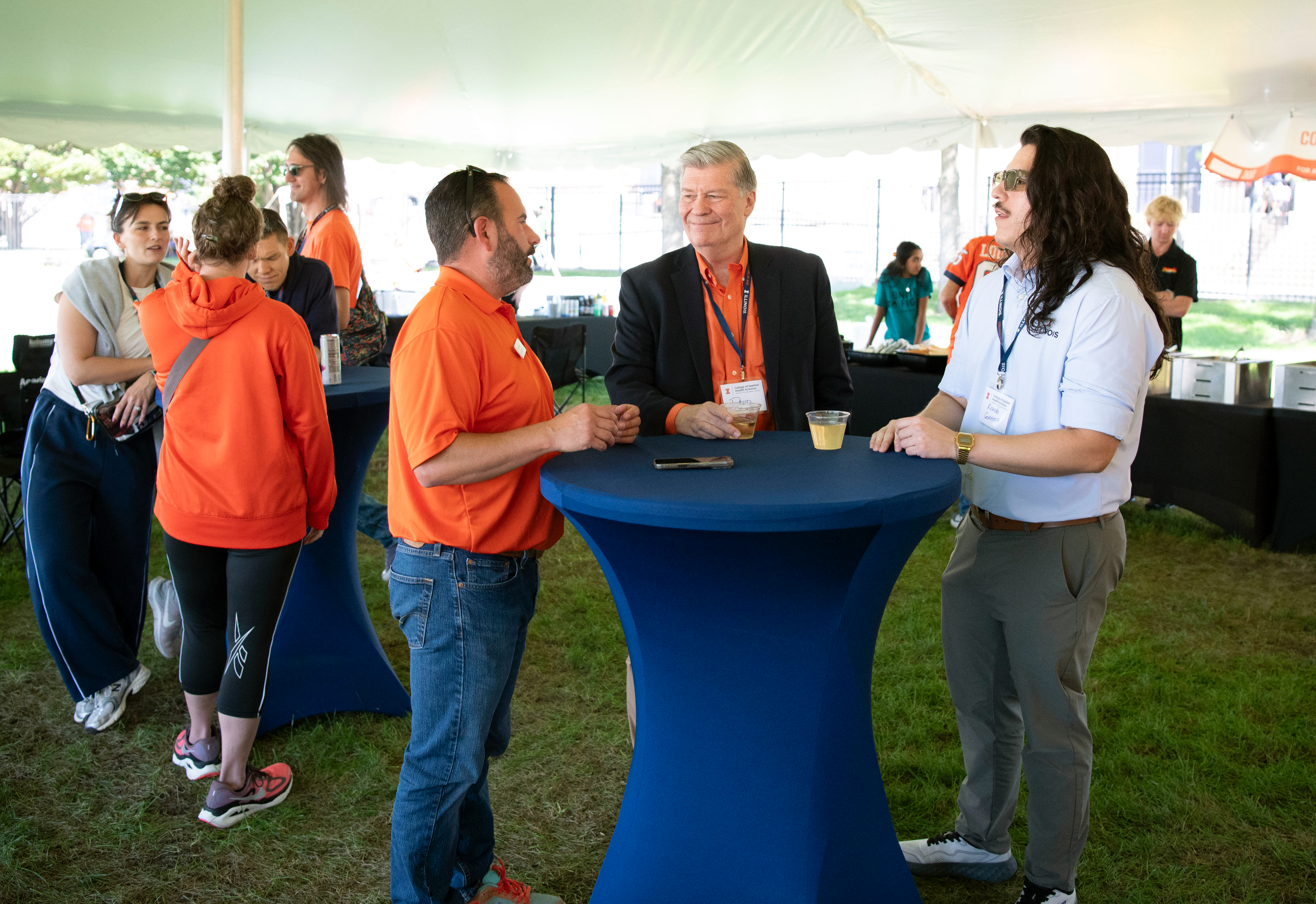
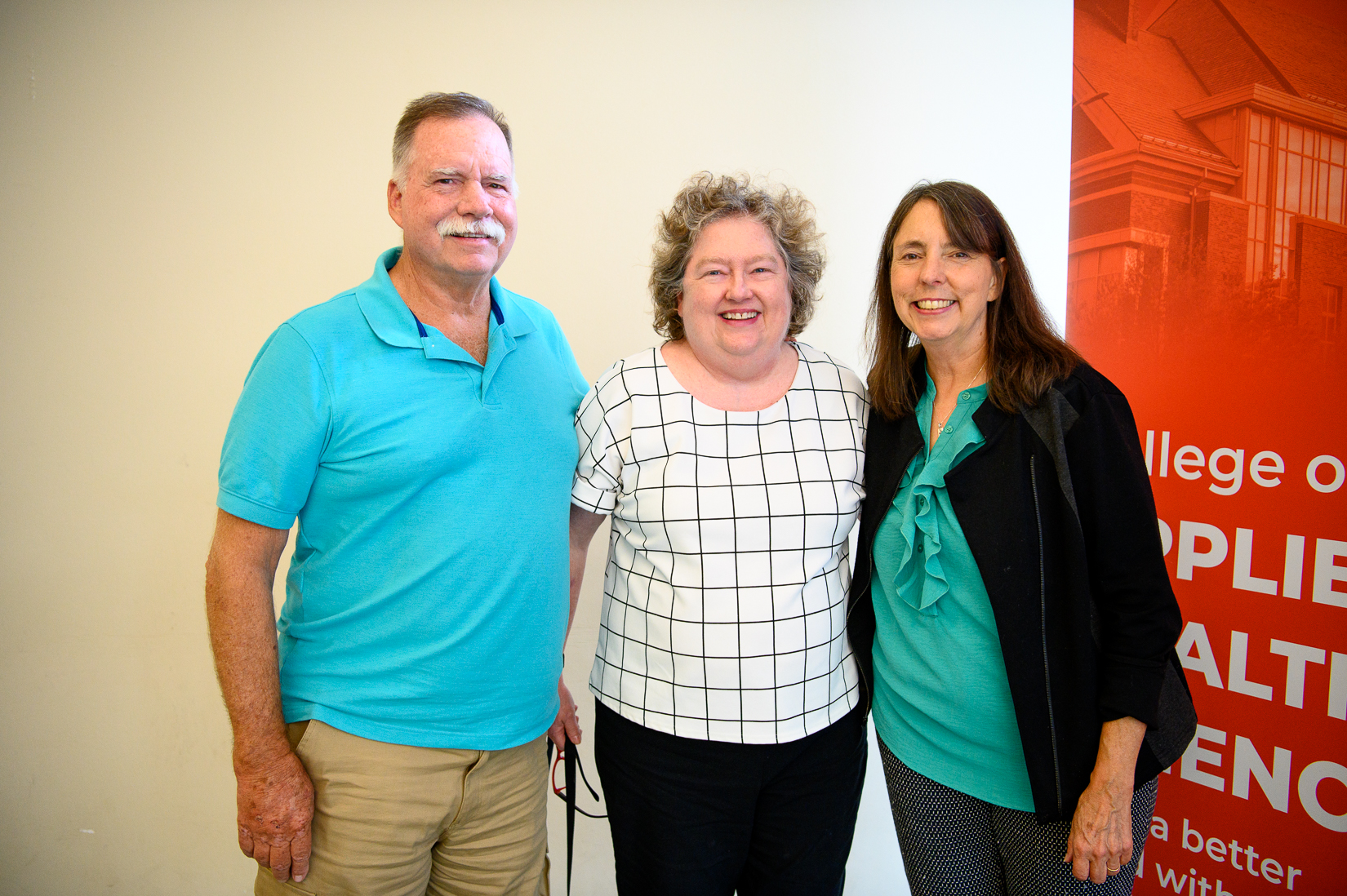
David Shockey, center, with Senior Director of Advancement Matt Smith, left, and Health and Kinesiology Assistant Professor Shaon Lahiri (Photo by Bridget Lee-Calfas)
By Vince Lara-Cinisomo
Sara Kelly once had to make a case for a small tent and a gathering of perhaps 75 people. On Saturday, Oct. 3, 2026, she saw how far that idea had come.
The former Assistant Dean for Advancement for the College of Applied Health Sciences recalled an early tailgate around 2005, tucked away on the other side of what was then Assembly Hall.
At the college’s 2026 tailgate in Grange Grove in front of Gies Memorial Stadium, Kelly saw just how much the gathering has evolved.
“For me to see this today is amazing,” Kelly said.
The event brought together alumni, faculty, staff and donors, giving supporters a place to renew friendships and connect with the people behind the college’s work. For donors, those connections linked the pleasure of returning to campus with the reasons they give: opportunities for Veterans, health equity, community wellness, vital research and a commitment to students.
The gathering gave donors a chance to discuss those shared values and investments with the college community while participating in a beloved annual campus tradition.
Peter Korst, chair of the college’s Board of Visitors, described attending as one way he demonstrates his enduring affinity for Applied Health Sciences.
“I want to show up to support the college in any way,” Korst said.
Korst earned his undergraduate degree in civil engineering at Illinois and a master’s degree in what was then Leisure Studies and is now the Department of Recreation, Sport and Tourism. Both colleges equipped him with valuable skills, he said, but Applied Health Sciences contributed more directly to what became his vocation.
His involvement began on an advisory board for RST before he joined the Board of Visitors. The tailgate gives him another way to maintain those ties, with familiar faces making each return more anticipated than the last.
“It seems like every year it gets more and more comfortable because I see more people that I know,” he said.
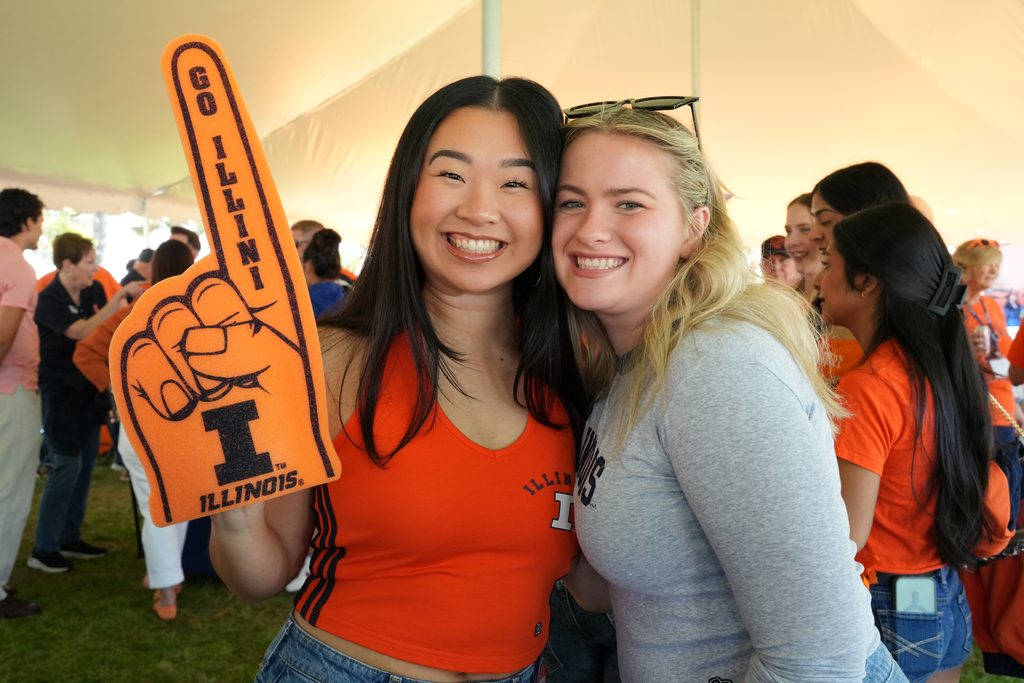
Students as well as faculty, staff and alumni packed the tailgate tent in Grange Grove (Photo by Bridget Lee-Calfas)
That sense of connection also informs his goals for the board. Korst said members want opportunities beyond hearing reports about the college. He is helping identify ways they can engage more directly with students and faculty.
For Denis Lougeay, who runs the San Diego Illini Club, the gathering connected a distant alumni community with people it supports in Urbana-Champaign.
Lougeay said he had returned for homecoming perhaps 30 times or more but first attended the college’s tailgate last year. Valued relationships with people associated with the college help draw him back.
“It’s really great to be here and see all these people,” Lougeay said.
His club sponsors a scholarship for Veterans at the Chez Veterans Center, and he also contributes individually.
“We sponsor a Veteran, essentially, every year,” he said.
Neither Lougeay nor his wife Denruth is a Veteran, he said. But San Diego’s many Navy Veterans and Veterans serving on the club’s board helped make the connection meaningful.
A tour when the Chez Veterans Center opened introduced Lougeay to its facilities and staff, strengthening his confidence in its mission.
“We got a tour right when the Chez Center opened, and it is just an amazing facility,” he said.
For David Shockey, a generous donation to the Rural Health Initiative grew from both personal experience and relationships with people working to extend the university’s reach.
Shockey, a lawyer and two-time University of Illinois graduate from Freeport, Illinois, has a sister with a hearing impairment. He’s also a longtime supporter of University of Illinois Extension and wanted to connect campus expertise with people in Stephenson County who seldom make the trip to Illinois.
He described the developing project as an experiment that would bring together university talent with local enthusiasm and commitment.
“It’s a trial (and) we’re going to see how it goes,” Shockey said.
The proposed approach would use dedicated technology to connect people remotely with campus staff and graduate students for additional evaluation of hearing and speech concerns, he said. Shockey characterized it as a way to seek a second opinion.
The project is not yet underway, he said, but the enthusiasm of Extension contact Margaret Larson encouraged him. Larson is the County Extension director for Jo Daviess, Stephenson and Winnebago counties.
“I’ve never seen her more driven,” Shockey said, who added that AHS Senior Director of Advancement Matt Smith was instrumental in getting him on board.
Shockey’s gift illustrates how the relationships renewed at a tailgate can connect to work far beyond campus. For Lougeay, that work means supporting Veterans. For Korst, it includes finding new ways to serve students and faculty.
Kelly, who helped establish the gathering, also recalled hiring former Assistant Dean of Advancement Jean Driscoll—who recently retired from the university—for her passion for the college’s mission and her experience as an alumna.
“She exemplified what we’re really all about—giving people opportunities to excel,” Kelly said.
In Grange Grove, the people who help make those opportunities possible had a place to come together—and reasons to keep returning.
Sally Peterson-Falzone during a mission to China in 2013 (Photo provided)
It is with great sadness that I share the passing of Dr. Sally Peterson Falzone, a distinguished SHS alumna, scholar, clinician, and leader whose contributions to the field of speech-language pathology, particularly in craniofacial disorders and cleft palate, have left an enduring impact on many children and families.
Dr. Falzone earned both her bachelor’s and master’s degrees from the University of Illinois before completing her PhD at the University of Iowa. She was widely respected for her expertise in craniofacial disorders, and her prominent leadership/involvement in several organizations.
Among her many accomplishments, Dr. Falzone served as President of the American Cleft Palate-Craniofacial Association and was deeply involved in the Society for Ear, Nose and Throat Advancements in Children (SENTAC) and numerous other professional organizations. Her influence extended far beyond her clinical and scholarly contributions. She was a dedicated mentor, a trusted colleague, and a passionate advocate whose work helped shape the field and inspired many clinicians.
As Judy Le Duc, who had the privilege of working alongside Sally for many years at the University of Illinois Medical Center, reflected, Sally was “a scholar, academician, and clinician” who devoted herself entirely to serving children with craniofacial conditions. Those who knew her personally speak not only of her professional accomplishments but also of her generosity, compassion, and commitment to others.
Dr. Falzone was also a longtime friend and supporter of our Department and the College of Applied Health Sciences. We are deeply grateful for her many contributions to our profession.
On behalf of the Department of Speech and Hearing Science, I extend our heartfelt condolences to Sally’s family, friends, former colleagues, and all those whose lives she touched.
Her legacy will continue to live on through the many clinicians she mentored, and the countless children and families who benefited from her care and advocacy.
With sympathy and gratitude,
Georgia Malandraki
Shahid and Ann Carlson Khan Professor of Applied Health Sciences Department Head Department of Speech and Hearing Science
Leisure and recreation were ways of life for Payne and led to her passion and career
Laura Payne, right, was joined by brother Tom, left, and her cousin Mary Lynn O’Connor at the McCristal Lecture (Photo by Bridget Lee-Calfas)
For Laura Payne, the study of leisure is anything but idle work. It is a way to understand how people build identity, sustain relationships and protect their health across a lifetime, and how communities can make those benefits available to everyone.
That career-long commitment was celebrated as Payne was honored as the 2026 King James McCristal Distinguished Scholar in the College of Applied Health Sciences at the University of Illinois. The distinction recognizes outstanding scholarships and gives the college community an opportunity to learn from researchers whose work is shaping their fields and improving health and well-being.
Payne, whose scholarship explores how recreation affects quality of life, marked the honor with a lecture titled “Leisure, Health, and Well-Being: Expanding Research Impact Through Public Engagement.”
Her remarks traced the roots of her research from childhood experiences in suburban Chicago to questions about resilience, chronic disease and healthy aging.
“I’m really delighted and greatly appreciate this honor,” Payne said.
Growing up, she found that recreation helped shape her confidence and sense of self. Access to a park district opened a world of activities and eventually led to jobs at a swimming pool, first as a lifeguard and later as a pool manager. She did not realize recreation could become an academic field until she was well into an undergraduate communications degree. After several years at a Chicago management consulting firm, however, she knew she wanted to work with a mission that felt more personal.
Leisure and recreation had mattered deeply to Payne and her family. Over time, that understanding developed into an interest in aging, a subject she describes as inherently personal. One of the most important influences was her older brother, Tom, who was diagnosed in early adulthood with ankylosing spondylitis, a form of inflammatory arthritis. Payne watched him navigate disruptive symptoms, evolving treatments and changing lifestyle demands while remaining committed to the activities he loved.
She was struck by his resilience and by the grit of others who adapted cherished pursuits rather than surrendering them. “Tom, you were a big reason why I pursued this line of research,” she said during her remarks. Her mother’s concise philosophy offered another guide: “Healthy aging is about ‘adapt, adapt, adapt.’”
Those experiences helped Payne frame leisure not as an optional luxury but as an essential part of a good life. To prepare for her talk, she said she asked 25 people about what made a good day. Every participant named two leisure activities. Her research also found that people with broader leisure repertoires reported substantially better physical and mental health than those with fewer activities.
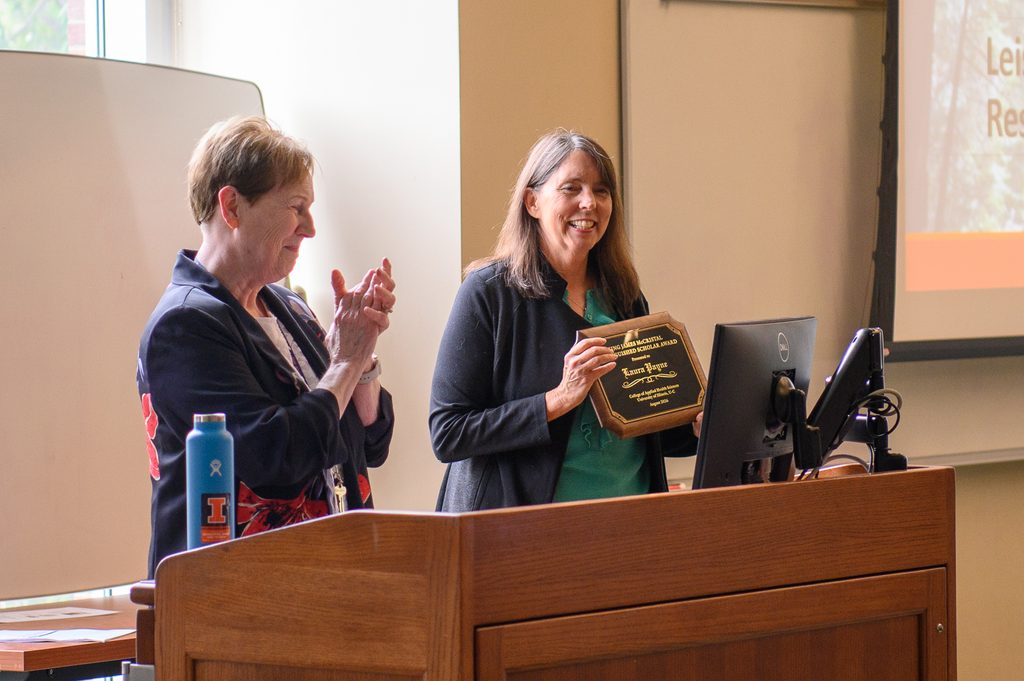
Laura Payne, right, accepts her plaque from Dean Cheryl Hanley-Maxwell (Photo by Bridget Lee-Calfas)
The findings carry increasing urgency as the population ages. Payne noted that people 100 and older are the fastest-growing segment of the older population, with many living more independently. Yet longer lives also bring challenges, including rising risk of developing chronic disease, uneven access to recreation and broader social conditions that affect whether people can pursue and define good health. Personal circumstances matter, too. Understanding healthy aging, in her view, requires attention to all of those forces and to what older adults are already doing well.
Cheryl Hanley-Maxwell, dean of the College of Applied Health Sciences, praised Payne as an accomplished scholar who has advanced understanding of leisure, health and well-being while ensuring that her research makes a difference beyond the university.
“Her work reflects a deep commitment not only to generating knowledge, but also to ensuring that research reaches beyond the university and makes a meaningful difference in the lives of individuals and communities,” Hanley-Maxwell said.
That public-facing commitment is especially visible in Payne’s leadership of the Office of Recreation and Park Resources, which she took over in 2020. Payne refreshed the office’s mission: to collaborate on recreation, sport and tourism initiatives that build healthy communities. Under her leadership, the office responds to community and industry needs, issues and trends while giving undergraduate and graduate students hands-on experience through projects.
Hanley-Maxwell said Payne’s approach demonstrates that research can have greater impact when scholars build relationships with communities, listen to the people their work is meant to serve and translate evidence into practices that are useful and accessible. That approach, the dean added, embodies the values of the McCristal honor.
The King James McCristal Scholar Award was established in 1988 to honor King McCristal, dean of AHS from 1961-1973.
“Dr. Payne’s research reminds us that leisure is far more than how we spend our free time,” Hanley-Maxwell said. “It can be an important contributor to health, quality of life, social connection and well-being, and a powerful avenue through which research can engage communities and create broader societal impact.”
For Payne, the recognition brings a career built around that idea full circle: from a child finding confidence through local recreation, to a scholar asking how leisure can help people adapt, connect and thrive, to a public-engagement leader working alongside communities to put that knowledge into practice.
After the hardest year of his life, this wheelchair basketball star is entering his senior season with a new perspective
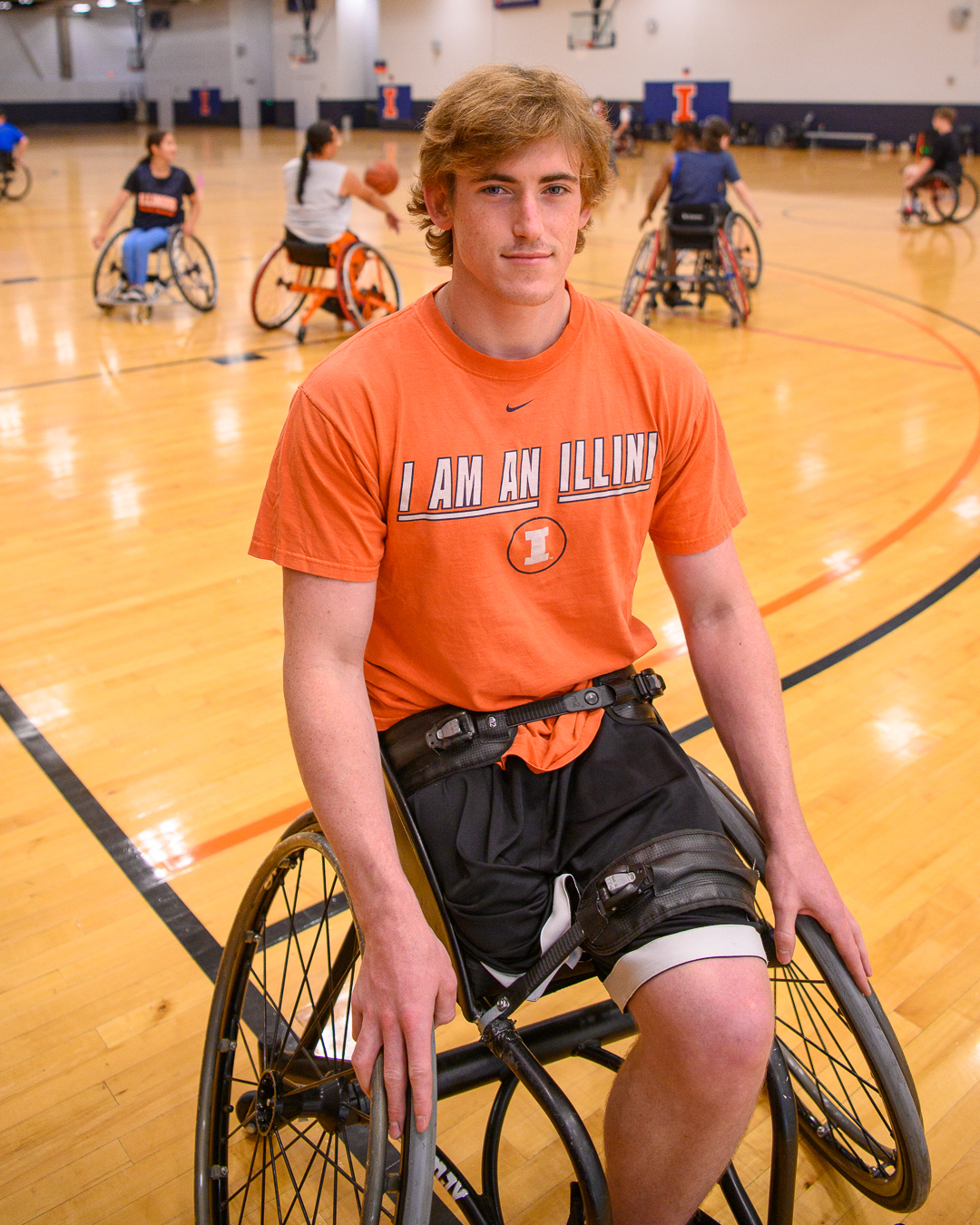
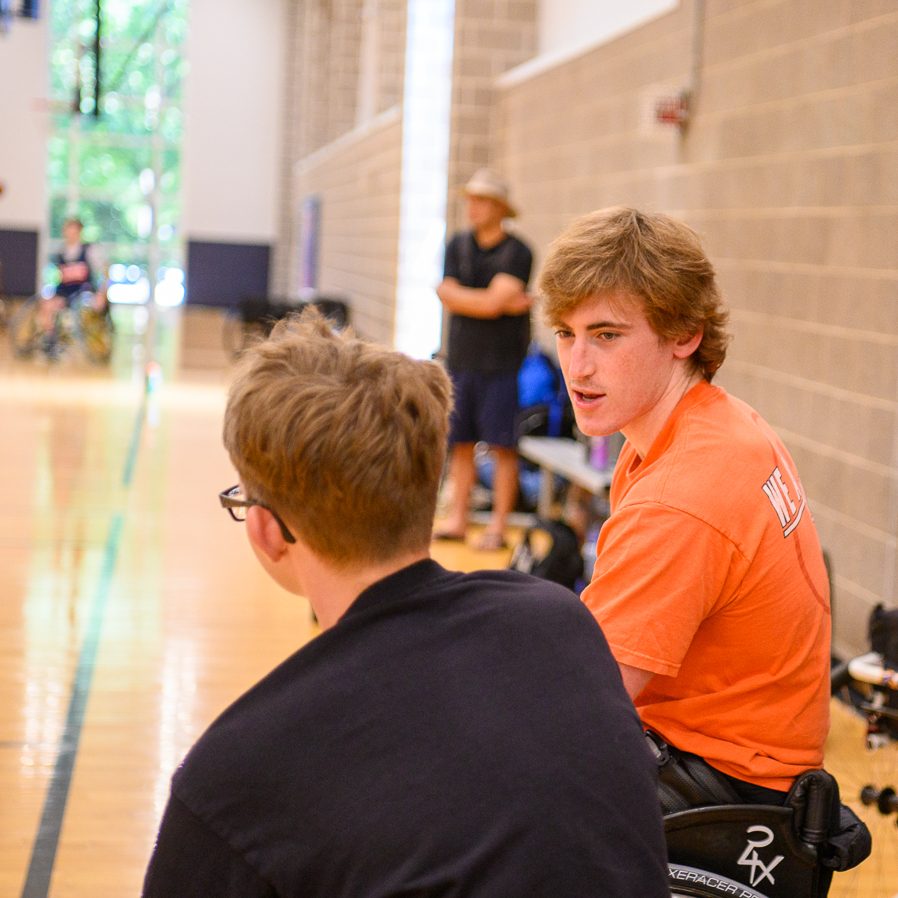
RJ Fitzpatrick, a senior in recreation, sport and tourism, at an Illinois wheelchair basketball skills camp this summer. (Photo by Ethan Simmons).
Against all odds, wheelchair basketball star RJ Fitzpatrick’s junior season at the University of Illinois Urbana-Champaign was a banner year on the court and in the classroom.
He helped bring the Fighting Illini to a third-place finish in the National Intercollegiate Wheelchair Basketball Tournament in April and won the 2025-26 NWBA Player of the Year, the highest honor for collegiate players. He even earned a 4.0 GPA in the spring semester, studying recreation, sport and tourism.
“It was really nice to achieve, and it’s also hard, too, because my dad would be so proud of me for that,” Fitzpatrick said. “It was really tough not having him there, not seeing him in the crowd, because that was like his number one thing. He loved watching wheelchair basketball.”
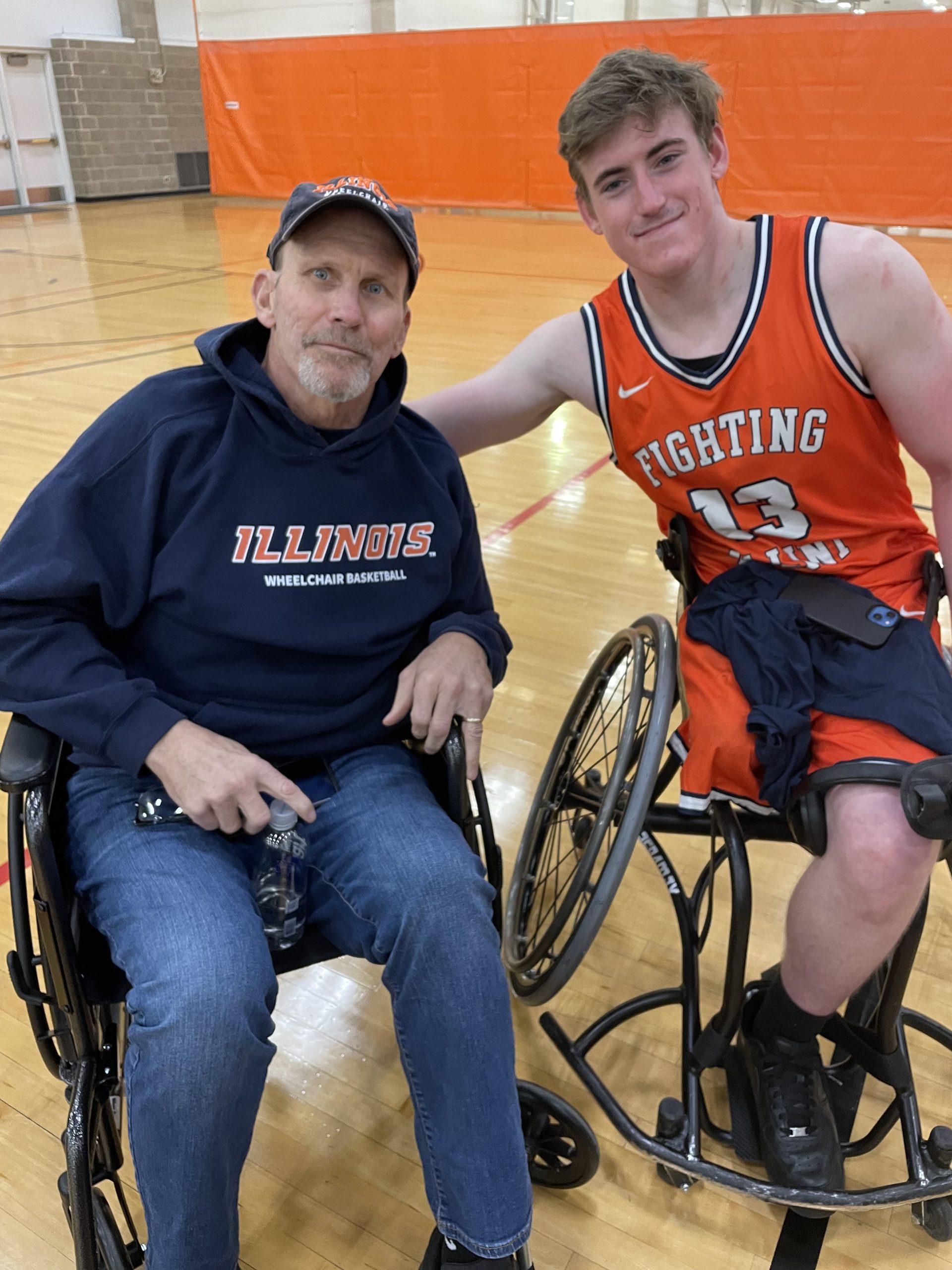
RJ Fitzpatrick is heading into his senior year at Illinois without his chief supporter: his father, Peter, who died in March after a two-year battle with brain cancer. The quintessential “sports dad,” Peter Fitzpatrick was his son’s biggest fan in the stands, though never quite his biggest critic.
“That’s RJ himself,” Illinois men’s wheelchair basketball coach Jacob Tyree said. “That loss was felt to a magnitude that can’t be put into words—Peter was just a really unique person to have been intertwined with my athletes’ lives.”
A new year brings new lessons and a new level of maturity for Fitzpatrick, a fierce competitor on the court with a kind, fun-loving presence in his daily life. And this year, he knows for sure: he’s not going it alone.
“The support from the whole wheelchair basketball program has just been huge,” he said. “Knowing I always have them in my corner, that just has made the whole thing a little bit easier, you know?
“It’s always going to be hard, but knowing I have them has been so special.”
Beginnings
Fitzpatrick’s brand of physical, polished play—bumping in his chair for rebounds, drilling threes and dumping off swift passes to the interior—might feel like a style he was born with.
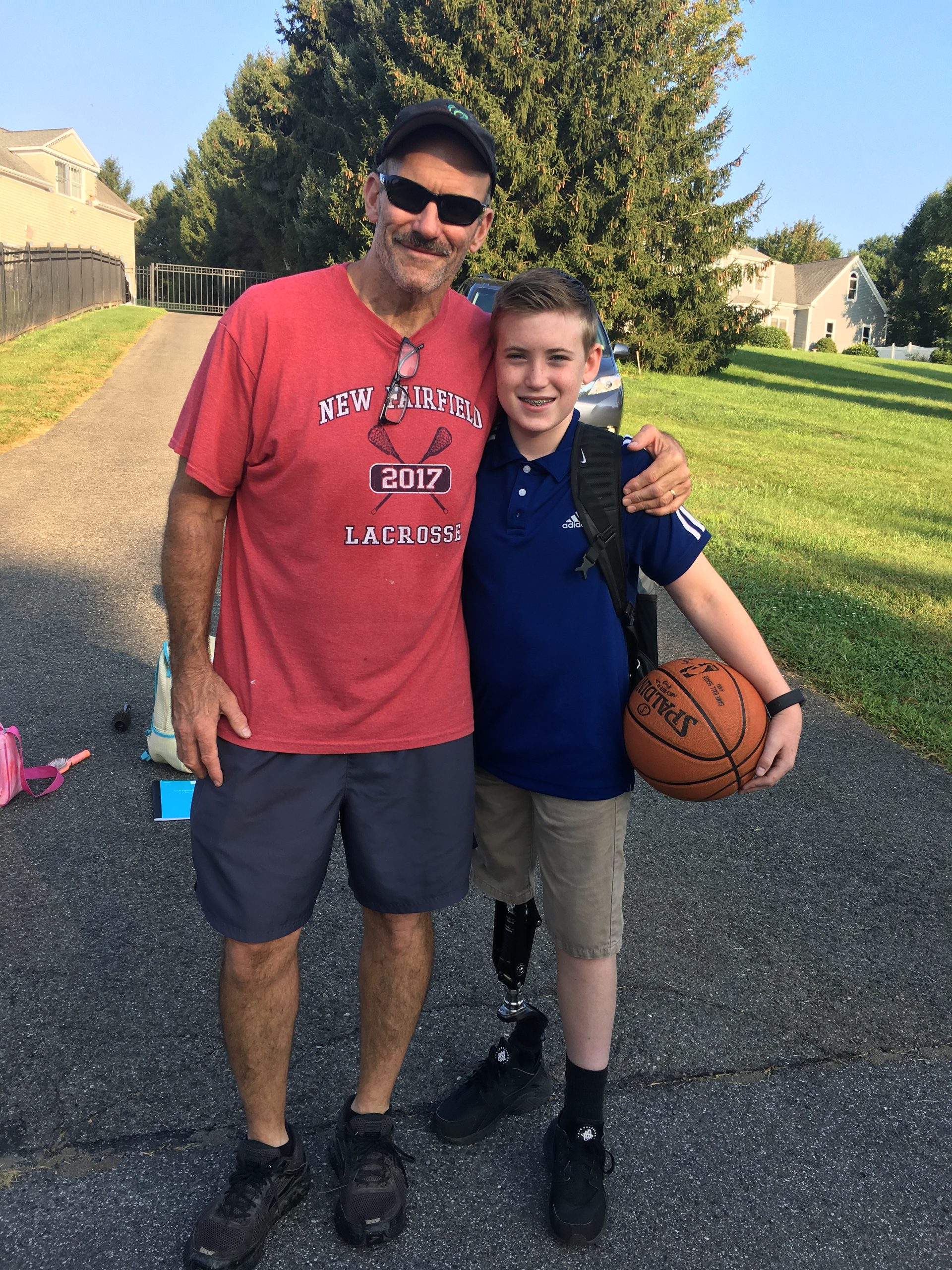
But his story with wheelchair athletics began when he was an eighth grader attending Camp No Limits, a summer camp for kids with limb differences or limb loss. Fitzpatrick was born without his right leg, but he grew up playing able-bodied sports with his friends.
A camp mentor let Fitzpatrick try out his sports chair for a spin.
“I remember it was super hard, because I was so used to playing stand-up basketball,” Fitzpatrick said. “Trying to figure out how to push the chair and also dribble and shoot from two feet lower was crazy to me.”
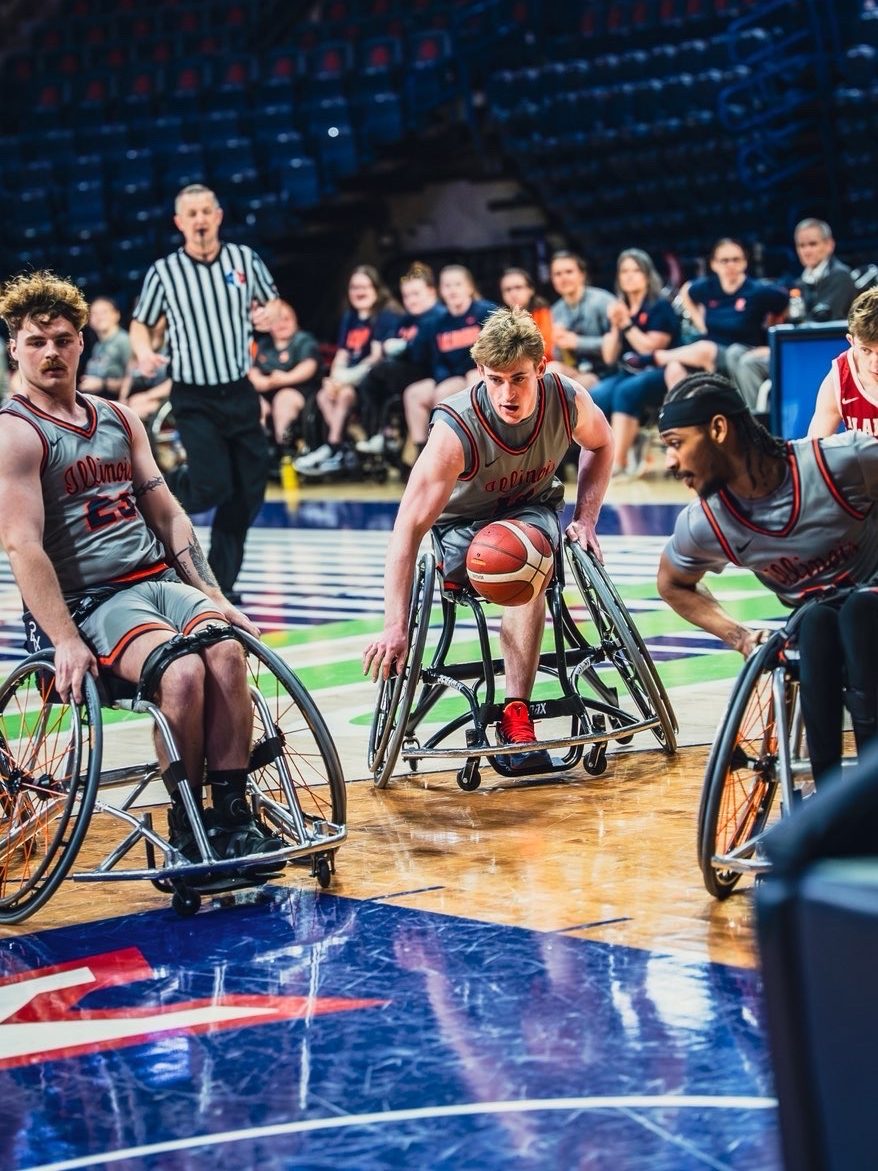
RJ Fitzpatrick (center) drives to the basket, flanked by teammates JM Davis (left) and Martrell Stevens. (Provided)
His high school hosted a wheelchair basketball exhibition game the following fall, and he gave it another shot.
“That’s where the love for it all started,” Fitzpatrick said. “Once I got in it, I realized how much it leveled the playing field for me. I thought, ‘I could be pretty good at this.’”
He went on to play wheelchair basketball for New Britain High School, which had an adaptive sports program through the Ryan Martin Foundation, while swimming and running cross country for New Fairfield High School, using a prosthetic to run. His growing basketball talent drew attention, and he was offered a scholarship to play for the University of Illinois, 900 miles from his hometown of Sherman, Connecticut.
He knew of the University of Illinois through one of his old Juniors Division teammates—recent RST graduate Martrell Stevens—who accepted an offer to play there. Its rich history of wheelchair athletics and accessibility through Disability Resources and Educational Services held broad appeal to Fitzpatrick.
“There was always a feeling I had that I wanted to end up here,” Fitzpatrick said. “Even before I got recruited, right when I got to campus that first time, I kind of knew this was where I wanted to be.”
Still, coming to the U. of I.’s 50,000-student campus from a town of 3,500 was a serious adjustment. Longtime teammates Grant Pierce and John Matthew “JM” Davis have formed his social bedrock while he’s been at the university. So much so, that they moved in together.
“They’re brothers—they bicker, they fight—getting them to work together can be the hardest or easiest thing I do,” Tyree said. Many of the team’s funniest and fondest memories stem from those three, Tyree said, and their own brand of brotherly love. Fitzpatrick is usually the one stirring the pot.
For the second year, the trio of big men will live in an Urbana house together for their senior season: “Those two, we’ve all just kind of stuck by each other’s side and been there for each other with anything that comes up,” Fitzpatrick said.
A trying tournament
After a two-year battle with glioblastoma, Peter Fitzpatrick—a longtime health and physical education teacher—passed away on March 9, 2026. His passing came just a week before the UTA College Classic in Arlington, Texas, a marquee wheelchair basketball tournament with seeding implications for nationals the next month.
“We were even debating, ‘Do we not go?’” Tyree said. Both Illinois wheelchair basketball teams were thinking of diverting their travel to Peter’s funeral instead.
“Of course, me and my dad would want them to play,” Fitzpatrick said. Across the country, the team thought of how they could show support without physically being there for RJ and his family.
Peter and RJ Fitzpatrick in 2018. (Provided)
Halfway to Arlington, the team made a pit stop at a Walmart in Arkansas. After chatting with fellow coaches and DRES staff, Tyree went inside and grabbed a couple packages of black ribbon. Before the tournament games, members of the Illini men’s and women’s teams tied the ribbon around their chairs and wrists to pay respects to Peter, their biggest fan.
Through his grief, RJ felt how the experience transformed the team.
“Seeing how tight we were, as a whole program being one, those were some huge days for us to grow together,” Fitzpatrick said.
Peter’s impact on the team resonated beyond supporting his son. He was a constant presence in the stands, and a supporter for RJ’s future Illinois teammate Gavin Ford—a sophomore from North Reading, Massachusetts—helping to get him into adaptive sports in the first place.
The last time Peter saw his son play in person was at the fall alumni tournament, where Illinois wheelchair basketball players from years past came to battle the current-day roster.
“My whole family came, and it was a really special time,” Fitzpatrick said. “I’m involved with the [St. John’s Catholic] Newman Center, and one of the priests came as well. It was special to see all these influential figures in my life.”
It’s rare to find someone who excels in the classroom, as an athlete and in how he treats other people—but that’s exactly who RJ is.
Sarah Agate
Teaching Associate Professor in Recreation, Sport and Tourism
After his playing days, Fitzpatrick dreams of working in a front office role for an NBA team or starting a wheelchair basketball program of his own closer to home in Connecticut. Recreation, Sport and Tourism has always made a sensible fit for his academic program at Illinois.
Peter and RJ Fitzpatrick in 2025. (Provided)
He got a small taste of what it takes to run a sports event of any kind when he helped organize the U. of I.’s spring wheelchair basketball tournament for a class—a tournament he was scheduled to play in himself.
The courses Event Management and Implementation in Recreation, Sport and Tourism opened a “new world” of small, behind-the-scenes details, from what it takes to get coaches and players organized to the volunteer force that helps a tournament run.
And the class instructor, RST Teaching Associate Professor Sarah Agate, was understanding and flexible while Fitzpatrick and his family dealt with his father’s worsening illness and later grieved his passing.
“She was really there for me in a huge way, knowing I had the support from her, constantly going home to Connecticut,” Fitzpatrick said. “I’d always bring it up to my mom and my sister, just how kind and supportive she was. I really hope that’s a contact and connection I can continue to build with her for the future. “
In class, Fitzpatrick is “hard-working and responsible,” Agate said. “It’s rare to find someone who excels in the classroom, as an athlete and in how he treats other people—but that’s exactly who RJ is.”
His team-first attitude and humility were present in class. Agate didn’t even learn about Fitzpatrick’s Player of the Year honors until one of his classmates mentioned it to her.
“What makes his accomplishments even more meaningful is that he achieved all of this while carrying the weight of losing his father.”
Pushing forward
Two third-place finishes at the NIWBT stamped a successful season for Illinois wheelchair basketball, but Fitzpatrick thinks the team is built for more.
“I’m super confident with this group of guys we can finish even higher,” he said.
Underneath his placid demeanor is a competitive intensity that churns for the whole team.
“I tell people all the time, the character of who you are shows up on the court,” Tyree said. “You can watch a game of basketball, or any sport, and through an athlete’s actions you’ll see their core values embodied. Your actions, not intentions, reflect who you are to the world.
“He has a mentality—that when it’s honed and brought out in the right ways—we’re fighting back. I don’t care if we’re down 40 points, if we’re down 2 points, I don’t care if we’re up 10, we’re still fighting and we’re going to see it all the way through.
University of Illinois men’s wheelchair basketball senior RJ Fitzpatrick speaks to a camper at the Illini Premier Camp for young wheelchair basketball players on June 30, 2026.
“That’s something that’s really hard to ingrain in a player, and that’s where his character really shines.”
As he matures into his role as a team leader, Fitzpatrick is beginning to see himself as an ambassador for his sport and for the larger disability community.
“I’m trying to continue to grow my relationships with the people on campus,” Fitzpatrick said. “Being an amputee, I’m a little more ‘obvious,’ and that’s a great way for me to talk to somebody about wheelchair basketball, or adaptive sports, and open up that world for them.”
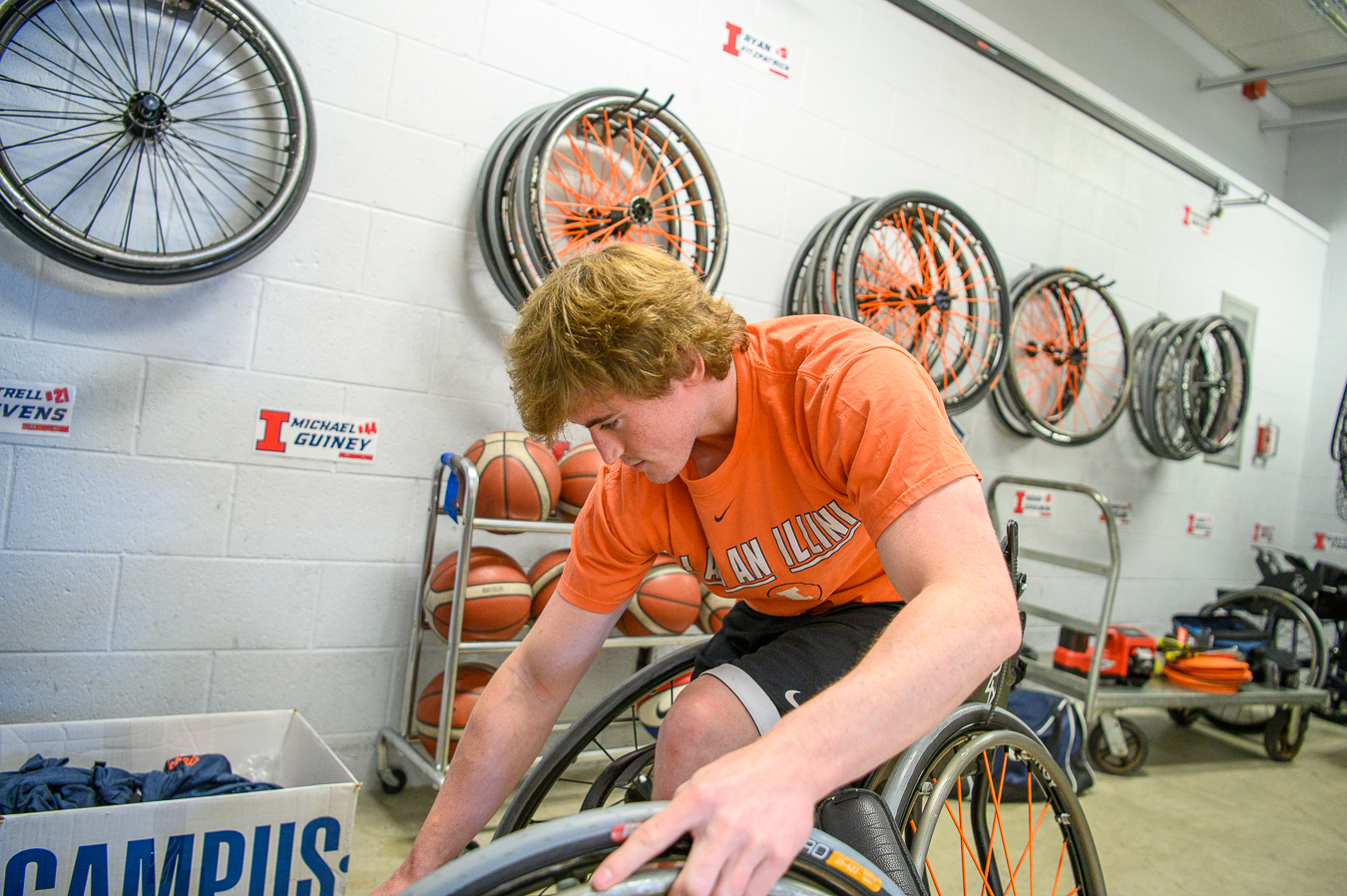
All those feelings were made fresh while he coached in this summer’s skill development camps for wheelchair basketball at the Activities and Recreation Center. Fitzpatrick turned in a few 12-hour days mentoring kids of all skill levels: some were new to the sport; others were vying for a collegiate roster spot.
“It’s special to see these dads come with their sons or daughters to camp and walk around campus; I remember doing that with my dad,” Fitzpatrick said. “Because those were some of the best years of my life, the excitement of finding a school—those moments really warmed my heart.”
In his experience, the grief “never really goes away.” But tender moments and new life lessons keep Fitzpatrick moving forward, with his father’s memories still held close.
“Trying to live a little bit more like him really inspires me to keep pushing.”
University of Illinois men’s wheelchair basketball star RJ Fitzpatrick helped run this year’s Illini Premier Camp for young wheelchair basketball players in late June. He’s heading into his senior year after a year of great accomplishments on the court, and one of his hardest years off of it.
Editor’s note:
Want to learn more about wheelchair basketball? Join the 8-week course: RST 265 Principles of Coaching Wheelchair Basketball, instructed by RST Graduate Student Morgan McCammon, four-year women’s wheelchair basketball player for Illinois.
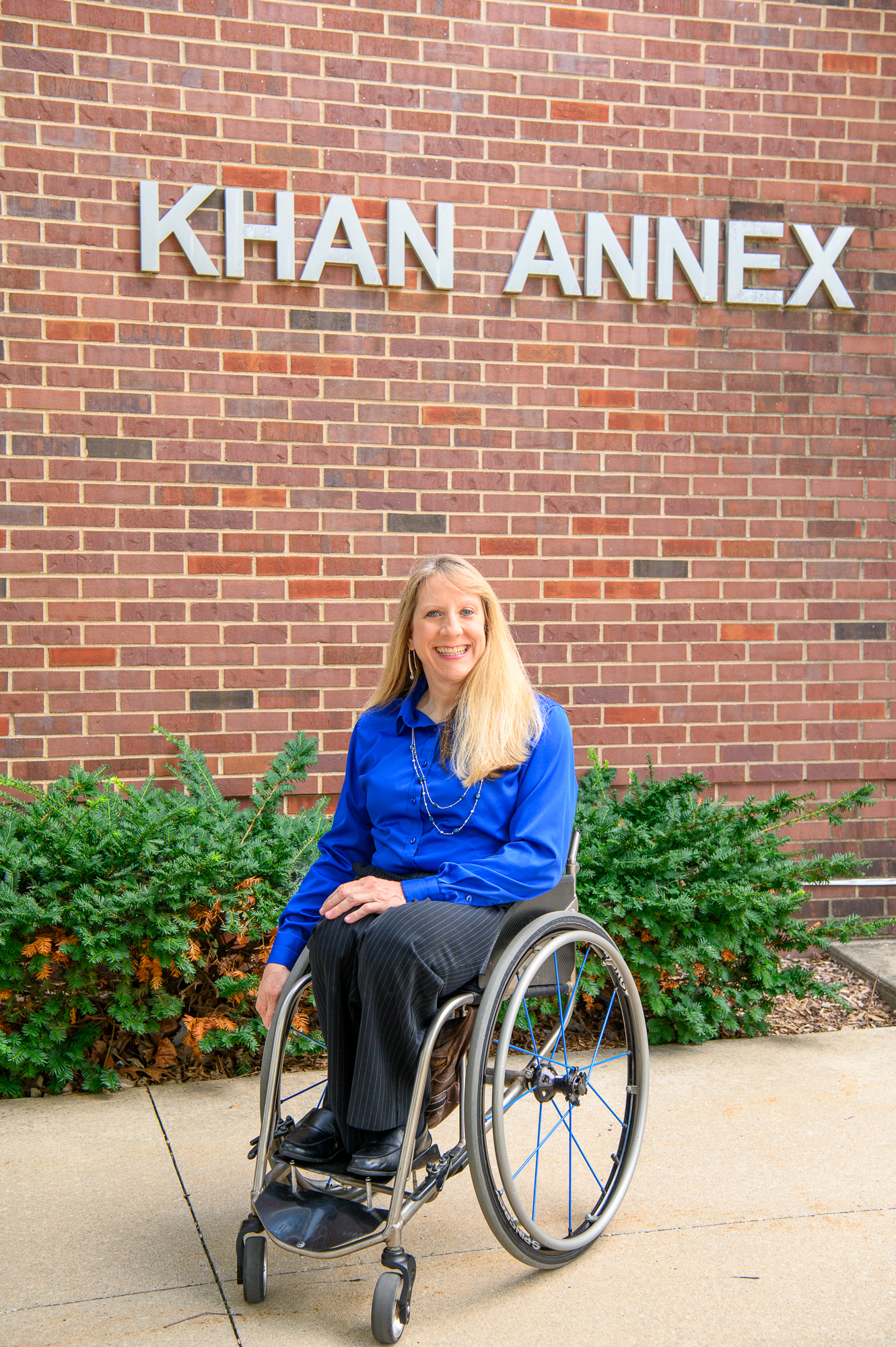
Jean Driscoll outside of Huff Hall on August 4, 2026. Driscoll is retiring from the University of Illinois for a new fundraising role in St. Louis. (Photo by Ethan Simmons)
Jean Driscoll wants you on her team.
Whether you’re a colleague, friend, donor or stranger, sharing a nice dinner or a quick chat inside Huff Hall, Driscoll invites you into her world, mainly to learn more about yours.
After roughly two-and-a-half decades working and learning at the University of Illinois Urbana-Champaign—including two brief exits and returns—Driscoll is retiring from her post as assistant dean for advancement for the College of Applied Health Sciences, a role she’s held since 2020 after coming back a second time.
A new challenge is fast approaching: she’ll be fundraising for the Foundation for Barnes-Jewish Hospital in St. Louis, but colleagues can rest assured that she will be working until the end of her appointment at Illinois on Aug. 31.
Driscoll’s people-first personality has helped secure some of the finest gifts in the College of Applied Health Sciences’ history and woven enduring relationships with alumni who care deeply about the college’s mission.
It’s easy to forget now, but at every phase of her life, Driscoll’s success was anything but guaranteed. The shy younger sister from Milwaukee born with spina bifida, a young athlete with budding talents, a college fundraiser who was “green as green could be.”
“‘Team’ is a theme from my youth onward, where I was the last kid picked on the playground, to now, where I get to choose people for my team,” Driscoll said. “I’m carrying that torch and passing it along—as I transition away from the University of Illinois, I feel like I’m passing it toward each of the staff members here, a little bit to our alumni, donors and friends, and to my closest colleagues.”
What has radiated from Driscoll on the last days of her U. of I. appointment is an appreciation for her place in history, a full respect for the layers of accessibility on this campus that were fought for by trailblazers before her, on the Illinois campus and beyond.
“I try to live in this space of gratitude and try to remember that there are people, my predecessors both professionally and personally, who have laid a foundation so that I can be where I am,” she said.
A reluctant advocate
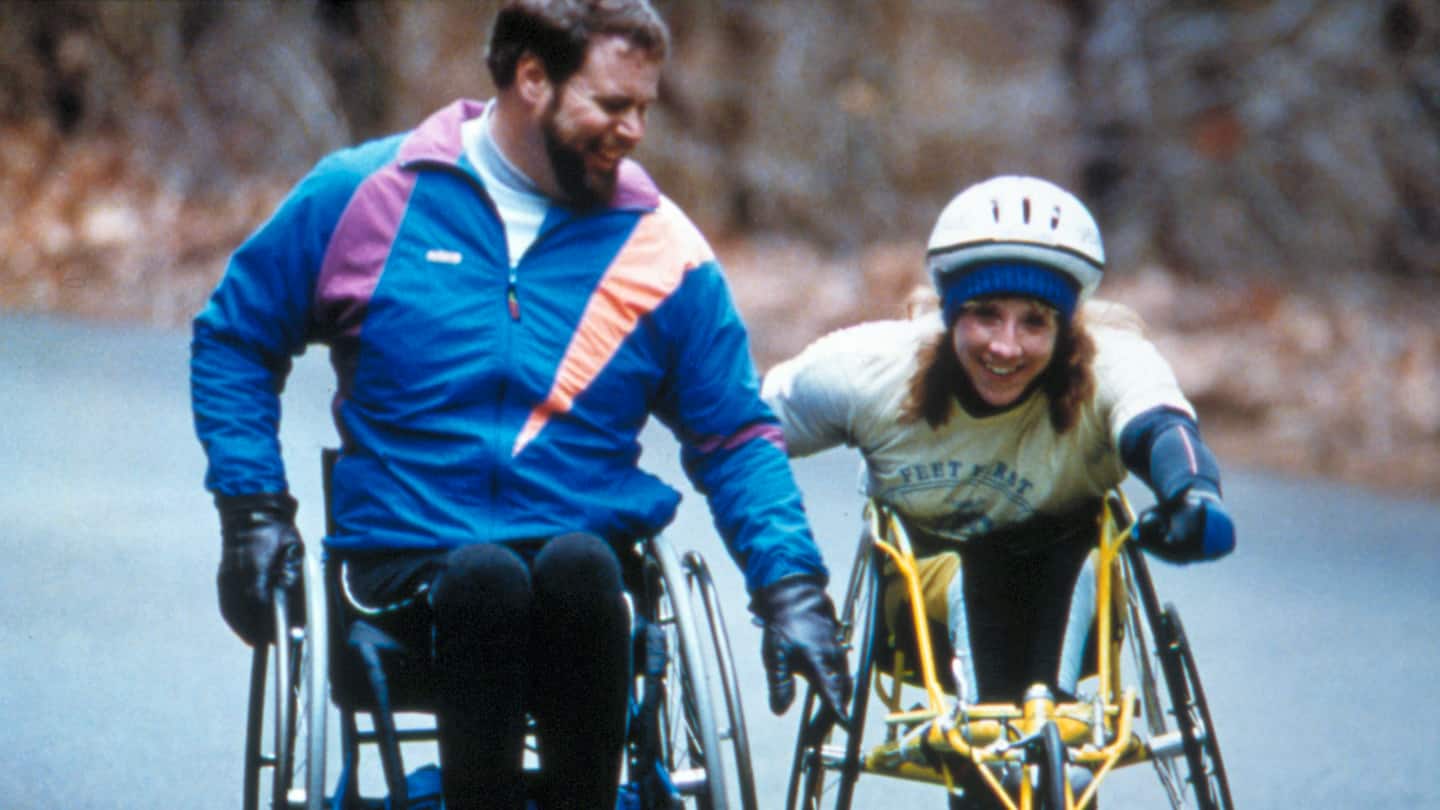
It took two years for Coach Marty Morse to persuade Jean Driscoll—who had become a world-class short-distance wheelchair racer with only a few years of training—to compete in the Boston Marathon. In 1990, she finally caved, “just to get him off my back.”
“I’m sitting on the starting line, not believing I belonged in that race. How did I let Marty talk me into it?”
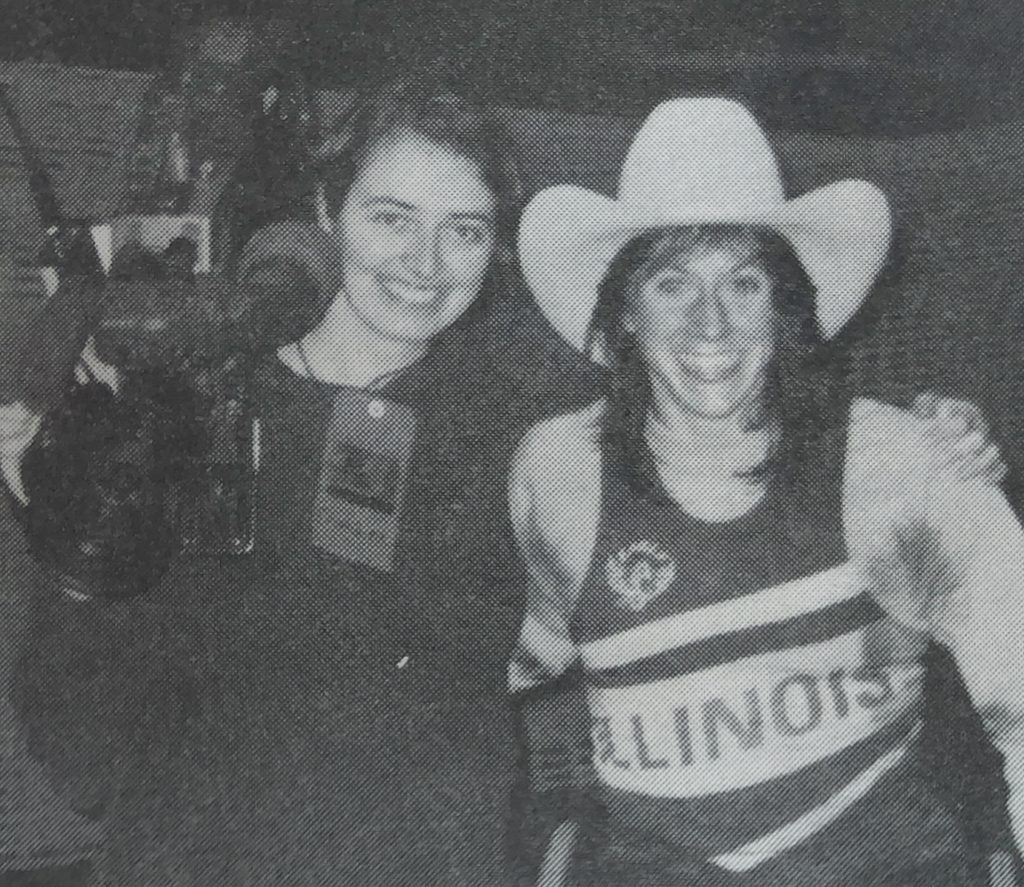
Then, 26.2 miles later, Driscoll not only won, but broke the wheelchair marathon world record by almost seven minutes, clocking in at 1 hour, 43 minutes, 17 seconds. She thought it was a fluke: her Illinois teammate Ann Cody was supposed to win, she had been “killing” Driscoll in all the workouts.
Imposter syndrome be damned; her life had changed forever.
“All of a sudden, everybody wanted to hear what I had to say,” Driscoll said. “The spotlight was … it felt like a burden to bear in those first few years, because I was so shy.”
She broke her own world record in the 1991 Boston Marathon on her way to seven straight wins in wheelchair marathoners’ most hallowed race. The spotlight intensified, and slowly, Driscoll’s understanding of her reach and voice began to shift.
“I realized what an opportunity there was to help people understand what disability is and isn’t. It’s a characteristic, like hair color and eye color. It’s not a defining principle.”
She has repeatedly returned to a form of that message, bringing her story back to the universal. Driscoll signs her autographs “Dream BIG and Work Hard!” That same phrase became the title of a children’s book based on her life story.
By the time she retired from racing after the 2000 Sydney Games, she was caught on the opposite end, wondering whether there were enough spokespeople to “carry the message” for the disability community she had been preaching for the last decade. (“That was kind of selfish and self-centered, quite honestly—there have been plenty of people to carry this on,” she said.)
Her retirement from racing allowed her to step into the role of global advocate. In the early 2000s, she traveled back and forth to Ghana several times to host wheelchair racing camps and help develop their para-athletics programs. In 2004, wheelchair racers Raphael Nkegbe and Ajara Busanga became the first Paralympians to represent Ghana in their country’s history, with Driscoll as a key mentor.
Alison Davis got to see Driscoll’s athletic talents and personable nature while filming “Against the Wind,” a documentary on Driscoll’s return to competition. (Provided)
“There are so many places around the world where, if you have a disability, you are considered to have no value, no rights, no education,” Driscoll said. “We have alumni who have done these big things, and every generation has students and alumni and faculty who are making a difference in our country and in the world.”
The subject of Illinois journalism instructor Alison Davis’ first long-form documentary was Driscoll’s return to competition in 1996 after she broke her leg the prior year. Media attention was at its zenith, and Driscoll’s schedule was packed, but she still allowed Davis and her collaborator Tim Hartin to follow along with the camera.
When they first traveled over to Disability Resources and Educational Services (DRES) to pitch the documentary, “I was in awe of her and nervous she would say no,” Davis said. “But we quickly recognized we had the same goal for this project and that was to make a sports documentary. We wanted it to focus on the grit and challenges of training at an elite level and not make it an ‘inspirational story’ of someone who happens to race in a wheelchair.”
Their footage and interviews became “Against the Wind,” an award-winning documentary of what ended up being Driscoll’s seventh consecutive win of the Boston Marathon.
“Jean is a person who truly cares about her community and making others feel seen … She is successful because of her hard work, but also because she is an incredible human, and people admire her for all that she is beyond the athletic achievements,” Davis said.
Prepared for everything
To understand today’s Jean Driscoll, you’ll weave through several storied mentors, generally winding up with two brainy coaches that shaped her years at Illinois: former head of DRES Brad Hedrick, and longtime wheelchair track and field coach Marty Morse, both of whom are “forever on a pedestal.”
“I don’t even want to imagine what life would be like had I not met those men and had they not invested so much of their time and talent and skill in me,” Driscoll said.
Hedrick recruited her in the spring of 1986 after seeing her play wheelchair soccer in Wisconsin, having traveled up to Milwaukee for a wheelchair sports clinic.
Coach Marty Morse trained Jean Driscoll for years of dominance in wheelchair marathons. (Photo by Curt Beamer).
Initially, Driscoll couldn’t be bothered to join the women’s wheelchair basketball team, especially not at regional rival University of Illinois. But Hedrick kept sending letters and kept calling, and Jean joined the team. (Driscoll thinks she has a “weakness” for persistent people.)
Athletically, she was thrown into the fire, facing off against Sharon Hedrick, a star on the basketball court and the track who practically no one beat in a wheelchair race from 1975 until she retired in 1990.
“There was no freshman adjustment year for Jean—she got right to work,” Morse said. “She’s always been meticulous, completely prepared for everything.”
Despite Driscoll’s shyness, once she arrived on campus, Morse saw an absorbent, talented young adult, bent on understanding how everything worked.
This trait reared its head in several wheelchair athletics workshops that Morse hosted through the years, bringing in guest speakers from across the country. As an undergraduate, Driscoll stepped up as Morse’s administrative assistant, running workshops with more than 100 people while competing at the same time, Morse said.
And all the while, she was forming connections across the university. She naturally became acquainted with a wide roster of figures in Illinois athletics and academics: basketball head coaches Kathy Lindsay and Theresa Grentz; pioneering athletics administrator Karol Kahrs; Jayne DeLuce, today’s CEO of Experience Champaign-Urbana who managed the aquatics venues during the 1996 Atlanta Olympics, and countless others.
“Instead of just being friends with somebody, she wanted to know how their job went,” Morse said. “Jean is so well-versed, and she was this way as an undergrad. If she took an interest in something on this campus, it was all in.”
After Morse developed a syrinx—a cyst inside his spinal cord—he underwent four major surgeries from 1997 to 2000, which resulted in a loss of function. Morse and his wife Karen Iehl-Morse, a longtime Illinois athletics trainer and instructor in the program, were taking care of their son, 4-year-old Steven, with another child on the way.
“We were having a lot of problems,” Morse said. “And Jean, who was always one of our go-to babysitters, she [basically] just moved in the house. She was there for us during that really traumatic time. Jean is family to us.”
When Driscoll first left Urbana-Champaign in 2004, Morse was upset. He was losing a great friend, but he also felt the university had “dropped the ball” by not keeping her here.
“Because it was like, boy, this woman, her entire career has been nothing but promotion of Illinois,” Morse said. To see her finally return to the University of Illinois in her development and alumni relations role at the College of Applied Health Sciences in 2006 “was no surprise.”
And her return led to countless more friendships and memories. Longtime U. of I. communications officer Robin Kaler first met her at a local 5K, where she “fan-girled” and asked Driscoll to pose with her baby for a picture.
They became fast friends. Over the years, she “has always been there to build the Illinois brand,” Kaler said, thinking of a half-time commercial where Driscoll sang the Alma Mater song with other famous Illinois alums.
One Halloween, Driscoll and Kaler dressed up as the campus statues Alma Mater and Learning, then went to a restaurant near campus, with plenty of onlookers.
“We laughed the entire time as the other diners stared at us,” Kaler said. “Even though she’s retiring, she will be a pillar of our university community forever.”
Tricks of her trade
After 20 years of working in advancement and development, Driscoll knows that lots of people want to make gifts for higher education. Oftentimes, “they just don’t know what they want to do, or how they want to do it,” Driscoll said.
As she describes it, there’s a creative process of matching the donor’s interests with a college’s needs. A scholarship fund? A named space? A new building?
In any case, the process begins with careful listening. One of her favorite donation stories started with a retraction—a donor had withdrawn their support for a five-figure gift to the college. This donor had a list of grievances about how they were communicated with during the process and how their gift was handled.
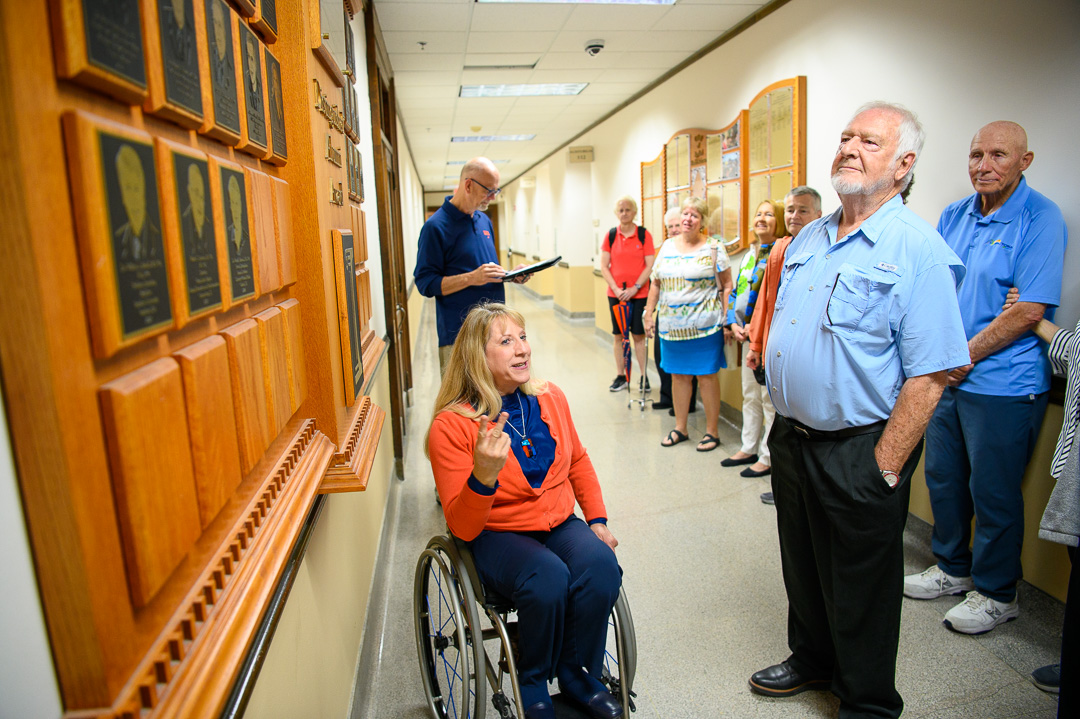
Driscoll speaks to former sports psychology faculty from the University of Illinois. (Photo by Ethan Simmons)
So, Driscoll decided to reopen the relationship, working to address each point “one by one,” she said. By the time they were finished, the donor came back with a seven-figure estate gift for the college. The key was leaning into the “crucial conversation,” where a resolution needed to be reached.
“The younger Jean would be surprised, and dare I say impressed, with how I’ve grown into leadership and management,” Driscoll said.
Driscoll’s last month with her advancement team has involved plenty of hand-offs, introducing her staff to key figures and longstanding relationships. And news of her retirement led to some unexpected gray areas, too, like colleagues being unsure of how or when to communicate with her.
What’s never left is Driscoll’s genuine care, and her “unmatched attention to detail, which has consistently elevated the quality of everything our team produces,” said Angela Tammen, director of external engagement for the advancement team. “In every meeting, she brings the conversation back to the people behind our work. She wants us to understand who they are, what matters to them, and why their story is important.”
Driscoll hired Kathy Saathoff in 2013 to support the Applied Health Sciences advancement office. Saathoff’s first impression was how “strong and confident” Driscoll was in her own skin, and her supportive, empathy-driven leadership style.
“I always appreciated her letting us do our jobs, but when we needed support, she was right there to lend it,” Saathoff said.
Advancement officers Matt Smith and Josh Joines have been flying across the country to fill in the web of connections that Driscoll is entrusting with them.
“I want it to be a smooth transition for our alumni and our friends and donors. Because advancement work can be transient, people come and go,” Driscoll said. “I don’t want to start something we can’t finish.”
Another journey
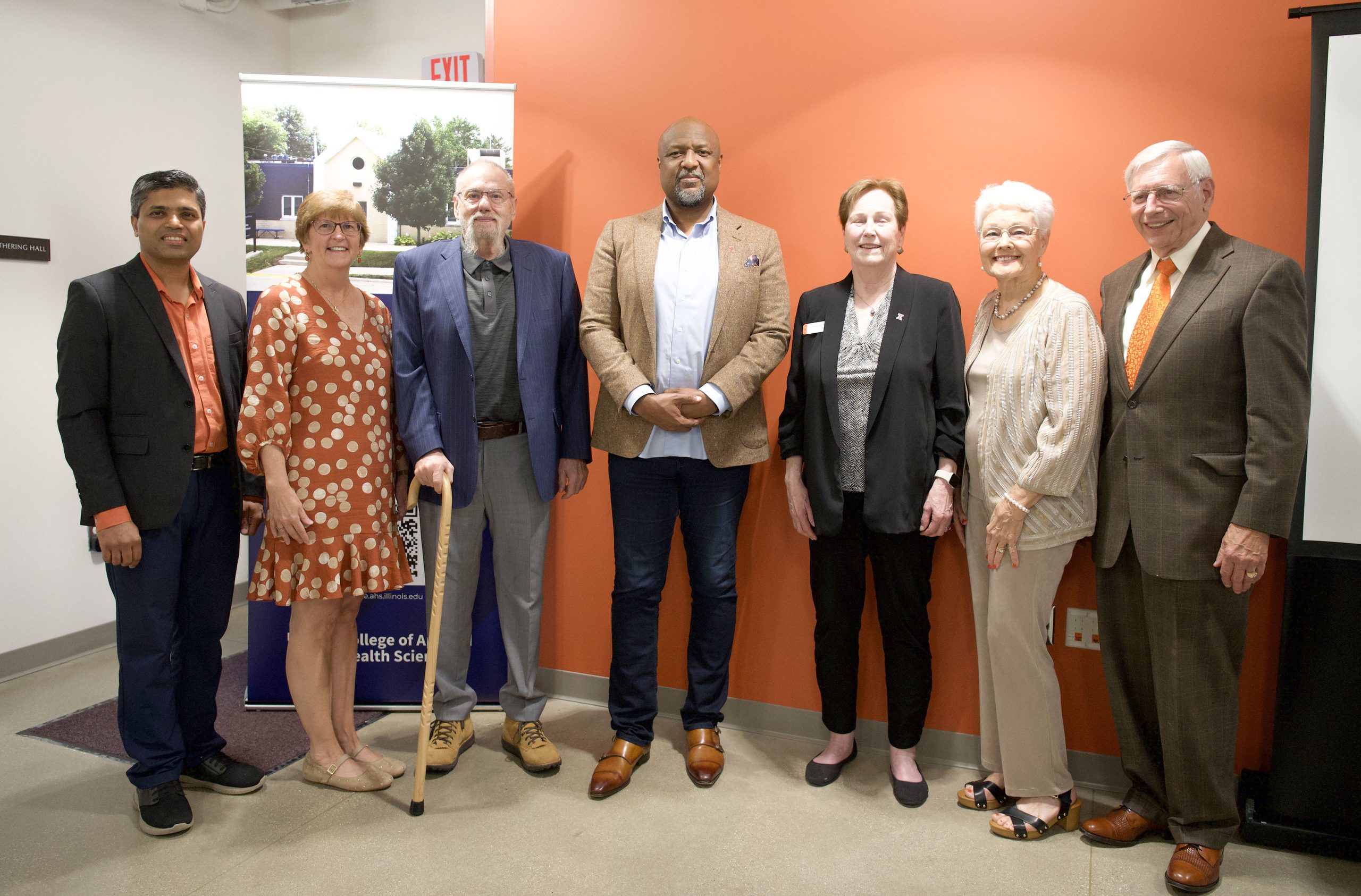
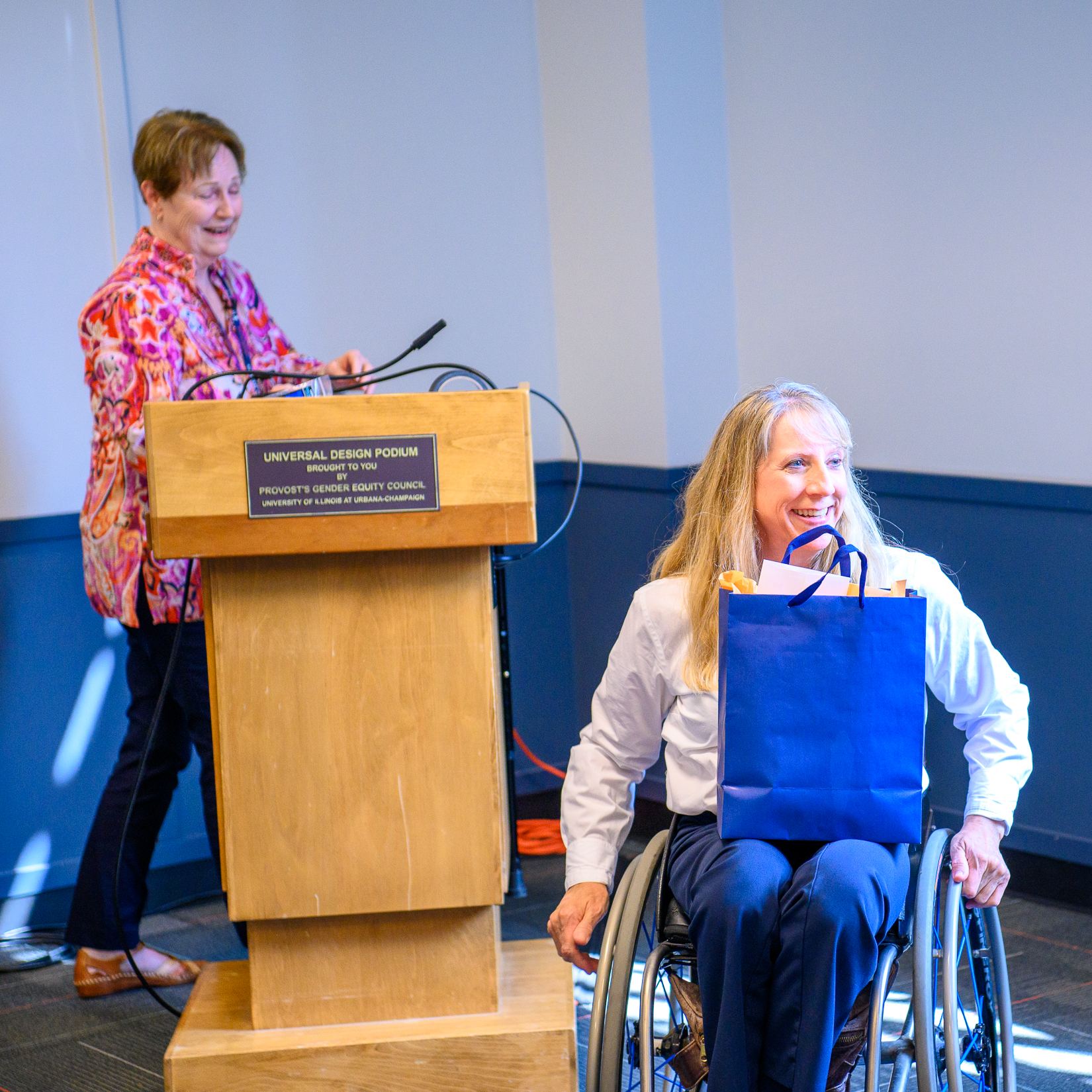
Jean Driscoll accepts a gift from the College of Applied Health Sciences a week before her retirement, at a ceremony held Aug. 25, 2026.
Dean Cheryl Hanley-Maxwell took note of Driscoll making effortless connections at an Illinois event, where she circulated the room and introduced Hanley-Maxwell to influential figures at the college with her genuine curiosity.
“Jean is the ultimate people person,” said Hanley-Maxwell, who became dean of the College of Applied Health Sciences in 2016. “I have watched her build meaningful connections in a matter of minutes, leaving people with the sense that they have known her for years rather than moments.”
That’s part of why, when Driscoll sat down with the dean this spring to let her know she was accepting a new opportunity, she said, “I’m so happy for you.”
“I thought I would have to explain myself, but I didn’t have to,” Driscoll said. “It’s a mark of good leadership.”
At the Foundation for Barnes-Jewish Hospital, she’ll be working as the fundraiser with a fellow Illini: former Assistant Vice Chancellor for Advancement David Bruns, with a new mission at top of mind.
“For years and years, I have wondered what healthcare fundraising might look like—I have relied on healthcare my entire life, from the minute I was born,” Driscoll said. “I will have to prove myself all over again. When you’re outside your comfort zone, that’s where you grow.”
(Photo by Fred Zwicky / University of Illinois Urbana-Champaign)
What motivated her in her early years was a prove-them-wrong mentality. It kept her “punching the wheels” of her racing chairs for 14 years. These days, her drive revolves around showing up for the people she cares about.
Along with her new professional journey, she’ll be spending as much time as she can doing her “favorite thing in the world,” kayaking with her extended family in Wisconsin. She still gets butterflies every time she visits.
For all her Illini faithful, this could be a goodbye, but also a “see you next time.”
“I can’t help but have empathy and appreciate where people have come from and where they are now and where they’re going, because there are experiences that truly shape us,” Driscoll said.
If you can learn anything from Driscoll, “it’s sincerity and honesty,” Morse said. “As long as you are the same with her, you’ll be very glad you met Jean Driscoll.”
“Seeing my academic training translate into practical solutions has been one of the most rewarding aspects of my graduate experience”
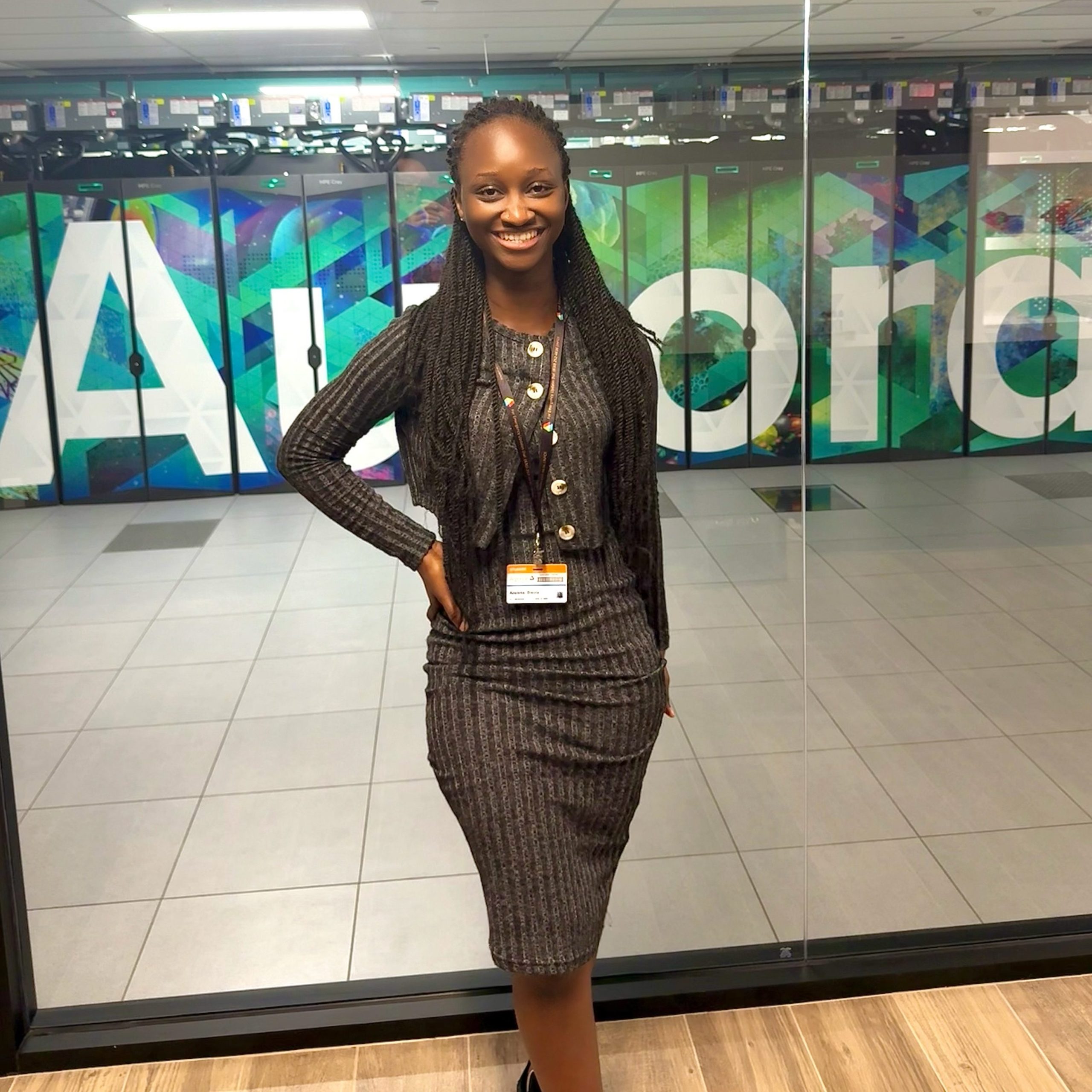
Bisola Adeleke, a community health Ph.D. student, at her internship for Argonne Leadership Computing Facility. (Provided)
While still working on her Ph.D., a University of Illinois community health student researcher landed an internship at the biggest national laboratory in the Midwest.
This summer, Bisola Adeleke has conducted user experience research at Argonne National Laboratory, a federally funded science and engineering lab in Argonne, Illinois.
“Although my research focuses on older adults, the principles of human-centered design are universal,” Adeleke said.
This summer, her UX research has taken place in the Argonne Leadership Computing Facility, which provides supercomputing and AI resources to academic researchers, government agencies and industry scientists.
“Even world-class computing systems need intuitive, user-centered design,” Adeleke said. “The researchers who use ALCF are experts in their scientific fields, but that doesn’t necessarily mean they should have to struggle with complex workflows or documentation.”
What she’s seen so far: good user experience can make these advanced computing resources operate more efficiently and accessibly, allowing the researchers to spend more time on discovery and less navigating technical barriers, Adeleke said.
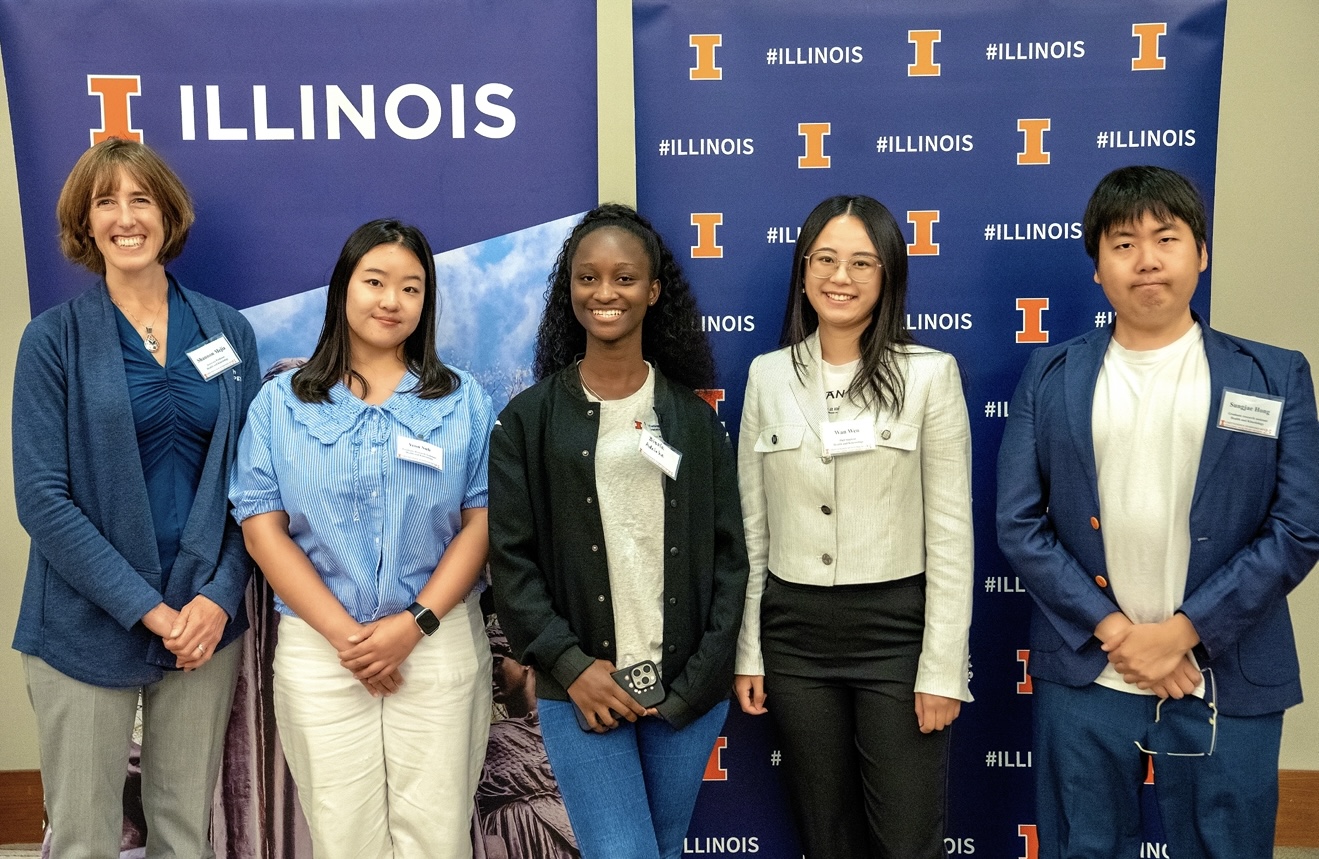
Members of the ADAPT Lab, led by Shannon Mejía (left).
An extended time working with professionals from computing and tech backgrounds has strengthened her ability to communicate across a diverse set of disciplines.
“One of the things I’ve valued most about my time at the University of Illinois is the emphasis on applying research to real-world challenges,” Adeleke said. “My coursework has provided a strong foundation in public health and research methods, while my internship at Argonne has shown me how those skills can be applied to improving technologies that support scientific research.
“Seeing my academic training translate into practical solutions has been one of the most rewarding aspects of my graduate experience.”
Before joining the University of Illinois Urbana-Champaign, Adeleke’s academic journey spanned two continents: she obtained her bachelor’s in health education from Lagos State University in Nigeria, and her master’s degree in research and development in educational studies from Palacky University in Olomouc, Czech Republic.
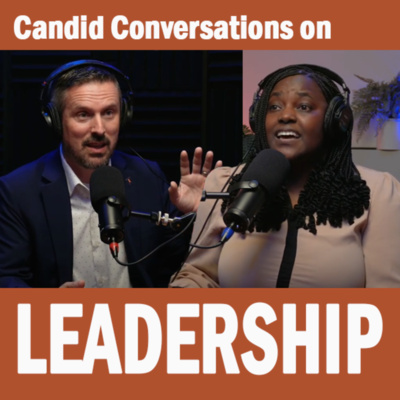
Candice Solomon-Strutz and Chris Tidrick have in-depth conversations about what it means to be a leader today. Candice and Chris are IT leaders at the University of Illinois at Urbana-Champaign and collectively have more than 50 years of experience working in higher education. In this episode, they speak with new University of Illinois Chancellor Charles Isbell.
Dean Cheryl Hanley-Maxwell was reappointed following her latest five-year review
Dean Cheryl Hanley-Maxwell.
Following her 10th year leading the college, Cheryl Hanley-Maxwell has been reappointed as dean of the College of Applied Health Sciences, pending approval by the University of Illinois board of trustees.
Hanley-Maxwell, a three-time Illinois alumna, joined the College of AHS as dean in August 2016. Her latest five-year evaluation committee, chaired by College of Veterinary Medicine’s Dean Peter Constable, singled out her “effective and supportive” leadership, and her strengthening of the college’s teaching and research efforts.
“Through her advocacy for the college on and off campus; her encouragement of faculty research, creative, and scholarly work; and her commitment to the mission of the college, Dean Hanley-Maxwell is well positioned to guide the college forward in the years ahead,” Illinois Provost John Coleman said.
In the announcement of her reappointment, Hanley-Maxwell addressed the Applied Health Sciences community, pledging to strengthen research collaborations and transparency as the college develops its next strategic plan.
“I feel very fortunate to be part of this community,” Hanley-Maxwell said. “Thank you for your partnership, your openness, and your ongoing commitment to AHS and to one another. I am inspired by what we have built together and energized by what we will accomplish next, and I look forward to continuing this important work with all of you.”
Norrito is preparing students to see sport not just as an industry, but as a powerful force for social good.
RST postdoc Alessio Norrito will primarily work with Professor Yuhei Inoue, while collaborating across the department.
The Department of Recreation, Sport and Tourism at the University of Illinois Urbana-Champaign is pleased to welcome Alessio Norrito as a postdoctoral research associate. Norrito brings with him an international perspective, interdisciplinary expertise and a deep belief in the power of sport to improve lives and communities. He will primarily work with RST Professor Yuhei Inoue, while developing collaborations with other RST faculty members.
“Alessio is an excellent addition to the department, as his research can effectively bridge sport management, recreation and tourism, advancing our understanding of how these interrelated fields can work together to address some of the grand challenges facing today’s society,” Inoue said. “In addition, given his international background and experience, Alessio can share valuable global perspectives with RST faculty and students, strengthening an important dimension of our department.”
Norrito earned his Ph.D. in sport sociology and management from Loughborough University, one of the world’s leading institutions for sport research. Before joining Illinois, he served as a senior lecturer at Manchester Metropolitan University. His academic path, however, is rooted in a broader professional journey that spans continents and industries. Prior to entering higher ed, Norrito worked in marketing and e-commerce within the food and beverage sector, with professional experiences in Shanghai, China and Turin, Italy. Those early roles, he notes, shaped his understanding of organizations, markets and people—insights that continue to inform his research and teaching today.
Norrito has contributed to international research projects supported by organizations such as the International Olympic Committee, UNESCO and UEFA. His work has been recognized by the European Association for the Sociology of Sport, which awarded him the Young Researcher Award for his contributions to the field. Across these projects, his research consistently examines how sport and leisure can enhance well-being and strengthen communities, with particular attention to how organizations pursue social purpose at the intersection of global contexts and local realities.
That interdisciplinary focus made the U. of I. a natural next step.
“I think the University of Illinois has a unique take on the way that sport management should be, which strongly aligns with my ideas,” Norrito said. “I position my work in between sociology and management, firmly believing that the two disciplines should be in constant dialogue for solving pressing global issues, creatively and innovatively finding alternatives that benefit people globally.” He added that he found “matching values in the RST department,” allowing him to contribute meaningfully through sport management while being “strongly supported in the development and realization of this work.”
At the heart of Norrito’s research is a simple idea: sport helps people connect. “At its simplest, sport helps us talk to each other and know each other better,” he said. “These interactions make us feel emotions that either unite or divide us.” His work emphasizes that when organizations learn to harness the positive side of sport, it can generate feelings of being “loved, hopeful and ambitious.” What is often overlooked, he notes, is how everyday experiences—like playing or watching sports—can help individuals and communities imagine a shared future. “Sometimes the simple pleasures of life, like sport, can give us a direction of where we want to go in the future, either [individually] or collectively,” he said. “According to my research, this pursuit can generate diverse forms of happiness.”
Norrito’s international research collaborations have also reshaped his understanding of how global sport organizations operate. “I was surprised the most [by] just how valuable research is for global sport organizations,” he said. “My belief prior to these experiences was that research was something ‘for academics.’”
For students interested in working in sport at a global level, Norrito’s advice is clear: engage deeply with organizations’ strategic plans and think proactively about how to fit within them. “Your time in [U. of I.] is key to developing your future self, and taking the right courses can be key to becoming the person that you need to be to land that dream job,” he said.
This semester, Norrito is teaching RST 210: Management in RST, where he introduces students to management and leadership across recreation, sport and tourism contexts. His approach to leadership resists simple formulas.
“I strongly do not believe in a one-size-fits-all approach,” he said. “Instead I encourage RST students to engage in reflexivity. Reflecting on yourself is a key practice to understand what skills you need to develop to be the leader you want to be in the future.”
That philosophy is closely tied to how he brings his research into the classroom.
“My research leads me to believe that behind every social problem there is always an opportunity to solve it,” Norrito said. “And when this social problem is solved, it benefits those who have solved it, those who were affected by it and society as a whole.” He regularly draws on examples from his own work to show students how social impact, business and management are deeply connected—and how future professionals can align purpose with practice.
Norrito’s passion for sport as a subject of serious academic inquiry has personal roots. He recalled a formative moment from his high school years in Palermo, Italy.
“When I was in high school, in my hometown of Palermo, the science surrounding sport was not very popular,” he said. After submitting an assignment about soccer, he was told by a teacher that sport did not belong in the classroom—and he failed the assignment.
“The fact that my job now involves talking about sport inside a classroom is quite ironic,” he said, “but also tells the lesson that we should protect our beliefs and challenge assumptions that seem wrong to us.”
Now at Illinois, Norrito is doing exactly that—challenging assumptions, connecting disciplines and preparing the next generation of RST leaders to see sport not just as an industry, but as a powerful force for social good.
These Recreation, Sport and Tourism undergraduates landed summer internships abroad. Here’s what they learned
Every year, students studying Recreation, Sport and Tourism at the University of Illinois Urbana-Champaign venture across the United States for professional internships. Some even find work outside of the country.
The College of Applied Health Sciences spoke with two RST students set to graduate this May, David Shan and Juan Manrique, who spent last summer working abroad in China and Guatemala, respectively.
Their interviews have been lightly edited for length and clarity.
***
David Shan
RST student David Shan spent his early life in Californiabut went to middle and high school in Beijing, China. He was always into sports, participating in volleyball and badminton. He even founded a huge badminton tournament at his high school. Shan followed his passion to RST at Illinois, where he’s set to graduate early—and he’s already interned for some of the biggest gaming companies in the world.
What company did you intern for last summer?
I interned for Electronic Soul, a game studio and public-traded company in Hangzhou, China.
How did you get the job?
There are apps like LinkedIn and Handshake in Chinese markets for job applications. I scrolled through offers and applied for this role.
They asked, “How can you link your experience to the gaming industry?” I explained that games are part of sports, and that a lot of the classes I was taking at RST could prepare me for the job. Marketing, finance, event planning. I also talked about the badminton tournament I had been running. Those things all helped me get the job.
What was your day-to-day like?
At Electronic Soul, we’d have shows for some of the icons inside the games. We ran tournaments for the game they designed and helped prepare all the promotional materials. I was in the office for five days a week, from 9 a.m. to 6 p.m.
We had a big comic show for characters in the games. It was held in place for a week; we spent a bunch of time preparing for it. We set up the stage for the actors dressed as the characters.
I was also involved in the designing stage of one of the games they were launching, while they were still designing the characters. So I helped do some background research on how the characters could act in the game and what would make them appealing.
Any special takeaways?
Before I went to this company, I didn’t play games that often. The whole process of game design and launch, it was a whole new thing for me.
There are a bunch of different fields in RST, but any industry that’s more popular, I felt like I could grow a lot and it may be easier to get in.
Any advice for students searching for internships abroad?
One is, be more open. There are a lot of industries that we could go to, even though it’s not linked with our own major. People might think, how are games related to your major?
There are a lot of opportunities outside of the [U.S.]. Other countries are still developing, they have huge market opportunities for games and other industries as well. Don’t be shy or afraid.
I got another internship at Tencent, the biggest gaming company in the world, because they had a career fair. I flew there over the weekend and talked to the staff and got the job. Just be more active and try out everything.
What’s your experience been like here at RST?
The RST internship coordinator Hayley Hardin and advisor Jason Schroeder, they all taught us how to reach out to people, how to email and be active. Giving everything a shot. That mindset helped me prepare for my career and get job opportunities.
I’m passionate about entrepreneurship; that’s my long term goal. But in the short-term, I may go to other gaming companies. I’m interning at Tencent right now. After I graduate, I may use that experience to apply for a full-time role.
There are a lot of opportunities outside of the [U.S.]. Other countries are still developing, they have huge market opportunities (…) Don’t be shy or afraid.
David Shan
RST undergraduate
Juan Manrique at the Xelajú MC soccer field.
Juan Manrique, a senior in RST, got his Associate Degree in Computer Science from Harold Washington College in his home city of Chicago. A lifelong sports enthusiast and soccer player, he decided to come to Illinois for its sport management program.
At first, Manrique wanted to find a D1 soccer program to play for. But in his first summer internship outside of the states, he helped the program run behind the scenes.
What company did you intern for last summer?
The professional soccer club Xelajú MC in Quetzaltenango, Guatemala. They won the league championship back in 2012, when I was 10 years old. It was crazy seeing that on TV.
How did you get the job?
It’s a funny story, my grandfather was actually the president of Xelajú MC back in 1999–2000. But I didn’t use him as a resource at all. Instead, I sent the current president of the club a friend request on Facebook.
I basically told him, “I want to shadow you and help wherever I can.” I mentioned my granddad, and that both my dad and mom are from Guatemala. He accepted my friend request, and he had won the election to continue for a second term. At that club, it works like our presidential election, where they get elected to serve on new terms.
What was your day-to-day like?
When I arrived it was the offseason for the men’s team. The women’s team made the finals but unfortunately lost. I spent a lot of time learning different systems in the institution.
I was moving around the office and helping with whatever I could. I worked with the marketing and communications group, the media group of the team, even helped the utility group as well, making sure the players had their boots and their jerseys. It was pretty cool. That’s what made it interesting, was that every day was different.
Any special takeaways?
It’s a different culture, and a different way things are managed. Any resource we have here in the United States, it’s accessible. You have to work with limited resources, we didn’t have the best equipment, but we had to work with what we had.
The professor told me I was probably the first intern in the history of University of Illinois to do their summer internship in Guatemala. I told that to the soccer club over there; they had never had an intern in their existence. It was pretty cool.
Manrique sits at the club’s media table. He was told he’s “probably” the first student from the University of Illinois to land a summer internship in Guatemala.
Any advice for students searching for internships abroad?
It’s a great opportunity for people that want to take on a new challenge, learn about a different heritage and culture and see how things are managed. Businesses are managed differently in every country; every country has different standards, methods and techniques of how they should do things as an administration.
To do an internship abroad, you need to be familiarized and acquainted with what you’re gonna do. I had the luck that this is my favorite soccer team, and my family’s from there.
What’s your experience been like here at RST?
Doing the internship has opened my doors to working internationally, with them or another team, it has opened that path for me. I see RST is a community that’s growing; recreation, sport and tourism keeps exploding day by day. [The U.S.] is going to be co-hosting the World Cup. That’ll be huge. There’s a lot of opportunities out there, even remotely.