Aug. 29, 2026 | Ethan Simmons
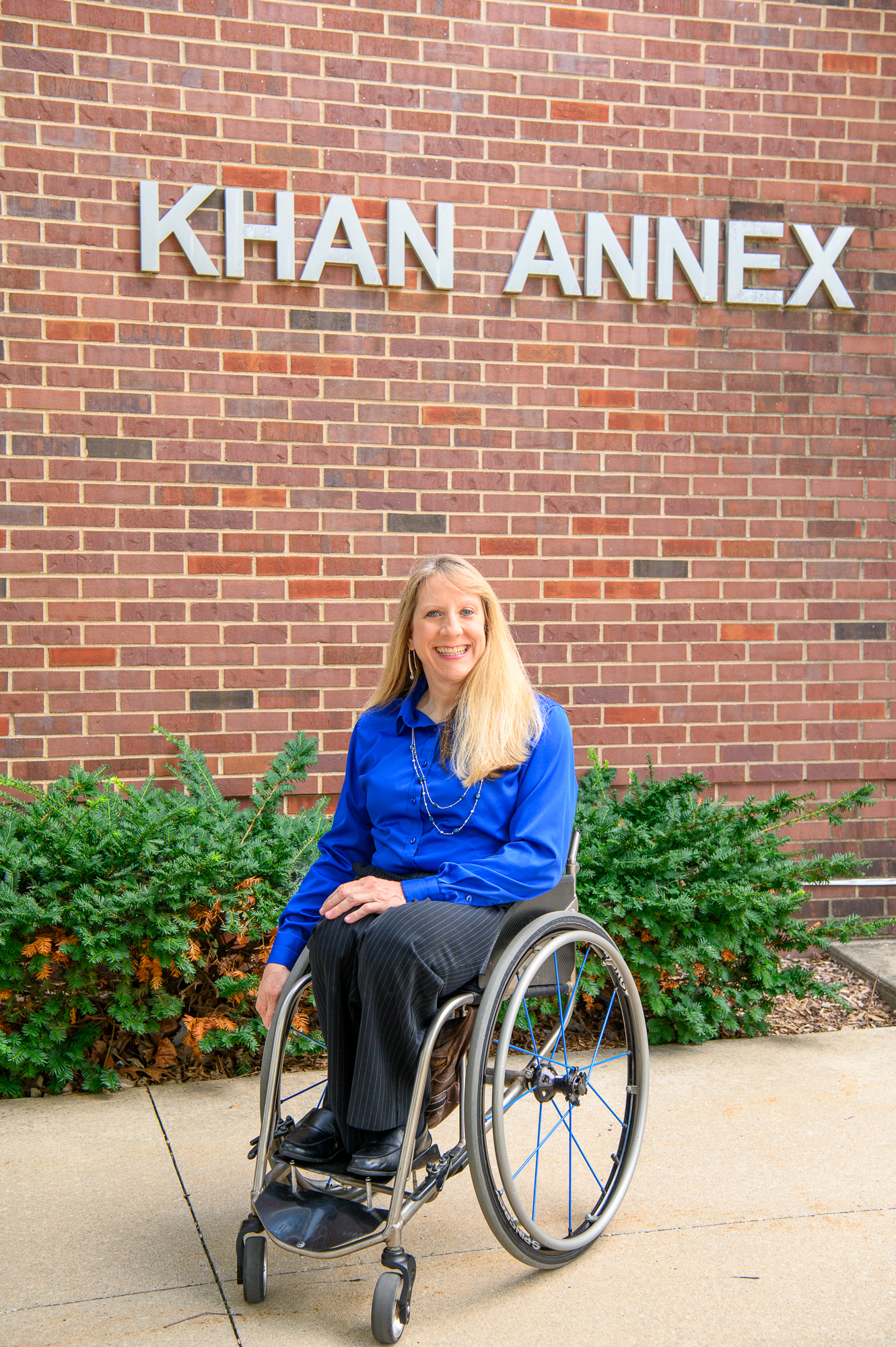
Jean Driscoll wants you on her team.
Whether you’re a colleague, friend, donor or stranger, sharing a nice dinner or a quick chat inside Huff Hall, Driscoll invites you into her world, mainly to learn more about yours.
After roughly two-and-a-half decades working and learning at the University of Illinois Urbana-Champaign—including two brief exits and returns—Driscoll is retiring from her post as assistant dean for advancement for the College of Applied Health Sciences, a role she’s held since 2020 after coming back a second time.
A new challenge is fast approaching: she’ll be fundraising for the Foundation for Barnes-Jewish Hospital in St. Louis, but colleagues can rest assured that she will be working until the end of her appointment at Illinois on Aug. 31.
Driscoll’s people-first personality has helped secure some of the finest gifts in the College of Applied Health Sciences’ history and woven enduring relationships with alumni who care deeply about the college’s mission.
It’s easy to forget now, but at every phase of her life, Driscoll’s success was anything but guaranteed. The shy younger sister from Milwaukee born with spina bifida, a young athlete with budding talents, a college fundraiser who was “green as green could be.”
“‘Team’ is a theme from my youth onward, where I was the last kid picked on the playground, to now, where I get to choose people for my team,” Driscoll said. “I’m carrying that torch and passing it along—as I transition away from the University of Illinois, I feel like I’m passing it toward each of the staff members here, a little bit to our alumni, donors and friends, and to my closest colleagues.”
What has radiated from Driscoll on the last days of her U. of I. appointment is an appreciation for her place in history, a full respect for the layers of accessibility on this campus that were fought for by trailblazers before her, on the Illinois campus and beyond.
“I try to live in this space of gratitude and try to remember that there are people, my predecessors both professionally and personally, who have laid a foundation so that I can be where I am,” she said.
A reluctant advocate
It took two years for Coach Marty Morse to persuade Jean Driscoll—who had become a world-class short-distance wheelchair racer with only a few years of training—to compete in the Boston Marathon. In 1990, she finally caved, “just to get him off my back.”
“I’m sitting on the starting line, not believing I belonged in that race. How did I let Marty talk me into it?”
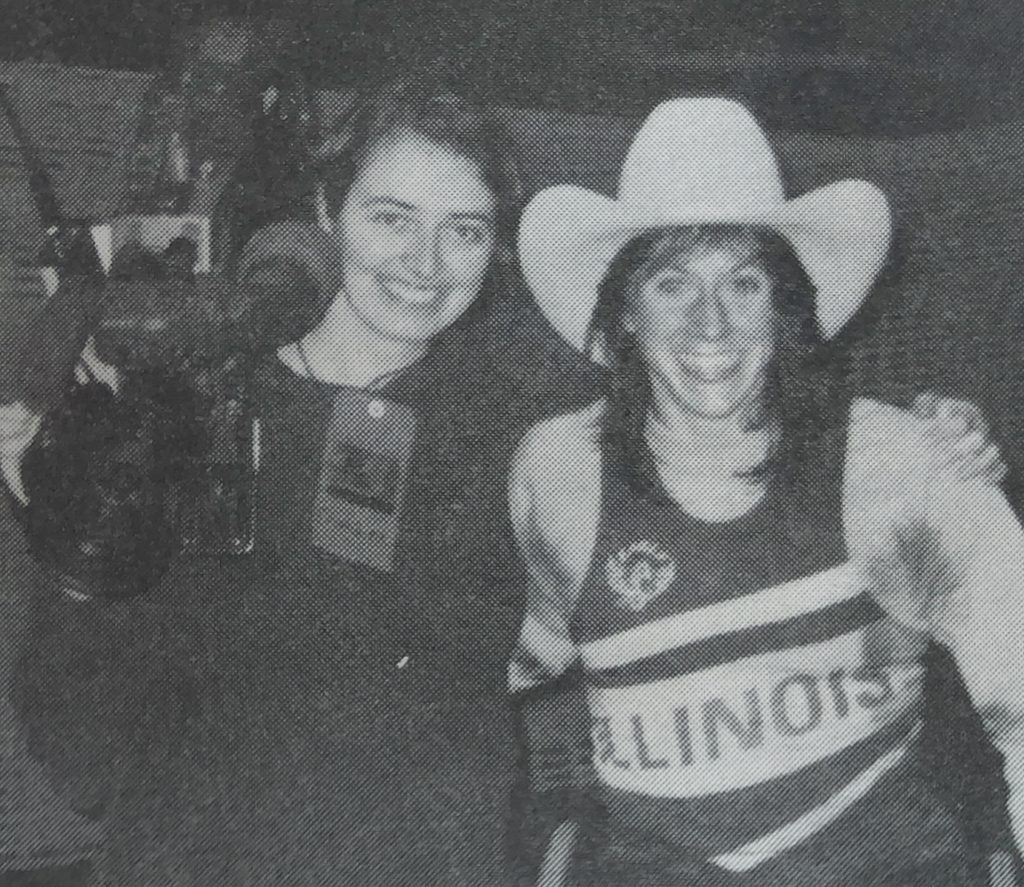
Then, 26.2 miles later, Driscoll not only won, but broke the wheelchair marathon world record by almost seven minutes, clocking in at 1 hour, 43 minutes, 17 seconds. She thought it was a fluke: her Illinois teammate Ann Cody was supposed to win, she had been “killing” Driscoll in all the workouts.
Imposter syndrome be damned; her life had changed forever.
“All of a sudden, everybody wanted to hear what I had to say,” Driscoll said. “The spotlight was … it felt like a burden to bear in those first few years, because I was so shy.”
She broke her own world record in the 1991 Boston Marathon on her way to seven straight wins in wheelchair marathoners’ most hallowed race. The spotlight intensified, and slowly, Driscoll’s understanding of her reach and voice began to shift.
“I realized what an opportunity there was to help people understand what disability is and isn’t. It’s a characteristic, like hair color and eye color. It’s not a defining principle.”
She has repeatedly returned to a form of that message, bringing her story back to the universal. Driscoll signs her autographs “Dream BIG and Work Hard!” That same phrase became the title of a children’s book based on her life story.
By the time she retired from racing after the 2000 Sydney Games, she was caught on the opposite end, wondering whether there were enough spokespeople to “carry the message” for the disability community she had been preaching for the last decade. (“That was kind of selfish and self-centered, quite honestly—there have been plenty of people to carry this on,” she said.)
Her retirement from racing allowed her to step into the role of global advocate. In the early 2000s, she traveled back and forth to Ghana several times to host wheelchair racing camps and help develop their para-athletics programs. In 2004, wheelchair racers Raphael Nkegbe and Ajara Busanga became the first Paralympians to represent Ghana in their country’s history, with Driscoll as a key mentor.
“There are so many places around the world where, if you have a disability, you are considered to have no value, no rights, no education,” Driscoll said. “We have alumni who have done these big things, and every generation has students and alumni and faculty who are making a difference in our country and in the world.”
The subject of Illinois journalism instructor Alison Davis’ first long-form documentary was Driscoll’s return to competition in 1996 after she broke her leg the prior year. Media attention was at its zenith, and Driscoll’s schedule was packed, but she still allowed Davis and her collaborator Tim Hartin to follow along with the camera.
When they first traveled over to Disability Resources and Educational Services (DRES) to pitch the documentary, “I was in awe of her and nervous she would say no,” Davis said. “But we quickly recognized we had the same goal for this project and that was to make a sports documentary. We wanted it to focus on the grit and challenges of training at an elite level and not make it an ‘inspirational story’ of someone who happens to race in a wheelchair.”
Their footage and interviews became “Against the Wind,” an award-winning documentary of what ended up being Driscoll’s seventh consecutive win of the Boston Marathon.
“Jean is a person who truly cares about her community and making others feel seen … She is successful because of her hard work, but also because she is an incredible human, and people admire her for all that she is beyond the athletic achievements,” Davis said.
Prepared for everything
To understand today’s Jean Driscoll, you’ll weave through several storied mentors, generally winding up with two brainy coaches that shaped her years at Illinois: former head of DRES Brad Hedrick, and longtime wheelchair track and field coach Marty Morse, both of whom are “forever on a pedestal.”
“I don’t even want to imagine what life would be like had I not met those men and had they not invested so much of their time and talent and skill in me,” Driscoll said.
Hedrick recruited her in the spring of 1986 after seeing her play wheelchair soccer in Wisconsin, having traveled up to Milwaukee for a wheelchair sports clinic.
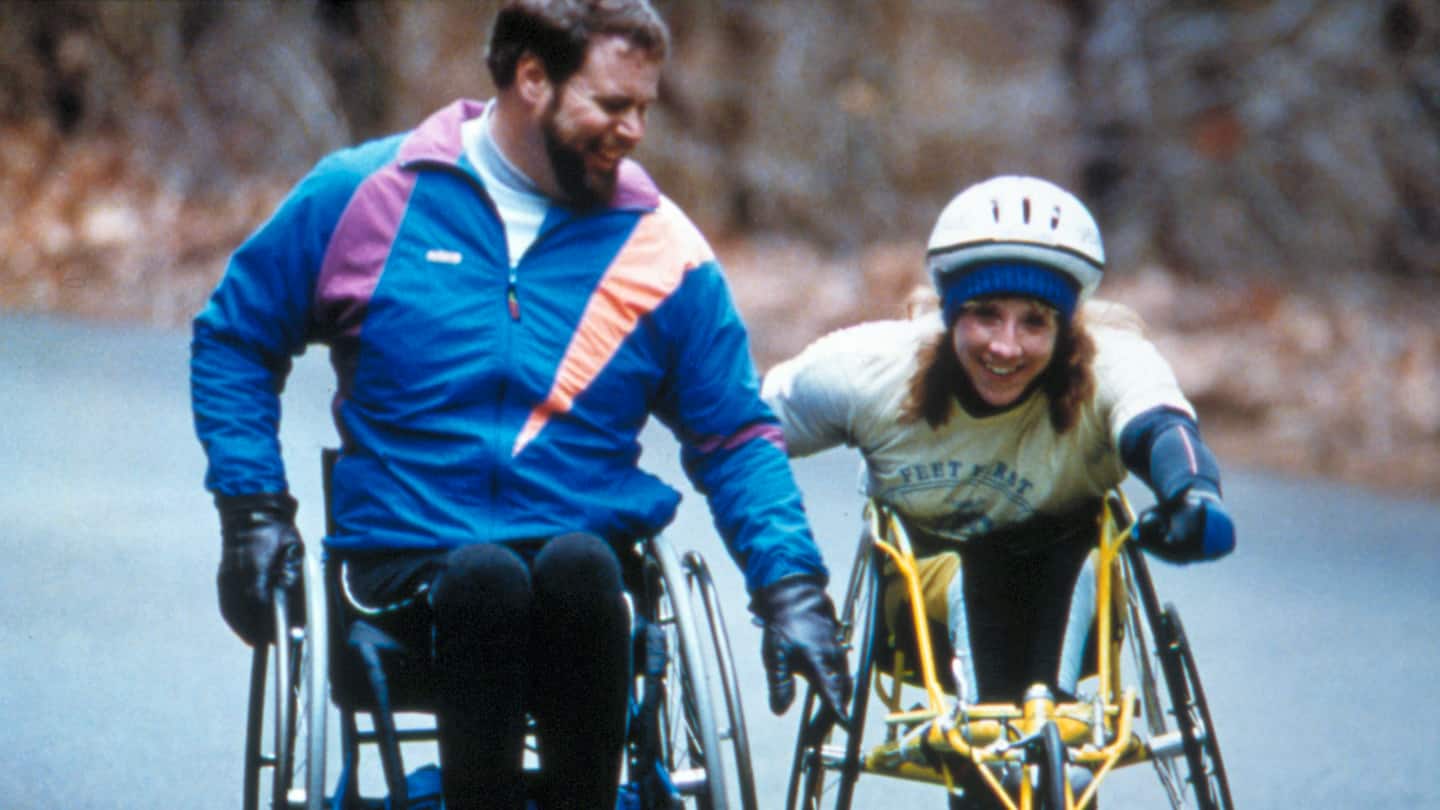
Initially, Driscoll couldn’t be bothered to join the women’s wheelchair basketball team, especially not at regional rival University of Illinois. But Hedrick kept sending letters and kept calling, and Jean joined the team. (Driscoll thinks she has a “weakness” for persistent people.)
Athletically, she was thrown into the fire, facing off against Sharon Hedrick, a star on the basketball court and the track who practically no one beat in a wheelchair race from 1975 until she retired in 1990.
“There was no freshman adjustment year for Jean—she got right to work,” Morse said. “She’s always been meticulous, completely prepared for everything.”
Despite Driscoll’s shyness, once she arrived on campus, Morse saw an absorbent, talented young adult, bent on understanding how everything worked.
This trait reared its head in several wheelchair athletics workshops that Morse hosted through the years, bringing in guest speakers from across the country. As an undergraduate, Driscoll stepped up as Morse’s administrative assistant, running workshops with more than 100 people while competing at the same time, Morse said.
And all the while, she was forming connections across the university. She naturally became acquainted with a wide roster of figures in Illinois athletics and academics: basketball head coaches Kathy Lindsay and Theresa Grentz; pioneering athletics administrator Karol Kahrs; Jayne DeLuce, today’s CEO of Experience Champaign-Urbana who managed the aquatics venues during the 1996 Atlanta Olympics, and countless others.
“Instead of just being friends with somebody, she wanted to know how their job went,” Morse said. “Jean is so well-versed, and she was this way as an undergrad. If she took an interest in something on this campus, it was all in.”
After Morse developed a syrinx—a cyst inside his spinal cord—he underwent four major surgeries from 1997 to 2000, which resulted in a loss of function. Morse and his wife Karen Iehl-Morse, a longtime Illinois athletics trainer and instructor in the program, were taking care of their son, 4-year-old Steven, with another child on the way.
“We were having a lot of problems,” Morse said. “And Jean, who was always one of our go-to babysitters, she [basically] just moved in the house. She was there for us during that really traumatic time. Jean is family to us.”
When Driscoll first left Urbana-Champaign in 2004, Morse was upset. He was losing a great friend, but he also felt the university had “dropped the ball” by not keeping her here.
“Because it was like, boy, this woman, her entire career has been nothing but promotion of Illinois,” Morse said. To see her finally return to the University of Illinois in her development and alumni relations role at the College of Applied Health Sciences in 2006 “was no surprise.”
And her return led to countless more friendships and memories. Longtime U. of I. communications officer Robin Kaler first met her at a local 5K, where she “fan-girled” and asked Driscoll to pose with her baby for a picture.
They became fast friends. Over the years, she “has always been there to build the Illinois brand,” Kaler said, thinking of a half-time commercial where Driscoll sang the Alma Mater song with other famous Illinois alums.
One Halloween, Driscoll and Kaler dressed up as the campus statues Alma Mater and Learning, then went to a restaurant near campus, with plenty of onlookers.
“We laughed the entire time as the other diners stared at us,” Kaler said. “Even though she’s retiring, she will be a pillar of our university community forever.”
Tricks of her trade
After 20 years of working in advancement and development, Driscoll knows that lots of people want to make gifts for higher education. Oftentimes, “they just don’t know what they want to do, or how they want to do it,” Driscoll said.
As she describes it, there’s a creative process of matching the donor’s interests with a college’s needs. A scholarship fund? A named space? A new building?
In any case, the process begins with careful listening. One of her favorite donation stories started with a retraction—a donor had withdrawn their support for a five-figure gift to the college. This donor had a list of grievances about how they were communicated with during the process and how their gift was handled.
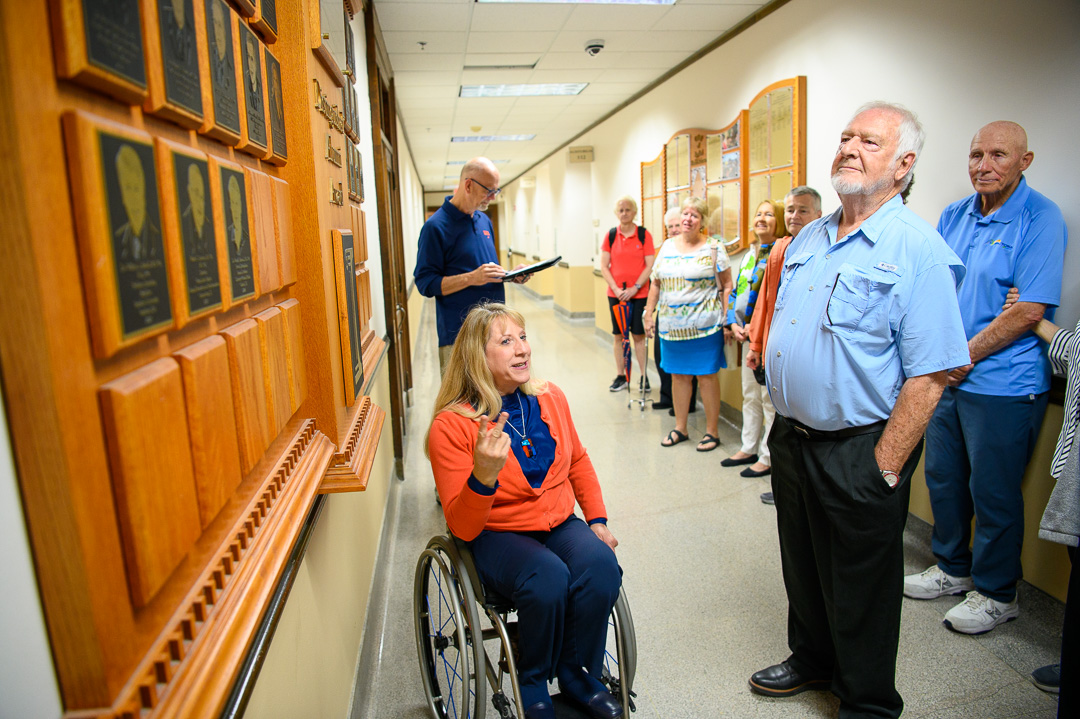
So, Driscoll decided to reopen the relationship, working to address each point “one by one,” she said. By the time they were finished, the donor came back with a seven-figure estate gift for the college. The key was leaning into the “crucial conversation,” where a resolution needed to be reached.
“The younger Jean would be surprised, and dare I say impressed, with how I’ve grown into leadership and management,” Driscoll said.
Driscoll’s last month with her advancement team has involved plenty of hand-offs, introducing her staff to key figures and longstanding relationships. And news of her retirement led to some unexpected gray areas, too, like colleagues being unsure of how or when to communicate with her.
What’s never left is Driscoll’s genuine care, and her “unmatched attention to detail, which has consistently elevated the quality of everything our team produces,” said Angela Tammen, director of external engagement for the advancement team. “In every meeting, she brings the conversation back to the people behind our work. She wants us to understand who they are, what matters to them, and why their story is important.”
Driscoll hired Kathy Saathoff in 2013 to support the Applied Health Sciences advancement office. Saathoff’s first impression was how “strong and confident” Driscoll was in her own skin, and her supportive, empathy-driven leadership style.
“I always appreciated her letting us do our jobs, but when we needed support, she was right there to lend it,” Saathoff said.
Advancement officers Matt Smith and Josh Joines have been flying across the country to fill in the web of connections that Driscoll is entrusting with them.
“I want it to be a smooth transition for our alumni and our friends and donors. Because advancement work can be transient, people come and go,” Driscoll said. “I don’t want to start something we can’t finish.”
Another journey
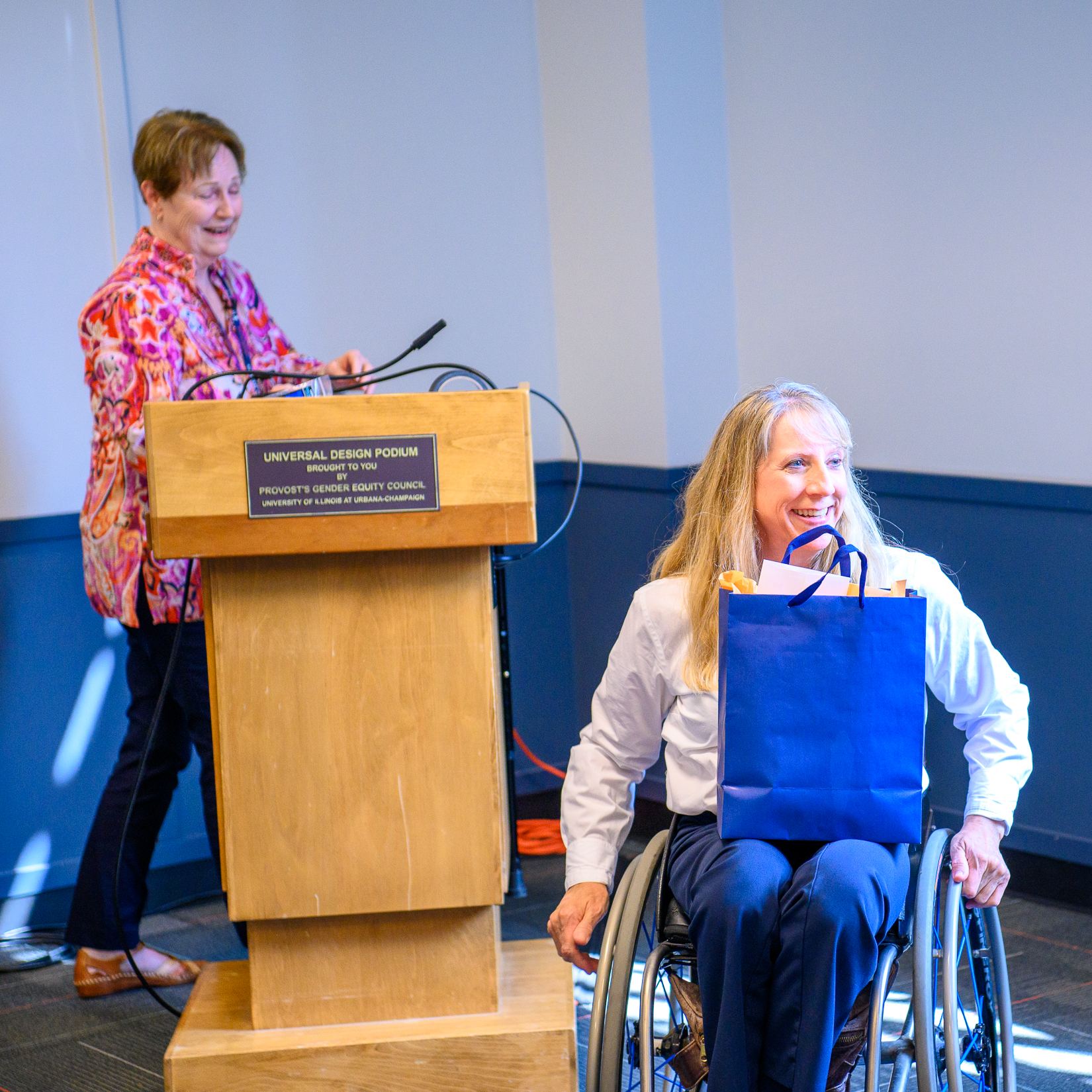
Dean Cheryl Hanley-Maxwell took note of Driscoll making effortless connections at an Illinois event, where she circulated the room and introduced Hanley-Maxwell to influential figures at the college with her genuine curiosity.
“Jean is the ultimate people person,” said Hanley-Maxwell, who became dean of the College of Applied Health Sciences in 2016. “I have watched her build meaningful connections in a matter of minutes, leaving people with the sense that they have known her for years rather than moments.”
That’s part of why, when Driscoll sat down with the dean this spring to let her know she was accepting a new opportunity, she said, “I’m so happy for you.”
“I thought I would have to explain myself, but I didn’t have to,” Driscoll said. “It’s a mark of good leadership.”
At the Foundation for Barnes-Jewish Hospital, she’ll be working as the fundraiser with a fellow Illini: former Assistant Vice Chancellor for Advancement David Bruns, with a new mission at top of mind.
“For years and years, I have wondered what healthcare fundraising might look like—I have relied on healthcare my entire life, from the minute I was born,” Driscoll said. “I will have to prove myself all over again. When you’re outside your comfort zone, that’s where you grow.”
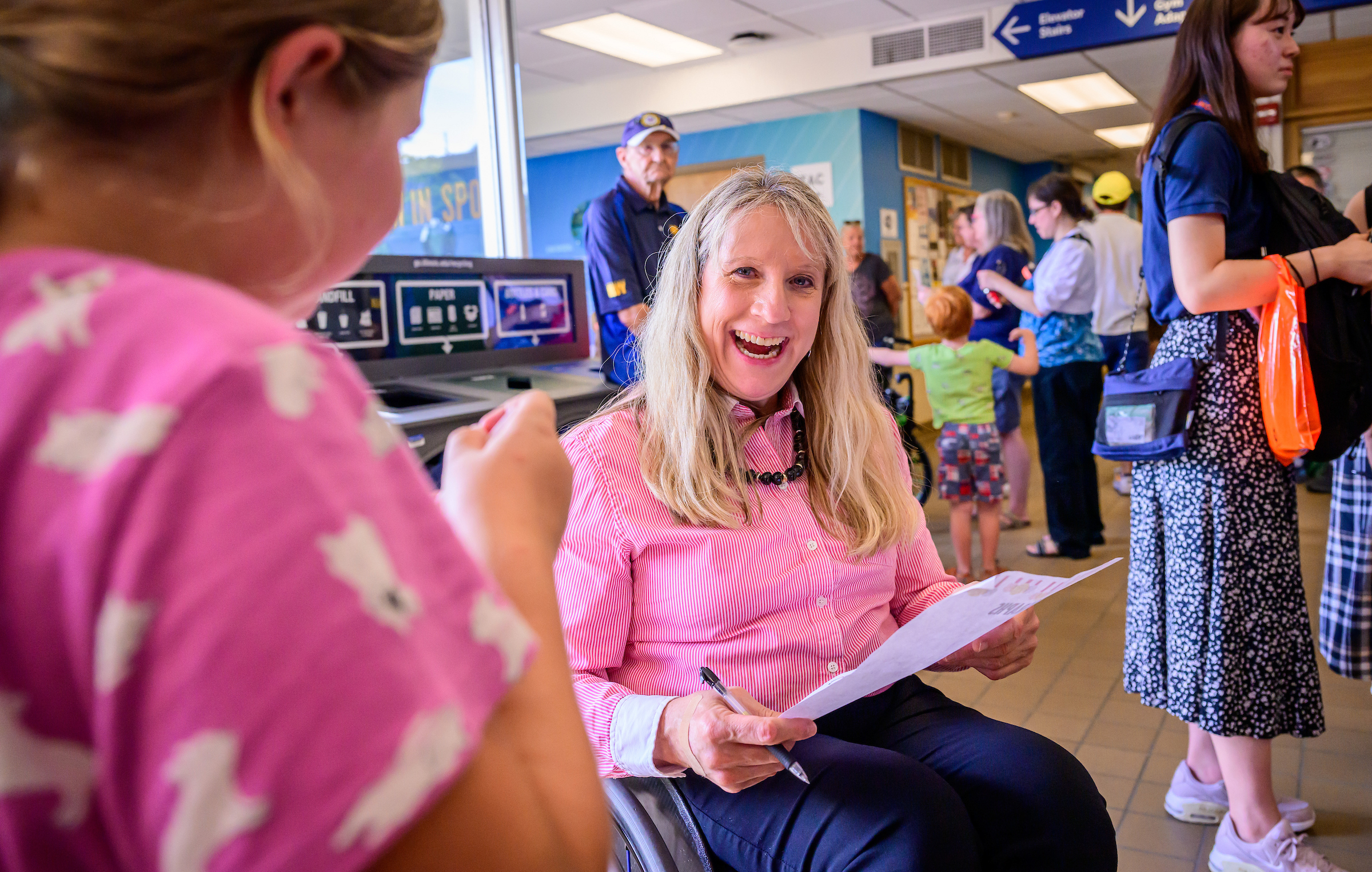
What motivated her in her early years was a prove-them-wrong mentality. It kept her “punching the wheels” of her racing chairs for 14 years. These days, her drive revolves around showing up for the people she cares about.
Along with her new professional journey, she’ll be spending as much time as she can doing her “favorite thing in the world,” kayaking with her extended family in Wisconsin. She still gets butterflies every time she visits.
For all her Illini faithful, this could be a goodbye, but also a “see you next time.”
“I can’t help but have empathy and appreciate where people have come from and where they are now and where they’re going, because there are experiences that truly shape us,” Driscoll said.
If you can learn anything from Driscoll, “it’s sincerity and honesty,” Morse said. “As long as you are the same with her, you’ll be very glad you met Jean Driscoll.”
Editor’s note:
To reach Jean Driscoll, email jdris@illinois.edu
Share on social