Gower brings broader perspective to AHS return


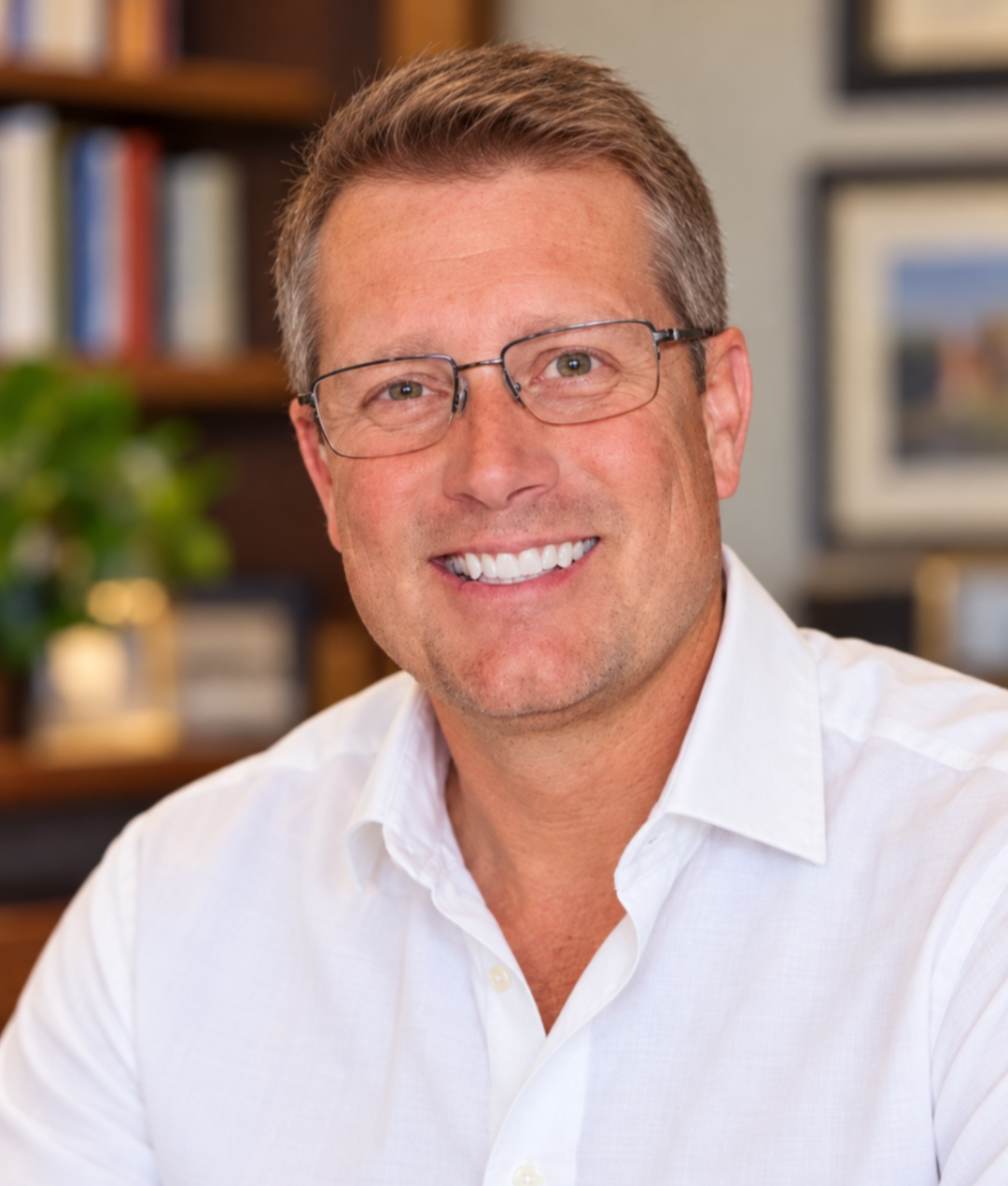
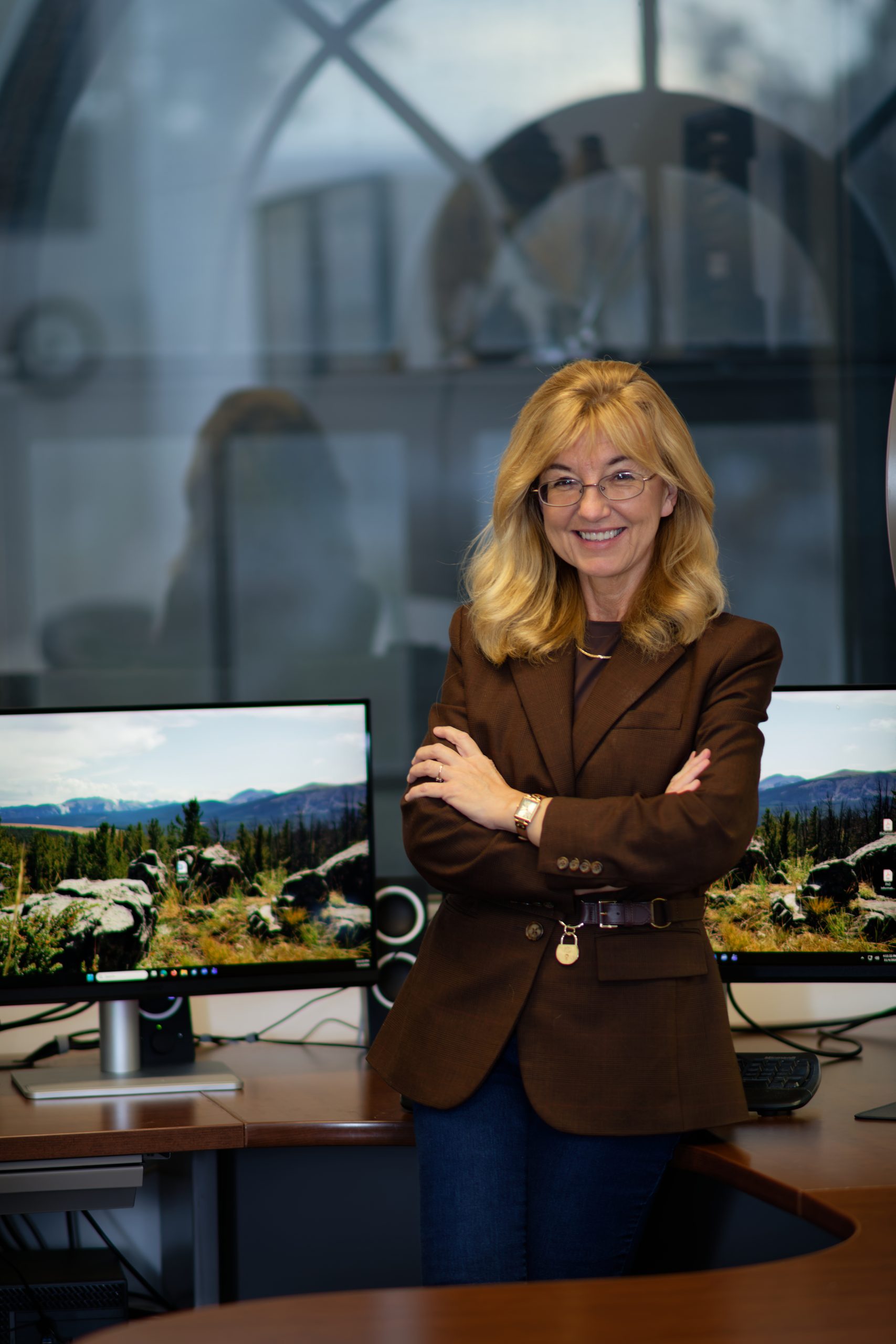
Ryan Gower was chancellor of Illinois Eastern Community Colleges before deciding to return to the College of Applied Health Sciences (Photo provided)

Ryan Gower spent 13 years in leadership positions helping shape how colleges serve students. As chancellor of Illinois Eastern Community Colleges, that meant setting a vision, building a team and trusting others to carry out the work.

Now, back at the University of Illinois Urbana-Champaign, he is looking forward to a more immediate connection with the people behind those plans.

“I missed the students,” he said.

Gower has returned to the College of Applied Health Sciences as assistant director of online graduate programs and teaching faculty in the Department of Recreation, Sport and Tourism. A former RST faculty member and AHS associate dean, he brings experience that spans classrooms, college administration and leadership of an open-access community college system.

His new responsibilities include enrollment management, marketing and recruitment for RST’s online programs. But his approach to that work extends well beyond getting prospective students to apply.

“I spent the first 20 years of my professional career at Illinois, so the Department of Recreation, Sport and Tourism has always felt like home,” Gower said.

Familiar colleagues and a connection to the university helped draw him back. The opportunity to work directly with faculty and students made the position especially appealing.

“We’re thrilled to have Ryan back in RST,” said interim Department Head Toni Liechty. He knows our department and its people, and he brings a depth of leadership experience and a genuine commitment to students that will serve our online M.S. program well. We couldn’t be happier to welcome him home.”

His years away also changed how he understands the task ahead.

At Illinois Eastern, Gower encountered students balancing jobs, family responsibilities and financial pressures. Those obligations shaped whether students could begin college, remain enrolled and complete their education. Limited institutional resources added another challenge.

Earlier in his career, he said, enrollment conversations often revolved around recruiting prospective students, increasing applications and persuading admitted students to enroll. Community college leadership broadened that perspective to encompass the entire student experience.

“So now I understand that recruitment, retention, completion and post-graduation success aren’t separate institutional responsibilities,” he said. “They’re interconnected parts of the promise we make to students when we first meet them.”

I missed the students.”

Ryan Gower

Assistant director of online graduate programs, RST

That perspective informs his approach to online graduate education, where working professionals must weigh the benefits of further study against demands on their time and money.

Gower sees opportunities to reach recent graduates seeking to apply their undergraduate knowledge in professional settings, along with experienced practitioners preparing for leadership or career advancement. Online delivery makes it possible to connect with those students across the country and potentially beyond.

Reaching them, he said, begins with understanding what they want to accomplish.

A prospective student might need a certificate, a master’s degree or a different educational pathway. Gower wants those conversations to help students find the right fit, with a clear understanding of the investment involved.

He is particularly interested in stackable certificates that faculty have been discussing and developing. Beginning with three courses could give students useful skills and experience with graduate education before they decide whether to pursue additional credentials or a full degree.

For someone uncertain about returning to school, that smaller initial commitment could help build confidence.

His administrative experience also reinforced the importance of coordination. Strong individual courses and effective recruiting efforts accomplish more, he said, when faculty and staff share an understanding of what they want students to achieve.

For Gower, the return offers a chance to connect those experiences: the classroom perspective of a faculty member, the broader responsibilities of an associate dean and a chancellor’s understanding of how institutional decisions affect students pursuing their individual educational goals.

Gower said he has been encouraged by RST faculty members’ efforts to consult professionals and subject matter experts about the skills graduates need and incorporate that feedback into online programs.

He views those exchanges as an expression of the university’s land-grant mission: connecting academic expertise with the needs of communities and professions.

Building those relationships will be central to his work. Employers, professional associations and practitioners could become partners through professional development, opportunities to learn new skills and help addressing challenges in their organizations.

Those connections could also bring professional problems into students’ coursework and create opportunities for faculty research.

Gower sees RST’s interdisciplinary approach as another strength. Recreation, sport and tourism intersect in event operations, facility management and visitor experiences, giving students opportunities to consider how leadership and management principles apply across professional settings.

He is still learning about the programs and reconnecting with colleagues. He also plans to seek input from current students and graduates through focus groups in the spring.

The welcome from former students has already made an impression. After a decade away, he said, hearing from them through social media has been meaningful.

As he settles into the role, his measure of success will include graduates’ professional accomplishments, students’ experiences and the strength of relationships with employers and professional organizations.

Enrollment matters, but he sees it as the result of meeting those responsibilities.

“I’ve always believed that enrollment growth is not the goal,” Gower said. “It’s the symptom of getting things right.”

Editor’s note:

To reach Ryan Gower, email gower@illinois.edu.
 

Share on social
Related news

Veterans find purpose and community at Illinois


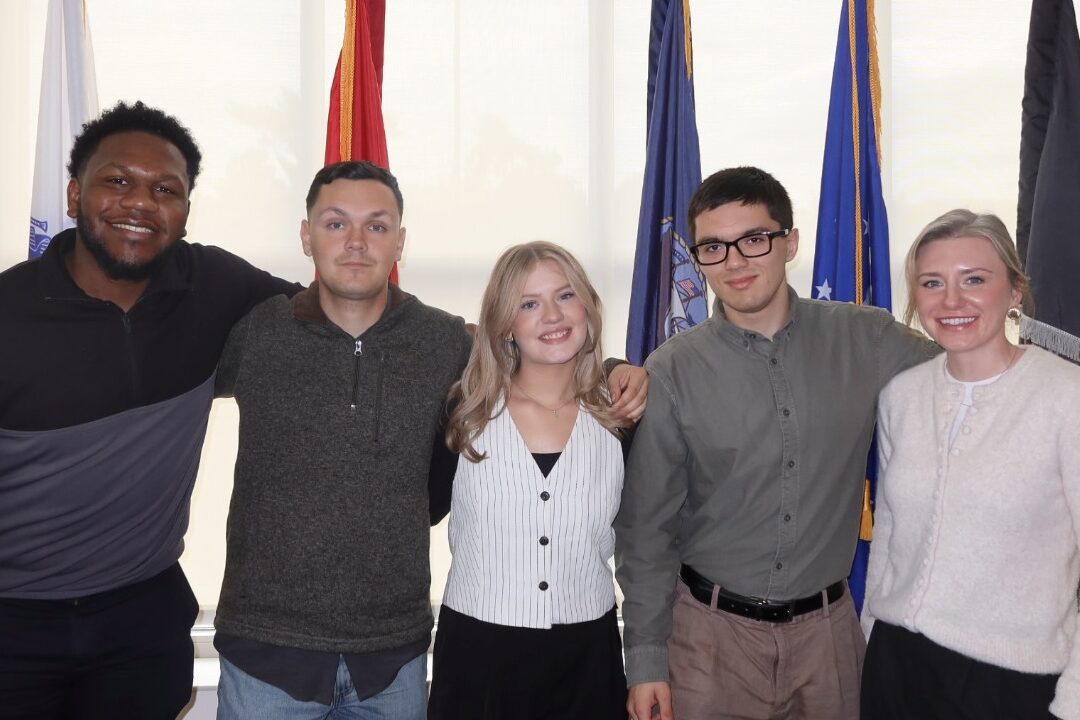
Illinois student Veterans shared their stories about finding their communities at the university (Photo provided)

For Liam Crawford, the move from military service to college brought an unexpected challenge: loneliness.

The Army Veteran struggled to connect with younger classmates after leaving a place he loved. Volunteering and joining organizations, including the Bass Fishing Club, helped him build friendships and find his footing.

“Being able to connect with some of those younger students helped me out a lot,” Crawford said.

His experience was among those shared during the Chez Veterans Center’s Veterans Day panel at the University of Illinois Urbana-Champaign, titled “Voices of Service.” During the event, students discussed military service, education and the search for purpose beyond the uniform.

The conversation highlighted how differently that transition can unfold, even among students who share a military background. Panelists described bringing leadership and technical experience to campus while learning to navigate unfamiliar expectations and relationships.

Crawford, a sophomore studying history with an art minor, also serves in the Illinois Army National Guard and participates in Army ROTC. He described serving in the Army’s 1st Infantry Division as his proudest military accomplishment.

For Mikayel Sardaryan, a former Marine sergeant and transmission systems operator, military experience helped determine his academic direction.

Now studying electrical engineering, Sardaryan said difficulties with military radios motivated him to learn how to improve communications systems for future service members.

College also required an adjustment. At 22, he faced working alongside classmates several years younger after having supervised people their age. He found a way to connect by helping other students and sharing what he knew.

Cordelia Grob, an Illinois Army National Guard captain and company commander studying technology management, returned to Illinois after an intense deployment prompted questions about her future.

“How do I make sense of the world? What is my purpose?” Grob recalled asking herself.

She said military service strengthened her analytical thinking and ability to consider the consequences of decisions, skills she brings to her studies.

Navy Veteran Krissean Brown, a senior studying information science, reached a different turning point while stationed in Japan. The former gunner’s mate decided he was ready for higher education and another stage of life.

“I think I was ready to move on and branch into a different part of my life,” Brown said.

How do I make sense of the world? What is my purpose?

Cordelia Grob

Illinois Army National Guard captain and Illinois student

Natalie Koldenhoven, a communication student who works at Chez, brought the perspective of a military family member. Her father’s military and civilian careers, along with watching both parents work, helped inspire her own educational and career goals.

Keynote speaker Master Sgt. Joseph Bateman said those individual journeys require coordinated support.

Bateman, who serves as a first sergeant at U.S. Transportation Command at Scott Air Force Base, also works as a Veterans service officer for the Illinois Department of Veterans Affairs. He attended Illinois after leaving active duty in 2014 and joining the Air Force Reserve.

“Veterans don’t stop being veterans when they become students,” Bateman said. “They simply begin adding another chapter to their identity.”

Navigating benefits, housing, academic requirements and health care can mean dealing with several offices, he said. Sometimes, the barrier is knowing where to start.

He urged campus offices to communicate and personally connect students with people who can help.

“Asking for help is not weakness,” he said. “It’s a way of accomplishing the mission.”

Andy Bender, the Chez Veterans Center’s director of operations and services, said the building represents a commitment to belonging for Veterans and others connected to military service.

“It’s really a commitment to ensuring that those who have served and those who are connected to that service know that they belong,” Bender said.

Editor’s note:

To reach Vince Lara-Cinisomo, email vinlara@illinois.edu.
 

Share on social

Related news

Uni High, Health and Kinesiology partnership puts students on both sides of P.E. lessons 


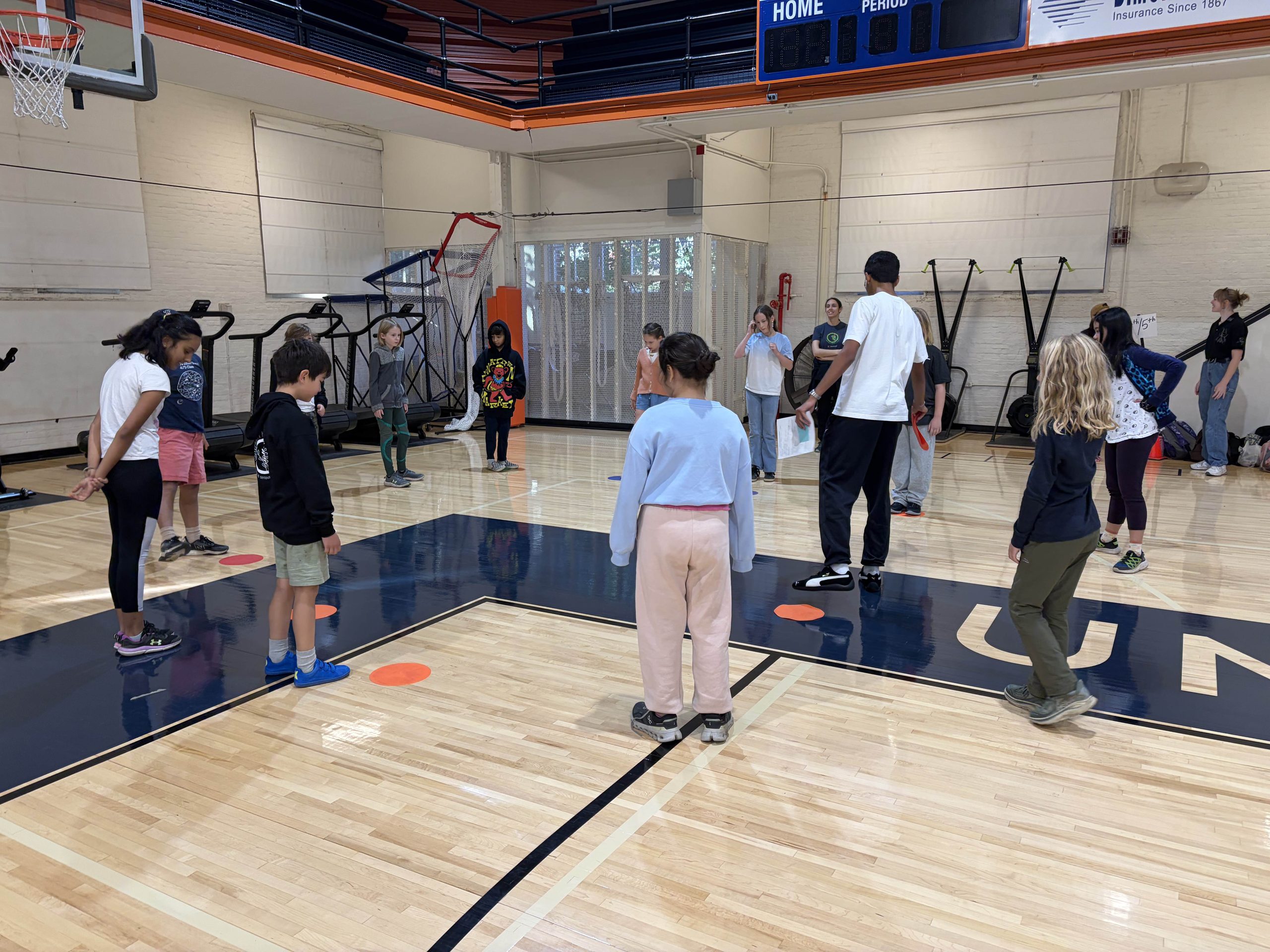
Uni Primary’s three participating classes—kindergarten and first grade, second and third grades, and fourth and fifth grades—were assigned to groups of instructors. (Photo provided)

Before Uni High students could teach younger children how to move, they had to work through a different kind of exercise: figuring out how to teach. 

University of Illinois physical education majors helped them prepare, drawing on lessons they had already taught at University Primary School. Then, when the children arrived, the high school students took the lead, with their college mentors nearby. 

The exchange is at the center of a pilot partnership linking University of Illinois Laboratory High School’s physical education department, Uni Primary and the university’s Department of Health and Kinesiology. It gives students at three educational levels a role in the same lesson, turning movement instruction into an opportunity to practice leadership, develop teaching skills and build connections across campus. 

For Kevin Richards, an associate professor in Health and Kinesiology in the College of Applied Health Sciences, the university students provide a crucial link. 

“Our PETE program is serving to bridge between the two by both teaching the primary school students and preparing the high school students to teach lessons,” Richards said, referring to the Physical Education Teacher Education program. 

The collaboration began when Uni High physical education teachers approached the Pedagogical Kinesiology Laboratory about working together, Richards said. They were interested in bringing their students into contact with Uni Primary children. Conversations with school faculty and administrators helped turn that interest into a teaching partnership. 

The project also gives the P.E. department a way to carry out Uni High’s laboratory mission. The school asks teachers to investigate their practice through experimentation and collaboration, connecting classroom work with the university’s commitments to research, innovation and public service. 

Here, that inquiry takes shape through a practical question: What can students learn when they become responsible for someone else’s learning? 

Kristi Carlson, a teaching assistant professor in Health and Kinesiology and the assistant department head, is guiding the experience through HK 461: Elementary Methods in Physical Education. University students have visited Uni Primary throughout the fall semester, teaching lessons and getting to know the children before helping the high school students prepare. 

Those visits give the P.E. majors more than practice delivering instructions. They learn about children’s skill levels, interests and behaviors: information they can share with students who are preparing to lead a class for the first time. 

The sequence is deliberate. University students teach Uni Primary children two lessons on a particular skill theme. They then help Uni High students plan a lesson addressing that same theme. 

For the first planning session, on Oct. 27, the focus was locomotor skills and movement concepts. Because the university students had already taught that material, they could suggest approaches that might work and identify potential difficulties. 

But the high school students were expected to contribute their own ideas. 

“We want to allow the Uni High students to have autonomy over the lesson, so allow them to brainstorm ideas, and then help them refine the lesson based on the experience and knowledge the U. of I. students have regarding the (University Primary School) students,” Carlson said. 

Planning included demonstrating skills, arranging the space safely and discussing what instructors should watch for as children participated. The university students also helped their younger teaching partners consider feedback and questions they could use to check understanding. 

A planning handout helped organize those decisions. The work required students to think beyond choosing an activity: They had to consider how to explain it, how to monitor it and how to respond when a child needed help. 

We want to allow the Uni High students to have autonomy over the lesson … allow them to brainstorm ideas

Kristi Carlson

Teaching assistant professor, Health and Kinesiology

On Oct. 29, Uni Primary children participated in the first lessons led by Uni High students. The college students arrived early to help their high school partners set up. 

Uni Primary’s three participating classes—kindergarten and first grade, second and third grades, and fourth and fifth grades—were assigned to groups of instructors. The university students worked in groups of five, paired with groups of about eight high school students. 

The lessons lasted 45 minutes and included a variety of activities. Uni High students introduced their lessons and led the children through the plans they had developed with the P.E. majors. 

The college students remained available to clarify instructions, offer feedback and help address behavior challenges. Carlson and schoolteachers moved through the learning area, offering support as needed. 

For the high school instructors, the challenge included recognizing that children close in age may need different kinds of instruction. 

“UPS has their classes arranged so that the students are of a similar age, but that doesn’t necessarily mean they are of similar skill level, so we helped the (Uni High) students think of ways to adapt the activities to meet students at different levels of performance and confidence,” Carlson said. 

Creating a welcoming environment was part of that preparation. So were demonstrating movements clearly, checking understanding and choosing positions that allowed instructors to monitor children throughout the activity area. 

The course’s skill themes include jumping and landing, balancing and weight transfer, and throwing and catching, along with locomotor skills and movement concepts. 

“These are some of the basic building blocks of movement, that can then be applied in more complex situations as students become more proficient in the skills,” Carlson said. 

Learning continued after the children left. University and high school students met in small groups to discuss what had gone well and what they wanted to improve. Then everyone gathered with Carlson and the P.E. teachers for additional feedback. 

That reflection gives the P.E. majors another opportunity to explain their decisions and share what they know about instruction. For Richards, preparing someone else to teach is itself a valuable part of becoming a teacher. 

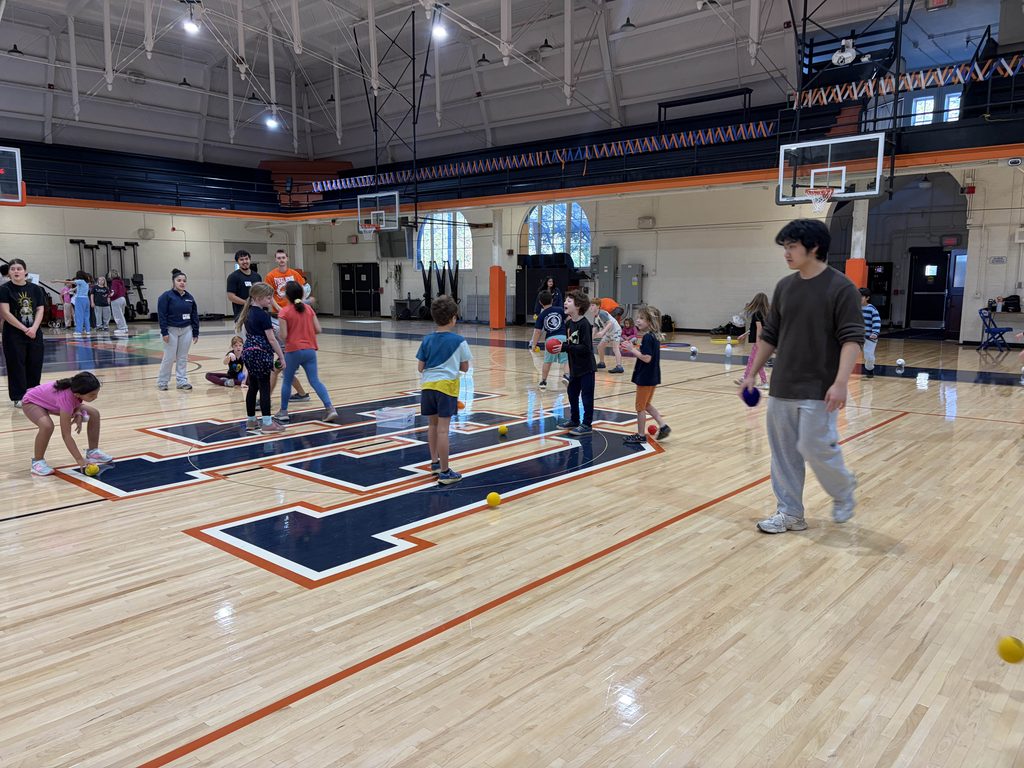
The partnership introduces high school students to physical education as a possible career while giving them immediate responsibility as leaders. (Photo provided)

“This model provides them with the opportunity to teach others what they have learned, which is one of the best ways to deeply learn,” he said. 

The partnership also introduces high school students to physical education as a possible career while giving them immediate responsibility as leaders. 

“It advances the mission by giving our preservice teachers an opportunity to both teach at the primary school and ‘teach the teachers,’” Richards said. 

The Pedagogical Kinesiology Laboratory brings a broader interest in teachers’ and learners’ experiences to the collaboration. Its stated mission includes understanding physical activity settings and addressing inclusion, including the experiences of people with disabilities. Carlson said the lab helped develop the project after discussions with the schools and could become more involved in research as the partnership develops. For now, the lesson planning, supported teaching and discussion afterward give participants a structure for learning directly from one another’s experience. 

The pilot remains an early effort. Carlson said the first lesson appeared to go well, with the children actively engaged for most of the period. Teachers also identified areas for improvement. Richards said more formal research is planned for the second year; the initial goal is for the groups to work well together and have a positive experience. 

Carlson said two additional planning sessions and two more lessons led by high school students were planned for the semester. University students would also continue working with Uni Primary. 

As the partners consider how to sustain the program, Carlson pointed to the relationships within each lesson as the clearest expression of its promise: university students supporting high school students, who in turn support younger children. 

“It’s a pretty great dynamic,” she said. 

Editor’s note:

To reach Vince Lara-Cinisomo, email vinlara@illinois.edu.
 

Share on social

Related news

Hadley’s research transcends retirement


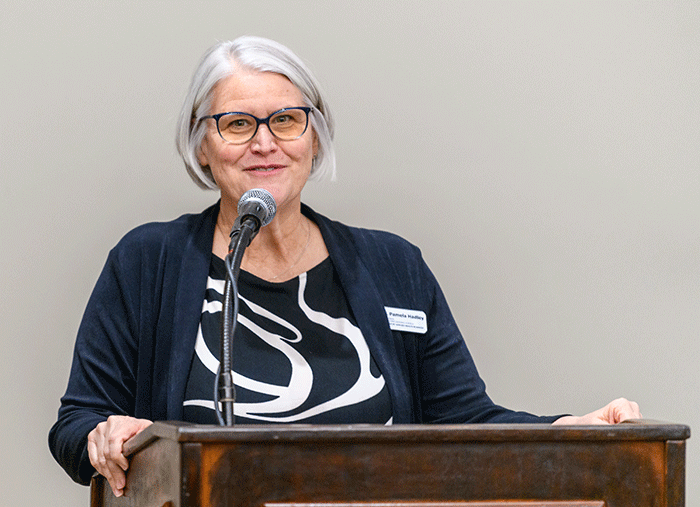
After nearly 20 years at Illinois, Pamela Hadley is retiring from her faculty duties but still engaged in research. (Photo by Ethan Simmons).

Pamela Hadley’s life as a researcher grew from her fascination with a observations about language development. 

The first is the miracle of language development: how most children learn to understand and use grammar largely through exposure without explicit instruction in their first three years.

The second is that roughly 7 to 10 percent of children have persistent difficulty understanding and producing language in a condition known as developmental language disorder, or DLD.

The beauty and complexity of language is Hadley’s academic home base, and her commitment to extending its access to children with DLD continues to drive her work today.

“Sharing the mystery and the miracle of language acquisition, that is the story I tell every undergraduate who comes into my lab,” Hadley said. 

After almost 20 years at the University of Illinois Urbana-Champaign, including five years spent as head of the Department of Speech and Hearing Science in the College of Applied Health Sciences, Hadley is retiring from her faculty duties while entering a new stage of her intellectual life. 

As an expert on developmental language disorder, Hadley is disseminating the work from two grant-funded research projects, particularly a clinical trial she co-led from 2018 to 2025 with colleagues from Vanderbilt University and Northwestern University. 

The trial was built around an 18-month intervention for children at high risk for developing DLD. Via telehealth, caregivers were coached on how to use several strategies to enrich the sentences they spoke around their children. 

One strategy incorporated into the trial was Hadley’s “toy talk—teaching caregivers to use more descriptive talk about the objects their kids play with. Overall, the study showed grammatical abilities improved more for the preschoolers in the treatment group than the control group. 

“For children with developmental language disorder, the area of weakness that is much more resistant to change is actually the grammar,” Hadley said. “The fact that we were able to slightly modify the language input, and we were able to get these language gains by starting early, is kind of huge.” 

With all this information in hand, the concept of “retirement” isn’t at top of mind for Hadley. She’s focused on channeling this new knowledge to the clinicians and families who need it most, with the help of bright scientists she’s mentored and partnered with over the years.   

“I’m really in this phase-down where what’s most important is disseminating the work and getting it out in ways that clinicians can better use,” Hadley said. “I’m thinking about how to translate the results of that trial for clinical audiences, doing more professional development conferences and workshops.

“Because research isn’t supposed to sit on a shelf; it’s supposed to transform lives.”  

The mystery and miracle

On her first day as a graduate student at the University of Kansas, Hadley watched as Professor Mabel Rice filled her chalkboard with the names of scholars who studied child language development from different perspectives: linguistics, psycholinguistics, cognitive psychology, developmental psychology and more. 

“It was all of the different ways in which the miracle of language acquisition was being studied, and that was kind of mind-blowing for me,” Hadley said. 

Her time studying under Professor Rice, a renowned scholar in the field of child language development, became the source of key lessons for Hadley’s life as a scholar and mentor. 

Research isn’t supposed to sit on a shelf; it’s supposed to transform lives.

Pamela Hadley

Professor, Department of Speech and Hearing Science

Still early in her career, Rice had created a demonstration project funded by the Department of Education. It was an integrated preschool that included children learning English typically, children learning English as a second language and English-speaking children with specific language impairment, now known as developmental language disorder. 

While providing language intervention in that classroom, Hadley said, she learned how effortless language acquisition was for children who were developing typically: those learning English as a second language could match the language proficiency of typically developing children in two years, unlike the children with DLD, who continued to struggle. 

For Hadley, it also emphasized the urgency of intervention: in order to maximize the language outcomes for preschoolers with DLD, they typically need two years of intervention before kindergarten entry. 

Finding ways to intervene in that window of time “became a huge motivation for me,” Hadley said. What she also took away, long after obtaining her Ph.D. in 1993, was Rice’s approach to mentorship. Rice had high standards, Hadley said, and she drew students to her who authentically shared her passion for child language development.

“Something in the framing of the problems … a certain type of student is attracted to working with me,” Hadley said. “You have to find the fascination in learning grammar. There are so few people who want to study grammar; many people are afraid of it.” 

One who felt drawn to the focus of Hadley’s Applied Psycholinguistics Lab was Tracy Preza, who’s now an assistant professor of speech-language pathology at the University of Northern Iowa. She applied to Speech and Hearing Science for graduate school, largely for the potential of working in Hadley’s lab, and joined the lab in her first semester as a master’s student. 

“What I find so impressive about Pam is that she cares incredibly deeply about changing clinical practice and improving outcomes for young children with DLD and also maintains such a high degree of rigor as a scientist,” Preza said. “She is passionate about both the science and the population, and I think she instills that in her students across all levels in the lab.” 

As a leader, Hadley is known for being generous with her time. Georgia Malandraki leaned on her valuable context and insights while she was getting acclimated to her new department head role with Speech and Hearing Science at Illinois: “I greatly appreciate knowing that I can reach out to her for guidance, and that she will always take the time to listen and offer thoughtful advice,” Malandraki said.

Hadley is the same as a faculty mentor, willing to look at drafts for research posters, papers or personal statements, Preza said. 

“I hope to bring the same degree of care and support that Pam had for me to my future students.” 

Preza was fortunate enough to join the Applied Psycholinguistics Lab just as Hadley’s recent multisite intervention for DLD was kicking off, providing a new window into how parents’ language input can impact kids’ development of language. 

An ambitious trial 

Hadley’s idea of toy talk boils down to two simple strategies during play and everyday activities: “Talk about the toys (or objects)” a child is interested in and “give the object its name.”“While you’re playing with objects, we want to talk about how they move, how they change, what they look like. It changes the diversity of sentences kids are hearing.”

Contrasted with other types of language modelingsuch as labeling (“that’s a cup”), self-talk (“I got your cup”) or parallel talk (“you knocked your cup over”), toy talk naturally enriches the diversity and grammatical structure of sentences that children hear. “Your cup fell off,” for instance. 

Why use this for kids with DLD? Since children with the disorder struggle more with grammar, like how verbs are marked for tense and agreement, toy talk makes the patterns of language “abnormally easy to detect,” Hadley said. 

In the seven-year clinical trial, which enrolled 108 children at risk for developing DLD and their families, caregivers in the treatment group learned to use toy talk during a sentence-focused phase in the middle of the 18-month intervention. At the end of this phase, children in the treatment group had significantly better scores on grammar than children in the control group.

The short-term effects were published in June 2026, showing that changes in caregiver interaction and language input improved children’s grammatical development in particular, which excited Hadley. 

“The reason this is so exciting is that usually people say we can’t target the grammar until children get older.”  The manuscript reporting on the primary aims of the trial was accepted in September 2026.

Pamela Hadley with Cheryl Hanley-Maxwell, dean of the College of Applied Health Sciences (Photo by Craig Pessman).

“There’s seven years worth of data to get out and share with not just the research community but the clinical communities as well.” 

‘This is who Pam is’

As fond as Hadley is about getting back to her researcher roots, experiencing the full-circle moments of former students bringing their work into the real world is always a special experience. 

Sometimes students will send notes of appreciation and understanding, such as speech-language pathologist Kayla Jordan (SHS ’14, ’16), who’s helping clinicians in Chicagoland implement toy talk strategies for children with autism as part of a new clinical trial with Northwestern.

Hadley continues to collaborate with the very first student she mentored for a master’s thesis: Windi Krok, who’s now a clinical assistant professor in Purdue University’s Department of Speech, Language, and Hearing Sciences. 

With a new perspective and a little encouragement, Hadley helped Krok develop stimuli from her doctoral dissertation into a new assessment tool. The sentence diversity priming task was originally developed to efficiently assess children’s sentence diversity and progress in intervention, Krok is now evaluating it as a measure of children’s responsiveness to instruction and learning potential.” 

“Every major career advancement I have made has been because Pam believed in me, even when I didn’t believe in myself,” Krok said. “This is who Pam is. She sees strengths and promise where others might not.” 

Hadley’s authentic passion for her research area “pushes those around her to continually strive for excellence,” Krok said. “Her legacy isn’t just the research she has produced, but the students, clinicians and researchers she has supported along the way.”

So, if you’re one of those alumni, don’t hesitate to reach out. Catching up with former students is one of Hadley’s “favorite treats” of faculty life.

“That’s a thrill for me,” Hadley said. “Maintaining contact with alumni who have gone on to use the tools that we taught them while they were here … that communication to us is really meaningful.” 

Editor’s note: 

To reach Pamela Hadley, email phadley@illinois.edu 

Share on social

Related news

How AI could change the way we spend our free time


There is value, Monika Stodolska said, in taking the wrong turn, the failed attempt and the surprise discovery. (Photo by Monika Stodolska)

Monika Stodolska spends two hours a week riding horses. At home, on occasion, she turns to artificial intelligence to help interpret the instructor’s advice. 

For the University of Illinois Urbana-Champaign faculty member, that is a promising use of technology: helping her get more from an activity that takes place far from a screen. 

But the same technology that helps someone become a better rider could also encourage people to surrender the choices, challenges and relationships that make leisure worthwhile. 

That tension drives Stodolska’s work on AI and the future of leisure. A professor in the Department of Recreation, Sport and Tourism in the College of Applied Health Sciences, she sees possibilities for creativity and connection alongside risks that convenience could deepen isolation and inequality. 

Whether the benefits outweigh the harm, her work suggests, will depend on decisions about regulation, corporate accountability and investment in community spaces where people spend time together. 

Stodolska edited a special issue of the journal Leisure Sciences featuring 28 critical commentaries and a closing essay. Published in fall 2026, the collection examines how AI could reshape leisure, education and public spaces. These are critical and theoretical arguments and reflections, rather than reports of new empirical studies. 

“The reality is very uncertain,” she said. “So those papers were very speculative.” 

The uncertainty begins with a deceptively simple question: if AI gives people more free time, will they enjoy it? 

Automating tasks could shorten workdays. Losing a job could also leave someone with hours to fill, but without the income, confidence or sense of purpose that helps make recreation satisfying. 

“Free time is not equivalent to leisure,” Stodolska said. “People who experience unemployment know that firsthand.” 

Meaningful leisure requires more than an empty calendar, she said. People need economic stability, a sense of belonging and accessible opportunities to participate. Parks, community centers and recreation programs matter, although access to them may be limited, particularly for people facing barriers of cost, distance or disability. 

Even for those with the means to enjoy themselves, AI could change how much control they exercise over their free time. 

A chatbot can suggest a vacation itinerary or identify restaurants based on someone’s preferences. That can spare travelers hours of research. But when a system supplies the options, the traveler’s role may shift from discovering possibilities to approving a prepared menu. 

Stodolska’s introduction to the special issue describes scholars’ concerns that increasingly personalized recommendations could narrow experiences while making them feel easier and more enjoyable. 

There is value, she said, in taking the wrong turn, the failed attempt and the surprise discovery. Learning to do something difficult and navigate through obstacles can be part of leisure’s reward. 

“The friction, the mistakes, the trials, the uncertainty is what shapes our character and allows people to grow,” she said. 

An AI system that continually agrees with its user could remove another source of growth: hearing a different perspective. This sycophancy inherent to many AI models, which often surfaces in leisure contexts, may lead to poor moral choices and a perceived license to engage in negative behaviors. Stodolska also worries that the appeal of polished, seemingly flawless results can overshadow the learning involved in producing something oneself. 

The friction, the mistakes, the trials, the uncertainty is what shapes our character and allows people to grow.

Monika Stodolska

RST Professor

Her concern extends to the habits people develop when convenience becomes routine. “It’s very easy to outsource everything to AI,” she said. The risk, she argues, is that people stop practicing the thinking and learning that help them act independently, leaving them less prepared to judge what a system produces. 

Still, she sees ways AI could help people begin activities they might otherwise find intimidating. 

A novice musician, writer or artist could use it for instruction or to explore an initial idea. Her own riding offers an example of using AI to support learning while keeping the physical experience and human instructor central. 

The key, she said, is gradually reducing assistance as skills develop. Educators call that process “dynamic fading.” The aim is developing greater independence. 

The stakes become more complicated when the activity is conversation itself. 

In a paper with Olivia Huang—an RST doctoral student advised by Stodolska—and Sharifa Sultana—an assistant professor in the Siebel School of Computing and Data Science at Illinois—Stodolska examines AI companionship among groups that can face exclusion, including older adults, people with disabilities, LGBTQ+ youth and racial and ethnic minoritized groups. 

The authors caution against romanticizing conventional recreation. A park or community program may promise connection while remaining physically inaccessible, unaffordable or unwelcoming. 

“Not everybody has equal access to recreation opportunities, to natural environments, to parks,” Stodolska said. “And there’s a lot of exclusion and discrimination present in those leisure spaces.” 

An AI companion, by contrast, may be available whenever someone wants to talk. The paper reviews research suggesting such interactions can offer comfort, affirmation and opportunities for self-expression. 

But the authors also describe risks of developing emotional dependence, lost privacy and withdrawal from human relationships. Systems trained on human-generated material can reproduce the biases users hoped to escape. 

Their central distinction is between feeling connected and participating in a reciprocal relationship. A user may experience comfort, but an algorithm has no emotional needs or feelings of its own. The exchange also takes place on a commercial platform whose interests include keeping the user engaged. 

For people already isolated, the authors warn, AI could intensify vulnerability while leaving the causes of exclusion untouched. 

“There’s a risk of amplification also,” Stodolska said. People who are lonely or excluded may turn to AI instead of working through difficulties in face-to-face relationships, she warned. The immediate comfort could make withdrawal more appealing, even as the need for human connection remains. The question is broader than whether an individual chatbot produces a helpful answer or soothing companionship. It includes whose needs shape the product, who profits from intimate disclosures and who bears responsibility when something goes wrong. That makes oversight central to the future they describe. 

The companionship paper calls for companies and governments to build protections into systems from the beginning, include marginalized users in their design and evaluate how regulation could reduce potential harms. It also urges longer-term research to determine whether initial relief from loneliness persists or gives way to dependence. 

The special issue also puts AI’s physical costs in view. Data centers require land, water and energy, and communities may bear those burdens without sharing equally in the benefits. Other essays raise concerns about surveillance and biased information used to manage public spaces. Together, they frame leisure’s future as a question of public priorities, government and corporate control, as well as users’ personal preference. 

The special issue will be turned into a book to be published by Routledge in 2027. 

The potential financial trade-offs trouble Stodolska. Organizations may spend money that is intended to help vulnerable people on customized AI systems in the hope of saving money later, she said. That could draw resources away from the people whom those services exist to support before any promised savings materialize. 

“It may seem like an easy fix to public agencies,” she said. But providers need to ask whether that spending advances their mission. 

She urges recreation providers to always keep in mind their mission: supporting physical and mental health and providing opportunities for building social connections and access to nature. Any potential future use of AI should be judged against those goals. 

Those questions also reach her classroom, where she is preparing the people who will run recreation programs and manage leisure spaces. 

In a paper with RST Teaching Associate Professor Sarah Agate, Stodolska argues that educators should move beyond trying to detect and punish every use of AI. Students need to understand its capabilities, limitations and ethical implications while developing judgments of their own. 

She has redesigned her course assignments accordingly. Some require students to visit the community and assess accessibility of local facilities without the use of AI. Others ask them to use AI to design a recreation program, then improve it using knowledge from lectures and readings. 

“I’m for critical and conscious and very thoughtful use of AI,” she said. 

She is less concerned about recreation jobs disappearing than about jobs in some other industries, though she qualifies that confidence. Human contact and physical experiences remain central to what recreation provides. Her optimism rests partly on what people continue to seek beyond technology: being outdoors, sharing a place and learning to work with others. 

“We love to be in places, specific places,” she said. “And AI cannot replace place-based experiences.” 

For Stodolska, a better leisure future will require protecting opportunities to have those experiences, even as technology makes staying on a screen more convenient. 

The riding lesson still needs a horse, an instructor and a rider willing to learn. 

Editor’s note:

To reach Monika Stodolska, email stodolsk@illinois.edu.
 

Share on social

Related news

College of Applied Health Sciences
110 Huff Hall
1206 South 4th Street
Champaign, IL 61820
(217) 333-2131