Support swells for iPALS summer enrichment program


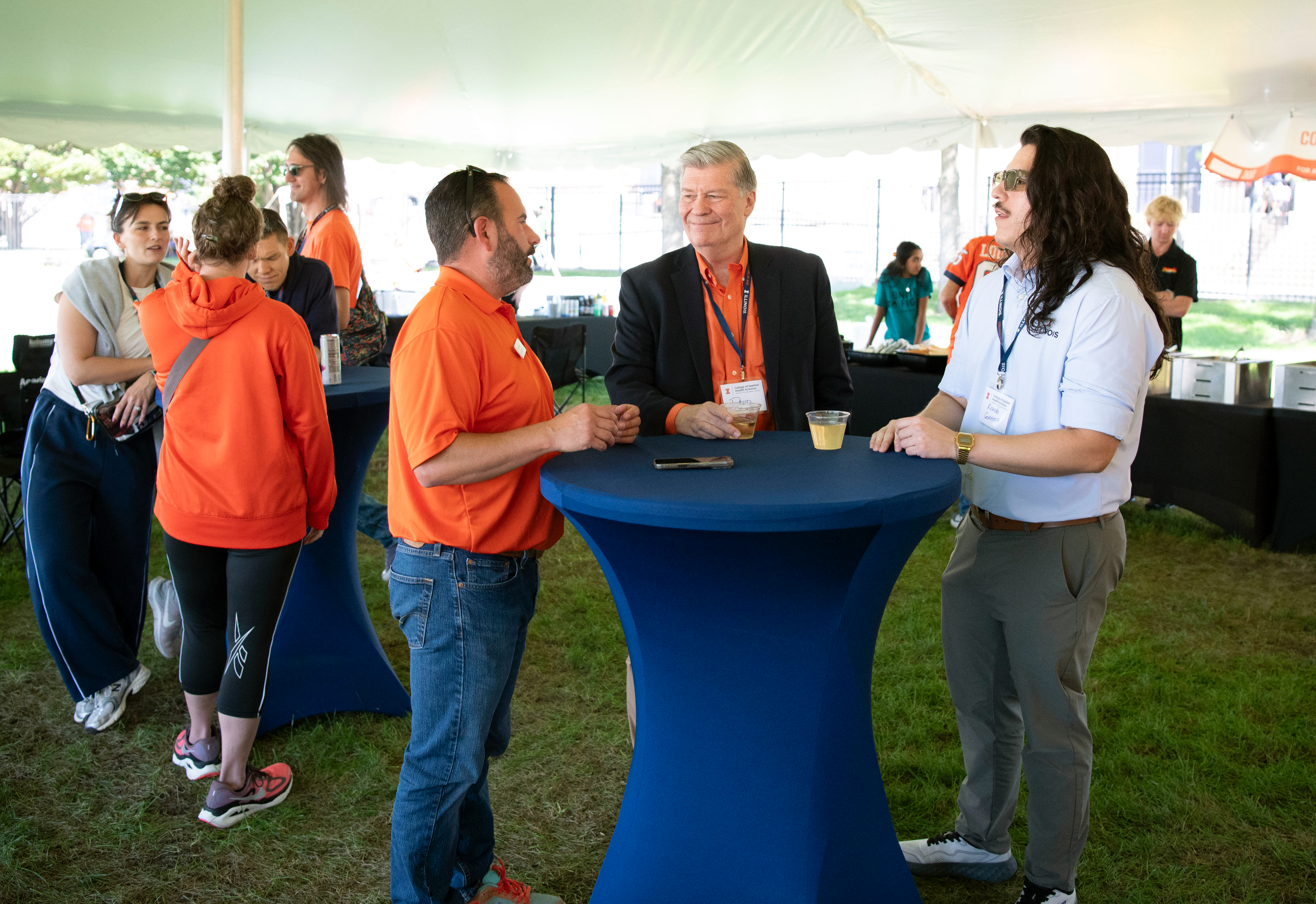
A day in the iPALS program provides academic enrichment, playtime, social-emotional learning and nutritious snacks. (Photo provided)

A group of Illinois physical education alumni are supporting one of the College of Applied Health Sciences’ longest-running youth programs as it returns to Champaign.

Three graduates of the former Department of Physical Education for Women at Illinois—Carolyn Bechly, Jean Snuggs and Lyndell Wilken—have pooled their resources into an endowment to help fund the Illinois Physical Activity and Life Skills program, also known as iPALS. The summer wellness program for local children is also a steppingstone for Illinois student educators to develop their skills.

“We’re hoping iPALS can be part of their practical experience, building on what they’ve learned in a classroom,” said Wilken, who graduated in 1972 and became a coach, physical educator and athletics administrator.

The eight-week iPALS program run by the Department of Health and Kinesiology in Applied Health Sciences brings in local schoolchildren every summer for a full day-camp experience, with structured playtime, academic enrichment, social-emotional learning and nutritious snacks available each day. 

Beyond a summer opportunity for at-risk youth—every child participant qualifies for SNAP benefits or free-and-reduced lunch—the program doubles as a research study, funded by the U.S. Department of Agriculture.

The premise of the study: to see if regular physical activity, summertime enrichment and specialized nutrition can curb “learning loss,” the regular backsliding of academic achievement that occurs over summer break. Enrollment in iPALS is completely free.

The University of Illinois has a long history of youth summer programs. iPALS was originally the “Sport Fitness” program, where physical activity was the focus. With community input from partnering local school districts, faculty leaders have developed a more balanced approach over the years, between academic and social enrichment, exercise and nutrition.

Many of the daily snacks served to iPALS kids contain lutein, a carotenoid common in leafy green vegetables that settles in our eyes and brain, supporting our eyesight and cognitive health. The iPALS participants, ages 6 to 11 years old, take fitness, academic and cognition assessments at the beginning and end of the program to measure its direct impacts.

“Given that physical activity participation is among the most robust behavioral approaches to support both physical and cognitive health, we anticipate that the iPALS program has the potential to have a meaningful impact on children in our community,” said principal investigator Naiman Khan, associate professor in the Department of Health and Kinesiology.

During iPALS days, the kids move from station to station, with each stop run by Illinois graduate students. The researchers purposely use students with diverse backgrounds: nutrition majors running the snack station, education majors running academic enrichment, and physical educators structuring the playtime.

“For me, the most important aspect is that we provide a safe space for eight hours a day where kids are guaranteed meals and snacks, surrounded by adults who care about them, and they’re able to build relationships with peers experiencing similar realities,” said HK Associate Professor Kevin Richards, who researches the teaching of physical education. “That impact is difficult to capture with data, but it is the most meaningful part of the program.”

Interested families can visit the iPALS website and complete the eligibility survey to see if their child qualifies for the program. This year’s iPALS will take place at Booker T. Washington STEM Academy in Champaign on weekdays from June 3 to July 17.

Booker T. Washington STEM Academy in Champaign will be the hosting venue for this year’s iPALS program. (Champaign Unit 4)

A Motivated Donation

Illinois alumnae Carolyn Bechly, Lyndell Wilken and Jean Snuggs on a trip to Alaska. The three graduated from Illinois Department of Physical Education for Women just as Title IX took effect. (Photo provided)

The teaching experience available in the iPALS program mirrors the student teaching opportunities that were available to prior generations of Illinois physical education majors. Months after the passage of landmark Title IX legislation in 1972, the Illinois departments of Physical Education for men and women were fused, just as Bechly, Wilken and Snuggs happened to embark on their careers.

Under Title IX, every education program that received federal funding had to ensure equal access for students regardless of sex. Schools nationwide had an imperative to start girls’ sports teams, and a dire need for coaches. Some states, including Illinois, mandated that coaching slots be filled by women.

Suddenly, these new Illinois physical education graduates had their work cut out for them. 

“It was an amazing time, and busy,” Wilken said. “The opportunities were huge, also the workload you sustained, because you were a full-time teacher and you weren’t given anything extra for coaching—just the love of sport and wanting girls to have opportunities that drove most of us to essentially do it for free.”

The three women quickly discovered the lessons from the Illinois’ physical education program were useful in the field. They had learned under department legends such as professors Phyllis Hill and Beulah Drom, who instilled foundations in childhood motor skills and structuring class-time for physical education. The pedagogy of P.E. was scientific and practical: to help students understand the joy of movement, you’ll have to get them to line up single file as well.

“The science of it was really fascinating … you learned how to learn things, which carried over into how to teach,” Snuggs said. “In retrospect, it was always incredibly teaching-oriented.”

Wilken, Snuggs, Bechly and their cohort have retired, mostly, from long careers in physical education and coaching, spanning secondary schools, colleges and universities. They owe much of their lasting bond with their classmates to the passage of Title IX, and the whirlwind of entering the field together, giving student-athletes—particularly young women—opportunities that didn’t exist for themselves.

“We graduated, Title IX happened, and we fell into wonderland,” Bechly said. “Us starting as brand-new teachers, to be able to coach and experience stuff we didn’t really experience to that level, it was just fabulous.”

Naturally, shared professional experiences led the cohort to stay in touch and collaborate. Wilken made a spirited call to Snuggs back in 1979: Wilken was leaving her post at the American River College in Sacramento after founding its women’s track and field team. The school would need a new athletics administrator, and a new coach.

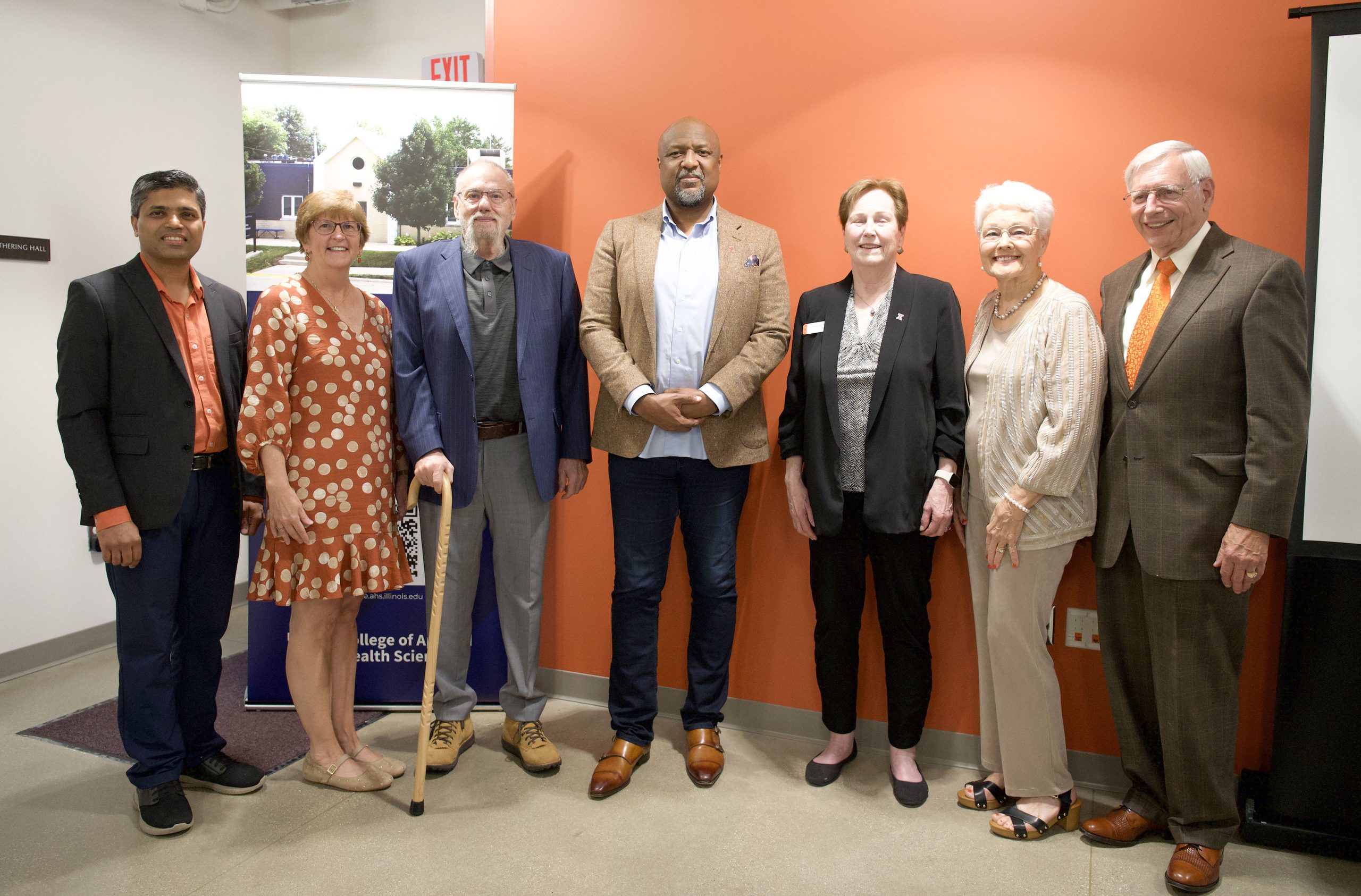
Inspired by how iPALS mirrors their own student-teaching experiences at Illinois, these physical education alums set up a fund to support the program indefinitely. (Photo provided)

“I had never run a track race in my life, but Lyndell said, ‘Hey, you might like this, why don’t you apply?’” Snuggs said. Snuggs got the job and stayed at American River College for more than 30 years, retiring as its dean of physical education in 2012. Wilken went to work at Lane Community College in Oregon, coaching its cross country and track teams to four conference championships.

Today, more than 53 years after the passage of Title IX, these alums have reconnected with their alma mater. After dialogues with the current faculty of Health and Kinesiology, the iPALS program seemed a good target for their financial support, mirroring their own student-teaching experiences at Illinois.

Their Supervised Teaching of Physical Activity/Nutrition Fund will support iPALS indefinitely. The founders have put out an open call for alums, including fellow physical educators, to donate.

“We’d like the students working there in the summer to be future physical educators, and that they continue being mentored and teaching,” Bechly said.

Families can register their kids for this summer session of iPALS now. In the meantime, the PEW alums hope more supporters help sustain the program.

“Physical education is a wonderful opportunity for kids to make decisions at whatever level, in terms of how they deal with others, how they deal with winning and losing. It’s heavy-duty stuff they can use for the rest of their lives,” Snuggs said.

Editor’s note:

To learn more about iPALS or sign up your child, visit the program’s webpage.

Want to contribute to the Supervised Teaching of Physical Activity/Nutrition Fund (Fund #778014)?  Donate or email our AHS Office of Advancement at advancement@ahs.illinois.edu.

Share on social
Related news

KCH’s Richards gets Fulbright to complete project in Australia


Kevin Andrew Richards

Kinesiology and Community Health Associate Professor Kevin Andrew Richards has received a Fulbright Specialist Program award from the U.S. Dept. of State and the Fulbright Foreign Scholarship Board.

Dr. Richards will complete a project at the University of Canberra in Australia that aims to exchange knowledge and establish partnerships benefitting participants, institutions and communities both in the United States and overseas through a variety of educational and training activities within education.

He is one of more than 400 U.S. citizens each year who share their expertise with host nations through the Fulbright Specialist Program. Fulbright Specialist Program winners are selected based on their academic and professional achievements, demonstrated leadership in their field and potential to foster long-term cooperations between institutions in the U.S. and abroad.

For more information on the Fulbright Specialist Program, visit https://eca.state.gov/fulbright.

Editor’s note:

To reach Kevin Richards, email karichar@illinois.edu.
 

Share on social

Related news

AHS researchers adapt iPALS for the COVID-19 world


Nothing in 2020 has gone according to anyone’s expectations, because of the pandemic. But thanks to some adaptation and innovation from College of Applied Health Sciences researchers and their cross-campus collaborators, Champaign County schoolchildren are learning some new life skills.

The Illinois Physical Activity and Life Skills Wellness Program, or iPALS for short, engages children in kindergarten through fifth grade in both physical activity and nutrition instruction. But according to KCH assistant professor K. Andrew R. Richards, iPALS was forced to undergo a COVID-related makeover.

“What we’re doing now is not what we had intended to do,” he said. “We’d been funded on an Illinois State Board of Education grant to run a summer program, an in-person, face-to-face summer camp style program in collaboration with (Champaign) Unit 4 (schools) that was going to be hosted at one of the local elementary schools. And we’d have about 150 kids that would come and spend the day with us for five consecutive weeks. And so that was the original plan, but then COVID happened. And all of that went out the window.”

With summer programming canceled by the University of Illinois and the school district, Richards and his collaborators were faced with a choice of having to spend the money by the end of this semester or having to return it to the state.

“And so that kind of left us with this decision, do we want to return the money?,” he said, “Or do we want to find some way to do some good with this in the local community to help children and family in the time of this pandemic, when health, and nutrition, and wellness are perhaps even more important than they ever have been?”

That’s where some of Richards’ collaborators come in, including fellow KCH assistant professor Naiman Khan, and graduate students in KCH and the Division of Nutritional Sciences. For example, Richards credits KCH doctoral student Shelby Ison for developing multiple options for a fall version of iPALS that included some face-to-face elements as well as virtual and asynchronous plans.

Richards and Khan then worked with Champaign Unit 4 Schools Director of Student, Family & Community Engagement, Katina Wilcher, about opportunities to engage more with the community.

“We brainstormed schools that might benefit most, developed a framework, the two agencies co-wrote a grant, and here we are,” Wilcher said in an email. “Of course, we had to adjust due to COVID, but the University did an outstanding job coming up with an alternative virtual program that is going well.”

IPALS has existed at UIUC in some form since the 1950s, Richards said, and at one point was called the Sport Fitness Program. It was once a multi-activity sport program, but Richards et al recognized iPALS needed to be more responsive to wellness in a broader sense. So, while there continues to be a physical activity component, they’ve added a social and emotional learning component, and a nutrition and wellness component.

Annabelle Shaffer, a master’s student in the Division of Nutritional Sciences, helped craft the nutrition element, part of which involves videos.

“They’ll get a video … basically just why you should hydrate,” she said. “What types of drinks are best for hydration, things like that. And then for their activity they’ll be provided cooking video that we’re making in collaboration with the ARC Instructional Kitchen, who has primarily dietetics and human nutrition undergrads teaching the courses. So they’ll create the cooking class video with the recipes given to them. And also we provide all the food for the kids with the socially distanced pickups.”

One-hundred and 10 children are participating in the program, which runs until Nov. 12. For the cooking program, they receive a set of child-safe knives, a spatula, their own mixing bowls, their own measuring spoons and cups.

“We wanted to be able to engage them in both physical activity and nutrition instruction,” Richards said. “But because we’re targeting primarily communities affected by poverty, we didn’t want to have to rely on them to have things that they were going to need.”

The researchers stressed that parents are involved in most aspects of the program, while still allowing their children to have creative freedom.

“Our current program is six weeks long, and each week students participate in three virtual activities through platforms such as Flipgrid and Edpuzzle. Each of the 3 activities have a different objective,” Ison said. “Activity 1 is designed to facilitate peer-to-peer social and emotional learning, Activity 2 is meant to educate children on physical activity and nutrition, and Activity 3 is the application of the learnings from Activity 2 where students work with their family members to complete a physical activity or nutrition activity or challenge.”

Khan, whose research interests focus in most part on nutrition, said one set of research outcomes would be “qualitative and getting an idea of the experience of the children participating in the program. We have an interest in our lab with physical health and mental and cognitive health in kids. So the Fitbits, for example, will be used to assess students’ physical activity.

“We’ll use a survey approach for them to report their nutritional intake. There’s a survey also on nutrition literacy that we’ve concluded to get an idea of their knowledge of foods and healthy eating. And some additional surveys that we have in place for understanding the home environment, in terms of just commotion and chaos in the household, some demographic information.”

The researchers plan to replicate iPALS next summer, although they’re uncertain if they’ll be able to host children in person. But they certainly hope for bigger grants as they go forward.

“If we were able to use what we’re learning and down the road leverage that towards larger, perhaps federal grant structures, then that might be able to set us up so we’d have funding for consecutive years,” Richards said.

“I feel like we’re in a position now, having been through this, where we won’t be going into that blind and trying to create the wheel while we’re driving the car. We’ll have the car created. And we can just gas it up along the way.”

Editor’s note:

To reach Vince Lara-Cinisomo, email vinlara@illinois.edu.
 

Related news

Podcast: A Few Minutes With … Kevin Richards


Kinesiology and Community Health assistant professor Kevin Richards spends a Few Minutes With AHS media relations specialist Vince Lara and speaks about his pedagogy research and the socialization of teachers, primarily in physical education.

Transcript

VINCE LARA: This is Vince Lara in the College of Applied Health Sciences at the University of Illinois. Today it’s been a few minutes with Kevin Richards, Assistant Professor in the Kinesiology and Community Health Department of AHS, to talk about his pedagogy research and the socialization of teachers.

Kevin, what inspires your research? Let me ask it this way. What led you to do what you do?

KEVIN RICHARDS: Yeah, that’s a good question. It’s interesting because a big thrust of my research is socialization. So, basically, you’re asking me what socialized me into the research that I do. But so I did my undergraduate degree back in Massachusetts in physical education. And I had every intention to go out into schools and to become a K-12 physical education teacher.

But back east, you have to have a master’s degree within five years to keep teaching in schools. And so a lot of people did like the night– the night school thing, and that just wasn’t for me. So I decided that I was going to look at graduate programs so I could just knock out that master’s degree in one shot, and then focus on teaching after. And that led me out to Purdue University, where I did my master’s and built the relationship with my advisor, Tom Templin.

And Tom studied socialization. And he was one of kind of the forefathers of that area of research in physical education. And I just got really passionate about that area of research through talking with him. So, you know, the main thrust of my research through the work that I did on my PhD and then, you know, and the majority of my career since focuses on how we recruit, prepare– recruit and prepare teacher– individuals to go into the field of physical education.

And then once they’re out in the schools, what are their lives and careers like? Physical education tends to be a marginalized subject in a lot of schools. And so I do a lot of work looking at marginality and how that affects teachers’ understanding of themselves and their relationships with others.

VINCE LARA: So, basically, to streamline what you’re saying is, you’re trying to build the best teacher you can, is that fair to say?

KEVIN RICHARDS: Yes, in a sense. You know, we look to recruit people into our programs who are diverse in terms of things like traditional markers like race and ethnicity. But then also in terms of their background experiences. Physical education’s been traditionally a discipline that potential recruits really see to align with coaching.

So those who want to coach extra curricular school sports sometimes come into physical education with these really solid, developed backgrounds in team sport. And they see physical education as kind of a conduit to continue that. But not every kid who is out taking physical education in schools loves sports. So we try to recruit more diverse students.

But then also looking at the methods that we use in our physical education programs to give those students the knowledge and skills that they’re going to need in order to become effective practitioners into the future. But, also, you know, we focus a lot on dispositions, because, you know, while they’re in our classes, we can hold them accountable. So we can grade them. If they don’t do what we tell them to do, you know, we can fail them even.

But the reality is that once our students transition out of our programs out into schools, we lose that control. And so at that point the true marker is, you know, have they internalized these beliefs to the extent that they’re going to use them even when we’re not watching. And so, we really try to work with students to help them develop ideologies that align with best practice, but are grounded in their own experience, and that they’ll follow through on.

VINCE LARA: What are some of the challenges, you know, physical education teachers– there’s some stigma around that, right? So what are some of the challenges of getting kids into the program? And what do you do to try to, you know, defeat some of those stigmas, if you will?

KEVIN RICHARDS: Yeah, yeah. That’s– it’s a really good question. And it’s timely, because this has actually been one particular area that I’ve been focusing on quite a bit in my work right now. But, you know, there are a lot of those negative social stigmas. And some of them, you know, are grounded in fact. You know, unfortunately, there are some physical education teachers, especially at the secondary level, the middle school and high school, who teach using ineffective practices.

The colloquialism in our field is that they roll out the ball. So they just kind of throw a ball out and let the kids play. It’s not educational. It’s not purposeful. And I think that sometimes people think about physical education and they reflect upon their own past experiences or maybe what their kids are going through in school, and they use that as the marker to evaluate the whole discipline. But, you know, of course, physical education can and should do so much more than that.

And so we really try to work with, you know, on the pre-service teacher side of it, develop teachers that are ready to step out into the world of schools, and teach using effective practices. And then a lot of my work has then also looked at those teachers who are in-service, working out in the schools, and how can we help to improve their work conditions and reshape their ideologies so that they’re using best practice. And then you have kind of this streamlined approach in the ideal situation where pre-service teachers are stepping out into schools that are ready to embrace the practices that they’ve learned.

And then, you know, this is all kind of a cyclical process, because the next generation of teachers are going to come out of those schools, and they’re going to see physical education as it’s presented to them by their own teachers, and use that as the basis for evaluation to determine whether or not they think physical education is for them. And so if we can get better physical education in the schools, then we’ll have better recruits coming into our programs.

VINCE LARA: One segment of your research, I noticed, deals with helping teachers deal with stress.

KEVIN RICHARDS: Yeah.

VINCE LARA: So what methods do you use to research that?

KEVIN RICHARDS: Yeah, yeah. So I was initially trained as a qualitative researcher. My advisor, Dr. Templin, was very qualitative. I joke, in that, I don’t think he’s ever, like, calculated a mean in his career, like it just wasn’t his bag. Now I’m exaggerating, he has. But he’s very qualitative. So that’s how I was originally trained.

But then I did a postdoc at Purdue with a woman named Chantal Levesque-Bristol. And she was a cognitive psychologist that used primarily quantitative methods. So I kind of got a mix of both, and have really come to appreciate mixed methods and multiple methods working together. A lot of my studies are designed using sequential approaches.

So we might do a large scale survey of teachers, you know, and get hundreds of responses, asking them questions about stress and burnout, and, you know, protective factors like resilience and perceived mattering. And then we’ll take a sub sample of people who complete that survey, and then do qualitative interviews with them.

But what I’m really excited about is we’re taking all of this information that we’ve learned over the last few years studying teacher stress, and we’re putting it into practice. We got some funding through a small seed grant to develop a professional development program for teachers in local Champaign-Urbana area.

We’re calling it the Dream Project. That’s developing resilience and enhancing appraisals of mattering. And it’s kind of the culmination of the last six years of my career learning about stress and burnout in the relationships among these variables, and how teachers experience their work life, and then putting that to practice to try to do something about it.

VINCE LARA: You also look at social and emotional learning in physical education. Would you elaborate a little bit on that?

KEVIN RICHARDS: Yeah, yeah. So that’s kind of a sub area or a second, maybe not sub area, but it’s kind of like a second tree of my research. So I had a colleague when I was going through grad school together– grad school named Michael Hemphill. And Michael and I– or Michael was very interested in social and emotional learning using this one particular best practice model called teaching personal and social responsibility.

And so TPSR, as we call it, is a way to teach within a physical activity context that views physical activity as kind of a mediator or a vehicle to get kids talking about personal and social responsibility. So there you have that hook of physical activity that a lot of kids like. It draws them in. And then that opens the door to say, OK, well, yeah, we’re going to focus on skill development. We’re going to focus on activity. But we’re also going to help you learn to be better people.

And so we focus on goals like participation and showing good effort, respecting the rights and feelings of others, self direction, and some goal setting, leadership and helping other people. And then the ultimate goal of all of that is to take lessons learned in the gym and transfer that out into other aspects of your life. So you know, you learn about respect in a physical activity program where you can use that in school.

Before I came to the University of Alabama, I was at– or excuse me, before I came to the University of Illinois, I was at the University of Alabama. And while I was there, a doctoral student and I, Tori Ivey, we ran a after-school program that focused on social emotional learning through physical activity over the course of three years, and learned a ton about best practices and best ways to do that.

And so then moving up here to Illinois, myself, Naiman Kahn, who’s another faculty in KCH, and my wife, Felicia Richards, who’s an instructor in our department, have been collaborating to take a summer program that our department’s actually offered for like 60 years. It’s one of the longest running summer programs, physical activity summer programs in the country. It used to be called Sport Fitness.

And so we took that and made some modifications to the structure, and rolled out a revised version of the model that we’re now calling IPAL. So it’s Illinois Physical Activity and Life Skills is what we are calling the program now. And that– that’s kind of a framework that we’re going to use this summer to roll out a couple of different summer program offerings using physical activity as kind of the hook, but really trying to get at those social emotional learning goals.

VINCE LARA: Is that program one of the reasons why you chose Illinois?

KEVIN RICHARDS: You know, I chose Illinois for a lot of reasons. I really like the people I worked with at Alabama, had great relationships down there. But Kim Graber and Amy Woods who are in pedagogy area with me, they’re leading scholars in the field. And Kim was actually on my dissertation committee. So we have this relationship that goes back a ways. And then, you know, Amy and I have collaborated over the years, too.

So those pre-existing relationships are a big part of what drew me here. But then, you know, or at least piqued my interest. But then after having come onto campus and see everything that Illinois has to offer, I mean this is a magical place. I really love it here. And, you know, my wife and I couldn’t be happier with the decision we made.

VINCE LARA: Now research obviously is a big part of why you’re at Illinois and our institution, obviously. But you know you also have to teach.

KEVIN RICHARDS: Yeah, yeah.

VINCE LARA: So do you– is there a particular class that you enjoy more than others?

KEVIN RICHARDS: Yeah, yeah. And people who listen to this might find this a bit surprising. But I love teaching actually. You know, it’s a huge part of my identity. I look forward to it. It’s not a burden. I love interacting with students. And the way that my teaching appointment is split here is that I teach one physical education majors course, so I still have my connection with the PE majors.

I teach a rotating course for our doctoral students. And then actually my favorite course is– it’s KIN201, Physical Activity Research Methods. And when the course got turned over to me, Neha Gothe and I actually collaborate on it. I teach it fall, she teaches in the spring. And when the course got turned over to us, you know, I think that it was a good idea, but it needed some fleshing out and development. And it’s been really fun to do that over the last couple of years with Neha.

And, you know, we’ve got the course to a position now, where the feedback that we’re getting at least, is that the students really enjoy it. We use kind of a lecture lab format. So they– you know, a large group lecture, where we can kind of talk about these concepts. But then the students break out into lab groups, where they get more kind of intimate contact and attention.

And, you know, I love talking about research. And so sparking that interest in the minds of our undergraduates, I think is a really cool part of our job. And so, I just got an email the other day actually from a student who was able to take something that we talked about in class a few weeks ago, and apply it in her life, reading a research article, and she wrote to me to tell me about that, which I thought was really cool and that really speaks to what I hope students get out of this class.

VINCE LARA: My thanks to Kevin Richards. This has been A Few Minutes.

Related news

College of Applied Health Sciences
110 Huff Hall
1206 South 4th Street
Champaign, IL 61820
(217) 333-2131