“Seeing my academic training translate into practical solutions has been one of the most rewarding aspects of my graduate experience”
Bisola Adeleke, a community health Ph.D. student, at her internship for Argonne Leadership Computing Facility. (Provided)
While still working on her Ph.D., a University of Illinois community health student researcher landed an internship at the biggest national laboratory in the Midwest.
This summer, Bisola Adeleke has conducted user experience research at Argonne National Laboratory, a federally funded science and engineering lab in Argonne, Illinois.
“Although my research focuses on older adults, the principles of human-centered design are universal,” Adeleke said.
This summer, her UX research has taken place in the Argonne Leadership Computing Facility, which provides supercomputing and AI resources to academic researchers, government agencies and industry scientists.
“Even world-class computing systems need intuitive, user-centered design,” Adeleke said. “The researchers who use ALCF are experts in their scientific fields, but that doesn’t necessarily mean they should have to struggle with complex workflows or documentation.”
What she’s seen so far: good user experience can make these advanced computing resources operate more efficiently and accessibly, allowing the researchers to spend more time on discovery and less navigating technical barriers, Adeleke said.
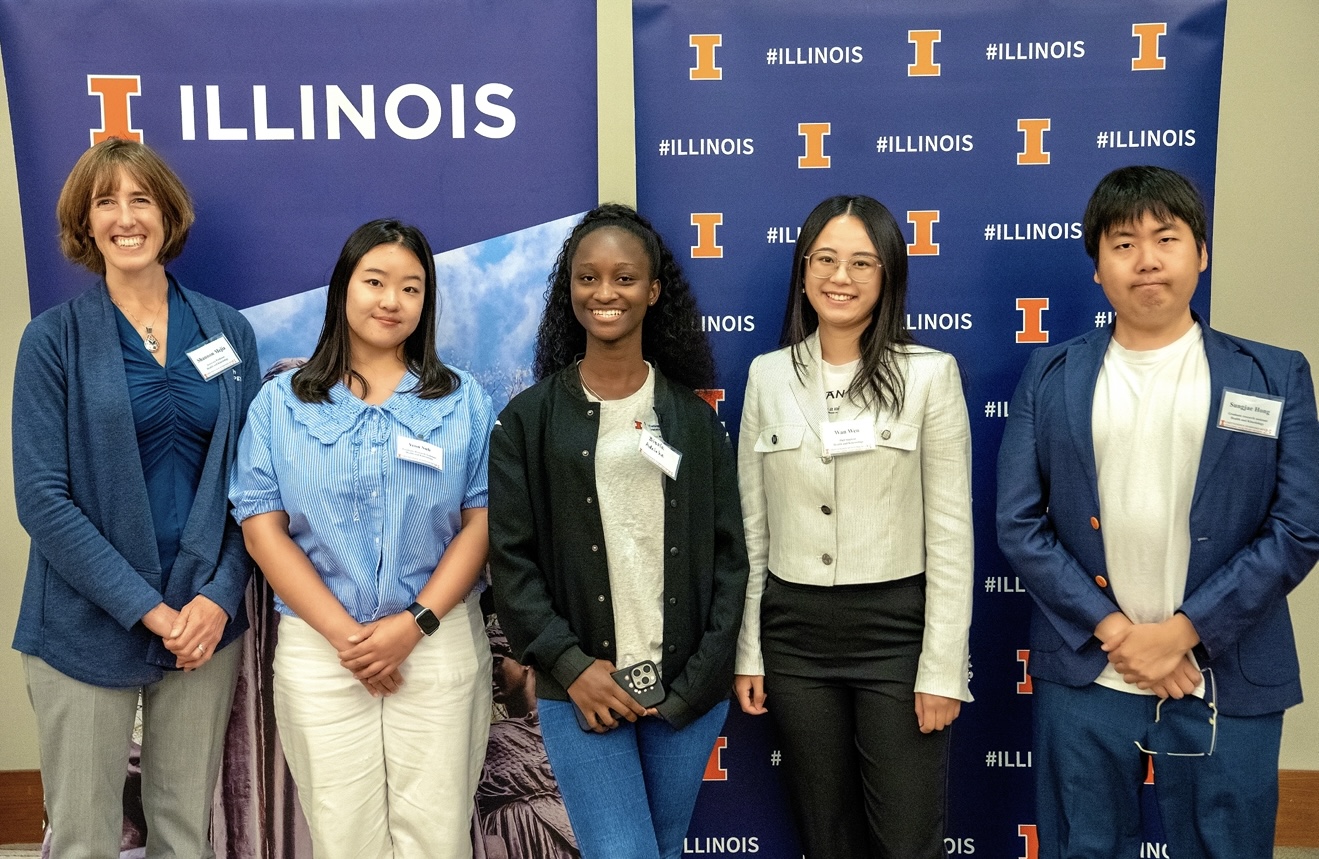
Members of the ADAPT Lab, led by Shannon Mejía (left).
An extended time working with professionals from computing and tech backgrounds has strengthened her ability to communicate across a diverse set of disciplines.
“One of the things I’ve valued most about my time at the University of Illinois is the emphasis on applying research to real-world challenges,” Adeleke said. “My coursework has provided a strong foundation in public health and research methods, while my internship at Argonne has shown me how those skills can be applied to improving technologies that support scientific research.
“Seeing my academic training translate into practical solutions has been one of the most rewarding aspects of my graduate experience.”
Before joining the University of Illinois Urbana-Champaign, Adeleke’s academic journey spanned two continents: she obtained her bachelor’s in health education from Lagos State University in Nigeria, and her master’s degree in research and development in educational studies from Palacky University in Olomouc, Czech Republic.
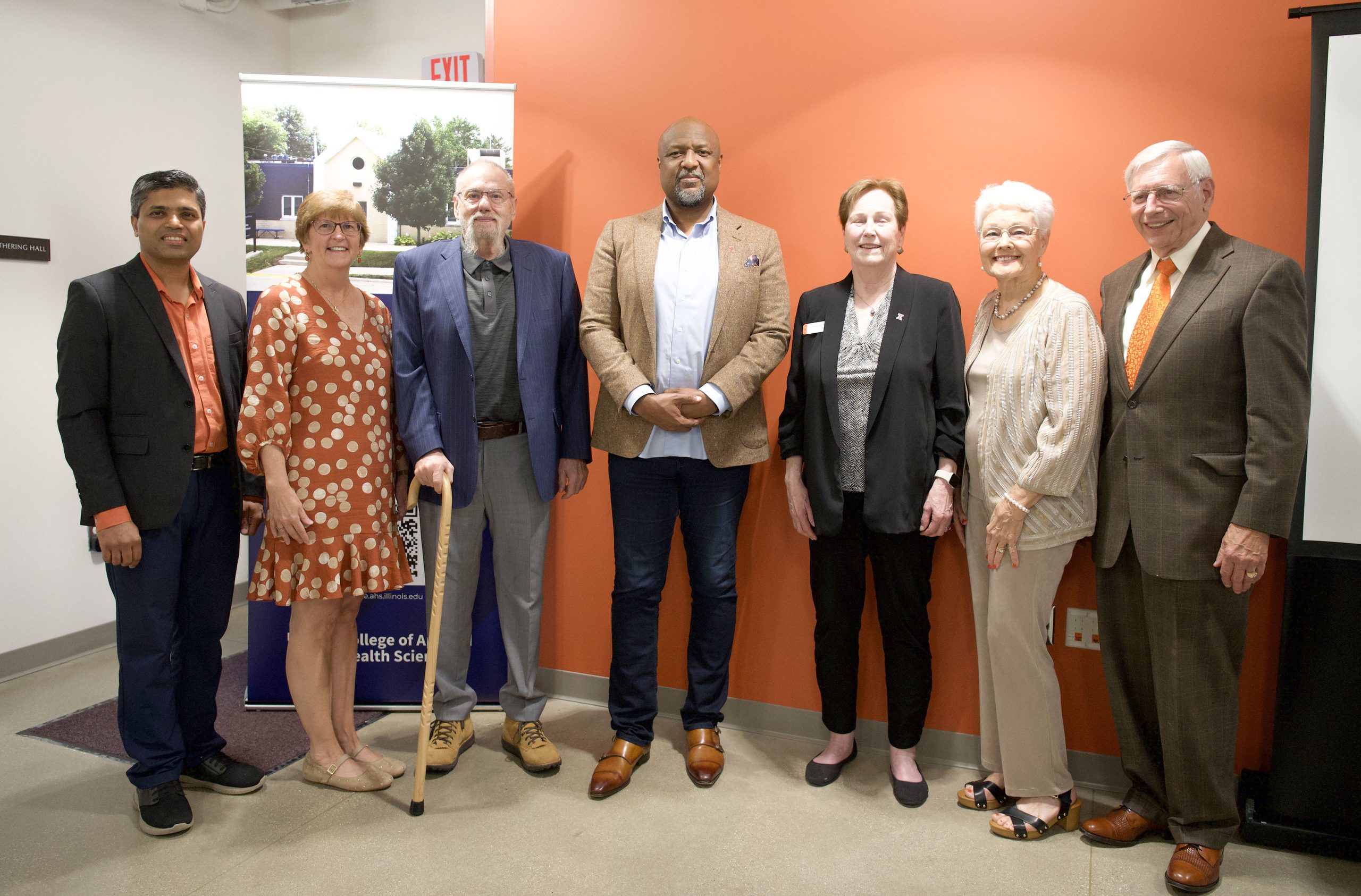
From left, Wendy Rogers, Raksha Mudar, Elizabeth Hsiao-Wecksler, Lynne Barnes and Cathy Emanuel (Photo by Carrie Wennerdahl)
Researchers from the University of Illinois Urbana-Champaign gathered Thursday to explore a strategic partnership with Advocates for Aging Care (AAC), a local grassroots organization working to bring an innovative skilled nursing facility to Champaign County.
The workshop brought together university faculty, clinicians and leaders to begin shaping how research, education and clinical practice could align to strengthen person-directed aging care.
The guest speaker was Susan Ryan, CEO of Maryland-based AgingIN, whose Green House model is a finalist for the project.
Building an Innovative Model for Skilled Nursing Care
The overarching goal is to establish The Cottages as a quality, person-directed skilled nursing setting inspired by the Green House model. Through collaboration with the university, project leaders aim to embed research into practice, pilot new technologies and create hands-on educational opportunities for students across disciplines.
The long-term vision is for The Cottages to serve as a flagship model for Illinois and the nation—distinguished not only by its design, but by its integration with a leading research university and its strengths in aging research, technology, design and education.
Turning Shared Interests into Action
The workshop was designed to generate potential models for collaboration based on the mutual needs of university researchers, clinicians, educators and students, as well as residents, families, caregivers and staff at The Cottages. Insights gathered during the session will inform the formation of working groups to advance the partnership.
“AAC is pleased to welcome researchers from the University of Illinois Urbana-Champaign as we identify new ways to advance person-directed skilled nursing care,” said AAC Steering Committee Chair Cathy Emanuel. “This unique Green House model can be strengthened by applying the latest research in aging technology, safety, environmental design, and innovative care practices. By partnering with the university, we aim to create a truly distinctive, high-quality care environment grounded in leading-edge research.”
Broad University Engagement
Interest across campus has been strong.
“We have been impressed by the level of enthusiasm we have seen as we organized this event,” said Wendy Rogers and Elizabeth Hsiao-Wecksler of the University of Illinois Urbana-Champaign. “Nearly 100 have already expressed interest in being engaged with The Cottages. They represent a broad spectrum of areas, including The Grainger College of Engineering, the College of Applied Health Sciences, Carle Illinois College of Medicine, the College of Liberal Arts and Sciences, the School of Social Work, the College of Media, the College of Fine and Applied Arts, the Interdisciplinary Health Sciences Institute, the Beckman Institute, Illinois Extension and UIC Nursing. We expect a long and fruitful relationship with Advocates for Aging Care, AgingIN, and The Cottages.”
Project leaders hope the Champaign County location will become a destination site for organizations seeking to implement innovative skilled nursing models—recognized not only for its Green House–inspired design, but also for its deep integration with university research, education and community engagement.
Additional details about construction timelines and future collaborative initiatives will be shared as planning progresses.
In addition to their professional experience, Gabrielle Dillon and Jack Senefeld share research interests
Gabrielle Dillon, left, and Jack Senefeld share common backgrounds and research interests (Photo by Ethan Simmons)
When Gabrielle Dillon joined the Department of Health and Kinesiology in the College of Applied Health Sciences last fall, she was greeted by a familiar face. She and Jack Senefeld, who had joined HK in fall 2023, had briefly overlapped in professional positions at the Mayo Clinic in Rochester, Minnesota.
Senefeld, who’d completed his Ph.D. at Marquette University, ended his five-year stint with Mayo in 2023 as a member of the College of Medicine faculty and an associate consultant in the Department of Anesthesiology and Perioperative Medicine and the Department of Physiology and Biomedical Engineering. Dillon joined the Human Integrative Physiology Lab in Mayo’s Department of Anesthesiology and Perioperative Medicine as a postdoctoral fellow in 2022 after completing her Ph.D. at The Pennsylvania State University. They were in different labs in the same department, but the labs collaborated closely.
Senefeld was happy to join the faculty at Illinois because of its outstanding reputation as a research university.
“There are a lot of great tools here to be a successful scientist, and both the university and the College of Applied Health Sciences are highly regarded,” he said.
When another faculty position opened just a year after his arrival, Senefeld forwarded the announcement to “big names and rising stars” in the field, among them his Mayo colleague Dillon.
“I knew both her Ph.D. mentor and her postdoctoral mentor, and her academic credentials are impeccable,” he said. “So we felt really fortunate when we saw her application in the pile.”
In addition to their professional experience, Dillon and Senefeld share research interests. They were members of a working group at Mayo that examined sex differences and physiology, and each makes a point of addressing women’s health in their work.
Dillon’s research focuses on vascular and cardiovascular physiology.
“I’m currently examining vascular testing across a woman’s lifespan and looking at whether physical activity can combat adverse cardiovascular aging and adverse menopause effects,” she said. She hopes not only to advance knowledge related to women’s cardiovascular health, but also to identify effective physical activity-based interventions to improve cardiovascular health. A secondary line of research examines the relationship between birth control and cardiovascular health in women.
Senefeld’s research seeks to understand and to mitigate the detrimental effects of metabolic disease and aging.
I think we’re both very fortunate to have landed jobs here, and we’re very pleased to be here.
Jack Senefeld
HK assistant professor
“My research focuses primarily on advancing understanding of non-pharmacological interventions—particularly exercise—for aging and metabolic disease,” he said. “I’m investigating how people with prediabetes perform during exercise, specifically how their skeletal muscle performs.”
Through his research, Senefeld hopes to shed light on why people have difficulty complying with exercise guidelines that are known to slow down the progression of diabetes, particularly in older adults. His research will examine how muscles combat fatigue in that population in hopes of increasing their ability to exercise, and he intends to investigate sex differences in muscle performance.
Senefeld and Dillon agree that Illinois is a great place to do human subjects research.
“The standard barriers to human subjects research have really been eliminated here,” Senefeld said. “We have health centers in the area, wonderful laboratory resources for science and multiple units on campus that can analyze samples. And from a practical standpoint, we have parking right outside the building.”
Dillon adds that the departmental culture fosters a supportive research environment.
“Everyone is excited, motivated and eager to collaborate,” she said. “As a new faculty member, I have found everyone to be extremely helpful. We also have a great dean and department head, both of whom are very encouraging.”
Dillon and Senefeld are equally passionate about their teaching. They’ve attended workshops through the Center for Innovation in Teaching and Learning on campus as well as faculty seminars developed by Amy Woods, associate dean for faculty affairs in AHS, and have applied what they’ve learned to co-developing undergraduate and graduate classes. They also are working with the AHS Office of Online Education and Learning Design to develop more effective ways of reaching digitally oriented students.
The heavy demands on young tenure-track scholars have not dampened their enthusiasm for service to their profession. Senefeld co-directs the Lifetime Fitness Program, an exercise program that offers older individuals in the Urbana-Champaign community exercise classes taught by undergraduate and graduate students in health and kinesiology. Dillon is active in the American Physiological Society, of which both she and Senefeld are members. She has developed webinars and career panels for APS, as well as serving on its awards committee. Both are also members of the American College of Sports Medicine, in which Senefeld was recently named a fellow.
The future is bright for Dillon and Senefeld, who are looking forward to long and productive careers at Illinois. As Senefeld put it, “I think we’re both very fortunate to have landed jobs here, and we’re very pleased to be here.”
Mobility disabilities, defined as a “serious difficulty walking or climbing stairs,” affect approximately 21 percent of adults 65 years of age and older
Saul Morse credits assistive technology for helping save his wife’s life (Photo provided)
Saul Morse believes his wife might not have survived a recent health episode without assistive technology.
“Had it not been for our voice-activated digital home assistant, we would not have been able to get my wife the urgent care she needed when she was having a stroke,” said Morse, a College of Applied Health Sciences alumnus and wheelchair user who has post-polio syndrome and is among the growing population of older adults who are aging in place with mobility disabilities.
At the time of his wife’s stroke, Morse—the 2023 Harold Scharper Award recipient—was a participant in a study led by Health and Kinesiology Professor Wendy Rogers, whose research team equipped Morse with the smart home devices that became life-saving tools for him and his wife. Rogers’ study is but one pillar of her storied research career, during which she has worked closely with older adults aging in place to understand their unique challenges and accelerate innovations to improve their quality of life.
Mobility disabilities, defined as a “serious difficulty walking or climbing stairs,” affect approximately 21 percent of adults 65 years of age and older, and this population of older adults only continues to increase, according to a paper from Rogers and her colleagues published in the Gerontechnology journal. Despite the challenges of mobility impairments, a majority of older adults choose to age in place to maintain autonomy and connection to their community. More than 75 percent of Americans 50 years of age and older choose this path.
With the rise in the availability of smart home technology, Rogers identified the potential role of this technology to provide a significant boon to the growing population of older adults with mobility disabilities. Rogers initiated an investigation into smart home technology for older adults in 2019, prior to the COVID-19 pandemic. The pandemic’s stay-at-home orders only further highlighted the critical role that smart home technology can play to boost independence and reduce isolation for many older adults aging in place.
“It is important to offer older adults with long-term mobility disabilities suitable strategies to maintain and postpone significant declines in functional independence,” said Rogers, who, along with Kim Graber, is one of two Shahid and Ann Carlson Khan Professors of Applied Health Sciences.
In this strategic research project, Rogers’ preliminary study, funded in part by the Illinois Department of Aging, investigated ways of reducing feelings of isolation and loneliness and increasing support for older adults. Since then, Rogers has developed a robust portfolio documenting her lab’s study of the role of smart home technology for older adults aging in place.
In January 2020, Rogers and her team published the first paper of this study detailing perceptions of digital assistant devices by early technology adopting older adults. From there, they introduced a group of older adults to two different Amazon digital home assistants, the Echo Show and Echo Speaker, to investigate how older adults interact with those devices and what activities the devices supported. A 2023 paper reported Rogers’ study of specific technology-training needs shared by older adults who do not have experience with such devices.
Those findings informed the next stage of Rogers’ multi-year research project funded by the National Institute on Disability, Independent Living, and Rehabilitation Research: the creation of a technology suite to equip and empower older adults with all the tools necessary to overcome the obstacles to technology adoption and proper usage. To that end, Rogers’ team developed the Digital Assistance in a Box, or DAB, for the study’s 24 participants, who used the at-home technologies for five weeks.
The DAB included an Amazon Echo Show 8, Philips Hue Smart Lightbulb, an Amazon Smart Plug and a custom-designed instructional manual.
It is important to offer older adults with long-term mobility disabilities suitable strategies to maintain and postpone significant declines in functional independence.
Wendy Rogers
HK Professor
“I never intended to use this kind of technology, because I was concerned about what would be recorded on the manufacturer’s servers,” Morse said. “But as a participant in the study, we installed a digital voice assistant and smart bulbs and plugs in my office and in our living room and bedroom. Being in a wheelchair, I saw the utility of these technologies right away. What most impressed me, though, were the custom user manuals—even a technophobe could use and appreciate them.”
Where previous studies looked at the viability of smart home technology for older adults, considering the range of activities they can support and how they might remedy loneliness, Rogers’ latest investigation zeroed in on a deeper exploration of older adults’ attitudes specifically regarding DHAs. Rogers’ team identified a few primary threats that might prevent older adults from adopting DHAs. In addition to the common barrier of learning to use a new technology, only a few older adults reported a lack of trust for manufacturers and a concern for their privacy.
Overall, study participants reported using DHAs for a wide variety of everyday activities and shared that the benefits of DHAs outweigh the risks. Participants reported using DHAs for leisure, hobby, entertainment, and health monitoring and maintenance endeavors. In fact, the results emphasize that DHAs specifically are particularly useful for older adults with mobility disabilities because of the voice-activated nature of such technologies.
“There’s a misperception that older adults don’t want to use technology,” Rogers said. “I’m an advocate for providing them with the support they need to use technology innovations. The benefits of reduced loneliness and isolation are a significant incentive. This latest study suggests that with increased education and training about privacy risks and protective strategies, older adults can experience the benefits of this assistant technology.”
In addition to this study, Rogers is working on multiple projects to benefit older adults aging in place. In partnership with researchers at TechSAge, she is investigating solutions for older adults with long-term vision or hearing impairments. Laura Rice, an associate professor in HK, and director of TechSAge, is leading a project to develop a fall-detection device for those in wheelchairs. At the McKechnie Family LIFE Home, Rogers is working with Girish Krishan, associate professor Industrial & Enterprise Systems Engineering, and Ian Rice, associate professor in HK, to develop a fall-prevention robotic shower. And there’s also a project with Katie Driggs-Campbell in Electrical and Computer Engineering to develop a wayfinding robot for adults with vision disabilities.
“We are studying the actual needs for aging in place for older adults and then coming back to our lab to work with engineers on how we can implement creative solutions that will improve the quality of life for older adults who are aging in place,” Rogers said. “Our study of DHAs, specifically, is a premier example of what makes Applied Health Sciences a special place, as we are doing the systematic interdisciplinary research necessary to produce responsive and supportive innovations to support people in our community.”
Many students majoring in HK want to pursue careers in occupational therapy, physical therapy and athletic training
Whitney Wolff was asked to develop a musculoskeletal anatomy course (Photo by Ethan Simmons)
Whitney Wolff had just completed a semester as an assistant professor at tiny Lakeland University in Sheboygan, Wisconsin, when the opportunity to work at an R1 university arose.
Wolff, who earned her Ph.D. from the University of Michigan in 2022, taught at Lakeland—student population approximately 2,500—that fall before applying to the Department of Health and Kinesiology in the College of Applied Health Sciences. As part of this process, the department asked her to develop a musculoskeletal anatomy course.
“Our HK faculty identified a need for a musculoskeletal anatomy course so the students could strengthen their understanding in an applied setting,” said Wolff, now a teaching assistant professor in Health and Kinesiology.
Many students majoring in HK want to pursue careers in occupational therapy, physical therapy and athletic training, and those fields dovetail with Wolff’s experience.
“I was on the pre-physical therapy track for the first three years of my undergraduate degree. I went to a university that required a semester-long, 40-hour a week internship and an extensive practicum experience, both of which I spent in a physical therapy setting,” she said. “I had a lot of experience observing and shadowing physical therapists, and it just wasn’t for me. However, I was able to draw on those experiences while designing this course.”
Wolff’s academic journey began with a B.S. in Exercise Science and a Master of Education in Kinesiology from Bowling Green State University, followed by a Ph.D. in Movement Science from the University of Michigan.
When she saw a faculty position open at Illinois, she jumped at the chance.
“It was primarily Illinois’ strong kinesiology program and the opportunity to be a part of a department that values both research and teaching. I was also excited by the high caliber of students that I’d be able to teach and mentor,” she said as to why she chose to come to Illinois.
Wolff believes her knowledge of the field as well as her methods are beneficial to students.
“I really challenge my students to develop a set of practical skills that will benefit them in graduate school and beyond. This is why I emphasize hands-on experience and less of ‘Can I memorize this information and then ace an exam’?”
“My approach to this course has been shaped by my experiences as well as knowing that these students want to be successful in very challenging careers.”
Wolff wanted the course to be more experiential learning and not just “listening to me talk about anatomy.”
Since kinesiology-related careers often involve working with other people, it’s an important experience for the students so that they discover whether this is a good fit for them
Whitney Wolff
Teaching Assistant Professor, Health and Kinesiology
“I designed musculoskeletal anatomy to be a lab-based course where 90 percent of the students’ time in class is spent completing hands-on activities. They’re working through the process themselves, and I can really see them grow and improve rapidly. It has been a really fun class to develop.”
Wolff informed the course design by talking with friends and colleagues who went through our nation’s leading physical therapy programs, asking about how they prepare for patient-clinician interactions and what anatomy courses are like in those programs.
“In typical undergraduate anatomy courses, (students) learn to identify the muscles on an image or on a plasticized model, whereas you look at us, we’re covered in skin and subcutaneous fat. Kinesiologists need to be able to identify muscles and bony landmarks on a living, breathing person that moves and changes position.”
As much “hands-on” learning as there is, Wolff is more “hands-off,” allowing students to explore and practice without fear of making mistakes.
And if students aren’t comfortable with being touched or touching others, Wolff will accommodate in class but did acknowledge that that could be a sign a student is in the wrong major.
“Since kinesiology-related careers often involve working with other people, it’s an important experience for the students so that they discover whether this is a good fit for them,” she said.
In addition to teaching, Wolff’s research focuses on the biomechanical presentation of idiopathic chronic neck pain in males and females. Her ultimate research goal is to design and implement workplace interventions aimed at preventing and treating idiopathic chronic neck pain.
Wolff said part of that research will involve how to manipulate seated posture without the need for an expensive ergonomic chair.
“(Neck pain) is often linked with static work postures such as sitting at a computer, so (an intervention) could be movement-based or could include adjustments to shoulder, head and neck posture. If we can identify the seated posture that decreases musculoskeletal strain of the neck and shoulder while being comfortable enough that an individual can maintain the posture, that could potentially decrease the likelihood of developing idiopathic chronic neck pain,” she said.
HK researchers found that the school children who more closely adhered to a special diet showed better control over their attention
A diet rich in fiber and antioxidants shows promise for children’s mental abilities, according to Shelby Keye’s research (Photo by Ethan Simmons)
A diet rich in fiber and antioxidants, low in fat and full of colorful berries and vegetables has shown a strong connection to slowed cognitive decline in older adults. This same Mediterranean-influenced diet shows promise for children’s mental abilities, too.
A recent study led by University of Illinois Health and Kinesiology Assistant Professor Shelby Keye compared elementary school kids’ food intake to this specific diet pattern—fittingly called the MIND diet—and measured how those kids performed on a task designed to challenge their attention span.
Keye and a team of researchers, including Health and Kinesiology Associate Professor Naiman Khan and Illinois Nutritional Sciences Ph.D. candidate Tori Holthaus, found that the school children who more closely adhered to this special diet showed better control over their attention.
“When we see something in older adults, we’re like, ‘I wonder if we’re going to see that same thing with kids?’” Keye said. “That was the question: will the MIND diet be related to children’s cognitive skills?’”
The MIND diet is short for Mediterranean-DASH Intervention for Neurodegenerative Delay. It’s a combination of the popular Mediterranean diet—which prioritizes beans, leafy vegetables, berries, seafood and olive oil—and the DASH diet, originally built to combat hypertension.
Researchers at Rush University in Chicago combined elements of these two diets and found certain components were related to better cognitive health in older adults.
To investigate whether the MIND diet had positive effects for kids’ brain health, the research team decided to study a pressing skill for any school-age child: paying attention.
In early life, the human brain is developing all of its cognitive skills simultaneously. But in certain phases of development, specific skills are growing faster and are more sensitive to a person’s changes in health, Keye said.
“Attention and inhibition around that elementary age is a particularly sensitive skill to health behaviors,” Keye said. “It may be because you have started school. And now, you’re in this environment where you have to inhibit, you have to prevent yourself from turning around and talking to your friend or even inhibit yourself from listening to internal thoughts.”
Their study marks the first time the MIND diet has been analyzed in a population this young. The diet’s connection to attention control opens the gates for more specific, involved research into the diet’s potential effects.
“With us finding this relationship with the MIND diet, that means that those foods that are important for older adults could be just as important for children,” Keye said.
To answer their question, the research team collected a week’s worth of dietary records for 129 local children, ages 7 to 11 years old. Parents of the child participants were tasked with recording everything their kid ate or drank for seven days, in close consultation with their children.
The children’s diets were scored on their proximity to the MIND diet pattern versus the most recent Healthy Eating Index, a set of dietary guidelines developed by the U.S. Department of Agriculture. The two diets are similar but emphasize different food groups: The MIND diet encourages more berries and olive oil, for example.
Before gathering their diet records, the researchers collected the children’s demographic and anthropometric data—height, weight, age and the like. And each participant completed a cognitive test designed to challenge their focus, called the Eriksen-Flanker task.
The task asks participants to look at a series of rapidly flashing arrows pointing in different directions on a computer screen, and mark which direction the arrow in the center of the image was pointing. (For kids, the arrows are replaced with pictures of fish.)
The children who ate foods closer to the MIND diet scored more accurately on the attention task. The positive relationship did not show significant differences based on the children’s overall caloric intake, sex or household income.
No significant relationship was found with the kids’ scores on the Healthy Eating Index guidelines.
The children who ate foods closer to the MIND diet scored more accurately on the attention task.
“This is one study, and it’s one of the first,” Keye said. “But because we found a relationship, there is most likely something there.”
As for why the diet had a relationship to attention control, Keye said a few possibilities are worth further research.
Many of the dark green vegetables and berries present in the MIND diet are rich in antioxidants, which have an anti-inflammatory effect that helps with brain development and function, she said.
Weight could also play a role. A separate study found that children who followed the MIND diet had a lower weight status on average—a higher weight status can relate to greater levels of inflammation and poorer cognitive performance.
Also, physical activity and diet quality tend to go together in people, Keye said. It could be that the kids who ate more MIND diet foods focused better because of a healthier, more active lifestyle.
Is the evidence enough to start changing children’s diets? More research is needed into the potential cause-and-effect, but if the benefits interest you, “I would not stray away,” Keye said.
“I always try to just keep it simple while doing this type of work. Sometimes I find that people will read about this and say, ‘I’ve got to change all these things about my life,’” Keye said. “I study behavior change a little bit, and I find that it’s easier to start simple and do one thing.”
If the MIND diet’s potential benefits seem compelling, try adding in some berries and smoothies into your meal plan, or cooking with olive oil instead of butter for a week, Keye suggested.
For now, the results from this study present a few next steps. Future studies can run diet interventions, where researchers control participants’ food intake to fit the MIND diet and observe any effects. Researchers could also make the same analysis of diet and attention control in an even younger group of child participants, or with a wider range of socioeconomic status.
“We’re just excited to be doing the work and excited to have some interesting results,” Keye said. “And hopefully, one day, we can get a good intervention.”
The paper, “MIND Diet Pattern Is Associated with Attentional Control in School-Aged Children,” was published in the Journal of Cognitive Enhancement in January 2025. It is available online.
Responsibility for teaching many courses offered by the department is also borne by another group of highly qualified individuals known as specialized faculty
Kristen DiFilippo was one of five Illinois faculty awarded for Excellence in Undergraduate Teaching this year (Photo by Ethan Simmons)
Like the University of Illinois and the College of Applied Health Sciences, the Department of Health and Kinesiology pursues a three-pronged mission of leadership in research, teaching and service. It is the primary responsibility of tenure-track faculty to advance the research mission by successfully securing grants to support their work and by publishing extensively in the leading journals in their areas of expertise.
Tenure-track faculty also teach, of course, but responsibility for teaching many courses offered by the department is also borne by another group of highly qualified individuals known as specialized faculty. More than 75% of the department’s specialized faculty hold doctoral degrees in such fields as kinesiology, community health, nutritional science, sociology and education.
“These are individuals who really enjoy teaching, who enjoy interacting with students and helping them along their educational journey,” said Health and Kinesiology Department Head Kim Graber. “They’re passionate about teaching and having an impact on the lives of undergraduate and graduate students.”
“Passion” is the word both Kristen DiFilippo and Kristin Carlson use when talking about teaching. Both hold positions as teaching assistant professors. Carlson was in a tenure-track position at another university when she realized she wasn’t as interested in doing research as she was in working with students. The teaching position at Illinois better aligned with her personal goals, she said, and she seized the opportunity to join the teaching faculty. That the decision was a good one is evidenced by Carlson receiving the 2023 Excellence in Undergraduate Teaching Award: Specialized Faculty from the College of Applied Health Sciences.
“The university is known for its research—and it attracts a lot of students—but they are deeply concerned about the education they are receiving here,” she said. “We are able to provide a high-quality educational experience to our students, and we develop relationships with them as we see them time and again in the various classes we teach.”
DiFilippo, who was one of five Illinois faculty awarded for Excellence in Undergraduate Teaching this year, shares Carlson’s enthusiasm for her primary role.
“My first love is the classroom, and teaching is valued here,” she said. “Specialized faculty play a significant role in the teaching mission and making sure that there is quality education being provided for our students. We are excited to be in the classroom.”
Some of their responsibilities straddle the line between teaching and service. Carlson, for example, oversees the department’s physical education teacher licensure program. She also serves as an assistant department head with a focus on curriculum. DiFilippo guides students in the Interdisciplinary Health Sciences degree program through their required internship experiences as a teacher of the 400-level internship course. She also is the lead teacher for the Interdisciplinary Health Sciences’ annual study abroad experience in Greece.
These are individuals who really enjoy teaching, who enjoy interacting with students and helping them along their educational journey.
Kim Graber
HK Department head
While the lion’s share of their responsibilities relate to teaching, DiFilippo, Carlson and other members of the teaching faculty also are expected to contribute to the department’s research mission. DiFilippo applies her background in nutritional science to investigations of chronic disease prevention and management through the use of nutrition education and behavior change. She is a principal investigator on a seven-figure grant from the U.S. Department of Agriculture that supports OneOp, a collaboration with the Department of Defense and Cooperative Extension that provides continuing education opportunities to health care providers who work with military-connected individuals. Carlson, a member of the Pedagogical Kinesiology Lab, focuses her research on incorporating academics into K-12 physical education and enhancing the fitness activities used in physical education classes.
Although they are not eligible for tenure, DiFilippo and Carlson can apply for promotions similar to tenure-track faculty, from teaching assistant professor to teaching associate professor to teaching professor. Unlike tenure-track faculty, who must apply for tenure after five years or lose their positions, members of the teaching faculty may choose not to submit paperwork for promotion indefinitely, as long as their annual contracts are renewed.
Graber said the teaching faculty are highly valued by the department and across campus.
“They step up in so many ways that enable the tenure-track faculty to focus on their research,” she said. “We wouldn’t be able to offer as many undergraduate and graduate classes as we do with the high quality that we are known for without our professionals who are devoted to teaching. They are a godsend.”
Kim Graber, Shahid and Ann Carlson Khan professor and head, Department of Health and Kinesiology (Photo by Craig Pessman)
Hello, Health and Kinesiology family,
Welcome to the spring 2025 edition of our newsletter! This marks our first spring semester under our new department name, officially changed last August. We have exciting updates to share and plenty to celebrate.
Inside, you’ll learn about the importance of specialized faculty, how digital-voice assistants support older adults and read about innovative research and a prestigious honor for our faculty. I hope this edition leaves you inspired by our collective impact and the momentum we’re building together.
Wishing you a successful and fulfilling semester!
Warmly, Kim Graber Shahid and Ann Carlson Khan Professor and Head, Department of Health and Kinesiology
Eight students in the Master of Science in Health Technology program showcased their capstone presentations on Aug. 4 at the I-Hotel in Champaign.
The capstone is the final presentation for the students’ Master of Science degrees. Invited guests included faculty members and capstone sponsors as well as friends and family of the students. Special guests included Illinois alumni and donors Michael Vitoux and Jim and Karen McKechnie.
Falguni Deshpande was selected to receive the Michael Vitoux Capstone Excellence Award, which included a $2,000 prize. Deshpande’s capstone was entitled “Inclusion of Minority Patients in Alzheimer Disease and Related Dementias (ADRD) Clinical Trials through Care Partner Engagement” and was supervised by Kinesiology and Community Health Assistant Professor Mina Raj in the Aging, Caregiving and Technology Laboratory.
Lauren Komrska received honorable mention in the same category, which includes a $1,000 award. Komrska’s capstone in the Disability, Participation, and Quality of Life Laboratory with KCH Associate Professor Laura Rice was entitled “Development and Validation of a Fall Detection Device for Older Adults who use Wheelchairs or Scooters”.
Vitoux was present for the award presentations and said he was impressed by the students’ work. The recipients were selected by the awards committee based on presentations and assignments about their capstone projects throughout the academic year.
Dr. and Mrs. McKechnie celebrated all of the MS-HT students’ accomplishments at the luncheon and poster session. They were especially proud of the work of Deshpande and Komrska, who were recipients of the 2021-2022 James and Karen McKechnie Fellowship in Applied Health Sciences.
The University of Illinois is part of a consortium that has been awarded a five-year, $14.7 million grant from the National Institute on Aging (National Institutes of Health) for the Center for Research and Education on Aging and Technology Enhancement (CREATE).
University of Illinois Professor Wendy Rogers—of the Dept. of Kinesiology and Community Health within the College of Applied Health Sciences—is the principal investigator for the Illinois site. Co-investigators include Raksha Mudar of the Dept. of Speech and Hearing Science, Dan Llano of the Dept. of Molecular & Integrative Physiology, and Avinash Gupta and RS Sreenivas, both of the Dept. of Industrial & Enterprise Systems Engineering. “One of the most exciting aspects of the Illinois engagement is the breadth of our involvement, representing four departments across three colleges,” Dr. Rogers said. “Such interdisciplinarity is critical for advancement in technology designed to support older adults.”
Weill Cornell Medicine, Florida State University, and Illinois are the lead universities on CREATE, a multi-institutional, interdisciplinary center. The research will focus on employing emerging and existing technologies to promote wellbeing, quality of life and independence for diverse populations of older adults, and to provide support for older adults with cognitive impairments.
Initially funded in 1999, the goal of CREATE is to ensure that older adults can use and realize the benefits of technology for improving daily living. Through the four previous funding cycles of CREATE, the landscape of aging and technology has changed dramatically.
Given that age is a significant risk factor for cognitive impairments such as mild cognitive impairment (MCI) and Alzheimer’s Disease/Alzheimer’s Disease Related Dementias, CREATE V will expand its target populations to include older adults with MCI and involve three integrated cross-site projects. With a focus on enhancing cognitive health, social engagement and preventing cognitive impairment, the first study will look at how virtual reality technology can be used to foster cognitive and social engagement among aging adults.
It will be one of the largest randomized controlled trials of virtual reality in home settings. Preliminary development and testing will be conducted at the McKechnie Family LIFE Home on the Illinois campus.