University of Illinois researchers explore collaboration on innovative skilled nursing model


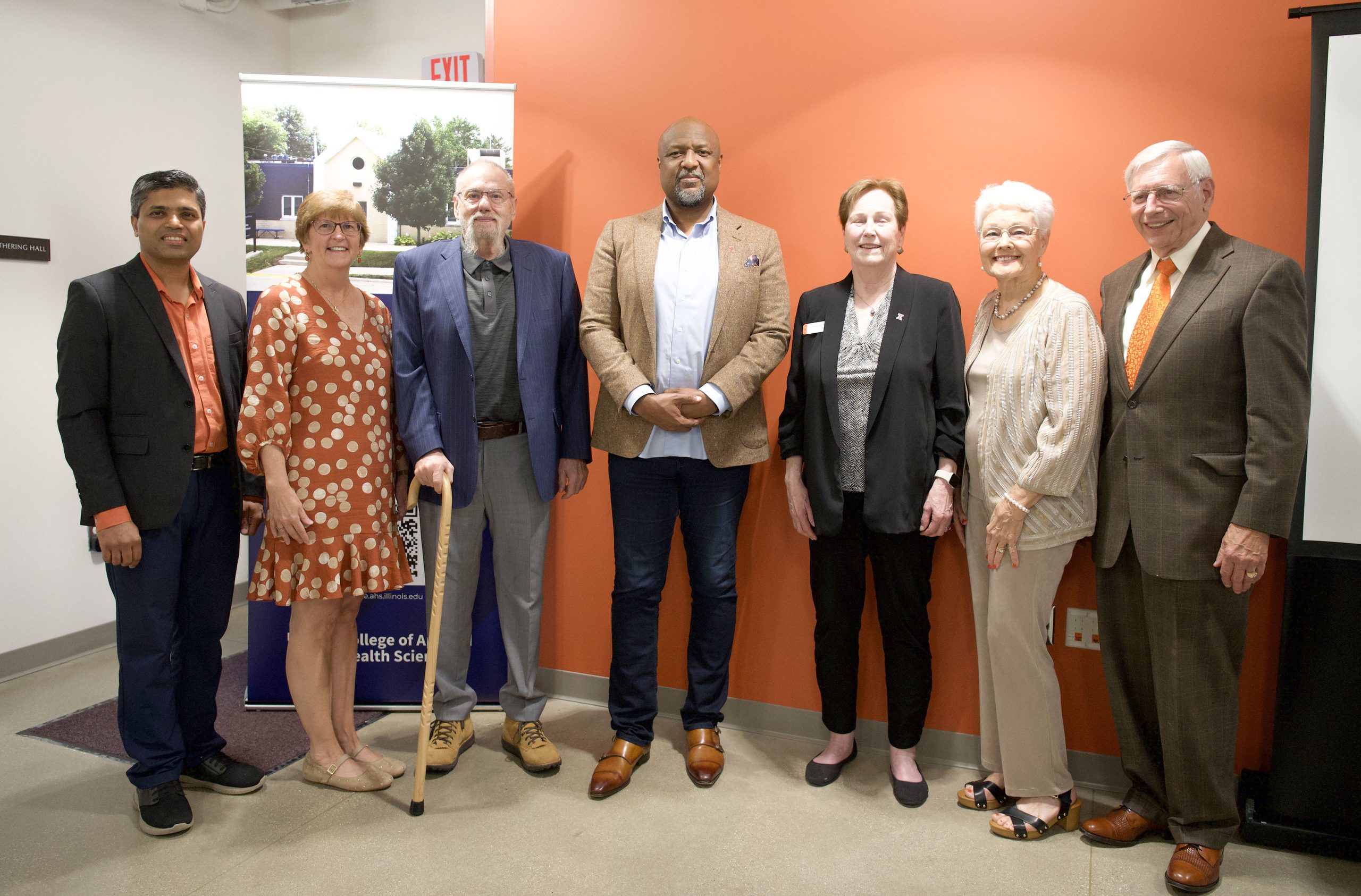
From left, Wendy Rogers, Raksha Mudar, Elizabeth Hsiao-Wecksler, Lynne Barnes and Cathy Emanuel (Photo by Carrie Wennerdahl)

Researchers from the University of Illinois Urbana-Champaign gathered Thursday to explore a strategic partnership with Advocates for Aging Care (AAC), a local grassroots organization working to bring an innovative skilled nursing facility to Champaign County.

The workshop brought together university faculty, clinicians and leaders to begin shaping how research, education and clinical practice could align to strengthen person-directed aging care.

The guest speaker was Susan Ryan, CEO of Maryland-based AgingIN, whose Green House model is a finalist for the project. 

Building an Innovative Model for Skilled Nursing Care

The overarching goal is to establish The Cottages as a quality, person-directed skilled nursing setting inspired by the Green House model. Through collaboration with the university, project leaders aim to embed research into practice, pilot new technologies and create hands-on educational opportunities for students across disciplines.

The long-term vision is for The Cottages to serve as a flagship model for Illinois and the nation—distinguished not only by its design, but by its integration with a leading research university and its strengths in aging research, technology, design and education.

Turning Shared Interests into Action

The workshop was designed to generate potential models for collaboration based on the mutual needs of university researchers, clinicians, educators and students, as well as residents, families, caregivers and staff at The Cottages. Insights gathered during the session will inform the formation of working groups to advance the partnership.

“AAC is pleased to welcome researchers from the University of Illinois Urbana-Champaign as we identify new ways to advance person-directed skilled nursing care,” said AAC Steering Committee Chair Cathy Emanuel. “This unique Green House model can be strengthened by applying the latest research in aging technology, safety, environmental design, and innovative care practices. By partnering with the university, we aim to create a truly distinctive, high-quality care environment grounded in leading-edge research.”

Broad University Engagement

Interest across campus has been strong.

“We have been impressed by the level of enthusiasm we have seen as we organized this event,” said Wendy Rogers and Elizabeth Hsiao-Wecksler of the University of Illinois Urbana-Champaign. “Nearly 100 have already expressed interest in being engaged with The Cottages. They represent a broad spectrum of areas, including The Grainger College of Engineering, the College of Applied Health Sciences, Carle Illinois College of Medicine, the College of Liberal Arts and Sciences, the School of Social Work, the College of Media, the College of Fine and Applied Arts, the Interdisciplinary Health Sciences Institute, the Beckman Institute, Illinois Extension and UIC Nursing. We expect a long and fruitful relationship with Advocates for Aging Care, AgingIN, and The Cottages.”

Project leaders hope the Champaign County location will become a destination site for organizations seeking to implement innovative skilled nursing models—recognized not only for its Green House–inspired design, but also for its deep integration with university research, education and community engagement.

Additional details about construction timelines and future collaborative initiatives will be shared as planning progresses.

Editor’s note:

To reach Sarah Laufenberg, email info@advocatesforagingcare.org.
 

Share on social

Related news

Study shows smart home technology to be beneficial for aging in place


Saul Morse credits assistive technology for helping save his wife’s life (Photo provided)

Saul Morse believes his wife might not have survived a recent health episode without assistive technology.

“Had it not been for our voice-activated digital home assistant, we would not have been able to get my wife the urgent care she needed when she was having a stroke,” said Morse, a College of Applied Health Sciences alumnus and wheelchair user who has post-polio syndrome and is among the growing population of older adults who are aging in place with mobility disabilities. 

At the time of his wife’s stroke, Morse—the 2023 Harold Scharper Award recipient—was a participant in a study led by Health and Kinesiology Professor Wendy Rogers, whose research team equipped Morse with the smart home devices that became life-saving tools for him and his wife. Rogers’ study is but one pillar of her storied research career, during which she has worked closely with older adults aging in place to understand their unique challenges and accelerate innovations to improve their quality of life. 

Mobility disabilities, defined as a “serious difficulty walking or climbing stairs,” affect approximately 21 percent of adults 65 years of age and older, and this population of older adults only continues to increase, according to a paper from Rogers and her colleagues published in the Gerontechnology journal. Despite the challenges of mobility impairments, a majority of older adults choose to age in place to maintain autonomy and connection to their community. More than 75 percent of Americans 50 years of age and older choose this path.

With the rise in the availability of smart home technology, Rogers identified the potential role of this technology to provide a significant boon to the growing population of older adults with mobility disabilities. Rogers initiated an investigation into smart home technology for older adults in 2019, prior to the COVID-19 pandemic. The pandemic’s stay-at-home orders only further highlighted the critical role that smart home technology can play to boost independence and reduce isolation for many older adults aging in place.  

“It is important to offer older adults with long-term mobility disabilities suitable strategies to maintain and postpone significant declines in functional independence,” said Rogers, who, along with Kim Graber, is one of two Shahid and Ann Carlson Khan Professors of Applied Health Sciences.

In this strategic research project, Rogers’ preliminary study, funded in part by the Illinois Department of Aging, investigated ways of reducing feelings of isolation and loneliness and increasing support for older adults. Since then, Rogers has developed a robust portfolio documenting her lab’s study of the role of smart home technology for older adults aging in place. 

In January 2020, Rogers and her team published the first paper of this study detailing perceptions of digital assistant devices by early technology adopting older adults. From there, they introduced a group of older adults to two different Amazon digital home assistants, the Echo Show and Echo Speaker, to investigate how older adults interact with those devices and what activities the devices supported. A 2023 paper reported Rogers’ study of specific technology-training needs shared by older adults who do not have experience with such devices. 

Those findings informed the next stage of Rogers’ multi-year research project funded by the National Institute on Disability, Independent Living, and Rehabilitation Research: the creation of a technology suite to equip and empower older adults with all the tools necessary to overcome the obstacles to technology adoption and proper usage. To that end, Rogers’ team developed the Digital Assistance in a Box, or DAB, for the study’s 24 participants, who used the at-home technologies for five weeks.

The DAB included an Amazon Echo Show 8, Philips Hue Smart Lightbulb, an Amazon Smart Plug and a custom-designed instructional manual. 

It is important to offer older adults with long-term mobility disabilities suitable strategies to maintain and postpone significant declines in functional independence.

Wendy Rogers

HK Professor

“I never intended to use this kind of technology, because I was concerned about what would be recorded on the manufacturer’s servers,” Morse said. “But as a participant in the study, we installed a digital voice assistant and smart bulbs and plugs in my office and in our living room and bedroom. Being in a wheelchair, I saw the utility of these technologies right away. What most impressed me, though, were the custom user manuals—even a technophobe could use and appreciate them.”

Rogers’ most recent papers from this project are “Supporting older adults with mobility disabilities through voice-activated digital assistants and smart home technologies” (2024) and “Multifaceted perspectives about digital home assistants and privacy from older adults with mobility disabilities” (2025), both published in the Gerontechnology journal. This latest paper reports findings from an optional follow-up 10-week study conducted for previous study participants. 

Where previous studies looked at the viability of smart home technology for older adults, considering the range of activities they can support and how they might remedy loneliness, Rogers’ latest investigation zeroed in on a deeper exploration of older adults’ attitudes specifically regarding DHAs. Rogers’ team identified a few primary threats that might prevent older adults from adopting DHAs. In addition to the common barrier of learning to use a new technology, only a few older adults reported a lack of trust for manufacturers and a concern for their privacy. 

Overall, study participants reported using DHAs for a wide variety of everyday activities and shared that the benefits of DHAs outweigh the risks. Participants reported using DHAs for leisure, hobby, entertainment, and health monitoring and maintenance endeavors. In fact, the results emphasize that DHAs specifically are particularly useful for older adults with mobility disabilities because of the voice-activated nature of such technologies. 

“There’s a misperception that older adults don’t want to use technology,” Rogers said. “I’m an advocate for providing them with the support they need to use technology innovations. The benefits of reduced loneliness and isolation are a significant incentive. This latest study suggests that with increased education and training about privacy risks and protective strategies, older adults can experience the benefits of this assistant technology.”

In addition to this study, Rogers is working on multiple projects to benefit older adults aging in place. In partnership with researchers at TechSAge, she is investigating solutions for older adults with long-term vision or hearing impairments. Laura Rice, an associate professor in HK, and director of TechSAge, is leading a project to develop a fall-detection device for those in wheelchairs. At the McKechnie Family LIFE Home, Rogers is working with Girish Krishan, associate professor Industrial & Enterprise Systems Engineering, and Ian Rice, associate professor in HK, to develop a fall-prevention robotic shower. And there’s also a project with Katie Driggs-Campbell in Electrical and Computer Engineering to develop a wayfinding robot for adults with vision disabilities. 

“We are studying the actual needs for aging in place for older adults and then coming back to our lab to work with engineers on how we can implement creative solutions that will improve the quality of life for older adults who are aging in place,” Rogers said. “Our study of DHAs, specifically, is a premier example of what makes Applied Health Sciences a special place, as we are doing the systematic interdisciplinary research necessary to produce responsive and supportive innovations to support people in our community.” 

Related news

My Summer Internship at the McKechnie Family LIFE Home


Praachi Mudar (in pink) said she enjoyed working with Wendy Rogers, center, and the LIFE Home team. (Photo provided)

Before this summer, whenever I thought of robots, I thought of the clunky Disney robot WALL-E and his mission to save mankind. I didn’t have any direct experience interacting with robots or the components involved, so my only point of reference was a kid’s movie. This summer Dr. Wendy Rogers and Dr. Harshal Mahajan gave me the opportunity to intern at the McKechnie Family LIFE Home. I spent my summer with social robots, assistive robots, home appliances, virtual reality and other technology that are used to help people’s daily lives, which completely changed my understanding of robots and technology. 

One of my favorite parts of this experience was interacting with the social and therapeutic robots—Moxie, Jibo and Paro. I had engaging conversations with Moxie about celebrity book authors using her generative AI. In the game Circuit Saver, I saved Jibo’s motherboard, and in doing so, learned about its camera and motion sensors. I also experienced Paro’s calming effect when petting it. It was especially exciting to have the freedom to interact with the robots in ways that interested me, like getting to play games with them or talk about my own interests. It was incredible to not only learn about these robots’ capabilities but also see how they can assist people with daily tasks like grabbing pill bottles or talking to their family from miles away.

The most challenging part of this experience was coming into a space I had so little knowledge about. For the first few weeks I struggled to understand basics, like how to start up the robots and navigate the robots’ interfaces, but I was surrounded by patient and knowledgeable people who helped me understand and learn. By the end of the internship, I was knowledgeable about most if not all of the technology. I likely wouldn’t have enjoyed or learned as much if it hadn’t been for the support I got from Dr. Samuel Olatunji, my supervisor; Abbey Paik, an undergrad intern; and Yvona Vlach, the operations coordinator.  

As I got more comfortable with the robots, I really enjoyed doing demonstrations and sharing information about the robots with people on tours. Almost all of the technology had an immense amount of research surrounding it. The research I learned about the most displayed the ways these robots can help people who face social isolation and older adults who need help with basic tasks. It was exciting to explore this growing field. Even more so, I enjoyed sharing this knowledge and explaining the research being conducted with these robots at the LIFE Home.

This summer has been an incredible opportunity that I am so grateful to have. It has genuinely made me more interested in the intersectionality of technology and applied health sciences.

Related news

Illinois part of team receiving $14.7M grant to study emerging tech for older adults


University of Illinois Professor Wendy Rogers—of the Dept. of Kinesiology and Community Health within the College of Applied Health Sciences—is the principal investigator for the Illinois site. Co-investigators include Raksha Mudar of the Dept. of Speech and Hearing Science, Dan Llano of the Dept. of Molecular & Integrative Physiology, and Avinash Gupta and RS Sreenivas, both of the Dept. of Industrial & Enterprise Systems Engineering.  “One of the most exciting aspects of the Illinois engagement is the breadth of our involvement, representing four departments across three colleges,” Dr. Rogers said. “Such interdisciplinarity is critical for advancement in technology designed to support older adults.”  

Weill Cornell Medicine, Florida State University, and Illinois are the lead universities on CREATE, a multi-institutional, interdisciplinary center. The research will focus on employing emerging and existing technologies to promote wellbeing, quality of life and independence for diverse populations of older adults, and to provide support for older adults with cognitive impairments.

Initially funded in 1999, the goal of CREATE is to ensure that older adults can use and realize the benefits of technology for improving daily living. Through the four previous funding cycles of CREATE, the landscape of aging and technology has changed dramatically. 

Given that age is a significant risk factor for cognitive impairments such as mild cognitive impairment (MCI) and Alzheimer’s Disease/Alzheimer’s Disease Related Dementias, CREATE V will expand its target populations to include older adults with MCI and involve three integrated cross-site projects. With a focus on enhancing cognitive health, social engagement and preventing cognitive impairment, the first study will look at how virtual reality technology can be used to foster cognitive and social engagement among aging adults. 

It will be one of the largest randomized controlled trials of virtual reality in home settings. Preliminary development and testing will be conducted at the McKechnie Family LIFE Home on the Illinois campus.

Share on social

Related news

Health Technology program undergoes leadership change from Rogers to Mejia


Wendy Rogers, center, says Shannon Mejia, left, is ready to lead the Health Tech program (Photo provided)

Health and Kinesiology Professor Wendy Rogers, the founding director of the Health Technology Education Program in 2017, stepped aside in the summer of 2024 and Shannon Mejía, an associate professor in HK, was named her successor.

Rogers had already had an illustrious academic career, primarily at Georgia Tech, before coming to the University of Illinois Urbana-Champaign in 2017. Together with her husband, Dan Fisk—also a Ph.D. in the field of experimental psychology, Rogers created the Human Factors & Aging Laboratory in 2003 at Georgia Tech. After Fisk retired in 2013, Rogers relocated the lab to Illinois—where Fisk got his doctorate—four years later.

Rogers’ arrival at Illinois coincided with an Investment for Growth proposal led by the College of Applied Health Sciences and The Grainger College of Engineering aimed at developing the Health Technology Education Program. Health and Kinesiology Professor Jeff Woods, who spearheaded the IFG with Kesh Kesavadas, a professor of Industrial and Enterprise Systems Engineering, knew who he wanted to lead the Health Tech program.

“Jeff asked me if I would be willing to lead the educational component and I agreed,” said Rogers, who is the Shahid & Ann Carlson Khan Professor of Applied Health Sciences. 

“We hired Nicole Holtzclaw-Stone in January 2018 and the four of us (Jeff, Kesh, Nicole, and I) spent a lot of time together developing the Health Technology Education Program,” Rogers said.  “We shepherded our Master of Science in Health Technology through department and college educational policy committees, the Graduate College, the Faculty Senate, the Board of Trustees, and finally the Illinois Board of Higher Education. In December 2019, Nicole and I drove to Chicago for the Illinois Board of Higher Education meeting in case there were any questions but there were none and we were officially approved. We welcomed our first cohort in August of 2020,” during the COVID-19 pandemic.

Rogers said she always planned to get the Health Tech program established and build a strong foundation before passing it on.

“The time was right to transition to a new director, but we want to continue to build on the trajectory we are on,” she said. “The mission is to advance health technology education for learners at all levels through our interdisciplinary undergraduate certificate and minor (joint with Industrial & Enterprise Systems Engineering), our Master of Science in Health Technology (in collaboration with Grainger College of Engineering), and our Health Technology Professional Education Program.”

Mejía praised her predecessor’s vision. 

“She led the development and implementation of an innovative education program that provides cross training in user needs, human factors and user experience methodologies, and engineering principles to develop leaders who can speak the language of both health care and engineering,” Mejía said of Rogers. “To address the critical challenges facing health care today, it is essential to understand user needs and technological capabilities in order to assure that technological solutions truly support the well-being of individuals, families, organizations, and communities. We train students to fulfill this essential role. This program is one of a kind in the nation. And it is my privilege to take the program to its next level.”

Rogers said the move was eased by knowing Mejía was ready to step in.

“Dr. Mejía has been an active member of the Health Technology Education Program since its inception,” Rogers said. “She is the right person at the right time to take the program to the next level. She has a lot of energy and creative ideas. Together, with Dr. Katelyn Talbott as the assistant director, I know the program will continue to be successful and to grow.”

For her part, Talbott said Mejía “has great ideas for growth and increased recognition in the field.”

“As with any change in leadership, new leaders are able to bring their perspectives to the challenges and goals in front of them,” Talbott said. “Shannon will be no different. I look forward to working with Shannon as we work to grow all aspects of the Health Technology program.”

Rogers will continue in her roles as director of the McKechnie Family LIFE Home, program director of CHART: Collaborations in Health, Aging, Research, and Technology and director of Human Factors & Aging Laboratory.  “I have plenty to keep me busy and I look forward to having more time to devote to these activities,” she said.

As a recognition of their continued support of the MS-HT program, Rogers and Fisk have endowed the Wendy A. Rogers Health Technology Travel Award. The award will provide master’s students with the opportunity to travel to conferences to share their own work, to learn from other researchers, and to participate in networking opportunities. Additional donations to the fund are welcome and will help to provide travel support for more students.

Donation instructions for mail or online gifts are on uif.uillinois.edu/how-to-give. For online donations, in the dropdown menu under Gift Designation, click on the “Other” box and enter Fund #777754 or “Wendy A. Rogers Health Technology Travel Award” or write this information on the memo line of your check.

“In August of 2024 we welcome our fifth cohort into the program,” Rogers said of the Health Tech program. “Alumni from our program are already out in the working world making a difference in health technology to improve quality of life for all of us.”

Editor’s note:

To reach Vince Lara-Cinisomo, email vinlara@illinois.edu.
 

Related news

AHS students find varied paths to research


Kinesiology senior Ilya Ahmad stands with his research presentation on Wednesday, April 26, 2023.

By ETHAN SIMMONS

For her last semester as an undergraduate student, Daniela Hernandez spent a lot of time in campus libraries—more than the Community Health major had in her entire college career.

But all of Hernandez’s hours in the Main Stacks and Grainger Engineering Library went toward a worthy cause: conducting a literature review for her first research study, exploring the labor market value of Spanish-English bilingualism.

“It was very ambitious of me to do this my last semester of college, but it was something that I had never done before,” Hernandez said. “So I was like, ‘Why not?’”

Hernandez is enrolled in the Illinois Academic Enrichment and Leadership Program or I-LEAP, a support and mentorship program for underrepresented minority students, student-athletes and first-generation students in the College of Applied Health Sciences such as her.

“I’m excited to pass this on to my (I-LEAP) mentee and just say, ‘Hey, this is a great opportunity to develop those skills that you might not have,” she said.

Dozens of students from AHS lined the walls of Huff Hall on Wednesday to present findings from their recent research endeavors working in the labs of their mentors. The presentations coincided with the university-wide Undergraduate Research Symposium on April 27.

Plenty of paths exist for AHS undergrads looking for research involvement. There’s Students Pursuing Applications, Research and Knowledge (SPARK), which onboards high-achieving freshmen into research programs within the college, and Student Aging Researchers in Training (START), which brings students from underrepresented backgrounds into aging research.

Department of Speech and Hearing Science juniors Natalia Rzepa and Holly Panfil found their first research experiences through START and SPARK, respectively.

Both found their way into in SHS Associate Professor Raksha Mudhar’s Aging and Neurocognition Lab and stuck around because they liked it so much.

With SHS doctoral candidate Lizzy Lydon and School of Molecular and Cellular Biology senior Sharbel Yako, the group compared brain activity between older adults and younger adults during word recall tests.

Though both groups performed comparably in the test, event-related spectral perturbation data collected from participants suggested older adults had to use higher levels of neural compensation during the exercise, Panfil said.

“Research opens a lot of doors, and I think that we’re so lucky to be at a university that has so many different labs and ways to get involved,” said Panfil, who’s heading for a Fulbright-MITACS Globalink research internship in Canada this summer. “I’d really recommend it to anyone to just give it a shot.” 

For Recreation, Sport and Tourism sophomores Genna Peters and Vanessa Ramos, their presentation “Developing a Quality Evaluation Protocol for Racial Equity Park and Recreation Plans” was just a snapshot of their progress. Working with mentors RST Associate Professor Mariela Fernandez and doctoral student Wonjin Jeong, the students will reach out to community members.

Ramos, who transferred to Illinois from DePaul, called her first stab at research “a great experience.”

“Being able to learn how to work as a group, collect data, and just having someone to guide me through my first year at UIUC has been very helpful,” Ramos said.

Especially for underclassmen, joining a study can seem an intimidating task. Community Health sophomore Afnaan Afsar Ali transferred into AHS late last year, wanting a “broader outlook” on healthcare, but didn’t initially care for exploring any research opportunities.

“I think there’s a lot of fear when you first begin to try and get into a research lab,” Afsar Ali said. “But it does get easier, the whole purpose of research is so that you are able to develop as well.” 

However, some of the college’s work with health technology caught her interest. She contacted the Human Factors and Aging Laboratory led by KCH Professor Wendy Rogers, which connected the sophomore to an interview-based project involving sociable robot “Misty,” one of which exists inside the McKechnie Family LIFE Home.  

The project titled “Understanding the Role of a Socially Assistive Robot to Successfully Age in Place” surveyed eight older adults on their comfortability and interest in the open-source programmable robot after seeing videos of Misty in action. 

The eight adults, surveyed from across the country, all had warm responses on Misty’s appearance, size and functions, Afsar Ali said. Participants came up with three main use areas for the robotic companion: Completing domestic tasks, setting daily reminders, and socializing at home. 

Afsar Ali assisted in the literature review, sifting through previous research on the role of robots and health tech in the lives of older adults, and helped conduct video conference interviews with participants. 

“I realized that we have a really big misconception about how older adults feel about technology,” Afsar Ali said. “I thought that they wouldn’t be open to it at all, but they really are—they want to be involved and have more technology in their lives, things that can support them.” 

With a bit of luck, undergrads can find research labs that perfectly fit their interests. Fitness buff Ilya Ahmad, a senior in Kinesiology, combined two of his favorite topics for his presentation: working out and hormone function.

Under KCH Assistant Professor Diego Hernandez-Saavedra, Ahmad reviewed the effects of anabolic steroids on the body. He discussed how steroids impedes the body’s ability to produce testosterone, which can cause decreases in testicular size, sperm count and sex drive. Steroids can also cause other hormone dysregulation, and even cause DNA damage, he said.

A first-generation student, Ahmad said he had “no idea about research” when he came to the University of Illinois. He wants to attend medical school after graduation, but knows he wants to keep research in his life.

“I love research. I love endocrinology,” Ahmad said. “It’s kind of cool to show people things that are based on research findings.”

Find out more about the AHS Undergraduate Research Expo at this site, including a list of all projects.

Editor’s note:

To reach Ethan Simmons, message him at ecsimmon@illinois.edu.

Related news

Stretching their Reach: Robotic support for older individuals


University of Illinois researcher Dr. Wendy Rogers is stretching her work with Stretch the Robot.

The Kinesiology and Community Health professor has received a Phase II Small Business Innovation Research grant from the National Institute on Aging (National Institutes of Health), for approximately $2.5 million.

The research will be conducted between December 2022 and November 2024 and builds on a Phase I grant that Rogers and Dr. Aaron Edsinger, CEO of Hello Robot, received last year. Other Illinois collaborators on the new grant include Speech and Hearing Science Associate Professor Raksha Mudar and Harshal Mahajan, Assistant Director of Research for the McKechnie Family LIFE Home. Also part of the new team are ClarkLindsey, an independent, senior living community in Urbana, Ill.; Dr. Vy Nguyen, an occupational therapist at Hello Robot; and Dr. Charlie Kemp, director of the Healthcare Robotics Lab at Georgia Tech and CTO of Hello Robot.

Phase I explored the use of Stretch, a research robot designed by Kemp & Edsinger, to support everyday activities through use of a lightweight telescoping arm mounted on a mobile base. That research identified home tasks for which support is needed; developed tools to enable Stretch to effectively perform these tasks; and designed an easy-to-use interface that older adults can use to control Stretch to carry out their desired tasks.

The Phase II grant will advance the capabilities of Stretch, in partnership with ClarkLindsey, focusing on physical and cognitive tasks. The aim is to determine how assistive robots can support the needs of older adults with cognitive impairment in addition to those with mobility impairment. The researchers plan to refine the remote control interface to be used by caregivers, develop autonomous activities for Stretch, and explore Stretch’s utility in a variety of home environments, including common rooms with multiple people. 

The goal is to create a scalable, affordable, flexible Stretch Cognitive and Physical Assistant that can improve the quality of life for older adults with a range of cognitive and physical impairments, the researchers say.

In addition to ClarkLindsey, research and testing for this grant will be conducted at the McKechnie Family LIFE Home on the University of Illinois campus.
 

Editor’s note:

To reach Vince Lara-Cinisomo, email vinlara@illinois.edu.
 

Share on social

Related news

The future is filled with hope, Chittenden Symposium speakers say


KCH Dept. Head Kim Graber, left, with Bill Chittenden and Wendy Rogers, right (Photo by Michelle Hassel)

The focus of the Chittenden Symposium was on human factors in health technology, with the goal of advancing a research agenda. But according to Kinesiology and Community Health Professor Wendy Rogers, the roadmap needs to first be drawn.

Rogers was part of the final presentation on April 13 of the symposium, a collaboration between the College of Applied Health Sciences’ Kinesiology & Community Health Department (KCH) and the Grainger College of Engineering’s Department of Industrial & Enterprise Systems Engineering (ISE).

Rogers was part of a panel discussion—along with ISE Associate Professor Girish Krishnan—entitled, “Future Directions for Collaborative Opportunities.”

“What we’re talking about is relevant to what the National Academy of Engineering has proposed in terms of grand challenges,” Rogers said. “We need to have these opportunities (future symposiums) to see what each of us is doing and how we can work together.”

Rogers also talked about the need to match up research priorities with funding streams.

“Some of the things that the (National Institutes of Health) is highlighting is what we are doing here,” the Khan Professor of Applied Health Sciences said. “We want to think about how best to capitalize on our strengths to best match what their priorities are. I was excited and inspired about what we can do.”

The symposium is the vision of William and Carol Chittenden, two Illinois alums who long supported research combining Health/Kinesiology and engineering technology, including aging and later-year quality of life issues. The symposium, which began in 2015, returned this year after a five-year hiatus.

Susan Martinis, the Vice Chancellor for Research & Innovation, was the first speaker of the day and said she couldn’t “imagine a timelier topic” and that the university’s response to COVID-19 was an “extraordinary national model.”

“This kind of innovation just doesn’t happen,” she said. “Our response to COVID is really part of the DNA at Illinois. Decades of investments in people and symposiums like this. The spirit of collaboration can tackle the most vexing of problems. Our bench is incredibly deep.”

AHS Dean Cheryl Hanley-Maxwell said she was “proud of the role the Department of Kinesiology and Community Health has played in organizing this important event, and grateful for our ongoing partnership with the Grainger College of Engineering.”

“The collaboration between health and engineering has led to developments that we couldn’t have imagined in the not-too-distant past,” Hanley-Maxwell said. “Virtual reality as a means of helping patients manage pain; companion robots that entertain chronically ill children while allowing them to monitor their condition; 3-D printing of personalized prosthetics; and wearable sensors that enable patients to share vital health statistics with their doctors from the comfort of their own homes. Technology is revolutionizing and improving health care, and the potential for its impact seems boundless.”

Hanley-Maxwell noted that AHS made a commitment to taking a leadership role in education and research related to health care and technology.

“I hope today’s symposium inspires further discussion, collaboration, and innovation,” she said.

“This kind of innovation just doesn’t happen. Our response to COVID is really part of the DNA at Illinois. Decades of investments in people and symposiums like this. The spirit of collaboration can tackle the most vexing of problems. Our bench is incredibly deep.”

Susan Martinis

Vice Chancellor for Research & Innovation

Keynote speaker Emily Patterson, a professor in the School of Health and Rehabilitation Sciences in the College of Medicine at Ohio State, talked about the need to incorporate human factors into health research, and the importance of “framing problems differently.”

Patterson was followed by four presentations, two each from ISE and KCH.

ISE Assistant Professor Abigail Wooldridge discussed the importance of health technology in improving the “handover,” meaning the transition of patient care, whether it is in the same hospital and different shifts, or to a different hospital and medical staff.

“Care transitions are a process, and the things that happen before or after that are really important. They are really crucial to patient care.”

Wooldridge said strategies are needed to augment human coding to improve care transitions and the “tension between reporting and interrogation. Social glue is what helps clinicians work together down the road.”

KCH Assistant Professor Manuel Hernandez talked about advances in wearable technology to prevent fall prevention, noting that one in four adults over the age of 65 falls each year, and that one in five falls lead to serious injury.

“In the near future, wrist bands, watches, shoes and shirts will be able to measure how much we move on a daily basis,” Hernandez said. He said this wearable technology will be able to detect any changes in movement, slowing, or gait malfunction. The use of wearable technology can mitigate or even prevent the odds of falling and reduce injuries, Hernandez said.

ISE Specialized Teaching Assistant Professor Avinash Gupta talked about the role of human interaction in designing virtual reality-based healthcare training. Among Gupta’s proposals is a virtual reality-based training environment for first responders, a 3D educational platform for healthcare students and a VR simulation training for neonatal procedures.

KCH Professor Ken Wilund wrapped up the presentations with his talk on how technology can be used to improve hemodialysis patient outcomes.

“Hemodialysis is pretty brutal,” Wilund said. “It’s a difficult, challenging life, and it’s treated pharmacologically, with 18 pills a day. It’s one of the most expensive diseases to treat. It costs about $100,000 per patient per year … pretty close to one percent of the federal budget is spent on dialysis patients.”

Wilund said his biggest questions were how to get hemodialysis (HD) patients moving more and make it sustainable, and how to get HD patients to eat fewer processed foods and less salt. Technological advances might help, Wilund said, noting that an Internet-based Positive Psych Intervention (PPI) reduced depression in HD patients, but that the iPad might not be a sustainable delivery method.

Wilund acknowledged that a personalized plan for patients was necessary, that behavior change principles need to be incorporated into treatment, and that remote treatment would be necessary to achieve long-term success.

“We have been sticking bikes in front of dialysis patients and telling them what they can’t eat… for 40 years,” Wilund said. “There has to be a better way.”

Following the presentations, Rogers and Krishnan engaged in a lively discussion with audience members on what can be done to advance collaborations and build on the momentum of the symposium.

“Seminars are great, but how do we scale this up?,” Krishnan asked. “What’s the best mechanism to get the engineers and health care researchers together?”

Rogers said, “It’s really going back and forth and making sure we’re talking to each other. We’ve talked about how to do that better to provide opportunities for both colleges.”

KCH Professor Jeff Woods, who was the master of ceremonies, suggested leveraging virtual platforms to increase collaboration, while Wilund said giving increased responsibilities to graduate students would give them more opportunities to build their CV, while giving faculty members the space for big-picture ideas.

But all in attendance agreed on one point: they need to keep in contact.

“A future meeting to spark collaborations is important,” Rogers added.

When the symposium ended, attendees—including Bill Chittenden III, son of Bill and Carol—boarded vans for the opportunity to tour the McKechnie Family LIFE Home and see demonstrations of current collaborative research in human factors and health. Directed by Dr. Rogers, the McKechnie Family LIFE Home includes a simulation of a two-bedroom home with a garage for research and development, as well as meeting and office space to support the research activities.

Editor’s note:

To reach Vince Lara-Cinisomo, email vinlara@illinois.edu.
 

Share on social

Related news

Chittenden Symposium is truly a family affair


KCH Dept. Head Kim Graber, left, with Bill Chittenden and Wendy Rogers, right (Photo by Michelle Hassell)

The theme of the 2022 Chittenden Symposium is Human Factors for Health Technology. But the heart of the event is really a love story.

The Chittenden Symposium, which returns in 2022 after a five-year hiatus, is a collaboration of the Dept. of Kinesiology and Community Health (College of Applied Health Sciences) and The Department of Industrial and Enterprise Systems Engineering (The Grainger College of Engineering).

The symposium is the vision of William and Carol Chittenden, who long supported research combining engineering technology and health, including aging and later-year quality of life issues. For the Chittendens, their support of the University of Illinois is borne of their experiences on campus. William, a member of the College of Engineering Hall of Fame, graduated from the College of Engineering in 1951. During his time on the Urbana-Champaign campus, he met Carol, a Kinesiology major. It was the beginning of a lifetime of love that spanned more than 65 years.

“I think they just felt that the university added so much to their lives that they wanted to give back, pay it forward,” said Bill Chittenden III, William and Carol’s son. “And that’s how (their support of Illinois) got started.

The idea to support KCH and ISE made perfect sense, Bill said, given his father’s engineering expertise and his mother’s kinesiology studies.

“I think it started, really, as my dad supporting the engineering college,” he said. “And then my mom, given her degree, wanted to help her college. And then at some point they thought they could make a bigger impact by combining their resources to develop and support the interdisciplinary work between those colleges.

“As far as Health Sciences goes, my mom was truly fascinated with the human body. Her detailed knowledge of human anatomy, which she learned at Illinois, was often a topic of conversation. I think that was the impetus for focusing on Applied Health Sciences.”

Bill said the symposium serves another purpose: providing an opportunity for students and faculty to further develop and utilize their communication skills.

“It had a lot to do with my dad’s belief in the importance of strong communication skills. He was an excellent writer and speaker, which are strengths not always found in technical fields,” Bill said. “It was important to him that engineers and people with other technical backgrounds be good writers and speakers, so they are able to communicate technical subjects and ideas effectively to a wider audience. The interdisciplinary feature of the symposium is designed to encourage people to hear different perspectives.

Those different perspectives will be on full display in this year’s symposium. It is headlined by keynote speaker Emily Patterson, a professor at The Ohio State University. Dr. Patterson’s topic is “Enhancing innovation by incorporating human factors engineering into allied health research.”

Four faculty members will make presentations, with two each from KCH and ISE.

  • Abigail Wooldridge, ISE: Designing digital health technology to support care transitions in hospitals
  • Manuel Hernandez, KCH: Advances in Wearable Technology for Fall Prevention
  • Avinash Gupta, ISE: Role of Human Computer Interaction in the Design of eXtended Reality (XR) based Training Environments in the Healthcare Domain
  • Ken Wilund (KCH): Technology Applications for Promoting Behavior Change in Hemodialysis Patients

A discussion will follow the presentations, and then attendees will have the opportunity to tour the McKechnie Family LIFE Home, which Bill Chittenden said he was eager to see. Directed by Dr. Wendy Rogers, a professor in the Department of Kinesiology and Community Health, the McKechnie Family LIFE Home includes a simulation of a two-bedroom home with garage where research and development will take place, and meeting and office space to support the research activities.

For the Chittendens, the symposium is only one of the opportunities they’ve created through their more than 30 years of support for the University. They created the Carol Chittenden Scholarship, awarded annually to an undergraduate student in the Kinesiology and Community Health Department; and the William Chittenden Fellowship, awarded annually to a graduate student in Industrial and Enterprise Systems Engineering. They also sponsor an award for best graduate thesis relating Engineering and Applied Health Sciences.

Now, they are hoping this event becomes a source of inspiration for participants that lead to solutions to problems. “The goal is primarily to inspire participants, get people together to exchange ideas, see what others are working on, and make connections in the field. You get people thinking about how they can make a difference and get new ideas on ways to do that. Technology is moving so fast. And I think the goal of the symposium and the financial support is really to get technology and the benefits it brings moving even faster.”

Editor’s note:

To reach Vince Lara-Cinisomo, email vinlara@illinois.edu.
 

Related news

It’s not a Stretch to see future opportunities for this robot


The project involves the use of Stretch, a research robot designed for homes

Kinesiology and Community Health Professor Wendy Rogers is no stranger to robots.

She began working with robots more than two decades ago at the Georgia Institute of Technology, where she was a professor in the School of Psychology, and director of the Human Factors & Aging Laboratory. It was at Georgia Tech where Rogers connected with Professor Charlie Kemp, director of the Healthcare Robotics Lab at Georgia Tech.

Now the two are collaborating on a robot that can help people age in place, a vital part of Rogers’ research agenda.

Rogers and her collaborators, which include Dr. Harshal Mahajan and Dr. Travis Kadylak from KCH, received a Phase I Small Business Innovation Research Grant from the National Institute on Aging—a division of the National Institutes of Health—for a project entitled, Stretching Their Reach: Robotic Support for Domestic Activities for Older Individuals with Mobility Limitations.

Rogers is the Principal Investigator for the University of Illinois, and Dr. Aaron Edsinger is the Principal Investigator for Hello Robot, the company he co-founded with Kemp. The grant amount is $256,064. The project involves the use of Stretch, a research robot designed for homes. The research will identify home tasks for which support is needed; develop tools to enable Stretch to effectively perform these tasks; and design an easy-to-use interface that older adults can use to control Stretch to carry out their desired tasks.

Developed by Kemp and Hello Robot co-founder Aaron Edsinger, former robotics director at Google, Stretch weighs about 50 pounds and costs less than $20,000. A robot resides at the McKechnie Family LIFE Home, which Rogers directs, where researchers are assessing how Stretch can support tasks around the home, investigating facilitators and barriers to usage, comparing different ways of controlling the robot, and determining the level of instructional support necessary to make it user friendly.

When Kemp and Edsinger created Stretch, it was immediately clear to them who they wanted to work with.

“Dr. Rogers was one of the first people Hello Robot spoke with when we were exploring viable research and commercial paths for Stretch,” Edsinger said. “Dr. Rogers and her team are doing incredible work to support the independence of people aging in place. We thought Stretch would be a great tool to advance her team’s research on robots as assistive devices.”

In fact, in a new course offered this semester at Illinois called Human-Robot Interaction in Community Health, Rogers is focusing on how robots can be used to improve health and well-being in populations with diverse needs and abilities.

Edsinger said the goal of the SBIR grant is to “demonstrate the feasibility of Stretch as an assistive device for older adults with mobility and cognitive impairments. We plan to obtain feedback from older adults and explore tasks and tools that could be beneficial. These will be valuable steps towards our long-term goal of assisting older adults with disabilities.”

Edsinger even sees potential commercial applications for Stretch.

“Stretch is intentionally designed to be used around people. We envision a future where Stretch is a platform that equips people to create a variety of businesses with mobile manipulators.”

One thing is certain; this collaboration between Hello Robot and Rogers is not the last.

“Hello Robot deeply respects the work Dr. Rogers and the Illinois team are doing to promote the independence of adults aging with physical and cognitive disabilities,” Edsinger said. “We hope that this is just the beginning of a long-standing collaboration to advance the usefulness of robots as assistive devices in people’s homes. “

Share on social

Related news

College of Applied Health Sciences
110 Huff Hall
1206 South 4th Street
Champaign, IL 61820
(217) 333-2131