My Summer Internship at the McKechnie Family LIFE Home


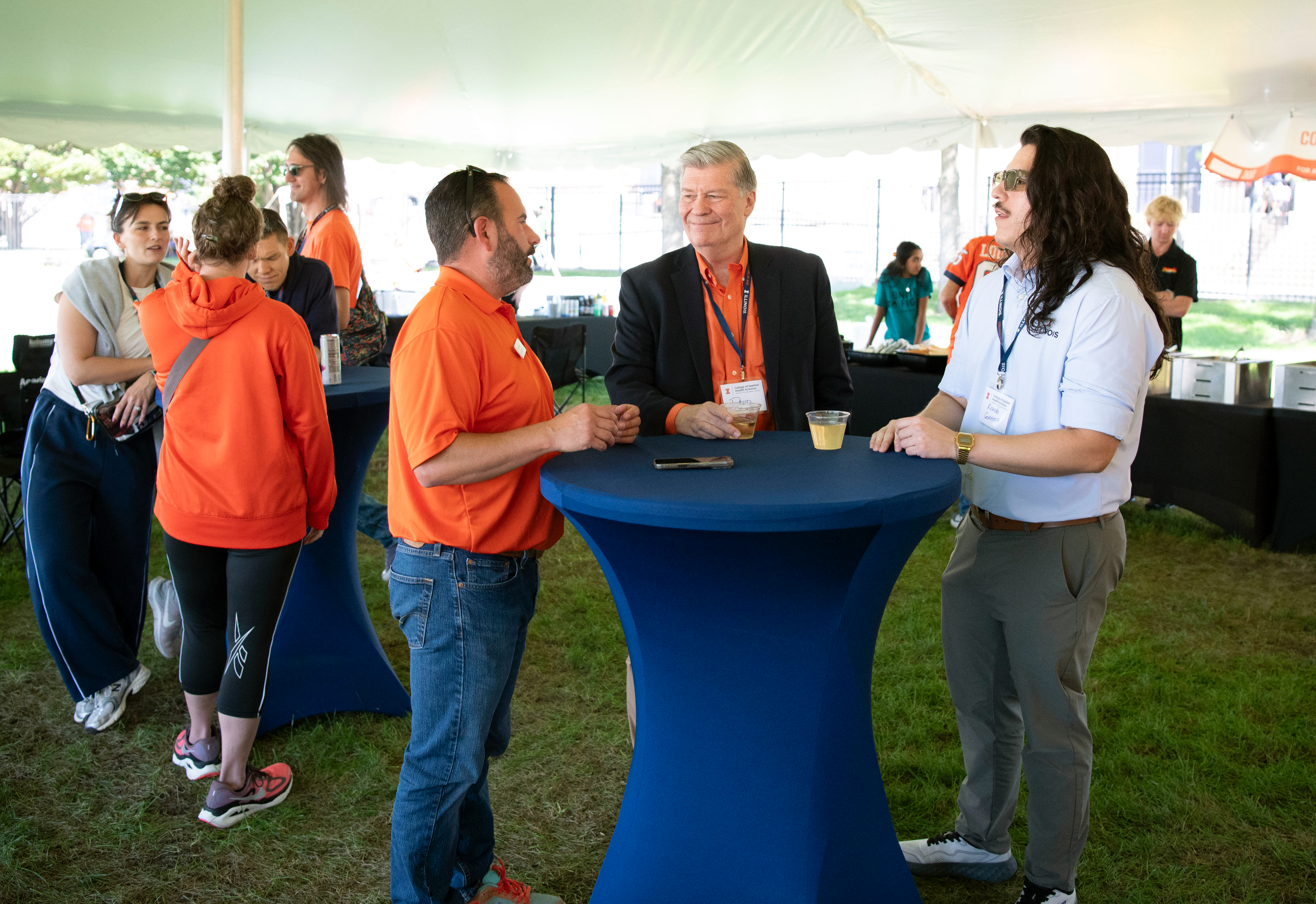
Praachi Mudar (in pink) said she enjoyed working with Wendy Rogers, center, and the LIFE Home team. (Photo provided)

Before this summer, whenever I thought of robots, I thought of the clunky Disney robot WALL-E and his mission to save mankind. I didn’t have any direct experience interacting with robots or the components involved, so my only point of reference was a kid’s movie. This summer Dr. Wendy Rogers and Dr. Harshal Mahajan gave me the opportunity to intern at the McKechnie Family LIFE Home. I spent my summer with social robots, assistive robots, home appliances, virtual reality and other technology that are used to help people’s daily lives, which completely changed my understanding of robots and technology. 

One of my favorite parts of this experience was interacting with the social and therapeutic robots—Moxie, Jibo and Paro. I had engaging conversations with Moxie about celebrity book authors using her generative AI. In the game Circuit Saver, I saved Jibo’s motherboard, and in doing so, learned about its camera and motion sensors. I also experienced Paro’s calming effect when petting it. It was especially exciting to have the freedom to interact with the robots in ways that interested me, like getting to play games with them or talk about my own interests. It was incredible to not only learn about these robots’ capabilities but also see how they can assist people with daily tasks like grabbing pill bottles or talking to their family from miles away.

The most challenging part of this experience was coming into a space I had so little knowledge about. For the first few weeks I struggled to understand basics, like how to start up the robots and navigate the robots’ interfaces, but I was surrounded by patient and knowledgeable people who helped me understand and learn. By the end of the internship, I was knowledgeable about most if not all of the technology. I likely wouldn’t have enjoyed or learned as much if it hadn’t been for the support I got from Dr. Samuel Olatunji, my supervisor; Abbey Paik, an undergrad intern; and Yvona Vlach, the operations coordinator.  

As I got more comfortable with the robots, I really enjoyed doing demonstrations and sharing information about the robots with people on tours. Almost all of the technology had an immense amount of research surrounding it. The research I learned about the most displayed the ways these robots can help people who face social isolation and older adults who need help with basic tasks. It was exciting to explore this growing field. Even more so, I enjoyed sharing this knowledge and explaining the research being conducted with these robots at the LIFE Home.

This summer has been an incredible opportunity that I am so grateful to have. It has genuinely made me more interested in the intersectionality of technology and applied health sciences.

Related news

Rogers, Mudar receive $4.6M grant to establish center focused on older adults with cognitive impairment


The University of Illinois is part of a team receiving a $4.6 million grant aimed at helping adults with cognitive disabilties deal with challenges associated with everyday activities.

The grant from the National Institute on Disability, Independent Living, and Rehabilitation Research runs from Sept. 30, 2019 to Sept. 29, 2024 and is a collaborative effort with Weill Cornell Medicine and Florida State University, with Illinois’ share amounting to approximately $1.4 million.

Kinesiology and Community Health professor Wendy Rogers and Speech and Hearing Science associate professor Raksha Mudar are the principle investigators on the research for Illinois. Harshal Mahajan, assistant research professor of Kinesiology and Community Health, is also an investigator on the project.

The funding is for a Rehabilitation Engineering Research Center entitled ENHANCE (Enhancing Neurocognitive Health, Abilities, Networks, and Community Engagement).

Rogers and Mudar said the primary research aims are to understand challenges adults with cognitive disability deal with every day, and to identify existing and emerging technology that can help. Three segments of the population are part of the study group: Adults 60 and older with mild cognitive impairment, cognitive impairments due to stroke and those who have sustained a traumatic brain injury.

“What we’re trying to do is understand the challenges that they experience in their daily activities,” Rogers said. “In one study, we’ll be interviewing them about what they do outside the home, what they do around the home; shopping, transportation, health, finances and then just basic daily activities, such as mobility and medication regimen.”

Rogers said the study’s participants will include both the the individuals with cognitive disability as well as their family members who provide support and care. They will be exploring whether needs change over time, with interviews repeated across the five-year project.

“Really, we’re trying to get an understanding in general of people with cognitive disability on an everyday basis, what kind of challenges are they experiencing and how might we design technology to support that.”

Another goal is understanding what this population uses in terms of current technology to mitigate their impairments.

One of the projects, Rogers said, involves helping adults with cognitive disability use Google Maps and rideshare apps, through additional instructions and support, which could include an app on their phone that walks them through steps, or a video that illustrates what to do and helps them as they learn.

Mudar explained that they also plan to engage healthcare providers and the technology industry in hopes of developing partnerships.

Editor’s note:

To reach Vince Lara-Cinisomo, email vinlara@illinois.edu.
 

Share on social

Related news

College of Applied Health Sciences
110 Huff Hall
1206 South 4th Street
Champaign, IL 61820
(217) 333-2131