Two AHS faculty members recognized for excellence in instruction


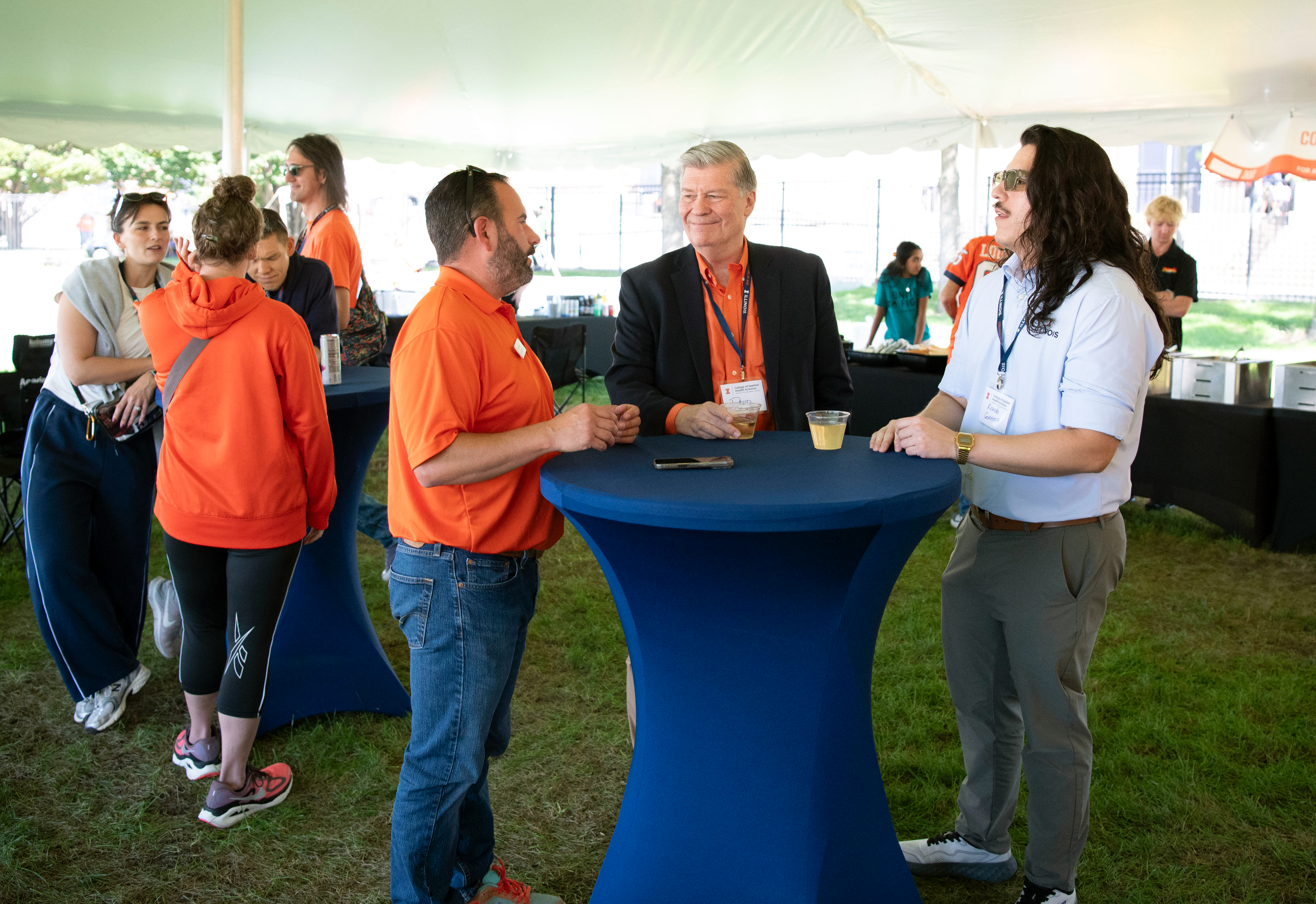
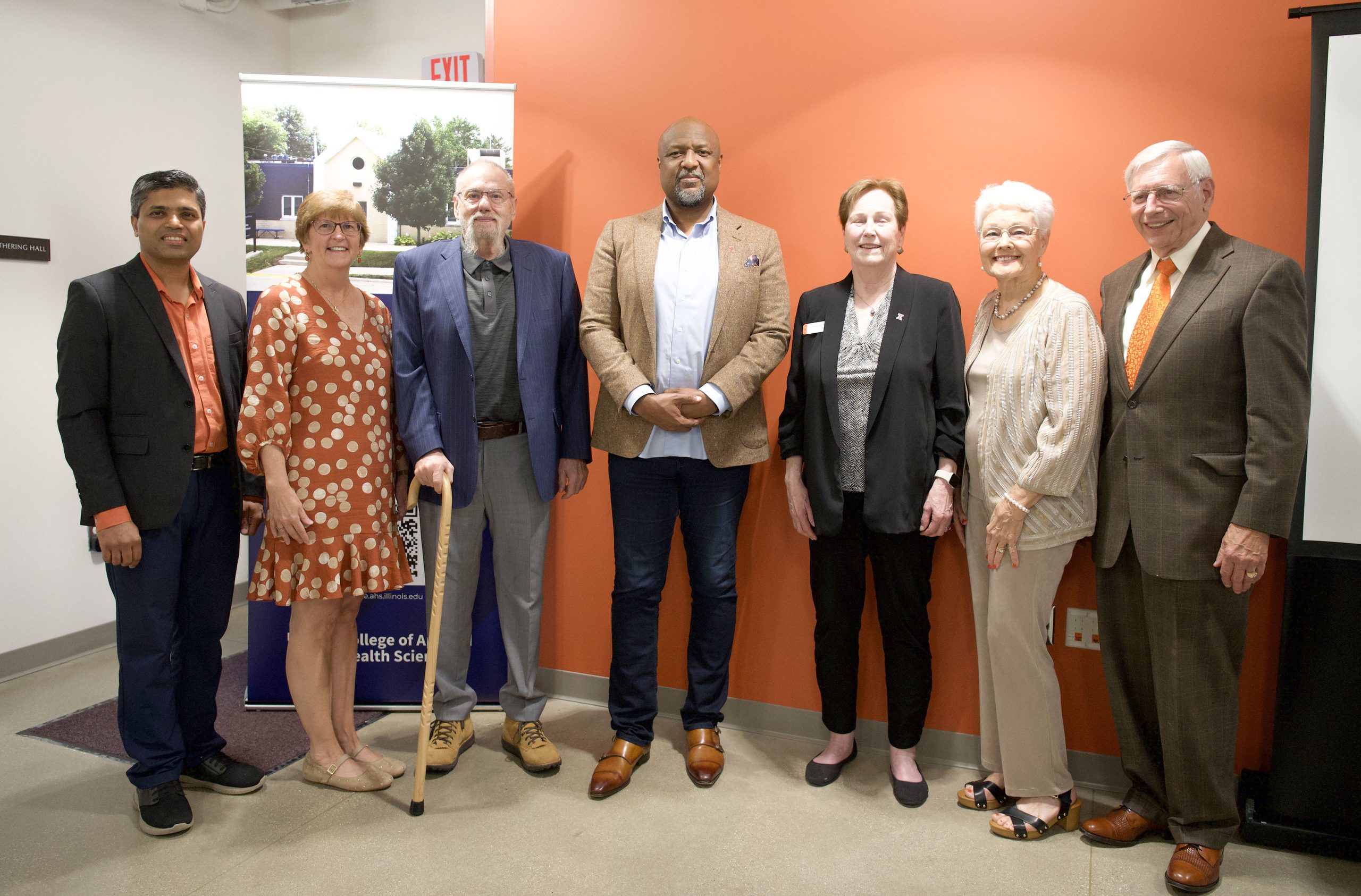
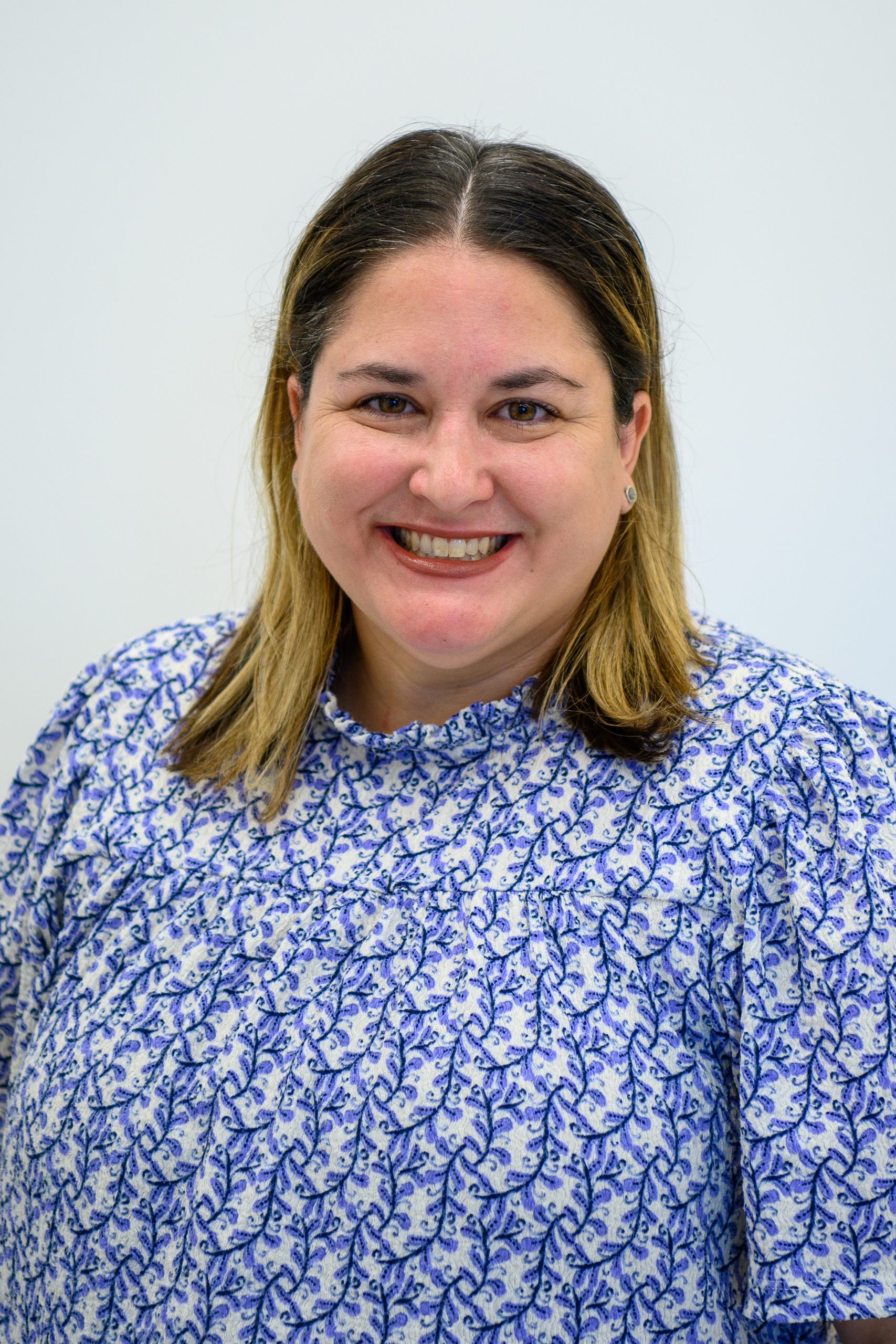
SHS Associate Professor Mary Flaherty (left) and HK Adjunct Instructor Christy Bazan were recognized for excellence in instruction.

Every year, the University of Illinois Office of the Provost recognizes faculty members for excellence in instruction, who are nominated by committees of faculty, staff and students at each college.

This year, two Applied Health Sciences faculty members won campus awards for their teaching and mentorship in the classroom: Speech and Hearing Science Associate Professor Mary Flaherty won for Excellence in Undergraduate Teaching, and Health and Kinesiology Adjunct Instructor Christy Bazan won for Excellence in Online Teaching.

Both instructors will be recognized at the university’s Celebration of Academic Excellence on Wednesday, March 25, at the Krannert Center for the Performing Arts.

On top of mentoring student researchers through her Child Speech Research Lab, Flaherty teaches undergraduate- and graduate-level courses in Speech and Hearing Science, such as SHS 358: Understanding Research Methods in Communications Sciences and Disorders and SHS 352: Hearing Health and Society, along with advanced SHS 552: Pediatric Audiology and SHS 570: Evidence-Based Practice for SLPs and AuDs.

Bazan, a licensed environmental health practitioner, teaches several community health-oriented classes in the college and Department of Health and Kinesiology, including AHS 199: Applied Data Solutions in Health Sciences, HK 204: Drug Use and Misuse—a subject she co-authored a book on—HK 207: Introduction to Epidemiology and HK 408: Environmental Health.

The College of Applied Health Sciences asked them about what this recognition means to them, and what they’d like to say to students past and present.

What does this recognition mean to you?

Bazan: I am honored and grateful to receive this online teaching award.  With support from AHS and my colleagues, many doors were opened to me that allowed me to grow in teaching in online environments.  From course redesign, Open Education development, video recoding lectures and developing online content, I have placed emphasis in my courses that shows how important it is to ensure students learn and have experiences just like they might when taking an in-person course.

Flaherty: This recognition means a great deal to me because my undergraduate teaching is centered on helping students learn how to evaluate information responsibly and use evidence thoughtfully in real-world decisions. Many students encounter an overwhelming amount of health and science information online, and a core goal of my teaching is to help them distinguish credible evidence from oversimplified or misleading claims. I aim to make research feel accessible and relevant, while also supporting students as individuals through structure, feedback, and mentorship. Being recognized for this work affirms the importance of teaching students not just what to learn, but how to think, question and apply evidence with care.

Anything you’d like to say to past and current students?

Bazan: My goal as an educator is to cultivate learners who are critical thinkers, empathetic communicators and lifelong learners. I want students to leave my courses not only with knowledge of content but with the confidence and tools to apply that knowledge ethically and creatively in their own lives and in their own communities. Keep learning, learn things in new ways, connect with your professor and your peers in your online classes and engage thoughtfully in an increasingly interconnected world.

Flaherty: This award belongs to my students. I love teaching, and I care deeply about undergraduates and their growth, both inside and outside the classroom. My students show up with curiosity, honesty and a willingness to engage deeply, and they continually remind me why this work matters. Their questions, perspectives and trust shape how I teach, and their commitment to learning pushes me to be a better instructor every year. I am grateful to every student who has shared their time, effort and openness with me. This recognition reflects what we have built together.

Editor’s note:

To reach Mary Flaherty, email maryflah@illinois.edu.
To reach Christy Bazan, email cbazan3@illinois.edu.
 

Share on social
Related news

News Bureau: Seven pain-related risk factors that magnify risk for postpartum depression


Prof. Sandraluz Lara-Cinisomo, center, worked with fellow researchers Melany Romero, left, and Sudhamshi Beeram on a study investigating links between postpartum depression and pain during and after childbirth in racial/ethnic minority women.

(Photo by Fred Zwicky / University of Illinois Urbana-Champaign)

A woman’s risk of developing postpartum depression is influenced by several pain-related factors before and after childbirth, including poor pain management, their prenatal mental health and the quality of patient-provider communication, researchers at the College of Applied Health Sciences at the University of Illinois Urbana-Champaign say.

Health and Kinesiology Associate Professor Sandraluz Lara-Cinisomo and her co-authors, graduate students Sudhamshi Beeram and Melany E. Romero, spoke to the Illinois News Bureau’s Sharita Forrest to share the findings of their analysis of postpartum literature: they identified seven interrelated risk factors of postpartum depression in racial and ethnic minority women.

Read the full story on the News Bureau website.

Editor’s note:

To reach Sandraluz Lara-Cinisomo, email laracini@illinois.edu.
 

Share on social

Related news

Exercise is Medicine On Campus month kicks off at Illinois


Exercise is Medicine Month on Campus kicked off with an in-person yoga event at Freer Hall lawn. (Provided)

Exercise is Medicine on Campus (EIM-OC) is an annual initiative that calls upon colleges and universities to promote physical activity as a core component of health and wellness. More than 200 campuses in the United States have registered for the program.

This month, Health and Kinesiology faculty and students at the University of Illinois Urbana-Champaign—led by this year’s EIM at Illinois committee chair Emerson Sebastião—have planned out several activities to bring campus together in movement. Representatives from the Illinois Counseling Center, Campus Recreation, McKinley Health Center, Carle Illinois College of Medicine and local health organizations joined this year’s committee.

All month, participants can join the online “Move More Challenge” by posting a video or photo of them exercising, and tagging @illinoishealthkin on Instagram.

Coming up:

Free Pilates

A free, introductory pilates class in front of Freer Hall, led by HK Teaching Assistant Professor Alana Harris. Bring your own mat!

When:
Wednesday, Oct. 15 at 12 p.m. at Freer Hall lawn

Check your vitals

Get your blood pressure and resting heart rate checked for free by HK students and faculty. Students will provide education on physical activity and exercise guidelines.

When:
Wednesday, Oct. 15 from noon to 1 p.m. at Illinois Street Residence Hall
Wednesday, Oct. 22 from 1:30 to 3:30 p.m. at Student Dining and Residential Programs building (SDRP)

Fall into Fitness 5K | Run, Walk and Roll

Join a 5K race that starts at Freer Hall and loops through campus. Check-in and registration begins at 7:30 a.m., and the race starts at 8:30 a.m.

When:
Sunday, Oct. 19 at 8:30 a.m. Check-in begins at 7:30 a.m.

Read Chancellor Isbell’s official proclamation for Exercise is Medicine Month on Campus:

Committee Members 2025-2026

  • Chair: Emerson Sebastião, Ph.D., Health and Kinesiology
  • Nicholas Burd, Ph.D., Health and Kinesiology
  • Alana Harris, Ph.D, Health and Kinesiology
  • Diana Morales (Graduate Student Representative)
  • Harrison Guo (Undergraduate Student Representative)
  • Maggie Verklan, the Counseling Center
  • Alexia Hammonds (Graduate Student Representative)
  • Brie Whitted, McKinley Health Center
  • Jared Willard, MD, Christie Clinic
  • Annie Tigranyan (Carle Illinois College of Medicine Student Representative)

Editor’s note:

To reach Emerson Sebastião, email esebast2@illinois.edu.
 

Share on social
Related news

Illinois researchers quantify health gains in federal housing effort


Weatherization typically assesses a home’s insulation, air leaking, heating and energy use, but many eligible households are turned away due to conditions like leaky roofs, pest infestations, or mold. (Photo provided)

A new initiative is taking aim at a key barrier facing low-income homeowners: weatherization deferrals. Weatherization is the process of making the home more energy-efficient, which can lower energy bills and improve overall home comfort. The project, titled “Reducing Deferrals by Integrating Healthy Homes with Weatherization,” is looking to enhance energy efficiency upgrades by also addressing the environmental health hazards that often disqualify homes from weatherization programs.

Funded by the U.S. Department of Energy in partnership with the Champaign County Regional Planning Commission, the three-year effort plans to integrate healthy home evaluations into the traditional Weatherization Assistance Program (WAP) audits. Using DOE funds, the program provides weatherization services to about 32,000 homes every year. These audits typically assess a home’s insulation, air leaking, heating and energy use, but many eligible households are turned away due to conditions like leaky roofs, pest infestations, or mold—problems that impact the health of residents.

“One of the focuses really is to be able to take credit for the health benefits,” said Paul Francisco, the director of Champaign County Regional Planning Commission’s Indoor Climate Research and Training team and the principal investigator of the project. “If we can take credit for the health benefits, now it makes it much more plausible to say, ‘Hey, let’s not defer this home’—let’s do this home, and the cost effectiveness is going to be great because of all of these non-energy impacts we’re going to be doing.”

Francisco said there’s been a lot of interest in trying to quantify those benefits in a way that allows the federal program to take credit for those benefits, since the weatherization program allows a certain amount of money for each state. Sheena Martenies, an assistant professor in the Department of Health and Kinesiology at the University of Illinois Urbana-Champaign, works on that quantifying aspect of the project.

“We have tons of evidence from the epidemiological literature that says these indoor environmental conditions are are harmful to health, and that improving these indoor conditions improves health, but sometimes you have to you have to a dollar value on it in order for it to be in the same vein as other pieces of evidence that these decision makers are considering,” Martenies said.

The project is currently working in seven homes all over Illinois, with more in the process of being recruited. Franscisco’s team does a pre- and post-assessment of each home, identifying issues such as leaking roofs and old windows, as well as conducting a number of assessments on indoor environmental quality measures, like air pollutants.

“My lab takes information from Paul’s evaluations and we translate it into health benefits: for example, fewer individuals who are being hospitalized for asthma exacerbations,” Martenies said. “After we quantify the number of benefits of these programs, we can actually attach a dollar value to those health benefits so that we can perform a more comprehensive cost benefit analysis, of ‘Do we see a better cost-benefit ratio?’”

Martenies said her calculations provide numbers for avoided health impacts, or the health outcomes that would have occurred had we not remediated these homes. Those final results are then reported to their funders, like the Department of Energy, as well as peer-reviewed papers, conferences and other avenues of dissemination.

Currently, an average home gets about $250 to $300 in energy savings, according to Francisco. He said success with this project would make it possible for these households to get those benefits.

If the project is successful in integrating health benefits into the calculations for return on investment, the team said they would like to apply the same methods to other settings where kids spend a lot of time, like schools, to help support health-positive infrastructure projects. They hope that for policies, that energy programs would include health benefits in their decisions of what measures to implement, and be able to take credit for those health benefits.

Both Francisco and Martenies said it’s incredibly important for individuals to have access to healthy homes.

“Our homes are incredibly important places, emotionally and socially, but also from an environmental health perspective,” Martenies said. “I firmly believe that everyone deserves to live in a healthy home and a healthy environment,  and I don’t think that your income level should dictate the quality of your housing.”

Francisco said a lack of healthy homes impacts everyone—not just those who don’t have one.

“There’s an economic cost to all of us. There’s a moral cost to all of us. There is a societal cost to all of us. There is a productivity cost to all of us,” Francisco said. “This is why we should care—because when thousands and millions of families are struggling with this every day, we’re lying to ourselves if we think we’re not paying a price for that.”

Related news

My Summer Internship at the McKechnie Family LIFE Home


Praachi Mudar (in pink) said she enjoyed working with Wendy Rogers, center, and the LIFE Home team. (Photo provided)

Before this summer, whenever I thought of robots, I thought of the clunky Disney robot WALL-E and his mission to save mankind. I didn’t have any direct experience interacting with robots or the components involved, so my only point of reference was a kid’s movie. This summer Dr. Wendy Rogers and Dr. Harshal Mahajan gave me the opportunity to intern at the McKechnie Family LIFE Home. I spent my summer with social robots, assistive robots, home appliances, virtual reality and other technology that are used to help people’s daily lives, which completely changed my understanding of robots and technology. 

One of my favorite parts of this experience was interacting with the social and therapeutic robots—Moxie, Jibo and Paro. I had engaging conversations with Moxie about celebrity book authors using her generative AI. In the game Circuit Saver, I saved Jibo’s motherboard, and in doing so, learned about its camera and motion sensors. I also experienced Paro’s calming effect when petting it. It was especially exciting to have the freedom to interact with the robots in ways that interested me, like getting to play games with them or talk about my own interests. It was incredible to not only learn about these robots’ capabilities but also see how they can assist people with daily tasks like grabbing pill bottles or talking to their family from miles away.

The most challenging part of this experience was coming into a space I had so little knowledge about. For the first few weeks I struggled to understand basics, like how to start up the robots and navigate the robots’ interfaces, but I was surrounded by patient and knowledgeable people who helped me understand and learn. By the end of the internship, I was knowledgeable about most if not all of the technology. I likely wouldn’t have enjoyed or learned as much if it hadn’t been for the support I got from Dr. Samuel Olatunji, my supervisor; Abbey Paik, an undergrad intern; and Yvona Vlach, the operations coordinator.  

As I got more comfortable with the robots, I really enjoyed doing demonstrations and sharing information about the robots with people on tours. Almost all of the technology had an immense amount of research surrounding it. The research I learned about the most displayed the ways these robots can help people who face social isolation and older adults who need help with basic tasks. It was exciting to explore this growing field. Even more so, I enjoyed sharing this knowledge and explaining the research being conducted with these robots at the LIFE Home.

This summer has been an incredible opportunity that I am so grateful to have. It has genuinely made me more interested in the intersectionality of technology and applied health sciences.

Related news

KCH Becomes HK


The University of Illinois at Urbana-Champaign’s College of Applied Health Sciences is proud to announce a significant milestone in its ongoing commitment to advancing health sciences education and research. Effective Aug. 16, the Department of Kinesiology and Community Health will officially change its name to the Department of Health and Kinesiology.

The new name better reflects significant changes in our disciplines, research interests, and educational mission. Health and Kinesiology allows for a broader, more inclusive representation of a department that focuses on multiple aspects of health and physical activity in a diverse society. It also honors our legacy as leaders in the field of health and kinesiology, while pointing the way forward to a future that is both dynamic and innovative. 

The name change was a decision that was made based on goals highlighted in the KCH Strategic Plan and upon the recommendation of the KCH Restructuring Task Force. It was supported by multiple stakeholders and was recently approved by the College of Applied Health Sciences, UIUC Senate, and Board of Trustees.

Cheryl Hanley-Maxwell, dean of the College of Applied Health Sciences, expressed enthusiasm about the department’s name change, saying, “The renaming of our department to Health and Kinesiology aligns with our strategic vision of fostering interdisciplinary collaboration and addressing the multifaceted aspects of health and wellness. This change reflects our commitment to providing innovative education, conducting impactful research, and serving our communities.”

HK Department Head Kim Graber said, “As the department evolves to better reflect the dynamic landscape of health and movement sciences, we believe the change to Health and Kinesiology not only embraces our commitment to comprehensive wellness but also underscores our dedication to advancing research, education and outreach in these vital areas.”

The Department of Health and Kinesiology offers a wide range of undergraduate, graduate and doctoral programs aimed at preparing students for careers in health promotion, exercise science, public health, rehabilitation, and related fields. With world-class faculty and state-of-the-art facilities, the department equips students with the knowledge, skills, and practical experience needed to excel in diverse healthcare settings.

Related news

Even in retirement, Synthia Sydnor stays connected to kinesiology


Retired Health and Kinesiology Associate Professor Synthia Sydnor smiles outside of the Siebel Center for Design. (Photo by Ethan Simmons)

As a wandering graduate student, Synthia Sydnor used to take cross-country road trips while she worked on her Ph.D. at Penn State University. 
 
In 1986, an opportunity came calling from the College of Applied Life Sciences at the University of Illinois: an opening for a faculty position to study and interpret sport and play. 
 
The role seemed a perfect match for Sydnor—a budding scholar in the cultural-historical analysis of sport—but this Midwestern setting seemed unappealing.
 
Driving through the “barren” winter landscape of Illinois, “we always said, ‘this is the last place on earth we will ever live,’” Sydnor said. 
 
Two years later, the job was still open, so Sydnor applied to at least get some interview experience. To her surprise, Illinois hired her. Sydnor came to adore the university as well as Illinois’ prairies and skies, and she would retire from the Department of Kinesiology and Community Health in spring 2024, 36 years later. 
 
Sydnor has witnessed profound changes in her discipline and in the University of Illinois, from researching and writing in a basically pre-digital academic environment to teaching a 750-student online class before COVID-19 had even arrived. (Leading KIN 142: “Contemporary Issues in Sport” virtually felt like “running a corporation,” she said.) 
 
With her unique scholarly background—she held appointments in the Unit for Criticism and Interpretive Theory and Illinois Global Institute—Sydnor has provided a humanities-trained perspective within the department for three decades. 
 
“What is sport? Why do we attach all these invented things to it, like ‘masculinity’, ‘teamwork,’ and lately, ‘peace’ and ‘development?’” Sydnor said. “I’ve tried with students and the research I’ve contributed to think of sport as a serious object of knowledge, not just frills and fun.”
 
In retirement, Sydnor is spending time with family while staying connected to her academic home, collaborating with several younger faculty across the department and mining her own discipline for new insights. Her humor, friendliness and mentorship of graduate students leave a distinct legacy. 
 
“She was always willing to take on a student in need of help—she had a soft spot in her heart for graduate students,” said Kim Graber, head of the renamed Department of Health and Kinesiology. “If they were experiencing challenges or difficulties, if they were not sure what they wanted to study, she’d always lend a helping hand, and be the person to listen to their concerns, and take them under her wing.” 

A changing field 

Sydnor left her mark on her department in more ways than one. The large triptych painting by Illinois alumna Brett Eaton and posters that line the first floor of Louise Freer Hall, celebrating the female pioneers of the field, are based on Eaton and 50 other undergraduates’ archival research in Sydnor’s course “Sport in Modern Society.”

The exhibit, “An Untold Story: U of I Female Faculty in the History of American Athletics and Sports Scholarship at the University of Illinois,” was funded by the Illinois Ethnography of the University Initiative and Illinois Gender Equity Council after Sydnor applied for them. 

“So many alums will walk up and down the halls during visits and really appreciate the art because they bring memories back for them,” said Graber, who joined Illinois six years after Sydnor.
 
Sydnor always took pride in teaching popular classes, which were often highly rated in student reviews. It’s especially rewarding when former students reach back out to discuss a class concept that clicked for them years later, she said. 
 
She also taught experimental courses, like one focused on extreme sport, to lead students into important topics of culture and theory. The class used a book she co-edited with Robert Rinehart, “To the Extreme: Alternative Sports, Inside and Out,” as a basis for study.
 
“What I do doesn’t predict or control, it doesn’t necessarily ‘solve’ something,” she said.  “Instead, you converse. ‘What does it mean to be human in different times and places? In different bodies?’ I’ve tried to contribute that to my classes, my teaching, my research.” 
 
As a physical education undergraduate at the University of Delaware, Sydnor was interested in cultural studies as well as sport, having played both lacrosse and field hockey. Sydnor continued her academic track at the University of Washington, where she obtained her master’s degree, and Pennsylvania State University for her doctorate in Interdisciplinary Humanities.  

With her rare combination of research interests, Sydnor had accepted the idea of becoming an independent scholar. 

I’ve loved being part of Illinois because of those leaders who had forethought and courage to pioneer new ideas.

Synthia Sydnor

Retired HK faculty member

“I thought that what I was doing contributed to knowledge, but I didn’t know if any university would ever hire me. And that was OK.” Her experience in ancient Greek language and cultural studies laid a framework for a scholarly niche missing in kinesiology. When she arrived at Illinois in 1988, the field of kinesiology was widening its umbrella. 
 
At the time, Illinois’ Kinesiology department head Karl Newell had begun hiring an “amalgamation” of exciting, cross-discipline scholars, Sydnor said. The department had changed its name from “physical education” to “kinesiology” the year before, and Newell was pushing for other departments across the world to follow suit. 
 
Sydnor even wrote an article with Newell about the historical development of the word “kinesiology,” rooted in the Greek term “kinesis.” They argued that the term was broad enough to hold multiple disciplines of movement and would have plenty of staying power. 
 
She admires the developments of each of the three department heads she’s worked with—such as Wojtek Chodzko’s push to focus on healthy aging, and Graber’s empowerment of younger faculty. 
 
“I’ve loved being part of Illinois because of those leaders who had forethought and courage to pioneer new ideas, and we’re on the cusp of that now with changing to ‘Health and Kinesiology,’” Sydnor said. “I love our department and how much it’s grown, and how much Kim Graber has let the new young professors lead us in research initiatives.”
 
In retirement, she’ll continue working with Health and Kinesiology Teaching Assistant Professors Caitlin Clarke and Jesse Couture to develop a student textbook, essentially a second edition of her 2021 book “Social Theory for Sport Lovers.”
 
She’s hoping to finish up her two books of her own: One that explicates new aspects of sport and its futures, and another in reception studies, focusing on how ancient motifs and symbols live on in physical culture in new ways that past civilizations would not comprehend. 
 
“I feel so fortunate, I’ve just loved it here,” Sydnor said. “It enabled my creativity, it enabled collaboration with great thinkers across campus and hopefully helped students approach sport in a learned way in their professional and personal lives.”

Editor’s note:

To reach Ethan Simmons, email ecsimmon@illinois.edu.
 

Related news

KCH becoming HK this fall


The University of Illinois at Urbana-Champaign’s College of Applied Health Sciences is proud to announce a significant milestone in its ongoing commitment to advancing health sciences education and research. Effective Aug. 16, the Department of Kinesiology and Community Health will officially change its name to the Department of Health and Kinesiology.

The new name better reflects significant changes in our disciplines, research interests, and educational mission. Health and Kinesiology allows for a broader, more inclusive representation of a department that focuses on multiple aspects of health and physical activity in a diverse society. It also honors our legacy as leaders in the field of health and kinesiology, while pointing the way forward to a future that is both dynamic and innovative. 

The name change was a decision that was made based on goals highlighted in the KCH Strategic Plan and upon the recommendation of the KCH Restructuring Task Force. It was supported by multiple stakeholders and was recently approved by the College of Applied Health Sciences, UIUC Senate, and Board of Trustees.

Cheryl Hanley-Maxwell, dean of the College of Applied Health Sciences, expressed enthusiasm about the department’s name change, saying, “The renaming of our department to Health and Kinesiology aligns with our strategic vision of fostering interdisciplinary collaboration and addressing the multifaceted aspects of health and wellness. This change reflects our commitment to providing innovative education, conducting impactful research, and serving our communities.”

HK Department Head Kim Graber said, “As the department evolves to better reflect the dynamic landscape of health and movement sciences, we believe the change to Health and Kinesiology not only embraces our commitment to comprehensive wellness but also underscores our dedication to advancing research, education and outreach in these vital areas.”

The Department of Health and Kinesiology offers a wide range of undergraduate, graduate and doctoral programs aimed at preparing students for careers in health promotion, exercise science, public health, rehabilitation, and related fields. With world-class faculty and state-of-the-art facilities, the department equips students with the knowledge, skills, and practical experience needed to excel in diverse healthcare settings.

For more information about the Department of Health and Kinesiology at the University of Illinois at Urbana-Champaign’s College of Applied Health Sciences, please visit this link.

Share on social

Related news

Geiger to assess effects of some chemicals on children’s sleep


PFAS are found in many common household items and found in our blood.

Multiple studies have shown that children who regularly get an adequate amount of sleep have improved attention, behavior, learning, memory, and overall mental and physical health. Not getting enough sleep can lead to high blood pressure, obesity and depression. An Illinois researcher wants to help mitigate those sleep issues. 

Kinesiology and Community Health assistant professor Sarah Geiger is planning to assess how the exposure to certain chemicals while in the womb affects child sleep later in life and can lead to poorer health outcomes. Geiger’s study is funded by an R03 grant from the National Institute of Environmental Health Sciences (NIEHS), the National Institutes of Health (NIH) component dedicated to environmental health research. In the grant application, Geiger writes that “the potential for prenatal exposures to endocrine disrupting chemicals (EDCs) to adversely impact children’s health is a growing public health issue.” As Geiger explains, perfluoroalkyl and polyfluoroalkyl substances (PFAS) are EDCs found in many common household items and found in our blood.

“They’re so pervasive in terms of products,” said Geiger, who investigates environmental pollutants and chronic disease risk factors, including sleep problems, among children. “Studies have shown them to be found in foods (and) they’re notorious for these non-stick surfaces, but that’s really just one of so many types of things they’re in. Plastic water bottles, plastic fast food containers. They’re even in biomedical devices and things like IV bags and makeup, all sorts of cosmetics, nail polish.”

Geiger said her study is looking at the pregnant mom’s concentrations of those chemicals in her blood, and then looking at outcomes in children.

“We’re measuring her levels as a proxy of what they’re being exposed to,” Geiger said. “The idea is that developmental exposure in the womb to those chemicals that their mother has been exposed to is somehow altering their development and manifesting later as sleep problems. What we’re really interested in is looking at the association between the two. Are moms with higher levels of these chemicals in their blood more likely to have children who have poorer sleep quality? And if so, then we can think about maybe what is the mechanism that is causing that to happen?”

Geiger added that the study is not only looking at how chemical exposure in the womb affects child sleep later on, but also how stress and depression and other factors during pregnancy can affect child’s sleep later on. The study is important, Geiger said, because sleep, or the lack of it, is a predictor for health. Lack of sleep for a child can lead them to be unfocused and unproductive. And a lack of sleep in childhood is predictive of sleep issues in adulthood, she said, adding that sleep problems in adulthood cost the U.S. billions of in health care.

Another reason this research is important is how long certain PFAS can stay in a person’s body.

“They are sometimes called forever chemicals; they have an extremely long half-life compared to other types of endocrine-disrupting chemicals,” Geiger said. “The half-life might be like five years. Let’s say you have a certain level of this one chemical in your blood, after five years, half of it would have been metabolized or excreted from your body. To give you a comparison, like BPA (bisphenol A), another common endocrine-disrupting chemical, the half life is more like five hours.”

As important as the research is, Geiger is realistic that studies like hers and others are not likely to force companies to limit their use of PFAS.

“These are extremely powerful market forces … I would like to think that all of the research combined on sleep and other things may apply some pressure, but—and I do think that the end goal is to try to remove or limit these types of chemicals if they are harmful—but that’s much easier said than done. It’s a pretty difficult task. 

Editor’s note:

To reach Sarah Geiger, email smurphy7@illinois.edu.
 

Related news

Freshman Regan Toole talks about campus life during COVID-19


Regan Toole (provided)

Freshmen are entering college in a unique environment, and that includes students in the College of Applied Health Sciences at the University of Illinois. The AHS communications staff spoke with new AHS students about campus life, why they decided to come to campus—or stay home—and how COVID-19 is changing their expectations. Today, we speak with Regan Toole, who is in the Department of Kinesiology and Community Health.

Q: Are you on campus?

A: I am on campus this fall, and I am actually a Chick Evans Scholar. Meaning that I am attending U of I on a full tuition-and-room scholarship. I am also currently staying in the Evans’ chapter house.  

Q: What made you decide to be on campus?

A: I decided to stay on campus because I wanted to get as much of the freshman experience as possible. I wanted to get to know other people and I wanted to familiarize myself with the campus. The campus is so beautiful, especially now that the weather is starting to cool down. I love taking walks around campus, but I still haven’t explored the whole thing because it so big! But one day I will.

Q: What challenges are you discovering with remote classes?

A: As for classes, some challenges for me are that I am still adjusting to college classes being online and each of them using different platforms. At my high school we used Google Classroom for everything, which was very convenient. Classes back then were also a lot easier because my grades could only improve from what they were before COVID-19. Since I had an “A” in all of my classes I couldn’t get anything lower, as long as I did all of my work. I also do not have any in-person classes this semester and it can be hard for me to be on my computer all day. However, I try to fit in breaks to walk around and socialize with people. Also, at first it was hard to find where the due dates and assignment where for some of my class, but after getting used to the websites it has gotten easier to access everything.

Q: Tell me what you think about the COVID testing process. Has it been easy to find a testing site? 

A: I am so grateful that U of I has its testing process because it makes me feel a lot safer being on campus. Altering hearing about all of the cases at Notre Dame and (North Carolina), it is very reassuring to know what is actually going on at our campus. There is also a testing center right next to my house and it is super easy and quick for me to get tested. I am still very conscious about COVID-19 and I always make sure to wear my mask and wash my hands frequently. However, I am still really glad to see lot of other people wearing their face masks around campus and it seems that most people understand the importance of them. 

Q: Have you encountered any of the Wellness Safety Ambassadors? What has that experience been like?

A: The Wellness Safety Ambassadors are a great addition to campus as well.  I think they do a great job of promoting safety for COVID-19 on campus. I even got an additional care package from them and I absolutely love the spray hand sanitizer! Overall, I am very happy and fortunate to be on campus this fall. I am very excited to see what my future holds here at U of I. I-L-L!

Related news

College of Applied Health Sciences
110 Huff Hall
1206 South 4th Street
Champaign, IL 61820
(217) 333-2131