Study suggests the liver ‘remembers’ exercise


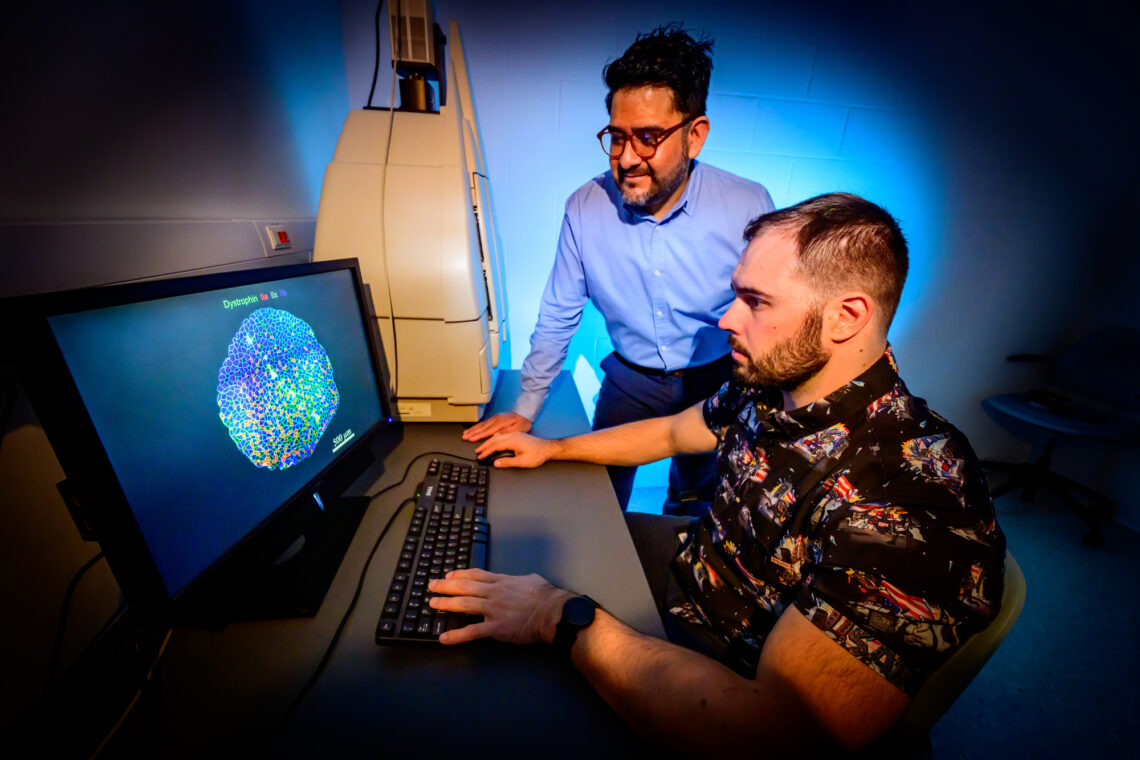
Diego Hernandez-Saavedra, center, says his study shows that the whole body, not just the muscles, remembers exercise. (Photo by Fred Zwicky)

For millions of people who have stepped away from regular exercise because of injury, illness, pregnancy or the demands of daily life, returning to fitness can feel like starting from scratch. New research suggests that may not be the case.

A new study, “Endurance Exercise Elicits a Hepatic Memory Associated with Improved Metabolic Function and Protein Secretion,” provides evidence that the liver retains a biological “memory” of previous exercise, allowing the body to respond more effectively when physical activity resumes. The findings, led by University of Illinois Health and Kinesiology Assistant Professor Diego Hernandez-Saavedra, point to a previously unknown adaptation in the liver that could reshape scientists’ understanding of exercise, metabolism and chronic disease prevention.

The research expands on earlier work showing that skeletal muscle can retain a memory of prior exercise. This study is among the first to demonstrate that another major metabolic organ—the liver—also appears to preserve molecular changes after periods of regular physical activity.

Funding for the study came from the Center on Health, Aging and Disability in the College of Applied Health Sciences as well as the Campus Research Board.

“Our study shows that exercise can help our body be healthier, specifically our liver, and that those ‘memories’ that we stored from the time we exercised can help us stay healthy over time,” said Hernandez-Saavedra, who is in AHS. “This is the first-of-its-kind study that shows that the whole body, not just the muscles, remembers exercise.”

The liver plays a central role in regulating blood sugar, processing fats and producing proteins that circulate throughout the body. During regular endurance exercise, liver cells activate genes that improve metabolic health. While many of those changes diminish when exercise stops, the study found the liver does not fully return to its pre-exercise state.

Instead, researchers discovered that the organ remains biologically “primed.” When exercise resumes, those dormant pathways reactivate more quickly and more powerfully than they did during initial training.

“If you had to explain this paper to someone in one sentence,” Hernandez-Saavedra said, “your liver remembers every workout you’ve ever done, and that memory makes getting back in shape faster, more effective, and more protective for your metabolic health than if you’d never exercised before.”

The majority of the mechanistic work was conducted in mice using carefully controlled endurance-training and detraining protocols. Researchers found that animals returning to exercise after a period of inactivity demonstrated stronger improvements in blood sugar regulation, reductions in liver fat and enhanced metabolic responses compared with animals exercising for the first time.

One of the study’s most striking discoveries involved a protein known as carboxylesterase 4A, or CES4A. The protein was secreted into the bloodstream only during retraining—not during an initial training program of equal duration—suggesting the liver distinguishes between first-time exercise and renewed exercise after prior conditioning.

Researchers also observed a dramatic increase in gene activity during retraining.

This is the first-of-its-kind study that shows that the whole body, not just the muscles, remembers exercise.”

Diego Hernandez-Saavedra

Assistant Professor, HK

“The liver went from expressing 18 differentially regulated genes after initial training to more than 6,000 after retraining,” Hernandez-Saavedra said. “That’s not a subtle effect.”

Although the strongest evidence comes from laboratory mice, the study included a six-week human exercise program involving 20 participants that produced encouraging results.

Researchers found that carboxylesterase activity increased after exercise in humans as well. Those increases were greatest among participants with higher cardiorespiratory fitness and a greater history of previous physical activity, mirroring the retraining response observed in mice.

“We’re cautiously optimistic,” Hernandez-Saavedra said. “The human data we present are preliminary … but the pattern is strikingly consistent with what we found in mice.”

The findings could have important implications for metabolic dysfunction-associated steatotic liver disease, or MASLD, formerly known as nonalcoholic fatty liver disease. The condition affects roughly one-third of adults worldwide and is closely linked to obesity, Type 2 diabetes and cardiovascular disease.

Exercise remains one of the most effective treatments for improving liver health, but maintaining consistent physical activity over time remains a challenge for many people.

“If we can establish that a history of exercise, even interrupted, confers durable protection on the liver and amplifies the response to future training, that changes how we think about exercise prescriptions for people at risk of or already living with MASLD,” Hernandez-Saavedra said. “It also opens the door to new therapeutic targets.”

The researchers are now investigating whether those beneficial exercise memories can eventually be activated therapeutically, potentially allowing scientists to mimic some of exercise’s protective effects for patients unable to engage in regular physical activity.

Still, Hernandez-Saavedra cautioned against overinterpreting the results.

“Our study shows that prior exercise history provides a biological advantage when exercise resumes,” he said. “It does not show that stopping exercise is without consequence.” Many of exercise’s measurable benefits diminished during periods of inactivity, he noted, meaning the memory remains dormant until exercise begins again.

Instead, the research offers encouragement for people who have fallen out of an exercise routine.

“Start again, and don’t be discouraged by the gap,” Hernandez-Saavedra said. “The biology suggests that your previous exercise history is not gone; it’s simply dormant.” Even modest activities such as walking, cycling or light resistance training may be enough to reactivate those molecular pathways.

Scientists caution that several important questions remain unanswered before physicians can apply the findings clinically. Researchers still need to determine how long hepatic exercise memory lasts, whether it differs by age or sex, what types and amounts of exercise activate it most effectively and whether specific carboxylesterase proteins can serve as biomarkers of liver health in humans.

Even so, the study challenges one of the most common assumptions surrounding exercise—that periods of inactivity erase previous gains completely.

“People assume that if they stop, they go back to zero,” Hernandez-Saavedra said. “Our research supports a different view: exercise is an investment that accumulates biological capital in your tissues, including your liver, and that capital doesn’t fully disappear when you stop. The body keeps a record.”

While additional human studies are needed to confirm the mechanisms, the research offers a hopeful message to anyone hesitant to restart an exercise program after months—or even years—away: the body may remember more than previously believed.

Editor’s note:

To reach Diego Hernandez-Saavedra, email dhrnndz2@illinois.edu.
 

Share on social
Related news

U. of I. trial will test if exercise can improve protein efficiency for older adults with type 2 diabetes


From left: University of Illinois Professor Nick Burd, postdoc Mikaela Kasperek, Ph.D. student Gena Irwin, and Associate Professor Jacob Allen pose inside Freer Hall’s gym, where their labs will train participants in a 12-week exercise program for a clinical trial.

For healthy adults, roughly .8 grams of protein per kilogram of bodyweight per day is enough to maintain muscle mass and support daily function.

But for adults with type 2 diabetes, an estimated 1 in 10 adults in the United States, their protein requirements remain relatively undefined, but are believed to be elevated when compared to their non-diabetic counterparts. Especially as diabetic individuals age, their bodies often become more anabolic resistant: less responsive to the muscle-building effects of exercise and protein intake.

Researchers from the Department of Health and Kinesiology at the University of Illinois Urbana-Champaign are recruiting participants for a human clinical trial to understand the protein needs of older adults with type 2 diabetes, and whether regular exercise can help their bodies use protein more efficiently.

“The problem with current strategies for type 2 diabetes is they largely try to keep throwing protein in people’s diets: eat more, eat more, eat more,” HK Professor Nicholas Burd said.  

Piling on the protein could have detrimental effects. There’s evidence that circulating amino acids, including branch chain amino acids that promote muscle mass, are associated with poorer outcomes for people with diabetes, said HK Associate Professor Jacob Allen.

Their upcoming study, “Exercise impact on dietary protein efficiency in older adults with type 2 diabetes,” is funded by a grant from the American Diabetes Association. The principal investigators are Burd, who researches protein metabolism, and Allen, who studies how exercise and nutrition impact the gut microbiome.

Health and Kinesiology professors Jack Senefeld and Steve Petruzzello are co-investigators on the study.

HK Assistant Professor Jack Senefeld and Professor Steve Petruzzello are co-investigators on the study, bringing expertise on training diabetic individuals and psychological well-being during exercise. Ph.D. candidate Gena Irwin and postdoc Mikaela Kasperek will lead the work from the Burd’s Exercise Performance Lab and Allen’s Integrative Microbiota Physiology labs respectively.

Starting this fall, the researchers will recruit 30 older adults to participate in this study—15 individuals living with type 2 diabetes and 15 without—and bring them into Freer Hall’s gym for a 12-week fitness program that mixes weight training with endurance exercise.

The researchers will use sensitive tools in their labs to figure out how efficiently participants’ bodies utilize protein, and whether that efficiency varies for older adults with and without diabetes. After participants wrap the exercise program, the team will test whether resistance training improved their bodies’ usage of protein overall, lessening their daily protein needs.

“To make an older person’s muscles more youthful, you can exercise them,” Burd said. “But we don’t know how the gut’s being impacted, and we don’t know how type 2 diabetes interferes with some of the ‘youthfulness’ effects of exercise.”

Some of our dietary protein ends up in our skeletal muscle, through muscle-protein synthesis, and some of it is used for energy. But there’s a “black box” around where the rest of our protein goes in the body, Allen said.

“We think that the microbes in the gut, the gut microbiome, might be responsible for some of this, but this has never been studied,” Allen said. “We’ve run some pilot work that fueled part of this study, where we can show that indeed, ingested amino acids are converted into these microbial metabolites.”

Why might that matter? Some of these metabolites are important for human health overall, Allen said. For example, short chain fatty acids—the byproducts of dietary fiber being processed in our gut—bring a host of benefits for metabolism and the immune system.

The research teams will host intervention days at the beginning and end of the 12-week exercise program, to see how participants’ bodies are using the protein in their muscle and gut.

Participants will consume amino acids labeled with stable isotope tracers. The labs will collect breath samples to see how much of the labeled amino acid is showing up in the breath—if more of that labeled protein appears in participants’ breath, their bodies aren’t as good at incorporating it into muscle.

Blood samples will help the scientists understand how the gut is taking those amino acids and converting them into potentially beneficial metabolites.

The second intervention day at the end of the trial will determine whether an exercise program changed the way participants’ bodies use protein.

“There are very few labs in the U.S that not only have the expertise, but have the infrastructure to be able to do this kind of work, so we’re very fortunate for Illinois and our department,” Burd said. “Stable isotope tracers require expensive machines to analyze.”

What’s in it for participants? On top of helping the scientists form dietary guidelines for older adults with type 2 diabetes, they’ll receive progressive exercise training from expert students and faculty at the college, that will hopefully serve them well beyond their last visit.

“A big goal is to change behavior, too, to make them healthier,” Allen said. “That’s ultimately what we’re trying to do.”

Editor’s note:

Interested in participating in this study? Take the survey to see if you qualify, or email the organizers at HK-ADA-Study@illinois.edu

To reach Nick Burd, email naburd@illinois.edu
To reach Jacob Allen, email jmallen5@illinois.edu

Share on social

Related news

Exercise is Medicine On Campus month kicks off at Illinois


Exercise is Medicine Month on Campus kicked off with an in-person yoga event at Freer Hall lawn. (Provided)

Exercise is Medicine on Campus (EIM-OC) is an annual initiative that calls upon colleges and universities to promote physical activity as a core component of health and wellness. More than 200 campuses in the United States have registered for the program.

This month, Health and Kinesiology faculty and students at the University of Illinois Urbana-Champaign—led by this year’s EIM at Illinois committee chair Emerson Sebastião—have planned out several activities to bring campus together in movement. Representatives from the Illinois Counseling Center, Campus Recreation, McKinley Health Center, Carle Illinois College of Medicine and local health organizations joined this year’s committee.

All month, participants can join the online “Move More Challenge” by posting a video or photo of them exercising, and tagging @illinoishealthkin on Instagram.

Coming up:

Free Pilates

A free, introductory pilates class in front of Freer Hall, led by HK Teaching Assistant Professor Alana Harris. Bring your own mat!

When:
Wednesday, Oct. 15 at 12 p.m. at Freer Hall lawn

Check your vitals

Get your blood pressure and resting heart rate checked for free by HK students and faculty. Students will provide education on physical activity and exercise guidelines.

When:
Wednesday, Oct. 15 from noon to 1 p.m. at Illinois Street Residence Hall
Wednesday, Oct. 22 from 1:30 to 3:30 p.m. at Student Dining and Residential Programs building (SDRP)

Fall into Fitness 5K | Run, Walk and Roll

Join a 5K race that starts at Freer Hall and loops through campus. Check-in and registration begins at 7:30 a.m., and the race starts at 8:30 a.m.

When:
Sunday, Oct. 19 at 8:30 a.m. Check-in begins at 7:30 a.m.

Read Chancellor Isbell’s official proclamation for Exercise is Medicine Month on Campus:

Committee Members 2025-2026

  • Chair: Emerson Sebastião, Ph.D., Health and Kinesiology
  • Nicholas Burd, Ph.D., Health and Kinesiology
  • Alana Harris, Ph.D, Health and Kinesiology
  • Diana Morales (Graduate Student Representative)
  • Harrison Guo (Undergraduate Student Representative)
  • Maggie Verklan, the Counseling Center
  • Alexia Hammonds (Graduate Student Representative)
  • Brie Whitted, McKinley Health Center
  • Jared Willard, MD, Christie Clinic
  • Annie Tigranyan (Carle Illinois College of Medicine Student Representative)

Editor’s note:

To reach Emerson Sebastião, email esebast2@illinois.edu.
 

Share on social

Related news

Allen gets grant to study additive effects of fiber and exercise


Can controlled increases in fiber intake and physical activity show additive effects?

KCH Assistant Professor Jacob Allen received a grant from the Center on Health, Aging & Disability for his project, “Gastrointestinal And Metabolic Effects from a Prebiotic, Lifting, and Aerobic iNtervention (GAMEPLAN).” Allen received $30,000 from CHAD for the 18-month project, which begins July 1.

Hannah Holscher, an associate professor of Nutrition in the College of Agricultural, Consumer & Environmental Sciences, and Riley Hughes, a postdoctoral fellow in Dr. Holscher’s lab, are collaborators on the project.

The project is focused on the independent and combined effects of prebiotic fiber consumption and exercise on the gut microbiome and human health. Allen said he and his collaborators are pursuing these studies because “Benefits of exercise and high fiber diets have been described in isolation. However, no controlled studies have looked at the potential additive effects of fiber and exercise.”

The combination of exercise and fiber could be beneficial for the majority of Americans who don’t get the recommended dietary fiber (more than 90 percent), or adequate exercise (more than 60 percent), Allen said.

Prebiotic fibers are substrate that are selectively utilized by host microorganisms conferring a health benefit, he said. Holscher added that prebiotics can be found naturally within foods like whole grains, onions, garlic, articokes, and bananas.

“For this study, we are using a prebiotic called short chain-fructooligosaccharides (aka. sc-FOS). We chose it for many reasons. One of the main reasons is because it is known to result in the production of beneficial metabolites produced by microbes that may synergize with exercise to promote metabolic adaptations.”

Another aim of the study is to improve body composition, but Allen stressed that does not necessarily mean weight loss.

“In fact, exercise interventions are often not accompanied by significant weight loss especially early on in the intervention, or fewer than six weeks”, he said.

“However, this does not mean that the exercise is not effective in improving health. For instance, body composition changes still occur with exercise despite no weight loss. Exercise training can lead to increased muscle mass and bone mass concurrent to reductions in fat. If you are only looking at a scale, these changes tend to negate each other. However adding muscle and losing fat is still very beneficial for metabolic health. Short end of it, exercise can still be beneficial without weight loss!”

Editor’s note:

To reach Jacob Allen, email jmallen5@illinois.edu.
 

Share on social

Related news

College of Applied Health Sciences
110 Huff Hall
1206 South 4th Street
Champaign, IL 61820
(217) 333-2131