How social stress can worsen colitis, and what it reveals about the biology of IBD


Jacob Allen, left, with study co-author Elisa Caetano-Silva, said data suggest that stress makes the gut environment more fragile. (Photo by Ethan Simmons)

For decades, patients with inflammatory bowel disease have reported a familiar and frustrating pattern: periods of intense stress are often followed by worsening symptoms or full-blown disease flares. Clinicians have observed the same phenomenon, yet the biological explanation has remained elusive—leaving stress dismissed by some as subjective, anecdotal or “all in the head.”

A new study is helping to change that narrative. Researchers from the University of Illinois have identified a biological pathway by which social stress can worsen colitis, linking psychological experience to measurable damage in the gut itself. Their findings show that stress activates β-adrenergic signaling in the intestine, triggering oxidative stress that weakens the gut lining and intensifies inflammation.

“Clinicians have long noticed that highly stressful events—death in the family, major life events, chronic life stress—often precede worsening symptoms and flares in patients with inflammatory bowel disease,” said one of the study’s authors, Jacob Allen, an associate professor in the Department of Health and Kinesiology in the College of Applied Health Sciences. “Our findings uncover potential physiological mechanisms for how stress can translate into changes in the gut that make IBD worse.”

Stress is known to activate the sympathetic nervous system—the body’s “fight-or-flight” response—leading to the release of catecholamines such as adrenaline and noradrenaline. These hormones prepare the heart, lungs and muscles for rapid action. What has been less clear is how they affect the gastrointestinal tract.

The researchers found that during social stress, these stress hormones rise not just in the bloodstream but locally within gut tissue itself. “What we found is that in response to social stress, these hormones are increased locally in the gut,” Allen said. “These stress signals can directly affect the gut lining … leading to increased production of reactive oxygen species (ROS), also known as free radicals.”

Reactive oxygen species are chemically reactive molecules that can damage cells if not tightly regulated. In this case, the study identified a specific ROS-producing pathway involving a protein called DUOX2. Excessive ROS weakened the intestinal epithelial barrier—the protective lining that keeps bacteria and toxins from leaking into underlying tissue—making the gut more inflamed and fragile.

“Overall, our data suggest that stress makes the gut environment more inflammatory and more fragile,” Allen said, adding that ROS signaling may be a “proximal trigger for why stress increases IBD flare risk.”

Importantly, the study suggests that stress does more than worsen existing inflammation. It may also prepare—or “prime”—the gut for future disease activity.

“Yes, stress clearly worsens ongoing inflammation,” said Elisa Caetano-Silva, a co-author of the study and a senior research scientist in Allen’s Integrative Microbiota & Physiology lab. “But interestingly, we also found evidence that stress-induced changes in the gut can precede active disease, priming the tissue to respond more strongly to later insults.”

Stress can ‘set the stage’ for a flare by making the gut more vulnerable, even before symptoms appear.

Elisa Caetano-Silva

Senior research scientist

This insight may help explain why patients sometimes experience flares weeks or months after stressful events, even if symptoms were initially absent. Stress, the researchers argue, can quietly reshape epithelial biology and redox signaling, increasing vulnerability long before inflammation becomes clinically obvious.

“In other words,” Caetano-Silva said, “stress can ‘set the stage’ for a flare by making the gut more vulnerable, even before symptoms appear.”

Rather than using physical stressors such as pain or restraint, the researchers focused on social stress—an experimental model that mimics psychological stressors relevant to human experience.

“We chose social stress because it strongly activates adrenergic signaling … which is very relevant to certain types of human psychological stress,” Allen said, including conditions such as post-traumatic stress disorder.

Stress is often framed primarily as a cortisol problem, linked to the hypothalamic-pituitary-adrenal, or HPA, axis. But in this study, blocking cortisol signaling did not prevent stress-induced worsening of colitis. Blocking β-adrenergic signaling, however, did.

“In this model and in this context, adrenergic signaling appears to be the dominant driver of stress-induced worsening of gut inflammation,” Allen said, while emphasizing that cortisol is not irrelevant in all settings.

One of the most striking findings was that inhibiting oxidative stress itself could blunt the harmful effects of stress. A compound called apocynin, which limits ROS production, significantly reduced stress-related disease severity in mice.

“We were especially excited by how well a ROS-targeting compound worked in limiting stress-induced worsening of IBD,” Allen said. “Whether this translates to humans is a critical next question … but it’s promising.”

The work also raises—but does not answer—questions about existing drugs. Because β-adrenergic signaling was central to disease worsening, could medications like β-blockers play a role in IBD care?

“Potentially … but we need to be careful,” Allen cautioned. “It’s too early to recommend β-blockers for IBD management” without controlled human studies examining safety, timing, and patient subgroups.

Allen and Caetano-Silva were equally clear about what patients should not take away. “I would caution patients not to interpret this as: ‘Just take a beta-blocker and your IBD will improve,’” Allen said. “IBD is complex, and it’s unlikely that one intervention will solve everything.”

Elisa Caetano-Silva is a senior research scientist in Jacob Allen’s Integrative Microbiota & Physiology lab. (Photo by Ethan Simmons)

The study also challenges how medicine talks about stress itself. Too often, stress is framed as a personal failing or a psychological weakness. This research pushes back against that framing.

“It supports the idea that stress isn’t ‘just in your head,’” Allen said. “It can create measurable biological changes that affect gut physiology and immune responses.”

By identifying specific pathways—adrenergic signaling, epithelial oxidative stress and barrier dysfunction—the work reframes stress as a biological factor that can be studied, measured, and potentially treated.

Looking ahead, the researchers envision a more integrated future for IBD care. “I don’t think IBD will ever be treated by one drug,” Allen said. “But the future is more holistic and personalized care—combining immune-targeting therapies, strategies to strengthen gut barrier function, microbiome-targeted interventions and approaches that reduce stress-driven inflammation.”

If that future arrives, patients’ long-standing intuition—that stress matters—may finally be matched by equally strong biological evidence.

Editor’s note:

To reach Jacob Allen, email jmallen5@illinois.edu. To reach Elisa Caetano-Silva, email elisacsa@illinois.edu. You can read the study online.
 

Share on social
Related news

U. of I. trial will test if exercise can improve protein efficiency for older adults with type 2 diabetes


From left: University of Illinois Professor Nick Burd, postdoc Mikaela Kasperek, Ph.D. student Gena Irwin, and Associate Professor Jacob Allen pose inside Freer Hall’s gym, where their labs will train participants in a 12-week exercise program for a clinical trial.

For healthy adults, roughly .8 grams of protein per kilogram of bodyweight per day is enough to maintain muscle mass and support daily function.

But for adults with type 2 diabetes, an estimated 1 in 10 adults in the United States, their protein requirements remain relatively undefined, but are believed to be elevated when compared to their non-diabetic counterparts. Especially as diabetic individuals age, their bodies often become more anabolic resistant: less responsive to the muscle-building effects of exercise and protein intake.

Researchers from the Department of Health and Kinesiology at the University of Illinois Urbana-Champaign are recruiting participants for a human clinical trial to understand the protein needs of older adults with type 2 diabetes, and whether regular exercise can help their bodies use protein more efficiently.

“The problem with current strategies for type 2 diabetes is they largely try to keep throwing protein in people’s diets: eat more, eat more, eat more,” HK Professor Nicholas Burd said.  

Piling on the protein could have detrimental effects. There’s evidence that circulating amino acids, including branch chain amino acids that promote muscle mass, are associated with poorer outcomes for people with diabetes, said HK Associate Professor Jacob Allen.

Their upcoming study, “Exercise impact on dietary protein efficiency in older adults with type 2 diabetes,” is funded by a grant from the American Diabetes Association. The principal investigators are Burd, who researches protein metabolism, and Allen, who studies how exercise and nutrition impact the gut microbiome.

Health and Kinesiology professors Jack Senefeld and Steve Petruzzello are co-investigators on the study.

HK Assistant Professor Jack Senefeld and Professor Steve Petruzzello are co-investigators on the study, bringing expertise on training diabetic individuals and psychological well-being during exercise. Ph.D. candidate Gena Irwin and postdoc Mikaela Kasperek will lead the work from the Burd’s Exercise Performance Lab and Allen’s Integrative Microbiota Physiology labs respectively.

Starting this fall, the researchers will recruit 30 older adults to participate in this study—15 individuals living with type 2 diabetes and 15 without—and bring them into Freer Hall’s gym for a 12-week fitness program that mixes weight training with endurance exercise.

The researchers will use sensitive tools in their labs to figure out how efficiently participants’ bodies utilize protein, and whether that efficiency varies for older adults with and without diabetes. After participants wrap the exercise program, the team will test whether resistance training improved their bodies’ usage of protein overall, lessening their daily protein needs.

“To make an older person’s muscles more youthful, you can exercise them,” Burd said. “But we don’t know how the gut’s being impacted, and we don’t know how type 2 diabetes interferes with some of the ‘youthfulness’ effects of exercise.”

Some of our dietary protein ends up in our skeletal muscle, through muscle-protein synthesis, and some of it is used for energy. But there’s a “black box” around where the rest of our protein goes in the body, Allen said.

“We think that the microbes in the gut, the gut microbiome, might be responsible for some of this, but this has never been studied,” Allen said. “We’ve run some pilot work that fueled part of this study, where we can show that indeed, ingested amino acids are converted into these microbial metabolites.”

Why might that matter? Some of these metabolites are important for human health overall, Allen said. For example, short chain fatty acids—the byproducts of dietary fiber being processed in our gut—bring a host of benefits for metabolism and the immune system.

The research teams will host intervention days at the beginning and end of the 12-week exercise program, to see how participants’ bodies are using the protein in their muscle and gut.

Participants will consume amino acids labeled with stable isotope tracers. The labs will collect breath samples to see how much of the labeled amino acid is showing up in the breath—if more of that labeled protein appears in participants’ breath, their bodies aren’t as good at incorporating it into muscle.

Blood samples will help the scientists understand how the gut is taking those amino acids and converting them into potentially beneficial metabolites.

The second intervention day at the end of the trial will determine whether an exercise program changed the way participants’ bodies use protein.

“There are very few labs in the U.S that not only have the expertise, but have the infrastructure to be able to do this kind of work, so we’re very fortunate for Illinois and our department,” Burd said. “Stable isotope tracers require expensive machines to analyze.”

What’s in it for participants? On top of helping the scientists form dietary guidelines for older adults with type 2 diabetes, they’ll receive progressive exercise training from expert students and faculty at the college, that will hopefully serve them well beyond their last visit.

“A big goal is to change behavior, too, to make them healthier,” Allen said. “That’s ultimately what we’re trying to do.”

Editor’s note:

Interested in participating in this study? Take the survey to see if you qualify, or email the organizers at HK-ADA-Study@illinois.edu

To reach Nick Burd, email naburd@illinois.edu
To reach Jacob Allen, email jmallen5@illinois.edu

Share on social

Related news

Announcing our faculty promotions for 2025-26


Seven faculty at the College of Applied Health Sciences received promotions prior to the 2025-26 Academic Year. Here are their new faculty titles.

Professor

Nicholas Burd, Health and Kinesiology

Andiara Schwingel, Health and Kinesiology

Associate Professor

Susan Aguiñaga, Health and Kinesiology

Jacob Allen, Health and Kinesiology

Mary Flaherty, Speech and Hearing Science

Sharon Zou, Recreation, Sport and Tourism

Teaching Associate Professor

Kristen DiFilippo, Health and Kinesiology

Share on social

Related news

Allen receives NIH grant to study and combat rise of IBD


In 1999, an estimated 1.8 million adults in the United States had inflammatory bowel disease (IBD), according to the Centers for Disease Control. By 2015, that number had risen to 3.1 million. Not only are incidences of IBD rising, but the costs associated with treating IBD have soared as well. According to a study published in 2019 in the journal Inflammatory Bowel Diseases, patients with IBD incurred a greater than three-fold higher direct cost of health care on a per-annual basis, compared with non-IBD controls ($22,987 vs $6,956 per-member per-year paid claims) and more than twice the out-of-pocket costs ($2,213 vs $979 per-year reported costs).

Statistics like those above are why researchers such as Assistant Professor Jacob Allen of the Dept. of Kinesiology and Community Health in the College of Applied Health Sciences at Illinois are working to determine a way to prevent IBD and other conditions caused by mucosal dysfunction. Allen received a $3.8 million grant from the National Institutes of Health (NIH) in July 2022 for his project titled “Role of epithelial ROS signaling in mediating psychological stress-induced mucosal dysfunction and colitis predisposition.”

In his grant application, Allen wrote, “exposure to psychosocial stressors increases the likelihood of developing IBD in genetically predisposed individuals, implicating a brain-gut axis in the IBD etiological framework.” His preliminary data “indicate(d) that the reactive-oxygen species (ROS)-generating capacity of intestinal epithelial cell (IECs) may be the most proximate causes of stress-induced dysbiosis and mucosal disruption.”

“If you look at inflammatory bowel disease rates over the past 30 to 40 years, you see an exponential rise in IBD rates, which is obviously problematic,” Allen said. “But also they’re often relapsing, remitting diseases, meaning that if you have IBD, you often will have periods of flares, symptoms, followed by periods of remission where you don’t have symptoms, which makes it kind of a unique type of disease in that way in that it’s a recurring disease. What we’re learning is that there are certain things that cause the recurrence, including diet, but also relevant for this grant, psychological stress can drive recurrence of disease flares.”

According to the Crohn’s and Colitis Foundation, the costs associated with people missing work, treatments, and  medical costs that are indirectly associated with having IBD ranges from $30 billion to $50 billion annually.

As Allen explains, IBD consists of two major diseases in humans—Crohn’s disease and ulcerative colitis. They’re slightly different in their etiology, he said, meaning that the symptoms are a little different and they arise at different points in the intestine. Crohn’s disease usually arises in the small intestine and moves down to the colon, whereas colitis is generally focused in on the colon, located in the distal bowel region.

“Finding the mechanisms underlying why the disease occurs and then also what causes flares and what causes recurrence is also important,” he said, “and so that’s kind of the big picture goal of why this is an important thing to study.”

In his grant application, Allen cites “an emerging line of work has established that stress-induced disruptions to the gut microbiota may be the most proximate cause of stress-induced IBD predisposition.” Researchers in Allen’s lab found that a mouse-adaptive pathogen was more effective at inducing colitis in mice colonized by a microbiota from mice exposed to a chronic social defeat stressor.

Additionally, they found that stress exacerbates chronic colitis.

“We think that essentially comes down to a disrupted communication between the microbiome and the host immune system,” he said. “And what happens is that the adaptive immune system, which recognizes certain bacteria and can attack those bacteria, is disrupted to some degree with IBD. It’s thought to be similar to (but not the same as)  classical autoimmune diseases, whereby T cells and B cells start to mistakenly attack our own cells. However, with IBD, it appears that the immune system develops abnormal inflammatory reactions to our endogenous microbiota.” What sets off this reaction, however, is not fully understood. Allen and his team hypothesize that excessive production of stress hormones may be one of the key factors underlying IBD predisposition.

Allen explains that the body and bacteria, under normal circumstances, under a healthy condition, live in homeostasis. However, when people experience high levels of psychological stress, Allen said, that communication pathways get shut down. That can lead to mucosal dysfunction, through which diseases such IBD can occur, as well as food allergies and other gut-related conditions.

“Certain bacteria bloom in response to psychological stress that aren’t necessarily good. They start to break down what we call the mucosal barrier—a line of mucus that lines our colon and protects the cells,” he said.  “Understanding how the hormone interacts with epithelial cells or what bacteria are doing to actually degrade the mucus, that kind of stuff will give us targets that we can then look at for potentially modifying with pharmaceuticals or others that would limit IBD. So that’s kind of the big picture goal.

“We want to get back to that balance of where the microbes and our cells live in harmony. But we have to understand the mechanisms behind what happens or what goes wrong in the first place for us to do that.”

Editor’s note:

To reach Vince Lara-Cinisomo, email vinlara@illinois.edu.
 

Share on social

Related news

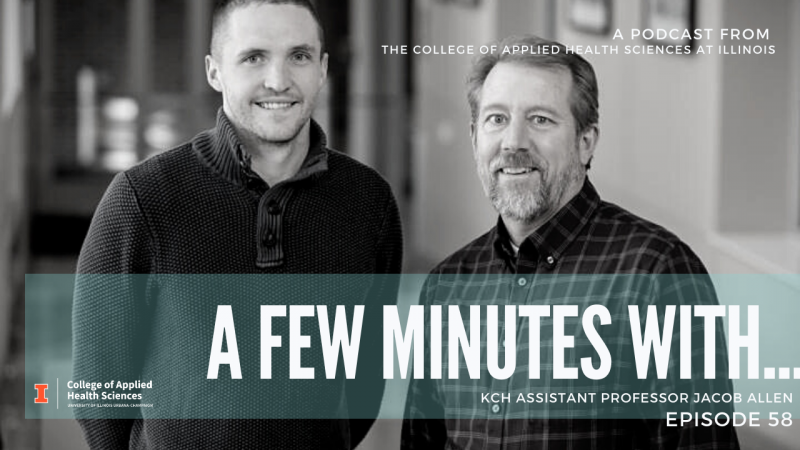
A Few Minutes With … Jacob Allen


Transcript

VINCE LARA: Hi, and welcome to another edition of A Few Minutes With, the podcast that showcases Illinois College of Applied Health Sciences. I’m Vince Lara, and today, I’m speaking with KCH Assistant Professor Jacob Allen about his research on how exercise, stress, and diet influence gut microbial communities.

So I’m talking with Jacob Allen, who is a new addition to the Department of Kinesiology and Community Health. And, Jacob, I notice from your CV that you had done your undergrad and master’s at the University of North Carolina at Chapel Hill. And yet you left Chapel Hill, which is a lovely place in which I lived for a while, for Chambana, which we’re covered in snow this morning. Tell me, what made you do that? What prompted your move here?

JACOB ALLEN: That’s a good question. Well, so I did my bachelor’s in exercise science with a minor in biology. And coming out of undergrad, I didn’t really know what I wanted to do– surprise, surprise, a little bit young. But I was interested in exercise physiology, and so I decided to stay on and do a master’s program in the Exercise Physiology group at UNC-Chapel Hill.

And I did my masters in working with breast cancer survivors, where we looked at how exercise affected inflammatory markers in these patients that were coming off of breast cancer treatments to see if exercise could reduce some of the systemic inflammation they experienced. So that was my foray into exercise. And then because I was looking at inflammatory markers, these proteins called cytokines in the blood, I started getting interested in immunology.

And at the time, and still is, Jeff Woods, Dr. Woods here at University of Illinois, was prominent and one of the few exercise immunologists in the field. So I figured if I was going to study exercise and study the immune system, I should probably go get a PhD with somebody that knows what they’re doing. And so I looked up Jeff’s name and gave him a call.

And that’s what started my process of moving to Champaign to do my PhD in 2013 to look at exercise and the immune system. And so I came to Illinois, and I took off from there, where we started to look at both the immune system, but also the microbes in the gut and how the microbes affect the immune system. So I guess it was more of a career path that took me from Chapel Hill, where it’s a little bit warmer, to Champaign, Illinois.

VINCE LARA: Right, yeah, absolutely. And then the opportunity to work with Jeff obviously is a big part of it.

JACOB ALLEN: Right, yup, it was, definitely.

VINCE LARA: Yeah. So you talked about how your research focuses on exercise and diet and how they influence gut microbiota. What led you to study that? Usually there’s some sort of inspiration to what a researcher decides to study. Was there something in your early life that led you to look into that?

JACOB ALLEN: You know what? I wish I could say there was some beautiful epiphany I had or something like that. But I can’t really tag it to anything specific. I’d say I’m interested in questions that we don’t understand, and that’s probably why I did biology.

And when I started in Jeff’s lab, there was this emerging topic of the microbiome and these trillions of microbes that live in our gut that we still don’t know exactly what they do. And so it kind of just spiraled into studying it. Again, like I said, I was an exercise scientist looking at how exercise affects breast cancer survivors.

And it got me interested in the immune system. And then being interested in the immune system led me to study the microbiome. And what we know now is that the microbes in our gut are really important for training the immune system and establishing the immune system, and then in many inflammatory diseases, affecting the immune system. And so the study of the microbes tied in directly with my interest in immunology. And so that’s how I got to studying the gut microbiota.

VINCE LARA: How granular can we get in terms of, if you change one food, if you stop eating one food, can you determine how that affects the gut and how it affects disease?

JACOB ALLEN: That’s a great question. Number one, I’ll say, it depends– depends on the food. We know a lot about– relatively a lot– about certain types of food with regards to the microbiota. One of them is dietary fiber and something that our lab is interested in.

So fiber comes in different forms, but in one of the forms, it’s a soluble, fermentable fiber. And what that means is that it can reach the colon, where most of the microbes are. And the microbes use that fiber as food, as a sugar source.

And so what we know is that by feeding the microbes with this fiber– and again, there’s various types of it– we can change the microbiota quite extensively. What’s still not understood is how different types of fiber feed the microbiota differentially. And does that matter for our health?

And what’s important is that once the microbes get a hold of these– this food type, this fiber– they can degrade it into these bioactive molecules that then affect our immune system. So we’re still trying to understand that process of how the microbes feed off of these– off of our diet. What type of metabolites do they produce? How does that change the microbial communities? And then how does that all affect our immune system and our health is our interest in our lab.

VINCE LARA: What you’ve said is that you wanted to provide a new perspective on environmental conditions and microbiota. Is that tying into what you’re looking into?

JACOB ALLEN: Exactly. You know, our lab is named Integrative Microbiota Lab. And the reason for that is that I think that in science, we’re really good at isolating things and tying down to what we call a mechanism, which is really important. And that’s part of our lab, too.

But in especially humans, as we walk through our daily life, we’re doing all sorts of things. We have different exercise patterns. We have different levels of psychological stress. And that’s another component of my lab, is looking at how stress affects the microbes as well.

And then obviously, we all have different dietary patterns. And so trying to tease out those factors and how they regulate the microbiome in a daily life is the purpose. And my long-term goal of my lab is to look at these individual environmental factors in isolation. And then long-term, how are they all together affecting the microbes in the gut?

VINCE LARA: Can you tease out things like physical stress versus mental stress? Or is that something that you even can separate?

JACOB ALLEN: Another great question. There’s debate among this in the field of how to define stress in humans. And obviously, it’s all based off of the experience of the person.

But we can measure certain biomarkers that correlate heavily with stress. So we know some classical pathways that are activated by psychological stress– the hypothalamic pituitary axis, which ultimately results in the release of a glucocorticoid called cortisol, which I’m sure many are familiar with. And so we can look at levels of cortisol in the blood, but also, more long-term, elevations of cortisol in things like hair roots and stuff like that to see if these individuals are experiencing acute levels of stress, which we all experience, or if they’re experiencing stress on a chronic level on a daily basis, where we see this long-term elevation of hormones associated with stress.

So the short answer is it’s complicated. But we can at least get somewhat of a diagnostic of how stressed people are or individuals are based off of some of the hormonal responses we see in the blood and other tissues.

VINCE LARA: Interesting. You know, you recently received a grant along with Jeff Woods to study age-related dysbiosis and physical resilience. What can you tell me about that project? I mean, first of all, what’s age-related dysbiosis?

JACOB ALLEN: Yeah, so first, the word “dysbiosis,” for those that don’t know, is essentially a broad term to suggest a disrupted microbial community in the gut. And so there’s various forms of, quote, “dysbiosis.” But what we know is that if the community of microbes in your gut is healthy, it usually is fairly stable and goes through similar– has similar patterns amongst individuals that stays fairly stable over time.

What we see with, quote, “dysbiosis” is that those communities become less stable and less even. So you sometimes get what we call pathobiont species that expand in the gut. And these are potentially bacteria that might induce some negative consequence on our immune system or other components of physiology. And so that’s what we term– what we call dysbiosis. And what the age part is that there’s accumulating evidence that aging, getting older, might contribute to some form of dysbiosis.

And what we’re studying with this grant– so it’s a one-year grant funded by the NIH that will hopefully extend into a longer grant– is to see how antibiotic exposure affects the microbiome in aged populations. And there’s a couple of reasons for this. One of them is that aged individuals tend to consume antibiotics more extensively because they’re experiencing more sickness as they get older. And so we want to study it on that level.

And number two, obviously, these antibiotics affect the microbiome. And so we want to see if a, quote, “aged microbiome” responds differentially to antibiotics versus a young, healthy microbiome. And so to test this, we’re using first, a preclinical model, which is a mouse model, to test these hypotheses.

And tying it in, we think that those microbes, if we disrupt them in old animals, there’s going to be consequences both within the gut, but we also think that is affecting their physical resilience– so how well they perform on particular tasks such as exercise tasks. And so that’s our hypothesis going in. And of course, we don’t know the answers yet, and that’s why we’re running the studies.

But we think that the aged animals will respond differentially to the antibiotics and maybe not recover as well. And that might lead to some potential issues with how they move and how they respond to challenges. So that’s the purpose of the grant, if that makes any sense.

VINCE LARA: Yeah, absolutely. How symbiotic is the relationship between exercise and gut health? Does one influence the other more?

JACOB ALLEN: Yeah, that’s a great question. So some of my PhD work showed that exercise changes the microbiome. And it increases some beneficial metabolites that we think are health-promoting.

And one of them is called a short-chain fatty acid that initiates some overall anti-inflammatory and beneficial effects on our tissue. Now, whether it’s, quote, “good” or “bad,” I think we still need to figure out. There’s definitely changes with exercise and the microbiome. But again, trying to delineate the long-term effects and whether it’s good or bad is still up for debate and up for what we need to investigate with our science.

Your other question– does gut health affect exercise? And I think that that’s another open question in the field. Is there some gut-brain signaling that affects motivational behavior to exercise? And that really has not been investigated at all to my knowledge. So I think you bring up a good point. And it’s something we don’t know quite yet.

VINCE LARA: Yeah. You mentioned that you’re hoping that this grant with Jeff is going to be a long-term grant– multiyear. But researchers always have to look to the next thing, right? And so I’m curious what you’re working on or what your next big project might be.

JACOB ALLEN: Yeah. There’s a couple. Currently, I did some work that was independently funded at the end of my postdoc that I was able to take with me to start my lab here in Illinois, focused on some of the stress effects on the microbiome. And so we’re currently, in the lab, really interested in how the microbes interact with the cells that line the gut, called epithelial cells.

And what we found is this really intricate interaction between the gut microbes and these epithelial cells. You think of it as like a tit for tat. As the epithelial cells, which are our cells that line the gut, produce some molecules, they change the microbes. The microbes then feed back and change those epithelial cells.

And what we found is that stress, for some unknown reason, really changes the profile of these epithelial cells. And we’re not sure why yet. But what the evidence is pointing towards is that those changes in epithelial cells with stress is really driving the microbial changes that we see in the gut, and potentially in negative ways.

And so we’re trying to understand that process in a little more detail in our lab currently. So that’s the next frontier where we’re focused. And then we have some other focuses, too, particularly with exercise.

And going back to the integrative portion of it, we’re interested in how exercise and dietary fiber interact to modify the microbiome. We know that both in isolation change the microbiome. But really, not a lot of work has been done with a focus on how the interaction of diet and exercise might change the microbes and what that might mean for our health. So that’s another focus of the lab currently as well.

VINCE LARA: My thanks to Jacob Allen. For more podcasts on Illinois’s College of Applied Health Sciences, search A Few Minutes With on iTunes, Spotify, iHeart Radio, Radio.com, and other places you get your podcast fix. Thanks for listening, and see you next time.

Editor’s note:

To reach Vince Lara-Cinisomo, email vinlara@illinois.edu.
 

Share on social

Related news

Allen gets grant to study additive effects of fiber and exercise


Can controlled increases in fiber intake and physical activity show additive effects?

KCH Assistant Professor Jacob Allen received a grant from the Center on Health, Aging & Disability for his project, “Gastrointestinal And Metabolic Effects from a Prebiotic, Lifting, and Aerobic iNtervention (GAMEPLAN).” Allen received $30,000 from CHAD for the 18-month project, which begins July 1.

Hannah Holscher, an associate professor of Nutrition in the College of Agricultural, Consumer & Environmental Sciences, and Riley Hughes, a postdoctoral fellow in Dr. Holscher’s lab, are collaborators on the project.

The project is focused on the independent and combined effects of prebiotic fiber consumption and exercise on the gut microbiome and human health. Allen said he and his collaborators are pursuing these studies because “Benefits of exercise and high fiber diets have been described in isolation. However, no controlled studies have looked at the potential additive effects of fiber and exercise.”

The combination of exercise and fiber could be beneficial for the majority of Americans who don’t get the recommended dietary fiber (more than 90 percent), or adequate exercise (more than 60 percent), Allen said.

Prebiotic fibers are substrate that are selectively utilized by host microorganisms conferring a health benefit, he said. Holscher added that prebiotics can be found naturally within foods like whole grains, onions, garlic, articokes, and bananas.

“For this study, we are using a prebiotic called short chain-fructooligosaccharides (aka. sc-FOS). We chose it for many reasons. One of the main reasons is because it is known to result in the production of beneficial metabolites produced by microbes that may synergize with exercise to promote metabolic adaptations.”

Another aim of the study is to improve body composition, but Allen stressed that does not necessarily mean weight loss.

“In fact, exercise interventions are often not accompanied by significant weight loss especially early on in the intervention, or fewer than six weeks”, he said.

“However, this does not mean that the exercise is not effective in improving health. For instance, body composition changes still occur with exercise despite no weight loss. Exercise training can lead to increased muscle mass and bone mass concurrent to reductions in fat. If you are only looking at a scale, these changes tend to negate each other. However adding muscle and losing fat is still very beneficial for metabolic health. Short end of it, exercise can still be beneficial without weight loss!”

Editor’s note:

To reach Jacob Allen, email jmallen5@illinois.edu.
 

Share on social

Related news

Exercise can improve gut health, study shows


Exercise can have an effect on your gut independent of diet, said Jeff Woods (Stock image)

Study Methods

In the first study, scientists transplanted fecal material from exercised and sedentary mice into the colons of sedentary germ-free mice, which had been raised in a sterile facility and had no microbiota of their own. In the second study, the team tracked changes in the composition of gut microbiota in human participants as they transitioned from a sedentary lifestyle to a more active one—and back again.

“These are the first studies to show that exercise can have an effect on your gut independent of diet or other factors,” said Jeffrey Woods, professor of Kinesiology and Community Health and director of the Center on Health, Aging, and Disability within the College of Applied Health Sciences. He led the research with former doctoral student Jacob Allen, now a postdoctoral researcher at Nationwide Children’s Hospital in Columbus, Ohio. The work with mice was conducted at the U. of I. and with scientists at the Mayo Clinic in Rochester, Minnesota, who develop and maintain the germ-free mice. The work in humans was conducted at Illinois.

What Was Found?

In the mouse study, changes in the microbiota of recipient mice mirrored those in the donor mice, with clear differences between those receiving microbes from exercised and sedentary mice. “That proved to us that the transplant worked,” Woods said.

Recipients of the exercised mouse microbiota also had a higher proportion of microbes that produce butyrate, a short-chain fatty acid that promotes healthy intestinal cells, reduces inammation and generates energy for the host. They also appeared to be more resistant to experimental ulcerative colitis, an inflammatory bowel disease. “We found that the animals that received the exercised microbiota had an attenuated response to a colitis-inducing chemical,” Allen said. “There was a reduction in inammation and an increase in the regenerative molecules that promote a faster recovery.”

In the human study, the team recruited 18 lean and 14 obese sedentary adults, sampled their gut microbiomes, and started them on an exercise program during which they performed supervised cardiovascular exercise for 30-60 minutes three times a week for six weeks. The researchers sampled participants’ gut microbiomes again at the end of the exercise program and after another six weeks of sedentary behavior. Participants maintained their usual diets throughout the course of the study.

Fecal concentrations of SCFAs, in particular, butyrate, went up in the human gut as a result of exercise. These levels declined again after the participants reverted to a sedentary lifestyle. Genetic tests of the microbiota confirmed that this corresponded to changes in the proportion of microbes that produce butyrate and other SCFAs.

The most dramatic increases were seen in lean participants, who had significantly lower levels of SCFA- producing microbes in their guts, to begin with. Obese participants saw only modest increases in the proportion of SCFA-producing microbes. The ratios of different microbes in the gut also differed between lean and obese participants at every stage of the study, the researchers said. “The bottom line is that there are clear differences in how the microbiome of somebody who is obese versus somebody who is lean responds to exercise,” Woods said. “We have more work to do to determine why that is.”

The Mayo Clinic-University of Illinois Alliance for Technology-based Healthcare and the National Institute of Diabetes and Digestive Kidney Diseases supported the study in mice. The human study was partially funded by a doctoral student research grant from the American College of Sports Medicine.

Editor’s note:

To reach Vince Lara-Cinisomo, email vinlara@illinois.edu.
 

Related news

College of Applied Health Sciences
110 Huff Hall
1206 South 4th Street
Champaign, IL 61820
(217) 333-2131