U. of I. trial will test if exercise can improve protein efficiency for older adults with type 2 diabetes


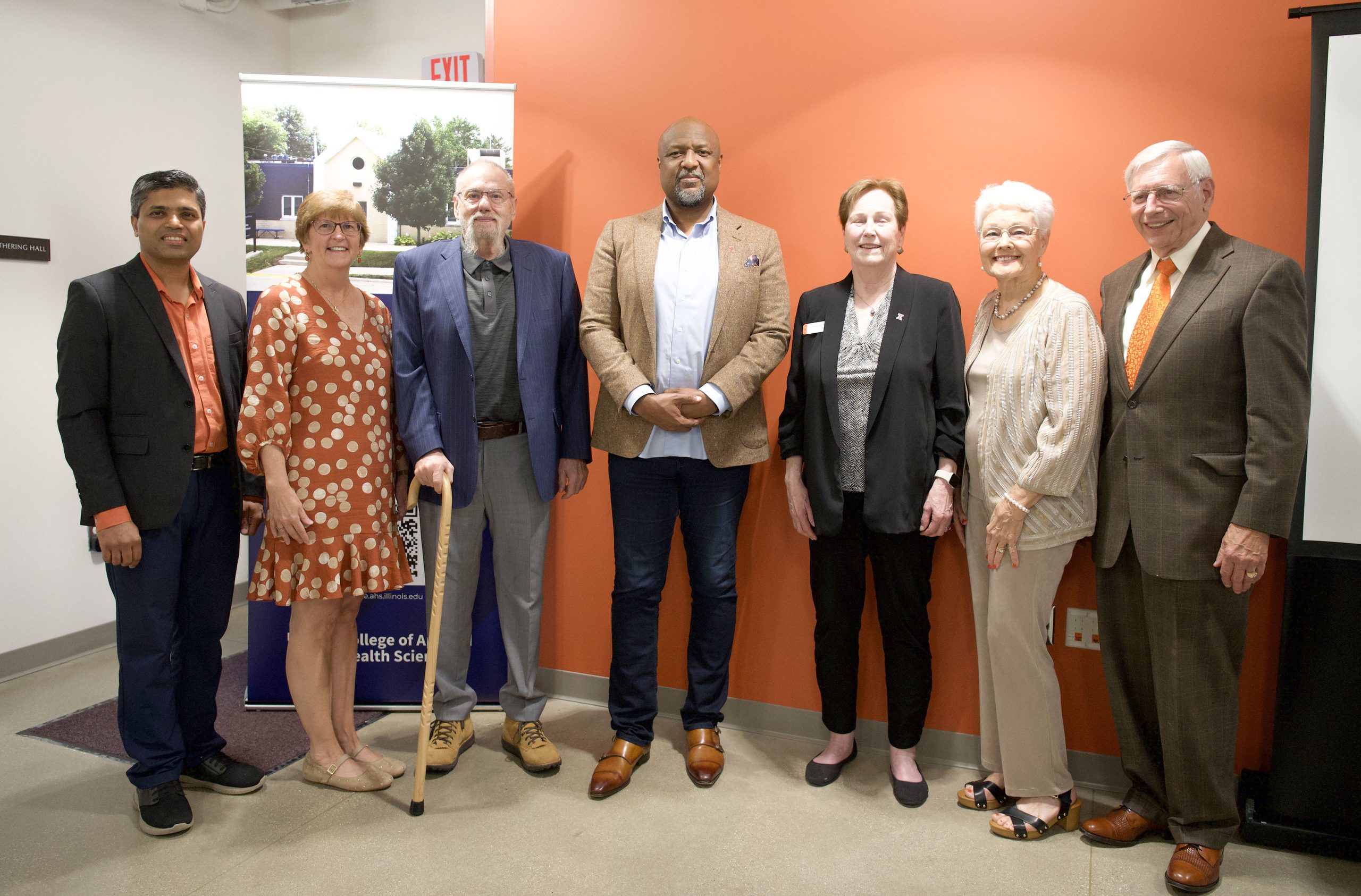
From left: University of Illinois Professor Nick Burd, postdoc Mikaela Kasperek, Ph.D. student Gena Irwin, and Associate Professor Jacob Allen pose inside Freer Hall’s gym, where their labs will train participants in a 12-week exercise program for a clinical trial.

For healthy adults, roughly .8 grams of protein per kilogram of bodyweight per day is enough to maintain muscle mass and support daily function.

But for adults with type 2 diabetes, an estimated 1 in 10 adults in the United States, their protein requirements remain relatively undefined, but are believed to be elevated when compared to their non-diabetic counterparts. Especially as diabetic individuals age, their bodies often become more anabolic resistant: less responsive to the muscle-building effects of exercise and protein intake.

Researchers from the Department of Health and Kinesiology at the University of Illinois Urbana-Champaign are recruiting participants for a human clinical trial to understand the protein needs of older adults with type 2 diabetes, and whether regular exercise can help their bodies use protein more efficiently.

“The problem with current strategies for type 2 diabetes is they largely try to keep throwing protein in people’s diets: eat more, eat more, eat more,” HK Professor Nicholas Burd said.  

Piling on the protein could have detrimental effects. There’s evidence that circulating amino acids, including branch chain amino acids that promote muscle mass, are associated with poorer outcomes for people with diabetes, said HK Associate Professor Jacob Allen.

Their upcoming study, “Exercise impact on dietary protein efficiency in older adults with type 2 diabetes,” is funded by a grant from the American Diabetes Association. The principal investigators are Burd, who researches protein metabolism, and Allen, who studies how exercise and nutrition impact the gut microbiome.

Health and Kinesiology professors Jack Senefeld and Steve Petruzzello are co-investigators on the study.

HK Assistant Professor Jack Senefeld and Professor Steve Petruzzello are co-investigators on the study, bringing expertise on training diabetic individuals and psychological well-being during exercise. Ph.D. candidate Gena Irwin and postdoc Mikaela Kasperek will lead the work from the Burd’s Exercise Performance Lab and Allen’s Integrative Microbiota Physiology labs respectively.

Starting this fall, the researchers will recruit 30 older adults to participate in this study—15 individuals living with type 2 diabetes and 15 without—and bring them into Freer Hall’s gym for a 12-week fitness program that mixes weight training with endurance exercise.

The researchers will use sensitive tools in their labs to figure out how efficiently participants’ bodies utilize protein, and whether that efficiency varies for older adults with and without diabetes. After participants wrap the exercise program, the team will test whether resistance training improved their bodies’ usage of protein overall, lessening their daily protein needs.

“To make an older person’s muscles more youthful, you can exercise them,” Burd said. “But we don’t know how the gut’s being impacted, and we don’t know how type 2 diabetes interferes with some of the ‘youthfulness’ effects of exercise.”

Some of our dietary protein ends up in our skeletal muscle, through muscle-protein synthesis, and some of it is used for energy. But there’s a “black box” around where the rest of our protein goes in the body, Allen said.

“We think that the microbes in the gut, the gut microbiome, might be responsible for some of this, but this has never been studied,” Allen said. “We’ve run some pilot work that fueled part of this study, where we can show that indeed, ingested amino acids are converted into these microbial metabolites.”

Why might that matter? Some of these metabolites are important for human health overall, Allen said. For example, short chain fatty acids—the byproducts of dietary fiber being processed in our gut—bring a host of benefits for metabolism and the immune system.

The research teams will host intervention days at the beginning and end of the 12-week exercise program, to see how participants’ bodies are using the protein in their muscle and gut.

Participants will consume amino acids labeled with stable isotope tracers. The labs will collect breath samples to see how much of the labeled amino acid is showing up in the breath—if more of that labeled protein appears in participants’ breath, their bodies aren’t as good at incorporating it into muscle.

Blood samples will help the scientists understand how the gut is taking those amino acids and converting them into potentially beneficial metabolites.

The second intervention day at the end of the trial will determine whether an exercise program changed the way participants’ bodies use protein.

“There are very few labs in the U.S that not only have the expertise, but have the infrastructure to be able to do this kind of work, so we’re very fortunate for Illinois and our department,” Burd said. “Stable isotope tracers require expensive machines to analyze.”

What’s in it for participants? On top of helping the scientists form dietary guidelines for older adults with type 2 diabetes, they’ll receive progressive exercise training from expert students and faculty at the college, that will hopefully serve them well beyond their last visit.

“A big goal is to change behavior, too, to make them healthier,” Allen said. “That’s ultimately what we’re trying to do.”

Editor’s note:

Interested in participating in this study? Take the survey to see if you qualify, or email the organizers at HK-ADA-Study@illinois.edu

To reach Nick Burd, email naburd@illinois.edu
To reach Jacob Allen, email jmallen5@illinois.edu

Share on social
Related news

Georgia Malandraki named new head of the Department of Speech and Hearing Science


Georgia Malandraki earned her Ph.D. from the University of Illinois in 2008. (Photo provided)

The College of Applied Health Sciences at the University of Illinois Urbana-Champaign is pleased to announce the appointment of Dr. Georgia A. Malandraki as the new head of the Department of Speech and Hearing Science, effective January 2026. Dr. Malandraki brings with her an exceptional record of scholarly achievement, clinical innovation and academic leadership that will advance the department’s mission in education, research and service.

Dr. Malandraki succeeds Dr. Pamela Hadley as department head, who was appointed department head in 2020. Dr. Hadley will continue serving as the Charles and Kay Stenberg Endowed Professor in Disability Research.

“Since earning my Ph.D. in Speech and Hearing Science from Illinois in 2008, I have been fortunate to have a deeply fulfilling career—one that has been profoundly shaped by the training and mentorship I received during my doctoral years,” Malandraki said. “It is an incredible honor to return to my alma mater to serve as head of SHS. As I step into this role, I am beyond humbled and filled with excitement.

“I follow in the footsteps of professor and current head, Dr. Pamela Hadley, whose compassionate leadership and dedication have strengthened the department through growth and challenges, including during the pandemic. I first met Dr. Hadley during my final year as a doctoral student, and her warmth and generosity have left a lasting impression—one she has carried into her impactful tenure as head. I am deeply grateful for her example and the foundation that she, along with her distinguished predecessors, has built. As I take on this role, I do so with humility, gratitude, and a strong commitment to inclusive excellence, innovation, and collaboration. I look forward to working alongside the exceptional SHS faculty, students, and staff, and under the inspiring leadership of AHS Dean Cheryl Hanley-Maxwell, as we continue to advance impactful research, education, and service in the field of communication sciences and disorders at the University of Illinois Urbana-Champaign. Go Illini!”

Dr. Malandraki joins the University of Illinois from Purdue University, where she served as a professor in the Department of Speech, Language and Hearing Sciences, with a courtesy appointment in the Weldon School of Biomedical Engineering. At Purdue, she directed the I-EaT Swallowing Research Laboratory and Clinic and played a pivotal role in interdisciplinary research and education focused on the neural mechanisms of swallowing function.

Dr. Malandraki earned her Ph.D. at the University of Illinois in 2008 after earning her master’s at Ohio University and her undergraduate degree from the Technological Educational Institute of Patras, Greece.

An internationally recognized expert in dysphagia, Dr. Malandraki is a certified speech-language pathologist, a board-certified specialist in swallowing and swallowing disorders, and a Fellow of the American Speech-Language-Hearing Association (ASHA). Her groundbreaking work has focused on the development of neurophysiologically driven interventions and telehealth solutions to expand access to care for individuals with swallowing disorders, particularly in underserved populations.

Dr. Malandraki is a founding member of the Purdue CEREBBRAL Center and a faculty associate with the Purdue Center for Aging and the Life Course. Her contributions to the field have earned her numerous accolades, including the NIH NIBIB R21 Trailblazer Award in 2019, the Purdue Early Career Research Achievement Award, and the 2021 ASHA Fellowship. Her team also received the 2021 Editor’s Award from the Journal of Speech, Language, and Hearing Research (JSLHR), and she was honored with the 2022 Honors of the Indiana Speech-Language-Hearing Association.

In addition to her research accomplishments, Dr. Malandraki is widely respected for her commitment to excellence in teaching. Since joining Purdue in 2014, she has been recognized with eight departmental teaching awards and received the 2018 Patsy J. Mellott Teaching Innovation Award from Purdue’s College of Health and Human Sciences.

“We are thrilled to welcome Dr. Malandraki to the University of Illinois,” said Cheryl Hanley-Maxwell, dean of the College of Applied Health Sciences. “Her visionary leadership, collaborative spirit and unwavering dedication to advancing the science and practice of communication and swallowing disorders make her an ideal choice to lead our Department of Speech and Hearing Science into its next chapter.”

Editor’s note:

To reach Vince Lara-Cinisomo, email vinlara@illinois.edu.
 

Related news

Q&A: Pamela Hadley, SHS Department Head


‘We have such a great group of remarkable scientists who are really committed to rigor in their research,’ Department Head Pamela Hadley said. (Photo by Ethan Simmons)

Q: This year’s deeper dives into the history of the Department of Speech and Hearing Science at the University of Illinois have been fascinating. Was there anything in any of these explorations that surprised you, even in your role as the department’s head?

A: Oh, absolutely. For example, I didn’t know how instrumental faculty at the University of Illinois had been in the development of the ASHA [American Speech-Language-Hearing Association] journals. The field continues to grapple, even today, with how to disseminate scientific findings. 

There also are many discussions about opening up access to science, especially those things that are federally funded by taxpayer dollars. The internet and social media have fundamentally changed the number of options for sharing scientific findings and clinical resources with the public. That’s something that, looking forward, we will continue to work through. With regard to the SHS at 50 stories, it was really important for me to appreciate the role that Illinois faculty had in the development of those early journals at the very beginning.

Q: What are some topics you would have liked to explore for this series if we’d had more time?

A: Something we talked about early on was exploring paradigm shifts in the field. There are individuals from Illinois who were responsible for changing the way in which our field approached clinical practice. Some of those researchers include Dean Emerita Tanya Gallagher and Carol Prutting, who were mentored by Tom Shriner Jr. in the 1970s. Together they were responsible for bringing the pragmatics revolution into the field of speech-language pathology and establishing the subfield of clinical pragmatics, focused on how language is used in conversational interactions. 

Another example: Elaine Paden and Ph.D. student Barbara Hodson contributed to a paradigm shift in how we treat young children’s speech-sound disorders. They were instrumental in shifting the field toward treating classes of sounds to improve the intelligibility of young children’s speech more efficiently. That was a huge paradigm shift.

Professor Emerita Adrienne Perlman was an advocate for expanding the speech-language pathology scope of practice to include dysphagia, or swallowing disorders. When I was a clinical student, swallowing wasn’t part of our scope of practice yet! Now it’s such a fundamental aspect of medical SLPs’ role in hospitals and skilled nursing facilities in particular.

Finally, it would have been wonderful to highlight major research projects throughout the history of the department, such as the Illinois International Stuttering Research Project that was led by Professor Emeritus Ehud Yairi.

Q: What’s impressed you the most about the department’s growth and development since you joined the faculty?

A: I’m so impressed with my faculty colleagues. We have such a great group of remarkable scientists who are really committed to rigor in their research. They hold themselves and their students to high standards, and at the same time, they’re just truly wonderful people who’ve been so committed to delivering high-quality instruction through some really unprecedented times. I admire their resilience. I enjoy their company. In short, I’m just really proud to lead this department.

Q: What are some new areas in this field that recent graduates, current students, and students who will join you in the next few years have, or will have, the expertise to address as they move into their careers?

A: Telehealth is a professional area that has really expanded rapidly in the last three years. Prior to COVID-19, students weren’t trained to assess or treat via telehealth at all. It was considered to be an advanced clinical skill and not something that students would be expected to learn until they had years of clinical practice under their belt.

During the stay-at-home mandates, telehealth became a lifeline, and it caused our professional bodies to reconsider whether this was an essential skill that all our students in training needed to have. We also had many research projects that were required to pivot to remote data collection. Students today are far more advanced in their knowledge and skills in this area, and they are better prepared to conduct research and deliver clinical services remotely than prior graduates.

Q: Let’s talk a bit more about the department’s Audiology and Speech-Language Pathology Clinic. You’ve referred to it as the “crown jewel” of the department’s community outreach efforts. How would you like to see the clinic evolve?

A: This summer we had a public meeting as part of a follow-up, in-person site visit from our accreditation body, and a number of individuals who received services from our clinic and their family members attended the meeting. They just raved to the site visitors about the services that they were receiving and the impact of those services on their well-being and quality of life. To hear that kind of feedback from the families that we serve just means everything—it’s so essential to what we’re trying to accomplish in terms of our public engagement and outreach, and it’s testimony to how critically important communication skills are to participation in everyday activities. That encapsulates why I’ve referred to the clinic as a “crown jewel.” 

I’d really like to see the clinic expand its sphere of influence beyond the Urbana-Champaign community. My dream for the clinic would be for it to be a center of excellence, particularly for families in rural communities that may not have access to state-of-the-science resources in their local communities. Also, it would be my hope that we could bring individuals here for comprehensive assessments and develop the types of support those families might need for ongoing care, and then maintain that contact through telehealth with educators or health care providers in their local communities. I think that that could be really powerful.

Q: We’ve established through these stories that the SHS faculty at Illinois have been pioneers in the research, and they’ve been leaders in their profession since the beginning. Will these stories serve as inspiration for future activities? Where do you think this department can lead your disciplines in the future?

A: I think these stories helped us bring history alive and explored some topics in a more conversational way than reading a review of the history of the department. What I most hope, though, is that these stories provide our students and faculty with a strong sense of where they come from and, really, a deeper appreciation of the fact they’re standing on the shoulders of giants—pioneers who really established the profession and were influential from the beginning. 

Where do I think SHS will lead the discipline in the future? I envision SHS faculty and students contributing to innovations in health technology, including the use of that technology to improve treatment options, and evaluating how different design features might promote people’s use of those technologies and what new technologies are desired. Those health technologies could include how we are designing and developing hearing aids, which treatments best fit an individual’s cognitive profiles and communication needs, how we interact with augmentative and alternative communication devices, how we use speech recognition devices, or how we use different kinds of technologies to age in place successfully. Technology has moved really quickly just in the last year. So the next 50 years? It’s hard to imagine where we’ll be!

For more on the 50th anniversary of SHS at Illinois, check out our stories at ahs.illinois.edu/shs-50.

Related news

Payne has big plans for revitalized ORPR


Of ORPR, Laura Payne says, ‘We want to be known as a leader in conducting applied research and outreach across recreation, sport and tourism.’ (Photo provided)

In November 2021, while Laura Payne was the interim director of the Office of Recreation and Park Resources, a group of stakeholders held a retreat to focus on the core missions of ORPR.

“We generated a lot of rich discussion and accomplished a lot in a short amount of time,” Payne said. “One of the key points to emerge from the planning meeting was that ORPR can and should play a key role in addressing emerging challenges related to community health and well-being by generating creative and innovative solutions.”

Fast-forward to 2023, and Payne—now the Joseph J. Bannon director of ORPR—said, “We want to be known as a leader in conducting applied research and outreach across recreation, sport and tourism.”

ORPR, which is affiliated with the Department of Recreation, Sport and Tourism within the College of Applied Health Sciences at Illinois, is designed to be an asset to faculty and RST, Payne said.

“We see ourselves as an applied research and outreach unit that serves the entire department,” she said. “Where it makes sense, we’d like to be a resource for faculty. We can assist with grant applications, community engagement and outreach efforts. Since we have a formal connection with Illinois Extension, we can assist with building collaborations between Extension and RST.”

Payne is a professor in RST and an Extension specialist who has directed statewide outreach and research programs. Her research has examined the relationship between leisure style and the health of older adults with chronic conditions and the role of local parks and recreation agencies in health promotion and health behavior change.

Joelle Soulard, assistant professor in RST, called Payne “a respected colleague. Her dedication and expertise have been invaluable to our field. As the leader of ORPR, Laura is committed to enhancing health and well-being through research, education and outreach programs. Her vision aligns perfectly with the university’s land grant mission.”’

Payne is focused on channeling the expertise and knowledge of RST faculty and students to impact people’s lives positively and address many of society’s health and wellness challenges.

“It is our goal to become the place RST organizations and professionals seek out for evidence-based information and research-based resources that are useful for organizations,” she said.

Payne said the core principles and mission of ORPR have not changed, but she wants to build on what was done before she was appointed to the top role.

“I view this stage of ORPR’s continued development as fine-tuning,” she said.

To that end, ORPR has refreshed its mission statement, which is to collaborate on recreation, sport and tourism initiatives to build healthy communities. The values that guide their mission include utilizing scientifically sound applied research and best practices, being responsive to community and industry needs, issues and trends and providing undergraduate and graduate students with hands-on educational experience via projects.

Soulard said Payne’s “innovative approach has been instrumental in advancing statewide outreach and research initiatives that directly benefit communities across Illinois. Her work is driving the next wave of innovation in our field, making a meaningful impact on the quality and sustainability of recreation, parks and wellness programs and services.”

RST Assistant Professor Sharon Zou said that Payne “speaks multiple languages with community leaders, RST professionals, Extension colleagues, academic faculty and students. She involves undergraduate and graduate students in ORPR projects, which have been great learning experiences for our students.”

Most importantly, Payne said, wants people to understand  how parks and recreational activities enhance lives.

“Sport and tourism initiatives can play important roles in enhancing human health and improving environmental sustainability,” she said. “Parks and recreation agencies offer places for people to be physically active, reduce stress, engage in social activities and strengthen community ties through festivals and events.”

Related news

Paralympian in pursuit of Ph.D.


Jenna Fesemyer is racing toward her next professional challenge: obtaining a Ph.D. in recreation, sport and tourism. (Photo provided)

Jenna Fesemyer’s enduring love of wheelchair racing boils down to two factors. First, like other skill-heavy sports, there is always a way to fine-tune her mechanics and improve her craft, she said.

The second reason is simpler: “I love the feeling of going fast.”

While the Ohio-born Paralympian keeps up her competitive pace, she’s also racing toward her next professional challenge: obtaining a Ph.D. in recreation, sport and tourism from the University of Illinois Urbana-Champaign.

In many ways, Fesemyaer’s approach to her academic pursuit matches her attitude on the track. She’s organized, consistent and utterly committed to both disciplines as avenues for personal growth.

“When I first met her, I worried how she’d manage both being this high-level athlete and doing a Ph.D., which is so time-consuming,” said her advisor, RST Associate Professor Toni Liechty. “But it seems like she takes the same dedication she applies to her training and her sport and she brings that to the Ph.D. She doesn’t do anything halfway.”

Fesemyer graduated from Illinois’ kinesiology program in 2019 and stayed to earn her master’s degree in education policy, organization and leadership. Initially, she wanted to be a physical therapist but now has her sights set on becoming a faculty member at a university.

She’s returned to her “intellectual home” in the College of Applied Health Sciences, entering her second year of the RST Ph.D. program. Fesemyer chose RST to focus her research on the psychosocial benefits of sport interventions for youth with physical disabilities and to build more inclusive recreation communities.

“Our faculty is really strong. I’ve enjoyed every single class that I’ve taken so far,” Fesemyer said. “When you have faculty that believes in the power of being in the classroom and passing on their legacy of their knowledge to their students, it makes a big difference.

“I’m excited to have my own classroom one day.”

Track star without a track

Tracing back, Fesemyer’s future in athletics seemed a far cry from the opportunities she had in hometown of Ravenna, Ohio, about an hour south of Cleveland.

Due to a rare congenital condition known as proximal femoral focal deficiency, she was born without a hip socket. Her high school had an old cinder track, unsuitable for wheelchair sport.

“It’s interesting how I ended up being a track athlete not having access to a track,” she said.

So, Fesemyer and her family forged a path of her own. Growing up with her two triplet siblings, she competed in basketball, volleyball and golf with the use of a prosthetic leg and even threw discus and seated shotput for school track teams.

Fesemyer attributes a lot of her competitive nature to growing up as a triplet. But sibling rivalry never stood in the way of their bonds: The trio decided to stay in the same classrooms whenever possible.

“We were always competitive, but we always acknowledged we were teammates and advocates for each other,” Fesemyer said. “Watching them take on this role of constant allies for me as a sibling with a disability, we really have grown a lot together through those different facets. I attribute a lot of who I am to those experiences.”

In 2013, the Ohio High School Athletic Association added wheelchair events to the state track meet. With some persuasion from her parents, Fesemyer began making the half-hour trip east to Newton Falls High School to practice wheelchair racing, and “quickly fell in love” with it.

As her skills grew and college drew nearer, she began investigating schools that would help to take her talent to the next level.
She reached out to University of Illinois wheelchair track coach Adam Bleakney and scheduled a visit in fall 2014. Immediately, the fit felt right—the proximity, the academic programs and the history of the school’s accessibility and wheelchair athletics.

Fesemyer’s application to Illinois was the only one she submitted.

She doesn’t do anything halfway.

Toni Liechty

RST Associate Professor about Jenna Fesemyer

“I put all my eggs in one basket. I’m very happy it worked out,” she said.

Fesemyer’s “sunny disposition” is near-constant, Bleakney said, to the point where her peers draw on her positivity to keep spirits high in tough practices.

“[Jenna has] always had an attitude of comprehensively applying her work ethic, self-discipline and drive to all areas of her life: academics, athletics and work,” Bleakney said. “She shares my philosophy as a coach: We’re training versatile student-athletes who are successful not only in athletics and academics, but in skills that will make them more employable.”

That approach has carried Fesemyer’s improvement in the sport, culminating in an appearance at the 2020 Tokyo Summer Paralympics, where she placed seventh in the women’s 5,000-meter T54 race and shattered her personal best time.

Circular moment

Fesemyer’s athletic and academic journeys crossed for a moment this January when she hosted a wheelchair track clinic in Columbus, Ohio, for middle school and high school athletes.

While helping adolescent wheelchair athletes with their skills, the clinic served a broader purpose: It set the stage for her pilot academic study, and she’ll revisit Columbus for a follow-up next January.

“It really was a full-circle moment for me, starting as an athlete in Ohio in wheelchair racing to be able to go back and serve that same community through this wheelchair track clinic,” Fesemyer said.

So far, her academic endeavors number from collaborating on a paper about inclusivity in recreation centers to working in Department of Kinesiology and Community Health Associate Professor Laura Rice’s lab on a fall prevention project for people with disabilities.

Fesemyer’s experience in kinesiology has made it easier for her to collaborate across the college, her advisor said.

“I think she’s a great representation of AHS as a whole and why our college goes together,” Liechty said. “Because she understands why lifestyle fitness is important, why it’s important for people with disabilities, and how organizations or recreation or fitness centers can facilitate that happening in a way that promotes health.

“She’s kind of the epitome of everything we do in this college.”

Not all of Fesemyer’s contributions take place at the track, classroom or lab. She recently served as a tour guide for the RST program during summer Illini Days.

Prospective students were particularly interested in her Paralympic resume—despite her best efforts to conceal it. 

“I don’t know why, but I always try to hide that part of my identity when I give tours because the identity of a student, for me, comes first,” she said. “That’s really important for me to showcase that, because my identity coming to Illinois was always to be a student first and celebrate the opportunity of being an athlete on the side.

“But it’s sports, and students get excited about sports, which is great, too.”

As year two of her four-year Ph.D. program begins, Fesemyer is continuously grateful to return to full classrooms and in-person experiences with her graduate cohort.

“Having that experience with my peers, coming in at the same time and progressing through the program at the same time has been a remarkable experience,” she said. “I believe in working in community and working with others.”

Editor’s note:

To reach Ethan Simmons, email ecsimmon@illinois.edu.
 

Related news

Master Plan: How campus investment will boost AHS master’s programs


RST interim department head Bill Stewart, left, chats with MHA director Lynne Barnes and MPH director Pedro Hallal (Photo by Ethan Simmons)

Three master’s programs in the College of Applied Health Sciences are undergoing transformations for the digital age.

After receiving a $2.035 million award from the University of Illinois Investment for Growth program, AHS faculty, administrators and industry partners will collaborate to create online versions of the Master of Public Health and Master of Health Administration degrees. Additionally, the Master of Recreation, Sport and Tourism online degree will be restructured into three specialized programs: recreation and park management, sport management and administration, and tourism and event management.

The revamped online degrees are expected to expand the accessibility of AHS programs worldwide, reaching new students from underrepresented and nontraditional backgrounds.

“Going global has been a priority of this university for years,” said Pedro Hallal, Alvin M. and Ruth L. Sandall professor in the Department of Kinesiology and Community Health and director of the MPH program. “So now going global is a priority of this program as well.”

The addition of “stackable certificates” across each discipline will attract nontraditional students looking to boost their knowledge as well as mid-career professionals seeking expertise in their chosen industry.

Each program is committed to including new voices in their online instructional material, mainly experienced professionals working in the respective fields.

“It’ll be a nice blend,” said Lynne Barnes, the longtime top Carle Foundation Hospital administrator who was hired as director of the MHA program this fall. “We’ll have professors who really understand the knowledge base of the field, and we’ll also have clinical people who are working in the field doing the teaching, just like we do for the in-person program.”

The creation of new online master’s degree formats will start with collaboration with AHS’ online learning team. The online MPH program and restructured RST online master’s degrees will begin enrolling students in fall 2025; the online MHA program will debut in fall 2026.

“We’re taking the ‘growth’ term very seriously,” said Professor Bill Stewart, interim department head for RST. “This is a long-term investment for us, not just a one-off thing.”

MPH: ‘The perfect storm’ for growth 

To populations around the globe, the COVID-19 pandemic was a clarion call to the vital importance of public health infrastructure.

The awakening clearly reached young people pondering their life paths: According to data from the Association of Schools and Programs of Public Health, applications to public health graduate degree programs increased 40 percent from 2020 to 2021.

“It’s so much easier now to choose a career related to public health,” said KCH Associate Professor Andi Schwingel, who is working alongside Hallal in developing the online coursework.

“Going global has been a priority of this university for years. So now going global is a priority of this program as well.”

Pedro Hallal

HK Professor, director of the MPH program

For the University of Illinois’ MPH program, the decision to create an online program is also a matter of maturity, Hallal said. Four years have elapsed since the program obtained accreditation from the Council on Education for Public Health.

“Some people in your neighborhood will add a security camera, and you don’t think it’s important until your house gets robbed, and then you see, ‘Oh, I needed that camera,’” Hallal said. “I think that is exactly what happened with public health.

“It was the perfect storm for our time to grow.”

The work ahead will be rigorous, with 20-plus courses awaiting development. Faculty plan to work with external partners, such as public health professionals, to create new course content. And it will be suited to the future landscape of public health, Hallal said: How might climate change and global warming transform health needs? How can we address the coexistence of infectious diseases with chronic conditions, like hypertension and diabetes?

A target for the MPH online expansion is the non-traditional student population. The MPH program will offer six certificates: epidemiology, biostatistics, public health, one health, physical activity and health and health promotion.

“It’s the time for us to reach nontraditional students, we feel ready for it,” Schwingel said. “We want to keep the rigor, the quality that we’ve been giving students in their residential program to the online space as well.”

MHA: Making health administration accessible

The MHA program at Illinois is designed to prepare students for leadership in the healthcare industry.

What the MHA program has recently observed, according to KCH Assistant Professor Mina Raj, is an influx of requests for an online equivalent, especially among mid-career healthcare administrators.

“The pandemic has made salient how important the healthcare system is, and how important it is to have administrators who can respond to public health emergencies and other unpredictable situations,” Raj said.

The overriding goal for the online degree is accessibility, Raj said: What material can be packaged into a four-week or eight-week course? The MHA online degree will offer three professional certificates: health finance, healthcare quality and health informatics.

“I think for this group of professionals it’s really about giving them the context and rationale behind why certain decisions are made as administrators or within a healthcare organization, as well as the tools to anticipate the impacts or consequences of various administrative decisions,” Raj said. “We have faculty with different expertise, different professional backgrounds, and everyone is excited to teach these courses.”

The work has already begun for Barnes, who wants to incorporate seasoned industry experts into course content. Barnes came to the university after retiring from a 45-year career at Carle Foundation Hospital.

“I hope to use real clinicians, people doing the work like at Christie Clinic, Carle and OSF Healthcare to be part of the lectures, so that the students who are online, all over the world and all over the United States experience instruction through people who are actually doing the work,” Barnes said.

RST: Degrees for specialized industries

The Department of Recreation, Sport and Tourism has been a leader in online education, debuting the first online master’s program in the discipline back in 2008.

But there wasn’t much fanfare, Stewart said. Online degrees were seen as “second-class programs” two decades ago.

“We were there at the beginning of the front to move online learning into a respectable degree process of education,” Stewart said.

Today, recreation, sport and tourism combine for an estimated $90 billion global set of industries. The pandemic resulted in a surge of public interest in leisure time and nature exploration, opening up new opportunities for professionals in the field, Stewart said.

“[RST] is about what we do in our free time to extend who we are and add value to our lives,” Stewart said. “We’ve come to embrace our needs for leisure-time activities in the last two years in ways that enhance our well-being and nurture our souls.”

The upcoming split of the current online master’s program into three tracks is a response to internal and external trends. Enrollment in the online MS in RST has plateaued in recent years, while other institutions have introduced their own online degrees in the discipline.

Online degrees were seen as “second-class programs” two decades ago, but no longer, said Bill Stewart, center. (Photo by Ethan Simmons)

Meanwhile, the demands of the industry have become more specialized over time.

“There’s still a need for the generalist degree, but because of the growth, we are finding professionals out there who need more help with the specialty,” Stewart said.

Students and mid-career professionals will be able to enroll in a new slate of RST certificates in high-demand topics, including inclusive design, agricultural tourism, sport analytics, e-sport administration, and diversity, equity and inclusion.

The department is in the process of searching for a director of the RST online program, Stewart said, while tapping into a vast network of alumni to help develop new course content.

“Our alumni value the friends and faculty they came to know as students and find various ways to give back to the department,” Stewart said. “Many of our alums are leading remarkable careers in contexts related to recreation, sport and tourism; they readily share their expertise through assistance in course development, guest lectures, creating internship opportunities for our current students, and in some cases, teaching classes for us.

“Our students come here because they care about making people feel better, their well-being, their sense of community and health. They want to give back to the community and they want to give back to the department that gave them this path in life.”

Editor’s note:

To reach Ethan Simmons, email ecsimmon@illinois.edu.
 

Related news

Global opportunities


Jemimah Bakare, right, Emmanuel Dubure and Byron Juma, left, are parts of a growing contingent of Illinois students from Africa (Photo by Michelle Hassel)

The Republic of Ghana has the second-largest population in West Africa. Until recently, Emmanuel Dubure was one of its more than 32 million inhabitants. He said the part of the country where he grew up faces many health challenges, and he wanted to develop the expertise to make a difference. He chose to study in the United States, he said, because “the U.S. has the best educational system at the graduate level and is a hub for research and experts in many fields.”

Dubure aspires to work at the community level to improve health back home. He learned of Illinois on LinkedIn and liked the idea of obtaining his master’s degree in community health from a well-ranked Research 1 university. 

“Most importantly, I chose to come here because the College of Applied Health Sciences had faculty doing good research in my area of interest, which is the use of nutrition education to improve health, particularly in relation to chronic conditions,” he said.

Dubure described his experience at Illinois as “amazing” and said he would strongly recommend it to other international students.

“I have met a lot of wonderful people, both students and professors. The environment here is very stimulating and supportive of learning,” he said. “AHS is very multicultural, which gives you an opportunity to learn about different cultures. It also helps you feel at home because you meet other people from your home country.”

A common sense of humanity

The University of Illinois Urbana-Champaign boasts one of the largest international student populations among public institutions in the United States. According to the university’s Vision 2030 Global Strategy document, the first international students arrived on campus just four years after the university was founded. In 1907, the University of Illinois Urbana-Champaign became the first university in the nation to create the position of international student advisor, an early recognition of the benefits of worldwide perspectives in education and scholarship. 

Marta Schneider, associate director for global communication at Illinois International, said the university’s global strategy puts a high priority on intentional engagement in Global South countries. 

“The number of students from the African continent have indeed been increasing, with Nigeria being among the top 10 represented countries at Illinois in 2021 and 2022,” she said. “The university also is committing resources to increasing ties with Latin America and underrepresented parts of Asia.”

Bill Stewart, interim head of the Department of Recreation, Sport and Tourism, thinks encouraging international enrollments is a good idea.

“A world-class university needs a world-class student body to prepare future professionals for careers that will involve advancing relationships across international and cultural boundaries,” he said. “International students elevate class discussions and activities and research programs by sharing insights and cultural values.”

As a result, he adds, domestic students often better understand cultural differences and similarities and reflect on their own cultural heritage. International students can increase understanding of a common sense of humanity.

This has certainly been the case for Sandraluz Lara-Cinisomo, associate professor of kinesiology and community health. Her research addresses disparities in the mental health of women and mothers in different racial, ethnic and immigrant groups and the military. In her Laboratory for Emotion and Stress Assessment, she has graduate students from Nigeria, Ethiopia and The Republic of The Gambia. She said the insights that international students provide on perinatal mental health disparities are critical for addressing the diverse needs of mothers not only globally but also within the United States.

The University of Illinois Urbana-Champaign is a prestigious institution, and I am extremely proud of being a student here. I wouldn’t want other international students to miss out on these crucial opportunities.

MaryEllen Mendy

Doctoral candidate, Community Health

“International students have lived experiences that are valuable when considering risk factors for perinatal mental health, barriers to care and innovative strategies that respect diverse communities’ cultural and linguistic needs,” Lara-Cinisomo said. 

Domestic students also benefit from learning, she added, that while public health crises abroad may appear identical to ones in the United States, they may actually involve layers of complex cultural and political systems that aren’t observed here.

One of Lara-Cinisomo’s mentees, Mary Ellen Mendy, hails from the smallest country within mainland Africa, the Republic of The Gambia. Women in The Gambia face many challenges to their physical and mental health. After completing her Ph.D. in community health, Mendy hopes to apply all that she has learned from this program and her Master of Public Health program at the University of Illinois Springfield to making a difference back home.

“The skills I am developing are already paving the way for my future career as a researcher,” Mendy said. “I have received so much training in the Laboratory for Emotion and Stress Assessment lab, which I greatly value.”

Mendy said she already has recommended the program to friends back in The Gambia: “The University of Illinois Urbana-Champaign is a prestigious institution, and I am extremely proud of being a student here. I wouldn’t want other international students to miss out on these crucial opportunities.”

A wholehearted recommendation

Like their domestic colleagues, international students also benefit from the exposure to different cultures. Kenyan student Byron Juma said he has seen the months fly by as he’s grown “leaps and bounds” from his interactions with students from different parts of the world.

“I have taken classes from different departments and appreciated the opportunities to interact with students from diverse academic and social backgrounds and nationalities,” he said. “Such interactions have enriched my academic life and allowed me to view my research from different perspectives. Furthermore, these interactions have allowed me to learn and appreciate other cultures, thus building my emotional and social intelligence.”

Juma, who is pursuing a Ph.D. in recreation, sport and tourism, has researched doping in sport in Africa and Europe. The unique closed-league system and heavy commercialization of sport in the United States offered an exciting new perspective for his research. The possibility of studying with RST Assistant Professor Julian Woolf, one of the world’s leading scholars on the topic, was also enticing. 

“I firmly believe that AHS has some of the best faculty in the country,” Juma said. “Getting a degree in the college counts as a prestigious achievement.” 

Juma also noted that the outstanding diversity of the student body in AHS, where 33 percent of the students belong to historically underrepresented racial and ethnic groups and 149 students are from other countries, makes it easy to feel at home.
Nigerian student Jemimah Bakare, who is pursuing a master’s degree in community health, agrees.

“The campus’ commitment to diversity and inclusion makes it an attractive choice for an international student,” she said. “The sense of belonging and the opportunities for cultural exchange are enriching aspects of the university experience that I believe are essential for personal growth and academic success.”

Bakare’s interests focus on the management of type 2 diabetes and chronic kidney disease in older adults. She was drawn to the strong academic and research reputation of the campus and the college as well as the student body diversity. 

“The academic rigor and quality of instruction have exceeded my expectations,” she said. “Furthermore, the university’s emphasis on research and practical application of knowledge has provided me with valuable hands-on experiences that will undoubtedly contribute to my future career in community health.”

Because of this combination of academic excellence, diversity and translational research opportunities, Bakare would “wholeheartedly” recommend the University of Illinois Urbana-Champaign and the College of Applied Health Sciences to other Nigerian students. In addition, she said, the support services and resources available to international students at the university help to ensure a smooth transition to life in the United States.

Related news

Expanding global outreach


Brazilian student Jonathan Rocha de Oliveira thinks many more Brazilian students would be interested in attending Illinois if they knew about the opportunities here. (Photo provided)

In addition to Africa, the University of Illinois Urbana-Champaign’s Vision 2030 Global Strategy underscores the desire to increase student enrollments from other parts of the Global South, which includes Latin America, the Caribbean, and underrepresented parts of Asia including countries in the Middle East. Many of these countries already appear on the list of 126 that currently are represented in the university’s student body, but their numbers are small.

Iranian student Sahel Moein, who is pursuing a master’s degree in kinesiology, said that unlike other colleges and universities in the U.S. where Iranian students predominantly choose to focus on engineering and basic sciences, Iranian students at Illinois can also be found in the health sciences, art, literature, education and sociology.

“Thanks to the U. of I.’s outstanding reputation and high rankings, earning a degree here is perceived very positively in Iran,” she said. “Graduating from a top-ranked university is a significant advantage when seeking faculty positions there.”

Moein was working as a clinician at a rehabilitation hospital in Iran when she realized there was more that could be done to improve the quality of life of individuals with disabilities.

Given the quality of American institutions of higher education, she decided to pursue her graduate work here. She was drawn to the College of Applied Health Sciences because of its exceptional research in kinesiology and rehabilitation sciences.

“The diverse range of research, encompassing both physical and biomechanical, as well as social and behavioral aspects, greatly piqued my interest and influenced my decision to study here,” she said.

Brazilian student Jonathan Rocha de Oliveira thinks many more Brazilian students would be interested in attending Illinois if they knew about the opportunities here.

“Unfortunately, many folks there do not know what to do to attend such a prestigious institution as Illinois,” he said. “They believe it is impossible, but it is not. I did it so others can make it, too.”

De Oliveira, a Ph.D. student in the Department of Recreation, Sport and Tourism, had always dreamed of studying abroad. He believed the United States, with its significant investment in education and research, would be the place to become the world-class professional he envisioned. 

“Illinois’ strong reputation, research opportunities, outstanding resources and internationally renowned faculty drew me here,” he said. The strong interdisciplinary focus and diversity of the College of Applied Health Sciences also got his attention. 

“It has expanded my mind in ways I never thought possible. Having different perspectives makes you think outside the box and sparks innovative ideas.”

Fellow Brazilian Ana Laura Selzer Ninomiya, whose doctoral studies in kinesiology focus on exercise psychology, said because of the time involved in getting an advanced degree, choosing the right program is critical. She’s happy with her decision to study at Illinois.

“I’ve been able to form important connections with leaders in my field and with colleagues who have graduated and are pursuing careers. I also have a broader understanding of my professional aspirations and opportunities,” she said. “It definitely makes a difference to have great mentors, a safe and friendly lab environment, and good friends.”

Social contacts can be especially important to international students who are not only adjusting to a large university but also to a new country. 

Yadira Alonza Espinoza, a Doctor of Audiology student in Speech and Hearing Science who is from Mexico, said she initially was lonely on campus and had difficulty connecting with others. Over time, she has created long-lasting relationships and is having, in her words, “one of the best experiences of my life.”

“Graduate school is tough and really tests your resilience, but I have kept a positive mindset thanks to many of my close friends,” she said. “The Office of Vice Chancellor for Diversity, Equity, and Inclusion; La Casa Cultural Latina; and my SHS mentor, Dr. Fatima Husain, have made my experience at Illinois an incredible one thus far.

Related news

DRES alumni unite to help students


The ‘Band of Brothers’ have come together to support the next generation of Illini wheelchair sport athletes through the establishment of an annual scholarship.

In the heat of an Illinois men’s wheelchair basketball season, intense morning practices roll into sociable team meals and lively late-night gaming sessions. The hours spent between busy student-athlete schedules—on buses and in residence halls—are where teammates became brothers.

For all that the Illinois men’s wheelchair basketball teams of the early 2010s accomplished on the court—a National Wheelchair Basketball Association intercollegiate championship and three second-place finishes under former coaches Mike Frogley and Matt Buchi—they’ve surpassed that off of it, starting careers and raising families.

Now, the alums of this so-called “Band of Brothers” have come together once more to support the next generation of Illini wheelchair sport athletes through the establishment of an annual scholarship.

Their contributions, through The Fighting Illini Wheelchair Basketball Alumni Legacy Scholarship Fund, have been granted to two wheelchair basketball athletes in the past two terms.

“This scholarship is born from people that truly love each other and care about the future of the program at the University of Illinois,” said Mak Nong, former Illinois wheelchair basketball player and founder of the fund. “For us to be able to give back and make things easier for the future generation, that’s our moral obligation: to make this place even better than it was for us.”

Tight bonds

Maureen Gilbert wears many hats as coordinator for the Office of Campus Life at Disability Resources and Educational Services, better known as DRES. To more than 29 classes of Illinois wheelchair student-athletes, she’s “Mo,” director of athletic programs, point-person for travel and eligibility questions and trusted confidante. Some lovingly call her “Mom.”

On bus rides to and from track and field and basketball events, one can usually tell if the team is gelling off the floor, Gilbert said. Team chemistry always takes work to develop, but some teams bond faster than others.

“Once in a while, you get those athletes who seem to click, and they make it happen themselves,” Gilbert said. “Like with Mak’s group.”

Martinez Johnson joined the team in 2013 as a transfer student from Atlanta. It didn’t take long for the memories to start stacking up with his teammates.

“[We’d] just hang out and make sure we were doing our best to balance our social life, school and basketball,” Johnson said. “And we leaned on each other to make sure everyone was doing OK mentally as well.”

Just before the school year, Johnson recalls the team traveling to the 4H campground of Allerton Park for several memorable exercises. In what was a yearly tradition under former Coach Matt Buchi, the players wrote down their individual fears for the season before throwing them into a burning campfire.

“When I came in 10 years ago as a coach, that was one of the first things that I tried to do: have a bonding experience to learn about each other outside of basketball,” said Buchi, who left DRES in November for a job in the Office of the Vice Chancellor for Institutional Advancement. “And that’s what really bonds a lot of these guys for a lifetime, a comfortable place to be vulnerable as young men with our team.

“That bonding took a while to get there, but it just needed activities and locations to blossom.”

Jacob Tyree’s favorite memories with the team tend to revolve around food: morning rushes to Original House of Pancakes or Merry Ann’s Diner after long, physical practices, or cherished visits to Cravings, an Asian cuisine restaurant.

“It could be a really crappy practice, like maybe things just were not clicking on the court—coach is yelling at you for things, your teammates are yelling at you for things—and then you go out afterwards and it’s now a positive bonding experience,” Tyree said.

As the teammates graduated and dispersed across the country and the world, those relationships stayed strong. 

A random, gloomy day in the early weeks of the coronavirus pandemic led Nong to check in with many of his old teammates. He’d been pondering ways to give back to the things “he truly cared about,” and Illinois neared the top of Nong’s list.

His calls gave way to proposals: “Would you want to contribute to a scholarship?”

After checking with DRES and the College of Applied Health Sciences advancement team, the groundwork was laid.

“Mak took the lead on all of that,” Gilbert said. “In fact, it was a great gift when they told me what they were doing. It gives a good example to our current students of paying forward and how to support those who come after you.”

The generosity didn’t stop with the scholarship, either. In the spring, program alumni used crowdfunding to finance customized, tailored suit jackets for the graduating seniors on the men’s and women’s wheelchair basketball teams.

“It was a surreal full-circle moment to see my alumni, the guys that I coached, are now taking care of the players that I’m coaching now,” Buchi said before he moved on from DRES.

Life after basketball

After graduating in 2017, Nong played professional wheelchair basketball in Europe for a spell, winning a league championship for LUC Handibasket in Lille, France. What stuck with him was the governance over the sport that was present overseas.

“To them, it was just sport. People without disabilities were playing wheelchair basketball and getting paid to do it,” Nong said. “So, I was thinking, ‘How do I spread this joy to people?’ Recreation is a big opportunity for that.”

How do I spread this joy to people?

Mak Nong

Former Illini wheelchair basketball player

Years after graduating, many members of the wheelchair basketball teams have stayed in the orbit of adaptive sports, committing time and effort to growing the scene in myriad ways.

Nong is a program manager for Great Lakes Adaptive Sports Association (GLASA) in Lake Forest, Ill., overseeing a wide range of sports programs—from football, tennis, track and field, swimming and soccer—suited to disabled athletes of all ages.

His journey truly began as a young boy pushing along his wheelchair in Los Cerritos Mall near Long Beach, Calif. Longtime coach Lisa Hilborn noticed Nong and asked if he’d be interested in trying wheelchair sports.

“I didn’t want to do it at all—I was freaking out—but then I went to a practice and I fell in love with it and kept going back,” Nong said. “I’m trying to spread the love she gave to me to other people.”

By the time he was a senior in high school, Nong was heavily recruited for wheelchair basketball. Coach Frogley’s pitch from the University of Illinois stood out from the pack.

“He stressed the importance of education; he catered to me as not only a person but an athlete as well. Just having that balance and showing that we can use sport as a tool to get to where our success is,” Nong said.

Tyree, too, has found a career in the field as training coordinator for Move United, a nonprofit committed to facilitating adaptive sports opportunities. He returned to his hometown of Roanoke, Va., to found the Roanoke Stars Wheelchair Basketball program.

Like other program alums, he repeatedly credits his coaches’ attention to detail for his professional success.

“We all saw ourselves as having our roles, and thought about how do we support each other to fill in the gaps where this is my weakness, but that’s your strength? When I’m struggling, I can lean on you a little bit more,” Tyree said. “I think that that mindset really fell into creating that excellence and trickled into what we do full time.”

Alums who haven’t found careers in adaptive athletics have stayed around the game in some way, like Derek Hoot and Johnson, who started recording podcasts about it.

In the Push Podcast, the pair of alums discuss the happenings of U.S. wheelchair basketball and bring on established guests.

“Wheelchair basketball has made a big impact on all our lives. Being able to find a sports community as individuals with disabilities is huge,” Johnson said. “I think that’s a big reason we have all stuck around adaptive athletics, is we know the change it made in our lives could be duplicated for the next generation.”

Buchi­­—who is being replaced as men’s coach by women’s wheelchair basketball coach Stephanie Wheeler—said he was beginning to see talented recruits who’ve been coached by his own wheelchair basketball alums.

“The next step is happening, I have so many of my guys that are actually coaching and are giving back to juniors programs,” Buchi said. “They get to put a little bit of our Illinois stamp on these kids before I even get them.

“Our alumni need to think as soon as they graduate, how do I give back to the guys that are coming up next? Because there’s always going to be that next person that comes up and you want them to have the best experience possible.”

Editor’s note:

To reach Ethan Simmons, email ecsimmon@illinois.edu.
 

Related news

AHS makes additional programs globally accessible


The College of Applied Health Sciences featured students in its annual magazine, Moving Forward: Emmanuel Dubure, left, Byron Juma and Jemimah Bakare, right. (Photo by Michelle Hassel)

In its 2020-2025 strategic plan, the College of Applied Health Sciences makes a commitment to improving the access and affordability of its programs and reducing barriers that have historically limited individual opportunity.

For international students, the prospect of pursuing degrees in the United States can be both alluring and daunting. While the U.S. system of higher education is widely regarded as among the best in the world, the expense of moving overseas, securing required visas, learning a new language in some cases and adapting to a new culture can be overwhelming. One way to increase educational opportunities for both international and U.S.-based students is to offer degree programs and professional certificates online. 

Currently, AHS offers a master’s degree and professional certificate in recreation, sport and tourism online, as well as a certificate of professional development in information accessibility design and policy. Efforts are underway to create two new online degree programs in the Department of Kinesiology and Community Health, the Master of Public Health and the Master of Health Administration. In addition, the online master’s degree in RST will be restructured into three specialized degrees. Each new program also will offer online certificates that focus on professional skills that are in demand. For example, non-degree students and other professionals can take advantage of the college’s expertise in public health and health administration by pursuing certificates in epidemiology, biostatistics, public health, physical activity and health, health promotion, health finance, healthcare quality and health informatics.

Cheryl Hanley-Maxwell, dean of AHS, said the college is always happy to welcome students to campus but recognizes the challenge residential learning poses for many. 

“We have incredible, internationally renowned scholars on our faculty and degree and research programs that are exceptional and visionary,” she said. “We want to continue our leadership in health and health-related education by sharing our outstanding resources with a global audience.”

According to the Investment for Growth proposal submitted by the college, the online MPH program could begin enrolling students by year three of the process, while the MHA program is expected to enroll students by the fourth year. As far as the RST plan, following two years of redesign, the department plans to enroll students by year three.

Related news

College of Applied Health Sciences
110 Huff Hall
1206 South 4th Street
Champaign, IL 61820
(217) 333-2131