In second year, Illini Physical Activity Symposium widened its reach


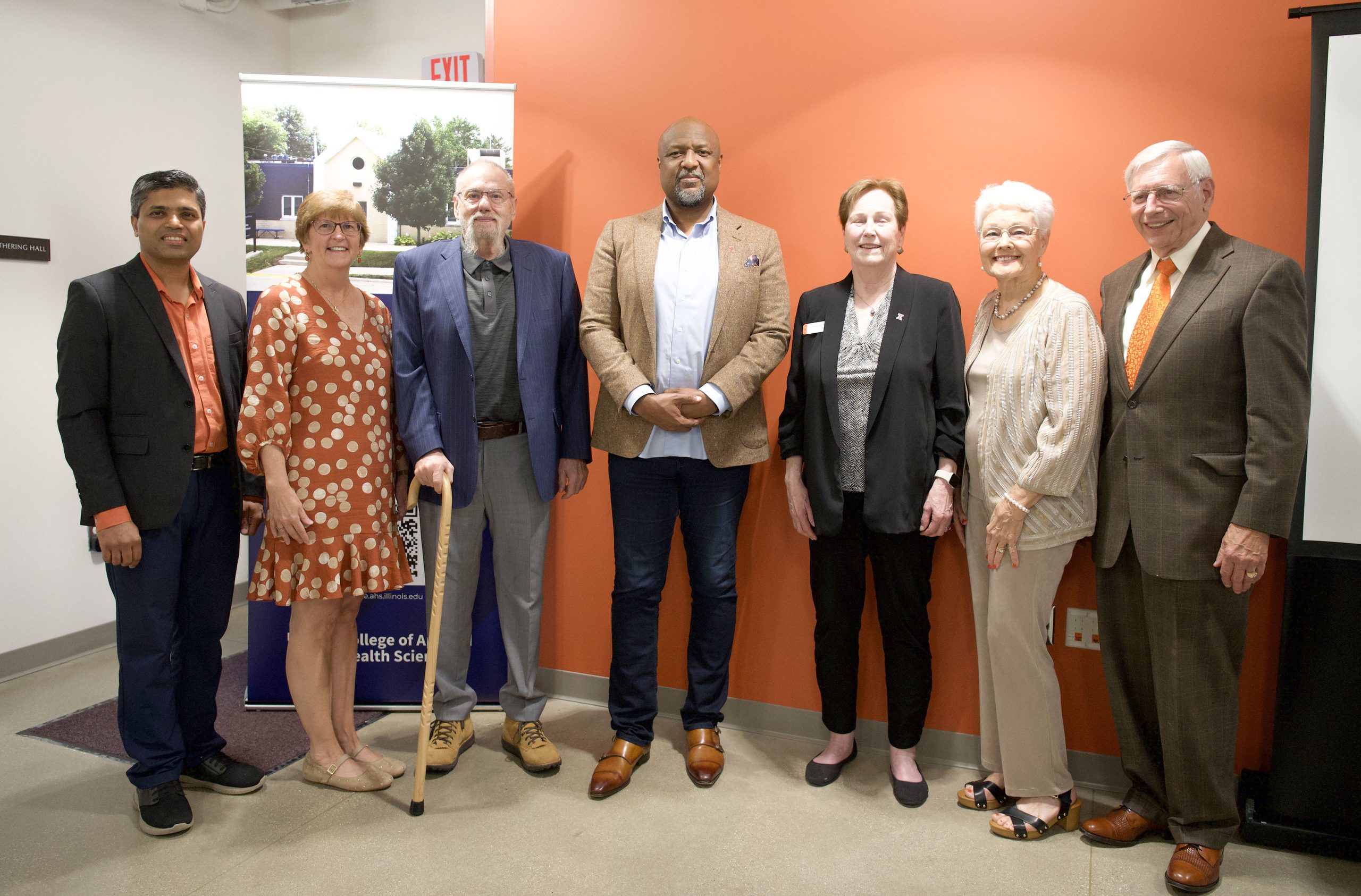
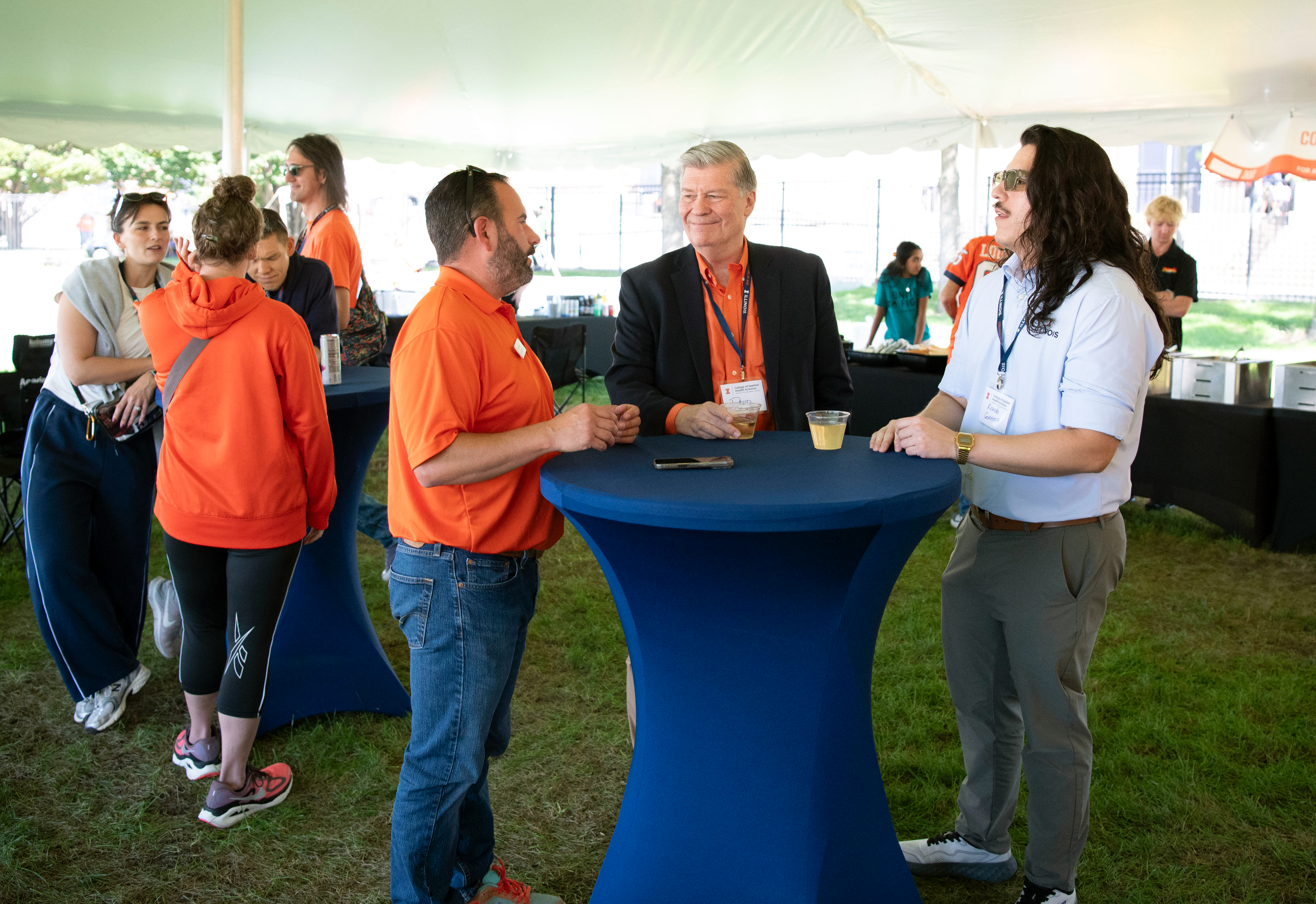
The second Physical Activity Symposium at Illinois was hosted by the Department of Health and Kinesiology on April 3, 2026.

The Illini Physical Activity Symposium celebrates the widening research field of physical activity and its connections to public health across the globe. 

The second edition hosted at the University of Illinois Urbana-Champaign added a couple new traditions, including live student presentations and a guest speaker, but things kicked off the same way as last year: with a sunny walk to the Main Quad. 

“We felt very happy with our event and the feedback we received from the students, and we feel motivated to continue with this initiative for next year,” said Health and Kinesiology Assistant Professor Otavio Leão

This year, students and faculty members also celebrated the launch of the concentration in physical activity and health in the Master of Public Health program at Illinois. 

The Illini Physical Activity Symposium is hosted by labs at the Department of Health and Kinesiology in the College of Applied Health Sciences: 

  • The Lifetime Physical Activity Lab run by Assistant Professor Rafael Tassitano and Teaching Assistant Professor Cecília Tenório
  • The Longitudinal Analysis in Physical Activity, Sleep, Sitting, Screen Time, and Accelerometry Lab run by Assistant Professor Leão. (LA-PASSSTA Lab) 
  • The Epidemiology, Physical Activity and International Collaboration Lab of Professor Pedro Hallal. (EPIC Lab) 

University of California San Diego Professor Michael Pratt visited campus to present the research on the potential benefits of vigorous physical activity, and why it may be more important than current physical activity guidelines indicate. 

Afterwards, several graduate and doctoral students presented their findings from physical activity studies, covering topics such as step counts, obesity, screen-time, and childhood development.

Doctoral students Tayo Folorunso and Alisha Chuhdry won the inaugural Bill Kohl Awards for best poster presentation and oral presentation at the event. Folorunso presented her research into physical activity and abdominal obesity among U.S. women, and Chuhdry presented a study on motor competence among preschool children in Brazil. 

“Having doctoral students present their research at the symposium is a valuable experience. It allows them to practice communicating their work to a broader audience, receive feedback, and gain confidence in public speaking,” Tenorio said. “Experiences like this also help young researchers build their professional network and encourage them to continue pursuing a career in research.” 

Editor’s note:

To reach Cecília Tenório, email tenorioc@illinois.edu.
To reach Otavio Leão, email leao@illinois.edu.
 

Share on social

Related news

WCIA: The link between healthy eating and brain outcomes for toddlers


Thaynã Flores and Pedro Hallal, professors of Health and Kinesiology, joined the University Updates segment of WCIA 3 News this week. (WCIA 3)

It’s no secret that the food you eat every day can impact your body or impact how you feel. Now, researchers at the University of Illinois are learning the link between what toddlers are eating, and how they think years later.

A team of professors from the College of Applied Health Sciences joined WCIA 3’s Amanda Brennan in the studio for Tuesday’s “University Update” to talk all about their new study, that found an association between unhealthy dietary patterns in early childhood and lowered cognitive test scores for kids years later.

“Our take home lesson today is that nutrition earlier in life really matters,” said Thaynã Flores, health and kinesiology assistant professor. “At age two, the brain is still developing fast and what the children eat during this period influences the brain’s outcomes later.”

Pedro Hallal, a professor with the Department of Health and Kinesiology added that it’s “no secret” that what you eat can influence your chronic disease risk or other physical impacts.

“What is new about this study is that what kids eat very early in life, at the age of two, will influence your brain, your cognition ability at age six. The more ultra-processed foods kids eat, the less developed their brains will be at age six. And that’s concerning,” Hallal said.

Watch their full appearance on WCIA 3 News.

Share on social

Related news

What toddlers eat might shape how they think years later, study suggests


Study co-authors Thayna Flores, left, and Pedro Hallal. (Photo by Ethan Simmons)

A new analysis from the 2015 Pelotas Birth Cohort suggests that dietary patterns at just two years of age are associated with cognitive performance at ages six and seven. The findings add to growing global evidence that early childhood nutrition—particularly exposure to ultraprocessed foods—may play a meaningful role in shaping brain development.

The Pelotas Birth Cohort is one of the most comprehensive long-running population studies in Latin America, following thousands of children from birth. Researchers from the University of Illinois and the Federal University of Pelotas collected detailed information on what children were eating at age two and later assessed their cognitive performance once they reached early school age.

Rather than focusing on individual foods or nutrients, the research team examined overall dietary patterns. Using principal component analysis, a statistical method that identifies common combinations of foods, they identified two dominant patterns among toddlers in the cohort. One, labeled “healthy,” included beans, fruits, vegetables, baby foods and natural fruit juices. The other, labeled “unhealthy,” was characterized by snacks, instant noodles, sweet biscuits, candies, soft drinks, sausages and processed meats.

Children who more closely adhered to the unhealthy dietary pattern at age two scored lower on IQ tests at ages six to seven. The association remained even after accounting for a wide range of social, economic, and family factors that could influence cognitive development.

“The covariates were identified as potential confounding factors based on a literature review and the construction of a directed acyclic graph,” said Thayna Flores, an assistant professor in the Department of Health and Kinesiology in the College of Applied Health Sciences at the University of Illinois and one of the study’s authors. “The analyses were adjusted for child’s sex, maternal age, maternal schooling, maternal work, maternal depression, family structure, parental relationship, socioeconomic status, number of people in the household, number of older siblings, preschool, score of stimulation, duration of exclusive breastfeeding and food introduction before 6 months.”

Some factors often raised in debates about child cognition—such as parental IQ—were not included, largely because they were not measured in the cohort. However, Flores noted that the study did incorporate proxies for the home learning environment. “We didn’t measure the parental IQ, but home stimulation and early childhood education were both used in our adjustments,” she said.

Despite established guidelines, consumption of ultraprocessed foods is already common at this age.

Thayna Flores

Assistant Professor, Department of Health and Kinesiology

One of the study’s more surprising findings was what it did not show. The healthy dietary pattern was not associated with higher IQ scores. Rather than undermining the importance of fruits and vegetables, Flores said the result reflects how common these foods already were in the sample.

“The lack of association observed for the healthy dietary pattern can be largely explained by its lower variability,” she said. “Approximately 92% of children habitually consumed four or more of the foods that characterize the healthy pattern.” When nearly everyone is eating similarly, statistical differences become harder to detect, she said.

Where the results became especially concerning was among children who were already biologically vulnerable. The negative association between unhealthy diets and cognitive performance was stronger in children who had early-life deficits in weight, height, or head circumference.

“According to the literature, children with a deficit in height and head circumference from birth to the first year of life were more likely to be classified as having a low IQ,” Flores said. “Other studies suggest that insufficient growth before age two is related to impaired cognitive development.”

This pattern points to what researchers call cumulative disadvantage: when biological vulnerability and environmental exposures—like poor diet quality—interact to produce worse outcomes than either would alone.

The study did not directly test biological mechanisms, but Flores said existing research offers plausible explanations. “Diets of poor nutritional quality, particularly those high in ultraprocessed foods, may interfere with neurodevelopmental processes through mechanisms involving systemic inflammation, oxidative stress and alterations in the gut–brain axis,” she said.

‘We need to consider the rise in ultraprocessed foods,’ said Thayna Flores. (Photo by Ethan Simmons)

The researchers, who also included study co-author HK Professor Pedro Hallal—who came to the University of Illinois after a long stint at Pelotas—also examined whether breastfeeding and the timing of complementary feeding influenced the results. Both were included as confounders, and exploratory analyses looked for interactions.

“We identified that the association between adherence to unhealthy dietary patterns and IQ scores was significantly modified by the presence of early-life deficits,” Flores said. “No evidence of effect modification by sex, birth weight, gestational age, or duration of exclusive breastfeeding was found.”

Although the study is based in southern Brazil, its implications may extend far beyond Pelotas. Ultraprocessed foods are now common in early childhood diets worldwide, including in high-income countries.

“The longitudinal design, high follow-up rates and the large sample size strengthen the study,” Flores said. “While direct comparison should be made with caution, our findings are informative and can generate hypotheses for studies conducted in high-income countries,” such as the United States.

Whether similar effects would be seen in countries with greater food fortification or different health systems remains an open question. Still, Flores believes the core message is broadly relevant. “Considering the worldwide dissemination and higher prevalence of ultraprocessed foods, I think so,” she said when asked whether similar patterns might emerge elsewhere.

For policymakers, the findings carry clear implications. In Brazil, infant and young child feeding guidance is already part of primary health care, but Flores said the study highlights a gap between recommendations and reality.

“Our results reinforce the importance of strengthening counseling during routine child health visits, emphasizing the need to limit the habitual offer of ultraprocessed and unhealthy foods,” she said. “Despite established guidelines, consumption of ultraprocessed foods is already common at this age.”

Flores said public health efforts should focus on promoting healthy foods and reducing the emphasis on unhealth ones, but timing matters. “We need to consider the rise in ultraprocessed foods,” she said. “Stronger actions now can help prevent these foods, especially in early childhood.”

The Pelotas study is not the final word on diet and cognition. Researchers are now collecting more detailed dietary data as cohort members reach adolescence, opening the door to stronger causal analyses and a better understanding of long-term effects. Still, the takeaway is difficult to ignore. Long before report cards and standardized tests, children may already be accumulating advantages—or disadvantages—based on what is offered to them at the age of two. In a world where ultraprocessed foods are cheap, convenient and heavily marketed, the study suggests that early dietary choices may quietly shape how children learn, think and thrive years later.

Editor’s note:

To reach To reach Thayna Flores, email trflores@illinois.edu. To reach Pedro Hallal, email phallal@illinois.edu. You can read the study here.
 

Share on social

Related news

Pedro Hallal honored with King James McCristal Distinguished Scholar award


Pedro Hallal accepts the King James McCristal Distinguished Scholar Award on Wednesday, Sept. 23, 2025.

Like many young researchers, Pedro Hallal thought his first study would be groundbreaking and potentially change the paradigm of the study of physical activity. Ultimately, he said, it didn’t, but now, with the value of experience at hand, he understands that was OK.

“We are trained to think of things that no one has ever studied. But science is much more about consistency of results nowadays, than about brand-new findings,” said Hallal, the Alvin M. and Ruth L. Sandall Professor in the Department of Health and Kinesiology at the University of Illinois Urbana-Champaign. “We do research because of the questions; we don’t start with the answers.”

Thanks to that curiosity and because of the breadth of his research, Hallal on Sept. 24 was awarded the King James McCristal Distinguished Scholar Award, one of the most prestigious recognitions in the College of Applied Health Sciences. The award honors faculty whose scholarly contributions have significantly advanced their disciplines while elevating the reputation of the university.

For Hallal—whose research has transformed global understanding of physical activity and health—the honor represents both a recognition of past achievements and an encouragement to push forward in addressing one of the world’s most pressing public health challenges: physical inactivity.

“Professor Hallal’s scholarly work has substantially elevated the profile of his department, our college and the university by advancing public health knowledge and global health equity,” said Cheryl Hanley-Maxwell, dean of the College of Applied Health Sciences.

A Global Lens on Physical Activity

Hallal, who is also director of AHS’ Master of Public Health program, has built an international reputation for his research on physical inactivity, a phenomenon he argues must be understood in the context of modern life.

“Today, we have fewer people being active,” Hallal said. “Most of them are indoors, looking at a screen. We have to think about what physical activity is today, not decades ago. The notion that physical activity is good for health has been known for centuries. Only since the 1950s and ‘60s have we really been studying it.”

His scholarship began in Brazil, where his master’s thesis—“Physical Inactivity: Prevalence and Associated Variables in Brazilian Adults”—found that 41.1 percent of the surveyed population did not meet recommended activity levels of 150 minutes per week. This early work set the stage for his career-long focus on understanding inactivity as both a personal and societal issue.

Hallal’s impact expanded dramatically with his contributions to a series in The Lancet, one of the most influential medical journals in the world. His research revealed that one-third of adults worldwide—approximately 1.5 billion people—failed to achieve the minimum recommended level of physical activity. Equally concerning, four-fifths of children ages 13 to 15 fell short of the one-hour daily activity guideline. The findings underscored physical inactivity as a global pandemic, drawing international attention to a public health crisis with profound implications for chronic disease and health equity.

Hallal has often said that this work in The Lancet is the “research I am most proud of.”

Redefining Scientific Inquiry

Throughout his career, Hallal has emphasized the importance of scientific rigor and humility.

That philosophy has guided him to produce a body of work that does not merely identify problems but interrogates the systems that perpetuate them. His studies consistently highlight how socioeconomic and geographic inequalities shape access to safe and purposeful physical activity.

“Access to safe, purposeful physical activity must be a societal priority,” Hallal said. By framing physical inactivity not only as an individual choice but also as an issue of structural inequities, he has pushed the field toward broader, more inclusive approaches to solutions.

Access to safe, purposeful physical activity must be a societal priority

Pedro Hallal

Professor of Health and Kinesiology

A Legacy of Impact

The King James McCristal Distinguished Scholar Award cements Hallal’s place among the most influential scholars at Illinois. The recognition highlights not only his academic achievements but also his role in shaping the conversation around health equity worldwide.

From uncovering high rates of inactivity in Brazil to leading global efforts to quantify physical inactivity, Hallal has consistently produced research that informs public policy, inspires further scientific exploration, and elevates the role of physical activity in public health discourse.

Looking Ahead: Challenging Assumptions

As Hallal reflects on the future of his field, he sees opportunities to question prevailing assumptions and generate new lines of inquiry.

He is particularly interested in challenging the idea that “every movement counts.” While small bursts of activity are beneficial, Hallal believes that the global challenge lies in ensuring people have the opportunity for meaningful, sustained physical activity. He also underscores the importance of recognizing how time scarcity and resource inequality reinforce global disparities in health behaviors.

“I think this place, this campus and college, are in a great position to tackle these things,” Hallal said. “We are already one of the country’s leaders in the field, and we are one of the most productive groups in the world on this topic.”

Editor’s note:

To reach Vince Lara-Cinisomo, email vinlara@illinois.edu.
 

Share on social
Related news

Master Plan: How campus investment will boost AHS master’s programs


RST interim department head Bill Stewart, left, chats with MHA director Lynne Barnes and MPH director Pedro Hallal (Photo by Ethan Simmons)

Three master’s programs in the College of Applied Health Sciences are undergoing transformations for the digital age.

After receiving a $2.035 million award from the University of Illinois Investment for Growth program, AHS faculty, administrators and industry partners will collaborate to create online versions of the Master of Public Health and Master of Health Administration degrees. Additionally, the Master of Recreation, Sport and Tourism online degree will be restructured into three specialized programs: recreation and park management, sport management and administration, and tourism and event management.

The revamped online degrees are expected to expand the accessibility of AHS programs worldwide, reaching new students from underrepresented and nontraditional backgrounds.

“Going global has been a priority of this university for years,” said Pedro Hallal, Alvin M. and Ruth L. Sandall professor in the Department of Kinesiology and Community Health and director of the MPH program. “So now going global is a priority of this program as well.”

The addition of “stackable certificates” across each discipline will attract nontraditional students looking to boost their knowledge as well as mid-career professionals seeking expertise in their chosen industry.

Each program is committed to including new voices in their online instructional material, mainly experienced professionals working in the respective fields.

“It’ll be a nice blend,” said Lynne Barnes, the longtime top Carle Foundation Hospital administrator who was hired as director of the MHA program this fall. “We’ll have professors who really understand the knowledge base of the field, and we’ll also have clinical people who are working in the field doing the teaching, just like we do for the in-person program.”

The creation of new online master’s degree formats will start with collaboration with AHS’ online learning team. The online MPH program and restructured RST online master’s degrees will begin enrolling students in fall 2025; the online MHA program will debut in fall 2026.

“We’re taking the ‘growth’ term very seriously,” said Professor Bill Stewart, interim department head for RST. “This is a long-term investment for us, not just a one-off thing.”

MPH: ‘The perfect storm’ for growth 

To populations around the globe, the COVID-19 pandemic was a clarion call to the vital importance of public health infrastructure.

The awakening clearly reached young people pondering their life paths: According to data from the Association of Schools and Programs of Public Health, applications to public health graduate degree programs increased 40 percent from 2020 to 2021.

“It’s so much easier now to choose a career related to public health,” said KCH Associate Professor Andi Schwingel, who is working alongside Hallal in developing the online coursework.

“Going global has been a priority of this university for years. So now going global is a priority of this program as well.”

Pedro Hallal

HK Professor, director of the MPH program

For the University of Illinois’ MPH program, the decision to create an online program is also a matter of maturity, Hallal said. Four years have elapsed since the program obtained accreditation from the Council on Education for Public Health.

“Some people in your neighborhood will add a security camera, and you don’t think it’s important until your house gets robbed, and then you see, ‘Oh, I needed that camera,’” Hallal said. “I think that is exactly what happened with public health.

“It was the perfect storm for our time to grow.”

The work ahead will be rigorous, with 20-plus courses awaiting development. Faculty plan to work with external partners, such as public health professionals, to create new course content. And it will be suited to the future landscape of public health, Hallal said: How might climate change and global warming transform health needs? How can we address the coexistence of infectious diseases with chronic conditions, like hypertension and diabetes?

A target for the MPH online expansion is the non-traditional student population. The MPH program will offer six certificates: epidemiology, biostatistics, public health, one health, physical activity and health and health promotion.

“It’s the time for us to reach nontraditional students, we feel ready for it,” Schwingel said. “We want to keep the rigor, the quality that we’ve been giving students in their residential program to the online space as well.”

MHA: Making health administration accessible

The MHA program at Illinois is designed to prepare students for leadership in the healthcare industry.

What the MHA program has recently observed, according to KCH Assistant Professor Mina Raj, is an influx of requests for an online equivalent, especially among mid-career healthcare administrators.

“The pandemic has made salient how important the healthcare system is, and how important it is to have administrators who can respond to public health emergencies and other unpredictable situations,” Raj said.

The overriding goal for the online degree is accessibility, Raj said: What material can be packaged into a four-week or eight-week course? The MHA online degree will offer three professional certificates: health finance, healthcare quality and health informatics.

“I think for this group of professionals it’s really about giving them the context and rationale behind why certain decisions are made as administrators or within a healthcare organization, as well as the tools to anticipate the impacts or consequences of various administrative decisions,” Raj said. “We have faculty with different expertise, different professional backgrounds, and everyone is excited to teach these courses.”

The work has already begun for Barnes, who wants to incorporate seasoned industry experts into course content. Barnes came to the university after retiring from a 45-year career at Carle Foundation Hospital.

“I hope to use real clinicians, people doing the work like at Christie Clinic, Carle and OSF Healthcare to be part of the lectures, so that the students who are online, all over the world and all over the United States experience instruction through people who are actually doing the work,” Barnes said.

RST: Degrees for specialized industries

The Department of Recreation, Sport and Tourism has been a leader in online education, debuting the first online master’s program in the discipline back in 2008.

But there wasn’t much fanfare, Stewart said. Online degrees were seen as “second-class programs” two decades ago.

“We were there at the beginning of the front to move online learning into a respectable degree process of education,” Stewart said.

Today, recreation, sport and tourism combine for an estimated $90 billion global set of industries. The pandemic resulted in a surge of public interest in leisure time and nature exploration, opening up new opportunities for professionals in the field, Stewart said.

“[RST] is about what we do in our free time to extend who we are and add value to our lives,” Stewart said. “We’ve come to embrace our needs for leisure-time activities in the last two years in ways that enhance our well-being and nurture our souls.”

The upcoming split of the current online master’s program into three tracks is a response to internal and external trends. Enrollment in the online MS in RST has plateaued in recent years, while other institutions have introduced their own online degrees in the discipline.

Online degrees were seen as “second-class programs” two decades ago, but no longer, said Bill Stewart, center. (Photo by Ethan Simmons)

Meanwhile, the demands of the industry have become more specialized over time.

“There’s still a need for the generalist degree, but because of the growth, we are finding professionals out there who need more help with the specialty,” Stewart said.

Students and mid-career professionals will be able to enroll in a new slate of RST certificates in high-demand topics, including inclusive design, agricultural tourism, sport analytics, e-sport administration, and diversity, equity and inclusion.

The department is in the process of searching for a director of the RST online program, Stewart said, while tapping into a vast network of alumni to help develop new course content.

“Our alumni value the friends and faculty they came to know as students and find various ways to give back to the department,” Stewart said. “Many of our alums are leading remarkable careers in contexts related to recreation, sport and tourism; they readily share their expertise through assistance in course development, guest lectures, creating internship opportunities for our current students, and in some cases, teaching classes for us.

“Our students come here because they care about making people feel better, their well-being, their sense of community and health. They want to give back to the community and they want to give back to the department that gave them this path in life.”

Editor’s note:

To reach Ethan Simmons, email ecsimmon@illinois.edu.
 

Related news

KCH, IHSI researchers take lead on Illinois Youth Tobacco Survey


Eight years have passed since comprehensive data was collected on the tobacco use and smoking habits of Illinois teenagers. But scientific minds are back on the issue once again, with University of Illinois Urbana-Champaign researchers at the helm. 

Two Kinesiology and Community Health faculty are set to receive $650,000 to administer and report the Centers for Disease Control’s Illinois Youth Tobacco Survey this academic year, conducting essential research on tobacco use among thousands of Illinois middle and high schoolers. 

In partnership with the Interdisciplinary Health Sciences Institute on campus, KCH Assistant Professor Sarah Geiger will lead the survey as principal investigator, along with co-investigator Professor Pedro Hallal, director of the Master of Public Health program at the College of Applied Health Sciences. 

“It’s been too long, in our opinion, without telling what’s going on in Illinois with youth smoking, vaping, hookah, all of those things related to tobacco,” Geiger said. “Think about how much has changed in 10 years in terms of youth culture and vaping, and everything tobacco related.”

The CDC runs the National Youth Tobacco Survey on an annual basis, surveying teenagers across the United States on their smoking and tobacco habits. State health departments can conduct their own versions of the survey if funding is available. 

Illinois last funded its own youth tobacco survey in 2015, contracting out-of-state to do so, Geiger said. For the first time, the University of Illinois will lead the project, with funding from the Illinois Department of Public Health.

In spring 2024, the research team plans to send out digital surveys to teenagers in 50 middle schools and 75 high schools, randomly selected within Illinois. Their ideal target: 7,500 respondents. 

Since 2014, e-cigarettes have been the most commonly used tobacco product among young people, according to the CDC. In 2022, more than 4 in 100 middle schoolers and about 1 in 6 high schoolers reported current use of a tobacco product. 

The Illinois survey is being constructed with core items from the national form, along with more state-specific inquiries. The previous Illinois Youth Tobacco Survey found children with asthma had higher rates of tobacco use than those without; this iteration of the survey will contain an “asthma module” to gather more in-depth data. 

“The landscape for youth tobacco use has changed. I’m glad we’re implementing questions specifically related to vaping and asthma,” said Max Wallace, program coordinator for IHSI who will serve as the project’s field coordinator. “Asthma is so prevalent among youth in the United States, so I think it’s really important we’re incorporating these questions.”

The hope among investigators is a successful youth tobacco survey will lead to a more regular occurrence in Illinois, with the U. of I. staying in the driver’s seat. 

“For us, it’s like a capacity building exercise as well,” Hallal said. “We’ll be able to gain expertise and become the primary option for them to conduct this survey.”

A sizable portion of the project’s budget is set aside for graduate students to assist with the data collection and analysis. More opportunities will come indirectly, Hallal said, from subsequent research analyses of the completed survey data.  

“This will generate a lot of fantastic data,” Geiger said. “This is a big ask to put this all together. Having the funding helps, but that’s not the full picture. You have to have the expertise; you have to have the will from different units to be able to put this all together.

“I’m proud of U of I for having the people within the organization who had the wherewithal to go. ‘Let’s figure this out and let’s make it happen to at least to be considered for this opportunity.’”

Editor’s note:

To reach Sarah Geiger, email smurphy7@illinois.edu
 

Related news

College of Applied Health Sciences
110 Huff Hall
1206 South 4th Street
Champaign, IL 61820
(217) 333-2131