Oct. 12, 2026 | Vince Lara-Cinisomo
Brasillinois spans the system’s universities in Urbana-Champaign, Chicago and Springfield. Its broad priorities include climate and sustainability, global health, and democracy and inclusion.
For Pedro Hallal, the distance between Illinois and Brazil shrinks when he considers who gets the chance to live a long, healthy life.
In Brazil, he sees gaps in life expectancy between rich and poor. In Illinois, he sees similar disparities associated with ZIP codes. The settings differ, but the questions give researchers common ground: Who is being left behind, and what would help?
Those questions help explain why the Department of Health and Kinesiology has become a major contributor to Brasillinois, the initiative connecting the University of Illinois System with Brazilian research and educational institutions.
Hallal and fellow HK faculty members Andi Schwingel and Bruno Nunes hosted a delegation in Brazil in summer 2026, adding another personal connection to a partnership already supporting faculty research. For HK, those relationships offer opportunities to study shared health problems, involve students in international work and bring research closer to communities.
“I think health equity is a key issue here,” said Hallal, the Alvin M. and Ruth L. Sandall Professor in Health and Kinesiology at Illinois and president of the Federal University of Pelotas, Brazil, from 2017 to 2020.
Brasillinois spans the system’s universities in Urbana-Champaign, Chicago and Springfield. Its broad priorities include climate and sustainability, global health, and democracy and inclusion. Within that larger effort, HK brings expertise in physical activity, chronic disease prevention, aging and the conditions that shape people’s health.
Jerry Dávila, who holds the Jorge Paulo Lemann Chair in Brazilian History at the University of Illinois and serves as director of the Humanities Research Institute, said HK’s strength as a partner reflects both shared concerns and Brazilian expertise.
“The questions about life expectancy and healthy lives that researchers at Illinois and in institutions in Brazil are working on have the same relevance to both societies,” Dávila said. He also pointed to Brazil’s achievements in expanding public access to healthcare and the public health research that places its researchers at the forefront of many questions Illinois collaborators are studying.
You need to take research to the places where it’s needed the most.
Pedro Hallal
Alvin M. and Ruth L. Sandall Professor in Health and Kinesiology at IllinoisSchwingel, a professor in HK as well as director of the Lemann Center for Brazilian Studies on Illinois’ flagship campus, sees that expertise reinforced by people who already know both countries.
“HK has a strong faculty and graduate student presence doing research on Brazil,” she said. “This translates into a greater understanding of Brazil and the U.S. and makes the partnerships established more feasible.”
That familiarity matters when researchers must identify collaborators, understand local institutions and develop studies that respond to the communities involved. Schwingel credits Hallal’s reputation in Brazil with helping Illinois build relationships across the country. His experience leading a Brazilian university also informs how he approaches international research.
Hallal said advances in communication make it easier to discuss shared problems with international colleagues and develop studies together while learning from the different conditions in each country.
Dávila said the delegation’s visit demonstrated the university’s support for those relationships. “Whether in Brazil or in Illinois, showing up is important,” he said. “The visit of the delegation shows vividly that these research collaborations are not solely the initiatives of the faculty, but that they have the support of the university.”
He credits Illinois’ reputation as a steady institutional partner with helping attract investment in joint research from state research foundations in Paraná, São Paulo and 10 other Brazilian states.
One measure of HK’s involvement comes from a Brasillinois funding competition linking Illinois researchers with colleagues in the Brazilian state of Paraná.
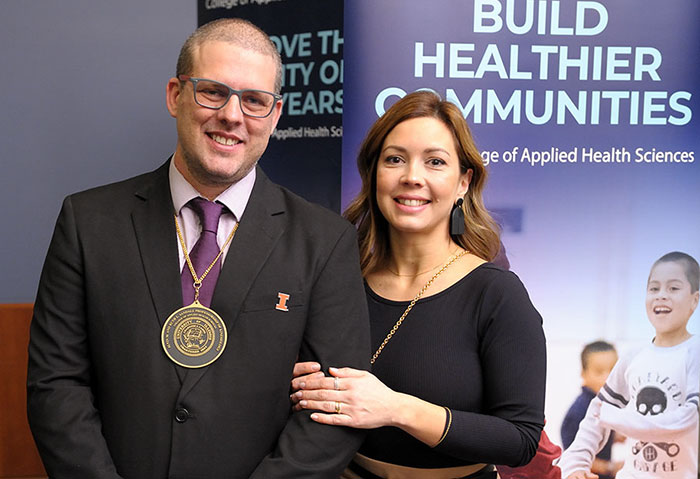
According to Hallal, 12 eligible proposals competed for five awards. Four of the selected projects came from HK, a striking share of a competition open to researchers across all three Illinois universities. Hallal, Schwingel and Rafael Tassitano are among the faculty members leading those projects.
Each project received $100,000, Hallal said, with the funding provided entirely by Paraná’s state research foundation, Fundação Araucária. Together, the four HK awards represent $400,000 for collaborative research.
Dávila said Fundação Araucária selected the projects as part of its priority to engage leading international scholars in research collaboration and support graduate training in Brazil.
Hallal is more interested in what the projects can accomplish than in the department’s share of the awards. Much of the work, he said, addresses chronic diseases and their risk factors, areas in which HK’s research strengths match Brazilian priorities.
Cardiovascular disease, diabetes and high blood pressure are central concerns. So are physical inactivity, obesity, unhealthy diets and smoking. These subjects give researchers in both countries reasons to work together and opportunities to learn from different approaches.
A separate Brasillinois grant illustrates how those connections can become a specific research question. Nunes, an assistant professor in HK, and Alexandre Dias Porto Chiavegatto Filho of the University of São Paulo are developing machine learning models to identify underdiagnosed chronic diseases in Brazil.
Their project focuses on diabetes, hypertension and abnormal blood lipid levels, using national health data to improve detection and address disparities in access to screening. It was selected through the inaugural Brasillinois program with the São Paulo Research Foundation (FAPESP), with support from the Lemann Center for Brazilian Studies at Illinois.
For Hallal, choosing where to conduct research requires looking beyond convenience. The communities with the greatest health challenges should help determine where researchers direct their attention.
“You need to take research to the places where it’s needed the most,” he said.
That principle also shapes how he describes the relationship between the two countries. Brazil and the University of Illinois can each contribute knowledge, and each can learn. Differences in health systems and lived experiences give collaborators more ways to examine a shared problem.
Schwingel sees opportunities for that exchange to reach the places where people receive care and children learn.
“Many projects include primary care, health clinics and schools that serve local communities, creating engagement with them,” she said.
Aging offers another strong connection. Hallal points to Brazil’s growing population of older adults and the increasing importance of managing chronic disease as reasons for collaboration. HK’s expertise in aging, including the work of Shahid and Ann Carlson Khan Professor of Applied Health Sciences Wendy Rogers, gives the department another way to contribute.
The questions extend beyond how long people live. Researchers can also examine the conditions that support health as people grow older and the inequalities that shape those experiences. Hallal identifies aging, chronic disease and equity as especially close matches between departmental strengths and Brazilian needs.
Students stand to gain from these connections throughout their training. Hallal said the projects already involve students, exposing them to health questions that matter in more than one country. He would like that experience to have an even greater influence on the curriculum.
For Schwingel, externally funded collaborations can also create paid research assistant positions and introduce students to unfamiliar research settings. Working alongside colleagues in Brazil can help them develop relationships that continue beyond an individual project.
She expects more scholars, including graduate students, to visit Brazil. Student exchanges and more regularly offered undergraduate study abroad programs are possibilities, too. Those opportunities would give students additional ways to connect their classroom learning with the circumstances shaping health elsewhere.
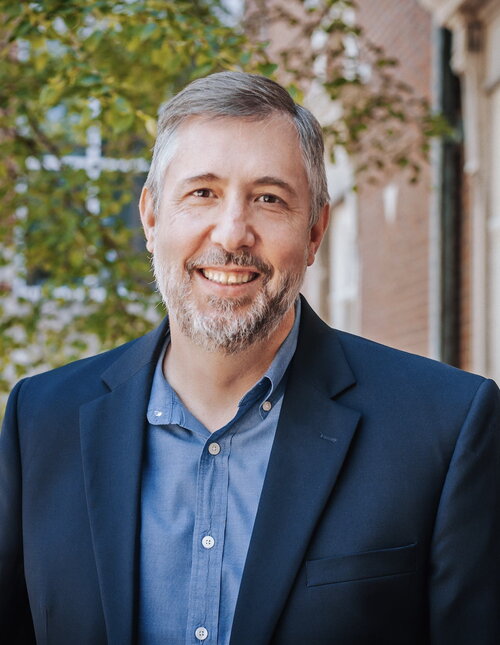
The Lemann Center, which Schwingel said has supported exchange between Brazil and the United States since 2009, is also partnering with Brasillinois. That connection adds an established resource for Brazilian studies to the initiative’s expanding collaborations.
Dávila credited the Lemann Center with pioneering institutional relationships. He said the creation of Brasillinois reflects the University of Illinois System’s commitment to continuing, strengthening and expanding them.
Schwingel sees the potential extending from stronger research to changes in programs and policy. International experience, she said, can also influence the next generation of scholars and the professional networks they build.
Dávila said a new collaborative research call with FAPESP, the São Paulo Research Foundation, is planned for 2026. “We hope our colleagues in (the College of Applied Health Sciences) will find opportunities through it to carry their research in new directions,” he said.
For HK, the delegation visit and research awards are part of that longer process. Faculty relationships make joint projects possible; those projects give students experience and bring new questions into the department’s teaching and research.
Hallal describes the exchange with a simple image: “It’s like a two-way avenue.”
The work ahead will give that idea practical meaning in studies of chronic disease, opportunities for students and partnerships with communities. Its direction follows the concern that draws Hallal back to the comparison between Illinois and Brazil: People’s chances of living healthier lives should guide where researchers look, whom they work with and what questions they ask.
Editor’s note:
To reach Vince Lara-Cinisomo, email vinlara@illinois.edu.
Share on social