Kinesiology student Jackie Buczkowski talks about her internship


Jackie Buczkowski demonstrates different exercises for patients.

Q: Where did you complete your internship and what was your experience?

A: I completed my internship at Active Rehab Clinics in Bucktown, a neighborhood in Chicago, Illinois. Initially, I began shadowing the head chiropractor of the clinic and his assistant. I observed the chiropractor while he worked hands-on with his patients and observed his assistant while he coached the patients through various exercises pertaining to their injury. After two to three months of observation, I began working with patients myself. I was taught the Burdenko Method which consists of a series of exercises used to treat patients on land and in water. Throughout the fall 2020 semester, I worked with patients at the clinic in Bucktown as well as out of Lutheran General Hospital in Park Ridge, Illinois.

Q: How did you apply for the internship?

A: Since I completed my internship during the summer and fall of COVID-19, I did not apply for this internship as a student conventionally would. My cousin is a patient of the chiropractor and asked if he was allowing students to shadow during this time. However, when I have shadowed previous physical therapists I would typically reach out through email. I have also dropped off my resume at a few different locations to see if they would allow me to shadow. More often than not they would agree! Since physical therapists understand shadowing is a requirement in order to apply to PT school, they are very understanding and willing to help.

Q: What did you learn from the internship?

A: This internship was the most fulfilling internship I’ve had so far. I learned to trust my judgment and to not be embarrassed of being incorrect or struggling to learn something new. I was often quizzed and asked questions before being told the answer. This style of teaching helped stimulate my brain which overall felt more interactive. I wasn’t simply watching passively but rather actively engaging in assessing a patient.

Q: What was your biggest takeaway from the experience?

A: My biggest takeaway from this experience is understanding that every patient is different. What might work for one patient may not work for the other. Although you’re taught to go by the book in some cases, you may need to think outside the box in other scenarios. It was fascinating for me to see the chiropractor and his assistant not only assess the part of the body that was injured or had pain but to go beyond that and see if another part of the body was actually causing that pain. For example, if a young athlete was having pain in her knee, they would rehab her hip and build strength there.

Q: Is this internship closely related to the field you are hoping to work in? 

A: This internship is closely related to the field I want to go into which is physical therapy. Although I shadowed a licensed chiropractor, he also specializes in rehabilitation. In my previous experiences I shadowed physical therapists at hospitals and chain outpatient clinics such as Athletico, however, this experience was different because it was a privately owned clinic. In many ways this faces its own challenges because billing and scheduling is in your control. I was able to see the “behind the scenes” of what owning your own business might look like.

Q: Would you like to share any other information that might be helpful for future Kinesiology students?

A: The advice I recommend to any Kinesiology student is to reach out to any company or any specific person you’d like to shadow or intern for! Internships are truly the best opportunity to figure out whether or not you really want to go into a certain field. I’ve shadowed many physical therapists and have learned something new from each of them. They inspire me to finish school and start doing what I believe to be the best career there is for me. With a bachelor’s in Kinesiology there are many career paths you can take and you want to find which fits you best!

Share on social
Related news

SHS rising junior Mia Mangialardi discusses her internship


Q: What was your experience with The Autism Program?

A: The Autism Program is a resource for individuals with autism and their families to gain support through networks of people. I worked in the resource room twice a week and also took a zoom class once a week that trained me to become a Registered Behavior Technician. At the resource room I would assist teachers, social workers and parents with any questions they had and directed them to specific books, pamphlets and hand outs. I also created devices for students on the spectrum to use such as Picture Exchange Communication Systems, personalized schedules and social stories.

Q: How did you apply for the internship?

A: After receiving an email from my advisor about a potential internship opportunity, I filled out an application that included my resume and letters of recommendation and emailed it to The Autism Program.

Q: What did you learn from the internship?

A: Through the years I have done a lot of hands on work with students with special needs. This internship really allowed me to work behind the scenes and see how the resources that aid communication are made and the purpose behind them.

Q: What was your biggest takeaway from the experience?

A: My biggest take away from this experience is that there is so much to learn from people who have Autism and their support systems. I had the amazing opportunity to get to know my supervisors, fellow interns, and different visitors that came in and each and every one of them gave me valuable information that I will be able to use in my career path.

Q: Is this internship closely related to the field you are hoping to work in?

A: My major is Speech and Hearing Sciences with a concentration in Speech Language Pathology. I have always wanted to work with individuals on the spectrum and this internship definitely taught me so much more about how to help and work with these individuals.

Q: Would you like to share any other information that might be helpful for future SHS students?

A: I suggest to try and get as much experience in different fields as possible! Just because a research, job or internship opportunity isn’t exactly what you will be doing in the future does not mean that it will not be beneficial in a multitude of ways.

Editor’s note:

To reach Vince Lara-Cinisomo, email vinlara@illinois.edu.
 

Share on social

Related news

SHS rising senior Jenna Pryor talks about her internship


Q: What was your experience with The Autism Program? 

A: I had many different experiences with The Autism Program, which is why I enjoyed it so much! We had observation hours watching an RBT interact with one of their clients. I also had hands-on experience working in the resource room making projects, communicating with other interns/clients, meeting new people, restocking the resource room and so much more! There was some slight research, we had to watch around 40 hours of training videos, those videos presented a great deal of information and expanded my knowledge for the internship and in general.

Q: How did you apply for the internship?

A: I initially heard about the internship through email from my consular. In the email, the application was attached. The instructions stated to fill out the application and then email it to the woman who conducts the interviews, Anne Hall. Later on I had an interview and then got offered the internship!

Q: What did you learn from the internship?

A: There are so many things that I have learned from this internship. I learned how to use different tools such as a laminator, different computer softwares, navigating a library database, answering phone calls, and creating books/stories. I also learned more about professionalism. Being in a resource room and interacting with different clients, interns, and coworkers in that setting gave me a better idea of how to behave as a professional. I also learned how amazing it is to step out of your comfort zone. I am not the most creative person, but I created and designed many different stories. It was great to work on my weaknesses and complete certain tasks that I do not have much experience on.

Q: What was your biggest take away from the experience?

A: My biggest takeaway from this experience is to give you all into everything that you do. I love helping and assisting others, and I got to use this strength of mine for many situations in this internship. It is important to give your all because not only are students/teachers/peers/parents/etc. using the resources that you make for them, a lot of individuals and families are counting on them. I’ve ran into situations where parents feel lost and need a sense of direction for their child. A diagnosis of autism for a parent who has a child with autism or the individual who has autism can be very overwhelming. I feel that The Autism Program helps ease the stress for these families. It is important to go above and beyond for all who come to us for resources/help.

Q: Is this internship closely related to the field you are hoping to work in? 

A: Yes, this internship is closely related to the field I am hoping to work with. I am a speech and hearing science student with a speech-language pathology concentration. When I saw the RBT interact with the child during my observation sessions, this is a similar situation I could be experiencing in the future. Children who have autism also tend to see speech-language pathologists, it was great to learn more about autism. It will help me for my future career getting to know more about different disorders, as they could be my potential future clients.

Q: Would you like to share any other information that might be helpful for future SHS students?

A: If you have any opportunity to apply to an internship or get hands-on experience, do it! These are eye-opening experiences that help you expand your knowledge greatly. It also builds character and puts you in different situations. I have grown academically and emotionally from my first internship. These are experiences that you don’t get from your courses! Be sure to get to know your professors and utilize office hours. Building a relationship with your professors is very important. Professors love when students reach out for help or when students want to get to know them.

Editor’s note:

To reach Vince Lara-Cinisomo, email vinlara@illinois.edu.
 

Share on social

Related news

University of Illinois designated as Purple Heart university


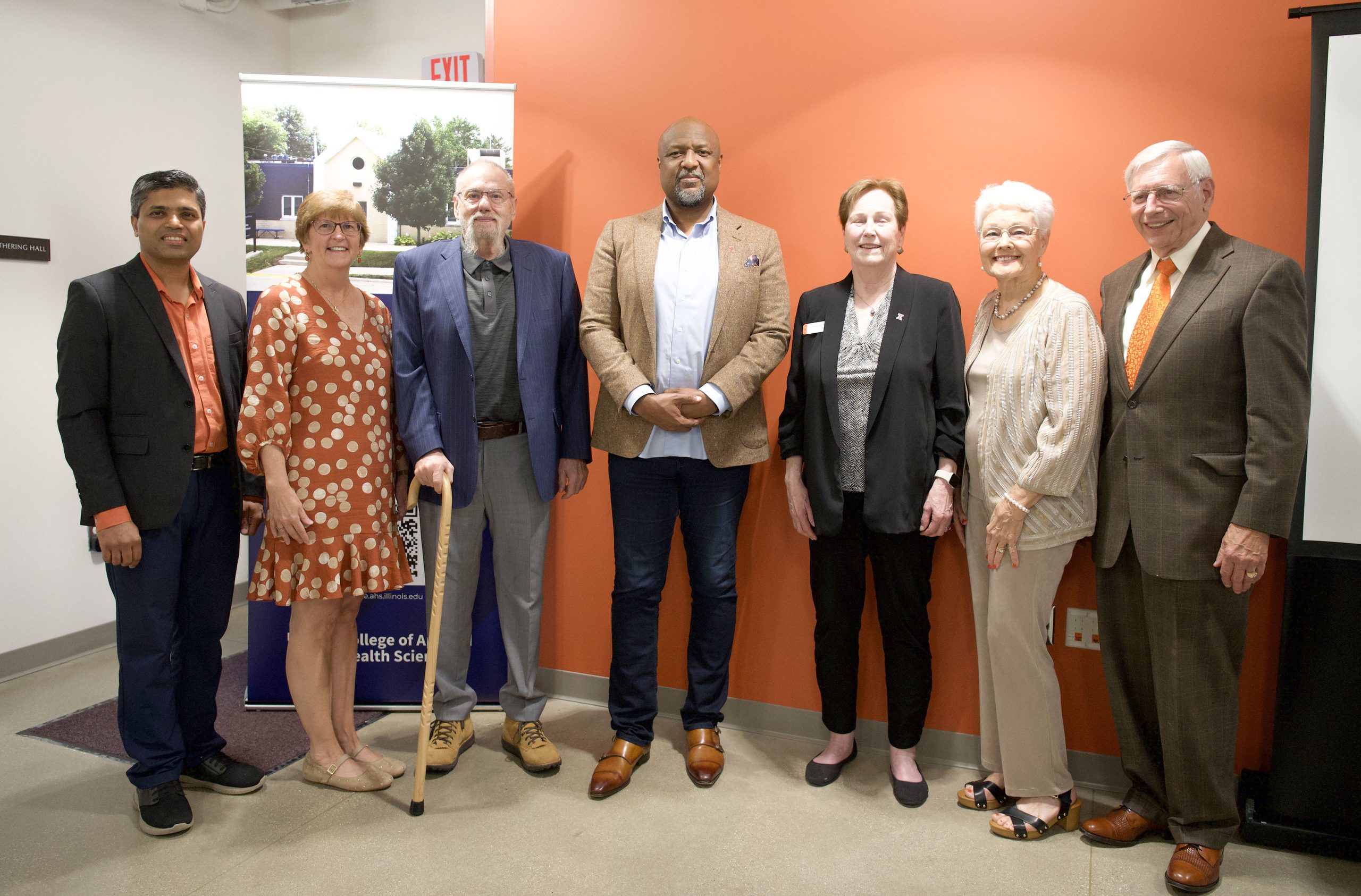
(from left) Dean Cheryl Hanley-Maxwell, Chancellor Robert Jones and Chez’s Garrett Anderson

The University of Illinois was designated Friday as a Purple Heart university, awarded the honor because of the university’s longstanding commitment to military veterans.

“This university has a tradition unlike any other that goes far beyond just remembering those who lost their lives in service,” Chancellor Robert Jones said. “This has been a place of world-changing ideas, innovations and, sometimes just plain old hard-headed determination to help those who come home to find success in their educational hopes and to lead lives and careers of impact after they earn their degree.”

Illinois was the first university to call for compulsory military training at all land grant colleges, as part of the Morrill Act of 1862, and developed the first post-secondary disability support service program in the world for Veterans. Established by Dr. Tim Nugent, this program allowed injured World War II veterans to use their GI Bill benefits for higher education.

In 2015, UIUC opened the doors at the Chez Veterans Center to provide an open, welcoming space for all student veterans and military-connected communities.

“During my tenure as dean of the College of Applied Health Sciences, I have had many opportunities to feel proud of leading such an outstanding unit. Today, that pride deepens with this truly humbling recognition by the Military Order of the Purple Heart,” said AHS Dean Cheryl Hanley-Maxwell.

“The commitment of this college and this university to helping wounded veterans pursue their degrees goes back more than 70 years, when Dr. Timothy Nugent established the very first support program in higher education for World War two veterans with disabilities. At a time when people in wheelchairs were not expected or encouraged to attend college and dream of careers, Dr. Nugent said, “Why not?”’

The Chez Veterans Center is the largest, most comprehensive facility of its kind in the United States, and serves more than 550 military-connected students.

“AHS continues to be the unwavering force pushing us forward to do more and to find new and better ways to open doors of access and success to the student-veterans who trust this university with their academic futures,” Chancellor Jones said.

The event was well-attended and VIPs included Matt Janes from the office of Congressman Rodney Davis; State Senator Scott Bennett; State Senator Chapin Rose; State Representative Mike Marron; State Representative Brad Halbrook, Champaign Mayor Deborah Frank Feinen, members of the Chez Veterans Center advisory board, and members of the Veterans Assistance Commission and Department of Veterans Affairs.

Editor’s note:

To reach Vince Lara-Cinisomo, email vinlara@illinois.edu.
 

Share on social

Related news

Allen gets grant to study additive effects of fiber and exercise


Can controlled increases in fiber intake and physical activity show additive effects?

KCH Assistant Professor Jacob Allen received a grant from the Center on Health, Aging & Disability for his project, “Gastrointestinal And Metabolic Effects from a Prebiotic, Lifting, and Aerobic iNtervention (GAMEPLAN).” Allen received $30,000 from CHAD for the 18-month project, which begins July 1.

Hannah Holscher, an associate professor of Nutrition in the College of Agricultural, Consumer & Environmental Sciences, and Riley Hughes, a postdoctoral fellow in Dr. Holscher’s lab, are collaborators on the project.

The project is focused on the independent and combined effects of prebiotic fiber consumption and exercise on the gut microbiome and human health. Allen said he and his collaborators are pursuing these studies because “Benefits of exercise and high fiber diets have been described in isolation. However, no controlled studies have looked at the potential additive effects of fiber and exercise.”

The combination of exercise and fiber could be beneficial for the majority of Americans who don’t get the recommended dietary fiber (more than 90 percent), or adequate exercise (more than 60 percent), Allen said.

Prebiotic fibers are substrate that are selectively utilized by host microorganisms conferring a health benefit, he said. Holscher added that prebiotics can be found naturally within foods like whole grains, onions, garlic, articokes, and bananas.

“For this study, we are using a prebiotic called short chain-fructooligosaccharides (aka. sc-FOS). We chose it for many reasons. One of the main reasons is because it is known to result in the production of beneficial metabolites produced by microbes that may synergize with exercise to promote metabolic adaptations.”

Another aim of the study is to improve body composition, but Allen stressed that does not necessarily mean weight loss.

“In fact, exercise interventions are often not accompanied by significant weight loss especially early on in the intervention, or fewer than six weeks”, he said.

“However, this does not mean that the exercise is not effective in improving health. For instance, body composition changes still occur with exercise despite no weight loss. Exercise training can lead to increased muscle mass and bone mass concurrent to reductions in fat. If you are only looking at a scale, these changes tend to negate each other. However adding muscle and losing fat is still very beneficial for metabolic health. Short end of it, exercise can still be beneficial without weight loss!”

Editor’s note:

To reach Jacob Allen, email jmallen5@illinois.edu.
 

Share on social

Related news

Raj gets CHAD grant to examine inclusive diets in long-term care


KCH Assistant Professor Mina Raj received a grant from the Center on Health, Aging, and Disability for her project entitled, ““Towards the development of guidelines for inclusive foods in long-term care.”

The CHAD Pilot Grant, which is valued at for $29,646 for 18 months starting July 1, aims to find out more about resident preferences for inclusive diets from the perspectives of long-term care (LTC) personnel, and understand the practice and regulatory barriers and facilitators to promoting inclusive diets in long-term care facilities in order to ultimately develop guidelines for implementing inclusive diets in long-term care facilities.

An inclusive diet, as defined in this study, is one that considers dietary preferences that may be informed by cultural norms or traditions.

The study is important, Raj said, because, “Food is a fundamental aspect of community and is also tied to mental and physical health outcomes. For instance, eating traditional foods has been linked with promoting joy and delight among patients with dementia.”

“We have an increasingly diverse aging population, and as our health system pursues health equity and addressing health disparities, it is critical to understand how to ensure that long-term facilities promote inclusiveness and belonging,” she said. “Even though the number of racial and ethnic minority older adults living in long-term care facilities in the U.S. has increased substantially in the last few decades, these older adults are still very reluctant to reside in long-term care facilities and a primary concern is the alignment of dietary preferences and options offered in facilities. Availability of preferred foods that align with cultural norms and traditions could promote food consumption thereby reducing the risk of frailty and associated health conditions among older adults.”

Another of the study’s goals is to identify regulatory barriers to inclusive diets in LTC facilities. For example, one regulatory barrier is the vendors or grocery stores from which LTC facilities are allowed to purchase prepared meals or ingredients for cooking in the facility. The vendors may not offer inclusive diets or grocery stores may not sell produce needed to prepare meals that are traditional to certain communities, Raj said. Raj said she hopes this study can inform modification of these types of regulations and contribute to inclusion and health equity in LTC facilities..

Raj said the study will focus on long-term care facilities across Illinois, Michigan and Indiana.

Share on social

Related news

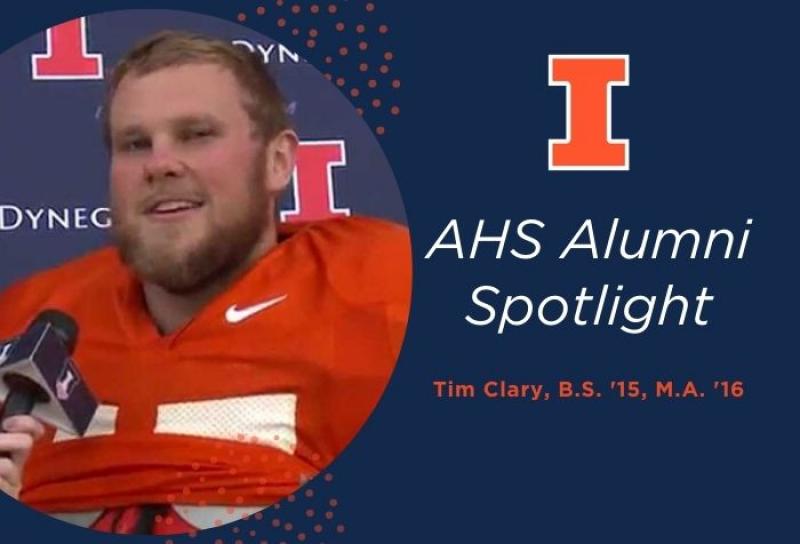
Alumni Spotlight—Tim Clary


Q. Why did you pick AHS?

A: In high school, I knew I wanted to be an Athletic Director/Coordinator, and AHS provided the pathway to doing that with Sports Management. 

Q: Which professors had the most impact on you?

A; Dr. (Michael) Raycraft: A personable man that would lead with honesty but connect on a level that helped you understand the intricate complexities within RST. Also, Nuno Ribeiro: he was a man that helped me a ton even after I graduated. He taught me about his life experiences and how they shaped his life in hopes it could influence mine. 

Q: What course did you most enjoy?

A: Two courses equally, both taught by Dr. Raycraft. One, Sports Management and two, Sports Ethics. 

Q: Did you enter AHS knowing your career path, or did AHS help you decide?

A: I entered knowing I wanted to be in athletics in some capacity. 

Q: What was your favorite on-campus experience?

A: Most of my time was taken up by athletics; I did appreciate the study sessions in the underground library prepping for some of the harder courses (Research Methods). 

Q: What does AHS mean to you?

A: I’m thankful for my time in AHS. Led by many wonderful professors and provided the path to achieving my goal of becoming an athletic director one day. 

Editor’s note:

To reach Vince Lara-Cinisomo, email vinlara@illinois.edu

Related news

College of Applied Health Sciences
110 Huff Hall
1206 South 4th Street
Champaign, IL 61820
(217) 333-2131