Roots and reach: Malandraki named Khan Professor in Applied Health Sciences 


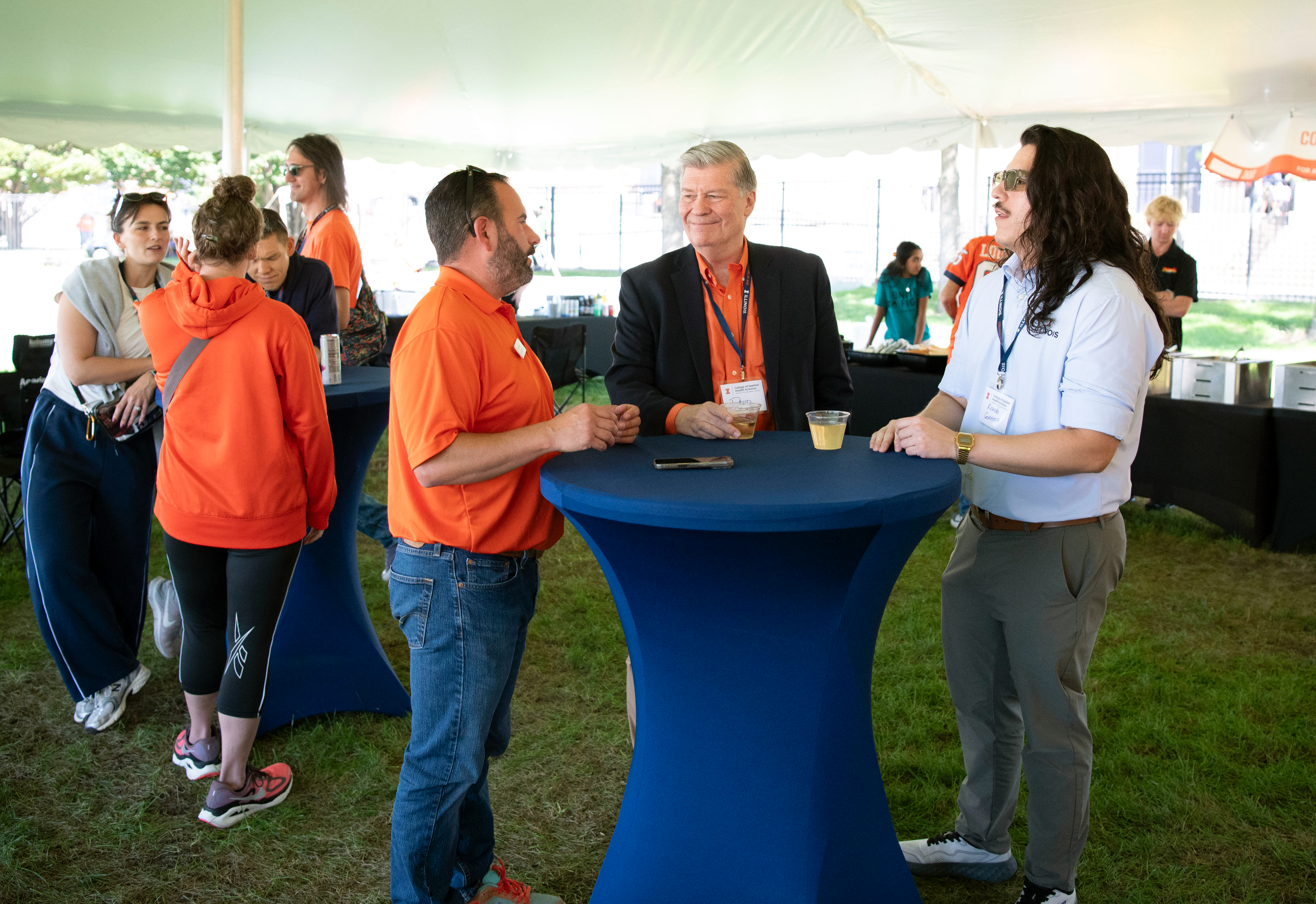
Georgia Malandraki, center, called the professorship a milestone and a homecoming (Photo by Mike Heiniger)

The investiture of Georgia Malandraki as the Shahid and Ann Carlson Khan Professor of Applied Health Sciences was, in many ways, a story about roots and the far-reaching branches they sustain. 

Held at Huff Hall, the ceremony brought together university leaders—such as Provost John Coleman—faculty, family, mentors and donors to celebrate Malandraki’s appointment to one of the college’s most prestigious endowed positions. The event underscored both her global impact as a scientist and clinician and the philanthropic vision that made the professorship possible. 

“This is a special occasion, not only for our college and university, but for the broader community,” said Cheryl Hanley-Maxwell, dean of the College of Applied Health Sciences. She described endowed professorships as among the most meaningful traditions in academia, recognizing excellence while enabling innovation through donor support. 

The professorship is funded by Shahid Khan and Ann Carlson Khan, whose longstanding ties to the university date back to their time as students. Their contributions span multiple colleges and initiatives, including major investments in facilities, academic programs and community outreach. 

Shahid “Shad” Khan, who arrived in the United States from Pakistan to study industrial engineering, built a business empire after purchasing automotive supplier Flex-N-Gate. Ann Carlson Khan, who studied business at Illinois, later turned her focus to philanthropy, helping guide the family’s charitable efforts through the Khan Foundation. Together, they have supported causes ranging from education and the arts to healthcare and community development. 

“It’s absolutely a joy and a privilege to be here … and all the ideas and thoughts we’ve had (and) what we wanted to do here, and it’s wonderful to see it come to life,” Shad Khan said. 

Their gift establishing the Khan Professorship reflects a commitment to advancing research and leadership in applied health sciences. “Because of you, we are able to support leaders like Dr. Malandraki, whose work is improving lives across the globe,” Hanley-Maxwell said. 

For Malandraki, the honor marks both a professional milestone and a personal homecoming. 

An internationally recognized expert in swallowing disorders, she returned in January to her alma mater, Illinois, as head of the Department of Speech and Hearing Science after building a distinguished career at Purdue University. There, she led pioneering work in the Imaging, Evaluation, and Treatment of Swallowing Research Laboratory and Clinic, advancing understanding of how the brain controls swallowing and developing new approaches to rehabilitation. 

Her research—supported by the National Institutes of Health and other major funders—has explored cutting-edge interventions, including telehealth and wearable technologies designed to expand access to care. Her work has earned numerous accolades, including the American Speech-Language-Hearing Association’s Early Career Contributions in Research Award and designation as an ASHA Fellow. 

Yet in her remarks, Malandraki focused less on accolades and more on the journey that led her to the moment. 

“I’m profoundly humble to be given this distinguished honor and opportunity,” she said. 

Born and raised in Crete, Greece, Malandraki is a first-generation college student whose path to academia was shaped by family, perseverance and early exposure to the transformative power of education. She recalled leaving Greece in 2002 for the United States with a book gifted by her sister, containing a handwritten Cretan poetic verse (mantinada) that would come to define her outlook: “Tree branches must never forget their roots, for when the roots run dry, the branches wither, too.” 

Those roots, she said, began with her parents, Maria and Andreas Malandrakis, who never had the chance to attend college but insisted their children would. Education was not optional in their household; it was woven into daily life. 

“My earliest memories are of our family gathered around the kitchen table, everyone studying,” she said. “Reading and education were simply part of daily life. My mother survived World War II as a child. (My parents) raised six children, and I was, believe it or not, the sixth. My mother often joked that raising me felt like raising six more all at once. Despite the issues they faced, including raising me, there was never any debate in our home. Their children would have the opportunities today they themselves did not.” 

Tree branches must never forget their roots, for when the roots run dry, the branches wither, too.

Georgia Malandraki

SHS Department Head and Professor

Another formative influence was her nephew, Telemachus, who was born when she was 10 years old. Telemachus was diagnosed with autism at a time when speech and support services were scarce. Watching her family navigate those challenges helped shape her decision to pursue speech and language therapy, first in Greece and later in the United States. 

“Growing up alongside Telemachus, I witnessed firsthand both his challenges and my family’s determination to support him, an experience that profoundly shaped my career path,” she said. 

She earned her bachelor’s degree at the Technological Educational Institute of Patras, followed by a master’s degree from Ohio University and a doctorate from Illinois, making her return to campus especially meaningful. 

“This moment is a full circle,” Hanley-Maxwell noted in introducing Malandraki. 

Colleagues describe Malandraki as a leader who blends rigorous science with compassion and mentorship. Beyond her research achievements, she has served in key leadership roles, including as president of the Dysphagia Research Society, and is widely recognized for her commitment to evidence-based care and collaborative scholarship. 

In accepting the professorship, Malandraki emphasized gratitude and responsibility. 

“I accept the Khan Professorship with humility, gratitude and a deep sense of responsibility,” she said. “To my family, mentors, trainees, collaborators and colleagues, thank you for being my roots, my support system and my inspiration.” 

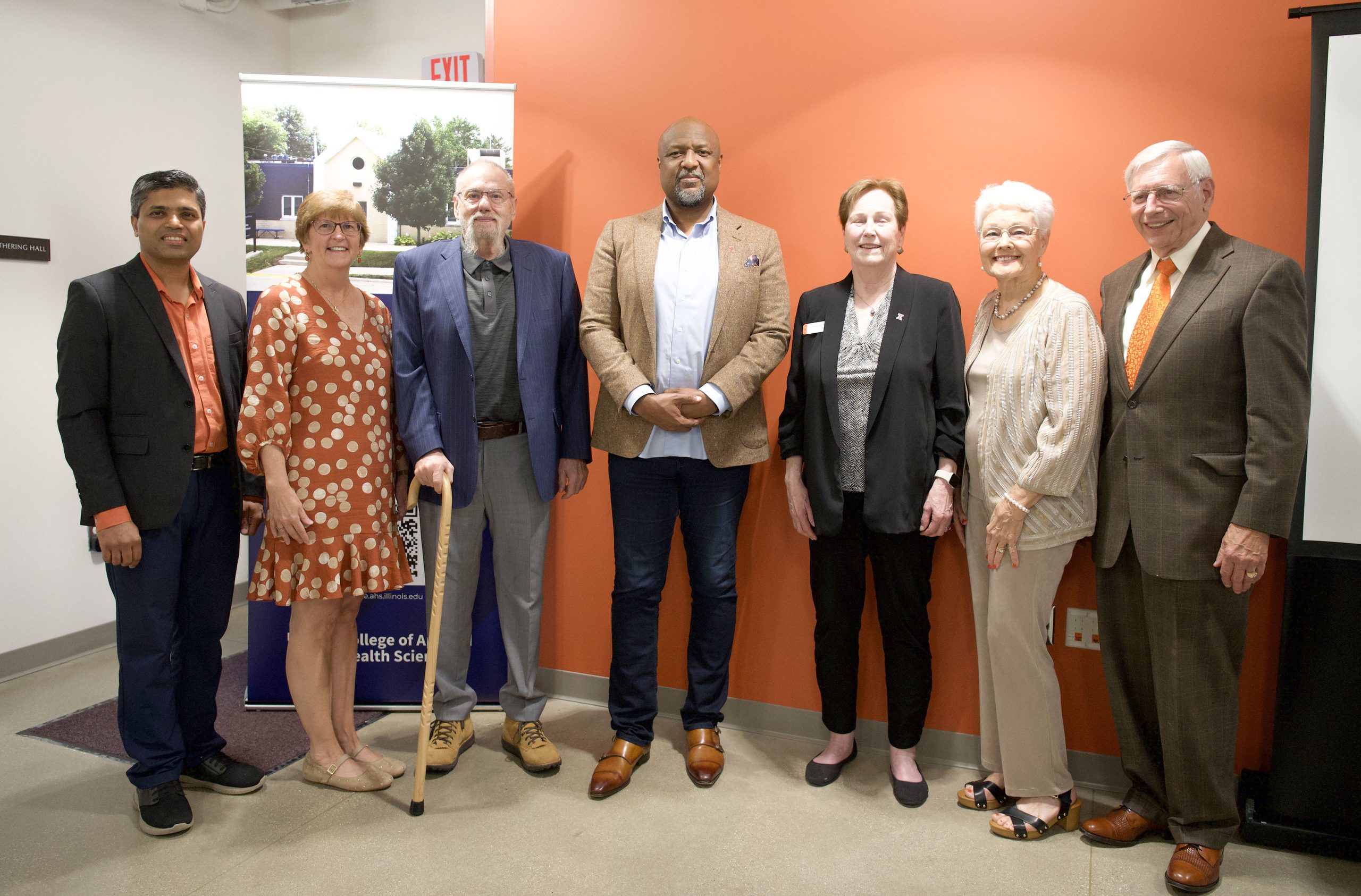
Kim Graber, left, Georgia Malandraki, center, and Wendy Rogers, far right, are the three Khan Professors of Applied Health Sciences, as endowed by Shahid Khan, right. (Photo by Mike Heiniger)

She framed the honor not as an endpoint, but as a platform for continued impact, particularly in improving access to care and advancing research that bridges science and clinical practice. 

“May our work continue to grow strong branches, deeply rooted in those who came before us, and reaching ever higher toward a future that improves lives,” she said. 

The ceremony concluded with closing remarks from Hanley-Maxwell, who highlighted the collective effort behind the achievement, from donors and university leadership to colleagues and family members. 

“Dr. Malandraki, congratulations once again,” she said. “We are proud to celebrate your achievements and excited for the impact you will continue to make as the Khan Professor.” 

As attendees gathered for a reception following the ceremony, the significance of the moment lingered, not just as a celebration of one scholar’s accomplishments, but as a testament to the interplay of opportunity, philanthropy and purpose. 

In the language of Malandraki’s sister’s verse, the investiture honored both the strength of the roots and the promise of the branches yet to grow. 

Editor’s note:

To reach Vince Lara-Cinisomo, email vinlara@illinois.edu.
 

Share on social
Related news

RST student brings equity-focused research to national science policy advocacy workshop 


Malaika Bigirindavyi is a doctoral candidate in the Department of Recreation, Sport and Tourism (Photo provided)

For Malaika Bigirindavyi, science has never existed in a vacuum. It lives in communities, in policy decisions and in the lived experiences of the people her research aims to center. That belief guided her to the AAAS Catalyzing Advocacy in Science and Engineering Workshop, a national program hosted by the American Association for the Advancement of Science in Washington, D.C. 

The workshop, commonly known as CASE, brings together graduate students from across the country to learn how federal policy shapes scientific research, and how scientists can shape policy in return. 

Bigirindavyi, a first-year doctoral student in the Department of Recreation, Sport and Tourism in the College of Applied Health Sciences at the University of Illinois Urbana-Champaign working with Assistant Professor Yannick Kluch, said the opportunity immediately aligned with her academic and personal interests. 

“I have thoroughly enjoyed working on policy co-creation, implications and developing communal accountability measures,” she said. “This opportunity sounded like a perfect chance to expand my understanding of how policy can be used for social justice and equity-oriented work.” 

Her research focuses on the lived experiences of Black women student-athletes and how they build community within their institutions—work she describes as deeply rooted in a commitment to diversity, equity and inclusion. That connection made the workshop especially timely, as many researchers grapple with shifting federal priorities and increased scrutiny of DEI-related funding and scholarship. 

At CASE, Bigirindavyi joined students from a wide range of disciplines, from engineering to public health. Despite their varied fields, she said a common thread quickly emerged: concern over federal funding and the role of advocacy in protecting research. 

“The larger scientific community has experienced alienation and funding cuts,” she said. “That was one of the main unifying concerns across disciplines.” 

One of the workshop’s central goals is to demystify the federal budget and appropriations process, a system that can feel opaque even to seasoned researchers. For Bigirindavyi, that clarity was one of the most valuable takeaways. 

“There are a lot of misconceptions and confusion about how the federal government is structured and run,” she said. “The presenters made sure everyone was on the same page before diving into the budget process.” 

She described learning about the intricate network of stakeholders, timelines and decision points that determine how federal research dollars are allocated. Understanding those details, she said, is essential for scientists who want their work to be heard. 

“There are specific times in the fiscal year that are more effective for connecting with policymakers,” she said. “There are also relationships, like how leadership at agencies is appointed, that can signal future priorities.” 

For graduate students, particularly those early in their careers, that knowledge can be empowering. 

“It gives you a roadmap,” Bigirindavyi said. “You’re not just doing research and hoping it matters. You’re learning how to advocate for it in spaces where decisions are actually made.” 

Beyond the policy lessons, the workshop also offered something less tangible but equally important: community. 

Bigirindavyi said she was most excited to meet other graduate students and learn about their work, and that those conversations became a highlight of the experience. 

“Everyone was super welcoming and friendly,” she said. “It’s always great when you can find connections between your work and others.” 

Those connections reinforced another key message of the workshop: that science and policy cannot afford to remain separate. 

“There’s often this idea that science and policy are siloed,” she said. “But when there’s a disconnect, there can be catastrophic outcomes.” 

Malaika Bigirindavyi, right, outside of the office of Rep. Nikki Budzinski (D-Ill.) (Photo provided)

She pointed to issues such as climate change, vaccination and gender and sexual health as areas where gaps between scientific evidence and policy decisions have already had real-world consequences. 

“A lack of engagement can lead to misinformation or false information spreading,” she said. “That’s why it’s so important for scientists to be part of those conversations.” 

Now back on campus, Bigirindavyi is already thinking about how to apply what she learned. 

One goal is to share her knowledge with peers, particularly when it comes to navigating the federal system. 

“I want to help demystify the budget process for others in my department,” she said. “Knowledge is extremely powerful. The more researchers understand the system, the more effective our advocacy can be.” 

She also plans to continue integrating advocacy into her own work, both in research and in the broader academic community. 

“Advocacy is a key component of my approach,” she said. “The research I want to publish is grounded in transforming systems and policy for racial and gender equity and justice.” 

That vision extends beyond academia. Bigirindavyi hopes her work will not only inform policy, but also empower the communities she studies. 

“I want participants in my research to develop an understanding of advocacy for themselves and their communities,” she said. 

For other graduate students interested in science communication or policy, Bigirindavyi offers a simple but direct message: use your voice. 

“Student voices have been the pillars of so many social and political movements,” she said. “There are endless ways to communicate and advocate—speaking, writing, signing petitions, showing up.” 

Her experience at CASE underscored that advocacy does not require abandoning science; it requires strengthening it. 

As debates over funding, equity and the role of research continue at the national level, programs such as the CASE workshop aim to prepare the next generation of scientists not just to conduct research, but to defend and advance it. 

For Bigirindavyi, that mission feels personal. 

“Science impacts people’s lives,” she said. “If we care about our work and the communities it serves, then we have to be willing to advocate for it.” 

Editor’s note:

To reach Malaika Bigirindavyi, email mjb18@illinois.edu 

Share on social

Related news

Support swells for iPALS summer enrichment program


A day in the iPALS program provides academic enrichment, playtime, social-emotional learning and nutritious snacks. (Photo provided)

A group of Illinois physical education alumni are supporting one of the College of Applied Health Sciences’ longest-running youth programs as it returns to Champaign.

Three graduates of the former Department of Physical Education for Women at Illinois—Carolyn Bechly, Jean Snuggs and Lyndell Wilken—have pooled their resources into an endowment to help fund the Illinois Physical Activity and Life Skills program, also known as iPALS. The summer wellness program for local children is also a steppingstone for Illinois student educators to develop their skills.

“We’re hoping iPALS can be part of their practical experience, building on what they’ve learned in a classroom,” said Wilken, who graduated in 1972 and became a coach, physical educator and athletics administrator.

The eight-week iPALS program run by the Department of Health and Kinesiology in Applied Health Sciences brings in local schoolchildren every summer for a full day-camp experience, with structured playtime, academic enrichment, social-emotional learning and nutritious snacks available each day. 

Beyond a summer opportunity for at-risk youth—every child participant qualifies for SNAP benefits or free-and-reduced lunch—the program doubles as a research study, funded by the U.S. Department of Agriculture.

The premise of the study: to see if regular physical activity, summertime enrichment and specialized nutrition can curb “learning loss,” the regular backsliding of academic achievement that occurs over summer break. Enrollment in iPALS is completely free.

The University of Illinois has a long history of youth summer programs. iPALS was originally the “Sport Fitness” program, where physical activity was the focus. With community input from partnering local school districts, faculty leaders have developed a more balanced approach over the years, between academic and social enrichment, exercise and nutrition.

Many of the daily snacks served to iPALS kids contain lutein, a carotenoid common in leafy green vegetables that settles in our eyes and brain, supporting our eyesight and cognitive health. The iPALS participants, ages 6 to 11 years old, take fitness, academic and cognition assessments at the beginning and end of the program to measure its direct impacts.

“Given that physical activity participation is among the most robust behavioral approaches to support both physical and cognitive health, we anticipate that the iPALS program has the potential to have a meaningful impact on children in our community,” said principal investigator Naiman Khan, associate professor in the Department of Health and Kinesiology.

During iPALS days, the kids move from station to station, with each stop run by Illinois graduate students. The researchers purposely use students with diverse backgrounds: nutrition majors running the snack station, education majors running academic enrichment, and physical educators structuring the playtime.

“For me, the most important aspect is that we provide a safe space for eight hours a day where kids are guaranteed meals and snacks, surrounded by adults who care about them, and they’re able to build relationships with peers experiencing similar realities,” said HK Associate Professor Kevin Richards, who researches the teaching of physical education. “That impact is difficult to capture with data, but it is the most meaningful part of the program.”

Interested families can visit the iPALS website and complete the eligibility survey to see if their child qualifies for the program. This year’s iPALS will take place at Booker T. Washington STEM Academy in Champaign on weekdays from June 3 to July 17.

Booker T. Washington STEM Academy in Champaign will be the hosting venue for this year’s iPALS program. (Champaign Unit 4)

A Motivated Donation

Illinois alumnae Carolyn Bechly, Lyndell Wilken and Jean Snuggs on a trip to Alaska. The three graduated from Illinois Department of Physical Education for Women just as Title IX took effect. (Photo provided)

The teaching experience available in the iPALS program mirrors the student teaching opportunities that were available to prior generations of Illinois physical education majors. Months after the passage of landmark Title IX legislation in 1972, the Illinois departments of Physical Education for men and women were fused, just as Bechly, Wilken and Snuggs happened to embark on their careers.

Under Title IX, every education program that received federal funding had to ensure equal access for students regardless of sex. Schools nationwide had an imperative to start girls’ sports teams, and a dire need for coaches. Some states, including Illinois, mandated that coaching slots be filled by women.

Suddenly, these new Illinois physical education graduates had their work cut out for them. 

“It was an amazing time, and busy,” Wilken said. “The opportunities were huge, also the workload you sustained, because you were a full-time teacher and you weren’t given anything extra for coaching—just the love of sport and wanting girls to have opportunities that drove most of us to essentially do it for free.”

The three women quickly discovered the lessons from the Illinois’ physical education program were useful in the field. They had learned under department legends such as professors Phyllis Hill and Beulah Drom, who instilled foundations in childhood motor skills and structuring class-time for physical education. The pedagogy of P.E. was scientific and practical: to help students understand the joy of movement, you’ll have to get them to line up single file as well.

“The science of it was really fascinating … you learned how to learn things, which carried over into how to teach,” Snuggs said. “In retrospect, it was always incredibly teaching-oriented.”

Wilken, Snuggs, Bechly and their cohort have retired, mostly, from long careers in physical education and coaching, spanning secondary schools, colleges and universities. They owe much of their lasting bond with their classmates to the passage of Title IX, and the whirlwind of entering the field together, giving student-athletes—particularly young women—opportunities that didn’t exist for themselves.

“We graduated, Title IX happened, and we fell into wonderland,” Bechly said. “Us starting as brand-new teachers, to be able to coach and experience stuff we didn’t really experience to that level, it was just fabulous.”

Naturally, shared professional experiences led the cohort to stay in touch and collaborate. Wilken made a spirited call to Snuggs back in 1979: Wilken was leaving her post at the American River College in Sacramento after founding its women’s track and field team. The school would need a new athletics administrator, and a new coach.

Inspired by how iPALS mirrors their own student-teaching experiences at Illinois, these physical education alums set up a fund to support the program indefinitely. (Photo provided)

“I had never run a track race in my life, but Lyndell said, ‘Hey, you might like this, why don’t you apply?’” Snuggs said. Snuggs got the job and stayed at American River College for more than 30 years, retiring as its dean of physical education in 2012. Wilken went to work at Lane Community College in Oregon, coaching its cross country and track teams to four conference championships.

Today, more than 53 years after the passage of Title IX, these alums have reconnected with their alma mater. After dialogues with the current faculty of Health and Kinesiology, the iPALS program seemed a good target for their financial support, mirroring their own student-teaching experiences at Illinois.

Their Supervised Teaching of Physical Activity/Nutrition Fund will support iPALS indefinitely. The founders have put out an open call for alums, including fellow physical educators, to donate.

“We’d like the students working there in the summer to be future physical educators, and that they continue being mentored and teaching,” Bechly said.

Families can register their kids for this summer session of iPALS now. In the meantime, the PEW alums hope more supporters help sustain the program.

“Physical education is a wonderful opportunity for kids to make decisions at whatever level, in terms of how they deal with others, how they deal with winning and losing. It’s heavy-duty stuff they can use for the rest of their lives,” Snuggs said.

Editor’s note:

To learn more about iPALS or sign up your child, visit the program’s webpage.

Want to contribute to the Supervised Teaching of Physical Activity/Nutrition Fund (Fund #778014)?  Donate or email our AHS Office of Advancement at advancement@ahs.illinois.edu.

Share on social

Related news

News Bureau: Nature videography replicates the mental health benefits of outdoor activities


RST graduate student Darcy Lu visited several parks and forest preserves in Florida to record video and sounds as part of a study on nature-based videography’s impact on mindfulness and well-being. Lu, who collected the samples while studying at the University of Florida in 2022, recently published her findings in the Journal of Sustainable Tourism. (Photo by Fred Zwicky / University of Illinois Urbana-Champaign)

New research led by a scholar at the University of Illinois Urbana-Champaign suggests that watching and creating videography of scenic locations cultivates nature-based mindfulness — conveying the same cognitive and emotional benefits as outdoor activities and fostering a deep sense of connection with nature.

Yue (Darcy) Lu, an Illinois doctoral student in Recreation, Sport and Tourism at the College of Applied Health Sciences, conducted a two-phase study that began with an ethnographic exploration of her experiences with mindfulness while she was recording audio and video of scenic destinations in Florida for another project.

Lu text-mined more than 3,000 reviews — which included videography of cherry blossoms and forest bathing in Japan, a live wildlife safari in South Africa and a sunset hike with a geologist in Thailand — to explore whether immersive digital experiences offered the same benefits as physical engagement with nature.

Read the full story online by Illinois News Bureau research editor Sharita Forrest.

Editor’s note:

To reach Yue (Darcy) Lu, email yuel12@illinois.edu

The paper “Videography-facilitated nature-based mindfulness at natural destinations” is available online.

DOI: 10.1080/09669582.2026.2614551
 

Share on social

Related news

Champaign-Urbana celebrates ‘World Voice Day’


Our vocal folds are roughly the length of our thumbnail, and yet they enable us to speak, sing, laugh and share our favorite stories.  

On April 16, the twin cities of Champaign and Urbana—home to the University of Illinois—will recognize World Voice Day, an international celebration of the human voice that shines a spotlight on vocal health. 

Behind the scenes, both proclamations were driven by clinicians and instructors at the Department of Speech and Hearing Science, based in the College of Applied Health Sciences.

“We wanted to bring World Voice Day to both Champaign and Urbana to raise awareness at the community level and emphasize that voice health is relevant to everyone, not just professionals or individuals already seeking care,” said Mariana Mendes Bahia, assistant professor of speech and hearing science. “Voice disorders can affect anyone in our community, and recognizing this day at the city level helps extend awareness beyond the clinic or classroom.” 

Bahia was inspired by the advocacy of Dysphonia International, an association that supports people with voice disorders. Clarion Mendes, clinical associate professor at SHS, encouraged her to get the day recognized locally. The Department of SHS and officials from both cities were fully supportive. 

Champaign city council member Matt Gladney reads the World Voice Day proclamation for the city, with Speech and Hearing Science students and faculty in attendance. (Jeff Hamilton | City of Champaign)
  • On Tuesday, April 14, Champaign city council member Matthew Gladney read the World Voice Day proclamation in the city council chambers, with Speech and Hearing Science faculty and students present. 
  • On Thursday, April 16, at 11:15 a.m., Urbana city council member James Quisenberry will come to the Speech and Hearing Science building to proclaim World Voice Day for Urbana, with the whole department in attendance.

A wide range of professions rely on the voice—not just performers. Actors, singers and broadcasters may come to mind, but retail workers, healthcare providers and teachers also lean on their vocal ability and presence every day at work. 

Mariana Mendes Bahia outside the Speech and Hearing Science Building. (Photo by Ethan Simmons | Applied Health Sciences)

And for reasons that aren’t fully understood, the rate of voice disorders appears to be rising in the United States, Mendes said. An estimated 17.9 million adults in the U.S. reportedly experienced a problem with their voice in the last year, according to the National Institute on Deafness and Other Communication Disorders.

“I think of individuals who may not realize the demands they place on their voice, and individuals experiencing voice disorders, for whom communication becomes effortful, limited or even distressing,” said Bahia, who researches swallowing disorders, clinically known as dysphagia.  

To Mendes, World Voice Day is an “extraordinary confluence of art and science,” exciting her students about anatomy and physiology, while showcasing an important part of the speech-language pathology vocation: outreach, education and illness prevention. 

“This day is a reminder that even if we studied and analyzed the voice 24/7, mysteries would still abound, and sometimes we can benefit from taking a pause and simply enjoy the wonder that is the human voice and its capacity for moving us through song or story,” Mendes said. “The Department of Speech and Hearing Science has a legacy of championing the human voice, and it’s incredible to share this with our students and the public.” 

Undergraduate and graduate students in Speech and Hearing Science helped develop educational materials for World Voice Day; explainers on how to protect the voice and when to seek medical attention.

“Our goal is for individuals to better understand how their voice works, recognize early signs of potential problems, and adopt simple habits to protect their voice,” Bahia said. “We also hope these events encourage people to seek care when needed and to view voice health as an important part of overall well-being.”

The Department of Speech and Hearing Science will celebrate “World Voice Day” on Thursday, April 16, at 11:15 a.m. at the Speech and Hearing Science Building.

Editor’s note:

To reach Mariana Mendes Bahia, email mmbahia@illinois.edu.
To reach Clarion Mendes, email cmendes2@illinois.edu.
 

Share on social

Related news

The intern who turned an ejection into a career lesson


In Derek Dye’s 2012 internship with the Daytona Cubs, he sold concessions, cleaned the bleachers, worked the soundboard, even dressed as the mascot. (Provided)

At their best, college internships are valuable learning experiences. Derek Dye didn’t expect his to involve getting tossed out of a baseball game.

That was the viral story for this University of Illinois alum’s first big-time summer job with Minor League Baseball, working as a stadium operations intern in August 2012. Back then, Dye was a rising senior in the Recreation, Sport and Tourism program at Illinois, eager to break into the sports industry. 

“I would’ve done anything to work in sports,” Dye said. “The minor league was the main target for me, a lot of people wanted to get their foot in the door.” 

Growing up in Moline, Illinois, sports were truly his life: Dye ran a backyard football club in high school and developed a passion for sports data of the major leagues. His dream was to become the general manager for the Chicago Cubs. 

When college neared, he applied to relevant programs across the state that could help him reach his goals. He eventually broke through the waitlist for the University of Illinois’ Recreation, Sport and Tourism program in the spring of 2009. 

“The RST major was the first thing I was looking at, I thought it was the perfect fit,” Dye said. 

It’s customary for RST students to work an internship in the field before they graduate. Baseball’s minor league was his main target, including the Quad City River Bandits in his hometown. 

The summer before his senior year at Illinois, he landed a seemingly perfect role: an internship with the Daytona Cubs, the Minor League Baseball team in Daytona Beach, Florida, and affiliate of the Chicago Cubs. 

He ended up taking out a $1,700 loan from his grandma to live in a Daytona Beach apartment. When the summer of 2012 began, Dye began a do-everything internship for the Cubs: serving stadium food and beverage, cleaning the bleachers, selling tickets and running the soundboard, all for a $50-a-week stipend. 

“You’re gone!”

A picture of the Daytona Cubs soundboard’s options for “bad call.” (Provided).

August 1, 2012. The Fort Myers Miracle faced off against the Daytona Cubs.

At the top of the eighth inning, a Fort Myers batter hit a ground ball to short. The Cubs threw it first, and the umpire called it safe. But Dye, sitting up in the press box, thought it was an out. Earlier that week, Daytona had added an array of audio snippets on the soundboard to play for a “bad call.” 

One of them was an organist’s rendition of “Three Blind Mice.” Dye clicked on it. 

Umpire Mario Seneca’s head perked up, then he turned and pointed to the press box. “You’re gone!” 

The crowd was puzzled, and Seneca continued to gesture up to the soundboard, where Dye was at the helm. “Turn the sound off the rest of the night.” 

Fear washed over him. 

“As you can imagine, being 21 years old and 1,200 miles away from home, my first reaction is ‘what just happened? I’m gonna get fired,” Dye said. “I can’t believe this is actually happening.” 

(Through the shock, Dye fired off a tweet about his ejection, and later uploaded the live footage of the incident to the Daytona Beach Cubs YouTube channel.) 

Ejected from his post, the press box was silent: no batter walkups, no anything. The fans started to announce the game themselves, standing from the stands and shouting out the players’ names who were up to bat. 

After the game, Dye resumed his usual grunt work, leaf-blowing peanuts from the stands. Then his phone started ringing off the hook: calls came in from reporters at CBS, ESPN, Major League Baseball. 

News of his ejection was trending on Twitter. Everyone wanted to know about the soundboard guy—an intern—who was thrown out of the game for playing Three Blind Mice. 

“I tried to talk to as many people as I could,” Dye said. He took calls until 2 a.m. 

After waking, WGN called him. Unbeknownst to him, it was live on air. He answered questions from his closet so he wouldn’t wake up his roommates.

Dye’s ejection contended for the Minor League Baseball “Moment of the Year.”

He went to the ballpark the next day, and 45 more publications were there to talk to him. 

The fallout from the league arrived immediately. Florida State League Commissioner called the incident a “mockery of the game” and fined the team $525.

Dye was banned from the press box for the remainder of his internship. But the team’s general manager, Brady Ballard, covered the fee for his barely paid intern. 

“It showed me he saw the big picture,” Dye said. “I was a 21-year-old intern doing my work to engage the crowd and cut my teeth in sports. He didn’t shy away from it, and his support also helped the story grow legs.” 

And the Daytona Cubs sold out their stadium the very next game. 

“I think the legend behind it had more sticking power than it would nowadays,” Dye said.  “Every year it comes up in August for the anniversary.” 

‘Your rep is your personal brand in the industry’

When Dye returned for his senior year at Recreation, Sport and Tourism, advisor and instructor Ryan Gower—now chancellor of Illinois Eastern Community Colleges—asked one of his classes: “Anyone have any funny stories from their internships?” 

Everyone looked back at Dye and laughed. He had gotten texts from classmates about his ejection for the whole month. 

After working in the sports world, Dye is now the director of marketing for Chicagoland’s Affy Tapple.

“Instead of putting my head down, I was able to turn what could’ve been a really negative thing into a really fun story,” Dye said.

He took classes from RST’s many memorable professors, including Clinical Associate Professor Michael Raycraft and Adjunct Instructor Kyle Emkes, and experienced the breadth of the leisure and tourism side of the major in classes with Professor Carla Santos and Professor Emeritus Kim Shinew. 

He also took on new roles in his budding sports career, working 40-hour weeks while interning for Illinois Division of Intercollegiate Athletics. He helped the kids club and worked with spring sports teams, such as softball and tennis.

Words from instructor and former Illinois volleyball coach Don Hardin lingered with him: if you want to work in sports, you’ll have to handle the tough stuff. 

“There’s going to be grunt work, not everything is going to be a glamorous stop,” Dye said, paraphrasing Hardin’s advice. “You’re going to have to be on the front lines, and your rep is your personal brand in the industry.” 

After graduating in 2013, Dye interned with Tampa Bay Rays and later managed eCommerce for Sports Collectibles, a sports memorabilia seller. Today, he’s the marketing director for Affy Tapple, a caramel apple producer in Chicagoland. 

His degree at RST continually comes in handy at his newest role, where he’s had to manage people and organize big events. Dye hasn’t become a Major League general manager, but the moment he feared would stain his reputation ended up shaping how he shows up for others.  

“Being on the ground level, you see everything and learn how to make the best of tough situations,” Dye said. “I’ll never be hard on someone for trying their best.” 

Editor’s note:

To reach Ethan Simmons, email ecsimmon@illinois.edu.
 

Share on social

Related news

Budzinski visits DRES, comes away with appreciation for adaptive sports


From left, Heather Stout, Brian Siemann, Maureen Gilbert, Jacob Tyree, Matthew Poland, Martrell Stevens, Stephanie Wheeler, U.S. Rep. Nikki Budzinski (D-Illinois) and Adam Bleakney (Photo by Ethan Simmons)

U.S. Rep. Nikki Budzinski (D-Illinois) spent part of her Tuesday on the campus of the University of Illinois Urbana-Champaign, where she toured Disability Resources and Educational Services and met with some of the coaches and athletes behind its nationally recognized adaptive athletics programs.

Budzinski met with a cross-section of DRES leadership, staff and athletes, including Director of Operations and Services Heather Stout; Maureen Gilbert, the coordinator of the office of campus life, wheelchair track coach Adam Bleakney, wheelchair basketball head coaches Stephanie Wheeler and Jacob Tyree and assistant coach Matthew Poland, DRES senior access specialist and Paralympian Brian Siemann and wheelchair basketball player Martrell Stevens.

Together, they highlighted both the day-to-day impact of DRES services and the broader significance of adaptive sports at the collegiate levels.

After seeing the main floor, Budzinski’s visit included a stop into DRES’ training facility, which was certified in September 2014 as a U.S. Paralympic Training Center. The basement facility, long regarded as a pipeline for Paralympic talent, served as a backdrop for conversations about access, equity and the future of disability services in education and athletics.

Bleakney showed Budzinski the adjoining Human Performance and Mobility Maker Lab, where he produces 3D-printed wheelchair racing gloves and collaborates on design projects with campus researchers. Siemann, who works with Illinois students with learning disabilities for DRES, showed Budzinski the two bronze medals he won in the 2024 Paris Paralympics as a wheelchair racer for Team USA.

The coaches, athletes, Gilbert and Stout all emphasized to Budzinski the importance of DRES for University of Illinois students, since more than 5,600 students applied for accommodations through DRES in academic year 2025-26. They also made sure Budzinski knew of the trailblazing work of DRES founder Tim Nugent, known as the “father of accessibility.” Nugent, who died in 2015, founded DRES in 1948 to help those returning from World War II.

Nugent advocated on the Urbana campus for wheelchair-accessible buses, curb cuts and other amenities that those with disabilities now take for granted. Many of his ideas have been adopted nationally. Nugent also helped create the National Wheelchair Basketball Association, as well as wheelchair football, track, archery and square dancing.

At the end of the tour, Budzinski was asked about the importance of sustained federal investment in programs like DRES. She underscored how policy decisions in Washington directly shape opportunities on campuses like Illinois.

Coach Adam Bleakney showed Nikki Budzinski the Human Performance and Mobility Maker Lab (Photo by Ethan Simmons)

“I’ve been supportive at the appropriations level of making sure that we’re supporting all of our sports, that we’re supporting the able-bodied and the disabled community to be able to fully participate in all athletics,” Budzinski said. “And you could do that through the appropriations process. I’ve been a big advocate of that for federal funding. I’m one of the bigger champions of Special Olympics as well. I lead our appropriations letters as it relates to that. So, I think just finding more opportunities through our appropriations process to invest in programs like this is so critically important, and we’ve made it a priority in the House.”

Budzinski’s comments connected federal appropriations work with on-the-ground outcomes—something visible in the athletes she met. DRES leaders also spoke about building programs that not only compete at the highest levels but also create pathways for students with disabilities to thrive academically and socially.

Editor’s note:

To reach Vince Lara-Cinisomo, email vinlara@illinois.edu.
 

Share on social

Related news

In second year, Illini Physical Activity Symposium widened its reach


The second Physical Activity Symposium at Illinois was hosted by the Department of Health and Kinesiology on April 3, 2026.

The Illini Physical Activity Symposium celebrates the widening research field of physical activity and its connections to public health across the globe. 

The second edition hosted at the University of Illinois Urbana-Champaign added a couple new traditions, including live student presentations and a guest speaker, but things kicked off the same way as last year: with a sunny walk to the Main Quad. 

“We felt very happy with our event and the feedback we received from the students, and we feel motivated to continue with this initiative for next year,” said Health and Kinesiology Assistant Professor Otavio Leão

This year, students and faculty members also celebrated the launch of the concentration in physical activity and health in the Master of Public Health program at Illinois. 

The Illini Physical Activity Symposium is hosted by labs at the Department of Health and Kinesiology in the College of Applied Health Sciences: 

  • The Lifetime Physical Activity Lab run by Assistant Professor Rafael Tassitano and Teaching Assistant Professor Cecília Tenório
  • The Longitudinal Analysis in Physical Activity, Sleep, Sitting, Screen Time, and Accelerometry Lab run by Assistant Professor Leão. (LA-PASSSTA Lab) 
  • The Epidemiology, Physical Activity and International Collaboration Lab of Professor Pedro Hallal. (EPIC Lab) 

University of California San Diego Professor Michael Pratt visited campus to present the research on the potential benefits of vigorous physical activity, and why it may be more important than current physical activity guidelines indicate. 

Afterwards, several graduate and doctoral students presented their findings from physical activity studies, covering topics such as step counts, obesity, screen-time, and childhood development.

Doctoral students Tayo Folorunso and Alisha Chuhdry won the inaugural Bill Kohl Awards for best poster presentation and oral presentation at the event. Folorunso presented her research into physical activity and abdominal obesity among U.S. women, and Chuhdry presented a study on motor competence among preschool children in Brazil. 

“Having doctoral students present their research at the symposium is a valuable experience. It allows them to practice communicating their work to a broader audience, receive feedback, and gain confidence in public speaking,” Tenorio said. “Experiences like this also help young researchers build their professional network and encourage them to continue pursuing a career in research.” 

Editor’s note:

To reach Cecília Tenório, email tenorioc@illinois.edu.
To reach Otavio Leão, email leao@illinois.edu.
 

Share on social

Related news

From Huff Hall to national impact: American Lung Association CEO visits his alma mater


Harold Wimmer, left, with Applied Health Sciences Dean Cheryl Hanley-Maxwell, got his undergrad and master’s degrees in AHS. (Photo by Ethan Simmons)

When Harold Wimmer returned to the College of Applied Health Sciences at the University of Illinois, it wasn’t just a professional visit—it was a homecoming shaped by decades of purpose, mentorship and public health leadership.

Wimmer, president and CEO of the American Lung Association, first walked the halls of what was then the College of Applied Life Studies as a student searching for direction. His visit offered a glimpse into how early moments of uncertainty can evolve into a career leading one of the nation’s most influential health organizations.

“I came into this college because as a freshman, I started in (the College of Liberal Arts & Sciences), more general studies, and I was really trying to find where I would best fit,” said Wimmer, who’s been working with the American Lung Association since 1978, the year he earned his master’s in health administration from the University of Illinois. He also got his undergrad from what is now Applied Health Sciences.

That sense of searching is familiar to many undergraduates. For Wimmer, the turning point came not from a formal advising session, but from a conversation with a roommate. It was a simple nudge—one that ultimately redirected his entire career trajectory.

“And it happened that my roommate was in kinesiology,” he said. “He talked about his experiences and the courses. I certainly had a passion for personal health and community also and working with others, so I came to (AHS) in my sophomore year.” 

The decision to transfer to community health set the foundation for everything that followed.

If Wimmer’s story has a central theme, it is the power of mentorship. During his time at Illinois, he found not only academic rigor but also a network of professors who helped shape his thinking and ambitions.

“I got connected with Tom O’Rourke, Larry Olsen (and) Bill Creswell,” he said, listing faculty members who left a lasting impression. “Those individuals just really impacted me in so many different ways.” 

What stood out wasn’t just their expertise, he said.

“They were also accessible. If you had any issues … their doors were always open. And that’s something that I remember.” 

Wimmer’s academic focus quickly sharpened once he entered the community health curriculum. Courses in epidemiology and population health proved challenging, but transformative.

“I certainly fell in love with the curriculum and the work that’s behind it in terms of community health, public health,” he said. 

What I studied here really aligned with the work of the American Lung Association.

Harold Wimmer

Applied Health Sciences alumnus and CEO, American Lung Association

He credits those classes with giving him a framework that still underpins his work at the national level.

“They were tough courses, but they were ones that have helped me throughout my career in terms of how to really work through public health … using sound data and epidemiology to help track diseases from the earliest points to a way to treat disease also.” 

That emphasis on data-driven decision-making has become even more critical in today’s public health landscape, where emerging diseases, environmental challenges and health disparities require evidence-based responses.

Wimmer’s path to the American Lung Association began in an unexpectedly local way—with a job posting.

“I was fortunate to come across a job posting that the American Lung Association had in the office here at Huff Hall,” he said. 

At the time, he admits, he didn’t know if he was prepared for the setting.

“I wasn’t really sure what I was getting into going into a nonprofit health organization,” he said. 

But the alignment between his education and the organization’s mission quickly became clear.

“What I studied here really aligned with the work of the American Lung Association,” he said. “The mission … is not only about assisting patients with a lung disease, but it’s also working to prevent lung disease.” 

That dual focus—treatment and prevention—is a hallmark of public health and one that reflects the principles taught in AHS.

Harold Wimmer became president and CEO of the American Lung Association in 2013 (Photo by Ethan Simmons).

Wimmer, who became president and CEO in 2013, oversees a nationwide organization tackling issues ranging from air quality to chronic lung disease. Yet when asked what skills matter most, he doesn’t point first to technical expertise.

Instead, he emphasizes communication.

“One thing that I think is really key in community health or public health is to have good communication skills and to be able to interact with individuals … and also groups,” he said. 

For Wimmer, those skills were nurtured during his time at Illinois, through classroom discussions, group work and faculty mentorship.

During his visit, Wimmer—who met with AHS Dean Cheryl Hanley-Maxwell as well as taking visits to Carle Illinois College of Medicine, the Cancer Center at Illinois and the Beckman Institute—also offered practical advice to students eager to make an impact in public health, a field that has gained renewed visibility in recent years.

“I would say really study epidemiology and population data,” he said. “I think [that] is really critical in the field today.” 

But technical knowledge alone isn’t enough. He stressed the importance of understanding diverse communities and advancing health equity.

“Having great communication skills, the ability to communicate with others in really diverse populations … health equity is very important,” he said. 

It’s a message that aligns closely with the college’s current mission—demonstrating how its core values have remained consistent even as the field has evolved.

Like many alumni, Wimmer’s visit also prompted reflection. When asked what advice he would give his younger self, his answer was both practical and revealing.

“I would have probably looked at a minor in finance on the business side,” he said, noting how much of his current role involves budgeting and financial management. 

It’s a reminder that careers in health aren’t confined to science alone—they often require a blend of skills, including leadership, strategy and financial acumen.

He also acknowledged a lingering curiosity about further education.

“I always think I would have liked to continue my education to get a Ph.D.,” he said, before adding with a laugh, “but I think I’m OK where I’m at.” 

Editor’s note:

To reach Vince Lara-Cinisomo, email vinlara@illinois.edu.
 

Share on social
Related news

College of Applied Health Sciences
110 Huff Hall
1206 South 4th Street
Champaign, IL 61820
(217) 333-2131