150 Years Strong


Founded in 1867, the University of Illinois celebrates 2017 as its sesquicentennial year as an international leader in education, research, and engagement. Over the last 150 years, University faculty, research staff, and students have been responsible for landmark achievements that have changed the world. These include the development of PLATO, the world’s first shared computer-based education system; the first multi-disciplinary research unit focused on children who struggled to learn, which led to the concept of “learning disabilities” and to new techniques of remedial education; and the development of Magnetic Resonance Imaging, which is widely used in medical diagnostics.

The roots of the modern-day College of Applied Health Sciences go back to the very beginning of what was then the Illinois Industrial University, when students were required to increase and maintain their physical health through the performance of manual labor. Physical education was formalized with the establishment of the Department of Physical Training in 1895, now the Department of Kinesiology and Community Health. Research in physical fitness led to groundbreaking discoveries about human health and physiology. In fact, units within AHS have been responsible for numerous innovations and improvements in individual, family, and community health, speech and hearing science, and overall quality of life.

Health and Kinesiology (HK)

That was then

T.K. Cureton

Dubbed the “Father of Physical Fitness,” Thomas Cureton developed methods to test motor and cardiovascular fitness in his physical fitness research laboratory, one of the first in the nation. Although he measured fitness and performance in many elite athletes, his focus was on bringing the benefits of everyday fitness to people who did not consider themselves athletes. He worked to bring his message to both adults and children, and offered physical fitness camps for children in the summer.

Health education professor Dr. William Creswell played a critical role in the development of comprehensive health education programs in K-12 schools. His efforts led to the nationwide research and curriculum development project, the School Health Education Study. In the early 1960s, he co-authored a national curriculum for K-12 health education that advanced health as the quality of life resulting from the dynamic interactions among an individual’s physical well-being, mental and emotional reactions, and social environment.

This is now

Today, scholars in kinesiology and community health investigate the effects of exercise on immune function, cognition, and co-morbidities associated with chronic kidney disease; the neuroscience of dance in health and disability; motor control in individuals with multiple sclerosis; molecular features that protect muscles against injury; the relationship between nutrition and exercise performance; the impact of disability and chronic health conditions on career development and performance; neighborhood influences on health; health and aging; and cancer epidemiology. The department name was changed from Kinesiology and Community Health to Health and Kinesiology in August 2024.

Recreation, Sport and Tourism

That was then

The first undergraduate course in recreation was offered in 1937, with a graduate course following in 1939. The recreation curriculum did not achieve departmental status until 1957. Charles K. Brightbill was the first head of the Department of Recreation and Municipal Park Administration, followed by Allen V. Sapora.

Dr. Charles Brightbill

That the University of Illinois was among the first to offer degrees in recreation can be attributed to their leadership. Drs. Brightbill and Sapora played key roles in the local, state, national and international park and recreation movements. Dr. Brightbill was a champion of the concept of professional and lay cooperation in the recreation field and contributed greatly to developing the principles that helped bring about the formation of the National Recreation and Park Association. Dr. Sapora was one of the first scholars to integrate research within recreation education, and a founding member of the Academy of Leisure Studies.

This is now

Over the years, scholars have studied how the businesses of recreation, tourism, and sport work together within the larger leisure industry to enhance the quality of life of individuals, families, communities, states, and nations. Now known as the Department of Recreation, Sport and Tourism, undergraduate and graduate students study the industry with renowned scholars who investigate the socio-political and cultural impacts of recreation, sport, and tourism; the role of leisure and play in improving health and well-being and supporting individual and community development; connections between physically active leisure and body image; and recreation and aging.

Speech and Hearing Science

That was then

Dr. Severina Nelson works with a child in the Speech Lab.

Two individuals made profound contributions to the well-deserved reputation for excellence that the Department of Speech and Hearing Science holds today. Dr. Severina Nelson initiated the clinical practice of speech therapy in a janitor’s mop closet in 1938, working with a student experiencing articulation problems. Two years later, she had earned the title of director of the speech clinic, an office and a $2,000 grant to continue her clinical work. A great believer in early intervention, Dr. Nelson started a training program for speech therapists that consisted of four years of undergraduate training and a fifth year of graduate study.

In 1948, Dr. Grant Fairbanks joined the University of Illinois as the director of the newly established Speech Research Laboratory. His laboratory became renowned for technical research in speech and hearing. Under his guidance, students earned the first doctoral degrees in speech and hearing science bestowed by the University of Illinois and went on to have significant impact upon the field. Dr. Fairbanks also expanded the University’s influence in speech and hearing science by serving as the editor of the Journal of Speech and Hearing Disorders, which was at the time the only scholarly journal of the American Speech and Hearing Association.

This is now

Today, scholars in the Department of Speech and Hearing Science continue to explore ways to improve the early diagnosis and treatment of communication disorders. That work has been expanded to include investigations of biological, cultural, and age-related differences in communication practices. Research also addresses brain anatomy and physiology to better understand the neural and sensory bases of speech, hearing, and language, both normal and disordered. Our scholars also focus on treatment, conducting research related to the neurology and treatment of tinnitus, the role of assistive technology in treating communication disorders, and the improvement of hearing devices such as cochlear implants.

Throughout its history, the College of Applied Health Sciences has been proud to add the accomplishments of its research faculty to the international reputation enjoyed by the University of Illinois at Urbana-Champaign. As we look forward to the future, we are excited by the challenges and opportunities that lie ahead and pledge to continue our efforts toward improving the lives of individuals, families, and communities through education, research, and engagement.

Editor’s note:

To reach Marketing and Communications, message marcom@ahs.illinois.edu

A glorious ride for Hedrick


Brad Hedrick (Photo provided)

When he first arrived in Urbana-Champaign in 1977, Brad Hedrick told a friend, “I’ve landed in the middle of a cornfield that is Disneyland for people in wheelchairs.” He found not only a campus but also an entire community that was accessible, something that was unheard of at the time.

Almost 40 years later, Dr. Hedrick was honored for his outstanding contributions to the University of Illinois’ leadership in accessibility with the 2016 Harold Scharper Award, named for the first World War II veteran with a disability to attend the University.

“I came here to study with Tim [Dr. Tim Nugent, founder of the Division of Disability Resources and Educational Services], a giant in the disability movement,” he said. “It was a godsend to come here, and to serve people with disabilities in the state, the nation, and the world through DRES.”

Dr. Hedrick completed his Ph.D. in Leisure Studies, now Recreation, Sport and Tourism, and served as the head coach of varsity teams for students with disabilities as well as an administrator, educator, and researcher within DRES. He became the director of DRES in 1995, serving in that position until his retirement in 2014.

“The concept of the scientist-clinician was Tim’s,” he said. “While providing services, you study those services. That’s how we’ve grown and changed and evolved.”

When he assumed the leadership position, he said DRES was “the best-kept secret on campus.” He led a rebirth in awareness of the value of DRES and expanded services to students with non-visible disabilities. The unit now serves well over 1000 students across campus, which is routinely recognized as one of the top disability-friendly campuses in the world.

In 2005, Dr. Hedrick was inducted into the National Wheelchair Basketball Association Hall of Fame for his contributions to the development of the sport. He received academic professional excellence awards from both AHS and the University of Illinois in 2006, and in 2008 was honored with the Charles K. Brightbill Alumni Award by the Department of Recreation, Sport and Tourism.

“One thing you learn as a coach,” he said, “is that you must always depend on others to achieve success. I’ve been fortunate to have spent my professional life in the vibrant and supportive community of DRES. It’s been a glorious ride.”

Related news

Gaining more than academic knowledge


Meridith Bradford enjoys the alpine slide at Camelback Mountain in Pennsylvania.

Students choose courses for a variety of reasons. It may be a requirement of their major or minor. Perhaps it’s the only class that fits their schedules or they like the instructor. Perhaps it’s related to a personal interest, or their friends are taking it. Whatever the reason, students expect to acquire disciplinary knowledge. If they are lucky, however, they learn about themselves and the world around them.

Community development through leisure

In the spring of 2016, Dr. Mike Raycraft offered a course through the Department of Recreation, Sport and Tourism (RST) that emphasized the role of the leisure industry in the economic, social, and environmental development of communities. RST 199 consisted of eight weeks of classroom instruction followed by a 12-day trip to major recreation, sport, and tourism destinations, including halls of fame, museums, and natural attractions. At each location, students met with industry professionals and community leaders, including several RST alumni, to learn more about the destination and its local impact.

The feedback Dr. Raycraft received from students at the end of the course confirmed that they derived great benefit from it and applied their classroom learning to critical examinations of the recreation, sport, and tourism industries. However, the unique perspectives that two of the students brought to the class resulted in a learning experience that went far beyond professional development.

Cool to be included

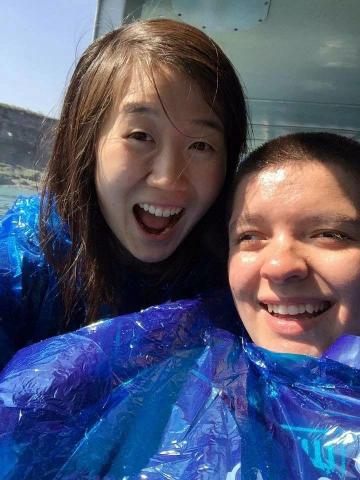
Lizzy and Meridith at Niagra falls

Meridith Bradford has spastic quadriplegic cerebral palsy. She can operate her power wheelchair but requires full assistance with the performance of the tasks of daily living. She has never let her disability prevent her from trying new things. As a child, she attended a summer camp where she went zip lining and rode the roller coaster at a nearby amusement park. She has been skiing for 18 years, competitively for the last four years with Disabled Sports USA. In the organization’s last Hartford Ski Spectacular in Breckenridge, Colorado, she was the first person doing her type of skiing, known as tethered fixed-outrigger bi-skiing, to compete in a level one race event. “Anything that involves me not being in my chair makes me happy,” she said.

Still, Meridith had reservations about the trip attached to the RST course. She’d never been on a trip of that length before and was concerned that the extent of her physical and medical needs would be too great to manage the bus trip. Through the Division of Disability Resources and Educational Services, she found an experienced personal assistant who was happy to help her join her classmates on their travel adventure.

“It was the best trip for sports freaks like me, but I wouldn’t have been able to go without Lizzy Na,” Meridith said. “It was the beginning of the summer, the end of my last year of classes, and it felt like a reward.”

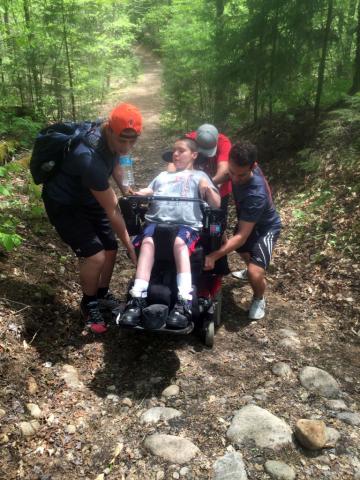
Despite her fearlessness, the trip still taught her something about her own resiliency and the kindness of others. During her first time hiking in the woods on a trail in the Adirondack Mountains, her fellow students helped her over roots and rocks when she got stuck. Then her chair broke. Meridith insisted she could wait alone until help arrived, but three of the other students insisted on remaining with her. “It was cool for me to be included and to be so well accepted by the group,” she said. “I didn’t feel restricted at all, socially or task-wise.”

Meridith hiking in the Adirondak Mountains

Fortunately, the chair was repaired within a few hours at a garage in Lake Placid, New York, and Meridith completed the trip. With the help of her personal assistant, she mastered the rigors involved with changing hotels nearly every day, which was no small task given that she needed to keep track of a great deal of equipment and special supplies.

“It was cool to learn that a trip like this is possible for me,” she said. “I hope my experience opens the door for people like me who might hesitate to take advantage of a similar opportunity because of their disabilities.”

Gaining cultural knowledge

Youyou Zhang is deeply interested in the intercultural communication that takes place during tourism experiences. She hopes to do research on how traveling impacts tourists’ perceptions and opinions of other countries. “My curiosity about the world has been well fed by the University of Illinois and RST so far,” she said, and she plans to continue her studies in graduate school.

Youyou had taken a marketing class with Dr. Raycraft. When she heard about his course on community development and the trip it involved, she immediately knew that she wanted to go. “My interactions with other RST students had been limited to the classroom setting,” she said. “I knew the trip would enable me to know them better and more deeply, and to learn about American culture as well.”

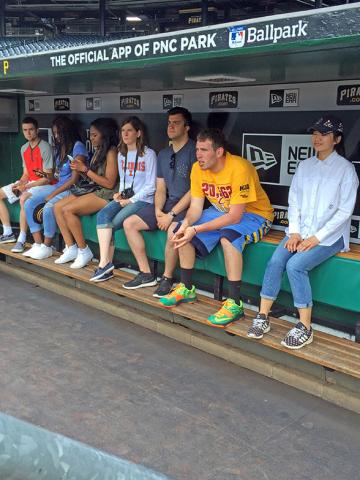
Youyou in the dugout of Doubleday Field

One of the things she learned about was baseball. Youyou watched her very first baseball game at Doubleday Field in Cooperstown, New York, while her classmates explained the rules of the game to her. She enjoyed the small parties that took place in the hotel rooms, where she learned more about American pop culture and music. She feels the trip provided her with the time and opportunity to develop her social skills, as well as a more “Midwest United States” sense of humor. She marveled at the scenery in places such as Niagara Falls and Lake Placid, and treasured the variety of people and places she was able to experience.

With the help of her fellow travelers, Youyou felt she was living in American culture as an “insider,” and she built a personal connection to the culture. It was truly an experience, she said, that she will remember for the rest of her life.

Related news

Leveling the Field, Here and Abroad


Disability Resources and Educational Services (DRES) is making it possible for students with disabilities to fully participate in the Illinois experience, including studying abroad.

Since 1948, Disability Resources and Educational Services (DRES) has worked to ensure that students with disabilities have equal access to all of the resources, programs, and activities offered at the University of Illinois at Urbana-Champaign, access, in other words, to the full student experience. For a large number of students at Illinois, that experience includes studying abroad. The university offers more than 300 study abroad opportunities through its various units, ranging from winter and spring break trips to academic year options.

Research cited by NAFSA: Association of International Educators shows that studying abroad improves grade point averages, fosters intercultural understanding, and increases employability, among other things. DRES has been helping students with disabilities to access this aspect of the student experience since the 1960s. Susann Sears, formerly an access specialist with DRES, says this is in keeping with the philosophical underpinnings of DRES.

Is It Feasible?

“At DRES, we constantly strive to go above and beyond what the law requires to provide services to students with disabilities,” said Ms. Sears, who is now the director of Beckwith Residential Support Services, a program for students with physical disabilities who require assistance in performing the tasks of daily living. “By collaborating with the campus and with faculty leading study abroad programs, we are able to make studying abroad accessible to registered DRES students.”

She points out that even though students with disabilities pay tuition and participate in University of Illinois-sponsored study abroad programs, the Americans with Disabilities Act does not guarantee their right to access in countries other than the United States. So each program in which students with disabilities express interest must be researched thoroughly to make sure their participation is feasible.

“For example, if the essential requirements of a program include traveling between locations by bus, subway, or train, are those vehicles and stations going to be accessible to individuals in wheelchairs?” she said. “Students with non- visible disabilities, such as depression or anxiety, may require counseling support above and beyond other program participants. Are these services available? Are these diagnoses even recognized in the host country? We try to go over questions related to a selected study abroad opportunity exhaustively to minimize surprises.”

Dealing With Challenges

The conditions in the host country aren’t the only issue of concern to students with disabilities. The prospect of flying can itself be daunting. Chelsey Baker, a junior in Special Education, joined a nine-day spring break trip to France that focused on the French system of education. She recalls how her excitement about going abroad was tempered by her nervousness about flying.

“Prior to studying abroad, I had never been on an airplane. Getting on a plane might seem like one of the simpler aspects of going abroad, but I had heard a lot of stories about wheelchairs being damaged on flights and bad experiences traveling with medical equipment,” she said. She uses a power chair, which can cost upwards of $30,000.

Her chair survived the fight. On the first day in France, however, she “fried” the power converter she was using to charge the chair. “The incompatibility of power in foreign countries with power chairs is one of the biggest issues we’ve heard about from our students,” said Ms. Sears. “In some countries, you can’t use a power chair at all and have to have someone push you around in a manual chair.” In Chelsey’s case, she and the trip organizers were able to locate a French wheelchair charger that didn’t need a power adapter.

Students who use power chairs typically have physical disabilities that prevent them from performing the tasks of daily living without assistance. Requiring a personal assistant can be another obstacle to traveling abroad. It was one of the biggest for Amelia O’Hare, a senior in urban planning and community development who went on a winter break trip to Hong Kong and Taiwan to study their resources for people with disabilities.

“Having to pay for a personal assistant to accompany me was the biggest obstacle I faced,” she said. “Susann [Sears] helped me apply for an Enabled Abroad Scholarship, which was amazingly helpful.” The scholarship is available to students who can demonstrate that they have costs associated with studying abroad that exceed the typical costs of the program in which they are participating.

Amelia’a destinations didn’t support power chairs, so her personal assistant had to help her not only with activities of daily living but with getting around in a manual wheelchair. A previous travel experience in Europe hadn’t prepared her for the level of inaccessibility she encountered in Hong Kong and Taiwan. “In Hong Kong, it was difficult to get around and even to get inside buildings. We found a way, but there were a lot of obstacles,” she said.

Do It!

For some students, the educational purpose of the trip itself can be one of the biggest obstacles to address. Tim Nagel, now a graduate student in Recreation, Sport and Tourism, hoped to join a summer program in New Zealand. As an undergraduate, he was a member of the wheelchair basketball team, so traveling during the academic year was not feasible. The potential problem was that the trip focused on adventure tourism.

“It involved a lot of activities I can’t do, such as hiking, climbing, going on rough trails,” he said. “Initially, I was hesitant to pursue it because I thought it would be impossible.”

He met with Ms. Sears, RST department head Laurence Chalip, and RST professor Jon Welty Peachey, the faculty advisor on the trip, anticipating disappointment. Instead, he found that much thought had already been given to alternative activities that he could do. “That’s when I thought, ‘Wow, they really want me to be able to go.’ After that meeting, I really thought this was a trip I could do,” he said.

He, Chelsey Baker, and Amelia O’Hare all describe their study abroad experiences as “amazing.” Each encountered challenges that tested their resourcefulness and perseverance, but each took away greater confidence in their abilities to overcome obstacles and broaden their life experiences. Each was grateful to start their trips with the support of DRES behind them. And each shared the same advice with other students with disabilities who think they might want to study abroad: start planning early, work with the right people, go for it, and have a great time!

Share on social

Related news

Exercise can improve gut health, study shows


Exercise can have an effect on your gut independent of diet, said Jeff Woods (Stock image)

Study Methods

In the first study, scientists transplanted fecal material from exercised and sedentary mice into the colons of sedentary germ-free mice, which had been raised in a sterile facility and had no microbiota of their own. In the second study, the team tracked changes in the composition of gut microbiota in human participants as they transitioned from a sedentary lifestyle to a more active one—and back again.

“These are the first studies to show that exercise can have an effect on your gut independent of diet or other factors,” said Jeffrey Woods, professor of Kinesiology and Community Health and director of the Center on Health, Aging, and Disability within the College of Applied Health Sciences. He led the research with former doctoral student Jacob Allen, now a postdoctoral researcher at Nationwide Children’s Hospital in Columbus, Ohio. The work with mice was conducted at the U. of I. and with scientists at the Mayo Clinic in Rochester, Minnesota, who develop and maintain the germ-free mice. The work in humans was conducted at Illinois.

What Was Found?

In the mouse study, changes in the microbiota of recipient mice mirrored those in the donor mice, with clear differences between those receiving microbes from exercised and sedentary mice. “That proved to us that the transplant worked,” Woods said.

Recipients of the exercised mouse microbiota also had a higher proportion of microbes that produce butyrate, a short-chain fatty acid that promotes healthy intestinal cells, reduces inammation and generates energy for the host. They also appeared to be more resistant to experimental ulcerative colitis, an inflammatory bowel disease. “We found that the animals that received the exercised microbiota had an attenuated response to a colitis-inducing chemical,” Allen said. “There was a reduction in inammation and an increase in the regenerative molecules that promote a faster recovery.”

In the human study, the team recruited 18 lean and 14 obese sedentary adults, sampled their gut microbiomes, and started them on an exercise program during which they performed supervised cardiovascular exercise for 30-60 minutes three times a week for six weeks. The researchers sampled participants’ gut microbiomes again at the end of the exercise program and after another six weeks of sedentary behavior. Participants maintained their usual diets throughout the course of the study.

Fecal concentrations of SCFAs, in particular, butyrate, went up in the human gut as a result of exercise. These levels declined again after the participants reverted to a sedentary lifestyle. Genetic tests of the microbiota confirmed that this corresponded to changes in the proportion of microbes that produce butyrate and other SCFAs.

The most dramatic increases were seen in lean participants, who had significantly lower levels of SCFA- producing microbes in their guts, to begin with. Obese participants saw only modest increases in the proportion of SCFA-producing microbes. The ratios of different microbes in the gut also differed between lean and obese participants at every stage of the study, the researchers said. “The bottom line is that there are clear differences in how the microbiome of somebody who is obese versus somebody who is lean responds to exercise,” Woods said. “We have more work to do to determine why that is.”

The Mayo Clinic-University of Illinois Alliance for Technology-based Healthcare and the National Institute of Diabetes and Digestive Kidney Diseases supported the study in mice. The human study was partially funded by a doctoral student research grant from the American College of Sports Medicine.

Editor’s note:

To reach Vince Lara-Cinisomo, email vinlara@illinois.edu.
 

Related news

Proud To Be A Philanthropist


Mannie Jackson with AHS Dean Cheryl Hanley-Maxwell

Mannie Jackson has been lauded for his sharp business sense and entrepreneurial spirit. Of All his many achievements, however, Mr. Jackson says his most important is being a philanthropist.

Mannie Jackson has been lauded for his sharp business sense and entrepreneurial spirit. Of All his many achievements, however, Mr. Jackson says his most important is being a philanthropist.

From Boxcar to Boardrooms

Mannie Jackson was born and lived for three years in a boxcar in Illmo, Missouri. After moving to Edwardsville, Illinois, he became a stand-out player in basketball and earned a full scholarship to the University of Illinois. He and his best friend Govoner Vaughn were the first African American starters for the Fighting Illini and the first to earn varsity letters. Mr. Jackson also was the first African American team captain.

He went on to work and play for the Technical Tape Corporation, which had a team in the National Industrial League, before joining the Harlem Globetrotters. He followed his basketball career with a successful career in business, working first for General Motors and then for Honeywell, from which he retired as international senior vice president of marketing, administration, and logistics. At the time of his retirement, Mr. Jackson was serving on the Board of Directors of six Fortune 500 companies.

Giving Back

Mannie Jackson returned to the world of professional basketball after retiring as the first African American owner of a major sports franchise when he bought the nearly-bankrupt Harlem Globetrotters. He not only restored the team to international fame and fortune but also made it a leader in charitable giving.

Mr. Jackson endowed the Mannie L. Jackson Illinois Academic Enrichment and Leadership Program (I-LEAP) in the College of Applied Health Sciences, which provides academic and personal support services to first-generation and underrepresented college students. His gift to Lewis and Clark College helped to establish the Mannie Jackson Center for the Humanities.

In accepting the 2017 Distinguished Alumni Award, Mr. Jackson said, “I like being called a philanthropist. When you decide to be a philanthropist and you help others and improve the world when you go, the legacy and the memory of what your family meant to the world and what you tried to accomplish lives forever.”

Mr. Jackson is a two-time inductee into the Naismith Memorial Basketball Hall of Fame, as an owner and as a player. He was named Laureate in the Order of Lincoln, the State of Illinois’ highest honor. He also received the NCAA’s highest honor, the Theodore Roosevelt Award, and the University of Illinois Alumni Achievement Award, the highest honor bestowed upon alumni by the University of Illinois Alumni Association.

Share on social

Related news

Keeping Things In Balance


If it seems that falls are inevitable, there is good news: falls can be prevented if you know your risk level, where your weaknesses lie, and how to improve those weaknesses. The Illini Fall Prevention Clinic was created expressly to provide the surrounding community with the information and tools needed to prevent falls.

Custom-tailored Intervention

The brainchild of Dr. Jake Sosnoff, associate professor in the Department of Kinesiology and Community Health, the Illini Fall Prevention Clinic was founded on more than a decade of his research on neurophysiological and behavioral factors related to motor control and falling. In addition to healthy individuals of all ages, he has investigated issues related to mobility, balance, and gait in people with Multiple Sclerosis, chronic kidney disease, and spinal cord injuries.

“As a society, we tend to treat falls reactively and don’t become concerned until people suffer an injury, such as breaking a wrist or hip,” he said. “We are really good at mending broken bones, but we don’t really address the underlying causes of the falls. I have all this sophisticated equipment and the research results to show that we can help to prevent falls through an evidence-based approach, and I want to share that with the larger community.”

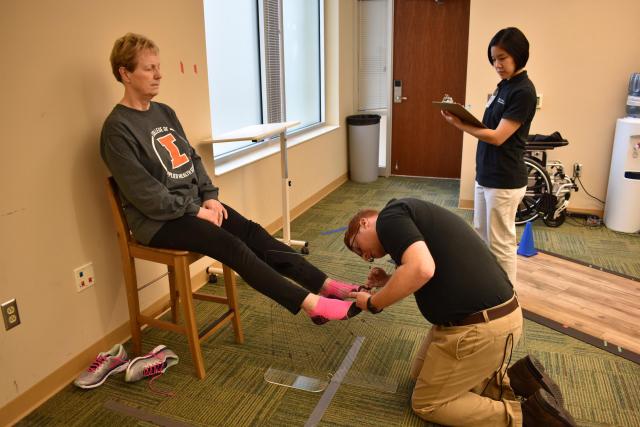
People who come into the clinic go through a four-part consultation that takes into account things such as balance, leg strength, vision, and body awareness. The measurements are suitable for all level of skills and functional abilities. Data from the various tests are compiled into a fall risk score and used to develop individualized prevention strategies to meet the client’s specific needs. Tyler Wood, a licensed athletic trainer and Ph.D. student who is the lead trainer in the clinic, says the main issues they see are deficits in lower body strength, balance, and reaction time.

“Based on each individual’s results, we work out an intervention plan tailored to their particular needs,” he said. “We give them a set of exercises that they can do at home, and we make sure they can do them properly before they leave the lab.” Clients are encouraged to return to the clinic six months later so that their progress can be measured and their intervention plans updated, if necessary.

Not only is the clinic providing potentially lifesaving screening, but it also serves as a learning opportunity for undergraduate students in the College of Applied Health Sciences to gain real-life clinical experience working with a diverse group of older adults. Currently, more than 15 undergraduates contribute to the clinic.

Extending The Reach

Because Dr. Sosnoff and his team recognize that not everyone can make it into the clinic in Huff Hall, they take the clinic to other venues such as retirement homes and churches when needed. Since opening the clinic in late spring of 2016, they have assessed the fall risk of more than 130 people in the surrounding community.

Working with his former doctoral students Doug Wajda, now an assistant professor of exercise science at Cleveland State University, and Jason Fanning, now an assistant professor of health and exercise science at Wake Forest University, Dr. Sosnoff developed a smart phone app that accurately assesses fall risk and provides personalized suggestions on ways to minimize risk. With support from the Collaboration in Health, Aging, Research, and Technology (CHART), the app was tested at Clark-Lindsey Village, a retirement community in Urbana.

Dr. Sosnoff’s team recently partnered with Dr. Sanjiv Jain of Carle’s Bone Health and Osteoporosis Clinic to test a new system that enables seniors to complete their own fall risk assessment without clinical oversight. Preliminary data suggests that the system accurately measures fall risk and that users enjoy it. His team is currently working on the system’s ability to provide feedback and individualized prevention strategies. Dr. Sosnoff’s overarching goal is to make falling avoidable rather than inevitable. “People come into the clinic because they’ve noticed changes with aging and don’t know what to do about them, or they bring in an aging parent or a spouse they’re concerned about,” he said. “We want to give them objective evidence that helps them understand what they’re dealing with, as well as concrete steps to promote functional independence and quality of life.”

For more information on the Illini Fall Prevention Clinic and its services, or to schedule an assessment, visit www.illinifallclinic.com.

here is a news quote as an example:

Here’s an edior’s note — feel free to remove it if it’s not needed! To show an example of what an editors note or model news layouts I’ll put some resources below:

Editor’s note:

To reach Nancy Averett, email naverett@illinois.edu.
 

Share on social

Related news

Toy Talk promotes language development


Research shows that the more language-rich interactions children have with their parents, the faster they learn words and the better they understand them. Toys can help facilitate language-rich interactions.

The quantity and quality of interactions between parents and children are critical in early language development. Research has shown that the more language-rich interactions children have with their parents, the faster they learn words and the better they understand them. The quality of the interaction is also important, especially in terms of the responsiveness to children’s attempts to communicate.

Responsive Labeling, Self-talk, Parallel-talk

Language interventionists have typically relied upon three main language modeling strategies when working with parents to increase their responsiveness. The rest, responsive labeling, occurs when the parent labels an object that the child is playing with, saying, for example, “That’s a baby.” In self-talk, parents describe their own actions with the toy, for example, “I’m rocking the baby.” Parallel talk involves the parent describing the child’s actions with the toy, for example, “You’re feeding the baby.” Research has shown that these language modeling strategies lead to increases in the vocabulary used by toddlers and the length of sentences they produce. Dr. Pamela Hadley and Dr. Matthew Rispoli, associate professors in the Department of Speech and Hearing Science, were concerned that the language modeling strategies did not do enough to increase toddlers’ development of syntax, or the way words are combined to form sentences.

“These strategies—responsive labeling, self-talk, and parallel talk—actually reduce the diversity of the words in the input to the child, especially in the number of different words that appear as sentence subjects,” Dr. Hadley said. “They promote pronoun subjects such as it, that, you, and I to the exclusion of vast numbers of possible noun subjects.”

Toy Talk

Pam Hadley and Matt Rispoli

To increase the number of different words appearing as sentence subjects during interactions with children, Drs. Hadley and Rispoli designed a new language modeling strategy they call toy talk. The strategy shifts parent-child talk during play from the interpersonal space, or what the parent and child are doing, to descriptive talk about the toy itself, such as its location, properties, or actions in the play environment. Parents also are taught to give the object its name.

“Consider a child holding a bottle to a doll’s mouth,” Dr. Hadley said. “Instead of responding with ‘That’s a bottle,’ which is labeling, or ‘You’re feeding the baby,’ which is parallel talk, the parent could say, ‘The baby likes her juice’ or ‘The juice is gone.’ That’s toy talk.” Both toy talk sentences have noun subjects rather than pronouns, a subtle shift, she notes, but one that creates opportunities for parents to produce more diverse sentences.

It sounds simple but, perhaps surprisingly, toy talk sentences with nouns in the subject position are rare in naturally-occurring conversations between adults and young children, Dr. Rispoli noted. “It is much more common for adults to ask children questions—‘Are you feeding the baby?’—or to direct their behavior—‘Give the baby more juice’—or to make descriptive statements using pronoun subjects—‘It’s all gone,’” he said.

Toy Talk Benefits

The challenge of language acquisition has been described as putting words together. “But maybe the challenge is pulling words apart,” he said. “When children consistently hear phrases such as ‘It’s a doll,’ ‘That’s a horse,’ and so on, the subject and the verb get chunked together. The child may not understand that ‘itsa’ and ‘thatsa’ are actually three separate words.”

With funding from the National Institute of Child Health and Human Development, Drs. Hadley and Rispoli evaluated the effectiveness of toy talk in a study that taught parents of toddlers how to use toy talk in both group and individualized coaching sessions over a three-month period. Their study demonstrated that not only did parents’ use of toy talk sentences increase following the instruction but also that their use of toy talk predicted children’s rate of growth in the production of diverse simple sentences and other crucial elements of syntactic development over the following six months.

“We think toy talk works, in part, because the diversity of noun subjects in parents’ input makes it easier for children to identify the boundary between a subject and a verb,” Dr. Hadley said. She and Dr. Rispoli emphasized that toy talk is not a replacement for other language modeling strategies. “Rather, it should be integrated with other strategies to interpret and expand children’s communication attempts and to model diverse combinations of words within simple sentence structure,” she said.

Because toy talk represents a relatively minor modification of familiar language modeling strategies, both scholars believe it can be incorporated rapidly into existing clinical practice.

Share on social

Related news

College of Applied Health Sciences
110 Huff Hall
1206 South 4th Street
Champaign, IL 61820
(217) 333-2131