Inside LIFE Home: Five years of innovation for independent living
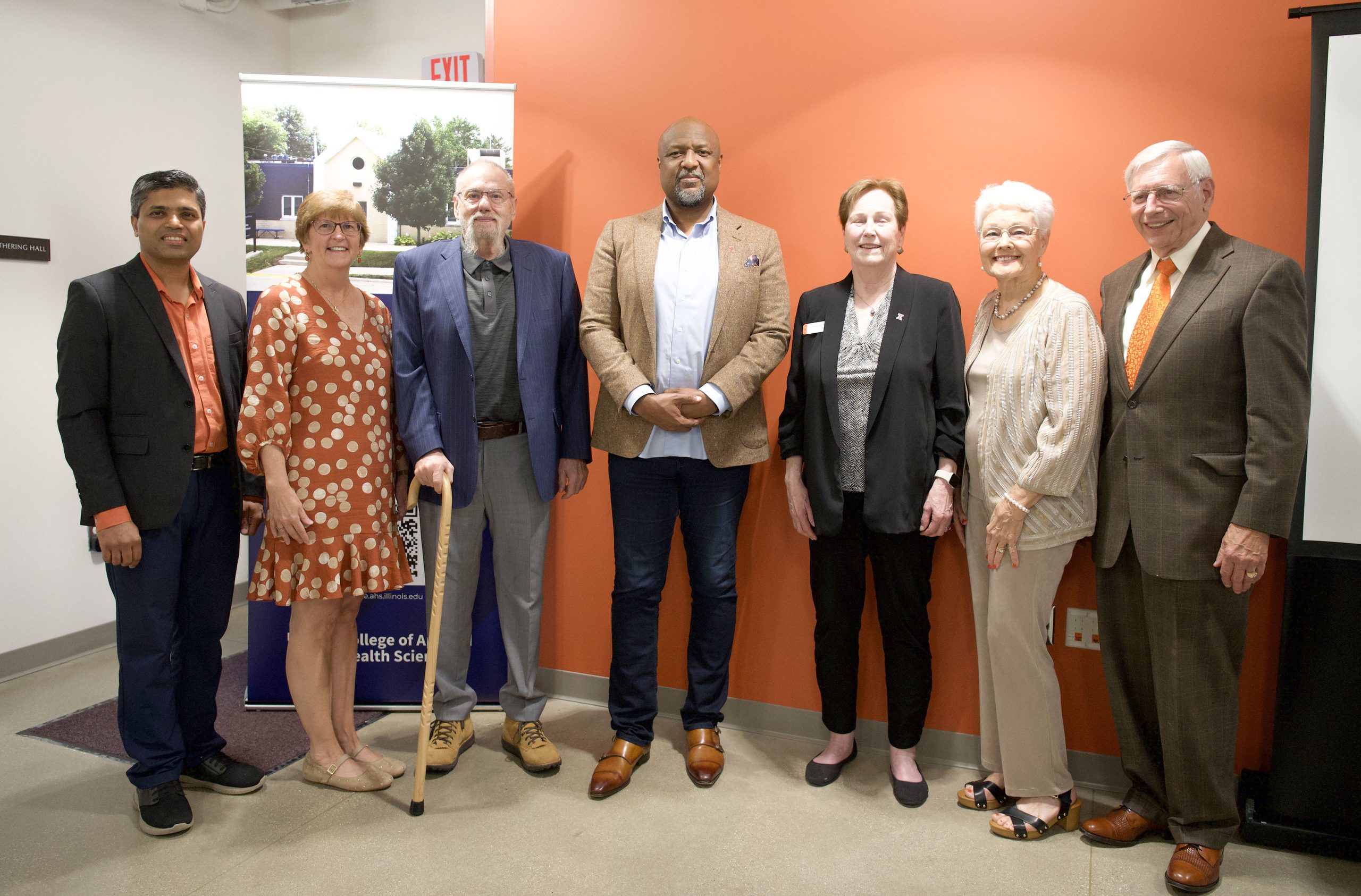
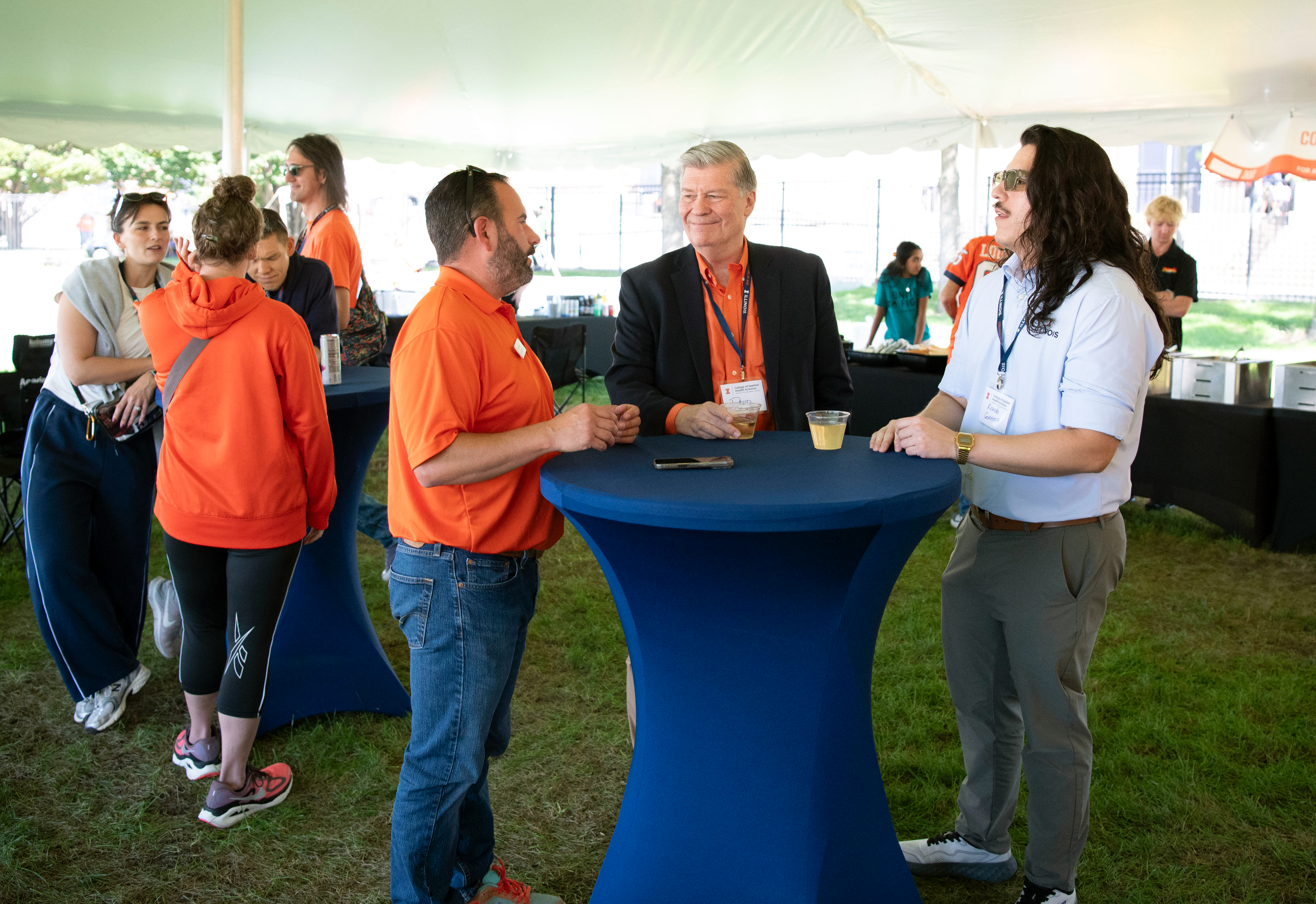
Chancellor Isbell, center, with LIFE Home Director Wendy Rogers, second from left, Dean Cheryl Hanley-Maxwell, right and Karen and Jim McKechnie, lead benefactors of the McKechnie Family LIFE Home (Photo by Bridget Lee-Calfas)
The McKechnie Family LIFE Home at the University of Illinois celebrated its fifth anniversary Oct. 8, marking five years of bringing researchers, students, community members and industry partners together to develop technologies that help people live healthier, more independent lives.
The facility—where LIFE stands for Living in Interactive Future Environments—provides a real-world home environment where research is grounded in everyday experience. By bringing together engineering, health sciences, design and human-centered research, the LIFE Home helps researchers better understand the routines, challenges and aspirations of the people their innovations are intended to serve.
“It is a place where discovery is grounded in everyday experience—where researchers can better understand the routines, challenges and aspirations that shape people’s lives,” said College of Applied Health Sciences Dean Cheryl Hanley-Maxwell during the anniversary celebration.
Over the past five years, the LIFE Home has supported interdisciplinary research in healthy aging, disability, rehabilitation, assistive robotics, smart-home technology and virtual and extended realities. Students learn alongside faculty, community partners and the people whose perspectives help make that research stronger and more relevant.
The work reflects the university’s land-grant mission toward improving lives through research, education and engagement. It also gives students opportunities to see how innovations can address everyday needs and support greater independence, dignity and connection for people of all ages and abilities.
Hanley-Maxwell credited Jim and Karen McKechnie’s generosity and commitment with giving the work a home and creating a lasting foundation for discovery, education and public impact. She also recognized Dan Fisk; Larry Kanfer; other donors and supporters; and Wendy Rogers, Shahid and Ann Carlson Khan Professor of Applied Health Sciences and director of the McKechnie Family LIFE Home, along with the facility’s faculty, staff, students, collaborators and community advisors.
Rogers recalled that the vision for a smart-home research facility began when then-Dean Tanya Gallagher hired her. Hanley-Maxwell later embraced the idea, and the McKechnies’ support enabled the team to expand the original plan.
“This is an amazing facility,” Rogers said. “And it is an amazing community that has contributed to its success.”
Rogers also recognized Fisk for sponsoring a named room and establishing a research fund, Larry and Alaina Kanfer for donating photographs that make the facility feel more like a home, and Walt and Sue Schneider for supporting research on in-home mobility for older adults.
She credited Harshal Mahajan with helping develop the LIFE Home from before the building existed and throughout its first five years. Mahajan prepared a video highlighting the facility’s activities during that period.
Rogers thanked postdoctoral associate Shafiqul Islam, who oversees the facility’s technology and supervises interns,; and operations coordinator Yvona Vlach, who works with clients, campus offices and the public. She also recognized building service worker Leonard Mcfarland for the daily care that keeps the facility ready for research and events.
The anniversary is an opportunity to build on that foundation. Continued philanthropic and institutional support—along with new partnerships—could advance research and strengthen collaboration across the university and broader community. Rogers said the LIFE Home’s mission aligns with the university’s priorities in people-first technological transformation, health and well-being, preparing future leaders and serving the public.
“As proud as we are of these first five years, today is not simply a look back,” Hanley-Maxwell said. “It is an invitation to imagine what comes next: smarter and more accessible homes; more inclusive technologies; stronger community partnerships; and new solutions that help people of all ages and abilities live with greater independence, dignity and connection.”
Rogers agreed, saying, “Together, we will lead the way in improving quality of life and independence for people of all ages and abilities through technology.”
Brasillinois spans the system’s universities in Urbana-Champaign, Chicago and Springfield. Its broad priorities include climate and sustainability, global health, and democracy and inclusion.
Photo by caption
For Pedro Hallal, the distance between Illinois and Brazil shrinks when he considers who gets the chance to live a long, healthy life.
In Brazil, he sees gaps in life expectancy between rich and poor. In Illinois, he sees similar disparities associated with ZIP codes. The settings differ, but the questions give researchers common ground: Who is being left behind, and what would help?
Those questions help explain why the Department of Health and Kinesiology has become a major contributor to Brasillinois, the initiative connecting the University of Illinois System with Brazilian research and educational institutions.
Hallal and fellow HK faculty members Andi Schwingel and Bruno Nunes hosted a delegation in Brazil in summer 2026, adding another personal connection to a partnership already supporting faculty research. For HK, those relationships offer opportunities to study shared health problems, involve students in international work and bring research closer to communities.
“I think health equity is a key issue here,” said Hallal, the Alvin M. and Ruth L. Sandall Professor in Health and Kinesiology at Illinois and president of the Federal University of Pelotas, Brazil, from 2017 to 2020.
Brasillinois spans the system’s universities in Urbana-Champaign, Chicago and Springfield. Its broad priorities include climate and sustainability, global health, and democracy and inclusion. Within that larger effort, HK brings expertise in physical activity, chronic disease prevention, aging and the conditions that shape people’s health.
Jerry Dávila, who holds the Jorge Paulo Lemann Chair in Brazilian History at the University of Illinois and serves as director of the Humanities Research Institute, said HK’s strength as a partner reflects both shared concerns and Brazilian expertise.
“The questions about life expectancy and healthy lives that researchers at Illinois and in institutions in Brazil are working on have the same relevance to both societies,” Dávila said. He also pointed to Brazil’s achievements in expanding public access to healthcare and the public health research that places its researchers at the forefront of many questions Illinois collaborators are studying.
You need to take research to the places where it’s needed the most.
Pedro Hallal
Alvin M. and Ruth L. Sandall Professor in Health and Kinesiology at Illinois
Schwingel, a professor in HK as well as director of the Lemann Center for Brazilian Studies on Illinois’ flagship campus, sees that expertise reinforced by people who already know both countries.
“HK has a strong faculty and graduate student presence doing research on Brazil,” she said. “This translates into a greater understanding of Brazil and the U.S. and makes the partnerships established more feasible.”
That familiarity matters when researchers must identify collaborators, understand local institutions and develop studies that respond to the communities involved. Schwingel credits Hallal’s reputation in Brazil with helping Illinois build relationships across the country. His experience leading a Brazilian university also informs how he approaches international research.
Hallal said advances in communication make it easier to discuss shared problems with international colleagues and develop studies together while learning from the different conditions in each country.
Dávila said the delegation’s visit demonstrated the university’s support for those relationships. “Whether in Brazil or in Illinois, showing up is important,” he said. “The visit of the delegation shows vividly that these research collaborations are not solely the initiatives of the faculty, but that they have the support of the university.”
He credits Illinois’ reputation as a steady institutional partner with helping attract investment in joint research from state research foundations in Paraná, São Paulo and 10 other Brazilian states.
One measure of HK’s involvement comes from a Brasillinois funding competition linking Illinois researchers with colleagues in the Brazilian state of Paraná.
Pedro Hallal and Aline Lamas are part of HK’s Brazilian faculty contingent (Photo by Jerry Thompson)
According to Hallal, 12 eligible proposals competed for five awards. Four of the selected projects came from HK, a striking share of a competition open to researchers across all three Illinois universities. Hallal, Schwingel and Rafael Tassitano are among the faculty members leading those projects.
Each project received $100,000, Hallal said, with the funding provided entirely by Paraná’s state research foundation, Fundação Araucária. Together, the four HK awards represent $400,000 for collaborative research.
Dávila said Fundação Araucária selected the projects as part of its priority to engage leading international scholars in research collaboration and support graduate training in Brazil.
Hallal is more interested in what the projects can accomplish than in the department’s share of the awards. Much of the work, he said, addresses chronic diseases and their risk factors, areas in which HK’s research strengths match Brazilian priorities.
Cardiovascular disease, diabetes and high blood pressure are central concerns. So are physical inactivity, obesity, unhealthy diets and smoking. These subjects give researchers in both countries reasons to work together and opportunities to learn from different approaches.
A separate Brasillinois grant illustrates how those connections can become a specific research question. Nunes, an assistant professor in HK, and Alexandre Dias Porto Chiavegatto Filho of the University of São Paulo are developing machine learning models to identify underdiagnosed chronic diseases in Brazil.
Their project focuses on diabetes, hypertension and abnormal blood lipid levels, using national health data to improve detection and address disparities in access to screening. It was selected through the inaugural Brasillinois program with the São Paulo Research Foundation (FAPESP), with support from the Lemann Center for Brazilian Studies at Illinois.
For Hallal, choosing where to conduct research requires looking beyond convenience. The communities with the greatest health challenges should help determine where researchers direct their attention.
“You need to take research to the places where it’s needed the most,” he said.
That principle also shapes how he describes the relationship between the two countries. Brazil and the University of Illinois can each contribute knowledge, and each can learn. Differences in health systems and lived experiences give collaborators more ways to examine a shared problem.
Schwingel sees opportunities for that exchange to reach the places where people receive care and children learn.
“Many projects include primary care, health clinics and schools that serve local communities, creating engagement with them,” she said.
Aging offers another strong connection. Hallal points to Brazil’s growing population of older adults and the increasing importance of managing chronic disease as reasons for collaboration. HK’s expertise in aging, including the work of Shahid and Ann Carlson Khan Professor of Applied Health Sciences Wendy Rogers, gives the department another way to contribute.
The questions extend beyond how long people live. Researchers can also examine the conditions that support health as people grow older and the inequalities that shape those experiences. Hallal identifies aging, chronic disease and equity as especially close matches between departmental strengths and Brazilian needs.
Students stand to gain from these connections throughout their training. Hallal said the projects already involve students, exposing them to health questions that matter in more than one country. He would like that experience to have an even greater influence on the curriculum.
For Schwingel, externally funded collaborations can also create paid research assistant positions and introduce students to unfamiliar research settings. Working alongside colleagues in Brazil can help them develop relationships that continue beyond an individual project.
She expects more scholars, including graduate students, to visit Brazil. Student exchanges and more regularly offered undergraduate study abroad programs are possibilities, too. Those opportunities would give students additional ways to connect their classroom learning with the circumstances shaping health elsewhere.
Jerry Dávila holds the Jorge Paulo Lemann Chair in Brazilian History at the University of Illinois and serves as executive director of the Illinois Global Institute (Photo provided)
The Lemann Center, which Schwingel said has supported exchange between Brazil and the United States since 2009, is also partnering with Brasillinois. That connection adds an established resource for Brazilian studies to the initiative’s expanding collaborations.
Dávila credited the Lemann Center with pioneering institutional relationships. He said the creation of Brasillinois reflects the University of Illinois System’s commitment to continuing, strengthening and expanding them.
Schwingel sees the potential extending from stronger research to changes in programs and policy. International experience, she said, can also influence the next generation of scholars and the professional networks they build.
Dávila said a new collaborative research call with FAPESP, the São Paulo Research Foundation, is planned for 2026. “We hope our colleagues in (the College of Applied Health Sciences) will find opportunities through it to carry their research in new directions,” he said.
For HK, the delegation visit and research awards are part of that longer process. Faculty relationships make joint projects possible; those projects give students experience and bring new questions into the department’s teaching and research.
Hallal describes the exchange with a simple image: “It’s like a two-way avenue.”
The work ahead will give that idea practical meaning in studies of chronic disease, opportunities for students and partnerships with communities. Its direction follows the concern that draws Hallal back to the comparison between Illinois and Brazil: People’s chances of living healthier lives should guide where researchers look, whom they work with and what questions they ask.
By the time children in Pelotas, Brazil, reached their first day of school, some had already been influenced by decisions made years earlier—at the family table
Study co-authors Thayna Flores, left, and Pedro Hallal. (Photo by Ethan Simmons)
A new analysis from the 2015 Pelotas Birth Cohort suggests that dietary patterns at just two years of age are associated with cognitive performance at ages six and seven. The findings add to growing global evidence that early childhood nutrition—particularly exposure to ultraprocessed foods—may play a meaningful role in shaping brain development.
The Pelotas Birth Cohort is one of the most comprehensive long-running population studies in Latin America, following thousands of children from birth. Researchers from the University of Illinois and the Federal University of Pelotas collected detailed information on what children were eating at age two and later assessed their cognitive performance once they reached early school age.
Rather than focusing on individual foods or nutrients, the research team examined overall dietary patterns. Using principal component analysis, a statistical method that identifies common combinations of foods, they identified two dominant patterns among toddlers in the cohort. One, labeled “healthy,” included beans, fruits, vegetables, baby foods and natural fruit juices. The other, labeled “unhealthy,” was characterized by snacks, instant noodles, sweet biscuits, candies, soft drinks, sausages and processed meats.
Children who more closely adhered to the unhealthy dietary pattern at age two scored lower on IQ tests at ages six to seven. The association remained even after accounting for a wide range of social, economic, and family factors that could influence cognitive development.
“The covariates were identified as potential confounding factors based on a literature review and the construction of a directed acyclic graph,” said Thayna Flores, an assistant professor in the Department of Health and Kinesiology in the College of Applied Health Sciences at the University of Illinois and one of the study’s authors. “The analyses were adjusted for child’s sex, maternal age, maternal schooling, maternal work, maternal depression, family structure, parental relationship, socioeconomic status, number of people in the household, number of older siblings, preschool, score of stimulation, duration of exclusive breastfeeding and food introduction before 6 months.”
Some factors often raised in debates about child cognition—such as parental IQ—were not included, largely because they were not measured in the cohort. However, Flores noted that the study did incorporate proxies for the home learning environment. “We didn’t measure the parental IQ, but home stimulation and early childhood education were both used in our adjustments,” she said.
Despite established guidelines, consumption of ultraprocessed foods is already common at this age.
Thayna Flores
Assistant Professor, Department of Health and Kinesiology
One of the study’s more surprising findings was what it did not show. The healthy dietary pattern was not associated with higher IQ scores. Rather than undermining the importance of fruits and vegetables, Flores said the result reflects how common these foods already were in the sample.
“The lack of association observed for the healthy dietary pattern can be largely explained by its lower variability,” she said. “Approximately 92% of children habitually consumed four or more of the foods that characterize the healthy pattern.” When nearly everyone is eating similarly, statistical differences become harder to detect, she said.
Where the results became especially concerning was among children who were already biologically vulnerable. The negative association between unhealthy diets and cognitive performance was stronger in children who had early-life deficits in weight, height, or head circumference.
“According to the literature, children with a deficit in height and head circumference from birth to the first year of life were more likely to be classified as having a low IQ,” Flores said. “Other studies suggest that insufficient growth before age two is related to impaired cognitive development.”
This pattern points to what researchers call cumulative disadvantage: when biological vulnerability and environmental exposures—like poor diet quality—interact to produce worse outcomes than either would alone.
The study did not directly test biological mechanisms, but Flores said existing research offers plausible explanations. “Diets of poor nutritional quality, particularly those high in ultraprocessed foods, may interfere with neurodevelopmental processes through mechanisms involving systemic inflammation, oxidative stress and alterations in the gut–brain axis,” she said.
‘We need to consider the rise in ultraprocessed foods,’ said Thayna Flores. (Photo by Ethan Simmons)
The researchers, who also included study co-author HK Professor Pedro Hallal—who came to the University of Illinois after a long stint at Pelotas—also examined whether breastfeeding and the timing of complementary feeding influenced the results. Both were included as confounders, and exploratory analyses looked for interactions.
“We identified that the association between adherence to unhealthy dietary patterns and IQ scores was significantly modified by the presence of early-life deficits,” Flores said. “No evidence of effect modification by sex, birth weight, gestational age, or duration of exclusive breastfeeding was found.”
Although the study is based in southern Brazil, its implications may extend far beyond Pelotas. Ultraprocessed foods are now common in early childhood diets worldwide, including in high-income countries.
“The longitudinal design, high follow-up rates and the large sample size strengthen the study,” Flores said. “While direct comparison should be made with caution, our findings are informative and can generate hypotheses for studies conducted in high-income countries,” such as the United States.
Whether similar effects would be seen in countries with greater food fortification or different health systems remains an open question. Still, Flores believes the core message is broadly relevant. “Considering the worldwide dissemination and higher prevalence of ultraprocessed foods, I think so,” she said when asked whether similar patterns might emerge elsewhere.
For policymakers, the findings carry clear implications. In Brazil, infant and young child feeding guidance is already part of primary health care, but Flores said the study highlights a gap between recommendations and reality.
“Our results reinforce the importance of strengthening counseling during routine child health visits, emphasizing the need to limit the habitual offer of ultraprocessed and unhealthy foods,” she said. “Despite established guidelines, consumption of ultraprocessed foods is already common at this age.”
Flores said public health efforts should focus on promoting healthy foods and reducing the emphasis on unhealth ones, but timing matters. “We need to consider the rise in ultraprocessed foods,” she said. “Stronger actions now can help prevent these foods, especially in early childhood.”
The Pelotas study is not the final word on diet and cognition. Researchers are now collecting more detailed dietary data as cohort members reach adolescence, opening the door to stronger causal analyses and a better understanding of long-term effects. Still, the takeaway is difficult to ignore. Long before report cards and standardized tests, children may already be accumulating advantages—or disadvantages—based on what is offered to them at the age of two. In a world where ultraprocessed foods are cheap, convenient and heavily marketed, the study suggests that early dietary choices may quietly shape how children learn, think and thrive years later.
Pedro Hallal has built an international reputation for his research on physical inactivity
Pedro Hallal accepts the King James McCristal Distinguished Scholar Award on Wednesday, Sept. 23, 2025.
Like many young researchers, Pedro Hallal thought his first study would be groundbreaking and potentially change the paradigm of the study of physical activity. Ultimately, he said, it didn’t, but now, with the value of experience at hand, he understands that was OK.
“We are trained to think of things that no one has ever studied. But science is much more about consistency of results nowadays, than about brand-new findings,” said Hallal, the Alvin M. and Ruth L. Sandall Professor in the Department of Health and Kinesiology at the University of Illinois Urbana-Champaign. “We do research because of the questions; we don’t start with the answers.”
Thanks to that curiosity and because of the breadth of his research, Hallal on Sept. 24 was awarded the King James McCristal Distinguished Scholar Award, one of the most prestigious recognitions in the College of Applied Health Sciences. The award honors faculty whose scholarly contributions have significantly advanced their disciplines while elevating the reputation of the university.
For Hallal—whose research has transformed global understanding of physical activity and health—the honor represents both a recognition of past achievements and an encouragement to push forward in addressing one of the world’s most pressing public health challenges: physical inactivity.
“Professor Hallal’s scholarly work has substantially elevated the profile of his department, our college and the university by advancing public health knowledge and global health equity,” said Cheryl Hanley-Maxwell, dean of the College of Applied Health Sciences.
A Global Lens on Physical Activity
Hallal, who is also director of AHS’ Master of Public Health program, has built an international reputation for his research on physical inactivity, a phenomenon he argues must be understood in the context of modern life.
“Today, we have fewer people being active,” Hallal said. “Most of them are indoors, looking at a screen. We have to think about what physical activity is today, not decades ago. The notion that physical activity is good for health has been known for centuries. Only since the 1950s and ‘60s have we really been studying it.”
His scholarship began in Brazil, where his master’s thesis—“Physical Inactivity: Prevalence and Associated Variables in Brazilian Adults”—found that 41.1 percent of the surveyed population did not meet recommended activity levels of 150 minutes per week. This early work set the stage for his career-long focus on understanding inactivity as both a personal and societal issue.
Hallal’s impact expanded dramatically with his contributions to a series in The Lancet, one of the most influential medical journals in the world. His research revealed that one-third of adults worldwide—approximately 1.5 billion people—failed to achieve the minimum recommended level of physical activity. Equally concerning, four-fifths of children ages 13 to 15 fell short of the one-hour daily activity guideline. The findings underscored physical inactivity as a global pandemic, drawing international attention to a public health crisis with profound implications for chronic disease and health equity.
Hallal has often said that this work in The Lancet is the “research I am most proud of.”
Redefining Scientific Inquiry
Throughout his career, Hallal has emphasized the importance of scientific rigor and humility.
That philosophy has guided him to produce a body of work that does not merely identify problems but interrogates the systems that perpetuate them. His studies consistently highlight how socioeconomic and geographic inequalities shape access to safe and purposeful physical activity.
“Access to safe, purposeful physical activity must be a societal priority,” Hallal said. By framing physical inactivity not only as an individual choice but also as an issue of structural inequities, he has pushed the field toward broader, more inclusive approaches to solutions.
Access to safe, purposeful physical activity must be a societal priority
Pedro Hallal
Professor of Health and Kinesiology
A Legacy of Impact
The King James McCristal Distinguished Scholar Award cements Hallal’s place among the most influential scholars at Illinois. The recognition highlights not only his academic achievements but also his role in shaping the conversation around health equity worldwide.
From uncovering high rates of inactivity in Brazil to leading global efforts to quantify physical inactivity, Hallal has consistently produced research that informs public policy, inspires further scientific exploration, and elevates the role of physical activity in public health discourse.
Looking Ahead: Challenging Assumptions
As Hallal reflects on the future of his field, he sees opportunities to question prevailing assumptions and generate new lines of inquiry.
He is particularly interested in challenging the idea that “every movement counts.” While small bursts of activity are beneficial, Hallal believes that the global challenge lies in ensuring people have the opportunity for meaningful, sustained physical activity. He also underscores the importance of recognizing how time scarcity and resource inequality reinforce global disparities in health behaviors.
“I think this place, this campus and college, are in a great position to tackle these things,” Hallal said. “We are already one of the country’s leaders in the field, and we are one of the most productive groups in the world on this topic.”
In addition to their professional experience, Gabrielle Dillon and Jack Senefeld share research interests
Gabrielle Dillon, left, and Jack Senefeld share common backgrounds and research interests (Photo by Ethan Simmons)
When Gabrielle Dillon joined the Department of Health and Kinesiology in the College of Applied Health Sciences last fall, she was greeted by a familiar face. She and Jack Senefeld, who had joined HK in fall 2023, had briefly overlapped in professional positions at the Mayo Clinic in Rochester, Minnesota.
Senefeld, who’d completed his Ph.D. at Marquette University, ended his five-year stint with Mayo in 2023 as a member of the College of Medicine faculty and an associate consultant in the Department of Anesthesiology and Perioperative Medicine and the Department of Physiology and Biomedical Engineering. Dillon joined the Human Integrative Physiology Lab in Mayo’s Department of Anesthesiology and Perioperative Medicine as a postdoctoral fellow in 2022 after completing her Ph.D. at The Pennsylvania State University. They were in different labs in the same department, but the labs collaborated closely.
Senefeld was happy to join the faculty at Illinois because of its outstanding reputation as a research university.
“There are a lot of great tools here to be a successful scientist, and both the university and the College of Applied Health Sciences are highly regarded,” he said.
When another faculty position opened just a year after his arrival, Senefeld forwarded the announcement to “big names and rising stars” in the field, among them his Mayo colleague Dillon.
“I knew both her Ph.D. mentor and her postdoctoral mentor, and her academic credentials are impeccable,” he said. “So we felt really fortunate when we saw her application in the pile.”
In addition to their professional experience, Dillon and Senefeld share research interests. They were members of a working group at Mayo that examined sex differences and physiology, and each makes a point of addressing women’s health in their work.
Dillon’s research focuses on vascular and cardiovascular physiology.
“I’m currently examining vascular testing across a woman’s lifespan and looking at whether physical activity can combat adverse cardiovascular aging and adverse menopause effects,” she said. She hopes not only to advance knowledge related to women’s cardiovascular health, but also to identify effective physical activity-based interventions to improve cardiovascular health. A secondary line of research examines the relationship between birth control and cardiovascular health in women.
Senefeld’s research seeks to understand and to mitigate the detrimental effects of metabolic disease and aging.
I think we’re both very fortunate to have landed jobs here, and we’re very pleased to be here.
Jack Senefeld
HK assistant professor
“My research focuses primarily on advancing understanding of non-pharmacological interventions—particularly exercise—for aging and metabolic disease,” he said. “I’m investigating how people with prediabetes perform during exercise, specifically how their skeletal muscle performs.”
Through his research, Senefeld hopes to shed light on why people have difficulty complying with exercise guidelines that are known to slow down the progression of diabetes, particularly in older adults. His research will examine how muscles combat fatigue in that population in hopes of increasing their ability to exercise, and he intends to investigate sex differences in muscle performance.
Senefeld and Dillon agree that Illinois is a great place to do human subjects research.
“The standard barriers to human subjects research have really been eliminated here,” Senefeld said. “We have health centers in the area, wonderful laboratory resources for science and multiple units on campus that can analyze samples. And from a practical standpoint, we have parking right outside the building.”
Dillon adds that the departmental culture fosters a supportive research environment.
“Everyone is excited, motivated and eager to collaborate,” she said. “As a new faculty member, I have found everyone to be extremely helpful. We also have a great dean and department head, both of whom are very encouraging.”
Dillon and Senefeld are equally passionate about their teaching. They’ve attended workshops through the Center for Innovation in Teaching and Learning on campus as well as faculty seminars developed by Amy Woods, associate dean for faculty affairs in AHS, and have applied what they’ve learned to co-developing undergraduate and graduate classes. They also are working with the AHS Office of Online Education and Learning Design to develop more effective ways of reaching digitally oriented students.
The heavy demands on young tenure-track scholars have not dampened their enthusiasm for service to their profession. Senefeld co-directs the Lifetime Fitness Program, an exercise program that offers older individuals in the Urbana-Champaign community exercise classes taught by undergraduate and graduate students in health and kinesiology. Dillon is active in the American Physiological Society, of which both she and Senefeld are members. She has developed webinars and career panels for APS, as well as serving on its awards committee. Both are also members of the American College of Sports Medicine, in which Senefeld was recently named a fellow.
The future is bright for Dillon and Senefeld, who are looking forward to long and productive careers at Illinois. As Senefeld put it, “I think we’re both very fortunate to have landed jobs here, and we’re very pleased to be here.”
Mobility disabilities, defined as a “serious difficulty walking or climbing stairs,” affect approximately 21 percent of adults 65 years of age and older
Saul Morse credits assistive technology for helping save his wife’s life (Photo provided)
Saul Morse believes his wife might not have survived a recent health episode without assistive technology.
“Had it not been for our voice-activated digital home assistant, we would not have been able to get my wife the urgent care she needed when she was having a stroke,” said Morse, a College of Applied Health Sciences alumnus and wheelchair user who has post-polio syndrome and is among the growing population of older adults who are aging in place with mobility disabilities.
At the time of his wife’s stroke, Morse—the 2023 Harold Scharper Award recipient—was a participant in a study led by Health and Kinesiology Professor Wendy Rogers, whose research team equipped Morse with the smart home devices that became life-saving tools for him and his wife. Rogers’ study is but one pillar of her storied research career, during which she has worked closely with older adults aging in place to understand their unique challenges and accelerate innovations to improve their quality of life.
Mobility disabilities, defined as a “serious difficulty walking or climbing stairs,” affect approximately 21 percent of adults 65 years of age and older, and this population of older adults only continues to increase, according to a paper from Rogers and her colleagues published in the Gerontechnology journal. Despite the challenges of mobility impairments, a majority of older adults choose to age in place to maintain autonomy and connection to their community. More than 75 percent of Americans 50 years of age and older choose this path.
With the rise in the availability of smart home technology, Rogers identified the potential role of this technology to provide a significant boon to the growing population of older adults with mobility disabilities. Rogers initiated an investigation into smart home technology for older adults in 2019, prior to the COVID-19 pandemic. The pandemic’s stay-at-home orders only further highlighted the critical role that smart home technology can play to boost independence and reduce isolation for many older adults aging in place.
“It is important to offer older adults with long-term mobility disabilities suitable strategies to maintain and postpone significant declines in functional independence,” said Rogers, who, along with Kim Graber, is one of two Shahid and Ann Carlson Khan Professors of Applied Health Sciences.
In this strategic research project, Rogers’ preliminary study, funded in part by the Illinois Department of Aging, investigated ways of reducing feelings of isolation and loneliness and increasing support for older adults. Since then, Rogers has developed a robust portfolio documenting her lab’s study of the role of smart home technology for older adults aging in place.
In January 2020, Rogers and her team published the first paper of this study detailing perceptions of digital assistant devices by early technology adopting older adults. From there, they introduced a group of older adults to two different Amazon digital home assistants, the Echo Show and Echo Speaker, to investigate how older adults interact with those devices and what activities the devices supported. A 2023 paper reported Rogers’ study of specific technology-training needs shared by older adults who do not have experience with such devices.
Those findings informed the next stage of Rogers’ multi-year research project funded by the National Institute on Disability, Independent Living, and Rehabilitation Research: the creation of a technology suite to equip and empower older adults with all the tools necessary to overcome the obstacles to technology adoption and proper usage. To that end, Rogers’ team developed the Digital Assistance in a Box, or DAB, for the study’s 24 participants, who used the at-home technologies for five weeks.
The DAB included an Amazon Echo Show 8, Philips Hue Smart Lightbulb, an Amazon Smart Plug and a custom-designed instructional manual.
It is important to offer older adults with long-term mobility disabilities suitable strategies to maintain and postpone significant declines in functional independence.
Wendy Rogers
HK Professor
“I never intended to use this kind of technology, because I was concerned about what would be recorded on the manufacturer’s servers,” Morse said. “But as a participant in the study, we installed a digital voice assistant and smart bulbs and plugs in my office and in our living room and bedroom. Being in a wheelchair, I saw the utility of these technologies right away. What most impressed me, though, were the custom user manuals—even a technophobe could use and appreciate them.”
Where previous studies looked at the viability of smart home technology for older adults, considering the range of activities they can support and how they might remedy loneliness, Rogers’ latest investigation zeroed in on a deeper exploration of older adults’ attitudes specifically regarding DHAs. Rogers’ team identified a few primary threats that might prevent older adults from adopting DHAs. In addition to the common barrier of learning to use a new technology, only a few older adults reported a lack of trust for manufacturers and a concern for their privacy.
Overall, study participants reported using DHAs for a wide variety of everyday activities and shared that the benefits of DHAs outweigh the risks. Participants reported using DHAs for leisure, hobby, entertainment, and health monitoring and maintenance endeavors. In fact, the results emphasize that DHAs specifically are particularly useful for older adults with mobility disabilities because of the voice-activated nature of such technologies.
“There’s a misperception that older adults don’t want to use technology,” Rogers said. “I’m an advocate for providing them with the support they need to use technology innovations. The benefits of reduced loneliness and isolation are a significant incentive. This latest study suggests that with increased education and training about privacy risks and protective strategies, older adults can experience the benefits of this assistant technology.”
In addition to this study, Rogers is working on multiple projects to benefit older adults aging in place. In partnership with researchers at TechSAge, she is investigating solutions for older adults with long-term vision or hearing impairments. Laura Rice, an associate professor in HK, and director of TechSAge, is leading a project to develop a fall-detection device for those in wheelchairs. At the McKechnie Family LIFE Home, Rogers is working with Girish Krishan, associate professor Industrial & Enterprise Systems Engineering, and Ian Rice, associate professor in HK, to develop a fall-prevention robotic shower. And there’s also a project with Katie Driggs-Campbell in Electrical and Computer Engineering to develop a wayfinding robot for adults with vision disabilities.
“We are studying the actual needs for aging in place for older adults and then coming back to our lab to work with engineers on how we can implement creative solutions that will improve the quality of life for older adults who are aging in place,” Rogers said. “Our study of DHAs, specifically, is a premier example of what makes Applied Health Sciences a special place, as we are doing the systematic interdisciplinary research necessary to produce responsive and supportive innovations to support people in our community.”
Many students majoring in HK want to pursue careers in occupational therapy, physical therapy and athletic training
Whitney Wolff was asked to develop a musculoskeletal anatomy course (Photo by Ethan Simmons)
Whitney Wolff had just completed a semester as an assistant professor at tiny Lakeland University in Sheboygan, Wisconsin, when the opportunity to work at an R1 university arose.
Wolff, who earned her Ph.D. from the University of Michigan in 2022, taught at Lakeland—student population approximately 2,500—that fall before applying to the Department of Health and Kinesiology in the College of Applied Health Sciences. As part of this process, the department asked her to develop a musculoskeletal anatomy course.
“Our HK faculty identified a need for a musculoskeletal anatomy course so the students could strengthen their understanding in an applied setting,” said Wolff, now a teaching assistant professor in Health and Kinesiology.
Many students majoring in HK want to pursue careers in occupational therapy, physical therapy and athletic training, and those fields dovetail with Wolff’s experience.
“I was on the pre-physical therapy track for the first three years of my undergraduate degree. I went to a university that required a semester-long, 40-hour a week internship and an extensive practicum experience, both of which I spent in a physical therapy setting,” she said. “I had a lot of experience observing and shadowing physical therapists, and it just wasn’t for me. However, I was able to draw on those experiences while designing this course.”
Wolff’s academic journey began with a B.S. in Exercise Science and a Master of Education in Kinesiology from Bowling Green State University, followed by a Ph.D. in Movement Science from the University of Michigan.
When she saw a faculty position open at Illinois, she jumped at the chance.
“It was primarily Illinois’ strong kinesiology program and the opportunity to be a part of a department that values both research and teaching. I was also excited by the high caliber of students that I’d be able to teach and mentor,” she said as to why she chose to come to Illinois.
Wolff believes her knowledge of the field as well as her methods are beneficial to students.
“I really challenge my students to develop a set of practical skills that will benefit them in graduate school and beyond. This is why I emphasize hands-on experience and less of ‘Can I memorize this information and then ace an exam’?”
“My approach to this course has been shaped by my experiences as well as knowing that these students want to be successful in very challenging careers.”
Wolff wanted the course to be more experiential learning and not just “listening to me talk about anatomy.”
Since kinesiology-related careers often involve working with other people, it’s an important experience for the students so that they discover whether this is a good fit for them
Whitney Wolff
Teaching Assistant Professor, Health and Kinesiology
“I designed musculoskeletal anatomy to be a lab-based course where 90 percent of the students’ time in class is spent completing hands-on activities. They’re working through the process themselves, and I can really see them grow and improve rapidly. It has been a really fun class to develop.”
Wolff informed the course design by talking with friends and colleagues who went through our nation’s leading physical therapy programs, asking about how they prepare for patient-clinician interactions and what anatomy courses are like in those programs.
“In typical undergraduate anatomy courses, (students) learn to identify the muscles on an image or on a plasticized model, whereas you look at us, we’re covered in skin and subcutaneous fat. Kinesiologists need to be able to identify muscles and bony landmarks on a living, breathing person that moves and changes position.”
As much “hands-on” learning as there is, Wolff is more “hands-off,” allowing students to explore and practice without fear of making mistakes.
And if students aren’t comfortable with being touched or touching others, Wolff will accommodate in class but did acknowledge that that could be a sign a student is in the wrong major.
“Since kinesiology-related careers often involve working with other people, it’s an important experience for the students so that they discover whether this is a good fit for them,” she said.
In addition to teaching, Wolff’s research focuses on the biomechanical presentation of idiopathic chronic neck pain in males and females. Her ultimate research goal is to design and implement workplace interventions aimed at preventing and treating idiopathic chronic neck pain.
Wolff said part of that research will involve how to manipulate seated posture without the need for an expensive ergonomic chair.
“(Neck pain) is often linked with static work postures such as sitting at a computer, so (an intervention) could be movement-based or could include adjustments to shoulder, head and neck posture. If we can identify the seated posture that decreases musculoskeletal strain of the neck and shoulder while being comfortable enough that an individual can maintain the posture, that could potentially decrease the likelihood of developing idiopathic chronic neck pain,” she said.
HK researchers found that the school children who more closely adhered to a special diet showed better control over their attention
A diet rich in fiber and antioxidants shows promise for children’s mental abilities, according to Shelby Keye’s research (Photo by Ethan Simmons)
A diet rich in fiber and antioxidants, low in fat and full of colorful berries and vegetables has shown a strong connection to slowed cognitive decline in older adults. This same Mediterranean-influenced diet shows promise for children’s mental abilities, too.
A recent study led by University of Illinois Health and Kinesiology Assistant Professor Shelby Keye compared elementary school kids’ food intake to this specific diet pattern—fittingly called the MIND diet—and measured how those kids performed on a task designed to challenge their attention span.
Keye and a team of researchers, including Health and Kinesiology Associate Professor Naiman Khan and Illinois Nutritional Sciences Ph.D. candidate Tori Holthaus, found that the school children who more closely adhered to this special diet showed better control over their attention.
“When we see something in older adults, we’re like, ‘I wonder if we’re going to see that same thing with kids?’” Keye said. “That was the question: will the MIND diet be related to children’s cognitive skills?’”
The MIND diet is short for Mediterranean-DASH Intervention for Neurodegenerative Delay. It’s a combination of the popular Mediterranean diet—which prioritizes beans, leafy vegetables, berries, seafood and olive oil—and the DASH diet, originally built to combat hypertension.
Researchers at Rush University in Chicago combined elements of these two diets and found certain components were related to better cognitive health in older adults.
To investigate whether the MIND diet had positive effects for kids’ brain health, the research team decided to study a pressing skill for any school-age child: paying attention.
In early life, the human brain is developing all of its cognitive skills simultaneously. But in certain phases of development, specific skills are growing faster and are more sensitive to a person’s changes in health, Keye said.
“Attention and inhibition around that elementary age is a particularly sensitive skill to health behaviors,” Keye said. “It may be because you have started school. And now, you’re in this environment where you have to inhibit, you have to prevent yourself from turning around and talking to your friend or even inhibit yourself from listening to internal thoughts.”
Their study marks the first time the MIND diet has been analyzed in a population this young. The diet’s connection to attention control opens the gates for more specific, involved research into the diet’s potential effects.
“With us finding this relationship with the MIND diet, that means that those foods that are important for older adults could be just as important for children,” Keye said.
To answer their question, the research team collected a week’s worth of dietary records for 129 local children, ages 7 to 11 years old. Parents of the child participants were tasked with recording everything their kid ate or drank for seven days, in close consultation with their children.
The children’s diets were scored on their proximity to the MIND diet pattern versus the most recent Healthy Eating Index, a set of dietary guidelines developed by the U.S. Department of Agriculture. The two diets are similar but emphasize different food groups: The MIND diet encourages more berries and olive oil, for example.
Before gathering their diet records, the researchers collected the children’s demographic and anthropometric data—height, weight, age and the like. And each participant completed a cognitive test designed to challenge their focus, called the Eriksen-Flanker task.
The task asks participants to look at a series of rapidly flashing arrows pointing in different directions on a computer screen, and mark which direction the arrow in the center of the image was pointing. (For kids, the arrows are replaced with pictures of fish.)
The children who ate foods closer to the MIND diet scored more accurately on the attention task. The positive relationship did not show significant differences based on the children’s overall caloric intake, sex or household income.
No significant relationship was found with the kids’ scores on the Healthy Eating Index guidelines.
The children who ate foods closer to the MIND diet scored more accurately on the attention task.
“This is one study, and it’s one of the first,” Keye said. “But because we found a relationship, there is most likely something there.”
As for why the diet had a relationship to attention control, Keye said a few possibilities are worth further research.
Many of the dark green vegetables and berries present in the MIND diet are rich in antioxidants, which have an anti-inflammatory effect that helps with brain development and function, she said.
Weight could also play a role. A separate study found that children who followed the MIND diet had a lower weight status on average—a higher weight status can relate to greater levels of inflammation and poorer cognitive performance.
Also, physical activity and diet quality tend to go together in people, Keye said. It could be that the kids who ate more MIND diet foods focused better because of a healthier, more active lifestyle.
Is the evidence enough to start changing children’s diets? More research is needed into the potential cause-and-effect, but if the benefits interest you, “I would not stray away,” Keye said.
“I always try to just keep it simple while doing this type of work. Sometimes I find that people will read about this and say, ‘I’ve got to change all these things about my life,’” Keye said. “I study behavior change a little bit, and I find that it’s easier to start simple and do one thing.”
If the MIND diet’s potential benefits seem compelling, try adding in some berries and smoothies into your meal plan, or cooking with olive oil instead of butter for a week, Keye suggested.
For now, the results from this study present a few next steps. Future studies can run diet interventions, where researchers control participants’ food intake to fit the MIND diet and observe any effects. Researchers could also make the same analysis of diet and attention control in an even younger group of child participants, or with a wider range of socioeconomic status.
“We’re just excited to be doing the work and excited to have some interesting results,” Keye said. “And hopefully, one day, we can get a good intervention.”
The paper, “MIND Diet Pattern Is Associated with Attentional Control in School-Aged Children,” was published in the Journal of Cognitive Enhancement in January 2025. It is available online.
Responsibility for teaching many courses offered by the department is also borne by another group of highly qualified individuals known as specialized faculty
Kristen DiFilippo was one of five Illinois faculty awarded for Excellence in Undergraduate Teaching this year (Photo by Ethan Simmons)
Like the University of Illinois and the College of Applied Health Sciences, the Department of Health and Kinesiology pursues a three-pronged mission of leadership in research, teaching and service. It is the primary responsibility of tenure-track faculty to advance the research mission by successfully securing grants to support their work and by publishing extensively in the leading journals in their areas of expertise.
Tenure-track faculty also teach, of course, but responsibility for teaching many courses offered by the department is also borne by another group of highly qualified individuals known as specialized faculty. More than 75% of the department’s specialized faculty hold doctoral degrees in such fields as kinesiology, community health, nutritional science, sociology and education.
“These are individuals who really enjoy teaching, who enjoy interacting with students and helping them along their educational journey,” said Health and Kinesiology Department Head Kim Graber. “They’re passionate about teaching and having an impact on the lives of undergraduate and graduate students.”
“Passion” is the word both Kristen DiFilippo and Kristin Carlson use when talking about teaching. Both hold positions as teaching assistant professors. Carlson was in a tenure-track position at another university when she realized she wasn’t as interested in doing research as she was in working with students. The teaching position at Illinois better aligned with her personal goals, she said, and she seized the opportunity to join the teaching faculty. That the decision was a good one is evidenced by Carlson receiving the 2023 Excellence in Undergraduate Teaching Award: Specialized Faculty from the College of Applied Health Sciences.
“The university is known for its research—and it attracts a lot of students—but they are deeply concerned about the education they are receiving here,” she said. “We are able to provide a high-quality educational experience to our students, and we develop relationships with them as we see them time and again in the various classes we teach.”
DiFilippo, who was one of five Illinois faculty awarded for Excellence in Undergraduate Teaching this year, shares Carlson’s enthusiasm for her primary role.
“My first love is the classroom, and teaching is valued here,” she said. “Specialized faculty play a significant role in the teaching mission and making sure that there is quality education being provided for our students. We are excited to be in the classroom.”
Some of their responsibilities straddle the line between teaching and service. Carlson, for example, oversees the department’s physical education teacher licensure program. She also serves as an assistant department head with a focus on curriculum. DiFilippo guides students in the Interdisciplinary Health Sciences degree program through their required internship experiences as a teacher of the 400-level internship course. She also is the lead teacher for the Interdisciplinary Health Sciences’ annual study abroad experience in Greece.
These are individuals who really enjoy teaching, who enjoy interacting with students and helping them along their educational journey.
Kim Graber
HK Department head
While the lion’s share of their responsibilities relate to teaching, DiFilippo, Carlson and other members of the teaching faculty also are expected to contribute to the department’s research mission. DiFilippo applies her background in nutritional science to investigations of chronic disease prevention and management through the use of nutrition education and behavior change. She is a principal investigator on a seven-figure grant from the U.S. Department of Agriculture that supports OneOp, a collaboration with the Department of Defense and Cooperative Extension that provides continuing education opportunities to health care providers who work with military-connected individuals. Carlson, a member of the Pedagogical Kinesiology Lab, focuses her research on incorporating academics into K-12 physical education and enhancing the fitness activities used in physical education classes.
Although they are not eligible for tenure, DiFilippo and Carlson can apply for promotions similar to tenure-track faculty, from teaching assistant professor to teaching associate professor to teaching professor. Unlike tenure-track faculty, who must apply for tenure after five years or lose their positions, members of the teaching faculty may choose not to submit paperwork for promotion indefinitely, as long as their annual contracts are renewed.
Graber said the teaching faculty are highly valued by the department and across campus.
“They step up in so many ways that enable the tenure-track faculty to focus on their research,” she said. “We wouldn’t be able to offer as many undergraduate and graduate classes as we do with the high quality that we are known for without our professionals who are devoted to teaching. They are a godsend.”
Kim Graber, Shahid and Ann Carlson Khan professor and head, Department of Health and Kinesiology (Photo by Craig Pessman)
Hello, Health and Kinesiology family,
Welcome to the spring 2025 edition of our newsletter! This marks our first spring semester under our new department name, officially changed last August. We have exciting updates to share and plenty to celebrate.
Inside, you’ll learn about the importance of specialized faculty, how digital-voice assistants support older adults and read about innovative research and a prestigious honor for our faculty. I hope this edition leaves you inspired by our collective impact and the momentum we’re building together.
Wishing you a successful and fulfilling semester!
Warmly, Kim Graber Shahid and Ann Carlson Khan Professor and Head, Department of Health and Kinesiology