Day one of Sapora Symposium about Grange


RST students, wearing replicas of Red Grange’s jersey, gather around his statue in Grange Grove (Photo by Fred Zwicky)

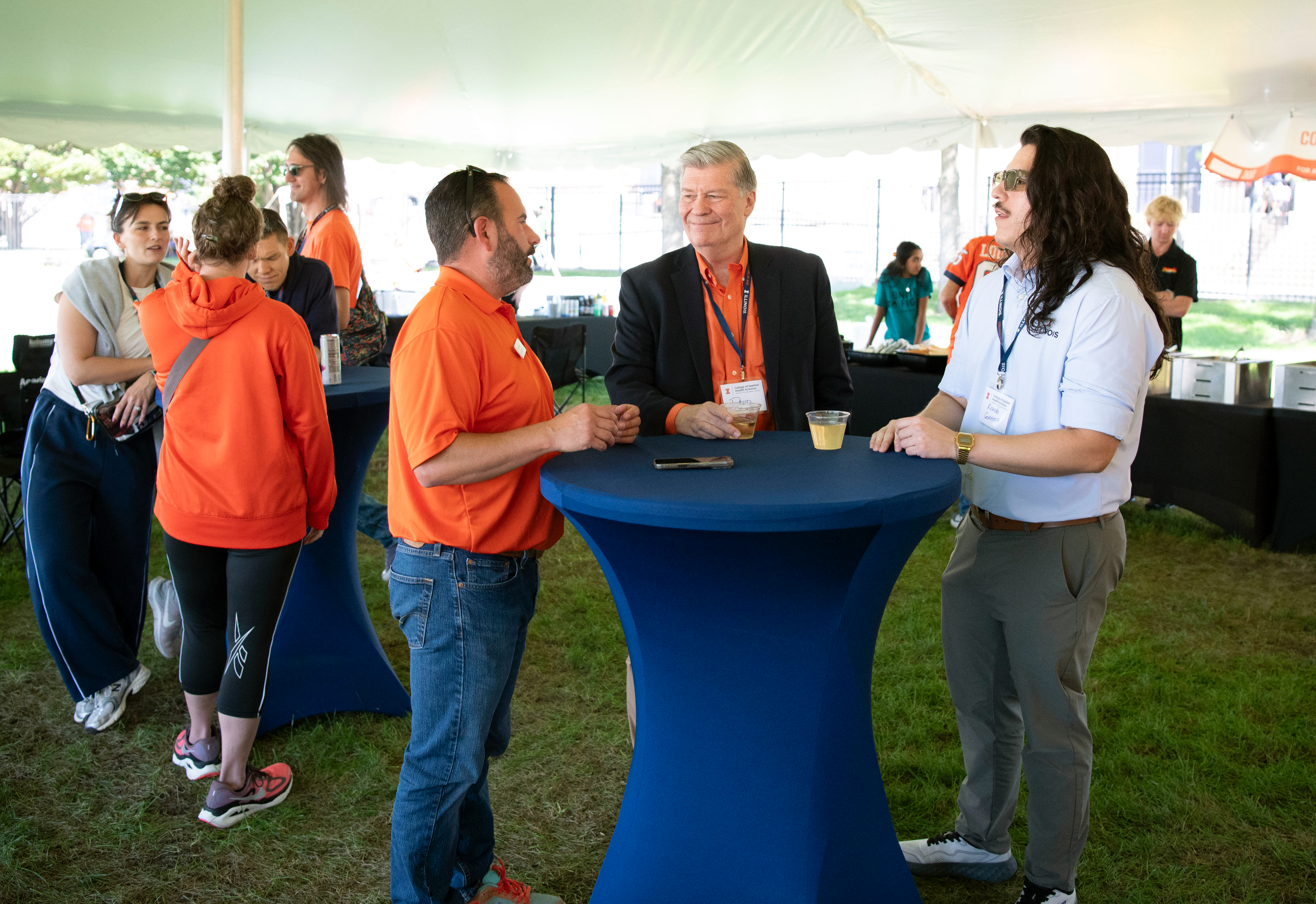
The first day of the 16th annual Sapora Symposium was intended to be a tribute to Red Grange, the former Illini football star who put college football and the NFL on the map in the 1920s.

And while Grange was a main subject of the afternoon panel, so was the message from other speakers from the College of Applied Health Sciences and the Recreation, Sport and Tourism Department about the futures of most of the student attendees.

AHS Dean Cheryl Hanley-Maxwell, RST department head Carla Santos and Illini basketball coach Brad Underwood all implored RST students to embrace the opportunities that Sapora afforded them, while bracing for the careers that await them.

“This is your first opportunity for professional development,” Dean Hanley-Maxwell said to the 350 students and other guests at the Colonnade Club within Memorial Stadium. “RST has given students like you an extraordinary opportunity to learn from and network with people you might work with. You are tomorrow’s leaders. How will you learn from what you hear? Will it spark a passion in you?”

Coach Underwood, whose son Tyler is an RST student with a concentration in sport management, spoke about the rewards in industries that come with an RST degree, but also warned of the sacrifices and struggles.

“I was 26 years in the profession before I became a head Division I basketball coach. I’ve gone backward in salary several times,” the third-year Illinois coach said. “But I have never worked a day in my life. This is a passion. What you’re getting ready to take on in life, is very, very special.

“It’s an extremely competitive field. Don’t be bashful, don’t be shy. You don’t make it in this field that way. (But) don’t let it be work, let it be a passion.”

The Grange panelists then took center stage, moderated by former Illinois sports information director Mike Pearson. Former Sports Illustrated writer Lars Anderson, who wrote “The First Star: Red Grange and the Barnstorming Tour That Launched the NFL,” in 2009, was the first to speak and talked about how the man nicknamed the Galloping Ghost transcended sports in the 1920s because ‘What they were seeing from Grange was unlike anything else.”

Chris Willis, the head of research for NFL Films and author of the new book, “Red Grange: The Life and Legacy of the NFL’s First Superstar,” said some people claimed Grange saved the NFL.

“He was the first superstar athlete who joined the NFL. His legacy was almost a blueprint of what the modern player does today. He left school early, signed with an agent, got a huge contract, got endorsements, appeared in Hollywood movies, and won NFL championships. He has a huge legacy.”

Day Two of the Sapora Symposium — named for Dr. Allen Sapora, a pioneer in recreation education and research at Illinois — was termed a “Career Diversity and Global Readiness Summit, and speakers include former Illini basketball star Deon Thomas, Midwest Living Magazine publisher Melissa Luebbe, and Illinois physics emeritus professor and renowned physics-of-baseball researcher Alan Nathan.

The Sapora Symposium was created and developed by the alumni advisory board of the Department of Recreation, Sport and Tourism in honor of Dr. Sapora. Dr. Sapora was a cornerstone to the education and careers of many of our alumni. He believed in mentoring younger generations and in providing them with critical connections to professionals in the field.

Editor’s note:

To reach Vince Lara-Cinisomo, email vinlara@illinois.edu.
 

Related news

Podcast: A Few Minutes With … Nick Burd


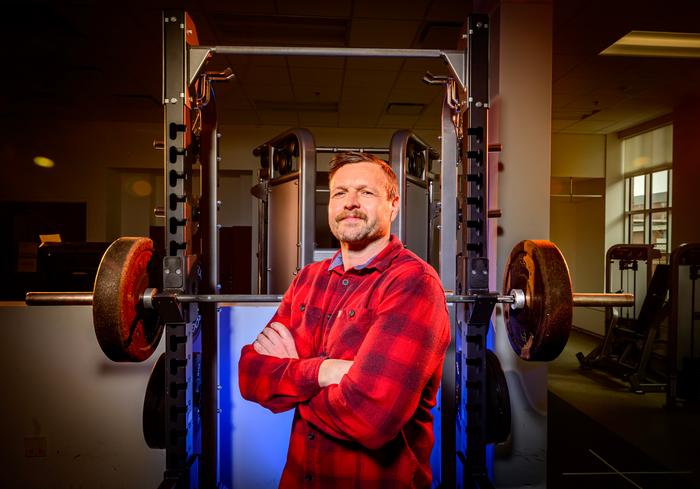
Kinesiology and Community Health associate professor Nick Burd speaks with AHS media relations specialist Vince Lara about his research on potatoes as an exercise fuel and that physical activity and nutritional guidelines are inextricably linked.

Transcript

VINCE LARA: This is Vince Lara in the College of Applied Health Sciences at the University of Illinois. Today, I speak with Nick Burd, Associate Professor in the Department of Kinesiology and Community Health, to talk about his research on nutrition and exercise performance. So, Nick, what inspires your research?

NICK BURD: Yeah, sure. I’d say the inspiration comes from answering a lot of real world questions. A lot of our research is aimed at being translational in nature. Most of our work is done in vivo in humans, which obviously is a good model to be able to have translational messages.

VINCE LARA: Mm-hmm. Now why pick Illinois? I notice you went to Ball State, right? So you were in the general region, but why pick here for where you’re teaching?

NICK BURD: Well, I like corn, I like to see it, I like to eat it. No, but in all seriousness, so a lot of my research is tech specialized infrastructure. In particular, it would take this kind of R1 infrastructure, which we have here at the University of Illinois. So coming to a place that could support my research needs, but also had good colleagues in place to create a synergy with my research. And Illinois sort of checked all those boxes, so it just made a lot of sense to come here. And as you sort of alluded to, I was born in Ohio, so it’s sort of home as well in terms of the Midwest.

VINCE LARA: Got you. Now your recent research on the effectiveness of potatoes as exercise fuel got great media attention, so I’m wondering, what led you to study that?

NICK BURD: Yeah, I mean, a lot of my research, I view my research team, we are truly a team. So any project we develop, I sort of develop it in collaboration with my research team. And what I mean by that, my PhD students normally. So that particular idea was sort of derived in collaboration with one of my formal students, Joe Beals. He happened to be a cyclist. Anecdotally, he used potatoes as a fueling source during exercise. Scientifically, it made a lot of sense to test that as a fueling source. I mean, keep in mind, right, sports marketing is– sports nutrition marketing, in particular, they sort of have tuned us to think that we need these specialized sports gels, which they do work, but they can become expensive.

And just trying to find a strategy that’s not too fancy, simple, accessible, cost effective, sort of underpin that sort of idea, potato just happened to be a nutrient dense carbohydrate food source. Students wanted to do it. Scientifically, it made sense, so we went for it. And then sometimes I always say some of the most, I guess the best way to– some of these weird questions always get the most media attention, and that happened to be one of those, right? I think it’s because everybody could kind of relate to it. There’s a lot of runners out there. It was timed well around the marathon, some of the major marathons. So a lot of the news networks just grabbed it and ran.

VINCE LARA: You talked about in your answer here about cost effective means.

NICK BURD: Sure.

VINCE LARA: And so I’ve noticed some of your research really focuses on that, promoting health through diet and exercise changes in a cost effective way.

NICK BURD: Yeah, I’d say that’s fair. I mean, a lot of our work is focused on whole food-based approaches, right? Again, I think we get tuned that sometimes. Certain strategies have to be specially formulated or highly specialized. But a lot of research is aimed at it doesn’t have to be that fancy. And let’s be honest here, a lot of my work is aimed at protein, dietary protein in particular, trying to optimize that within a diet. In terms of that, protein supplements are huge. And once again, they could become expensive.

And we need to be more focused on food first approaches, is what I say. Supplements are fine, but they should be just that, a supplement. But a lot of times, these are the front line strategy for people. But we need to stay focused on the food first approaches. Exercise is a brilliant tool to utilize to support a healthy lifestyle. I mean, it goes back to the old adage, you are what you eat and how you move, right? And that’s what our research shows. It’s aimed at showing that.

VINCE LARA: I know that you hope to look at aging and chronic disease and how exercise and diet can combat those conditions. Talk a little bit more about that, if you would.

NICK BURD: Yeah, I mean, I’m trained as a muscle physiologist, so a lot of times we’re focused on skeletal muscle health. And we do that for a variety of reasons, not to get too reductionist, but muscle has a lot of pertinent roles in a healthy lifestyle, in particular, huge contributor to basal metabolic rate, which for most of us is the biggest contributor to total daily energy expenditure. So we want to make sure we’re protecting muscle for weight maintenance essentially. And certainly, if you were under a period of energy restriction and lose some weight, you don’t want to lose muscle because that’s going to put you at a greater chance for weight regain.

But for metabolic health as well as for performance, we’re focused on muscle. But our experiments, we study obesity, obviously a prevalent disease, especially in Western society, end stage renal disease, aging. These are all areas of emphasis for us because, once again, these are all situations where muscle health is compromised. So we need strategies to sort of help or improve or augment muscle health so hopefully we can ultimately improve overall health.

VINCE LARA: My thanks to Nick Burd. This has been A Few Minutes With.

Related news

College of Applied Health Sciences
110 Huff Hall
1206 South 4th Street
Champaign, IL 61820
(217) 333-2131