Remembering Dr. Sally Peterson Falzone, SHS alumna


Sally Peterson-Falzone during a mission to China in 2013
(Photo provided)

It is with great sadness that I share the passing of Dr. Sally Peterson Falzone, a distinguished SHS alumna, scholar, clinician, and leader whose contributions to the field of speech-language pathology, particularly in craniofacial disorders and cleft palate, have left an enduring impact on many children and families.

Dr. Falzone earned both her bachelor’s and master’s degrees from the University of Illinois before completing her PhD at the University of Iowa. She was widely respected for her expertise in craniofacial disorders, and her prominent leadership/involvement in several organizations. 

Among her many accomplishments, Dr. Falzone served as President of the American Cleft Palate-Craniofacial Association and was deeply involved in the Society for Ear, Nose and Throat Advancements in Children (SENTAC) and numerous other professional organizations. Her influence extended far beyond her clinical and scholarly contributions. She was a dedicated mentor, a trusted colleague, and a passionate advocate whose work helped shape the field and inspired many clinicians.

As Judy Le Duc, who had the privilege of working alongside Sally for many years at the University of Illinois Medical Center, reflected, Sally was “a scholar, academician, and clinician” who devoted herself entirely to serving children with craniofacial conditions. Those who knew her personally speak not only of her professional accomplishments but also of her generosity, compassion, and commitment to others.

Dr. Falzone was also a longtime friend and supporter of our Department and the College of Applied Health Sciences. We are deeply grateful for her many contributions to our profession.

On behalf of the Department of Speech and Hearing Science, I extend our heartfelt condolences to Sally’s family, friends, former colleagues, and all those whose lives she touched.

Her legacy will continue to live on through the many clinicians she mentored, and the countless children and families who benefited from her care and advocacy.

With sympathy and gratitude,

Georgia Malandraki

Shahid and Ann Carlson Khan Professor of Applied Health Sciences
Department Head
Department of Speech and Hearing Science


Share on social

Related news

Six new grants advance SHS research in health, hearing, language and literacy


Six SHS faculty members secured funding this summer. (Google Images)

Faculty in the Department of Speech and Hearing Science are launching newly funded projects that address how children hear in complex environments, how clinicians deliver swallowing rehabilitation, how early language and literacy interventions can be tailored to families and classrooms, and how educators can put statewide literacy policy into practice. These awards continue the department’s exceptional momentum in research funding, adding to a vibrant portfolio of active externally sponsored projects that advance scientific discovery and improve lives. Together, the awards reflect a shared commitment to translating innovative research into meaningful clinical and developmental outcomes.

Associate Professor Justin Aronoff is a co-investigator on “Functional Spatial Hearing in Reverberation by Pediatrically Implanted Children and Young Adults,” a project led by principal investigator Ellen Peng at Boys Town National Research Hospital. The award totals $3,353,690, with a $202,974 subaward coming to the University of Illinois.

The project focuses on children with severe-to-profound hearing loss who use bilateral cochlear implants. Although the devices partially restore spatial hearing, everyday settings such as noisy, reverberant classrooms can still make it difficult to locate sounds and separate a speaker’s voice from competing noise. Researchers will examine how room reverberation and cochlear implant signal processing work together to shape functional spatial hearing.

Using psychophysical methods and realistic simulations of reverberant spaces, the team will study auditory image perception, spatial acuity and spatial unmasking. It will also consider developmental and hearing-related factors that may influence performance. The findings are expected to clarify gaps between pediatric cochlear implant users and peers with typical hearing and inform future work on personalized bilateral fitting strategies.

Assistant Professor Mariana Mendes Bahia, Julia Carpenter and Kelly Rogers received a $9,994 Shirley Ryan AbilityLab Catalyst Grant for “Practice Patterns in Dysphagia Rehabilitation: From Characterization to Practice Improvement.” Dysphagia, or difficulty swallowing, is common among people with neurological, oncological and other conditions, but research reports and clinical documentation often provide limited detail about what treatment is delivered and how it is implemented. Carpenter and Rogers are from the Shirley Ryan Ability Lab, where Carpenter is a practice leader in SLP and Rogers is a swallowing clinician.

The team will use the Rehabilitation Treatment Specification System, a framework for describing treatment targets, ingredients and mechanisms of action, to analyze dysphagia rehabilitation data. Researchers will characterize practice patterns across care settings and diagnoses, examine connections between rehabilitation practices and patient outcomes, and identify practical opportunities for quality improvement. By making treatment approaches more visible and comparable, the project aims to strengthen both clinical practice and future research.

A third project brings together Charles and Kay Stenberg Endowed Professor in Disability Research Pamela Hadley, the former SHS department head, Emily Harrington, assistant professor in Special Education and an SHS alumna, and Matt Lambert, professor and head of Special Education. Their two-year, $426,559 exploratory/developmental R21 award from the National Institute on Deafness and Other Communication Disorders supports “Leveraging Extant Data to Characterize Language Growth and Optimize Caregiver-Implemented Interventions for Children with Late Language Emergence.” The award runs from Aug. 1, 2026, through July 31, 2028.

Led by principal investigator Harrington, the researchers will analyze existing data from a randomized controlled trial of Enhanced Milieu Teaching-Sentence Focused, a caregiver-implemented intervention. They will trace vocabulary growth from 30 to 39 months and sentence development from 36 to 45 months, while examining how intervention strategies, children’s uptake of those strategies and participant-level factors shaped individual trajectories.

Results will help identify which intervention components work best at different developmental points. That evidence can guide the design and evaluation of brief, targeted approaches capable of reaching more children with late language emergence and their families.

SHS Associate Professor Laura Mattie’s collaborative research proposal with Founder Professor of Computer Science and Industrial and Enterprise Systems Engineering James Rehg, “Using Developmental Machine Learning to Code Eye Gaze in Down Syndrome and Fragile X Syndrome,” was selected for an 18-month, $29,987 grant from the Social & Behavioral Science Institute.

The project will determine AI’s ability to streamline behavioral coding of eye gaze in young children with Down syndrome and fragile X syndrome by leveraging the AnyGaze AI model. Recent advances in the development of AI models for quantifying nonverbal communication, led by Co-I Rehg, have enabled accurate coding of eye gaze in young neurotypical children and those with autism. However, the AnyGaze AI model has not yet been expanded to other neurodevelopmental disabilities. Additionally, the team will train the AnyGaze AI model to single, dual, and triadic gaze shifts, which are important for classifying early communication. With this foundation, the team aims to examine the potential clinical applications of the AnyGaze AI model by speech-language pathologists for assessment and treatment planning.

Assistant Professor Meaghan McKenna is principal investigator for “Writing for Reading: A Technology-Based Approach to Literacy Growth,” a $1,876,852 project funded by the U.S. Department of Education’s Office of Special Education Programs through its Stepping-Up Technology Implementation program. Hope Gerde of Texas A&M University is co-principal investigator; Jack Drobisz of the University of South Florida and Pasquale Bottalico are co-investigators. The award runs from Oct. 1, 2026, through Sept. 30, 2031.

The team will add a kindergarten-first grade writing extension to the Electronic Data Management and Expert Decision Making System. Through iterative development, evaluation, scale-up and dissemination, the project will offer job-embedded professional development designed to help classroom teachers strengthen children’s writing and reading achievement.

McKenna also serves as co-principal investigator on “The Illinois Literacy Plan: Identifying the Supports Needed for Meaningful Policy Implementation and Revision,” led by principal investigator Rachel Schachter of the University of Illinois Chicago. The $15,000 grant from the University of Illinois System Institute of Government and Public Affairs runs from July 1, 2026, through June 30, 2027.

The project will assess how school administrators, teachers and specialists perceive the Illinois State Literacy Plan and what support they need to implement it effectively. Findings will guide policies that better support educators and strengthen partnerships across the state.

Each project also depends on collaboration across disciplines and institutions, extending the faculty’s expertise through partnerships that connect laboratory measures, clinical records, classroom practice, public policy and family-centered intervention data with the practical challenges experienced by patients, practitioners, educators, children and caregivers every day.

Across the six awards, faculty and collaborators are pairing rigorous methods with questions rooted in daily life: hearing in a classroom, documenting swallowing care, supporting a child’s first words and sentences, strengthening early writing and reading, and helping educators implement literacy policy. These new projects continue a period of remarkable research growth within the department, adding to SHS’ mission of advancing both scientific discovery and clinical practice.

Editor’s note:

To reach Vince Lara-Cinisomo, email vinlara@illinois.edu.
 

Share on social

Related news

Laura Payne honored as 2026 King James McCristal Distinguished Scholar 


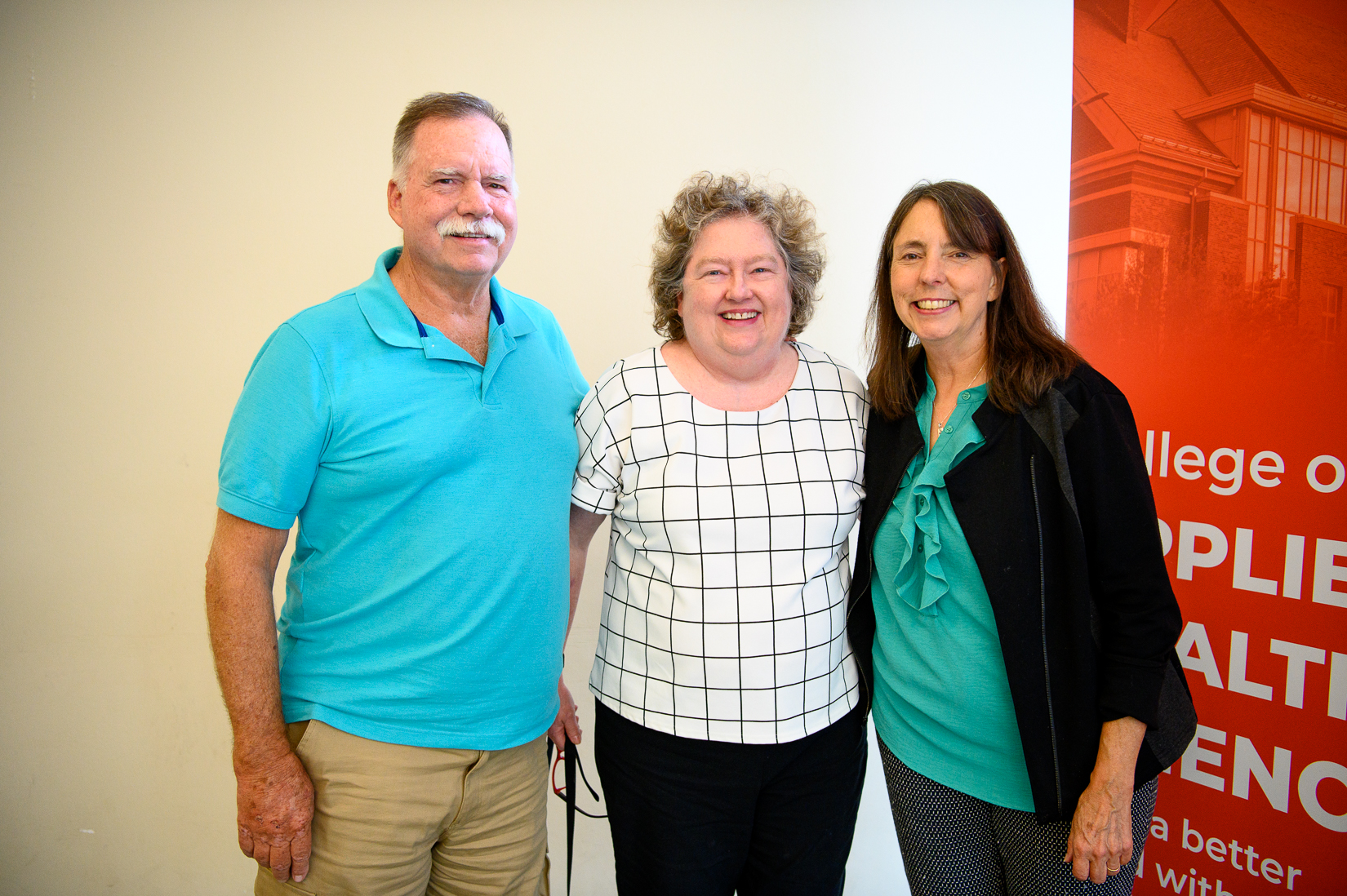
Laura Payne, right, was joined by brother Tom, left, and her cousin Mary Lynn O’Connor at the McCristal Lecture (Photo by Bridget Lee-Calfas)

For Laura Payne, the study of leisure is anything but idle work. It is a way to understand how people build identity, sustain relationships and protect their health across a lifetime, and how communities can make those benefits available to everyone. 

That career-long commitment was celebrated as Payne was honored as the 2026 King James McCristal Distinguished Scholar in the College of Applied Health Sciences at the University of Illinois. The distinction recognizes outstanding scholarships and gives the college community an opportunity to learn from researchers whose work is shaping their fields and improving health and well-being. 

 Payne, whose scholarship explores how recreation affects quality of life, marked the honor with a lecture titled “Leisure, Health, and Well-Being: Expanding Research Impact Through Public Engagement.” 

 Her remarks traced the roots of her research from childhood experiences in suburban Chicago to questions about resilience, chronic disease and healthy aging. 

“I’m really delighted and greatly appreciate this honor,” Payne said. 

Growing up, she found that recreation helped shape her confidence and sense of self. Access to a park district opened a world of activities and eventually led to jobs at a swimming pool, first as a lifeguard and later as a pool manager. She did not realize recreation could become an academic field until she was well into an undergraduate communications degree. After several years at a Chicago management consulting firm, however, she knew she wanted to work with a mission that felt more personal. 

Leisure and recreation had mattered deeply to Payne and her family. Over time, that understanding developed into an interest in aging, a subject she describes as inherently personal. One of the most important influences was her older brother, Tom, who was diagnosed in early adulthood with ankylosing spondylitis, a form of inflammatory arthritis. Payne watched him navigate disruptive symptoms, evolving treatments and changing lifestyle demands while remaining committed to the activities he loved. 

She was struck by his resilience and by the grit of others who adapted cherished pursuits rather than surrendering them. “Tom, you were a big reason why I pursued this line of research,” she said during her remarks. Her mother’s concise philosophy offered another guide: “Healthy aging is about ‘adapt, adapt, adapt.’” 

Those experiences helped Payne frame leisure not as an optional luxury but as an essential part of a good life. To prepare for her talk, she said she asked 25 people about what made a good day. Every participant named two leisure activities. Her research also found that people with broader leisure repertoires reported substantially better physical and mental health than those with fewer activities. 

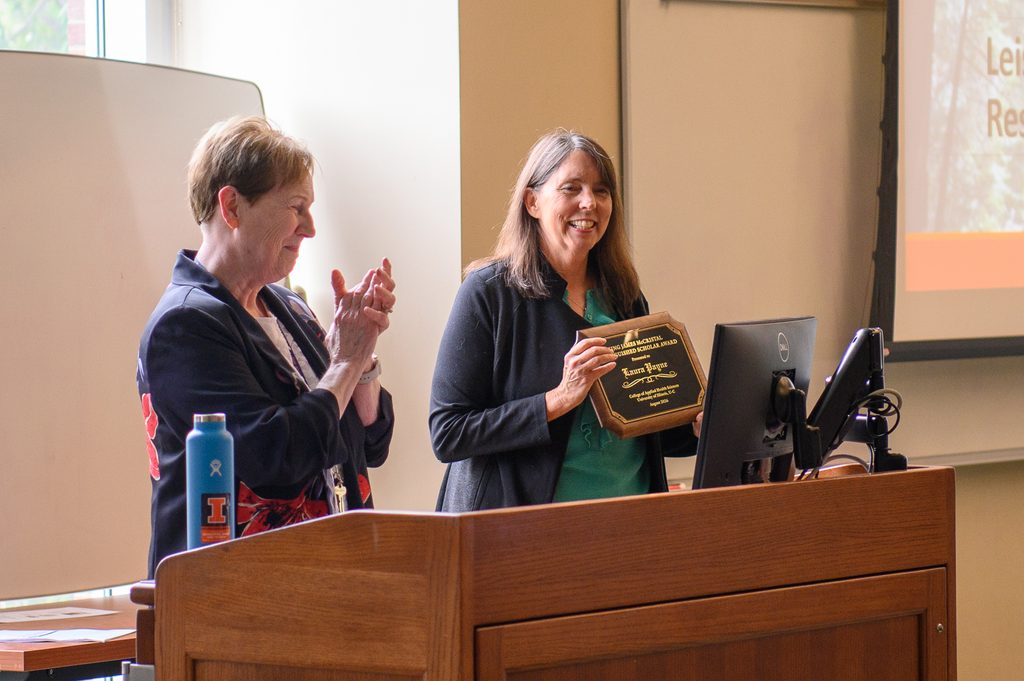
Laura Payne, right, accepts her plaque from Dean Cheryl Hanley-Maxwell (Photo by Bridget Lee-Calfas)

The findings carry increasing urgency as the population ages. Payne noted that people 100 and older are the fastest-growing segment of the older population, with many living more independently. Yet longer lives also bring challenges, including rising risk of developing chronic disease, uneven access to recreation and broader social conditions that affect whether people can pursue and define good health. Personal circumstances matter, too. Understanding healthy aging, in her view, requires attention to all of those forces and to what older adults are already doing well. 

Cheryl Hanley-Maxwell, dean of the College of Applied Health Sciences, praised Payne as an accomplished scholar who has advanced understanding of leisure, health and well-being while ensuring that her research makes a difference beyond the university. 

“Her work reflects a deep commitment not only to generating knowledge, but also to ensuring that research reaches beyond the university and makes a meaningful difference in the lives of individuals and communities,” Hanley-Maxwell said. 

That public-facing commitment is especially visible in Payne’s leadership of the Office of Recreation and Park Resources, which she took over in 2020. Payne refreshed the office’s mission: to collaborate on recreation, sport and tourism initiatives that build healthy communities. Under her leadership, the office responds to community and industry needs, issues and trends while giving undergraduate and graduate students hands-on experience through projects. 

Hanley-Maxwell said Payne’s approach demonstrates that research can have greater impact when scholars build relationships with communities, listen to the people their work is meant to serve and translate evidence into practices that are useful and accessible. That approach, the dean added, embodies the values of the McCristal honor. 

The King James McCristal Scholar Award was established in 1988 to honor King McCristal, dean of AHS from 1961-1973. 

“Dr. Payne’s research reminds us that leisure is far more than how we spend our free time,” Hanley-Maxwell said. “It can be an important contributor to health, quality of life, social connection and well-being, and a powerful avenue through which research can engage communities and create broader societal impact.” 

For Payne, the recognition brings a career built around that idea full circle: from a child finding confidence through local recreation, to a scholar asking how leisure can help people adapt, connect and thrive, to a public-engagement leader working alongside communities to put that knowledge into practice. 

Editor’s note:

To reach Laura Payne, email lpayne@illinois.edu.
 

Share on social

Related news

The support behind the student at Chez Veterans Center


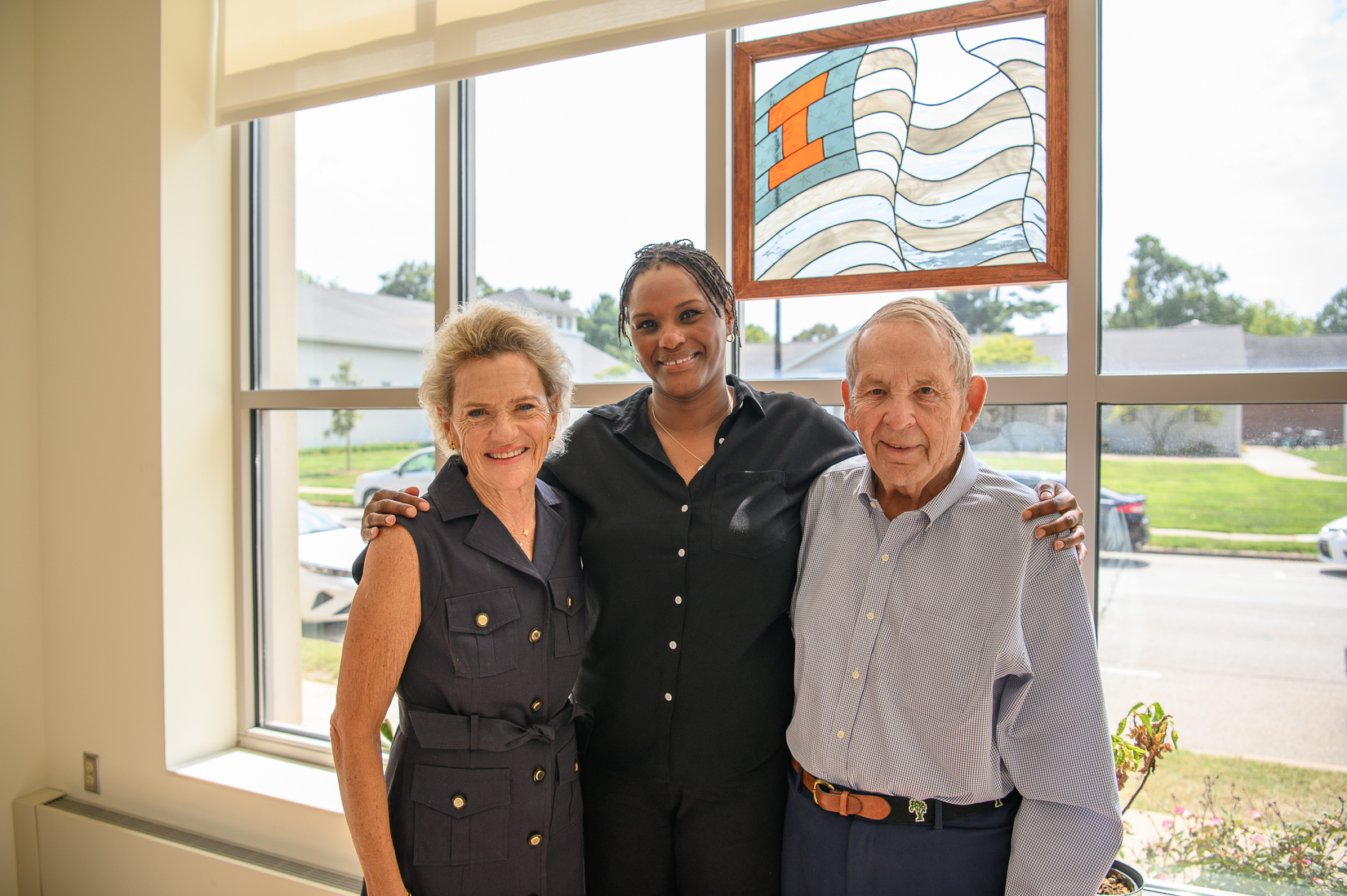
Scholarship recipient Phoebe Mbuvi, flanked by Honey Jacobs Skinner, left, and Sam Skinner (Photo by Ethan Simmons)

Phoebe Mbuvi had already built a career when her husband, John Goeken, arrived at the University of Illinois Urbana-Champaign to begin another one. Mbuvi had worked as a physician assistant for more than a decade. Goeken, a former U.S. Marine, enrolled in an electrical engineering program at the Grainger College of Engineering in his late 30s. His return to school prompted a question that soon became a plan: why shouldn’t she pursue a doctorate, too? 

She enrolled in the School of Information Sciences. Together, they balanced two demanding academic lives with work and two very young children. Then, before Goeken could begin his final year, he died in a motorcycle accident in May 2026. He was 39, six weeks shy of his 40th birthday, Mbuvi said. Their children were 2 and 3. 

The loss reordered everything. Mbuvi stepped away from employment to care for the family, but she did not want grief and financial pressure to close the door on the doctorate she and Goeken had imagined. The new Skinner Family Foundation Scholarship offers a way to keep that door open. 

A family mission 

Announced through the Chez Veterans Center, the scholarship is funded by Sam Skinner, a Chicago native who attended the University of Illinois before serving in the U.S. Army and going on to a distinguished career in public service as secretary of transportation and White House chief of staff under President George H.W. Bush. The scholarship supports spouses and domestic partners in military-connected families who are pursuing higher education or career training. Its focus is deliberate: the demands of military service rarely stop with the person in uniform. Careers are interrupted, moves complicate schooling and employment, and childcare can become a daily obstacle. 

For Mbuvi, that understanding was central to Goeken’s own life at Illinois. He had joined the Marines in 2004, served in Operation Iraqi Freedom over multiple tours, survived an improvised explosive device blast and received a Purple Heart. After leaving the military, he came to Illinois as a nontraditional student and found a community at Chez. 

“He loved the Chez Veterans Center. He spent all his time here,” Mbuvi said. Goeken served on committees and pushed others to see the web of needs surrounding a student Veteran: housing, children, childcare and a spouse’s own goals. “The Veteran can’t be the best student that they can be if they’re not being supported in other ways.” 

That conviction now echoes through a scholarship his family can use. The award does more than recognize Mbuvi as someone connected to a Veteran. It recognizes her as a scholar in her own right, one whose education strengthens the family Goeken left behind. 

Why spouses 

The 88-year-old Skinner arrived at the same idea from another direction. Skinner’s visit to Chez showed him an organization he believed could translate a gift into tangible help. 

“You associate yourself with quality people, they bring you up. The same is true with organizations,” Skinner said. At Chez, he saw a center that “got their act together” and was serving Veterans and their families in practical ways. 

His concern for military spouses has also been shaped by his involvement with America’s Warrior Partnership, which helps connect Veterans and families with employment and other services. Again and again, he said, spouses absorb the cost of military mobility: a transfer can mean losing a job, surrendering professional momentum or putting education on hold. 

He loved the Chez Veterans Center. He spent all his time here.”

Phoebe Mbuvi

Scholarship awardee, wife of John Goeken

“They gave up a lot. A lot of them gave up education to support their spouse,” Skinner said. When a family reaches a university prepared to support them, he added, it may be the right moment for a spouse or partner to begin again. “That’s the way you impact. Little did I know that there was no one more qualified than Phoebe,” he said. 

Skinner credited Andy Bender, Chez’ director of operations and services; and Jean Driscoll, the former assistant dean for advancement in the College of Applied Health Sciences, for cementing his agreement to endow the scholarship. 

“Jean kept pushing us to get it done right, and I know it took a long time, but we got to the right place,” Skinner said. 

The life behind the legacy 

Goeken’s path made that kind of second beginning visible. Mbuvi remembers a husband and father first, a Marine second and then an engineering student who was unbothered when classmates mistook him for a professor. His age did not diminish his sense that he belonged in a top program or that he could use what he learned in public service. 

He also understood how improbable the journey might have looked to people who knew his difficult early life. After his funeral, Mbuvi said, one of Goeken’s brothers told her that no one would have believed he would one day be married, raising two children and pursuing an engineering degree. 

“He leaves behind a big legacy,” she said. “Lots of people have been touched by John.” She wants their children to grow up knowing the shape of that legacy: his patriotism, his belief in democracy, his devotion to family and his refusal to let an unconventional route keep him from the classroom. 

Mbuvi is carrying part of that story forward each time she returns to her own studies. The scholarship cannot ease every burden military families carry, and it cannot restore the future her family expected. It can, however, protect one hard-won possibility: that her education continues. 

About the scholarship 

The Skinner Family Foundation Scholarship recognizes the critical role military spouses and partners play in supporting family well-being, academic persistence and the success of military-connected students. The scholarship is open to spouses of U.S. military Veterans and to spouses or domestic partners of active-duty, Reserve or National Guard service members. Applicants must have a current connection to the University of Illinois Urbana-Champaign and be enrolled in or admitted to an accredited degree-granting, vocational or technical program. Full-time, part-time, online, hybrid and returning students are eligible. 

Funds may support education-related expenses, including certification and licensing fees, professional development and other qualifying costs. Recipients also join a small cohort with access to community events, leadership and professional development opportunities and ongoing support from the Chez Veterans Center. For information or to apply, visit the online application form. 

Editor’s note:

To reach Vince Lara-Cinisomo, email vinlara@illinois.edu.
 

Share on social

Related news

Through life’s challenges, RJ Fitzpatrick will keep pushing


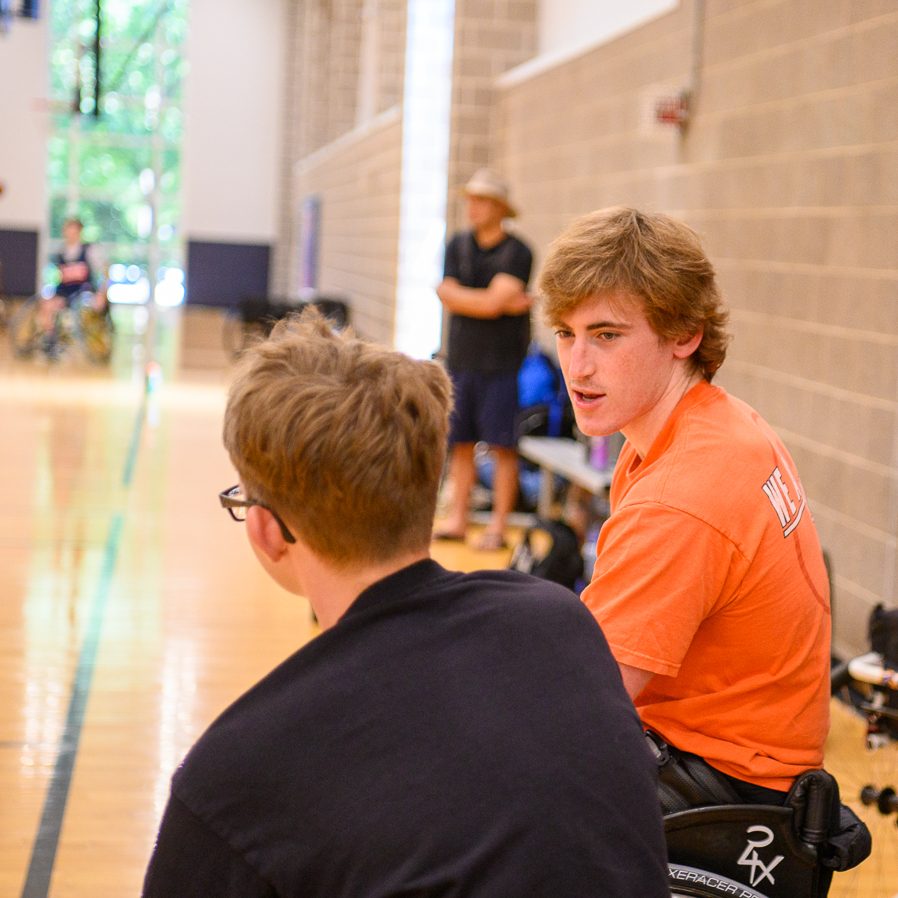
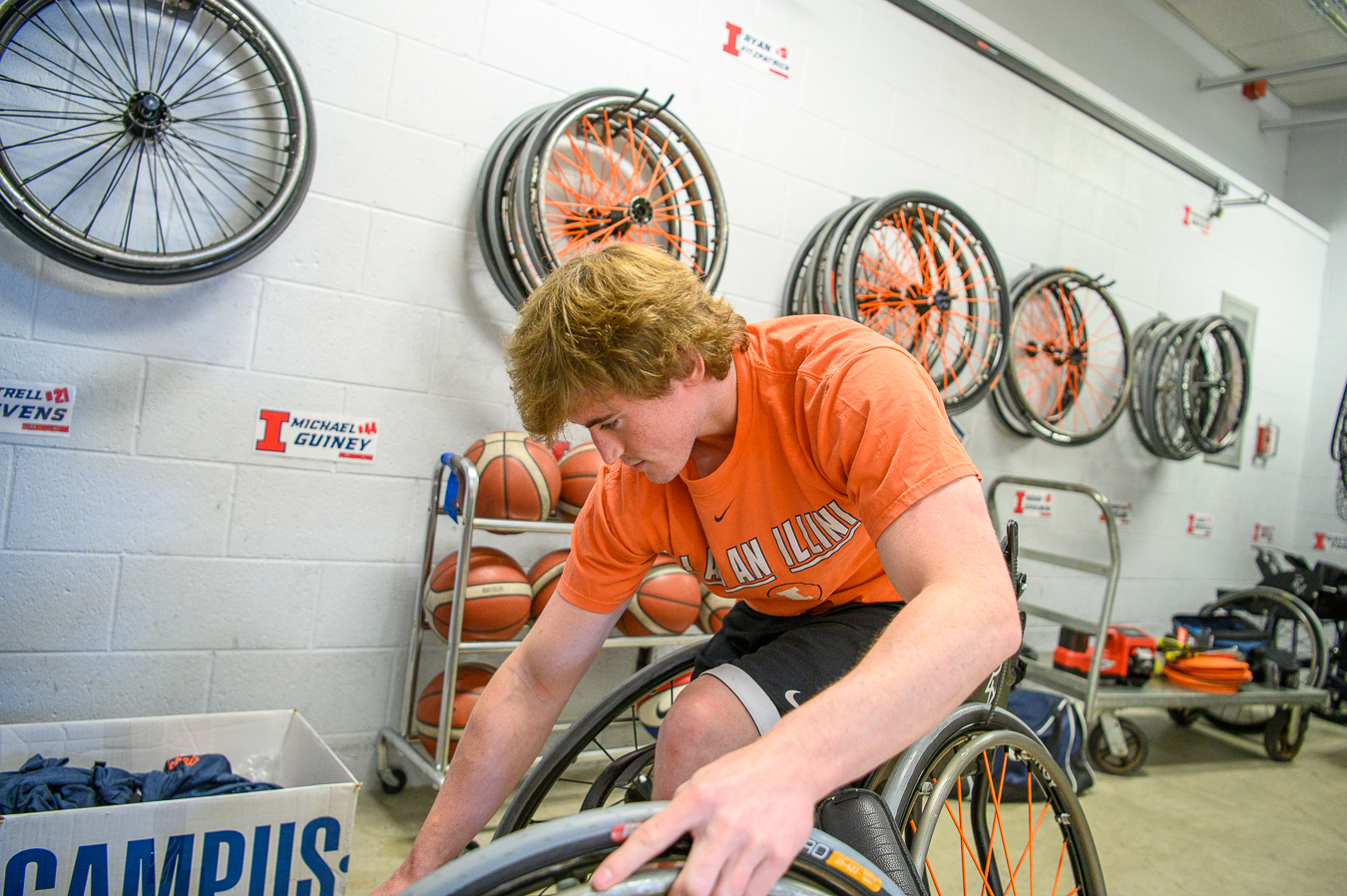
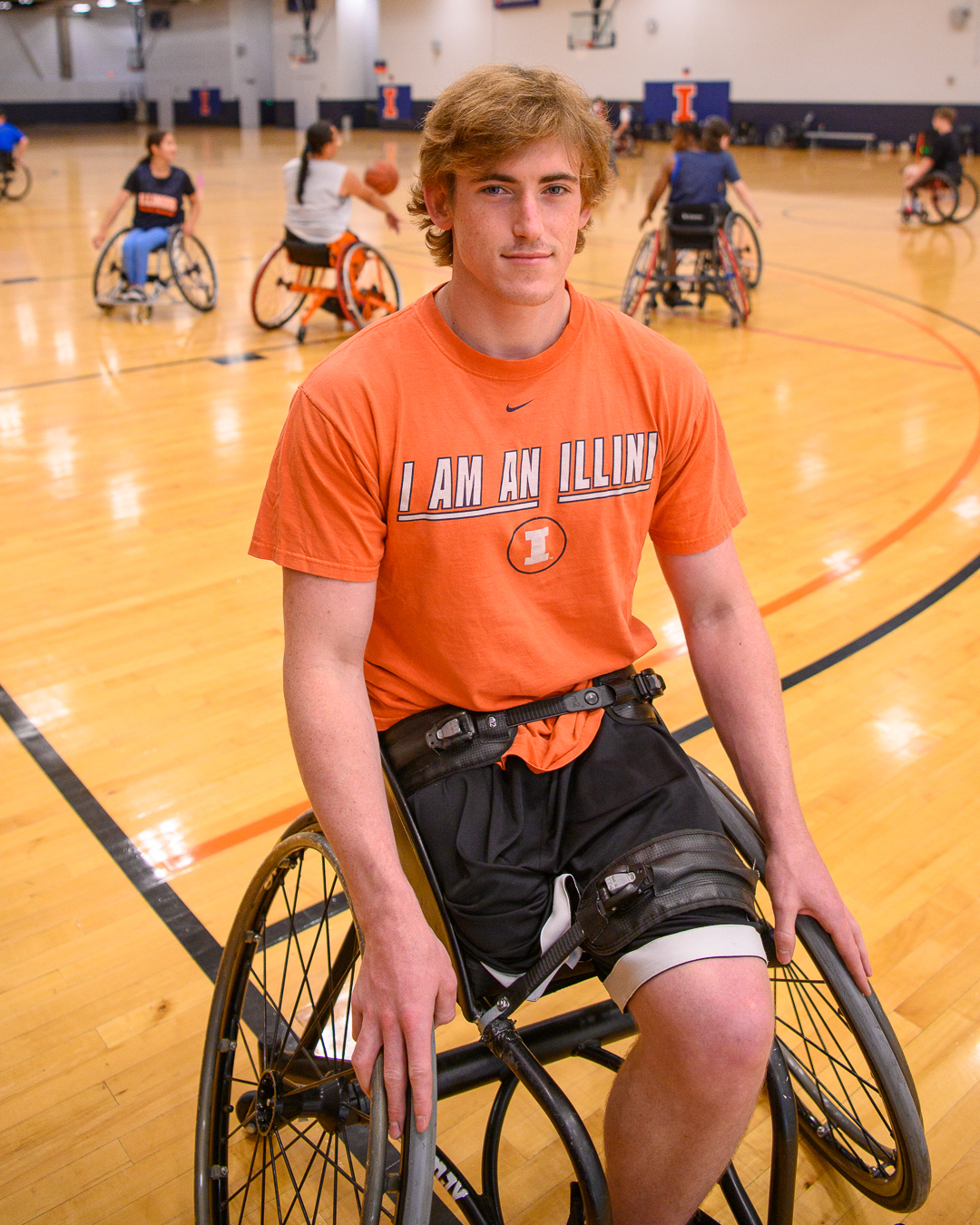
RJ Fitzpatrick, a senior in recreation, sport and tourism, at an Illinois wheelchair basketball skills camp this summer. (Photo by Ethan Simmons).

Against all odds, wheelchair basketball star RJ Fitzpatrick’s junior season at the University of Illinois Urbana-Champaign was a banner year​ on the court and in the classroom.  

He helped bring the Fighting Illini to a third-place finish in the National Intercollegiate Wheelchair Basketball Tournament in April and won the 2025​​-​​26 NWBA Player of the Year, the highest honor for collegiate players. He even earned a 4.0​ GPA​ in the spring semester, studying recreation, sport and tourism.   

“It was really nice to achieve, and it’s also hard, too, because my dad would be so proud of me for that,” Fitzpatrick said. “It was really tough not having him there, not seeing him in the crowd, because that was like his number one thing. He loved watching wheelchair basketball.”  

RJ Fitzpatrick is heading into his senior year at Illinois without his chief supporter: his father, Peter, who died ​in March ​after a two-year battle with brain can​cer​. The quintessential “sports dad,” Peter Fitzpatrick was his son’s biggest fan in the stands, though never quite his biggest critic.  

“That’s RJ himself,” Illinois men’s wheelchair basketball coach Jacob Tyree said.​ “That loss was felt to a magnitude that can’t be put into words—Peter was just a really unique person to have been intertwined with my athletes’ lives.”  

A new year brings new lessons and a new level of maturity for Fitzpatrick, a fierce competitor on the court with a kind, fun-loving presence in his daily life. And this year, he knows for sure: he’s not going it alone.  

“The support from the whole wheelchair basketball program has just been huge​,​” he said​​. ​​“​​Knowing I always have them in my corner, that just has made the whole thing a little bit easier, you know?​​ ​​​

“​​It’s always going to be hard, but knowing I have them has been so special.” 

Beginnings 

Fitzpatrick’s brand of physical, polished play—bumping in his chair for rebounds, drilling threes and dumping off swift passes to the interior—might feel like a style he was born with.  

But his story with wheelchair athletics began when he was an eighth grader attending Camp No Limits, a summer camp for kids with limb differences or limb loss. Fitzpatrick was born without his right leg, but he grew up playing able-bodied sports with his friends.  

​​A camp mentor let Fitzpatrick try out his sports chair for a spin.

“I remember it was super hard, because I was so used to playing stand-up basketball,” Fitzpatrick said. “Trying to figure out how to push the chair and also dribble and shoot from two feet lower was crazy to me.”  

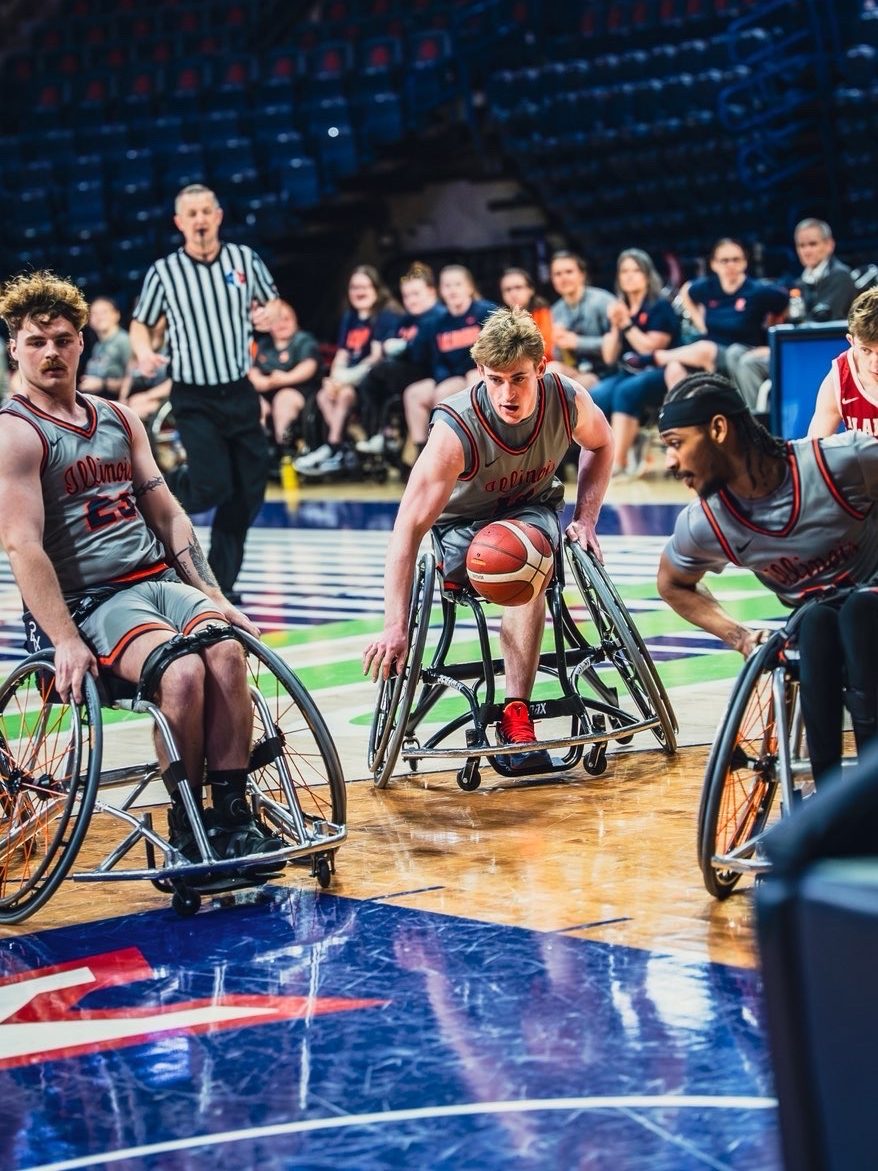
RJ Fitzpatrick (center) drives to the basket, flanked by teammates JM Davis (left) and Martrell Stevens. (Provided)

His high school hosted a wheelchair basketball exhibition game the following fall, and he gave it another shot.  

“That’s where the love for it all started,” Fitzpatrick said. “Once I got in it, I realized how much it leveled the playing field for me. I thought, ‘I could be pretty good at this.’”

He went on to play wheelchair basketball for New Britain High School, which had an adaptive sports program through the Ryan Martin Foundation, while swimming and running cross country for New Fairfield High School, using a prosthetic to run. His growing basketball talent drew attention, and he was offered a scholarship to play for the University of Illinois, 900 miles from his hometown of Sherman, Connecticut.  

He knew of the University of Illinois through one of his old Juniors Division teammates—recent RST graduate Martrell Stevens—who accepted an offer to play there. Its rich history of wheelchair athletics and accessibility through Disability Resources and Educational Services held broad appeal to Fitzpatrick.  

“There was always a feeling I had that I wanted to end up here,” Fitzpatrick said. “Even before I got recruited, right when I got to campus that first time, I kind of knew this was where I wanted to be.”  

Still, coming to the U. of I.’s 50,000-student campus from a town of 3,500 was a serious adjustment. Longtime teammates Grant Pierce and John Matthew “JM” Davis have formed his social bedrock while he’s been at the university. So much so, that they moved in together.       

“They’re brothers—they bicker, they fight—getting them to work together can be the hardest or easiest thing I do,” Tyree said. Many of the team’s funniest and fondest memories stem from those three, Tyree said, and their own brand of brotherly love. ​​Fitzpatrick​​ is usually the one stirring the pot.  

For the second year, the trio of big men will live in an Urbana house together for their senior season: “Those two, we’ve all just kind of stuck by each other’s side and been there for each other with anything that comes up,” Fitzpatrick said.  

A trying tournament  

After a two-year battle with glioblastoma, Peter Fitzpatrick—a longtime health and physical education teacher—passed away on March 9, 2026. His passing came just a week before the UTA College Classic in Arlington, Texas, a marquee wheelchair basketball tournament with seeding implications for nationals the next month.    

“We were even debating, ‘Do we not go?’” Tyree said. Both Illinois wheelchair basketball teams were thinking of diverting their travel to Peter’s funeral instead.

“Of course, me and my dad would want them to play,” Fitzpatrick said. Across the country, the team thought of how they could show support without physically being there for RJ and his family.  

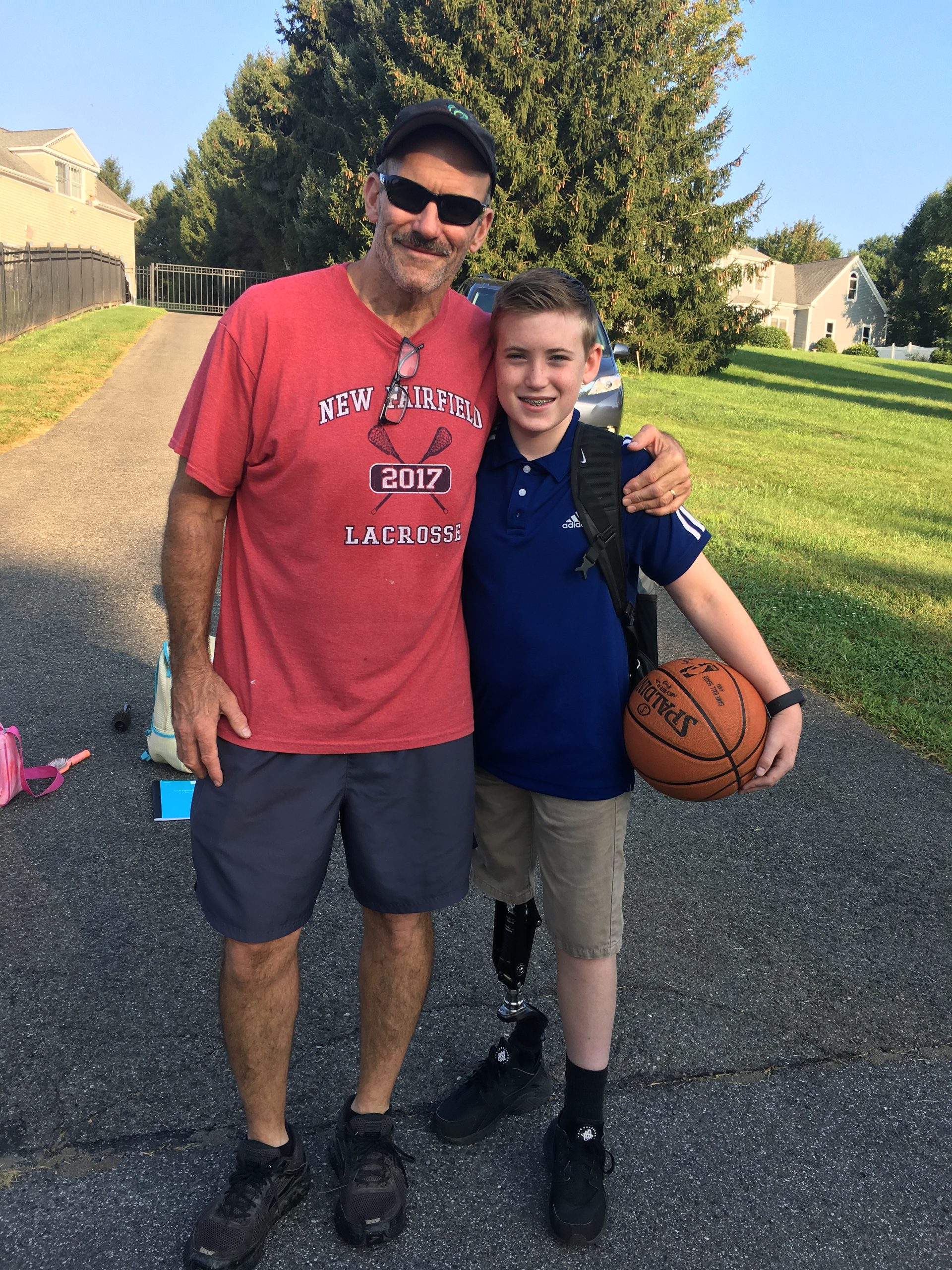
Peter and RJ Fitzpatrick in 2018. (Provided)

Halfway to Arlington, the team made a pit stop at a Walmart in Arkansas. After chatting with fellow coaches and DRES staff, Tyree went inside and grabbed a couple packages of black ribbon. Before the tournament games, members of the Illini men’s and women’s teams tied the ribbon around their chairs and wrists to pay respects to Peter, their biggest fan.  

Through his grief, RJ felt how the experience transformed the team.  

“Seeing how tight we were, as a whole program being one, those were some huge days for us to grow together,” Fitzpatrick said.  

Peter’s impact on the team resonated beyond supporting his son. He was a constant presence in the stands, and a supporter for RJ’s future Illinois teammate Gavin Ford—a sophomore from North Reading, Massachusetts—helping to get him into adaptive sports in the first place.  

The last time Peter saw his son play in person was at the fall alumni tournament, where Illinois wheelchair basketball players from years past came to battle the current-day roster.  

“My whole family came, and it was a really special time,” Fitzpatrick said. “I’m involved with the [St. John’s Catholic] Newman Center, and one of the priests came as well. It was special to see all these influential figures in my life.”  

It’s rare to find someone who excels in the classroom, as an athlete​​ and in how he treats other people—but that’s exactly who RJ is.

Sarah Agate

Teaching Associate Professor in Recreation, Sport and Tourism

After his playing days, Fitzpatrick dreams of working in a front office role for an NBA team or starting a wheelchair basketball program of his own closer to home in Connecticut. Recreation, Sport and Tourism has always made a sensible fit for his academic program at Illinois.  

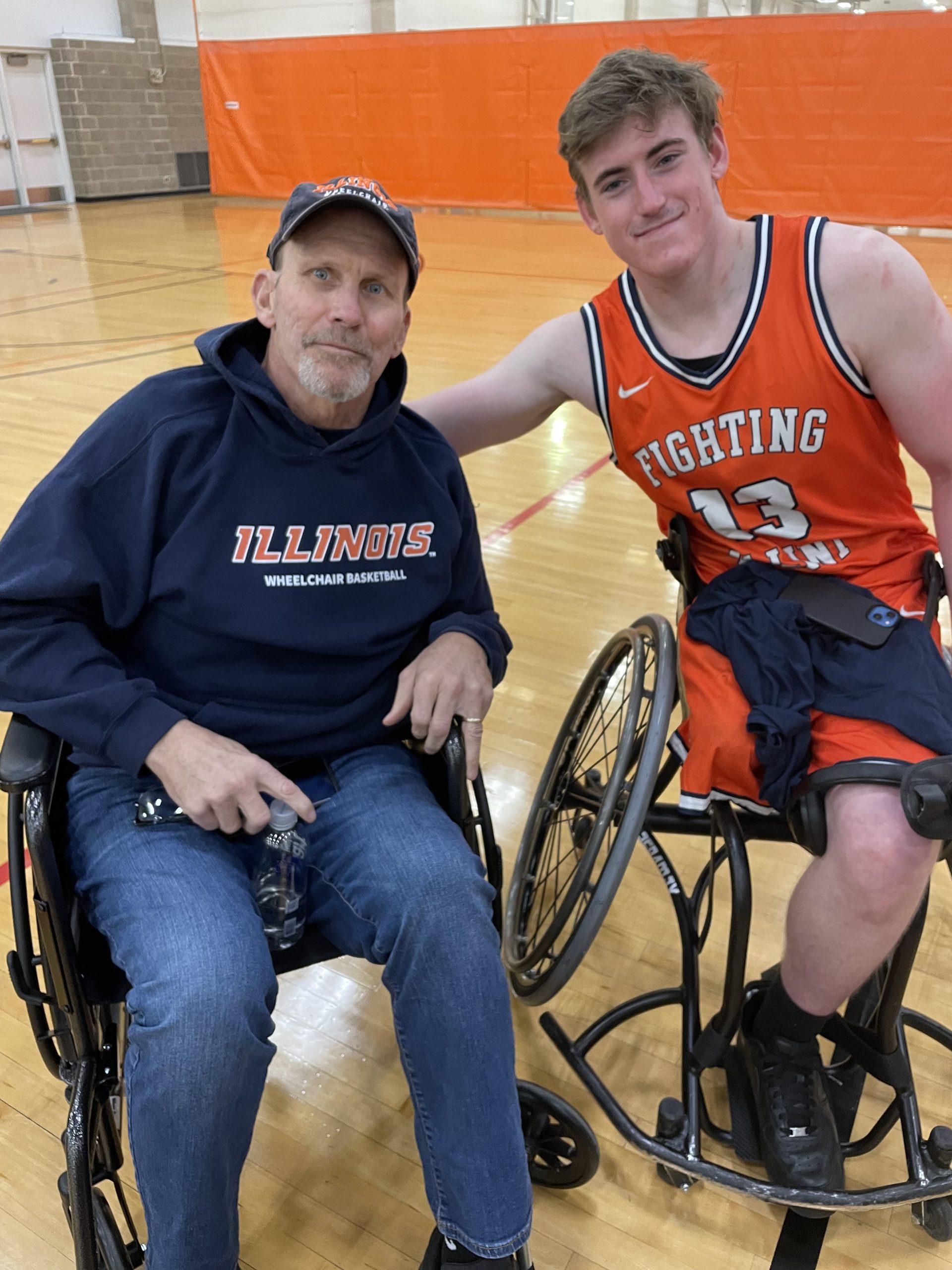
Peter and RJ Fitzpatrick in 2025. (Provided)

He got a small taste of what it takes to run a sports event of any kind when he helped organize the U. of I.’s spring wheelchair basketball tournament for a class—a tournament he was scheduled to play in himself.  

The courses Event Management and Implementation in Recreation, Sport and Tourism ​​opened a “new world” of small, behind-the-scenes details, from what it takes to get coaches and players organized to the volunteer force that helps a tournament run.  

And the class instructor, RST Teaching Associate Professor Sarah Agate, was understanding and flexible while Fitzpatrick and his family dealt with his father’s worsening illness and later grieved his passing.  

“She was really there for me in a huge way, knowing I had the support from her, constantly going home to Connecticut,” Fitzpatrick said. “I’d always bring it up to my mom and my sister, just how kind and supportive she was. I really hope that’s a contact and connection I can continue to build with her for the future. “  

In class, Fitzpatrick is “hard-working and responsible,” Agate said. “It’s rare to find someone who excels in the classroom, as an athlete​​ and in how he treats other people—but that’s exactly who RJ is.”  

His team-first attitude and humility were present in class. Agate didn’t even learn about Fitzpatrick’s Player of the Year honors until one of his classmates mentioned it to her. 

“What makes his accomplishments even more meaningful is that he achieved all of this while carrying the weight of losing his father.” 

Pushing forward 

Two third-place finishes at the NIWBT stamped a successful season for Illinois wheelchair basketball, but Fitzpatrick thinks the team is built for more.  

“I’m super confident with this group of guys we can finish even higher,” he said.  

Underneath his placid demeanor is a competitive intensity that churns for the whole team.  

“I tell people all the time, the character of who you are shows up on the court,” Tyree said. “You can watch a game of basketball, or any sport, and through an athlete’s actions you’ll see their core values embodied. Your actions, not intentions, reflect who you are to the world. 

“He has a mentality—that when it’s honed and brought out in the right ways—we’re fighting back. I don’t care if we’re down 40 points, if we’re down 2 points, I don’t care if we’re up 10, we’re still fighting and we’re going to see it all the way through. 

University of Illinois men’s wheelchair basketball senior RJ Fitzpatrick speaks to a camper at the Illini Premier Camp for young wheelchair basketball players on June 30, 2026.

“That’s something that’s really hard to ingrain in a player, and that’s where his character really shines.”  

As he matures into his role as a team leader, ​​Fitzpatrick​​​​​ is beginning to see himself as an ambassador for his sport and for the larger disability community.   

“I’m trying to continue to grow my relationships with the people on campus,” Fitzpatrick said. “Being an amputee, I’m a little more ‘obvious,’ and that’s a great way for me to talk to somebody about wheelchair basketball, or adaptive sports, and open up that world for them.”  

All those feelings were made fresh while he coached in this summer’s skill development camps for wheelchair basketball​ ​​at the Activities and Recreation Center. Fitzpatrick turned in a few 12-hour days mentoring kids of all skill levels: some were new to the sport; others were vying for a collegiate roster spot.  

“It’s special to see these dads come with their sons or daughters to camp and walk around campus​;​​​ I remember doing that with my dad,” Fitzpatrick said. “Because those were some of the best years of my life, the excitement of finding a school—those moments really warmed my heart.”  

In his experience, the grief “never really goes away.” But tender moments and new life lessons keep Fitzpatrick moving forward, with his father’s memories still held close.   

“Trying to live a little bit more like him really inspires me to keep pushing.”  

University of Illinois men’s wheelchair basketball star RJ Fitzpatrick helped run this year’s Illini Premier Camp for young wheelchair basketball players in late June. He’s heading into his senior year after a year of great accomplishments on the court, and one of his hardest years off of it.

Editor’s note:

Want to learn more about wheelchair basketball? Join the 8-week course: RST 265 Principles of Coaching Wheelchair Basketball, instructed by RST Graduate Student Morgan McCammon, four-year women’s wheelchair basketball player for Illinois.

To reach Ethan Simmons, email ecsimmon@illinois.edu.  

Share on social
Related news

College of Applied Health Sciences
110 Huff Hall
1206 South 4th Street
Champaign, IL 61820
(217) 333-2131