Sept. 15, 2026 | Vince Lara-Cinisomo
Leisure and recreation were ways of life for Payne and led to her passion and career
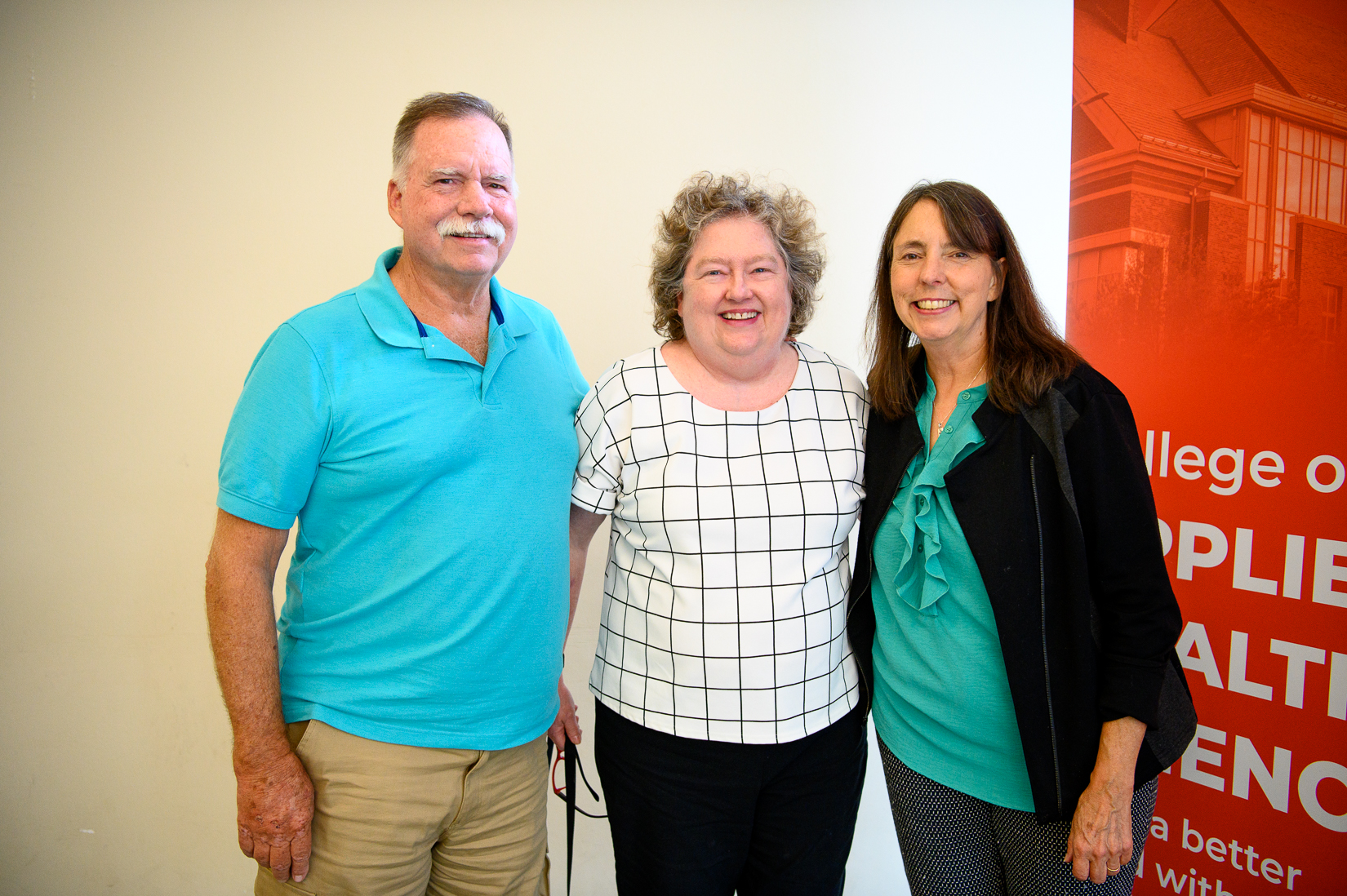
For Laura Payne, the study of leisure is anything but idle work. It is a way to understand how people build identity, sustain relationships and protect their health across a lifetime, and how communities can make those benefits available to everyone.
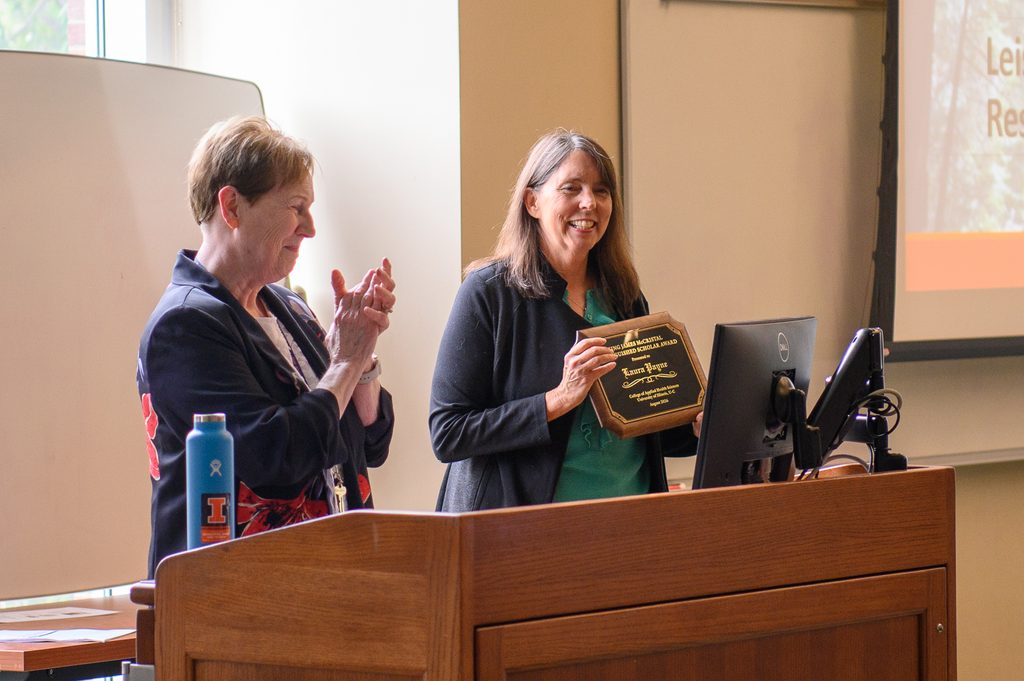
That career-long commitment was celebrated as Payne was honored as the 2026 King James McCristal Distinguished Scholar in the College of Applied Health Sciences at the University of Illinois. The distinction recognizes outstanding scholarships and gives the college community an opportunity to learn from researchers whose work is shaping their fields and improving health and well-being.
Payne, whose scholarship explores how recreation affects quality of life, marked the honor with a lecture titled “Leisure, Health, and Well-Being: Expanding Research Impact Through Public Engagement.”
Her remarks traced the roots of her research from childhood experiences in suburban Chicago to questions about resilience, chronic disease and healthy aging.
“I’m really delighted and greatly appreciate this honor,” Payne said.
Growing up, she found that recreation helped shape her confidence and sense of self. Access to a park district opened a world of activities and eventually led to jobs at a swimming pool, first as a lifeguard and later as a pool manager. She did not realize recreation could become an academic field until she was well into an undergraduate communications degree. After several years at a Chicago management consulting firm, however, she knew she wanted to work with a mission that felt more personal.
Leisure and recreation had mattered deeply to Payne and her family. Over time, that understanding developed into an interest in aging, a subject she describes as inherently personal. One of the most important influences was her older brother, Tom, who was diagnosed in early adulthood with ankylosing spondylitis, a form of inflammatory arthritis. Payne watched him navigate disruptive symptoms, evolving treatments and changing lifestyle demands while remaining committed to the activities he loved.
She was struck by his resilience and by the grit of others who adapted cherished pursuits rather than surrendering them. “Tom, you were a big reason why I pursued this line of research,” she said during her remarks. Her mother’s concise philosophy offered another guide: “Healthy aging is about ‘adapt, adapt, adapt.’”
Those experiences helped Payne frame leisure not as an optional luxury but as an essential part of a good life. To prepare for her talk, she said she asked 25 people about what made a good day. Every participant named two leisure activities. Her research also found that people with broader leisure repertoires reported substantially better physical and mental health than those with fewer activities.
The findings carry increasing urgency as the population ages. Payne noted that people 100 and older are the fastest-growing segment of the older population, with many living more independently. Yet longer lives also bring challenges, including rising risk of developing chronic disease, uneven access to recreation and broader social conditions that affect whether people can pursue and define good health. Personal circumstances matter, too. Understanding healthy aging, in her view, requires attention to all of those forces and to what older adults are already doing well.
Cheryl Hanley-Maxwell, dean of the College of Applied Health Sciences, praised Payne as an accomplished scholar who has advanced understanding of leisure, health and well-being while ensuring that her research makes a difference beyond the university.
“Her work reflects a deep commitment not only to generating knowledge, but also to ensuring that research reaches beyond the university and makes a meaningful difference in the lives of individuals and communities,” Hanley-Maxwell said.
That public-facing commitment is especially visible in Payne’s leadership of the Office of Recreation and Park Resources, which she took over in 2020. Payne refreshed the office’s mission: to collaborate on recreation, sport and tourism initiatives that build healthy communities. Under her leadership, the office responds to community and industry needs, issues and trends while giving undergraduate and graduate students hands-on experience through projects.
Hanley-Maxwell said Payne’s approach demonstrates that research can have greater impact when scholars build relationships with communities, listen to the people their work is meant to serve and translate evidence into practices that are useful and accessible. That approach, the dean added, embodies the values of the McCristal honor.
The King James McCristal Scholar Award was established in 1988 to honor King McCristal, dean of AHS from 1961-1973.
“Dr. Payne’s research reminds us that leisure is far more than how we spend our free time,” Hanley-Maxwell said. “It can be an important contributor to health, quality of life, social connection and well-being, and a powerful avenue through which research can engage communities and create broader societal impact.”
For Payne, the recognition brings a career built around that idea full circle: from a child finding confidence through local recreation, to a scholar asking how leisure can help people adapt, connect and thrive, to a public-engagement leader working alongside communities to put that knowledge into practice.
Editor’s note:
To reach Laura Payne, email lpayne@illinois.edu.
Share on social