AHS Announces 2022 Award Recipients


Our College of Applied Health Sciences college awards.

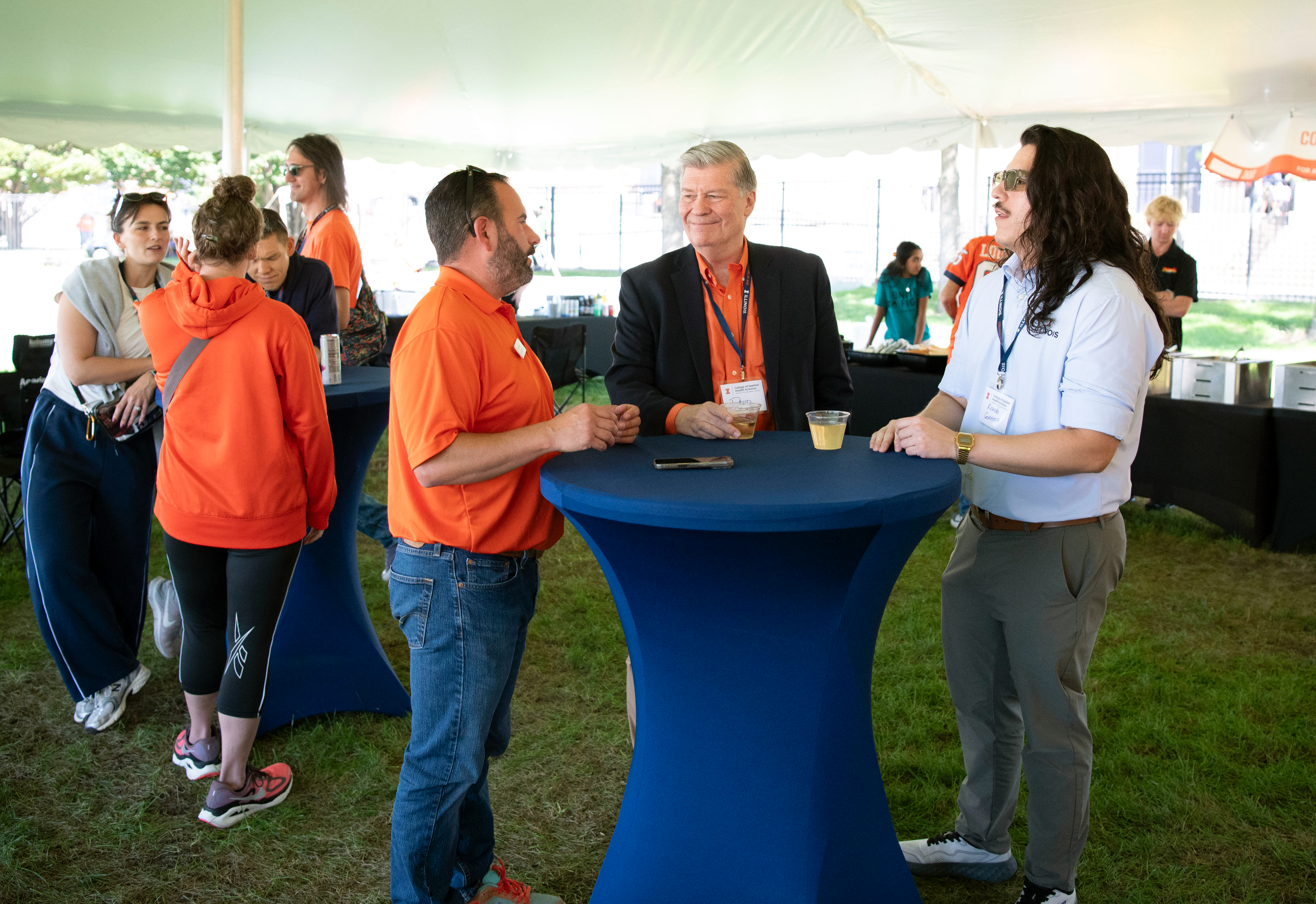
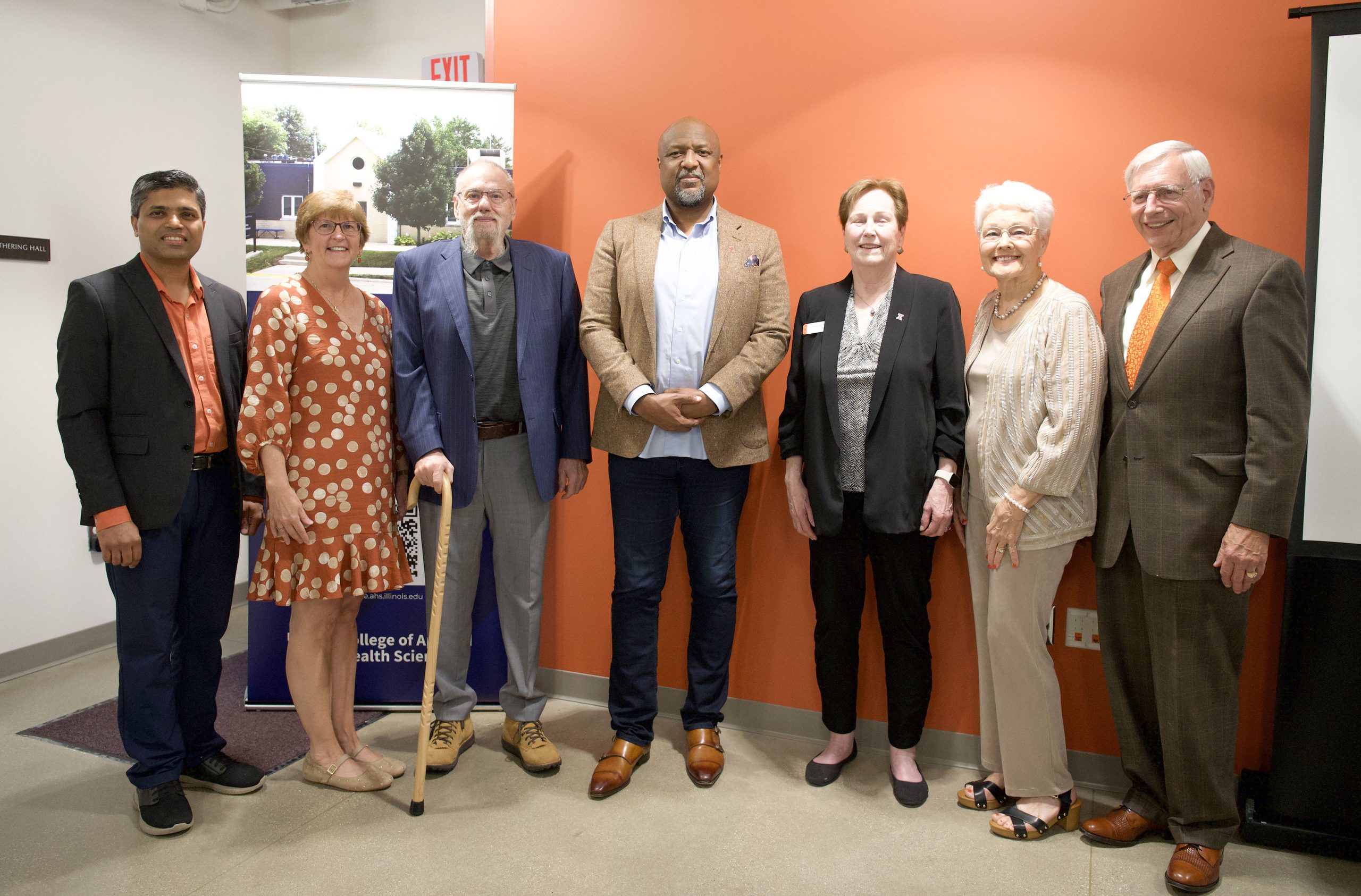
The College of Applied Health Sciences has awarded eleven faculty, staff, and students college awards for excellence. Three individuals received campus-level awards. All recipients will be honored at the Spring College Meeting in May.

AHS Excellence in Undergraduate Teaching Award: Faculty
Campus Award for Excellence in Undergraduate Teaching
Associate Professor Andiara Schwingel, Department of Kinesiology and Community Health
Since joining KCH as a visiting scholar in 2008, Dr. Schwingel has taught more than 40 courses and appears regularly on the List of Teachers Ranked as Excellent. She founded START, Student Aging Researchers in Training, which places undergraduates in labs across the college, and has mentored more than 30 START scholars in the Aging and Diversity Lab. She is the current Associate Head for Undergraduate Studies in Community Health. She also received this award in 2018, and in 2013 was awarded the Phyllis J. Hill Award for Exemplary Mentoring in the Edmund J. James Scholar Program.

AHS Excellence in Undergraduate Teaching Award: Teaching Assistant
Allyson Box, Ph.D. student, Department of Kinesiology and Community Health
Allyson is a Graduate Research Assistant in Dr. Steve Petruzzello’s Exercise Psychophysiology Lab and a Teaching Assistant for his undergraduate class on the social and psychological aspects of physical activity. She has been named to the List of Teachers Ranked as Excellent every semester since the fall of 2017. Students described Allyson as “approachable,” “passionate,” “an exemplary teacher,” and “an exceptional communicator.” One said, “She encourages us to share our ideas and asks us thought-provoking questions, which has allowed me to gain confidence and develop my critical thinking skills.”

AHS Excellence in Online & Distance Teaching
Professor Monika Stodolska, Department of Recreation, Sport and Tourism
Dr. Stodolska played an instrumental role in developing and implementing RST’s online master’s program in 2012. She created the first RST course offered online, Theories and Concepts of Leisure, which she recently revised by developing new content and engagement activities that foster meaningful student interaction, and recording more than 40 video lectures. The AHS e-Learning team regularly shares her lectures with other faculty as outstanding examples of online content. She also converted the campus-based undergraduate course on diversity in recreation, sport, and tourism into an online course that enrolled more than 450 students in the fall of 2021.

AHS Excellence in Graduate and Professional Teaching Award
Campus Award for Excellence in Graduate and Professional Teaching
Associate Professor Toni Liechty, Department of Recreation, Sport and Tourism
Dr. Liechty has taught courses for both the on-campus and online master’s degree programs in RST, and developed a course on legal aspects of RST that she has taught in both programs. She also teaches classes for the doctoral program. Dr. Liechty is deeply committed to diversity and takes steps not only to ensure that all students in her classes are able to make meaningful contributions, but also to make all of her students aware of the value of the diversity of perspectives. She often adjusts course syllabi to accommodate students’ various research interests.

AHS Excellence in Graduate Student Mentoring Award
Associate Professor Raksha Mudar, Department of Speech and Hearing Science
Dr. Mudar has guided the work of three Ph.D. students and several M.A. students in the Aging and Neurocognition Lab. All three Ph.D. students published research papers under her mentorship. Her two current doctoral students have received highly competitive 2021-2022 national scholarships from the American Speech-Language-Hearing Foundation. One also received a prestigious Dissertation Completion Fellowship from the University of Illinois Urbana-Champaign Graduate College. As the Director of Graduate Studies in SHS, Dr. Mudar ensures that more than 100 graduate students meet program milestones and provides support to faculty for graduate mentoring and advising.

Phyllis J. Hill James Scholar Award for Exemplary Mentoring
Professor Steven Petruzzello, Department of Kinesiology and Community Health
Dr. Petruzzello also received this award in 2018. Since that time, he has mentored almost 40 additional students enrolled in the James Scholar Program. He works with each student to help them identify their area of research interest and how best to pursue it, guides them through relevant literature reviews, and provides them with regular feedback as they complete their projects. Students describe him as enthusiastic, caring, and passionate. He has been called “one of the most impactful faculty members that I have worked with” and students greatly appreciate his commitment to their success and well-being.

Campus Award for Excellence in Undergraduate Advising
Amy O’Neill, Department of Kinesiology and Community Health
Since joining KCH as an Academic Advisor for kinesiology in 2003, Amy has shepherded thousands of undergraduate students through their studies. In addition to her one-on-one advising duties, she teaches the introductory kinesiology course to new first-year and transfer students. She developed a kinesiology advising website to share important resources with students and sends out a weekly email message to make them aware of opportunities for involvement in the department, college, and campus. She also has played significant roles on departmental, college, and campus committees related to student registration, honors and awards, and scholarships.

AHS Academic Professional Staff Excellence Award
Ann Fredricksen, Division of Disability Resources and Educational Services
After starting with DRES captioning videos in 2008, Ann has become the Coordinator of DRES’s Accessible Media Services. She oversees the captioning of videos, trains and manages student workers, develops captioning and audio description standards for the campus, and creates and administers educational outreach activities related to captioning and accessibility. Since the COVID pandemic began in late March 2020, she has been responsible for the captioning of more than 1000 hours of video material. She has created Math and Science Captioning Standards and Best Practices for STEM fields and co-developed an online captioning certification course.

AHS Custom Class Staff Excellence Award
Heidi Krahling, Center on Health, Aging, and Disability
Heidi has been providing outstanding support to faculty, staff, and students before and during the grant submission process as CHAD’s Grant Specialist since 2018. She brings her commitment to the advancement of science, keen eye for detail, and dedication to submitting grants error free and on time to bear on each proposal, and played a critical role in the college’s success in receiving its greatest amount of external research funding ever in 2020, more than $18 million. Grant seekers appreciate that Heidi’s skills enable them to focus on the scientific content of their proposals.

AHS Staff Excellence Awards
Sally Marshall, Dean’s Office
Sally brings strong organizational, communication, and multitasking skills to her work as the Office Administrator in the AHS Dean’s Office. She has provided support to the Senior Assistant Dean for Undergraduate Recruitment, Advising, and Enrichment, and is the primary support person for the Associate Dean for Academic Affairs. She assists with planning major events such as Ph.D. Recruitment Day and the AHS Distinguished Lecturer Series, serves as the liaison between the Associate Dean and departmental directors of undergraduate and graduate studies, and supports the Associate Dean in his role as Interim Director of the Chez Veterans Center.

Kathy Saathoff, Office of Advancement
As the Office Administrator, Kathy supports the Assistant Dean for Advancement, two Major Gift Officers, and the Associate Director for External Engagement. She manages the execution of the critical gift acknowledgement process, handles multiple requests for research and reports, plans donor visits, and helps to complete donor fund agreements. Advancement personnel across campus regard Kathy as a friendly resource with deep institutional knowledge, developed during both her current position and her previous position with the University of Illinois Foundation. Colleagues describe her as “an exceptional teammate” who is always able to see the big picture.

Related news
MS-HT’s Class of 2021: Tia King


Tia King is one of six MS-HT students who quickly landed employment after graduating

Q: What attracted you to the University of Illinois?

A: I The attraction started in undergrad. I transferred here for the start of my junior year and fell in love with the campus and faculty. I quickly got involved with club sports and activities so, Champaign-Urbana felt like home.

Q: Why did you pick the MS-HT program?

A: The program seemed really customizable. I knew I loved healthcare but also loved the idea of designing things. It seemed like I would be able to do both of those things with this program. Also talking with (Associate Director) Nicole (Holtzclaw-Stone) prior was extremely helpful. She set up a meeting right away and answered all my questions (and continued to do so throughout the program).

Q: Did the MS-HT program help you decide a career path?

A: It really did, I thought that I wanted to be a clinical psychologist prior to this program. When I was accepted into the program, I wanted to look at athletes and wearable devices, given I had played sports my entire life. But through (Dr. Tim Hale’s) courses (Human Factors and Understanding Users), I knew the route that I wanted to take was UI/UX.

Q: What did you learn that you immediately applied in your new job?

A: I almost immediately became the UX expert for our team, given that was my major focus during my time in the program. An example of some UX work I have done thus far is designing what the process should look like for customers with a prescreened offer.

Q: Did your new employer mention your MS-HT program as a reason you were hired?

A: Yes, for multiple reasons.The program was mentioned because I would bring a fresh perspective to the team, and how they view users given I was doing the FinTech field with a healthcare background (this is the case for someone else on my team too!). Something else my employer seemed interested in was the length of the program and the skills I was able to learn. And two other members on my team also attended UIUC, so maybe there is some bias there, ha!

Q: What was your favorite part of the MS-HT program?

A: LOVED Tim’s courses, because they allowed me to find my career path. I really enjoyed the team hardware project, where we built a hydraulic boot that could support patients. This was something that was completely out of my comfort zone, and difficult but I learned so much.

Q: What one thing did you take away from MS-HT that you feel was most important to your career?

A: Learning how to be collaborative. This is crucial for my role, given I have multiple meetings a day, where I have to share/update what I am doing and get feedback. This is similar to the structure of the courses we had with Tim, so this part of the job doesn’t feel overwhelming!

Editor’s note:

To reach Vince Lara-Cinisomo, email vinlara@illinois.edu.
 

Share on social

Related news

MS-HT’s Class of 2021: Marlene Robles Granda


Class of 2021: From left to right: Neva Manalil, Gabrielle Choo-Kang, Amrutha Kumaran, Marlene Robles Granda, Asif Huq, and Tia King.

Q: What attracted you to the University of Illinois?

A: One of the things I am passionate about is continuously learning. I was looking for an option that allows me to learn from knowledgeable professors in the field I was diving into, and networking with people with different backgrounds. At the University of Illinois at Urbana-Champaign, I found a niche, because it has a high academic reputation and has one of the largest academic populations. I came to UIUC because I want to be in a place that could open the door to gain and reinforce my skills and where I could meet great people whom I could trust and call friends.

Q: Why did you pick the MS-HT program?

A: As a computer scientist, I love technology and how this can improve people’s lives, enhancing their independence, communication, and health. I am passionate to design and build solutions that have a broader social impact. I think we can use technology as a bridge to reduce gaps of people affected by social factors. I found the MS-HT a very exciting opportunity because it is an intensive one-year program with a curriculum very attractive to me. It conveys knowledge of user’s behaviors towards technology use, user-centered design, human factors, software, and hardware among others, focused on health. Those topics and the skills needed to succeed in this program train professionals that stand out among others. This is an advantage in the U.S. job market, which is very competitive.

Q: Did the MS-HT program help you decide a career path?

A: MS-HT helped me to decide my career path. It really did. Before the MS-HT, I worked as a software engineer to positively impact people’s lives either by automating manual processes to help people in their daily activities, introducing new tools for decision-making, or improving the quality of the computer services for communication purposes. After I graduated, I could achieve my goal to blend my previous skills and knowledge with the knowledge of health technology. Now, I know what factors influence people to use technology and how to design health tech according to the needs of people. My skills developed in the MS-HT allowed me to get into the healthcare system. Right now, I’m applying my knowledge and skills to my new position as a data scientist at OSF Healthcare, collaborating in the Digital Health Innovation team.

Q: What did you learn that you immediately applied in your new job?

A: What I learned from the MS-HT that I immediately applied in my new job (was) the health data analysis and technical communication skills. Right now I am a member of a multidisciplinary team focused on digital health innovation. I am working on research projects, ideating and designing solutions based on data-driven analysis to mitigate the challenges that patients face. Thus, communication is a key component of a team to achieve shared goals and transmit results to stakeholders. Also, problem-solving and management skills help me to do important contributions and be up-to-date in my activities as a member of my team.

Q: Did your new employer mention your MS-HT program as a reason you were hired?

A: They haven’t told me directly about that, but every time they introduced me to a new peer, they say, “Marlene graduated (from) the new master’s degree MS-HT that UIUC offers.” I strongly believe that MSHT is the reason I was hired for this job.

Q: What was your favorite part of the MS-HT program?

A: My favorite part of the MS-HT program was the capstone project experience. It helped me to improve my software development, data science, communication, organizational, problem-solving, and time-management skills. Furthermore, it allowed me to expand my professional network and work in a similar scenario as the industry is. Sharing with collaborators and facing challenges as in a real-world scenario, was fascinating to me. It gave me a boost in my professional career.

Q: What one thing did you take away from MS-HT that you feel was most important to your career?

A: The master’s degree opened my eyes to know how health technologies should be designed and created to satisfy users’ needs. It was through the MS-HT program that I realized how important it is to consider the users’ needs first for ideating and designing solutions. Also, I enjoyed all the activities throughout this awesome experience: the lectures, the assignments, the finals, the team projects, the course meetings, the capstone project. Everything I learned and experienced in my journey as a student of the MS-HT was immensely satisfying. Even the constraints that I faced helped me to be patient, resourceful, and develop strengths I didn’t experience before. I am grateful to have met awesome professors and fellow students who I trust and appreciate.

Editor’s note:

To reach Vince Lara-Cinisomo, email vinlara@illinois.edu.
 

Share on social

Related news

Students show creativity in robot competition


The Stretch robot, manufactured by Hello Robot

Students in the Grainger College of Engineering, Gies College of Business, and College of Applied Health Sciences emerged victorious in the Stretch Robot Pitch Competition sponsored by TechSAge in collaboration with Hello Robot and P&G. A collaboration between the Georgia Institute of Technology and the University of Illinois Urbana-Champaign, TechSAge works to understand the needs of, and develop supportive technologies for, people aging with long-term vision, hearing, and mobility disabilities. TechSAge is funded by the National Institute on Disability, Independent Living, and Rehabilitation Research (NIDILRR). Wendy Rogers, professor of kinesiology and community health and a co-director of TechSAge, said the research center has sponsored other, more broadly focused design competitions in the past.

“This year, we decided to focus on using Stretch, a robot with which we’ve been working in the McKechnie Family LIFE Home,” she said. “In a meeting with P&G, we learned that they’re very interested in robotics in the home to help people use their products, so we asked students to pitch an idea for Stretch that would help adults with vision or hearing disabilities to use P&G products.”

Stretch can be moved and manipulated with a game controller to sense, reach for, and grasp objects to support people in performing a wide range of tasks. It is manufactured by Hello Robot, a company founded by Charlie Kemp, professor of biomedical engineering and director of the Healthcare Robotics Lab at Georgia Tech, and Aaron Edsinger, former robotics director at Google.

Modifying the robot

Gies College of Business graduate student Ilalee Harrison James has been serving as a mentor to Grainger College of Engineering sophomore Maya Grant in the soft robotics lab of Holly Golecki, teaching professor of bioengineering, through a program Golecki started to introduce robotics to students from underrepresented groups. Harrison James attended the introductory session for the competition, where she learned about some of the robotics research that took place at Georgia Tech and led to the development of Stretch.

“When I was introduced to this opportunity, I got really excited. In the lab, I asked, ‘Who wants to work on this?’ Maya immediately said, ‘I do!’ It has given us a chance to work together as peers,” she said.

They began to brainstorm about challenges older adults face in the home and decided to tackle the issue of opening medication bottles. From her involvement with drone research, Grant had become familiar with jamming grippers, which consist of flexible containers of granular material, such as ground coffee. When air is added to the container, it becomes pliant enough to surround an object of any shape or size. When air is removed, the granular material compresses around the object, allowing for it to be held and moved.

“It’s really affordable for prototyping and it’s very effective,” Grant said. “The malleability of the grains can go around anything and the vacuum provides a very strong hold. It will be really good for picking up bottles.”

Added Harrison James, “When you consider Stretch’s gripping end effector, there’s so much that can be done with the two in combination.”

For their successful effort, Harrison James and Grant received $1000 and 20 hours of access to McKechnie LIFE Home facilities and resources to develop and test their design. Harshal Mahajan, assistant director of research in the McKechnie Family LIFE Home, will provide consulting support for the project. At present, they are assembling a team to address bot mechanical and software needs, and are brainstorming ways to further improve their design.

Honorable mentions

A student in the community health doctoral program and a team of students from electrical and computer engineering submitted proposals that earned honorable mentions in the competition.

Community health graduate student Megan Bayles, who is a member of Wendy Rogers’ Human Factors and Aging Laboratory, saw the competition as an opportunity to apply all that she’s been learning over the past three years. Rather than designing an end effector for Stretch, she designed a universal handle to modify items that Stretch might be employed to retrieve. “I wanted to make something that you could put on any tool—kitchen implements, toothbrushes-so that Stretch could pick it up and use it,” she said. An avid scuba diver, Bayles was inspired in her design by the many crustaceans she’s seen, sea cucumbers and starfishes, whose flexible mouths can fit around anything.

Speaking on behalf of the team from the Grainger College of Engineering, all of whom are members of Katie Driggs-Campbell’s Human-Centered Autonomy Lab, Shuijing Liu said her group decided to take on the challenge of using Stretch to help people with vision impairments to navigate indoor spaces. “Because of their limited perception, people with impaired vision may fail to see obstacles as they move around indoor spaces, or may become spatially disoriented and not know where they are within a space,” she said. Her group, which also includes electrical and computer engineering students Aamir Hasan, Kaiwen Hong, Eric Liang, Justin Lin, and Sean Yao, will use virtual home simulations to develop their concept, but plan to test their final design within the McKechnie Family LIFE Home.

Bayles and Liu’s group each received $500 for their honorable mention proposals.


Share on social

Related news

Community Health student encourages Illinois governor to continue education investment


Gov. Pritzker was on campus on Feb. 9 and Community Health student Hadiya Jagroop made a speech (Photo by Vince Lara-Cinisomo)

Community Health senior Hadiya Jagroop’s grandmother once told her, “Education is the key to success.”

But when the Guyana-born Jagroop moved to Oakwood, Ill., when she was 10, she knew “right away acquiring the dream was not going to be easy.”

Jagroop was one of two student speakers Wednesday at the Siebel Center for Design on the campus of the University of Illinois as Gov. J.B. Pritzker unveiled the education portion of his proposed statewide budget.

Jagroop, who plans to complete her degree in 2023 and then enroll in a master’s program in Public Health before enrolling in a dual MD/JD program, praised the state’s Monetary Award Program (MAP) Grant for putting her in position to accomplish her goals. The MAP Grant is a state-funded, need-based grant awarded by the Illinois Student Assistance Commission.

“The MAP Grant gave me a golden opportunity to acquire professional skills and build important relationships with faculty and students,” she said before encouraging Pritzker to make a “greater investment” in education to give “other students the opportunities I have had.”

Pritzker praised the University of Illinois for its “ninth consecutive year of record enrollment,” adding “that doesn’t happen everywhere, especially during a pandemic.”

Pritzker later added that the statewide indoor mask mandate in Illinois will be lifted by Feb. 28, except in schools.

Editor’s note:

To reach Vince Lara-Cinisomo, email vinlara@illinois.edu.
 

Related news

Carmen Rossi’s latest gift gives students a chance to forge bonds


Charity is fundamental, University of Illinois graduate Carmen Rossi says (Photo by Vince Lara-Cinisomo)

Lawyer, entrepreneur and University of Illinois Urbana-Champaign graduate Carmen Rossi has long been a believer in the importance of charitable works.

Rossi, who earned his undergraduate and master’s degrees at Illinois—the master’s in recreation, sport and tourism—years ago established the Chicago Knight Life Charities Scholarship. In 2014 he started “Chicago Knight Life,” a company he built to involve his hospitality portfolio with local Chicago charities. Chicago Knight Life reaches out directly to Chicago organizations and charities to provide a warm meal and companionship. All employees of his hospitality portfolio are encouraged to volunteer for weekly visits to charities.

“I would just put up signup sheets throughout our businesses and just say, ‘Hey, I’m going to show up here at this time. And if you want to, as well, great. If not, sounds good.’ And those signup sheets were never empty. I mean, every single day,” Rossi said.

The activities ranged from passing out food and engaging in conversation to enhance life. Chicago Knight Life has worked with Little Black Pearl, Sarah’s Circle, Ronald McDonald House, Asian Youth Services and many others.

Now Rossi has pledged $250,000 over a five-year period to the RST Domestic Site Tour Fund that will go toward paying part of students’ costs for RST180, a summer term class created and overseen by RST Clinical Associate Professor Mike Raycraft. The class includes a bus trip to historic sites of relevance for RST majors.

“I live in the community,” Rossi said, explaining his motivation for the donation. “And the community has been amazing. I’m so absolutely fortunate for being able to have experienced the degree of success as a product of the community. And the community is representative of so many different cogs in so many different organizations.”

Rossi started his academic career at Illinois as an English and political science major as an undergrad. Then he earned a master’s degree in RST and then he received a law degree at Northern Illinois University. He passed the bar in 2012, and worked for a law firm in Joliet, Ill., where he concentrated primarily on appellate court drafting. But he pivoted and founded 8 Hospitality Group, a restaurant, hospitality-development, and management company that specializes in food and beverage marketing, branding, promotions, public relations, and operations.

Rossi owns several restaurants in the Chicago area and recently became a partner with Champaign bar owner Scott Cochrane in the purchase of KAM’s, a fixture in campustown. The route might seem circuitous, but to Rossi, it is all part of the journey.

“Not everyone knows exactly where they’re going to land in the next four years or what they’re interested in,” said Rossi, who is from Frankfort, Ill. “I mean, I have a law firm today. And our concentration is mostly regulatory, government lobbying. But that was not at all what I had ever envisioned, even while I was in law school. And I think it is a contributor to a larger footprint, a larger vision.”

For his generous spirit, Rossi also credits his parents, who he said were patient as he matriculated for 10 years and tried to find what suited his interests best.

“Failure is sometimes a very necessary part of life’s lessons and journey,” he said. “And for any students out there who are frustrated with themselves and any parents who are equally frustrated or kicking themselves in the butt, I am one of those who lived with my parents until I was 27 years old. And I am super grateful that they allowed me that roof because it took off so many of the pressures and allowed me the time to develop.”

That is part of the reason Rossi wants to give back.

“(Charity) is fundamental,” he said. “If we had to create a bubble chart with singular themed words of this conversation, one of the words might be, community. If you believe that, and you make that a central tenet of your mission statement, then giving back is not a preference. It is a daily commitment.”

And it is a commitment Rossi takes seriously. His five-year pledge to RST180 will help students go on a trip that for many—including Rossi himself—can be life-changing, as they learn about how to deliver a variety of leisure experiences to different populations. This can include anything from managing a professional sports team to running a historical museum to overseeing a state park facility.

In previous iterations, the multiple day bus trip has included visits to the Baseball Hall of Fame in Cooperstown, N.Y., the Pro Football Hall of Fame in Canton, Ohio, the Rock N’ Roll Hall of Fame in Cleveland, as well as Niagara Falls, the Olympic training center in Lake Placid, N.Y., the site of the famed Woodstock concert, and Indianapolis Motor Speedway.

“I loved it,” Rossi said about his RST180 experience. “When you talk about political science in English, and then you go, RST has disciplines that are much—they’re hands on, boots on the ground. And the best way to learn is to engage. Not to take away from the academic curriculum, specifically. But there is a practical application that will best serve you for success. And that practical application is showing up, is getting involved, is trying it out. There’s only so much a textbook or course tech can teach and educate.”

Rossi gives much of the credit to Raycraft.

“Shout out to Mike Raycraft. He’s had a significant impact on my experience at the University of Illinois and in the larger community. He came up with the idea of creating a program through which I could provide financial support to help students to enroll in RST 180. And I’m so excited to participate in our next idea together.”

One former RST student who was a participant in RST180 loved the experience.

“This trip was definitely one of my most memorable experiences at Illinois!,” said Meridith Bradford, a 2017 RST graduate who now works as a specialist at Apple.

That kind of enthusiasm is thrilling for Rossi.

“I’m excited to see where this goes. And I’m not hardly done. And as long as you’ll have me, as long as the AHS family and community will have me, I’m committed to staying involved and excited to see where our journey together will go next.”

Editor’s note:

To reach Vince Lara-Cinisomo, email vinlara@illinois.edu

Related news

Alumni Spotlight—Megan Gaseor


Q: Why did you pick AHS?

A: Applied Health Sciences, and specifically Recreation, Sport and Tourism, has talented professors, an industry-focused curriculum, and allowed for hands-on experiences outside of the classroom which ultimately provided a unique opportunity to best position me for a career in sports.

Q: Which professors had the most impact on you?

A: Dr. (Ryan) Gower’s passion for this industry was evident in some of my first RST classes, and made me want to find a career where I felt that same passion. Dr. (Michael) Raycraft was and continues to be an advocate for all of his students, especially to ensure their success within in the sports industry. My goal is to bring a piece of that to those I manage.

Q: What course did you most enjoy?

A: RST 410: Strategic Thinking in Recreation, Sport and Tourism.

Q: Did you enter AHS knowing your career path, or did AHS help you decide?

A: I was interested in a career within sports-related business operations, but I didn’t have a definitive focus in mind. The classes and opportunities within RST allowed for me to explore a handful of different avenues, ultimately leading to events and operations.

Q: Did your AHS experience lead to your current job?

A: Definitely. My RST 485 internship at a large scale event production company turned into a full-time position after graduation. After four years at that role, the opportunity presented itself at the Chicago Cubs, and I made the transition over professional sports (while still focusing on events). AHS provided me with the foundation to obtain that initial internship, and continue to grow in my career.

Q: What is your current job?

A: I am the Assistant Director of Special Events at the Chicago Cubs. I focus on the strategy, development and operations of the Cubs’ Special Event business including Wrigley Field concerts, non-baseball sports, and other large scale events.

Q: What was your favorite on-campus experience?

A: I truly appreciated my time within my sorority and value the friendships I gained there (many of whom are AHS Alumni). Then again, you can’t beat an Illinois football night game or Illinois basketball beating No. 1 Indiana at Assembly Hall in 2013.

Q: What would you say to recommend AHS to a prospective student?

A: AHS provides the opportunity to take learning outside of the classroom, with classes and opportunities that lend themselves to what you’ll experience after graduation. In addition, the network and relationships that you build within the AHS community will stay with you well beyond your years at Illinois. I could not have asked for a better experience.

Editor’s note:

To reach Vince Lara-Cinisomo, email vinlara@illinois.edu.
 

Related news

College of Applied Health Sciences
110 Huff Hall
1206 South 4th Street
Champaign, IL 61820
(217) 333-2131