Rural Health Initiative will bring department’s speech and hearing health expertise to rural Illinois


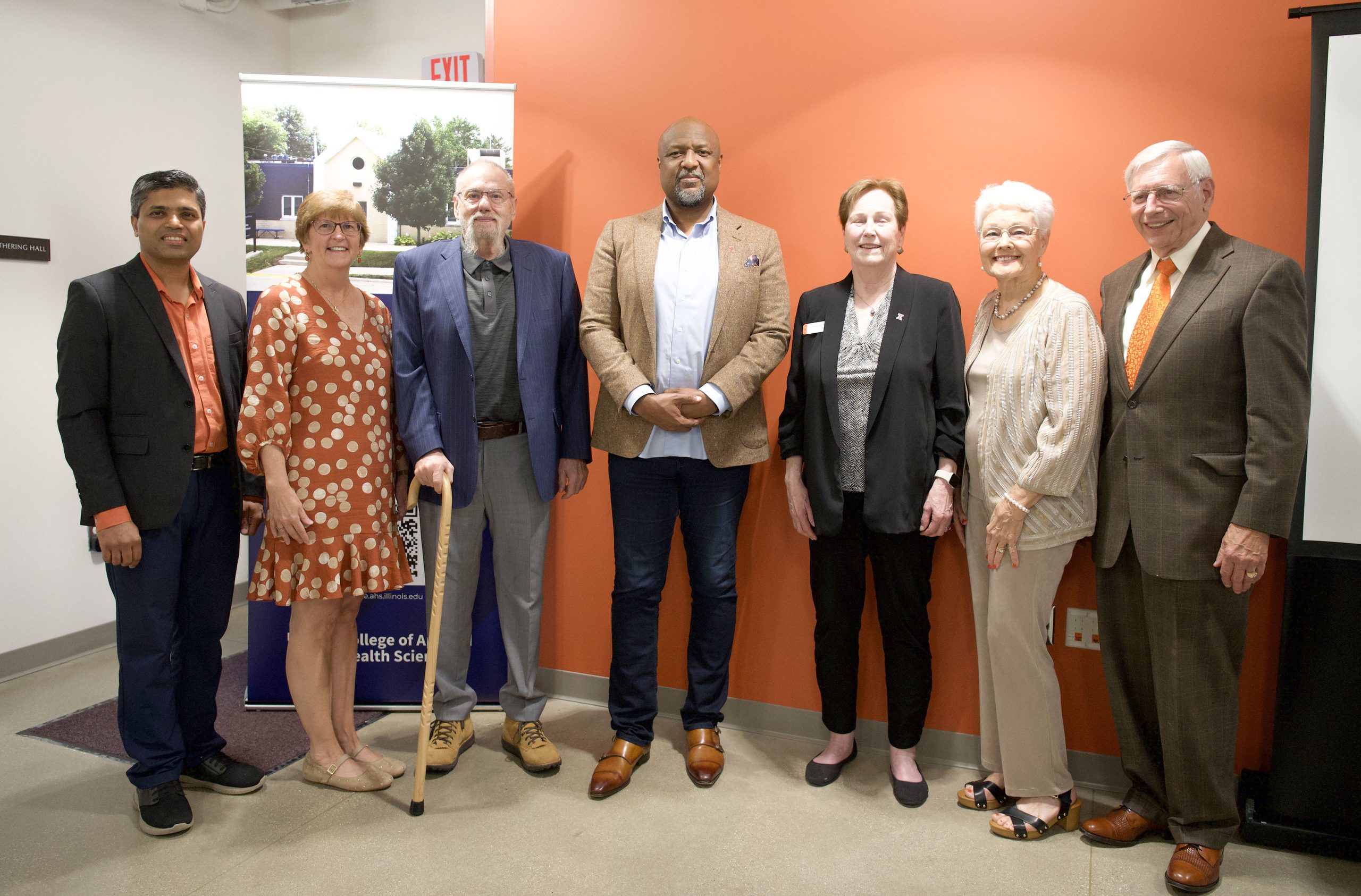
SHS will establish a rural telehealth site in Stephenson County to offer state-of-the-art remote clinical services that residents can easily access (Photo provided)

With a boost from donors, researchers and clinical faculty in the Department of Speech and Hearing Science are collaborating to introduce a new speech and hearing healthcare option for residents in rural areas of northern Illinois. 

Partnering with the Illinois Extension, the department will establish a rural telehealth site in Stephenson County to offer state-of-the-art remote clinical services that residents can easily access. Upon successful testing and initiation, the department will be ready to expand these services to other counties.

The Speech and Hearing Science Rural Health and Telehealth Initiative was developed on a charge from new department head, Professor Georgia Malandraki, after a generous donation for the cause from David Shockey, attorney and two-time University of Illinois graduate from Freeport, Illinois. 

“Our department has a strong history of leading telehealth research and advancing evidence-based practice in our field. I am deeply grateful for the support that made this initiative possible, allowing us to extend our impact and deliver high-quality speech, language, cognitive and hearing care to those who need it most,” Malandraki said.

“By building on our faculty’s expertise, we are also strengthening student training and preparing future clinicians and scientists to serve rural communities.”

Of 102 counties in Illinois, 82 are classified as rural by the state’s Department of Public Health. About 15 percent of Illinois residents reside in rural areas of the state, which are more likely to face healthcare staff shortages and limited access to specialty services. 

“Part of what we’re trying to investigate right now is just what are the needs of the community, and how does that fold in with the opportunities and what we’re already offering,” said SHS Associate Professor Dan Fogerty, who researches speech perception and hearing loss. “With telehealth and remote services, you need to have the platform and infrastructure in order to provide those.” 

For faculty at the Department of Speech and Hearing Science, these telehealth sites will be a chance to implement their ongoing research, outreach and clinical practices around telehealth in a new region. 

The rural health initiative is steered by a task force of research and clinical faculty at Speech and Hearing Science, including Fogerty; Professor Raksha Mudar; Clinical Associate Professor Clarion Mendes, a speech-language pathologist; and Clinical Assistant Professor Sadie Braun, an audiologist. 

“We have a flagship campus with a commitment to our communities. This is a way we can demonstrate that our services extend beyond our campus alone,” said Mudar, who directs the Aging and Neurocognition Lab. “We have built the evidence base—we have the expertise, so now it’s just bringing it all together to offer a more cohesive way to extend that to the community.”

For SHS students, the telehealth sites will provide opportunities to serve individuals in under-resourced areas using the latest remote care technology, broadening their hands-on experience before they become full-time clinicians. 

The project is still early in development, but a crowd-funded campaign helped raise another $2,000 to support the establishment of both telehealth sites. The initiative will build on the teamwork from previous collaborations across the department, including a grant-funded project to create more accurate hearing tests.  

“The nice thing about Speech and Hearing Science at Illinois is that the education, the research and the clinical practice are all integrated,” Fogerty said. “This is an excellent project to demonstrate that.”  

Editor’s note:

To reach Ethan Simmons, email ecsimmon@illinois.edu.
 

Share on social
Related news

Illinois Speech and Hearing Science at ASHA 2025

Assistant Professor Meaghan McKenna won the 2025 ASHA Early Career Contributions in Research Award. (Provided)

The American Speech-Language Hearing Association (ASHA) held the 2025 ASHA Convention from Nov. 20–22 in Washington, D.C.

Our Department of Speech and Hearing Science at Illinois was well-represented: several SHS faculty and graduate students were in attendance to accept awards and present seminars on their research and teaching contributions.

SHS faculty and students’ ASHA Awards

  • Assistant Professor Meaghan McKenna is being awarded the 2025 ASHA Early Career Contributions in Research Award
  • Ph.D. student Tracy Preza is being awarded an ASHFoundation Student Research Grant in Early Childhood Language Development
  • Ph.D. student Eliza Baby and mentor Professor Raksha Mudar are being awarded a Research Mentoring-Pair Travel Award
  • Ph.D. student Daniela Fanta Alarco is selected for the ASHA Student Leadership Program
  • M.A. student Raina Harpalani is being awarded an ASHFoundation Graduate Scholarship

SHS faculty and students’ talks

Thursday, Nov. 20

12:30 p.m.—Poster: “Examining the Effectiveness and Feasibility of a WebBased First Grade Writing Intervention”
McKenna, M.
Location: CC/Poster (Hall D); Screen #: 134

4:30 p.m.—Poster: “Measuring Functional Communication in Mild Cognitive Impairment”
Lydon, E., Wallace, N., Mudar, R.
Location: CC/Poster (Hall D); Screen #: 134

6 p.m.—One-hour seminar (Invited): “The Speech Accessibility Project: Reflections on Technological Innovation & Visions for Communication Empowerment”
Mendes, C.
Location: CC/151B (Lvl 1)

Friday, Nov. 21

8 a.m.—One-hour seminar: “Building on Legacy, Transforming Practice: Tools to Support SLP Engagement with Multi-Tiered Systems of Support”
Sylvan, L., McKenna, M., Ireland, M.
Location: CC/202A (Lvl 2)

11 a.m.—One-hour seminar: “Imitation and Lexical Overlap in Toddlers with Language Delays: Automated Coding and Sequential Analysis”
Harrington, E., Hadley, P.
Location: Marr/Independence Salon F/G/H (Mtg Lvl 4, LL)

1:30 p.m.—One-hour seminar (Invited): “Research Symposium on Hearing: The Utility of Extended High-Frequency Hearing and Assessment for Speech Communication”
Monson, B., Calandruccio, L.
Location: CC/151B (Lvl 1)

5:30 p.m.—Technical/Research Presentation: “Practice improvement in swallowing management: Using skill-based training in hospitalized post-stroke patients with dysphagia”
Bahia, M.M., Rogers, K., Carpenter, J., Cherney, L.R.
Location: Marr/Liberty Salon K (Mtg Lvl 4, LL)

Speech and Hearing Science faculty and students gathered at this year’s ASHA conference. (Provided)

Saturday, Nov. 22

11 a.m.—One-hour seminar: “Addressing Elementary Writing When Delivering Intervention: Preparing Young Children for Success in School and Life”
McKenna, M.
Location: CC/204B (Lvl 2)
** Designated as a Centennial Session!

Three SHS doctoral students have plans to make an impact on their fields


Lizzy Lydon (Photo provided)

By ANNA FLANAGAN

Under the mentorship of world-renowned scholars, doctoral students make significant contributions to the advancement of theory and practice in speech and hearing science through their dissertation research, as they prepare to assume leadership roles in clinical, industrial and academic settings.

Below, three of our outstanding SHS doctoral students discuss their research, and the impact they hope to have on the field.

Conflict monitoring

Mentored by Department of Speech and Hearing Science Professor Raksha Mudar in the Aging and Neurocognition Lab, Lizzy Lydon is focusing her doctoral research on communication abilities in older adults with mild cognitive impairment (MCI). Her specific focus is on the cognitive construct called conflict monitoring, which helps individuals detect and resolve competing information in the environment. Lydon uses electroencephalography to examine alterations in brain waves when people with MCI perform different conflict monitoring tasks.

Before beginning her Ph.D. studies, Lydon worked as a speech-language pathologist with patients with MCI, many of whom reported communication challenges. “I often found it difficult to determine what type of treatment was the best choice for these individuals,” she said. “After looking through research, I realized there was a lack of evidence-based treatments for communication challenges in populations that experience mild changes to their cognition and language.”

Previous research had focused on understanding memory changes in adults with MCI. An emerging body of literature suggests that other cognitive functions such as conflict monitoring are affected. In using EEG in her research, Lydon may be able to identify neurophysiological markers that can be used for early diagnosis of MCI Research has shown that people with MCI are at a significantly greater risk of developing dementia than typically aging peers, Lydon noted, so it’s important not only to identify MCI earlier but also to better characterize the changes they experience.

“This can help to inform the development of interventions that have the potential to slow the progression to dementia and allow people to maintain independence and quality of life as long as possible,” she said.

In the fall, Lydon will join the faculty of the Department of Speech Pathology and Audiology at Miami University in Ohio as an assistant professor. She plans to continue to investigate how MCI affects different aspects of communication, as well as how these changes impact the ability to engage socially with others. “I am looking forward to this next adventure,” Lydon said, “and I’m so thankful for all the training I received here at Illinois.”

Listening effort

Silvia Murgia also plans to pursue an academic position after completing her degree this summer. For her dissertation, she is evaluating the impact of background noise and dysphonia, a voice disorder, on the mental energy needed to listen, or listening effort, of children performing a speech comprehension task. She is taking a comprehensive approach to her study, using subjective and objective measures of listening effort, including EEG analysis, as well as assessments of cognitive function to explain individual differences.

Murgia is mentored by SHS Associate Professor Pasquale Bottalico in the Speech Accommodation to Acoustics Lab. Understanding listening effort in children is crucial, Murgia said, as they spend a significant amount of time in school learning through communication activities. It is essential to minimize the amount of mental energy children use to listen in order to optimize the resources available for cognitive tasks such as memorization, comprehension and evaluation. Studies show that children’s cognition is affected by the speaker’s voice quality, the presence of background noise and the complexity of the listening task. Research also suggests that individual differences in executive function may be associated with variations in listening comprehension under adverse conditions. Her research addresses both external factors affecting listening effort and internal cognitive mechanisms that help children to cope with external challenges.

“My dissertation aims to provide a more nuanced understanding of how these adverse conditions impact listening effort and comprehension,” she said. “This could have significant implications for educational practices, especially in designing interventions and strategies to support children with different listening and cognitive profiles.”

In her academic career, Murgia plans to expand her research to include children with hearing loss and special needs. Her goal is to improve the academic outcomes and overall well-being of all children by identifying effective ways to reduce listening effort and optimize learning environments.

“I hope that my research empowers children by advocating for their communication needs and ensuring that they have access to the resources and support they require to succeed academically and socially,” she said. “I want to contribute to creating inclusive environments where all children can thrive.”

Vocal intensity

December 2023 graduate Simin Soleimanifar’s dissertation research investigated how using two cochlear implants, known as bilateral cochlear implantations, affected the ability of users to control variations in vocal intensity, or the volume of their voice, as compared to users with a unilateral cochlear implantation.

Soleimanifar noted that the challenges faced by bilateral cochlear implant users in controlling vocal intensity have not been widely researched. Through her study, she hoped to identify the underlying factors contributing to the challenges, with a specific focus on how differences in the perception of loudness growth between the two ears affect vocal performance.

“Vocal performance plays a crucial role in effective communication, and difficulties in controlling vocal intensity can lead to social and emotional consequences for the individuals affected,” Soleimanifar said. “By shedding light on the specific auditory perceptions that influence these difficulties, this research has the potential to lead to better-tailored cochlear implant programming and rehabilitation strategies, ultimately improving the communication outcomes for bilateral cochlear implantation users as well as their overall quality of life.”

Mentored by SHS Associate Professor Justin Aronoff in the Binaural Hearing Lab, Soleimanifar currently is a clinical research associate at the University of Illinois Urbana-Champaign and is pursuing a career that bridges research and clinical practice. In addition to providing empirical evidence on the impact of bilateral cochlear implantation on vocal intensity control and identifying the role that mismatched loudness growth perception between ears plays in vocal performance, she hopes to inform clinical practice by highlighting the need for individualized implant programming and rehabilitation approaches that consider the auditory perceptions specific to bilateral cochlear implantations. Soleimanifar is particularly interested in applying her research findings within a multidisciplinary team to develop innovative implant technologies and rehabilitation strategies.

Related news

SHS Fall 2023 Promotions and Tenure


Raksha Mudar

Raksha Mudar, who joined the faculty of the Department of Speech and Hearing Science in 2011, was promoted to full professor in 2023. Mudar, who earned her Ph.D. from the University of Texas at Dallas, is the director of the Aging and Neurocognition Lab. 

Mudar investigates the effects of normal cognitive aging and brain diseases including mild cognitive impairment, Alzheimer’s disease and frontotemporal dementia on higher order semantic functions. She uses a combination of behavioral methods, event-related potentials and functional magnetic resonance imaging in her research.

“I am deeply honored to be promoted to full professor at such an esteemed institution of higher education and research,” Mudar said. “My path to full has been very rewarding. I chose academia because both research and teaching bring so much joy to me. Looking back, I know I chose right, and am excited for what lies ahead.”

Mudar was elected as a fellow of the American Speech-Language-Hearing Association at the ASHA Convention 2022—one of the highest forms of recognition given by ASHA. Mudar has been involved in several federally funded grants and is currently the primary investigator on an R01 titled “Digital Technology to Support Adherence to Hypertension Medications for Older Adults with Mild Cognitive Impairment.”

Brian Monson

Brian Monson, who joined the faculty of the Department of Speech and Hearing Science in 2017, was promoted to associate professor in 2023. Monson, who received his Ph.D. from the University of Arizona, is the director of the Auditory Neuro Experience Lab. His field of research is in auditory neuroscience. 

Monson holds degrees in electrical engineering, acoustics and speech/language/hearing science, with further specialization in neuroscience and music. With this background, he takes an interdisciplinary approach to auditory research, interfacing with clinicians, scientists, engineers and musicians. His research interests center around auditory neurodevelopment and speech/voice perception.

Monson is the principal investigator on an R01 grant from NIH-NIDCD for his project titled, “The ecological significance of extended high-frequency hearing in humans,” and the PI on an R21 from the NIH-NIDCD as well as the co-PI on another R21.

“I’m quite honored to become a tenured faculty member at such a reputable institution as the University of Illinois,” Monson said. “I very much look forward to continuing to serve our students and our community with my colleagues in Speech and Hearing Science and in Applied Health Sciences.”

Pasquale Bottalico

Pasquale Bottalico, who joined the faculty of the Department of Speech and Hearing Science in 2017, was promoted to associate professor in 2023. Bottalico earned his bachelor’s degree in telecommunications engineering from Univeristà Mediterranea di Reggio Calabria (Italy), while simultaneously pursuing a degree in opera singing at the F. Cilea Music Academy of Reggio Calabria (Italy). 

In 2005, he moved to Turin where he earned his master’s degree in telecommunications engineering from Politecnico di Torino (Italy). Bottalico earned his Ph.D. in metrology, studying acoustics with particular attention to the uncertainty of measurements and statistical analysis of data. Bottalico is particularly interested in the professional voice user and singer techniques, as well as the definition and the quantification of vocal load. Other fields he is interested in are speech intelligibility, room acoustics and musical acoustics.

Bottalico is also a professional chorister, having performed under such prestigious directors as Rafael Frühbeck De Burgos, Yuri Ahronovitch, Jeffrey Tate, Juanio Mena, Gianandrea Noseda, Ottavio Dantone, Wayne Marshall, Helmuth Rilling, Christopher Hogwood, Robert King and Ivor Bolton.

“Attaining tenure and rising to the role of associate professor is a profound validation of my dedication to enlightening minds, pushing the boundaries of knowledge and contributing to the ever-evolving academic landscape,” Bottalico said. “It signifies not just personal achievement but the faith others place in my ability to continually inspire students and illuminate the paths of intellectual exploration.”

Share on social

Related news

Mudar honored by ASHA Fellowship


In the summer of 2022, Speech and Hearing Science Associate Professor Raksha Mudar was elected a Fellow of the American Speech-Language-Hearing Association (ASHA). Fellowship is one of the highest forms of recognition given by ASHA and is a public declaration of an individual’s outstanding contributions to the discipline of communication sciences and disorders.

The significance of that recognition was not lost on Dr. Mudar.

“I am delighted to receive this honor from the association. To get recognized by the association for these efforts is really personally and professionally fulfilling,” said Mudar, who joined the University of Illinois in 2011. “My journey as a faculty in communication sciences and disorders has been so much fun. I enjoy what I get to do each day, from training the next generation of clinicians and scientists to conducting research examining intriguing questions about the aging brain and neuroplasticity.”

For Dr. Mudar, the ASHA appointment serves as validation for her research agenda, which was inspired by a personal experience.

“When I was an undergraduate student in speech and hearing science (at the University of Mysore in India), a family friend got diagnosed with early onset Alzheimer’s dementia,” she said. “This person was an eloquent storyteller. To watch his cognitive communication abilities deteriorate quickly was difficult to watch. His family struggled to understand his needs and wishes and got little help from his doctors on how to deal with these challenges. I was surprised to find that speech-language pathologists rarely worked with individuals with Alzheimer’s dementia at that time and this inspired me to pursue research on cognitive-communication issues in aging and neurodegenerative disorders.”

According to Dr. Mudar, an ASHA Fellow is expected to support and promote scientific and clinical leadership, interdisciplinary services, and an inclusive culture committed to supporting the needs of those with communication and swallowing disorders.
 
ASHA is the national professional association that sets the standard for professional practice in speech-language pathology  and audiology and serves as an accrediting body. To Dr. Mudar—who was also the AHS recipient of the Excellence in Graduate Student Mentoring award—it represents something more than that.

“(ASHA) offers a great community for members to connect with each other, learn, and build scientific and clinical excellence,” she said. “Furthermore, ASHA’s advocacy in promoting the needs of individuals and families with communication disorders is critical to supporting communication as a basic human right.”

Share on social

Related news

AHS researchers: Give ADRD caregivers more information in clinical trials


Mina Raj’s research focuses on the ways family caregivers can be better integrated into healthcare settings and teams (Photo provided)

For clinical trials centered on individuals with Alzheimer’s disease and related dementias, what types of information are family caregivers given during the research process? A research team nested in the College of Applied Health Sciences recently evaluated that question by analyzing ADRD trials from the past 30 years. 

What they found in their report, published in Alzheimer’s & Dementia: The Journal of the Alzheimer’s Association, was that less than half of the clinical trials the researchers sampled specified the caregivers’ responsibilities. 

Given that caregivers are often surrogate decision-makers for participants and are responsible for multiple tasks throughout a clinical trial, the finding stuck out.

“The people who are finding these trials are often caregivers, they’re probably deciding whether to enroll their relatives and whether they have the bandwidth to support their relative through that intensive process,” said co-author Mina Raj, assistant professor in the Department of Kinesiology and Community Health. “And yet less than half of the time they’re given information about what they’re supposed to do.” 

For this report, funded by the Center for Social and Behavioral Sciences at the University of Illinois, Raj collaborated with Raksha Mudar, professor in the Department of Speech and Hearing Science at Illinois, and Dr. Vania Leung, a primary care physician in UI Health, which is part of the University of Illinois Chicago, and an assistant professor of Clinical Medicine at UIC. 

Two Community Health students took a prominent role in the report: Armando Miranda, who graduated with his master’s degree in the spring, and Eve Rubovits, currently a senior in the program. 

Raj’s research focuses on the ways family caregivers can be better integrated into healthcare settings and teams. The report’s topic arose from a separate study Raj conducted a couple of years ago, which centered on Asian American family caregivers, she said. The study combined qualitative interviews and surveys to learn about the caregivers’ challenges navigating the healthcare system. 

What consistently came up, Raj said, were the difficulties of handling the intensity and demands of clinical trials. 

“Dementia is underdiagnosed and underreported due to diagnostics that are not culturally relevant along with stigma within these communities,” she said. “Caregivers in our study experienced a lot of problems getting their relatives enrolled in clinical trials for Alzheimer’s and dementia-related diseases.” 

For example, a lot of trials expect that participants are fluent in English, which would imperil results from screening measures such as word recall tests. Caregivers have additional responsibilities in these situations, including translation, and they are often overwhelmed and underinformed about their responsibilities.

“This led to the question, what are study teams actually telling participants and caregivers about their responsibilities?” 

To expand on that question, the team dug deep into ADRD clinical trials, sampling from more than 250 trials completed between 1990 and 2021. 

The two students, Rubovits and Miranda, spearheaded the data analysis, qualitatively coding information from relevant study information pages on clinicaltrials.gov, a website commonly used to identify clinical trials. The pair also reviewed the trials to evaluate how many trials included information on caregivers’ responsibilities, and what types of responsibilities were reported. 

Rubovits joined Raj’s lab after her freshman year through the Students Pursuing Applications, Research and Knowledge program, also known as SPARK, which connects AHS undergrads to research opportunities. Six months of poring through clinical trial data was the most involved Rubovits felt in any academic study. 

“I definitely learned a lot more technical and hard-research skills,” she said. “Having a mentor like Dr. Raj, and working with grad students like Armando has been so helpful, and has honestly shaped my career goals toward wanting to do research.” 

Their findings that less than half of the analyzed trials contained instructions for caregivers gave way for a proposal: Clinical trials for ADRD should consistently provide caregivers information about their responsibilities.  

“At a baseline, we need to tell our caregivers things like how many times per week they’re going to be transporting their relative back and forth to the study site. We need to tell them the risks and benefits to participating,” Raj said. “Often [instructions] are not clear or accessible, for example through different languages. In other cases, no information is provided at all.” 

Researchers are already approaching new ground based on the study’s finding: The broader goal was to understand how to include racial and ethnic minority adults in clinical trials by engaging their family caregivers, Raj said. She has surveyed more than 100 Asian American, Hispanic and Latino caregivers for what information they’d seek in clinical trials for ADRD patients. 

“We wanted a baseline understanding of how caregivers are involved right now—this was the first step,” Raj said. “We haven’t really asked caregivers what types of information they want to see in those information pages to prepare them for caregiving responsibilities, and that’s what we’re doing right now.” 

Editor’s note:

To reach Ethan Simmons, email ecsimmon@illinois.edu.
 

Related news

AHS students find varied paths to research


Kinesiology senior Ilya Ahmad stands with his research presentation on Wednesday, April 26, 2023.

By ETHAN SIMMONS

For her last semester as an undergraduate student, Daniela Hernandez spent a lot of time in campus libraries—more than the Community Health major had in her entire college career.

But all of Hernandez’s hours in the Main Stacks and Grainger Engineering Library went toward a worthy cause: conducting a literature review for her first research study, exploring the labor market value of Spanish-English bilingualism.

“It was very ambitious of me to do this my last semester of college, but it was something that I had never done before,” Hernandez said. “So I was like, ‘Why not?’”

Hernandez is enrolled in the Illinois Academic Enrichment and Leadership Program or I-LEAP, a support and mentorship program for underrepresented minority students, student-athletes and first-generation students in the College of Applied Health Sciences such as her.

“I’m excited to pass this on to my (I-LEAP) mentee and just say, ‘Hey, this is a great opportunity to develop those skills that you might not have,” she said.

Dozens of students from AHS lined the walls of Huff Hall on Wednesday to present findings from their recent research endeavors working in the labs of their mentors. The presentations coincided with the university-wide Undergraduate Research Symposium on April 27.

Plenty of paths exist for AHS undergrads looking for research involvement. There’s Students Pursuing Applications, Research and Knowledge (SPARK), which onboards high-achieving freshmen into research programs within the college, and Student Aging Researchers in Training (START), which brings students from underrepresented backgrounds into aging research.

Department of Speech and Hearing Science juniors Natalia Rzepa and Holly Panfil found their first research experiences through START and SPARK, respectively.

Both found their way into in SHS Associate Professor Raksha Mudhar’s Aging and Neurocognition Lab and stuck around because they liked it so much.

With SHS doctoral candidate Lizzy Lydon and School of Molecular and Cellular Biology senior Sharbel Yako, the group compared brain activity between older adults and younger adults during word recall tests.

Though both groups performed comparably in the test, event-related spectral perturbation data collected from participants suggested older adults had to use higher levels of neural compensation during the exercise, Panfil said.

“Research opens a lot of doors, and I think that we’re so lucky to be at a university that has so many different labs and ways to get involved,” said Panfil, who’s heading for a Fulbright-MITACS Globalink research internship in Canada this summer. “I’d really recommend it to anyone to just give it a shot.” 

For Recreation, Sport and Tourism sophomores Genna Peters and Vanessa Ramos, their presentation “Developing a Quality Evaluation Protocol for Racial Equity Park and Recreation Plans” was just a snapshot of their progress. Working with mentors RST Associate Professor Mariela Fernandez and doctoral student Wonjin Jeong, the students will reach out to community members.

Ramos, who transferred to Illinois from DePaul, called her first stab at research “a great experience.”

“Being able to learn how to work as a group, collect data, and just having someone to guide me through my first year at UIUC has been very helpful,” Ramos said.

Especially for underclassmen, joining a study can seem an intimidating task. Community Health sophomore Afnaan Afsar Ali transferred into AHS late last year, wanting a “broader outlook” on healthcare, but didn’t initially care for exploring any research opportunities.

“I think there’s a lot of fear when you first begin to try and get into a research lab,” Afsar Ali said. “But it does get easier, the whole purpose of research is so that you are able to develop as well.” 

However, some of the college’s work with health technology caught her interest. She contacted the Human Factors and Aging Laboratory led by KCH Professor Wendy Rogers, which connected the sophomore to an interview-based project involving sociable robot “Misty,” one of which exists inside the McKechnie Family LIFE Home.  

The project titled “Understanding the Role of a Socially Assistive Robot to Successfully Age in Place” surveyed eight older adults on their comfortability and interest in the open-source programmable robot after seeing videos of Misty in action. 

The eight adults, surveyed from across the country, all had warm responses on Misty’s appearance, size and functions, Afsar Ali said. Participants came up with three main use areas for the robotic companion: Completing domestic tasks, setting daily reminders, and socializing at home. 

Afsar Ali assisted in the literature review, sifting through previous research on the role of robots and health tech in the lives of older adults, and helped conduct video conference interviews with participants. 

“I realized that we have a really big misconception about how older adults feel about technology,” Afsar Ali said. “I thought that they wouldn’t be open to it at all, but they really are—they want to be involved and have more technology in their lives, things that can support them.” 

With a bit of luck, undergrads can find research labs that perfectly fit their interests. Fitness buff Ilya Ahmad, a senior in Kinesiology, combined two of his favorite topics for his presentation: working out and hormone function.

Under KCH Assistant Professor Diego Hernandez-Saavedra, Ahmad reviewed the effects of anabolic steroids on the body. He discussed how steroids impedes the body’s ability to produce testosterone, which can cause decreases in testicular size, sperm count and sex drive. Steroids can also cause other hormone dysregulation, and even cause DNA damage, he said.

A first-generation student, Ahmad said he had “no idea about research” when he came to the University of Illinois. He wants to attend medical school after graduation, but knows he wants to keep research in his life.

“I love research. I love endocrinology,” Ahmad said. “It’s kind of cool to show people things that are based on research findings.”

Find out more about the AHS Undergraduate Research Expo at this site, including a list of all projects.

Editor’s note:

To reach Ethan Simmons, message him at ecsimmon@illinois.edu.

Related news

AHS Announces 2022 Award Recipients


Our College of Applied Health Sciences college awards.

The College of Applied Health Sciences has awarded eleven faculty, staff, and students college awards for excellence. Three individuals received campus-level awards. All recipients will be honored at the Spring College Meeting in May.

AHS Excellence in Undergraduate Teaching Award: Faculty
Campus Award for Excellence in Undergraduate Teaching
Associate Professor Andiara Schwingel, Department of Kinesiology and Community Health
Since joining KCH as a visiting scholar in 2008, Dr. Schwingel has taught more than 40 courses and appears regularly on the List of Teachers Ranked as Excellent. She founded START, Student Aging Researchers in Training, which places undergraduates in labs across the college, and has mentored more than 30 START scholars in the Aging and Diversity Lab. She is the current Associate Head for Undergraduate Studies in Community Health. She also received this award in 2018, and in 2013 was awarded the Phyllis J. Hill Award for Exemplary Mentoring in the Edmund J. James Scholar Program.

AHS Excellence in Undergraduate Teaching Award: Teaching Assistant
Allyson Box, Ph.D. student, Department of Kinesiology and Community Health
Allyson is a Graduate Research Assistant in Dr. Steve Petruzzello’s Exercise Psychophysiology Lab and a Teaching Assistant for his undergraduate class on the social and psychological aspects of physical activity. She has been named to the List of Teachers Ranked as Excellent every semester since the fall of 2017. Students described Allyson as “approachable,” “passionate,” “an exemplary teacher,” and “an exceptional communicator.” One said, “She encourages us to share our ideas and asks us thought-provoking questions, which has allowed me to gain confidence and develop my critical thinking skills.”

AHS Excellence in Online & Distance Teaching
Professor Monika Stodolska, Department of Recreation, Sport and Tourism
Dr. Stodolska played an instrumental role in developing and implementing RST’s online master’s program in 2012. She created the first RST course offered online, Theories and Concepts of Leisure, which she recently revised by developing new content and engagement activities that foster meaningful student interaction, and recording more than 40 video lectures. The AHS e-Learning team regularly shares her lectures with other faculty as outstanding examples of online content. She also converted the campus-based undergraduate course on diversity in recreation, sport, and tourism into an online course that enrolled more than 450 students in the fall of 2021.

AHS Excellence in Graduate and Professional Teaching Award
Campus Award for Excellence in Graduate and Professional Teaching
Associate Professor Toni Liechty, Department of Recreation, Sport and Tourism
Dr. Liechty has taught courses for both the on-campus and online master’s degree programs in RST, and developed a course on legal aspects of RST that she has taught in both programs. She also teaches classes for the doctoral program. Dr. Liechty is deeply committed to diversity and takes steps not only to ensure that all students in her classes are able to make meaningful contributions, but also to make all of her students aware of the value of the diversity of perspectives. She often adjusts course syllabi to accommodate students’ various research interests.

AHS Excellence in Graduate Student Mentoring Award
Associate Professor Raksha Mudar, Department of Speech and Hearing Science
Dr. Mudar has guided the work of three Ph.D. students and several M.A. students in the Aging and Neurocognition Lab. All three Ph.D. students published research papers under her mentorship. Her two current doctoral students have received highly competitive 2021-2022 national scholarships from the American Speech-Language-Hearing Foundation. One also received a prestigious Dissertation Completion Fellowship from the University of Illinois Urbana-Champaign Graduate College. As the Director of Graduate Studies in SHS, Dr. Mudar ensures that more than 100 graduate students meet program milestones and provides support to faculty for graduate mentoring and advising.

Phyllis J. Hill James Scholar Award for Exemplary Mentoring
Professor Steven Petruzzello, Department of Kinesiology and Community Health
Dr. Petruzzello also received this award in 2018. Since that time, he has mentored almost 40 additional students enrolled in the James Scholar Program. He works with each student to help them identify their area of research interest and how best to pursue it, guides them through relevant literature reviews, and provides them with regular feedback as they complete their projects. Students describe him as enthusiastic, caring, and passionate. He has been called “one of the most impactful faculty members that I have worked with” and students greatly appreciate his commitment to their success and well-being.

Campus Award for Excellence in Undergraduate Advising
Amy O’Neill, Department of Kinesiology and Community Health
Since joining KCH as an Academic Advisor for kinesiology in 2003, Amy has shepherded thousands of undergraduate students through their studies. In addition to her one-on-one advising duties, she teaches the introductory kinesiology course to new first-year and transfer students. She developed a kinesiology advising website to share important resources with students and sends out a weekly email message to make them aware of opportunities for involvement in the department, college, and campus. She also has played significant roles on departmental, college, and campus committees related to student registration, honors and awards, and scholarships.

AHS Academic Professional Staff Excellence Award
Ann Fredricksen, Division of Disability Resources and Educational Services
After starting with DRES captioning videos in 2008, Ann has become the Coordinator of DRES’s Accessible Media Services. She oversees the captioning of videos, trains and manages student workers, develops captioning and audio description standards for the campus, and creates and administers educational outreach activities related to captioning and accessibility. Since the COVID pandemic began in late March 2020, she has been responsible for the captioning of more than 1000 hours of video material. She has created Math and Science Captioning Standards and Best Practices for STEM fields and co-developed an online captioning certification course.

AHS Custom Class Staff Excellence Award
Heidi Krahling, Center on Health, Aging, and Disability
Heidi has been providing outstanding support to faculty, staff, and students before and during the grant submission process as CHAD’s Grant Specialist since 2018. She brings her commitment to the advancement of science, keen eye for detail, and dedication to submitting grants error free and on time to bear on each proposal, and played a critical role in the college’s success in receiving its greatest amount of external research funding ever in 2020, more than $18 million. Grant seekers appreciate that Heidi’s skills enable them to focus on the scientific content of their proposals.

AHS Staff Excellence Awards
Sally Marshall, Dean’s Office
Sally brings strong organizational, communication, and multitasking skills to her work as the Office Administrator in the AHS Dean’s Office. She has provided support to the Senior Assistant Dean for Undergraduate Recruitment, Advising, and Enrichment, and is the primary support person for the Associate Dean for Academic Affairs. She assists with planning major events such as Ph.D. Recruitment Day and the AHS Distinguished Lecturer Series, serves as the liaison between the Associate Dean and departmental directors of undergraduate and graduate studies, and supports the Associate Dean in his role as Interim Director of the Chez Veterans Center.

Kathy Saathoff, Office of Advancement
As the Office Administrator, Kathy supports the Assistant Dean for Advancement, two Major Gift Officers, and the Associate Director for External Engagement. She manages the execution of the critical gift acknowledgement process, handles multiple requests for research and reports, plans donor visits, and helps to complete donor fund agreements. Advancement personnel across campus regard Kathy as a friendly resource with deep institutional knowledge, developed during both her current position and her previous position with the University of Illinois Foundation. Colleagues describe her as “an exceptional teammate” who is always able to see the big picture.

Related news

Study suggests that social engagement technology has the potential to broaden older adults’ social networks


OneClick.chat, a video chat platform, announced positive outcomes in the study of older adults, with and without mild cognitive impairment (MCI), who used their video chat technology to engage in social activities to meet new people of all ages with shared interests. Some of the participants’ favorite topics of conversation were books, health, family, and exercise. The results of this study were published in Gerontechnology, the official journal of the International Society for Gerontechnology.

OneClick.chat, a web-based video chat platform that provides users with easy, accessible ways to connect with others, partnered with Drs. Wendy Rogers and Raksha Mudar in the College of Applied Health Sciences at the University of Illinois Urbana-Champaign to conduct a three-phased study to examine experiences, attitudes, and preferences of video chat systems, particularly the OneClick video chat platform, among older adults with and without MCI. It also evaluated and optimized the OneClick.chat platform to accommodate the interests, abilities, and usability concerns of older adults. These objectives were accomplished in three phases:

  • Phase 1 examined older adults’ experiences with well-known video chat systems (e.g. Skype, Facetime), their attitudes toward video chat in general, and to OneClick.chat specifically, and their preferences on how they would like to use OneClick.chat.
  • Phase 2 worked to identify potential usability problems with the OneClick.chat platform through experiential evaluations conducted by experts with knowledge of human factors, aging, and MCI. The OneClick.chat platform was then optimized based on Phase 1 and Phase 2 findings.
  • Phase 3 participants interacted with the optimized OneClick.chat platform over a period of four weeks in their own homes. They gave feedback on their attitudes toward the improved system and their opinions about using the system for real conversations.

The study provided valuable and novel insights from participants about their experiences and preferences for using video chat systems, as well as understanding their perceived ease of use and technology acceptance. Overall, participants found the OneClick.chat platform useful and easy to use. This process also showcased how technology for older adults can be developed by engaging them in the iterative design process. Importantly, this study will provide insights, not only for the design of OneClick.chat, but more generally for the design of technology-based social engagement platforms for older adults with and without MCI.

“Older adults are at increased risk of social isolation and loneliness due to significant life changes, including retirement, restricted mobility – and now with the global pandemic putting older adults in isolation—we fear this will only further exacerbate the development of chronic health conditions,” said Dillon Myers, CEO of OneClick.chat. “The results of this study help us understand from research leaders in aging and technology, how to develop the best video chat and social engagement platform for older adults. Soon we will launch version 2.0 of our platform, which will include significant enhancement upgrades as a result of this study.”

OneClick.chat will launch version 2.0 next month which will include a new video chat interface designed to maximize usability for older adults, enhanced security and data privacy features, as well as curated classes and social events for residents of senior living organizations. The Company plans to build on this research through Phase II grant funding from The Small Business Innovation Research (SBIR) program of the National Institutes of Health (NIH). OneClick.chat will partner with home and community-based organizations (CBOs) to utilize the platform in their community outreach and demonstrate improved quality of life for older adults through social activities that use technology. 

OneClick.chat will continue its study in partnership with Dr. Wendy Rogers, Director of the Human Factors and Aging Laboratory and Dr. Raksha Mudar, Director of the Aging and Neurocognition Laboratory.

“It’s critical that companies, like OneClick.chat, focus on the socialization needs of one of our most vulnerable populations,” Dr. Rogers said. “Many older adults are already at high risk of social isolation and the global pandemic continues to have a major impact on their ability to interact with family and friends or develop new social connections.”

Editor’s note:

To reach Vince Lara-Cinisomo, email vinlara@illinois.edu.
 

Share on social
Related news

AHS researchers get grant to study social engagement over video technology


OneClick’s software is similar to Zoom, but easier to use, says Wendy Rogers (Photo provided)

Never has there been a more important time to help older adults stay connected. A grant awarded to two University of Illinois researchers aims to advance that goal.

Kinesiology and Community Health professor Wendy Rogers and Speech and Hearing Science associate professor Raksha Mudar are the principal investigators of a National Institute on Aging (National Institutes of Health) Phase II Small Business Innovation Research (SBIR) grant.

The researchers are collaborating with OneClick.chat co-founder Dillon Myers on a study entitled, “Enhancing Quality of Life for Older Adults with and without MCI through Social Engagement over Video Technology.”  MCI refers to Mild Cognitive Impairment, which affects millions of older Americans.

The technology in question is OneClick video communication software along the lines of Zoom and Skype, but easier to use, Rogers said. 

“So, by definition, OneClick, you don’t have to download any software,” Rogers said. “If I want to engage somebody to participate in a meeting with me—I can send them a link. And they just click on that link, and they’re automatically into the system. And one of the things we did in our first phase was to optimize it for older adults, making sure that the icons and the language and the information that was presented was easy to understand by older adults with and without cognitive impairment.”

Myers and Rogers connected in a serendipitous manner. 

“I was interviewed on (National Public Radio) about a project we were doing,” Rogers said. “It was early stages on tele-health. And one of the comments I made was we may be able to connect people who are living alone or are at risk for social isolation to have conversations and to be engaged socially with other individuals. And Dillon Myers heard the interview on NPR and called me.”

It took about a year—“luckily he was very persistent,” Rogers said—but the two decided to work together. The original idea, which was funded by a Phase I SBIR grant, was to connect older people with and without mild cognitive impairment (MCI). Mudar got involved because of her expertise with mild cognitive impairment, and she was the lead investigator on an additional seed grant from Discovery Partners Institute that explored the use of OneClick for older adults of low socioeconomic status.

The Phase I SBIR included a small pilot study to make sure older adults with and without MCI could use OneClick on their own in their homes.

However, Phase II will be a much larger assessment, Rogers said.

“We’ll be doing a clinical trial to determine whether it actually improves social engagement and reduces feelings of loneliness for older adults, assessed for 120 participants, including people with and without MCI. Another component of the Phase II is partnering with agencies. We have three partners—Clark-Lindsey Village, CRIS Healthy-Aging Center, both in the Champaign and Vermilion County areas, and then CJE SeniorLife up in the Chicago area.”

Rogers said the work with community partners will focus on how agencies that support older adults can integrate OneClick to provide support services, and how they might find it helpful for serving their clients.

“It’s great that we have these community partners located in urban and micro-urban areas,” Mudar said. For example, within the greater Chicago area, the CJE allows us to capture the population, which is really diverse in terms of ethnic and cultural diversity. These three partners allow us to reach out to a really wide audience or a purpose-built group.”

The grant award totals approximately $1.8 million, with approximately $850,000 earmarked for the University of Illinois. The funding runs from May 1 of 2020 through March 31 of 2022.

According to research from the National Institutes of Health, social isolation and loneliness have been linked to higher risks for a variety of physical and mental conditions: high blood pressure, heart disease, obesity, a weakened immune system, anxiety, depression, cognitive decline, Alzheimer’s disease, and even death.

OneClick’s goal is to connect people with shared interests in an accessible way, thereby stimulating social connectedness, which has been found beneficial to health and quality-of-life outcomes for older adults.

Connectedness is more important than ever now as most of the globe is forced to shelter in place in the wake of COVID-19. OneClick is enabling people to sign up right now and use OneClick for free, during the pandemic, Rogers said, adding that the timeliness of this study could not be more apparent.

“Raksha and I have been interested in social engagement for older adults for quite a long time already,” she said. “And we recognize the importance of that for older adults and even more so, given today’s situation. And this technology is designed with their needs and capabilities in mind. We only wish we were even further along in some of this research so that more older adults could be using it right now. 

Mudar said one of the participants in the first study summed up OneClick perfectly.

The participant said “it’s like having a friend at the touch of a button.”

About OneClick.chat
OneClick.chat is a web-based video chat platform based in Philadelphia. The platform, designed by a cross-generational team, makes it easy for people of any age to join and participate in video-based meetings and events. No downloads, and no more logins. Just a single click from a computer/tablet/smartphone, and you’re in!
 

Editor’s note:

To reach Vince Lara-Cinisomo, email vinlara@illinois.edu.
 

Related news

College of Applied Health Sciences
110 Huff Hall
1206 South 4th Street
Champaign, IL 61820
(217) 333-2131