Graber honored as Shahid and Ann Carlson Khan Professor in Applied Health Sciences


Anyone who has been fortunate enough to work with Kim Graber should be thankful she wasn’t a very good cook.

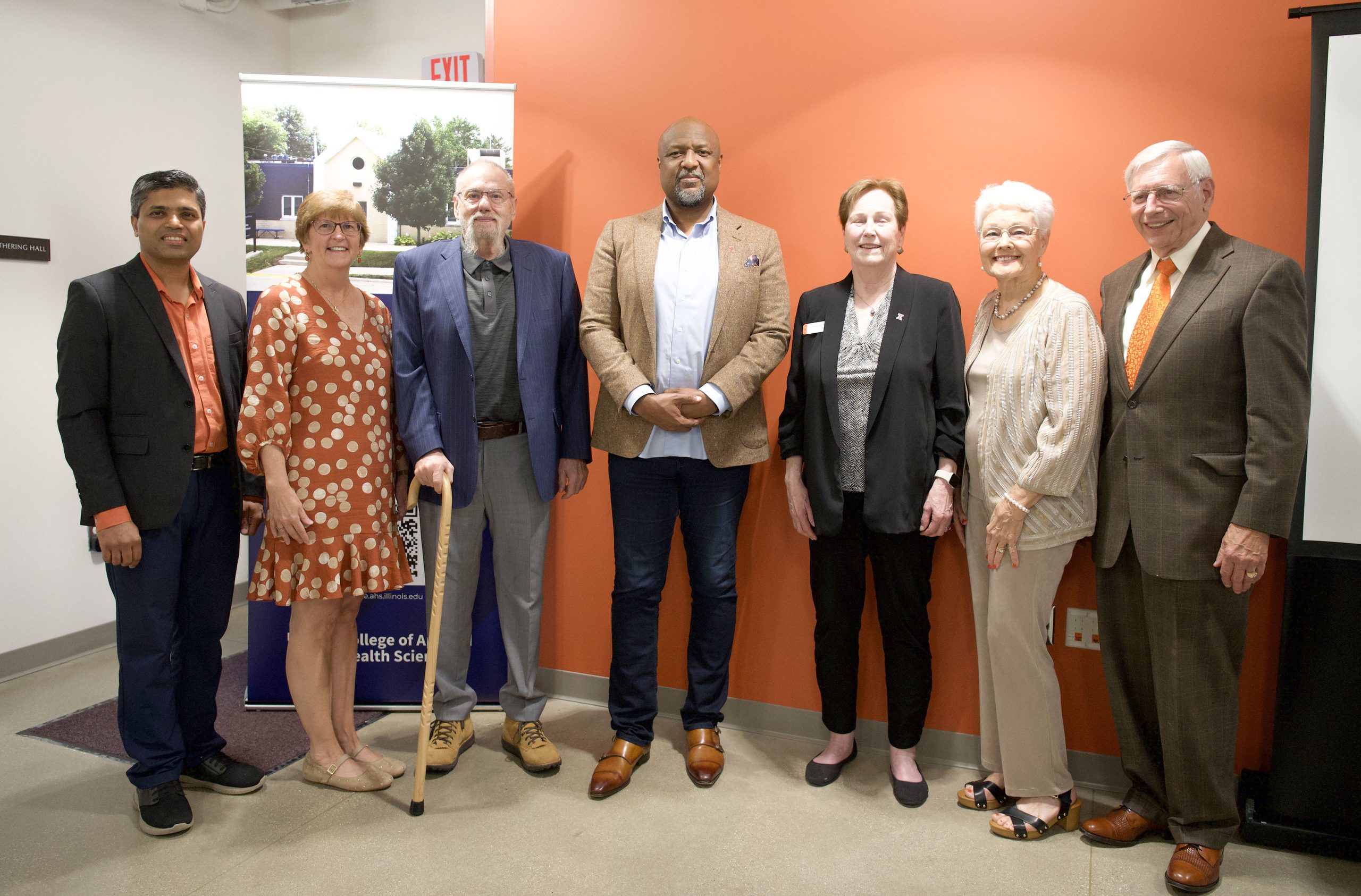
Kim Graber was appointed as the Shahid and Ann Carlson Khan Professor in AHS on April 22 (Photo by Craig Pessman)

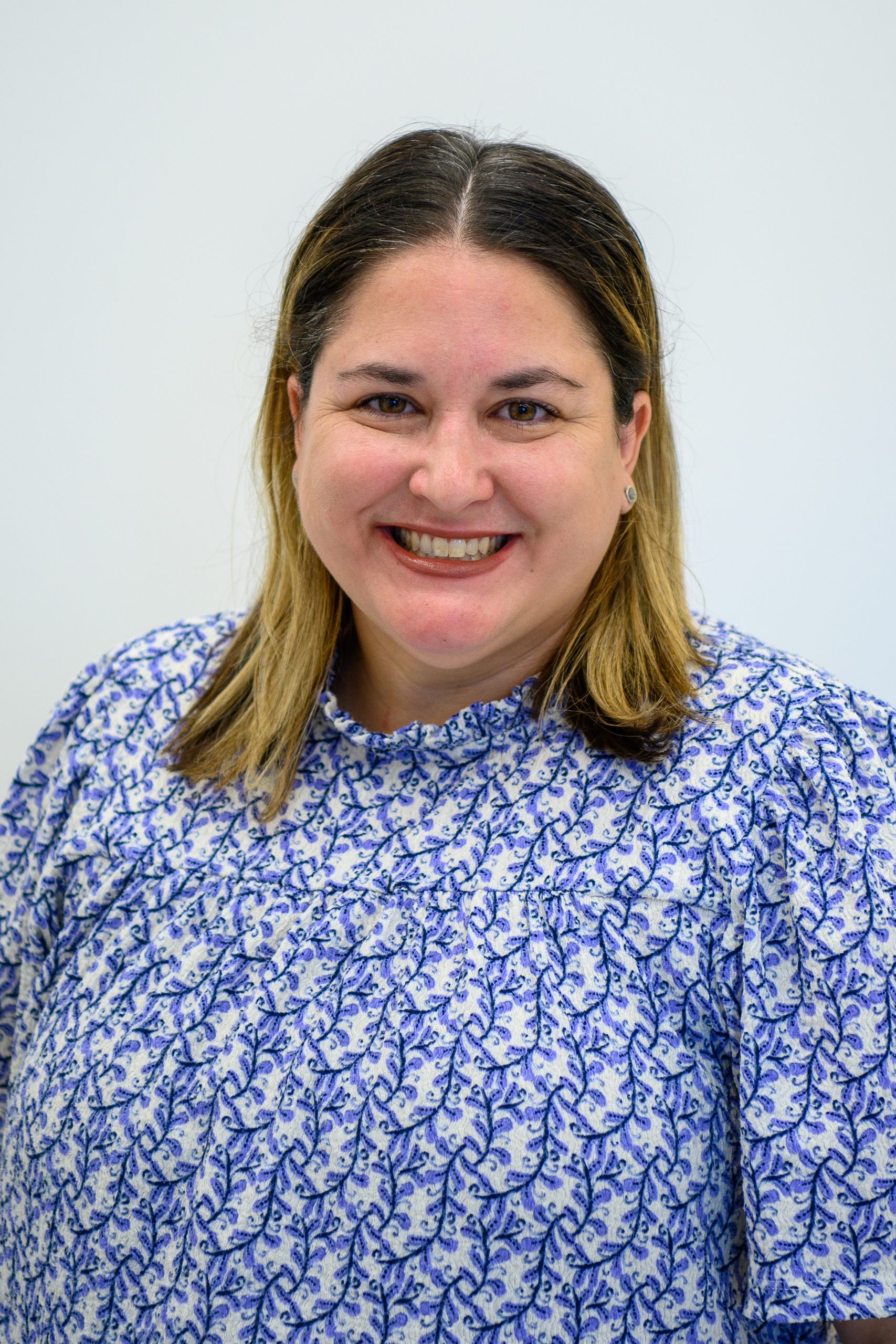
Graber, the head of the Department of Health and Kinesiology in the College of Applied Health Sciences, was appointed as the Shahid and Ann Carlson Khan Professor in AHS on April 22. 

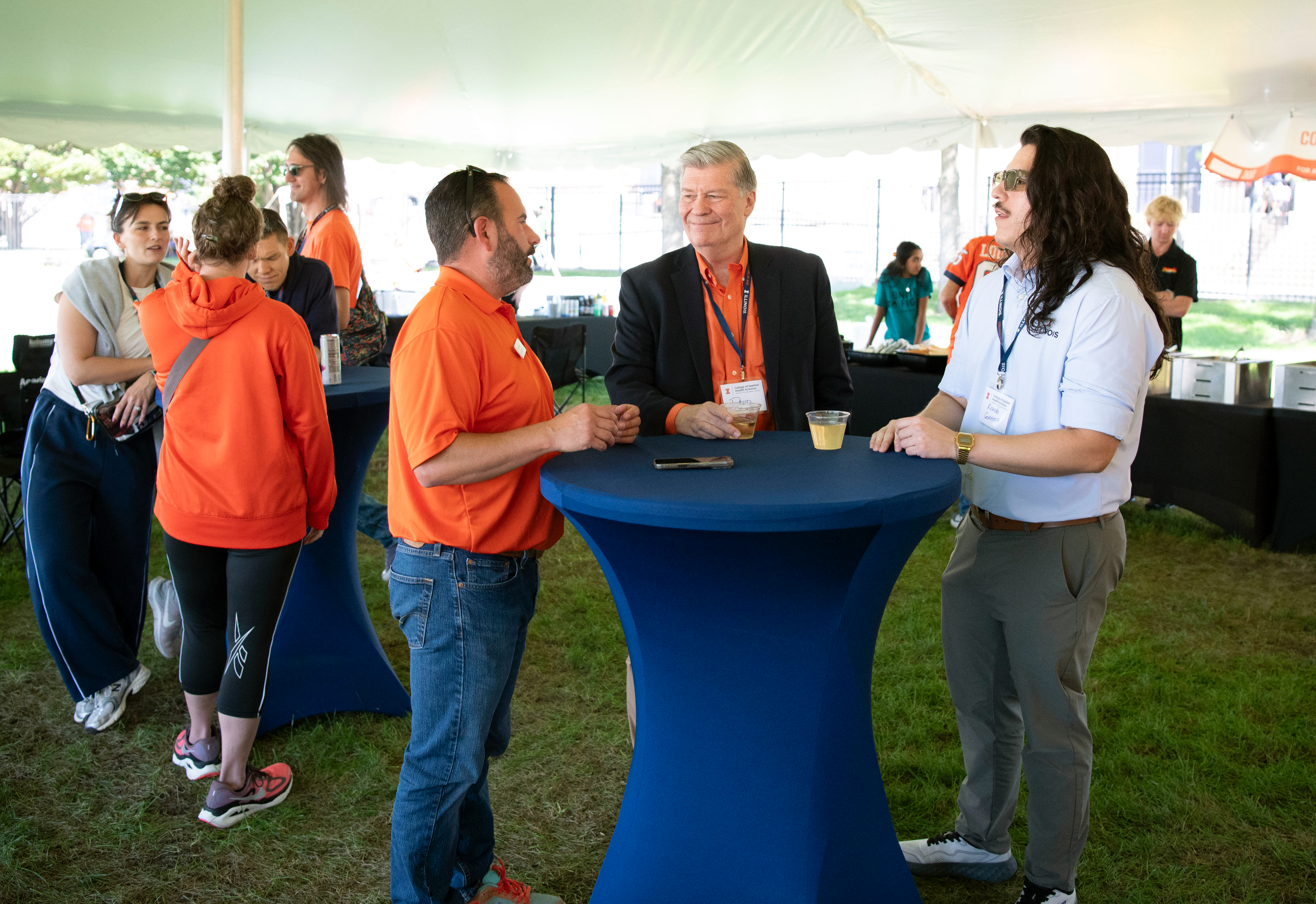
In a heartfelt ceremony attended by university leadership, colleagues, students and alumni, Graber was recognized for her outstanding contributions to research, education and service over a career spanning more than three decades.

Graber, who grew up in Barrington, Illinois, said she did not think about becoming a professor because, at that time, “Career opportunities for women were limited, and girls were taught to dream about a career in teaching, nursing, or secretarial work.”

So, when she started college at Valparaiso University, she began as a student in home economics. 

“That, however, lasted only a year because I didn’t enjoy cooking and wasn’t very good at it, as my family will attest,” she said during her investiture ceremony.

The event was opened by Cheryl Hanley-Maxwell, dean of the College of Applied Health Sciences, who highlighted the significance of an endowed professorship. 

“Endowed professorships enable us to recognize, reward and retain outstanding scholars whose work brings renown not only to them but also to the college and the university,” Hanley-Maxwell said.

Hanley-Maxwell emphasized that such honors are reserved for faculty members at the pinnacle of their fields, affirming Graber’s well-deserved recognition.

The investiture ceremony also paid tribute to Shahid and Ann Carlson Khan, whose philanthropy made the professorship possible. Hanley-Maxwell recounted the Khans’ inspiring journey from their days as University of Illinois students to becoming leading entrepreneurs and philanthropists. Shad Khan’s story, from washing dishes for $1.20 an hour to leading a multi-billion-dollar global enterprise, was shared as a testament to resilience, innovation and community spirit.

Today, the Khans’ support extends across the university, including significant contributions to the Krannert Center for the Performing Arts, the College of Business, the College of Veterinary Medicine and the Khan Annex to Huff Hall.

Following remarks from University Provost John Coleman, the ceremony turned its focus to Graber’s achievements. After Valparaiso, she transferred to the University of Iowa to study physical education, setting her on her current path.

Graber’s academic journey took her to Columbia University for a master’s degree in movement sciences, an experience she describes as “the best year of my life.”

Graber embraced New York and would have continued for her doctorate at Columbia if not for the fact that the university didn’t offer teaching assistantships, and the accumulation of debt. So, she pursued her doctorate at the University of Massachusetts at Amherst, developing a passion for understanding how individuals learn and socialize into teaching professions.

“It’s where I learned to understand research, write like a scholar and think like an academic,” she said.

It’s where I learned to understand research, write like a scholar and think like an academic.

Kim Graber

Shahid and Ann Carlson Khan Professor

Graber’s research, grounded in teacher socialization theory, has significantly influenced how scholars and practitioners view learning and professional development in education, particularly within physical education.

Graber’s work has been widely published in leading journals such as Teaching and Teacher Education, Research Quarterly for Exercise and Sport, Quest, and Kinesiology Review. She has been a leading voice in examining how undergraduate education shapes future educators, and her later work has expanded to issues such as legislative policy in schools, children’s wellness, curriculum design, and the demographics of teacher educators.

Beyond her research, Graber is a well-recognized as an educator and mentor. Her devotion to undergraduate education has earned her prestigious awards, including the University of Illinois’ Distinguished Teacher/Scholar Award and the college’s Phyllis J. Hill Award for Exemplary Mentoring. 

She emphasized the joy of teaching, saying, “To play a small role in preparing individuals to make a better future for others is very satisfying.”

Her service contributions are equally significant. As department head of Health and Kinesiology, Graber assumed leadership just as the COVID-19 pandemic unfolded. Undeterred by unprecedented challenges, she spearheaded efforts to revitalize the department through strategic planning, curriculum redesign and faculty expansion. Under her leadership, the department saw a substantial decrease in the student-to-faculty ratio, bolstering its academic standing.

In her speech, Graber expressed profound thanks to Shahid and Ann Carlson Khan for their support, to her mentors and collaborators such as Tom Templin and Amy Woods, and to her colleagues, students and family. She also shared touching stories of the relationships that sustained her through her academic life, including the pivotal support of her mother, now 95 years old, whose wisdom and encouragement made her achievements possible.

“She and my dad are the reason I attended college,” Graber said. “It was a family expectation that has served me well. As she will tell you, I’ve always been fiercely independent and determined, and she had the wisdom to set me free. That freedom has led to a very rich life and fulfilling career. Thanks, mom.”

In closing, Graber thanked for Khans for their “many contributions to the greatness of the University of Illinois.

“You are role models for sharing your success with others, and that is no small feat. Thank you from the bottom of my heart.”

Editor’s note:

To reach Vince Lara-Cinisomo, email vinlara@illinois.edu.
 

Related news

Message from the SHS Department Head


Pamela Hadley

Dear Students, Faculty, Alumni and Friends of the Department of Speech and Hearing Science,

As we step into the energy of spring 2025, I’m excited to share the latest updates from our department. It’s been a remarkable year, and we have so much to celebrate!

Our commitment to advancing the field of communication sciences and disorders continues to grow. In this edition, we highlight the inspiring achievements of our faculty, students and alumni. We have stories on a newly established aphasia group, multiple grants on understanding and improving hearing in noise, how our research translates to the lives of friends and family and an introduction to one of our new faculty members.

Take a moment to explore the stories in this newsletter and reflect on the incredible work in SHS. Together, we’re pushing boundaries, advancing new approaches to treatment, and improving lives of children and adults.

A heartfelt thank you to our dedicated faculty, staff and students—your passion and perseverance are the heart of our success.

Wishing you a vibrant and inspiring spring season!

Sincerely,
Pamela Hadley, Ph.D.
Charles and Kay Stenberg Professor and Head

Related news

Words That Bind


The weekly aphasia communication group is the ‘best hour’ of everyone’s week, one member said. (Photo by Ethan Simmons)

In the days following her stroke, all Mary Moore could remember was two phrases: her name, and Dec. 26, the day she was born. 

A short five months later, Moore was in the Audiology and Speech-Language Pathology Clinic, leading a lively conversation with students at the University of Illinois Urbana-Champaign. She’s now a regular attendee of the Aphasia Weekly Communication Group, a brand new initiative in the Department of Speech and Hearing Science at Illinois. 

“It’s very accommodating to people, and it’s just so, so much fun,” Moore said. “It helps your ability to socialize and get out there when you go back home afterwards.” 

Now that Moore is living with aphasia, a language disorder that limits the comprehension and production of speech, she knows her conversational skills may never return to her pre-stroke fluency. But the camaraderie she experiences each week with the group provides a regular boost to her confidence. 

The aphasia communication group brings master’s degree students studying to become speech-language pathologists together with adults with aphasia for hour-long chats. 

The table topics at the clinic range from basic icebreakers (“Who’s your favorite celebrity? What’s a fun fact no one knows about you?”) to short word games and trivia contests. Each session challenges the participants on their recall of people, places and things, while the students gather valuable insights about how aphasia is experienced in the real world. 

All the students are enrolled in a class, SHS 534 Aphasia and Related Disorders, taught by Teaching Assistant Professor Anna Pucilowksi. Department faculty have been hoping to add a real-life dimension to the class for years, and now, they finally have it. 

Abby Franz, a longtime SLP and instructor at the Illinois clinic, has facilitated the weekly aphasia group since it kicked off in January. 

“Our goal was to make sure the students understood this was an opportunity for the individuals who have aphasia to enhance their communication in a more informal social conversation because individuals who have aphasia often become isolated. They don’t get the same social experience just because of their language impairment,” Franz said. 

“This is an opportunity for them to come together, socialize and interact with other individuals who have aphasia, which they really appreciate—I’m finding that to be very important to this group.”

A New Opportunity

According to the National Aphasia Association, at least 2 million people in the U.S. live with aphasia. The most common cause is from strokes: nearly one-third of the strokes that occur each year in this country, or roughly 225,000, result in aphasia. 

For such a prevalent language disorder, SHS faculty felt their students needed more exposure to understand aphasia more fully. 

 “It was really obvious that our master’s students were not having real-life experience talking to people with aphasia,” Pucilowski said. “For previous cohorts of students, the course material just seemed really theoretical. I can show them videos, but they’re not actually learning what it’s like.” 

Though this aphasia communication group is completely new for the Department of SHS at Illinois, similar conversation groups are common at hospitals and recovery centers across the country, Franz said. An aphasia communication group existed at Carle Hospital in Urbana, but it petered out prior to the COVID-19 pandemic. 

At SHS, the need for more in-person interaction began bubbling further when the department yielded a larger-than-usual cohort of students. Then, the Audiology and Speech-Language Pathology Clinic became certified to accept Medicare clients last spring, bringing in more older adults to the clinic. 

Pucilowski and Franz put together a proposal for the aphasia group in fall 2024, and the plan was quickly accepted. All that was left was to find participants. 

To get the word out, they relied on word-of-mouth and some boots-on-the-ground flyer marketing, mainly in nearby health care facilities. In the first semester, around five regular participants have continued to show and chat with Franz and the students. 

Aphasia manifests in a broad spectrum. On the severest end, clients with aphasia may struggle to communicate a single word or sound, or their comprehension could be significantly impaired. On the milder side, individuals with aphasia may speak quite fluently, Franz said, even if they misuse or mispronounce certain words, or halt as they try to recall the correct phrase. 

This is an opportunity for them to come together, socialize and interact with other individuals who have aphasia, which they really appreciate—I’m finding that to be very important to this group.

Abby Franz

SLP and instructor at the Audiology and Speech-Language Pathology Clinic

In the current aphasia communication group, participants are all on the milder end of the spectrum. More importantly, they’ve gotten along swimmingly. 

“The group’s really pretty fluent. The dynamic’s great,” Franz said. “They all are very unique and have a lot in common and are very interesting individuals. And that was just purely by luck.” 

The ‘Best Hour’ of the Week 

At their Wednesday session before spring break, students and participants in the aphasia communication group were asked to describe their experience with the group in one word. 

Student Michaela Herwig chose the word “blessing.” 

“It’s been really cool learning about them as people,” said Herwig, who’s training to become a clinical SLP. “Because before they had their strokes and before they had aphasia, they’ve lived very cool lives and they still do really cool things now, even though they might have to adapt them in different ways.” 

As the weeks went on, new fascinating biography details kept leaking out from the participants. Many of the participants happen to be world travelers, for example, having spent years living overseas or learning different languages. 

Within Herwig’s class of future speech-language pathologists, word about the aphasia group is starting to spread. 

“We all describe this group as the best hour of our week,” she said. “Being in this group has solidified that this is a population I really want to work with when I graduate.” 

For the students, each hour in the group is an opportunity to improve their clinical writing skills when working with individuals with aphasia and practice the right communication approach with these clients. In the first phase of the aphasia class, students complete a supported communication training where they learn strategies of how best to interact with patients with aphasia. 

When a speaker with aphasia is working to get their point across, subtle nods and nonverbal cues in response go a long way. Sometimes, the students will rephrase a question to make sure everyone’s on the same page or ask the participant to write down the sentence they’re caught on.

“People who have a language disorder, they have full lives and they’re doing their best to recover and get through life,” said Tony Jacobs, a first-year SLP student who was placed in the group. “To see people with aphasia holistically and not just learning about it in class is one of the best parts of this group.”  

In the second part of the aphasia class, students design their own eight-week aphasia intervention program—anything from a book club, to a volunteer group, exercise club or another socially driven way to engage participants. The aphasia communication group provides a hands-on learning experience of what these programs can look like.

“The way aphasia is getting treated nowadays, it’s with what’s called the ‘life participation’ approach to aphasia,” Pucilowksi said. “You don’t just come to a clinic and do some exercises and expect your language to change. You have to situate it in context, and language happens in groups and communities.” 

The Road Ahead

What does recovery look like for a person with aphasia? With the most common cause being a stroke, the severity of the stroke and age of the patient are the main variables. Most patients can expect their fastest language recoveries in the first 3 to 6 months. A year out, progress typically levels off. 

The class, instructors and participants want to keep this aphasia communication group going. (Photo by Ethan Simmons)

Communication groups target the isolation that comes with aphasia, improving the participants’ social health as much as their physical health.  

“If we can improve their life, even if it’s just one of them, if they’re feeling more comfortable socially and we’re enhancing their life, then the goal is met, right?” Franz said. 

With the first semester wrapping up smoothly, the class, instructors and participants want to keep this aphasia communication group going. There are undoubtedly more people in the Champaign-Urbana area with aphasia, and more students in the department eager to learn from the experience. 

“If we can start offering these eight-week programs and groups, and more niche specialty groups, I think that would be great for the students and great fun for the participants,” Pucilowski said. “That would be my dream.” 

From the time she walks into the sessions on Wednesday mornings, Mary Moore can hardly wipe the grin off her face. It’s hard to believe now, but months ago she was on the fence about joining the aphasia group at all. After understanding her diagnosis, she became determined to “do her homework.” 

“I just had to get better. I had to get better,” Moore said. “I just decided I wanted to go, no matter whether it was in winter or whatever, that I wanted to go. So I did.”

Moore feels a weight lifted when she’s back in the room with Franz and the students. Gone are any airs of judgment when she stammers searching for the correct word, only patience and understanding. 

Her advice to any adults with aphasia thinking about joining: “Go for it.” 

“The students are wonderful, and they are very kind. They don’t talk about you, they listen to you and they care about you,” Moore said. “It’s just so good, it’s beyond belief.” 

(Interested in joining the aphasia communication group, or want to learn more about the Audiology and Speech-Language Pathology Clinic? Contact shsclinic@illinois.edu or call 217-333-2205.)

Related news

Believing the Impossible: Illinois wheelchair athlete Hoda Elshorbagy overcame the odds


Hoda Elshorbagy aims to develop the sport of wheelchair racing and become Egypt’s first qualified wheelchair racing coach (Photo provided)

By JONATHAN KING

In her home in southern Egypt, Hoda Elshorbagy glanced at the TV, then turned to her father with clear-eyed conviction and said, “One day, I’m going to do that.”

Without missing a beat, he said, “Yes—you need to be one of them.”

Elshorbagy and her father were glued to the 2016 Paralympic Games that day in their rural village when they saw for the first time a sport that would become Hoda’s passion: Wheelchair racing.

Only eight years later, Elshorbagy—now a member of the Illinois wheelchair racing team—finished 10th in the women’s wheelchair division of the 128th Boston Marathon. The timing seemed improbable, but for those who know Elshorbagy and her determination, it was no surprise.

Elshorbagy’s journey from rural Egypt to central Illinois was an unlikely story, a path littered with numerous obstacles.

At eight months old, she was paralyzed due to a medical error. With her parents’ help, she endured 13 surgeries, enabling her a degree of mobility supported by crutches and braces. Elshorbagy then discovered adaptive sports and chose discus throwing and weightlifting. But wheelchair racing? She didn’t own a wheelchair and wheelchair racing was unfathomable in Egypt, where wheelchair accessibility is uncommon.

Without a wheelchair, team or coach, what was she to do?

Elshorbagy traveled to Cairo to meet with adaptive sport leaders but met resistance. Still, she was unbowed.

“When they told me ‘No, no, no,’ I heard ‘Yes, yes, yes,’” she said.

So, she ventured into the unknown and found someone to build a custom wheelchair, and she worked with a friend to fabricate custom gloves. She used YouTube to find videos of the Illinois wheelchair team and Coach Adam Bleakney. To understand Bleakney’s videos, though, she had to learn English. She dreamed that one day she would join the Illinois team to learn from Bleakney face to face. For seven years, she planned, prayed, persevered and practiced.

And then came her break.

She applied for and was awarded a grant by the Challenged Athletes Foundation. Elshorbagy traveled to the U.S. for one week at the invitation of CAF Coach Carlos Moleda. This experience further ignited the fire in her belly. Returning to Egypt, Elshorbagy began to contact anyone she could find on Facebook who might be able to help make a connection that would open a door to the prestigious Illinois wheelchair team.

“How can I get to Illinois and train with Coach Bleakney? That question fueled me,” she said. “Eventually, someone introduced me to Coach Marty Morse (DRES’ first wheelchair track and field coach), and he became my online coach for the next year and a half.”

And then came the news. Coach Morse invited Elshorbagy to come to Illinois in April 2023. What was originally planned as an introductory visit to fit her for a racing chair turned into Bleakney encouraging her to enroll in Parkland College as a precursor to becoming a student at Illinois and then the Illinois wheelchair racing team.

Today, two years later, Elshorbagy is a kinesiology student in the College of Applied Health Sciences and the newest recipient of the Morse-Hedrick Scholarship, created by Illinois alumna and decorated Paralympian Jean Driscoll in honor of her coaches, Morse and Brad Hedrick.

“Hoda had a very difficult time pursuing her athletic goals, but she kept pushing forward, literally and figuratively. She has an incredibly strong spirit and her determination is beyond compare,” Driscoll said. “Hoda aligns with the spirit of this scholarship through her commitment to excellence, doing the work required to get stronger, trusting her coach and the training process, respecting everyone from teammates to race directors and organizers, and having a fire inside that drives her to be the best she can be. She is very deserving of this scholarship. Hoda has a promising future, and a vision that will undoubtedly touch many lives.”

The Morse-Hedrick scholarship provides financial assistance to undergraduate students with disabilities who participate in athletic programs through Disability Resources and Educational Services. The DRES program has been an incubator for the growth and success of students with disabilities since its inception in 1948. Morse and Hedrick, alumni of the College of Applied Health Sciences, are internationally known for their dedication to coaching and mentoring athletes with disabilities, including numerous Paralympic champions.

“Words cannot describe how it feels to have this support,” said a glowing and grateful Elshorbagy. “I’m surrounded by the best athletes and coaches in this sport, and I have a home away from home at Illinois. I’m living a dream.”

In her brief career on the Illinois team, Hoda has finished third in the Illinois Half Marathon, 10th in the Boston Marathon, seventh in the Chicago Marathon, sixth in the New York City Marathon and will compete in her second Boston Marathon later this month.

But Elshorbagy’s dreams don’t stop there.

Upon the completion of a master’s degree in kinesiology, Elshorbagy has a vision to return to Egypt to help others who face similar challenges that have marked her journey. In her home country, the field of kinesiology is not available for those with disabilities. Elshorbagy wants to change that. Equipped with her kinesiology education from Illinois, she wants to educate and train others with disabilities in Egypt. As a wheelchair athlete, Elshorbagy aims to develop the sport of wheelchair racing and become Egypt’s first qualified wheelchair racing coach.

“Hoda will be successful at whatever she does. She is a woman with determination and vision,” Bleakney said. “Our wheelchair community at Illinois serves as an incubator for her continual growth in the sport. If all goes well, I’m confident we are going to be able to get Hoda onto the Egyptian national team for the 2025 or 2027 World Championships.”

For Elshorbagy, who once sat watching the Paralympic wheelchair racers on TV, the dream of being one of those Paralympians is suddenly within reach. The 2028 games in Los Angeles are on the horizon. Twelve years after that memorable day with her father, Elshorbagy is hopeful to be one of those athletes herself. This time, her father will watch, not on TV, but in person, seeing his daughter represent their country and bringing hope to others like her to do what some say was impossible.

Share on social

Related news

Fredericks: How Black American Distance Runners Shaped the Sport From the Shadows


Ted Corbitt (bib #999) runs in the 1952 Olympic marathon in Helsinki, Finland. Retrieved from the International Olympic Committee database.

The world of competitive long-distance running took off in the 1970s. But stories of the sport’s Black architects and pioneers who laid its foundation have been largely untold for decades. 

Teaching Assistant Professor Jake Fredericks in the Department of Recreation, Sport and Tourism at the University of Illinois has dedicated a significant part of his research to uncovering the legacies of successful Black long-distance runners who grew the sport “from the shadows” while challenging enduring racial stereotypes. 

“The explosion of running in the 1970s could not have happened without the efforts of the earlier generation, in the ‘50s and ‘60s, to lay the groundwork for the races in the first place,” Fredericks said. “These are the men who established the marathon courses or put the structures in place for organizations that could support bigger and bigger races.” 

This Memorial Day Weekend, he’ll co-lead a panel presentation on Black running history to an academic audience at a conference for the North American Society for Sport History (NASSH). Fredericks will present papers alongside Gary Corbitt, an archivist and son of legendary long-distance competitor Ted Corbitt, and Suzuko Morikawa, associate professor of History and Africana Studies at Chicago State University. 

Dave Wiggins, the former NASSH president and professor emeritus from George Mason University, will co-moderate the discussion. 

Fredericks’ paper, titled “When is it Okay to Run Around Your Neighborhood in Shorts?: Representations of Black Running at the National Marathon Championship,” examines the country’s perceptions of race and long-distance running through the prism of the AAU National Championship in Yonkers, New York, the nation’s second-oldest marathon.

From 1938 until 1966, Yonkers was the site of the country’s preeminent championship marathon race, and several Black American runners—such as Louis White, Ted Corbitt and Harold Harris—posted some of its best times, more than a decade before long-distance running grew beyond its niche, community-driven status.  

While Black American athletes such as basketball’s Bill Russell, baseball’s Jackie Robinson and tennis’s Althea Gibson received significant coverage in the newspapers of the day, “marathoning was on the margins,” Fredericks said. 

In 1952, Corbitt became the first Black American to represent the United States in the Olympic marathon. Two years later, Corbitt was crowned champion in the 1954 National Marathon Championship. 

“That victory is so sparsely covered across the newspapers in the United States, that he’s mostly forgotten. Ted Corbitt is not a name that we often say alongside Jackie Robinson, even though they’re competing at the same time and had similar levels of success,” Fredericks said. “My research looks at how these Black Americans really shaped the sport, even from the shadows.” 

Chicago’s Harris posted his best performance in the 1964 Yonkers Marathon, finishing fourth—just one spot removed from a bid to compete in that year’s Summer Olympics. 

Compared to the more “glamorous” track and field events such as sprints and jumps, long-distance running lacked institutional support, Fredericks said. So, in 1958, many of the sport’s top competitors formed the Road Runners Club of America, opening chapters with running enthusiasts in major American cities. 

Harris became one of the founding members of the Midwest Road Runners branch based in Chicago, which fostered a multiracial community of runners in the city, Fredericks said. Meanwhile, based in New York City, Corbitt pioneered techniques to measure more accurately the 26.2-mile marathon races.

Back when Harris competed, marathons were lucky to run 100 participants, Fredericks said. The “marathon boom” of the 1970s changed all of that. 

A confluence of factors led to marathoning, and running writ large, to hit the mainstream. Medical science backing the health benefits of exercise had steadily grown while Cold War-era pressures to increase Americans’ fitness continued. Then, in 1972, Frank Shorter won the marathon at the Munich Games, scoring the United States’ first gold medal in the event since 1908, and first medal since 1924. 

Shorter’s success was lionized in the media, and his profile—a white, educated American man—suddenly became the prototypical image of the long-distance runner. 

“We lose the image of Ted Corbitt, who could have just as easily been the image of running, or somebody like Harold Harris, in Chicago, could have been the image of running,” Fredericks said. Those kinds of pioneering figures get replaced throughout the ‘70s, by a Frank Shorter-esque, well-to-do upper middle-class person.” 

The lack of recognition these Black American pioneers faced also played into athletic racial stereotypes. Fredericks’ dissertation, “Great Speed and Great Stamina,” in part challenged the lasting notion that Black athletes were “built” for explosive, powerful feats but couldn’t win in tests of endurance. 

The stereotype seemed to build from the sport of boxing, where analysts alleged that Black fighters couldn’t “go the distance” in the ring. Jesse Owens’ prodigious success in the sprints and long jump Olympic events of the 1930s shattered racial barriers in the sporting world but reinforced some of the same athletic stereotypes that dogged Black American athletes of the day. 

These Black runners’ success, however, “disproves these stereotypes that, unfortunately, have lasted 100 years. They’ve just been so hard to remove in the minds of the public,” Fredericks said. 

Part of the mission of Fredericks’ research, along with Gary Corbitt’s new Ted Corbitt Institute for Running History Research, is to document the history of the sport’s development more accurately and recognize the oft-forgotten figures who laid its framework. 

What stands out to Fredericks is many of these early organizers’ foresight: “They knew that road running had this potential to engage the masses,” he said. Even when races were lucky to field a dozen runners, they kept pushing to host events and spread the word. 

“Black Americans are a huge part of the story of long-distance running. Today, we reap the benefits of their efforts to establish and grow the sport of running, yet that part of the history often gets left out.” 

Related news

My Summer Internship at the McKechnie Family LIFE Home


Praachi Mudar (in pink) said she enjoyed working with Wendy Rogers, center, and the LIFE Home team. (Photo provided)

Before this summer, whenever I thought of robots, I thought of the clunky Disney robot WALL-E and his mission to save mankind. I didn’t have any direct experience interacting with robots or the components involved, so my only point of reference was a kid’s movie. This summer Dr. Wendy Rogers and Dr. Harshal Mahajan gave me the opportunity to intern at the McKechnie Family LIFE Home. I spent my summer with social robots, assistive robots, home appliances, virtual reality and other technology that are used to help people’s daily lives, which completely changed my understanding of robots and technology. 

One of my favorite parts of this experience was interacting with the social and therapeutic robots—Moxie, Jibo and Paro. I had engaging conversations with Moxie about celebrity book authors using her generative AI. In the game Circuit Saver, I saved Jibo’s motherboard, and in doing so, learned about its camera and motion sensors. I also experienced Paro’s calming effect when petting it. It was especially exciting to have the freedom to interact with the robots in ways that interested me, like getting to play games with them or talk about my own interests. It was incredible to not only learn about these robots’ capabilities but also see how they can assist people with daily tasks like grabbing pill bottles or talking to their family from miles away.

The most challenging part of this experience was coming into a space I had so little knowledge about. For the first few weeks I struggled to understand basics, like how to start up the robots and navigate the robots’ interfaces, but I was surrounded by patient and knowledgeable people who helped me understand and learn. By the end of the internship, I was knowledgeable about most if not all of the technology. I likely wouldn’t have enjoyed or learned as much if it hadn’t been for the support I got from Dr. Samuel Olatunji, my supervisor; Abbey Paik, an undergrad intern; and Yvona Vlach, the operations coordinator.  

As I got more comfortable with the robots, I really enjoyed doing demonstrations and sharing information about the robots with people on tours. Almost all of the technology had an immense amount of research surrounding it. The research I learned about the most displayed the ways these robots can help people who face social isolation and older adults who need help with basic tasks. It was exciting to explore this growing field. Even more so, I enjoyed sharing this knowledge and explaining the research being conducted with these robots at the LIFE Home.

This summer has been an incredible opportunity that I am so grateful to have. It has genuinely made me more interested in the intersectionality of technology and applied health sciences.

Related news

Men’s wheelchair basketball wins opener in Paris Games


Steve Serio takes a shot against Spain during the Paris 2024 Paralympic Games on Aug. 29, 2024 in Paris. (Photo by Joe Kusumoto/Getty Images)

Illinois alum Steve Serio had a triple-double as the U.S. men’s wheelchair basketball team began its pursuit of a third straight Paralympics gold medal with a 66-56 win over Spain on Thursday in Paris.

Serio, who has helped lead Team USA to gold the past two Paralympics, had 12 points, 11 rebounds and 12 assists. Serio, who is a graduate of the Department of Health and Kinesiology in the College of Applied Health Sciences, credited the team’s depth for the win.

“We’re 12-deep. We’re 12 (players) strong, and we’re going to be a tough team to beat moving forward,” Serio told reporters.

The Americans pulled away late in the fourth quarter, highlighted by Serio’s pass to John Boie for a layup.

“JB is a great player for us,” said Serio, the team’s captain. “He’s been a constant for us over the last couple of years. We have the utmost confidence in him not only as a role player but as a scorer as well. When I dumped that ball down to him, I had no doubt that the ball was going to drop.”

The game was close early, as Serio struggled to find his shot. But in the second quarter, Team USA erased a 23-22 Spanish advantage with consecutive buckets from Serio and fellow Illinois alum Brian Bell. Bell had 10 points. Jake Williams had a game-high 22 points for the U.S.

“It’s definitely frustrating when your shot’s not dropping,” Serio said. “The good thing about it is that I found another way to be productive. The best thing about this team is that it’s never one guy, never one player. It’s going to come down to the 12 of us, and we know we got each other’s backs.”

Team USA next faces the Netherlands on Saturday.

Find out more about Steve Serio in this podcast he did with AHS before the Tokyo Paralympics.

The U.S. women’s team also won its opener in Paris, defeating Germany 73-44. Team USA, which won the bronze in Tokyo got strong performances from Courtney Ryan, who scored a team-high 17 points while Rose Hollermann (16) and Ixhelt Gonzalez (15) combined to score 31.

Illinois athletes Ali Ibanez (two rebounds, one block) and Kaitlyn Eaton (plus+2 in four minutes) also contributed to the win.

“Our team was successful because we stuck to the game plan,” said head coach Christina Schwab. “We talked about things that we can control, the distractions that may be there, and just staying present and focused. We were able to play 12 deep and our energy was great.”

Team USA returns to the court on Saturday for a contest against the Netherlands, the defending gold medalists.

Related news

Pritzker connects tourism, recreation to state’s economic boom


If there is one thing Illinois Gov. J.B. Pritzker knows about, it’s hospitality.

A member of the family that owns the Hyatt hotel chain, Pritzker on Jan. 25 gave the opening remarks for the Sapora Symposium—organized by the Department of Recreation, Sport and Tourism at the University of Illinois Urbana-Champaign—and implored students to “stay in Illinois.”

“My advice is stay in the state of Illinois because a lot is happening here that is going to be good for your careers,” said the 59-year-old Pritzker. “It’s not just the governor trying to convince you to do something that you don’t want to do. It’s the governor telling you that I have seen a real change in the way this state thinks of itself and the opportunity that exists, particularly in travel and tourism and recreation.”

Pritzker was the invited speaker at the recent kickoff to the Sapora Symposium, a semester-long class that features alumni and other professionals who share insight on current issues in recreation, sport and tourism. This year’s theme, according to instructor Michael Raycraft, a teaching associate professor, is the “important roles for recreation, sport, and tourism agencies in the revival of the economic, social, and environmental dimensions of Chicagoland in the post-pandemic era.”

Among the topics that came up during the discussion with Pritzker—moderated by Raycraft and RST alumni and adjunct faculty member Carmen Rossi—were contemporary issues in parks, tourism and sport and their importance to Illinois’ future. 

“Not just because I come from a family that’s been involved in tourism and the hospitality industry, but from a state perspective, it is one of the easiest ways to boost revenues,” Pritzker said.

Pritzker—who is in his second term as governor—touted his administration’s recent success in the tourism sphere, primarily securing the Democratic National Convention, slated for Aug. 19-22 at the United Center. 

“It is my job to get major conventions to come to the state,” he said. “In politics, it’s like the Super Bowl every four years. It brings 50,000 people, and they’re going to spend weeks on end beforehand, setting up and bringing people in. The delegations are going to fill all the hotels here.

“We won it for a couple of reasons. There are politics involved. But  … what mattered most was when (the DNC committee) came here, they were blown away. Because our hotels are in close proximity to one another. Hotels are close to all the places that the convention will take place. And everybody knows summer in Chicago is one of the best things in the world.”

Pritzker ended his remarks by saying the state’s “tourism economy is booming coming out of Covid.”

“My advice to you all is, stay in Illinois because we’re headed in the right direction if you want to be in this economy, in this tourism and recreation world.”

Related news

College of Applied Health Sciences
110 Huff Hall
1206 South 4th Street
Champaign, IL 61820
(217) 333-2131