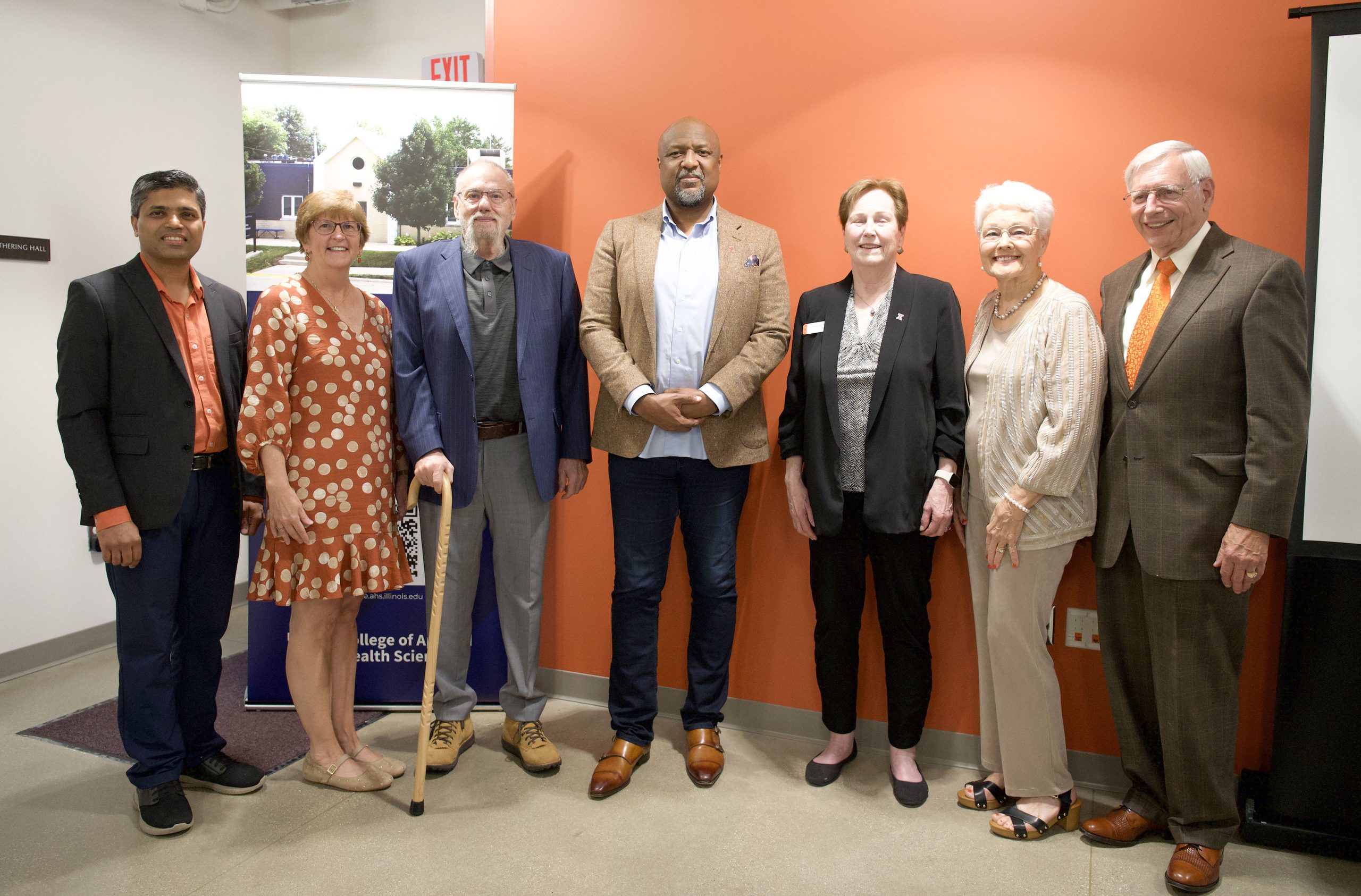
Happy Birthday, Huff!


Huff Hall today, left, and the building in 1924. (Photo illustration by Michelle Hassell).

By Anna Flanagan

Many people still think of the home of the College of Applied Health Sciences as Huff Gym. The building opened in 1925 as the New Gymnasium, giving the University of Illinois men’s basketball team what was then state-of-the-art facilities for home games. Renamed for longtime athletic director and coach George Huff in 1936 after his death, Huff Gym later became Huff Hall to better reflect its significant role in the academic life of the university.

The four hallways on the first floor of the building surround the gym, which is still used for volleyball, wrestling and gymnastics events. But faculty associated with Huff have cemented its scholarly reputation as the site of pioneering research and groundbreaking advancements in health and leisure studies.

The Father of Physical Fitness

The early academics residing in Huff Gym were the faculty of the School of Physical Education. They included Seward Staley, who served as director and dean from 1936 to 1960. Staley was a strong advocate of building physical education programs around a sport-based curriculum and conducted extensive research on physical education and sport throughout his career. He guided the School of Physical Education to prominence as a leader in health-related research.

Staley’s own commitment to research-based practice influenced his faculty recruitment. In 1941, Thomas “T.K.” Cureton, known as the “father of physical fitness,” joined the School of Physical Education. He established the Physical Fitness Research Laboratory in Huff Hall, one of the first of its kind in the nation. He conducted cutting-edge research on what he called the six primary components of physical fitness—endurance, flexibility, agility, strength, power and balance—and revolutionized existing knowledge about weight and fitness, oxygen’s role in athletic performance and the role of exercise in cardiovascular health, among other things.

As Jack Berryman, then the official historian of the American College of Sports Medicine, observed in a 1996 article in Research Quarterly for Exercise and Sport, Cureton was the only fitness enthusiast of the 1950s (a group that included Charles Atlas and Jack LaLanne) “who produced the research to substantiate his beliefs regarding the positive influence of physical activity on health.” Cureton’s work helped to elevate the reputation of physical education and led to the establishment of research labs in departments across the country.

In addition to the hundreds of journal articles, books and research monographs published during his career, Cureton shared his beliefs widely through numerous lectures around the world, called Cureton Clinics, and frequent appearances in magazine and newspaper articles and on television programs focused on health and fitness. His son, Kirk Cureton, who himself had a long and distinguished career in kinesiology at the University of Georgia, said he wasn’t aware of his father’s reputation in the field of physical fitness science as a child. He participated in the Sports Fitness Experimental School that his father established in 1950 to improve the physical fitness of youth, still running today as the Sports Fitness Program, and recalls going to his father’s lab where Cureton and his graduate students assessed such things as cardiovascular health and muscle endurance.

Kirk Cureton’s knowledge of his father’s stature grew as he did, and he feels it played a positive role as he established his own career.

“My father was known, and it helped me with networking,” he said, adding that TK was “a good model.”

“What I learned from him was persistence and the value of hard work,” Cureton said. “He was devoted to his field. He loved what he did. He thought working at a university was the best thing you could do.”

Poised for the future

Many outstanding scholars walked the halls of Huff as the School of Physical Education evolved into the College of Applied Health Sciences. They established the first driver education teacher training program in the Midwest, created the first K-12 sex education curriculum that was adopted throughout the country, conducted a groundbreaking study on driving and alcohol consumption that resulted in the lowering of the DUI threshold from .15 to .10, conducted a comprehensive anti-smoking education study of youth that resulted in the first academic contribution to the annual Surgeon General’s Report on smoking and health, and put sport psychology on the map as a legitimate academic discipline, among many other contributions.

T.K. Cureton was ‘devoted to his field,’ his son Kirk said. (University of Illinois Archives)

“Our current faculty engages in research that, in a lot of ways, wouldn’t have been possible without Cureton and the other pioneers,” she said. “We still focus on issues related to physical fitness and health, cardiovascular health, for example, which was so important in Cureton’s work. But we have developed a more discipline-focused approach, looking at biomechanics, exercise physiology, brain health or exercise psychology, and so much more.”

Graber noted that while the department has expanded far beyond its early focus on training school health educators, teacher training is still an important part of its mission as evidenced by its Physical Education Teaching Licensure program. Huff Hall is still an important hub for the department, she said, serving as the home of its three professional degree programs—Master of Public Health (MPH), Master of Health Administration (MHA) and Master of Science in Health Technology (MS-HT). Many health and kinesiology faculty have their offices and laboratories in Huff, where they are addressing current and emerging health challenges such as the role of technology in successful aging, gut health and chronic disease in underrepresented populations.

“Our research is cutting edge,” Graber said. “It’s innovative. It’s futuristic. We’re in a good position to tackle the problems of the next generation.”

Giants of recreation and leisure

Huff Hall also is the home of the Department of Recreation, Sport and Tourism, which had its beginnings in the Department of Physical Education for Women. That department, which included recreation in its curriculum, joined the Department of Physical Education for Men to form the School of Physical Education. The School began offering a bachelor of science degree in recreation in 1948, thanks to the efforts of Allen Sapora. The curriculum he developed became a model for programs around the country. Sapora believed strongly in the importance of applied research and was one of the first scholars to integrate research into recreation education and professional practice.

Charles Brightbill joined the Illinois faculty as a professor of recreation in 1951 and, working together with Sapora, built the program into one of the leading park and recreation education programs in the world. Brightbill had a well-established national reputation in the field of recreation by the time he joined the Illinois faculty, having served as the executive secretary of President Harry Truman’s Committee on Religion and Welfare in the Armed Forces, among other positions. In 1957, he became the inaugural head of the Department of Recreation, which was created when the School of Physical Education was reorganized and renamed the College of Physical Education. His advocacy of cooperation between citizens and professionals in the parks and recreation field played a significant role in the formation of the National Recreation and Park Association.

After Brightbill’s death, Sapora served as department head and created the Office of Recreation and Park Resources in partnership with University of Illinois Extension. He hired Joseph Bannon, who had completed his master’s degree in recreation at Illinois, to lead the new initiative. Like Sapora, Bannon firmly believed that practice in the parks and recreation field needed to be informed by scientific research, and that research needed to address real world issues. His own research focused on the development of recreation organizations. Laura Payne, professor of recreation, sport and tourism and Joseph J. Bannon Director of the Office of Recreation and Park Resources, said Bannon’s contributions are still relevant today.

Charles Brightbill, left, and Allen Sapora, right front, were pivotal to the establishment of what is now known as the Department of Recreation, Sport and Tourism. (University of Illinois Archives)

“He was the expert nationally and internationally in public parks and recreation organizational development, leadership, management and administration,” she said. “His work addressed policy and practice, and how organizations relate to one another.”

Bannon, who became head of what was then the Department of Leisure Studies in 1973, was instrumental in strengthening the interdisciplinary nature of the department’s research, hiring faculty with backgrounds in such fields as psychology and sociology. He was a co-founding editor of the Journal of Park and Recreation Administration and, along with Allen Sapora, a founding Fellow of The Academy of Leisure Sciences, or TALS. Fellowship in TALS is a prestigious honor, one that many RST faculty and PhD graduates have earned since the organization’s founding in 1980. Among them are John “Jack” Kelly and Lynn Barnett, also giants in the field of leisure studies.

Kelly, in fact, played an instrumental role in establishing the field of leisure studies. He believed that knowledge of leisure theory would help practitioners make informed decisions and design more relevant and effective programs. He wrote the first textbook in the field of leisure studies, appropriately entitled Leisure, and encouraged scholars to address the sociological and psychological aspects of leisure.

“Jack Kelly is a legend in our field,” Payne said. “He was ahead of the curve on many societal issues and trends in the 1970s and early ‘80s, anticipating and working on healthy aging, work and leisure, socialization and leisure and family leisure. He really catapulted us forward by making our research more relevant and increasing our visibility to people outside of parks, recreation, sports, tourism and leisure studies.”

Barnett studied the role of play and playfulness in the lives of children and adults for more than 40 years. As a doctoral student in educational psychology, she became convinced that children learned as much or more outside of the classroom as they did within it. Over the years, she found that playfulness is a fairly stable construct that is related to cognitive and socioemotional functioning. Her research showed that playfulness was linked to flexibility in thinking, enjoyment, positivity, and social skill, and that it was often used to cope with anxiety.

“Lynn brought education, human development and play together in a way that hadn’t been done before,” said Monika Stodolska, Brightbill/Sapora Professor and associate head of recreation, sport and tourism. “She inspired generations of scholars, students and practitioners to look at play as being integral to learning, and socioemotional, physical, and cognitive development.”

The commitment remains

Scholars in the Department of Recreation, Sport and Tourism continue to believe in practice-based research and research-based practice. RST faculty still examine leisure’s role in the healthy development of individuals, families and communities, focusing on such contemporary issues as the role of sport in human and community development, equity in access to parks and green spaces and how social, cultural, environmental and political factors affect tourists and host communities. As RST professor and department head Carla Santos put it, “We keep our ears to the ground, listening and observing and staying connected to what’s going on in recreation, sport and tourism in order to be responsive to needs and priorities. That has been true of this department throughout the nearly 70 years we’ve been in Huff Hall.”

The College of Applied Health Sciences has grown beyond the walls of Huff, now also occupying Freer Hall and the Speech and Hearing Science Building. But one hundred years after its opening, Huff Hall remains the nerve center of AHS, and that’s just fine by Cheryl Hanley-Maxwell, dean of AHS.

“With the addition of the Khan Annex and modernization of instructional spaces, Huff wears its age well and is a comfortable academic home,” she said. “It’s a campus landmark and I’m proud that it’s the heart of AHS. But in the end, what really makes a building special are the people who work within it, our students, faculty and staff. We are blessed in AHS to have exceptional students, creative and dedicated faculty and skilled and supportive staff. I’m proud of all of them.”

Share on social
Related news

Online Allies: How Black travelers view DMO social advocacy statements


RST Assistant Professor Charis Tucker: “Tourism marketing must go beyond surface-level representation.”

In the summer of 2020, when streets across the U.S. filled with protests for racial and social justice, something unusual happened in the world of tourism. Destination marketing organizations—better known as DMOs—suddenly became vocal online allies. Their Instagram grids turned black. Their feeds carried hashtags of solidarity. Their captions spoke of inclusion, equity and justice.

It was a striking moment for an industry that historically has not been known for inclusivity. But it raised an important question: did these digital gestures matter to Black travelers, the very audience the messages were meant to support?

That question became the focus of a new study entitled “Online Allies? Exploring Black travelers’ perceptions of DMO social advocacy statements” and published in the Journal of Travel Research. For the researcher behind the project—Dr. Charis Tucker, an assistant professor in the Department of Recreation, Sport and Tourism at the University of Illinois—the motivation was straightforward.

“Organizations in various industries, including tourism, began engaging in digital advocacy, posting their support for racial diversity, the Black community, and/or the Black Lives Matter Movement,” Tucker said. “What was missing from the conversation, however, were the voices of the community for whom this advocacy was directed. I wanted to understand how these statements resonated with Black travelers.”

In this context, “social advocacy statements” means the public messages organizations choose to share online—on websites, social feeds or campaigns—about issues such as racial justice, LGBTQ rights or mental health.

“These statements are usually made during key moments after a major social event or movement,” Tucker said. “They’re meant to show that the organization cares about more than profit; they care about people and justice, too.”

But do they succeed? Or do they come off as hollow gestures?

To find out, the Tucker and her colleagues reviewed real-world posts from DMOs, looking at the kinds of images and captions they used. Then, they designed a set of mock posts that reflected different advocacy approaches:

  • A simple black square.
  • A black square with a short statement of solidarity.
  • A photo of a Black family holding a sign that read “United Against Hate.”
  • The same photo, paired with a written statement.

Nearly 200 participants evaluated the posts through an online research platform. Their reactions revealed not only what felt meaningful, but also what felt empty.

The black square, a widely used digital symbol in 2020, flopped in the experiment. Participants dismissed it as vague and performative.

A mockup of a black square Instagram post. Many corporations, including DMOs, posted similar images during 2020’s racial justice protests, in an effort to show solidarity. Tucker asked participants to evaluate different responses from DMOs on how meaningful, or hollow, the gestures felt.

The black square paired with a written statement prompted the most critical reflection. It made travelers stop and ask: does this organization actually understand us? Do they back up these words with action?

“I think this is a little lackluster compared to the other statements I have seen. I don’t want to be represented by just a black square” one participant said.

Posts that combined imagery with text—especially featuring Black people—were seen as more sincere and intentional. The message was clear: gestures need words and words need actions.

So how can DMOs avoid looking performative? According to the study, the key lies in specificity and consistency.

“Organizations must explicitly state their stance,” Tucker said. “Their posts should include who they are supporting, why, and—perhaps most importantly—how. This will limit scrutiny that is sure to come with vague or ambiguous messaging.”

Equally critical is aligning statements with a track record of action. Many participants questioned whether DMOs had been inclusive in the past. Without history to back them up, even the most polished posts risked falling flat.

The implications for tourism marketing are significant. For decades, Black travelers have been underrepresented—or completely absent—in promotional campaigns. In response, they created their own spaces for community and representation.

“Tourism marketing must go beyond surface-level representation,” Tucker said. “Genuine inclusion requires more than simply featuring Black travelers in promotional materials. It demands thoughtful, consistent effort that reflects a genuine understanding of and engagement with Black communities.”

One concept that emerged from the research is something called “relational legitimacy.” Put simply, it’s the trust that grows when organizations affirm the identities, values, and lived experiences of marginalized communities.

“To rebuild trust, DMOs should get to know their community, not just in its present state, but from a historical perspective as well,” Tucker said. “This means recognizing the past experiences, contributions, and challenges of these communities, and using that knowledge to inform more respectful, inclusive engagement.”

That means celebrating local Black voices—entrepreneurs, artists, and cultural leaders—while also listening closely to community feedback and adapting accordingly.

The study’s findings offer a roadmap for an industry that wants to do better. Social advocacy can’t be performative, and it can’t be a one-off post during a crisis. For Black travelers, sincerity shines through when organizations pair words with action, history with honesty, and representation with respect.

As Tucker noted, real trust is built not through hashtags, but through consistency.

For DMOs, the message is as clear as it is challenging: it’s time to move beyond the black square.

Editor’s note:

To reach Charis Tucker, email cntucker@illinois.edu.
The paper “Online Allies? Exploring Black travelers’ perceptions of DMO social advocacy statements” can be found online here: https://journals.sagepub.com/doi/full/10.1177/00472875241294235
 

Share on social

Related news

Tattoos as anchors of transformative travel


A tattoo one traveler obtained on a visit to Japan. Participants in the study were asked to share images of their tattoos, which embodied personal change, collaboration, and reminders of the travel experience. (Provided)

At the intersection of body art and travel lies a fascinating phenomenon: tattoos serving as anchors of transformative experiences.

A new study from Recreation, Sport and Tourism faculty members Toni Liechty and Joelle Soulard, along with recent RST graduate and current Western Michigan University Assistant Professor Xin Du—which earned a Silver Award at the TTRA International Conference—sheds light on how travelers inscribe their journeys into their skin—quite literally—turning fleeting moments into enduring symbols of change. Drawing on the theory of aesthetic reflexivity, Soulard and her team examined how tattoos reflect not only personal transformations but also the broader cultural contexts in which they are created.

At the heart of this study is aesthetic reflexivity, a lens that emphasizes how individuals make sense of their lives through aesthetic, embodied, and sensory practices. Rather than viewing tattoos as static souvenirs, Liechty and Soulard’s research frames them as dynamic expressions of ongoing transformation. Placement, style and design become as important as the stories behind them. Three themes consistently surfaced: tattoos as embodiments of personal change, tattoos shaped through collaboration with others, and tattoos serving as enduring reminders long after the journey ended.

In other words, the tattoo is not the final word on the experience—it continues to “speak” over time. A novel aspect of this research was the use of photo elicitation, where participants were asked to share images of their tattoos.

“This combination of stories and images provided a fuller picture of how tattoos expressed transformation and helped us notice patterns that might have been missed otherwise,” Soulard said.

This visual approach often unlocked memories and meanings that words alone did not capture. For instance, some travelers reflected on the significance of tattoo placement in relation to scars, or the choice of a particular design that tied back to their journey. By combining narrative and visual data, Soulard and Liechty were able to trace patterns of transformation that might have remained invisible otherwise.

The study included 31 U.S. travelers who had gotten a tattoo after what they considered a transformative trip. Participants were recruited to reflect diversity across age, gender, life stage, and destination. From backpacking in Asia to volunteering abroad or embarking on solo pilgrimages, the contexts varied widely. Yet, despite the diversity of stories, a shared thread emerged: the tattoo as both artifact and anchor of change. Recruitment continued until theoretical saturation was reached, ensuring that the insights reflected recurring themes rather than isolated anecdotes.

RST professors Toni Liechty and Joelle Soulard.

One of the more striking findings involved tattoo placement. Several participants deliberately chose sensitive spots—like ribs or spine—where pain intensified the meaning of the act. For them, the researchers said, enduring the process was part of the ritual, underscoring resilience and adding layers of depth.

“Across their stories, we also noticed common patterns,” Soulard said. “Tattoos used to cover scars, tattoos placed where others would see them as signs of transformation, and tattoos with symbolic designs, such as ancestral motifs, that carried personal significance. These layers of interpretation became visible when we looked at the tattoos alongside the participants’ accounts.”

Although the research did not include formal long-term follow-up, many participants described how their tattoos continued to serve as daily reminders of their journeys. In moments of stress or uncertainty, glancing at the tattoo provided grounding, calm, or renewed strength. This suggests that tattoos function not only as memory devices but also as active tools for navigating everyday life, anchoring identity and resilience across time.

A floral tattoo obtained by a traveler after a trip to New Zealand.

The findings hold valuable insights for tourism operators. Rather than offering only conventional souvenirs, Soulard suggests that operators could facilitate co-creation experiences with local artists—tattooists, calligraphers, or printmakers—that allow travelers to express transformation in deeply personal ways. Maker studios for engraved tokens, stitched patches, or memorial jewelry could provide meaningful alternatives. Post-trip reflection kits, blending journaling prompts with art, might also extend the transformative power of travel once travelers return home. These approaches recognize that identity work does not end when the trip concludes; it evolves.

Of course, tattoos are not free from cultural complexity. The researchers said they approached the subject with care, ensuring ethical research practices, IRB approval and respect for participants’ privacy. Photo sharing was optional, and aliases were used to protect identities.

“We also ensured that participants’ own stories and meanings were at the center of the research by giving them space to guide the conversation, and interpreting their tattoos through the explanations they offered,” Soulard said.

Importantly, the researchers acknowledged broader issues, such as the colonial suppression of Indigenous tattoo traditions, as well as the risks of cultural appropriation or stigma in modern practice.

Soulard and Liechty’s insights raise possibilities for future research. Longitudinal studies using diaries or repeat interviews could explore how the meanings of tattoos evolve over decades. As tattoos continue to gain cultural prominence, particularly among younger generations, their role as anchors of transformative travel is likely to expand.

What remains clear, Liechty and Soulard suggest, is that tattoos are more than body art—they are living, breathing narratives etched into skin, carrying the echoes of journeys that reshape lives.

Editor’s note:

To reach Toni Liechty, email tliechty@illinois.edu.
To reach Joelle Soulard, email jsoulard@illinois.edu.
 

Share on social

Related news

A friendship forged in RST: Dan Bernstein and Alex Roux’s journey at Illinois


Alex Roux (Photo provided)

Both arrived on campus passionate about Illini sports, uncertain of exactly where their paths might lead. What they discovered together in the Department of Recreation, Sport and Tourism was a sense of community, mentorship and shared ambition that defined their time at Illinois.

Roux, a Champaign native, was steeped in Illini culture. “I grew up in Champaign-Urbana as an Illini fan and high school athlete, and when I realized my athletic dreams of competing in college would fall (way) short, I wanted to stay connected to the sports world professionally,” he said. “The RST program stood out as my lane to remain close to the athletic programs I grew up cheering for.”

Bernstein, meanwhile, came from Glenview, a northern suburb of Chicago. A lifelong Illini basketball fan who idolized the 2004–05 team, he initially enrolled as a psychology major. But as his friendship with Roux deepened, his focus shifted. “After becoming close friends with Alex and given my passion for sports and interest in marketing, I transferred into RST during my sophomore year.”

Their friendship began in the residence halls. Roux’s roommate at Bromley Hall had been one of Bernstein’s high school friends, creating a natural introduction. Roux remembered noticing Bernstein early on in class: “I recognized Dan on one of our first days of class freshman year because he frequently wore Illinois gear, so we struck up some initial conversations about Illini sports. Once I realized he ‘knew ball’ and I could talk sports at length with him, our friendship took off from there.”

Bernstein echoed that sentiment with his characteristic humor: “It was ‘close friends at first sight.’ Kidding … In reality, we bonded quickly because Alex knew so much about Illinois sports and sports in general. We also shared the same questionable taste in Burnett’s vodka and bagged wine back then, which, at the time, felt like the perfect foundation for friendship.”

What began as hallway conversations grew into years of shared experiences. They were roommates for three of their four years, sat together in RST classes, and spent countless evenings at Illini basketball games. Roux explained the impact of that constant companionship: “Having Dan around to bounce class schedules, homework assignments and ideas off of helped my development both as a student and motivationally. When he secured a coveted internship with the Philadelphia Flyers, I wanted to pursue similar high-profile opportunities in my own career.”

For Bernstein, Roux’s local ties eased the transition into campus life. “Alex being from Champaign was especially helpful for me as a freshman who was unsure of what he was getting into. Through him, I met great local friends and felt more at home.”

Both immersed themselves in campus opportunities. Roux worked at the Illinois Ticket Office throughout his undergraduate years, including alongside his grandfather, whose legacy is now honored at State Farm Center. Bernstein became deeply involved in student organizations, writing for The Daily Illini—as did Roux—and serving as vice president of Orange Krush, Illinois’ famed student cheering section. “That role was particularly meaningful—it wasn’t just about going to games, but also about learning to run a successful nonprofit that gave back to the community,” he said. “I gained hands-on experience in marketing, operations, fundraising, etc.”

Their shared academic journey was guided by faculty like Clinical Associate Professor Mike Raycraft, whom both cite as a lasting influence. Roux described him as “someone who invests his time and energy with students past and present,” while Bernstein emphasized Raycraft’s perspective that careers in sport and tourism often extend well beyond traditional roles.

After Illinois, Roux and Bernstein lived together in Chicago for three years before their paths diverged geographically. Roux launched his career at Big Ten Network in Chicago, where he has grown from entry-level social media work to management roles overseeing content, partnerships, and coverage of major events. Bernstein took a less conventional route, working at startups, Allstate, and a global pharmaceutical company before landing at Lou Malnati’s, the iconic Chicago pizza brand.

Dan Bernstein (Photo provided)

Despite different industries, both credit RST with preparing them. Roux emphasized adaptability: “RST provided a pathway to explore a wide swath of opportunities in the sports industry, which required building communication and adaptability skills that still serve me well to this day.”

Bernstein pointed to transferable business skills: “For me, it is less about hard skills and more about the business and soft skills: marketing fundamentals, organization, collaboration, and communication. In the business world, especially in marketing, those skills are what set you apart. RST gave me a strong foundation in all of them.”

Today, both men still live and work in Chicago, a city they independently described as “the best in the world.” For Roux, it’s a hub of Big Ten culture that keeps him connected to alumni. For Bernstein, it’s a city where Illinois ties run deep: “Even in a city with the largest U of I alumni base, I still find myself saying ‘ILL’ to strangers in the gym, on the street, or in a bar. There is a real bond and sense of togetherness among Illinois alumni.”

Looking back, both reflect with gratitude on the friendship that defined their student experience. Roux called Illinois “truly immeasurable” in its value, while Bernstein put it simply: “Illinois gave me lifelong friends, unforgettable experiences, and the foundation for my career.”

Their careers may have taken different directions, but their story is a reminder of what makes the RST program special: the chance to turn passion into profession—and along the way, to find a lifelong teammate.

Editor’s note:

To reach Vince Lara-Cinisomo, email vinlara@illinois.edu.
 

Share on social

Related news

Remembering Ron Dodd, a leader in public parks and recreation


Ron Dodd (Photo provided)

Ron Dodd, former director of the Joliet Park District and an RST alumnus, passed away on July 31, 2025, at the age of 84. 

Dodd was a leader and educator in public parks and recreation and the embodiment of a true servant leader who cared about the communities he served and was instrumental in advancing the parks and recreation profession nationally and internationally. 

“Ron was everywhere volunteering for anything that needed to be done within our profession and left a positive mark wherever he went coast to coast,” said Ken Kutska, a colleague and friend.

Dodd was an innovative leader who was creative and an adept problem-solver. His talent for organizational development, operations and service delivery was crucial to the decentralization of Dallas Parks and Recreation and the Chicago Park District. These reorganizations enabled staff to be more responsive to local community needs and resulted in programs and services that more effectively met residents’ needs and interests.  

Later in his career, Dodd took his talents to the Joliet Park District, where he led successful capital project initiatives such as the Inwood Ice Arena and the Inwood Sports Complex. At a time when the property tax cap in five northern Illinois counties made it more difficult to issue bonds to fund facility development and improvements, he developed a successful diversified fundraising strategy that was key to improving park district facilities. 

As a testament to his commitment to advancing the field of parks and recreation, Dodd held leadership positions in both state and national parks and recreation associations. He served on the Board of Trustees for the National Recreation and Park Association (NRPA) and was the chairman of the Illinois Park and Recreation Association and the American Academy of Park and Recreation Administration. 

His leadership and contributions to the field of parks and recreation was recognized with several prestigious awards including the National Cornelius Amory Pugsley Medal, the University of St. Francis Distinguished Professional Award and the NRPA Robert M. Artz Award for advocacy and outstanding efforts in advancing the field through education and activating communities to advocate for parks and recreation at local, state or at the national level. 

Dodd was born and raised in Ottawa, Illinois, where he was active in the varsity band and competed on the varsity cross country and track teams. He was a skilled model builder and built many scaled dollhouses for his daughter, granddaughters and great-granddaughter. He enjoyed sports, especially golf and bowling, and he played in bowling leagues over the years. He loved spending time with friends and family and enjoyed traveling. 

Dodd attended Luther College in Decorah, Iowa, where he earned Bachelor of Science degrees in political science and physical education. Inspired by public service, he embarked on a career in public parks and recreation and later earned master’s in Leisure Studies, with a concentration in recreation and park administration from the University of Illinois-Champaign.

Dodd mentored many students and professionals throughout his career. His passion for education led him to St. Francis University, where he taught courses in the Recreation and Sport Management Program for 30 years, educating and inspiring students. James Barkeley, an alumnus of the RST M.S. and Ph.D. programs and recipient of the Ronald Dodd Scholarship for Distinguished M.S. Students in Parks and Recreation, said, “Ron impressed on me that leisure services is a noble profession and that I could succeed. His message has stayed with me as I became a full professor in sport and recreation management driven by a belief in the importance and power of leisure services and that I could make a difference.”  

Dodd’s contributions to the field and impacts on others can be summed up by Jason Genck, senior manager/practice lead at BerryDunn. Genck said, “Life’s most persistent and urgent question is, ‘What are you doing for others?’ Ron’s life was a shining example of this principle. Ron has been an inspirational beacon in my life and career. Our field is better because of Ron’s tireless work in parks, recreation, volunteer service, faith, mentorship, passion, love and education.”

Share on social

Related news

Remembering Dr. Laurence Chalip, a giant in sport policy and management


Laurence Chalip (Photo provided)

Dr. Laurence Chalip, former head of the Department of Recreation Sport and Tourism and a Brightbill/Sapora professor, died on Aug. 17, 2025, at the age of 74.  

Chalip was a global leader and visionary in the field of sport policy and sport management. He championed the integration of the recreation, sport and tourism field and encouraged the RST faculty and students to emphasize the commonalities among their sub-fields. In an interview at George Mason University, Chalip said, “There’s no problem out there that’s strictly a sociological problem, economic problem, or a political problem. In the real world, it all comes together.” 

Chalip’s legacy and influence went far beyond Illinois—he was recognized internationally and served as the president of the North American Society for Sport Management, or NASSM. Chalip was a change agent, shaping global conversations on policy and best practices in sport, tourism, and recreation. While he valued research-driven knowledge, he focused equally on advocating for change that has “on the ground” impacts for RST organizations, policy makers, communities and society.

“Laurence was among the top 2 percent of scholars globally across all fields and selflessly advanced the study of sport management,” said Robert Baker, professor emeritus of Sport, Recreation and Tourism at George Mason. “Listing his many accomplishments only scratches the surface of who Laurence was, his impact on our thinking and careers. Laurence inspired us—he made the academy, and each of us (in sport management) better. He was passionate about teaching and mentoring students. He brought deep analysis and insights into his courses, questioned the status quo, and challenged students to critically examine and defend their positions.”

Dr. Liselle Milazzo, a former RST doctoral student, shared how Chalip’s mentoring helped her grow as a scholar. “Dr. Chalip pushed me harder than any other mentor or professor I’ve ever had, but if I am even a fractionally successful academic, it’s because he saw me as a curious 25-year-old and treated me like I was already a scholar,” Milazzo said. 

As a mentor, Chalip made an indelible impression on every student. 

“What I will always value about having Dr. Chalip as a friend and mentor is his ability to make students believe in themselves, said Dr. Jeff Far, a former RST doctoral student. “He often said that his favorite time of the week was the time he spent with us in the classroom.” 

Chalip grew up in Alameda, California, where he exceled as a competitive swimmer. As a musician and music lover, he enjoyed playing blues and flamenco guitar, and when he was a young man, he was in a girl band, The Fabulaires. He loved to cook and enjoyed cooking for friends and family. 

After earning his bachelor’s degree in anthropology at the University of California-Berkeley, he headed to New Zealand where he served as the aquatics director for the Wanganui Community Sports Centre and then the head coach of the Te Awamutu Swimming Club. He continued coaching in Dayton, Ohio. Chalip’s thirst for knowledge led him to earn a master’s degree in psychology at the University of Waikato, and doctorate in public policy at the University of Chicago, where he began integrating his sport experience with policy knowledge.  

Friends and colleagues often encouraged him to retire or to cut back on his work, but for Chalip, his work was his leisure. Chalip’s partner and colleague Chris Green said, “He liked nothing better than to play with ideas and create solutions to make a difference in the world.”

Fortunately for all of us, he inspired others to join in the fun and gave us the tools to continue his legacy.

Share on social

Related news

U. of I. trial will test if exercise can improve protein efficiency for older adults with type 2 diabetes


From left: University of Illinois Professor Nick Burd, postdoc Mikaela Kasperek, Ph.D. student Gena Irwin, and Associate Professor Jacob Allen pose inside Freer Hall’s gym, where their labs will train participants in a 12-week exercise program for a clinical trial.

For healthy adults, roughly .8 grams of protein per kilogram of bodyweight per day is enough to maintain muscle mass and support daily function.

But for adults with type 2 diabetes, an estimated 1 in 10 adults in the United States, their protein requirements remain relatively undefined, but are believed to be elevated when compared to their non-diabetic counterparts. Especially as diabetic individuals age, their bodies often become more anabolic resistant: less responsive to the muscle-building effects of exercise and protein intake.

Researchers from the Department of Health and Kinesiology at the University of Illinois Urbana-Champaign are recruiting participants for a human clinical trial to understand the protein needs of older adults with type 2 diabetes, and whether regular exercise can help their bodies use protein more efficiently.

“The problem with current strategies for type 2 diabetes is they largely try to keep throwing protein in people’s diets: eat more, eat more, eat more,” HK Professor Nicholas Burd said.  

Piling on the protein could have detrimental effects. There’s evidence that circulating amino acids, including branch chain amino acids that promote muscle mass, are associated with poorer outcomes for people with diabetes, said HK Associate Professor Jacob Allen.

Their upcoming study, “Exercise impact on dietary protein efficiency in older adults with type 2 diabetes,” is funded by a grant from the American Diabetes Association. The principal investigators are Burd, who researches protein metabolism, and Allen, who studies how exercise and nutrition impact the gut microbiome.

Health and Kinesiology professors Jack Senefeld and Steve Petruzzello are co-investigators on the study.

HK Assistant Professor Jack Senefeld and Professor Steve Petruzzello are co-investigators on the study, bringing expertise on training diabetic individuals and psychological well-being during exercise. Ph.D. candidate Gena Irwin and postdoc Mikaela Kasperek will lead the work from the Burd’s Exercise Performance Lab and Allen’s Integrative Microbiota Physiology labs respectively.

Starting this fall, the researchers will recruit 30 older adults to participate in this study—15 individuals living with type 2 diabetes and 15 without—and bring them into Freer Hall’s gym for a 12-week fitness program that mixes weight training with endurance exercise.

The researchers will use sensitive tools in their labs to figure out how efficiently participants’ bodies utilize protein, and whether that efficiency varies for older adults with and without diabetes. After participants wrap the exercise program, the team will test whether resistance training improved their bodies’ usage of protein overall, lessening their daily protein needs.

“To make an older person’s muscles more youthful, you can exercise them,” Burd said. “But we don’t know how the gut’s being impacted, and we don’t know how type 2 diabetes interferes with some of the ‘youthfulness’ effects of exercise.”

Some of our dietary protein ends up in our skeletal muscle, through muscle-protein synthesis, and some of it is used for energy. But there’s a “black box” around where the rest of our protein goes in the body, Allen said.

“We think that the microbes in the gut, the gut microbiome, might be responsible for some of this, but this has never been studied,” Allen said. “We’ve run some pilot work that fueled part of this study, where we can show that indeed, ingested amino acids are converted into these microbial metabolites.”

Why might that matter? Some of these metabolites are important for human health overall, Allen said. For example, short chain fatty acids—the byproducts of dietary fiber being processed in our gut—bring a host of benefits for metabolism and the immune system.

The research teams will host intervention days at the beginning and end of the 12-week exercise program, to see how participants’ bodies are using the protein in their muscle and gut.

Participants will consume amino acids labeled with stable isotope tracers. The labs will collect breath samples to see how much of the labeled amino acid is showing up in the breath—if more of that labeled protein appears in participants’ breath, their bodies aren’t as good at incorporating it into muscle.

Blood samples will help the scientists understand how the gut is taking those amino acids and converting them into potentially beneficial metabolites.

The second intervention day at the end of the trial will determine whether an exercise program changed the way participants’ bodies use protein.

“There are very few labs in the U.S that not only have the expertise, but have the infrastructure to be able to do this kind of work, so we’re very fortunate for Illinois and our department,” Burd said. “Stable isotope tracers require expensive machines to analyze.”

What’s in it for participants? On top of helping the scientists form dietary guidelines for older adults with type 2 diabetes, they’ll receive progressive exercise training from expert students and faculty at the college, that will hopefully serve them well beyond their last visit.

“A big goal is to change behavior, too, to make them healthier,” Allen said. “That’s ultimately what we’re trying to do.”

Editor’s note:

Interested in participating in this study? Take the survey to see if you qualify, or email the organizers at HK-ADA-Study@illinois.edu

To reach Nick Burd, email naburd@illinois.edu
To reach Jacob Allen, email jmallen5@illinois.edu

Share on social

Related news

Understanding the trauma coping of Ukrainian refugees


Photos from Medyka, a Polish village near the Ukraine border, a few months after the Russian invasion of Ukraine in 2022. Millions of Ukrainian refugees have passed through Poland, with more than 990,000 settling there under temporary protected status. (Provided by Monika Stodolska)

Sitting face-to-face with Ukrainian refugees who had escaped to Poland after Russia’s invasion of Ukraine, Recreation, Sport and Tourism Professor Monika Stodolska asked a set of questions many of them hadn’t considered. Namely, what do you do in your leisure time?

She wanted to understand what they had done to cope with their psychological trauma from the conflict, and whether their participation in leisure activities had helped to relieve some of the stress they’d experienced. But Stodolska wasn’t prepared for how difficult it would be to even broach the subject, or how the refugees’ reactions would affect her personally.

“The look on their faces when I asked that really stuck with me. ‘How can you even be asking about leisure when everything else is going on, when my family lives on the front lines, when I’m separated from my children?’” Stodolska said. “I knew as a researcher how important leisure can be in helping people cope with those most difficult moments in their lives. But these people didn’t realize that.”

Stodolska, professor of RST at the University of Illinois Urbana-Champaign, researches how leisure and recreation can improve health and well-being, especially among racially and ethnically minoritized populations. In 2025, she released the first paper in a series studying the human consequences of the Russian war on Ukraine, specifically in the neighboring country of Poland.

By Feb. 2024, more than 18.8 million Ukrainians had crossed the country’s border with Poland since Russia’s invasion of Ukraine. By Sept. 2025, roughly 993,000 Ukrainian refugees remained in Poland under temporary protected status, with the majority resettling elsewhere or returning to Ukraine. (Germany is the only country with more Ukrainian refugees, at nearly 1.2 million).  

In the fall of 2022, Stodolska—who happened to be on sabbatical—traveled back to her home country of Poland and began conducting in-depth interviews with three groups of people who were thrust into action as the war intensified. 

She interviewed Ukrainian refugees who moved westward to Poland to escape the war, administrators of the aid effort such as Polish city mayors and organizers of mass refugee shelters, and “helpers,” Polish residents who housed refugees when the conflict escalated and volunteers who assisted the aid effort at home or on the frontlines.

Her first paper in the series, “The Roles of Leisure in Trauma Coping Among Ukrainian War Refugees in Poland,” was published in the journal Leisure Sciences this April. The paper contains firsthand narratives from her interviews with the Ukrainian refugees, which took place from Nov. 2022 to May 2023. 

Among the 21 refugees she interviewed for the study, 19 were women, matching the ratio of Ukrainians initially displaced by the war. Until this August, men of military age were not allowed to leave Ukraine while the fighting continued.

Stodolska conducted interviews in a mix of Polish, English and some Russian, while research assistant Tala Naumovska, from the Department of Slavic Languages & Literatures, conducted interviews with subjects who spoke only Ukrainian.

Polish and Ukrainian flags on the gates to the Warsaw University campus. Polish national attitudes toward Ukrainian refugees have shifted since the invasion began. (Monika Stodolska)

Using Lazarus and Folkman’s framework to explain how individuals cope with psychological stress, Stodolska divided their leisure activities into either emotion-focused or problem-focused coping. The emotion-focused coping, among others, included checking Ukrainian news or staying in touch with family and friends, while problem-focused coping included collecting materials that could be sent the war’s frontlines, using leisure to build a sense of belonging, and traveling across Poland to learn about their new environment.

“We knew that leisure is a good buffer against trauma,” she said. “But there was so much more that surfaced in this study.”

Many of the refugees she interviewed developed strong relationships with their Polish host families, and found purpose in joining the community’s volunteer activities for the war effort, such as weaving camouflage nets intended for the war’s trenches.

Stodolska was continually struck by the immense humanitarian response she witnessed in the wake of the second invasion of Ukraine.

“It was not only the Polish population—Czech, Slovaks, Germans, everyone wanted to help. The scale and magnitude of the assistance that was given to people was just extraordinary,” Stodolska said. “To me, it was not only extremely moving from a humanitarian perspective, but from a research perspective, I thought that this was unprecedented and needed to be studied.”

But the process of acclimation was painstaking for many of the refugees, who often struggled to find purpose in their free time. Eartha, a 38-year-old mother who escaped from Ukraine with her three children, compared leisure activities like visiting the local park or zoo to “doing time” in prison while awaiting her return.

 “Because it’s like you don’t live, you’re just there, you’re just passing the time. You’re ‘doing time’. I mean, you’re safe; everything is fine, but you are just like a piece of paper,” Eartha said in her interview. 

What has lingered with Stodolska are the traumatic memories of escape her interviewees recalled. Three years after beginning this study, she feels irrevocably changed.

“This was my first encounter with people who just crossed the border escaping death,” Stodolska said. “The gruesome stories that they were telling me, people whose families were murdered or who witnessed death during the escape … I was shell-shocked doing this study.”

“I’ve studied race and ethnicity and discrimination for decades now, but this was by far the most difficult and I think impactful work that I have done.”

The look on their faces really stuck with me. ‘How can you even be asking about leisure when everything else is going on, when my family lives on the front lines, when I’m separated from my children?

Monika Stodolska

Professor of Recreation, Sport and Tourism

While working on her second paper chronicling Polish “helpers” of Ukrainian refugees, Stodolska decided to pause and reevaluate. Polish citizens’ attitudes toward Ukrainian refugees who had settled in the country have deteriorated in the last year, Stodolska said, and she wants to return this fall to collect more data to trace the reasons for this shift.

“They were, at the beginning of the conflict, incredibly supportive and pro-Ukrainian, including here in the United States, but especially in Eastern Europe. The narrative was, ‘They’re fighting our war. Poland is next, right?’,” Stodolska said. “However, we have since seen a marked shift in the attitudes towards migrants—to the point where the majority of the Polish population says that they want the refugees to leave and go back home.”

Why the shift? New perceptions have emerged in Poland and in the region; that Ukrainian refugees are a drain on the country’s resources, or that they’re receiving preferential treatment through government assistance programs. In an opinion poll from the Warsaw-based Centre for Public Opinion Research, 50% of Poles believed the scale of government assistance for Ukrainian refugees was “too great” in general, while 58% believed Ukrainian refugees must work to receive social benefits.

“It was not only the Polish population—Czech, Slovaks, Germans, everyone wanted to help. The scale and magnitude of the assistance that was given to people was just extraordinary,” Stodolska said.

Stodolska is planning to re-interview many of the Poles who brought Ukrainian refugees into their homes and who offered assistance through other means, and ask, “if you were in this situation again, would you still help to the extent you did?”

“I want to have two snapshots in time,” she said. “Take a more longitudinal approach.”

While war negotiations remain at a standstill, the suffering continues. Yet, as Stodolska wrote in the closing paragraph of her paper, Ukrainian refugees’ experiences are only the tip of the iceberg: more than 100 million people globally have been forcibly displaced worldwide by war, oppression and persecution.

She wrote that it was her “sincere wish” that research on refugees was not needed, but that until they are able to return to their homelands, “their fight for survival and dignity [must be] brought to the witness of the world.”

“Don’t lose interest, don’t lose compassion. Compassion is never wrong. Doing the right thing is never wrong,” Stodolska said. “Research is only one tool of that. If I can use research to make sure that this stays in the news cycle, and that people don’t lose interest in helping Ukraine or helping other people who are in need, I’ve done my job.”

Editor’s note:

To contact Monika Stodolska, email stodolsk@illinois.edu
The paper “The Roles of Leisure in Trauma Coping Among Ukrainian War Refugees in Poland” is available online.
DOI: 10.1080/01490400.2025.2487070

Share on social

Related news

Illinois researcher earns NIH subaward to advance cochlear implant technology


Photo by caption

Justin Aronoff, an associate professor in the Department of Speech and Hearing Science in the College of Applied Health Sciences at the University of Illinois Urbana-Champaign, has received a subaward on a Phase I Small Business Innovation Research grant from the National Institutes of Health and the National Institute on Deafness and Other Communication Disorders. The project, led by Vortant Technologies, focuses on a novel approach called “spatially transparent binaural beamforming” that improves on noise reduction techniques in cochlear implant processors.

Cochlear implants have transformed the lives of hundreds of thousands of people worldwide, offering a sense of sound to individuals with severe to profound hearing loss. Yet despite their effectiveness, users often face significant challenges in noisy environments such as restaurants, classrooms or crowded public spaces. Traditional technologies designed to filter noise can unintentionally distort spatial cues—the subtle differences in sound loudness and timing that allow people to locate and separate sounds in space. This distortion makes it harder for cochlear implant users to orient themselves in noisy situations, diminishing the devices’ usefulness in the real world.

The newly funded collaboration between Aronoff’s research group at Illinois and Vortant Technologies aims to solve this problem by advancing a promising new strategy in signal processing. Beamforming, the core technology under study, works by amplifying sounds coming from a specific direction—typically the person a listener wants to focus on—while suppressing sounds from other directions. While beamforming is not new, most existing approaches compromise spatial awareness. Vortant’s innovation, however, is a “spatially transparent” beamformer, meaning it not only improves speech perception in noise but also preserves the spatial cues that are critical for natural hearing.

“Beamforming helps improve speech perception in noisy environments by allowing a microphone to focus on sound from a specific location,” Aronoff said. “The problem with most beamformers is that while they enhance speech, they distort spatial cues, making it difficult to tell where different sounds are coming from. Vortant has been developing a beamformer that overcomes this tradeoff, both improving speech perception and preserving spatial information.”

Aronoff’s lab will play a key role in testing this technology. As the Illinois subawardee, he is responsible for designing and conducting behavioral studies with cochlear implant users. These studies will assess whether the new algorithm delivers on its promise to improve speech understanding in noisy conditions while maintaining the ability to detect where sounds originate. All participant testing will take place in Aronoff’s laboratory at Illinois, where his team has extensive experience conducting similar research.

Being able to follow conversations in noisy environments is one of the biggest challenges they face, and we hope this technology can make a meaningful difference in their everyday lives.

Justin Aronoff

SHS Associate Professor

Vortant Technologies specializes in developing assistive technologies that increase accessibility for people with disabilities. Aronoff first connected with the company through Phil Schaefer, Vortant’s chief scientist, when the two served together on an NIH SBIR review panel. Their shared interest in advancing assistive hearing technologies led to discussions of collaboration, eventually resulting in this funded project. Alongside Aronoff’s group on the Urbana-Champaign campus, a second subaward was issued to Ryan Corey at the University of Illinois-Chicago, expanding the collaboration across campuses.

For Aronoff, the project builds on a long-standing line of research aimed at maximizing the benefits of binaural hearing—the use of both ears—in cochlear implant users. His laboratory has previously been supported by an NIH R01 grant from the NIDCD, now in its fifth year, which investigates how cochlear implant users process spatial hearing cues. That project has already generated four peer-reviewed articles, additional manuscripts under review, and presentations at major national and international conferences. A renewal application for the R01 is currently under consideration, demonstrating the momentum and sustained impact of his research program.

The new SBIR project represents an opportunity to translate fundamental scientific findings into real-world applications. By validating the effectiveness of Vortant’s beamforming algorithm in a controlled laboratory setting, Aronoff’s group will help lay the groundwork for technology that could ultimately be integrated into commercial cochlear implant processors. If successful, the innovation has the potential to make daily listening situations—such as following conversations in a busy café or hearing a teacher in a lively classroom—more manageable and less exhausting for cochlear implant users.

For Aronoff, the potential impact is deeply motivating. “Our ultimate aim is to improve speech perception in noise for cochlear implant users,” he said. “Being able to follow conversations in noisy environments is one of the biggest challenges they face, and we hope this technology can make a meaningful difference in their everyday lives.”

The NIH’s SBIR program is specifically designed to support early-stage research and development conducted by small businesses, often in collaboration with academic partners. By fostering these partnerships, the program seeks to accelerate the translation of innovative ideas into marketable products that can benefit patients and society. The Phase I award to Vortant Technologies and its collaborators at Illinois and UIC exemplifies this mission, advancing cutting-edge science with clear pathways toward clinical application.

As the project progresses, Aronoff and his team will collect data to determine whether the algorithm meets its dual goals of enhancing speech perception and preserving spatial hearing. If the Phase I studies are successful, the team hopes to pursue a Phase II SBIR award, which would provide more substantial funding to refine the technology and move closer to commercialization.

For cochlear implant users, the promise of better hearing in noise could be life-changing. For Aronoff and his collaborators, the new grant marks an important step toward bridging the gap between laboratory research and the lived experiences of people who rely on hearing technology.

Editor’s note:

To reach Vince Lara-Cinisomo, email vinlara@illinois.edu.
 

Share on social

Related news

Health study involves adults with Down syndrome ‘every step of the way’


Marie Moore Channell and Joey Kane at the National Down Syndrome Society Adult Summit. (Provided)

The transition to adulthood can be a challenging phase for people with Down syndrome, as resources built to support them in their youth and in school begin to dry up.

Marie Moore Channell, associate professor of Speech and Hearing Science at the University of Illinois Urbana-Champaign, is the lead investigator on a new study funded by the National Institutes of Health, which will collect the direct perspectives of young adults with Down syndrome and develop community resources to support their social, mental and physical well-being.

Unlike any previous study on the topic, this one has a steering committee of adults with Down syndrome who’ve helped develop the direction of the study “every step of the way.”

“We realized that the research as a whole is missing that perspective from individuals with Down syndrome themselves,” Channell said. “It’s really a humbling experience as a researcher to take a step back and not say, ‘these are the topics missing in the literature.’ This time, we said, ‘you tell us.’”

Channell and her co-investigators, University of Nebraska-Lincoln’s Susan Loveall and Vanderbilt University’s Meghan Burke, have obtained a two-year, $446,096 grant from the National Institute of Child Health and Human Development for their study, titled “Developing and implementing community based participatory health research with young adults with Down syndrome.”

The research team will cast a wide net, conducting one-to-one Zoom interviews with adults with Down syndrome across the U.S. to better understand their health concerns, and how to best support them.

The study emerged from a separate survey the professors had sent out to caregivers of individuals with Down syndrome, which sought to identify the gaps in support that occur once they reached young adulthood. Adults with Down syndrome tend to live with a caregiver until age 50.

“Families tell us some version of the same thing, over and over: that the supports they were receiving when they were younger and in the schools, are taken away when they’re older,” Channell said.

They decided the topic warranted further investigation. But first, Channell and her team used their networks to form a steering committee with 12 young adults, all of whom have Down syndrome.

One of those steering committee members is Joey Kane, a 30-year-old from Seattle who met Channell at the National Down Syndrome Society Adult Summit a couple years ago. Channell described some of the participatory research she was interested in doing, and Joey was all ears.

“I like to help make a difference,” Kane said. “It’s giving my voice to be heard, and advocating not just for me, but for everyone else who has a disability.”

While the lead researchers have put the study in motion, the steering committee has met with them at least once a week over video calls, sometimes twice to accommodate members living in different time zones.

The health topics they’ve focused on, Channell said, have ranged from securing employment and community living, to improving physical health and self-advocacy skills.

All those priorities resonate with Kane. He lives in an apartment about a mile away from his parents’ house and has two jobs: he serves dinner at the cafeteria in a local nursing home and works the front desk at the Down Syndrome Center of Puget Sound, where he also helps teach in the center’s adult program.

Kane has enjoyed meeting the rest of the committee and learning about their perspectives on health topics. He credited Channell and the other study organizers for making sure everyone is represented.

“What’s really good about Marie and the people doing the study, is they can tell who hasn’t talked yet,” he said. “It makes me happy that everyone’s participating. If everyone participates, we’re going to have a good study.”

We realized that the research as a whole is missing that perspective from individuals with Down syndrome themselves.

Marie Moore Channell

Associate Professor, Speech and Hearing Science

Input from the steering committee has shaped the study in critical ways. For one, at the suggestion of the committee, the community resources will likely be geared for professionals who support individuals with Down syndrome, such as healthcare providers, case managers and job coaches.

The virtual interviews will be one-one-one video calls, rather than online surveys. Participants will be able to see questions ahead of time and bring pictures to illustrate their ideas.

“It is a technique we learned about in looking at the research, and that’s one the [steering committee] gravitated toward. It’s called ‘photovoice,’ and it’s been used in similar kinds of community participatory research methods,” Channell said.

The resources could take several forms, but what Channell knows for sure is she’ll be “working with this group every step of the way.” 

“I’ve never done this kind of work before, and it’s been a big learning curve, but really refreshing. Because it feels like we can make an impact a lot faster,” Channell said. “I still highly value the other kinds of research I’ve done, but this is something where it’s built into the project to implement into the community by the end.” 

The investigators will put together a “researcher’s toolkit,” compiling the successful practices and challenges of this participatory research. The team is currently hiring some of the steering committee members as co-researchers, who will be trained to help conduct the one-on-one interviews and take part in day-to-day research tasks.

“I’ve learned so much, and I see the value of connecting with the community, building a relationship and working with them before their research study is designed—not imposing your research questions on the community, we’re so used to doing that,” she said.

“It’s really challenging to change that, but I think it’s what we all should be doing more and more of as researchers.”

Editor’s note:

To reach Marie Channell, email channell@illinois.edu
Channell runs the Intellectual DisAbilities Communication Lab at Illinois. Visit their website.
 

Share on social

Related news

College of Applied Health Sciences
110 Huff Hall
1206 South 4th Street
Champaign, IL 61820
(217) 333-2131