AHS Faculty Q&A: Robyn Gobin understands trauma as both professor and clinician


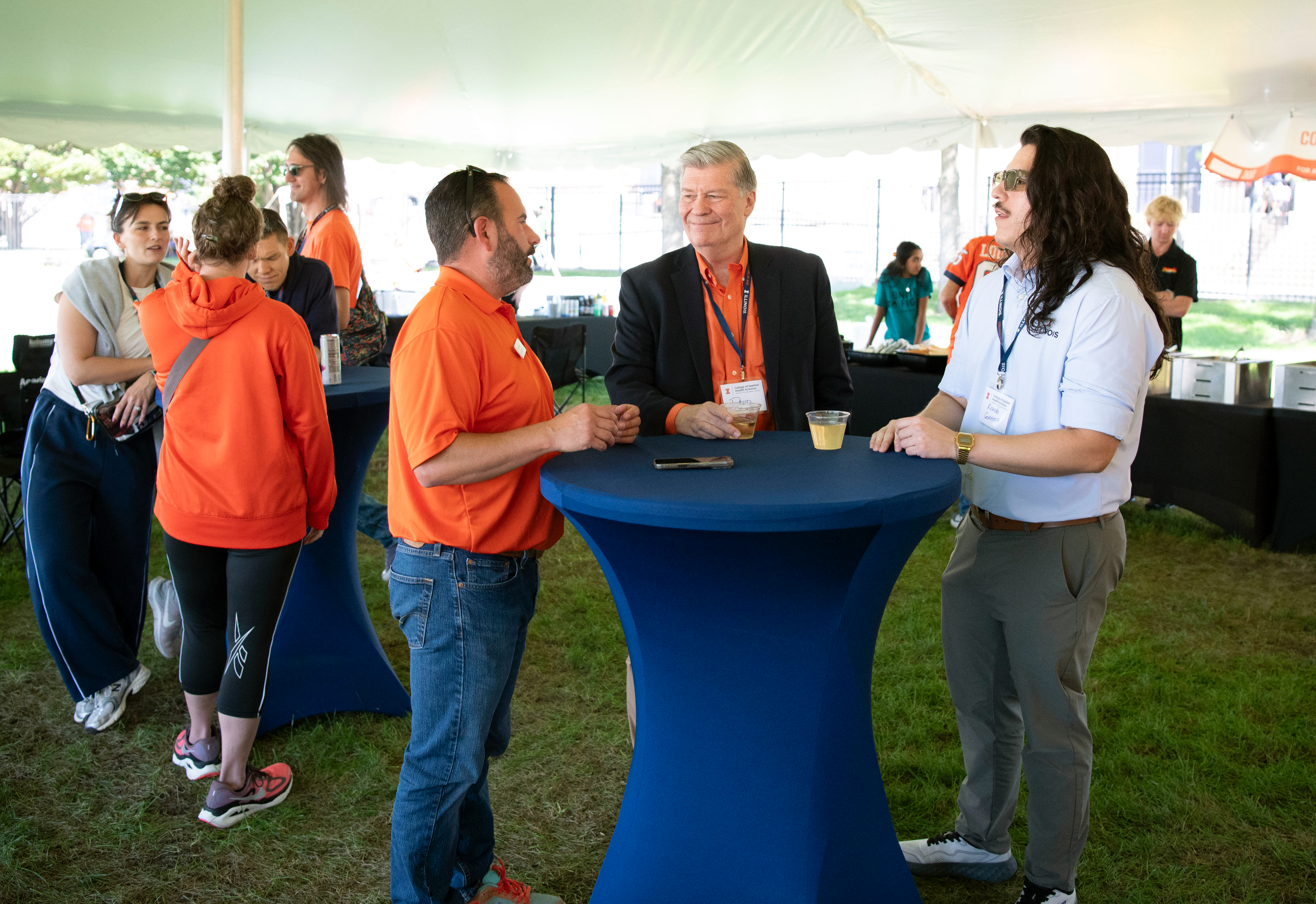
Robyn Gobin said the authenticity of research participants and clients motivates her work. (Photo provided)

Health and Kinesiology Associate Professor Robyn Gobin inhabits many roles—teacher, researcher, psychologist, author—which continue to influence each other. Gobin is a trauma specialist: she works with domestic violence survivors and military Veterans and has published studies about their experiences.  

Gobin joined the Department of Health and Kinesiology in 2015, after clinical and research fellowships at UCSD and Brown University. She obtained her Ph.D. in Clinical Psychology from the University of Oregon in 2012, then worked at the VA Providence Healthcare System’s PTSD Clinic and the VA San Diego Healthcare System, as an Advanced Women’s Health Research Fellow and postdoctoral clinician.

Part of what keeps Gobin motivated to do this work is “the authenticity and courage” she witnesses from research participants and clients as they navigate their healing journeys.   

“It is a privilege to contribute, in both small and meaningful ways, to people reclaiming their sense of self and well-being in the aftermath of trauma,” she said. 

Gobin reflected this semester on her background and ongoing work for the College of Applied Health Sciences. 

Why did you want to become a psychologist? When did academia and the research world come into the picture for you? 

Growing up, I always knew I wanted to have a career that would allow me to help the people in my community experience less stress and have more joyful and fulfilling lives. I discovered the field of psychology during my senior year in high school when I took an AP Psychology course. What attracted me most to the field was that it would allow me to enjoy the best of both worlds: research and practice. I knew I wouldn’t be limited to using just one skill set. Psychology gives me the freedom to use many gifts and talents. As a research psychologist who is also licensed to practice, I get to help shape the knowledge that informs interventions in clinical and community settings, while my work with clients helps shape the way I conceptualize my research.

What brought you to the University of Illinois and the College of Applied Health Sciences? 

As a trauma specialist, I’ve had the opportunity to receive both research and clinical training as a predoctoral and postdoctoral fellow at several Veterans Affairs hospitals. It has truly been an honor to work with military Veterans. When my postdoctoral fellowship concluded, I knew I wanted to continue serving this population. During my job search, I stumbled across a tenure-track faculty position affiliated with the Chez Veterans Center, housed in the College of Applied Health Sciences. I was immediately drawn to the opportunity to continue my Veteran-centric research in a university setting. 

What is it like to occupy the roles of therapist, researcher and professor? Are there ways that each role affects the others for you personally? 

It provides a meaningful balance. I enjoy work that keeps me on my toes by offering opportunities to engage different parts of my brain. One of my core values is being of service and having a direct impact in the community, and these three roles allow me to integrate service and impact into my professional identity. Teaching and therapy allow for immediate, direct impact while collaborative research allows me to contribute to longer-term, broader impact by generating knowledge that can shape practice and policy. Each role is influenced by the others. 

My clinical work grounds my research in real-world experiences and helps ensure it remains relevant and responsive. My research strengthens my teaching and clinical practice by providing evidence-based frameworks and keeping me abreast of emerging topics and the latest research in the field. Teaching allows me to draw directly from both my clinical experiences and research to facilitate rich, nuanced conversations about the complexities of trauma and mental health while engaging learners at all levels, from undergrad and graduate students to new and experienced clinicians. 

You co-authored two recent papers detailing the responses of women who experienced intimate partner violence about their beliefs and practices around forgiveness. What was it like to collaborate on these studies, and what did you learn from them? 

These projects were very special because I got to collaborate with former graduate student Kristen Golden, Ph.D., around our shared passion for enhancing well-being and supporting healing among women survivors of domestic violence. 

I always consider it an honor when survivors are willing to share their stories with us. As a trauma researcher who embraces feminist and intersectional frameworks, one of the biggest takeaways for me was that it matters how we socialize women and girls around forgiveness both in communities and in religious contexts where expectations are often shaped by the intersection of gender, race, culture and faith. 

When women internalize beliefs around forgiveness that align with rigid gender role expectations, they may make choices that inadvertently increase risk for continued harm. However, when women are supported in adopting more expansive beliefs about forgiveness that are not solely about nurturing others but also allow them to retain agency (i.e., believing that it is possible to forgive their abusers without reconciling), they are better positioned to make choices that prioritize their safety and well-being. 

Your research areas and mental health practice undoubtedly expose you to profound grief and trauma of your clients and participants. How do you manage this as a practitioner, and what keeps you motivated to work in this field? 

I manage this by being highly devoted to my self-care practices. Having a nourishing morning routine, setting boundaries and intentionally creating space to recharge allow me to do this work from a grounded and resourced place. I also prioritize time with family, friends and community, which helps sustain me both personally and professionally. What keeps me motivated is radical hope and the belief that we can work collectively to reduce harm and create safer environments where women and girls are better protected from sexual violence and all other forms of interpersonal trauma. 

I am also inspired by the authenticity and courage I witness in research participants and clients as they navigate their healing journeys. It is a privilege to contribute, in both small and meaningful ways, to people reclaiming their sense of self and well-being in the aftermath of trauma. 

Is there anything else you’re working on right now that you’d like to share?

I have several exciting new collaborations with colleagues at the University of Illinois and other institutions. This work includes examining the influence of radical hope on psychological and physiological responses to race-based stress; conducting community-engaged research on intellectual health and scholarly identity as pathways to promoting educational equity and well-being among Black youth; exploring cultural betrayal trauma theory in Black men; and developing patient-centered, community-engaged strategies to enhance mental health outcomes for military sexual trauma survivors.

Is there anything in particular you would like students or others working in the college to know about you? 

My work is inspired, in part, by Dawna Markova’s poem, “I Will Not Die an Unlived Life.” It serves as both an inspiration and a continuous invitation to live and work with intention:

“I will not die an unlived life 

I will not live in fear 

of falling or catching fire. 

I choose to inhabit my days, 

to allow my living to open me, 

to make me less afraid, 

more accessible, 

to loosen my heart 

until it becomes a wing, 

a torch, a promise. 

I choose to risk my significance; 

to live so that which came to me as seed 

goes to the next as blossom 

and that which came to me as blossom, 

goes on as fruit.”

Editor’s note:

To reach Robyn Gobin, email rgobin@illinois.edu.
 

Share on social
Related news

Understanding the trauma coping of Ukrainian refugees


Photos from Medyka, a Polish village near the Ukraine border, a few months after the Russian invasion of Ukraine in 2022. Millions of Ukrainian refugees have passed through Poland, with more than 990,000 settling there under temporary protected status. (Provided by Monika Stodolska)

Sitting face-to-face with Ukrainian refugees who had escaped to Poland after Russia’s invasion of Ukraine, Recreation, Sport and Tourism Professor Monika Stodolska asked a set of questions many of them hadn’t considered. Namely, what do you do in your leisure time?

She wanted to understand what they had done to cope with their psychological trauma from the conflict, and whether their participation in leisure activities had helped to relieve some of the stress they’d experienced. But Stodolska wasn’t prepared for how difficult it would be to even broach the subject, or how the refugees’ reactions would affect her personally.

“The look on their faces when I asked that really stuck with me. ‘How can you even be asking about leisure when everything else is going on, when my family lives on the front lines, when I’m separated from my children?’” Stodolska said. “I knew as a researcher how important leisure can be in helping people cope with those most difficult moments in their lives. But these people didn’t realize that.”

Stodolska, professor of RST at the University of Illinois Urbana-Champaign, researches how leisure and recreation can improve health and well-being, especially among racially and ethnically minoritized populations. In 2025, she released the first paper in a series studying the human consequences of the Russian war on Ukraine, specifically in the neighboring country of Poland.

By Feb. 2024, more than 18.8 million Ukrainians had crossed the country’s border with Poland since Russia’s invasion of Ukraine. By Sept. 2025, roughly 993,000 Ukrainian refugees remained in Poland under temporary protected status, with the majority resettling elsewhere or returning to Ukraine. (Germany is the only country with more Ukrainian refugees, at nearly 1.2 million).  

In the fall of 2022, Stodolska—who happened to be on sabbatical—traveled back to her home country of Poland and began conducting in-depth interviews with three groups of people who were thrust into action as the war intensified. 

She interviewed Ukrainian refugees who moved westward to Poland to escape the war, administrators of the aid effort such as Polish city mayors and organizers of mass refugee shelters, and “helpers,” Polish residents who housed refugees when the conflict escalated and volunteers who assisted the aid effort at home or on the frontlines.

Her first paper in the series, “The Roles of Leisure in Trauma Coping Among Ukrainian War Refugees in Poland,” was published in the journal Leisure Sciences this April. The paper contains firsthand narratives from her interviews with the Ukrainian refugees, which took place from Nov. 2022 to May 2023. 

Among the 21 refugees she interviewed for the study, 19 were women, matching the ratio of Ukrainians initially displaced by the war. Until this August, men of military age were not allowed to leave Ukraine while the fighting continued.

Stodolska conducted interviews in a mix of Polish, English and some Russian, while research assistant Tala Naumovska, from the Department of Slavic Languages & Literatures, conducted interviews with subjects who spoke only Ukrainian.

Polish and Ukrainian flags on the gates to the Warsaw University campus. Polish national attitudes toward Ukrainian refugees have shifted since the invasion began. (Monika Stodolska)

Using Lazarus and Folkman’s framework to explain how individuals cope with psychological stress, Stodolska divided their leisure activities into either emotion-focused or problem-focused coping. The emotion-focused coping, among others, included checking Ukrainian news or staying in touch with family and friends, while problem-focused coping included collecting materials that could be sent the war’s frontlines, using leisure to build a sense of belonging, and traveling across Poland to learn about their new environment.

“We knew that leisure is a good buffer against trauma,” she said. “But there was so much more that surfaced in this study.”

Many of the refugees she interviewed developed strong relationships with their Polish host families, and found purpose in joining the community’s volunteer activities for the war effort, such as weaving camouflage nets intended for the war’s trenches.

Stodolska was continually struck by the immense humanitarian response she witnessed in the wake of the second invasion of Ukraine.

“It was not only the Polish population—Czech, Slovaks, Germans, everyone wanted to help. The scale and magnitude of the assistance that was given to people was just extraordinary,” Stodolska said. “To me, it was not only extremely moving from a humanitarian perspective, but from a research perspective, I thought that this was unprecedented and needed to be studied.”

But the process of acclimation was painstaking for many of the refugees, who often struggled to find purpose in their free time. Eartha, a 38-year-old mother who escaped from Ukraine with her three children, compared leisure activities like visiting the local park or zoo to “doing time” in prison while awaiting her return.

 “Because it’s like you don’t live, you’re just there, you’re just passing the time. You’re ‘doing time’. I mean, you’re safe; everything is fine, but you are just like a piece of paper,” Eartha said in her interview. 

What has lingered with Stodolska are the traumatic memories of escape her interviewees recalled. Three years after beginning this study, she feels irrevocably changed.

“This was my first encounter with people who just crossed the border escaping death,” Stodolska said. “The gruesome stories that they were telling me, people whose families were murdered or who witnessed death during the escape … I was shell-shocked doing this study.”

“I’ve studied race and ethnicity and discrimination for decades now, but this was by far the most difficult and I think impactful work that I have done.”

The look on their faces really stuck with me. ‘How can you even be asking about leisure when everything else is going on, when my family lives on the front lines, when I’m separated from my children?

Monika Stodolska

Professor of Recreation, Sport and Tourism

While working on her second paper chronicling Polish “helpers” of Ukrainian refugees, Stodolska decided to pause and reevaluate. Polish citizens’ attitudes toward Ukrainian refugees who had settled in the country have deteriorated in the last year, Stodolska said, and she wants to return this fall to collect more data to trace the reasons for this shift.

“They were, at the beginning of the conflict, incredibly supportive and pro-Ukrainian, including here in the United States, but especially in Eastern Europe. The narrative was, ‘They’re fighting our war. Poland is next, right?’,” Stodolska said. “However, we have since seen a marked shift in the attitudes towards migrants—to the point where the majority of the Polish population says that they want the refugees to leave and go back home.”

Why the shift? New perceptions have emerged in Poland and in the region; that Ukrainian refugees are a drain on the country’s resources, or that they’re receiving preferential treatment through government assistance programs. In an opinion poll from the Warsaw-based Centre for Public Opinion Research, 50% of Poles believed the scale of government assistance for Ukrainian refugees was “too great” in general, while 58% believed Ukrainian refugees must work to receive social benefits.

“It was not only the Polish population—Czech, Slovaks, Germans, everyone wanted to help. The scale and magnitude of the assistance that was given to people was just extraordinary,” Stodolska said.

Stodolska is planning to re-interview many of the Poles who brought Ukrainian refugees into their homes and who offered assistance through other means, and ask, “if you were in this situation again, would you still help to the extent you did?”

“I want to have two snapshots in time,” she said. “Take a more longitudinal approach.”

While war negotiations remain at a standstill, the suffering continues. Yet, as Stodolska wrote in the closing paragraph of her paper, Ukrainian refugees’ experiences are only the tip of the iceberg: more than 100 million people globally have been forcibly displaced worldwide by war, oppression and persecution.

She wrote that it was her “sincere wish” that research on refugees was not needed, but that until they are able to return to their homelands, “their fight for survival and dignity [must be] brought to the witness of the world.”

“Don’t lose interest, don’t lose compassion. Compassion is never wrong. Doing the right thing is never wrong,” Stodolska said. “Research is only one tool of that. If I can use research to make sure that this stays in the news cycle, and that people don’t lose interest in helping Ukraine or helping other people who are in need, I’ve done my job.”

Editor’s note:

To contact Monika Stodolska, email stodolsk@illinois.edu
The paper “The Roles of Leisure in Trauma Coping Among Ukrainian War Refugees in Poland” is available online.
DOI: 10.1080/01490400.2025.2487070

Share on social

Related news

College of Applied Health Sciences
110 Huff Hall
1206 South 4th Street
Champaign, IL 61820
(217) 333-2131