A time capsule to be opened in 2126 was placed inside Huff Hall
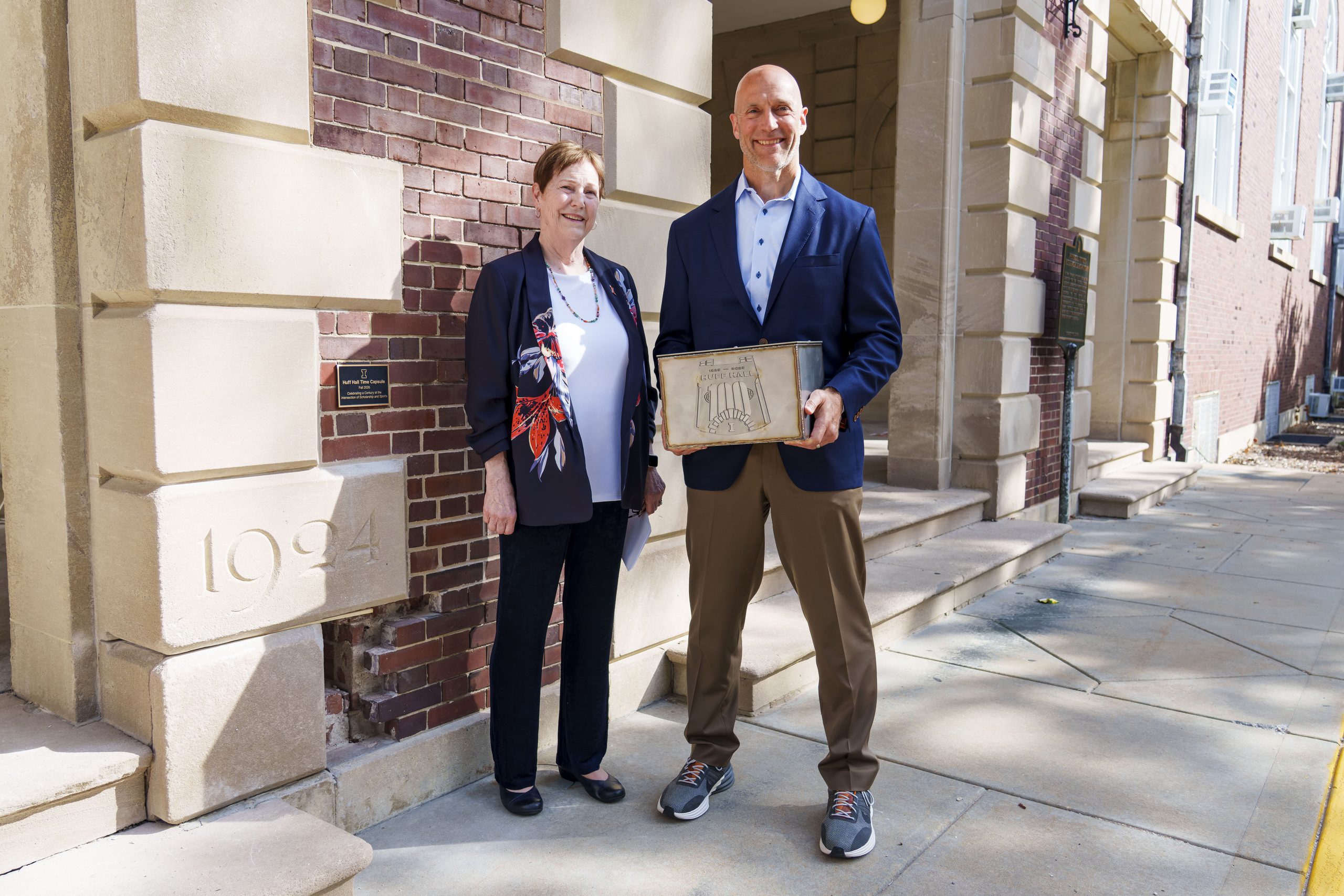
Dean of the College of Applied Health Sciences Cheryl Hanley-Maxwell and Athletic Director Josh Whitman during the Huff Hall time capsule ceremony at Huff Hall. (Photo By Ashley Ray/Fighting Illini)
The people who open Huff Hall’s new time capsule in 2126 may inhabit a world that today’s University of Illinois community members would scarcely recognize. But the people sending messages forward hope some things will feel familiar: teamwork, curiosity and a commitment to helping others.
Those hopes framed the dedication of a new time capsule at Huff Hall, where university leaders looked a century ahead while reflecting on the values they want future generations to inherit.
Kent Brown, Illinois’ retired associate athletics director for media relations who is now serving as the Division of Intercollegiate Athletics’ historian, acted as the emcee of the event. Faculty, staff, alumni and donors from the College of Applied Health Sciences; Illinois Athletic Director Josh Whitman; and students from Brown’s sports public relations class attended.Joe Murphy, George Huff’s great-grandson, also was in attendance and provided an important family connection to the history invoked during the ceremony.
For Cheryl Hanley-Maxwell, dean of the College of Applied Health Sciences, the capsule offered an opportunity to speak directly to current and future students whose lives and circumstances remain beyond prediction.
“As we seal this time capsule, we are doing something both simple and remarkable: sending a message to students we will never meet, in a world we can only imagine,” she said.
When this capsule is opened, I hope inclusion and accessibility are no longer aspirations, but ordinary features of life.
Cheryl Hanley-Maxwell
Dean, College of Applied Health Sciences
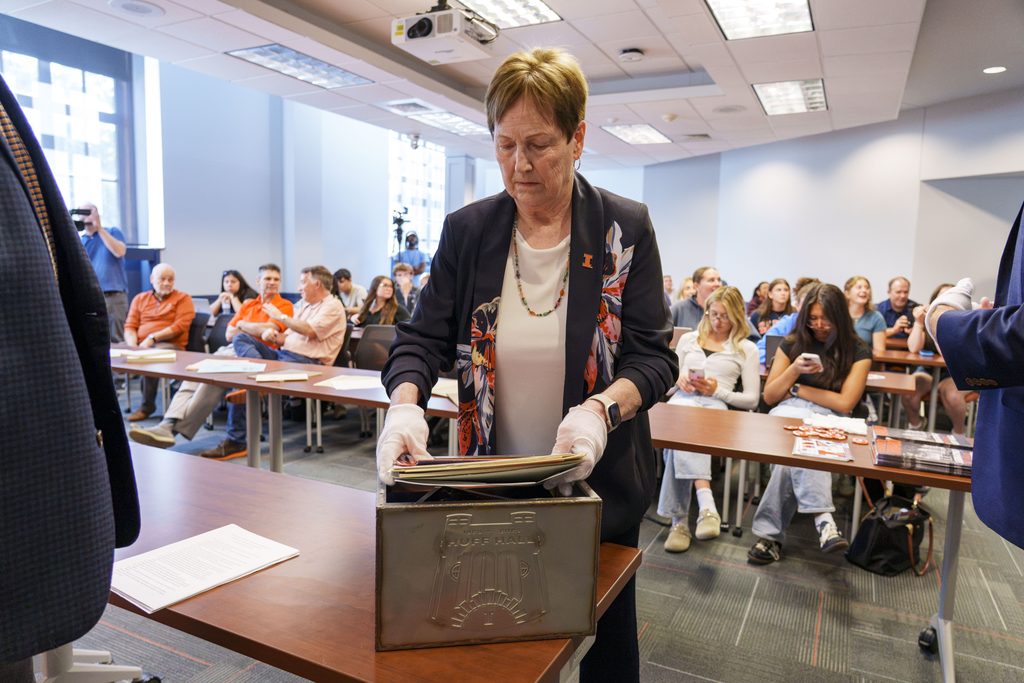
The time capsule box is a 10”x13” container that will be filled with argon gas to preserve the items placed into it, including magazines, newspapers, photos of this and other Huff-related events and people. The box will also contain current high-tech pieces such as a hearing aid and wearable surface electromyography sensor (from the Department of Speech and Hearing Science) and a physical activity monitor from the Department of Health and Kinesiology.
Hanley-Maxwell’s message paired an account of life in 2026 with hopes for a more accessible future. Powerful computers fit into pockets, and communication crosses continents instantly, she noted. Yet health inequities, inadequate support for people with disabilities, loneliness, and barriers to education persist.
The contrast gave the capsule a purpose beyond preserving a record of campus life. Hanley-Maxwell asked its future audience to consider whether the opportunities available to people had expanded along with technological capabilities.
“When this capsule is opened, I hope inclusion and accessibility are no longer aspirations, but ordinary features of life,” she said.
She described a vision of health that extends beyond freedom from illness to encompass dignity, connection, movement and opportunity. Disability, she said, should be fully recognized as part of human diversity.
Cheryl Hanley-Maxwell examines the contents of the time capsule during the event. (Photo By Ashley Ray/Fighting Illini)
That vision also shapes the college’s work today. The students in Applied Health Sciences study subjects ranging from movement and communication to recreation, sport, tourism and disability, as they prepare for careers as clinicians, researchers, educators and advocates, among other roles.
Hanley-Maxwell challenged all to consider learning, “to ask not only, ‘What can we discover?’ but also, ‘Whom can we help?’”
Illinois Athletic Director Josh Whitman approached the century ahead through another question: What role will the university play in helping society solve its problems?
He cautioned against assuming that the challenges of the present are unprecedented. People a century ago faced difficulties of their own, he said, and those opening the capsule will almost certainly confront different ones.
His hope was that the university would continue helping find solutions and that higher education would strengthen its relationship with the public.
“I hope that 100 years from now, we have reclaimed our place and regained the trust of the society that we represent,” Whitman said.
Closer to home, he hoped Huff Hall would still stand and serve its community. Predicting the future of college athletics was another matter. Whitman drew laughter as he suggested it would probably look different, observing how much it had changed in just 10 years.
The qualities cultivated inside the building, however, were ones he wanted preserved: teamwork, self-discipline, hard work, excellence and competition.
“Those are things that have been a part of this building since it was first built,” he said. “And I hope those are in the bricks.”
With Murphy, George Huff’s great-grandson, in the audience, Whitman’s reflections on the legacy of Huff and his family had a living connection. He also recognized the people and programs that have occupied the building and contributed to the university’s story.
Hanley-Maxwell’s remarks further captured the uncertainty of the present, from lessons still emerging from the COVID-19 pandemic to artificial intelligence’s influence on classrooms, research and healthcare. Students, she said, are navigating questions about ethics, sustainability, belonging and responsible technology use.
Alongside those changes, she offered scenes that students in another century might recognize: studying late together, cheering at athletic events, forming friendships and searching for purpose.
Whitman also turned his attention to the students at the ceremony, hoping they would leave with a memory worth keeping and an appreciation for what the occasion might mean long after their time on campus.
In dedicating a commemorative plaque, Hanley-Maxwell linked preservation of the college’s story with its hopes for the future. Together, the messages offered future readers a sense of what university leaders valued and what they hoped would improve.
The capsule’s opening is intended to be a century away, leaving its senders to imagine who will receive it. Hanley-Maxwell addressed those future students as part of an ongoing community of learners and teachers entrusted with carrying the university’s story forward.
“Whatever has changed, I hope the spirit of this university endures: curiosity with humility, innovation with compassion, and knowledge in service to humanity,” she said.
Editor’s note:
You can read the full text of Cheryl Hanley-Maxwell’s remarks here.
As we seal this time capsule, we are doing something both simple and remarkable: sending a message to students we will never meet, in a world we can only imagine.
To the students of 2126: greetings from the year 2026. I am Cheryl Hanley-Maxwell, dean of the College of Applied Health Sciences at the University of Illinois Urbana-Champaign.
Our world today is deeply connected, yet deeply divided. We carry powerful computers in our pockets and communicate instantly across continents. At the same time, we still face health inequities, inadequate support for people with disabilities, mental health struggles, loneliness, climate change, and barriers to education and opportunity.
In Applied Health Sciences, our work begins with a simple belief: every person deserves the opportunity to live a meaningful, healthy, and dignified life. Our students study movement and health, communication, recreation, sport, tourism, and disability. They become researchers, clinicians, educators, advocates, entrepreneurs, and leaders. Most importantly, they learn to ask not only, ‘What can we discover?’ but also, ‘Whom can we help?’
This is a time of tremendous change for universities. We are still learning from the COVID-19 pandemic, which reshaped our understanding of health, science, public trust, and community. Artificial intelligence is transforming classrooms, health care, research, and daily life. Our students learn in person and online, collaborate across the globe, and wrestle with questions of ethics, sustainability, belonging, and the responsible use of technology.
And yet, some things remain timeless. Students still study together late into the night. They cheer at athletic events, form lifelong friendships, and search for purpose. Faculty devote themselves to discovery and mentorship. Universities remain places where people imagine—and begin to build—a better future.
When this capsule is opened, I hope inclusion and accessibility are no longer aspirations, but ordinary features of life. I hope disability is fully recognized as part of human diversity, and that health is understood not simply as the absence of illness, but as the presence of opportunity, connection, movement, dignity, and hope.
Perhaps you will have conquered diseases that challenge us today. Perhaps your technologies will enable forms of communication and mobility we can barely imagine. Whatever has changed, I hope the spirit of this university endures: curiosity with humility, innovation with compassion, and knowledge in service to humanity.
To the students of 2126: thank you for carrying the story forward. You are part of a long continuum of learners, dreamers, teachers, and builders who have passed through this university. We send this capsule—and our hopes for your future—with confidence in what your generation will make possible.
Huff Hall today, left, and the building in 1924. (Photo illustration by Michelle Hassell).
By Anna Flanagan
Many people still think of the home of the College of Applied Health Sciences as Huff Gym. The building opened in 1925 as the New Gymnasium, giving the University of Illinois men’s basketball team what was then state-of-the-art facilities for home games. Renamed for longtime athletic director and coach George Huff in 1936 after his death, Huff Gym later became Huff Hall to better reflect its significant role in the academic life of the university.
The four hallways on the first floor of the building surround the gym, which is still used for volleyball, wrestling and gymnastics events. But faculty associated with Huff have cemented its scholarly reputation as the site of pioneering research and groundbreaking advancements in health and leisure studies.
The Father of Physical Fitness
The early academics residing in Huff Gym were the faculty of the School of Physical Education. They included Seward Staley, who served as director and dean from 1936 to 1960. Staley was a strong advocate of building physical education programs around a sport-based curriculum and conducted extensive research on physical education and sport throughout his career. He guided the School of Physical Education to prominence as a leader in health-related research.
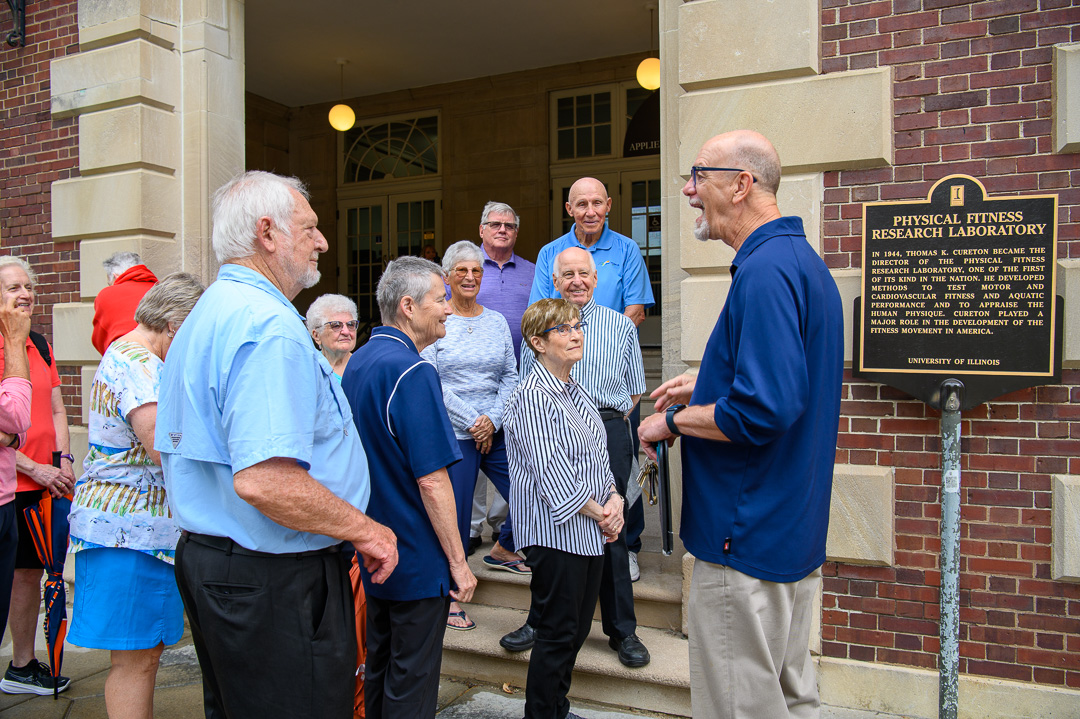
Staley’s own commitment to research-based practice influenced his faculty recruitment. In 1941, Thomas “T.K.” Cureton, known as the “father of physical fitness,” joined the School of Physical Education. He established the Physical Fitness Research Laboratory in Huff Hall, one of the first of its kind in the nation. He conducted cutting-edge research on what he called the six primary components of physical fitness—endurance, flexibility, agility, strength, power and balance—and revolutionized existing knowledge about weight and fitness, oxygen’s role in athletic performance and the role of exercise in cardiovascular health, among other things.
As Jack Berryman, then the official historian of the American College of Sports Medicine, observed in a 1996 article in Research Quarterly for Exercise and Sport, Cureton was the only fitness enthusiast of the 1950s (a group that included Charles Atlas and Jack LaLanne) “who produced the research to substantiate his beliefs regarding the positive influence of physical activity on health.” Cureton’s work helped to elevate the reputation of physical education and led to the establishment of research labs in departments across the country.
In addition to the hundreds of journal articles, books and research monographs published during his career, Cureton shared his beliefs widely through numerous lectures around the world, called Cureton Clinics, and frequent appearances in magazine and newspaper articles and on television programs focused on health and fitness. His son, Kirk Cureton, who himself had a long and distinguished career in kinesiology at the University of Georgia, said he wasn’t aware of his father’s reputation in the field of physical fitness science as a child. He participated in the Sports Fitness Experimental School that his father established in 1950 to improve the physical fitness of youth, still running today as the Sports Fitness Program, and recalls going to his father’s lab where Cureton and his graduate students assessed such things as cardiovascular health and muscle endurance.
Kirk Cureton’s knowledge of his father’s stature grew as he did, and he feels it played a positive role as he established his own career.
“My father was known, and it helped me with networking,” he said, adding that TK was “a good model.”
“What I learned from him was persistence and the value of hard work,” Cureton said. “He was devoted to his field. He loved what he did. He thought working at a university was the best thing you could do.”
Poised for the future
Many outstanding scholars walked the halls of Huff as the School of Physical Education evolved into the College of Applied Health Sciences. They established the first driver education teacher training program in the Midwest, created the first K-12 sex education curriculum that was adopted throughout the country, conducted a groundbreaking study on driving and alcohol consumption that resulted in the lowering of the DUI threshold from .15 to .10, conducted a comprehensive anti-smoking education study of youth that resulted in the first academic contribution to the annual Surgeon General’s Report on smoking and health, and put sport psychology on the map as a legitimate academic discipline, among many other contributions.
T.K. Cureton was ‘devoted to his field,’ his son Kirk said. (University of Illinois Archives)
“Our current faculty engages in research that, in a lot of ways, wouldn’t have been possible without Cureton and the other pioneers,” she said. “We still focus on issues related to physical fitness and health, cardiovascular health, for example, which was so important in Cureton’s work. But we have developed a more discipline-focused approach, looking at biomechanics, exercise physiology, brain health or exercise psychology, and so much more.”
Graber noted that while the department has expanded far beyond its early focus on training school health educators, teacher training is still an important part of its mission as evidenced by its Physical Education Teaching Licensure program. Huff Hall is still an important hub for the department, she said, serving as the home of its three professional degree programs—Master of Public Health (MPH), Master of Health Administration (MHA) and Master of Science in Health Technology (MS-HT). Many health and kinesiology faculty have their offices and laboratories in Huff, where they are addressing current and emerging health challenges such as the role of technology in successful aging, gut health and chronic disease in underrepresented populations.
“Our research is cutting edge,” Graber said. “It’s innovative. It’s futuristic. We’re in a good position to tackle the problems of the next generation.”
Giants of recreation and leisure
Huff Hall also is the home of the Department of Recreation, Sport and Tourism, which had its beginnings in the Department of Physical Education for Women. That department, which included recreation in its curriculum, joined the Department of Physical Education for Men to form the School of Physical Education. The School began offering a bachelor of science degree in recreation in 1948, thanks to the efforts of Allen Sapora. The curriculum he developed became a model for programs around the country. Sapora believed strongly in the importance of applied research and was one of the first scholars to integrate research into recreation education and professional practice.
Charles Brightbill joined the Illinois faculty as a professor of recreation in 1951 and, working together with Sapora, built the program into one of the leading park and recreation education programs in the world. Brightbill had a well-established national reputation in the field of recreation by the time he joined the Illinois faculty, having served as the executive secretary of President Harry Truman’s Committee on Religion and Welfare in the Armed Forces, among other positions. In 1957, he became the inaugural head of the Department of Recreation, which was created when the School of Physical Education was reorganized and renamed the College of Physical Education. His advocacy of cooperation between citizens and professionals in the parks and recreation field played a significant role in the formation of the National Recreation and Park Association.
After Brightbill’s death, Sapora served as department head and created the Office of Recreation and Park Resources in partnership with University of Illinois Extension. He hired Joseph Bannon, who had completed his master’s degree in recreation at Illinois, to lead the new initiative. Like Sapora, Bannon firmly believed that practice in the parks and recreation field needed to be informed by scientific research, and that research needed to address real world issues. His own research focused on the development of recreation organizations. Laura Payne, professor of recreation, sport and tourism and Joseph J. Bannon Director of the Office of Recreation and Park Resources, said Bannon’s contributions are still relevant today.
Charles Brightbill, left, and Allen Sapora, right front, were pivotal to the establishment of what is now known as the Department of Recreation, Sport and Tourism. (University of Illinois Archives)
“He was the expert nationally and internationally in public parks and recreation organizational development, leadership, management and administration,” she said. “His work addressed policy and practice, and how organizations relate to one another.”
Bannon, who became head of what was then the Department of Leisure Studies in 1973, was instrumental in strengthening the interdisciplinary nature of the department’s research, hiring faculty with backgrounds in such fields as psychology and sociology. He was a co-founding editor of the Journal of Park and Recreation Administration and, along with Allen Sapora, a founding Fellow of The Academy of Leisure Sciences, or TALS. Fellowship in TALS is a prestigious honor, one that many RST faculty and PhD graduates have earned since the organization’s founding in 1980. Among them are John “Jack” Kelly and Lynn Barnett, also giants in the field of leisure studies.
Kelly, in fact, played an instrumental role in establishing the field of leisure studies. He believed that knowledge of leisure theory would help practitioners make informed decisions and design more relevant and effective programs. He wrote the first textbook in the field of leisure studies, appropriately entitled Leisure, and encouraged scholars to address the sociological and psychological aspects of leisure.
“Jack Kelly is a legend in our field,” Payne said. “He was ahead of the curve on many societal issues and trends in the 1970s and early ‘80s, anticipating and working on healthy aging, work and leisure, socialization and leisure and family leisure. He really catapulted us forward by making our research more relevant and increasing our visibility to people outside of parks, recreation, sports, tourism and leisure studies.”
Barnett studied the role of play and playfulness in the lives of children and adults for more than 40 years. As a doctoral student in educational psychology, she became convinced that children learned as much or more outside of the classroom as they did within it. Over the years, she found that playfulness is a fairly stable construct that is related to cognitive and socioemotional functioning. Her research showed that playfulness was linked to flexibility in thinking, enjoyment, positivity, and social skill, and that it was often used to cope with anxiety.
“Lynn brought education, human development and play together in a way that hadn’t been done before,” said Monika Stodolska, Brightbill/Sapora Professor and associate head of recreation, sport and tourism. “She inspired generations of scholars, students and practitioners to look at play as being integral to learning, and socioemotional, physical, and cognitive development.”
The commitment remains
Scholars in the Department of Recreation, Sport and Tourism continue to believe in practice-based research and research-based practice. RST faculty still examine leisure’s role in the healthy development of individuals, families and communities, focusing on such contemporary issues as the role of sport in human and community development, equity in access to parks and green spaces and how social, cultural, environmental and political factors affect tourists and host communities. As RST professor and department head Carla Santos put it, “We keep our ears to the ground, listening and observing and staying connected to what’s going on in recreation, sport and tourism in order to be responsive to needs and priorities. That has been true of this department throughout the nearly 70 years we’ve been in Huff Hall.”
The College of Applied Health Sciences has grown beyond the walls of Huff, now also occupying Freer Hall and the Speech and Hearing Science Building. But one hundred years after its opening, Huff Hall remains the nerve center of AHS, and that’s just fine by Cheryl Hanley-Maxwell, dean of AHS.
“With the addition of the Khan Annex and modernization of instructional spaces, Huff wears its age well and is a comfortable academic home,” she said. “It’s a campus landmark and I’m proud that it’s the heart of AHS. But in the end, what really makes a building special are the people who work within it, our students, faculty and staff. We are blessed in AHS to have exceptional students, creative and dedicated faculty and skilled and supportive staff. I’m proud of all of them.”
Today’s Department of Health and Kinesiology once hosted the nation’s foremost researchers of sport psychology. Nearly 50 years on, these pioneers reunited at Huff Hall for a weekend on campus.
When Rainer Martens arrived at the University of Illinois in the summer of 1966, he stepped out of his blue Mustang and bounded up the steps of George Huff Hall, to see the university’s Sport Psychology Laboratory with his own eyes.
What he found on the third floor of Huff initially disappointed him: old equipment piled up in the corner of a room with just enough space to seat a class. “We thought we’d come to the wrong place,” Martens said.
Turns out, he wasn’t in the wrong place—maybe just a little early.
What followed was the explosive growth of sport psychology research at Illinois. With help from the university’s world-class department of psychology, a group of likeminded doctoral students—including Martens, Glyn Roberts and the late Dan Landers—began building a formal sport psychology graduate program at Illinois, to study the mental aspects of athletic success, motivation and performance.
Dozens of doctoral students went on to matriculate in the program and bring their discoveries to institutions across the globe. By the late 1970s, Illinois had become the torchbearer for modern-day sport psychology in the U.S., with a vibrant group of researchers at the helm.
Five decades later, a group of those same students and faculty returned to campus to catch up with their former colleagues, and take a tour of their old academic home. The guest list left an indelible mark on the field of sport psychology as it stands today.
Even as Illinois’ own sport psychology program has faded, the legacy of its achievements and discoveries endure in the modern day College of Applied Health Sciences. Faculty at AHS, particularly in Health and Kinesiology, continue to study the psychological effects of exercise and physical activity at large, building on more than 100 years of tradition.
“All these former students, they’ve all gone on to distinguished careers. They’ve gone on to become presidents of national sport psychology organizations, and spoken all over the world,” Martens said. “This gathering, it’s a once in a lifetime thing.”
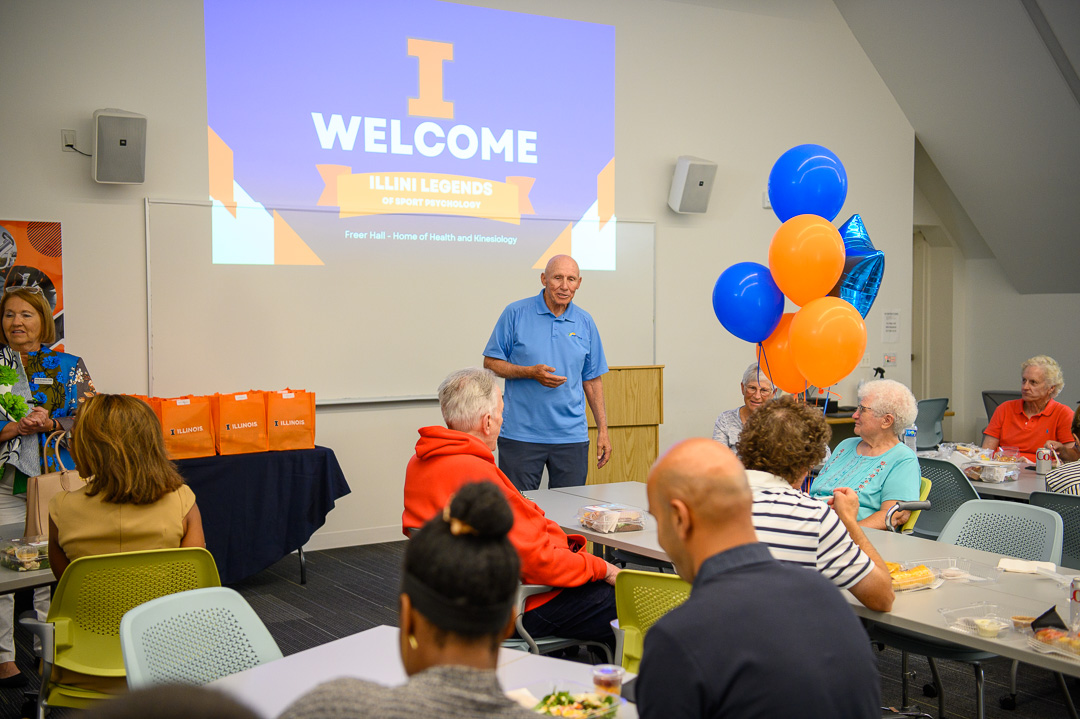
To cap off their walk down memory lane, these legends of sport psychology got to share lunch with current-day faculty and doctoral students in the Department of Health and Kinesiology.
“That was very humbling, we never expected anybody to turn out,” said Glyn Roberts, who worked as a professor of sport psychology at Illinois until 1998. “It was very rewarding that they would do that for us.”
Guests of Honor
Rainer Martens, a professor of kinesiology at Illinois until 1984, and co-founder of Human Kinetics, leading publisher of books and journals on physical activity
Julie Martens, PhD in sport psychology and the first employee of Human Kinetics, who retired as executive vice president in 2009
Glyn Roberts, professor emeritus at the Norwegian School of Sport Sciences and former professor of sport psychology at Illinois
Tara Scanlan, professor emerita of psychology at UCLA, and her husband Larry Scanlan
Diane Gill, kinesiology professor emerita at UNC Greensboro
Dan Gould and Marty Ewing, professors emeriti at Michigan State. Both earned a Ph.D. at Illinois, and Gould taught here until 1991
Damon Burton, professor of sport psychology at the University of Idaho
Robin Vealey, professor of kinesiology and health at the University of Miami, Ohio
Linda “Bump” Harrison, a publisher who got her PhD in the program in 1987
Marc Lochbaum, professor of kinesiology at Texas Tech who went to Illinois for undergrad and was mentored by several sport psychology greats
Absent were Joan Duda, professor of sport and exercise psychology at University of Birmingham, and Dan Landers, a professor of sport and exercise psychology and co-founder of the Journal of Sport Psychology, who passed away in 2023
‘We didn’t realize it, but we were pioneers’
Though Illinois experienced fertile growth of sport psychology in the 1970s, the seeds were planted by Coleman Griffith, known as the “father of sport psychology” for his pioneering work into the mental aspects of athletic performance.
Griffith founded and ran Illinois’ Athletic Research Laboratory until 1932, where he studied the links between personality and physiology on athletic success. He wrote two books—“Psychology of Coaching” and “Psychology and Athletics”— but left no proteges for his research. Griffith later became provost of the university.
Physical fitness pioneer Thomas “TK” Cureton started his Physical Fitness Research Laboratory in 1944, occasionally collaborating with psychologist Raymond B. Cattell. The two of them examined the relationship between physical activity on personality and several of Cureton’s graduate students examined the anxiety-reducing effects of exercise. In 1951, Professor Alfred “Fritz” Hubbard revived Griffith’s research line with a new Sport Psychology Laboratory, located in a third floor office of Huff Hall, then known as Huff Gymnasium.
Hubbard specialized in motor learning, but saw latent potential in the sport psychology discipline. After a decade of research and recruitment, Hubbard had a prediction: the number of graduate students interested in sport psychology would double or triple by the end of the 1970s. His forecast of growth came true.
Still, those who joined the Illinois sport psychology program in the 1960s found their way to the field before an academic path formally existed. Some started out in coaching or physical education, and were searching for applied knowledge to use in the field.
For Rainer, his experience with intense anxiety before youth wrestling matches inspired him to understand competitive nerves and how to quell them.
After getting degrees from the then-named Department of Physical Education, Landers, Martens and Roberts all eventually joined the Children’s Research Center, a grant-funded research vehicle seeking to explain children’s behavior from multiple academic disciplines.
The recent grads worked in the center’s Motor Performance and Play Research Laboratory, where they used social psychology principles to study children’s play, and explore how their stress levels, personalities and more influenced their motor learning.
The grant-funded lab supercharged their progress.
“A lot of the stuff we did initially was stress related. How do you reduce stress? That was Rainer’s research—what he called competitive anxiety,” said Roberts, who began working at the Children’s Research Center in 1973. “Mine was motivation: how do you make people do what they ought to be doing?”
Full-time research positions to study the field were unusual, and freeing. From 1968 to 1975, Martens stayed on with the Children’s Research Center. Lifted by the university’s resources, namely its enormous library, computing power and collaborators in psychology, the lab produced leading research in sport psychology before peer institutions had caught on to the emerging discipline.
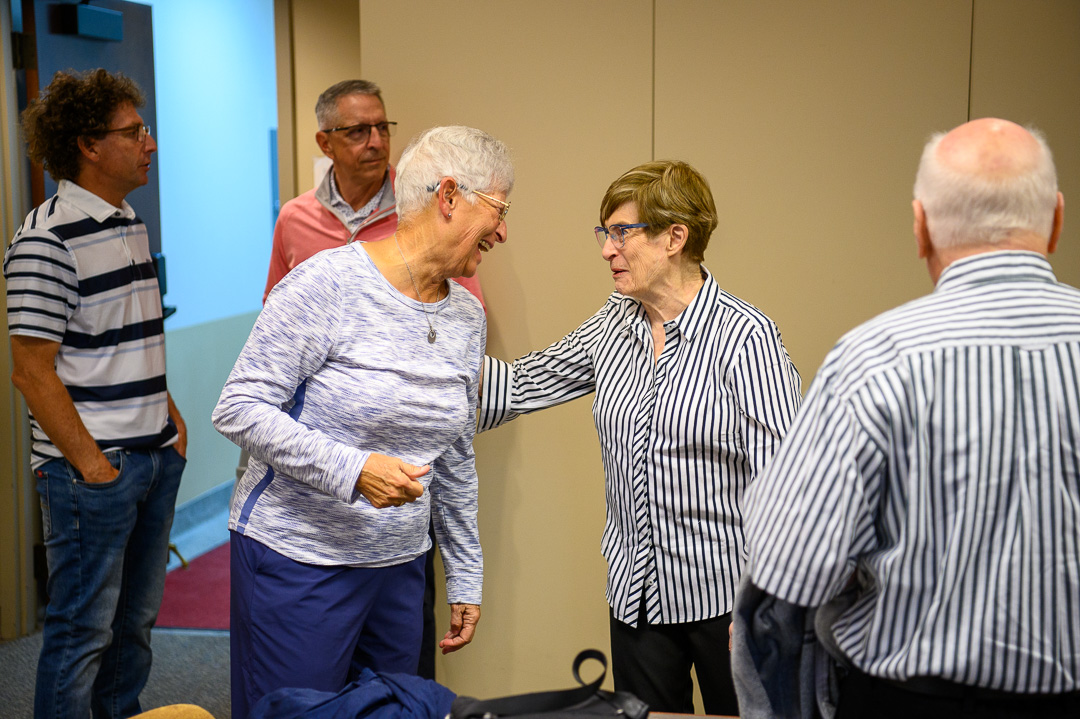
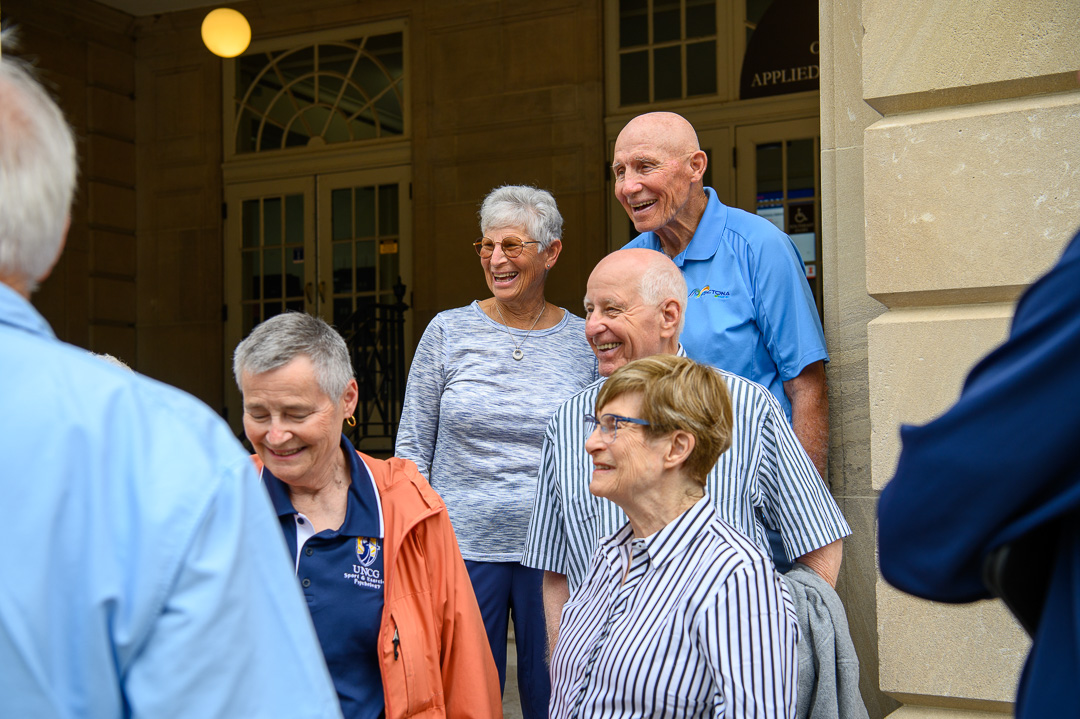
Julie Martens (center left) and Tara Scanlan (second from right) share a laugh in Huff Hall. Both of them obtained their doctoral degrees in sport psychology from the University of Illinois.
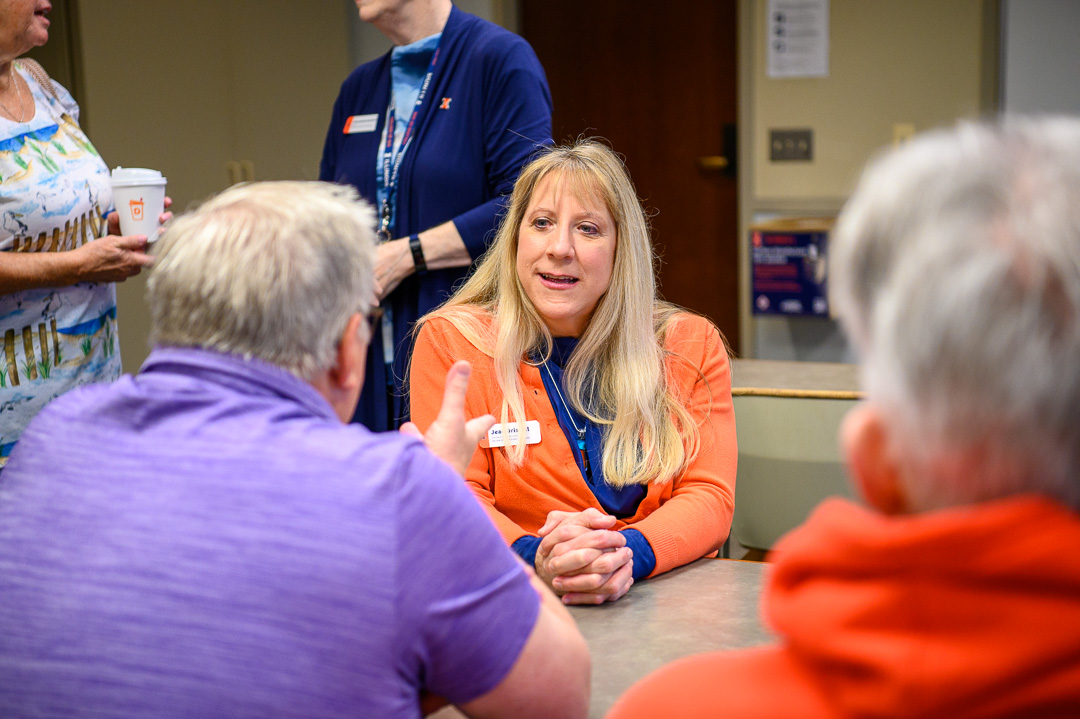
Jean Driscoll (center) chats with Dan Gould and Damon Burton, both graduates of the sport psychology program at Illinois who went on to successful careers in the field.
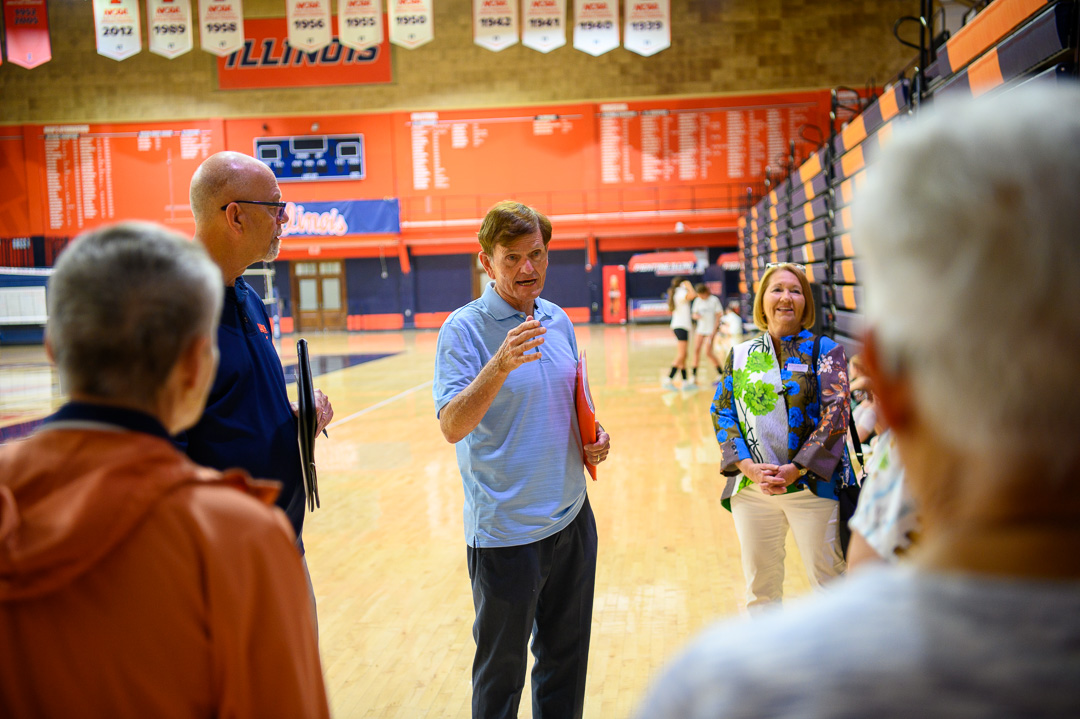
Bill Goodman (center) retired associate dean for administration at the College of AHS, tours former Illinois sport psychology students and faculty around Huff Gym.
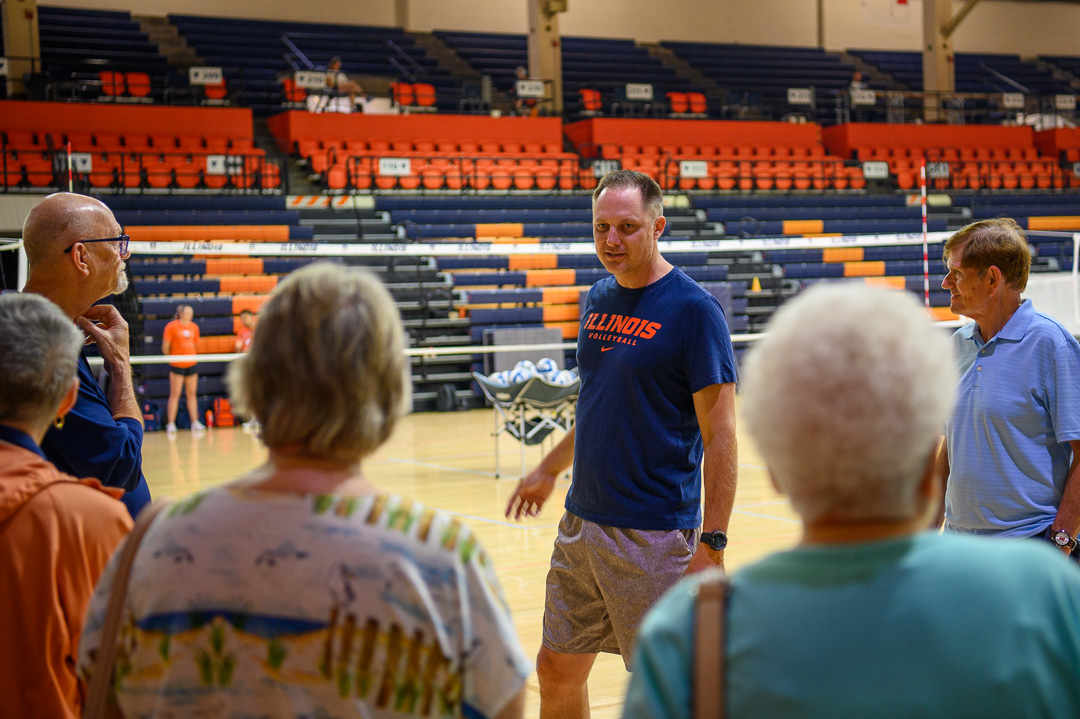
Chris Tamas, the current coach of the Illinois volleyball squad, speaks to former sport psychology students and faculty in Huff Gym.
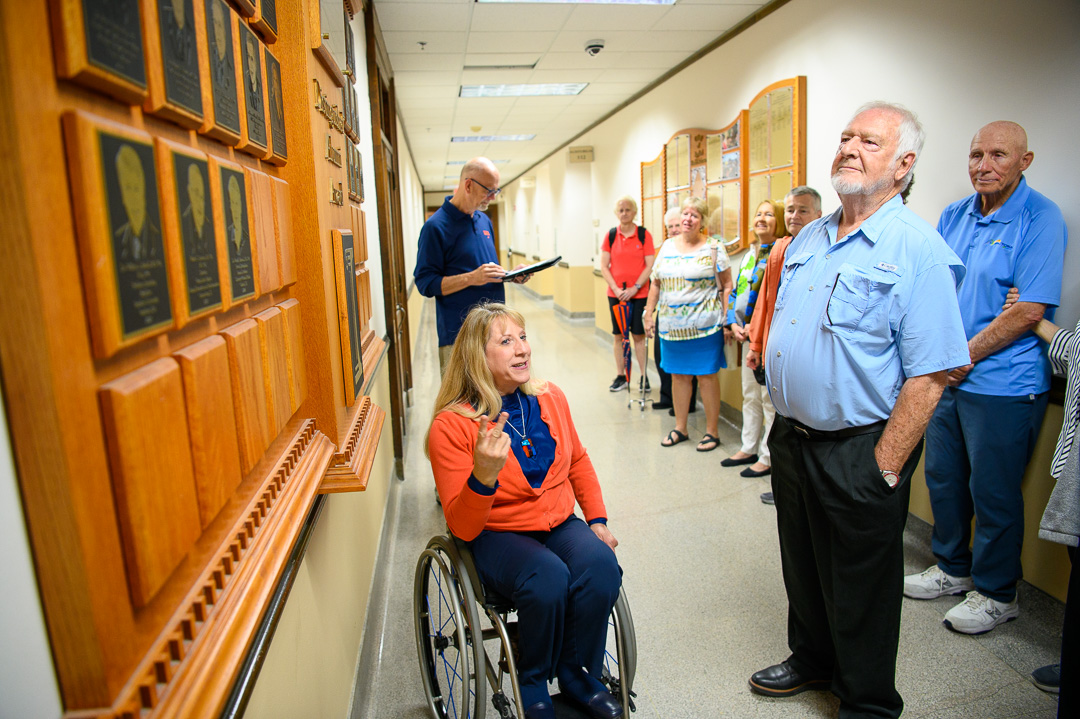
Jean Driscoll shows off the wall of Distinguished Alumni Award winners from the College of Applied Health Sciences.
Former Illinois sport psychology students and faculty sit in one of the new Huff Hall classrooms. The space used to be part of the Huff Gym indoor pool.
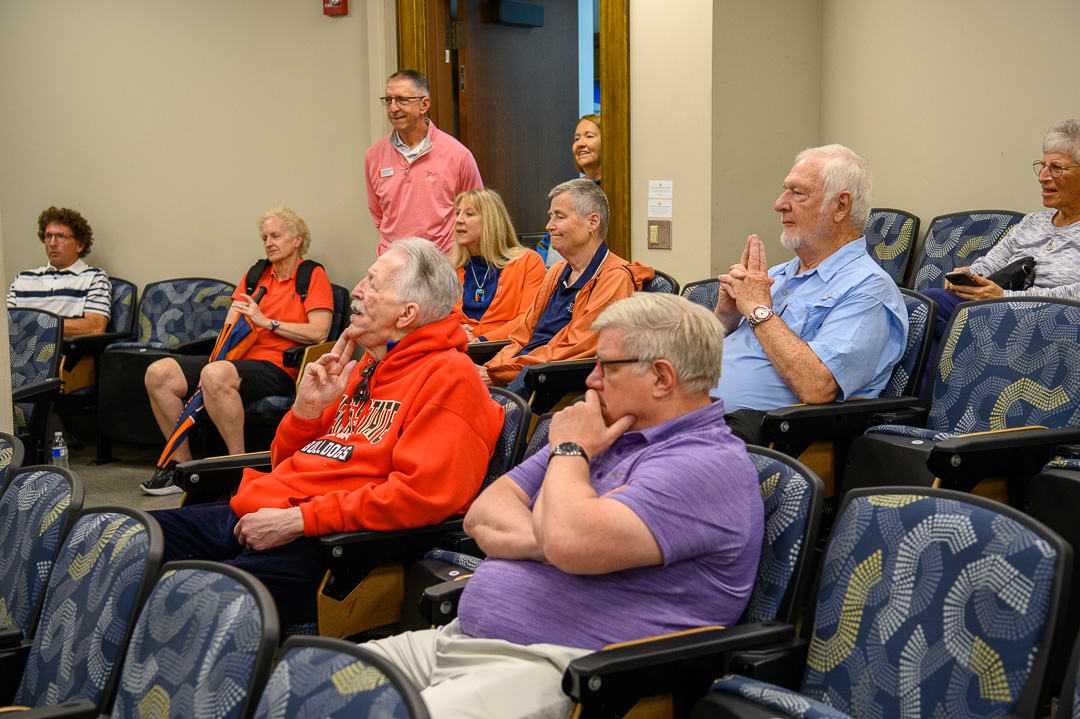
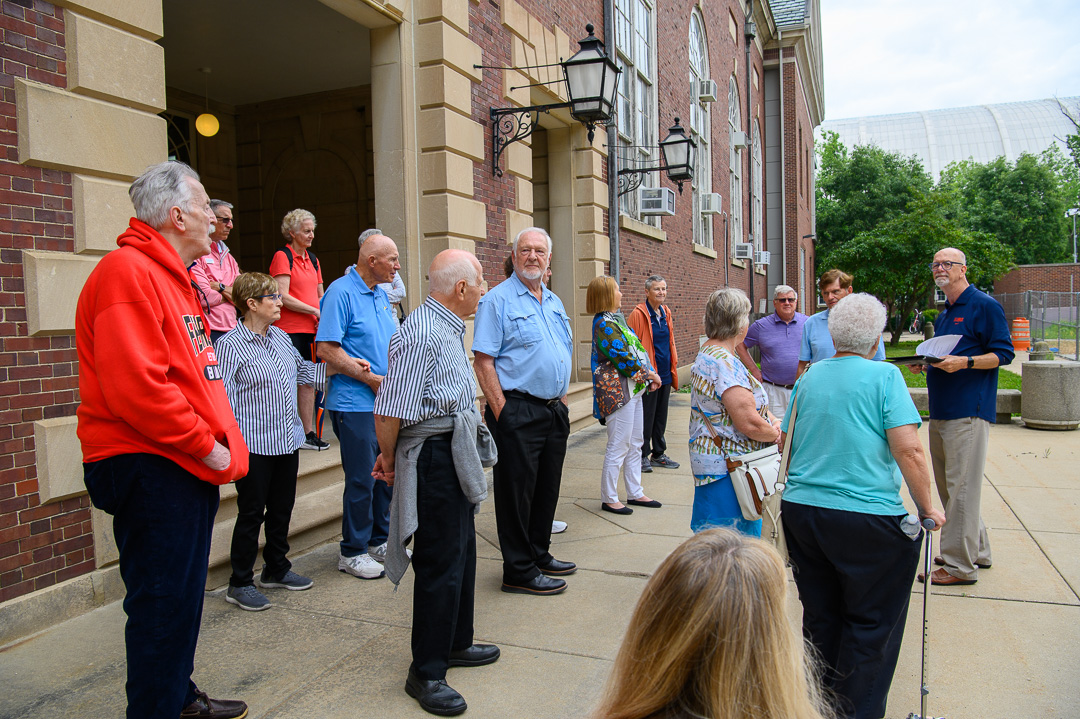
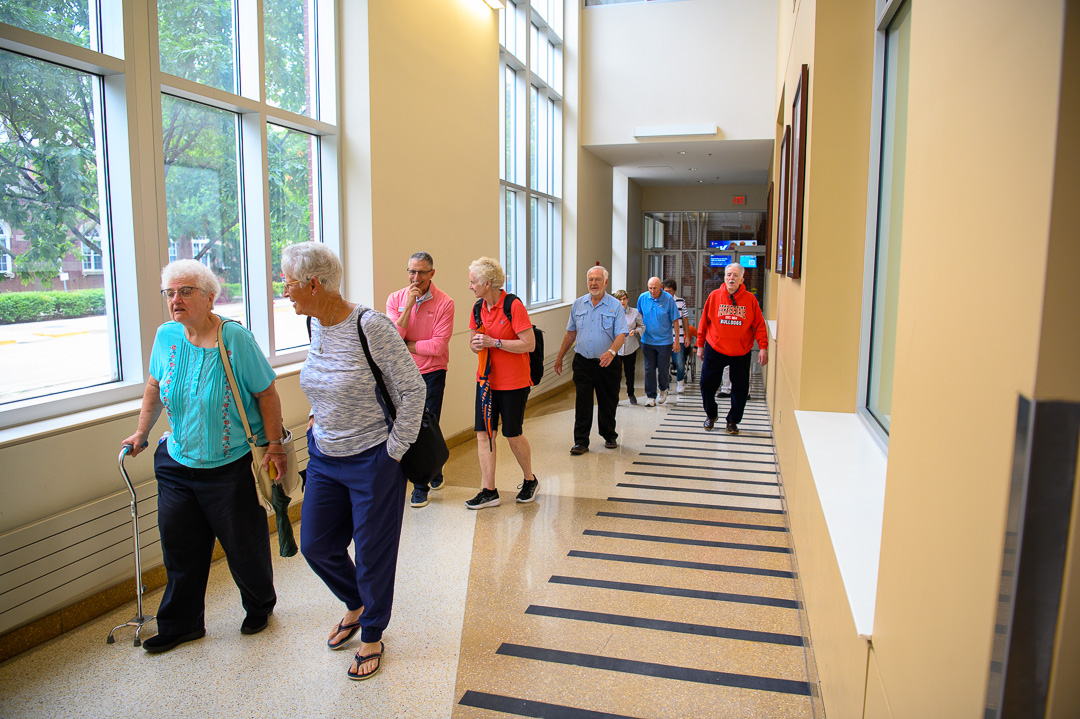
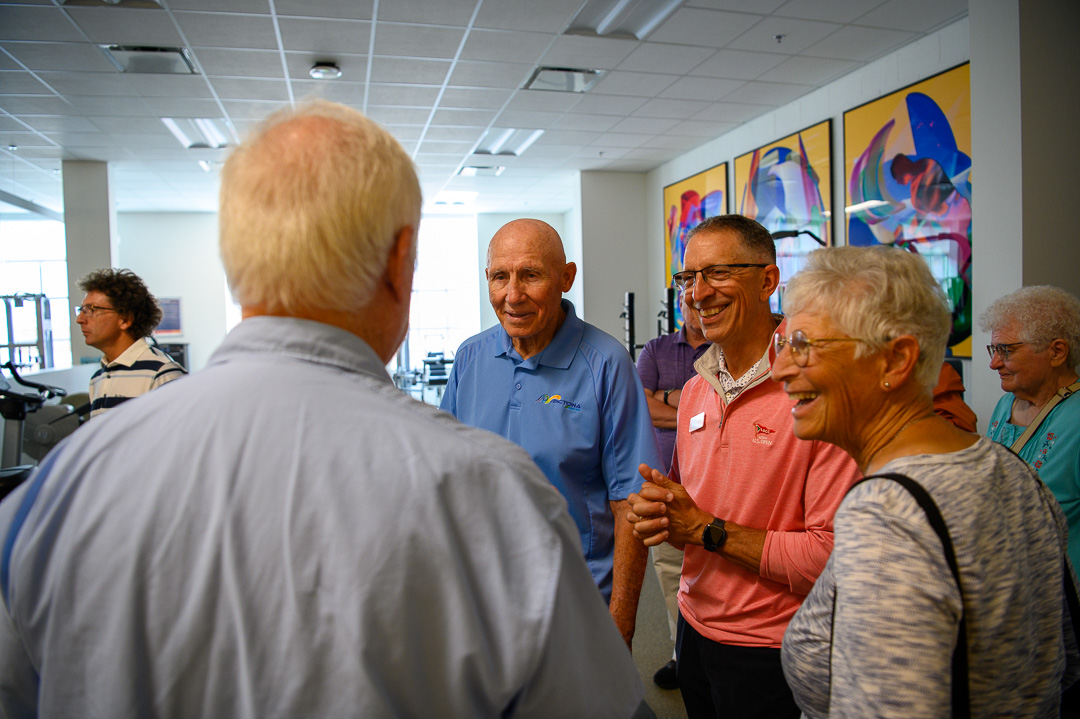
A reunion of sport psychology faculty and students at Illinois brought the guests inside and outside Huff Hall, where much of the early research into their field took place.
Former Illinois sport psychology faculty and students walk up the ramp of the Khan Annex, an addition to Huff Hall that opened in 2011.
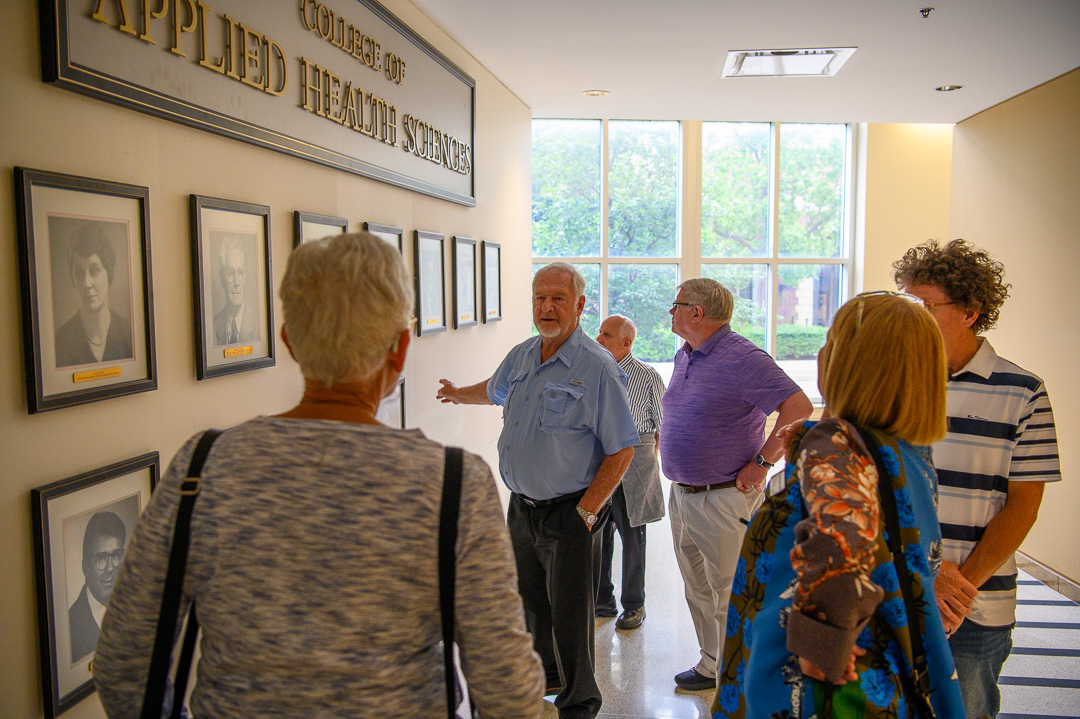
Glyn Roberts (center) points to the wall of deans of the College of Applied Health Sciences.
Don Hardin (right), adjunct instructor at AHS and former women's volleyball head coach, talks about the history of Huff Hall with former sport psychology students and faculty.
The sport psychology tour stops by the Freer Hall gym, used for research purposes.
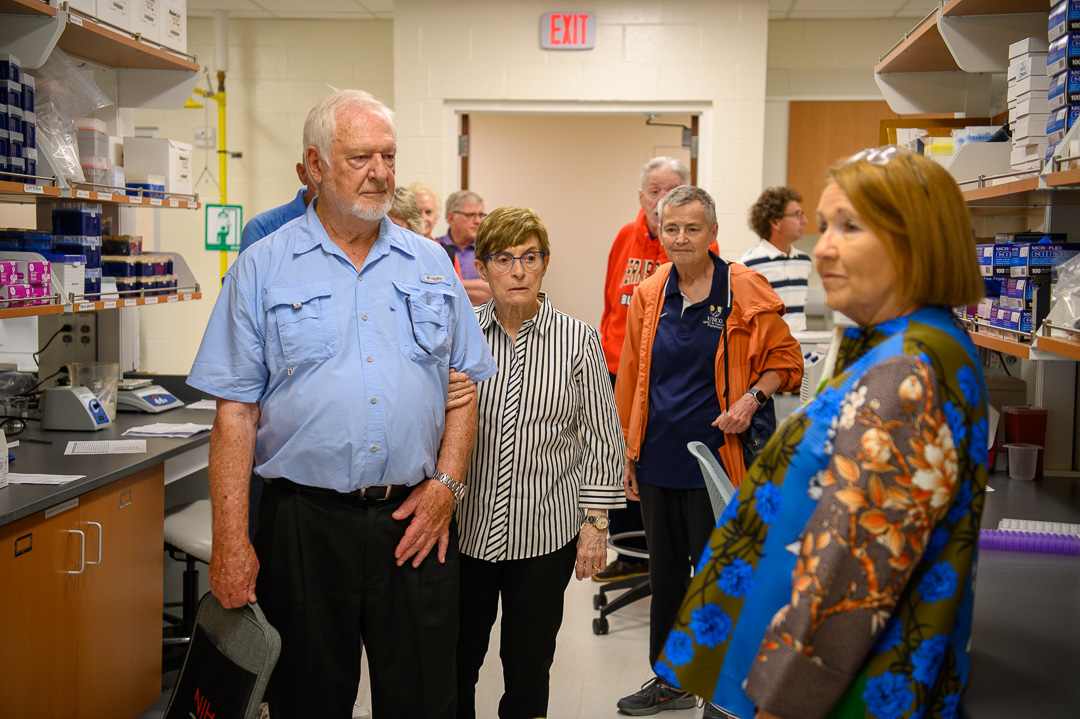
Former sport psychology students and faculty tour the basement labs of Freer Hall.
The enthusiasm of Illinois sport psychologists was clearly infectious. After a couple years teaching physical education, Diane Gill attended a conference at Brockport, New York, where she got to hear both Dan Landers and Rainer Martens speak about their research at Illinois. By her first semester in Urbana-Champaign, Gill was in Martens’ class “Social Psychology and Physical Activity,” where his first doctoral student, Tara Scanlan, was teaching assistant.
“Taking that course, immediately I thought, ‘this is the area I’d like to be in,’” Gill said.
She soon worked with the pair on their competitive anxiety research, and later studied competitiveness and athletes’ “achievement orientation,” or drive to improve and accomplish goals within their sport, along with a host of other topics in the field.
“Illinois was the place to be if you wanted to be in sport psychology,” she said.
Gill is newly retired, having spent more than 30 years as a professor of kinesiology at University of North Carolina, Greensboro after obtaining her master’s and Ph.D. at Illinois.
(“My doctoral students are retiring,” said Martens, now 82. “That makes me really old.”)
Physical activity—whether it’s high-level athletics or recess play—is all one field.
Diane Gill
Professor Emerita of Kinesiology, UNC Greensboro
Julie Martens, née Simon, was accepted into the program in 1973, coming to Illinois specifically to study with Rainer. (They would get married nearly 20 years later).
“[Tara Scanlan and Diane] had an office out at the Children’s Research Center right next to Rainer’s. As I got to know them, we used to be out there every evening. They said, “Come on out, you can study at night with us,’” Julie said. “That’s how I got involved with meeting the other students, then I got an assistantship and got where I wanted to be.”
The scientists would run experiments, hop over to the nearby cafeteria in the Adler Mental Health building for lunch and sketch out ideas for new research designs on napkins. Those early days were “invigorating,” Martens said.
By 1980, U. of I. was the premier place of study for sport psychology, alongside Penn State. They had turned the topic into a formal graduate program, and the field was continuing to blossom. In 1979, Dan Landers and Rainer co-founded the Journal of Sport Psychology, where Landers was the inaugural editor-in-chief.
As the field grew in relevance, new pathways opened up and Illinois sport psychology spread across the country. Sport psychology got a “big break” when the Olympic Training Committee allowed athletes to be advised by professionals who weren’t clinicians or psychiatrists, Roberts said—sport psychologists could now help athletes develop strategies to perform under extreme stressors.
“The U. of I. was very special. And the thing that stuck with me was we attracted such good students. We generated a reputation, and students wanted to come here from all over the world,” Roberts said. “We didn’t realize it, but we were pioneers.”
‘No better program in the world’
Between visits to their old labs and offices, the sport psychology legends visited classrooms in Huff Hall where there used to be a swimming pool, and walked on floors of Freer Hall that were once open air.
“In Freer and Huff, things have changed, which is good in many ways. You wouldn’t want the same stuff you had 50 years ago,” Gill said.
Over the weekend, the sport psychology crew took the 40-minute drive to Allerton Park in Monticello, where they hosted the nation’s first conference in sport psychology: the North American Society for Psychology of Sport and Physical Activity (NASPSPA) in 1973.
Several of them later served as executives and presidents of the society. The first conference also planted the seeds for Human Kinetics, the Champaign-based publisher of sport and exercise science founded by Martens and his first wife, Marilyn.
Though a formal sport psychology program no longer exists at Illinois, the field has expanded and evolved. The Department of Health and Kinesiology continues to study the psychological aspects and benefits of physical activity.
Rainer Martens speaks to his former Sport Psychology colleagues, and the current-day faculty of Health and Kinesiology.
“I think of it as one field. Physical activity—whether it’s high-level athletics or recess play—is all one field,” Gill said.
After walking through their old stomping grounds, the group met with current-day faculty and students of Health and Kinesiology for lunch in Freer Hall.
“This was the group that got sport psychology a foothold in this country,” said HK Professor Steve Petruzzello, who runs the college’s Exercise Psychophysiology Laboratory. “It’s wonderful to see these folks back here, to see their eyes light up as they’re walking around the halls, seeing spaces that look familiar and some that are completely unfamiliar.”
What remains from this era of sport psychology, and even the early days of Athletic Research Laboratory, are questions on the relationship between physical activity and psychology—including personality, stress, cognitive factors and affect, or feeling states.
“Faculty currently study these kinds of topics in older adults and children, in diverse populations, and in more specialized groups like tactical athletes,” Petruzzello said. “So really, the pioneering work of Coleman Griffith at Illinois over 100 years ago has evolved and developed into what it is today.”
Before heading off, the sport psychologists dispensed career advice with some of the rising graduate students and faculty. Linda Harrison obtained her Ph.D. from the program in 1987—she opted to go into the publishing industry instead of academia, but she credits her time at Illinois for developing her abilities to think and ask questions.
“The grad students all benefited from the historic founding fathers of sport psychology and the scholars who picked up the torch to carry the program to the next level,” Harrison said. “I am sure there was no better program in the world than the one offered at U. of I.”
Editor’s note:
To reach Ethan Simmons, email ecsimmon@illinois.edu The College of Applied Health Sciences and Illinois Division of Intercollegiate Athletics are celebrating 100 years of Huff Hallthis fall.