U. of I. trial will test if exercise can improve protein efficiency for older adults with type 2 diabetes


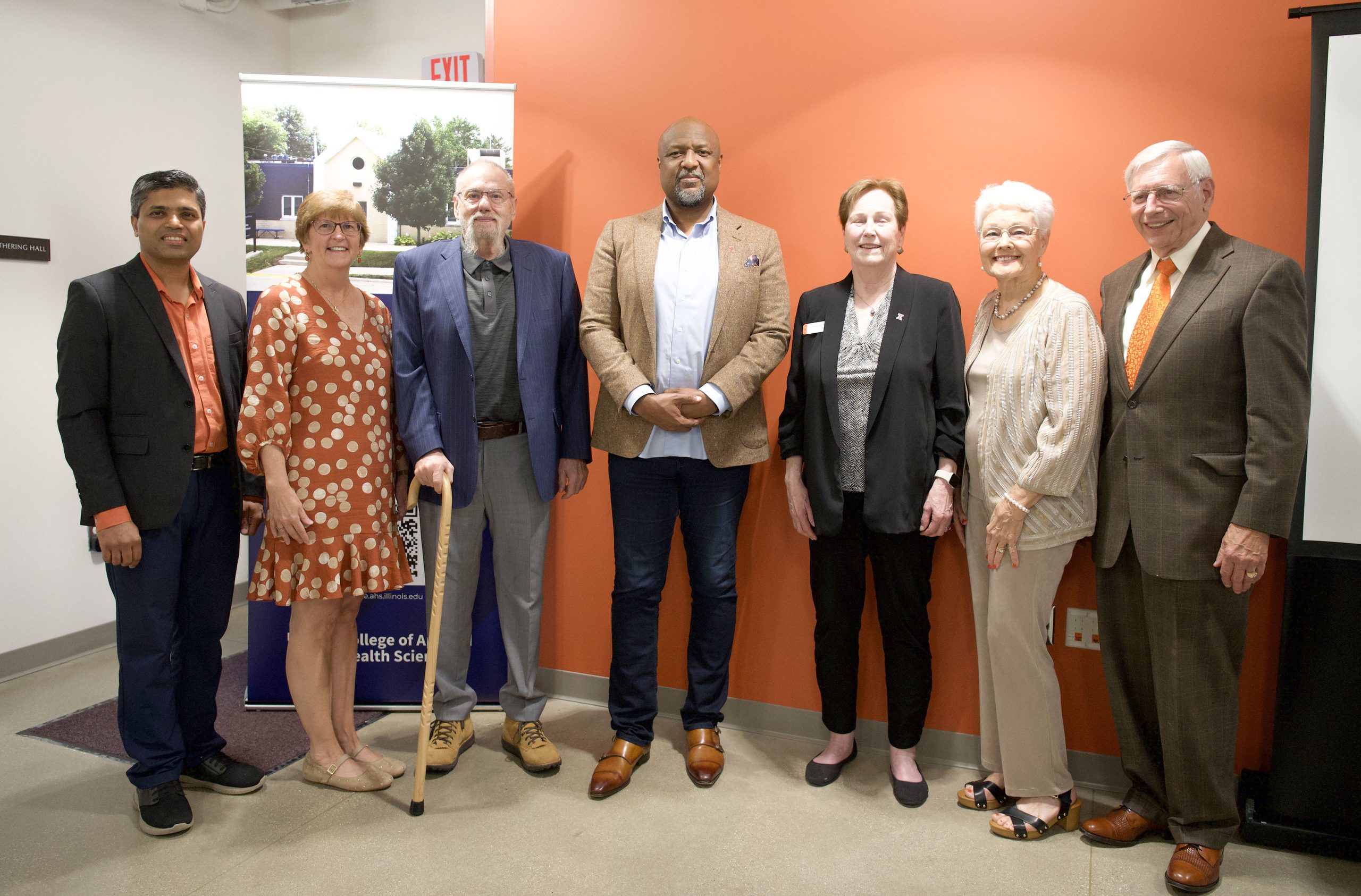
From left: University of Illinois Professor Nick Burd, postdoc Mikaela Kasperek, Ph.D. student Gena Irwin, and Associate Professor Jacob Allen pose inside Freer Hall’s gym, where their labs will train participants in a 12-week exercise program for a clinical trial.

For healthy adults, roughly .8 grams of protein per kilogram of bodyweight per day is enough to maintain muscle mass and support daily function.

But for adults with type 2 diabetes, an estimated 1 in 10 adults in the United States, their protein requirements remain relatively undefined, but are believed to be elevated when compared to their non-diabetic counterparts. Especially as diabetic individuals age, their bodies often become more anabolic resistant: less responsive to the muscle-building effects of exercise and protein intake.

Researchers from the Department of Health and Kinesiology at the University of Illinois Urbana-Champaign are recruiting participants for a human clinical trial to understand the protein needs of older adults with type 2 diabetes, and whether regular exercise can help their bodies use protein more efficiently.

“The problem with current strategies for type 2 diabetes is they largely try to keep throwing protein in people’s diets: eat more, eat more, eat more,” HK Professor Nicholas Burd said.  

Piling on the protein could have detrimental effects. There’s evidence that circulating amino acids, including branch chain amino acids that promote muscle mass, are associated with poorer outcomes for people with diabetes, said HK Associate Professor Jacob Allen.

Their upcoming study, “Exercise impact on dietary protein efficiency in older adults with type 2 diabetes,” is funded by a grant from the American Diabetes Association. The principal investigators are Burd, who researches protein metabolism, and Allen, who studies how exercise and nutrition impact the gut microbiome.

Health and Kinesiology professors Jack Senefeld and Steve Petruzzello are co-investigators on the study.

HK Assistant Professor Jack Senefeld and Professor Steve Petruzzello are co-investigators on the study, bringing expertise on training diabetic individuals and psychological well-being during exercise. Ph.D. candidate Gena Irwin and postdoc Mikaela Kasperek will lead the work from the Burd’s Exercise Performance Lab and Allen’s Integrative Microbiota Physiology labs respectively.

Starting this fall, the researchers will recruit 30 older adults to participate in this study—15 individuals living with type 2 diabetes and 15 without—and bring them into Freer Hall’s gym for a 12-week fitness program that mixes weight training with endurance exercise.

The researchers will use sensitive tools in their labs to figure out how efficiently participants’ bodies utilize protein, and whether that efficiency varies for older adults with and without diabetes. After participants wrap the exercise program, the team will test whether resistance training improved their bodies’ usage of protein overall, lessening their daily protein needs.

“To make an older person’s muscles more youthful, you can exercise them,” Burd said. “But we don’t know how the gut’s being impacted, and we don’t know how type 2 diabetes interferes with some of the ‘youthfulness’ effects of exercise.”

Some of our dietary protein ends up in our skeletal muscle, through muscle-protein synthesis, and some of it is used for energy. But there’s a “black box” around where the rest of our protein goes in the body, Allen said.

“We think that the microbes in the gut, the gut microbiome, might be responsible for some of this, but this has never been studied,” Allen said. “We’ve run some pilot work that fueled part of this study, where we can show that indeed, ingested amino acids are converted into these microbial metabolites.”

Why might that matter? Some of these metabolites are important for human health overall, Allen said. For example, short chain fatty acids—the byproducts of dietary fiber being processed in our gut—bring a host of benefits for metabolism and the immune system.

The research teams will host intervention days at the beginning and end of the 12-week exercise program, to see how participants’ bodies are using the protein in their muscle and gut.

Participants will consume amino acids labeled with stable isotope tracers. The labs will collect breath samples to see how much of the labeled amino acid is showing up in the breath—if more of that labeled protein appears in participants’ breath, their bodies aren’t as good at incorporating it into muscle.

Blood samples will help the scientists understand how the gut is taking those amino acids and converting them into potentially beneficial metabolites.

The second intervention day at the end of the trial will determine whether an exercise program changed the way participants’ bodies use protein.

“There are very few labs in the U.S that not only have the expertise, but have the infrastructure to be able to do this kind of work, so we’re very fortunate for Illinois and our department,” Burd said. “Stable isotope tracers require expensive machines to analyze.”

What’s in it for participants? On top of helping the scientists form dietary guidelines for older adults with type 2 diabetes, they’ll receive progressive exercise training from expert students and faculty at the college, that will hopefully serve them well beyond their last visit.

“A big goal is to change behavior, too, to make them healthier,” Allen said. “That’s ultimately what we’re trying to do.”

Editor’s note:

Interested in participating in this study? Take the survey to see if you qualify, or email the organizers at HK-ADA-Study@illinois.edu

To reach Nick Burd, email naburd@illinois.edu
To reach Jacob Allen, email jmallen5@illinois.edu

Share on social

Related news

From Mayo Clinic to Urbana-Champaign


Gabrielle Dillon, left, and Jack Senefeld share common backgrounds and research interests (Photo by Ethan Simmons)

When Gabrielle Dillon joined the Department of Health and Kinesiology in the College of Applied Health Sciences last fall, she was greeted by a familiar face. She and Jack Senefeld, who had joined HK in fall 2023, had briefly overlapped in professional positions at the Mayo Clinic in Rochester, Minnesota. 

Senefeld, who’d completed his Ph.D. at Marquette University, ended his five-year stint with Mayo in 2023 as a member of the College of Medicine faculty and an associate consultant in the Department of Anesthesiology and Perioperative Medicine and the Department of Physiology and Biomedical Engineering. Dillon joined the Human Integrative Physiology Lab in Mayo’s Department of Anesthesiology and Perioperative Medicine as a postdoctoral fellow in 2022 after completing her Ph.D. at The Pennsylvania State University. They were in different labs in the same department, but the labs collaborated closely.

Senefeld was happy to join the faculty at Illinois because of its outstanding reputation as a research university. 

“There are a lot of great tools here to be a successful scientist, and both the university and the College of Applied Health Sciences are highly regarded,” he said. 

When another faculty position opened just a year after his arrival, Senefeld forwarded the announcement to “big names and rising stars” in the field, among them his Mayo colleague Dillon.

“I knew both her Ph.D. mentor and her postdoctoral mentor, and her academic credentials are impeccable,” he said. “So we felt really fortunate when we saw her application in the pile.” 

In addition to their professional experience, Dillon and Senefeld share research interests. They were members of a working group at Mayo that examined sex differences and physiology, and each makes a point of addressing women’s health in their work.

Dillon’s research focuses on vascular and cardiovascular physiology.

“I’m currently examining vascular testing across a woman’s lifespan and looking at whether physical activity can combat adverse cardiovascular aging and adverse menopause effects,” she said. She hopes not only to advance knowledge related to women’s cardiovascular health, but also to identify effective physical activity-based interventions to improve cardiovascular health. A secondary line of research examines the relationship between birth control and cardiovascular health in women.

Senefeld’s research seeks to understand and to mitigate the detrimental effects of metabolic disease and aging. 

I think we’re both very fortunate to have landed jobs here, and we’re very pleased to be here.

Jack Senefeld

HK assistant professor

“My research focuses primarily on advancing understanding of non-pharmacological interventions—particularly exercise—for aging and metabolic disease,” he said. “I’m investigating how people with prediabetes perform during exercise, specifically how their skeletal muscle performs.”

Through his research, Senefeld hopes to shed light on why people have difficulty complying with exercise guidelines that are known to slow down the progression of diabetes, particularly in older adults. His research will examine how muscles combat fatigue in that population in hopes of increasing their ability to exercise, and he intends to investigate sex differences in muscle performance.

Senefeld and Dillon agree that Illinois is a great place to do human subjects research. 

“The standard barriers to human subjects research have really been eliminated here,” Senefeld said. “We have health centers in the area, wonderful laboratory resources for science and multiple units on campus that can analyze samples. And from a practical standpoint, we have parking right outside the building.”

Dillon adds that the departmental culture fosters a supportive research environment. 

 “Everyone is excited, motivated and eager to collaborate,” she said. “As a new faculty member, I have found everyone to be extremely helpful. We also have a great dean and department head, both of whom are very encouraging.”

Dillon and Senefeld are equally passionate about their teaching. They’ve attended workshops through the Center for Innovation in Teaching and Learning on campus as well as faculty seminars developed by Amy Woods, associate dean for faculty affairs in AHS, and have applied what they’ve learned to co-developing undergraduate and graduate classes. They also are working with the AHS Office of Online Education and Learning Design to develop more effective ways of reaching digitally oriented students.

The heavy demands on young tenure-track scholars have not dampened their enthusiasm for service to their profession. Senefeld co-directs the Lifetime Fitness Program, an exercise program that offers older individuals in the Urbana-Champaign community exercise classes taught by undergraduate and graduate students in health and kinesiology. Dillon is active in the American Physiological Society, of which both she and Senefeld are members. She has developed webinars and career panels for APS, as well as serving on its awards committee. Both are also members of the American College of Sports Medicine, in which Senefeld was recently named a fellow.

The future is bright for Dillon and Senefeld, who are looking forward to long and productive careers at Illinois. As Senefeld put it, “I think we’re both very fortunate to have landed jobs here, and we’re very pleased to be here.”

Related news

Fresh legs carry on the Lifetime Fitness Program


Members of the Lifetime Fitness Program swing medicine balls overhead for an upper body exercise. Classes in the spring and fall terms are hosted at the Campus Recreation Center East in Urbana. (Photo provided)

It’s 7:30 a.m. at Campus Recreation Center East on the campus of the University of Illinois Urbana-Champaign, and Charmaine Young swings a 10-pound exercise ball around her head before lowering to the exercise mat for a “Superman” pose, which works her back muscles. 

Young is 86 years old, but you’d never guess it based on how she moves in the Lifetime Fitness Program, the five-day-a-week group exercise class run by the Department of Kinesiology and Community Health. She’s been returning to the class each semester for nearly 38 years. 

“I live alone, and outside of a log or a tree limb, I can pick up whatever I need,” Young said. “The [Lifetime Fitness Program] is such a part of me, it’s hard to take it apart.” 

The Lifetime Fitness Program, “LFP” for short, sports an eight-decade history at the University of Illinois of helping adults ages 55 and older stay fit, while supporting the college’s research goals. 

The program recently changed hands after longtime KCH Professor Ken Wilund, who ran LFP for more than a decade, left for the University of Arizona. 

But Lifetime Fitness quickly found fresh legs under it, with two first-year faculty at the College of Applied Health Sciences at the helm: KCH Assistant Professors Jack Senefeld and Emerson Sebastião. 

“[Wilund] was looking for someone else to sort of liven up the program,” Senefeld said. “He asked Emerson and I if we would be involved, and we both excitedly said yes.” 

Of course, the program didn’t just “fall in their laps,” Sebastião said. Both faculty have research bona fides in exercise science, especially for older adults. 

What they’ve quickly discovered is a fitness group brimming with devotees, many of whom have been coming back to the weekday classes for decades. And there’s room for more. 

“COVID was not a fun time for society, and a lot of community-based, physical activity-based programs had really dwindling communities,” Senefeld said. “Our goal has been to promote the program and increase the number of people that know about it, because the people who know about it, love it.” 

While the pair of faculty members administer the program and oversee its research, the 7 a.m. to 8:30 a.m. weekday classes are run by undergraduate students for class credit and supervised by graduate students Ashley Morgan and Kaitlyn Pawelczyk. Sebastião, like Wilund before him, still attends a couple of sessions each week. 

“Having this close connection, being able to work with the older adults, it’s good to be around them. It’s fun—it helps me in other areas as well,” he said. “Talking about building community, I think it’s important to be there, show our faces.” 

LFP is a community unto itself. Each class radiates positivity, even in those early mornings. 

“That’s an awesome part of the Lifetime Fitness Program, the social, community aspect of it. Not even just for the members, it’s even been like that for me,” said Pawelczyk, a first-year grad student coordinator for the program studying Nutritional Sciences. “Everyone is so supportive, caring, invested in each other’s lives from an exercise standpoint and from an intentional standpoint. Everyone wants to know how everyone is doing and support them.” 

A reservoir for research 

The year was 2009, and Sandy Goss Lucas had recently retired from the University of Illinois, where she directed the Introductory Psychology curriculum. A friend of hers tipped her off to a study in kinesiology, researching whether women’s weight was better controlled through diet or exercise, and Lucas decided to join. 

She was put on the exercise track and found out that the regimen increased the participants’ bone density, among other positive things, she said. For her participation, she got a small payment and a free semester of the Lifetime Fitness Program. 

“We were intersecting with people who were doing Lifetime Fitness anyway, so I went to see what it was all about,” she said. “And I got hooked.” 

The friendly atmosphere, challenging exercises, and “phenomenal” student instructors immediately appealed to her. Lucas, now 74, has been coming back for the past 15 years. 

“It’s just been one of the best experiences of my life,” she said. 

Having this close connection, being able to work with the older adults, it’s good to be around them.

Emerson Sebastião

HK assistant professor

Many of Lucas’ classmates found the class in the same way, after going through a research study in the college. That’s intentional: Many KCH faculty are interested in recruiting older adults for exercise studies, but after the study elapses, older adults might not have a place to stay in touch, Sebastião said. 

“This program also serves that purpose—to have a place to go after research studies are done, and then they can be integrated with that group and then start building their community and keep exercising, which is the main focus,” he said. “We want them to be long-term exercisers, not just for 12 weeks, which is normally how a study would last.”   

The exercise is “vigorous,” according to 20-year LFP attendee Fran Hacker, who said the regular activity helped her recovery from cancer. 

“When we’re off a week or two, I can notice the difference,” she said. 
But the program’s different classes—stretches in the morning, strength work, water aerobics and yoga—are designed to be functional, instructors said. 

“You want to tailor the program to the fact that they are older adults. We want to be careful of balance, of the knees, obviously, but we want to make it fun,” Pawelczyk said. 

The next frontier for the professors is getting new research elements off the ground, Senefeld said. Many of the adults who keep coming back to Lifetime Fitness are interested in their health; Senefeld and Sebastião are planning to implement regular assessments on various fitness metrics, from strength and aerobic capacity to walking speed. 

“They’re really interested to know if they’re slowing down, and so we can help them quantify that and provide that feedback and then use that to look at how does physical exercise benefit older adults,” Senefeld said. 

The Lifetime Fitness team recently published a program overview in Kinesiology Review, running through the structure of the program, its physical benefits for older adults and experiential learning for the student instructors. 

The group’s social ties have kept the cohort going strong, even through the COVID-19 pandemic. When classes were canceled in early 2020, a group of exercisers began meeting at West Side Park for spaced-out, masked-up outdoor yoga. The tradition of meeting on weekends has kept up ever since, said Mike Sims, an 11-year participant in LFP. 

“We text each other and meet on Saturdays and sometimes go out for coffee and watch movies after that,” Sims said. “The [social aspect] opens up a whole atmosphere bigger than just exercising.” 

Just three weeks after a knee replacement surgery, Lucas was back in class stretching with the rest of the cohort. Her classmates and the student instructors were, as always, ready to welcome her back. 

“We’re a very close group, right now we have people going through breast cancer, ovarian cancer, chemo. People have gone through all kinds of things, we take a meal, we stay in touch, we check up on each other,” she said. 

“I just feel very, very strongly that this group has kept me sane.”

(Members of the Lifetime Fitness Program pay $30 a month for full membership. Summer classes run until August 11, MWF from 8-9 a.m. at Freer Hall. Fall classes will resume Monday-Friday at CRCE on August 28). 
 

Editor’s note:

To reach Ethan Simmons, email ecsimmon@illinois.edu.
 

Related news

College of Applied Health Sciences
110 Huff Hall
1206 South 4th Street
Champaign, IL 61820
(217) 333-2131