Sept. 02, 2026 | Ethan Simmons
After the hardest year of his life, this wheelchair basketball star is entering his senior season with a new perspective
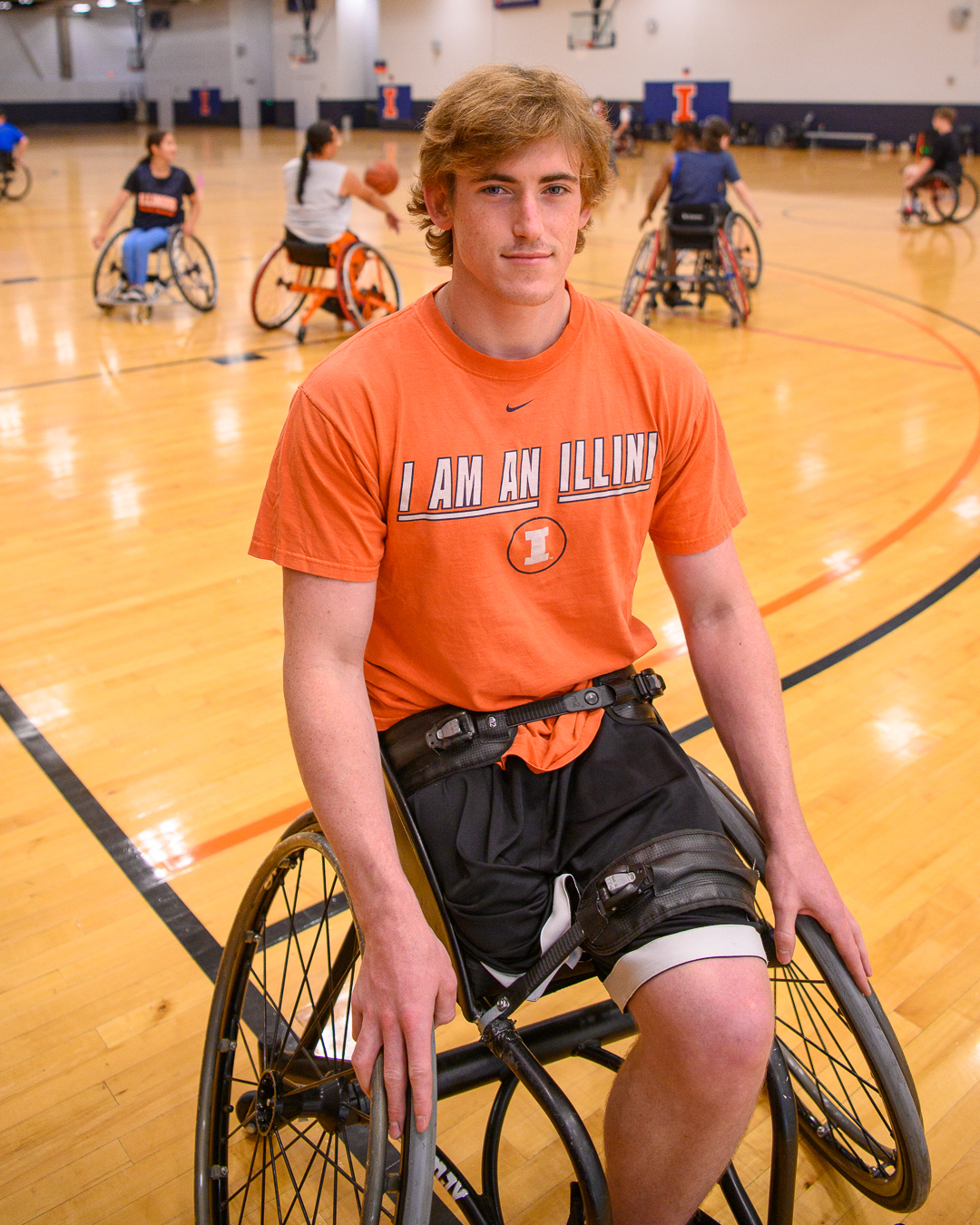
Against all odds, wheelchair basketball star RJ Fitzpatrick’s junior season at the University of Illinois Urbana-Champaign was a banner year on the court and in the classroom.
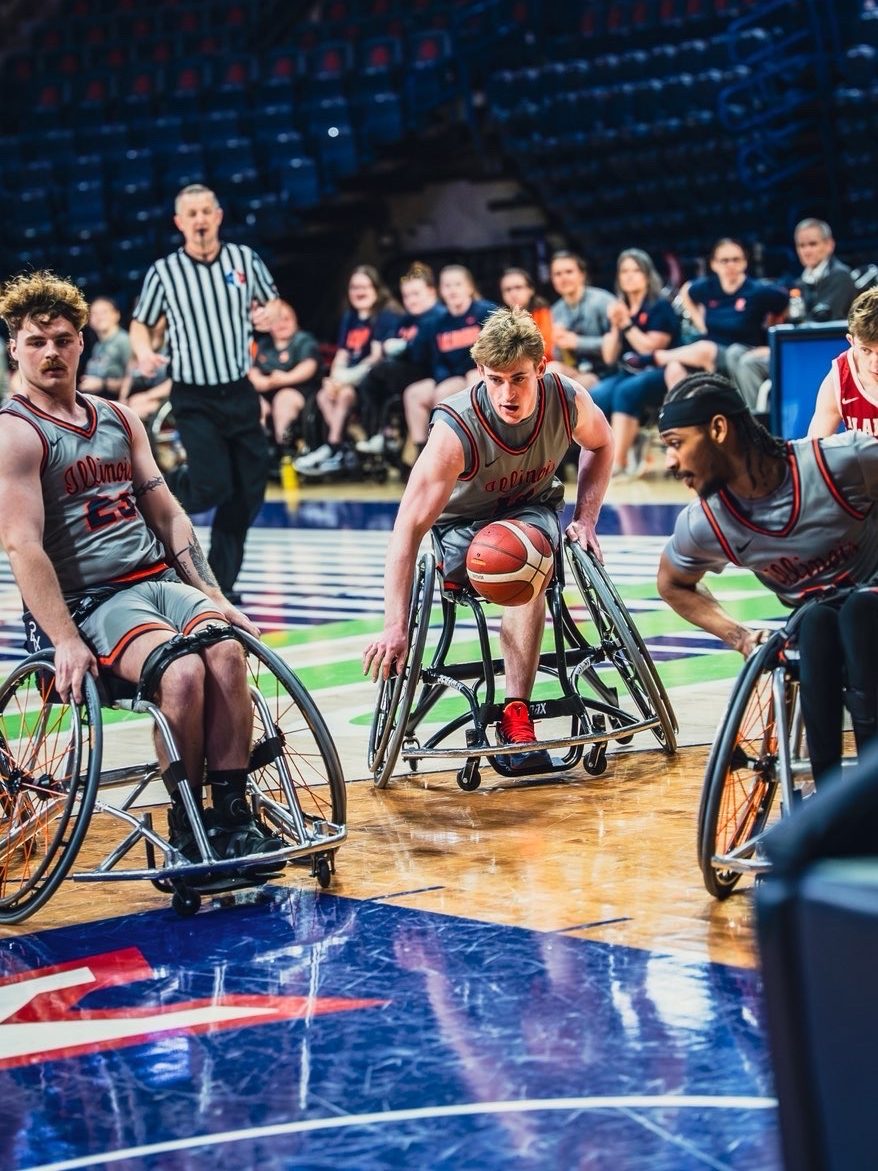
He helped bring the Fighting Illini to a third-place finish in the National Intercollegiate Wheelchair Basketball Tournament in April and won the 2025-26 NWBA Player of the Year, the highest honor for collegiate players. He even earned a 4.0 GPA in the spring semester, studying recreation, sport and tourism.
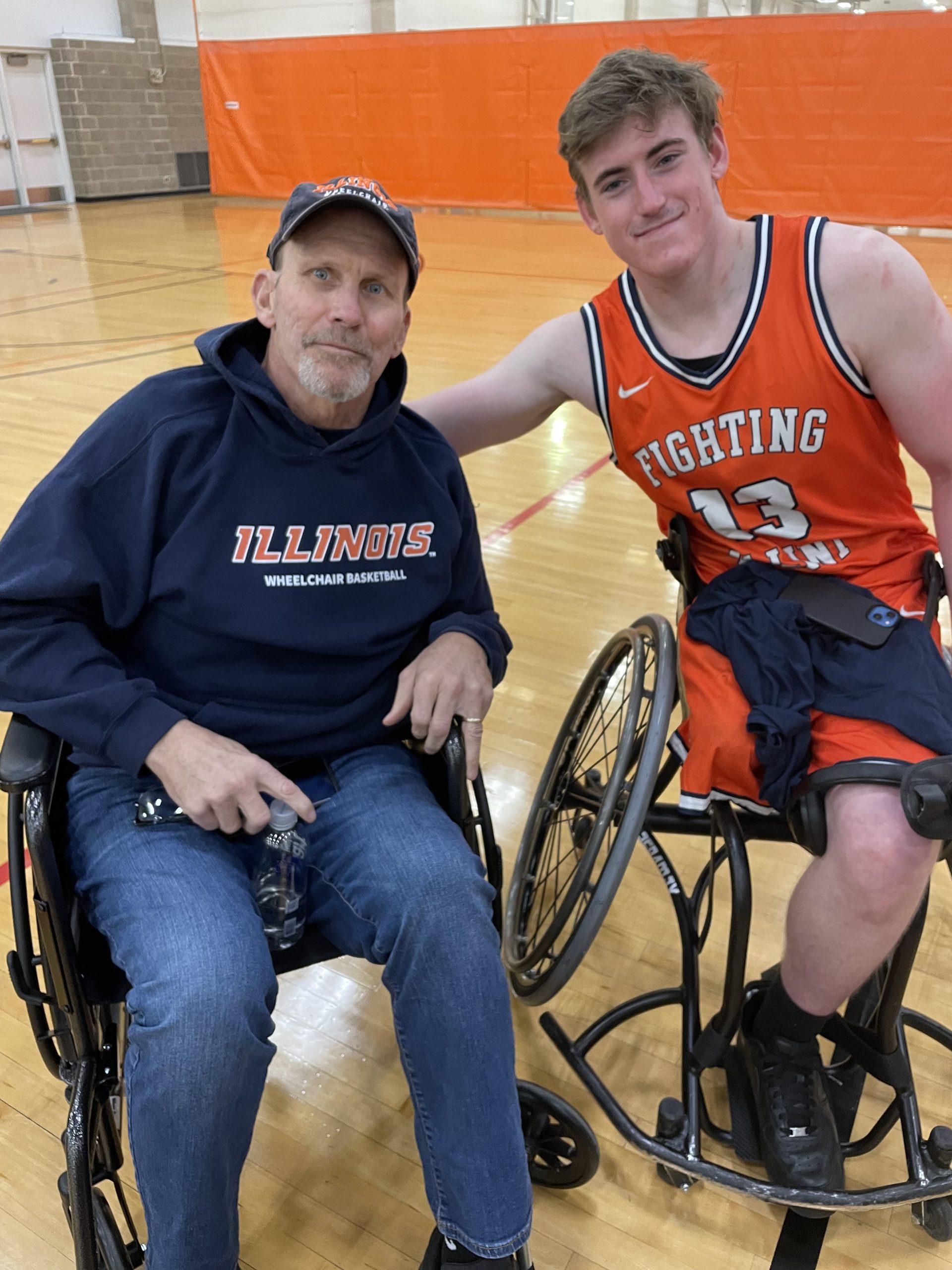
“It was really nice to achieve, and it’s also hard, too, because my dad would be so proud of me for that,” Fitzpatrick said. “It was really tough not having him there, not seeing him in the crowd, because that was like his number one thing. He loved watching wheelchair basketball.”
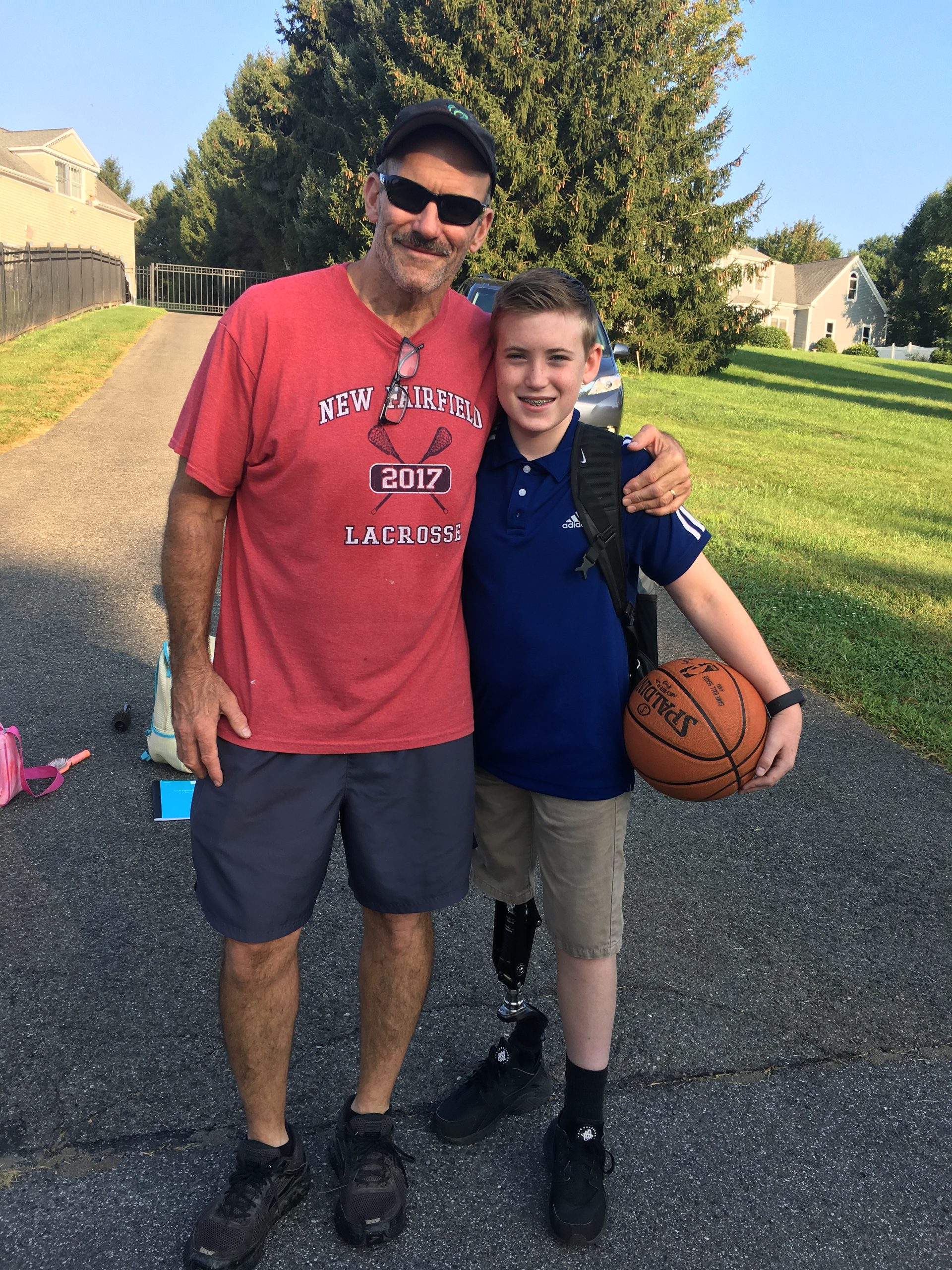
RJ Fitzpatrick is heading into his senior year at Illinois without his chief supporter: his father, Peter, who died in March after a two-year battle with brain cancer. The quintessential “sports dad,” Peter Fitzpatrick was his son’s biggest fan in the stands, though never quite his biggest critic.
“That’s RJ himself,” Illinois men’s wheelchair basketball coach Jacob Tyree said. “That loss was felt to a magnitude that can’t be put into words—Peter was just a really unique person to have been intertwined with my athletes’ lives.”
A new year brings new lessons and a new level of maturity for Fitzpatrick, a fierce competitor on the court with a kind, fun-loving presence in his daily life. And this year, he knows for sure: he’s not going it alone.
“The support from the whole wheelchair basketball program has just been huge,” he said. “Knowing I always have them in my corner, that just has made the whole thing a little bit easier, you know?
“It’s always going to be hard, but knowing I have them has been so special.”
Beginnings
Fitzpatrick’s brand of physical, polished play—bumping in his chair for rebounds, drilling threes and dumping off swift passes to the interior—might feel like a style he was born with.
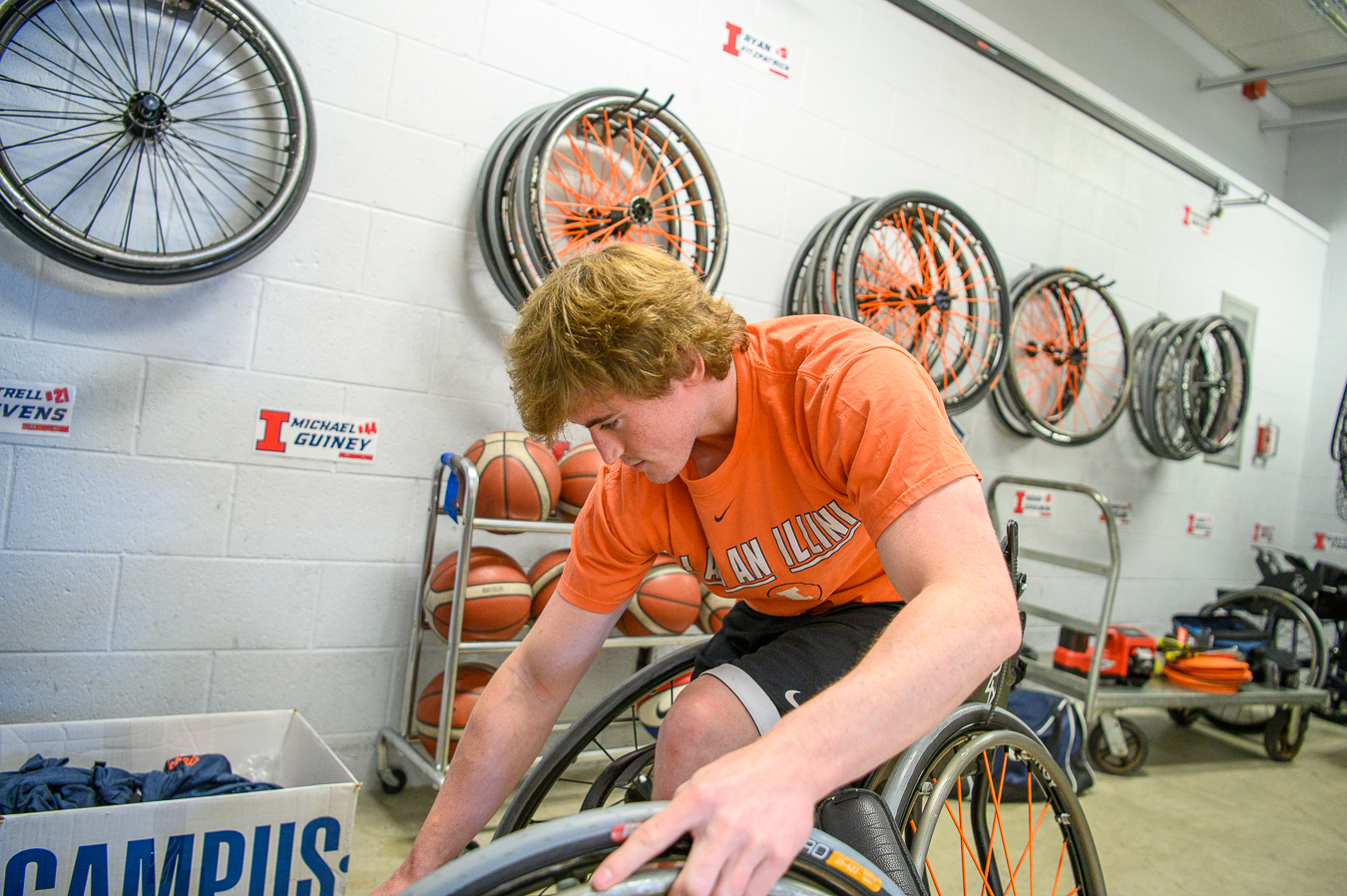
But his story with wheelchair athletics began when he was an eighth grader attending Camp No Limits, a summer camp for kids with limb differences or limb loss. Fitzpatrick was born without his right leg, but he grew up playing able-bodied sports with his friends.
A camp mentor let Fitzpatrick try out his sports chair for a spin.
“I remember it was super hard, because I was so used to playing stand-up basketball,” Fitzpatrick said. “Trying to figure out how to push the chair and also dribble and shoot from two feet lower was crazy to me.”
His high school hosted a wheelchair basketball exhibition game the following fall, and he gave it another shot.
“That’s where the love for it all started,” Fitzpatrick said. “Once I got in it, I realized how much it leveled the playing field for me. I thought, ‘I could be pretty good at this.’”
He went on to play wheelchair basketball for New Britain High School, which had an adaptive sports program through the Ryan Martin Foundation, while swimming and running cross country for New Fairfield High School, using a prosthetic to run. His growing basketball talent drew attention, and he was offered a scholarship to play for the University of Illinois, 900 miles from his hometown of Sherman, Connecticut.
He knew of the University of Illinois through one of his old Juniors Division teammates—recent RST graduate Martrell Stevens—who accepted an offer to play there. Its rich history of wheelchair athletics and accessibility through Disability Resources and Educational Services held broad appeal to Fitzpatrick.
“There was always a feeling I had that I wanted to end up here,” Fitzpatrick said. “Even before I got recruited, right when I got to campus that first time, I kind of knew this was where I wanted to be.”
Still, coming to the U. of I.’s 50,000-student campus from a town of 3,500 was a serious adjustment. Longtime teammates Grant Pierce and John Matthew “JM” Davis have formed his social bedrock while he’s been at the university. So much so, that they moved in together.
“They’re brothers—they bicker, they fight—getting them to work together can be the hardest or easiest thing I do,” Tyree said. Many of the team’s funniest and fondest memories stem from those three, Tyree said, and their own brand of brotherly love. Fitzpatrick is usually the one stirring the pot.
For the second year, the trio of big men will live in an Urbana house together for their senior season: “Those two, we’ve all just kind of stuck by each other’s side and been there for each other with anything that comes up,” Fitzpatrick said.
A trying tournament
After a two-year battle with glioblastoma, Peter Fitzpatrick—a longtime health and physical education teacher—passed away on March 9, 2026. His passing came just a week before the UTA College Classic in Arlington, Texas, a marquee wheelchair basketball tournament with seeding implications for nationals the next month.
“We were even debating, ‘Do we not go?’” Tyree said. Both Illinois wheelchair basketball teams were thinking of diverting their travel to Peter’s funeral instead.
“Of course, me and my dad would want them to play,” Fitzpatrick said. Across the country, the team thought of how they could show support without physically being there for RJ and his family.
Halfway to Arlington, the team made a pit stop at a Walmart in Arkansas. After chatting with fellow coaches and DRES staff, Tyree went inside and grabbed a couple packages of black ribbon. Before the tournament games, members of the Illini men’s and women’s teams tied the ribbon around their chairs and wrists to pay respects to Peter, their biggest fan.
Through his grief, RJ felt how the experience transformed the team.
“Seeing how tight we were, as a whole program being one, those were some huge days for us to grow together,” Fitzpatrick said.
Peter’s impact on the team resonated beyond supporting his son. He was a constant presence in the stands, and a supporter for RJ’s future Illinois teammate Gavin Ford—a sophomore from North Reading, Massachusetts—helping to get him into adaptive sports in the first place.
The last time Peter saw his son play in person was at the fall alumni tournament, where Illinois wheelchair basketball players from years past came to battle the current-day roster.
“My whole family came, and it was a really special time,” Fitzpatrick said. “I’m involved with the [St. John’s Catholic] Newman Center, and one of the priests came as well. It was special to see all these influential figures in my life.”
It’s rare to find someone who excels in the classroom, as an athlete and in how he treats other people—but that’s exactly who RJ is.
Sarah Agate
Teaching Associate Professor in Recreation, Sport and TourismAfter his playing days, Fitzpatrick dreams of working in a front office role for an NBA team or starting a wheelchair basketball program of his own closer to home in Connecticut. Recreation, Sport and Tourism has always made a sensible fit for his academic program at Illinois.
He got a small taste of what it takes to run a sports event of any kind when he helped organize the U. of I.’s spring wheelchair basketball tournament for a class—a tournament he was scheduled to play in himself.
The courses Event Management and Implementation in Recreation, Sport and Tourism opened a “new world” of small, behind-the-scenes details, from what it takes to get coaches and players organized to the volunteer force that helps a tournament run.
And the class instructor, RST Teaching Associate Professor Sarah Agate, was understanding and flexible while Fitzpatrick and his family dealt with his father’s worsening illness and later grieved his passing.
“She was really there for me in a huge way, knowing I had the support from her, constantly going home to Connecticut,” Fitzpatrick said. “I’d always bring it up to my mom and my sister, just how kind and supportive she was. I really hope that’s a contact and connection I can continue to build with her for the future. “
In class, Fitzpatrick is “hard-working and responsible,” Agate said. “It’s rare to find someone who excels in the classroom, as an athlete and in how he treats other people—but that’s exactly who RJ is.”
His team-first attitude and humility were present in class. Agate didn’t even learn about Fitzpatrick’s Player of the Year honors until one of his classmates mentioned it to her.
“What makes his accomplishments even more meaningful is that he achieved all of this while carrying the weight of losing his father.”
Pushing forward
Two third-place finishes at the NIWBT stamped a successful season for Illinois wheelchair basketball, but Fitzpatrick thinks the team is built for more.
“I’m super confident with this group of guys we can finish even higher,” he said.
Underneath his placid demeanor is a competitive intensity that churns for the whole team.
“I tell people all the time, the character of who you are shows up on the court,” Tyree said. “You can watch a game of basketball, or any sport, and through an athlete’s actions you’ll see their core values embodied. Your actions, not intentions, reflect who you are to the world.
“He has a mentality—that when it’s honed and brought out in the right ways—we’re fighting back. I don’t care if we’re down 40 points, if we’re down 2 points, I don’t care if we’re up 10, we’re still fighting and we’re going to see it all the way through.
“That’s something that’s really hard to ingrain in a player, and that’s where his character really shines.”
As he matures into his role as a team leader, Fitzpatrick is beginning to see himself as an ambassador for his sport and for the larger disability community.
“I’m trying to continue to grow my relationships with the people on campus,” Fitzpatrick said. “Being an amputee, I’m a little more ‘obvious,’ and that’s a great way for me to talk to somebody about wheelchair basketball, or adaptive sports, and open up that world for them.”
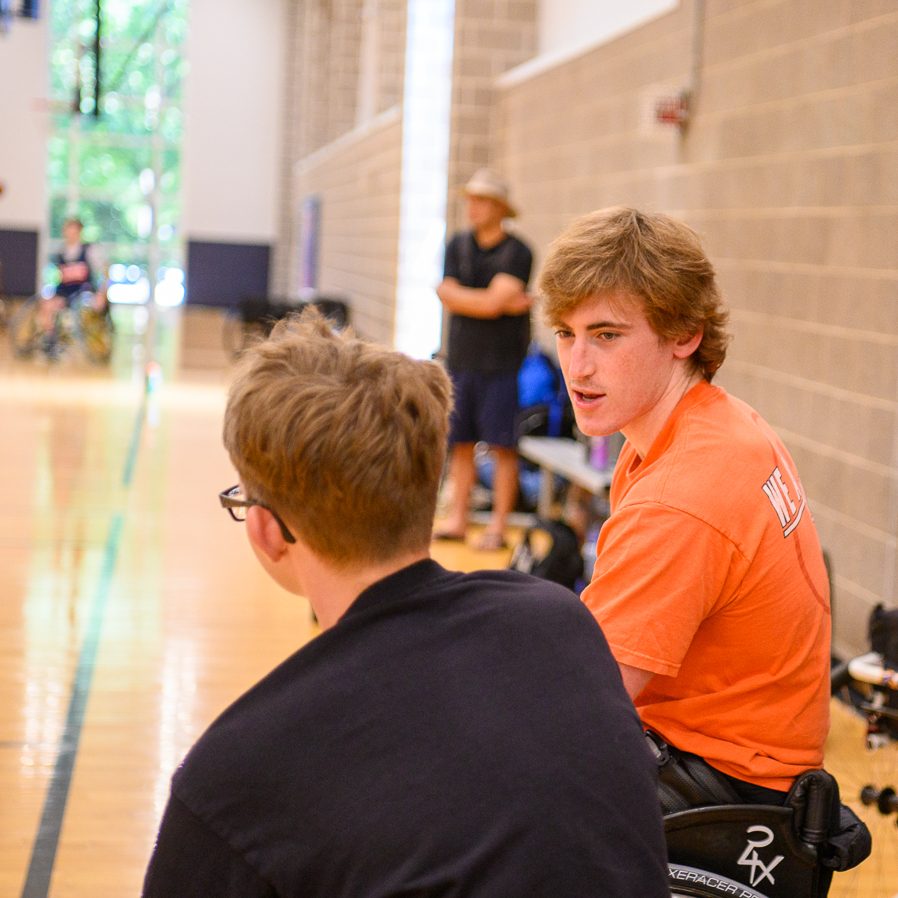
All those feelings were made fresh while he coached in this summer’s skill development camps for wheelchair basketball at the Activities and Recreation Center. Fitzpatrick turned in a few 12-hour days mentoring kids of all skill levels: some were new to the sport; others were vying for a collegiate roster spot.
“It’s special to see these dads come with their sons or daughters to camp and walk around campus; I remember doing that with my dad,” Fitzpatrick said. “Because those were some of the best years of my life, the excitement of finding a school—those moments really warmed my heart.”
In his experience, the grief “never really goes away.” But tender moments and new life lessons keep Fitzpatrick moving forward, with his father’s memories still held close.
“Trying to live a little bit more like him really inspires me to keep pushing.”
Editor’s note:
Want to learn more about wheelchair basketball? Join the 8-week course: RST 265 Principles of Coaching Wheelchair Basketball, instructed by RST Graduate Student Morgan McCammon, four-year women’s wheelchair basketball player for Illinois.
To reach Ethan Simmons, email ecsimmon@illinois.edu.
Share on social