Through life’s challenges, RJ Fitzpatrick will keep pushing


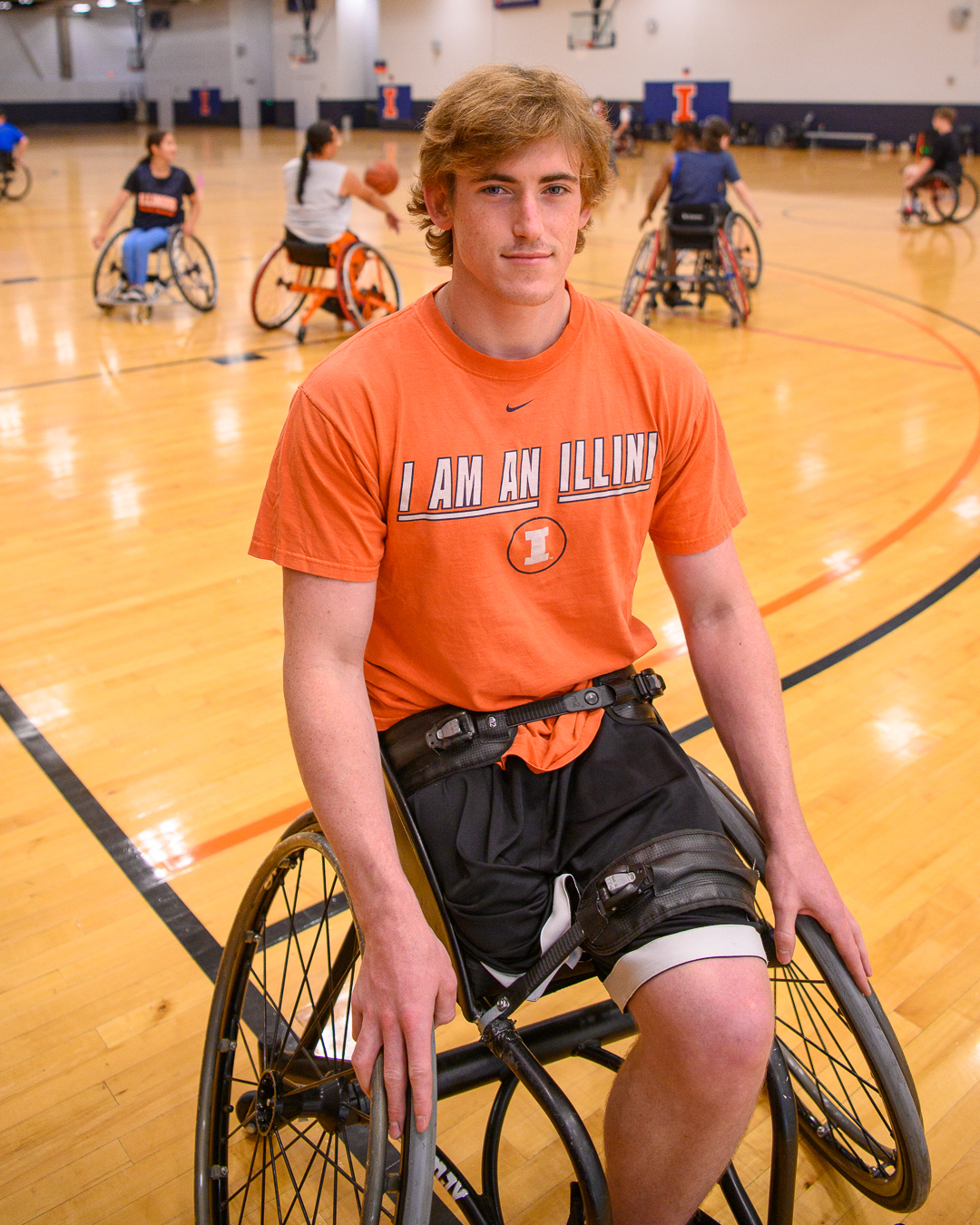
RJ Fitzpatrick, a senior in recreation, sport and tourism, at an Illinois wheelchair basketball skills camp this summer. (Photo by Ethan Simmons).

Against all odds, wheelchair basketball star RJ Fitzpatrick’s junior season at the University of Illinois Urbana-Champaign was a banner year​ on the court and in the classroom.  

He helped bring the Fighting Illini to a third-place finish in the National Intercollegiate Wheelchair Basketball Tournament in April and won the 2025​​-​​26 NWBA Player of the Year, the highest honor for collegiate players. He even earned a 4.0​ GPA​ in the spring semester, studying recreation, sport and tourism.   

“It was really nice to achieve, and it’s also hard, too, because my dad would be so proud of me for that,” Fitzpatrick said. “It was really tough not having him there, not seeing him in the crowd, because that was like his number one thing. He loved watching wheelchair basketball.”  

RJ Fitzpatrick is heading into his senior year at Illinois without his chief supporter: his father, Peter, who died ​in March ​after a two-year battle with brain can​cer​. The quintessential “sports dad,” Peter Fitzpatrick was his son’s biggest fan in the stands, though never quite his biggest critic.  

“That’s RJ himself,” Illinois men’s wheelchair basketball coach Jacob Tyree said.​ “That loss was felt to a magnitude that can’t be put into words—Peter was just a really unique person to have been intertwined with my athletes’ lives.”  

A new year brings new lessons and a new level of maturity for Fitzpatrick, a fierce competitor on the court with a kind, fun-loving presence in his daily life. And this year, he knows for sure: he’s not going it alone.  

“The support from the whole wheelchair basketball program has just been huge​,​” he said​​. ​​“​​Knowing I always have them in my corner, that just has made the whole thing a little bit easier, you know?​​ ​​​

“​​It’s always going to be hard, but knowing I have them has been so special.” 

Beginnings 

Fitzpatrick’s brand of physical, polished play—bumping in his chair for rebounds, drilling threes and dumping off swift passes to the interior—might feel like a style he was born with.  

But his story with wheelchair athletics began when he was an eighth grader attending Camp No Limits, a summer camp for kids with limb differences or limb loss. Fitzpatrick was born without his right leg, but he grew up playing able-bodied sports with his friends.  

​​A camp mentor let Fitzpatrick try out his sports chair for a spin.

“I remember it was super hard, because I was so used to playing stand-up basketball,” Fitzpatrick said. “Trying to figure out how to push the chair and also dribble and shoot from two feet lower was crazy to me.”  
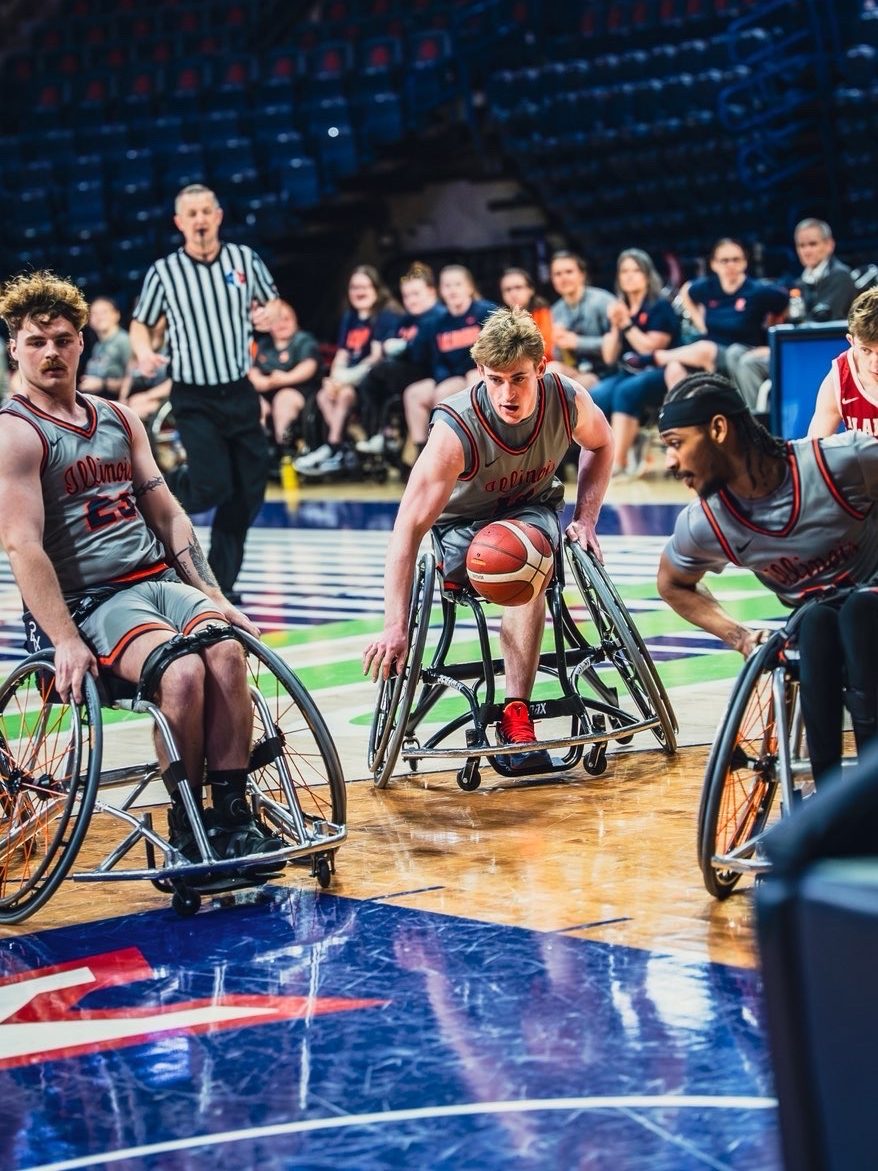
RJ Fitzpatrick (center) drives to the basket, flanked by teammates JM Davis (left) and Martrell Stevens. (Provided)

His high school hosted a wheelchair basketball exhibition game the following fall, and he gave it another shot.  

“That’s where the love for it all started,” Fitzpatrick said. “Once I got in it, I realized how much it leveled the playing field for me. I thought, ‘I could be pretty good at this.’”

He went on to play wheelchair basketball for New Britain High School, which had an adaptive sports program through the Ryan Martin Foundation, while swimming and running cross country for New Fairfield High School, using a prosthetic to run. His growing basketball talent drew attention, and he was offered a scholarship to play for the University of Illinois, 900 miles from his hometown of Sherman, Connecticut.  

He knew of the University of Illinois through one of his old Juniors Division teammates—recent RST graduate Martrell Stevens—who accepted an offer to play there. Its rich history of wheelchair athletics and accessibility through Disability Resources and Educational Services held broad appeal to Fitzpatrick.  

“There was always a feeling I had that I wanted to end up here,” Fitzpatrick said. “Even before I got recruited, right when I got to campus that first time, I kind of knew this was where I wanted to be.”  

Still, coming to the U. of I.’s 50,000-student campus from a town of 3,500 was a serious adjustment. Longtime teammates Grant Pierce and John Matthew “JM” Davis have formed his social bedrock while he’s been at the university. So much so, that they moved in together.       

“They’re brothers—they bicker, they fight—getting them to work together can be the hardest or easiest thing I do,” Tyree said. Many of the team’s funniest and fondest memories stem from those three, Tyree said, and their own brand of brotherly love. ​​Fitzpatrick​​ is usually the one stirring the pot.  

For the second year, the trio of big men will live in an Urbana house together for their senior season: “Those two, we’ve all just kind of stuck by each other’s side and been there for each other with anything that comes up,” Fitzpatrick said.  

A trying tournament  

After a two-year battle with glioblastoma, Peter Fitzpatrick—a longtime health and physical education teacher—passed away on March 9, 2026. His passing came just a week before the UTA College Classic in Arlington, Texas, a marquee wheelchair basketball tournament with seeding implications for nationals the next month.    

“We were even debating, ‘Do we not go?’” Tyree said. Both Illinois wheelchair basketball teams were thinking of diverting their travel to Peter’s funeral instead.

“Of course, me and my dad would want them to play,” Fitzpatrick said. Across the country, the team thought of how they could show support without physically being there for RJ and his family.  
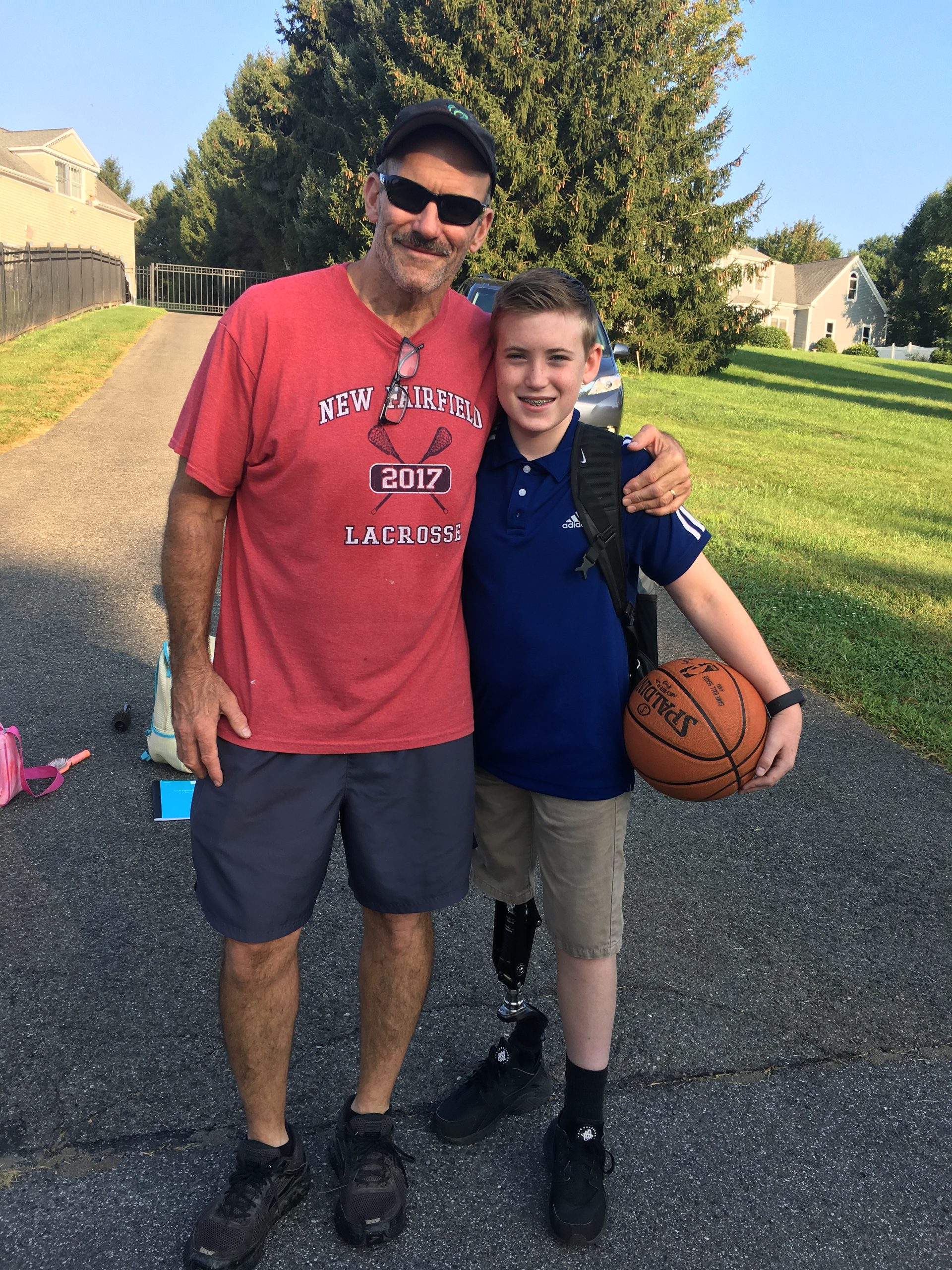
Peter and RJ Fitzpatrick in 2018. (Provided)

Halfway to Arlington, the team made a pit stop at a Walmart in Arkansas. After chatting with fellow coaches and DRES staff, Tyree went inside and grabbed a couple packages of black ribbon. Before the tournament games, members of the Illini men’s and women’s teams tied the ribbon around their chairs and wrists to pay respects to Peter, their biggest fan.  

Through his grief, RJ felt how the experience transformed the team.  

“Seeing how tight we were, as a whole program being one, those were some huge days for us to grow together,” Fitzpatrick said.  

Peter’s impact on the team resonated beyond supporting his son. He was a constant presence in the stands, and a supporter for RJ’s future Illinois teammate Gavin Ford—a sophomore from North Reading, Massachusetts—helping to get him into adaptive sports in the first place.  

The last time Peter saw his son play in person was at the fall alumni tournament, where Illinois wheelchair basketball players from years past came to battle the current-day roster.  

“My whole family came, and it was a really special time,” Fitzpatrick said. “I’m involved with the [St. John’s Catholic] Newman Center, and one of the priests came as well. It was special to see all these influential figures in my life.”  

It’s rare to find someone who excels in the classroom, as an athlete​​ and in how he treats other people—but that’s exactly who RJ is.

Sarah Agate

Teaching Associate Professor in Recreation, Sport and Tourism

After his playing days, Fitzpatrick dreams of working in a front office role for an NBA team or starting a wheelchair basketball program of his own closer to home in Connecticut. Recreation, Sport and Tourism has always made a sensible fit for his academic program at Illinois.  
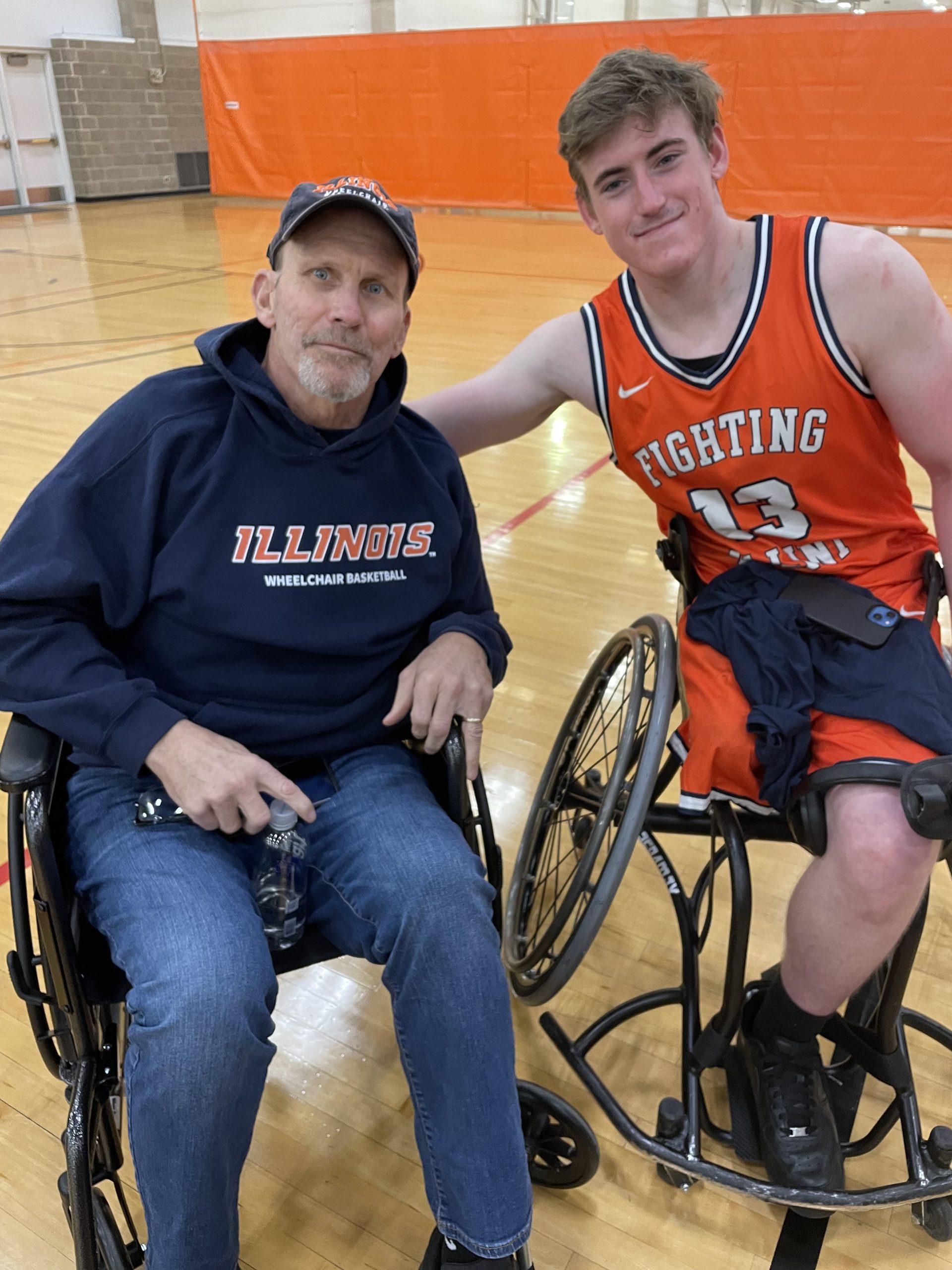
Peter and RJ Fitzpatrick in 2025. (Provided)

He got a small taste of what it takes to run a sports event of any kind when he helped organize the U. of I.’s spring wheelchair basketball tournament for a class—a tournament he was scheduled to play in himself.  

The courses Event Management and Implementation in Recreation, Sport and Tourism ​​opened a “new world” of small, behind-the-scenes details, from what it takes to get coaches and players organized to the volunteer force that helps a tournament run.  

And the class instructor, RST Teaching Associate Professor Sarah Agate, was understanding and flexible while Fitzpatrick and his family dealt with his father’s worsening illness and later grieved his passing.  

“She was really there for me in a huge way, knowing I had the support from her, constantly going home to Connecticut,” Fitzpatrick said. “I’d always bring it up to my mom and my sister, just how kind and supportive she was. I really hope that’s a contact and connection I can continue to build with her for the future. “  

In class, Fitzpatrick is “hard-working and responsible,” Agate said. “It’s rare to find someone who excels in the classroom, as an athlete​​ and in how he treats other people—but that’s exactly who RJ is.”  

His team-first attitude and humility were present in class. Agate didn’t even learn about Fitzpatrick’s Player of the Year honors until one of his classmates mentioned it to her. 

“What makes his accomplishments even more meaningful is that he achieved all of this while carrying the weight of losing his father.” 

Pushing forward 

Two third-place finishes at the NIWBT stamped a successful season for Illinois wheelchair basketball, but Fitzpatrick thinks the team is built for more.  

“I’m super confident with this group of guys we can finish even higher,” he said.  

Underneath his placid demeanor is a competitive intensity that churns for the whole team.  

“I tell people all the time, the character of who you are shows up on the court,” Tyree said. “You can watch a game of basketball, or any sport, and through an athlete’s actions you’ll see their core values embodied. Your actions, not intentions, reflect who you are to the world. 

“He has a mentality—that when it’s honed and brought out in the right ways—we’re fighting back. I don’t care if we’re down 40 points, if we’re down 2 points, I don’t care if we’re up 10, we’re still fighting and we’re going to see it all the way through. 
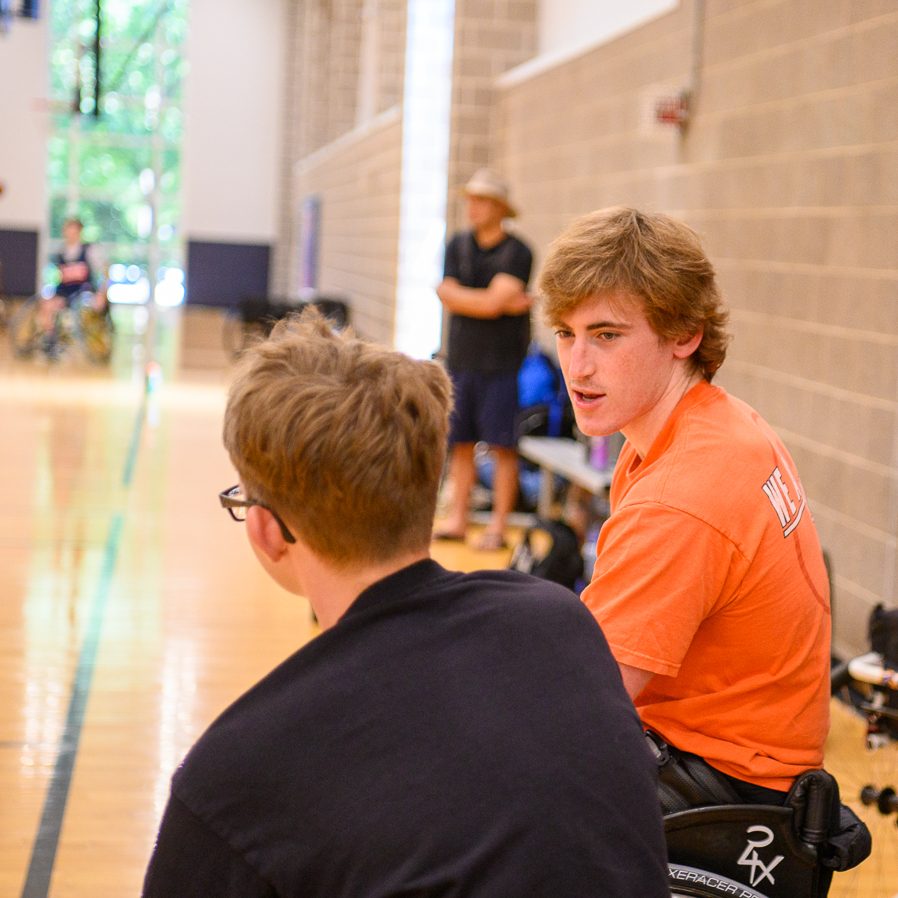
University of Illinois men’s wheelchair basketball senior RJ Fitzpatrick speaks to a camper at the Illini Premier Camp for young wheelchair basketball players on June 30, 2026.

“That’s something that’s really hard to ingrain in a player, and that’s where his character really shines.”  

As he matures into his role as a team leader, ​​Fitzpatrick​​​​​ is beginning to see himself as an ambassador for his sport and for the larger disability community.   

“I’m trying to continue to grow my relationships with the people on campus,” Fitzpatrick said. “Being an amputee, I’m a little more ‘obvious,’ and that’s a great way for me to talk to somebody about wheelchair basketball, or adaptive sports, and open up that world for them.”  

All those feelings were made fresh while he coached in this summer’s skill development camps for wheelchair basketball​ ​​at the Activities and Recreation Center. Fitzpatrick turned in a few 12-hour days mentoring kids of all skill levels: some were new to the sport; others were vying for a collegiate roster spot.  

“It’s special to see these dads come with their sons or daughters to camp and walk around campus​;​​​ I remember doing that with my dad,” Fitzpatrick said. “Because those were some of the best years of my life, the excitement of finding a school—those moments really warmed my heart.”  

In his experience, the grief “never really goes away.” But tender moments and new life lessons keep Fitzpatrick moving forward, with his father’s memories still held close.   

“Trying to live a little bit more like him really inspires me to keep pushing.”  
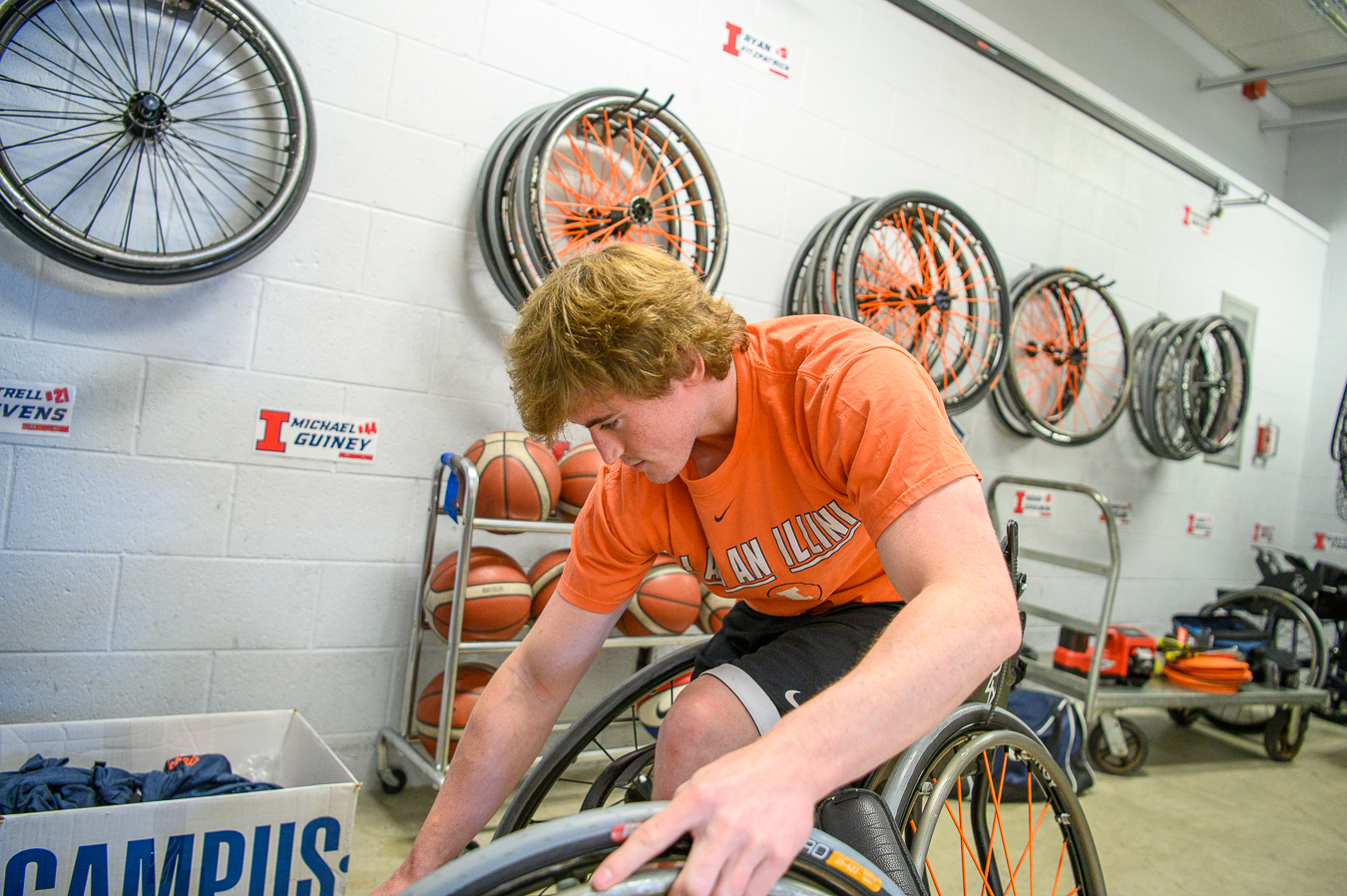
University of Illinois men’s wheelchair basketball star RJ Fitzpatrick helped run this year’s Illini Premier Camp for young wheelchair basketball players in late June. He’s heading into his senior year after a year of great accomplishments on the court, and one of his hardest years off of it.

Editor’s note:

Want to learn more about wheelchair basketball? Join the 8-week course: RST 265 Principles of Coaching Wheelchair Basketball, instructed by RST Graduate Student Morgan McCammon, four-year women’s wheelchair basketball player for Illinois.

To reach Ethan Simmons, email ecsimmon@illinois.edu.  

Share on social

Related news

Wheelchair basketball alums band together for worthy cause


The 2016-17 wheelchair basketball men’s team poses in front of Grange Grove. Several alumni contributed to a legacy scholarship to support current wheelchair basketball athletes.

In the heat of an Illinois men’s wheelchair basketball season, intense morning practices roll into sociable team meals and lively late-night gaming sessions. The hours spent between busy student-athlete schedules—on buses and dorm rooms—are where teammates became brothers.

For all that the Illinois men’s wheelchair basketball teams of the early 2010s accomplished on the court—a National Wheelchair Basketball Association intercollegiate championship and three second-place finishes under former Coach Mike Frogley and Coach Matt Buchi—they’ve surpassed that off it, starting careers and raising families.

Now, the alums of this so-called “Band of Brothers” have come together once more to support the next generation of Illini wheelchair sport athletes through the establishment of an annual scholarship.

Their contributions, through “The Fighting Illini Wheelchair Basketball Alumni Legacy Scholarship Fund,” have been granted to two wheelchair basketball athletes in the past two terms.

“This scholarship is born from people that truly love each other and care about the future of the program at the University of Illinois,” said Mak Nong, former Illinois wheelchair basketball player and founder of the fund. “For us to be able to give back and make things easier for the future generation, that’s our moral obligation: to make this place even better than it was for us.”

The most recent recipient, rising senior Mary Wagstaff of the women’s wheelchair basketball team, used the $1,200 to pay out the remainder of her spring semester tuition.

Wagstaff “was both surprised and extremely honored” to receive the recognition, she said. Men’s team junior Martrell Stevens, now a team co-captain, received the inaugural sum in 2022.

For the alumni who funded this scholarship, it represents a continued commitment to growing the game of wheelchair basketball. Many have taken jobs in the field of adaptive athletics, managing sports programs designed for children and adults with disabilities.

Moreover, the fund honors what money can’t capture: the enduring teachings from their coaches and tight teammate bonds that have carried far beyond their last plays on the basketball floor.

“I think at a certain point towards the end of our run, we started realizing these really were the golden years,” Nong said. “But even now, establishing the scholarship and still talking as adults, we’re making the platinum era now, right?”

Tight Bonds

Maureen Gilbert wears many hats as coordinator for the Office of Campus Life at Disability Resources and Educational Services, better known as DRES. To more than 29 classes of Illinois wheelchair student-athletes, she’s “Mo,” director of their athletic programs, point-person for travel and eligibility questions and trusted confidante. Some lovingly call her “Mom.”

On bus rides with track and field and basketball events, one can usually tell if the team is gelling off the floor, Gilbert said. Team chemistry always takes work to develop, but some teams bond faster than others.

“Once in a while, you get those athletes who seem to click and they make it happen themselves,” Gilbert said. “Like with Mak’s group.”

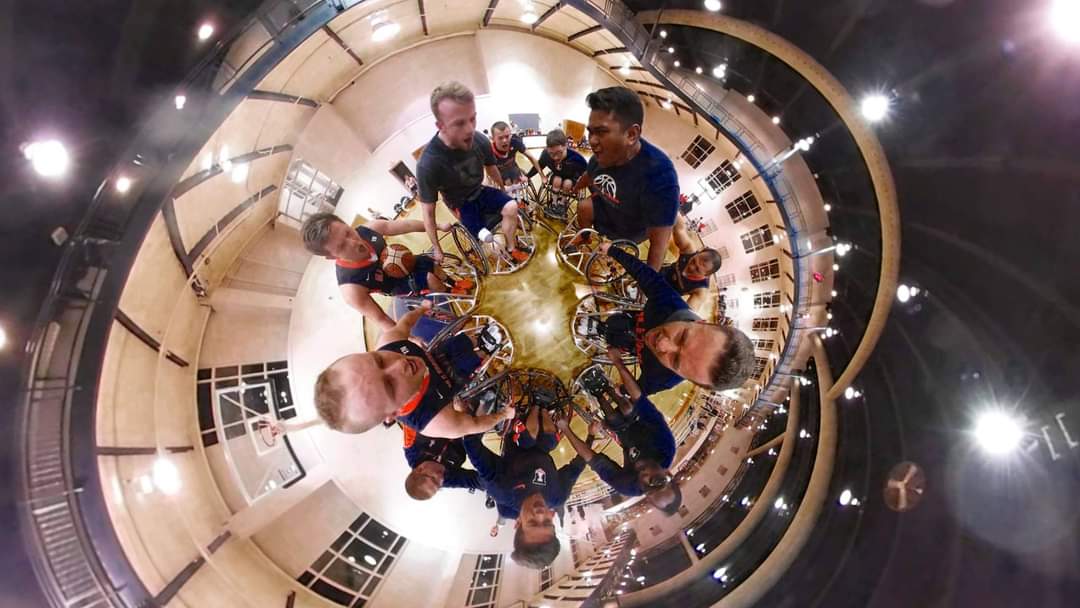
The men’s basketball team gets hyped up. (Photo provided)

Martinez Johnson joined the team in 2013 as a transfer student from Atlanta. It didn’t take long for the memories to start stacking up with his teammates.

“[We’d] just hang out and make sure we were doing our best to balance our social life, school and basketball,” Johnson said. “And we leaned on each other to make sure everyone was doing OK mentally as well.”

Just before the school year, Johnson recalls the team traveling to the 4H campground of Allerton Park for several memorable exercises. In what’s now a yearly tradition under Coach Buchi, the players wrote down their individual fears for the season before throwing them into a burning campfire.

“When I came in 10 years ago as a coach, that was one of the first things that I tried to do: have a bonding experience to learn about each other outside of basketball,” Buchi said. “And that’s what really bonds a lot of these guys for a lifetime, a comfortable place to be vulnerable as young men with our team.

“That bonding took a while to get there, but it just needed activities and locations to blossom.”

Jacob Tyree’s favorite memories with the team tend to revolve around food: morning rushes to Original House of Pancakes or Merry Ann’s Diner after long, physical practices, or cherished visits to Cravings, the Asian cuisine restaurant.

“It could be a really crappy practice, like maybe things just were not clicking on the court—coach is yelling at you for things, your teammates are yelling at you for things—and then you go out afterwards and it’s now a positive bonding experience,” Tyree said.

As the teammates graduated and dispersed across the country and the world, those relationships stayed strong. 

A random, gloomy day in the early weeks of the COVID-19 pandemic led Nong to check in with many of his old teammates. He’d been pondering ways to give back to the things “he truly cared about,” and Illinois neared the top of Nong’s list.

His calls gave way to proposals: “Would you want to contribute to a scholarship?”

After checking with DRES and the College of Applied Health Sciences advancement team, the groundwork was laid.

“Mak took the lead on all of that,” Gilbert said. “In fact, it was a great gift when they told me what they were doing. It gives a good example to our current students of paying forward and how to support those who come after you.”

The generosity didn’t stop with the scholarship, either. In the spring, program alumni used crowdfunding to finance customized, tailored suit jackets for the graduating seniors on the men’s and women’s wheelchair basketball teams.

“It was a surreal full circle moment to see my alumni, the guys that I coached, are now taking care of the players that I’m coaching now,” Buchi said.

For us to be able to give back and make things easier for the future generation, that’s our moral obligation: to make this place even better than it was for us.

Mak Nong

Illinois Class of 2017, wheelchair basketball player

Life After Basketball

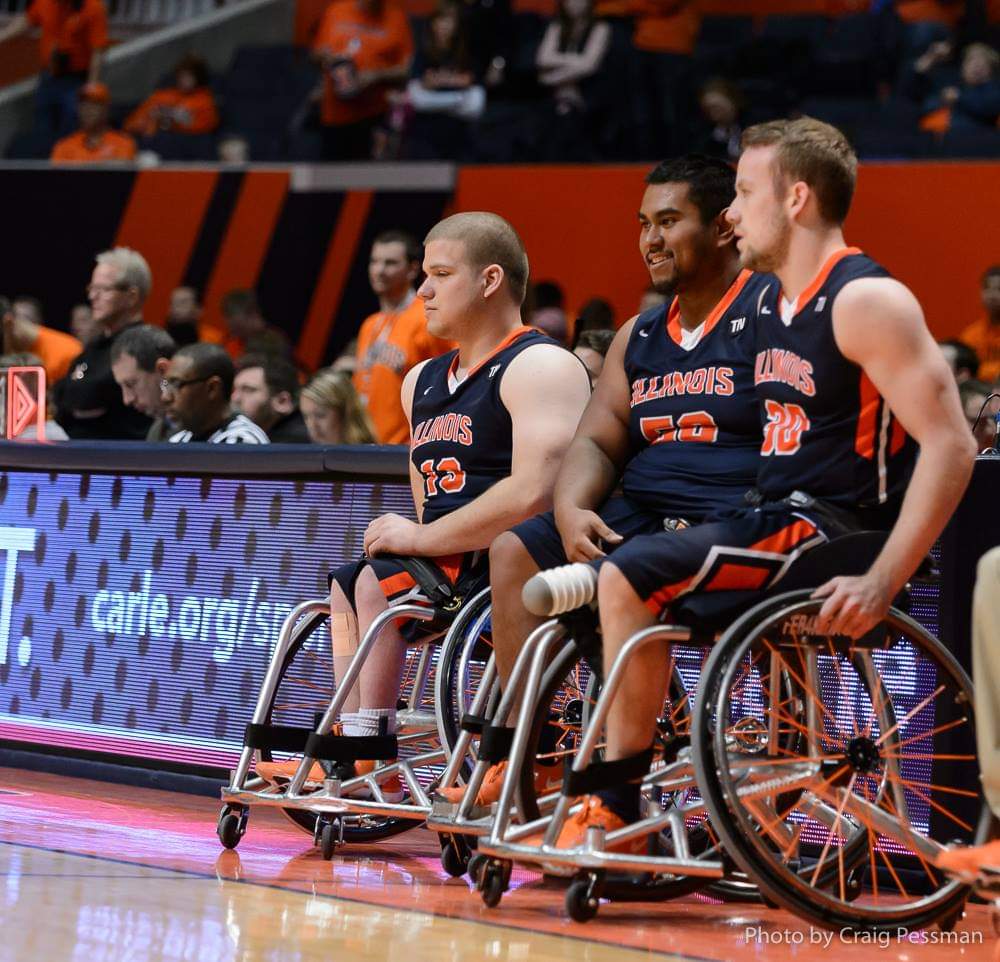
Mak Nong (center) prepares to check into the game. (Photo by Craig Pessman)

After graduating in 2017, Nong played professional wheelchair basketball in Europe for a spell, winning a league championship for LUC Handibasket in Lille, France. What stuck with him was the governance over the sport that was present overseas.

“To them, it was just sport. People without disabilities were playing wheelchair basketball and getting paid to do it,” Nong said. “So, I was thinking, ‘How do I spread this joy to people?’ Recreation is a big opportunity for that.”

Years after graduating, many members of the wheelchair basketball teams have stayed in the orbit of adaptive sports, committing time and effort to growing the scene in myriad ways.

Nong is a program manager for Great Lakes Adaptive Sports Association (GLASA) in Lake Forest, Ill., overseeing a wide range of sports programs—from football, tennis, track and field, swimming, soccer—suited to disabled athletes of all ages.

His journey truly began as a young boy pushing along his wheelchair in Los Cerritos Mall near Long Beach, Calif. Longtime coach Lisa Hilborn noticed Nong and asked if he’d be interested in trying wheelchair sports.

“I didn’t want to do it at all, I was freaking out, but then I went to a practice and I fell in love with it and kept going back,” Nong said. “I’m trying to spread the love she gave to me to other people.”

By the time he was a senior in high school, Nong was heavily recruited for wheelchair basketball. Coach Frogley’s pitch from the University of Illinois stood out from the pack.

“He stressed the importance of education, he catered to me as not only a person but an athlete as well. Just having that balance and showing that we can use sport as a tool to get to where our success is,” Nong said.

Tyree, too, has found a career in the field as training coordinator for Move United, a nonprofit committed to facilitating adaptive sports opportunities. He returned to his hometown of Roanoke, Va., to found the Roanoke Stars Wheelchair Basketball program.

Like other program alums, he repeatedly credits his coaches’ attention to detail for his professional success.

“We all saw ourselves as having our roles, and thought about how do we support each other to fill in the gaps where this is my weakness, but that’s your strength? When I’m struggling, I can lean on you a little bit more,” Tyree said. “I think that that mindset really fell into creating that excellence and trickled into what we do full-time.”

Alums who haven’t found careers in adaptive athletics have stayed around the game in some way, like Derek Hoot and Johnson, who started recording podcasts about it.

In the “Push Podcast,” the pair of alums discuss the happenings of U.S. wheelchair basketball and bring on established guests. The duo wants to break its hiatus soon, Johnson said.

“Wheelchair basketball has made a big impact on all our lives. Being able to find a sports community as individuals with disabilities is huge,” Johnson said. “I think that’s a big reason we have all stuck around adaptive athletics, is we know the change it made in our lives could be duplicated for the next generation.”

Buchi subscribes to the coaching axiom that a “successful season” can’t be determined until the players leave the program and grow into adults. Ten years in, those seeds are starting to sprout: Buchi is beginning to see talented recruits who’ve been coached by his own wheelchair basketball alums.

“The next step is happening, I have so many of my guys that are actually coaching and are giving back to juniors programs,” Buchi said. “They get to put a little bit of our Illinois stamp on these kids before I even get them.

“Our alumni need to think as soon as they graduate, how do I give back to the guys that are coming up next? Because there’s always going to be that next person that comes up and you want them to have the best experience possible.”

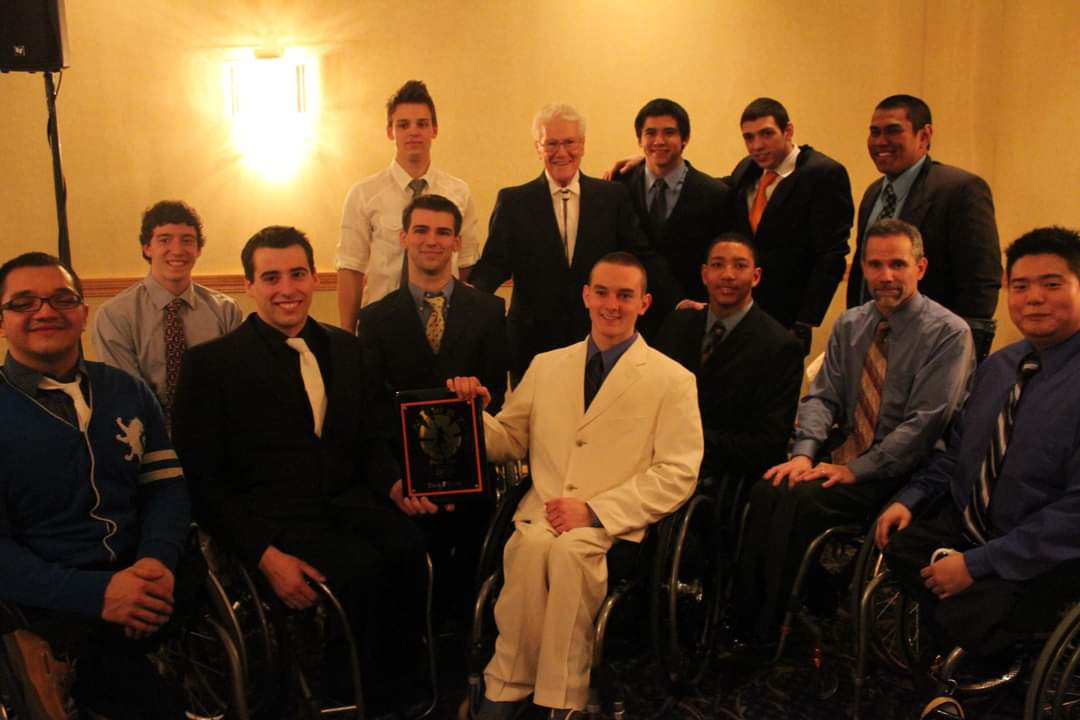
Teammates pose with Coach Mike Frogley (bottom row, second from right) and legendary accessibility pioneer Tim Nugent (second row, second from left).

Editor’s note:

To reach Ethan Simmons, email ecsimmon@illinois.edu.
 

Related news

College of Applied Health Sciences
110 Huff Hall
1206 South 4th Street
Champaign, IL 61820
(217) 333-2131