Sept. 30, 2026 | Vince Lara-Cinisomo
The event provided a vital forum for researchers and clinical audiologists to learn from each other
For someone wearing hearing aids, following a conversation in a noisy room can remain a daily struggle. For an audiologist, deciding which technology will best help that person can raise questions that research has yet to fully answer.
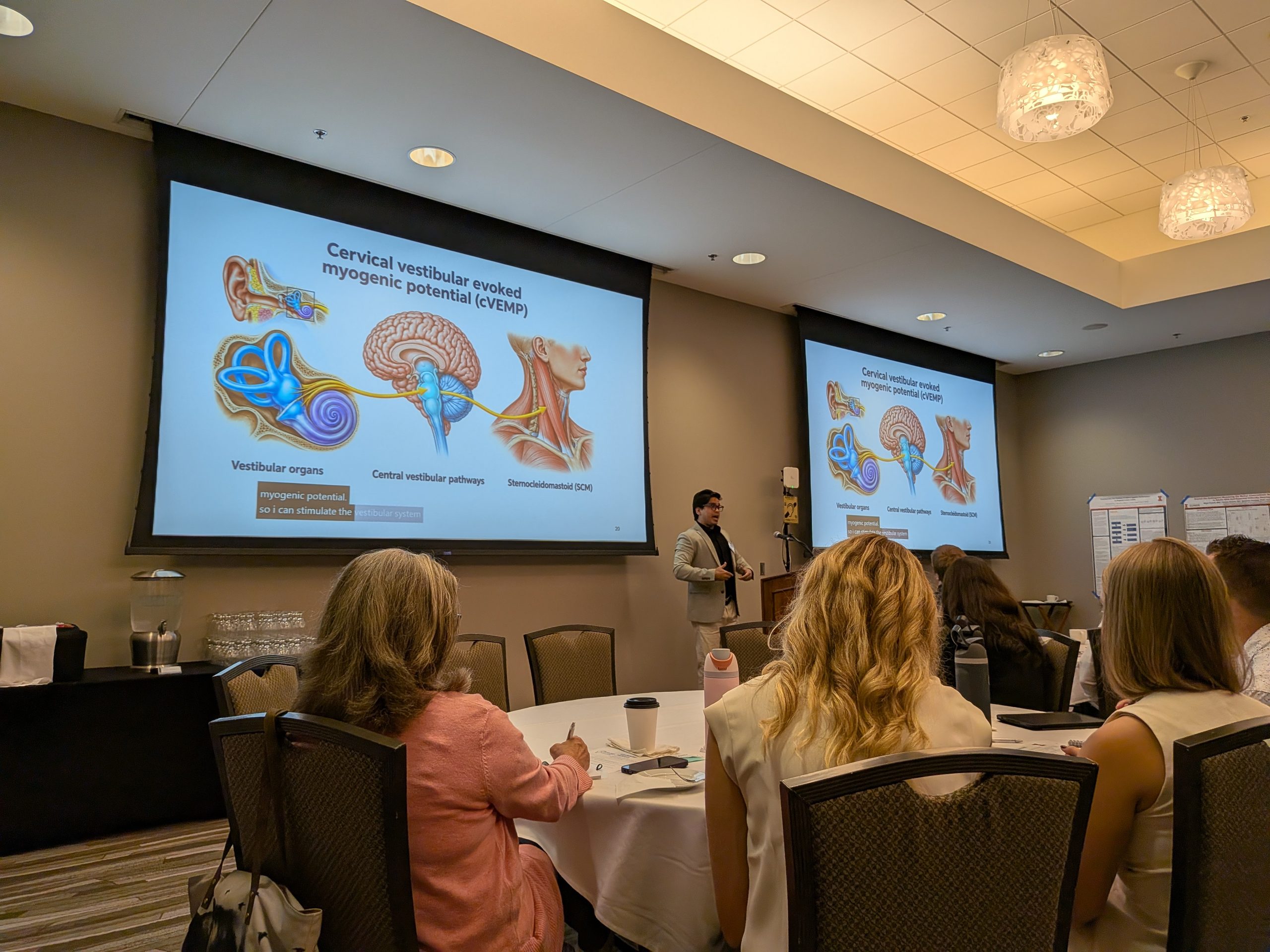
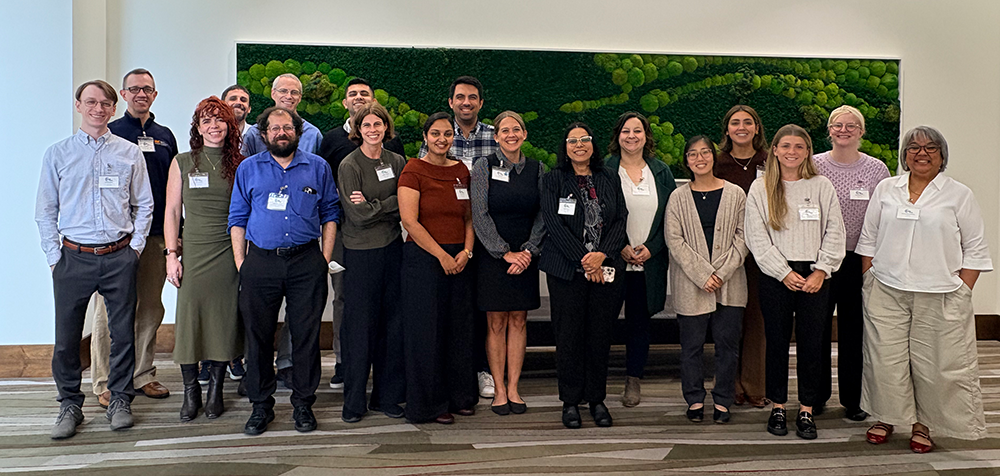
Those questions helped drive the Illinois Academy of Audiology’s downstate conference at the University of Illinois Urbana-Champaign, where practicing audiologists, researchers, students and alumni gathered to share knowledge and identify needs in hearing care.
Hosted by ILAA and coordinated by Sadie Braun, clinical assistant professor in the Department of Speech and Hearing Science and vice president of education at ILAA, the conference gave the department an opportunity to connect its research and teaching with the experiences of clinicians and their patients.
“At its core, this event provided a vital forum for researchers and clinical audiologists from across the state to come together, collaborate and learn directly from one another,” Braun said.
The goals ran in both directions. Clinicians could leave with practical strategies informed by research. Researchers could gain a clearer understanding of the problems clinicians encounter, helping guide studies toward questions that matter in everyday care.
The ultimate goal as hearing healthcare professionals is to be able to connect our patients again with their friends, family and loved ones and allow access to hearing healthcare for all.
Sadie Braun
Clinical Assistant Professor, SHSFor the department, that exchange linked several parts of its work: preparing students, supporting practicing professionals and pursuing research with potential to improve patients’ lives.
Holding the conference downstate also made continuing education more accessible to central Illinois audiologists who otherwise might travel to Chicago for such opportunities, Braun said.
The academy held its inaugural downstate conference in 2018. The event was interrupted by the COVID-19 pandemic and resumed at Illinois State University in Bloomington last year before Illinois took its turn as host in Urbana-Champaign. Braun hopes the downstate option will remain a tradition and will continue to grow.
The program covered approaches to assessing balance function, accessibility for children and adolescents, ways to better serve and test bilingual patients and much more. Together, those topics reflected the range of needs audiologists encounter beyond selecting and fitting hearing aids.
A roundtable discussion session led by Dan Fogerty and Ian Mertes, associate professors in SHS, brought the relationship between research and practice into focus.
Participants identified a shortage of testing and treatment materials for patients whose first language is not English. They also discussed the need for research-supported guidance on choosing hearing aid technology for individual patients, including which patients might benefit most from premium features.
Difficulty understanding speech in noise and complex environments emerged as another recurring concern, along with challenges connecting hearing aids to phones and other devices.
Braun said the department already has research underway addressing some of those concerns. The discussions could help researchers identify additional priorities and develop guidance clinicians can use.
Faculty presentations also introduced work in areas where patients’ needs outpace established treatment options.
SHS Professor Fatima Husain shared research on hyperacusis, or reduced tolerance for everyday sounds, and misophonia, in which particular sounds can provoke intense reactions. Braun said sharing that work was especially valuable because research in those areas is relatively new and treatment options are not well established.
Students had their own opportunity to connect research with professional practice.
Participants from Illinois and four other in-state universities presented 12 posters. Illinois presenters included undergraduate, master’s and doctoral students, giving researchers at different stages of their education experience explaining their work to practicing audiologists and faculty.
Faculty mentors helped Illinois students conduct their research and prepare their posters. Presenting allowed students to take ownership of their contributions while benefiting from that guidance, Braun said.
The exchanges offered feedback students could use to reflect on their research, along with practice speaking confidently to a professional audience. Student poster presenters received free registration, allowing them to experience the broader conference without that expense.
Hosting on campus also reduced the travel time and costs that can accompany presenting research elsewhere.
For alumni, the conference offered a return to the department and a chance to renew relationships that support clinical education.
Braun reconnected with Julie Wirth, who supervised her during her fourth-year externship at ECHO in Urbana. Wirth has continued supervising Illinois students, Braun said. Alumna Tina Gonzales Childress, who has also taught in the department, presented at the conference.
Current and former external placement supervisors attended alongside graduates working in the region, underscoring how relationships formed through the department continue into professional practice. Those connections also give students access to the field’s working community.
The conversations are expected to extend beyond campus. Braun said findings from the roundtable will be shared in the academy’s newsletter, giving members access to the needs and questions participants identified.
Greater involvement in the statewide organization, she said, can strengthen the university’s connections and its role in advancing audiology across Illinois.
For Braun, the purpose behind those connections comes back to patients: helping people participate in conversations, maintain relationships and gain access to hearing care.
“The ultimate goal as hearing healthcare professionals is to be able to connect our patients again with their friends, family and loved ones and allow access to hearing healthcare for all,” she said.
Editor’s note:
To reach Sadie Braun, email svojak@illinois.edu.
Share on social