Anna Posbergh she learned to connect sport with broader questions about health
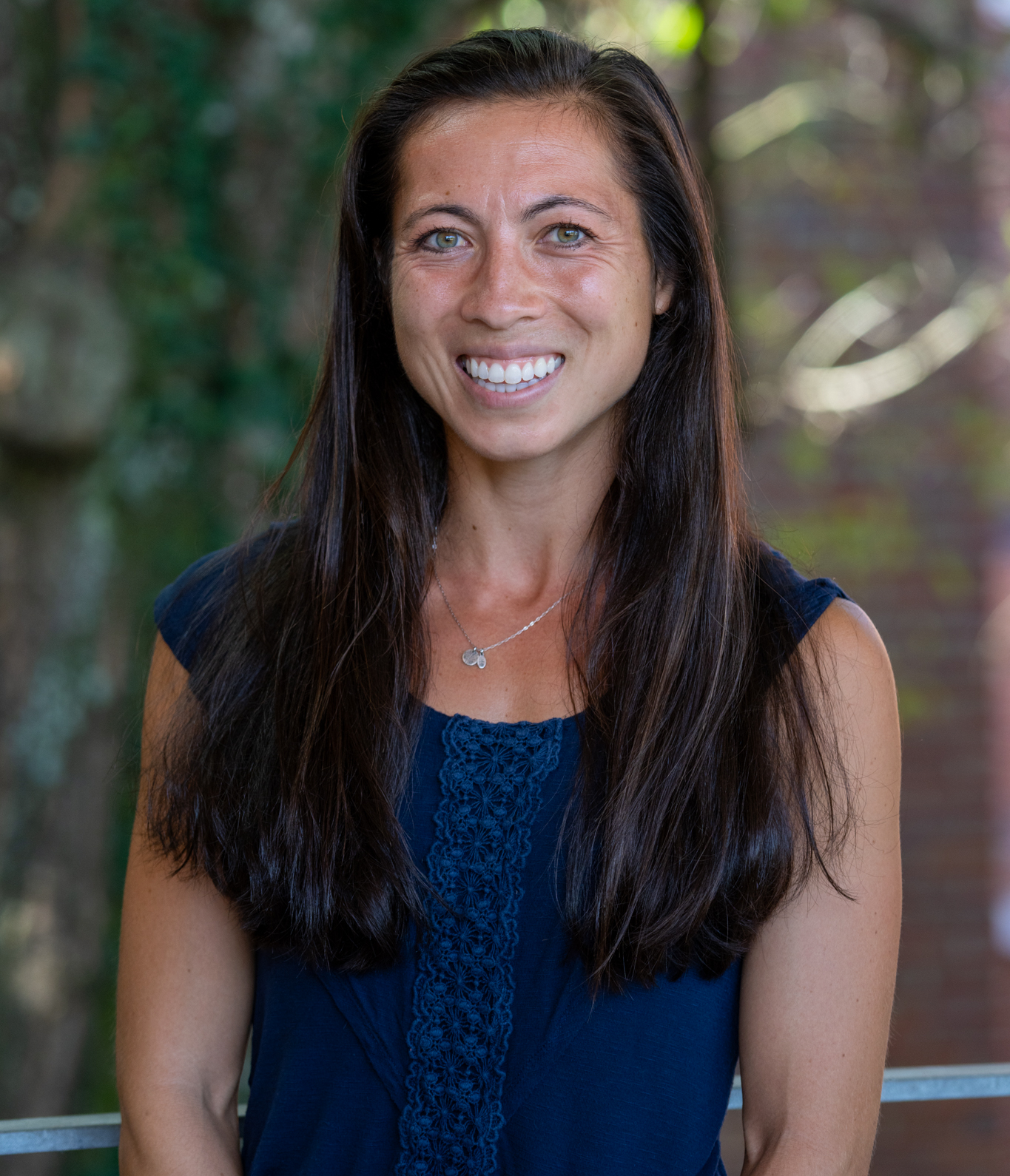
Anna Posbergh came to the University of Illinois from Florida State University (Photo provided)
When Anna Posbergh studies sport, she isn’t focused on the final score.
She’s interested in something less visible but just as influential: the rules that determine who gets to play, how those rules are written and why decision-makers arrive at the conclusions they do.
This fall, Posbergh joins the Department of Recreation, Sport and Tourism at the University of Illinois Urbana-Champaign as an assistant professor, bringing an interdisciplinary approach to sport policy that blends public health, governance, media studies and critical sport scholarship. Her work examines how evidence is selected, interpreted and translated into policies that shape opportunities for women athletes and the broader sport landscape.
For Posbergh, arriving at Illinois represents more than a new faculty appointment. It’s a return to the kind of academic environment where she believes her work can have the greatest impact.
“I truly feel most at home in a university college that is health science-focused,” she said. During her academic career, she has worked across colleges of education, liberal arts, humanities and public health, experiences that reinforced her belief that understanding sport requires perspectives from multiple disciplines.
That interdisciplinary foundation began during her doctoral studies in kinesiology at the University of Maryland, where she found herself immersed in a public health environment. Rather than viewing sport strictly through competition or performance, she learned to connect it with broader questions about health, community well-being and social systems.
Those ideas continue to shape both her research and teaching.
Before coming to Illinois, Posbergh spent three years as a faculty member at Florida State University. Although she enjoyed her work there, Illinois offered something she found difficult to ignore: a culture known for collaboration.
She was drawn by the university’s research reputation and membership in the Association of American Universities, but she says it was the people who ultimately convinced her.
“The culture in Recreation, Sport and Tourism in particular has a reputation, even outside Illinois, for consisting of brilliant individuals who wholly care about making the world a better place, becoming the best intellectuals and scholars they can be, and building each other up,” she said.
One lesson from her own mentors has stayed with her throughout her career: choose collaboration over competition. She sees that philosophy reflected throughout the College of Applied Health Sciences, where faculty members value interdisciplinary partnerships and practical scholarship.
That emphasis on application also aligns closely with her own goals. Whether communicating with students, policymakers, journalists or sport organizations, Posbergh wants her research to extend beyond academic journals and become useful to the people making decisions that affect athletes and communities.
In broad terms, Posbergh describes her research as examining the governance and representation of women athletes.
More specifically, she studies policymaking in sport, especially policies regulating women’s competition and athlete eligibility, asking which evidence policymakers choose, how they interpret it and why they arrive at particular conclusions.
Those questions have become increasingly relevant as debates surrounding women’s sport, athlete eligibility and transgender participation have moved from academic conferences into legislatures, governing bodies and national headlines.
Although policy remains her primary focus, Posbergh increasingly studies media and public opinion as well.
That’s because policymaking, she argues, isn’t simply a top-down process.
Public narratives, media coverage and societal beliefs often influence how scientific evidence is understood long before a policy is formally adopted. Decision-makers bring their own assumptions and interpretations into the process, making governance as much about people as documents.
She summarizes her work with characteristic humor.
“I read a lot of bylaws, laws and bills,” she said, “especially relating to girls’ and women’s sport and female/transgender eligibility, and I question how and why they arrived at that outcome.”
Posbergh’s path into sport policy began long before graduate school.
As an undergraduate at the University of Minnesota, she interned with the Tucker Center for Research on Girls & Women in Sport. The experience introduced her to research while exposing her to issues surrounding gender equity in athletics.
She describes that opportunity as career-changing. Her academic interests also reflected an unusual combination of disciplines. She studied English, mathematics and kinesiology, an academic mix that later proved invaluable when she encountered scholarship examining testosterone regulations in elite women’s sport.
The topic demanded quantitative reasoning, critical analysis and an understanding of sport, bringing together all three areas of her undergraduate education. She immersed herself in the literature, eventually building her dissertation around what she called “protective policies”—regulations designed to protect women’s sport through rules governing athlete eligibility, health and participation.
Posbergh argues that competing sport policies often claim to be guided by science while relying on different bodies of research or interpreting similar findings in dramatically different ways.
As public attention to these issues expanded dramatically over the following years, her research became increasingly timely.
One of Posbergh’s central research questions asks a deceptively simple question: What counts as evidence?
In her work examining transgender athlete policies, for example, she studies how policymakers select scientific literature to support predetermined policy approaches. Some policies emphasize research they interpret as demonstrating competitive advantages, while others prioritize public health evidence highlighting the benefits of sport participation and the harms associated with exclusion.
Her research has also compared how scientific studies are represented in policies and systematic reviews.
She says her findings raise broader questions about policymaking integrity, particularly when research is cited in ways that do not accurately reflect the original scientific conclusions. Although her work often centers on transgender athlete policies, she believes the implications extend much further.
For Posbergh, ensuring that policies accurately represent evidence matters not only for ethical governance but also for every athlete affected by those decisions.
Illinois offers opportunities to expand that work through collaboration. Given her focus on governance, Posbergh sees natural partnerships with scholars in law, political science and public policy, particularly around questions involving legal precedent, policymaking and regulation.
She also hopes to work closely with Illinois’ Division of Intercollegiate Athletics. Because athletic departments ultimately implement many of the policies she studies, collaborating directly with practitioners can help ensure research remains practical, relevant and accessible to those responsible for putting policy into action.
While her research tackles nationally debated issues, Posbergh says her goals in the classroom are straightforward. She doesn’t want students to memorize her conclusions.
Instead, she wants them to develop the habits of mind necessary to evaluate evidence, understand competing viewpoints and explain why they hold their own beliefs.
“I believe my responsibility is not to tell students what to think,” she said. “It’s my responsibility to help them understand why they believe what they believe.”
She hopes students leave her classes prepared to analyze complex issues thoughtfully, engage respectfully with differing perspectives and become ethical leaders within sport organizations and beyond.
As Posbergh begins her career at Illinois, she’ll continue asking difficult questions about some of sport’s most contested issues. But whether she’s studying policy, mentoring students or collaborating with colleagues across campus, her objective remains consistent: to better understand how evidence becomes action, and how thoughtful scholarship can help build stronger, more equitable systems for sport.
New Speech and Hearing Science instructors Lesli Williams and Jerri Seremeth are both “native signers”—they grew up learning American Sign Language as their first language and primary mode of communication. They joined the Department of Speech and Hearing Science this fall, and teach classes remotely.
Lesli Williams (Provided)
Which classes are you teaching this year?
Jerri: I’m teaching two ASL III (SHS 321) courses and re-designing SHS 222: Language & Culture of Deaf Communities.
Lesli: This year, I’m teaching SHS 121: American Sign Language I, SHS 221: American Sign Language II and SHS 321: American Sign Language III.
Why did you want to become an ASL Instructor for the U. of I.? What attracted you to the role?
Jerri: It’s a great opportunity to teach at U. of I., which has a well-known and highly respected team in the U.S. I come from a Deaf family and love sharing my authentic background.
Lesli: I was drawn to the position because of its commitment to inclusive education and strong support for language and cultural diversity. The opportunity to teach ASL at a university level allows me to share the richness of Deaf culture with a broader audience and help bridge communication between Deaf and hearing communities.
Tell us about your life and career experience. How did you become an instructor of American Sign Language, and where has that taken you so far?
Jerri: I began teaching ASL in 2014 at George Washington University in Washington, D.C.
Jerri Seremeth (Provided)
Lesli: My journey with ASL started at the age of 2, I learned from a Deaf Mentor, Bob Laughna, self-taught books and old VHS signing videos, and learned signs from the Deaf Community. I grew up in only-mainstream education with no Deaf programs in my elementary, middle and high school. I graduated from Negaunee High School in 2005. I graduated from Northern Michigan University with associate’s degree in cosmetology, which I worked in salons for 15 years.
Over time, I developed a deep appreciation not just for the language, but for the culture and history of the Deaf community. After finishing up my cosmetology journey, I pursued a bachelor’s degree in Deaf Studies from Gallaudet University in 2015 and Masters in Adult Education and Training, specializing in Technology from University of Phoenix in 2017. I eventually began teaching in 2017 at my alma mater Northern Michigan University while pursing my master’s with University of Phoenix at the same time.
Since then, I’ve taught in various settings—Northern Michigan University, where I did face-to-face and online teaching from 2017 to 2025, and Columbia College, where I taught online for the last two years, and I just started my new teaching career here at University of Illinois, Urbana-Champaign this semester —and have loved seeing students grow in both skill and cultural understanding.
If you had to choose, what is the most rewarding part of being an ASL instructor for you?
Jerri: The most rewarding part is being able to teach my language and culture, giving students exposure that helps them understand us better.
Lesli: One of the most rewarding parts of teaching ASL is witnessing students make meaningful connections—not just linguistically, but culturally. When students begin to understand Deaf culture and the importance of visual language, it opens their eyes to a whole new way of experiencing communication.
For those who haven’t taken any ASL classes, or those who aren’t familiar with the Deaf community, what do you think they would find the most surprising about American Sign Language or how it’s taught?
Jerri: They might be surprised by how important facial expressions are—they make up about 70% of our language.
Lesli: Many people are surprised to learn that ASL is a complete and complex language with its own grammar and syntax completely separate from English. They’re also often surprised by how interactive and visual ASL classes are—learning through movement, facial expressions, and storytelling is very different from traditional classroom learning.
Is there anything else you’d like folks in the department to know about you?
Jerri: My husband and I have eight children together. Our youngest is an exchange student from Africa, and all of our children are Deaf. Also, hiking is my favorite escape!
Lesli: I’m passionate about creating inclusive and engaging spaces for all learners. I also love collaborating with others in the department and beyond to promote awareness of Deaf culture and language. Outside the classroom, I enjoy walking, hiking, camping, playing with my beautiful daughters—ages 6, 5 and 2 years old—and attending Deaf events and traveling, which often feed back into my teaching.
Speech and Hearing Science Assistant Professor Mariana Mendes Bahia, Ph.D. and CCC-SLP, is an expert on swallowing physiology, respiratory-swallowing coordination, and therapeutic strategies to alleviate swallowing disorders, called dysphagia. She joined the College of Applied Health Sciences at the University of Illinois Urbana-Champaign in fall of 2024, and leads the Neuro + Swallowing Research Lab.
Mariana Mendes Bahia. (Photo by Ethan Simmons)
How was your first year at the Department of Speech and Hearing Science here at AHS?
Mariana: My first year was a period of growth and adaptation as I became familiar with the university and the Department of SHS. I have been fortunate to receive consistent support from colleagues and departmental staff, which greatly eased this transitional period and helped me navigate new academic and administrative environments.
This year was also dedicated to establishing my laboratory, the Neuro+Swallowing Research Lab, and laying the foundation for my future research program. Setting up the lab allowed me to plan my next steps, define research priorities, and begin shaping a trajectory that aligns with my long-term academic goals, while learning to adapt to the challenges and opportunities of a new institutional setting.
When did you first become interested in studying swallowing physiology and disorders, and why have you stuck with that topic in your research?
My initial interest in swallowing developed during my specialization in speech-language pathology in neurology, when I had the opportunity to conduct swallowing assessments and provide treatment for individuals with swallowing disorders, known as dysphagia, related to neurological diseases.
I was fascinated by the complexity of the swallowing process—something we do countless times a day without even thinking about it. What intrigued me most was how such an automatic act relies on the intricate coordination of more than 30 muscles (and many other structures), several nerves, and brain structures. The interaction among all the swallowing structures, along with the brain and breathing, felt like solving puzzles, and this challenge sparked my curiosity and passion for learning more about the mechanisms behind swallowing and how to best support patients with these difficulties.
As a clinically trained speech-language pathologist, I have observed the devastating impact of swallowing disorders on individuals and their families. This experience has motivated me to integrate my clinical expertise and research background in the investigation of swallowing physiology, particularly the interaction between brain-swallowing and breathing-swallowing, to advance rehabilitation approaches that enhance swallowing ability, improve patient care and enhance the quality of life for individuals with dysphagia and their families.
Bahia in her office at the Speech and Hearing Science building.
You’ve described dysphagia as an “invisible” disorder. For the folks you’ve worked with, how does dysphagia impact their quality of life?
Swallowing is a critical process for life. We need to eat and drink for adequate nutrition and hydration. However, we also eat and drink for pleasure and comfort. Eating is a highly social activity. Therefore, the impacts of swallowing disorders or dysphagia are not restricted to the physical health domain, such as inadequate food or liquid intake, resulting in malnutrition, dehydration, or unintended weight loss.
Individuals with dysphagia face psychological, emotional, and social impacts, including fear of eating, embarrassment, loss of enjoyment when they cannot eat or drink certain foods, and reduced social participation in cultural events or family gatherings where eating is central. The limited ability to share a meal may weaken family and community bonds.
Which therapeutic interventions can work for those living with dysphagia?
Therapeutic interventions for dysphagia aim to improve swallowing safety—preventing food or liquid from entering the airway—and efficiency: ensuring adequate passage of food from the mouth to the stomach. Importantly, interventions are tailored to individual needs and target specific impairments evident in each person. Interventions may include compensatory strategies, such as head adjustments and dietary modifications, to reduce the risk of airway invasion, as well as rehabilitative exercises to strengthen the swallowing muscles, improve the movement of swallowing structures, and enhance the coordination of the swallowing process. Additionally, rehabilitative exercises can be paired with other therapeutic modalities, such as neuromuscular electrical stimulation and brain stimulation.
Megan Huibregtse, Ph.D., is a first-year assistant professor in the Department of Health and Kinesiology, but she’s no stranger to the Midwest. Huibregtse obtained her bachelor’s in neuroscience and a Ph.D. in human performance from Indiana University, Bloomington.She worked as a postdoctoral fellow at Emory University before joining the AHS faculty this fall.
Megan Huibregtse (Fred Zwicky / University of Illinois Urbana-Champaign)
Talk about what drew you to the College of AHS. Why did you choose to come to Illinois?
Megan: I was looking for an environment where I could connect with a vibrant research community and work directly with undergraduate and graduate students. While my work spans multiple disciplines such as clinical neuroscience or psychiatry, traumatic brain injury is one of the most common neurological conditions (Maas et al., 2022 The Lancet Neurology), and there’s a real public health concern about acute and long-term neurobehavioral effects.
So, AHS’s mission of improving health and well-being across the lifespan is a great fit for my research program. Plus, the neuroimaging resources here are unparalleled, and I can’t wait to start using the 7 Tesla scanner.
(The University of Illinois and Carle Health co-own a 7 Tesla MRI scanner, which provides a huge step up in quality for brain imaging.)
You’ve described yourself as ‘obsessed with the brain.’ When and how did your fascination with neuroscience begin?
I was unlucky enough to get two concussions from playing volleyball when I was younger, and the second led to the discovery of a brain tumor in my left frontal lobe. It might have been a coincidence, but the tumor was right next to where I hit my head when I got the first concussion.
Fortunately, the surgery to remove it went well, and I’ve been fascinated by the brain and what happens in response to injury ever since. Having personally gone through many hours of magnetic resonance imaging, I learned what a powerful tool it is to non-invasively examine the brain.
Within the area of traumatic brain injury, you’ve already investigated a wide variety of topics, from sub-concussive head impacts in high school football to head trauma from intimate partner violence. How do you generally describe your research interests?
That’s right—I’ve been fascinated by various aspects of neurotrauma. In general, I would say that my interests revolve around comprehending how our experiences (brain injuries, traumatic events, and when they occur simultaneously) impact our brain health. I consider brain health in terms of both structural integrity and function.
What are your priorities as you’re getting started here at Illinois?
This year, I’m working on setting up my research program—recruiting graduate students and undergraduate research assistants, submitting my protocols to the Institutional Review Board, and getting acquainted with the excellent neuroimaging resources at the Beckman Institute.
How has your experience in Urbana-Champaign been so far? Is there anything you’d like your colleagues to know about you?
It’s been great so far! Having completed my degrees at another Big Ten school (Indiana), Urbana-Champaign feels familiar already. Outside of work, I love to cook and bake for my family and friends.