Oct. 21, 2026 | Vince Lara-Cinisomo
Chance encounter between teachers conjures robots as companions.
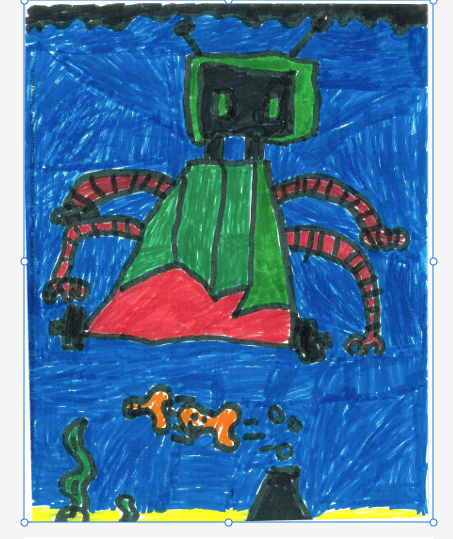
When Abbie Werner’s students were asked to imagine a robot for their homes, some of them wanted a digital pal to help with homework. Others wanted someone to cook for them. But as she read their descriptions, Werner kept finding a wish that had little to do with getting chores done.
They wanted a friend.
Someone to throw a football with. Someone to listen to music or watch television with. A robot they could talk to after school.
Werner was struck by “how many kids created or wanted robots who would basically be a friend to them.”
For the Chicago Public Schools special education teacher, a writing assignment had become a way to learn something tender about the children in her classroom. And it might never have happened without a conversation on a 15-hour flight home from Hong Kong.
Werner was returning from Cambodia, where she had visited close friends from college. Sharing an aisle on the plane was Wendy Rogers, the Shahid and Ann Carlson Khan Professor of Applied Health Sciences at the University of Illinois Urbana-Champaign, returning from giving a keynote address at the International Conference on Gerontechnology in Hong Kong.
They found something to talk about almost immediately: Werner’s younger brother studies engineering at Illinois, and she had visited him for homecoming. Then Werner mentioned her own teaching work, and Rogers described her course project involving children and robots. Rogers’ own niece, who had helped with the project previously, was on maternity leave, and Rogers was looking for another public school teacher to participate.
Werner was interested. She also hesitated.
Her students have a wide range of learning and communication needs. Some are still developing foundational reading skills; others read close to grade level but need additional support with social interactions. She wondered whether they could deliver what a university class needed.
Rogers made room for them. Werner recalled how open she was to adapt the project to whatever the children could do. Follow-up conversations, including a Zoom meeting with Rogers, turned the airplane introduction into a plan.
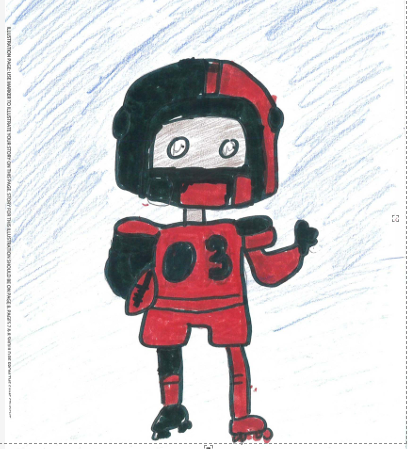
That chance meeting became a collaboration involving 30 Chicago schoolchildren, including 12 special education students and a fourth-grade general education class. The children would imagine, describe and draw robots for their homes. Students in Rogers’ Health and Kinesiology 400 course, Human-Robot Interaction for Health & Wellness, would use the written descriptions to make drawings of their own.
The children would supply ideas. The college students would have to listen closely enough to bring them to life by both drawing them and providing more details about the robot’s functions. Their assignment was to learn about user-centered and participatory design methods, and in this case, the user was an elementary school child.
That focus on everyday needs also shapes Rogers’ work as director of the McKechnie Family LIFE Home, a cutting-edge research center focused on innovations in home environments. The facility recreates a typical home of today while providing space to develop the smart homes of tomorrow, with the goal of helping people of all ages and abilities live fuller, healthier and more autonomous lives.
The LIFE Home includes a two-bedroom home, an attached garage, multipurpose research and collaboration rooms, and outdoor areas, with capacity for community engagement. Research and development there explores a range of in-home activities to improve quality of life and independence for people of all ages and abilities.
Robotics are a frequent part of Rogers’ work, and the LIFE Home has several robots, including Stretch, PARO, Jibo, ElliQ, and Moxie. The classroom assignment gave children a chance to imagine the roles robots might play in their own homes.
For Werner, the robot project offered plenty of ways for children to join in. Some drew inspiration from movies, television shows or technology they had seen in their neighborhoods. Others invented something entirely new. One student with learning disabilities created a robot modeled after Clifford the Big Red Dog.
A familiar character gave him a place to begin. He could draw his big red dog and contribute words about it, taking his place in the project alongside classmates who could fill a page with their inventions.
“There’s a lot of entry points for kids,” Werner said.
The assignment came during the opening weeks of school. For children new to her classroom, it was a first chance to get to know one another and learn how Werner would help them put their thoughts into words.
She initially asked them to think about problems in their communities and how robots might help. When that proved difficult, she narrowed the task. They brainstormed and used their senses to describe what a robot would look, smell or feel like.
Rogers asked her to avoid showing examples from earlier projects to enable the children to be creative with their ideas. Werner usually provides a model for writing assignments, but this time the children would develop their own versions. Some wrote a page. Others used sentence starters to help them begin.
Werner’s students have individual collections of common words, classroom resources connecting sounds and letters, and accommodations such as speech-to-text. Some dictate an idea that an adult writes on a whiteboard for them to copy. Support helps them keep going when getting an idea onto the page is difficult.
“I had hoped that they would see how special that is, and how important it is to do that for people.
Abbie Werner
Chicago Public Schools teacher“I want them to be able to work independently and not feel like they’re just waiting for someone to write things down,” Werner said.
Perfect spelling could wait. She wanted them to make something they could read, understand and feel proud of.
What they wrote gave her a window into their lives. Along with the requests for companionship, Werner noticed how often children gave their robots features like their own. She had told them the robots did not have to look human. Still, they imagine very human features, even specfically requesting a robot that mirrored their own characteristics.
“They’re looking for people to solve problems that look like them, too,” Werner said.
For Rogers’ students, those details were instructions worth attending to. Her course description explains that the children were the users whose wishes should guide the design. The college students drew robots to match the written descriptions and explained what they would do. The classes’ drawings were then compared.
“This type of iteration is a hallmark of user-centered design,” Rogers said.
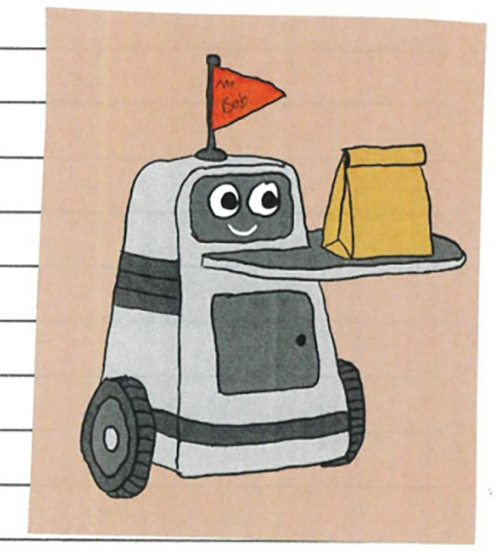
Werner added transcriptions where needed and appreciated the care the college students took to understand what the children meant.
When their drawings came back, she presented them beside the children’s pictures. Each child had a chance to share a description before seeing how someone else had interpreted it.
Some had thought the college students were going to build working robots. Werner had to explain that they would receive drawings instead. Even so, the room was hard to quiet.
“Then I would put the picture up and they just went crazy,” she said.
They were shouting with excitement as each new picture appeared. Werner described them as “really, really joyful.”
She hopes to work with Rogers again and already has ideas for another collaboration. But she also hopes the college students understand what their work meant to the children who had worked so hard to share their imaginations.
The children’s joy, she said, came from seeing other people care about their ideas and work to put life into them. That was a lesson she hoped would stay with the students as they went on to help others.
“I had hoped that they would see how special that is, and how important it is to do that for people,” Werner said. She is looking forward to visiting the McKechnie Family LIFE Home next time she comes to campus.
The students in Rogers’ course enjoyed the opportunity to engage with the children’s ideas.
“I told them that had the opportunity to inspire 30 children to think about the potential for robots in their lives. They put a lot of thought and care into their assignment that went far beyond just getting a grade,” Rogers said.
Editor’s note:
To reach Vince Lara-Cinisomo, email vinlara@illinois.edu.
Share on social