July 22, 2026 | Vince Lara-Cinisomo
After 35 years, Steve Petruzzello leaves the University of Illinois the same way he built his career: putting people first
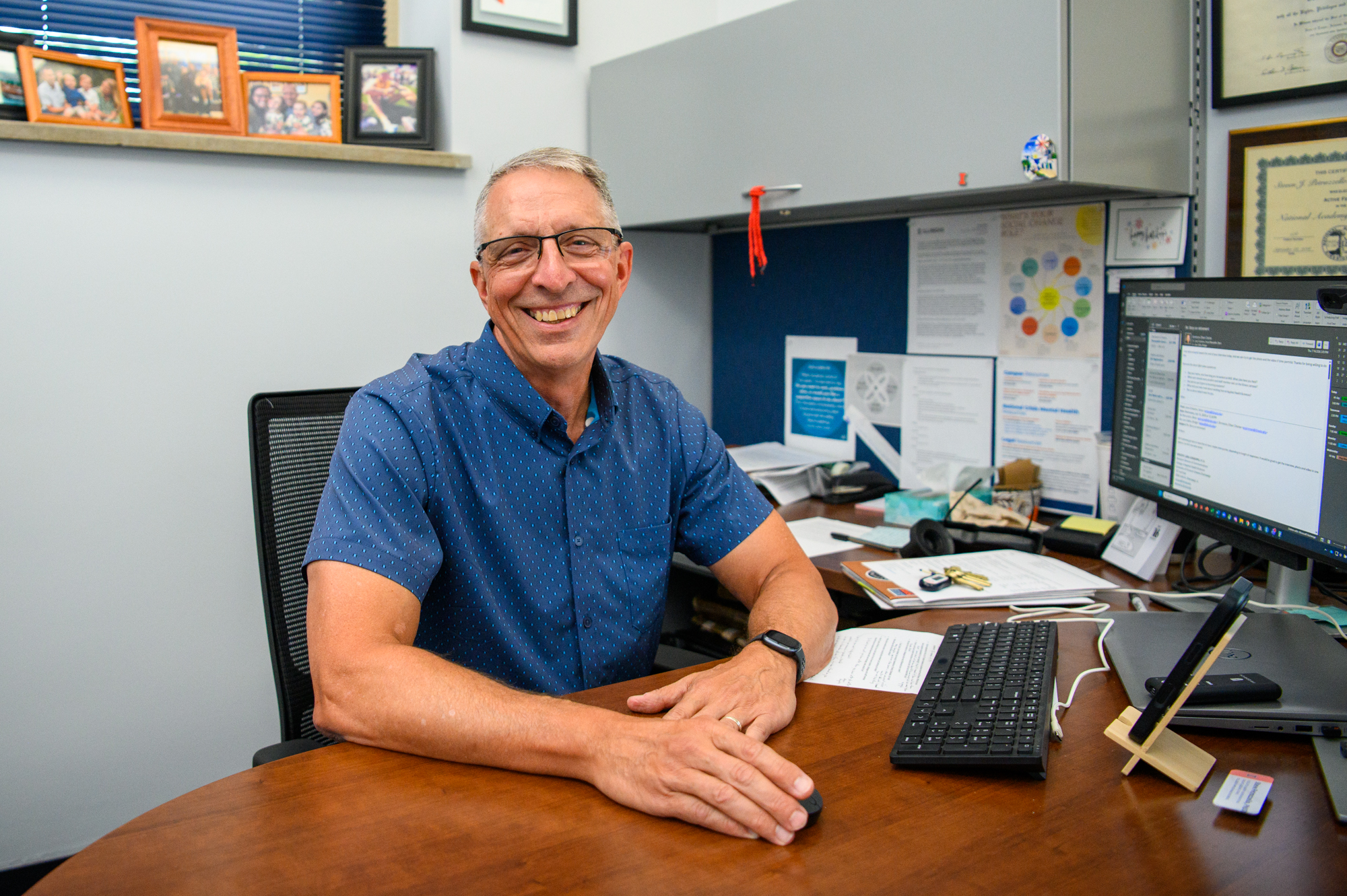
There are easier ways to measure an academic career.
You can count publications. Research grants. Awards. Citations. National rankings. For Steve Petruzzello, those numbers are certainly impressive. For 35 years at the University of Illinois, the Health and Kinesiology professor helped shape the scientific understanding of how physical activity affects mental health, conducted influential research that improved firefighter safety, mentored generations of graduate students and earned a place on the University’s List of Teachers Ranked as Excellent more than 60 times.
But ask Petruzzello what mattered most, and he’ll answer with a single word.
People. The students who walked into his classroom every semester. The graduate students whose ideas he encouraged—even when those ideas challenged conventional wisdom. The colleagues who opened laboratory doors for a young professor before they had any reason to trust him.
Those relationships, more than any publication or promotion, became the defining thread of a career that unfolded in ways he never expected.
“When I came here,” said Petruzzello—who came to what was then known as the Department of Kinesiology in 1991—“I knew I’d set up a lab, get my research started and begin teaching. I don’t think I could have ever predicted the twists and turns it would take over 35 years.”
Petruzzello, known to students as “Dr. P.” and to most others as “Steve P.,” never had a rigid vision of where his career was headed. Looking back, he believes that may have been one of his greatest strengths.
“I’ve always tried to remain open to possibilities,” he said.
Sometimes those possibilities appeared in remarkable acts of generosity.
Fresh off earning his Ph.D. from Arizona State University, Petruzzello arrived at Illinois with little more than ideas and ambition. Established faculty in the Psychology Department—many of them nationally recognized researchers—offered him access to their laboratories and equipment.
“They didn’t know me from Adam,” he said. “And they were willing to let me do anything I wanted.”
Other opportunities arrived by pure chance.
One afternoon, exercise physiology professor Jim Misner mentioned he was conducting research with firefighters. Petruzzello immediately recognized a connection to his own work studying body temperature and the psychological effects of exercise.
A hallway conversation became a decades-long research partnership that would eventually influence firefighter training across Illinois.
For Petruzzello, that became a lesson he carried throughout his career: some of the most important moments aren’t carefully planned. They’re recognized.
From Olympic Archers to Everyday People
His path into research was equally unexpected. Growing up in Wisconsin, Petruzzello was always active. Summers were spent outside, not in front of screens. Football games with his brothers continued through snowy winters. Later came competitive swimming.
The turning point arrived during college. A teammate developed a peculiar pre-race ritual. Before every race, he disappeared into a dark hallway, lay quietly beneath a towel for several minutes, then emerged to dominate his event. Petruzzello couldn’t stop wondering why.
That curiosity led him into sports psychology, graduate school at Arizona State and eventually research on elite athletes, including members of the U.S. Olympic archery program. His team measured brain activity and heart function while elite archers shot arrows, searching for the mental ingredients behind world-class performance.
The work fascinated him. But eventually another question seemed even more important.
Instead of asking how to help elite athletes improve by fractions of a percent, what if researchers could understand how exercise affected everyone?
That realization redirected his entire career toward studying the psychological benefits of physical activity—a field that has since become central to public health.
“It was like, ‘This is what I’m going to do,’” he said.
Science with Immediate Consequences
Many researchers hope their work eventually changes lives. Petruzzello got to watch it happen. Working alongside the Illinois Fire Service Institute, his laboratory studied how firefighters respond to extreme heat, dehydration and physical stress during training exercises.
Initially, researchers simply evaluated whether a structured physical training program improved fitness. It did. But the partnership quickly expanded into something much larger. Petruzzello’s team measured core body temperature, hydration, heart rate and cognitive performance during live-fire training scenarios. Their findings revealed how heat stress could influence decision-making, reaction time and safety.
The practical implications were immediate. Departments adjusted hydration practices. Training evolved. Better information led to better decisions for firefighters entering dangerous environments.
“We’re finding things we can give back to these folks,” Petruzzello said, “and they can use them to make changes in how they do things.”
For someone whose research centered on improving people’s lives, there was no greater reward than watching science move beyond journal pages.
I’ve always tried to remain open to possibilities.”
Steve Petruzzello
Outgoing associate dean for Undergraduate Academic AffairsDespite an accomplished research career, Petruzzello never viewed teaching as secondary. Quite the opposite. Years ago, when asked to become director of graduate studies, he was offered the standard incentive: a reduced teaching load. He declined.
“If that’s what I have to do to take this job,” he told his department head, “I don’t want it.” He took on the role without giving up any of his teaching responsibilities.
Teaching wasn’t something to escape. It was the reason universities exist.
“We don’t have a job if we don’t have students,” he said. “Teaching has just been the best thing.”
Students sensed that commitment.
Every semester, Petruzzello updated his lectures rather than recycling decades-old material. He greeted students before class—eventually with fist bumps that became something of a tradition. He noticed who looked distracted, who hadn’t attended recently and who might simply need someone to ask whether everything was OK.
When students encountered illness or personal hardship, he tried to offer understanding before judgment. Sure, he admits, a few people probably took advantage of that kindness. He has no regrets.
“I don’t want to be the one that says, ‘I wish I would’ve given that student a little more leeway because they really needed it.’”
That philosophy explains why his teaching evaluations remained exceptional for decades. Students remembered not only what they learned, but how they were treated.
A Mentor Who Stepped Aside
Petruzzello’s impact extended far beyond the classroom. One of his proudest moments involved doing remarkably little.
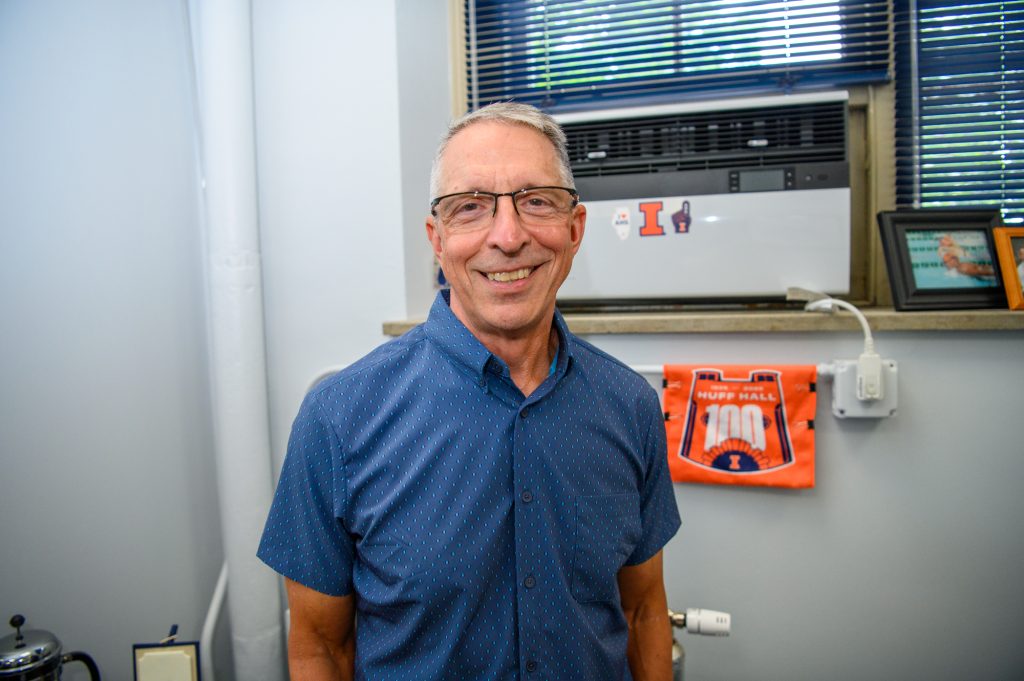
Early in his career, doctoral student Panteleimon “Paddy” Ekkekakis approached him with four ambitious manuscripts questioning accepted ideas within exercise psychology.
One of the manuscripts was critical of the questionnaire developed by a more-senior faculty member. The faculty member was livid, Petruzzello said.
“He said, ‘How dare you let a graduate student do that?’ And I just sat there. And I thought, how dare I not? If it’s garbage, then the peer review process will point that out.”
Instead, all four manuscripts were accepted.
The work fundamentally changed how researchers study emotional responses to exercise and launched Ekkekakis into one of the field’s most influential careers.
Ekkekakis, now a professor and chairperson of the Department of Kinesiology at Michigan State University, said he first learned of Petruzzello in 1991 when he was an undergraduate student, and Petruzzello published a meta-analysis on the effects of exercise on anxiety in a leading review journal.
“Needless to say, at the time, for an undergraduate student in faraway Athens, Greece, the furthest thing from my mind was the notion that I could, one day, study for my Ph.D. under the guidance of Dr Petruzzello,” Ekkekakis said. “As fate would have it, a couple of years later, I met Dr. Petruzzello, in the flesh, at a conference in the U.S. We kept in touch and a few years later, I found myself driving a U-Haul truck through a major winter storm toward Champaign-Urbana, to enroll in the Ph.D. program under his guidance. I came to Illinois after a traumatic period of studying for my master’s, having experienced numerous variants of negativity, from racism to condescension and everything in between. In stark contrast, every interaction with Steve was like a breath of fresh air. In an early experience I will never forget, I observed him interact very calmly with a belligerent student in the classroom. I thought to myself ‘I wish that, one day, I will be able to develop this level of professionalism and self-control.’ Outside the classroom, Steve exhibited the perfect balance between providing guidance and cultivating autonomy. That’s a rare skill that I have also tried to emulate, but probably unsuccessfully.
“It is hard to put in a nutshell what Steve means to me as a mentor and academic role model. I owe him a huge debt of gratitude for helping me build a research program that has taken me all over the world and a professional career that I still find fulfilling. I consider myself enormously lucky that our paths crossed, especially considering how extremely improbable this encounter seemed back in 1991.”
Cheryl Hanley-Maxwell, dean of the College of Applied Health Sciences and a colleague since 2016, said Petruzzello “distinguished himself as a scholar, teacher, mentor and leader whose influence has shaped generations of students, faculty and staff.
“Steve’s leadership within the college has left a lasting mark. He has guided academic programs, supported student success initiatives and helped shape the educational experiences of countless undergraduate and graduate students. His steady guidance, thoughtful perspective and unwavering commitment to this college have strengthened our mission in countless ways.
Saying Goodbye
After three and a half decades, Petruzzello says he won’t miss committee meetings. He laughs about that. What he’ll miss are the conversations before class. The questions students asked that made him think differently. Conversations with fellow faculty members and colleagues. The faculty and staff members who quietly kept the department running every day.
Mostly, though, he’ll miss the students. For years, he joked that standing in front of classrooms full of 18-to-22-year-olds was the closest thing academia had to the fountain of youth.
Now, as retirement begins, he hopes the next generation of faculty remembers why universities exist in the first place. Help students. Be the best teacher and mentor you can be. Build meaningful research. Speak up. Stay curious. Those ideas sound remarkably similar to the principles that quietly guided his own career.
When asked for one final message, Petruzzello borrowed words that have long inspired him.
First came Maya Angelou: Do the best you can until you know better. Then when you know better, do better.
Then, with a smile, he reached for Winnie the Pooh.
“How lucky am I to have something that makes saying goodbye so hard?”
For thousands of Illinois students, colleagues and alumni, the answer is easy. They were lucky to have Dr. P.
Editor’s note:
To reach Steve Petruzzello, email petruzze@illinois.edu.
Share on social