August 06, 2026 | Ethan Simmons
This University of Illinois summer camp provides a fun space for kids to hone their abilities with augmentative and alternative communication. Future speech-language pathologists get hands-on experience with AAC before entering the field, filling an important gap.
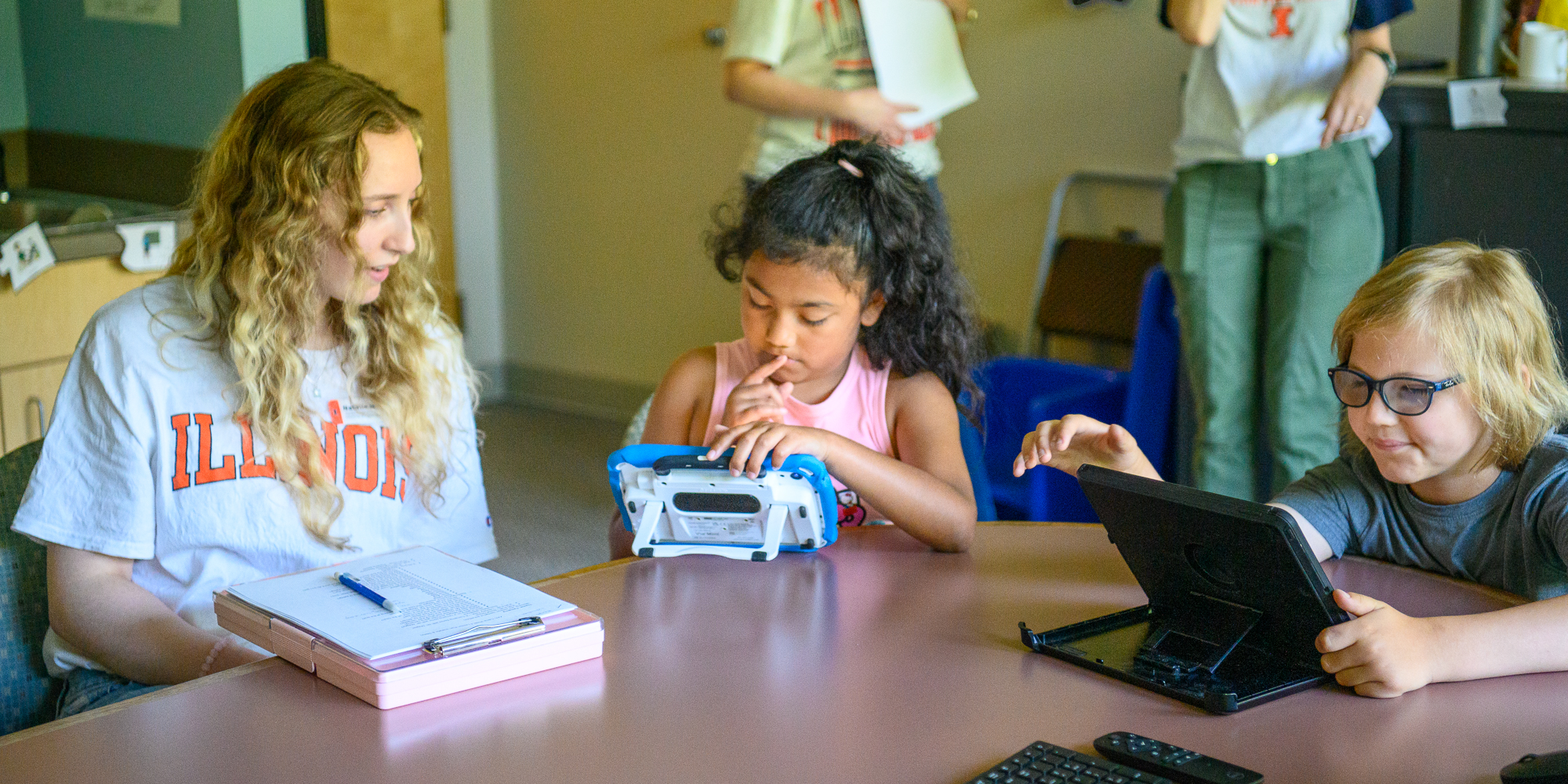
Midway through his third session of Augmentative and Alternative Communication Camp at the University of Illinois, one elementary schooler wanted to say “yes” with a little more oomph.
So he grabbed his AAC device—a tablet with an array of common words and phrases that speak when clicked—and typed in a new word of his own: “Duh,” with a rolling-eyes emoji for effect.
“This was an example of how AAC can help a child communicate like any other kid who wants to be silly or tease his friends,” said Stella Shiffrin, a U. of I. graduate student studying to become a speech-language pathologist, who was this camper’s one-on-one clinician. “It was very funny, yet socially relevant and useful.”
For the second year, faculty and graduate students at the Department of Speech and Hearing Science at Illinois hosted a summer camp for local children to practice their skills with AAC devices, and meet other kids with similar communication needs.
Augmentative and alternative communication, or AAC, is an umbrella term for the methods that nonspeaking or minimally speaking people use to communicate.
In practice, AAC can mean techless options, such as sign language and gesturing, or text-to-speech devices, like the kids in camp used this summer.
The camp is designed and run by Speech and Hearing Science Assistant Professor Savanna Brittlebank and Clinical Assistant Professor Andrea Burie, who support AAC implementation among children from academic and clinical perspectives.
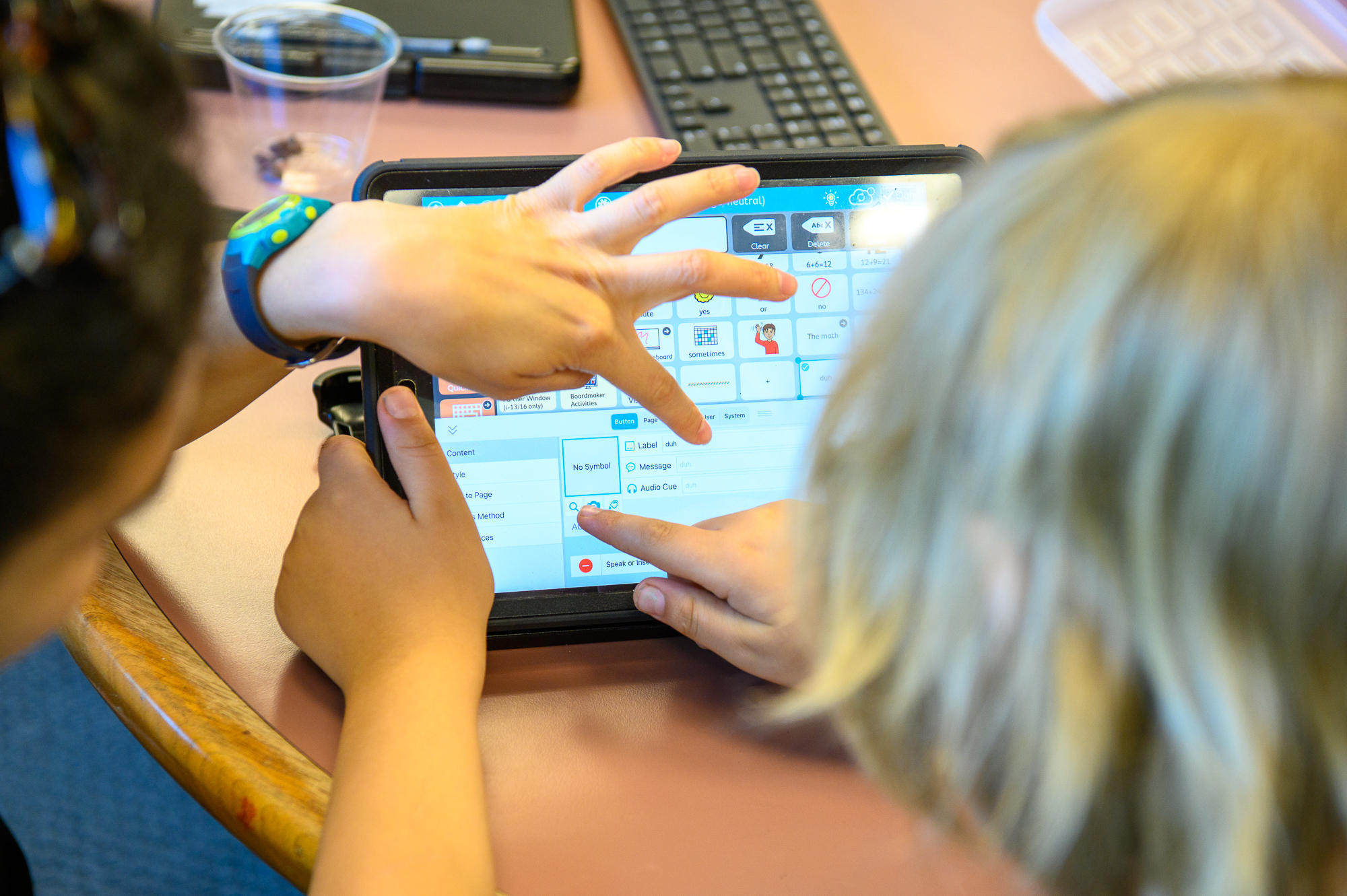
Common users of AAC include individuals with autism, cerebral palsy, and other intellectual and/or physical disabilities who experience difficulty using speech for functional communication. Roughly one-third of children on the autism spectrum are nonspeaking, according to recent estimates. While a spoken conversation can employ anywhere from 150 to 250 words per minute, AAC users might convey eight to 10 words per minute.
“If you’re a child who grows up using AAC, you might be the only one in your class or in your grade or even in your school who uses AAC to communicate,” Brittlebank said.
“Being able to be in a room with other children who use AAC helps normalize it, it helps their social skills just having an example from peers, which helps them build friendships, too. It helps them realize they’re not the only one who communicates in that way.”
A hands-on experience
What was new in the second go-around was a short AAC “boot camp” for the graduate student clinicians, which clearly boosted their confidence working with the campers and the AAC tech that each of them used.
Also, they served more kids this year. Seven campers between the ages of 5 and 10, including a couple of returners, joined the Thursday sessions for six weeks this summer; five campers joined last year. The days were split into two sessions, with one designed for more medically complex children.
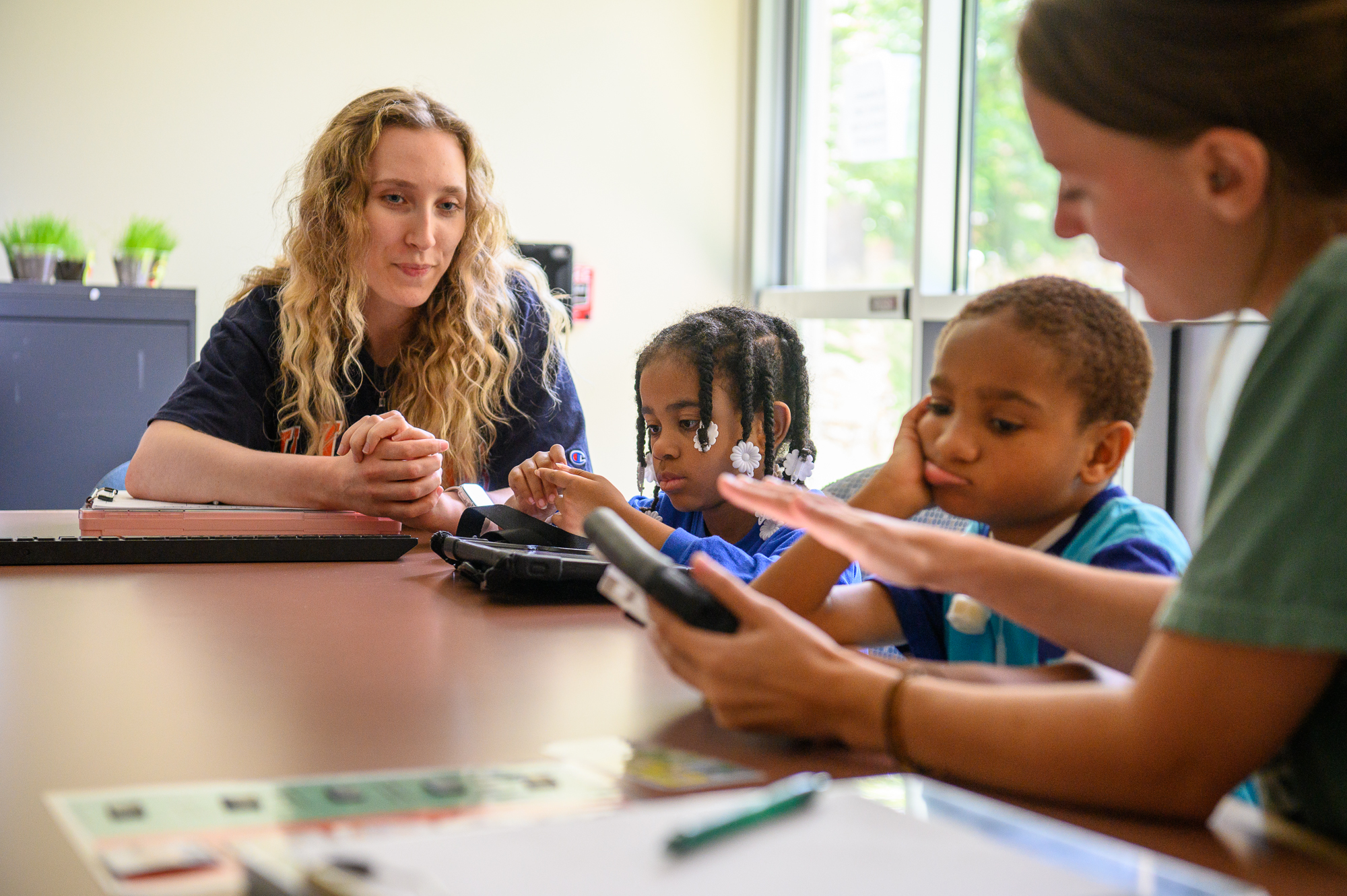
At AAC Camp, facilitators hosted interactive, crafty games each day with the campers, with fun asides and simple conversations to help the kids make meaningful steps toward improving their vocabulary and literacy while adopting the technology. In addition, each kid got one-on-one time with a student clinician, supervised by faculty.
This experience is critical for Speech and Hearing Science students who are training to be speech-language pathologists. Each of them must spend at least 375 hours working directly with patients in a supervised setting before obtaining their degree and licensure.
“They’re able to have a lot of hands-on, in-depth experience with this [AAC] population that is typically underserved in our field,” Burie said. “This is trying to target that gap in speech-language pathology training.”
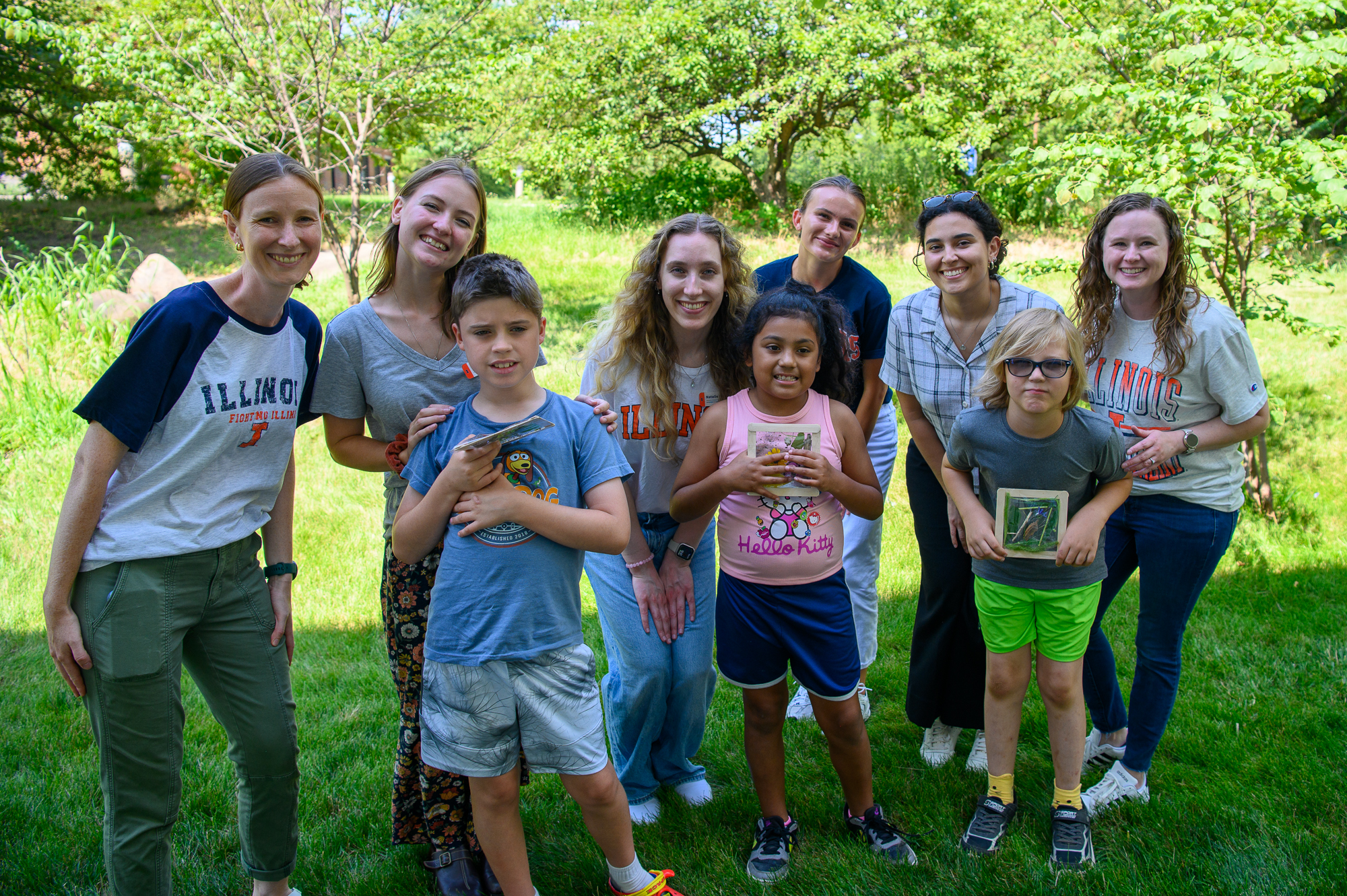
On one humid day, the campers went outside with their clinician partners and went on a nature scavenger hunt, picking up branches, plants and flowers to show at the session, then described what they found using their devices. One camp favorite theme was “Summerween,” where the kids walked around the rooms of the Audiology and Speech-Language-Pathology Clinic for trick-or-treating.
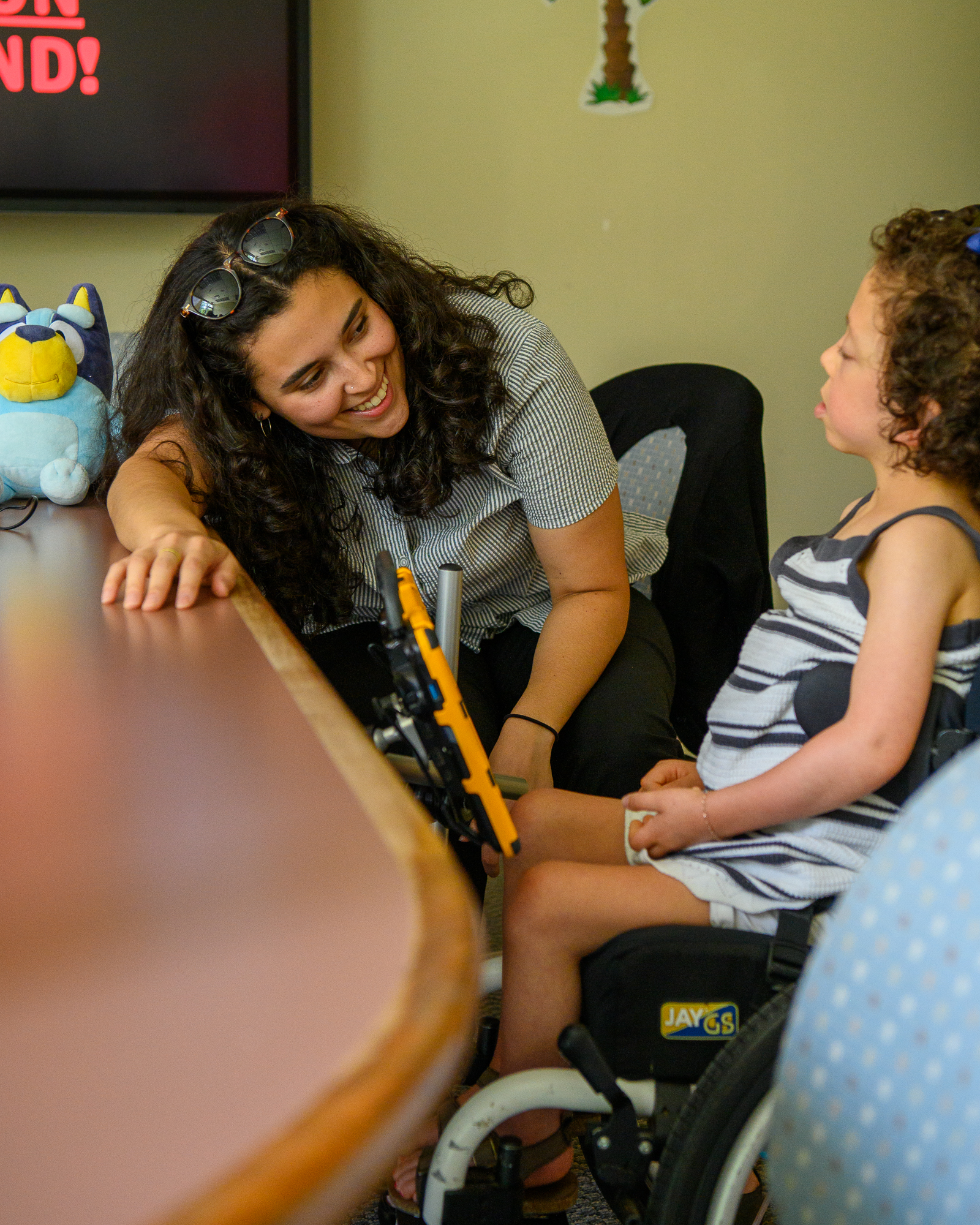
“Something that is really fun about the camp setting is that it naturally facilitates social communication between peers,” said Natalie Mahalla, who’s heading into her second year of the speech-language pathology master’s program. “We can model and prompt on the device all we want, but to see the kids use their devices to be able to connect with their peers socially was really fulfilling.”
Camp facilitator Andrea Burie joined the faculty of the Department of Speech and Hearing Science in August 2024, after nine years as a speech-language pathologist in Champaign Unit 4 Schools. Her connection to the district helped her find families that could participate in the AAC camp during its first run in summer 2025.
For Burie, her familiarity with AAC started in the home. Her oldest sister, Alison, was born with a severe physical and cognitive disability, which required the use of AAC support to communicate beyond a few vocalizations.
Alison used voice-output switches and speech-generating devices throughout her school years, but their family received “very limited” training on how to support AAC use at home, so Alison’s use of the tech tapered off after she left the school system, Burie said.
“I understand the challenges families can face when trying to incorporate it into everyday life,” Burie said. “Now, as an SLP, it’s been a passion of mine to help families find simple, meaningful ways to support AAC device use in the home.”
Activities also go home with the campers. Families were given an “AAC Bingo,” filled with prompts to help their kids use the AAC devices outside of the camp. One square asks them to go outside and identify three things they see with their device; another asks the user to describe what they liked most about their meal.
“The goal isn’t to add more work to a family’s day but rather to highlight communication opportunities that already exist within everyday routines and moments,” Burie said.
Evidence-based approach
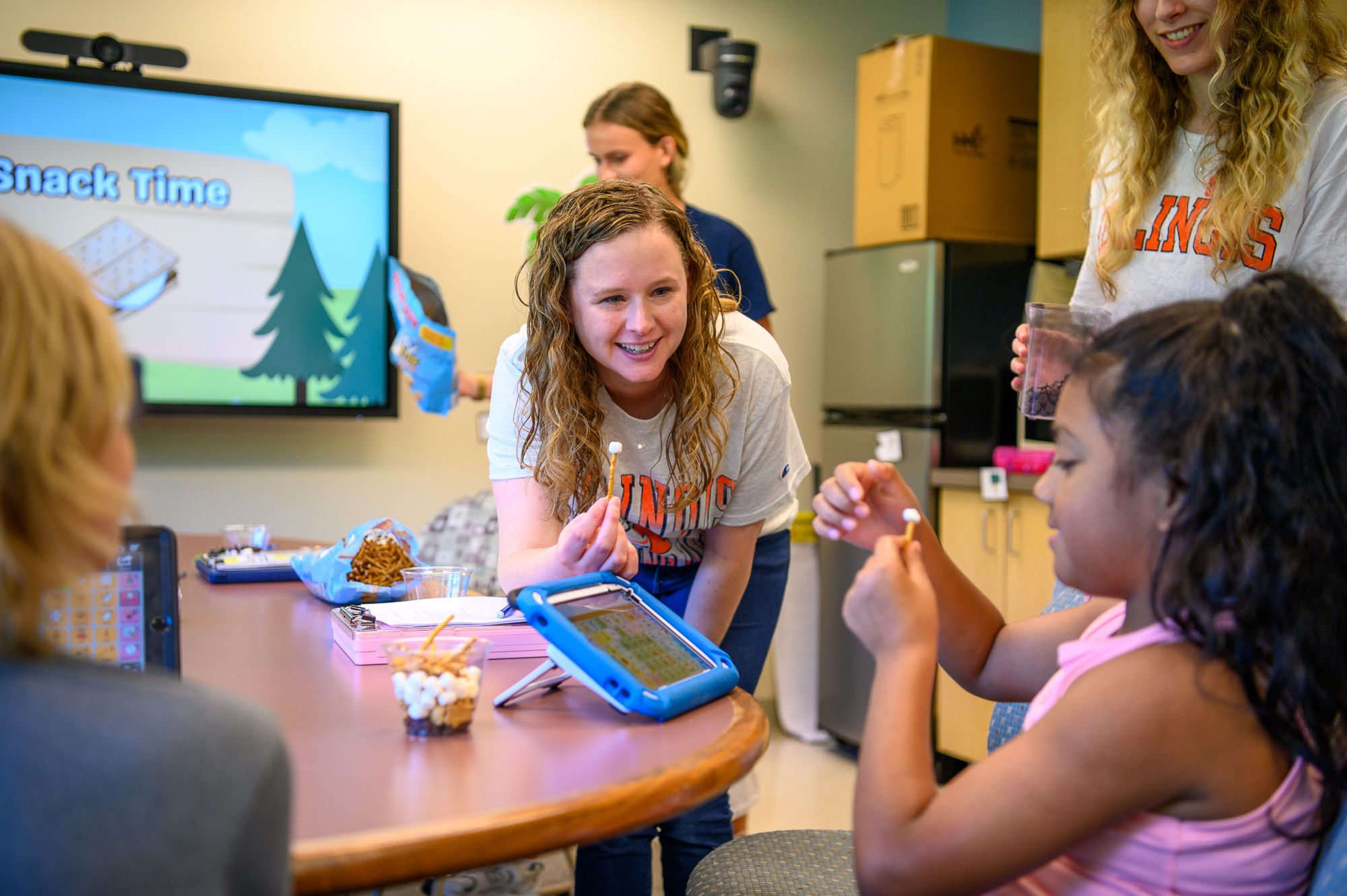
Through all the fun games and crafts, the summer AAC camp is designed with the latest educational approaches in mind, specifically how kids develop language—and social skills—if they aren’t communicating with speech.
At AAC Camp, the facilitators are keen on getting the kids to ask questions with the help of their devices.
“In typical language development, requesting and social communication actually develop in tandem,” said Brittlebank, who joined the College of Applied Health Sciences in 2024. “But when we provide intervention, sometimes the social piece is overlooked. How do we build that? Taking turns is that underlying piece. And a lot of that is how we ask and answer questions.”
Among augmentative and alternative communication users, literacy needs are critical. An estimated 90 percent of individuals who use AAC graduate high school without functional literacy skills.
Part of this has to do with traditional literacy curricula, which draw heavily from phonics—the sounding out of words—to teach reading. Nonspeaking children have to rely on different approaches.
“There are evidence-based curricula that exist that have non-speech responses, but they’re not very well known or widely implemented, and so we’re drawing on those curricula that exist to support literacy instruction,” Brittlebank said. “Unfortunately, it’s a barrier in practice and the field in general. There is a huge push right now to improve literacy outcomes for individuals who use AAC.”
At AAC Camp, facilitators used visual aids, such as a kid’s photograph from their family’s trip to a baseball game, to spur on the conversation each day.
‘Does it make you happy?’
With many of the campers still learning the ins and outs of their AAC devices, patience was key for the student clinicians working with each child as they formulated their thoughts in new ways.
The AAC camp is a learning experience for the clinicians, too: faculty facilitators model how to intervene with the campers, then slowly go more hands-off as the camp progresses.
The student clinicians learned to adapt the activities to the child’s unique interests, Shiffrin said: “This makes therapy more meaningful and fun for them.”
Learning AAC can be a tedious process, but parent feedback from the camp has been promising. One parent shared that this was the first summer camp their child had ever attended; others talked about how their child made new friends; or were fascinated to see other kids’ AAC devices for the first time, according to a survey collected by facilitators.
At one session, student clinician Chesney Hassett asked, “Who likes our time together, talking to each other?” The campers raised their hands in agreement.
“Does it make you happy?” she asked. One camper nodded, then clicked the word on his tablet: “Duh.”
Editor’s note:
To reach Savanna Brittlebank, email savannab@illinois.edu
To reach Andrea Burie, email aburie@illinois.edu
(To reach Ethan Simmons, email ecsimmon@illinois.edu)
Share on social