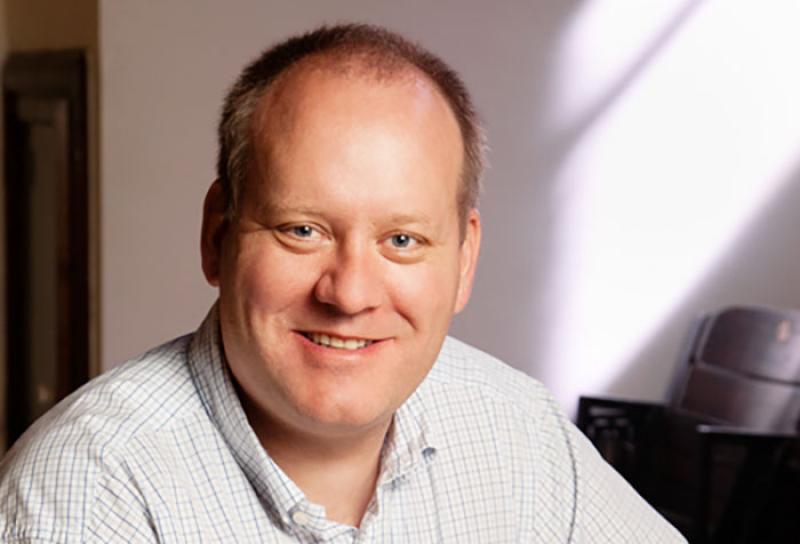
Podcast: A Few Minutes With … David Strauser


Vince Lara, media relations specialist at the College of Applied Health Sciences at the University of Illinois, speaks with David Strauser, professor of Kinesiology and Community Health at Illinois, about Dr. Strauser’s research on work personality and vocational behavior with a focus on people with chronic health conditions and disabilities.

Transcript

VINCE LARA: Hi, and welcome to another edition of A Few Minutes With, the podcast that showcases Illinois College of Applied Health Sciences. I’m Vince Lara, and today I’ll speak to Dr. David Strauser of our Kinesiology and Community Health Department about his research on work personality and vocational behavior with a focus on people with chronic health conditions and disability.

All right. Speaking with Dr. David Strauser. Dr. Strauser, I appreciate you taking the time to come on with our podcast. The first question I ask when I meet with faculty is I’m interested– I do my prep as any journalist would, and I try to find out– hmm, I wonder what led this person to our fine institution? Your background is at the University of Wisconsin-Madison is where you got your degrees. So I wonder what led you to Illinois.

DAVID STRAUSER: That’s a good question. There’s probably a variety of things that led me to the University of Illinois. I came to the University of Illinois from the University of Memphis where I spent 10 years. And that was the first job that I got after completing my PhD at the University Wisconsin-Madison. Down there, I started a research center, had about 30 people working for me. We were doing a lot of work across the state of Tennessee in the southeast.

And then this opportunity came available at the University of Illinois. And I think for a combination of probably family reasons, being a native Midwesterner, and also an opportunity to be at a school like Illinois, it just seemed like a nice opportune time to make that switch from the University of Memphis to the University of Illinois. And a chance to be in a Big Ten school, at a big research school just seemed like a hard opportunity to turn down.

Also, I think Illinois is a little bit unusual compared to other programs in the Big Ten that have my area of study that it focused a little bit more on health and health behavior. And so that was something that maybe initially didn’t come into the mix but became a point of what I really appreciated over the course of my time here.

VINCE LARA: Are you from the Midwest originally?

DAVID STRAUSER: I’m from Madison, Wisconsin originally.

VINCE LARA: That makes sense. I know research is a big part of this job, obviously. But did you always want to teach? Was that something that was top of mind, or was it the research first for you?

DAVID STRAUSER:: That’s a really good question. And I would say it’s probably teaching first, research second. I started out as an undergraduate thinking that I would go on and do– as an athlete, I was going to go on and do coaching of some kind. So I think that was always kind of my focus as an undergraduate.

And I had some very influential faculty people who pulled me aside and said, hey, what about me be doing this? What about looking at this opportunity? And that started to peak my interest enough to go look into it a little bit deeper. After completing my undergraduate, I was out in the private sector for about a year or so and decided, you know, this is good, but really being affiliated with the university and pursuing that academic work would really be something that I’d want to do as a career.

With that then became the teaching, and then the research developed through my work as a doctoral student to really look at their research. But I was very much trained from faculty at UW Madison who trained me as a professor. So when we talk about a professor, in my opinion, it’s the research, teaching, and service together. It’s not just one aspect of it. So that relates to your first question about being in Illinois. I think Illinois gives me an opportunity to do all three of those core components of being a professor, and that’s teaching, research, and service.

VINCE LARA: Focusing on that research part, now, your research, to an extent, focuses on work, health, and well-being. And I’m wondering, commonly with researchers, there’s something that inspired them to look at that. And I was wondering if there’s anything that inspired you to look at those research lines.

DAVID STRAUSER:: Yeah, that’s an interesting story probably as a reflecting back on it. Again, as I was an athlete in college and struggled with injuries in college, it became losing the opportunity to compete in college because of injuries. I guess that was happening at the same time that I had some of these influential faculty in my year talking about, hey, what about pursuing rehabilitation psychology as a career? What about some of those things? So I guess serendipity of those things coming together.

That extended then to probably my first job, as I mentioned, before I went back to graduate school, and that was working with injured workers in Southern California. And through that and my own experience of injury and then working with industrial injured workers solidified my interest into working with people with disabilities as a whole and working with people who are having problems working– pursuing their careers because they have an injury or illness.

VINCE LARA: Yeah. You get some of your research was in marginalized workers. Could you talk a bit about that?

DAVID STRAUSER: Yeah, I think that’s a pretty big term, marginalized workers, in that it’s a good word. It’s an encompassing word. I look at– especially right now, for probably about the last 15 years, I’ve really looked at young adults who are having a hard time entering the labor market for some reason related to a chronic health condition, whether that’s cancer– I do a large group of that. Could be some mental health issues, autism.

So they’ve been marginalized because they have a chronic health condition. We have a project right now where we’re looking at foster care youth, formerly incarcerated or justice involved youth. So you’re correct to save my work has always looked at people who’ve been marginalized from entry or participation in the labor market, usually because of some chronic health condition or combination thereof.

So my research has focused a lot on undergraduate– or I mean younger adults in terms of their entrance in the labor market. Probably an advocacy side of me has continued to deal with industrial injured workers– I’ll use that term– people who’ve been injured on the job and advocating for their overall well-being and helping them manage and deal with their loss. So that’s probably more of an outreach service component of it than it is a research part, where my research is primarily focusing on these young adults’ entrance into the labor market.

VINCE LARA: So what particularly do you deal with? Is it trying to overcome the stigma of what these workers have dealt with?

DAVID STRAUSER: Most people who have chronic health conditions are likely to experience difficulty in meeting the demands of working how it’s typically performed. So they’re having some issue with meeting the job requirements or figuring out how they identify with the labor market. They may– for example, somebody might have an interest in doing something as a career, but because they have a limitation or a functional impairment, can’t pursue that, so that causes a lot of stress. So I deal with that.

There also is just a lot of people right now and a lot that we more to learn about mental health that they’re having a lot of mental health issues that are impacting their ability to function on the job and meet the demands on the job. So they might get a job but they can’t keep a job. And so after a period of time, they start to develop that resume that looks very scattered, very thin in terms of duration on the job. And that becomes then stigmatizing and marginalized.

So stigma is an issue, obviously, that everybody deals with with chronic health conditions. That is something I deal with, but I’m more interested in how they fit to the environment, how do they see themselves fitting as a worker, and how did they develop their identity as a worker.

VINCE LARA: Has your research ever led to you being a consultant for either a company or perhaps an industry looking to help these marginalized workers get back in?

DAVID STRAUSER: I do a lot of work with a group called Children’s Brain Tumor Foundation, where I work a lot with them to help young adult cancer survivors and businesses help understand issues related to cancer survivors, try to help that fit. So yes, I’ve worked with some non-profits and some NGOs to work with them to understand, develop plans, develop programs to help them address these issues.

VINCE LARA: You developed what’s called the Illinois Work and Well-being Model. I’m interested about that. Tell me a little bit what that is.

DAVID STRAUSER: Yeah, the Illinois Work and Well-Being Model is kind of a byproduct of my 30 years of in this field of how I was thinking about career stuff and finally came together for me as a model, where in our field, in the health field, we use a lot of the International Classification of Functioning or the ICF. So I use components of the ICF and then Common Career Development domains and mesh those two together.

And the model really tries to explain about how people’s functioning and how their personal environmental factors impact how they function and how their functioning impacts the career domains of how people become aware of what they are in terms of what they want to do, their vocational identity, how they go about acquiring jobs, and how they go about maintaining jobs.

And so that model helps provide a framework for research, and it’s guided a lot of my research over my whole career. Probably the last four or five years it’s been formalized as a model that we’re using to guide our research, to help us identify factors and variables. But also, we’ve been using it quite a bit with practitioners to help them guide their services to identify where interventions might need to be placed, where are points of intervention.

So as an example, if we’re having a person, a young adult cancer survivor who has a brain tumor, they’re trying to figure out, where do I fit into the world of work? What am I going to do? How am I going to do it? We might want to look at their functioning. What are the residual factors of their brain tumor? How do they function in terms of physically, cognitively, emotionally? And how do they communicate? And look at that.

However, even though as we look at those factors or those components, we also understand that personal factors, psychological factors such as resilience, hope, self-efficacy, impact how they perceive their functioning. In addition, environmental factors– ethnicity, social class. I say ethnicity. Ethnicity is a personal factor, but their cultural background. Their social factors, their schooling, their family also impact how they perceive their functioning.

So we want to make sure that we’re looking at all those factors and then how do they relate over to the career domain and those three factors I talked about in terms of awareness. We call it awareness. Basically, vocational identity. Acquisition and maintenance.

VINCE LARA: You always have research going on, several projects in the pipeline. That’s one of the things you have to do.

DAVID STRAUSER: Right.

VINCE LARA: What are some of the ones that you have that you’re excited about, that can talk about, say?

DAVID STRAUSER: Yeah. We actually have a lot of good stuff going on right now, and I’m very excited about it. We’re at a good time. We’re having a lot of data and a lot of projects. So we are right now– a couple things. In terms of the cancer group, we have several data sets right now, one with Dana Farber, one with Children’s Brain Tumor Foundation, where we’re looking at these psychological career factors that impact employment and employment outcomes with a group of brain tumor survivors.

What’s really exciting about that, and this might– compared to people in other areas like epidemiology or even breast cancer, our data set combined right now is we have about 300 brain tumor survivors. That’s quite a good number for brain tumor survivors. So it’s a hard group to get. So we have some data there that we’re starting to analyze and look at working with these Dana Farber and Children’s Brain Tumor Foundation that look at what are these factors that impact employment outcomes.

And we’re very excited about that. We have several papers submitted right now. They’re under review. A couple of papers that have been accepted that are looking at using the Illinois Model, as we talked about, looking at how functioning and perception of functioning impacts the different domains of career. Highlight to that would be we’re starting to get good evidence to suggest that how people’s emotional function, the perceptions of their emotional functioning, really impact a lot of their identity development, contributes some to the acquisition phase.

Conversely, we know that people now who start to– how they perceive themselves physically really has a lot to do with how they perceive their ability to maintain a job. So what we can start to do there is start to parse out of, where people are in their career development, what our interventions need to target and what areas of functioning do we need to maybe support or address to maximize outcomes? So that’s very exciting with that.

Another population that we’re starting to look at or another group that we’re working with is, as I mentioned, a broader group of people with disabilities looking at developing some instruments related to the Illinois Work and Well-Being Model. We have a couple of instruments being developed right now to measure some of those constructs within the model, so we’re very excited about that. That’s not as maybe exciting, but for us, that’s a very practical piece.

Another area that we’re really starting to get into because we have seen it quite a bit with the young adults in foster care and the formerly incarcerated young adults is the issue of trauma and how trauma is impacting them, but how trauma is impacting their perceptions of their career development and their career development opportunities. And not surprisingly, we’re finding again there’s quite a bit of an impact there in terms of how much trauma, how they’re experiencing that trauma, how they feel about that trauma, how close to the surface, so to speak, that trauma is is going to be impacting a lot of how they see themselves as a worker, their identity, and their motivation to pursue those things.

VINCE LARA: My thanks to David Strauser. For more podcasts on Illinois’ College of Applied Health Sciences, search A Few Minutes With on iTunes, Spotify, iHeart Radio, Stitcher, and other places you get your podcasts fix. Thanks for listening, and see you next time.

Related news

A Few Minutes With … Pasquale Bottalico


Pasquale Bottalico’s research looks at noisy environments, such as restaurants. (Google Images)

In this edition of “Five Minutes With …,” AHS media relations specialist Vince Lara-Cinisomo interviews Dr. Pasquale Bottalico in the department of Speech and Hearing Science about his study of the effects of ambient noise in restaurants.

Bottalico, in his study, “Lombard effect, ambient noise and willingness to spend time and money in a restaurant,” published in The Journal of the Acoustical Society of America, found that subjects reported a disturbance of their speech when noise reached 52.2 A-weighted decibels (dBA) and that vocal effort began to increase at 57.3 dBA. The sound level of speech increased as ambient noise increased. As background noise increased, it triggered a decrease in the willingness to spend time and money in that establishment. You can read more about Dr. Bottalico’s research here.

Transcript

VINCE LARA-CINISOMO: Hello, this is Vince Lara, Media Relations Specialist at the College of Applied Health Sciences at the University of Illinois. Today I spend five minutes with Dr. Pasquale Bottalico, of the Department of Speech And Hearing Science, to talk about his recent study on ambient noise in restaurants and its effect on the bottom line.

PASQUALE BOTTALICO: So the goal of the restaurant, the idea of the restaurant, is what we can do to improve the situation in restaurant. So my study was actually started because there was a lack in the literature. And I’m always being interested, it’s not the first paper that I worked about Lombard effect. I’m very interested in Lombard effect.

And I started to be interested in Lombard effect, again, starting from classroom acoustics, because the Lombard effect is basically characterized by a rate of voice increase per dB increasing noise in the environment. And the value is 72 for teachers, which is the highest. Generally, in the literature, it’s reported between 0.3 and 0.6. But teacher, 0.72., so they’re increasing their voice even higher.

VINCE LARA-CINISOMO: Every day?

PASQUALE BOTTALICO: Every day, for every dB of noise increasing in the classroom. So this means that restaurant noise– everyone went to a restaurant in his life, and it can happen that after dinner with some people, at a restaurant, you go out and your throat’s sore. And you don’t really understand why. And because the Lombard effect is an unconscious effect, so you are not conscious of the fact that you are actually screaming.

But your voice, your body, and your physiology knows that. And so you will have the effect that your throat is burning. And I found particular the fact that this effect was never studied in a restaurant. And there were not studies correlating it with the willingness to spend money. So I thought it was a good idea to do the study. And I already did similar study for understanding other aspects of the Lombard effect. I was quizzing in the past about at which level of noise it starts, these effects, in other papers.

So I use a similar protocol, but I changed the setting, and it changed the noise. So I tried to recreate a restaurant in one of our sound booths. I had my students, my undergraduate students, that were the partner in the dinner. And we used typical restaurant noise, and we changed the level in a random way, covering a very large interval of noise, so from a medium level to a very loud level. Again, using the range of noise level reported by the literature, in restaurant noise.

And what it came out, that a level between 50 and 55 dB is starting this willingness to leave that place, and also to spend less money to eat in that place, and is starting the disturbance in the communication. And because of that, there is the objective evaluation of the voice, that is starting to increase at about 60 dB of noise. And all of these effects were quite strong.

We are starting to work again on the project. After the forum actually, because I kind of figured out that in this case, we used college students for this study, and I’m considering it like a pilot. But I want to move forward with the elder population.

And so, we know also that we have child in our college that’s interested in new research on aging people. And we have a movement, that is the age friendly in Urbana-Champaign, to make the city more friendly for aging people. And I think that this project will fit perfectly.

So I have a doctoral student in audiology. She’s going to start to collect data next semester. And the goal will be to create a different group in the elder population, normal hearing, and people with a moderate hearing loss, and people with a severe hearing loss. And try to understand better how these vulnerable populations are affected by the problem.

VINCE LARA-CINISOMO: My thanks again to Dr. Bottalico. This has been Five Minutes With.

Related news

Podcast: A Few Minutes With … Brandon Peters


Brandon Peters (Photo courtesy of Division of Intercollegiate Athletics)

Vince Lara of the College of Applied Health Sciences speaks with Illinois starting quarterback Brandon Peters, a graduate student in the Recreation, Sport and Tourism department of AHS.

Peters, who got his undergraduate degree at Michigan before transferring to Illinois, talks about why he picked RST and what he enjoys about the classes.

Transcript

VINCE LARA: This is Vince Lara at the College of Applied Health Sciences at the University of Illinois. Today, I speak with Brandon Peters, starting quarterback for the Illinois football team, and RST grad student.

I’m talking with Brandon Peters, who’s the starting quarterback for the Illinois football team. So Brandon, how much did graduate programs– in terms of deciding where you wanted to continue playing– how much did the academics part of it, and how much, honestly, did the football playing part it have a play in your decision?

BRANDON PETERS: I would say football was the main focus for me. But, you know, when I came on my official visit, they kind of laid out the academic plan for me. And, you know, kind of weighing my options. Illinois being the university that it is, they offered the RST program for me to be in, and sport management was always something I was interested in at Michigan. And I just thought it was a great opportunity to come to Illinois, also at the academic level.

VINCE LARA: Now, you’re taking some online courses, what I had read. But you’re on campus obviously a lot. Have you run into any of your professors? Or have you had a chance to interact with any of them?BRANDON PETERS: Not yet, but I’m going to set up a meeting with the RST– I forget. Tiger?

VINCE LARA: Mm-hmm.

BRANDON PETERS: (Prof.) Tiger. Yeah. I’m going to set up a meeting with him, and just get to know him a little bit, and talk to him.

VINCE LARA: Now obviously, football’s the goal. Right? Ultimately, whether it’s the NFL, CFL, XFL, or whatever it is. But if that doesn’t happen, or even thinking post-football, do you have any ideas? Like, maybe RST hopes? You know, like you can work as a GM, or you can work in– you’re doing sport management as your focus, right? So what have you thought about post-football?

BRANDON PETERS: I really haven’t thought much into it yet. I still have another year to play. When it gets to that time, I think I’m going to think at it in more depth. But like you said, I’ve always thought about staying in the sport world, since I’ve always been so close to it my whole life. I think this will definitely help me propel myself into the future when I get to that point.

VINCE LARA: You’re from Avon, Indiana.

BRANDON PETERS: Yeah.

VINCE LARA: So did the proximity of Illinois play a big factor in deciding to come here?

BRANDON PETERS: Yeah. I mean, the other school that I had a lot of interest in too was Miami, Ohio, which is even closer than Illinois. Being able to stay at home was a great opportunity for me. And then just to be even closer to my family, and they could come to even more games. You know, my elders, my grandma and grandpa can travel well to games. So you know, it’s nice to have that.

VINCE LARA: Definitely. One last question I have for you. What classes are you taking right now?

BRANDON PETERS: RST 515 and 512.

VINCE LARA: 512? What are those courses like?

BRANDON PETERS: Organization and marketing.

VINCE LARA: My thanks to Brandon Peters. This has been A Few Minutes With.

Related news

A Few Minutes With … Susannah Scaroni


Paralympic medalist Susannah Scaroni (Getty Images)

College of Applied Health Sciences media relations specialist Vince Lara speaks with two-time Paralympian Susannah Scaroni, who is training at Illinois for the 2020 Games in Tokyo.

Transcript

VINCE LARA: Hello, this is Vince Lara in the College of Applied Health Sciences at the University of Illinois. Today I spend a few minutes with Susannah Scaroni, two-time Paralympian who’s looking for her third trip to the games in 2020 in Tokyo.

Well I’m speaking with Susannah Scaroni, who is a 2020 Paralympian hopeful, we’ll say–

SUSANNAH SCARONI: Yes.

VINCE LARA: –if that sounds right to you.

SUSANNAH SCARONI: Yes.

VINCE LARA: And you also competed in 2016 in Rio, so this will be your second games.

SUSANNAH SCARONI: Also 2012.

VINCE LARA: Wow, so this will be your third.

SUSANNAH SCARONI: Hopefully will be the third.

VINCE LARA: Hopefully it will be the third for you.

SUSANNAH SCARONI: Yeah.

VINCE LARA: Well, let’s talk about where you got your start in racing.

SUSANNAH SCARONI: Well, I grew up in a little tiny farming community in eastern Washington. And I was fortunate enough to be close to Spokane, Washington, just about an hour away. But there’s an adaptive sports program for youth there. So I learned about it through Shriners Hospital and immediately fell in love with it.

So I started out on the ParaSport Spokane team. And when you’re in that world of adaptive sports, you learn about the University of Illinois. They have been just such a powerhouse with wheelchair athletes for decades. So I applied to come here, and here I am. And I love it.

VINCE LARA: Yeah, that was going to be my next question is that you’re from the Pacific Northwest, and you ended up here. So obviously coach Bleakney’s reputation preceded him, and that was part of why you decided to come here.

SUSANNAH SCARONI: Absolutely. Yeah. So I went to school a couple years in Montana before I came here, just based on financial reasons. But the second year I was there, coach Adam, he gave me a call and was like, hey, I don’t know– are you still interested in coming?

Because we have this other funding opportunity now. And so I was. After even two years of training on my own and doing my own thing, I still loved racing. I had my racing chair out there with me and decided to transfer over in 2011.

VINCE LARA: That’s amazing. Now, we talked about you were in 2012 and 2016. So let’s say you’re one of the veterans on the team. Because a team, you have people as young as 19.

SUSANNAH SCARONI: Right, exactly.

VINCE LARA: So do your teammates come to you for advice, and is that mentor role something you like?

SUSANNAH SCARONI: Yes and yes, and especially more recently I’ve been realizing more and more that we have new waves of freshmen coming in, and I’m in my third year of grad school now. And just being able to be this wealth of knowledge for a whole host of reasons, whether it’s living independently at college, whether it’s navigating accessible areas on campus, or I’m really passionate about nutrition. So there are some questions about nutrition and training and not doing certain things downstairs, like being tiny. All of these experiences are things I love to share with the new athletes that come in.

VINCE LARA: Now, this being potentially your third, do you look ahead to 2024 already? Or are you saying to yourself, this might be my last one? Especially when you are in school.

SUSANNAH SCARONI: That’s a good segue into that question because I have thought about this. But one thing I also really love in my career is the role model aspect of it. So right now we’re at a really cool part of wheelchair marathon awareness because Abbott World Major Series has a wheelchair division now. And I can still foresee myself continuing to push that wave of women wheelchair racers while the next group gets up to that point.

But it kind of sort of depends on where that is. There’s a lot of women I race with that are all within the same age. And so I wouldn’t want us all to stop at one time, and then all that really hard work just kind of go down a little bit. So I might see how it goes, see where the rest of the world is and the rest of the US females, and keep racing. I’m also not entirely sure yet.

VINCE LARA: OK. Well, what are your plans– well you just talked a little bit about your plans. You’re training to become a registered dietitian here at Illinois.

SUSANNAH SCARONI: Yes.

VINCE LARA: And so what’s after sport?

SUSANNAH SCARONI: Yeah, well, that’s a great question. The way I sort of foresee my career goals, I would love to be a sports dietitian with US Paralympics. I think it’s great to– nutrition is a basic field. But when you can apply it and adapt it to para athletes, I think having been one will add a really nice element to the advice I can give in the future. So I want to just try it out and see what it’s like being a sports dietitian.

And I haven’t completely thrown out the possibility of continuing research. There’s a lot of things that need to be studied in para athletes still. So I’ve really enjoyed sports physiology as well as nutrition science in my grad school program so far. So I think I could see that being a possible future thing to do as well. Yeah.

VINCE LARA: My thanks to Susannah Scaroni. This has been A Few Minutes With.

Related news

Podcast: A Few Minutes With … Daniel Romanchuk


Daniel Romanchuk (Getty Images)

Vince Lara, media relations specialist at the College of Applied Health Sciences at the University of Illinois, spends a few minutes with Daniel Romanchuk, 2016 Paralympian who’s training at Illinois for a spot in the 2020 games in Tokyo.

Transcript

VINCE LARA: Hello. This has Vince Lara and the College of Applied Health Sciences at the University of Illinois. Today, I spent a few minutes with Daniel Romanchuk, 2016 Paralympian who’s training at Illinois for a spot in the 2020 games in Tokyo. All right. I’m speaking with Daniel Romanchuk who is a 2020 Paralympic trainee hoping to make the team for the Tokyo games. So, Daniel, you started with the Bennett Blazers. But I want to go back a little bit before that. When did you know that sports was something you wanted to do?

DANIEL ROMANCHUK: Ooh. So I started with the Bennett Blazers when I was two years old. Sports has always just been a part of my life. So I’m not sure if there was ever really a moment where I was like, oh, I want to play sports. I got started in wheelchair racing with the Bennett Blazers when I was, I believe, around four years old.

VINCE LARA: Wow.

DANIEL ROMANCHUK: And, so yeah. With that program, a lot of kids just tried everything. You didn’t have to really stay in anything, but you’d try it to see if you’d like it and kind of just go from there. If you liked it, of course you can stay in it. Also I think a little bit with your question, their motto is actually, tell kids they can before they’re told they can’t.

VINCE LARA: Wow, that’s great.

DANIEL ROMANCHUK: We’re athletes. And so there’s never really been, to me, oh, well I can’t play basketball. I can’t do this. There’s really never been any of that really in my life.

VINCE LARA: Which is great. You’re from Maryland, which is where the Bennett Blazers are located. But how did you end up training here at Illinois? And is it a testament to Coach Bleakney that you ended up here? Had you known about Coach Bleakney before getting here?

DANIEL ROMANCHUK: So I grew up in the Mount Airy, Maryland, about a half hour outside of Baltimore where the sports program was located. And then it was just over four years ago that I was training all on my own. We’d eventually gotten in contact.

We had asked the high performance director, at that time, are there any training facilities or anything that I maybe can go train at? Because I wanted to try and make the 2016 games. And so after them kind of looking around a bit, we got put in contact with Adam Bleakney. And so he had let me come out and train, at first kind of intermittently. And then we moved out here.

VINCE LARA: Wow. When you say you were training on your own, how did you even know how to train?

DANIEL ROMANCHUK: I would say my mom did a lot of that. So we would just basically go out to there’s a cul-de-sac that I would just do repeats on. It was a slight hill. And so I would just go out and do repeats of about 200 meters long. And then, eventually, just going out on the road.

I would just kind of push. I especially did not know any training methods. I didn’t know anything about taper or any of the phases or anything of training. And so we would just kind of go out on rides at that point.

VINCE LARA: Had you watched the Paralympic Games, and is that what gave you the idea, oh, I need to do 200’s or whatever training you had done on your own?

DANIEL ROMANCHUK: I would say really it was kind of my mom that, at that time, was sort of guiding training. But yeah, they are one of the very few sports that I actually watched– the Olympic and Paralympic Games. So yeah. I don’t remember when I first watched it, but I do remember Beijing, and Tatyana McFadden, Josh George, and a number of other Paralympic racers, and other sports, as well.

So a number of other athletes had come through the Bennett Blazers sports program. And they had come back. Even after they’re gone off to college or whatever, they would come back every once in a while to kind of just come back– of course, say hi, and then just help the next generation along. And so that’s something I like to do when I can, is to get back and help bring along the next generation.

So I wouldn’t necessarily say when I first saw the games that I wanted to go. I’d probably say I just kind of known about them through other older athletes. And I’ve always been one to just push myself to see how far can I go? How fast can I go? And I think a lot of this just happened at such a young age. I don’t really remember too much of it.

VINCE LARA: OK. Well, you spoke about Tatyana. And you spoke about giving back. So, at this point given your experience in the marathons that you’ve had and the 2016 games, do you feel yourself as a mentor to some of your younger teammates? Because some of them are as young as 19, let’s say Alexa Halko. So what kind of role do you see yourself in now, while you’re competing, but also as one of the more experienced members?

DANIEL ROMANCHUK: I mean I think I’ve been very–

VINCE LARA: Fortunate?

DANIEL ROMANCHUK: Yeah, to have older athletes and mentors that have helped me get to where I am. And so I certainly want to help any athlete and help them just reach their potential.

VINCE LARA: Mm-hmm. Now, you’ve competed in several world majors of the marathon circuit. And does that training help you with the Paralympic Games, or do you consider them really kind of separate?

DANIEL ROMANCHUK: As far as the marathon at the games, that certainly does help. You’ll see a lot of the same racers. Courses of course vary, but I would say it does help with the marathon.

VINCE LARA: You’re also now training for Dubai. Is that a springboard also for 2020?

DANIEL ROMANCHUK: Yep, the last world championships just leading into the games. And so that does have a lot of things to do with the games. Slots can be earned for the country at the World Championships. I believe if you end up in a medal spot, you earn a spot. So it certainly is a big event going into the 2020.

VINCE LARA: Mm-hmm. So now you’ve talked about potentially enrolling at Illinois, maybe 2020, 2021. What do you think comes after sport for you?

DANIEL ROMANCHUK: Certainly like to stay in the sport to whatever degree, as long as I can. One thing I’ve learned in racing and just otherwise is I don’t know what God has planned for me. And so I try not to make a plan too much and to hold too tightly to it. Because I can make a plan for a marathon, and chances are it’s going to fall apart somewhere along the way. So I’m not sure where I’ll end up, but I’d certainly like to stay in the sport.

VINCE LARA: My thanks to Daniel Romanchuk. This has been A Few Minutes With.

Related news

A Few Minutes With … Brian Siemann


Brian Siemann (Photo provided)

2020 Paralympic Games trainee Brian Siemann chats with Vince Lara of the College of Applied Health Sciences at the University of Illinois about how he got involved with racing, coach Adam Bleakney and working at Disability Resources & Educational Services at Illinois.

Transcript

VINCE LARA: Hello. This is Vince Lara at the College of Applied Health Sciences at the University of Illinois. Today I spend a few minutes with Brian Siemann, two-time paralympian who’s training again in Illinois for a spot in the 2020 games in Tokyo. Brian, good to talk to you.

So you’re a graduate of Notre Dame High from New Jersey, the school that also produced Star Jones, famously, among others. And you started taking part in racing when Coach McLaughlin introduced you to it. Did you think that sports wasn’t something you’d ever be able to do to take part in before that?

BRIAN SIEMANN: Oh, yeah, absolutely. Sports to me was kind of this foreign concept that, you know, I didn’t really know of any opportunities that existed nor did I really see any kind of representation of athletes with disabilities competing anywhere. So it’s kind of one of those things that when you’re– when you’re growing up, you just sort of kind of resigned yourself to the fact if you don’t see it, then it’s kind of out of sight, out of mind. And you just look for other opportunities or other sort of interests that, you know, are kind of calling to you. And so when I was asked by coach McLaughlin if I wanted to come out for the racing team, it was very much a shock because sports, again, was something that I had never considered myself doing nor did I really consider myself excelling at it at all. So it was definitely a memorable day, to say the least.

VINCE LARA: Yeah, and how quickly did you come to enjoy the sports part of it? I guess– was it racing that you got into first?

BRIAN SIEMANN: Yeah, yeah. So I got into racing. And so basically, the high school coach McLaughlin had said to me, you know, I’ve never coach an athlete with a disability before. And I was like, oh, cool.

Well, I’ve never done any sports before. And so he was like, we’ll just kind of figure this out together. And so basically, my high school raised money for my first racing chair, which cost about $5,000, which is a huge– looking back on it now is a huge– was a huge sort of gamble that they took and kind of a leap of faith in me just to kind of have me be included on this– on my high school track team.

And then I just started racing. I did the same workouts that all the able-bodied runners did. And so it was just– I was just another member of the team, and I just used a racing chair instead of my legs.

VINCE LARA: Yeah, that’s great. Now you know, being from the east coast, did you know about Illinois’ training facilities, and was coming here about DRES and about the ability for you to continue to train?

BRIAN SIEMANN: Absolutely. But at first, it was not the case. So being from New Jersey and having no exposure to sports, I had created sort of this four year plan for myself where I was going to graduate from high school. And even when I started racing, I had said, like, OK. I’ll do this through high school, like, you know.

But it was never anything that I envisioned happening much later on and, like, continuing to do now for, oh my God, nearly 16 years at this point. And so I definitely did not consider that. But as I started to train, I think around my– like, towards the end of my sophomore and junior year, as you go to these local competitions with other athletes with disabilities, you start to– Illinois is a term that’s frequently mentioned.

And so you start to– you know, again, I never– I was living in New Jersey. I was by the shore, by New York City. The idea of coming out to the Midwest and cornfields was like the last thing I ever wanted to do. But I was actually– I was recruited out here. I came up for a visit I want to say my– like, the beginning of my senior year, I came out for a track camp that the university program runs for younger kids with disabilities.

I came out, and I did like the whole visit. I saw alma mater. And then I went– I trained with all of the other U of I paralympians.

And as soon as I came home, I was like, this is where I want to go. Upon just, like, getting around campus, just seeing just the culture around this entire university towards disability is something that is noticeable right away even for someone who has no exposure to it. And so oddly enough, so I submitted my application. I did– I think it was like the early decision thing or whatever.

And so around that December 1 or whenever that is, I remember I got– I was, like, frantically checking my email. And I was really frustrated because it was– we’re east coast time. And so I had to wait until 6 o’clock and not 5:00, even though it’s, you know, the same thing. but–

VINCE LARA: Right.

BRIAN SIEMANN: My didn’t view it that way. And so I was, like, frantically, like, refreshing my email. And I actually accepted my offer of admission before even telling my parents that I got in.

VINCE LARA: Oh wow.

BRIAN SIEMANN: I remember just telling them, like, oh yeah, I got in and I’m going just because I knew that this was where I belonged.

VINCE LARA: Now you predated Coach Bleakney, correct?

BRIAN SIEMANN: No, he had been here for– I want to say about four years before I started. And so he recruited me.

VINCE LARA: OK. So did you know about him, and was his reputation that wide that even in the East Coast, people knew, oh yeah, you want to go, you know, train with coach?

BRIAN SIEMANN: Oh yeah. So with Adam, it’s really funny. So we kind of have this running joke where once I started to learn about the Illinois program my junior year or so, I mean, even before I came out here, you started to see– like, I learned about the accolades of Adam Bleakney.

It was like I wanted to impress him. And so he would always come to these junior national competitions and everything. And I still remember my conversation with him.

And I always ask him now. I’m like, do you remember, like, where we met and what we talked about? And he’s like, yeah, yeah, of course. And he has no idea. And so it’s kind of this recurring joke between us that he remembers me when I was a kid. And now he’s been stuck with me since 2008.

VINCE LARA: Now you’ve competed twice in the Paralympics. Do your teammates, at this point, come to you for advice? Because you know, there’s a pretty nice gap between you and, let’s say, Alexa or some of the younger members. And is that a role that you enjoy?

BRIAN SIEMANN: Yeah, so I think we have a really welcoming sort of environment. I remember when I was the young kid sort of what that was like to be– you know, we’re kind of really lucky here. We’re surrounded by phenomenal athletes. And so I remember kind of feeling slightly intimidated but just sort of how welcome I was made to feel by the older teammates that I still am friends with to this day. And so it is something that I do take very seriously when new students come in that I try to be that open sort of person that kind of talks to them and kind of lets them kind of learn from some of the mistakes I made maybe. Or just to have someone to talk it was always kind of– is something that I do cherish a lot.

VINCE LARA: Mm-hm. Now you got your masters here. Now you’re working in DRES and student services. So do you allow yourself to think what’s next beyond sport and what your next step would be?

BRIAN SIEMANN: So taking this job as an access specialist at DRES really sort of was kind of what I was thinking as what’s my next step after sports. And so I’m very fortunate in the fact that working at DRES gives me the opportunity to still train and train for 2020 and also still work with students, which is what I love doing. And so that culture, really, I don’t think I can do this anywhere else. And that’s kind of– this is the perfect sort of position for me. But it really did come out of this desire to sort of– and it’s a desire that’s really kind of– it’s a message that’s instilled by Adam because he wants us to look beyond sport as well and then to look towards like having healthy, active lifestyles through sports but also then having something set up after the fact because that’s something that a lot of athletes struggle with if they don’t have some sort of plan in place.

VINCE LARA: My thanks to Brian Siemann. This has been “A Few Minutes With.”

Related news

Podcast: A Few Minutes With … Kevin Richards


Kinesiology and Community Health assistant professor Kevin Richards spends a Few Minutes With AHS media relations specialist Vince Lara and speaks about his pedagogy research and the socialization of teachers, primarily in physical education.

Transcript

VINCE LARA: This is Vince Lara in the College of Applied Health Sciences at the University of Illinois. Today it’s been a few minutes with Kevin Richards, Assistant Professor in the Kinesiology and Community Health Department of AHS, to talk about his pedagogy research and the socialization of teachers.

Kevin, what inspires your research? Let me ask it this way. What led you to do what you do?

KEVIN RICHARDS: Yeah, that’s a good question. It’s interesting because a big thrust of my research is socialization. So, basically, you’re asking me what socialized me into the research that I do. But so I did my undergraduate degree back in Massachusetts in physical education. And I had every intention to go out into schools and to become a K-12 physical education teacher.

But back east, you have to have a master’s degree within five years to keep teaching in schools. And so a lot of people did like the night– the night school thing, and that just wasn’t for me. So I decided that I was going to look at graduate programs so I could just knock out that master’s degree in one shot, and then focus on teaching after. And that led me out to Purdue University, where I did my master’s and built the relationship with my advisor, Tom Templin.

And Tom studied socialization. And he was one of kind of the forefathers of that area of research in physical education. And I just got really passionate about that area of research through talking with him. So, you know, the main thrust of my research through the work that I did on my PhD and then, you know, and the majority of my career since focuses on how we recruit, prepare– recruit and prepare teacher– individuals to go into the field of physical education.

And then once they’re out in the schools, what are their lives and careers like? Physical education tends to be a marginalized subject in a lot of schools. And so I do a lot of work looking at marginality and how that affects teachers’ understanding of themselves and their relationships with others.

VINCE LARA: So, basically, to streamline what you’re saying is, you’re trying to build the best teacher you can, is that fair to say?

KEVIN RICHARDS: Yes, in a sense. You know, we look to recruit people into our programs who are diverse in terms of things like traditional markers like race and ethnicity. But then also in terms of their background experiences. Physical education’s been traditionally a discipline that potential recruits really see to align with coaching.

So those who want to coach extra curricular school sports sometimes come into physical education with these really solid, developed backgrounds in team sport. And they see physical education as kind of a conduit to continue that. But not every kid who is out taking physical education in schools loves sports. So we try to recruit more diverse students.

But then also looking at the methods that we use in our physical education programs to give those students the knowledge and skills that they’re going to need in order to become effective practitioners into the future. But, also, you know, we focus a lot on dispositions, because, you know, while they’re in our classes, we can hold them accountable. So we can grade them. If they don’t do what we tell them to do, you know, we can fail them even.

But the reality is that once our students transition out of our programs out into schools, we lose that control. And so at that point the true marker is, you know, have they internalized these beliefs to the extent that they’re going to use them even when we’re not watching. And so, we really try to work with students to help them develop ideologies that align with best practice, but are grounded in their own experience, and that they’ll follow through on.

VINCE LARA: What are some of the challenges, you know, physical education teachers– there’s some stigma around that, right? So what are some of the challenges of getting kids into the program? And what do you do to try to, you know, defeat some of those stigmas, if you will?

KEVIN RICHARDS: Yeah, yeah. That’s– it’s a really good question. And it’s timely, because this has actually been one particular area that I’ve been focusing on quite a bit in my work right now. But, you know, there are a lot of those negative social stigmas. And some of them, you know, are grounded in fact. You know, unfortunately, there are some physical education teachers, especially at the secondary level, the middle school and high school, who teach using ineffective practices.

The colloquialism in our field is that they roll out the ball. So they just kind of throw a ball out and let the kids play. It’s not educational. It’s not purposeful. And I think that sometimes people think about physical education and they reflect upon their own past experiences or maybe what their kids are going through in school, and they use that as the marker to evaluate the whole discipline. But, you know, of course, physical education can and should do so much more than that.

And so we really try to work with, you know, on the pre-service teacher side of it, develop teachers that are ready to step out into the world of schools, and teach using effective practices. And then a lot of my work has then also looked at those teachers who are in-service, working out in the schools, and how can we help to improve their work conditions and reshape their ideologies so that they’re using best practice. And then you have kind of this streamlined approach in the ideal situation where pre-service teachers are stepping out into schools that are ready to embrace the practices that they’ve learned.

And then, you know, this is all kind of a cyclical process, because the next generation of teachers are going to come out of those schools, and they’re going to see physical education as it’s presented to them by their own teachers, and use that as the basis for evaluation to determine whether or not they think physical education is for them. And so if we can get better physical education in the schools, then we’ll have better recruits coming into our programs.

VINCE LARA: One segment of your research, I noticed, deals with helping teachers deal with stress.

KEVIN RICHARDS: Yeah.

VINCE LARA: So what methods do you use to research that?

KEVIN RICHARDS: Yeah, yeah. So I was initially trained as a qualitative researcher. My advisor, Dr. Templin, was very qualitative. I joke, in that, I don’t think he’s ever, like, calculated a mean in his career, like it just wasn’t his bag. Now I’m exaggerating, he has. But he’s very qualitative. So that’s how I was originally trained.

But then I did a postdoc at Purdue with a woman named Chantal Levesque-Bristol. And she was a cognitive psychologist that used primarily quantitative methods. So I kind of got a mix of both, and have really come to appreciate mixed methods and multiple methods working together. A lot of my studies are designed using sequential approaches.

So we might do a large scale survey of teachers, you know, and get hundreds of responses, asking them questions about stress and burnout, and, you know, protective factors like resilience and perceived mattering. And then we’ll take a sub sample of people who complete that survey, and then do qualitative interviews with them.

But what I’m really excited about is we’re taking all of this information that we’ve learned over the last few years studying teacher stress, and we’re putting it into practice. We got some funding through a small seed grant to develop a professional development program for teachers in local Champaign-Urbana area.

We’re calling it the Dream Project. That’s developing resilience and enhancing appraisals of mattering. And it’s kind of the culmination of the last six years of my career learning about stress and burnout in the relationships among these variables, and how teachers experience their work life, and then putting that to practice to try to do something about it.

VINCE LARA: You also look at social and emotional learning in physical education. Would you elaborate a little bit on that?

KEVIN RICHARDS: Yeah, yeah. So that’s kind of a sub area or a second, maybe not sub area, but it’s kind of like a second tree of my research. So I had a colleague when I was going through grad school together– grad school named Michael Hemphill. And Michael and I– or Michael was very interested in social and emotional learning using this one particular best practice model called teaching personal and social responsibility.

And so TPSR, as we call it, is a way to teach within a physical activity context that views physical activity as kind of a mediator or a vehicle to get kids talking about personal and social responsibility. So there you have that hook of physical activity that a lot of kids like. It draws them in. And then that opens the door to say, OK, well, yeah, we’re going to focus on skill development. We’re going to focus on activity. But we’re also going to help you learn to be better people.

And so we focus on goals like participation and showing good effort, respecting the rights and feelings of others, self direction, and some goal setting, leadership and helping other people. And then the ultimate goal of all of that is to take lessons learned in the gym and transfer that out into other aspects of your life. So you know, you learn about respect in a physical activity program where you can use that in school.

Before I came to the University of Alabama, I was at– or excuse me, before I came to the University of Illinois, I was at the University of Alabama. And while I was there, a doctoral student and I, Tori Ivey, we ran a after-school program that focused on social emotional learning through physical activity over the course of three years, and learned a ton about best practices and best ways to do that.

And so then moving up here to Illinois, myself, Naiman Kahn, who’s another faculty in KCH, and my wife, Felicia Richards, who’s an instructor in our department, have been collaborating to take a summer program that our department’s actually offered for like 60 years. It’s one of the longest running summer programs, physical activity summer programs in the country. It used to be called Sport Fitness.

And so we took that and made some modifications to the structure, and rolled out a revised version of the model that we’re now calling IPAL. So it’s Illinois Physical Activity and Life Skills is what we are calling the program now. And that– that’s kind of a framework that we’re going to use this summer to roll out a couple of different summer program offerings using physical activity as kind of the hook, but really trying to get at those social emotional learning goals.

VINCE LARA: Is that program one of the reasons why you chose Illinois?

KEVIN RICHARDS: You know, I chose Illinois for a lot of reasons. I really like the people I worked with at Alabama, had great relationships down there. But Kim Graber and Amy Woods who are in pedagogy area with me, they’re leading scholars in the field. And Kim was actually on my dissertation committee. So we have this relationship that goes back a ways. And then, you know, Amy and I have collaborated over the years, too.

So those pre-existing relationships are a big part of what drew me here. But then, you know, or at least piqued my interest. But then after having come onto campus and see everything that Illinois has to offer, I mean this is a magical place. I really love it here. And, you know, my wife and I couldn’t be happier with the decision we made.

VINCE LARA: Now research obviously is a big part of why you’re at Illinois and our institution, obviously. But you know you also have to teach.

KEVIN RICHARDS: Yeah, yeah.

VINCE LARA: So do you– is there a particular class that you enjoy more than others?

KEVIN RICHARDS: Yeah, yeah. And people who listen to this might find this a bit surprising. But I love teaching actually. You know, it’s a huge part of my identity. I look forward to it. It’s not a burden. I love interacting with students. And the way that my teaching appointment is split here is that I teach one physical education majors course, so I still have my connection with the PE majors.

I teach a rotating course for our doctoral students. And then actually my favorite course is– it’s KIN201, Physical Activity Research Methods. And when the course got turned over to me, Neha Gothe and I actually collaborate on it. I teach it fall, she teaches in the spring. And when the course got turned over to us, you know, I think that it was a good idea, but it needed some fleshing out and development. And it’s been really fun to do that over the last couple of years with Neha.

And, you know, we’ve got the course to a position now, where the feedback that we’re getting at least, is that the students really enjoy it. We use kind of a lecture lab format. So they– you know, a large group lecture, where we can kind of talk about these concepts. But then the students break out into lab groups, where they get more kind of intimate contact and attention.

And, you know, I love talking about research. And so sparking that interest in the minds of our undergraduates, I think is a really cool part of our job. And so, I just got an email the other day actually from a student who was able to take something that we talked about in class a few weeks ago, and apply it in her life, reading a research article, and she wrote to me to tell me about that, which I thought was really cool and that really speaks to what I hope students get out of this class.

VINCE LARA: My thanks to Kevin Richards. This has been A Few Minutes.

Related news

Podcast: A Few Minutes With … Naiman Khan


Kinesiology and Community Health assistant professor Naiman Khan speaks with AHS media relations specialist Vince Lara about his research on the impact of diet on cognitive health.

Transcript

VINCE LARA: This is Vince Lara in the College of Applied Health Sciences at the University of Illinois. Today, I spend a few minutes with Naiman Khan, an assistant professor in the Kinesiology and Community Health Department, to talk about his research in the disciplines of dietetics, body composition, and cognitive neuroscience.

NAIMAN KHAN: First of all, thank you for having me. It’s a real pleasure to speak with you today. When I actually started doing, starting my training, I was interested in practicing first. So I was interested in becoming a registered dietitian and working in the field– so focusing on clinical nutrition.

And all the way through my master’s degree, that was the plan. So I did my master’s in nutrition. And then, I did a dietetic internship, which is the clinical training. And during that time, I realized that I really enjoyed the research on campus. And after I received my dietetic credential, I returned to do my doctorate– and then, focused on research.

And but that– you know, my training in dietetics was still very useful in sort of shaping the questions and my approach for my research agenda. So it’s still very beneficial. But that was a point at which I decided to pursue research.

And, of course, there are different ways to do research and different types of institutions. I really enjoyed teaching. And especially during my graduate training– I was working with different schools and teachers across the state of Illinois. And I really enjoyed the education component of my research. So I wanted to work at a place like the University of Illinois that gives an opportunity to do both research and nutrition.

VINCE LARA: Now, you mentioned nutritional neuroscience is what your research focuses on. And what led you to study that?

NAIMAN KHAN: Well, that fascination of, sort of, merging those two disciplines started when I was a graduate student. I had a assistantship in the University of Illinois Extension program. And my job involved really working with teachers and children in elementary schools that had at least 50% of the population receiving free or reduced school lunch. And we were focused, of course, on that. In that study were focused on nutrition education.

But I spent a lot of time in schools. And it really got me thinking about academic achievement and cognitive health markers in children and whether our nutrition could be used as a way to meet that health gap that we know exists in many different communities.

We know that there are some implications of– some households, some schools do better than others. And we know there’s some variability in how well children do in school performance. And I just wondered if nutrition could be something we could leverage to do that.

And that fascination led into a postdoctoral position with Chuck Hillman, who was a– Dr. Hillman, here at the University of Illinois, was doing work in pediatric exercise neuroscience. And that was where I received my neuroscience trainings working under him.

VINCE LARA: So you focused on diet and physical activity as well as the link to obesity and cognition. So I think, traditionally, people might see the brain and the heart as separate– but what did you find when you looked at the interactions of those things?

NAIMAN KHAN: Yeah, so the philosophy sort of varies depending on which scientist you speak to. Traditionally, yes, people have studied the brain separately from physical health– so cognitive health has been separate from physical health. But the reality is that they’re co-dependent. We have evolved as a species to mature.

For example, from a developmental standpoint, cognitive development is in synchrony with physical development. And they really inform each other. And it turns out, if you look at the data, the epidemiological data, in particular, all the markers that affect cardiovascular health, chronic disease, those things– for example, sedentary behavior, and even poor physical activity patterns, poor diet, elevation in blood markers that increase risk for heart disease– these same factors are also predictive of cognitive health in individuals. And we see that quite a bit in the older adult literature.

And what we’ve been interested in examining is really– when does that start? When do we start seeing that link between behavioral patterns and these health factors that we know are important for living a healthy life? When does that– they start actually having an impact on cognitive measures?

And so far, we have been able to demonstrate this in young adults. We’ve shown it in preadolescent children and even in younger kids now. So we’re doing some work in four and five-year-olds where we’re seeing some very similar patterns. So it would be consistent with the hypothesis that health behaviors like healthy nutrition and physical activity, and of course, maintaining a healthy growth status, a healthy body weight– these factors seem to be important for cognitive health even in early childhood.

VINCE LARA: You recently did a study that got some really good publicity on the link between children’s cognitive processes and water. So what led you to study that?

NAIMAN KHAN: Really, what inspired that is that—our laboratory is interested in looking at diet quality. So at least, I don’t think that there’s only one way to eat healthy. And there are multiple aspects of our diet that we used or leveraged to even do that for a healthier lifestyle.

And we know that water is a marker of high diet quality. And that’s been demonstrated. Most of the foods that are higher in water tend to be fruits and vegetables and water consumption. Hydration is vital. Adequate hydration is vital for survival. And that’s been known for a long time.

So we were interested in– previous work in our lab had looked at dietary fiber. We had looked at dietary consumption of cholesterol and some fatty acids. And another marker of diet quality is also water consumption. And so that’s what led to that study.

And then, we also realized that in the literature, there’s very little known about hydration in children and its implications for cognitive health. What’s alarming, really, is that recent epidemiological data even suggests that majority of children in virtually most countries, but even in the United States, specifically, are chronically in a state of hypohydration, where then, we don’t think they’re adequately hydrated, based on some really good markers in urine.

So we thought it would be important to determine whether this chronic state of hypohydration has implications for cognitive health. And if we did provide children with more water to drink and modulated water intake– to determine whether that would actually affect certain aspects of cognition.

VINCE LARA: Did you find or have you found that it’s a lack of understanding the importance of water? Or is it a lack of access to water?

NAIMAN KHAN: So it’s a combination of both. And when it comes to kids and children, the challenge is that they’re more likely to have involuntary dehydration. But they depend on adults for much of their food intake. It’s the same thing with beverages and water.

So unless adults are paying attention to making sure that kids have access to water– it’s being provided to them, it’s likely that children also then have increased risk for dehydration. And that’s a awareness that we just need to have in our communities and in families and schools to make sure children are having access to water.

And then, the other aspect of it is also the research gaps. As scientists in the area of behavioral sciences, we haven’t really done a lot of work with water. Even though it’s such a vital and essential nutrient to survival, it is often taken for granted. And we really haven’t figured out or conducted randomized controls for trials to really determine what is the adequate amount of water necessary to really be healthy in all the different domains of health.

The current recommendations are really just based on, sort of, population patterns of what we think is adequate. But really, we don’t know how much water should be consumed for particular outcomes of health. So in that regard, it’s really a challenge of both sides– it’s awareness, access. And also just– so as far as a research priority, it’s just not been something that we’ve really done a good job at.

VINCE LARA: Now, we’re conducting this interview in your lab. And you can see– your lab was buzzing out there. So what kind of things are you working on that are upcoming that you’re excited to talk about?

NAIMAN KHAN: Well, we have a lifespan approach in the laboratory. So we’re conducting studies in– from four and five-year-olds all the way to older adults. And as I mentioned earlier, there are many ways of living healthy. And if you just look at diet alone, there are many factors of diet that could contribute to cognitive health. And the same thing could go with physical activity and fitness as well. There are multiple components of activity that could be predictive of cognitive health.

So the work that we’re doing in the laboratory is multidisciplinary. And that’s really exciting for us. We like to merge that knowledge in and across disciplines. So it’s hard to pick a particular area that I’m really excited about because it’s all very exciting to me. I have a lot of different interests.

But I can tell you about some of the recent studies we’re doing. Some of them focusing on younger children– so four and five-year-olds. We are interested in determining whether the factors that we have shown are predictive in early adolescence– so true also in younger age in terms of diet quality, aerobic fitness, and the effect on cognitive health.

We’re excited about that area of research. There isn’t a lot known in that area. And then, on the other end of the spectrum, we’re focusing in the area of multiple sclerosis and trying to understand how a diet can impact some of the symptomology and quality of life in multiple sclerosis– which we’re excited about because there’s some potential to really have an impact on people’s lives.

VINCE LARA: My thanks to Naiman Khan. This has been A Few Minutes With.

Related news

Podcast: A Few Minutes With … Clarion Mendes


AHS media relations specialist Vince Lara speaks with clinical assistant professor Clarion Mendes about her speech pathology work and work with helping transgendered individuals find their voice.

Transcript

VINCE LARA: This is Vince Lara in the College of Applied Health Sciences at the University of Illinois. Today, I spend a few minutes with Clarion Mendes of the Speech and Hearing Science Department to talk about speech pathology, alternative communication, and helping transgender individuals find their voice.

Clarion, thanks for meeting with me today. I really appreciate it. I wanted to ask you– I commonly ask this question– did you always want to teach?

CLARION MENDES: So no. And I think that’s one thing that’s really fascinating and exciting about the fields of audiology and speech language pathology. When I went into graduate school, I initially started graduate school in a different field, and then I transitioned into speech and hearing science.

And what’s phenomenal about it is, if you approach the fields of audiology and speech pathology with an open mind, with a curious mind, you’ll never know what you might discover as far as what your strengths are. So if you had asked me 10 years ago when I graduated, would I end up teaching at a large research university, I’d probably say no way. But it’s been a really fantastic journey.

VINCE LARA: Yeah, so speaking about your research, what led you to do what you do? Was there something– some inspiration in your life that made you decide on this kind of field?

CLARION MENDES: So I have always been fascinated by the prospect of language. And as I was studying the fields of linguistics and psychology, I realized that I had a deep fascination with the idea of what can happen when a system that was previously entirely intact has had some degradation from some sort of neurological event or some other situation. And so I switched in to speech and hearing science and became a speech language pathologist.

And I started out working with the geriatric population in skilled nursing facilities as well as acute care. So that’s kind of how I fell into this field. Yeah.

VINCE LARA: Yeah, interesting. Well, I know the geriatric population is your favorite population of people to work with, and I wonder, why?

CLARION MENDES: I think the geriatric population has the best stories. So when you have lived that long of a life– and it’s also my grandmother’s 89th birthday today–

VINCE LARA: Oh, wow.

CLARION MENDES: –so happy birthday, Grandma.

VINCE LARA: Yeah. [CHUCKLES]

CLARION MENDES: They have the most rich life experiences. And so it’s so rewarding to be able to give back to individuals that have given so much of their lives to their hobbies, and their interests, and their vocations. So it’s great.

VINCE LARA: That’s fantastic. So I wonder, today’s era of communication is all about text, and it’s all about non-speech communication. Does that help someone who has a speech difficulty communicate?

CLARION MENDES: Well, if we look at the idea that pretty much everybody uses communication in multiple modalities– so we’re not just robots who are producing information that we process in our brain, right? We are using communication in so many different ways, whether it’s texting, email, body language, dress, so on and so forth. So I think we probably should look at it not just as something that helps individuals that might have a communication disorder, but we all benefit from having multiple different options to communicate, not just speech.

VINCE LARA: Because it makes the message easier to convey?

CLARION MENDES: Sometimes, yes. Sometimes it might make it more complex, right? You can think of the situation where you sent a text message and then regretted it shortly thereafter, realizing, oh it didn’t convey the right tone or it didn’t convey the right message that I was looking for. So just like any tool– if we look at communication as a tool– it can be used for good or not so good.

VINCE LARA: That is true. Now, you’ve been involved in helping transgendered people find their voice. Very popular research that you’ve undertaken. Now, how does that process work? And to you, why is it important?

CLARION MENDES: So it’s been very, very rewarding. And I will say that since I started working with this population about four years ago, the vocabulary and the terminology has changed, and the culture has changed quite a bit. So I’m just going to say that we don’t say transgendered people, we say transgender individuals.

VINCE LARA: OK.

CLARION MENDES: So I stumbled upon working with this community about four years ago, and it was completely by accident. So, like, a lot of, like I mentioned earlier, having a curiosity and an eagerness to learn has just been super rewarding in this field, and is one of the reasons why I love being in speech path. So about four years ago, a young woman had reached out to somebody– a couple of people my department– my department head as well as the professor who was here at the time, tenure track working with voice. And she had mentioned that she wanted to work on voice feminization because her gender identity was female, and it was causing a lot of distress that she had this masculine-sounding voice.

And so my department head and my colleague said, why don’t you speak with Clarion? She’d probably be a good fit for you as far as this kind of treatment is concerned. And I met with this young woman and I was completely honest with her. I said, I’ve not worked with this population before. I said, once I heard from you I started digging into the research a little bit to see what’s out there. And I said I’m open-minded, but it’s going to be a learning journey for us together.

And she’s like, that sounds good. Let’s do it. And it was a great experience. Made a tremendous positive impact in her life. And since then, I’ve pursued additional education, done a lot of readings. I have to pull– because it’s a relatively new field of study– when I’m working with individuals, I have to pull from research in lots of different fields. So possibly acoustics– I’ve looked into the forensic linguistics literature, and linguistics in general. And so since then, I’ve just had a big increase in caseload from word of mouth, from different health care practitioners in the community.

VINCE LARA: Locally, or have you extended beyond that?

CLARION MENDES: Locally, although I do hear– I do get people from all over the state. So for instance, Lurie in Chicago has reached out to me for resources as well as some places in Wisconsin, and just around the state because it’s a relatively rare specialty.

VINCE LARA: Can you talk a little bit about how you go about changing someone’s voice?

CLARION MENDES: Yeah, absolutely.

VINCE LARA: Oh, great.

CLARION MENDES: So I think a lot of people, when they think of voice feminization, immediately their brain goes to, let’s increase the pitch. But if we think about when an individual is speaking in a falsetto, it doesn’t sound particularly feminine, right? It just sounds like a male speaking with a really high squeaky voice. So while there is a baseline pitch that a person needs to achieve in order to be perceived as having a feminine voice, there’s a lot of other factors involved.

So I focus a lot on resonance, which is kind of a tricky term, right? Sort of difficult to define, it’s difficult to train. But some of the things that I’m looking for when we’re training residents is, how do we modify our articulators? So for instance, our lips and our tongue, to make the oral cavity, the mouth, present sound with a more feminine manner?

So some of the ways we do that is, if we sort of move the position of the tongue to be more forward in the mouth, it’s going to sound more feminine than if we were to retract the tongue to the back of the mouth. So things like that– playing with the articulators, playing with inflection, helping to better connect breath support with foundation– these are all things that can help shape the voice. But it’s a process. And it’s a lot of work for the folks that choose to pursue this, but it generally is very rewarding for them as well.

VINCE LARA: I imagine so. Do you ever look at the person who is asking for this kind of help and try to fit the right voice with them by doing that? Or is it something they say to you, I’m trying to sound like this? I mean, how does that process work?

CLARION MENDES: That’s such a great question. So something that’s super important– and I’m so glad that you brought that up– is I’m their guide. It’s not my job to tell them exactly what they’re supposed to sound like. Everybody’s goals are going to be different. But it might be my job to help shape expectations to be realistic.

So we can do amazing things transforming the voice and communication. But if somebody has a very deep bassy voice, probably not going to make them a soprano. However, what we can do is make a voice that helps them feel like themselves, express themselves in the identity that they truly are.

VINCE LARA: Mm-hmm. Well, as a clinical professor, then, you have a course load. Are there courses that are your favorites? I know it’s like asking who your favorite child is, right?

CLARION MENDES: Yeah, right, right right. So I primarily have taught the motor speech disorders class. And so I’ll be teaching that again in the summer. I am excited, though, because coming up in the spring, I teach a medical methods in speech language pathology class.

And what I love about that is, that is helping students prepare for the final step before they actually get their master’s degree in speech language pathology. So at our institution, the last 10 weeks of their graduate career they’re in a full time medical externship. And that’s really exciting because in that opportunity they get to work with patients full-time and get to show what they know– show what they’ve acquired and learned during their experience here.

And so the medical methods and speech language pathology class prepares them so that they can take all of the coursework and all of the clinical work and be able to apply it to patients directly.

VINCE LARA: My thanks to Clarion Mendes. This has been A Few Minutes With.

Related news

Podcast: A Few Minutes With Kim Shinew, Monika Stodolska and Liza Berdychevsky


In this new podcast, Recreation, Sport and Tourism Department faculty Kim Shinew, Monika Stodolska and Liza Berdychevsky discuss their study and findings on youth gang involvement and recreation programs.

Transcript

VINCE LARA: This is Vince Lara in the communications department of the College of Applied Health Sciences at the University of Illinois. Recently, Kim Shinew, Monica Stodolska and Liza Berdychevsky, all of the recreation, sport, and tourism department, discussed their research on how recreation programs can be effective in addressing youth gang involvement and violence.

KIM SHINEW: My name is Kim Shinew, and I’m a faculty member in the department of recreation, sport, and tourism, in the College of Applied Health Sciences. And I’m here with my two colleagues.

MONIKA STODOLSKA: Monika Stodolska– I’m also the faculty of the department of recreation, sport, and tourism. And I work with Kim for almost 20 years.

LIZA BERDYCHEVSKY: My name is Liza Berdychevsky. I’m also a faculty of the department of recreation, sport, and tourism. And we’ve been working together on this project for several years now.

KIM SHINEW: Well, we’re here today to talk about a study that we did up in Chicago. The study started many years ago in a project that Monica and I did as it relates to youth in Chicago and their access to recreation and sport programs. When Liza joined us, she had an interest in gang activities. And that coincided very nicely with research findings that we had had in previous studies. And so we wanted to conduct a study that focused more specifically on the gang experience and their motivations for joining gangs and their experiences once they left gangs.

MONIKA STODOLSKA: Some of our research topics were the factors that affect people’s use of outdoor recreation spaces, specifically Latina youth. And we conducted focus groups. And some of the things that people talked about over and over again was how crime affects people’s ability to use public spaces and recreation resources. And that’s how it all started.

LIZA BERDYCHEVSKY: And then in this particular study, which was funded by the campus research board grant, we have focused on the roles and benefits of using recreation in the prevention, intervention, and rehabilitation programs targeting youth involved in gangs. Recreation is a tool that can be used on many levels in the prevention, intervention, and rehabilitation efforts for vulnerable youth who are involved in gang violence. Now, not every recreation effort would necessarily work.

There are key features that we have to deliver to those recreation programs. They have to be consistent. They have to be affordable.

They have to be attractive to youth. They have to offer structure and supervision. And they have to target high risk youth appropriately.

And then if we are successful with that, we can deliver pro-social relationships, positive role models. We can deliver capacity for transformation and reappraisal. And we can also offer safe havens to vulnerable youth, which is extremely important.

One of the programs that was particularly instrumental in our society and helped us a lot, both with recruitment and data collection and even understanding the results that we’re getting, is Cure Violence, formally known as Ceasefire. They’re actually an intervention program. They employ former gang members who act as violence interrupters and mentors and coaches who work with high risk youths who are already involved in gangs and gang violence.

So many of the features that we are discussing were successfully implemented in their programming efforts. They were using recreation both as a hook to entice people to join their programs, but they were also using it as much more than that to helping them open up, grieve over things that happened, connect to each other, communicate better to each other, connect to positive role models, and even things like learning how to be a father because some of them– not all of them.

Some of him never had a fatherly role model. So they use recreation in various roles. And many of our findings are linking well to that example.

KIM SHINEW: And I would just like to add to what Liza said about Ceasefire. They were instrumental in the success of this study. As you might imagine, it is difficult to find former gang members that want to sit down and talk to you about a research study.

And we reached out to Ceasefire, and they reached out to their group, their members, and asked them if they would participate in this study. So when we would go up to Chicago, they coordinated the interviews. And we would sit in this room with them, and we would interview someone. And then we would walk out, and we would say next.

And the next person would come in. So in terms of data collection, it was a dream because of their willingness to help us. And when we asked them about their willingness to help us, they felt that our studies, goals, aligned with the goals of their project. And that’s why they wanted to assist us with recruiting people for the study.MONIKA STODOLSKA: It was actually interesting because some of the older gang members who, you know, deceased from the activity decades ago, they mentioned that gangs in the 1960s and ’70s and ’80s, there were action organization that provided recreation opportunities to youth. They were the ones who set up the soup kitchens in the neighborhoods. They are the ones who took kids to Six Flags, and they actually provided recreation opportunities for the kids. And now they comment that is no longer the case.

It’s more everybody’s, you know, on their own, and they’re focused more on obtaining money from drug sales than caring for the community. Obviously, this was the more of a romanticized notion of gangs, what happened 20, 30, 40 years ago. But they were sort of disillusion about the landscape of crime that is happening in Chicago and major urban areas right now. And it’s more difficult to police them as well.

KIM SHINEW: Monika mentioned something that I just thought of when she was talking about the type of individual that is attracted to gangs. I mean, sometimes, it’s been a family tradition, and they just, it’s what they know. Other times, it’s youth looking for thrills, right, and the risk associated with being a member of the gang. And I believe that this is another place where recreation and sport programs could play a role because if they can find other avenues to get that thrill and that excitement that comes with a gang, then that might be a good alternative to joining a gang.

MONIKA STODOLSKA: Absolutely, and the role models. For many of the youth, they mentioned that they’ve never had a real family. They never had someone they could depend on and someone who would actually care for them. And this is what they are looking for in gang affiliation. So the recreation practitioners whom we spoke with, they mentioned that a recreation professional, a coach, can be the mentor, can be this important person that can actually change the life of a child.

KIM SHINEW: The other thing we learned doing that study when we were interviewing middle school students is how early the recruitment for gangs started. It was much earlier than what we had anticipated and that it was happening in late elementary school, early middle school when they were being approached and asked to join gangs. We need to be on the lookout for gang activity in elementary schools and that that’s where a lot of the recruitment happens. I remember interviewing someone who said that by the time they get to high school, they’ve already decided, right?

They’re either in or they’re out. But it’s that late elementary school where they’re making that decision and then into middle school. So I think by the time you get to high school and you think about programs to prevent gang involvement at high school, that’s too late. And so it really needs to be much earlier.

LIZA BERDYCHEVSKY: And I think it also refers to what kind of programs would be offered to those different age brackets because if we’re talking about primary and middle school, we should be focusing on primary prevention efforts– so focusing on broader youth. And then when we are offering programs that are targeting high school age kids, at that point, since, like Kim said, the decision for most of them has been made already, maybe offering intervention programs that are more tailored towards high risk groups who are already involved in gangs– so different efforts and using recreation differently in those efforts.

MONIKA STODOLSKA: Our study had a lot of interesting findings, and some of the things that really struck us was that gangs have evolved in recent decades, and they have become much less organized, much less structured, more violent. There is much less cohesion among gang members and less loyalty. And what happens is that they’re mostly focused right now on earning money from drug sale.

What we are also seeing increasingly is the influence of Mexican drug cartels, especially the Sinaloa cartel in Chicago. And that really affects the landscape of violence in the city. So one of the things that we need to learn from future research is how to protect you from that new violence that is happening in our urban areas.

Another thing that was really interesting in our study that we discovered is that gangs operate not only in those impoverished central city communities– gangs are present in every city, in every neighborhood, even in small communities like Champagne Urbana. They attract youth not only from working class families but also from middle class families. So youth of all kinds of backgrounds are exposed to gang activity. So what we need to learn more in future research is what are the protective factors, what are the personal characteristics of youth that makes some kids more resilient to crime than others, and how communities and how families can use recreation to protect their children from crime and violence.

KIM SHINEW: Some of the areas that we haven’t talked about today that was certainly evident in our findings was a difference between males and females and their gang experience. And I think that is also a fertile area of research just as it relates to sexuality and risk-taking. And that’s an area that Liza has done quite a bit of work in.

LIZA BERDYCHEVSKY: Mm-hm, that’s one of the papers that we are currently writing up gangs have an extreme chauvinist culture. It’s like taking double standards that we still unfortunately have in the society and magnifying the amplitude of their influence on what roles are available to men and what roles are available to woman, what different kinds of victimization female and male gang members are being subjected to. And unfortunately, a gang is a horrible place for everybody but even more so for young women.

KIM SHINEW: What we feel is that we need to be at the table when these different intervention and rehabilitation programs are being developed because if those key qualities are not there, they will not be successful. So practitioners who are working for YMCAs and park districts and public schools and Boys and Girls Clubs can play a really pivotal role. But they need to be included at the initial stages to ensure that the programs are set up in a way that allows them to be successful.

So recreation in sports is not a panacea. It’s not an automatic that they will have a positive impact. But I think our findings highlight very well the potentially positive impact that they can have.

VINCE LARA: My thanks to Monica, Liza, and Kim. This has been A Few Minutes With.

Share on social

Related news

College of Applied Health Sciences
110 Huff Hall
1206 South 4th Street
Champaign, IL 61820
(217) 333-2131