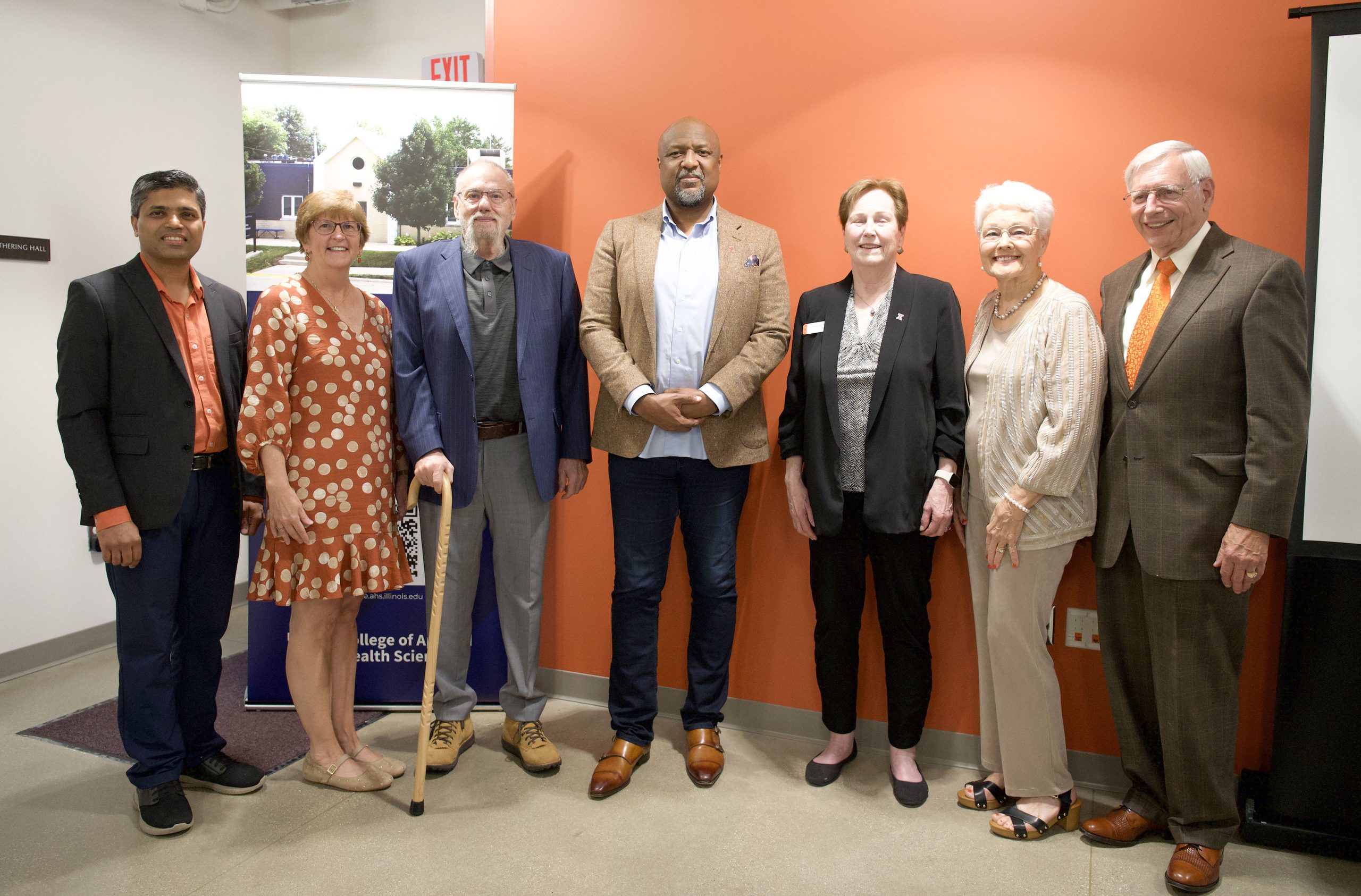
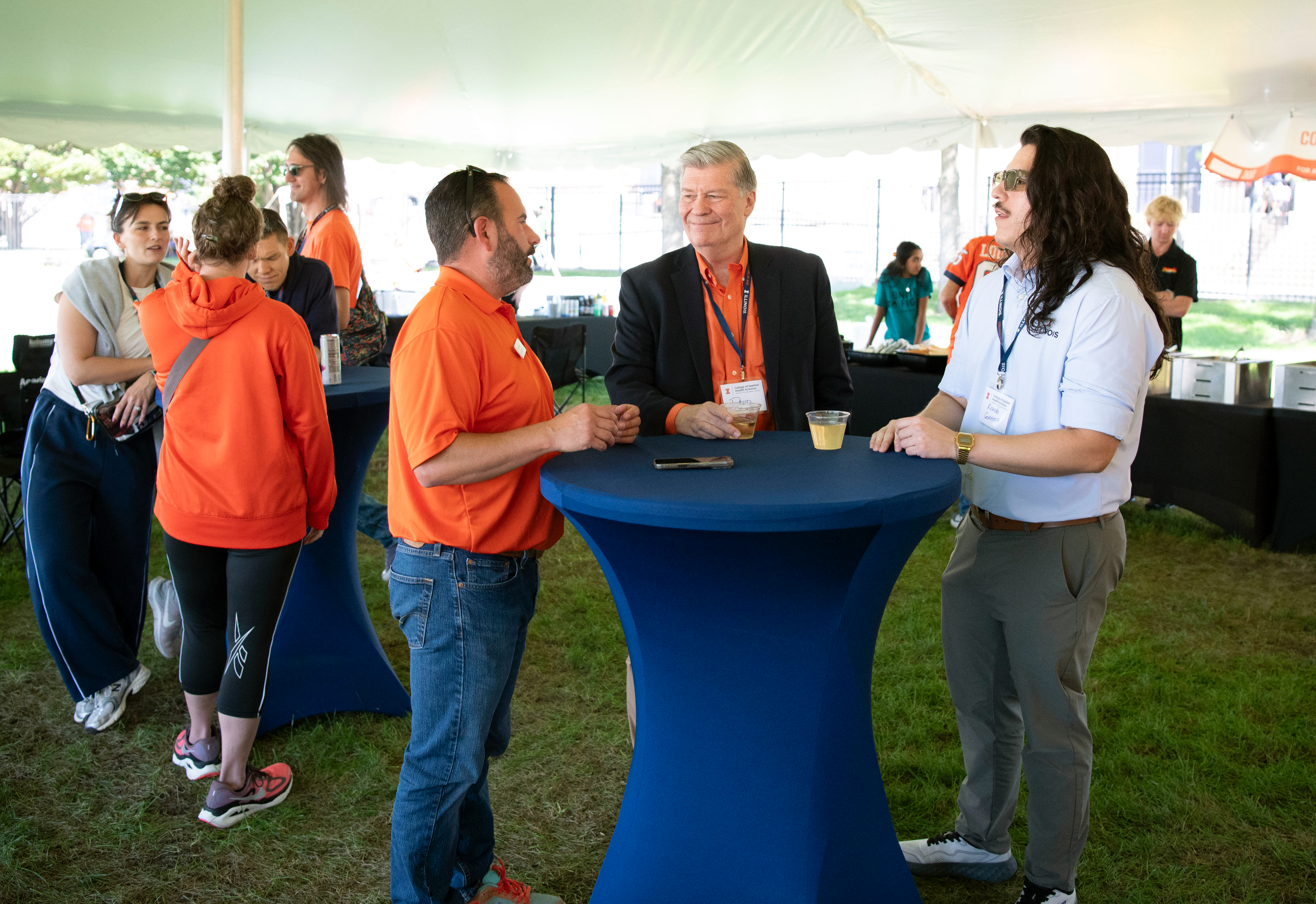
AHS 2023 Convocation


Photo by Fred Zwick

Dean Cheryl Hanley-Maxwell delivered her remarks:

I’m Cheryl Hanley-Maxwell, Dean of the College of Applied Health Sciences and three-time graduate of the University of Illinois Urbana-Champaign.

There are so many great events in the college, but this has to be my favorite. Not only does it make me nostalgic about my own graduations—were they really that long ago? It also fills my heart with joy and pride, and, yes, it makes me a little overcome with emotion to look upon these graduates, knowing that AHS helped them to develop into the outstanding individuals they are today, well-prepared to go out and make a difference in this world. 

I know that wherever your journey takes you from here—to jobs, graduate studies, post-doctoral fellowships, or a time of exploring the possibilities—you take with you a solid foundation on which to continue building. 

You take values that have been reinforced through coursework, research experiences, and community involvement—respect for all peoples and cultures and a commitment to diversity, equity, and inclusion. 

You take a firmly-held belief in the mission of the college: to promote individual and community health throughout the lifespan, to facilitate optimal living with disability, and to foster the development of livable communities in a diverse society.

But let’s be real. You’re not thinking of any of that today. 
•    You’re thinking about all the great friends you’ve made here.
•    You’re looking around the State Farm Center and remembering events you’ve attended here. 
•    You’re thinking about what you’re going to do after the ceremony. 
•    You’re feeling a myriad of emotions, and maybe your head is swimming and you can’t focus on anything!

I recall from my own graduation ceremonies that rush of feelings—excitement, a little nervousness about the next step, pride, a little sadness about moving on, but mostly just gratitude and happiness and thank the stars, I made it!

It’s a bittersweet moment. I think the psychological concept of reframing can come in handy at times like these. 

You’re not losing friends as you all go your separate ways. 
You’re gaining a whole lot of people to visit across the country, possibly around the world, while you’re also making new friends in your new life. 

You’re not leaving a safety net of faculty and staff colleagues and mentors who offered sage advice when you needed it and supported you throughout your studies. 
You’re expanding your professional network of people who will always enjoy hearing from you, finding out what’s new in your life, and, yes, offering sage advice when you need it. 

Being amazed by what you’re learning, from people you respect and admire, doesn’t end here. You have a whole lifetime of being amazed ahead of you. Just be open to it.

Look ahead to a bright future. Take advantage of every opportunity life offers to grow, to learn, to help, and to have fun. Take life seriously, but remember that it’s the only one we have, as far as we know, and time goes by quickly. 

It sounds cliché, but live in the moment, and see even challenging times as chances to learn something new, something valuable. 

Of course, I wish you all the best. Stay in touch and stay involved, if you can. One of the college’s greatest strengths is a strong and active group of alumni. Which you will soon be!

Share on social

Related news

Can the use of AI and predictive modeling speed up long waits at emergency rooms?


Pronounced staff shortages and a lack of hospital beds have led to prolonged wait times for patients in emergency rooms around the United States, recent studies show. Those studies also show that patient congestion is one of the main factors threatening efficiency, safety and quality of care.

Now two researchers, including one from the College of Applied Health Sciences at the University of Illinois, are looking at ways to reduce emergency care wait times.

Hyojung Kang, an assistant professor in the Department of Kinesiology and Community Health in AHS, is a co-investigator on a nearly $100,000 Jump ARCHES grant to develop innovative models aimed at reducing wait times. The Jump ARCHES program is a collaboration between OSF Healthcare, the University of Illinois Urbana-Champaign and the University of Illinois College of Medicine Peoria. It was established in 2014 by a $62.5 million gift to provide direct access and competitive grants to engineers and physicians working together to combat problems in the realm of health care.

Kang’s co-investigator is William Bond, an emergency department physician at OSF HealthCare Saint Francis Medical Center in Peoria. 

“To acknowledge that suffering [in the waiting room] is to use compassion, which is part of us at OSF HealthCare, and to address those needs as quickly as we can; to acknowledge that timeliness is part of the quality of care and we really want to have as timely of care as we can for our emergency department patients,” Bond said.

Improving time to treatment

The project is called: STREAM-ED: Simulation to Refine, Enhance and Adapt Management of Emergency. The team is creating models to predict short-term, mid-range and long-term demand using historic data in de-identified electronic medical records. The goal is to combine machine learning prediction, discrete event simulation (a method to test processes and interventions ideally prior to intervention) and optimization techniques to determine best possible operational changes in emergency department management.

Kang specializes in discrete simulation, which provides a layered analysis of non-linear relationships among factors such as patient flow, availability of resources and operational policies that influence where patients are placed and for how long. The process provides a more comprehensive understanding of the way the system performs.

“Discrete-event simulation is a powerful technique used to model and analyze dynamic behaviors of complex systems, such as emergency departments,” Kang said. “In an ED DES model, individual entities like patients are simulated, along with their interactions with various resources like physicians and nurses.”  

Kang says the EMR information leveraged by researchers to create predictive models includes chief complaints, acuity levels, whether a patient was discharged, and timestamps collected throughout the patient’s time in the emergency department. They’ll also use data about physical resources and providers, including nurses and technicians who deliver assessments or care in different pods within the emergency department.

Bond says it also offers a way of testing interventions and timing without having to do it in real life. 

“Instead, we may find that staffing an area with a more balanced team is the thing to do, staffing the team earlier in the day or later in the day. These types of things may make significant changes in our ability to care for patients.”

Running those scenarios will help identify high-reward interventions that can make the biggest impact with the fewest resources to increase efficiencies that can also help providers from feeling burnt out.

There have been studies that use forecasting and modeling approaches in the past, but Kang says their practical application and integration into real-world operations have been limited. The project should result in helping decision-makers understand feasible actions they can take to improve emergency department flow.

“Our research team aims to empower [emergency department] leaders with the necessary, data-informed tools to navigate the complexities of resource allocation, making a tangible difference in the daily functioning of the ED,” Kang said.

Editor’s note:

To reach Vince Lara-Cinisomo, email vinlara@illinois.edu.
 

Share on social

Related news

Faculty Focus: KCH Assistant Professor Emerson Sebastião


Q: You’re from Brazil and did your undergraduate work there. How did you end up at Illinois for your Ph.D.?

A: My story might not be different than many others. But I’ll tell you what happened. During my master’s in Brazil, I had a very important mentor [Sebastião Gobbi]. He was my advisor and he completed his Ph.D. abroad in Canada. But when he got back to Brazil to start his lab he would stop by every single day and say, ‘I’m not going to advise anybody for the Ph.D. You better go away, preferably abroad.’ I loved that idea, and I always wanted to know different places. When I was doing my master’s, we started looking at potential places and potential advisors. And, obviously, we started with Canada, where [Gobbi] completed his doctoral studies. But we were unable to find anything there. And then he ended up going to a conference in Tsukuba, Japan, back in 2008 where he met Wojtek Chodzko-Zajko. And Wojtek was presenting something related to older adults, and he ended up talking to Wojtek. And when he got back, he said, ‘I believe I found the perfect advisor for your Ph.D., so you’re going to Illinois.’ That’s how I ended up at Illinois. Things ended up being facilitated because of [KCH Associate Professor] Dr. [Andiara] Schwingel, as well. That’s how I ended up in Illinois, a world-class university, well-known researchers. So I was more than happy to join the cold land of Illinois.

Q: You’ll be teaching at your alma mater. Does that lower your anxiety about a new job?

A: I’ll tell you that does not lower my anxiety. It helps a little bit … I know that I’m coming back to a world-class university and a world-class program and that sets the bar pretty high, right? So it’s a different deal when you are a student. You are being trained and learning, so we are somehow protected. But as a faculty member, you are going to be involved in everything. You’re going to take part in big decisions not only at the department level but college as well—to fulfill the mission of the college, the university, the department. But I feel well-prepared for that. I believe that my five, almost six years at Northern Illinois provided me with the skills and abilities that I need to navigate all the things that I’m going to have to be doing as a faculty member at UIUC. And I love that. I love new challenges. To be honest, coming back to teach at Illinois and work at Illinois as a faculty is a dream come true. I’m going to work with people that have been really moving and shaping the field of kinesiology for many years. So I’m really happy and excited for that. 

Q: What influenced you to study your research field?

A: In Brazil, it’s different than in the United States. For specific areas, like kinesiology and many others, you don’t really have a career outside academia to do research or even to really apply your knowledge as a researcher in the industry. So it’s either you go to a practical field, like professional, or you go to academia. I was having a lot of doubts until my sophomore year before I was invited to be part of Dr. Sebastião Gobbi’s lab. I studied physical activity and aging which was connected to an outreach program that was attending over 300 seniors in the university. So that really sparked my interest because we were conducting research and putting the knowledge we were creating in the lab into the community. So that where I fell in love and said, ‘OK, academia is the right place for me because I like to teach, but I also like to do research.’ And academia, at least at that time in Brazil, was the only environment that you could be doing that.

Q: Has having Pedro Hallal (director of the MPH program) created a pipeline for Brazilians to come to Illinois and AHS?

A: We hope so. That pipeline already exists in other departments. If you look at the economics department, by the time I was part of the doctoral program, I learned about this pipeline from Brazil, particularly, I believe, the Federal University of Pernambuco. And now I hope that’s going to be the same with kinesiology and Applied Health Sciences with Pedro. Pedro is a great scholar, a well-known researcher. He really is a scholar that we look at when it comes to physical activity and health. He led a very important study in Brazil regarding COVID, and he has a lot of connections, not only where he completed his studies in Pelotas, but throughout Brazil and across the globe to be honest. So I believe that he being there, now, is going to draw even more attention to Illinois, and not only for Brazilians that want to come and work but for students, as well. That’s very important. Brazil has a really good, strong scientific program … they send visiting scholars and students for a short period of time—say, one year—to work and learn new techniques and come back to Brazil and apply that there, to help training the future researchers in the field. So I believe, with Pedro being there, that will increase drastically. 

Q: You look at the factors that influence physical activity participation and the consequences of physical activity. What were your influences to study that?

A: Since I was seven years old, I have been involved in sports—competitive sports, leisure sports. I come from a poor family, and growing up we did not have access to color TV or video games, VHS to watch movies. So most of the way I had fun was outside, mostly playing soccer, running around, those old-school type of activities, and I think that shaped me. Before college, I was thinking about something related to computer science—people said it was among the professions of the future. I wasn’t happy, and I found myself in kinesiology. And then my mom—my mom was almost 63 years old when I got into college. She had little time for leisure activity because she had to work. But she was always walking to everything—for work, to go to places. I saw how, based on the amount of movement that she had in her life compared to people at the same age, how different she was, physically different—being able to walk, do things, never getting so easily tired. So by the time I got into college, and I met Dr. Sebastião Gobbi, who was studying physical activity and aging and coordinating the physical activity program for seniors, I started to be more curious about it. What are the benefits of physical activity for older adults? Are these people participating because it is free of charge and close to their home or because of the social element involved in it? [Does] the environment matter? So all of these questions and talking to people and other researchers involved in that aspect shaped my interest to pursue this career. 

Q: The college has been more intentional in recent years to address the lack of people of color in faculty roles. Did that influence you in coming back to Illinois?

A: I am aware of the efforts that the college and university have been doing to address this issue. For me it is very important, and I’m happy that the college is taking those concrete steps, drawing upon the Office of the Vice Chancellor on diversity, equity, and inclusion. Representation is important not only for students but also for faculty and staff. So, yes! That did influence my decision to coming back to Illinois. In Brazil, for example, throughout my education, I noticed that I was the only [person of color] in my class. And that was not different during college. Although I had excellent teachers, not a single one of them looked like me. So I started being more curious about it, and wonder, why is that? So definitely, this is something that I looked at when I applied to Illinois. I think this is very important, not only to provide an environment that people feel more comfortable but also for, as you said, a diverse student body to recognize that they can follow that path. Being intentional about faculty hiring will help create a more diverse next generation of leaders and researchers. Applying for jobs in academia, people normally look at the directory, at least I did. And if you see diversity, you immediately link that to place committed to the cause, so probably it is a good environment to work. Knowing all the college efforts, I am happy to join the department/college and help support the initiatives, and put my ideas to help move that agenda forward. 

Editor’s note:

To reach Vince Lara-Cinisomo, email vinlara@illinois.edu.
 

Share on social

Related news

Faculty Focus: KCH Assistant Professor Shelby Keye


Photo by caption

Q: Is there pressure to return as faculty after just completing your Ph.D., without going to a different university first?

A: I would say so. Some of that pressure is internal. I just want to do as well as a faculty member as I did as a student. When I was doing my interview for the job, I wanted to make sure that the faculty was seeing me as more than just a student. I wanted them to be able to envision me as a collaborator and not just on the same level as the other students. There was an added level of pressure there because they’ve seen me in the last four years as a student. So I had to essentially convince them that I could go beyond that, and they could become my colleagues. 

Q: Do you have any concerns about how students will approach you, given you are so close in age?

A: Sure. Keeping things professional is always good. I do think that beyond my age, there’s another added level to it is being a woman, too. There’s extra barriers required to have students view a young woman as their superior as a professional—strategies to just make sure that I keep up with my own coursework, making sure I’m on top of my own stuff, so they respect me. If I’m falling behind, then they fall behind as well. Making sure that I’m staying on top of lessons, grading, staying on track. It’ll be a challenge, and I’ll learn. 

Q: What are your research influences?

A: Probably a series of fortunate and some unfortunate events. I grew up as an athlete. I did gymnastics for most of my life, did cheerleading later on in high school and college. So I appreciate the positive benefits of staying active. I’ve always loved working with children. My first job was as a preschool teacher. Ever since then, I’ve just really enjoyed working with children. In terms of the cognitive health piece, I didn’t know much about it until I started working with [mentor and KCH Associate Professor] Naiman [Khan]. I was interested in working with children. I had worked with children in low-income schools during my master’s. Because of that relationship between cognition and academics, I was drawn towards working with Naiman. The unfortunate piece in terms of life is that I have a family history of obesity, heart disease, cancer and dementia. That all stems from poor health behaviors, poor diet, low physical activity. Those are some motivating factors with studying what I study. 

Q: How did you get connected with Naiman? 

A: That was just a cold email to him. I was in my master’s [program]. I was finishing up. I knew I wanted to do a Ph.D. My dad actually told me to look at schools in Illinois. He did some work at U. of I. while he was in his grad program. He did not graduate from here. But he had done some work here over the summers with a collaborating lab. And he just said, ‘Take a look at Illinois. They have good programs. They have a long history of excellent research.’ I looked at the kinesiology department, and Naiman was really the only person doing the type of work that I was interested in. And I sent him an email. Good timing [since] he was looking for someone that could help with running a summer physical activity program, and I was the person that he chose. 

Q: The college has the most diverse student body on campus, but is lacking in diversity in terms of faculty. Was that part of your decision-making process?

A: That’s a good question. I thought about it a little bit, but I can’t say it was a big, driving factor. That was actually something that I thought about more as a student when I was applying for Ph.D. programs. Two things, actually: being a female and then being a part of a marginalized group of color. That played a role in terms of where I chose to go to school. Dr. Susan Aguiñaga, who’s in KCH, she’s a [Latina], and she and I had a conversation briefly about it. We recognized there’s still room to grow. But I think part of that starts with us. I do think that moving forward, it would help the department if women like Susie and I recruited students that were of similar groups and encouraged them to apply for graduate schools and enter academia, too. I understand that from a student’s perspective, it can be discouraging. But you kind of have to have some courage to enter this space so other people can see you in that space. I did think about it briefly. But I thought about it more as an opportunity and not necessarily as a negative thing. I just thought, ‘OK, well, if they need somebody to represent my group, I can do that.’ And I want to do that. And hopefully, I can bring other women of color with me as I go through my academic journey. 

Q: What made you want to teach?

A: I don’t know. I’ve always wanted to work with kids. I’ve always liked to lead and share and learn. I think that the academic setting is the best place to do that. I come from a long line of teachers. My grandparents were teachers. A lot of my aunts and uncles are teachers. My dad taught a little bit while he was at the Naval Academy. Maybe it’s just something that’s in me. I enjoy learning. I’ve always liked school, and I like to share what I learn. And doing research is the learning part. And then teaching is sharing what I have learned. 

Q: What’s the most important thing you’ve learned from Naiman, as a mentor?

A: Something that comes to mind is Naiman is very self-aware. What I mean by that is that he knows what he’s good at, and he knows what he’s not so great at. He really hones in on those strengths and stays away from the weaknesses. But I think that makes him a really good mentor because he knows what he can do for us, and he is very honest. That’s just a level of humility that he has that I think is really good as a mentor and as a researcher, especially in a university where we have to write grants all the time to get funding for research. Humility is necessary with that because you’re getting denied almost all the time. It’s a field filled with ‘nos.’ What I’ve learned is to try to maintain my humility, and really hone in on my strengths, and focus on those, and build those up, and accept that I have weaknesses, but not to dwell on those because I can build my research around what I’m good at.

Editor’s note:

To reach Vince Lara-Cinisomo, email vinlara@illinois.edu.
 

Share on social

Related news

People who viewed sex as a leisure activity enjoyed more, better sex during the pandemic


The fear, uncertainty and stress associated with the COVID-19 pandemic took a toll on adults’ mental and physical health – and their sex lives, several studies reported. However, new research suggests that individuals who embraced sex as a leisure activity found creative ways to cope with the effects of the pandemic and enjoyed more satisfying and active sex lives compared with people who did not view sex the same way.

Researcher Liza Berdychevsky, a professor of recreation, sport and tourism at the University of Illinois Urbana-Champaign, conducted an online survey of 675 adults in the United States, the United Kingdom and Canada between February and May 2021. Published in the journal Leisure Studies, the first paper from the project examined people’s views of sex as leisure before and during the pandemic and the effects those outlooks had on the respondents’ quantity and quality of sex.

The sex-as-leisure perspective was defined in the study as engaging in sexual activity for purposes such as recreation, relaxation, self-gratification or personal development.

“When sexual activity is pleasurable, freely chosen, and intrinsically motivated, it aligns with most definitions of leisure activity,” Berdychevsky said. “The sex-as-leisure mindset affects sexual inhibitions, attitudes and practices, and it is congruent with the view of sexual health as key to our overall wellbeing and quality of life.”

The paper “Sex as leisure approach during the COVID-19 pandemic and its impacts on the quantity and quality of sex life” is available online.

Share on social

Related news

KCH Abroad: Students travel to Italy, Greece

ITALY

In May 2023, 24 students traveled to Italy in a faculty-led Study Abroad program focused on the Italian public health system. Students attended tours and talks at prestigious Italian sites in Rome and Florence, and also enjoyed some amazing cultural activities, including Italian cooking and art classes, guided tours to the main historical attractions in Rome and a visit to a winery. Some of the places visited were the Catholic University, the Italian National Institute of Health and the Department of Planning and Organization of the National Health Service, a regulatory agency within the Italian Ministry of Health.

KCH faculty members Andi Schwingel and Aline Lamas led the group. The students also visited Agenas, the Department of Planning and Organization of the National Health Service, a regulatory agency within the Italian Ministry of Health, which deals with regulating pharmaceuticals, medical devices and other health products. They met with AREU (Azienda Regionale Emergenza Urgenza), which handled the Covid pandemic in the Lombardy region, to learn about their emergency preparedness operations and experiences with Covid-19.

In addition, students visited the Sapienza Università di Roma and University of Florence in Florence to learn about their public health training programs. There they met with officials, professors and students. Additionally, they visited the University Hospital Meyer Children Hospital in Florence to learn about the work of this hospital, which is an official member of the European Network of Health Promoting Hospitals of the World Health Organization. Additional site visits included Community of San Egidio, Caritas Roma, First Med, Institute of Neuroscience/Tuscany Stroke Network and Terme dei Papi in Viterbo. Students also enjoyed some cultural activities including Italian cooking classes, guided tours in historical Rome and the Colosseum, a visit to a winery and art class.


GREECE

In the summer of 2023, students—led by KCH faculty members Kristin DiFilippo and Beth Frasca—embarked on a two-week tour of Greece for IHLT 498: Interdisciplinary Health in Greece.

Students spent two weeks exploring health from an interdisciplinary perspective. Participants experienced campus life at Perrotis College, connected with academic staff, and interacted with Greek culture. Greece provided an opportunity for students to experience the Mediterranean lifestyle while learning about health from the perspective of the whole person.

Participants toured cultural, historic and religious sites in Thessaloniki and Athens, learned about the public and private health systems, and gained knowledge of Greek culture through shared meals, winery visits and Greek dancing lessons. Greek experts on the Mediterranean lifestyle, olive oil and the healthcare system interacted with students. Undergraduate students who are interested in learning about health while exploring Greece gained an appreciation for the role that various dimensions of health and culture play in quality of life. Students took part in cooking classes and learned to make several different Greek foods. They also did an olive oil tasting and learned about the Mediterranean diet. Students also climbed Mount Olympus and visited the Parthenon.

SHS’ Rispoli retired from academia, but not done educating


It really should not surprise anyone that someone who grew up in Brooklyn, N.Y., had an interest in languages. After all, Brooklynese is its own special code, spoken by millions.

So, the fact that Matt Rispoli—Illinois professor by way of Marine Park (a neighborhood way at the south end of Flatbush Avenue and home of Nathan’s, Coney Island and Buddy’s Fairyland)—ended up as an academic researcher whose expertise is developmental psycholinguistics makes perfect sense.

Rispoli—who recently retired after four decades in academia—credited his teachers, starting with Judith Marcus, his Spanish teacher at Madison High, and primarily his professors at Hunter College in New York, for influencing his interest in linguistics.

“When I got to Hunter, they had a bunch of great teachers, and I remember them really well,” he said in an accent that gives away his birthplace. “A guy named Robert White, (and also) Tamara Green. They taught Greek and Latin. Best of all was Ralph Ward. The stuff he knew was incredible. I’m lucky I got a chance to study with the guy.

“Those were my influences. Their enthusiasm for language inspired me.”

After graduating from Hunter, Rispoli got his master’s degree in Library Science at Queens College and worked as a librarian for four years in New York, including at the Brooklyn Public Library from 1978-79. 

But his love for language kept calling and he answered, receiving a master’s degree in linguistics at Penn. He followed with a Ph.D. in developmental and educational psychology at Teachers College at Columbia University in New York, and then embarked on an academic career that wound from Cal-Berkeley through the Midwest—the University of Kansas, where he met future wife Pamela Hadley, now the department head of the Department of Speech and Hearing Science at Illinois—to Oklahoma State, Northern Arizona and Arizona State.

Family reasons brought Rispoli and Hadley to Northern Illinois in 1999, and it wasn’t long before the couple/colleagues ended up in Urbana-Champaign.

“It was only a matter of time before someone at Illinois noticed my wife’s career and said, ‘Gee, we’d love for you to come down here,” said Rispoli, who joined the SHS faculty in 2007 as a visiting assistant professor and became an associate professor in 2017.

“I was delighted to move down to a campus where they actually have a linguistics department and great psychology department, but most of all, a department where we get the brightest kids in the state.” 

Hadley and Rispoli have collaborated on dozens of projects and publications and Rispoli enjoyed the work, but at the end of 2022, he felt it was time to step away.

“I’m 70,” he said when asked why he retired. 

But he had no desire to sit on his couch all day or go play golf.

“After you retire you begin to say, ‘What can I give back?’ I have the time. I have the passion.”

With that time and passion, Rispoli expanded on the Sentence-Focused Framework project created by him and Hadley. The pair developed the Sentence-Focused Framework to build a bridge between early vocabulary and grammar interventions for toddlers and preschoolers with language disorders.

The Sentence-Focused Framework is an approach to language intervention that helps toddlers produce more diverse simple sentences, Rispoli said. 

“Then in retirement, I learned how to animate and create films,” he said. “Now I can actually give expression to these ideas, visualizations that I had while I was lecturing that never came through.”

Rispoli developed a YouTube channel also called the Sentence-Focused Framework, uploading a series of 24 videos that explore language, language development and language intervention. The intended audience is students of language development, parents of young children and professionals involved in early intervention. Rispoli encourages instructors to use the videos in class. 

“It (the YouTube channel) really comes off of my experiences teaching (SHS 320) which is language development. In 320, we couldn’t really be sure of the student’s background and how much they understood or knew. We knew we needed to augment. But I never had enough time as an instructor to augment, to really build up the teaching materials

Rispoli sees Sentence-Focused Framework as addition to the college curriculum, and has just finished a website that houses the videos and other tools.

Whatever the future for that project, it’s clear retirement hasn’t slowed Rispoli, who sees it as just another phase of life.

“First chapter I was a librarian,” he said with a laugh. “Second chapter I was a Ph.D. Third chapter I’m an educator of sorts. … who really speaks Adobe Premiere.”

Editor’s note:

To reach Vince Lara-Cinisomo, email vinlara@illinois.edu.
 

Share on social

Related news

‘What Did You Say?’ Understanding speech in noise a common problem


A common complaint that audiologists hear from clients coming in for hearing assessments is difficulty hearing in noisy backgrounds. It’s a problem that affects millions of adults and can become more of a problem with age, but it also affects children and adolescents as well.

While the problem might be common, adequate ways of addressing the problem are not. Effective solutions require a deep understanding of the reasons the problem is occurring. Three faculty in the Department of Speech and Hearing Science—Assistant Professor Mary Flaherty, Associate Professor Dan Fogerty and Assistant Professor Ian Mertes—focus their research in this area with the goal of gaining that deep understanding and finding solutions in order to improve the quality of life of those who struggle with understanding speech in noise.

“If people are unable to hear clearly in noisy environments such as restaurants, it can negatively impact their ability to socialize and communicate in those settings and, ultimately, to enjoy those settings,” Mertes said.

Mechanics are There; Understanding is Not

While some might assume that hearing in noise is a problem of aging, it turns out that children can also have difficulty understanding speech in noisy environments. It’s known that children with normal hearing have fully developed auditory systems by their first birthday, but that their brains take longer—into their teenage years—to develop the ability to process speech in noise effectively. What isn’t known is why this is. That’s what Mary Flaherty wants to find out.

“We know it has something to do with attention and sound-source segregation, separating different sounds in the environment,” she said. “We also know children just need more information than adults. They aren’t as good as adults at putting puzzles together when they are missing pieces. But we don’t really understand what it is that children need to help them.” 

Flaherty’s concern is that children who struggle with understanding speech in complex acoustic environments may fall behind in school. Moreover, the true problem may go undiagnosed and the child labeled negatively by teachers and classmates. And if this is true of children with normal hearing, imagine the extra burden faced by children with hearing loss who experience greater difficulty understanding speech in noise.

Adults use cues such as voice pitch to focus on one speaker in noise and ignore everyone else. Children cannot do that. So what cues can help children? Flaherty currently is investigating talker familiarity. She worked with a graduate student in audiology to develop a game that familiarizes children with a voice while they’re playing. A pilot study in which children played the game 10 minutes a day for five days found that their speech-in-noise perception for that particular voice increased. Flaherty plans to pursue research that tests this phenomenon in the classroom.

This summer, she will collaborate with researchers at Lurie Children’s Hospital of Chicago to investigate hearing-in-noise difficulties faced by children who use hearing aids. Among the issues she will investigate is whether talker familiarity also can help children with hearing loss, which has never before been studied. As she continues her research efforts, Flaherty hopes to identify primary factors that account for the long trajectory of children’s development of speech-in-noise perception, and to use the knowledge to improve hearing in noise, especially for clinical populations. She also collaborates with SHS colleague Pasquale Bottalico on classroom studies that they hope will lead to a method of predicting which children may have difficulty understanding speech in noise, identifying characteristics that they have in common, and recommending effective interventions.

More Cues, but More Potential Deficits with Age

Dan Fogerty focuses on older adults in his studies of how noise interferes with speech processing, how it impacts understanding a message and how it requires listeners to recruit other cognitive and sensory processes to help make sense of it.

A predominant perspective on how noise makes speech understanding difficult is that it exerts two primary effects: energetic masking and informational masking.

“In energetic masking, the noise covers up the speech energy in time and frequency,” Fogerty said. “Informational masking refers to all of the other things that might make it difficult, such as the message or familiarity of a competing talker that can draw your attention.”

Sometimes the noise dominates the signal received by the brain, depriving the listener of information. Speech dominates the signal at other times, and from these glimpses of information, listeners can piece together an interpretation of what is being said. Fogerty’s research uses glimpsing theory to examine what cues are available to the listener at any given time, but also extends the theory to how speech information changes over time.

“Amplitude modulation, the temporal rhythm of speech, is critical for understanding speech,” he said. “We’re finding that if the competing sounds vary similarly to the rhythmic aspects of speech, it can make speech understanding difficult. If we separate out these properties so that noise is varying at a faster or slower rate, then people are better able to glimpse or extract information.”

Fogerty’s primary research populations are individuals who have mild or moderate hearing loss as well as individuals who are aging with the typical sensory and cognitive changes that occur but without dementia or significant cognitive decline. He also tests college-age individuals so that effects related to aging or hearing loss are clearer. One thing he notes is important to remember is that being older doesn’t always mean performing more poorly on speech understanding tasks.

“We have a lot of older adults who do just as well or better than college students on some tasks,” he said. “That’s important for us because we want to know what is preserving their ability to understand speech in noise. What strategies are they using that are particularly helpful?”

His research goals are to contribute to the design of better hearing devices, but also to address issues that might not have a technology solution.

“That’s why we’re so interested in finding out what the abilities are that people bring to the task of listening in noise, and whether certain skills can be sharpened through training,” he said.

The Physiology Behind it All

From animal and human studies, we know that when sound enters the ear, the brain has the ability to fine tune the sound by controlling how the middle and inner ear responds. Animal studies have shown that these responses can help encode sounds in background noise. 

Ian Mertes is studying these top-down mechanisms in young adults with normal hearing to determine if they also help humans understand speech in noise. Both mechanisms rely on the brain stem. One mechanism contracts a muscle, which pulls on a bone of the middle ear, affecting how noise is transmitted through the auditory system. It can reduce the noise. The brain stem also can change how the inner ear amplifies sound, which also can turn down noise. 

“I’m looking at how these two mechanisms, which are reflexes, work together,” Mertes said. “They may work at different frequency regions, the lower frequencies or pitches and the middle frequencies or pitches. Working together, they may help people hear in background noise.”

Using otoacoustic emissions, a clinical audiology test of inner ear function, his studies have shown the physiological mechanisms are correlated with the ability to understand speech in noise. But, he said, it’s complicated.

“It can depend on how we do the physiological measurement, the types of sounds we present to the ears, and the speech perception task,” he said. His current focus on individuals without hearing problems gives him the “best look” at normally functioning auditory systems. “They have the most robust physiological responses and are able to participate in the perceptual tasks, and that can help me create a good template for adapting those measurements when I extend my work to clinical populations.”

Working with Vanderbilt University colleague Ben Hornsby, an associate professor of hearing and speech sciences, Mertes also plans to add another auditory concept called listening effort to the physiological picture of understanding speech in noise. Do individuals with weak top-down reflexes have to put more effort into completing speech perception tasks? What are the consequences of this additional effort?

The in-depth knowledge Mertes is gaining through his research may help explain why some young adults with clinically normal hearing report having difficulty hearing in background noise, another area of interest to him.

Summing up what he hopes will be the outcome of his research program, he said, “I’d ultimately like to make a significant contribution to treatment—strengthening auditory reflexes or simulating them in devices, increasing understanding of messages while reducing the effort it takes to reach that understanding.”

Share on social

Related news

Message from Professor Pamela Hadley, Head


Welcome to the Spring 2023 issue of the SHS E-News! As we come to the end of another academic year, I am happy to report that students and faculty in the Department of Speech and Hearing Science continue to thrive, to provide outstanding clinical services to individuals in our local community and throughout the state, and to make important contributions to the advancement of knowledge in our field.

We have also begun celebrating our 50th anniversary. The Department of Speech and Hearing Science was formally established at the University of Illinois in 1973. Throughout this year, we will honor the people who formed the foundation of the department as well as contributions to pioneering research and leadership in the profession with a series of articles. We hope you’ll join in our celebration. Watch for new articles during the first week of each month and visit our 50th anniversary website for more information.  

In this issue, we introduce you to three faculty who are doing important research in the area of speech perception in noise. Mary Flaherty, Dan Fogerty, and Ian Mertes are breaking new ground as they work to identify why children and adults have difficulty hearing in noisy backgrounds and how they can best be helped. I am so proud to lead a department in which innovative research is the norm. It not only advances the field, but also ensures that our students are on the cutting edge of knowledge.

We say goodbye to Associate Professor Matt Rispoli and congratulate him on his retirement after 16 years with the University of Illinois Urbana-Champaign. Matt devoted his career to the question of how children acquire language. His research focused on early verb learning, the learning of syntax, and the development of incremental sentence production in children. Matt was a recipient of the College of Applied Health Sciences’ Phyllis J. Hill Award, which recognizes outstanding mentoring of undergraduate students. He will be missed!

I also am impressed by the initiative shown by our students to position themselves as leaders within communication sciences and disorders. One of our undergraduate students, Holly Panfil, will spend the summer studying Augmentative and Alternative Communication (AAC) devices after earning a prestigious Fulbright Canada-Mitacs Globalink internship. She will work with Dr. Julie Bouchard at the University of Quebec on a study of AAC devices in the workplace.

In this newsletter, we also highlight the accomplishment of numerous undergraduate and graduate students who have received scholarships and awards this year in recognition of their academic, professional and personal excellence.

Please enjoy reading the newsletter and take pride in knowing that your alma mater is strong and growing!

Pamela Hadley
Professor and Department Head
 

Share on social

Related news

College of Applied Health Sciences
110 Huff Hall
1206 South 4th Street
Champaign, IL 61820
(217) 333-2131