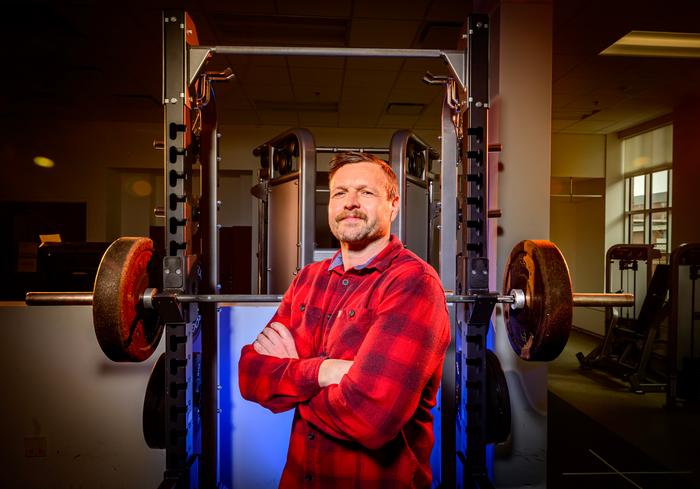
A Few Minutes With … Bill Stewart


AHS media relations specialist Vince Lara speaks with Bill Stewart, a professor in the department of Recreation, Sport and Tourism, to discuss Stewart’s research on the development of parks and conservation areas to enhance a public sense of place and promote environmental awareness.

Transcript

VINCE LARA: This is Vince Lara in the College of Applied Health Sciences at the University of Illinois. Today I spent a few minutes with Bill Stewart, professor in the Department of Recreation, Sport, and Tourism to discuss his research on the development of parks and conservation areas to enhance a public sense of place and promote environmental awareness.

And, Bill, I like to ask all the faculty when I meet with them this question. And that, is what inspires your research?

BILL STEWART:Yeah. Well, Vince, thank you for inviting me to be at this podcast. It’s really great to be here and to talk with you about this.

VINCE LARA: You bet.

BILL STEWART:What inspires my research? There’s a handful of things that do that. When I was a child, I was born and raised in Michigan. And my family was very much an outdoor enthusiast family. So I went to a lot of parks. I liked all four seasons. Winter activities, springtime romps, and summertime camping and swimming. I’ve always enjoyed being out in nature. And so that sort laid a foundation.

I went to my various programming. I had a previous life before I was an academic, and that previous life took on a couple of different job changes. I spent two years working for an oil company, and as a marketing technologist in a chemical and petroleum additives division. And that was really interesting to get a view of what life was like from the business side of an oil industry. I realized that there were some things that bothered me about the imprint that oil industry left on the environment, and I knew that they’re working hard at trying to reduce waste and pollution. But I thought it’d be better to maybe get more information about what I need to work for an oil company, or any sort of business to help with the environment.

And then I went back to school for my MBA at the University of Chicago. And I went to work for a consulting company, a worldwide consulting company. And I was in their construction engineering systems division. And I went around to a lot– I thought it’d be great to be a consultant where I help people with what they need to do.

And I found myself working for a company that built large petrochemical refinery plants in various places. I read some of their cultural impact statements and their environmental impact statements. And I thought to myself that there’s so much more to valuing nature than simply how many natives to move from one place to another, or how flat they need to make the earth to put the cement slab on to make it a refinery.

And so I went back to school at University of Arizona and the School of Natural Resources for another master’s and a PhD. Looking largely at forestry and watershed management, but I cared not so much about technical aspects of that. But I cared about how communities and individuals relate to development of natural resources. And that’s led me on this journey that I’ve been doing now for, gosh, 35 years or more. Where I really like to understand what other people think about nature, about why they value the places that they do, what some of their meanings are, and appreciate ways in which they connect with the natural environment.

VINCE LARA: You got your undergrad at Illinois, correct?

BILL STEWART:Yeah, I came here from undergraduate. I was in chemistry here. And I love learning about chemistry. It was just a fabulous undergraduate experience for me. And so it’s sort of need to come back to my alma mater to teach and do research.

VINCE LARA: What led you to academia? Because, like you said, you had this career before teaching. So, what was the path here?

BILL STEWART:Yeah. Good question, Vince. I can tell you’re good at this. What led me to an academic was that I’ve always liked reading and writing. And I came to find out during, let’s say my previous life, that I liked reading and writing what I want to read and write about. And I thought that an academic– although I clearly have some large public values that I work under at University of Illinois, I care about community well-being, public health, sustainability. Those are large questions that drive my research. But I could choose ways in which I implement those strategies through my teaching and scholarship.

And I found that the life of the academic to be one where I could be very productive, and I could blur the lines between my work and my let’s just say non-work time. I really like doing what I do. And one of the interesting things is when people ask me if I’m going to work this weekend– friends of mine in the community– I have to pause a bit. Because I’ve always, I guess, worked on the weekend. I just like to read and write about things that I care about in my teaching and research.

VINCE LARA: Interesting. So, your research involves conservation planning. Can you talk a little bit about that?

BILL STEWART:Yeah conservation planning, it’s a really huge concept. And my window into conservation planning has to do with bringing in stakeholders. Stakeholders are those people who are affected by or can affect environmental decision making. Often of a public need nature, like building a park, or developing a wetland, restoring a prairie. Those would be examples of environmental park development projects.

And for me, conservation planning is about working with communities to, at least in the Midwest here, to look at this corn or bean field on the outskirts of town that’s going to be a new development, and ask themselves to imagine what would that be like as a park. So they see it as a current cornfield, and they’re are wondering how to imagine what they need to be when they make that into some subdivisions and divide that up.

And to some extent it’s about land use planning, but to another extent it’s also about adding value to people’s lives. Each town has their unique heritage and their sense of identity on a landscape. And it’s fun to work with communities to understand what their own sense of history is about. And often, parks tend to be emblematic of those kinds of values that people have had historically in any given area their relationship with the locale.

For example, I think of Urbana and Champaign. They’re supposedly twin cities in ways that were clearly fraternal twins. You’ve got Urbana, whose parks are largely natural areas. They have this relationship with nature that says, nature should be restored and sort of untouched by humans. That the best kind of nature, the idealized park, is an environment where people are there to visit. And we’ve restored sort of a pristine nature, to some extent. Champaign parks are very different. Champaign parks have more of, I want to say, a progressive narrative of humans and nature. Where humans play a role of gardening, and they make them beautiful, and they’re meant for places for people to walk and have activities.

So although that they still have some very similar amenities, Urbana Park District has more natural areas. Champaign Park District has more cultural areas. And they’re very different views of what each town is like.

VINCE LARA: Interesting. Are we getting better at quantifying what a park means to an area? Whether it’s economically, or in non-tangible ways, are we getting better about understanding what green space means?

BILL STEWART:Yeah, that’s a great question there. I think of the notion of, what does any sort of environment mean as being one of place? The concept of place and place making really underscores a lot of my research. A sense of place is a uniqueness of a meaning that people feel as attachment to an environment. And their sense of place at a personal level where you might think about your grandmother’s pasture, and the personal relationship you have with that pasture, or your grandmother’s backyard.

When I think about community sense of place, is there something collective about the community that makes its relationship with its local environments unique to that locale? And so, your question is, are we getting better at quantifying that? Just to step back from that, I’d like to think we’re getting better understanding those relationships. Those relationships come in many kinds, as you mentioned. There’s the economic valuation, there is a personal valuation, there’s sociological, there’s emotional, there’s spirituality. There’s all sorts of ways in which we connect with environments.

And I’m going to say that we’re just tapping the surface of the iceberg in understanding ways that people and communities have come to identify and care about their environments. And that kind of research is urgently needed. We’ve got, at least when I was first born back in 1955– I’m dating myself here– there is 2.5 billion people on the Earth. Right now I think we’ve got 7.5 billion people on the Earth. So in my lifetime alone– I’m 65 this year– the Earth’s population has tripled. And in that time period there’s been– I’ve never noticed any one year the increase in people. But across my lifespan I’ve noticed there is coming to be a scarcity of wild lands, of open space, of wetlands, of spots that you could go out and enjoy nature.

And so I think that the more information we have about how people connect with an environment, I think the better off we’ll be as a society. Because we need to know that those empty spaces, supposedly that really are out of production, in fact are really valuable to people.

VINCE LARA: Now, you direct the Park and Environmental Behavior Research Lab. And as a researcher, you always have projects going on. Are there any that you have going on currently that you’re– you’re excited about all of them, I’m sure. But are there any that you want to talk about that are top of mind for you?

BILL STEWART:Yeah. You’re right on that. I’ve got the neatest group of graduate students and research projects that I’m currently doing. And they’ve added a lot of value to my life and my students’ lives. I guess there’s two that come to mind.

One has to do with the evaluation Chicago’s large lot program. As you may know, there’s an urban vacancy problem across most of the world’s cities. And it’s particularly acute in the northern tier of this country, through the Rust Belt, I’m going to say. Where people have moved out of the city and urban areas for various reasons. Often they abandon their house, and they abandon their house. At times, a city will come in and fold the house into its foundation, or just haul it off. And so this left with what was once a thriving neighborhood in an urban area has become a lot of empty lots there.

Just to give you some examples of this, Philadelphia has about 40,000 vacant lots. Buffalo has about 15 vacant lots. Cleveland about 25,000. Detroit has 125,000 vacant lots to the tune of 25 square miles in Detroit. Chicago has about 35,000 vacant lots. And I will say that these vacant lots are not evenly distributed around the city. They happen only in certain neighborhoods. And what Chicago has done, which is very innovative and quite bold, they developed this green healthy neighborhood plan in 2012. And a cornerstone of that plan to sell off these vacant lots to someone that owned property on the block for $1. And so for $1, if you own property on the block, you could purchase let’s say in the vacant lot next to you and do whatever you wanted to with it.

And so I’m evaluating the social and environmental impacts of that large lot policy. And, it’s good news. We found that it connects people to their sense of place, it connects people to their neighbors, which their neighbors help them further garden their spot, and they help to pick up debris. They’ve come to know their neighbors in a tighter fashion that creates this sense of place that was much stronger than what it used to be. Where the lights used to have a past, because it wasn’t– people would look out on the block and say, wow, that’s where so-and-so used to live, that’s what this other family used to live. And now they see empty lots. So it sort of was a lot with a past and not a future.

Now with this large lot policy, these lots have been bought up, now have a future for them. And so these neighborhoods, the people who stayed behind, they care deeply about their neighborhoods. They stayed behind not because they’re desperate. But because of family or community reasons, they decided to stay and slug it out through the hard times. And now they’re finally getting rewarded if they own property. They can, if they want to, purchase that lot and create a new vision of what that block could be by repurposing a once vacant lot.

VINCE LARA: Now, you’re obviously excited about the large lot research that you’re doing. Is there other research– and I like to call these moonshot projects, because they’re kind of off into the distance. They might not be attainable currently. But are there things that, given the resources and the time and the amount of graduate research assistants you need, that you think about? That you write down, you scribble on a piece of paper maybe at 3:00 in the morning and you’re like, oh, I wish I had the time to do this.

BILL STEWART:Yeah, that’s a really good question. So, I should step back just a minute and say that my research all revolves around a concept called place making. Where people, families, communities, individuals, they aspire to make their place something different and better than what it currently is. And that’s where the large lot project comes in. It’s about place making in an urban environment.

I guess I would continue on that line, as long as we’re talking about the large lot project, there is another moonshot project that deals with more of an urban ecological nature. Where I really have partnered with my colleagues Carena van Riper in Department of Natural Resource and Environmental Sciences, Paul Gobster, who is a landscape architect with the Forest Service. And Alessandro Rigolon, who’s a planner now with the University of Utah. That’s the large lot team.

There’s another forthcoming possibility, and I hope we get the invitation through the National Science Foundation, to invite us to submit a full blown proposal for what’s called a leader project, or long term ecological change for urban areas. And that’s largely working with ecologists out of Chicago that are based in various universities up there. And they’re looking for ways to couple social issues along with ecological issues. No longer can we study the ecology of a system and not be concerned about what– let’s include people in this ecological understanding.

So, I think it’d be really a neat challenge for myself and my students to do a more stronger coupling of healing communities with ecological communities, and try to understand just a baseline description of what is the nature of that relationship. And to some extent, are there interventions that can happen through policy triggers that the city can do– much like the large lot program– to further facilitate a healthy social ecological resilience? To make human communities more ready to respond to changes in their future.

VINCE LARA: My thanks to Bill Stewart. To hear more about Illinois and the College of Applied Health Sciences, find our podcast on iTunes, Spotify, and iHeartRadio by searching a few minutes. See you next time.

Related news
A Few Minutes With … Pasquale Bottalico


Pasquale Bottalico’s research looks at noisy environments, such as restaurants. (Google Images)

In this edition of “Five Minutes With …,” AHS media relations specialist Vince Lara-Cinisomo interviews Dr. Pasquale Bottalico in the department of Speech and Hearing Science about his study of the effects of ambient noise in restaurants.

Bottalico, in his study, “Lombard effect, ambient noise and willingness to spend time and money in a restaurant,” published in The Journal of the Acoustical Society of America, found that subjects reported a disturbance of their speech when noise reached 52.2 A-weighted decibels (dBA) and that vocal effort began to increase at 57.3 dBA. The sound level of speech increased as ambient noise increased. As background noise increased, it triggered a decrease in the willingness to spend time and money in that establishment. You can read more about Dr. Bottalico’s research here.

Transcript

VINCE LARA-CINISOMO: Hello, this is Vince Lara, Media Relations Specialist at the College of Applied Health Sciences at the University of Illinois. Today I spend five minutes with Dr. Pasquale Bottalico, of the Department of Speech And Hearing Science, to talk about his recent study on ambient noise in restaurants and its effect on the bottom line.

PASQUALE BOTTALICO: So the goal of the restaurant, the idea of the restaurant, is what we can do to improve the situation in restaurant. So my study was actually started because there was a lack in the literature. And I’m always being interested, it’s not the first paper that I worked about Lombard effect. I’m very interested in Lombard effect.

And I started to be interested in Lombard effect, again, starting from classroom acoustics, because the Lombard effect is basically characterized by a rate of voice increase per dB increasing noise in the environment. And the value is 72 for teachers, which is the highest. Generally, in the literature, it’s reported between 0.3 and 0.6. But teacher, 0.72., so they’re increasing their voice even higher.

VINCE LARA-CINISOMO: Every day?

PASQUALE BOTTALICO: Every day, for every dB of noise increasing in the classroom. So this means that restaurant noise– everyone went to a restaurant in his life, and it can happen that after dinner with some people, at a restaurant, you go out and your throat’s sore. And you don’t really understand why. And because the Lombard effect is an unconscious effect, so you are not conscious of the fact that you are actually screaming.

But your voice, your body, and your physiology knows that. And so you will have the effect that your throat is burning. And I found particular the fact that this effect was never studied in a restaurant. And there were not studies correlating it with the willingness to spend money. So I thought it was a good idea to do the study. And I already did similar study for understanding other aspects of the Lombard effect. I was quizzing in the past about at which level of noise it starts, these effects, in other papers.

So I use a similar protocol, but I changed the setting, and it changed the noise. So I tried to recreate a restaurant in one of our sound booths. I had my students, my undergraduate students, that were the partner in the dinner. And we used typical restaurant noise, and we changed the level in a random way, covering a very large interval of noise, so from a medium level to a very loud level. Again, using the range of noise level reported by the literature, in restaurant noise.

And what it came out, that a level between 50 and 55 dB is starting this willingness to leave that place, and also to spend less money to eat in that place, and is starting the disturbance in the communication. And because of that, there is the objective evaluation of the voice, that is starting to increase at about 60 dB of noise. And all of these effects were quite strong.

We are starting to work again on the project. After the forum actually, because I kind of figured out that in this case, we used college students for this study, and I’m considering it like a pilot. But I want to move forward with the elder population.

And so, we know also that we have child in our college that’s interested in new research on aging people. And we have a movement, that is the age friendly in Urbana-Champaign, to make the city more friendly for aging people. And I think that this project will fit perfectly.

So I have a doctoral student in audiology. She’s going to start to collect data next semester. And the goal will be to create a different group in the elder population, normal hearing, and people with a moderate hearing loss, and people with a severe hearing loss. And try to understand better how these vulnerable populations are affected by the problem.

VINCE LARA-CINISOMO: My thanks again to Dr. Bottalico. This has been Five Minutes With.

Related news

Podcast: A Few Minutes With … Brandon Peters


Brandon Peters (Photo courtesy of Division of Intercollegiate Athletics)

Vince Lara of the College of Applied Health Sciences speaks with Illinois starting quarterback Brandon Peters, a graduate student in the Recreation, Sport and Tourism department of AHS.

Peters, who got his undergraduate degree at Michigan before transferring to Illinois, talks about why he picked RST and what he enjoys about the classes.

Transcript

VINCE LARA: This is Vince Lara at the College of Applied Health Sciences at the University of Illinois. Today, I speak with Brandon Peters, starting quarterback for the Illinois football team, and RST grad student.

I’m talking with Brandon Peters, who’s the starting quarterback for the Illinois football team. So Brandon, how much did graduate programs– in terms of deciding where you wanted to continue playing– how much did the academics part of it, and how much, honestly, did the football playing part it have a play in your decision?

BRANDON PETERS: I would say football was the main focus for me. But, you know, when I came on my official visit, they kind of laid out the academic plan for me. And, you know, kind of weighing my options. Illinois being the university that it is, they offered the RST program for me to be in, and sport management was always something I was interested in at Michigan. And I just thought it was a great opportunity to come to Illinois, also at the academic level.

VINCE LARA: Now, you’re taking some online courses, what I had read. But you’re on campus obviously a lot. Have you run into any of your professors? Or have you had a chance to interact with any of them?BRANDON PETERS: Not yet, but I’m going to set up a meeting with the RST– I forget. Tiger?

VINCE LARA: Mm-hmm.

BRANDON PETERS: (Prof.) Tiger. Yeah. I’m going to set up a meeting with him, and just get to know him a little bit, and talk to him.

VINCE LARA: Now obviously, football’s the goal. Right? Ultimately, whether it’s the NFL, CFL, XFL, or whatever it is. But if that doesn’t happen, or even thinking post-football, do you have any ideas? Like, maybe RST hopes? You know, like you can work as a GM, or you can work in– you’re doing sport management as your focus, right? So what have you thought about post-football?

BRANDON PETERS: I really haven’t thought much into it yet. I still have another year to play. When it gets to that time, I think I’m going to think at it in more depth. But like you said, I’ve always thought about staying in the sport world, since I’ve always been so close to it my whole life. I think this will definitely help me propel myself into the future when I get to that point.

VINCE LARA: You’re from Avon, Indiana.

BRANDON PETERS: Yeah.

VINCE LARA: So did the proximity of Illinois play a big factor in deciding to come here?

BRANDON PETERS: Yeah. I mean, the other school that I had a lot of interest in too was Miami, Ohio, which is even closer than Illinois. Being able to stay at home was a great opportunity for me. And then just to be even closer to my family, and they could come to even more games. You know, my elders, my grandma and grandpa can travel well to games. So you know, it’s nice to have that.

VINCE LARA: Definitely. One last question I have for you. What classes are you taking right now?

BRANDON PETERS: RST 515 and 512.

VINCE LARA: 512? What are those courses like?

BRANDON PETERS: Organization and marketing.

VINCE LARA: My thanks to Brandon Peters. This has been A Few Minutes With.

Related news

A Few Minutes With … Susannah Scaroni


Paralympic medalist Susannah Scaroni (Getty Images)

College of Applied Health Sciences media relations specialist Vince Lara speaks with two-time Paralympian Susannah Scaroni, who is training at Illinois for the 2020 Games in Tokyo.

Transcript

VINCE LARA: Hello, this is Vince Lara in the College of Applied Health Sciences at the University of Illinois. Today I spend a few minutes with Susannah Scaroni, two-time Paralympian who’s looking for her third trip to the games in 2020 in Tokyo.

Well I’m speaking with Susannah Scaroni, who is a 2020 Paralympian hopeful, we’ll say–

SUSANNAH SCARONI: Yes.

VINCE LARA: –if that sounds right to you.

SUSANNAH SCARONI: Yes.

VINCE LARA: And you also competed in 2016 in Rio, so this will be your second games.

SUSANNAH SCARONI: Also 2012.

VINCE LARA: Wow, so this will be your third.

SUSANNAH SCARONI: Hopefully will be the third.

VINCE LARA: Hopefully it will be the third for you.

SUSANNAH SCARONI: Yeah.

VINCE LARA: Well, let’s talk about where you got your start in racing.

SUSANNAH SCARONI: Well, I grew up in a little tiny farming community in eastern Washington. And I was fortunate enough to be close to Spokane, Washington, just about an hour away. But there’s an adaptive sports program for youth there. So I learned about it through Shriners Hospital and immediately fell in love with it.

So I started out on the ParaSport Spokane team. And when you’re in that world of adaptive sports, you learn about the University of Illinois. They have been just such a powerhouse with wheelchair athletes for decades. So I applied to come here, and here I am. And I love it.

VINCE LARA: Yeah, that was going to be my next question is that you’re from the Pacific Northwest, and you ended up here. So obviously coach Bleakney’s reputation preceded him, and that was part of why you decided to come here.

SUSANNAH SCARONI: Absolutely. Yeah. So I went to school a couple years in Montana before I came here, just based on financial reasons. But the second year I was there, coach Adam, he gave me a call and was like, hey, I don’t know– are you still interested in coming?

Because we have this other funding opportunity now. And so I was. After even two years of training on my own and doing my own thing, I still loved racing. I had my racing chair out there with me and decided to transfer over in 2011.

VINCE LARA: That’s amazing. Now, we talked about you were in 2012 and 2016. So let’s say you’re one of the veterans on the team. Because a team, you have people as young as 19.

SUSANNAH SCARONI: Right, exactly.

VINCE LARA: So do your teammates come to you for advice, and is that mentor role something you like?

SUSANNAH SCARONI: Yes and yes, and especially more recently I’ve been realizing more and more that we have new waves of freshmen coming in, and I’m in my third year of grad school now. And just being able to be this wealth of knowledge for a whole host of reasons, whether it’s living independently at college, whether it’s navigating accessible areas on campus, or I’m really passionate about nutrition. So there are some questions about nutrition and training and not doing certain things downstairs, like being tiny. All of these experiences are things I love to share with the new athletes that come in.

VINCE LARA: Now, this being potentially your third, do you look ahead to 2024 already? Or are you saying to yourself, this might be my last one? Especially when you are in school.

SUSANNAH SCARONI: That’s a good segue into that question because I have thought about this. But one thing I also really love in my career is the role model aspect of it. So right now we’re at a really cool part of wheelchair marathon awareness because Abbott World Major Series has a wheelchair division now. And I can still foresee myself continuing to push that wave of women wheelchair racers while the next group gets up to that point.

But it kind of sort of depends on where that is. There’s a lot of women I race with that are all within the same age. And so I wouldn’t want us all to stop at one time, and then all that really hard work just kind of go down a little bit. So I might see how it goes, see where the rest of the world is and the rest of the US females, and keep racing. I’m also not entirely sure yet.

VINCE LARA: OK. Well, what are your plans– well you just talked a little bit about your plans. You’re training to become a registered dietitian here at Illinois.

SUSANNAH SCARONI: Yes.

VINCE LARA: And so what’s after sport?

SUSANNAH SCARONI: Yeah, well, that’s a great question. The way I sort of foresee my career goals, I would love to be a sports dietitian with US Paralympics. I think it’s great to– nutrition is a basic field. But when you can apply it and adapt it to para athletes, I think having been one will add a really nice element to the advice I can give in the future. So I want to just try it out and see what it’s like being a sports dietitian.

And I haven’t completely thrown out the possibility of continuing research. There’s a lot of things that need to be studied in para athletes still. So I’ve really enjoyed sports physiology as well as nutrition science in my grad school program so far. So I think I could see that being a possible future thing to do as well. Yeah.

VINCE LARA: My thanks to Susannah Scaroni. This has been A Few Minutes With.

Related news

Podcast: A Few Minutes With … Daniel Romanchuk


Daniel Romanchuk (Getty Images)

Vince Lara, media relations specialist at the College of Applied Health Sciences at the University of Illinois, spends a few minutes with Daniel Romanchuk, 2016 Paralympian who’s training at Illinois for a spot in the 2020 games in Tokyo.

Transcript

VINCE LARA: Hello. This has Vince Lara and the College of Applied Health Sciences at the University of Illinois. Today, I spent a few minutes with Daniel Romanchuk, 2016 Paralympian who’s training at Illinois for a spot in the 2020 games in Tokyo. All right. I’m speaking with Daniel Romanchuk who is a 2020 Paralympic trainee hoping to make the team for the Tokyo games. So, Daniel, you started with the Bennett Blazers. But I want to go back a little bit before that. When did you know that sports was something you wanted to do?

DANIEL ROMANCHUK: Ooh. So I started with the Bennett Blazers when I was two years old. Sports has always just been a part of my life. So I’m not sure if there was ever really a moment where I was like, oh, I want to play sports. I got started in wheelchair racing with the Bennett Blazers when I was, I believe, around four years old.

VINCE LARA: Wow.

DANIEL ROMANCHUK: And, so yeah. With that program, a lot of kids just tried everything. You didn’t have to really stay in anything, but you’d try it to see if you’d like it and kind of just go from there. If you liked it, of course you can stay in it. Also I think a little bit with your question, their motto is actually, tell kids they can before they’re told they can’t.

VINCE LARA: Wow, that’s great.

DANIEL ROMANCHUK: We’re athletes. And so there’s never really been, to me, oh, well I can’t play basketball. I can’t do this. There’s really never been any of that really in my life.

VINCE LARA: Which is great. You’re from Maryland, which is where the Bennett Blazers are located. But how did you end up training here at Illinois? And is it a testament to Coach Bleakney that you ended up here? Had you known about Coach Bleakney before getting here?

DANIEL ROMANCHUK: So I grew up in the Mount Airy, Maryland, about a half hour outside of Baltimore where the sports program was located. And then it was just over four years ago that I was training all on my own. We’d eventually gotten in contact.

We had asked the high performance director, at that time, are there any training facilities or anything that I maybe can go train at? Because I wanted to try and make the 2016 games. And so after them kind of looking around a bit, we got put in contact with Adam Bleakney. And so he had let me come out and train, at first kind of intermittently. And then we moved out here.

VINCE LARA: Wow. When you say you were training on your own, how did you even know how to train?

DANIEL ROMANCHUK: I would say my mom did a lot of that. So we would just basically go out to there’s a cul-de-sac that I would just do repeats on. It was a slight hill. And so I would just go out and do repeats of about 200 meters long. And then, eventually, just going out on the road.

I would just kind of push. I especially did not know any training methods. I didn’t know anything about taper or any of the phases or anything of training. And so we would just kind of go out on rides at that point.

VINCE LARA: Had you watched the Paralympic Games, and is that what gave you the idea, oh, I need to do 200’s or whatever training you had done on your own?

DANIEL ROMANCHUK: I would say really it was kind of my mom that, at that time, was sort of guiding training. But yeah, they are one of the very few sports that I actually watched– the Olympic and Paralympic Games. So yeah. I don’t remember when I first watched it, but I do remember Beijing, and Tatyana McFadden, Josh George, and a number of other Paralympic racers, and other sports, as well.

So a number of other athletes had come through the Bennett Blazers sports program. And they had come back. Even after they’re gone off to college or whatever, they would come back every once in a while to kind of just come back– of course, say hi, and then just help the next generation along. And so that’s something I like to do when I can, is to get back and help bring along the next generation.

So I wouldn’t necessarily say when I first saw the games that I wanted to go. I’d probably say I just kind of known about them through other older athletes. And I’ve always been one to just push myself to see how far can I go? How fast can I go? And I think a lot of this just happened at such a young age. I don’t really remember too much of it.

VINCE LARA: OK. Well, you spoke about Tatyana. And you spoke about giving back. So, at this point given your experience in the marathons that you’ve had and the 2016 games, do you feel yourself as a mentor to some of your younger teammates? Because some of them are as young as 19, let’s say Alexa Halko. So what kind of role do you see yourself in now, while you’re competing, but also as one of the more experienced members?

DANIEL ROMANCHUK: I mean I think I’ve been very–

VINCE LARA: Fortunate?

DANIEL ROMANCHUK: Yeah, to have older athletes and mentors that have helped me get to where I am. And so I certainly want to help any athlete and help them just reach their potential.

VINCE LARA: Mm-hmm. Now, you’ve competed in several world majors of the marathon circuit. And does that training help you with the Paralympic Games, or do you consider them really kind of separate?

DANIEL ROMANCHUK: As far as the marathon at the games, that certainly does help. You’ll see a lot of the same racers. Courses of course vary, but I would say it does help with the marathon.

VINCE LARA: You’re also now training for Dubai. Is that a springboard also for 2020?

DANIEL ROMANCHUK: Yep, the last world championships just leading into the games. And so that does have a lot of things to do with the games. Slots can be earned for the country at the World Championships. I believe if you end up in a medal spot, you earn a spot. So it certainly is a big event going into the 2020.

VINCE LARA: Mm-hmm. So now you’ve talked about potentially enrolling at Illinois, maybe 2020, 2021. What do you think comes after sport for you?

DANIEL ROMANCHUK: Certainly like to stay in the sport to whatever degree, as long as I can. One thing I’ve learned in racing and just otherwise is I don’t know what God has planned for me. And so I try not to make a plan too much and to hold too tightly to it. Because I can make a plan for a marathon, and chances are it’s going to fall apart somewhere along the way. So I’m not sure where I’ll end up, but I’d certainly like to stay in the sport.

VINCE LARA: My thanks to Daniel Romanchuk. This has been A Few Minutes With.

Related news

Podcast: A Few Minutes With … Kevin Richards


Kinesiology and Community Health assistant professor Kevin Richards spends a Few Minutes With AHS media relations specialist Vince Lara and speaks about his pedagogy research and the socialization of teachers, primarily in physical education.

Transcript

VINCE LARA: This is Vince Lara in the College of Applied Health Sciences at the University of Illinois. Today it’s been a few minutes with Kevin Richards, Assistant Professor in the Kinesiology and Community Health Department of AHS, to talk about his pedagogy research and the socialization of teachers.

Kevin, what inspires your research? Let me ask it this way. What led you to do what you do?

KEVIN RICHARDS: Yeah, that’s a good question. It’s interesting because a big thrust of my research is socialization. So, basically, you’re asking me what socialized me into the research that I do. But so I did my undergraduate degree back in Massachusetts in physical education. And I had every intention to go out into schools and to become a K-12 physical education teacher.

But back east, you have to have a master’s degree within five years to keep teaching in schools. And so a lot of people did like the night– the night school thing, and that just wasn’t for me. So I decided that I was going to look at graduate programs so I could just knock out that master’s degree in one shot, and then focus on teaching after. And that led me out to Purdue University, where I did my master’s and built the relationship with my advisor, Tom Templin.

And Tom studied socialization. And he was one of kind of the forefathers of that area of research in physical education. And I just got really passionate about that area of research through talking with him. So, you know, the main thrust of my research through the work that I did on my PhD and then, you know, and the majority of my career since focuses on how we recruit, prepare– recruit and prepare teacher– individuals to go into the field of physical education.

And then once they’re out in the schools, what are their lives and careers like? Physical education tends to be a marginalized subject in a lot of schools. And so I do a lot of work looking at marginality and how that affects teachers’ understanding of themselves and their relationships with others.

VINCE LARA: So, basically, to streamline what you’re saying is, you’re trying to build the best teacher you can, is that fair to say?

KEVIN RICHARDS: Yes, in a sense. You know, we look to recruit people into our programs who are diverse in terms of things like traditional markers like race and ethnicity. But then also in terms of their background experiences. Physical education’s been traditionally a discipline that potential recruits really see to align with coaching.

So those who want to coach extra curricular school sports sometimes come into physical education with these really solid, developed backgrounds in team sport. And they see physical education as kind of a conduit to continue that. But not every kid who is out taking physical education in schools loves sports. So we try to recruit more diverse students.

But then also looking at the methods that we use in our physical education programs to give those students the knowledge and skills that they’re going to need in order to become effective practitioners into the future. But, also, you know, we focus a lot on dispositions, because, you know, while they’re in our classes, we can hold them accountable. So we can grade them. If they don’t do what we tell them to do, you know, we can fail them even.

But the reality is that once our students transition out of our programs out into schools, we lose that control. And so at that point the true marker is, you know, have they internalized these beliefs to the extent that they’re going to use them even when we’re not watching. And so, we really try to work with students to help them develop ideologies that align with best practice, but are grounded in their own experience, and that they’ll follow through on.

VINCE LARA: What are some of the challenges, you know, physical education teachers– there’s some stigma around that, right? So what are some of the challenges of getting kids into the program? And what do you do to try to, you know, defeat some of those stigmas, if you will?

KEVIN RICHARDS: Yeah, yeah. That’s– it’s a really good question. And it’s timely, because this has actually been one particular area that I’ve been focusing on quite a bit in my work right now. But, you know, there are a lot of those negative social stigmas. And some of them, you know, are grounded in fact. You know, unfortunately, there are some physical education teachers, especially at the secondary level, the middle school and high school, who teach using ineffective practices.

The colloquialism in our field is that they roll out the ball. So they just kind of throw a ball out and let the kids play. It’s not educational. It’s not purposeful. And I think that sometimes people think about physical education and they reflect upon their own past experiences or maybe what their kids are going through in school, and they use that as the marker to evaluate the whole discipline. But, you know, of course, physical education can and should do so much more than that.

And so we really try to work with, you know, on the pre-service teacher side of it, develop teachers that are ready to step out into the world of schools, and teach using effective practices. And then a lot of my work has then also looked at those teachers who are in-service, working out in the schools, and how can we help to improve their work conditions and reshape their ideologies so that they’re using best practice. And then you have kind of this streamlined approach in the ideal situation where pre-service teachers are stepping out into schools that are ready to embrace the practices that they’ve learned.

And then, you know, this is all kind of a cyclical process, because the next generation of teachers are going to come out of those schools, and they’re going to see physical education as it’s presented to them by their own teachers, and use that as the basis for evaluation to determine whether or not they think physical education is for them. And so if we can get better physical education in the schools, then we’ll have better recruits coming into our programs.

VINCE LARA: One segment of your research, I noticed, deals with helping teachers deal with stress.

KEVIN RICHARDS: Yeah.

VINCE LARA: So what methods do you use to research that?

KEVIN RICHARDS: Yeah, yeah. So I was initially trained as a qualitative researcher. My advisor, Dr. Templin, was very qualitative. I joke, in that, I don’t think he’s ever, like, calculated a mean in his career, like it just wasn’t his bag. Now I’m exaggerating, he has. But he’s very qualitative. So that’s how I was originally trained.

But then I did a postdoc at Purdue with a woman named Chantal Levesque-Bristol. And she was a cognitive psychologist that used primarily quantitative methods. So I kind of got a mix of both, and have really come to appreciate mixed methods and multiple methods working together. A lot of my studies are designed using sequential approaches.

So we might do a large scale survey of teachers, you know, and get hundreds of responses, asking them questions about stress and burnout, and, you know, protective factors like resilience and perceived mattering. And then we’ll take a sub sample of people who complete that survey, and then do qualitative interviews with them.

But what I’m really excited about is we’re taking all of this information that we’ve learned over the last few years studying teacher stress, and we’re putting it into practice. We got some funding through a small seed grant to develop a professional development program for teachers in local Champaign-Urbana area.

We’re calling it the Dream Project. That’s developing resilience and enhancing appraisals of mattering. And it’s kind of the culmination of the last six years of my career learning about stress and burnout in the relationships among these variables, and how teachers experience their work life, and then putting that to practice to try to do something about it.

VINCE LARA: You also look at social and emotional learning in physical education. Would you elaborate a little bit on that?

KEVIN RICHARDS: Yeah, yeah. So that’s kind of a sub area or a second, maybe not sub area, but it’s kind of like a second tree of my research. So I had a colleague when I was going through grad school together– grad school named Michael Hemphill. And Michael and I– or Michael was very interested in social and emotional learning using this one particular best practice model called teaching personal and social responsibility.

And so TPSR, as we call it, is a way to teach within a physical activity context that views physical activity as kind of a mediator or a vehicle to get kids talking about personal and social responsibility. So there you have that hook of physical activity that a lot of kids like. It draws them in. And then that opens the door to say, OK, well, yeah, we’re going to focus on skill development. We’re going to focus on activity. But we’re also going to help you learn to be better people.

And so we focus on goals like participation and showing good effort, respecting the rights and feelings of others, self direction, and some goal setting, leadership and helping other people. And then the ultimate goal of all of that is to take lessons learned in the gym and transfer that out into other aspects of your life. So you know, you learn about respect in a physical activity program where you can use that in school.

Before I came to the University of Alabama, I was at– or excuse me, before I came to the University of Illinois, I was at the University of Alabama. And while I was there, a doctoral student and I, Tori Ivey, we ran a after-school program that focused on social emotional learning through physical activity over the course of three years, and learned a ton about best practices and best ways to do that.

And so then moving up here to Illinois, myself, Naiman Kahn, who’s another faculty in KCH, and my wife, Felicia Richards, who’s an instructor in our department, have been collaborating to take a summer program that our department’s actually offered for like 60 years. It’s one of the longest running summer programs, physical activity summer programs in the country. It used to be called Sport Fitness.

And so we took that and made some modifications to the structure, and rolled out a revised version of the model that we’re now calling IPAL. So it’s Illinois Physical Activity and Life Skills is what we are calling the program now. And that– that’s kind of a framework that we’re going to use this summer to roll out a couple of different summer program offerings using physical activity as kind of the hook, but really trying to get at those social emotional learning goals.

VINCE LARA: Is that program one of the reasons why you chose Illinois?

KEVIN RICHARDS: You know, I chose Illinois for a lot of reasons. I really like the people I worked with at Alabama, had great relationships down there. But Kim Graber and Amy Woods who are in pedagogy area with me, they’re leading scholars in the field. And Kim was actually on my dissertation committee. So we have this relationship that goes back a ways. And then, you know, Amy and I have collaborated over the years, too.

So those pre-existing relationships are a big part of what drew me here. But then, you know, or at least piqued my interest. But then after having come onto campus and see everything that Illinois has to offer, I mean this is a magical place. I really love it here. And, you know, my wife and I couldn’t be happier with the decision we made.

VINCE LARA: Now research obviously is a big part of why you’re at Illinois and our institution, obviously. But you know you also have to teach.

KEVIN RICHARDS: Yeah, yeah.

VINCE LARA: So do you– is there a particular class that you enjoy more than others?

KEVIN RICHARDS: Yeah, yeah. And people who listen to this might find this a bit surprising. But I love teaching actually. You know, it’s a huge part of my identity. I look forward to it. It’s not a burden. I love interacting with students. And the way that my teaching appointment is split here is that I teach one physical education majors course, so I still have my connection with the PE majors.

I teach a rotating course for our doctoral students. And then actually my favorite course is– it’s KIN201, Physical Activity Research Methods. And when the course got turned over to me, Neha Gothe and I actually collaborate on it. I teach it fall, she teaches in the spring. And when the course got turned over to us, you know, I think that it was a good idea, but it needed some fleshing out and development. And it’s been really fun to do that over the last couple of years with Neha.

And, you know, we’ve got the course to a position now, where the feedback that we’re getting at least, is that the students really enjoy it. We use kind of a lecture lab format. So they– you know, a large group lecture, where we can kind of talk about these concepts. But then the students break out into lab groups, where they get more kind of intimate contact and attention.

And, you know, I love talking about research. And so sparking that interest in the minds of our undergraduates, I think is a really cool part of our job. And so, I just got an email the other day actually from a student who was able to take something that we talked about in class a few weeks ago, and apply it in her life, reading a research article, and she wrote to me to tell me about that, which I thought was really cool and that really speaks to what I hope students get out of this class.

VINCE LARA: My thanks to Kevin Richards. This has been A Few Minutes.

Related news

Podcast: A Few Minutes With … Naiman Khan


Kinesiology and Community Health assistant professor Naiman Khan speaks with AHS media relations specialist Vince Lara about his research on the impact of diet on cognitive health.

Transcript

VINCE LARA: This is Vince Lara in the College of Applied Health Sciences at the University of Illinois. Today, I spend a few minutes with Naiman Khan, an assistant professor in the Kinesiology and Community Health Department, to talk about his research in the disciplines of dietetics, body composition, and cognitive neuroscience.

NAIMAN KHAN: First of all, thank you for having me. It’s a real pleasure to speak with you today. When I actually started doing, starting my training, I was interested in practicing first. So I was interested in becoming a registered dietitian and working in the field– so focusing on clinical nutrition.

And all the way through my master’s degree, that was the plan. So I did my master’s in nutrition. And then, I did a dietetic internship, which is the clinical training. And during that time, I realized that I really enjoyed the research on campus. And after I received my dietetic credential, I returned to do my doctorate– and then, focused on research.

And but that– you know, my training in dietetics was still very useful in sort of shaping the questions and my approach for my research agenda. So it’s still very beneficial. But that was a point at which I decided to pursue research.

And, of course, there are different ways to do research and different types of institutions. I really enjoyed teaching. And especially during my graduate training– I was working with different schools and teachers across the state of Illinois. And I really enjoyed the education component of my research. So I wanted to work at a place like the University of Illinois that gives an opportunity to do both research and nutrition.

VINCE LARA: Now, you mentioned nutritional neuroscience is what your research focuses on. And what led you to study that?

NAIMAN KHAN: Well, that fascination of, sort of, merging those two disciplines started when I was a graduate student. I had a assistantship in the University of Illinois Extension program. And my job involved really working with teachers and children in elementary schools that had at least 50% of the population receiving free or reduced school lunch. And we were focused, of course, on that. In that study were focused on nutrition education.

But I spent a lot of time in schools. And it really got me thinking about academic achievement and cognitive health markers in children and whether our nutrition could be used as a way to meet that health gap that we know exists in many different communities.

We know that there are some implications of– some households, some schools do better than others. And we know there’s some variability in how well children do in school performance. And I just wondered if nutrition could be something we could leverage to do that.

And that fascination led into a postdoctoral position with Chuck Hillman, who was a– Dr. Hillman, here at the University of Illinois, was doing work in pediatric exercise neuroscience. And that was where I received my neuroscience trainings working under him.

VINCE LARA: So you focused on diet and physical activity as well as the link to obesity and cognition. So I think, traditionally, people might see the brain and the heart as separate– but what did you find when you looked at the interactions of those things?

NAIMAN KHAN: Yeah, so the philosophy sort of varies depending on which scientist you speak to. Traditionally, yes, people have studied the brain separately from physical health– so cognitive health has been separate from physical health. But the reality is that they’re co-dependent. We have evolved as a species to mature.

For example, from a developmental standpoint, cognitive development is in synchrony with physical development. And they really inform each other. And it turns out, if you look at the data, the epidemiological data, in particular, all the markers that affect cardiovascular health, chronic disease, those things– for example, sedentary behavior, and even poor physical activity patterns, poor diet, elevation in blood markers that increase risk for heart disease– these same factors are also predictive of cognitive health in individuals. And we see that quite a bit in the older adult literature.

And what we’ve been interested in examining is really– when does that start? When do we start seeing that link between behavioral patterns and these health factors that we know are important for living a healthy life? When does that– they start actually having an impact on cognitive measures?

And so far, we have been able to demonstrate this in young adults. We’ve shown it in preadolescent children and even in younger kids now. So we’re doing some work in four and five-year-olds where we’re seeing some very similar patterns. So it would be consistent with the hypothesis that health behaviors like healthy nutrition and physical activity, and of course, maintaining a healthy growth status, a healthy body weight– these factors seem to be important for cognitive health even in early childhood.

VINCE LARA: You recently did a study that got some really good publicity on the link between children’s cognitive processes and water. So what led you to study that?

NAIMAN KHAN: Really, what inspired that is that—our laboratory is interested in looking at diet quality. So at least, I don’t think that there’s only one way to eat healthy. And there are multiple aspects of our diet that we used or leveraged to even do that for a healthier lifestyle.

And we know that water is a marker of high diet quality. And that’s been demonstrated. Most of the foods that are higher in water tend to be fruits and vegetables and water consumption. Hydration is vital. Adequate hydration is vital for survival. And that’s been known for a long time.

So we were interested in– previous work in our lab had looked at dietary fiber. We had looked at dietary consumption of cholesterol and some fatty acids. And another marker of diet quality is also water consumption. And so that’s what led to that study.

And then, we also realized that in the literature, there’s very little known about hydration in children and its implications for cognitive health. What’s alarming, really, is that recent epidemiological data even suggests that majority of children in virtually most countries, but even in the United States, specifically, are chronically in a state of hypohydration, where then, we don’t think they’re adequately hydrated, based on some really good markers in urine.

So we thought it would be important to determine whether this chronic state of hypohydration has implications for cognitive health. And if we did provide children with more water to drink and modulated water intake– to determine whether that would actually affect certain aspects of cognition.

VINCE LARA: Did you find or have you found that it’s a lack of understanding the importance of water? Or is it a lack of access to water?

NAIMAN KHAN: So it’s a combination of both. And when it comes to kids and children, the challenge is that they’re more likely to have involuntary dehydration. But they depend on adults for much of their food intake. It’s the same thing with beverages and water.

So unless adults are paying attention to making sure that kids have access to water– it’s being provided to them, it’s likely that children also then have increased risk for dehydration. And that’s a awareness that we just need to have in our communities and in families and schools to make sure children are having access to water.

And then, the other aspect of it is also the research gaps. As scientists in the area of behavioral sciences, we haven’t really done a lot of work with water. Even though it’s such a vital and essential nutrient to survival, it is often taken for granted. And we really haven’t figured out or conducted randomized controls for trials to really determine what is the adequate amount of water necessary to really be healthy in all the different domains of health.

The current recommendations are really just based on, sort of, population patterns of what we think is adequate. But really, we don’t know how much water should be consumed for particular outcomes of health. So in that regard, it’s really a challenge of both sides– it’s awareness, access. And also just– so as far as a research priority, it’s just not been something that we’ve really done a good job at.

VINCE LARA: Now, we’re conducting this interview in your lab. And you can see– your lab was buzzing out there. So what kind of things are you working on that are upcoming that you’re excited to talk about?

NAIMAN KHAN: Well, we have a lifespan approach in the laboratory. So we’re conducting studies in– from four and five-year-olds all the way to older adults. And as I mentioned earlier, there are many ways of living healthy. And if you just look at diet alone, there are many factors of diet that could contribute to cognitive health. And the same thing could go with physical activity and fitness as well. There are multiple components of activity that could be predictive of cognitive health.

So the work that we’re doing in the laboratory is multidisciplinary. And that’s really exciting for us. We like to merge that knowledge in and across disciplines. So it’s hard to pick a particular area that I’m really excited about because it’s all very exciting to me. I have a lot of different interests.

But I can tell you about some of the recent studies we’re doing. Some of them focusing on younger children– so four and five-year-olds. We are interested in determining whether the factors that we have shown are predictive in early adolescence– so true also in younger age in terms of diet quality, aerobic fitness, and the effect on cognitive health.

We’re excited about that area of research. There isn’t a lot known in that area. And then, on the other end of the spectrum, we’re focusing in the area of multiple sclerosis and trying to understand how a diet can impact some of the symptomology and quality of life in multiple sclerosis– which we’re excited about because there’s some potential to really have an impact on people’s lives.

VINCE LARA: My thanks to Naiman Khan. This has been A Few Minutes With.

Related news

Podcast: A Few Minutes With … Marie Moore Channell


AHS media relations specialist Vince Lara speaks with Dr. Marie Moore Channell of the Speech and Hearing Science department to discuss her research on how language and communication skills develop in children with Down Syndrome and her plan to increase awareness of autism spectrum disorder in individuals with Down Syndrome.

Transcript

VINCE LARA: Hi, and welcome to another edition of A Few Minutes With, the podcast that showcases Illinois’ College of Applied Health Sciences. I’m Vince Lara, and today I’ll speak to Dr. Marie Moore Channell of the Speech and Hearing Science Department, who talks about her research on how language and communication skills develop in children with Down syndrome and her plans to increase awareness of autism spectrum disorder in individuals with Down syndrome.

All right, Dr. Channell, thank you for joining me on this edition of A Few Minutes With. And I typically ask all the guests on the show what led you to Illinois. So what led you here?

DR. MARIE MOORE CHANNELL: OK. Thanks for having me.

VINCE LARA: Sure.

DR. MARIE MOORE CHANNELL: Well, the goal of my research is to have a positive impact on the lives of individuals with disabilities. So for me the University of Illinois was a natural fit. This university and our College of Applied Health Sciences in particular has really paved the way for innovative strategies for supporting individuals with disabilities. So that was one reason.

And then, also within our department of speech and hearing science, the department is consistently one of the top speech language pathology programs in the country. So it has a great reputation. But also, the interdisciplinary approach to understanding and working with people with communication disorders, I thought that was really important. Because I think that our fields, our sort of subfields of expertise, really need to think about how we can work together to collectively have a stronger impact on the lives of people with disabilities.

VINCE LARA: Speaking of your research, typically there’s something in a researcher’s past that leads them– some sort of inspiration that led you to study what you study. What was it for you?

DR. MARIE MOORE CHANNELL: Oh, yes. For me, it was my brother. So my brother has a rare genetic disorder that causes intellectual disability. It’s not Down syndrome, but kind of like that, in that it causes intellectual disability and causes challenges with communicating. And so I think growing up with him and his peers really made me aware of the needs of individuals with different kinds of disabilities and their families. And so I knew I wanted to make a positive impact on their lives. And that’s really what led me to this field.

VINCE LARA: Now, when you started out, did you think about research first or teaching? Did you say to yourself, I want to be a teacher? Like, was there something about that profession?

DR. MARIE MOORE CHANNELL: I really didn’t think specifically about teaching or even research. I was really focused on the population that I wanted to work with.

VINCE LARA: OK.

DR. MARIE MOORE CHANNELL: And I was able to, as an undergraduate student, get involved in a research lab. And that’s where I realized that I liked research, and that I was good at it, and wanted to do it. And so, I realized that research was a way for me to help this population of children with disabilities. And I also got some teaching experience in graduate school and realized how much I really also like to shape the lives of students and future professionals and that teaching is a great avenue for that

VINCE LARA: Where’d you do your undergrad work and your grad work?

DR. MARIE MOORE CHANNELL: Oh, both actually at the University of Alabama.

VINCE LARA: Oh, OK. Great. Well, you mentioned that your research does focus primarily on development of language and other skills for people with Down syndrome, and you talked about your brother. One of your goals is to raise awareness of the autism spectrum disorder for people with Down syndrome. How do you propose to do that?

DR. MARIE MOORE CHANNELL: That’s a great question. So I think we can learn a lot from the greater autism community. So I think, as a whole, the autism community over the past several years has done a great job of advocating for the needs of individuals with autism and also for really raising public awareness of what autism looks like, some early signs and symptoms, so that people who may require more support can get services earlier and sort of the importance of early intervention. I think we can take that sort of as a model for what we need in Down syndrome.

What I think is a challenge in Down syndrome is that it carries this stereotype of people with Down syndrome are so social, and friendly, and always happy, and while certainly there are a lot of positive attributes to people with Down syndrome, I think that, just like all of us, people with Down syndrome have a range of emotions and a range of ability levels. And so they can also have autism. And so I think that’s going to be the challenge in sort of raising awareness and thinking about even understanding that someone with Down syndrome can have autism also.

And actually, the current research evidence suggests that autism is about at least five times more likely in someone with Down syndrome than in the general population.

VINCE LARA: That’s interesting. And you’ve said now, for individuals with Down syndrome, failing to provide early intervention for the autism spectrum disorder can have long-term consequences. I’m wondering what those would be.

DR. MARIE MOORE CHANNELL: Well, of course I’m going to say a lot more research is needed, but I would say that the current evidence points toward more cognitive difficulties, less developed language skills, and fewer adaptive skills, which is sort of skills that are needed to function independently in everyday life, in children who have Down syndrome and autism than in those who have Down syndrome only. And we know broadly, from developmental research, that the sooner you intervene and find learning strategies that work for a child, the more opportunities that child has to develop skills that will support their learning and their long-term sort of day-to-day function and independent living.

So if they have Down syndrome and they also have autism, they may need different strategies early on that kind of set them up for success long term.

VINCE LARA: You know, I’m curious about your intellectual disabilities communication lab. Tell me what projects you have going on there.

DR. MARIE MOORE CHANNELL: Sure. So my primary project right now examines how children with Down syndrome apply their cognitive, language, and social emotional knowledge to social interaction, specifically looking at how they understand and communicate their understanding of other people’s mental states. That’s how they understand, and interpret, and talk about people’s emotions, their thoughts, their intentions, et cetera. And that’s really something that we call mental state language.

And through a grant funded by the NIH while here at Illinois, I was actually able to collect samples of school-aged children with Down syndrome telling stories. And from those stories, we recorded the stories, and we can go back and sort of cull them for four content later, and we were able to see the different kinds of mental state language that they’re using in their stories. And that’s really important, because there’s so much variability from one child to the next, just like any child.

VINCE LARA: Sure.

DR. MARIE MOORE CHANNELL: But in kids with Down syndrome, you also see a lot of variability. So we are interested in finding out what may help explain why some kids with Down syndrome were using a lot of mental state language in telling these really engaging stories and others were not. And so far we’ve seen that it’s not about their IQ, and it’s not about how old they are. It is, of course, about, partially, at least, their general language abilities– so their other vocabulary and grammar skills– but also about their emotion knowledge.

So the kids who are more able to recognize other people’s emotions are also then able to talk about emotions and use mental state language in their conversations, and empathize with others, and use that kind of language in their narratives and their storytelling. So we have a lot to do. But the early results, I think, really do suggest that we should focus on emotion knowledge and not just sort of traditional language when working with this population to improve their communication.

VINCE LARA: Can you explain a little bit about what mental state language is?

DR. MARIE MOORE CHANNELL: Sure. So it’s really when we are able to talk about or discuss our emotions. And so when we’re able to basically put our emotions into words, instead of just maybe sort of acting out and not really completely articulating that, so able to articulate our own emotions, but also actually being able to recognize other people’s emotions, and sort of what they’re thinking, and we call it perspective taking sometimes– so being able to kind of put themselves in someone else’s mental shoes is also really important.

And we do that when we communicate– we empathize. I can tell you’re feeling really angry, can we talk about this, for instance. And that’s really what mental state language is.

VINCE LARA: Interesting. Now, as we are in R1 facility, so research is always top-of-mind. I’m sure you have projects going on. Are there any that you particularly want to talk about that are in the pipeline for you and maybe close to finished manuscript?

DR. MARIE MOORE CHANNELL: Sure. I have to choose which of those to discuss, right?

VINCE LARA: That’s usually what happens. Yeah.

DR. MARIE MOORE CHANNELL: I guess I’ll start going back to the mental state language study.

VINCE LARA: Sure.

DR. MARIE MOORE CHANNELL: So really those are preliminary findings that I talked about that are accepted for publication in the American Journal of Speech-Language Pathology. But I have some other papers in the pipeline. We actually– these were school-aged children with Down syndrome– in addition to getting samples of their storytelling, we also had them sit down with their mothers and go through a story book together and recorded how their interact and converse with them during that sort of shared storybook time. And so we have a lot to do with analyzing– we still need to analyze sort of what kinds of things a mother say and do that may help sort of facilitate mental state understanding and mental state language in their children. So that’s one.

And then I would say the other two kind of big projects that are stemming from this, one is– you already mentioned it earlier– this idea of raising awareness of autism and down syndrome. So with my research I’m always collecting measures of sort of autism symptoms in the individuals with Down syndrome that I’m studying, so that I can report on what they look like. And ideally, over time, we can figure out sort of what autism exactly looks like and what may be some signs of autism in individuals with Down syndrome. Because, like I mentioned earlier, it is challenging to identify when someone already has some communication difficulties.

VINCE LARA: Sure.

DR. MARIE MOORE CHANNELL: So that’s another line of research. And then, long term, really, all of this– if the goal of this research really is to not only improve communication but really improve sort of day-to-day functioning and independent living long term for this population, I’m really interested in looking sort of beyond the school age years that transition from high school to independent living in the community. That’s something that is really grossly understudied in Down syndrome.

And we do a lot in the schools to provide services for these individuals while they’re there and to kind of try to set them up for the next steps, but then we don’t really know what happens after that. And so I would also like to use my research to track that. And through that, actually, I’ve established a collaboration with Dr. Meghan Burke in the department a special education here on campus and Dr. Susan Loveall-Hague at the University of Nebraska-Lincoln, where we’ve put together a survey so that we can more broadly sort of describe what’s happening.

And we put together a survey for caregivers of young adults with Down syndrome who are in that transition phase, just to get sort of a first pass of what’s going on with these families. We know that caregivers do a lot to support their young adults during this time, and just to kind of represent their voice, and figure out where we need to go next with our research.

VINCE LARA: My thanks to Dr. Channell. For more podcasts on Illinois’ College of Applied Health Sciences, search A Few Minutes With on iTunes, Spotify, iHeart Radio, Radio.com. and other places you get your podcast fix. Thanks for listening, and see you next time.

Related news
A Few Minutes With … Joe Cross


College of Applied Health Sciences media relations specialist Vince Lara speaks with Joe Cross, a former Illinois basketball player who went on to get his PhD in education policy, organization and leadership at Illinois, about his new role as an academic skills specialist at AHS.

Transcript

VINCE LARA: This is Vince Lara at the College of Applied Sciences at the University of Illinois. Today, I speak with Joe Cross, a former Illini basketball player who will not forget his PhD in education policy organization and leadership in Illinois, about his new role as academic skills specialist at AHS.

Joe, tell me about what led you to Illinois as a student.

JOE CROSS: Sure. Back in 1998, I was, I was playing basketball at Florida International University, down in Miami, Florida. And I had previous communications with the coach then here, Lon Kruger, who’s now the head coach at Oklahoma University.

And so had communications with him and his coaching staff. A good friend of mine, Robert McCullum, who’s his assistant coach, who’s now at FAMU, know they’re good friends of the family. He had heard about what I was doing at FIU. When he was at Florida, he had recruited me there.

When he got to the University of Illinois, he just thought it would be a good fit for me to be back at home. And I reached out to him, my family. And we thought it would be a better fit than where I was at, although I was having a great time in Miami. I knew here would put me in a position to be successful, not so much on the court, as far as going to the NBA or something like that, but does in my off the court, my career, things like that.

And so he recruited me to come in 1998, the fall, really the spring, start of the spring semester of 99, really. And that’s when I started, and that’s what brought me to Illinois, just the relationships that I had with that coaching staff, and my desire to play at the high level division 1 basketball.

And so, I like, sport management was my major there at FIU, that I was looking to go into. And I knew they had a sport major, sport management major here. It was leisure studies, really, at the time. The program was called leisure studies.

so it was like a– it was really a easy fit. I knew the majority of the players, Sergio McClain, Marcus Griffin, Robert Archibald, Brian Cook. You know, I kind of knew all those guys, Victor

And it was just really, I felt like they were my family already. So that’s kind of how I got here to Illinois. And I’ve been here ever since.

VINCE LARA: Wow. You mentioned your undergrad in sport management. I’m wondering, you transition to working with students. I wonder why you decided to do that.

JOE CROSS: Well, like most students, you know, after that undergrad degree with sport management, I just knew I had to you know, most of my jobs in high school were internships, working at, our summer jobs where we have YMCA, Boys and Girls Club, that type of thing.

And so when I got done with undergrad, I knew I was going to somehow transition into it. Really, Terry Cole, the former assistant athletic director, he had done a lot of work at the Boys and Girls Club, Boys and Girls Club here. And he was just like, Joe, I think this would be a awesome fit.

And I did some summer internships or experiences with Boys and Girls Club, as a community service stuff, and things like that. However, my the director of Academic Services at the time was Tom, who was my academic advisor too, I saw what he did as an academic advisor, and for the athletic department. And I was just, I was in awe of just the type of impact that he was making with all the athletes, you know, and how he just mentored. Because he played here at the University of Illinois at the time as well during the early 90s.

And so I saw him, how he mentors students and in the classroom, but not only in the classroom, in their sports, basketball, or track, or whatever, wrestling, and how he was just a mentor to them. And so I wanted to do– although Boys and Girls Club was great, and I wanted to be a mentor for the kids in the community, and the YMCA and things like that.

Joe DeLucia is over the parks Champaign Parks and Rec here. And so I was good friends with him, and did some work with him, community work with him. And so I had different avenues I could go into. But this piece that working with the student athletes, and being a sort of counselor, advisor, mentor, that really intrigued me.

And so I really talked to Tim Heichel about that. And he really started me on the path to being an academic advisor, and with DIA, Intercollegiate Athletics. And I actually loved my experiences there. And I did that for seven years. I was over football for a few years, working with under Ron Zook and his staff.

And so I got some really the experiences working with a variety of teams, softball and baseball and track and gymnastics and those types of areas. And I had an awesome time with that.

Well that led me over to the College of Education, where I was an academic advisor, and also working on Ph.D work, there in EPO, Education Policy Organization leadership.

And so a good friend of my, mentor, Dr. James Anderson, and Dr. Chris and Dr. Bill Trent and those guys is really who have been mentors since I’ve been here the University of Illinois, and they got me over there working in advising. And I finished the PhD program over there, which in turn kind of brought me full circle. I did a postdoc in IGB Institute for Genomic Biology, and on their outreach team there, working with the community and getting the community K through 12 students interested in STEM fields and things like that, and worked working with a guy, Bruce Fouke, Dr. Bruce Fouke over at IGB.

And once this position opened up in applied sciences, working with the IGB program, I knew Mannie Jackson. I know him. And there’s been an alum of the university, and knew his vision for the program. And once I found out who was over it, and April Carter, just the relationship, really just, you know, just, you know, it was just a good fit for me. Again, so I was really, really appreciative.

VINCE LARA: You mentioned, iLeap. And you know, the campus in general, UIUC, it’s one of the most diverse in the country, might be the most diverse. And I wonder, what does the university do well to attract students of color, in your opinion?

JOE CROSS: Sure. I mean, what attracts things of color is the faculty of color, is the people in leadership positions of color. Reg, Dr. Reggie Austin– and I mean, I’ve known him for quite some time. So when you can see people that look like you, talk like you, act like you, walk like you, think like you, process, you know, things like you, problem solve like you, can relate to your situation, you get drawn in.

It’s not any rocket science. You know, historically black colleges and universities get the numbers that they get, and they attract the people who they attract, is because they can say hey, you know, I come from where you come from. I think like you think. I understand how you process things. And this is how I made it out of my situation, or this is how I’m able to further my situation, and whether if it’s a great situation.

And so U of I does an awesome job in this, especially with our students. We see we see that because they can come right into our university and have a family right away, and to see people interact with people that come from similar backgrounds. And I think applied sciences sizes does a great job in doing that, and showing our students that balance and diversity.

VINCE LARA: Now what do you see your role at iLeap being?

JOE CROSS: Sure. Our basic role is to help students be successful in their academic experiences here while in college and at the university. I mean that’s what Mannie L. Jackson want this to be, where he had a place to come. And even though maybe were the university didn’t look all like him.

He was one of very few, and the only, you know, one of the only black athletes on his team, basketball players, he saw, he found a home, you know, at this college. And he talks very highly of about college. And so that’s what I want to make every student that’s a first generation student does.

You know, African-American, Latino, you know, those types of students, whether you have underrepresented in whatever area, I want to make sure that you’re comfortable in this space whenever you come in, that this is a safe haven for you, that you can get the resources that you need, get the help that you need, the assistance that you need, in order to continue to be here at the university.

We have so many students that are going through so many different things. They just need to know I can come to a place where I feel safe, I feel respected, and I know that I can get the answer to my question, or they can lead me directly to the answer to my questions.

VINCE LARA: Now as a former athlete yourself, you were in leisure sciences, as you said, what they called AHS back then. And AHS has a reputation for drawing a lot of students a lot of student athletes, Reggie Corbin, for example, Oluwole Betiku, right, guys who have spoken really highly of the RST program in general. What do you think is the pipeline that helps that, keep that going?

JOE CROSS: Well, their main interest is sport. And so that was the common interest. As a kid, I didn’t grow up knowing about sport management. Oh, I want to go into sport management as a major. No, I didn’t. I didn’t know about the major at all. You know, not until I got to college and I started messing around with different genetics, and then I found out– I went, wait, what is sport management? What is it all about?

And so I think that they’re attractive because it’s right up their alley. I mean, anytime that you can talk, if your sports minded person, and you’re talking about sports the majority of the time– you know, but a lot of people didn’t understand. You, you know, sport management deals a lot with– the management is the business yeah part of it.

And that’s really intriguing to a lot of students, because sports is a business, especially now that we’re moving into an age where see that these are, you know, maybe able to get paid for their likeness, you know, pretty soon. I mean, it’s a business to them. They have to market themselves.

VINCE LARA: For sure.

JOE CROSS: And sport management is a wonderful, gives you the background, wonderful background and intellect into that area. So I’m even, now that know that the, sports has gone into a different era, into a different genre, I think that this next generation of student will even look more favorably upon sport management. Because you know, it’s a business.

VINCE LARA: Now what do you see, what’s your role post graduation for these students? Like, how much can you follow them, and what does that outreach look like?

JOE CROSS: Sure. I mean, of course you want to stay with the students as much as you can, to help them into their career. My position right now is just to, in this area, just to make sure that they have the best experience possible while they’re here in college, with our students, whether they’re the athletes, not athletes, because we do have non-athletes in the iLeap program.

It’s really just to, you know, for first and second year students, to make sure that they have a good footing, a good foundation, you know, while they’re here.

Of course, yes, I’ve only been here for a short time. And I want to make those relationships and build those relationships, where you know, whoever is working with the Bulls, or whoever’s working with the Blues, you know, Dallas, or whoever’s working with whomever over at Indy, the Colts or whatever, we can still stay in that communication. Or if they’re in the medical field, there’s some type of way.

Or they’re out with the community, solving some pretty big health issues, that I could be working with them as well.

I just got here. So I would love to broaden that, and help those students when they graduate.

VINCE LARA: What do you, you’ve said you, you’ve only been here a short time. But what’s your favorite part of the job so far?

JOE CROSS: The interaction with the students.

VINCE LARA: Yeah.

JOE CROSS: Oh man. I mean, I come from– I miss that. For the two last two years, I was able to publish some writings and things like that while I was working on my postdoc. But I had little to no interaction with the students.

And that’s immediately what I found like, man, that makes my day. On students just, you build that relationship with students. And they can come in and out of your office. The door is always open. And they just drop by. Just, you know, just saying hello. You know, just so many students, it’s the first day of classes today.

So many students have come by, just say what’s up, Joe? How are you doing? Happy New Year. This is what I did during break. You know, so, so much fun. Or I’m so glad to be back. I hated being at home. I’m so glad to be back in my own apartment, you know, in my own bed, you know, and stuff like that. Just hearing those stories, and they’re ready for the semester to start.

You know, that’s really what I really enjoy.

VINCE LARA: My thanks to today’s guest, Joe Cross. For more episodes of A Few Minutes With, please go to iHeart Radio, Spotify, iTunes, by Buzzsprout, and other places where you can hear podcasts, and search A Few Minutes With.

Related news

Podcast: A Few Minutes With … Nick Burd


Kinesiology and Community Health associate professor Nick Burd speaks with AHS media relations specialist Vince Lara about his research on potatoes as an exercise fuel and that physical activity and nutritional guidelines are inextricably linked.

Transcript

VINCE LARA: This is Vince Lara in the College of Applied Health Sciences at the University of Illinois. Today, I speak with Nick Burd, Associate Professor in the Department of Kinesiology and Community Health, to talk about his research on nutrition and exercise performance. So, Nick, what inspires your research?

NICK BURD: Yeah, sure. I’d say the inspiration comes from answering a lot of real world questions. A lot of our research is aimed at being translational in nature. Most of our work is done in vivo in humans, which obviously is a good model to be able to have translational messages.

VINCE LARA: Mm-hmm. Now why pick Illinois? I notice you went to Ball State, right? So you were in the general region, but why pick here for where you’re teaching?

NICK BURD: Well, I like corn, I like to see it, I like to eat it. No, but in all seriousness, so a lot of my research is tech specialized infrastructure. In particular, it would take this kind of R1 infrastructure, which we have here at the University of Illinois. So coming to a place that could support my research needs, but also had good colleagues in place to create a synergy with my research. And Illinois sort of checked all those boxes, so it just made a lot of sense to come here. And as you sort of alluded to, I was born in Ohio, so it’s sort of home as well in terms of the Midwest.

VINCE LARA: Got you. Now your recent research on the effectiveness of potatoes as exercise fuel got great media attention, so I’m wondering, what led you to study that?

NICK BURD: Yeah, I mean, a lot of my research, I view my research team, we are truly a team. So any project we develop, I sort of develop it in collaboration with my research team. And what I mean by that, my PhD students normally. So that particular idea was sort of derived in collaboration with one of my formal students, Joe Beals. He happened to be a cyclist. Anecdotally, he used potatoes as a fueling source during exercise. Scientifically, it made a lot of sense to test that as a fueling source. I mean, keep in mind, right, sports marketing is– sports nutrition marketing, in particular, they sort of have tuned us to think that we need these specialized sports gels, which they do work, but they can become expensive.

And just trying to find a strategy that’s not too fancy, simple, accessible, cost effective, sort of underpin that sort of idea, potato just happened to be a nutrient dense carbohydrate food source. Students wanted to do it. Scientifically, it made sense, so we went for it. And then sometimes I always say some of the most, I guess the best way to– some of these weird questions always get the most media attention, and that happened to be one of those, right? I think it’s because everybody could kind of relate to it. There’s a lot of runners out there. It was timed well around the marathon, some of the major marathons. So a lot of the news networks just grabbed it and ran.

VINCE LARA: You talked about in your answer here about cost effective means.

NICK BURD: Sure.

VINCE LARA: And so I’ve noticed some of your research really focuses on that, promoting health through diet and exercise changes in a cost effective way.

NICK BURD: Yeah, I’d say that’s fair. I mean, a lot of our work is focused on whole food-based approaches, right? Again, I think we get tuned that sometimes. Certain strategies have to be specially formulated or highly specialized. But a lot of research is aimed at it doesn’t have to be that fancy. And let’s be honest here, a lot of my work is aimed at protein, dietary protein in particular, trying to optimize that within a diet. In terms of that, protein supplements are huge. And once again, they could become expensive.

And we need to be more focused on food first approaches, is what I say. Supplements are fine, but they should be just that, a supplement. But a lot of times, these are the front line strategy for people. But we need to stay focused on the food first approaches. Exercise is a brilliant tool to utilize to support a healthy lifestyle. I mean, it goes back to the old adage, you are what you eat and how you move, right? And that’s what our research shows. It’s aimed at showing that.

VINCE LARA: I know that you hope to look at aging and chronic disease and how exercise and diet can combat those conditions. Talk a little bit more about that, if you would.

NICK BURD: Yeah, I mean, I’m trained as a muscle physiologist, so a lot of times we’re focused on skeletal muscle health. And we do that for a variety of reasons, not to get too reductionist, but muscle has a lot of pertinent roles in a healthy lifestyle, in particular, huge contributor to basal metabolic rate, which for most of us is the biggest contributor to total daily energy expenditure. So we want to make sure we’re protecting muscle for weight maintenance essentially. And certainly, if you were under a period of energy restriction and lose some weight, you don’t want to lose muscle because that’s going to put you at a greater chance for weight regain.

But for metabolic health as well as for performance, we’re focused on muscle. But our experiments, we study obesity, obviously a prevalent disease, especially in Western society, end stage renal disease, aging. These are all areas of emphasis for us because, once again, these are all situations where muscle health is compromised. So we need strategies to sort of help or improve or augment muscle health so hopefully we can ultimately improve overall health.

VINCE LARA: My thanks to Nick Burd. This has been A Few Minutes With.

Related news

College of Applied Health Sciences
110 Huff Hall
1206 South 4th Street
Champaign, IL 61820
(217) 333-2131