Teaching the next ‘champions for change’ in sport


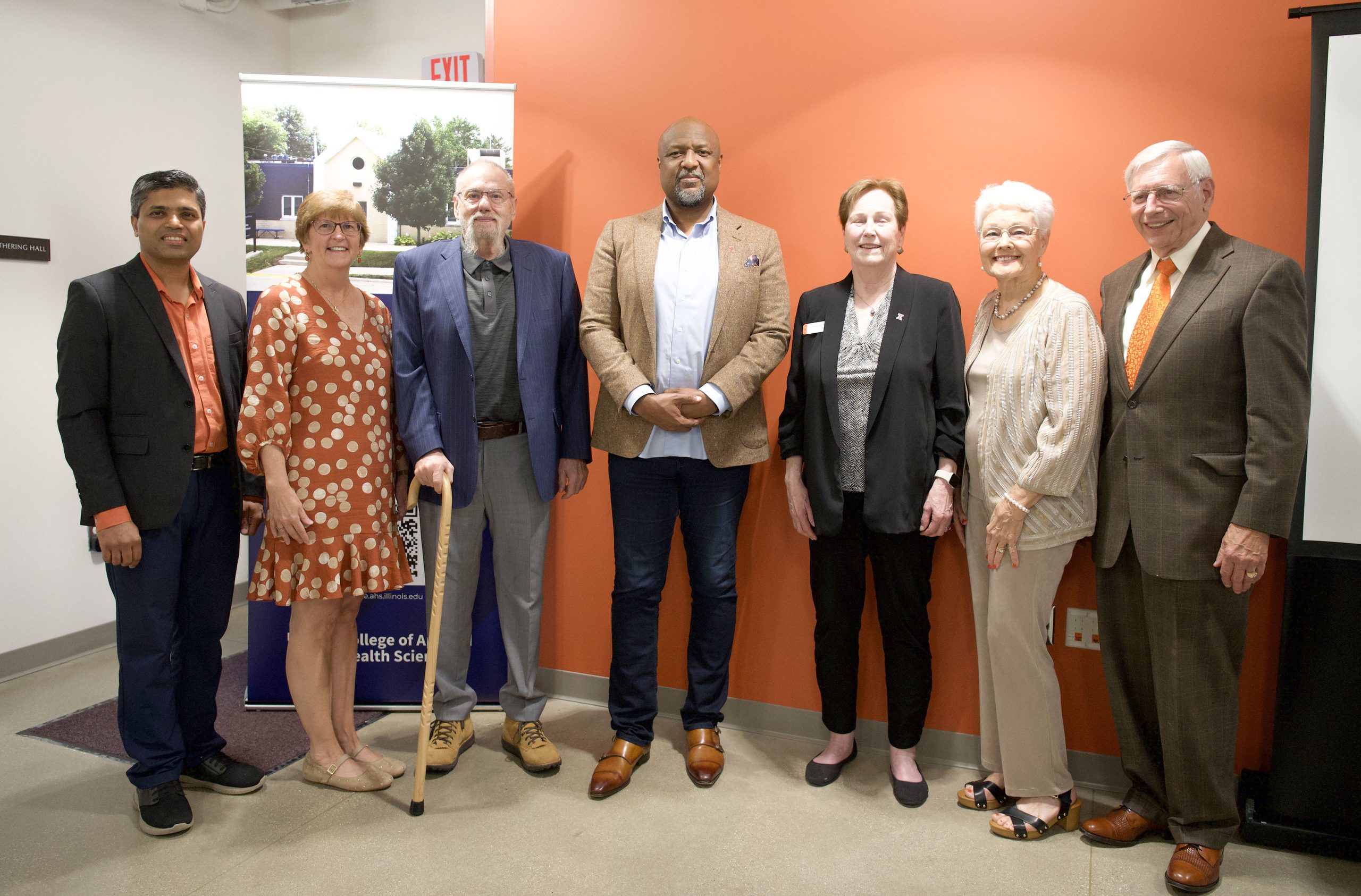
A group photo from RST 199: IC-ChangeS first section in spring 2025, in Kenney Gym. The course had Recreation, Sport and Tourism undergrads teach local student-athletes about social justice through sport. (Provided)

A new Recreation, Sport and Tourism course—Inclusive Champions for Change through Sport, or IC-ChangeS for short—is challenging Illinois students to understand how sports can provide a platform for positive social change.

And what better way to learn than leading their own classes with local high school athletes?

Lead instructor Yannick Kluch, an assistant professor in RST, piloted this course in the spring. His team found a willing partner in University Laboratory High School, the small high school on the Urbana campus.

“I’ve always thought about why people are not doing more to engage high school athletes in social justice work, because they do tend to have a platform in their community,” Kluch said. “The idea had been brewing in my head for years, but I never felt like I could turn it into reality. But here at Illinois, I felt supported right away to make it happen.”

The pilot of this course felt like a step outside the comfort zone to many of the undergrads who enrolled. They would have to don their professors’ caps while wading through potentially prickly topics with their peers. But students left feeling transformed by the experience.

“Being in that smaller group made me feel comfortable sharing my ideas and thoughts, knowing I was in a safe space,” said Lauren Ratajczak, a senior in RST. “I felt like I actually was making a difference in people’s lives. These students can go on to pursue social justice and change in their futures.”

The syllabus explored key social justice topics, mapped onto the sports world: What does systemic injustice mean and look like? What are social identities and unconscious biases? How do these concepts play out for modern-day sport icons?

Kluch researches how sport is used as a platform to advance equity and inclusion on a societal level. When he arrived at Illinois, he quickly connected with Mariela Fernandez, an associate professor in RST who researches environmental justice.

When they heard about the University of Illinois’ Call to Action grants, the project seemed like a perfect fit. The annual grant program from the Chancellor’s office funds research and community engagement projects that tackle social inequities head-on.

With $90,338 from the Chancellor’s grant, and a team of collaborators including RST doctoral student Solomon Siskind, RST master’s student Kevin Gillooly, and Anna Baeth from the national sports inclusivity nonprofit Athlete Ally, the IC-ChangeS team got to work. The group later added two staff members from Uni High as well as a local high school student from Champaign Central High School to the team.

Uni High offered up four sessions of their normal Physical Education class periods for RST to work with. The organizers quickly realized, to best deliver the material, the students would have to become the teachers.

“I wanted to leave the students with a new sense of agency when it comes to social justice topics,” Kluch said. “That was a key goal, to make students not shy away from this. Especially when these topics are under attack.” 

‘You can make a difference’

In one of the first IC-ChangeS sessions, Uni High student Aldo Zepeda Flores walked up to a large piece of paper hanging on the wall, with the question “What does social injustice look like to you?” written on the top.

One by one, students jotted down their answers on the sheet before discussing with the group.

“It was really nice because you got to see everyone else’s perspective and everyone else’s opinions, but it also gives a sense of privacy when you can express stuff a lot more than when you’re called on in class,” Zepeda Flores said.

The Uni High students participated in four sessions during their usual gym class period, with the support of their high school PE teachers.

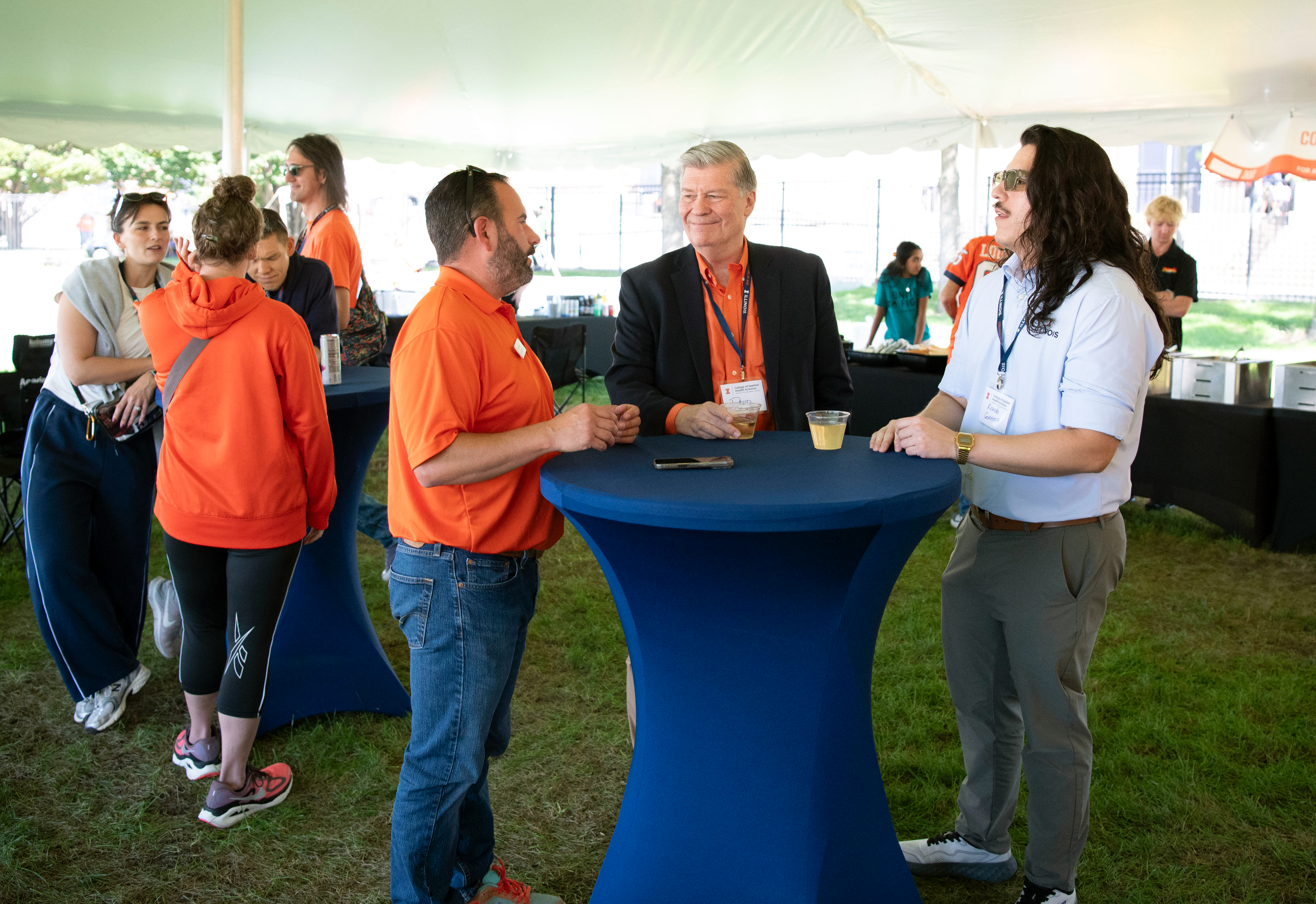
An IC-ChangeS group activity in action. Each class period was designed to be as interactive as possible.

With only a handful of sessions, each IC-ChangeS session was designed to be as interactive as possible. In one activity, the high schoolers played a card game called “Buffalo: The Name Dropping Game.” Two cards were quickly flipped, one with a noun and the other with an adjective. If the words were “Muslim” and “athlete,” for example, whoever can first think of a person that combined the two terms won the round. Unbeknownst to the high schoolers at the time, the game had been developed to address unconscious biases at play.

“It was no thinking, no time for analyzing the question or what you were about to say,” Zepeda Flores said. “And then you start to realize, maybe I’m thinking in a different way than I should be. You acknowledge your own biases.”

For Flores, who has played soccer his entire life, what resonated most was the sense of belonging: “I’ve done club sports my entire life, a person’s sense of belonging can affect their style of play. I reflected on my own experience, on the times I wasn’t as welcoming, or the times I felt excluded.”

“It gave me perspective of how in every environment, not just sports, my class, and home, you want everyone to feel a sense of belonging, where they all feel welcome,” he said.

Each session was interactive and carefully planned, but the RST undergraduates were the main shapers of the instruction, Kluch said. They were free to figure out how to best deliver lessons to the group of young athletes.

“It’s not just us telling the undergrads, ‘teach that,’ it’s us asking the undergrads, ‘How would you teach that? What would you teach?’ and then they take agency and facilitate,” Kluch said. “They were super creative, and it resonated with the high schoolers because they found engaging ways to talk about these issues.”

The RST students began to make connections between their own lives and the class content – and used that to connect with the high schoolers. “We were teaching the high school athletes, no matter how small the community, you can make a difference,” Ratajczak said. These young athletes do have power and they do have a voice.”

Having supervised the pilot run of the course at Uni High, Uni Physical Education Teacher Luke Bronowski feels the innovative format would be appealing for other high schools. At Uni, the students looked forward to the interactive sessions.

“We have a diverse population at Uni High, some students who’ve experienced social injustice, and so I think it was eye-opening not only for the high school students to hear some of these stories, but I felt the college students were learning from our students, too,” Bronowski said. “Our students were getting tools to use their platform as athletes to be agents of change.” 

Lasting bonds

Lexie Breymeyer came to the University of Illinois in 2021 from Hoopeston, a town of 5,000 roughly an hour drive away from campus. Prior to enrolling in this course, concepts like microaggressions and cultural competence were relatively foreign to her, she said.

“This class has singlehandedly changed my mindset, my values, how I look at the world. I could not ask for more from a class—it’s truly changed me as an individual,” Breymeyer said. 

After graduating in the spring from the RST program, Breymeyer was accepted to the Medill School of Journalism at Northwestern University. She credits IC-ChangeS’ content for inspiring her to go into sports journalism.

“Sport is not just a game, it’s a tool, and learning how to use sport as a tool for change opens countless amounts of doors. For journalism, I want to do sports broadcasting, setting up a platform to have these uncomfortable conversations,” Breymeyer said. 

Even at Northwestern, she’s still in touch with her IC-Changes classmates: after the semester of IC-ChangeS concluded in May, their group chat is still active, updating each other on their lives and keeping up with the news, just like they did in class.

It’s not just us telling the undergrads, ‘teach that,’ it’s us asking the undergrads, ‘How would you teach that? What would you teach?’ and then they take agency and facilitate.

Yannick Kluch

Assistant Professor in Recreation, Sport and Tourism

“We would spend time processing what was going on in higher ed,” she said. “The world we live in is hectic right now, having a safe space to discuss those things and how it relates to what we were teaching students was one of my favorite things about the class overall. It was a community where we could talk about tough topics.”

The plan for this course is to “scale up,” Kluch said. He hopes the peer-to-peer class framework is replicable for other high schools and colleges in-state and throughout the country, which can be adapted for topics with a specific social justice focus, such as inclusion for people with disabilities or sexual violence prevention. He’s submitted for the course to become a permanent part of the Recreation, Sport and Tourism curriculum.

“The pilot run couldn’t have gone better, and I am so proud of our RST students, the IC-ChangeS athletes, and our partners at Uni High for keeping an open mind and making the course as impactful as it has been,” Kluch said. “This course represents the very fabric of what we do in RST; we use our passion for recreation, sport and tourism to make a difference in the world.”

Editor’s note:

To reach Yannick Kluch, email ykluch@illinois.edu

Interested in enrolling in an RST course this spring? Visit https://courses.illinois.edu/schedule/2026/spring/RST for the full offerings.

Share on social
Related news

RST Ph.D. student helps student-athletes find belonging, in and out of his research


Solomon Siskind is leading a double life at the U. of I: While researching diversity and inclusion for student-athletes, he leads Illinois Athletics development program for them. (Photo by Ethan Simmons)

Solomon Siskind is living a double life at the University of Illinois Urbana-Champaign—two lives that are finely intertwined. 

While the Recreation, Sport and Tourism doctoral student researches diversity, inclusion and belonging for college athletes, he’s also applying those concepts as the Coordinator for Illini Way Student-Athlete Development in Illinois’ Division of Intercollegiate Athletics. 

“The research that I’m doing is what I’m doing in my every day,” Siskind said. “Who I’m advocating for, and who I’m empowering.” 

“No one day is the same” for Siskind in DIA. He’s laser-focused on preparing student-athletes for their transition to life after sport, whenever the ball stops bouncing or the track runs out for them. 

A Midwest transplant from the East Coast, Siskind’s own experiences—as a former college athlete himself on the University of Massachusetts Amherst football team—inform his new day-to-day as a young scholar-practitioner in the sports industry. 

Now, he’ll be studying these issues with his first grant-funded research project, entitled “Do we belong here? Examining Black student-athlete affinity groups as spaces for belonging at historically white institutions,” with a $7,500 grant from the NCAA. He spent the first year of his doctoral program ideating the project with his advisor, RST Assistant Professor Yannick Kluch. In his second year, he has started the research.

As one of five graduate students selected to receive the competitive grant, Siskind will conduct semi-structured interviews with Black student-athletes in NCAA Division I, predominantly white colleges across the country to better understand their experiences. Namely, what it’s like to be a Black student-athlete at a predominantly white institution and how being part of a racial affinity group affects their life on campus. 

The topic dovetails with Siskind’s professional and personal experiences. He was part of an affinity group for student-athletes of color at UMass Amherst, and he advises its equivalent at Illinois, called “EMPOWER.” 

“I’m interested in, what’s the impact going to be? How am I going to be able to take the findings from this research and provide recommendations to different institutions so they can better serve our Black student-athletes?” Siskind said. 

Kluch is excited for Siskind’s project getting off the ground on this “much-needed topic,” and grow his horizons in the field. 

“Solomon, in many ways, embodies many of the qualities I look for in doctoral students seeking to be advised by me. I care a lot about doing good work, doing rigorous research, knowing your expertise, but also applying that to industry contexts,” Kluch said. “With Solomon, he gets it. He has lived it. He lives it every day here at Illinois.” 

From the playing field to the classroom

From Brockton, Massachusetts, Siskind grew up in New England and stayed there for his undergraduate work, walking on to the UMass Amherst football team as a freshman. 
Even with sports in the foreground, Siskind was dead set on obtaining an advanced degree like his older brother and sister before him. 

“I’m a first-generation college student. My mother placed a big emphasis on higher education with me and my siblings from the beginning. She had both of my siblings in high school and as a single mother, her dream of going to college was no longer an option,” he said. 

Siskind had to confront his own athletic mortality far earlier than he would’ve liked. Multiple knee injuries and surgeries derailed his playing time at tight end for the UMass Minutemen.

“I’ve had a lot of time down off the field, I’ve had space to think about this, because I knew ‘I’m not going professional,’” Siskind said. 

It’s a concept he now talks about with his students at Illini Way: student-athlete identity foreclosure. What comes next after organized sports? Even the greats confront it eventually: Tom Brady is a football broadcaster now after 23 years in the NFL; Derek Jeter started preparing for the transition 10 years before his MLB career ceased; track and field star Allyson Felix started up her own lifestyle brand for women prior to retirement, Siskind recalled.

As an upperclassman, Siskind began to wrap his head around these concepts academically. In his junior year, he attended the Black Student-Athlete Summit in Austin, Texas, where presentations on student-athlete development and diversity, equity and inclusion in college sports lined the conference. 

“That was my first time seeing that type of research and the type of conversations I wanted to have,” Siskind said. “From that moment on, I was like, ‘I want to do that.’”  

For his first bite of research, he partnered with fellow college athlete Desiree Oliver of the UMass women’s basketball team to analyze the experiences of student-athletes of color at their university. 

The study aimed to better understand how their experiences as student-athletes were shaped by being at a predominantly white institution, or PWI. The data showed, among other trends, that student-athletes of color were three times as likely to report experiencing “culture shock,” and half reported feeling depressed or isolated at their institution.  

While obtaining his master’s, he learned under one of the top scholars in the diversity, equity and inclusion field as research assistant for Nefertiti Walker, now Senior Vice President for Academic Affairs, Student Affairs, and Equity for the UMass system.

“I knew this is what I wanted to do,” he said. 

Perfect timing, perfect opportunity

If you’d asked Siskind if he wanted to stay in the Midwest two years ago, he would’ve “thought you were absolutely out of your mind.” 

A postgraduate internship at the NCAA’s Office of Inclusion brought him from the East Coast to Indianapolis, Indiana, where he supported the office’s inclusion initiatives for a broad swath of student identities. 

Outreach from a familiar face, Elizabeth Hamlet, opened his eyes to the university two hours to his west, in Urbana-Champaign. Hamlet was the Senior Assistant Director of Academic Success at UMass while Siskind attended, but now she serves as the Assistant Director of Academic Services for Illinois Athletics. They discussed a new opening in the athletic department in student-athlete development.   

“Liz had been a mentor for me at UMass, and was someone who helped me develop off the field,” Siskind said. 

The opportunity was attractive. At the same time, another connection was making the move to Urbana: Kluch had applied for a tenure-track professorship at RST. The two got offered and accepted their Illinois positions at the same time. 

“When I thought about which Ph.D. programs I wanted to go into, he was the person I wanted to work with,” Siskind said. “I knew our research, our works and passions already aligned with one another.” 

“It was really perfect timing.” 

Siskind and Kluch had been acquainted for some time, following each other on social media platforms because they shared a research area. Their scholarly interest in diversity, equity and inclusion overlapped perfectly. 

“The professionals who care about these things in the sports industry, it’s a pretty small and tight-knit group,” Kluch said. 

Kluch had caught wind of Siskind’s social justice leadership on the UMass campus during his time as a student-athlete: “He was very big on elevating the athlete voice, promoting racial justice, social justice, DEI within those contexts.”  

What further connects them, Kluch said, is their shared philosophy as “scholar practitioners,” aiming to extend the impact of their research beyond the classrooms or academic journals and into the real world. When he learned Siskind wanted to pursue graduate school, Kluch hit the recruiting trail to bring him to Illinois’ RST program. 

“It’s so fun to work with him because a lot of grad students struggle with finding the connection between the theory, the theoretical, and the practical. And he walks that line seamlessly,” Kluch said. 

An advisor who’s “been in their shoes” 

Mary Long started at Illinois Athletics just a month after Siskind, and they’ve been crossing paths ever since. 

Long, a second-year Diversity, Equity, Inclusion and Belonging Fellow at DIA, coordinates cultural events for student-athletes, facilitates diversity training for staff, leads a mentorship program for students and advises Illini Allies, the LGBTQIA+ affinity group for Illinois athletes. She complimented Siskind’s ability to build rapport with student-athletes and quickly link them to scholarships or leadership opportunities. 

“He takes the time to connect with them on a personal level—he’s warm, friendly, and genuinely interested in each student-athlete. Once he’s in your corner, he’s all in,” Long said. “His biggest strength as a student-athlete development coordinator is that he has firsthand experience as a former student-athlete. He’s been in their shoes, so he gets the unique challenges they face.” 

He takes the time to connect with them on a personal level—he’s warm, friendly, and genuinely interested in each student-athlete.

Mary Long

Division of Intercollegiate Athletics

Siskind’s schedule is packed these days, balancing his part-time doctorate program with a full-time student support role. He leads sessions of RST 118: Transition to College for first-year student-athletes and helps them with major selection and grad school applications, resumes, leadership development and the like. 

On top of that, he heads Illini Way’s community outreach efforts and co-advises the Student-Athlete Advisory Committee (SAAC), which provides insights to athletics administration and leadership development for more than 40 Illinois student-athletes across each athletic team, all while advising EMPOWER’s student leaders. 

“I view student-athlete development as a part of DEI, because the work that we do has real implications in the lives of our students. whether it is through creating inclusive spaces, developing life skills, or growing civically and community engaged leaders, it all matters,” Siskind said. “The transition to life after sport is a very hard transition. I also think being able to help our student-athletes understand who they are as individuals, as leaders, and prepare them for life itself is super important.”

The job is fulfilling, but the opportunity to study in the Department of Recreation, Sport and Tourism was a huge draw. Siskind has particularly enjoyed taking “Theory and Methods of Leisure” as a student of Associate Professor Liza Berdychevsky this fall. 

“The number of things I’ve learned in the last few class sessions, it blows my mind. It’s not just sport management in RST—I’m excited to continue learning from all the faculty here,” he said.  

(Siskind’s study on racial affinity groups for student-athletes is actively recruiting. Visit the following link to complete the survey and see if you qualify for participation.) 

Editor’s note:

To reach Ethan Simmons, email ecsimmon@illinois.edu.
 

Related news

College of Applied Health Sciences
110 Huff Hall
1206 South 4th Street
Champaign, IL 61820
(217) 333-2131