Nov. 10, 2026 | Vince Lara-Cinisomo
Students become teachers as movement connects three classrooms
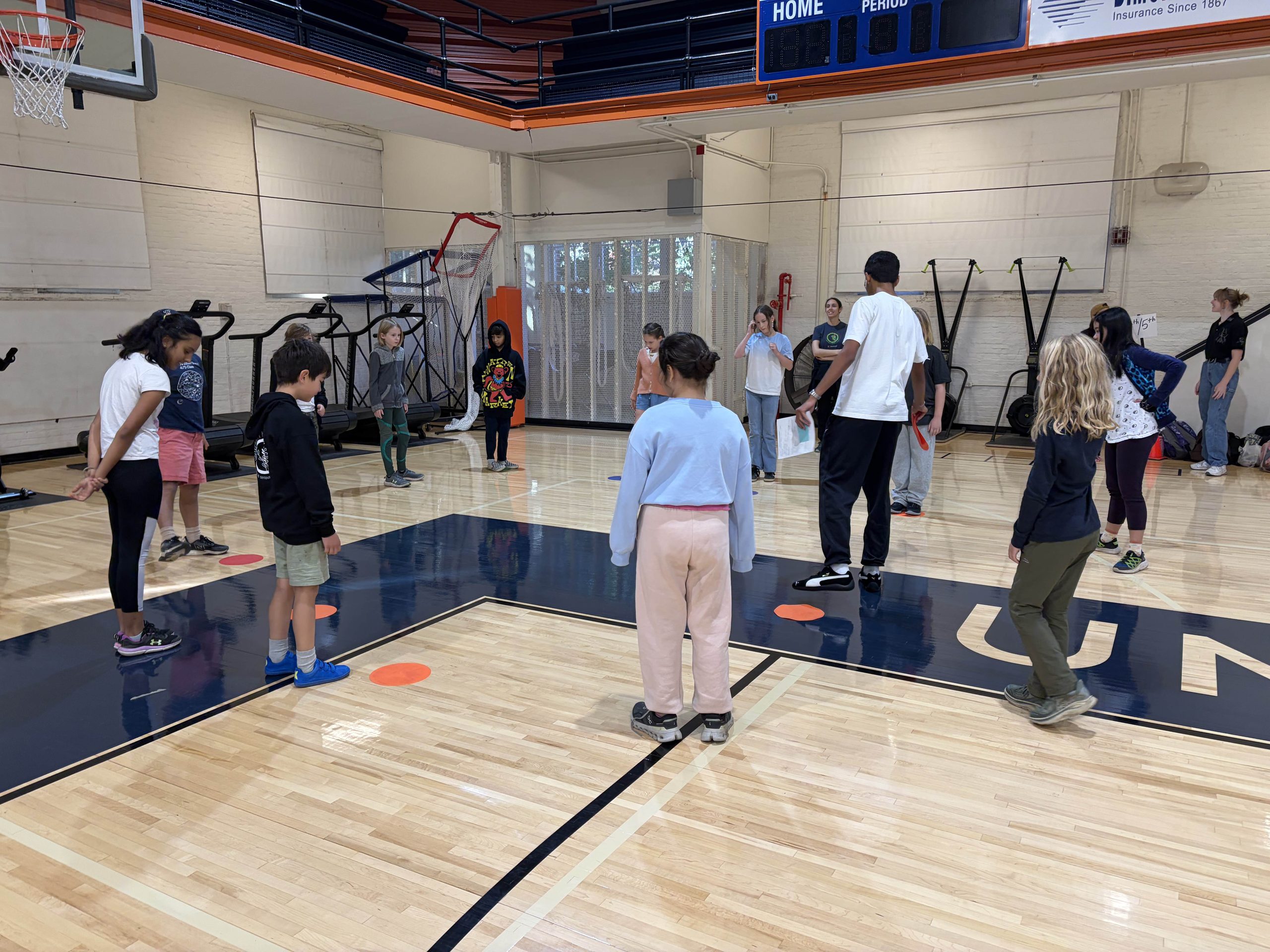
Before Uni High students could teach younger children how to move, they had to work through a different kind of exercise: figuring out how to teach.
University of Illinois physical education majors helped them prepare, drawing on lessons they had already taught at University Primary School. Then, when the children arrived, the high school students took the lead, with their college mentors nearby.
The exchange is at the center of a pilot partnership linking University of Illinois Laboratory High School’s physical education department, Uni Primary and the university’s Department of Health and Kinesiology. It gives students at three educational levels a role in the same lesson, turning movement instruction into an opportunity to practice leadership, develop teaching skills and build connections across campus.
For Kevin Richards, an associate professor in Health and Kinesiology in the College of Applied Health Sciences, the university students provide a crucial link.
“Our PETE program is serving to bridge between the two by both teaching the primary school students and preparing the high school students to teach lessons,” Richards said, referring to the Physical Education Teacher Education program.
The collaboration began when Uni High physical education teachers approached the Pedagogical Kinesiology Laboratory about working together, Richards said. They were interested in bringing their students into contact with Uni Primary children. Conversations with school faculty and administrators helped turn that interest into a teaching partnership.
The project also gives the P.E. department a way to carry out Uni High’s laboratory mission. The school asks teachers to investigate their practice through experimentation and collaboration, connecting classroom work with the university’s commitments to research, innovation and public service.
Here, that inquiry takes shape through a practical question: What can students learn when they become responsible for someone else’s learning?
Kristi Carlson, a teaching assistant professor in Health and Kinesiology and the assistant department head, is guiding the experience through HK 461: Elementary Methods in Physical Education. University students have visited Uni Primary throughout the fall semester, teaching lessons and getting to know the children before helping the high school students prepare.
Those visits give the P.E. majors more than practice delivering instructions. They learn about children’s skill levels, interests and behaviors: information they can share with students who are preparing to lead a class for the first time.
The sequence is deliberate. University students teach Uni Primary children two lessons on a particular skill theme. They then help Uni High students plan a lesson addressing that same theme.
For the first planning session, on Oct. 27, the focus was locomotor skills and movement concepts. Because the university students had already taught that material, they could suggest approaches that might work and identify potential difficulties.
But the high school students were expected to contribute their own ideas.
“We want to allow the Uni High students to have autonomy over the lesson, so allow them to brainstorm ideas, and then help them refine the lesson based on the experience and knowledge the U. of I. students have regarding the (University Primary School) students,” Carlson said.
Planning included demonstrating skills, arranging the space safely and discussing what instructors should watch for as children participated. The university students also helped their younger teaching partners consider feedback and questions they could use to check understanding.
A planning handout helped organize those decisions. The work required students to think beyond choosing an activity: They had to consider how to explain it, how to monitor it and how to respond when a child needed help.
We want to allow the Uni High students to have autonomy over the lesson … allow them to brainstorm ideas
Kristi Carlson
Teaching assistant professor, Health and KinesiologyOn Oct. 29, Uni Primary children participated in the first lessons led by Uni High students. The college students arrived early to help their high school partners set up.
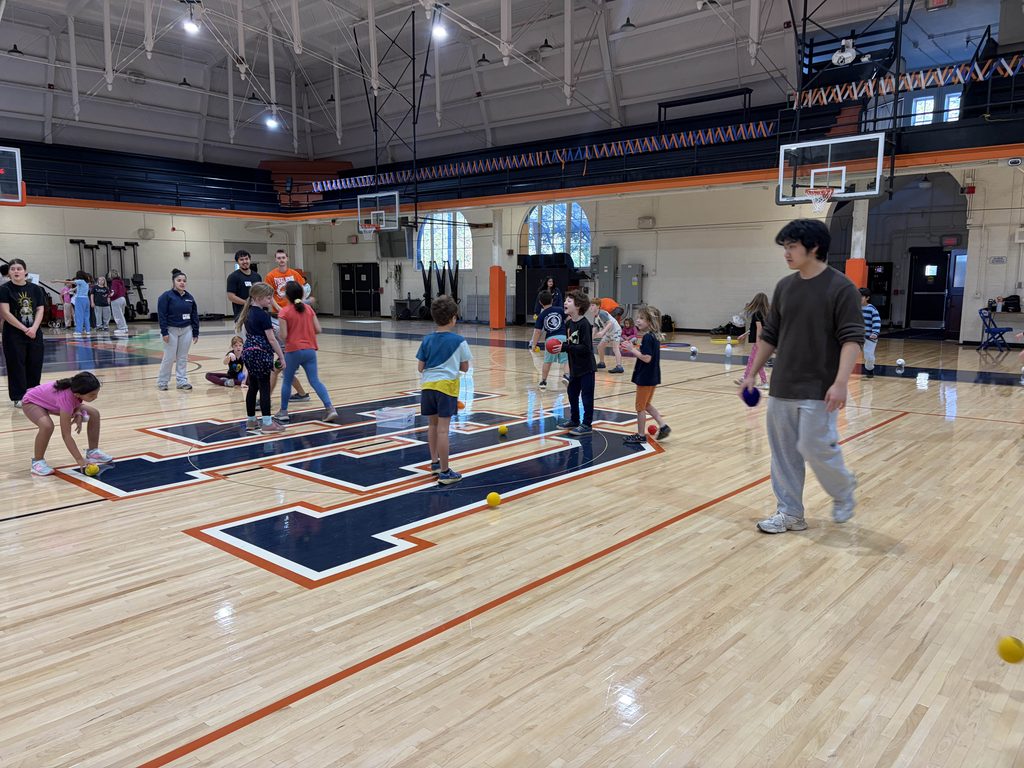
Uni Primary’s three participating classes—kindergarten and first grade, second and third grades, and fourth and fifth grades—were assigned to groups of instructors. The university students worked in groups of five, paired with groups of about eight high school students.
The lessons lasted 45 minutes and included a variety of activities. Uni High students introduced their lessons and led the children through the plans they had developed with the P.E. majors.
The college students remained available to clarify instructions, offer feedback and help address behavior challenges. Carlson and schoolteachers moved through the learning area, offering support as needed.
For the high school instructors, the challenge included recognizing that children close in age may need different kinds of instruction.
“UPS has their classes arranged so that the students are of a similar age, but that doesn’t necessarily mean they are of similar skill level, so we helped the (Uni High) students think of ways to adapt the activities to meet students at different levels of performance and confidence,” Carlson said.
Creating a welcoming environment was part of that preparation. So were demonstrating movements clearly, checking understanding and choosing positions that allowed instructors to monitor children throughout the activity area.
The course’s skill themes include jumping and landing, balancing and weight transfer, and throwing and catching, along with locomotor skills and movement concepts.
“These are some of the basic building blocks of movement, that can then be applied in more complex situations as students become more proficient in the skills,” Carlson said.
Learning continued after the children left. University and high school students met in small groups to discuss what had gone well and what they wanted to improve. Then everyone gathered with Carlson and the P.E. teachers for additional feedback.
That reflection gives the P.E. majors another opportunity to explain their decisions and share what they know about instruction. For Richards, preparing someone else to teach is itself a valuable part of becoming a teacher.
“This model provides them with the opportunity to teach others what they have learned, which is one of the best ways to deeply learn,” he said.
The partnership also introduces high school students to physical education as a possible career while giving them immediate responsibility as leaders.
“It advances the mission by giving our preservice teachers an opportunity to both teach at the primary school and ‘teach the teachers,’” Richards said.
The Pedagogical Kinesiology Laboratory brings a broader interest in teachers’ and learners’ experiences to the collaboration. Its stated mission includes understanding physical activity settings and addressing inclusion, including the experiences of people with disabilities. Carlson said the lab helped develop the project after discussions with the schools and could become more involved in research as the partnership develops. For now, the lesson planning, supported teaching and discussion afterward give participants a structure for learning directly from one another’s experience.
The pilot remains an early effort. Carlson said the first lesson appeared to go well, with the children actively engaged for most of the period. Teachers also identified areas for improvement. Richards said more formal research is planned for the second year; the initial goal is for the groups to work well together and have a positive experience.
Carlson said two additional planning sessions and two more lessons led by high school students were planned for the semester. University students would also continue working with Uni Primary.
As the partners consider how to sustain the program, Carlson pointed to the relationships within each lesson as the clearest expression of its promise: university students supporting high school students, who in turn support younger children.
“It’s a pretty great dynamic,” she said.
Editor’s note:
To reach Vince Lara-Cinisomo, email vinlara@illinois.edu.
Share on social