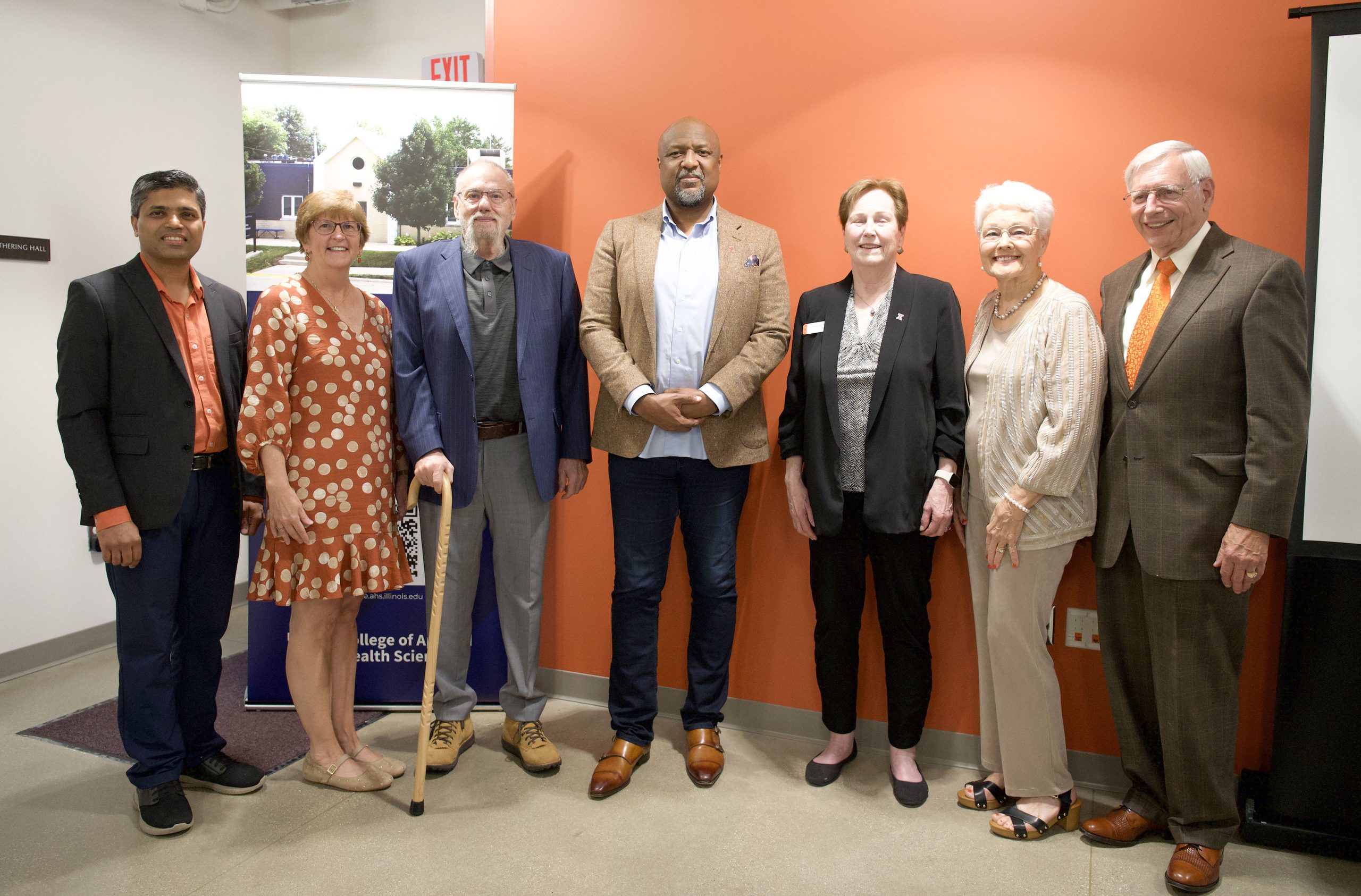
Marni Boppart, an associate professor of kinesiology and community health, is the 2020 winner of the Beckman Institute Vision and Spirit Award. Boppart is also a faculty member in the Carle Illinois College of Medicine and at the Carle R. Woese Institute for Genomic Biology.
See the research projects our undergraduates presented at the Undergraduate Research Symposium
The signature event of Undergraduate Research Week, the Undergraduate Research Symposium has been held on the University of Illinois campus since 2008. The number of undergraduate students participating has grown from a few hundred in its inaugural year to well over 800 students. Over the course of the day, students present their work in concurrent oral and poster presentations (including creative performances), the breadth and scope of which reflect not only the wide range of academic disciplines at the University of Illinois, but also speak to the caliber of our undergraduates. Our students are innovative and engaged, eager to learn from their advisors and mentors. Their projects also demonstrate the ongoing institutional commitment to supporting and expanding research opportunities at the U of I and beyond. For more information, please visit our website.
In 2020, 72 students from the College of Applied Health Sciences presented at URS. They are listed below, with the title of their presentation.
COMMUNITY HEALTH
Rhea Nambiar, Aerobic Fitness as a Predictor for Performance in Cognitive Flexibility Tasks
Brielle Ross, Medical Cannabis Usage in Older Veterans
Siyao Zhang, Research Experience in HFA Labortory on Maximizing the Benefits of Participatory Design for Human Robot Interaction Research with Older Adults
Summer Jett, Supports and Barriers when Integrating Play in the Classroom
Josh Silvestre, The Impacts of Food and Temperature on Culex pipiens Development
Sam Asher, The Power of Parents : Exploring the Influence of Maternal Food Modeling on Children’s Picky Eating Behaviors
Carla Ortiz, The Role of Assistive Devices on Worry about Falling and Leisure Self-Efficacy among Older Adults
Karen Hernandez Patricio, Validation of Mealtime Assessment Survey
INTERDISCIPLINARY HEALTH SCIENCES
Wallis Peterson, Age-related Difference of Head Acceleration During Unexpected Perturbations
Maria Derrig, An Investigation of the Impact of Breastfeeding on Childhood Adiposity
Samantha Sample, Are Young Children Getting Enough Sleep? Understanding The Impact Of Poor Sleep Habits On Childhood Obesity
Mackenzie Wiegers, Conservation Farming: A Viable Way of Life
Hyder Khan, Does Distance make a difference? Impact of Food Access to reported MyPlate ratings
Alyse Bondarowicz, Exercise and Technology Intervention Strategies to Support Successful Aging in Older Adults with Mobility Disability
Selena Wang, The Dietary Effects of Inulin on Lipid Metabolism in Aged Mice
Michelle Cheung, The Effect on Dietary Fiber Diets and Microglia Hypersensitivity
Ashley Garcia, The Influence of Inflammation on Lutein Activity and Cognitive Variables
Josette Orlevitch, The Role of Assistive Devices on Worry about Falling and Leisure Self-Efficacy among Older Adults
Olivia Kupiec, Understanding Healthcare Challenges and Needs for Older Adults with and without Mobility and Sensory Disabilities
Jennifer Lee, Understanding the Challenges and Solutions of Adults Aging with a Hearing Disability
Alexandra Trekas, Young Adults’ Sexual Attitudes in Tourism vs. Everyday Life
Jessica Escutia-Calderon, Young Adults’ Attitudes Toward Elderly Sexuality
KINESIOLOGY
Alyssa Rose Masangkay, Analysis of Knee Flexion Characteristics and how they Alter with the Onset of Knee Osteoarthritis in Step Down Task
Allison Morettini, Are Young Children Getting Enough Sleep? Understanding The Impact Of Poor Sleep Habits On Childhood Obesity
Jackalyn Geraty, Benefits of Low Sodium Meals for Patients With End-stage Kidney Disease on Dialysis
Julia Gulanczyk, Gender-Related Differences in Range of Motion and Neck Strength Among Different Age Groups
Liam Gasser, Gender-Related Differences in Range of Motion and Neck Strength Among Different Age Groups
Carson Smith, Healthcare Technology in Older Adults
Amber Lopez, Measles Reprogramming Vectors with Improved Efficiency and Safety for Regenerative Medicine
Lina Hawari, Peak Force of Falling Out of a Wheelchair in Relation to BMI
Makylah Allen, The Effect of Rapamycin and Metformin Treatment on Primary Osteoarthritis
Madison Catalano, Yoga and Cancer Survivorship: A Systematic Review of Yoga Interventions to Reduce Fatigue
RECREATION, SPORT AND TOURISM
Jaesung An, The Role of Assistive Devices on Worry about Falling and Leisure Self-Efficacy among Older Adults
Damien Cavanaugh, The Role of Assistive Devices on Worry about Falling and Leisure Self-Efficacy among Older Adults
SPEECH AND HEARING SCIENCE
Suhyun Lee, Vocal Injury Among Professional Voice Users in College.
Leah Demas, An Analysis of Feminism in Fairy Tales
Grace Rochford, Behavioral and Neural Measures of Inhibition in Age-Related Hearing Loss
Christiana Allen, Behaviors Associated with Comorbid Autism Spectrum Disorder in Children with Down Syndrome
Diana Morales, Can the MIND Diet Affect the Psychosocial Outcomes of Middle-Aged Latinos?
Chloe Maghinang, Differences Between the Perception and Production of Sung Melodies
Cori Dahl, Differences Between the Perception and Production of Sung Melodies
Amber Dorn, Effects of Extended High Frequency Cues on Speech Recognition In School-Age Children
Kelsey Libert, Effects of Extended High Frequency Cues on Speech Recognition In School-Age Children
Katrina Blum, Exploring Stress Levels in Mothers of Children with Down Syndrome
Allison Rush, Exploring Stress Levels in Mothers of Children with Down Syndrome
Christiana Allen, Exploring Stress Levels in Mothers of Children with Down Syndrome
Paige Valente, Fetal Sound Exposures and ABR Responses at Three Months of Age
Ana Sabic, Fetal Sound Exposures and ABR Responses at Three Months of Age
Kelin Mendoza, It Takes Two: The Association Between Maternal Depression and Childhood Obesity
Jessica Philipp, It’s Like Face to Face Talking: Thematic Analysis of the Feasibility of a Video Chat Social Engagement Intervention for Older Adults With and Without MCI
Brianna Legner, Lombard Effect, Ambient Noise and Willingness to Spend Time and Money in a Restaurant Within the Elderly Population
Alyse Ruda, Lombard Effect, Ambient Noise and Willingness to Spend Time and Money in a Restaurant Within the Elderly Population
Eleena Ahmed, Null Objects in Basque Spanish
Isabella Russell, Promoting Ongoing Participation in Group Fitness Among Older Adults: An Application of the Psychological Continuum Model
Kathleen Dowling, The Effect of Speech and Voice Techniques on Speech Intelligibility Under the Influence of Noise: A Comparative Study with Expert Speakers
Sarah Jones, The Effects of Age-Related Hearing Loss on Executive Function
Veronica Lane, The Perception of Corner Vowel Intelligibility on Dysphonic Speech
Katherine Weber, The Perception of Corner Vowel Intelligibility on Dysphonic Speech
Jenna Lachman, The Perception of Corner Vowel Intelligibility on Dysphonic Speech
Tamaryn Tran, The Power of Parents : Exploring the Influence of Maternal Food Modeling on Children’s Picky Eating Behaviors
Jenna Crean, The Role of Gestures in Facilitating Everyday Communication Interactions: An Analysis of Dysarthric Speakers
Angela Medrano, The Role of Gestures in Facilitating Everyday Communication Interactions: An Analysis of Dysarthric Speakers
Maya Balachander, The Role of Gestures in Facilitating Everyday Communication Interactions: An Analysis of Dysarthric Speakers
Celia Rodriguez, The Use of Landmark-Based Approach for Differentiating Healthy, Dysphonic, and Spasmodic Dysphonia Speech
Mary Buchheit, The Use of Landmark-Based Approach for Differentiating Healthy, Dysphonic, and Spasmodic Dysphonia Speech
Emily Klipstein, Using LENA to Identify Early Words
Paige Valente, Using LENA to Identify Early Words
Allison Wells, Using LENA to Identify Early Words
Grace Kim, Using LENA to Identify Early Words
Claire Inskeep, Video Technology-Based Social Engagement Intervention For Older Adults With and Without Mild Cognitive Impairment: A Feasibility Study
Malinda Mullet, Vocal Injury Among Professional Voice Users in College
Arianna Bastys, Vocal Injury Among Professional Voice Users in College
The College of Applied Health Sciences has experts in many areas that have been affected by the COVID-19 outbreak. Periodically we will ask these experts about how their areas of expertise have been impacted and what we can expect in a post-COVID-19 world. Today, we ask Laura Payne, professor and director of graduate studies in Recreation, Sport and Tourism, about how COVID-19 affects local parks and recreation.
Q: Which parts of the recreation industry are feeling the most pain now, and which will be the ones that are slowest to come back online when social distancing guidelines are eased or lifted?
A: Community recreation and parks agencies have been hit hard by COVID-19. Summer is the busy season for parks and recreation, and with the ongoing threat posed by the pandemic, many agencies have had to cancel or postpone programs and events such as sport leagues, fitness and arts programs, camps, and special events. Many agencies have moved to online fitness, arts, and e-sports programs. Youth and adult sports programs are likely to come back most slowly—this is due to the fact that many sport programs involve contact. Also, it is hard to say when playgrounds will be open again. A positive trend is that more, now than ever, people are drawn to parks for their physical, social and mental health benefits. Maintaining six feet of distance is vital for safe park use and as observed by my colleague Dr. Kim Shinew, this is difficult to practice consistently, especially on nice days when more people are outside.
Q: What will be the probable impact of COVID-19 on park and recreation agencies?
A: Some agencies have postponed capital projects such as construction of new and remodeled facilities and others have decided to continue some of their programming online, even after restrictions start easing. I have also heard of some agencies furloughing staff and re-organizing.
Q: What steps should agencies and employees be taking now?
A: Most agencies have pivoted to limited online programming. Much of this programming is free, with some more extensive programs being fee-based such as e-learning pre-school programs. They should also start planning for re-opening some of their facilities, but with different use guidelines. For example, when fitness and recreation centers re-open, they will clean and disinfect their facilities several times per day.
Q: What resources are available for agencies to utilize now?
A: The Illinois Park and Recreation Association is hosting Virtual Community Talks once per week—this is an online forum where professionals can share resources, ask and answer questions, and support each other. Each call is recorded so they can be played back. They can be accessed here. Also, the National Recreation and Park Association (NRPA) provides guidance for parks and recreation spaces, facilities and programs. They offer specific guidance and links to additional information.
Q: What measures can recreation sites, such as parks, take that allow them to re-open in a modified fashion but still assure the public?
A: Many parks never closed—and agencies have placed signs in parks with guidance for maintaining six-foot distance and remind people that courts and playgrounds are not available for use. When facilities re-open, they will follow capacity guidelines, which means only the facility can be occupied up to 50 percent of its capacity and staff and patrons will wear masks. The facilities will also be cleaned and disinfected regularly.
Q: How does COVID-19 compare to other recent events such as SARS and 9/11 in terms of economic impact upon the recreation industry?
A: SARS was nothing compared to COVID-19; Also, 9/11 impacted the travel and tourism industry more than the local parks and recreation industry. If anything, community recreation and parks probably benefitted from 9/11 in that more people planned stay-cations and used their local parks and recreation agencies even more because it was comfortable and familiar.
Free telepractice services in speech‑audiology advanced during COVID‑19 pandemic
Telepractice was an effective option during the lockdown phase of COVID. (Stock image)
The COVID-19 outbreak has radically altered life in the United States. It changed how we work, communicate, spend time with families, exercise and shop. It has also forced students to change how they learn and how they go about fulfilling the requirements of preparing for life after school.
Students in the Speech and Hearing Science Department of the College of Applied Health Sciences at Illinois have had to alter how they can complete internships, a necessary part of their coursework. Fortunately, the state of Illinois recently granted a temporary variance to allow speech-language pathology and audiology students to count telepractice hours even if the student and supervisor are not in the same room.
That decision has given students such as Nina Iraci, a first-year graduate student in the speech-language pathology program, a chance to work with clients, even if it’s via phone or video conference.
“We’ve had to be adaptable and creative in how we deliver our services,” Iraci said. “I found (telepractice) has been more of a tool than we thought. Telepractice is a great option. It’s very convenient. It’s surprised us.”
Caitlyn Boni is a second-year master’s student in SLP and her externship at an elementary school was altered by the virus outbreak, forcing her to quickly adapt to telepractice. That has allowed her to learn something about herself and her future work.
“I have learned that it is important to be a flexible clinician and be willing and prepared to improvise if needed,” she said. “Much of my service delivery was individual or one-on-one in the classroom. However, since switching to teletherapy, I have participated in more large group (classroom-level) meetings where I provide general language support to parents. The biggest change I would say is that there is much more parent involvement than would be typical in my school placement. Typically, parent collaboration is limited to IEP meetings. However, due to the extended school closures, many of the children’s’ devices have been sent home with them, and parents are becoming more oriented with their child’s device as well as how to support their child in using it to communicate.”
For Taylor Mekus, a first-year audiology grad student who has been working to create educational videos about audiology and hearing health during the shelter-in-place order, has also found telepractice to be surprisingly effective.
“I did not realize how expansive telepractice can be, but being faced with this scenario the field of Audiology seems to be coming up with new and exciting ways to deliver services via telepractice,” she said. “We always have to be adaptive to change and find new ways to help our patients.”
Monique Dang is a second-year audiology grad student, and she has been working closely with Clark-Lindsay Village, focusing on hearing loss in adults, whether it’s noise-induced or age-related hearing loss. Last semester—also known as BC (Before COVID-19)—she worked to get the Audiology Clinic service into Clark-Lindsey to perform monthly cleanings and checks of the residents’ hearing aids. That’s been put on hold, forcing the clinic to “to move to alternative avenues of care,” she said.
“We have worked to connect with our hearing aid patients and express our availability virtually in this difficult time,” Dang said. The clinic—which is offering its services free—is troubleshooting hearing aids, walking through care and maintenance and offering other adjustments, Dang said. “I’m learning this transition to telepractice is a learning curve,” she said.
CHANGE AND CHALLENGES
As Dang mentioned, the transition to telepractice doesn’t come without its challenges. For one, the students miss working directly with their clients. “It goes without saying that I just miss human interaction in general,” Iraci said, “but another thing that’s a challenge is if we need to do any sort of manual manipulation, any sort of oral mechanism examination, that’s pretty difficult.”
Hannah Smith, a second-year audiology grad student, said the main obstacle was lack of prep time.
“As students, teaching assistants, research assistants, and clinicians, we had approximately one week to prepare for an online transition for the remainder of the semester,” she said. “This proved to be very difficult and time consuming for the first few weeks and required a lot of creative problem-solving skills to navigate these unknown waters.”
Dang agreed.
“(Telepractice) requires trial and error, and a lot of planning and collaborative efforts. Simply put, it’s not at all the same as providing traditional face-to-face services,” she said. Technology is part of the problem, she said, as well as trying to set up group appointments at a time when that is being discouraged.
“Our elderly patients seem reluctant to use technology,” Taylor added, “so we are facing the challenge of helping patients to step out of their comfort zone and utilize technology.”
Still, Taylor said, patience was vital.
“We need to consider that working with technology in order to utilize telepractice may be more of a learning curve for them. We have to remember since our patients have hearing loss, communicating via video call may be more difficult and we will have to adapt to each individual circumstance.”
The obstacles are not only associated with the elderly. For Boni, working with children has had its share of issues.
“It can be difficult to provide therapy in a way that will keep the child engaged and willing to participate in the session,” she said. “It is very helpful to have a parent nearby to provide behavior management since it is nearly impossible for me to do via teletherapy. For example, after five minutes of therapy a child said to me, ‘OK, I’m done with speech. BYE!’ and ran away from the screen. Luckily, her mom intervened and brought her back to the session.”
TELEPRACTICE HERE TO STAY?
Despite the trials of telepractice, the budding practitioners see the advantages in a post-COVID-19 world.
“Telepractice is a great thing, especially during this time and when it comes to trying to provide appropriate access to care to those in rural communities,” Dang said.
Boni said patience and understanding is needed, but she definitely sees the benefits.
“Telepractice can provide unique opportunities that may not be possible with typical face-to-face sessions,” she said. “Some things are difficult, but with a little creativity it is possible to find a work-around to most challenges and I do believe my clients are benefiting from teletherapy.”
Smith agreed.
“Telepractice initially may seem rather intimidating, however, from my personal experience, patients have really enjoyed the convenience and quick turnaround of services,” she said. “We are moving into an ever-changing technology-centered society so patients who are interested in that are embracing telepractice services from the comfort of their own home. Telepractice will continue to develop and improve so it is very exciting to see how this will impact the way in which we serve our patients.”
An added benefit is that the Audiology and Speech-Language Pathology Clinic is not charging clients for its telepractice service through Aug. 6.
Iraci believes telepractice has a place, even after the COVID-19 threat is extinguished.
“Telepractice is a great option, especially for adults, because they’re typically very busy and only have time for a moment of teletherapy, in their car, or on a break at any time. It’s very convenient.
“It would be a great service for our clinic to provide, regardless of the stay-home order.”
The College of Applied Health Sciences has experts in many areas that have been affected by the COVID-19 outbreak. Periodically we will ask these experts about how their areas of expertise have been impacted and what we can expect in a post-COVID-19 world. Today, we ask Jay Lopez, an RST graduate student and event manager for the City of Long Beach (Calif.), about how COVID-19 affects the event management industry.
Q: What alternative event formats could you use in the wake of COVID-19?
A: The leading thought process for controlled venue events, (ticketed with a perimeter fence) is to increase the venue size and lower capacity. This increases the square footage and the reduction in attendees allows for social distancing. Event managers will incur additional costs with lower revenue, which could affect how events do business. However, city agencies and event venues will prioritize safety and to minimize the spread of COVID-19.
Q: How do you handle a crisis at the event?
A: If a crisis were to arise, there are measures implemented prior to the event. All large events are mandated to have Fire and Police department personnel staffed on site. Additionally, staff and security are hired by the event. A command post is established by the City of Long Beach and is manned with fire, police and city staff. The command post staff can hear all communications via radios. If a crises arises, all communications and coordination is immediately handed off to the command post. If necessary, additional city services can be requested and diverted to the event to address any issues on site.
Q: How do you reassure event visitors about safety?
A: Effective marketing is essential and additional messaging is needed with the rise of COVID-19. Marketing will be critical to ease the concerns of the general public. Marketing materials should accurately depict the new policies and procedures implemented to abate the spread of germs. Safety visuals when arriving on site will play a vital role. In order for this to be successful, measures expressed via marketing must be present and visually represented on site. Marketing can assist to foster a sense of safety prior to arriving.
Q: What can you do when things happen beyond your control (flights cancelled, etc.)?
A: In the event industry, we always say, “Prepare for the unexpected.” Event managers can prepare and plan for months to ensure operations and logistics are correct and roll out smoothly. Sometimes, situations arise that were not accounted for, or are completely out of anyone’s control. Event managers think on their feet when problems arise and it derives from experience. Every situation is different as are events. Frankly, you deal with the problem when it occurs. There is no one size-fits-all solution. You cope and adjust with what you have.
Q: What are some best practices you recommend for event planners during a crisis like this?
A: Always consult your local health department and local authorities. Currently, the City of Long Beach is in the process of developing policies and producers relating to COVID-19. Events will be mandated to implement new policies and procedures in order to host an event in Long Beach. Additionally, event managers will need to conduct a throughout review of their operations. Inevitably, costs will increase due to the required policies and procedures. They will need to change operations and revise the scope of their events to make the necessary accommodations. Some events may not be able to cope with the additional items required of them due to costs, venue, operations, etc. Cancellation of the event may be the only viable option.
Q: What lessons can event planners take from previous situations, such as 9/11, Swine flu, H1N1, etc?
A: The event industry has not encountered a threat in the past such as COVID-19. Each and every situation calls for different accommodations. Event managers can study past situations and pull items that reflect current events. However, events by nature concentrate thousands of people in one location with close proximity to one another. Only time will tell if the implemented measures undertaken have a true effect on limiting the spread of COVID-19.
Q: What do you need to do after the event?
A: Post-event evaluations are critical to measure event participant’s comfort with new policies and procedures. Event managers need to take into account how participants felt on site. Did they feel there was enough handwashing stations? Was there enough hand-sanitizer dispensers? Did they feel social distancing was accommodated? Did people follow the facemask requirement?
Event managers shall also provide feedback on how well the new policies were implemented. Were the lines long stations? Do we need additional staff for future events to manage? Did people follow the rules on personal protective equipment? Revenue must be measured. Did the event make sense to hold in terms of expenditures and revenue?
Comprehensive evaluations are critical in the new era of events. Costs associated with COVID-19 will be the guiding factor on how events cope moving forward. This will be the new norm until/if a vaccine is created and we can reach herd immunity.
The College of Applied Health Sciences has experts in many areas that have been affected by the COVID-19 outbreak. Periodically we will ask these experts about how their areas of expertise have been impacted and what we can expect in a post-COVID-19 world. Today, we ask David Strauser, a professor in the department of Kinesiology and Community Health, about how marginalized workers are affected by COVID-19 workplace conditions.
According to David Strauser, for marginalized workers, the stress does not come from losing work, but instead from having to work during a pandemic. (Stock image)
Q: How much more difficult is a loss of work due to an act of God like this on the so-called marginalized worker? They can’t get unemployment or other services.
A: Loss of work is always hard for individuals because it creates financial insecurity, a sense of personal uncertainty, and lack of control. This is especially true when individuals do not see the economic change coming (e.g., others being laid off, talks of downsizing). Workers who are marginalized are at a significant disadvantage because they do not have, or lack access to, the material and instrumental resources that other workers may have access to that allows them to cope with being furloughed or terminated due to lack of work. In addition, the environment in which many marginalized workers work and reside are under consistent personal and environmental stressors that limit the individual’s co-workers, family and community from providing the much-needed emotional support to manage the situation.
The passage of the CARES Act attempts to address the financial issues with unemployment by expanding eligibility for unemployment, supplementing typical unemployment amount by $600 per week through July 31, 2020, and providing an additional 13 weeks of coverage from 26 weeks to 39 weeks. In Illinois, the maximum unemployment amount is $471 per week. Under the CARES Act, that amount increases to $1,071 ($471 + $600). However, few marginalized workers will come close to getting that amount. In Illinois, unemployment is based on 47 percent of an individual’s total two quarters of earnings divided by 26 weeks. If an individual makes $30,000 per year ($15,000 for 2 quarters), his or her unemployment benefit would be $271 per week based on 47 percent of the two-quarter earnings ($7,050) divided by 26 weeks. The CARES Act provides an additional $600 per week, increasing the weekly benefit to $871 per week through July 31, 2020.
However, it is important to note that for many marginalized workers, the stress does not come from losing work, but instead from having to work. Many marginalized workers are considered necessary employees (e.g., janitorial/cleaning, Certified Nursing Assistants, Nursing Home Aides). As a result, they must report to work and work in situations where they are at increased risk of being exposed to COVID-19. Health care technicians and those working in the meat-packing and food-processing plants across the country provide a great example of this. We are on the verge of a meat shortage in the country because so many packing plants have had to close due to workers being sick with COVID-19. In addition to increased health risk, with schools being closed and reduced access to childcare, many workers are dealing with how to manage younger children who are left at home. Finally, many marginalized workers are in the group of individuals who have secondary health conditions, such as diabetes, hypertension, and heart disease, that place them at increased risk for adverse effects COVID-19. Lack of access to appropriate health care also increases stress.
Q: Where can workers turn when they lose gig jobs or employment that doesn’t come with benefits?
A: In Illinois, gig workers will have access to unemployment benefits starting May 11, 2020. The delay on getting these funds to gig workers will likely place individuals in significant financial distress and force them to make hard choices between putting food on the table or paying rent. As outlined above, when individuals become eligible, funds may not be enough to provide financial relief. Individuals may also encounter difficulty navigating the system. With many nonprofits under financial pressure as well, programs designed to help individuals navigate governmental programs may no longer be available or may operate at a reduced capacity, further increasing stress on the unemployed.
Q: Many marginalized workers cannot work from home. What can they do?
A: Many marginalized workers cannot work at home because they have been identified as necessary workers, placing them at increased risk for becoming infected. For many of the jobs held by marginalized workers, social distancing is not feasible and the work environment does not allow for many of the CDC guidelines to be implemented. Many of these workers also depend on public transportation, where social distancing can prove difficult.
Q: Will those workers with comorbidities have more trouble re-entering the work force because of insurance concerns?
A: Access to health insurance and appropriate health care is a significant issue impacting many workers in the U.S., especially those working in low wage positions. COVID-19 has had a disproportionate impact on individuals with co-morbid health conditions, such as hypertension, obesity, and diabetes. A bigger potential issue emerging is further reduced physical capacity for those individuals with co-morbid conditions from the residual effects of being infected and recovering from COVID-19. The combination of working in positions with increased risk of infection, the presence of co-morbid conditions, and the lack of resources place individuals at increased physical and psychological risk of decreased health outcomes, which stresses an individual’s ability to meet the demand of work. Importantly, workers with comorbidities will face a difficult decision about re-entering the workforce. Although many may need to work to obtain health insurance, doing so may put them at increased risk of infection, especially given their comorbidities. Faced with this difficult choice, we cannot presume that workers will risk re-entering the workforce. Many may seek SSDI. But will they qualify? Can access Medicaid? This uncertainty and the lack of resources available to navigate the bureaucracy (for instance, some state governments are cutting funding for legal aid) are additional stressors with which these individuals must cope.
A group that will be significantly impacted that is not being talked about at all right now is high school students with disabilities who will be looking to transition from high school to work for the first time. It is likely that a large number of students with disabilities will not enter the labor market, placing them at increased risk for long-term unemployment and developing additional co-morbid physical and mental health conditions that will reduce future work capacity. Individuals aging out of foster care and those being released from prison will experience similar difficulties, placing them at risk for negative outcomes ranging from chronic unemployment, increased recidivism, and homelessness. Finally, adults who are participating in adult day services, that often include vocational services, will experience a cut in services placing them at increased risk for negative outcomes
Q: Workers on the H-2A guest worker program make up an estimated 10 percent of the U.S. agricultural workforce. But now the Trump administration is looking to cut their pay in the middle of a pandemic, ostensibly to help farmers. Your reaction?
A: A further example of the current administration’s targeting of non-U.S. citizens combined with the devaluation of marginalized workers and the systemic problem of pay inequity. This is a good time for all of us to become reacquainted with Cesar Chavez and the United Farm Workers movement in the late 1960s.
Q: Black sanitation workers in Pittsburgh recently carried out a one-day strike to fight for protective clothing. How common is this?
A: I believe this is becoming more common as frontline workers are facing increased stress from the lack of access to necessary safety equipment. Workers at Amazon protested working conditions, and, after doing so, an individual who tried to organize workers was fired and publicly scapegoated by the company. Amazon is also being sued in New York because their warehouses are not following social distancing guidelines. I have seen more ads for health care unions and their push to organize and demand a better work environment and increased safety on the job. Workers in Missouri filed an unsafe workplace complaint against Smithfield, and a judge ordered the company to comply with federal guidelines. In New York City, 10,000 correction officers have sued to remedy the lack of safety practices in jails and prisons that place both inmates and correctional officers at increased risk of COVID-19. In Richmond, Va., bus drivers called out of work to protest lack of hazard pay. Unions across the country are fighting for increased access to PPE and hazard pay. My guess is more will be coming as we become more aware of the issues and unsafe environments that many of these workers have had to endure since the start of the pandemic.
Despite actions by workers, industry is responding as well. There have been widespread attempts to discourage unions, and the president has issued an Executive Order declaring meat-packaging workers essential employees, essentially mandating them to work despite the poor work conditions. While many industries hold out their workers as “heroes on the front line,” they often implement policies that suppress wages, minimize workplace protections, and work to diminish bargaining power that could potentially lead to increased wages and protections on the job. Overall, the shortages of certain goods, such as meat, will lead to production-centric decisions, likely placing workers at increased risk.
Q: Lower-income workers are still forced to go to their jobs, many via public transportation, where social distancing rules have not been followed. Is this emblematic of part of the problem for the marginalized worker?
A: Yes. This pandemic has actually lifted the veil on existing inequity in terms of pay, work conditions, and transportation. Issues in the workplace that negatively impact low-income workers are threefold. First, low-income workers typically are physically exposed to repetitive work, toxins, chemicals, and noise that cause harm. Second, low wages and the lack of benefits are financial factors that contribute to poor work environments and have been found to have a negative impact on health and well-being. Finally, an often-overlooked way the work can cause harm is psychosocially. Work that has high demands and low control, an imbalance between effort and reward, is socially isolated, and has real or perceived job insecurity negatively impact an individual’s health and well-being
Q: Will these types of employees have the most difficult time when the economy does return?
A: Yes. The saying last hired, first fired, historically has applied during times of financial downturns, such as recessions. When the economy is strong, businesses must make more concessions to employees, and they are more accommodating to hiring and supporting marginalized individuals, including individuals with disabilities, criminal backgrounds, poor employment histories, and lower work skills. When the labor market is tight, employers can afford to be more selective in who they hire and retain for positions.
Q: What can be done, at a local, state or federal level, to protect these workers?
A: It would be my hope that as we deal with this as a country we continue to become aware of and increasingly uncomfortable with the fundamental inequity that exists in the work environment. In the short term, the government has implemented some good programs that are designed to target those workers most in need, such as increasing and extending unemployment benefits and the passage of the Payroll Protection Program (PPP). It would also be good to see the implementation of hazard pay for those workers deemed necessary.
However, it is important to point out that this pandemic has highlighted the issues of workplace safety, low wages, and the overall social inequity created by unhealthy work environments. I think the common response from most individuals and businesses will be a desire to return to the pre-pandemic normal. But that environment was not good for a majority of workers in the United States. I think now is an opportune time to think bigger, and think change. In the long-term, it would be good to see the implementation of hazard pay for those workers deemed necessary, expanded Medicaid eligibility, the introduction and expansion of paid sick leave, and increased wages. Addressing issue related to affordable housing, discrimination, and a fairer system for addressing workplace injuries would also help ameliorate some of the problems workers face. Finally, the role of unions may need to get explored. Unions have traditionally voiced workers’ concerns about healthcare, paid sick leave, increased wages, a grievance system, and workers compensation.
The College of Applied Health Sciences has experts in many areas that have been affected by the COVID-19 outbreak. Periodically we will ask these experts about how their areas of expertise have been impacted and what we can expect in a post-COVID-19 world. Today, we ask Suiwen (Sharon) Zou, an assistant professor in the Department of Recreation, Sport and Tourism, about the impact of COVID-19 on the tourism industry.
Q: Which parts of the tourism industry are feeling the most pain now, and which will be the ones that are slowest to come back online when social distancing guidelines are eased or lifted?
A: The airlines and cruise industry are likely the worst affected by COVID-19. I would expect airlines, especially the international routes, and the cruise industry to be the ones that are slowest to come back. Once social distancing guidelines are lifted, people will be eager to travel but with caution. I expect most of these trips will be local or regional, and travelers will be more likely to travel by car. For the cruise industry, cruise companies will need to make heavy investments and substantial efforts to save their reputations affected by several outbreaks onboard. It will take a while before travelers feel comfortable traveling on the seas with several thousand people in one ship.
Q: How can cities and states that depend on tourism for large parts of their revenue adjust, if social distancing guidelines remain in place through 2022, as reported?
A: I hope we will not get to the point where social distancing lasts into 2022. However, if that’s the case, people’s lives will become very digital. Cities and states should consider offering various forms of virtual tour. Although virtual tour won’t bring in revenues, it can be a viable way to keep in touch with potential visitors and maintain travel interest and confidence. This type of virtual tourism can help keep the destination brands afloat. Also, the idea of virtual tourism is to bring the destination to travelers when they cannot come. To capitalize on virtual tourism, destinations can develop some virtual vacation experience featuring local products (e.g., local artifacts, agriculture products) as a way to promote the local economy.
Q: What measures can tourism sites, such as the Grand Canyon or Niagara Falls, take that allow them to re-open in a modified fashion but still assure the public?
A: Reopening tourism sites should be a slow process, and only areas/activities (e.g., hiking, fishing) in which tourists can easily follow social distancing guidelines should be open first. Activities or operations that encourage public congregation and interaction, such as shuttle bus and indoor interpretive programs, should remain closed until it is completely safe to reopen. Work closely with health officials and local/state level governments and strictly follow guidelines provided by health authorities such as The Centers for Disease Control and Prevention. Staff training is critical to the success of the implementation of these measures. Clear and effective communication and information transparency are the key to assure the public and restore travel confidence. All the measures taken to ensure a safe travel experience should be documented and communicated with the public. Leverage local and state destination management/marketing organizations’ communication platforms (e.g., websites, social media sites) as they are seen as a trusted source of information by travelers.
Q: How does COVID-19 compare to other recent events such as SARS and 9/11 in terms of economic impact upon the tourism industry?
A: The economic impact of COVID-19 on the tourism industry will be more significant than the 9/11 tragedy and the 2003 SARS outbreak, mostly because the magnitude and the scale of COVID-19 are unprecedented. During the 2003 SARS outbreak, the tourism industry was hit hard in affected regions (mainly in Asia). The current pandemic, however, has been crushing the global tourism industry, as various parts of the world are closing borders, and most states in the U.S. have placed a stay-at-home order. Moreover, unlike SARS and 9/11 whose economic impacts were relatively short term, COVID-19 is expected to last until late summer or even longer, which means that the disruption will last for at least two quarters. The economic impacts on the tourism industry will be longer and greater.
Q: Do you agree with national parks allowing visitors without fees, and how does that impact their resources going forward?
A: I agree with national parks allowing visitors without fees for a short period after travel is resumed. Entrance fees usually have more impacts on local residents and frequent visitors from nearby areas. As I mentioned, trips after COVID-19 will be mostly local and regional, and thus free entrance for, say three to six months, will encourage local residents and nearby visitors to come and visit the park. Free entrance for a short period will have a minor impact on national parks’ resources, but the visitors it brings to the gateway communities will likely help the local businesses such as restaurants and retailers.
Q: What would you advise a tourism company, such as a travel agency, to do at this time in order to survive?
A: I would advise tourism businesses, particularly small local businesses, to seek support from the local or state authorities such as interest-free short-term loans, and keep an eye on the financial support from the federal government. At the same time, find ways to cut back on unnecessary operational expenses while employees are working from home—suspend recurring office supplies, negotiate the lease with the landlord, freeze utilities, and adjust rental insurance. As for marketing, adjust marketing strategies to adapt to consumers’ new normal such as cutting offline advertising, utilizing social media, and targeting the local tourist market. Marketing messages should be redesigned to focus on maintaining travelers’ confidence and interest to visit once the crisis is over.
Alumni of the College of Applied Health Sciences have myriad career options thanks to the tremendous diversity of programs. We periodically will put the spotlight on an alum to find out what they’re doing now, what experiences they had and what AHS means to them. This week, we talk to Anne Murphy, who got her bachelor of science in 1996 and her master’s degree in 2002 in what was then known as Leisure Studies and is now known as RST. She is now senior director of development at the College of Engineering at Oregon State University.
Q: Why did you pick AHS?
A: I grew up in a suburb of Chicago and had the opportunity to visit the Illinois campus several times during K-8. To be honest, I grew up with the impression that all universities were just like Illinois! The Georgian architecture, the Quad, the academic rigor—all of that. I spent my first three years of college as a student-athlete at another university and when I decided to transfer, the first and only place I looked was UIUC. I followed the advice of advisors in AHS and applied my existing credits toward a degree in Leisure Studies (now RST).
Q. Which professors had the most impact on you?
A: Dr. (Kimberly) Shinew was one of my first professors at UIUC. She impressed me as an intellectual and human. Her leadership in the Department and academic field was clear. Dr. (Lynn) Barnett-Morris also had a positive impact. I took a course in programming for people with disabilities—I don’t remember my professor’s name but I can see her face—and I learned a lot about working with people with different backgrounds and abilities. That has served me well. An especially meaningful assignment was to spend a day using a wheelchair. I felt invisible for the first time in my life. Knowing what that’s like has helped me be more inclusive in my approach to working with people. Dr. (Bruce) Wicks arranged an amazing “field trip” to the Kentucky Derby and I met the leadership team who planned this amazing event. That made an impression on my leadership skills. Importantly, throughout my time in the Department I knew that my professors and the administrators expected all of us to go out into the world and lead. Learning and growing while surrounded by people who had high expectations of me helped me become an asset in my industry and community.
Q: What course did you most enjoy?
A: I don’t remember taking a course I didn’t enjoy. My graduate work was especially interesting. Statistics was super-challenging but I am so glad I took it. My professor granted me a good grade, mostly for being “most improved” I think. ?
Q: Did you enter AHS knowing your career path, or did AHS help you decide?
A: I would be a leader in the non-profit sector, but that was as far as I’d gotten. The internship I had while in RST helped me discover my talents and passion for higher education advancement. Mentors and champions along the way inspired me to seek bigger and bigger opportunities in my educational and career path.
Q: Did your AHS experience lead to your current job? Career? Community?
A: Yes. What I learned about how people self-identify through what they do in their unpaid time has been a critical component to my successful leadership in higher education fundraising. I’m working with people who are striving to self-actualize through giving and volunteering. I learned how important it is to understand why people do what they do for play, for leisure, and for recreation rather than what they do for work/career. This has been a huge advantage in my work with donors and their families. My coursework in research design, mega-events, programming for people with disabilities, and marketing have contributed to my career as well. When I was at Illinois, I had the impression that it was expected of me and my classmates that we would go out into the world and lead. I took that to heart. When I arrived in Champaign-Urbana, I didn’t feel particularly remarkable. When I departed, I knew that my future was bright and I’d go on to make a difference in the world.
I did my thesis with Dr. Wicks on philanthropy and public parks. It was about why people would want to contribute to a cause that’s ostensibly funded through taxes, and parks at that. I haven’t thought of my thesis in years. In February I was approached to chair a committee to raise funds for a major park renewal in my community and I said yes right away. I couldn’t quite figure out why it resonated with me, and then I remembered my thesis. It comes full circle.
Q: What is your current job?
A: I lead a unit of fundraisers who attract $25 million a year in philanthropic support for students, faculty, facilities, and programs. Serving on the leadership team of the College of Engineering and the OSU Foundation, I contribute to the strategic plans for both organizations. I love my job. It’s rare that someone in my industry begins their career in development—usually they fall into it down the road. I was fortunate to have an internship at Illinois that set me on this path!
Q: What was your favorite on-campus experience?
There was a particularly unique highlight from my experience in ALS that I’ll share. Due to a terminal illness in my family I was not planning to attend convocation. But my boss in the development office and the Dean of the College, Mike Ellis, decided that they would make it possible for me to have a ceremony nonetheless. They called my dad, brother, best friend, and boyfriend and invited them to campus. When Huff Hall was fully set up for the AHS graduation ceremony, they invited me into the gym, cued the graduation music, helped me get into full regalia (which they were also wearing!!), and proceeded to have a graduation ceremony just for me. The valedictorian practiced her speech, Mike made remarks, and he gave me a diploma. Afterward we had a little party in the Dean’s office. How amazing is that?
Q: What does AHS mean to you?
This is a thought-provoking question. I feel like I’m still learning what it meant to me. Even as I’ve been answering these questions, it’s becoming clear that the experiences in RST had an even bigger impact on my life than I’d estimated.
The College of Applied Health Sciences has experts in many areas that have been affected by the COVID-19 outbreak. Periodically we will ask these experts about how their areas of expertise have been impacted and what we can expect in a post-COVID-19 world. Today, we ask Kimberly Shinew, a professor in the Department of Recreation, Sport and Tourism, about her research about exercising on trails during the current COVID-19 crisis.
Photo by caption
Q: Are you finding that people are obeying social distancing guidelines on trails?
A: It has been mixed. Although the analysis has not been run, my estimation would be about 50 percent make an effort to social distance. I am doing observations at a trail in Champaign. My colleagues are doing observations at trails in Colorado, Texas, Florida, Minnesota and California. When people meet along the trail, typically no effort is made to move off the trail to allow for the recommended six feet. That said, it is also common to see one party move so as to avoid getting too close to the other party.
Something many of us have noticed is that it is difficult for people to maintain social distancing while on the trail. For example, most people arrive at the trails with others, and it is clear that those groups are not trying to maintain social distancing (e.g., with family members). However, other times you will see people meet up at the trail, and may even comment about making sure they maintain social distancing. However, after a lap or two, the distance narrows and they walk as we normally would around the trail.
Q: What steps should organizations take to ensure that people obey the guidelines?
A: Many agencies, including the Champaign Park District, have encouraged safe use of the trails and parks. There are now signs along the trail that read:
Remember Stay Home if Sick
Maintain Six Feet Between Yourself and Others
Wear Face Masks in Public (as Recommended by CDC)
Some of the other sites across the country have gone to one-way routes. Although this can be helpful, it causes people passing others and this also creates distancing problems.
The National Recreation and Park Association have offered guidelines for trail users on observing physical distancing minimums. For example, some of their recommendations include:
Follow CDC’s guidance on personal hygiene prior to heading to trails—wash hands, carry hand sanitizer, do not use trails if you have symptoms, cover your mouth and nose when coughing or sneezing, etc.
Observe at all times the CDC’s minimum recommended physical distancing of six feet from other people. Practice it and know what it looks like. Keep it as you walk, bike or hike.
Warn other trail users of your presence and as you pass to allow proper distance and step off trails to allow others to pass, keeping minimum recommended distances at all times.
Signal your presence with your voice, bell or horn.
Additionally, I have noticed an increase in people wearing masks on the trail. This increase coincided with the CDC recommendation. In the beginning of the data collection process, I rarely saw people with masks on the trail. Now, it would be rare for me NOT see people with masks. It is certainly not the majority of people, but there are always a couple of people.
Q: Do you believe COVID-19 will force trails to be redrawn or reimagined to allow for future social distancing guidelines?
A: Honestly, I doubt it. In many cases this would be cost prohibitive. However, I do think that for many of us, our desire to maintain social distancing while in public will continue for quite some time. How long depends, in part, on factors such as availability of testing, effectiveness of contact tracing, quarantine procedures, and possible treatments.
Q: Do you believe this outbreak has forced people to think differently about the importance of trails?
A: Yes, evidence indicates the outbreak has had an impact on attitudes about trails. Several sources have indicated a surge of public use of trails and open outdoor areas of parks over the last month. Many park and recreation agencies have closed facilities, canceled programs, removed nets from tennis courts and basketball courts, and closed playgrounds. However, many agencies have not closed parks and trails. With so many other physical activities being eliminated, people are walking, biking, and jogging so trails are getting more use.
I also think people are appreciating being outdoors. Many of us are spending much more time in our homes due to sheltering-in-place orders. Having an opportunity to get outside (and out of the house) seems to be a welcome distraction right now. Additionally, the weather is improving and that is increasing people’s motivations to be outdoors.
Q: What’s the goal of your observational study, and what is the next step?
A: We started this study quite early, at the beginning stages of the pandemic. We have been collecting data for several weeks and have already noticed quite a few changes (masks and additional signage) just since the start of the project. For example, when I first began my observations the playgrounds were still open. Our plan is to continue to collect data to see what other trends we might observe. With many park and recreation agencies indicating that swimming pools and other facilities and programs will be closed (or will have a delayed opening date) this summer, we anticipate that trails may continue to get increased use in the coming months. Also, once we are feel it is safe, we would like to conduct interviews with the trail users to gain insights into their experiences on the trail.
The College of Applied Health Sciences has experts in many areas that have been affected by the COVID-19 outbreak. Periodically we will ask these experts about how their areas of expertise have been impacted and what we can expect in a post-COVID-19 world. Today, we ask RST professor Bill Stewart about parks and green space.
Parks were shut down earlier in the lockdown phase of COVID-19. (Stock image)
Q: What is the biggest impact of shutting down parks during this outbreak?
A: For many, our mental and physical health has taken a hit. Parks are places that encourage us to exercise, engage with others, and feel relaxed in a natural setting. I think Weight Watchers and therapists will have lots of new clients when we come out of this!
Q: Could this affect green space funding, whether local, state or federal, going forward?
A: The consequences of COVID-19 will likely effect the distribution of green space more than the amount of funding for green space. There are many under-served populations where green space is scarce, particularly in urban areas. We are likely to emerge from this crisis with a heightened sensitivity to questions of environmental justice related to park and green space for residents of marginalized communities.
Q: Does COVID-19 affect how future green space models are laid out, in terms of allowing for social distancing?
A: A key factor is related to density of visitors at the park. Current models for urban parks focus on distance and walkability to parks from home, they do not account for density of use on pathways once in the park. There will be renewed interests from park and green space agencies to work closely with local health departments to produce guidelines for operations and designs.
Q: Does COVID-19 actually increase the appeal and need for green space because of limited exercise options?
A: Yes, post-COVID America will likely value our green spaces more than ever. Along with needing places to exercise, our sheltering-in-place practices have left us missing opportunities to be outdoors in nature, as well as seeing others as part of a community of people larger than ourselves.
Q: Should parks be open, or is there a danger because of community spread?
A: There are dangers to opening up parks too soon, particularly playgrounds and activity centers that bring people together. Park venues that host community events, festivals, sport competitions, and concerts should be some of the last places to be opening in a post-COVID roll-out. With elderly populations being so vulnerable, recreational programs and facilities that cater to seniors will need to be especially cautious about re-opening. Infectious disease outbreaks should be treated like a natural hazard in terms of the risk posed to human lives.
Q: Waiving fees in parks has increased visitation. Is there a lesson to be learned there?
A: Most municipal and county parks do not have entrance fees and are freely open to the public. However the policy of the National Park Service is being handled on a park-by-park basis working with the CDC for advice. For example, Indiana Dunes National Park, which is within an hour drive of Chicago’s loop, has closed all its buildings, restrooms and some park areas, however its 50 miles of hiking trails are open and provide safe space for exercise while social distancing—and are free.
Q: Some parks that have stayed open have cut services, to their detriment. Will that increase employment for parks going forward?
A: The short term will leave parks with a decrease in staff with severe cutbacks to hiring seasonal help—largely teens and young adults from nearby communities will be left without summer jobs. These seasonal positions are excellent opportunities to learn leadership skills, professional development, and at the same time provide needed services for community residents during summer months. In the long term, employment will increase due to an invigorated public consciousness about an enhanced need for green space and its newly appreciated connections to human mental, physical, social, and spiritual health.
Q: Will park staff now be educated in pandemic response, and do you think they should have been already trained?
A: Most park staff already have training in various kinds of emergency response situations, however the COVID crisis will likely deepen the commitment for such training, improve the consistency of training across all personnel, and lead to reviewing health and emergency response protocol. In addition, working relationships between local health departments and park agencies will become more common and likely affect daily routines and programming.