Study: Access to parks linked with greater physical activity for some, but not all, residents


Parks’ proximity has a small positive effect on residents’ physical activity levels, and the effect is greater in counties with higher household incomes and larger populations of white, non-Hispanic residents, according to a study led by recreation, sport and tourism professors Mikihiro Sato and Toni Liechty.

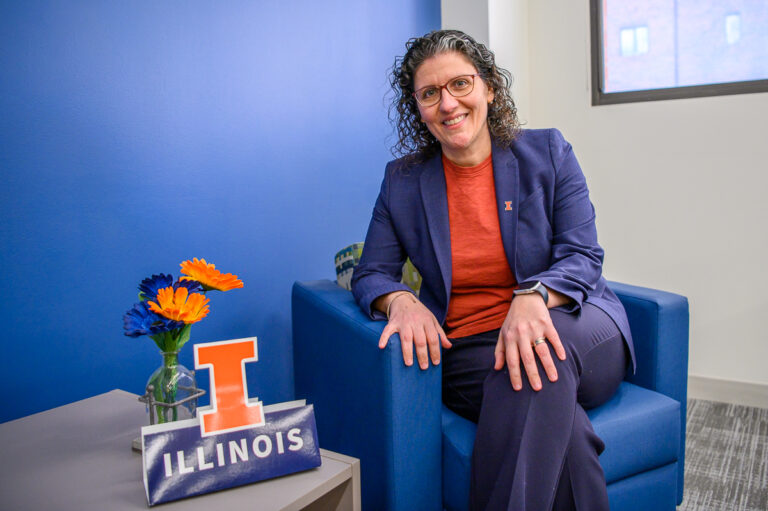
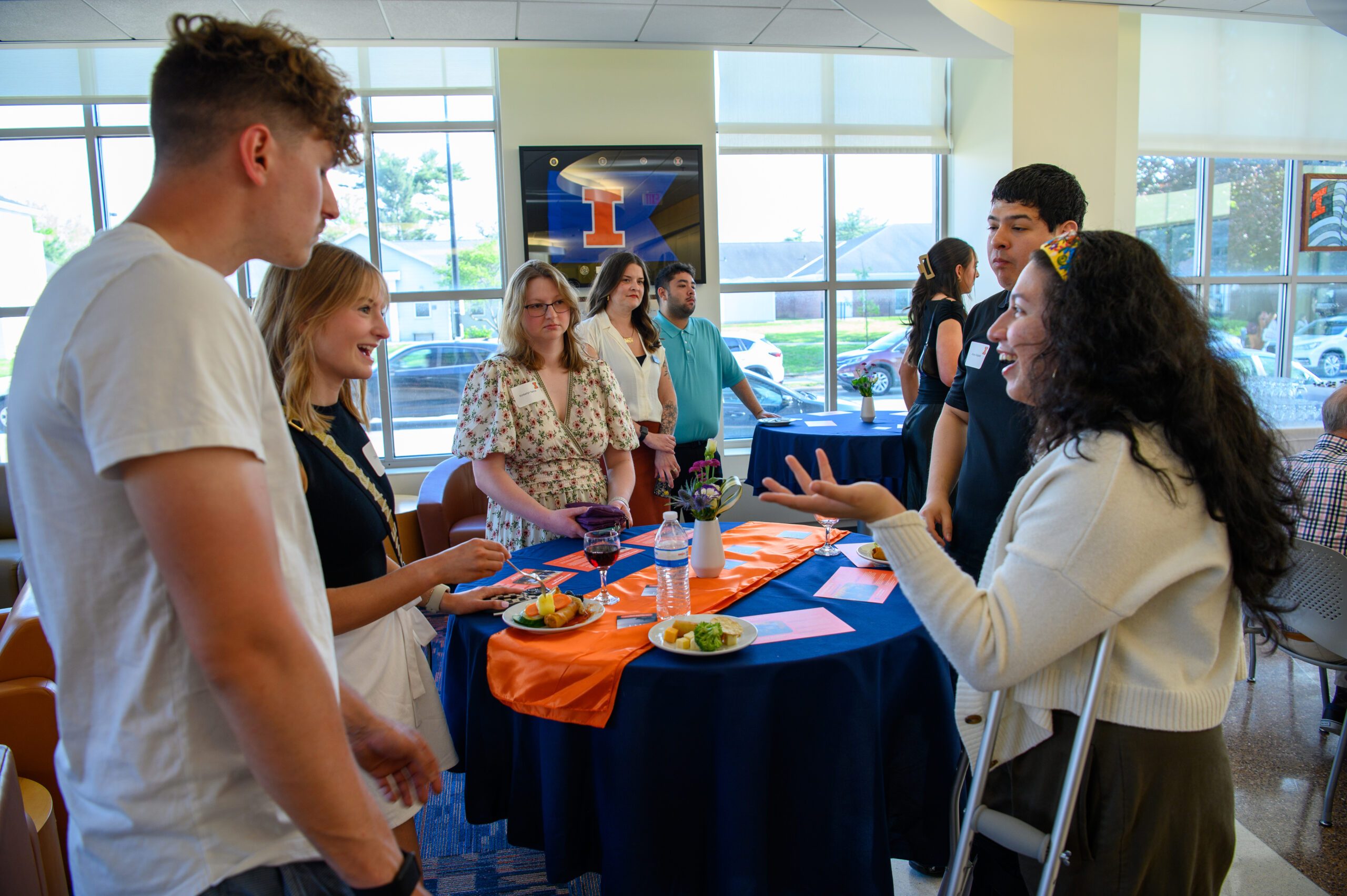
Photos by L.Brian Stauffer

CHAMPAIGN, Ill. — A new two-year study found that U.S. residents who lived near parks and recreational facilities had small increases in their leisure-time physical activities, but the relationship was stronger in more affluent counties with largely white, non-Hispanic populations.

Mikihiro Sato, a professor of recreation, sport and tourism at the University of Illinois Urbana-Champaign, used data from the University of Wisconsin County Health Rankings database for 2019 and 2020 to look at the percentages of counties’ populations that had adequate access to parks and recreational facilities. The study defined adequate access as living in a census tract that was within a half mile of a park or one square mile of recreational facilities in urban areas or within three miles of them in rural areas.

According to the study, published in the journal Leisure Sciences, more than 55% of each county’s population had such access. The final datasets represented more than 96% of U.S. counties, the team said.

“We found that the association between the prevalence of leisure-time physical activity and access to parks and recreational facilities was stronger in counties that had greater proportions of non-Hispanic white residents,” Sato said. “The relationship strengthened further as median household income increased, which suggests that residents of higher-income counties may be more likely to visit parks and facilities to engage in leisure-time physical activity.”

The co-authors of the paper were Toni Liechty, a professor in the department at Illinois; Lance Warwick, a sport management professor at Ithaca College and current doctoral candidate at Illinois; and Nicholas Pitas, a professor of public health and health education at the State University of New York at Brockport.

While the role of parks and recreation facilities in providing greater opportunities for engagement in physical activity has been highlighted in some recent public policies, the research findings have been mixed, the team wrote.

In a 2019 study published in the Journal of Leisure Research, Sato and his co-authors reported that counties with greater access to parks and recreational facilities had lower health care costs among older adults, most likely because living near these amenities encouraged residents to engage in physical activity. That paper was co-written with Yuhei Inoue, a current sport management professor at Illinois then at the University of Minnesota; James Du, a professor of sport management at Florida State University; and Daniel C. Funk, a professor and the Ed Rosen Senior Research Fellow at Temple University.

In addition to exploring the relationship between facility availability and adults’ physical activity levels in the current study, the team investigated whether it changed depending on county demographics such as income and racial composition. Sato said they used county-level data because most local parks and recreation agencies operate within a county-based structure. However, the team’s methodology also accounted for state-level policy differences that might affect residents’ physical activity, he said.

About 75% of each county’s population was non-Hispanic white. The median household income levels were $57,500 in the 2019 dataset and $55,700 the following year.

The study included adults age 20 or older. About 69% of those in the 2019 dataset said they exercised or engaged in some form of recreational physical activity during the prior 30 days, and that proportion increased to more than 74% the following year, the researchers found.

While some public health initiatives have highlighted the role of parks and recreation facilities in boosting communitywide physical activity levels and mitigating health care costs, the research findings have been inconsistent, suggesting that the impact is not universal and that there may be differing factors at play that affect community members’ abilities and willingness to use these amenities, the team wrote.

While providing adequate access is important, “Making facilities more welcoming and accessible is also essential,” Liechty said. “We recommend community-centered approaches and partnerships with local organizations to co-design programs that are inclusive and reflect local needs and cultural contexts. These initiatives could include providing family-oriented activities, creating subsidized fee structures that make programs more affordable for low-income residents, and improving the walkability of neighborhood parks.”      

The work was funded by the Campus Research Board at the U. of I.


Editor’s note:

To reach Mikihiro Sato, email mikisato@illinois.edu.

To reach Toni Liechty, email tliechty@illinois.edu.

The paper “Park and recreational facility availability, leisure-time physical activity, socioeconomic status and race” is available online or from the News Bureau.
DOI:10.1080/01490400.2025.2566939

The paper “Access to parks and recreational facilities, physical activity and health care costs for older adults: Evidence from U.S. counties” is available online or from the News Bureau.

DOI: 10.1080/00222216.2019.1583048

Social identification with a team boosts fans’ social well-being


Professor Yuhei Inoue most recent study with his team shows that consumers’ identification with service organizations, such as sports teams, has a real impact on their social wellbeing. Photo taken at the University of Illinois Urbana-Champaign on Thursday, Sept. 25, 2025. (Photo by Fred Zwicky / University of Illinois Urbana-Champaign)

CHAMPAIGN, Ill. — Sport fans all know that rosy feeling of happiness when we hang out with others who support our favorite team. A new study conducted with sport consumers in the U.S. and the United Kingdom suggests that organizations that want to enhance their supporters’ health and well-being can achieve that by bolstering their social identification with the group.

University of Illinois Urbana-Champaign recreation, sport and tourism professors Yuhei Inoue and Mikihiro Sato say that social identification with organizations boosts our social well-being — our ability to form and sustain meaningful relationships — by giving us access to three important social and psychological resources: in-group trust, a sense of purpose and meaning, and perceived progroup norms  which are the beliefs that all group members are prioritizing our collective best interests.

Share on social

Doctor of Audiology (Au.D.) Program Phasedown


Our History in Audiology Training

The Doctor of Audiology (AuD) Program at the University of Illinois Urbana-Champaign is nationally recognized for its excellence in clinical training and academic leadership. For decades, our program has prepared future audiologists to meet the evolving demands of healthcare addressing hearing and balance, consistently earning top rankings among peer institutions. Our alumni and current students continue to shape the field—advancing research, leading clinical innovation, and improving patient outcomes.

Speech and Hearing Science Building.

Today, the need for innovative models of hearing care is only increasing. With 48 million people in the United States and 477 million worldwide living with hearing loss, the demand for accessible, high-quality hearing care is growing rapidly. As a department, we are committed to supporting our students, alumni, partners, and community in addressing this global challenge.

Re-Envisioning Audiology Education at Illinois

Audiology education in general has experienced long-term challenges. Among these, a shortage of audiologists has contributed to a shortage of local clinical placement sites and clinical faculty, limiting the availability of supervised clinical training experiences. This is combined with limited applicants to our AuD program and competition from other AuD programs across the state and region. Over the past two years, the department engaged in a comprehensive review of the AuD program, assessed multiple models for long term sustainability, engaged in dialogue with statewide partners, and evaluated future trends in audiology education and clinical practice. As a forward-thinking department, we have decided to transition to new educational training models for supporting the future of hearing care.

After careful consideration, and with the best interests of our students, faculty, and the department in mind, we made the difficult decision to phase down the AuD program. As a result, we are no longer accepting applications to the AuD program.

A Continued Commitment to Hearing Health

We remain committed to educating future practitioners and leaders in hearing health. All currently enrolled AuD students will continue to receive full support from the faculty in meeting their educational and clinical requirements through the completion of their degrees. Our program continues to hold full accreditation status with the Council on Academic Accreditation in Audiology and Speech-Language Pathology (CAA). We are also designing new opportunities for students in our other degree programs to interface with our Audiology Clinic, collaborate with leaders in hearing science, and pursue interdisciplinary learning and innovation.

Our Audiology Clinic remains fully operational and continues to accept new patients and referrals without interruption. We are committed to serving the clinical needs of the university community and the public. Furthermore, we continue to pursue innovative models and partnerships as a leader in hearing throughout the state.

Designing the Future of Hearing Education and Research

Hearing science remains a core strength of our department, supported by a vibrant research community and ongoing investment in hearing innovation. Our faculty direct projects of national and international impact, to support children and adults across the lifespan with their hearing needs, and to improve clinical practice and technological solutions. With the growing influence of artificial intelligence, we are designing innovative undergraduate education opportunities that merge clinical practice with advancing computational methods, preparing students to thrive and lead in data-driven healthcare. We are building the future of hearing science and clinical practice, and we are training our PhD students to lead in this rapidly evolving field through our mentorship and interdisciplinary training.

We are deeply proud of our AuD program and the many accomplishments of our students, alumni, and faculty. We are also grateful for the valuable contributions of our adjunct faculty, emeriti faculty, and external clinical supervisors. We invite alumni, clinical partners, collaborators, and prospective students to join us in building the future of hearing science and advancing hearing care and education in Illinois and beyond.

Questions can be directed to Dr. Ian Mertes, the Director of the Audiology Program (imertes@illinois.edu).

Share on social

Related News

College of Applied Health Sciences
110 Huff Hall
1206 South 4th Street
Champaign, IL 61820
(217) 333-2131