Department of Speech and Hearing Science rose from a humble start


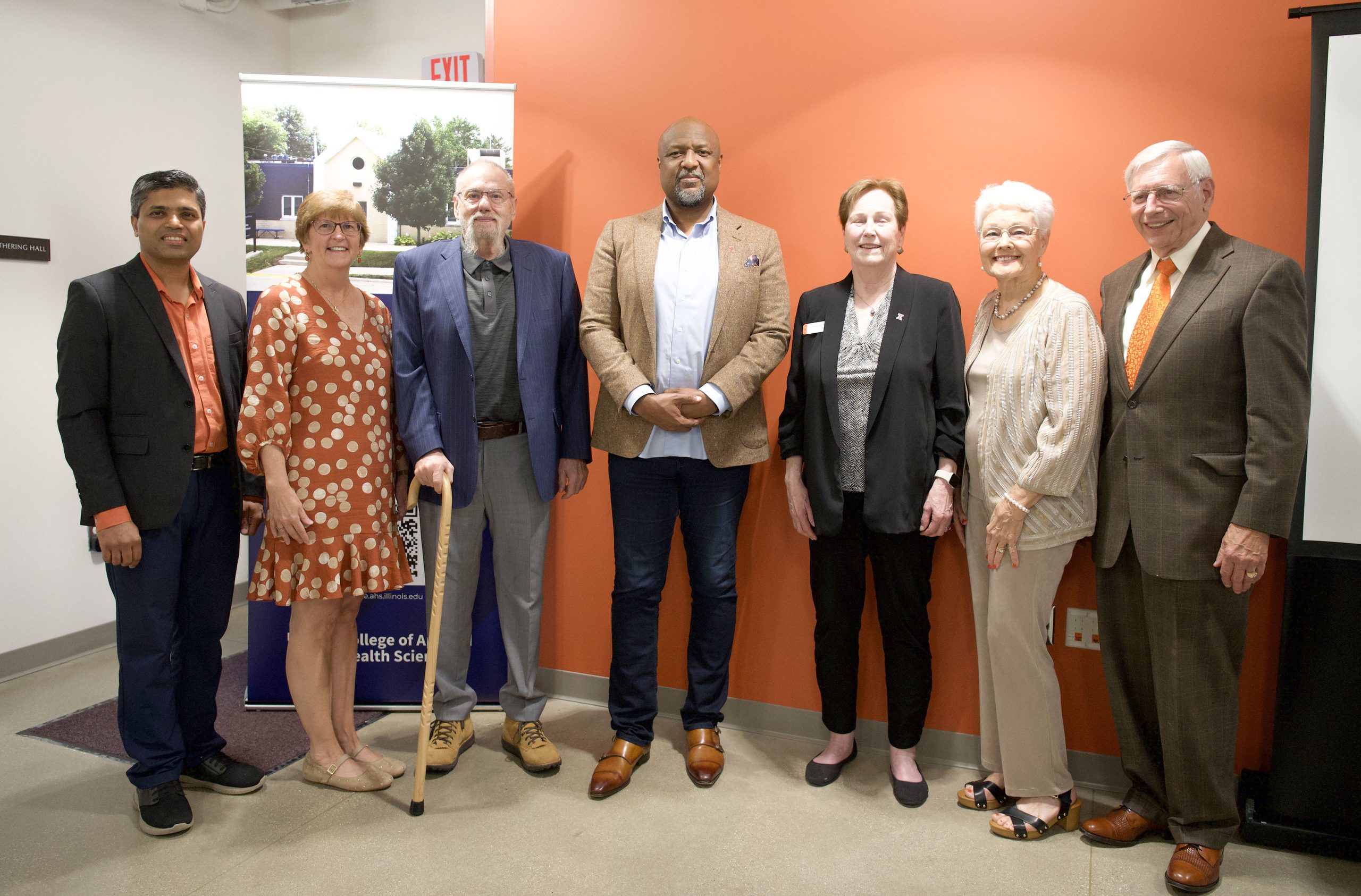
Dr. Severina Nelson (left) was a pioneer in the field of speech therapy. (photo courtesy University of Illinois Archives)

As humble beginnings go, it would be difficult to top that of the Department of Speech and Hearing Science at the University of Illinois.

In 1938, Dr. Severina E. Nelson repurposed a closet in Lincoln Hall to start an outreach program providing speech therapy. She began by assisting a student with some articulation difficulties. Sharing an office with colleagues and unable to find a private room, Nelson said, “Finally, the janitor volunteered to donate his mop closet so that I could set up a speech therapy lab. He moved to the basement.”

If that were all there was to it, Nelson would go down in campus history as one of the more determined, innovative, and resourceful professors at Illinois and as a founder of what, in 1973, became the Department of Speech and Hearing Science (SHS).

But there is more to Severina Nelson, and SHS, than that.

“Nowadays, our culture is notoriously rough on the dedicated person with a cause, especially a woman,” wrote a group of students to Nelson upon her retirement in 1964. “It is true that all new concepts only get recognition after someone has spent years being persistent and farsighted until finally, the disbelievers are made uncomfortable and become believers. You’ve been a woman with a gleam in your eye, and thank heaven, you never became a casualty of our system.”

Nelson earned her B.S. in 1918 and her M.A. in 1923 in English at the University of Illinois at Urbana-Champaign. She began her professional life as a high school teacher in Iowa, coming back to Urbana-Champaign in 1920 as an associate instructor in the Division of Public Speaking in the Department of English. After earning her M.A. degree, she pursued a career teaching interpretive speech. She was an engaging speaker, giving countless readings for campus groups, on tours across Illinois, and on radio shows. This led to her co-authoring a best-selling speech textbook with Charles H. Woolbert in 1927: The Art of Interpretive Speech (with a fourth edition still in press in the 1960s).

In 1932, Nelson was elected president of Sigma Delta Phi, a national honorary women’s dramatic and speaking fraternity. Fittingly, it was Nelson who introduced aviator Amelia Earhart during her March 21, 1935 appearance on campus—two years before Earhart’s disappearance. Nelson had built a profile as a director of dramatic productions, including those for the Women’s League, the annual Homecoming “Stunt Show,” and the Hillel Players.

Nelson earned her Ph.D. in 1938 in Speech Pathology at the University of Wisconsin in Madison and then did post-doctoral work at the New York Medical College. The work Nelson began by helping college students with speech difficulties received funding and was then extended to community members. In 1938, she brought clinical practice at the University of Illinois into existence by establishing its speech clinic, serving as its director from 1939-59 and as a professor of speech from 1941-64. Some of Nelson’s early research in speech disorders focused on stuttering. She published three seminal articles from 1939-45 in the Quarterly Journal of Speech and The Journal of Pediatrics, on the role of heredity in stuttering, and in the Journal of Speech Disorders, on stuttering in twin types.

In 1939, the Daily Illini described Nelson as “one of the most popular instructors in summer school,” noting that “her office is different from the usual. Here you open the door and find yourself looking into a full-length mirror. Vanity isn’t the reason for the mirror’s being there. She finds it very useful in her speech correction work. Just during the past year, the speech department has made great advances in this work, and much of it has been under Miss Nelson’s supervision. Patients are studied and classified according to their type of speech defect, then they are turned over to students in speech correction classes for help.” (Please see Editor’s Note below regarding terminology use in historical records) Most of the student therapists were women whom Nelson supported as the faculty advisor to the campus chapter of Zeta Phi Eta, the national women’s speech sorority.

By 1940, Nelson had secured a $2,000 grant to support her clinic and extensive office and clinical space in Gregory Hall, where individuals with cerebral palsy, hearing disabilities, and cleft palate received therapy. She also had established an educational program in speech therapy at the University of Illinois, with four years of undergraduate coursework and one year of graduate study. From 1943-1944, as the chair of a state legislative committee, Nelson delivered 50 to 75 speeches throughout Illinois to win passage of the committee’s bill to provide supplemental funds for local clinical efforts. With the onset of the World War II, veterans were returning with “organic and psychological disabilities.” The clinic’s funding from the farsighted bills in the Illinois legislature was augmented by federal assistance to veterans. Twenty-seven nationwide colleges and universities received this funding, notably clustered in the Midwest around the University of Illinois, including Indiana University, Northwestern University, the University of Michigan, and several branches of what would become the University of Wisconsin system.

The demand for speech and hearing specialists was such that Nelson wrote to her department head in 1945 that the University of Illinois Speech and Hearing Clinic was competing against Army and Navy hospitals to recruit therapists for work in the Champaign and Urbana school districts. By 1946, there had been 16 master’s theses recorded in Speech and Hearing Science.

In 1950, under Nelson’s leadership and advocacy the clinic moved to the Lorado Taft House on campus (though, as she wrote in a letter, Nelson was convinced the University planned to demolish the building.) The St. Louis Post-Dispatch reported that “her enthusiasm, plus a brisk business-like air, are reflected in the rest of her efficient and enthusiastic staff.” A newsletter describing “Dr. Severina Nelson’s informative, vivid, and impressive account of the Illinois Speech Clinic” to the Urbana Rotary Club in January 1955 noted that “Professor Nelson filled her talk with case histories … all interesting. Urbana Rotary played a large part in sparking the state’s program—a program which for some years has been one of the best in the Union.”

When Nelson stepped down as director of the speech clinic in 1959, it had 10 full-time therapists. She resumed full-time teaching in speech pathology and oral interpretation, and by then, had advised more than 125 graduate theses. With her national renown, she was often requested as a speaker by groups and organizations across the country. After retiring in 1964, Nelson moved to Dallas and in 1978, received Honors of the Association from the Illinois Speech-Language-Hearing Association.

Contributor: Cynthia Johnson Parsons

Editor’s Note: As in many fields, perspectives and terminology in speech and hearing science (also called communication sciences and disorders) have evolved over the years, away from those appearing early in the historical record. For example, our focus has shifted away from correcting a person’s speech defects toward improving the intelligibility of their speech and enhancing the effectiveness of their communication with others.

Share on social

Related news

CHAD symposium returns with thanks for pilot grants


KCH Associate Professor Naiman Khan’s presentation was titled “Role of Omega-3 Lipid Metabolites in Obesity and Cognitive Function” (Photo by Lisa Bralts)

The first Center for Health, Aging, and Disability (CHAD) symposium since 2017 was a celebration of the research accomplished with the help of the Pilot Grant Program.

Three researchers from the College of Applied Health Sciences—Naiman Khan, an associate professor in Kinesiology and Community Health; Brian Monson, an assistant professor in Speech and Hearing Science, and Sharon Zou, an assistant professor in Recreation, Sport and Tourism, made a point of thanking CHAD’s grants for helping launch their studies.

Khan, whose presentation was titled “Role of Omega-3 Lipid Metabolites in Obesity and Cognitive Function,” said CHAD’s funding was vital to his work.

“CHAD was really helpful in us starting a new line of engagement of research,” he said. 

CHAD director Jeff Woods, AHS’ associate dean for research, said to date, 38 pilot grants have been awarded since CHAD was launched in 2010, with $860,000 awarded to AHS researchers for pilot research. Woods described CHAD’s role as “work at the bookends of medicine … with the goal of improving people’s lives.”

“CHAD pilot grants are really important for junior faculty,” Zou said.

And the payoff has been well worth it, Woods said, citing the return on investment as approximately $16 in external funding to $1 in CHAD funding. 

Zou’s presentation was titled “Exploring an Efficient and Equitable Entrance Fee for Public Lands: A Community-based investigation in the Indiana Dunes National Park.”

“I study how people have fun,” Zou said, explaining that it was vital for public parks and other tourism industries to build a sustainable revenue model and not to rely on decreasing funding from state and federal sources. 

The primary purpose of Zou’s study was to “understand visitors’ and surrounding community residents’ perceptions of Indiana Dunes National Park user fees to inform a fee structure that balances revenue generation and equitable access.”

During and after the COVID-19 pandemic, Zou said, “parks saw explosions of people visiting.” While that was great for parks in terms of revenue, it also led to increasing operation costs at a time when government funding for these sites is being reduced.

“The specific goal is to find out how visitors see the park fees, and are they fair?,” Zou said.

The RST researcher said her preliminary findings indicate there was no consensus from study participants on what “fair” means, and that tension between fairness principles partly explains the longstanding controversy and debate on public land user fees.

Khan’s presentation focused on how poor lifestyle choices can predict an early onset of dementia, noting that obesity worldwide has increased threefold since the 1980s. The KCH researcher said his research, in conjunction with Aditi Das of Georgia Tech, suggested that the a deficiencyin the hormone dehydroepiandrosterone (DHEA)—which has been reported to have beneficial effects on obesity, diabetes mellitus, and serum lipids in animals—was associated with individuals with a body-mass index (BMI) of 25 or higher, which is classified as obese.

“BMI is inversely connected to cognitive function,” Khan said. “Only in obese individuals do we see DHEA increase in circulation.” Khan said his preliminary results found:

  • Circulating Omega-3 metabolites were higher among persons with higher weight status and the levels were associated with degree of fat mass
  • Circulating metabolites inversely associated with cognitive function
  • Only observed among persons with overweight and obesity
  • Selectively associated with hippocampal function
  • Implications for memory function

Khan said his overarching goal was to “develop effective lifestyle approaches to improve cognitive function.”

SHS’ Monson discussed his study called “Capturing Prenatal Auditory Experience.”

“If there was a pregnant woman in this audience, that baby would be hearing my voice, and perhaps making judgments,” he said, drawing laughter from the gathering. “How do we know? Because full-term newborns come to the world with memories of what they’ve heard, including the mother’s voice.”

In utero, Monson explained, was a unique acoustic environment. When preterm infants are delivered, they are placed into incubators, which rapidly changed the sound profile, he said. The consequences of those changes include increased risk for sensorineural hearing loss, auditory neuropathy, language and speech developmental delays, auditory attention deficits and auditory processing disorder.

Monson’s study involved a group of pregnant women wearing a LENA listening device twice a week during the third trimester, while the device was placed into cribs of very preterm infants at Carle Foundation Hospital three times a week through their stay in a neonatal intensive care unit (NICU).

“Fetuses are getting 2.5 hours a day of speech exposure vs. 32 minutes a day for very preterm infants,” he said. “It’s an alarming difference to me.”
NICU infants may incur a deficit of about 150 hours of speech exposure over the course of the preterm period, he explained.

One of the possible mitigation strategies for very preterm infants could be to provide meaningful targets (about three hours a day of speech exposure) to optimize auditory exposures in NICU settings.

“The maternal heartbeat is never turned off in utero,” he said. “The maternal heartbeat is never turned on in NICU.”

Following the CHAD Pilot Grant success stories, Wendy Rogers, the Shahid and Ann Carlson Khan Professor of Applied Health Sciences, talked about the work of Collaborations in Health, Aging, Research, & Technology (CHART).

CHART’s mission is to enable successful aging through:

  • Fundamental research
  • Advanced technology development
  • Education of researchers, developers, healthcare professionals, older adults
  • Guidance for policy decision-making
  • Translation of these efforts to positively affect the lives of older adults

CHART was the first research theme of the College of Applied Health Sciences and boasts the development of the McKechnie Family LIFE Home, an interdisciplinary research facility and simulated home environment that helps promote community engagement, industry partnerships, healthcare collaborations and faculty innovation.

Also part of the symposium was the introduction of a new AHS research theme called CARD (Collaborations in the Advancement of Research on Disability), led by KCH Associate Professor Laura Rice and KCH Professor John Kosciulek. CARD is focused on enhancing the health and quality of life of people with disabilities—through research that addresses critical gaps in disability-related knowledge and outreach that engages individuals with disabilities. 

CARD’s short-term goals include:

  • Develop a collaborative working group
  • Develop communication strategies
  • Establish a steering committee of stakeholders
  • Develop and implement outreach and engagement events

Longer-term goals include:

  • Host a bi-annual research symposium
  • Develop a “toolkit” for UIUC faculty to support the performance of disability-related research in the Champaign-Urbana area
  • Respond to disability-related funding opportunities
  • Establish a competitive program to provide supplemental funding to support ongoing disability research among junior faculty
  • Host a seminar series with external experts
  • Establish a research training program for students registered with DRES interested in doing research
  • Support the development of new research registries and/or expansion of current registries

The first CARD meeting is set for March 22.

In kicking off the symposium, AHS Dean Cheryl Hanley-Maxwell said CHAD was “one of the biggest attractions” of her decision to come to Illinois and lead the college.

“When I thought about CHAD, I thought it’d be interesting to lead a college that has this kind of momentum to it, and I’ve been proven correct, year after year,” she said. “CHAD provides students with real-world engagement, and plays an absolutely critical role in their professional development.”

Woods agreed.

“We’re helping put the next generation of scientists into the field.”

Editor’s note:

To reach Vince Lara-Cinisomo, email vinlara@illinois.edu.
 

Related news

2023 AHS Distinguished Lecturer Series—Dr. Travis T. Threats


Saint Louis University Speech, Language and Hearing Sciences Chairperson Travis Threats. (Photo provided)

About the Presentation

In looking at different populations, it is important to distinguish between differences and disparities. With a differences orientation we look at the population’s own perceived strengths and areas of wanted improvement. With the disparities orientation, we view the “winners” and “losers” of “the system.” Looking at aggregate group differences also obscures the wide within group variation a given population. Thus, even disparities research and thought can have implicit biases. In this presentation, the World Health Organization’s International Classification of Functioning, Disability, and Health (ICF) will be used as a framework and classification system to take a more comprehensive and person-centered view of the wide variety of health indicators within any given population.

About Dr. Threats

Travis T. Threats, Ph.D. is Professor and Chair of the Department of Speech, Language & Hearing Sciences at Saint Louis University. His primary scholarly work has been with the World Health Organization (WHO) on the International Classification of Functioning, Disability and Health (ICF). He has been the American Speech-Language-Hearing Association’s (ASHA) representative liaison to the WHO since 1999. He has worked on other projects for WHO including the disability sections of the ICD-11. Dr. Threats has also published and presented internationally on his three other scholarly interests: spirituality/religiosity in rehabilitation, evidence-based practice, and rehabilitation ethics. Dr. Threats is an ASHA Fellow and ASHA 2012 recipient of the Certificate of Recognition for Outstanding Contributions in International Achievement. He is a Distinguished Scholar and Fellow of the National Academies of Practice. In 2022, he was awarded Honors of the Association by the American Speech-Language-Hearing Association (ASHA), the highest honor given by ASHA.

Editor’s note:

To reach Vince Lara-Cinisomo, email vinlara@illinois.edu.
 

Related news

New AI institute to focus on the speech language pathology needs of children


The University of Illinois is part of a nine-university consortium led by the University of Buffalo that has been awarded a $20 million grant by the National Science Foundation to establish a national institute that develops artificial intelligence systems that identify and assist young children with speech and/or language processing challenges. The award will establish the AI Institute for Exceptional Education to advance foundational AI technologies, human-centered AI design, and learning science that improve educational outcomes for young children. 

The institute will help address the nationwide shortage of speech-language pathologists and provide services to children ages 3 to 10 who are at increased risk of falling behind in their academic and socio-emotional development – issues exacerbated by the COVID-19 pandemic.

Pamela Hadley, professor and head of the Department of Speech and Hearing Science at the University of Illinois Urbana-Champaign, is one of the co-principal investigators for the grant. 

“In light of the shortage of speech-language pathologists nationwide, there is a pressing need to develop health technologies that can help identify young children at-risk for speech and language disorders at younger ages and do so more efficiently,” said Hadley, a fellow of the American Speech-Language Hearing Association. “Our multidisciplinary team will enhance automatic speech recognition systems, improving early identification and interventions for children with developmental language disorder and other conditions that affect speech and language. Our team will also create advanced artificial intelligence systems that will support tailored interventions for children on the caseloads of speech-language pathologists. By doing so, we will create educational environments that help children thrive socially and academically.”

Institute will help underserved students

The AI Institute for Exceptional Education will focus on serving the millions of children nationwide who, under the Individuals with Disabilities Education Act, require speech and language services.
Specially, it will develop two advanced AI solutions: the AI Screener for early identification of potential speech and/or language disorders; and the AI Orchestrator, which will act as a virtual teaching assistant by providing students with ability-based interventions.

The AI Screener will listen to and observe children in the classroom, collecting samples of children’s speech, facial expressions, gestures and other data. It will create weekly summaries of these interactions that catalogue each child’s vocabulary, pronunciation, video snippets and more. These summaries will help teachers monitor their students’ speech and language abilities and, if needed, suggest a formal evaluation with a speech-language pathologist.

The AI Orchestrator is an app that will help speech-language pathologists, most of whom have caseloads so large that they must provide group-based interventions for children instead of individualized care. The app addresses this by recommending personalized content tailored to students’ needs. It continues to monitor students’ progress and adjusts lesson plans to ensure that the interventions are working.

“The AI Institute for Exceptional Education follows 18 already established NSF-led AI Institutes, an ecosystem of AI research and education in pursuit of transformational advances in AI research and development of AI-powered innovation,” NSF Program Director James Donlon said. “We are happy to welcome this new team to the AI Institutes program.”

Institute comprises top research universities

The institute will consist of more than 30 researchers from nine universities including the University of Buffalo; Stanford University; the University of Washington; Cornell University; the University of Nevada, Reno; the University of Texas at El Paso; Penn State University; and the University of Oregon.

Other investigators at Illinois are Heng Ji (Computer Science), Mark Hasegawa-Johnson (Electrical and Computer Engineering), Yun Huang (Information Science), Hedda Meadan-Kaplansky (Special Education), and Windi Krok (Speech and Hearing Science).

“We are eager to see how this team advances AI research to develop better solutions for children with specific speech-language needs, as well as their families and the U.S. schools who serve them. This project is a great example of how we can harness the opportunities that AI technologies can offer to enhance the services that our nation can offer the American people,” NSF Program Director Fengfeng Ke said.

Editor’s note:

To reach Vince Lara-Cinisomo, email vinlara@illinois.edu.
 

Share on social

Related news

SHS audiologist ‘hopeful’ about hearing aid ruling


After a recent FDA decision, hearing aids are now available over the counter.

A decision by the Food and Drug Administration that permits hearing aids to be sold without consulting a medical professional could be a positive development, Speech and Hearing Science audiologist Sadie Braun said.

But, as she’s fond of saying, consumers might have to “play it by ear”.

The FDA ruling, which was finalized in August and took effect on Oct. 17, allows adults with mild or moderate hearing loss to purchase a hearing aid without prescription. The ruling will create more competition and lead to quick technology advancements and lower device costs, but without FDA approval a company cannot classify its product as a “hearing aid.” Per the FDA, the devices covered are air-conduction hearing aids, which fit either in the ear canal or sit behind the ear. Other types of hearing  devices include cochlear implants or bone-anchored systems.

While there are plenty of positives to the new rule, it is important to stress that hearing aids are not a one-size-fits-all proposition, Braun said.

“I am a little nervous about the idea that some people who are self-diagnosing may not actually have a mild-to-moderate hearing loss,” she said. “They might be getting hearing aids that are not ideal for them. More importantly, I’m worried that by removing audiologists and ear, nose, and throat doctors from that process altogether, that patients might not get the care that they need for some of those more significant auditory and medical conditions that can be related to the ears and can be very serious if left untreated, such as acoustic neuromas, and Meniere’s disease, to name a couple.”

Given those concerns, Braun recommends that anyone who is considering trying an over-the-counter device make an appointment with an audiologist for an initial hearing test.

That said, Braun believes the ruling will end up being a good thing for “our patients, for audiology, and for the hearing aid industry on the whole.”

“I think that this legislation definitely opens the door for some of our traditionally underserved and underrepresented populations and communities so that they can obtain devices that can help them hear better that they might not have otherwise been able to obtain,” she said, citing the cost of hearing aids. 

The average price for a pair of prescription hearing aids is $4,600, but OTC hearing aids are expected to cost far less. The federal government estimates Americans could save up to $3,000 on hearing aids by choosing OTC brands rather than prescription devices. If that’s the case, the average cost for a pair of OTC hearing aids would be around $1,600. One wrinkle is that there are now several different devices that can be used to amplify sound for a multitude of purposes: hearing aids and Personal Sound Amplification Products, better known as PSAPs, and it can be difficult for consumers to differentiate them.

“The big difference with PSAPs is that they are not meant to treat hearing loss,” Braun said. “They are actually for normal-hearing individuals only. And they’re therefore not classified as medical devices. Instead, they’re considered electronic products. Because of this, they are not regulated at all by the FDA. One example of something the FDA determines with medical devices is age limitations and requirements, and they have stated that OTC aids are ‘not intended for use by individuals who are younger than 18’.  However, while they say that in the rules and regulations, they do not require age verification before over-the-counter hearing aid purchase. But on PSAPs, for example, there’s no recommended requirement.”

Another benefit of the FDA OTC rules, Braun believes, is they will go a long way toward ensuring safety standards for OTC devices.

“The rules and regulations that took years to develop and fine-tune are critical pieces in this OTC legislation,” she said. “We really have to have those built-in safety mechanisms to protect the consumer, to make sure the consumer does not get injured. Also, we have to make sure that these devices meet a set of standards, a set of criteria, to be sure that they do what they claim they will do, or what they are intended to do. Without those regulations in place, I would be much more wary of recommending OTC hearing aids as an option for some of my patients who have mild-to-moderate hearing loss.”

Still, Braun cautions that in the early stages of the aftermath of the rules, much is yet to be determined, and she stresses the need for professional guidance.

“Each person has a different and unique set of needs,” she said. “Some individuals can navigate that process, on their own and potentially be successful with over-the-counter devices. I think that other individuals really need that guidance of a professional to help them through the entire process from start to finish and to be there for support and assistance the entire way. Over-the-counter hearing aids cut out the service component, and that professional service component is what a lot of patients really rely heavily on.”

One way to access that professional service is through SHS’s Audiology & Speech-Language Pathology Clinic. You can reach clinicians by calling 217-333-2205 or emailing shsclinic@illinois.edu.
 

Editor’s note:

To reach Sadie Braun, email svojak@illinois.edu.
 

Share on social

Related news

Q&A with RST student Emily Jordan


VINCE LARA: All right, so Emily, the first question I wanted to ask you is what made you choose the University of Illinois?

EMILY JORDAN: Well, originally, back in 2020, when I was about to graduate with my associate’s degree, I went to Danville Area Community College, where my associate’s is from. My original plan, before COVID hit, I went and visited three different schools, and the U of I was one of them just because I actually only live about 45 minutes away from campus, so I grew up coming over here coming the games and stuff all the time. So I was already kind of familiar with everything. I just wanted to see what the actual school was like.

So when I visited here originally, I was thinking I was going to major in communications because that’s what my associate’s is in. So when I did my visit over here, I actually spoke with a communications advisor, and I told her what I wanted to do and everything, and she actually redirected me to RST, which is where I’ll be graduating now. So that’s how it ended up. I realized that it was a good fit for me. I’m familiar with it over here. I could live at home, save money, and everything like that, so that ended up being why I came over here.

VINCE LARA: Yeah, and that answers the second question I had for you, which was why RST? And RST does have some similarities to communications. So when you were looking into RST at first, what really appealed to you there?

EMILY JORDAN: I guess I wanted something that was very people-based. I feel like I need communication with people all the time. I don’t see myself working at a sit down job. I need that interaction and everything. And so when I looked into RST more, after discussing different options with that communications advisor, I kind of figured out like, OK, these classes look really appealing to me, it all seems really enjoyable and something that could lead me to a really strong career, and it’s focusing on something that I really want to do, and more sport-based.

Communications is like a big bubble, so it’s really wide, and that’s why you can kind of go different routes with them. So that’s why I wasn’t sure what it was like over here, but I realized that RST encompassed a lot of things that I wanted to learn about and kind of navigate through as I got my bachelor’s degree.

VINCE LARA: Yeah, that’s a good point. And you talked about it being a big bubble, but it’s interesting that I noticed recently– part of the reason I’m having Emily on the podcast is that she won the Joan Braswell Scholarship at the RST scholarship ceremony, and as part of that social media post that we did over here, it mentioned that you wanted to be an athletic director. So I wonder how you made that leap from a communications associate’s degree to RST to now thinking about that as a future career?

EMILY JORDAN: Well, I took a class last semester, in the fall of 2021, and actually, that was my first semester physically on campus because my junior year, when I transferred here, everything was online. So when I came over here in person as a senior last semester, I was kind of worried and intimidated a little bit– a big school and everything. But once I got settled down in the classes and stuff, I felt comfortable in everything.

But one of the classes that I took was Dr. Welty-Peachey’s class. It’s RST 430, and it’s a Sport and Development class, and that was probably one of my favorite ones I’ve taken over here. It talks about how we can use sport as a tool to kind of help develop athletes and develop different parts of life as well as helping athletes be better in the sport that they want to be in.

And I think that kind of opened my eyes as to, OK, I think I have a passion for trying to fix the problems that are within sports because obviously, everything has issues and flaws, but I think that that’s where I found my passion was that I want to keep, especially, kids and youth and high school athletes involved in sports just because I know all the benefits that come from playing and participating in them.

So that’s kind of where I learned like, OK, I feel like, as an athletic director, I could help navigate athletes into the routes that they want to go in and steer them in the right direction and resolve those problems that are taking place as of today. And that’s kind of where I learned that being an AD might be a good fit for me.

VINCE LARA: I’m curious about what or who inspired your love of sports.

EMILY JORDAN: So I’m the youngest of my family. I have two older brothers, and I grew up watching them play sports. They played soccer, a little bit of football, a lot of basketball, track, baseball a little bit, so I just like grew up watching them play everything and, of course, as a younger little sister, you want to do everything that your older brothers or siblings are doing.

So that’s kind of how I got into playing T-ball as a little kid, and then that grew into softball, and then I played soccer just like they did and ended up playing school volleyball, and I ran a little bit of track and played basketball like them. So that’s kind of where it stemmed from. I mentioned before, too, we would always as a family come over to the U of I and watch basketball games and football games. So I kind of just grew up playing them and being around them all the time. We talk about it all the time still today. So that’s kind of where that all stems from.

VINCE LARA: Yeah, that makes sense. And recently, you were an announcer for the Men’s National Junior College Athletic Association Division II basketball tournament. How did that come about? Did you express interest? Did someone seek you out? Tell me how that came together.

EMILY JORDAN: When I was at Danville Area Community College, I took some college classes, like dual credit classes, in high school, so I was already familiar with DACC. And then when I graduated high school, that’s where I finished my associates at for that remaining one year. And one of the classes I took was like a media production class, and the assistant professor I had, her named Laura Hensgen, and she’s kind of in charge of the media department there and everything, and DACC has hosted that tournament, the championship portion of the tournament for– I think it’s been 29 years, I believe. So they’re very familiar with it and everything.

So they have broadcasters and the radio and the livestream come out and everything, and there was myself and another student in her class at the time that was interested in media broadcasting, media stuff, sports in general, and she just asked us if we would be interested in doing it, if that would be a good opportunity to expand our horizons a little bit and get us some experience and everything. So I’m not going to lie, I was a little intimidated just because it’s a big setting and everything, but myself and the other student ended up doing it that first year of 2020.

But then, of course, COVID happened, so that season got cut short. And then when I actually came over here to the U of I my junior year, she asked me to come back, even though I wasn’t a student at DACC anymore. She asked me to come back and commentate again, and so I did it with that student there that following year, as well as I did it with my dad too. So it was really cool to do it, come back and do it, and do it for a full season because I didn’t get that opportunity before. But that’s kind of how it all got started and everything.

VINCE LARA: You said you did it with your dad. Is your dad a broadcaster?

EMILY JORDAN: Yeah, so I live over in Vermilion County, and one of the radio stations, he will do some high school basketball games here and there. And they’ve asked him to do that tournament, the NJCAA tournament there, so he did that one with me. We’ve actually called some of the Vermilion County high school basketball tournament games together too, so it’s been really fun to have that experience with my dad too because, obviously, that doesn’t come around too often, but it was really a lot of fun to do it with him as well as with that teacher at DACC and the other student at DACC.

VINCE LARA: Sure, and DACC being, of course, Danville Area Community College, just for our listeners’ context there. So the obvious next question to you is why not pursue sports media because it seems like you’re really passionate about it and your dad is involved, and so why not go that way?

EMILY JORDAN: Well, I think it goes back to that class that I took last semester. I think that the media world obviously is a huge part of today’s society and how we function and everything, how we get our information, and spread information, and stuff like that. I think it’s a super unique job. Originally, I wanted to do social media or marketing for a team of some sort. That was my original thought.

But I think I was passionate about it too, and broadcasting I enjoy and everything, but I think that where my– I want to get like a lot of fulfillment out of what I do, so I think that helping athletes in some way, making sure they stay involved in sports and, like I said, fixing the issues that are in the systems right now, I think those are really important so we can see the same participation levels throughout time and everything.

And I feel like I’ll get the most fulfillment out of doing something like that versus doing a sports media type job, I would say, just because that I know I’d be helping more people in that way. Not that sports media, obviously, is any– isn’t bad or anything, but I just think I would get more fulfillment out of helping athletes and stuff like that.

VINCE LARA: Sure. Have you had a chance at all to spend any time with Josh Whitman or kind of shadow him?

EMILY JORDAN: No, but I’m going to be doing my internship as part of– I’m not sure if you know, but the RST internship we have to do as part of our degree work requirement– this summer, I will be doing it under the athletic director and the media productions person Laura as I mentioned before. I’ll be working under them this summer at DACC as well. So that’ll be, I think, a really good interesting time for me and kind of allow me to see what it’s like being an AD, so I’m really looking forward to that as well.

VINCE LARA: Yeah, that’s terrific. And I think to wrap up I’d like to just ask, what would you tell other students who may be in a similar situation that you were at the end of your associate’s degree about RST, and how would you recommend the program to them?

EMILY JORDAN: I would say, when I was getting ready to transfer and I was looking at the schools I was looking at, the U of I seems massive. I mean, that was my initial thought, and what I told my parents and everything, but there’s 50,000 to 60,000 kids that come here, and it just seems so big and everything.

But when I actually came here and visited campus and stuff and saw that it’s like you know broken down into colleges and then your major and everything, I think that it helped it be more appealing to me, and also made me feel more at ease and comfortable with coming here, especially since it is so big. But in all honesty, I still feel like I’m kind of going to a community college. I’m not traveling across campus for classes or sitting in super big classes with 100 to 200 kids or anything like that. I really feel comfortable here knowing that I’m in the right major, and then with RST, I think that you’re going to get a lot of experiences out of being in that major.

It’s not necessarily a lot of book work. Obviously, there’s things you take from text and apply it to real life, but I think it’s more real life scenarios that you learn hands-on and in the classroom that can help you further on in your career. So I think that’s why it was so eye-opening for me and really attractive to me to come to RST because I felt that I would get the most out of majoring in this major. So it just felt like that. It felt comfortable, it felt right, and it just, like I said, would be an awesome experience for anyone, I think, who’s interested in this kind of work.


Related news

A Few Minutes With … Mina Raj


Transcript

VINCE LARA: Hi, and welcome to another edition of A Few Minutes With, a podcast that showcases Illinois’ college of Applied Health Sciences. I’m Vince Lara. And today I’m speaking with PCH Assistant Professor Mina Raj about why she chose Illinois, teaching during a pandemic, and her research with caregivers of older adults. So Mina, thanks so much for speaking with me today. I always try to find out about faculty and how they got their start, especially new faculty like yourself. So did you always want to teach?

MINA RAJ: Thank you so much for doing this with me today, this podcast. So I have always enjoyed teaching. And I did look forward to it, especially since my experiences of teaching as a graduate student. As a graduate student, I think it’s been really rewarding to observe students evolve in their critical thinking about a topic over the course, form evidence-based opinions about different topics, and especially policies in the health care classes that I teach, and discover new aspects of our health care system that they are passionate about but they didn’t necessarily understand, though they can resonate from their personal experiences as being patients.

VINCE LARA: Yeah, interesting. I wonder, typically, when a person goes into research, there’s something that sparked their agenda, what they wanted to look into. And one of your primary research agendas is incorporating caregivers into health care. And I’m curious what made you look into that? What was the impetus for doing that kind of research?

MINA RAJ: Sure. So during my PhD, my dissertation research was focused on understanding how older adults and their family caregivers make decisions about geriatric care. So geriatrics is the medical field that specializes in the care for older adults, especially those with complex clinical conditions. And then some other projects where I was working to understand patients with cancer, it was kind of a similar situation of recognizing that family caregivers are really influential in health care and in medical decision making.

But they aren’t really talked about that much in policy in that way. So the way we think mostly about family caregivers are their assistance with things like eating and dressing and transportation and meal preparation. But they’re really kind of neglected from health care conversations. And I think my research seeks to really help caregivers because these are the people that are supporting patients who are going through intense challenging periods of their lives. And so seeing this major gap in our policies and in research led me to want to focus on supporting caregivers so that they can support their care recipients.

VINCE LARA: Mm-hmm. I want to take a step back. I meant to ask you first, what made you choose Illinois?

MINA RAJ: Yeah. So that’s a great question. There was a lot that I enjoyed. When I visited Illinois, I found the first thing that struck me was how supportive and what an emphasis there is on the campus on collaboration within the department, as well as across the departments.

So I’ve already sort of started forming teams with people in fields that I previously knew very little about, and I’m learning so much. And it’s really nice to think outside the box and get to be creative. And that’s my other point is that it seems like the kind of place where I can be very creative, a place where your ideas can really translate into different types of technology or different types of policies. And seeing ideas come to fruition like that was something that really sparked my interest in Illinois.

VINCE LARA: Mm-hmm. One of the things that you also look at, switching back to your research, is you look at technology to support caregivers. And I’m wondering what sort of technology do you use?

MINA RAJ: Yeah. So I examine a variety of different technologies. So for instance, within health technology, there’s the electronic health record, which if you go to the doctor’s office, you might sign onto your patient portal before you go to the office in order to fill out a questionnaire. Then when you go to your doctor’s office, your doctor might be on the computer filling out information about you into the electronic health record or the computer system. And so this is one type of technology that I look at in terms of policies or design to integrate caregivers so that they can access their care recipient’s patient portal or health record.

Another type of technology to look at is telemedicine. And in the past several months, we’ve seen a huge shift to telemedicine visits for health care. So this is where a patient might visit their doctor through a phone or through video conferencing. And so, again, how do we allow caregivers to be part of that visit? We know that caregivers often assist their relatives to the doctor’s office, may take notes, may provide the doctor with more information about the patient’s concerns, and how do we make the same situation happen when we’re doing care over telemedicine.

VINCE LARA: Mm-hmm. You reference telemedicine. And obviously, telemedicine has become an important part of how we treat people and that’s because of the pandemic. And I’m wondering, how has the pandemic changed how you teach and also how you conduct research?

MINA RAJ: Sure. So in terms of my research, I would say that it has led me to shift a little bit more to survey research. I’m a mixed-methods researcher. So I do primary data collections through surveys, interviews, focus groups, as well as secondary data. And so I’ve really been focusing on developing online surveys and analyzing secondary data.

I have missed being able to interview key participants and conduct focus groups. I’ve done a little bit of that through virtual modes. But it’s a little bit different. You don’t really get to form the same type of relationship with your participants, which is key to building trust in the context of research, especially.

And so I think that’s a similar situation in terms of teaching, where I’ve definitely seen a lot of positive benefits of online teaching. I think, for instance, I’ve noticed that students may even be more comfortable with speaking up in class. I think there are a lot of really great polls and breakout rooms and other opportunities for creating an interesting classroom environment. But again, one of the things I miss is that face to face, walking into the classroom, and seeing students and getting to know them in a different way and feeling the enthusiasm in a room when students understand a concept that relates to something in their lives that they’ve experienced.

VINCE LARA: Mm-hmm. I’m interested in your most recent publication. In it, you looked at characteristics that helped shape medical trainees and their specialties in treating geriatrics. And you spoke about geriatrics earlier. What kind of characteristics do you mean when you talk about the characteristics that help shape their specialties?

MINA RAJ: Sure. So I drew upon a sociological framework for that particular study that says that the way that we decide what career or specialty in medicine we go into– this can actually apply to any career; it’s actually called a model of careership– is a combination of personal experiences, our social network and social circle and those experiences, and then institutional characteristics. So this can be the school that we are educated in, the medical institution that we go to and get our training in. And so we have a really significant workforce shortage in geriatrics.

We need over 20,000 geriatricians in order to meet demand for our current aging population. And so geriatrics happens to be a pretty new field that was really developed in the 1980s. And we’ve had problems with recruiting medical trainees to go into geriatrics.

Now, one of the earlier areas of discussion was that medical trainees may have poor attitudes towards aging and may not really understand the aging process and may think of it negatively. And so a lot of institutions have implemented training and skills and exposure to older adults in order to mitigate the effect of that characteristic. And so I felt like that didn’t solve the whole problem.

There’s still something missing in our understanding of what’s going on. So I decided in that study to focus on those three characteristics, so personal, social, and institutional. And what I found was that institutional characteristics were particularly influential in this qualitative study of trainee interest in geriatrics.

So this can include things like do you have many geriatricians in leadership positions who are role models to medical trainees and teach medical trainees about what it means to be a geriatrician? How close by are geriatrics clinics to where residents are training? So that’s another way that different institutions can influence the exposure of their trainees have to geriatrics and also make them feel like it’s a different type of medicine. It’s a complex type of medicine. And it requires different skills. But it’s still medicine.

And so I think one of the main conclusions of the paper is that we need to expand our understanding of complexity in medicine. It can be knowing a lot about an organ system or about a part of the body. But it can also mean knowing about the lifespan and knowing about the health care system and an older adult’s social and economic circumstances.

VINCE LARA: I know researchers are always looking at what’s next, right? You have to always think about publishing. So I wonder, what’s next for you? Like, what do you hope to tackle next? And I know you’re building collaborations here at UIUC. And so what do you have on the horizon?

MINA RAJ: Sure. I so my main area is going to continue to be looking at different ways of designing technologies and policies to integrate family caregivers into health care teams. And so this involves both what do these technologies look like and then in addition, what do our policies need to look like in order to make sure that this integration is both effective and also safe? So for instance, if caregivers can see their older relative’s medical record, we want to make sure that we have policies in place to protect patient privacy and caregiver privacy and make sure that caregivers aren’t discriminated against in a workplace because maybe they have certain health risks. And so that is really what I see as the primary area of my research agenda.

Another project that I’m really excited about and I’m working on right now is actually a text-based survey of youth across the United States. So these are adolescents aged 14 to 24. And so this text-based text message-based survey, prompts qualitative responses. And the questions that I have asked are to get a sense of how young adults and youth in the US think about family caregiving and their potential for being a family caregiver in the future, including what policies or educational practices or health care practices they perceive meeting in order to carry out potential caregiving responsibilities while promoting their well-being and their educational and professional success.

VINCE LARA: My Thanks to Mina Raj. For more podcasts on Illinois’ College of Applied Health Sciences, search A Few Minutes With in iTunes, Spotify, IHeartRadio, radio.com, and other places you get your podcast fix. Thanks for listening and see you next time.

Share on social

Related news

A Few Minutes With … KCH Assistant Professor Sheena Martenies


Transcript

VINCE LARA: Hi, and welcome to another edition of A Few Minutes With, a podcast that showcases Illinois’ College of Applied Health Sciences. I’m Vince Lara, and today I’m speaking with KCH Assistant Professor, Sheena Martenies, about why she chose Illinois, teaching during a pandemic, and her research experience. Did you always want to teach?

SHEENA MARTENIES: So, I didn’t ever really envision myself as a teacher as I was going through graduate school, as I was going through my postdoc. But I took a position as an adjunct lecturer in the last year of my postdoc at Colorado State. And I was teaching at the University of Northern Colorado, and I really enjoyed it. I loved talking to the students. I was working with MPH, Masters of Public Health students, about environmental health, and I really enjoyed it. I found it very rewarding. So I never really envisioned myself being a teacher, but I found that it’s something that I really enjoy and I’m thankful for the opportunity to get to continue that and to continue to grow as an educator. It’s been really rewarding.

VINCE LARA: Yeah. You mentioned that you grew up in Southern California. I wonder how you made your way to the Midwest and the University of Illinois?

SHEENA MARTENIES: Yeah. So that was– it’s a little bit of a journey. I did my undergraduate degree in San Diego. I went to San Diego State. And then after that, I got a job. And the recession in 2008 hit and I didn’t have a job anymore, and so I kind of bounced around. And eventually, I decided to pursue a Master of Public Health degree, and I moved to Washington D.C. to do that. And I thought I was going to be a regulator. I wanted to work for EPA, or maybe the Department of Energy. And I had a really wonderful advisor when I was at GW, and they really pushed me to pursue my doctoral degree. And so I moved to Ann Arbor, Michigan and went to the University of Michigan, and got my PhD.

So I had been in the Midwest before, and I really enjoyed my time in Ann Arbor, but I moved out to Colorado to do a postdoc, like I mentioned, at Colorado State University, and loved being out in the Mountain West. It was just really, really wonderful having mountains, and all the hiking, and all that great stuff.

But then the opportunity to come to the University of Illinois came up, and I thought, well, you know, I loved being in a college town in the Midwest. Maybe this would be a great place for me. It didn’t hurt that my partner was originally from Michigan, and so he got to be a little closer to home as well. So when that opportunity came up, it felt very appropriate for me to come back to the Midwest.

VINCE LARA: Yeah. You really can’t beat the Midwest college towns, for sure. You know, you– what’s it been like teaching in this pandemic? You know, I’m sure you prefer being in a classroom with students. But you know, what kind of challenges have you experienced, or have there been, maybe, benefits of Zoom teaching that you didn’t anticipate?

SHEENA MARTENIES: There is definitely some challenges, but a lot of opportunities as well. I think one of the biggest challenges, like you mentioned, is just not being there in the classroom. It’s hard to get that real-time feedback from your students, or really make those kind of personal level connections.

Another thing is that I’m really new to teaching. Like I said before, this is not something that I’ve done a whole lot of in my graduate career. And so now that I’m an Assistant Professor, I’m really trying to learn how to teach, and learn how to teach online. So that’s been a little bit of a challenge, but it’s been wonderful. There’s so many supportive resources here on campus that have really allowed me to make the best of teaching online.

One of the things that I think that’s been sort of unexpectedly helpful is that students– you’re able to meet with students one-on-one in a more effective way. You know, office hours aren’t always accessible to people. They’ve got scheduling conflicts. They have family obligations that don’t really allow them to come to campus when you might be holding office hours. But it’s really easy to hop on a quick, 20-minute Zoom meeting.

And so I think sometimes there are opportunities to meet with students, and we’ve got a much more robust framework for doing those types of quick, one-on-one opportunities that might be always accessible to students. And so I think that has been a real benefit of this online environment, where we’ve got these kind of quick and easy meetings, and people are generally more available if they don’t have to come all the way to campus, or come all the way to your office.

VINCE LARA: Most of the faculty that I speak to here at the University of Illinois– the faculty, I find that there are different things that inspire their research– something that happened to them, some experience along the way. And I wonder what your inspiration was?

SHEENA MARTENIES: Sure. So like I mentioned, I grew up in Southern California. And I can remember we lived in Ventura County, and we would drive into the San Fernando Valley to go visit my grandparents. And you know, you’d come over this small mountain pass and you’d drop down into the valley, and every time, it didn’t matter what time of year it was, there was always just this thick brown haze hanging over where my grandparents lived. And I just remember that from my childhood.

And then I took some courses in college and in graduate school and just realized how important environmental health is. It’s one of those things that, a lot of people don’t have control over their environment. They live where they live because of their socioeconomic status, or their job, or their family. And so they’re just sort of in the environment that they’re in. And so I think that there are a lot of really interesting research and policy questions we can ask about the environment and environmental health.

And so I think that is really where my interest comes from, I think. Just knowing that those exposures are out there, they’re largely involuntary, and they can have a pretty dramatic impact on a person’s health.

VINCE LARA: Yeah, which leads into my next question which is about your research and focusing on pollution and child health outcomes. And can you talk a little bit more about what that is?

SHEENA MARTENIES: Sure. So I’m particularly interested in air pollutant exposures that happen during the prenatal period and during that early life period, and sort of what the subsequent health outcomes are for children. So we know that developing fetuses, infants, and small children, they have respiratory symptoms that are rapidly developing. Their bodies are undergoing a lot of changes, and they might be really susceptible to those air pollutant exposures.

So a lot of the research I’m doing right now is with a cohort study based in Denver, Colorado called Healthy Start. And this is a group of children that have been followed from their prenatal period on, and we’ve been able to look at things like air pollution in the prenatal period, some of those features of the built environment. You know, whether there are a lot of trees and parks or a lot of paved surfaces– those types of factors.

And we’ve found that there are some relationships between those early life exposures and those prenatal exposures to outcomes like birth weight, which is a really good neonatal indicator of later life outcomes like obesity and respiratory health. So we’re starting to explore how the environment in which children develop and then grow impacts their long-term health. And so that’s a line of research that I’m really interested in continuing as we start to understand how these environmental exposures that are really not voluntary impact children’s health.

VINCE LARA: At an R I University, you always are thinking of what’s next in the pipeline. And I wonder, is there something that you have planned, post-vets research for your next project?

SHEENA MARTENIES: Yeah. That’s a really great question. I am becoming increasingly interested in some of the spaces that children spend their time outside of their home. A lot of environmental epidemiology and environmental health research that looks at childhood health outcomes really focuses on home environments, and those are so important.

We want all children to grow up in a healthy home, but we also know that kids, especially young kids, don’t spend all of their time at home. A lot of children might be spending time in daycare facilities or preschools, and I’m becoming more interested in what’s going on in those types of environments.So I’m hoping to partner with some of the faculty here on campus in the Family Resiliency Center and in the College of Engineering to start to look at those types of indoor spaces– those child care facilities, those preschools. Try to understand what the exposures might be in those spaces so that we can get a more complete idea of what early childhood exposures might be for kids as they grow up.

VINCE LARA: My thanks to Sheena Martenies. For more podcasts on Illinois’ College of Applied Health Sciences, search A Few Minutes With on iTunes, Spotify, iHeart Radio, Radio.com, and other places you get your podcast fix. Thanks for listening, and see you next time.

Editor’s note:

To reach Vince Lara-Cinisomo, email vinlara@illinois.edu.
 

Share on social

Related news

A Few Minutes With … Jacob Allen


Transcript

VINCE LARA: Hi, and welcome to another edition of A Few Minutes With, the podcast that showcases Illinois College of Applied Health Sciences. I’m Vince Lara, and today, I’m speaking with KCH Assistant Professor Jacob Allen about his research on how exercise, stress, and diet influence gut microbial communities.

So I’m talking with Jacob Allen, who is a new addition to the Department of Kinesiology and Community Health. And, Jacob, I notice from your CV that you had done your undergrad and master’s at the University of North Carolina at Chapel Hill. And yet you left Chapel Hill, which is a lovely place in which I lived for a while, for Chambana, which we’re covered in snow this morning. Tell me, what made you do that? What prompted your move here?

JACOB ALLEN: That’s a good question. Well, so I did my bachelor’s in exercise science with a minor in biology. And coming out of undergrad, I didn’t really know what I wanted to do– surprise, surprise, a little bit young. But I was interested in exercise physiology, and so I decided to stay on and do a master’s program in the Exercise Physiology group at UNC-Chapel Hill.

And I did my masters in working with breast cancer survivors, where we looked at how exercise affected inflammatory markers in these patients that were coming off of breast cancer treatments to see if exercise could reduce some of the systemic inflammation they experienced. So that was my foray into exercise. And then because I was looking at inflammatory markers, these proteins called cytokines in the blood, I started getting interested in immunology.

And at the time, and still is, Jeff Woods, Dr. Woods here at University of Illinois, was prominent and one of the few exercise immunologists in the field. So I figured if I was going to study exercise and study the immune system, I should probably go get a PhD with somebody that knows what they’re doing. And so I looked up Jeff’s name and gave him a call.

And that’s what started my process of moving to Champaign to do my PhD in 2013 to look at exercise and the immune system. And so I came to Illinois, and I took off from there, where we started to look at both the immune system, but also the microbes in the gut and how the microbes affect the immune system. So I guess it was more of a career path that took me from Chapel Hill, where it’s a little bit warmer, to Champaign, Illinois.

VINCE LARA: Right, yeah, absolutely. And then the opportunity to work with Jeff obviously is a big part of it.

JACOB ALLEN: Right, yup, it was, definitely.

VINCE LARA: Yeah. So you talked about how your research focuses on exercise and diet and how they influence gut microbiota. What led you to study that? Usually there’s some sort of inspiration to what a researcher decides to study. Was there something in your early life that led you to look into that?

JACOB ALLEN: You know what? I wish I could say there was some beautiful epiphany I had or something like that. But I can’t really tag it to anything specific. I’d say I’m interested in questions that we don’t understand, and that’s probably why I did biology.

And when I started in Jeff’s lab, there was this emerging topic of the microbiome and these trillions of microbes that live in our gut that we still don’t know exactly what they do. And so it kind of just spiraled into studying it. Again, like I said, I was an exercise scientist looking at how exercise affects breast cancer survivors.

And it got me interested in the immune system. And then being interested in the immune system led me to study the microbiome. And what we know now is that the microbes in our gut are really important for training the immune system and establishing the immune system, and then in many inflammatory diseases, affecting the immune system. And so the study of the microbes tied in directly with my interest in immunology. And so that’s how I got to studying the gut microbiota.

VINCE LARA: How granular can we get in terms of, if you change one food, if you stop eating one food, can you determine how that affects the gut and how it affects disease?

JACOB ALLEN: That’s a great question. Number one, I’ll say, it depends– depends on the food. We know a lot about– relatively a lot– about certain types of food with regards to the microbiota. One of them is dietary fiber and something that our lab is interested in.

So fiber comes in different forms, but in one of the forms, it’s a soluble, fermentable fiber. And what that means is that it can reach the colon, where most of the microbes are. And the microbes use that fiber as food, as a sugar source.

And so what we know is that by feeding the microbes with this fiber– and again, there’s various types of it– we can change the microbiota quite extensively. What’s still not understood is how different types of fiber feed the microbiota differentially. And does that matter for our health?

And what’s important is that once the microbes get a hold of these– this food type, this fiber– they can degrade it into these bioactive molecules that then affect our immune system. So we’re still trying to understand that process of how the microbes feed off of these– off of our diet. What type of metabolites do they produce? How does that change the microbial communities? And then how does that all affect our immune system and our health is our interest in our lab.

VINCE LARA: What you’ve said is that you wanted to provide a new perspective on environmental conditions and microbiota. Is that tying into what you’re looking into?

JACOB ALLEN: Exactly. You know, our lab is named Integrative Microbiota Lab. And the reason for that is that I think that in science, we’re really good at isolating things and tying down to what we call a mechanism, which is really important. And that’s part of our lab, too.

But in especially humans, as we walk through our daily life, we’re doing all sorts of things. We have different exercise patterns. We have different levels of psychological stress. And that’s another component of my lab, is looking at how stress affects the microbes as well.

And then obviously, we all have different dietary patterns. And so trying to tease out those factors and how they regulate the microbiome in a daily life is the purpose. And my long-term goal of my lab is to look at these individual environmental factors in isolation. And then long-term, how are they all together affecting the microbes in the gut?

VINCE LARA: Can you tease out things like physical stress versus mental stress? Or is that something that you even can separate?

JACOB ALLEN: Another great question. There’s debate among this in the field of how to define stress in humans. And obviously, it’s all based off of the experience of the person.

But we can measure certain biomarkers that correlate heavily with stress. So we know some classical pathways that are activated by psychological stress– the hypothalamic pituitary axis, which ultimately results in the release of a glucocorticoid called cortisol, which I’m sure many are familiar with. And so we can look at levels of cortisol in the blood, but also, more long-term, elevations of cortisol in things like hair roots and stuff like that to see if these individuals are experiencing acute levels of stress, which we all experience, or if they’re experiencing stress on a chronic level on a daily basis, where we see this long-term elevation of hormones associated with stress.

So the short answer is it’s complicated. But we can at least get somewhat of a diagnostic of how stressed people are or individuals are based off of some of the hormonal responses we see in the blood and other tissues.

VINCE LARA: Interesting. You know, you recently received a grant along with Jeff Woods to study age-related dysbiosis and physical resilience. What can you tell me about that project? I mean, first of all, what’s age-related dysbiosis?

JACOB ALLEN: Yeah, so first, the word “dysbiosis,” for those that don’t know, is essentially a broad term to suggest a disrupted microbial community in the gut. And so there’s various forms of, quote, “dysbiosis.” But what we know is that if the community of microbes in your gut is healthy, it usually is fairly stable and goes through similar– has similar patterns amongst individuals that stays fairly stable over time.

What we see with, quote, “dysbiosis” is that those communities become less stable and less even. So you sometimes get what we call pathobiont species that expand in the gut. And these are potentially bacteria that might induce some negative consequence on our immune system or other components of physiology. And so that’s what we term– what we call dysbiosis. And what the age part is that there’s accumulating evidence that aging, getting older, might contribute to some form of dysbiosis.

And what we’re studying with this grant– so it’s a one-year grant funded by the NIH that will hopefully extend into a longer grant– is to see how antibiotic exposure affects the microbiome in aged populations. And there’s a couple of reasons for this. One of them is that aged individuals tend to consume antibiotics more extensively because they’re experiencing more sickness as they get older. And so we want to study it on that level.

And number two, obviously, these antibiotics affect the microbiome. And so we want to see if a, quote, “aged microbiome” responds differentially to antibiotics versus a young, healthy microbiome. And so to test this, we’re using first, a preclinical model, which is a mouse model, to test these hypotheses.

And tying it in, we think that those microbes, if we disrupt them in old animals, there’s going to be consequences both within the gut, but we also think that is affecting their physical resilience– so how well they perform on particular tasks such as exercise tasks. And so that’s our hypothesis going in. And of course, we don’t know the answers yet, and that’s why we’re running the studies.

But we think that the aged animals will respond differentially to the antibiotics and maybe not recover as well. And that might lead to some potential issues with how they move and how they respond to challenges. So that’s the purpose of the grant, if that makes any sense.

VINCE LARA: Yeah, absolutely. How symbiotic is the relationship between exercise and gut health? Does one influence the other more?

JACOB ALLEN: Yeah, that’s a great question. So some of my PhD work showed that exercise changes the microbiome. And it increases some beneficial metabolites that we think are health-promoting.

And one of them is called a short-chain fatty acid that initiates some overall anti-inflammatory and beneficial effects on our tissue. Now, whether it’s, quote, “good” or “bad,” I think we still need to figure out. There’s definitely changes with exercise and the microbiome. But again, trying to delineate the long-term effects and whether it’s good or bad is still up for debate and up for what we need to investigate with our science.

Your other question– does gut health affect exercise? And I think that that’s another open question in the field. Is there some gut-brain signaling that affects motivational behavior to exercise? And that really has not been investigated at all to my knowledge. So I think you bring up a good point. And it’s something we don’t know quite yet.

VINCE LARA: Yeah. You mentioned that you’re hoping that this grant with Jeff is going to be a long-term grant– multiyear. But researchers always have to look to the next thing, right? And so I’m curious what you’re working on or what your next big project might be.

JACOB ALLEN: Yeah. There’s a couple. Currently, I did some work that was independently funded at the end of my postdoc that I was able to take with me to start my lab here in Illinois, focused on some of the stress effects on the microbiome. And so we’re currently, in the lab, really interested in how the microbes interact with the cells that line the gut, called epithelial cells.

And what we found is this really intricate interaction between the gut microbes and these epithelial cells. You think of it as like a tit for tat. As the epithelial cells, which are our cells that line the gut, produce some molecules, they change the microbes. The microbes then feed back and change those epithelial cells.

And what we found is that stress, for some unknown reason, really changes the profile of these epithelial cells. And we’re not sure why yet. But what the evidence is pointing towards is that those changes in epithelial cells with stress is really driving the microbial changes that we see in the gut, and potentially in negative ways.

And so we’re trying to understand that process in a little more detail in our lab currently. So that’s the next frontier where we’re focused. And then we have some other focuses, too, particularly with exercise.

And going back to the integrative portion of it, we’re interested in how exercise and dietary fiber interact to modify the microbiome. We know that both in isolation change the microbiome. But really, not a lot of work has been done with a focus on how the interaction of diet and exercise might change the microbes and what that might mean for our health. So that’s another focus of the lab currently as well.

VINCE LARA: My thanks to Jacob Allen. For more podcasts on Illinois’s College of Applied Health Sciences, search A Few Minutes With on iTunes, Spotify, iHeart Radio, Radio.com, and other places you get your podcast fix. Thanks for listening, and see you next time.

Editor’s note:

To reach Vince Lara-Cinisomo, email vinlara@illinois.edu.
 

Share on social

Related news

Serving the profession through mentorship


Theodora Papastratakos completed her master’s degree in 2015 and her CFY during the 2015-2016 school year, her first with Aldrin Elementary School in Schaumburg.

When students take on their first professional position after completing their master’s degrees in speech and hearing science with a focus on speech-language pathology, they must also begin what is called a Clinical Fellowship Year, or CFY, required by the American Speech-Language-Hearing Association (ASHA) to earn the Certificate of Clinical Competence in Speech-Language Pathology (CCC-SLP). The CFY pairs a first-year practitioner with an experienced practitioner in a mentoring relationship designed to ease the transition between student and independent provider of clinical services.

Theodora Papastratakos completed her master’s degree in 2015 and her CFY during the 2015-2016 school year, her first with Aldrin Elementary School in Schaumburg.

“You dive right in, which is why you have a clinical fellowship supervisor,” she said. “It’s so different from being in graduate school and doing your clinical externships versus managing your own caseload. It’s a big leap.”

She found her own CFY experience positive, but also knew there were things she would have liked to change. During her first several years of practice at Aldrin Elementary, Theo felt she was still learning so much that she could not supervise a clinical fellowship. In the fall of 2021, the department head reached out to her to see if she’d be willing to supervise a new SLP who would be joining the school part time.

“I’d been practicing for seven years, and I think I realized that I do know a lot,” she said. “I was excited to share some of that knowledge with somebody coming into the field.”

She took the training course offered by ASHA and welcomed May 2021 University of Illinois Urbana-Champaign SHS graduate Rachel Deichstetter to Aldrin Elementary as her first mentee. Some of Theo’s role involved just being available to Rachel to answer questions, walk her through district policies and procedures, and give feedback on her ideas.

“I would review her goals and the reports that she was writing and help her as needed,” Theo said. “I watched some of her therapy sessions and gave her feedback throughout the year. If she was experiencing something for the first time, I might help a little bit more. Toward the end of the year, she was practicing independently.”

Theo enjoyed assisting with Rachel’s transition from student to professional and working with someone fresh out of graduate school. “It was fun to see her gain more confidence throughout the year,” she said. “Sometimes when you’ve been practicing for a while, you get stuck in what you’re doing. Rachel brought fresh ideas and new ways of doing things.”

Theo will continue working at Aldrin Elementary while Rachel joins another school in the Schaumburg district for 2022-2023. “I’ll remain a resource for her in the future if she has questions or needs to bounce ideas off someone,” she said. She looks forward to her next opportunity to supervise a clinical fellow and mentor another budding speech-language pathologist into the profession.

Share on social

Related news

College of Applied Health Sciences
110 Huff Hall
1206 South 4th Street
Champaign, IL 61820
(217) 333-2131