Improving clinical practice and quality of life


Speech and Hearing Science Associate Professors Marie Moore Channell and Laura Mattie have long been interested in the development of communication and life skills in individuals with neurodevelopmental and intellectual disabilities.

Channell directs the Intellectual DisAbilities Communication Lab, where her research team works toward a comprehensive understanding of skills that support day-to-day communication for people with Down syndrome in order to identify and develop strategies for supporting their social and academic success. In Mattie’s Development in Neurogenetic Disabilities Lab, research addresses the early development of individuals with Down syndrome and fragile X syndrome. She, too, aims toward promoting the developmental success and well-being of people with these neurogenetic disabilities.

The scholars’ shared interests have led to fruitful collaborations in the past. They led a team of researchers who used a large, national database developed by the Down Syndrome Cognition Project to characterize variability in IQ, executive functioning, adaptive and challenging behavior, and autism symptomatology among individuals with Down syndrome.

In a paper titled “Capturing cognitive and behavioral variability among individuals with Down syndrome: a latent profile analysis,” published in the Journal of Neurodevelopmental Disorders (2021, 13:16), Channell, Mattie and their co-authors describe three latent classes, or subtypes, of people with Down syndrome that emerged from their analyses.

Those in the “normative” group showed a profile of cognition and behavior that is typically represented in the literature on Down syndrome. Those in the “cognitive” group had lower cognitive scores and adaptive behaviors such as self-care and daily living skills than their peers with Down syndrome, along with high rates of autism symptoms.

Those in the “behavioral” group showed cognitive scores and adaptive behaviors similar to their peers with Down syndrome but had high rates of autism symptoms and challenging behaviors such as hyperactivity and conduct problems. Thus, with a large enough sample size, different patterns of autism symptoms and other characteristics can be seen across individuals with Down syndrome. The ultimate goal in precisely characterizing individual variability within Down syndrome is to optimize daily living through targeted treatments and interventions.

Overcoming diagnostic hurdles

Channell and Mattie currently are collaborating as principal and co-principal investigators on a study funded by the National Institutes of Health INCLUDE Project, which supports research related to the health and quality of life of individuals with Down syndrome. Working with researchers at Emory University, Johns Hopkins University and the Kennedy Krieger Institute, their study seeks to increase understanding of the co-occurrence of autism with Down syndrome to improve its diagnosis and treatment.

“There is a stereotype of people with Down syndrome as happy, social people who can’t have autism,” Channell said. “It’s more common than previously thought, but underdiagnosed.”

Interventions and therapies that people with autism receive could be a beneficial add-on to services offered to individuals with Down syndrome. Part of the problem in diagnosing autism in this population is that autism screening tools that were developed for the general population need to be adapted. To work toward the goal of developing better tools to screen for autism in people with Down syndrome, Channell, Mattie and their collaborators are conducting a nationwide survey of caregivers of youth with Down syndrome in which they are completing existing screening tools and other developmental questionnaires. The researchers will then examine and adapt the screening tools as needed so they can be used by practitioners to determine whom to refer for a full autism evaluation.

They are casting a wide net in hopes not only of representing all the varying abilities within Down syndrome, but also of including groups that are not well represented in the existing research.

“Underrepresentation is a big problem in research related to Down syndrome,” Mattie said. “We have a diverse board of stakeholders, are building relationships with the Black Down Syndrome Association, and targeting rural and Hispanic families as well.”

The questionnaires and other screening tools completed by caregivers are just one element of an autism diagnosis. There also is an in-person evaluation component, which is conducted by either developmental behavioral pediatricians or clinical psychologists who are specifically trained in autism diagnostics and assessment, as well as neuropsychological methods. The difficulty with this aspect of diagnosis is two-fold, Mattie said.

“First, the number of developmental behavioral pediatricians and clinical psychologists with this specialized training is limited, so there’s a bottleneck,” she said. “Also, while they may have expertise in autism, they don’t necessarily know about Down syndrome. So the ability to identify a true co-occurring condition is really lacking.”

Channell and Mattie may be conducting the first large-scale study using the broad screening measures doctors and clinicians give to families when autism is first suspected. Theirs may also be the first study that will explore the use of telehealth to conduct diagnostic evaluations of autism in children with Down syndrome.

“If we can figure out how to make that work, we can increase access to evaluations by specialists,” Channell said. They are working with a clinician at Kennedy Krieger, Natasha Ludwig, who will conduct the evaluations of autism in the telehealth sessions, and with Amy Cohen, director of the University of Illinois Autism Clinic, who will review and “score” the evaluations as well to ensure that evaluation tools will lead to consistent results when used by different clinicians.

With the dual focus on developing effective autism screening and diagnostic tools for individuals with Down syndrome and increasing access to specialists who are skilled in both autism and intellectual disability, Channell and Mattie intend to make a significant and lasting impact on improving the quality of life of a population that has historically been underdiagnosed and underserved. That’s good news for the individuals themselves and their caregivers, as well as the scores of clinicians who dedicate their professional lives to providing the best services possible to their clients.

Related news

Homecoming hangout sparked clinical research partnership


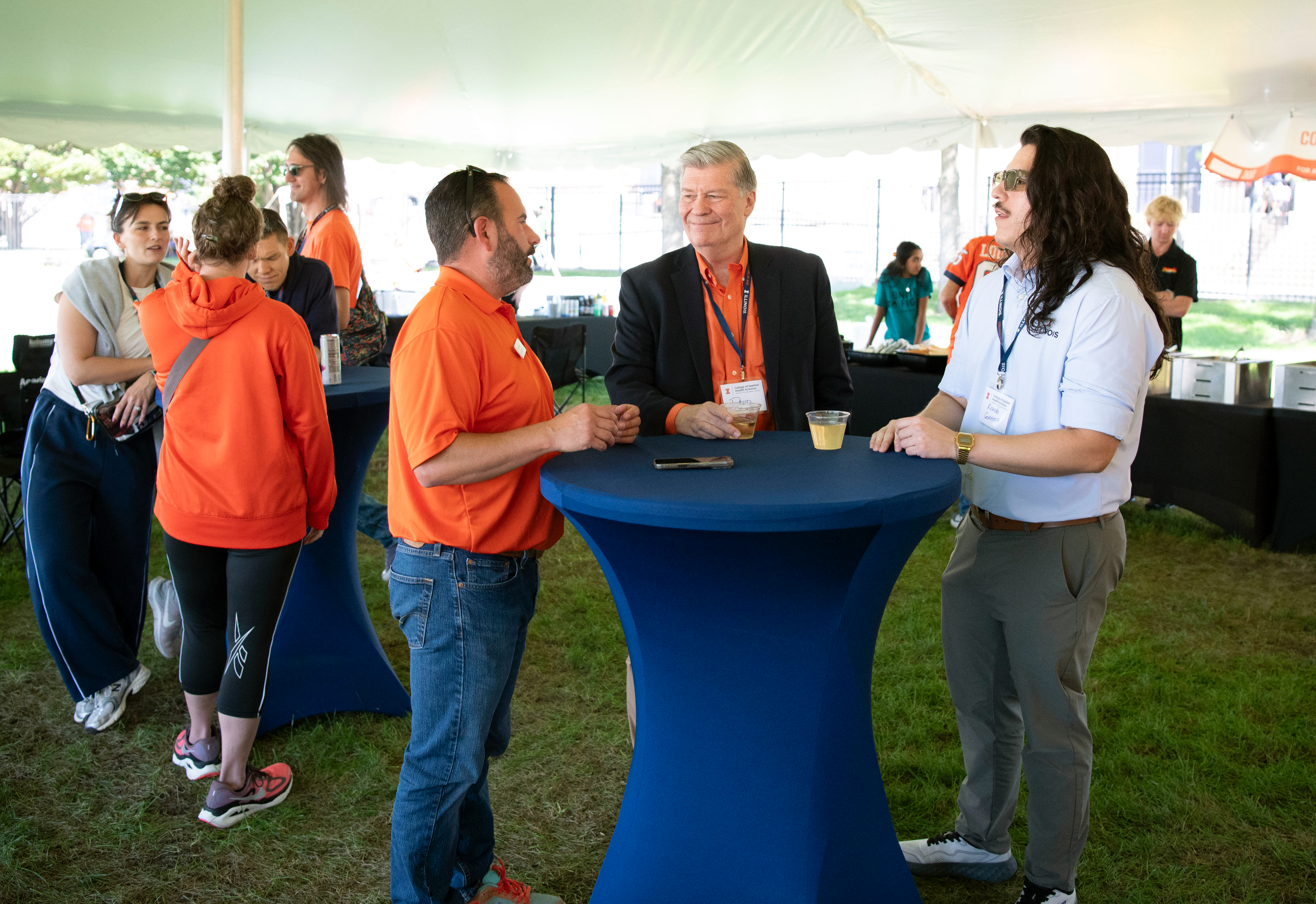
Amy Brummel planned to catch the Illini’s Homecoming football game against Wisconsin last October and maybe grab some food at the College of Applied Health Sciences’ pregame tailgate. She had no idea it would lead to a research collaboration.

Brummel, a two-time alumna (B.S. in 1994, M.A. in 1997) of the Department of Speech and Hearing Science, has established a clinical research partnership with SHS Assistant Professor Meaghan McKenna to evaluate a literacy intervention protocol  she developed. 

The pairing came about innocuously. Brummel only went to the AHS tailgate after getting an email about a celebration of SHS’ 50th anniversary.

“My husband, Pete (B.S., Agricultural Economics, 1985), my son, Tyler, and I were already going to the football game,” Brummel said. “So I said, ‘Let’s go check out this tailgate and see if any of my classmates are there.’”

Brummel did not find any classmates, but when she got up to get food, she encountered Anna Pucilowski, an SHS teaching assistant professor who just happened to be handing out slices of cake.

“I asked, ‘What is the U. of I. researching in the area of literacy? I’m an SLP that specializes in literacy. So (Pucilowski) connected me with Dr. McKenna. And Dr. McKenna and I have been communicating ever since.”

They’ve been more than communicating. Brummel developed an research-based literacy intervention, so McKenna and Brummel are researching the efficacy of the intervention and are planning to disseminate the findings

“The ultimate goal of the intervention is to increase reading automaticity,” Brummel said. “That just means we’re going to improve the decoding ability, or oral reading fluency, of children. This is different than comprehension. This is pure decoding, sounding out words.”

As Brummel explained, when people read, they read automatically—it should be effortless. But when children are struggling to learn to read, they read sound by sound to decode—consciously retrieving each sound in every single word. 

But Brummel said a literacy crisis—32 percent of fourth graders in the United States are reading below a proficient level—encouraged her to try to do more to help students. In her private practice, Amy’s Academics, parents ask, “What can I do to help my child?”

“I developed this intervention in my clinic. I provide it to parents for daily practice, and it has been extremely effective in improving automaticity and reading outcomes of my clients,” Brummel said.

Automacity is the ability to do things without occupying the mind with the low-level details required, allowing it to become an automatic response pattern or habit, or, simply, reading without thinking. When children can read with automaticity, they think less about sounding out the words, allowing them to think more about comprehending what they are reading. 

As Brummel explained, the intervention is both phonological—manipulating sounds in words—and orthographic—spelling patterns in words—and consists of two phases. The first phase allows for decoding and encoding practice on words with short vowels and what is called “high neighborhood density and high phonotactic probability.” Once automaticity is achieved, the child starts the second phase, which is decoding and encoding words with long vowels, she said. 

“The intervention presents the opportunity to practice reading and spelling words while explicitly studying the orthography of the words and deleting and substituting initial phonemes in words,” Brummel said. “The extra exposure to phonological and orthographic patterns allows the child to obtain the additional practice necessary to create mental orthographic images to increase automaticity in their reading.”

McKenna said the intervention is important because “we need to recognize the contributions (speech-language pathologists) can make to speaking, listening, reading, and writing. Brummel agreed.

“We have such dire statistics for children who are struggling to read,” she said. “There are mental and  emotional health issues as a result of not being able to learn to read in school, as well as decreased academic and occupational outcomes. I believe that learning to read is the most important thing happening in our schools. We need to make sure 100 percent of our students can read.”

Brummel taught phonetics as an undergraduate teaching assistant and researched morphology in multicultural settings as a graduate research assistant. That work inspired her to earn a clinical doctorate in speech-language pathology with a focus on language and literacy. She first developed the intervention in her private practice and provides it to parents for daily practice. 

“It has been extremely effective in improving reading outcomes in my clients. The beauty of it is it’s research-based,” she said. “Dr. McKenna and I are both excited about this intervention because this is the first of its kind. I’ve been using it for years in my clinic, and the outcomes have been amazing. There is nothing like this in the school system, or in the private sector, or anywhere else that I’ve seen.”

Since meeting, Brummel and McKenna have engaged in monthly research practice partnership meetings to evaluate the intervention. They are now recruiting participants and will begin their first study in April.

“If we can do research on this and share it, it’s going to change the lives of children across our country and hopefully help all of these students struggling so they can catch up,” Brummel said. “They will have excellent academic and occupational outcomes, and we’ll help fight this literacy crisis.”

Related news

NIWBT didn’t result in titles, but Illinois again showcases its adaptive sports programs


The Illini women’s basketball team finished third in the 2025 NIWBT (Photo by Craig Pessman)

The University of Illinois and Illinois Wheelchair Athletics played host last week to the 47th Annual National Intercollegiate Wheelchair Basketball Tournament and even though neither Illini team took home a title, the event at the State Farm Center was still an opportunity to showcase Illinois as a trailblazer for disability resources and adaptive sports.

This year marked the 76th anniversary of the first NIWBT, which was hosted in 1949 at a University of Illinois satellite campus in Galesburg, Illinois. The tournament was organized by Dr. Tim Nugent, the first director of Disability Resources and Educational Services, also known as DRES. In honor of the man known as the “father of accessibility,” the tournament winner is awarded the coveted Timothy J. Nugent Championship Trophy.

This season’s NIWBT featured 11 men’s teams and 6 women’s teams competing in 21 total games across four days, from March 26-29.

In terms of results, the Illini women’s team reached the semifinals after beating City University of New York 72-19, but lost to Texas-Arlington 59-40. The Illini women did defeat Arizona, 62-37, for a third-place finish.

Women’s coach Stephanie Wheeler praised the fans for making their voices heard.

“You could hear their screams, you could hear their I-L-Ls, you could hear them say the names of the players,” Wheeler said. “It’s that kind of energy that translates on court.” 

The Illinois men beat Eastern Washington 79-39 in their first-round game, but were defeated by Alabama 65-47 in their second game. The Illini men did cap their play by beating Missouri 51-34 in a consolation game.

In the men’s bracket, top-seed Arizona beat Texas-Arlington 75-65 to win the Nugent trophy. For the women, top-seeded Alabama beat UTA 67-52 to secure the title, its fifth straight title since 2019 (the 2020 tournament was canceled because of the COVID-19 pandemic).

The Illinois men last won an NIWBT title in 2010, while the Illini women have yet to capture the Nugent trophy since women’s play began in 2011. Despite the teams’ current droughts, both programs hold 29 championships between them.

Three members of the men’s team—Ryan Fitzpatrick, Sebastian Milan and Martrell Stevens—left Champaign-Urbana shortly after the tournament to play for Team USA in the IWBF Men’s U23 Americas Championship from April 2-6 in Bogota, Colombia. That tournament features Brazil, Canada, Colombia and Team USA, competing for two qualification spots at the 2025 IWBF Men’s U23 World Championship, taking place in São Paulo, Brazil in June.

Next year’s NIWBT will be played at the University of Arizona.

Editor’s note:

To reach Vince Lara-Cinisomo, email vinlara@illinois.edu.
 

Share on social

Related news

AHS Get to Know: Laura Mattie, Ph.D.


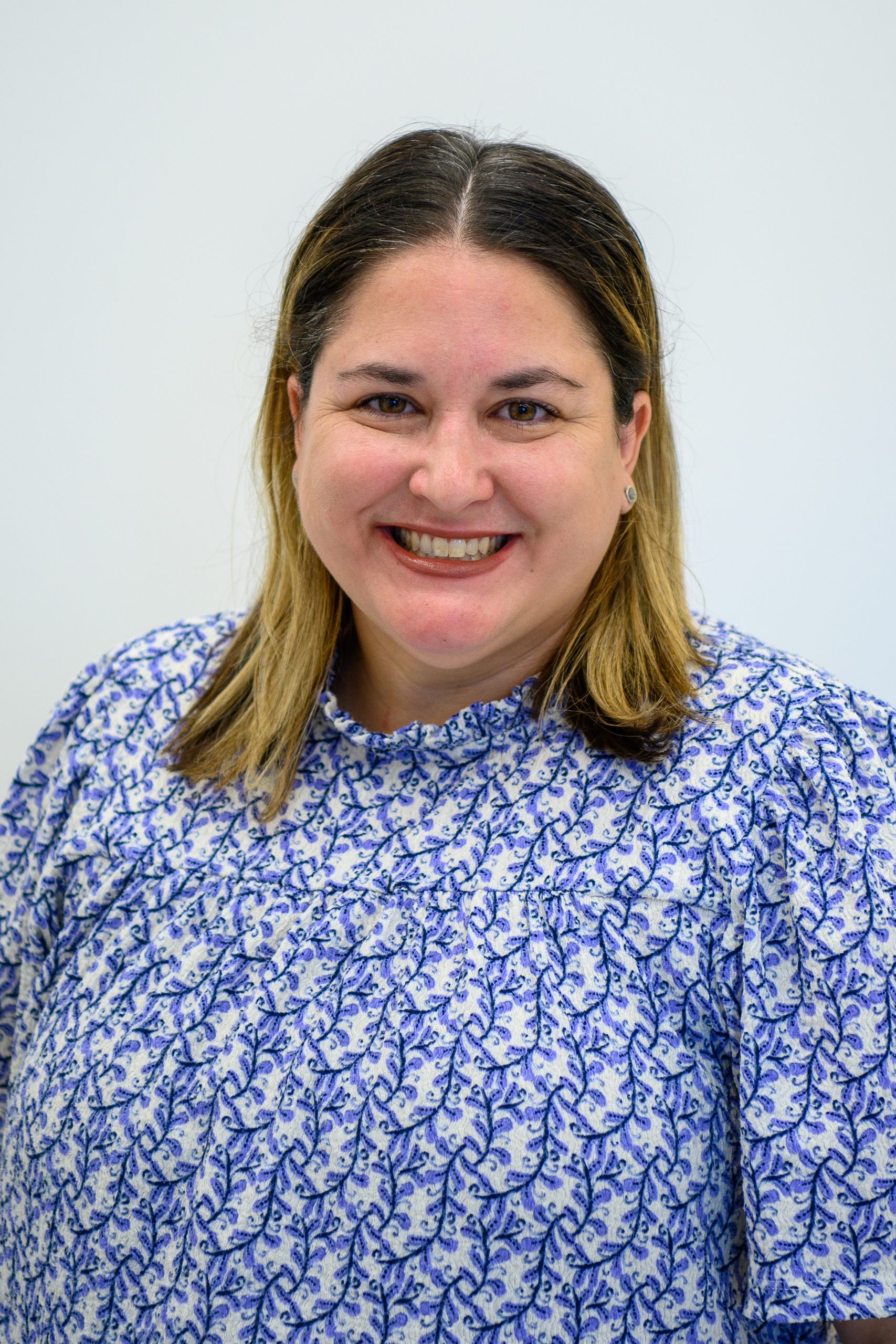
AHS Get to Know: Laura Mattie, associate professor in the Department of Speech and Hearing Science

Laura Mattie joined the College of Applied Health Sciences in 2015. She leads the Development in Neurogenetic Disabilities Lab, or “DND” Lab. 

How would you describe your primary research interests? 

My primary research interest is learning how young children with neurodevelopmental disabilities develop early social and communication skills to inform parent-implemented early language interventions.

Why did you decide to apply to work at Illinois?

I applied to Illinois because it was one of the only job postings that targeted expertise in children with disabilities and family well-being, which signified that my work was already valued.

What are you working on right now? 

I have 4 main projects right now: 

  • The Power of the Point Project focuses on the predictors of early language development in toddlers with Down syndrome and fragile X syndrome.
  • ASD Screening Tools in Down Syndrome is a large-scale survey of caregivers of individuals 6-18 years old that aims to determine how to best use autism screening tools for this population.
  • The Speech Accessibility Project aims to make voice recognition technology useful for individuals who may have diverse speech patterns and disabilities, including people with Down syndrome.
  • A Foundational Study of Adaptive Behaviors in Individuals with Down Syndrome is a survey of caregivers to learn about the practical, conceptual, and social skills used in everyday life by their children with Down syndrome who are between birth to 22 years old.

What’s a fun fact you’d like to share about yourself? 

I am a twin mom to 15-month-old girls, so much of my free time is chasing after them! When I do have some down time, I enjoy rewatching TV shows like “The Office” and “Parks & Recreation,” reading, and snuggling with our dogs.
 

Related news

Example


Camille Hobby’s life has always revolved around sports. She grew up moving from city to city as her father, Marion—currently the defensive line coach for the NFL’s Cincinnati Bengals—coached at various colleges and in the NFL, but her personal passion was always for basketball. Now, at 23, graduating with two degrees, three ACC tournament wins and a Women’s Basketball Invitation Tournament championship under her belt, the 6-foot-3-inch center is ready to start a new chapter in her basketball career.

“I think it was kind of just a natural progression,” Hobby said. “I’ve been around sports my whole entire life. I definitely want to stay in sports—college athletics, professional, whatever the case is, so in the future I want to be a coach. I want to get into coaching, and I thought it was the best idea for me to go into (the Department of Recreation, Sport and Tourism).”

Hobby graduated from the University of Illinois Urbana-Champaign with a master’s degree in recreation, sport and tourism in May 2024 after spending her fifth year of eligibility with the Fighting Illini women’s basketball team. Hobby earned a bachelor’s degree in sport management from North Carolina State University, where she would have played all four years, had COVID-19 not taken a season away.

“I had one year [of eligibility] due to COVID, so I transferred primarily because of basketball, because of having that extra year. But then I wanted to continue that sports management realm of study, so that’s how I ventured my way to the RST department.”

“I had one year [of eligibility] due to COVID, so I transferred primarily because of basketball, because of having that extra year. But then I wanted to continue that sports management realm of study, so that’s how I ventured my way to the RST department.”

In deciding where to spend her last year of eligibility, a few key aspects drew Hobby to choose Illinois. She said the school’s reputation was one factor in her decision, giving a nod to the iconic “Block I” impact on a resume.

“Everyone sees the I. Everyone knows the logo, you know, and that’s extremely important, especially when you’re going into jobs and looking for future places of work.”

She also highlighted the university’s emphasis on community and academics that impacted her decision.

“It’s a tight-knit community—definitely a college town. So, that played a huge role into that [decision], especially playing basketball in an environment that supports the needs of the team, and having great academics was important to me.”

After college, Hobby wants to play professionally in Europe before moving on to coach basketball, putting both her degree and lifetime of experience playing basketball to use. She said coaching would allow her to have a positive impact on the lives of other young athletes, something she has not only experienced from an athlete’s perspective but also witnessed through her father’s own career. 

“He played a huge part in that,” Hobby said. “I’ve seen the incredible players that he’s coached in the past and he’s been influential in their lives and that’s something that I want to do, is to make an impact on young people’s lives and get them to be the best versions of themselves.”

Hobby also reflected on how her experience earning a degree in RST aided her service-oriented view of coaching, saying “I’ve always been a person that wants to help people and be of service to others and make them better, and I feel like that’s kind of what the RST department is; it is in the service business of helping others and showing them things and that’s kind of where my heart lies. That’s where I know my dad’s heart lies as well, helping those around us, and the best way, I feel, to do that, is through coaching.”

The program not only helped Hobby prepare for coaching as a public service, but it also emphasized to her the importance of diversity and inclusion in coaching.

“I feel like the biggest part of being a coach is the diversity and equity part of it—universal design and making sure that there’s a space for everyone. I feel like that’s so important, especially as a coach. You want to make sure that your players feel like they are important, feel like they are accepted, whoever they are, what makes them different and unique.”

One specific experience in the program stuck with Hobby: watching wheelchair basketball club teams compete. She recalled how it made her re-think diversity in sports, saying, “that was completely eye-opening for me. I think a lot of the time we hear about having that inclusion, having diversity, but a lot of the time there’s not much action behind it. To see them and see how competitive they are was really inspiring, and it just allowed me to get into that—finding equity and inclusion for everyone. Not just in terms of race or gender, but for someone who has challenges that limit them from playing traditional sports.”

Hobby intends to follow in the footsteps of the people she has looked up to: her father and her own coaches, who she said inspired her on and off the court.

“Having people who advocate for you, people who are just good people who want to see you succeed, that’s important. To see them, it makes me want to be like that in the future: always encouraging my players, believing in them, and wanting the best for them.”

Editor’s note:

To reach Nancy Averett, email naverett@illinois.edu.
 

Related news

Chez Veterans Center again plays host to Warrior-Scholar Project


Photo by caption

For Chez Veterans Center director of operations Andy Bender, the function of the Warrior-Scholar Project is straightforward: Offer military Veterans a two-week-long academic “boot camp” to reacquaint themselves with the classroom environment before heading to a college or university. 

“One of the hardest things a service member is going to do is leave the service,” Bender said. “We really enjoy having the Warrior-Scholar Project here because it reflects what we want to be a part of: Making that transition.” 

In June 2024, the Chez Veterans Center, the hub for military Veteran populations at the University of Illinois, hosted a cohort of higher-ed-bound Veterans for the third year in a row. 

The Warrior-Scholar Project partners with American colleges and universities to host brief, intensive, no-cost college prep experiences for both enlisted Veterans and service members transitioning into civilian life.

The Chez Center brought in Warrior-Scholars for the first time in 2022, with a week of STEM-centered coursework taught by Illinois faculty. This year’s edition doubled the session’s length, adding a Humanities track of classes for participants. 

The cohort of 15 students and six fellows all hailed from outside of Illinois. Most hadn’t ever visited the Champaign-Urbana campus; though they may not choose Illinois for school, the experience still has a hand in their higher ed journeys. 

The two-week schedule was filled with visits to various campus landmarks and labs, including the McKechnie Family LIFE Home, and a robotics and automation demonstration at the Agricultural and Bioengineering research farm. Humanities seminars focused on the United States’ founding principles and documents that the Veterans were sworn to defend. 

Assistant Professor of Political Science Alicia Uribe-McGuire led one of their first seminars, teaching an engaged class on the origin and execution of the U.S. Constitution. 

“I’ve always thought that the more a student wants it, the better a student they are. And I think they want it,” Uribe-McGuire said shortly after her seminar discussion. “I’ve had Veterans in my classes before, and they’re some of the best students.”

One frequent class contributor was Cody Lepp, an eight-year Navy SEAL who decided to return to school while still serving in the military. After three years taking online classes through National University in San Diego, Lepp is heading into his senior year and he wanted to use WSP to see how he measured up in the in-person classroom environment. 

“I came in with an open mindset, hopefully I can learn some new things,” Lepp said. “What I hope to get out of it is practice applying my skills, seeing where I stand against the majority of my fellows.”
 
Jonathan Banasihan had spent seven years as a technician for the U.S. Navy when a new challenge—going back to school—entered his purview. The Warrior-Scholar Project seemed a great opportunity to refamiliarize himself with the flow of a classroom. 

Banasihan, the son of Filipino immigrants, never thought college was an option. With a bachelor’s degree from American University and now planning to go to law school at George Washington University, Banasihan feels he left the academic boot camp with far more than advertised. 

“I didn’t think that I could do the things that I did in college until I came here,” said Banasihan, now a facilitator for the Warrior-Scholar Project. “The confidence that WSP gave me to not just be uncomfortable, but to stretch myself in ways that I never really expected or wanted to was huge.” 

Banasihan is ushering through student Veterans who were in his same position. 

“UIUC has been an incredible, incredible partner. I can’t say anything but good things about this place,” Banasihan said. 

Among Veterans’ challenges reintegrating after their service, higher education can be a “completely different animal,” Bender said. 

“If you’re like some service members—if you’ve spent four, five, six years—how long has it been since you were in a classroom? You might have some of those creeping doubts come in. Can I make it? Am I going to fit in? Is this going to be successful?” he said. 

“(WSP) is providing the confidence to these service members that we can do it. That there is a future beyond my service time. That there is a way to make it.” 

Editor’s note:

To reach Ethan Simmons, email ecsimmon@illinois.edu.
 

Share on social

Related news

Improving clinical practice and quality of life


Marie Moore Channell and Laura Mattie (Photo provided)

Speech and Hearing Science Associate Professors Marie Moore Channell and Laura Mattie have long been interested in the development of communication and life skills in individuals with neurodevelopmental and intellectual disabilities.

Channell directs the Intellectual DisAbilities Communication Lab, where her research team works toward a comprehensive understanding of skills that support day-to-day communication for people with Down syndrome in order to identify and develop strategies for supporting their social and academic success. In Mattie’s Development in Neurogenetic Disabilities Lab, research addresses the early development of individuals with Down syndrome and fragile X syndrome. She, too, aims toward promoting the developmental success and well-being of people with these neurogenetic disabilities.

The scholars’ shared interests have led to fruitful collaborations in the past. They led a team of researchers who used a large, national database developed by the Down Syndrome Cognition Project to characterize variability in IQ, executive functioning, adaptive and challenging behavior, and autism symptomatology among individuals with Down syndrome.

In a paper titled “Capturing cognitive and behavioral variability among individuals with Down syndrome: a latent profile analysis,” published in the Journal of Neurodevelopmental Disorders (2021, 13:16), Channell, Mattie and their co-authors describe three latent classes, or subtypes, of people with Down syndrome that emerged from their analyses.

Those in the “normative” group showed a profile of cognition and behavior that is typically represented in the literature on Down syndrome. Those in the “cognitive” group had lower cognitive scores and adaptive behaviors such as self-care and daily living skills than their peers with Down syndrome, along with high rates of autism symptoms.

Those in the “behavioral” group showed cognitive scores and adaptive behaviors similar to their peers with Down syndrome but had high rates of autism symptoms and challenging behaviors such as hyperactivity and conduct problems. Thus, with a large enough sample size, different patterns of autism symptoms and other characteristics can be seen across individuals with Down syndrome. The ultimate goal in precisely characterizing individual variability within Down syndrome is to optimize daily living through targeted treatments and interventions.

Overcoming diagnostic hurdles

Channell and Mattie currently are collaborating as principal and co-principal investigators on a study funded by the National Institutes of Health INCLUDE Project, which supports research related to the health and quality of life of individuals with Down syndrome. Working with researchers at Emory University, Johns Hopkins University and the Kennedy Krieger Institute, their study seeks to increase understanding of the co-occurrence of autism with Down syndrome to improve its diagnosis and treatment.

“There is a stereotype of people with Down syndrome as happy, social people who can’t have autism,” Channell said. “It’s more common than previously thought, but underdiagnosed.”

Interventions and therapies that people with autism receive could be a beneficial add-on to services offered to individuals with Down syndrome. Part of the problem in diagnosing autism in this population is that autism screening tools that were developed for the general population need to be adapted. To work toward the goal of developing better tools to screen for autism in people with Down syndrome, Channell, Mattie and their collaborators are conducting a nationwide survey of caregivers of youth with Down syndrome in which they are completing existing screening tools and other developmental questionnaires. The researchers will then examine and adapt the screening tools as needed so they can be used by practitioners to determine whom to refer for a full autism evaluation.

They are casting a wide net in hopes not only of representing all the varying abilities within Down syndrome, but also of including groups that are not well represented in the existing research.

“Underrepresentation is a big problem in research related to Down syndrome,” Mattie said. “We have a diverse board of stakeholders, are building relationships with the Black Down Syndrome Association, and targeting rural and Hispanic families as well.”

The questionnaires and other screening tools completed by caregivers are just one element of an autism diagnosis. There also is an in-person evaluation component, which is conducted by either developmental behavioral pediatricians or clinical psychologists who are specifically trained in autism diagnostics and assessment, as well as neuropsychological methods. The difficulty with this aspect of diagnosis is two-fold, Mattie said.

“First, the number of developmental behavioral pediatricians and clinical psychologists with this specialized training is limited, so there’s a bottleneck,” she said. “Also, while they may have expertise in autism, they don’t necessarily know about Down syndrome. So the ability to identify a true co-occurring condition is really lacking.”

Channell and Mattie may be conducting the first large-scale study using the broad screening measures doctors and clinicians give to families when autism is first suspected. Theirs may also be the first study that will explore the use of telehealth to conduct diagnostic evaluations of autism in children with Down syndrome.

“If we can figure out how to make that work, we can increase access to evaluations by specialists,” Channell said. They are working with a clinician at Kennedy Krieger, Natasha Ludwig, who will conduct the evaluations of autism in the telehealth sessions, and with Amy Cohen, director of the University of Illinois Autism Clinic, who will review and “score” the evaluations as well to ensure that evaluation tools will lead to consistent results when used by different clinicians.

With the dual focus on developing effective autism screening and diagnostic tools for individuals with Down syndrome and increasing access to specialists who are skilled in both autism and intellectual disability, Channell and Mattie intend to make a significant and lasting impact on improving the quality of life of a population that has historically been underdiagnosed and underserved. That’s good news for the individuals themselves and their caregivers, as well as the scores of clinicians who dedicate their professional lives to providing the best services possible to their clients.

Related news

College of Applied Health Sciences
110 Huff Hall
1206 South 4th Street
Champaign, IL 61820
(217) 333-2131