Example


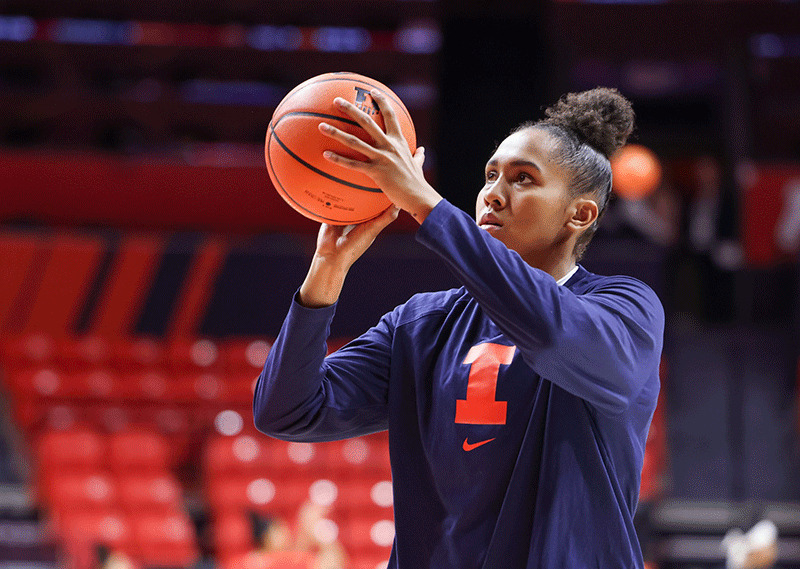
Camille Hobby’s life has always revolved around sports. She grew up moving from city to city as her father, Marion—currently the defensive line coach for the NFL’s Cincinnati Bengals—coached at various colleges and in the NFL, but her personal passion was always for basketball. Now, at 23, graduating with two degrees, three ACC tournament wins and a Women’s Basketball Invitation Tournament championship under her belt, the 6-foot-3-inch center is ready to start a new chapter in her basketball career.

“I think it was kind of just a natural progression,” Hobby said. “I’ve been around sports my whole entire life. I definitely want to stay in sports—college athletics, professional, whatever the case is, so in the future I want to be a coach. I want to get into coaching, and I thought it was the best idea for me to go into (the Department of Recreation, Sport and Tourism).”

Hobby graduated from the University of Illinois Urbana-Champaign with a master’s degree in recreation, sport and tourism in May 2024 after spending her fifth year of eligibility with the Fighting Illini women’s basketball team. Hobby earned a bachelor’s degree in sport management from North Carolina State University, where she would have played all four years, had COVID-19 not taken a season away.

“I had one year [of eligibility] due to COVID, so I transferred primarily because of basketball, because of having that extra year. But then I wanted to continue that sports management realm of study, so that’s how I ventured my way to the RST department.”

“I had one year [of eligibility] due to COVID, so I transferred primarily because of basketball, because of having that extra year. But then I wanted to continue that sports management realm of study, so that’s how I ventured my way to the RST department.”

In deciding where to spend her last year of eligibility, a few key aspects drew Hobby to choose Illinois. She said the school’s reputation was one factor in her decision, giving a nod to the iconic “Block I” impact on a resume.

“Everyone sees the I. Everyone knows the logo, you know, and that’s extremely important, especially when you’re going into jobs and looking for future places of work.”

She also highlighted the university’s emphasis on community and academics that impacted her decision.

“It’s a tight-knit community—definitely a college town. So, that played a huge role into that [decision], especially playing basketball in an environment that supports the needs of the team, and having great academics was important to me.”

After college, Hobby wants to play professionally in Europe before moving on to coach basketball, putting both her degree and lifetime of experience playing basketball to use. She said coaching would allow her to have a positive impact on the lives of other young athletes, something she has not only experienced from an athlete’s perspective but also witnessed through her father’s own career. 

“He played a huge part in that,” Hobby said. “I’ve seen the incredible players that he’s coached in the past and he’s been influential in their lives and that’s something that I want to do, is to make an impact on young people’s lives and get them to be the best versions of themselves.”

Hobby also reflected on how her experience earning a degree in RST aided her service-oriented view of coaching, saying “I’ve always been a person that wants to help people and be of service to others and make them better, and I feel like that’s kind of what the RST department is; it is in the service business of helping others and showing them things and that’s kind of where my heart lies. That’s where I know my dad’s heart lies as well, helping those around us, and the best way, I feel, to do that, is through coaching.”

The program not only helped Hobby prepare for coaching as a public service, but it also emphasized to her the importance of diversity and inclusion in coaching.

“I feel like the biggest part of being a coach is the diversity and equity part of it—universal design and making sure that there’s a space for everyone. I feel like that’s so important, especially as a coach. You want to make sure that your players feel like they are important, feel like they are accepted, whoever they are, what makes them different and unique.”

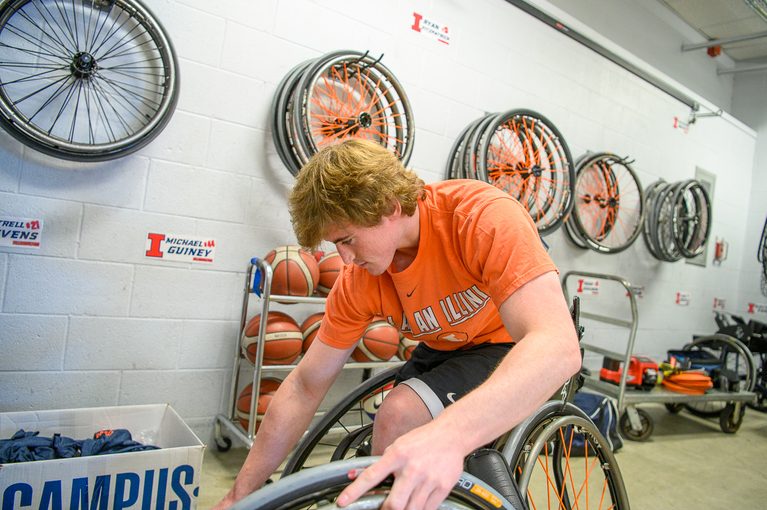
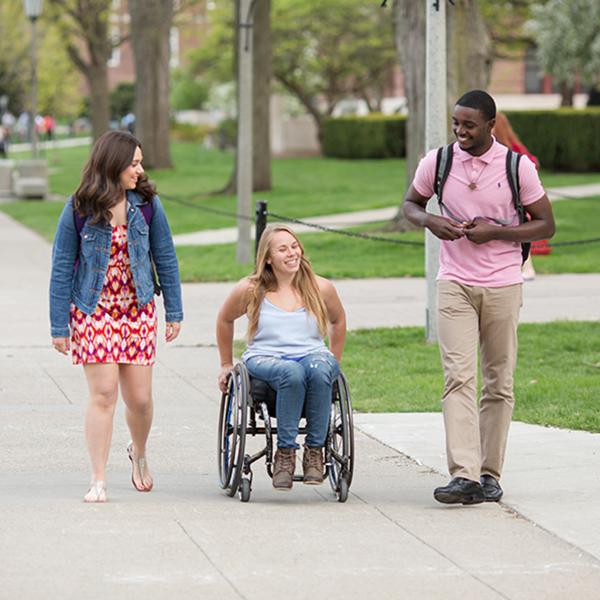
One specific experience in the program stuck with Hobby: watching wheelchair basketball club teams compete. She recalled how it made her re-think diversity in sports, saying, “that was completely eye-opening for me. I think a lot of the time we hear about having that inclusion, having diversity, but a lot of the time there’s not much action behind it. To see them and see how competitive they are was really inspiring, and it just allowed me to get into that—finding equity and inclusion for everyone. Not just in terms of race or gender, but for someone who has challenges that limit them from playing traditional sports.”

Hobby intends to follow in the footsteps of the people she has looked up to: her father and her own coaches, who she said inspired her on and off the court.

“Having people who advocate for you, people who are just good people who want to see you succeed, that’s important. To see them, it makes me want to be like that in the future: always encouraging my players, believing in them, and wanting the best for them.”

Editor’s note:

To reach Nancy Averett, email naverett@illinois.edu.
 

Related news
Chez Veterans Center again plays host to Warrior-Scholar Project


Photo by caption

For Chez Veterans Center director of operations Andy Bender, the function of the Warrior-Scholar Project is straightforward: Offer military Veterans a two-week-long academic “boot camp” to reacquaint themselves with the classroom environment before heading to a college or university. 

“One of the hardest things a service member is going to do is leave the service,” Bender said. “We really enjoy having the Warrior-Scholar Project here because it reflects what we want to be a part of: Making that transition.” 

In June 2024, the Chez Veterans Center, the hub for military Veteran populations at the University of Illinois, hosted a cohort of higher-ed-bound Veterans for the third year in a row. 

The Warrior-Scholar Project partners with American colleges and universities to host brief, intensive, no-cost college prep experiences for both enlisted Veterans and service members transitioning into civilian life.

The Chez Center brought in Warrior-Scholars for the first time in 2022, with a week of STEM-centered coursework taught by Illinois faculty. This year’s edition doubled the session’s length, adding a Humanities track of classes for participants. 

The cohort of 15 students and six fellows all hailed from outside of Illinois. Most hadn’t ever visited the Champaign-Urbana campus; though they may not choose Illinois for school, the experience still has a hand in their higher ed journeys. 

The two-week schedule was filled with visits to various campus landmarks and labs, including the McKechnie Family LIFE Home, and a robotics and automation demonstration at the Agricultural and Bioengineering research farm. Humanities seminars focused on the United States’ founding principles and documents that the Veterans were sworn to defend. 

Assistant Professor of Political Science Alicia Uribe-McGuire led one of their first seminars, teaching an engaged class on the origin and execution of the U.S. Constitution. 

“I’ve always thought that the more a student wants it, the better a student they are. And I think they want it,” Uribe-McGuire said shortly after her seminar discussion. “I’ve had Veterans in my classes before, and they’re some of the best students.”

One frequent class contributor was Cody Lepp, an eight-year Navy SEAL who decided to return to school while still serving in the military. After three years taking online classes through National University in San Diego, Lepp is heading into his senior year and he wanted to use WSP to see how he measured up in the in-person classroom environment. 

“I came in with an open mindset, hopefully I can learn some new things,” Lepp said. “What I hope to get out of it is practice applying my skills, seeing where I stand against the majority of my fellows.”
 
Jonathan Banasihan had spent seven years as a technician for the U.S. Navy when a new challenge—going back to school—entered his purview. The Warrior-Scholar Project seemed a great opportunity to refamiliarize himself with the flow of a classroom. 

Banasihan, the son of Filipino immigrants, never thought college was an option. With a bachelor’s degree from American University and now planning to go to law school at George Washington University, Banasihan feels he left the academic boot camp with far more than advertised. 

“I didn’t think that I could do the things that I did in college until I came here,” said Banasihan, now a facilitator for the Warrior-Scholar Project. “The confidence that WSP gave me to not just be uncomfortable, but to stretch myself in ways that I never really expected or wanted to was huge.” 

Banasihan is ushering through student Veterans who were in his same position. 

“UIUC has been an incredible, incredible partner. I can’t say anything but good things about this place,” Banasihan said. 

Among Veterans’ challenges reintegrating after their service, higher education can be a “completely different animal,” Bender said. 

“If you’re like some service members—if you’ve spent four, five, six years—how long has it been since you were in a classroom? You might have some of those creeping doubts come in. Can I make it? Am I going to fit in? Is this going to be successful?” he said. 

“(WSP) is providing the confidence to these service members that we can do it. That there is a future beyond my service time. That there is a way to make it.” 

Editor’s note:

To reach Ethan Simmons, email ecsimmon@illinois.edu.
 

Share on social

Related news

Healthcare mission drove Lynne Barnes to MHA program


‘I’ll give them everything I’ve got,’ Lynne Barnes said about her new job.

A year of retirement felt like enough for Lynne Barnes, the longtime healthcare administrator.

After finishing her four-decade career at Carle Foundation Hospital as president, Barnes soon found herself auditioning for her newest challenge: directing the Master of Health Administration degree program in the College of Applied Health Sciences at the University of Illinois.

It was the third interview she’d ever taken, after her first Carle interview and her high school gig at the pastry chain Mister Donut.

Today, at 70, Barnes has “lots of energy, that’s a blessing,” she said. “I was ready to do something different.”

As the newest director of the six-year-old MHA program, Barnes brings an invaluable trove of administrative experience she hopes to impart to future healthcare leaders.

Barnes’s appointment officially began Aug. 1 when she succeeded two-year interim director Laura Rice.

“I’ll give them everything I’ve got, in terms of investing the program and helping it to grow in the ways that the university wants to see it grow,” Barnes said. “I want to see this program rise in the ranks of status.”

Raised in Catlin, Ill., Barnes was hired by Carle Health in January 1977 straight out of college as the system’s first occupational therapist. She went on to direct several departments and held numerous administrative roles before finishing her Carle career as president of the Urbana hospital.

“Throughout her career, Lynne has served the community and distinguished herself as a leader in healthcare innovation,” said Kim Graber, head of the Department of Kinesiology and Community Health. “Her background in clinical operations and occupational therapy, along with her distinguished experience as president of Carle Foundation Hospital, will provide graduate students in health administration with unrivaled leadership.

“Lynne has boundless energy and will help take our program to the next level.”

Barnes will continue to teach as a part-time clinical professor, a role she’s held at University of Illinois Urbana-Champaign since 2007. A frequent community volunteer, Barnes is board chair of the Stephens Family YMCA and Experience Champaign-Urbana, and previously served as a member of the United Way of Champaign County and Urbana City Council.

Barnes oversaw the growth of Carle Foundation Hospital’s therapy programs and clinical operations, leading the flagship location in the face of the COVID-19 pandemic before retiring in February, 2022.

“Everything I’ve done there is such a joy,” Barnes said. “I love healthcare, because all the time we’re just serving people, and serving people who are in a vulnerable situation.

“Nobody wants to have to go to the hospital. And I love the opportunity to serve people in that way and make that experience as palatable and positive as it can be under their circumstances. That is a joy.”

Barnes earned her bachelor’s degree in the emerging field of Occupational Therapy from the University of Illinois-Chicago in 1976, later obtaining her master’s degree in public administration from UIUC in 1988.

The MHA program was established in 2017 and accredited by the Council on Education for Public Health in 2019.

The opportunity to educate the next generation of healthcare leaders compelled Barnes to take the MHA directorship. She will work to develop the department’s new online MHA program and strengthen its position in the graduate landscape.

“The support has been terrific,” Barnes said. “I have no doubt we will be able to achieve these goals. I enjoy teamwork and I have already experienced that it is ‘all hands-on deck’ to continue to improve and optimize our educational opportunities for our students.

“After decades of working in healthcare, it’s really exciting for me to have the opportunity to impact the careers of future healthcare leaders.”

A gutsy start

Growing up the youngest of three, 30 miles east of the University of Illinois campus, Barnes said attending the U. of I. was basically inevitable.

Interested in taking a hands-on role within healthcare, Barnes enrolled in the new Occupational Therapy degree program, which sought to train physicians who could help patients with physical and sensory problems to regain their independence.

The program was run through the University of Illinois-Chicago, but the 10-student cohort studied on the Urbana-Champaign campus.

Upon graduating, Carle Hospital put out an ad for its first occupational therapist position. Half of Barnes’ class applied for the job, she said.

“The [physical therapy] director had a hard time figuring out who to hire,” Barnes said. “And he laid our resumes out on the table at home and his wife—who was the emergency department director at Carle—said, ‘Well, just pick the one that had the highest grade-point average.

“And I got the job.”

Barnes hit the ground running in Carle’s relatively small therapy department, back when the hospital only had about 150 beds.

I remember thinking, ‘I love this, I want to be a part of it.’ I’ve always had the desire to lead and share the enthusiasm and passion I have for whatever it is I’m doing. And I had that opportunity at Carle.”

Soon, her success led to a promising offer: work on her Ph.D. while teaching future occupational therapists on the UIC campus.

But Barnes went straight to administration and leveraged a proposal of her own. If she were to get a promotion, she’d grow her own occupational therapy department and stay at Carle Foundation. It worked.

“I was kind of gutsy, I had only been there a couple years,” she said.

Barnes quickly found an affinity for the business side of healthcare, growing the therapy department by about 60 employees before being promoted to Carle’s director of therapy.

Soon, the current CEO of Carle Healthcare, Jim Leonard, came to her office and asked if she’d like to be a vice president of the hospital.

“I was all about therapy, I was very focused on what I did,” she said. “But whether I could translate my leadership skills to other departments was unknown. They thought maybe I could, but they were taking a chance on me.”

The decision led to years of multifaceted administrative work for the Urbana hospital, while the system continued its growth trajectory, adding a handful of new hospitals across Illinois.

Barnes’ attention stayed fixed on Carle Foundation, where she took pride in handling complaints from patients and families in vulnerable situations.

“To me, a patient who’s had a complaint and had it successfully resolved is more loyal than a patient who’s never even had a problem. I’m competitive, and I like to win back people,” Barnes said.

“I love the atmosphere and culture of Carle, of always striving to fix things and make it better and push ourselves so we could be noted for having the best care around.”

Mission-driven healthcare leaders

While still at Carle, Barnes found a new passion bubbling up alongside her administrative duties. She took joy in passing on her knowledge to both peers and students.

Along with becoming teaching faculty at the College of AHS, she’s become a professional life coach, dispensing career advice for those inside her field and outside of it.

For the present and future students of the MHA program, Barnes wants to pass on the idea of healthcare as a mission-driven calling, not just a job.

“They’ve got to learn facts about what it’s like to run a healthcare system, but they also need what I would call the characteristics that make the kind of healthcare leader that you want. I try to blend them, and share with them the need for energy, for enthusiasm, the need for passion,” Barnes said.

With MHA embarking on the brand-new construction of an online degree, and the spotlight on healthcare after the COVID-19 pandemic, Barnes has high-minded goals for the future of the program.

“By the time I’m done, my goal is this place will be more well known and people will be clamoring to get their graduate degree from the University of Illinois Urbana-Champaign MHA program,” she said.

“That’s going to take work and it’s going to take connectivity, so I’m hoping I can use some of my healthcare connections to be able to get the word out.”

Editor’s note:

To reach Ethan Simmons, email ecsimmon@illinois.edu.
 

Share on social

Related news

Message from Professor Pamela Hadley, Head


Dear students, faculty, alumni and friends of the Department of Speech and Hearing Science,

As the vibrant colors of fall start to grace our campus, I am delighted to welcome you all to the latest edition of our departmental newsletter. It is with immense pride that I share the remarkable strides we have taken over the past few months and offer a glimpse into the exciting opportunities that lie ahead.

Our commitment to further the fields of audiology and speech language pathology remains unwavering. In this issue, we highlight stories of faculty, students and staff making their mark in diverse corners of the field. These narratives illuminate the strength of our community and the profound impact we have.

I am thrilled to introduce our new faculty and staff members who bring a wealth of expertise to our department. Their diverse backgrounds and innovative research interests promise to enrich our academic environment and push the boundaries of our knowledge. Additionally, you’ll read about the well-earned promotions of three faculty members, an amazing overseas experience for a doctoral student, and see photos and videos of campus and community events led by students and faculty.

Lastly, I would like to express my gratitude to each member of our department for your dedication and passion. Your contributions are the driving force behind our accomplishments, and your enthusiasm fuels our collective progress.

I invite you all to immerse yourselves in the pages of this newsletter, celebrate our achievements and envision the possibilities. Together, we will continue to empower individuals with communication challenges, advance the frontiers of research and shape the future of speech and hearing science.

Warmest wishes for a productive and inspiring fall semester.

Sincerely,

Pamela Hadley, Ph.D.
Head, Department of Speech and Hearing Science

Share on social

Related news

College of Applied Health Sciences
110 Huff Hall
1206 South 4th Street
Champaign, IL 61820
(217) 333-2131