Outdoor Recreation Consortium: An RST trip to the Smokies—for class credit


Kiara Frausto thinks she might’ve been “kind of spoiled” in her first visit to a national park. 

That’s because the University of Illinois junior was treated to a week full of hands-dirty field research at the Great Smoky Mountains Institute—where students banded birds, caught salamanders and listened to Appalachian folk stories—and it all counted for course credit. 

“It’s probably going to be hard to beat this one,” Frausto said. “Now I want to see all the other national parks.” 

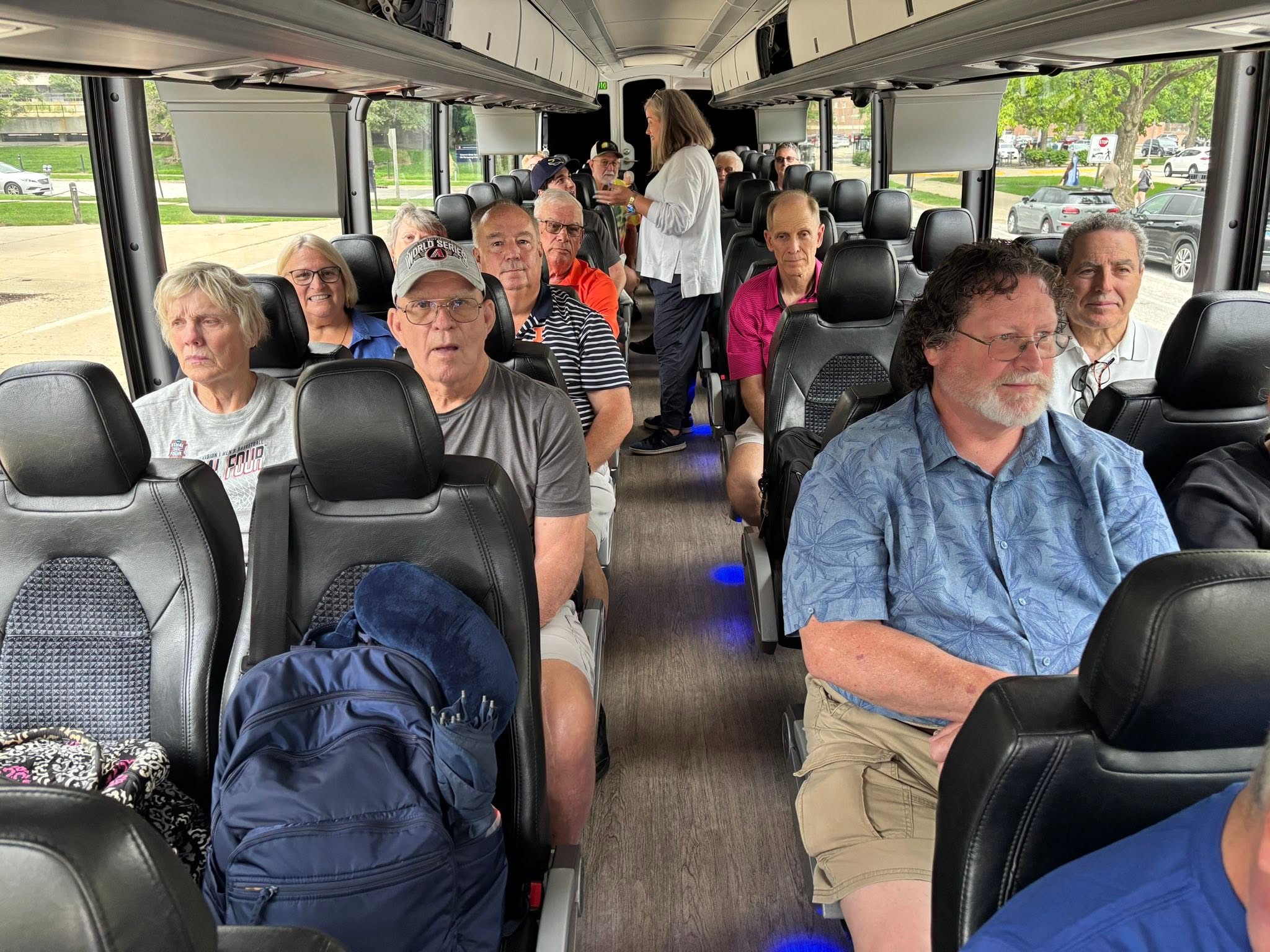
Buses full of students from seven universities rolled into the Great Smoky Mountains Institute at Tremont in Tennessee just after spring break, ready for a week of experiential learning in the country’s most visited national park. 

For the first time in more than a decade, University of Illinois students got to join the group, known as the Outdoor Recreation Consortium. The roster of involved universities has shifted over the years; Illinois dropped out years ago without a faculty member to run the trip. 

But now, with second-year Recreation, Sport and Tourism Assistant Professor Nick Pitas at the helm, Illinois has returned to the fold. 

This year, nine students took the eight-week RST 199 course: Outdoor Recreation Consortium, which culminated in a six-day stayaway visit to the Smokies. 

Students and faculty from six other schools took part this year, including Penn State University, North Carolina State, East Carolina, University of Missouri, Texas A&M and Western Illinois.

Pitas is well-traveled alumnus of the course, which has been around in some form for 46 years. He enrolled and visited the Smokies while he was a student at Penn State, then rejoined the trip as a teaching assistant—twice—before eventually teaching it as a faculty member. 

“This was my fifth time going,” Pitas said. “But first time as a faculty here at Illinois.” 

What kept him returning to the trip were the rich, hands-on experiences that embodied all the concepts the course had prepared them for. Once in the Smokies, students hear from real National Park Service rangers and administrators, natural resource scientists and community partners, all while assisting them with field research data collection. 

At Illinois, RST 199’s eight week were spent introducing students to the operations of a national park, through its history and cultural context, the wide biodiversity in the region, and the management of the park’s record visitor numbers. Students also broke off into “committees” to help organize the trip, from transportation logistics all the way to morale-boosting exercises. 

“From a professional standpoint, I think it opens their eyes, hopefully, to the breadth of opportunities that are available in the outdoor recreation, natural resource, and tourism space,” Pitas said. “But the bulk of the learning is when we’re there. It’s like going to summer camp except with an extra learning component baked into it.” 

Michela Ossola, a senior in natural resources and environmental sciences at ACES, helped map the ideal driving route to the Tremont Institute in Blount County, Tennessee. Once there, daily trips to the forest and engaging learning sessions kept the time flying by.

“It’s a week detox of being off your phone, and every evening we’d have people come by, folk storytellers, folk music, a bear caller. A lot of those things you don’t get for free these days,” Ossola said. “It’s definitely a highlight in the four years I’ve gone to U of I.” 

Many of the students this year, like Ossola and Frausto, came from the College of ACES. Undergrad students in the college are required to complete a field experience before they graduate. 

But Pitas would like to grow the number of Applied Health Sciences students who come through the class, like Genna Peters, a junior in RST who’s interested in pursuing an outdoor recreation career post-graduation. 

Peters loved getting to know the professionals from the Appalachia area, like a park ranger who was enrolled in the Western Cherokee tribe and mingling with students from all the other universities. 

“The biggest experience for me being around all these other people my age who shared in the same interest and wanted to go into the same field as me,” she said. “It was really cool to know this park has this giant history of all these different people who work there, but they also really truly treasure the culture and history of the park itself.” 

As much as the field knowledge broadens horizons for the students who go, Pitas knows the relationships they build are just as important. 

“It’s not always the case that an adult has a chance to have a camp experience and just go and be with people they know and people they don’t know, and have that of connection and experience together,” Pitas said. 

“I feel very lucky to have the chance to do it, would be my overarching feeling this semester. This is awesome. Can’t believe I get to do this for work.” 
Related news

KCH Becomes HK


The University of Illinois at Urbana-Champaign’s College of Applied Health Sciences is proud to announce a significant milestone in its ongoing commitment to advancing health sciences education and research. Effective Aug. 16, the Department of Kinesiology and Community Health will officially change its name to the Department of Health and Kinesiology.

The new name better reflects significant changes in our disciplines, research interests, and educational mission. Health and Kinesiology allows for a broader, more inclusive representation of a department that focuses on multiple aspects of health and physical activity in a diverse society. It also honors our legacy as leaders in the field of health and kinesiology, while pointing the way forward to a future that is both dynamic and innovative. 

The name change was a decision that was made based on goals highlighted in the KCH Strategic Plan and upon the recommendation of the KCH Restructuring Task Force. It was supported by multiple stakeholders and was recently approved by the College of Applied Health Sciences, UIUC Senate, and Board of Trustees.

Cheryl Hanley-Maxwell, dean of the College of Applied Health Sciences, expressed enthusiasm about the department’s name change, saying, “The renaming of our department to Health and Kinesiology aligns with our strategic vision of fostering interdisciplinary collaboration and addressing the multifaceted aspects of health and wellness. This change reflects our commitment to providing innovative education, conducting impactful research, and serving our communities.”

HK Department Head Kim Graber said, “As the department evolves to better reflect the dynamic landscape of health and movement sciences, we believe the change to Health and Kinesiology not only embraces our commitment to comprehensive wellness but also underscores our dedication to advancing research, education and outreach in these vital areas.”

The Department of Health and Kinesiology offers a wide range of undergraduate, graduate and doctoral programs aimed at preparing students for careers in health promotion, exercise science, public health, rehabilitation, and related fields. With world-class faculty and state-of-the-art facilities, the department equips students with the knowledge, skills, and practical experience needed to excel in diverse healthcare settings.

Related news

Improving clinical practice and quality of life


Speech and Hearing Science Associate Professors Marie Moore Channell and Laura Mattie have long been interested in the development of communication and life skills in individuals with neurodevelopmental and intellectual disabilities.

Channell directs the Intellectual DisAbilities Communication Lab, where her research team works toward a comprehensive understanding of skills that support day-to-day communication for people with Down syndrome in order to identify and develop strategies for supporting their social and academic success. In Mattie’s Development in Neurogenetic Disabilities Lab, research addresses the early development of individuals with Down syndrome and fragile X syndrome. She, too, aims toward promoting the developmental success and well-being of people with these neurogenetic disabilities.

The scholars’ shared interests have led to fruitful collaborations in the past. They led a team of researchers who used a large, national database developed by the Down Syndrome Cognition Project to characterize variability in IQ, executive functioning, adaptive and challenging behavior, and autism symptomatology among individuals with Down syndrome.

In a paper titled “Capturing cognitive and behavioral variability among individuals with Down syndrome: a latent profile analysis,” published in the Journal of Neurodevelopmental Disorders (2021, 13:16), Channell, Mattie and their co-authors describe three latent classes, or subtypes, of people with Down syndrome that emerged from their analyses.

Those in the “normative” group showed a profile of cognition and behavior that is typically represented in the literature on Down syndrome. Those in the “cognitive” group had lower cognitive scores and adaptive behaviors such as self-care and daily living skills than their peers with Down syndrome, along with high rates of autism symptoms.

Those in the “behavioral” group showed cognitive scores and adaptive behaviors similar to their peers with Down syndrome but had high rates of autism symptoms and challenging behaviors such as hyperactivity and conduct problems. Thus, with a large enough sample size, different patterns of autism symptoms and other characteristics can be seen across individuals with Down syndrome. The ultimate goal in precisely characterizing individual variability within Down syndrome is to optimize daily living through targeted treatments and interventions.

Overcoming diagnostic hurdles

Channell and Mattie currently are collaborating as principal and co-principal investigators on a study funded by the National Institutes of Health INCLUDE Project, which supports research related to the health and quality of life of individuals with Down syndrome. Working with researchers at Emory University, Johns Hopkins University and the Kennedy Krieger Institute, their study seeks to increase understanding of the co-occurrence of autism with Down syndrome to improve its diagnosis and treatment.

“There is a stereotype of people with Down syndrome as happy, social people who can’t have autism,” Channell said. “It’s more common than previously thought, but underdiagnosed.”

Interventions and therapies that people with autism receive could be a beneficial add-on to services offered to individuals with Down syndrome. Part of the problem in diagnosing autism in this population is that autism screening tools that were developed for the general population need to be adapted. To work toward the goal of developing better tools to screen for autism in people with Down syndrome, Channell, Mattie and their collaborators are conducting a nationwide survey of caregivers of youth with Down syndrome in which they are completing existing screening tools and other developmental questionnaires. The researchers will then examine and adapt the screening tools as needed so they can be used by practitioners to determine whom to refer for a full autism evaluation.

They are casting a wide net in hopes not only of representing all the varying abilities within Down syndrome, but also of including groups that are not well represented in the existing research.

“Underrepresentation is a big problem in research related to Down syndrome,” Mattie said. “We have a diverse board of stakeholders, are building relationships with the Black Down Syndrome Association, and targeting rural and Hispanic families as well.”

The questionnaires and other screening tools completed by caregivers are just one element of an autism diagnosis. There also is an in-person evaluation component, which is conducted by either developmental behavioral pediatricians or clinical psychologists who are specifically trained in autism diagnostics and assessment, as well as neuropsychological methods. The difficulty with this aspect of diagnosis is two-fold, Mattie said.

“First, the number of developmental behavioral pediatricians and clinical psychologists with this specialized training is limited, so there’s a bottleneck,” she said. “Also, while they may have expertise in autism, they don’t necessarily know about Down syndrome. So the ability to identify a true co-occurring condition is really lacking.”

Channell and Mattie may be conducting the first large-scale study using the broad screening measures doctors and clinicians give to families when autism is first suspected. Theirs may also be the first study that will explore the use of telehealth to conduct diagnostic evaluations of autism in children with Down syndrome.

“If we can figure out how to make that work, we can increase access to evaluations by specialists,” Channell said. They are working with a clinician at Kennedy Krieger, Natasha Ludwig, who will conduct the evaluations of autism in the telehealth sessions, and with Amy Cohen, director of the University of Illinois Autism Clinic, who will review and “score” the evaluations as well to ensure that evaluation tools will lead to consistent results when used by different clinicians.

With the dual focus on developing effective autism screening and diagnostic tools for individuals with Down syndrome and increasing access to specialists who are skilled in both autism and intellectual disability, Channell and Mattie intend to make a significant and lasting impact on improving the quality of life of a population that has historically been underdiagnosed and underserved. That’s good news for the individuals themselves and their caregivers, as well as the scores of clinicians who dedicate their professional lives to providing the best services possible to their clients.

Related news

DRES alum’s posthumous gift takes spotlight: ‘I don’t think she ever forgot her debt’


To honor their sister’s time at the University of Illinois, the siblings of Susan Jane Chaplinsky thought a memorial bench in the open-air plaza of Disability Resources and Educational Services would be a fitting tribute. 

The family of Susan J. Chaplinsky sits on her memorial bench in the center of the Disability Resources and Educational Services building. Her siblings Kathy, Amy, Molly and Pete sat with her plaque.

Because the work of DRES was a big part of what propelled Chaplinsky, living with juvenile rheumatoid arthritis, to become an acclaimed business scholar and beloved instructor. She said so herself.  

“[DRES at Illinois] … put me on a path to achieve the professional success I have attained over the course of my life,” Chaplinsky wrote in her will. “It remains a unique institution for students with disabilities to level the inequities caused by life and health and allows them to achieve a measure of success.  I would be proud to have my name associated with an institution with these goals and aspirations.”

Upon her passing in November 2022, Chaplinsky dedicated a substantial portion of her wealth to the DRES: A $3.4 million estate gift which will support two endowment funds for Illinois students with disabilities. 

The family got to witness the memorial for Chaplinsky at the DRES 75th Anniversary Open House on April 19, surrounded by staff, alumni and visitors. College of Applied Health Sciences Dean Cheryl Hanley-Maxwell gave thanks to the family and to Chaplinsky for her generosity. 

”It’s going to change much of what we can do here at DRES, I can’t thank you guys enough for being willing to be here with us today to celebrate Susan’s commitment to us,” Hanley-Maxwell said. “Susan is an example of many students who have graduated from the University of Illinois who look back on DRES and say, ‘If it weren’t for DRES, I don’t know what I would have done.’” 

‘A lifeline’

Chaplinsky graduated from Illinois in 1975 with her bachelor’s in economics. She went a couple hours north to obtain her MBA and a Ph.D. in Economics from the University of Chicago. 

What followed was a stellar academic and teaching career, where Chaplinsky taught finance at the University of Michigan, Northwestern University, and eventually the University of Virginia’s Darden School of Business, where she spent her final 28 years. 

But with her early obstacles, she charted a course her family could’ve never foreseen.  

In sixth grade, Chaplinsky was diagnosed with a severe form of juvenile rheumatoid arthritis. In a matter of months, Chaplinsky went from being an active, able-bodied preteen to needing a wheelchair to get around day to day. 

Growing up in Palatine, Illinois, a village 30 miles northwest of Chicago, Susan’s sister Kathy would bring her lunches during high school, since Susan couldn’t access the cafeteria with her wheelchair. As Chaplinsky confronted her new health challenges, others began to place unfair limits on her abilities. 

“My sister was always very smart, brilliant, but there was no guidance counselor encouraging her to look at colleges,” Kathy Arter said. 

“Then our parents learned about the program at Illinois, and it was just like a lifeline to them. There was a place that not only could accommodate her, but they wanted her there.”

Illinois, with its wheelchair accessible campus and the Division of Rehabilitation Education Services led by director Tim Nugent, was an opportunity to promising to pass up. After being accepted onto campus, Chaplinsky’s life and confidence transformed, her siblings said. 

Every time they’d visit her at Allen Hall, she was surrounded by friends, going out to bars or movie showings on campus, living a regular student’s life.  

But she took her studies seriously, and Nugent played a hand in that. Chaplinsky “talked a lot about Nugent,” Arter said; he was demanding, and held high expectations for the students he worked with. 

“Some of that, with Susan, she left here with that: ‘They expect me to go on and be a success, I won’t disappoint them,’” Arter said. “I don’t think Susan ever forgot her debt to the university, for that opportunity.” 

An outpouring of support flowed from the UVA campus after Chaplinsky’s passing. Her siblings didn’t always get to see the teaching side of Susan; a memorial event they attended allowed them to see a new side of their sister. 

“The great passion of her life was teaching,” said her sister, Amy Meehan. “She was interested in students, she always rooted for the underdog. She just views this gift as an extension of that: ‘I can help for years to come.’” 

Plenty of the traits they knew well—Chaplinsky’s sports fandom and dry humor, for example—also shined through in their remembrances. 

“She’s funny, she’s brilliant,” sister Molly Gillis said. “I think about all the time, her footprint is ginormous when she had so many things that could’ve limited her reach and they didn’t.” 

The siblings and extended family made a big showing at the DRES Open House. They gratefully packed in around their sister’s newly arrived memorial bench and posed for pictures in the cool spring weather. 

“Maybe somebody sees that bench, and it gives them the confidence, the energy to go forward, to dream big, and to do something they didn’t think they could do,” brother Pete Chaplinsky said. 

Related news

Homecoming hangout sparked clinical research partnership


Amy Brummel planned to catch the Illini’s Homecoming football game against Wisconsin last October and maybe grab some food at the College of Applied Health Sciences’ pregame tailgate. She had no idea it would lead to a research collaboration.

Brummel, a two-time alumna (B.S. in 1994, M.A. in 1997) of the Department of Speech and Hearing Science, has established a clinical research partnership with SHS Assistant Professor Meaghan McKenna to evaluate a literacy intervention protocol  she developed. 

The pairing came about innocuously. Brummel only went to the AHS tailgate after getting an email about a celebration of SHS’ 50th anniversary.

“My husband, Pete (B.S., Agricultural Economics, 1985), my son, Tyler, and I were already going to the football game,” Brummel said. “So I said, ‘Let’s go check out this tailgate and see if any of my classmates are there.’”

Brummel did not find any classmates, but when she got up to get food, she encountered Anna Pucilowski, an SHS teaching assistant professor who just happened to be handing out slices of cake.

“I asked, ‘What is the U. of I. researching in the area of literacy? I’m an SLP that specializes in literacy. So (Pucilowski) connected me with Dr. McKenna. And Dr. McKenna and I have been communicating ever since.”

They’ve been more than communicating. Brummel developed an research-based literacy intervention, so McKenna and Brummel are researching the efficacy of the intervention and are planning to disseminate the findings

“The ultimate goal of the intervention is to increase reading automaticity,” Brummel said. “That just means we’re going to improve the decoding ability, or oral reading fluency, of children. This is different than comprehension. This is pure decoding, sounding out words.”

As Brummel explained, when people read, they read automatically—it should be effortless. But when children are struggling to learn to read, they read sound by sound to decode—consciously retrieving each sound in every single word. 

But Brummel said a literacy crisis—32 percent of fourth graders in the United States are reading below a proficient level—encouraged her to try to do more to help students. In her private practice, Amy’s Academics, parents ask, “What can I do to help my child?”

“I developed this intervention in my clinic. I provide it to parents for daily practice, and it has been extremely effective in improving automaticity and reading outcomes of my clients,” Brummel said.

Automacity is the ability to do things without occupying the mind with the low-level details required, allowing it to become an automatic response pattern or habit, or, simply, reading without thinking. When children can read with automaticity, they think less about sounding out the words, allowing them to think more about comprehending what they are reading. 

As Brummel explained, the intervention is both phonological—manipulating sounds in words—and orthographic—spelling patterns in words—and consists of two phases. The first phase allows for decoding and encoding practice on words with short vowels and what is called “high neighborhood density and high phonotactic probability.” Once automaticity is achieved, the child starts the second phase, which is decoding and encoding words with long vowels, she said. 

“The intervention presents the opportunity to practice reading and spelling words while explicitly studying the orthography of the words and deleting and substituting initial phonemes in words,” Brummel said. “The extra exposure to phonological and orthographic patterns allows the child to obtain the additional practice necessary to create mental orthographic images to increase automaticity in their reading.”

McKenna said the intervention is important because “we need to recognize the contributions (speech-language pathologists) can make to speaking, listening, reading, and writing. Brummel agreed.

“We have such dire statistics for children who are struggling to read,” she said. “There are mental and  emotional health issues as a result of not being able to learn to read in school, as well as decreased academic and occupational outcomes. I believe that learning to read is the most important thing happening in our schools. We need to make sure 100 percent of our students can read.”

Brummel taught phonetics as an undergraduate teaching assistant and researched morphology in multicultural settings as a graduate research assistant. That work inspired her to earn a clinical doctorate in speech-language pathology with a focus on language and literacy. She first developed the intervention in her private practice and provides it to parents for daily practice. 

“It has been extremely effective in improving reading outcomes in my clients. The beauty of it is it’s research-based,” she said. “Dr. McKenna and I are both excited about this intervention because this is the first of its kind. I’ve been using it for years in my clinic, and the outcomes have been amazing. There is nothing like this in the school system, or in the private sector, or anywhere else that I’ve seen.”

Since meeting, Brummel and McKenna have engaged in monthly research practice partnership meetings to evaluate the intervention. They are now recruiting participants and will begin their first study in April.

“If we can do research on this and share it, it’s going to change the lives of children across our country and hopefully help all of these students struggling so they can catch up,” Brummel said. “They will have excellent academic and occupational outcomes, and we’ll help fight this literacy crisis.”

Related news

AHS graduates fare well in new report


The 2022-23 Illini Success Report is out, and our graduates are taking the next step.

The ninth annual report released Wednesday shows that University of Illinois Urbana-Champaign graduates who graduated during the 2022-2023 academic year, including August 2022, December 2022 and May 2023, experienced exceptional success in finding jobs, enrolling in graduate school or beginning volunteer programs.

Within the data collected, 91% of reporting graduates had secured a first destination of employment—defined as a job, enrollment in graduate or professional school, or a volunteer position—within six months of graduation.

Approximately 56 percent started a job, 35 percent enrolled in additional education and less than 1 percent began a volunteer position. The report also shows that the average salary for a full-time-employed recent graduate is about $76,000, up from last year’s $74,974.

For the College of Applied Health Sciences, that number was 92 percent. Of the respondents, 62 percent reported enrolling in continuing education and 30 percent were employed full time. The average salary for an AHS graduate was $47,233.

“I am thrilled to see our graduates succeeding at such high rates,” said Chancellor Robert Jonnes. “And I am extremely grateful for the efforts from our faculty and staff who equip our students with transformational experiences for their next steps. I hope you will all join me in celebrating the success of our recent Illinois graduates.

For more information about AHS and its graduates—including success stories, visit the Illini Success webpage.

Related news

AHS Get to Know: Laura Mattie, Ph.D.


AHS Get to Know: Laura Mattie, associate professor in the Department of Speech and Hearing Science

Laura Mattie joined the College of Applied Health Sciences in 2015. She leads the Development in Neurogenetic Disabilities Lab, or “DND” Lab. 

How would you describe your primary research interests? 

My primary research interest is learning how young children with neurodevelopmental disabilities develop early social and communication skills to inform parent-implemented early language interventions.

Why did you decide to apply to work at Illinois?

I applied to Illinois because it was one of the only job postings that targeted expertise in children with disabilities and family well-being, which signified that my work was already valued.

What are you working on right now? 

I have 4 main projects right now: 

  • The Power of the Point Project focuses on the predictors of early language development in toddlers with Down syndrome and fragile X syndrome.
  • ASD Screening Tools in Down Syndrome is a large-scale survey of caregivers of individuals 6-18 years old that aims to determine how to best use autism screening tools for this population.
  • The Speech Accessibility Project aims to make voice recognition technology useful for individuals who may have diverse speech patterns and disabilities, including people with Down syndrome.
  • A Foundational Study of Adaptive Behaviors in Individuals with Down Syndrome is a survey of caregivers to learn about the practical, conceptual, and social skills used in everyday life by their children with Down syndrome who are between birth to 22 years old.

What’s a fun fact you’d like to share about yourself? 

I am a twin mom to 15-month-old girls, so much of my free time is chasing after them! When I do have some down time, I enjoy rewatching TV shows like “The Office” and “Parks & Recreation,” reading, and snuggling with our dogs.
 

Related news

Example


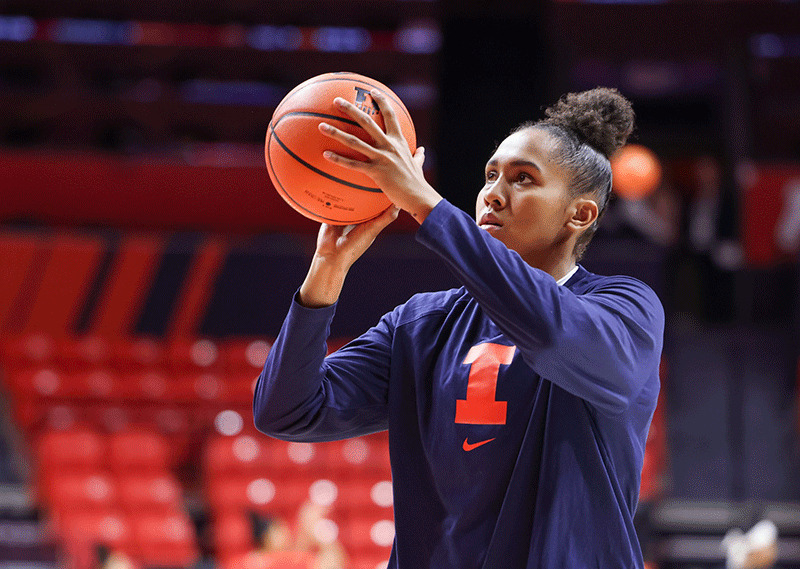
Camille Hobby’s life has always revolved around sports. She grew up moving from city to city as her father, Marion—currently the defensive line coach for the NFL’s Cincinnati Bengals—coached at various colleges and in the NFL, but her personal passion was always for basketball. Now, at 23, graduating with two degrees, three ACC tournament wins and a Women’s Basketball Invitation Tournament championship under her belt, the 6-foot-3-inch center is ready to start a new chapter in her basketball career.

“I think it was kind of just a natural progression,” Hobby said. “I’ve been around sports my whole entire life. I definitely want to stay in sports—college athletics, professional, whatever the case is, so in the future I want to be a coach. I want to get into coaching, and I thought it was the best idea for me to go into (the Department of Recreation, Sport and Tourism).”

Hobby graduated from the University of Illinois Urbana-Champaign with a master’s degree in recreation, sport and tourism in May 2024 after spending her fifth year of eligibility with the Fighting Illini women’s basketball team. Hobby earned a bachelor’s degree in sport management from North Carolina State University, where she would have played all four years, had COVID-19 not taken a season away.

“I had one year [of eligibility] due to COVID, so I transferred primarily because of basketball, because of having that extra year. But then I wanted to continue that sports management realm of study, so that’s how I ventured my way to the RST department.”

“I had one year [of eligibility] due to COVID, so I transferred primarily because of basketball, because of having that extra year. But then I wanted to continue that sports management realm of study, so that’s how I ventured my way to the RST department.”

In deciding where to spend her last year of eligibility, a few key aspects drew Hobby to choose Illinois. She said the school’s reputation was one factor in her decision, giving a nod to the iconic “Block I” impact on a resume.

“Everyone sees the I. Everyone knows the logo, you know, and that’s extremely important, especially when you’re going into jobs and looking for future places of work.”

She also highlighted the university’s emphasis on community and academics that impacted her decision.

“It’s a tight-knit community—definitely a college town. So, that played a huge role into that [decision], especially playing basketball in an environment that supports the needs of the team, and having great academics was important to me.”

After college, Hobby wants to play professionally in Europe before moving on to coach basketball, putting both her degree and lifetime of experience playing basketball to use. She said coaching would allow her to have a positive impact on the lives of other young athletes, something she has not only experienced from an athlete’s perspective but also witnessed through her father’s own career. 

“He played a huge part in that,” Hobby said. “I’ve seen the incredible players that he’s coached in the past and he’s been influential in their lives and that’s something that I want to do, is to make an impact on young people’s lives and get them to be the best versions of themselves.”

Hobby also reflected on how her experience earning a degree in RST aided her service-oriented view of coaching, saying “I’ve always been a person that wants to help people and be of service to others and make them better, and I feel like that’s kind of what the RST department is; it is in the service business of helping others and showing them things and that’s kind of where my heart lies. That’s where I know my dad’s heart lies as well, helping those around us, and the best way, I feel, to do that, is through coaching.”

The program not only helped Hobby prepare for coaching as a public service, but it also emphasized to her the importance of diversity and inclusion in coaching.

“I feel like the biggest part of being a coach is the diversity and equity part of it—universal design and making sure that there’s a space for everyone. I feel like that’s so important, especially as a coach. You want to make sure that your players feel like they are important, feel like they are accepted, whoever they are, what makes them different and unique.”

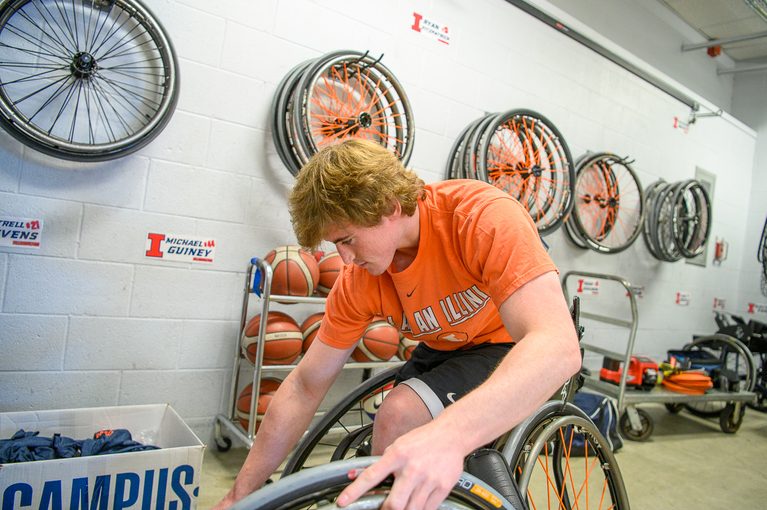
One specific experience in the program stuck with Hobby: watching wheelchair basketball club teams compete. She recalled how it made her re-think diversity in sports, saying, “that was completely eye-opening for me. I think a lot of the time we hear about having that inclusion, having diversity, but a lot of the time there’s not much action behind it. To see them and see how competitive they are was really inspiring, and it just allowed me to get into that—finding equity and inclusion for everyone. Not just in terms of race or gender, but for someone who has challenges that limit them from playing traditional sports.”

Hobby intends to follow in the footsteps of the people she has looked up to: her father and her own coaches, who she said inspired her on and off the court.

“Having people who advocate for you, people who are just good people who want to see you succeed, that’s important. To see them, it makes me want to be like that in the future: always encouraging my players, believing in them, and wanting the best for them.”

Editor’s note:

To reach Nancy Averett, email naverett@illinois.edu.
 

Related news

Improving clinical practice and quality of life


Marie Moore Channell and Laura Mattie (Photo provided)

Speech and Hearing Science Associate Professors Marie Moore Channell and Laura Mattie have long been interested in the development of communication and life skills in individuals with neurodevelopmental and intellectual disabilities.

Channell directs the Intellectual DisAbilities Communication Lab, where her research team works toward a comprehensive understanding of skills that support day-to-day communication for people with Down syndrome in order to identify and develop strategies for supporting their social and academic success. In Mattie’s Development in Neurogenetic Disabilities Lab, research addresses the early development of individuals with Down syndrome and fragile X syndrome. She, too, aims toward promoting the developmental success and well-being of people with these neurogenetic disabilities.

The scholars’ shared interests have led to fruitful collaborations in the past. They led a team of researchers who used a large, national database developed by the Down Syndrome Cognition Project to characterize variability in IQ, executive functioning, adaptive and challenging behavior, and autism symptomatology among individuals with Down syndrome.

In a paper titled “Capturing cognitive and behavioral variability among individuals with Down syndrome: a latent profile analysis,” published in the Journal of Neurodevelopmental Disorders (2021, 13:16), Channell, Mattie and their co-authors describe three latent classes, or subtypes, of people with Down syndrome that emerged from their analyses.

Those in the “normative” group showed a profile of cognition and behavior that is typically represented in the literature on Down syndrome. Those in the “cognitive” group had lower cognitive scores and adaptive behaviors such as self-care and daily living skills than their peers with Down syndrome, along with high rates of autism symptoms.

Those in the “behavioral” group showed cognitive scores and adaptive behaviors similar to their peers with Down syndrome but had high rates of autism symptoms and challenging behaviors such as hyperactivity and conduct problems. Thus, with a large enough sample size, different patterns of autism symptoms and other characteristics can be seen across individuals with Down syndrome. The ultimate goal in precisely characterizing individual variability within Down syndrome is to optimize daily living through targeted treatments and interventions.

Overcoming diagnostic hurdles

Channell and Mattie currently are collaborating as principal and co-principal investigators on a study funded by the National Institutes of Health INCLUDE Project, which supports research related to the health and quality of life of individuals with Down syndrome. Working with researchers at Emory University, Johns Hopkins University and the Kennedy Krieger Institute, their study seeks to increase understanding of the co-occurrence of autism with Down syndrome to improve its diagnosis and treatment.

“There is a stereotype of people with Down syndrome as happy, social people who can’t have autism,” Channell said. “It’s more common than previously thought, but underdiagnosed.”

Interventions and therapies that people with autism receive could be a beneficial add-on to services offered to individuals with Down syndrome. Part of the problem in diagnosing autism in this population is that autism screening tools that were developed for the general population need to be adapted. To work toward the goal of developing better tools to screen for autism in people with Down syndrome, Channell, Mattie and their collaborators are conducting a nationwide survey of caregivers of youth with Down syndrome in which they are completing existing screening tools and other developmental questionnaires. The researchers will then examine and adapt the screening tools as needed so they can be used by practitioners to determine whom to refer for a full autism evaluation.

They are casting a wide net in hopes not only of representing all the varying abilities within Down syndrome, but also of including groups that are not well represented in the existing research.

“Underrepresentation is a big problem in research related to Down syndrome,” Mattie said. “We have a diverse board of stakeholders, are building relationships with the Black Down Syndrome Association, and targeting rural and Hispanic families as well.”

The questionnaires and other screening tools completed by caregivers are just one element of an autism diagnosis. There also is an in-person evaluation component, which is conducted by either developmental behavioral pediatricians or clinical psychologists who are specifically trained in autism diagnostics and assessment, as well as neuropsychological methods. The difficulty with this aspect of diagnosis is two-fold, Mattie said.

“First, the number of developmental behavioral pediatricians and clinical psychologists with this specialized training is limited, so there’s a bottleneck,” she said. “Also, while they may have expertise in autism, they don’t necessarily know about Down syndrome. So the ability to identify a true co-occurring condition is really lacking.”

Channell and Mattie may be conducting the first large-scale study using the broad screening measures doctors and clinicians give to families when autism is first suspected. Theirs may also be the first study that will explore the use of telehealth to conduct diagnostic evaluations of autism in children with Down syndrome.

“If we can figure out how to make that work, we can increase access to evaluations by specialists,” Channell said. They are working with a clinician at Kennedy Krieger, Natasha Ludwig, who will conduct the evaluations of autism in the telehealth sessions, and with Amy Cohen, director of the University of Illinois Autism Clinic, who will review and “score” the evaluations as well to ensure that evaluation tools will lead to consistent results when used by different clinicians.

With the dual focus on developing effective autism screening and diagnostic tools for individuals with Down syndrome and increasing access to specialists who are skilled in both autism and intellectual disability, Channell and Mattie intend to make a significant and lasting impact on improving the quality of life of a population that has historically been underdiagnosed and underserved. That’s good news for the individuals themselves and their caregivers, as well as the scores of clinicians who dedicate their professional lives to providing the best services possible to their clients.

Related news

College of Applied Health Sciences
110 Huff Hall
1206 South 4th Street
Champaign, IL 61820
(217) 333-2131