Georgia Malandraki’s First 100 Days
June 24, 2026 | Vince Lara-Cinisomo
The Veteran Residential Transition Program helps Veterans navigate the shift to college life with housing, career development and individualized support
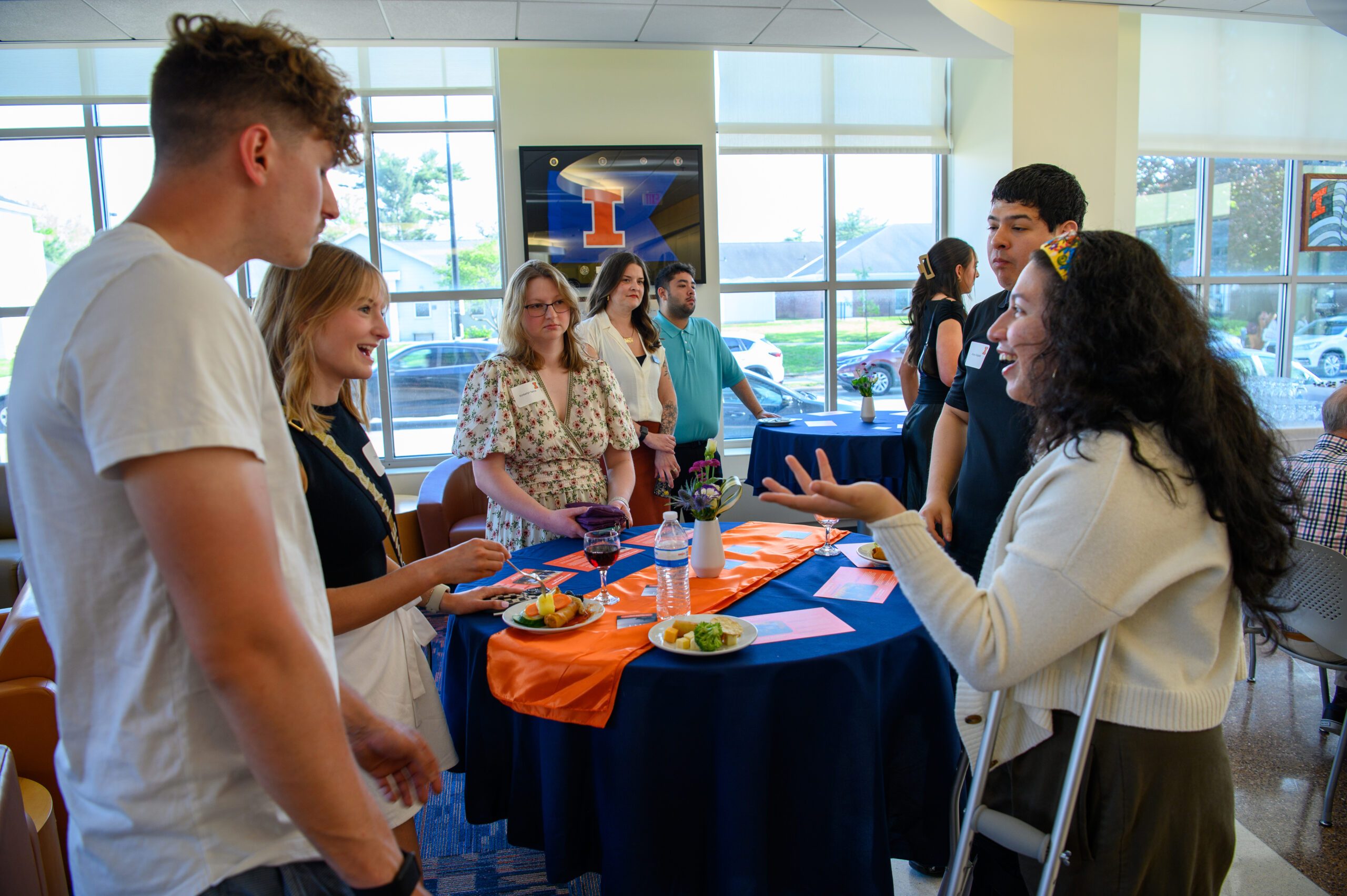
For many military Veterans, the transition from active service to college life can be as challenging as any mission they faced in uniform.
The loss of structure, leadership and a clearly defined sense of purpose often coincides with the demands of navigating an unfamiliar university system, balancing family and financial responsibilities and determining a new professional direction.
A new initiative at the University of Illinois Urbana-Champaign aims to ease that transition.
The Veteran Residential Transition Program, or VRTP, housed at the Chez Veterans Center, was created to support Veterans as they move from military service into higher education. The program combines housing assistance, individualized case management, career development and academic support to help student Veterans establish stability and build a path toward long-term success.
“Success isn’t about how students use a program; it’s about how they move forward over time,” said Ingrid Wheeler, associate director of student success and wellbeing at the Chez Veterans Center.
Wheeler said many Veterans arrive on campus highly capable but suddenly without the structure that guided their military experience.
“In the military, individuals operate within a highly structured system with clear leadership, direction and shared purpose,” she said. “When they leave, that system is gone almost overnight. Even highly capable people can suddenly find themselves without a clear sense of direction or support.”
Rather than focusing solely on services or engagement activities, VRTP was designed to help rebuild the conditions that allow Veterans to make meaningful progress toward goals they define for themselves.
The program emphasizes early stability through housing and structured support, while connecting students with individualized guidance and campus resources. At the center of the model are case managers, who work one-on-one with participants throughout their transition.
“Case managers play a central role,” Wheeler said. “They provide a form of transitional leadership, helping students make sense of their situation, identify next steps and connect to the right supports at the right time.”
Success isn’t about how students use a program; it’s about how they move forward over time.”
Ingrid Wheeler
Associate director of student success and wellbeing, Chez Veterans CenterThe goal, she added, is not to create dependence on the program but to help students regain confidence and independence.
“The goal isn’t to keep students connected to VRTP,” Wheeler said. “It’s to help them regain structure, find direction and move forward confidently without needing us.”
A key component of the program is the Individualized Transition Plan, which helps students identify priorities, set goals and assess their progress. Unlike a traditional roadmap, however, the plan is designed to evolve as students’ needs and aspirations change.
“We expect it to change, and when it does, that’s often a sign that progress is happening,” Wheeler said.
Case managers use the plans as a framework for ongoing conversations, helping students evaluate challenges and opportunities as they arise. Progress is measured through multiple indicators, including academic performance, personal stability, career development and tools such as the Military Transition Scale, developed by Health and Kinesiology Associate Professor Chung-Yi Chiu.
To develop the scale, Chiu conducted interviews with 16 student veterans to better understand their experiences transitioning from military service to higher education. Based on these interviews, she created the Military Transition Scale and collaborated with Dustin Lange, assistant director of the Chez Veterans Center, along with several student Veterans, to ensure the items were meaningful, relevant and easy to understand. Additional data collection was conducted to validate the scale across the nation. Michael Lotspeich-Yadao, assistant director of research and evaluation at Chez, has assisted in survey data collection.
Chiu said the Military Transition Scale evaluates several dimensions of transition experiences, needs and challenges, including motivation; career trajectory; social networking and support system; effective study skills; benefits of military service; self-awareness; existing and future resources; barriers, personal strength, and coping; and attitude toward veterans. These dimensions highlight the complex and multidimensional nature of the transition process.
Chez uses the scale to assess how well student veterans have adapted to higher education while balancing new academic roles with existing personal and family responsibilities, Chiu said. Based on the results, case managers can identify needs and connect student veterans with appropriate resources and services. Because transition is dynamic and changes over time, the scale can also be administered periodically to monitor progress and adjust support accordingly. The goal of the Military Transition Scale is not simply to identify challenges, but to help student Veterans thrive and successfully integrate their military experiences into meaningful academic and civilian lives.
Rather than focusing solely on graduation rates or retention statistics, Wheeler said the program emphasizes what she calls “trajectory”—the direction and quality of a student’s progress over time.
“Traditional metrics tell you where someone ended,” she said. “Trajectory tells you what it took to get there and whether it will sustain.”
One student’s experience illustrates the approach.
A Veteran enrolled in VRTP entered the university uncertain about academic and career goals. While taking a career development course designed for military-connected students, it became apparent that the student’s aspirations differed from more conventional career pathways. A theater major interested in costume design for theater and film productions, the student needed support tailored to a creative profession.
Program staff responded by connecting the student with industry professionals, including leaders at Flyover Film Studios in Rantoul, Illinois, and an Illinois alumnus working in the field. The student received individualized coaching to develop a professional resume and online portfolio showcasing costume design and theater work.
The result, Lange said, was far more significant than a potential internship opportunity.
“The most significant outcome was not simply the possibility of an internship or future employment opportunity,” he said. “It was the transformation from uncertainty and limited career direction to a clear professional pathway supported by industry connections, mentorship and a growing sense of confidence.”
The program also recognizes that practical concerns and personal growth are deeply interconnected.
“We don’t treat those as separate things,” Wheeler said. “You can’t think about purpose when you’re just trying to stay stable.”
By addressing housing, finances and other basic needs first, the program creates conditions that allow students to focus on larger questions about identity, career direction and life after military service.
Creating a sense of belonging is another priority. Wheeler said VRTP encourages connections among Veterans while also helping students build relationships across the broader university community.
“Our goal isn’t to be the one place students belong,” she said. “It’s to help them build belonging across the places where their lives actually happen.”
To achieve that, the Chez Veterans Center works with academic units, campus offices and community partners to ensure Veterans encounter supportive environments throughout campus and beyond.
“Students don’t need one place to belong,” Wheeler said. “They need to feel like they belong in their classes, their workplaces and their broader lives.”
As the program continues to grow, Wheeler said future expansion efforts would focus on strengthening the elements that have proven most effective: reaching students earlier, increasing access to stable housing and improving coordination among academic, career and health services.
“Growth only matters if it preserves what makes the model work,” she said.
Ultimately, Wheeler said, the program’s mission remains straightforward.
“The goal is simple,” she said. “Help more students move forward, without losing the quality and timing of support that makes that possible.”
Editor’s note:
To reach Vince Lara-Cinisomo, email vinlara@illinois.edu.
Share on social
May 19, 2026 | Carla Santos

The 2026 Sapora Symposium once again brought the RST community together in a powerful way—connecting students, alumni and industry leaders through meaningful engagement and shared learning.
Centered on this year’s theme, the power of community, the Symposium explored how civic engagement, marketing, and social and digital innovation shape professional pathways across recreation, sport, and tourism.
The series kicked off on January 29 in Chicago with keynote remarks by Michael Strautmanis of the Barack Obama Presidential Center, whose insights on leadership and community development set the tone for the weeks ahead.
The main event, held March 6 at the Illini Union, welcomed more than 130 undergraduate and graduate students and over 35 speakers and table hosts—most of them RST alumni. Throughout the day, students engaged directly with professionals, turning conversations into mentorship and networking into lasting connections.
We are deeply grateful to TSMGI for their continued partnership and to the outstanding group of speakers and guests who generously shared their time and expertise:
2026 Participating Speakers & Guests
Your collective engagement—spanning sport organizations, tourism and destination marketing, recreation and park systems, community development, nonprofit leadership, and agency work—created an exceptional experience for our students and reflected the full breadth of the RST field.
Thank you for being part of Sapora 2026.
Share on social
May 18, 2026 | Vince Lara-Cinisomo
Administrative aide quietly sustained departmental success through dedication

At the University of Illinois Urbana-Champaign, where academic reputations are built on research breakthroughs and classroom innovation, much of the daily work that keeps departments moving forward happens quietly. In the Department of Speech and Hearing Science, that steady presence for more than a decade has been Stefanie Cole.
Cole did not set out to build a long career in higher education administration. Having just completed her service in the U.S. Air Force, she was working as a medical office assistant at the Carle Cancer Center. She was a new wife, a new mother and new to the Champaign-Urbana area. Raised in a university town, she understood the rhythm of campus life and was looking for broader options with greater flexibility and room to grow professionally.
“The University of Illinois seemed like a great fit,” she said, adding that it offered stability, opportunities to advance and a chance to build on the skills she had developed in the military and in healthcare settings.
Thirteen years into her campus career, the opportunity to join Speech and Hearing Science found her. “It was the perfect time to explore some new challenges,” she said.
At the outset, Cole imagined she might stay in the role for five years, long enough to see her son through high school. Instead, she found a professional home. “I love my job. I love my faculty,” she said. When health issues arose within her family, the predictability and support of her department made staying an easy decision.
During her tenure, SHS has seen significant change. This semester marks the arrival of the department’s fourth head since she joined. The unit has undergone an extensive building remodel, and its audiology clinic operations were relocated and combined with speech-language pathology into a shared facility at Research Park. Faculty members have come and gone, reflecting national searches and shifting research priorities.
Yet some things, she says, have remained constant.
“Although some faculty have left and new faculty have arrived, the collegiality and cohesiveness has always remained outstanding,” Cole said.
As administrative aide, she occupies a role that is at once central and largely invisible. She describes her job as ensuring that the department’s work runs as smoothly as possible. Budgets, faculty searches, promotion and tenure dossiers, award programs and the daily churn of academic paperwork all pass through her office.
Georgia Malandraki, who replaced Pamela Hadley as department head of SHS in January 2026, said Cole’s steadiness has been immeasurable in her transition.
“In just a short time, Stefanie has become one of the people I rely on most. Stepping into a new leadership role is never easy, but she welcomed me with warmth and immediately made me feel supported. Her calm presence, deep knowledge of the department and genuine care for the people here have been invaluable. I already can’t imagine navigating this transition without her. She is the quiet strength behind so much of what we do, and I feel incredibly lucky to work with her.”
There is no typical day, Cole said. The academic calendar dictates a certain ebb and flow—admissions cycles, graduation, the annual student awards program each spring—but any carefully constructed to-do list can be upended by last-minute requests or unexpected crises.
“I come in the morning with the best laid plans of a set agenda of tasks for my day,” she said. “But I usually leave having accomplished many different tasks than I had originally planned.”
I enjoy having a front-row seat to the growth within the department.”
Stefanie Cole
SHS administrative aideWhen deadlines tighten or complications arise, Cole holds herself to high standards. “I expect more from myself than anyone else specifically expects,” she said. “When things don’t go as planned, I want the best for the department and I am willing to step in to fill whatever hole that I can, however I can.”
Though her primary interactions are with faculty, students remain a meaningful part of her work. Planning the department’s annual student awards program is, she said, “such a treat.” The ceremony offers a rare pause in the academic year and a chance to meet families and celebrate achievements that represent years of clinical training and research.
The department’s clinical graduate programs are complex and often stressful. Cole believes students know they can walk into the administrative office with questions and feel comfortable doing so. “If we don’t have the answer, we work hard to point them in the right direction,” she said.
One of the most consequential aspects of her role involves shepherding faculty through promotion and tenure. The process is detailed, exacting and often years in the making. Watching those efforts culminate in successful promotion milestones, she said, reaffirms the importance of her work.
“I enjoy having a front-row seat to the growth within the department,” Cole said.
Her years across multiple campus roles have also given her insight into how a large public university functions. Policies, approvals and budget decisions move more slowly than they might in private industry, she said, not because of inefficiency but because of the many moving parts involved.
“The wheels of the university turn slower than other places,” she said. “There are a lot of moving parts and pieces that make up the ‘how’ and the ‘why’ we do what we do. Please be patient.”
Institutional memory is another quiet responsibility she carries. When she first arrived at SHS, much of the department’s history and procedural knowledge was undocumented, passed along informally from one person to the next. Today, only a handful of faculty members remain from those early years.
“It was ‘learn as we go,’” she said. Over the next few years, she hopes to document as much departmental history and practice as possible, preserving traditions and unwritten rules for the next generation of staff and faculty.
Of all her accomplishments, Cole said she is most proud of the support she provides to her department head and faculty and of the streamlined processes that have taken shape during her tenure. With a new department head now at the helm, she looks forward to the department’s next chapter.
Through stressful or thankless stretches, she credits the people around her for keeping her motivated. “Our faculty, staff and students are always gracious and appreciative of the work that we do,” she said.
In a university environment where recognition often centers on those at the lectern or in the lab, Cole’s work underscores another truth: institutions run on dedication as much as distinction. For more than a decade at Illinois, she has made sure that when others succeed, the path behind them is clear.
Editor’s note:
To reach Vince Lara-Cinisomo, email vinlara@illinois.edu
Share on social
May 18, 2026 | Ethan Simmons
Donor-funded telehealth initiative aims to expand rural health care access

With a boost from donors, researchers and clinical faculty in the Department of Speech and Hearing Science are collaborating to introduce a new speech and hearing healthcare option for residents in rural areas of northern Illinois.
Partnering with the Illinois Extension, the department will establish a rural telehealth site in Stephenson County to offer state-of-the-art remote clinical services that residents can easily access. Upon successful testing and initiation, the department will be ready to expand these services to other counties.
The Speech and Hearing Science Rural Health and Telehealth Initiative was developed on a charge from new department head, Professor Georgia Malandraki, after a generous donation for the cause from David Shockey, attorney and two-time University of Illinois graduate from Freeport, Illinois.
“Our department has a strong history of leading telehealth research and advancing evidence-based practice in our field. I am deeply grateful for the support that made this initiative possible, allowing us to extend our impact and deliver high-quality speech, language, cognitive and hearing care to those who need it most,” Malandraki said.
“By building on our faculty’s expertise, we are also strengthening student training and preparing future clinicians and scientists to serve rural communities.”
Of 102 counties in Illinois, 82 are classified as rural by the state’s Department of Public Health. About 15 percent of Illinois residents reside in rural areas of the state, which are more likely to face healthcare staff shortages and limited access to specialty services.
“Part of what we’re trying to investigate right now is just what are the needs of the community, and how does that fold in with the opportunities and what we’re already offering,” said SHS Associate Professor Dan Fogerty, who researches speech perception and hearing loss. “With telehealth and remote services, you need to have the platform and infrastructure in order to provide those.”
For faculty at the Department of Speech and Hearing Science, these telehealth sites will be a chance to implement their ongoing research, outreach and clinical practices around telehealth in a new region.
The rural health initiative is steered by a task force of research and clinical faculty at Speech and Hearing Science, including Fogerty; Professor Raksha Mudar; Clinical Associate Professor Clarion Mendes, a speech-language pathologist; and Clinical Assistant Professor Sadie Braun, an audiologist.
“We have a flagship campus with a commitment to our communities. This is a way we can demonstrate that our services extend beyond our campus alone,” said Mudar, who directs the Aging and Neurocognition Lab. “We have built the evidence base—we have the expertise, so now it’s just bringing it all together to offer a more cohesive way to extend that to the community.”
For SHS students, the telehealth sites will provide opportunities to serve individuals in under-resourced areas using the latest remote care technology, broadening their hands-on experience before they become full-time clinicians.
The project is still early in development, but a crowd-funded campaign helped raise another $2,000 to support the establishment of both telehealth sites. The initiative will build on the teamwork from previous collaborations across the department, including a grant-funded project to create more accurate hearing tests.
“The nice thing about Speech and Hearing Science at Illinois is that the education, the research and the clinical practice are all integrated,” Fogerty said. “This is an excellent project to demonstrate that.”
Editor’s note:
To reach Ethan Simmons, email ecsimmon@illinois.edu.
Share on social
May 18, 2026 | Georgia Malandraki

Dear colleagues, alumni, students and friends,
It has been a meaningful and energizing start to my return to campus, and I’m grateful for the warm welcome I’ve received from this community. In my first 100 days, I’ve had the opportunity to reconnect with many of you, listen carefully to your perspectives and begin advancing several initiatives that reflect both our department’s strengths and our ambitions for the future. In this issue, you’ll find a more in-depth look at that journey—what we’ve set in motion so far, and where we’re headed next.
One initiative that captures the spirit of our mission is the Rural Health and Telehealth Initiative. In collaboration with Illinois Extension partners and generous donor support, our department is working to establish rural telehealth sites in Illinois, expanding access to speech, language and hearing services for underserved communities. This effort is being led by colleagues in Speech and Hearing Science, alongside Extension, including Dan Fogerty, Raksha Mudar, Clarion Mendes, Sadie Braun and Margaret Larson, the county director for the first site. This initiative reflects the kind of interdisciplinary, community-engaged work that defines who we are.
Our faculty continue to lead in research and innovation. Brian Monson and Rohit Ananthanarayana have developed and patented a promising new algorithm designed to extract speech from noise using high-frequency signals—an advancement with significant implications for communication technologies and clinical applications. I’m also proud to share that Brian Monson has been elected as a fellow of the Acoustical Society of America, a well-deserved recognition of his contributions to the field.
We are also delighted to highlight the people who make our department thrive. This issue features a faculty spotlight on Jaime Bauer Malandraki, offering a closer look at her work and perspectives through a Q&A. You’ll also meet Stefanie Cole in our staff spotlight, recognizing her important contributions and dedication.
While it is impossible to capture all the extraordinary moments of the past 100 days in a single newsletter, a few truly stand out: celebrating our remarkable students with 33 awards alongside their families and friends; hosting a vibrant two-day SHS alumni and friends open house event where we shared our work, reconnected and envisioned the future together; and in early April, seeing our graduate programs rise to No. 11 (tied) in Speech-Language Pathology and No. 18 (tied) in Audiology in the U.S. News & World Report. These milestones speak to the momentum, excellence and spirit of our SHS community—something I am proud and inspired to witness every day.
Looking ahead, we are exploring exciting possibilities in emerging areas such as virtual reality applications for voice therapy, including ongoing efforts led by Pasquale Bottalico to secure funding and move this work forward.
Thank you for your continued engagement and support. Together, we are building on a strong foundation while embracing new opportunities to expand our impact in Illinois and beyond.
Warm regards,
Georgia A. Malandraki
Department Head, Speech and Hearing Science
Share on social
May 18, 2026 | Vince Lara-Cinisomo
Shared values inspire innovative speech-hearing education and research

When Jaime Bauer Malandraki began considering the next chapter of her career, she wasn’t simply looking for a new job. She was searching for an academic home, an institution whose values aligned with her own and where she could build innovative clinical and research programs for years to come. She found that match at the University of Illinois Urbana-Champaign, within the Department of Speech and Hearing Science.
“As we researched Illinois, I felt strongly that the values throughout the university, college and department closely align with my own,” said Bauer Malandraki, a clinical professor in SHS. “These include a strong commitment to student success, accessibility and the importance of diverse representation at all levels.”
For Bauer Malandraki, shared values are not a talking point—they are foundational to her work as a clinical educator and researcher. She believes that being part of an institution she can take pride in is essential to fostering a healthy, productive environment. At Illinois, she saw a campuswide culture that prioritizes inclusion, transparency and growth.
That alignment was especially important as she thought about the work she wants to be doing over the next five to 10 years. A specialist in swallowing disorders and aerodigestive sciences, Bauer Malandraki envisions expanding both educational and clinical opportunities for students while deepening community engagement and research in her field.
“I believe Illinois and the Department of Speech and Hearing Science offer an ideal setting for exploring innovative ways to engage students and the community,” she said.
Clinically, she sees room to grow programming around swallowing disorders, an area of speech-language pathology that intersects with complex medical care. That growth, she says, can happen in multiple directions: expanding hands-on training, strengthening research initiatives and building broader partnerships that increase the department’s medical footprint.
She is particularly eager to collaborate with colleagues in her home department to enhance clinical training in aerodigestive sciences. But her ambitions stretch beyond departmental lines. Illinois’ breadth as a major research university creates opportunities to work across disciplines, collaborations she hopes will broaden the medical scope of speech-language pathology training on campus.
The department’s culture has reinforced her confidence that Illinois was the right choice. Bauer Malandraki describes it as collegial and supportive, with a shared focus on sustainable growth and meaningful impact.
“There is an atmosphere of positivity and potential,” she said. “It makes it exciting to be part of.”
She also points to leadership style as a distinguishing feature. Compared with previous institutions—Bauer Malandraki most recently taught at Purdue University—she finds Illinois’ leadership approachable and engaged with an emphasis on transparent communication.
“Culturally, this helps foster a sense that we’re all in this together,” she said. That sense of shared purpose resonates deeply with her, particularly during what she describes as a time of transition and reimagining in higher education.
Innovation in teaching is another draw. Bauer Malandraki is eager to experiment with new ways of preparing graduate students for careers in medical speech-language pathology. While traditional hands-on clinical experiences in swallowing disorders remain central, she is interested in incorporating telehealth applications and simulated or virtual reality clinical experiences to expand access and deepen training.
“It’s important that we train excellent clinicians but it’s equally important that we equip them with the tools to sustain themselves in demanding professions.”
Jaime Bauer Malandraki
Clinical Professor, SHSShe also brings a strong commitment to the mental health and well-being of helping professionals. In addition to her clinical specialty, she hopes to develop an undergraduate course focused on preparing students from multiple disciplines to maintain personal and professional well-being while working in patient-facing roles.
“It’s important that we train excellent clinicians,” she said, “but it’s equally important that we equip them with the tools to sustain themselves in demanding professions.”
Her transition to campus has been marked by a warm welcome. Faculty and staff in the department, along with college leadership, made her feel valued from the interview process onward. Graduate students have also played a significant role.
“They are passionate about their academic studies and clinical training,” she said. “They’re eager to see the department grow further in the medical space, which has been wonderful to observe.”
Outside the classroom and clinic, Bauer Malandraki has embraced her new home in Champaign-Urbana. She and her family found what she describes as a great house in a welcoming neighborhood, and she appreciates the community’s inclusive culture.
A self-described “bookstore nerd,” she quickly discovered The Literary in downtown Champaign, praising its curated collection and inviting vibe. She also loves being in nature and has found solace in walks at Lake of the Woods Forest Preserve in Mahomet.
Like any major move, the transition came with challenges. The hardest part, she said, was the physical relocation and the process of establishing new routines. She relies heavily on daily structure for focus and productivity. Yet she also thrives on change.
“Overall, the adjustment has been a good challenge,” she said.
As she looks ahead to her first full year, Bauer Malandraki is eager to immerse herself in the daily life of the department and college, exploring ways she can contribute beyond her immediate responsibilities. As a specialized faculty member and the proud daughter of a Teamster, she is also interested in becoming involved with the Non-Tenure Faculty Coalition, underscoring her longstanding commitment to advocacy and professional equity.
Ultimately, Bauer Malandraki’s decision to join Illinois reflects more than a professional calculation. It represents a convergence of values, opportunity and vision. In the Department of Speech and Hearing Science, she sees a place where innovative clinical education, interdisciplinary research and a culture of shared purpose can come together—advancing not only her own career, but the future of the field she is passionate about.
Editor’s note:
To reach Jaime Bauer Malandraki, email jaimebm@illinois.edu
Share on social
May 15, 2026 | Ethan Simmons
New research is testing effective ways to communicate with families about chemical exposures

Among the last things a mother wants to hear is that chemical compounds found nearly everywhere in the modern environment—our clothing, packaging, plastics and drinking water—could have implications for their child’s development in the womb.
Sarah Geiger, assistant professor of health and kinesiology at the College of Applied Health Sciences at the University of Illinois Urbana-Champaign, has studied the adverse impacts of environmental pollution and chemical exposures on human development for more than 15 years as a researcher.
Now she’s part of emerging research to hone those conversations: how do we communicate these findings without creating undue levels of fear or concern?
“You don’t want them to feel like, ‘Great, now I’ve somehow unknowingly put my developing child at risk,’” Geiger said. “The conversations we try to have with mothers is, ‘Here’s what we know so far and here’s what we’re trying to learn; here’s what could be the case, or not.
“We also equip them with knowledge to empower them to avoid chemical exposure in a way that is tailored to their individual chemical measures, as well as protective behaviors that could help to mitigate any effects of existing chemical exposure.’”
This process, known as ethical report-back of research results (“report-back”) is a science unto itself. With an R01 grant from the National Institutes of Health, Geiger is collaborating with the Silent Spring Institute—a women’s and environmental health research organization—and colleagues at the University of California San Francisco to experiment with the report-back process.
Geiger has teamed up with Silent Spring and UCSF previously to make a tutorial for research participants to understand chemical exposure. In this new study, participants will be tracked on several biomarkers that have not typically been reported back to participants—like telomere length, oxidative stress and inflammation—then informed of the results in separate groups.
“We’re doing a randomized controlled trial, not with vaccines or pharmaceutical products, but with report-back,” Geiger said. “If one study group gets the report-back report, and the other received their results with a feature designed to facilitate them taking action around these results, are there differences in behavior change outcomes?
“The idea is that we want to learn what best helps research participants understand and act on their individual results in a way that has the potential to enhance health.”
The report-back process is important because our polluted environment isn’t going away. Even as larger studies, including a birth cohort study hosted at the University of Illinois, continue to reveal how common chemicals impact children’s development, the United States industrial ecosystem doesn’t seem to be improving, Geiger said.
“Most of the chemicals far and away that I’ve studied are endocrine-disrupting. And the situation is not getting better—it’s getting worse because we’re stripping away environmental regulations in this country,” Geiger said. “Whatever your political persuasion is, the reality is that we don’t abide by the precautionary principle for chemical exposures and chemicals in products to the extent that our counterparts in other developed nations do.”
Understanding ‘forever chemicals’
Among the many compounds Geiger studies as an environmental epidemiologist, so-called “forever chemicals” are recurring characters.
Per- and polyfluoroalkyl substances, or PFAS, are manmade compounds used in water-resistant clothing, stain-resistant food packaging, nonstick cookware materials and countless other consumer products. Also found in drinking water, PFAS earned the moniker of forever chemicals for their durability and tendency to accumulate in human and animal bodies.
PFAS were long considered chemically inert. But a crisis in middle America opened new investigations into their health effects, and Geiger had a front-row seat.
For decades, chemical producer DuPont knowingly dumped perfluorooctanoic acid, called PFOA or C8, in the Ohio River, which flowed into drinking water for the surrounding communities. DuPont used C8 to produce nonstick Teflon products.
In 1998, more than 70,000 residents of the mid-Ohio River Valley in West Virginia and Ohio reached a $671 million settlement with DuPont. The class action lawsuit also funded a massive cohort study to observe PFOA’s long-term effects on human health.
Geiger obtained her doctorate at West Virginia University School of Medicine, where many researchers were untangling the damage done.
“I was really interested in environment and human health—and pediatrics, too,” Geiger said. “I had a couple kids at that time: I was interested, partially just from being a mom, in child development.”
What they learned: PFAS disrupts human endocrine systems. PFAS chemical structures are similar to the sex hormones estrogen and testosterone. Significant adult exposure is associated with kidney and testicular cancer risk, lowered fertility, and damage to the immune system.
Other common endocrine disruptors include bisphenol A, a chemical used in plastic manufacturing which coats the insides of metallic products like food and beverage cans, and parabens, preservatives commonly found in cosmetic products like shampoos and moisturizers.
Exposure to endocrine disruptors in utero can disrupt and complicate children’s pre-birth sexual development and affect their developmental trajectory years down the line—leading to lower birth rate, decreased bone density and accelerated puberty.
“How can a chemical exposure for a developing fetus in the womb change child behavior at age 5? Physically, chemically, how in the world does that happen? That’s what we’re trying to get to the bottom of,” Geiger said.
Geiger is an investigator on the Illinois Kids Developmental Study, or IKIDS, a cohort study led by neuroscientist Susan Schantz at the Beckman Institute at Illinois.
Prospective human cohort studies are the gold standard in epidemiology. They enroll participants and follow up with them for years or even decades, collecting relevant health data to find patterns in their development and life outcomes.
In IKIDS, pregnant women are enrolled early in their pregnancy and continue to check in from their child’s birth up to age 8 in many cases. More than 600 mothers, fathers and their children have been enrolled so far, and they’ve secured funding from the National Institutes of Health to continue the study through 2030.
Most of the chemicals far and away that I’ve studied are endocrine-disrupting. And the situation is not getting better—it’s getting worse because we’re stripping away environmental regulations in this country.
Sarah Geiger
HK Assistant ProfessorSome participating mothers have been tested on a variety of chemical exposures in their blood during pregnancy. Their kids’ development is tracked for any significant associated outcomes, particularly around neurodevelopment, or the growth of the brain and nervous system.
“We don’t always know exactly what the causal factors are biologically for an outcome we see, but cohort studies allow us to drill down into it in a way that most studies don’t allow you to do,” Geiger said.
Communicating risks
In the large research group at IKIDS, Geiger has led the report-back process for participating families. With grant funding, she helped pilot an app made for the task.
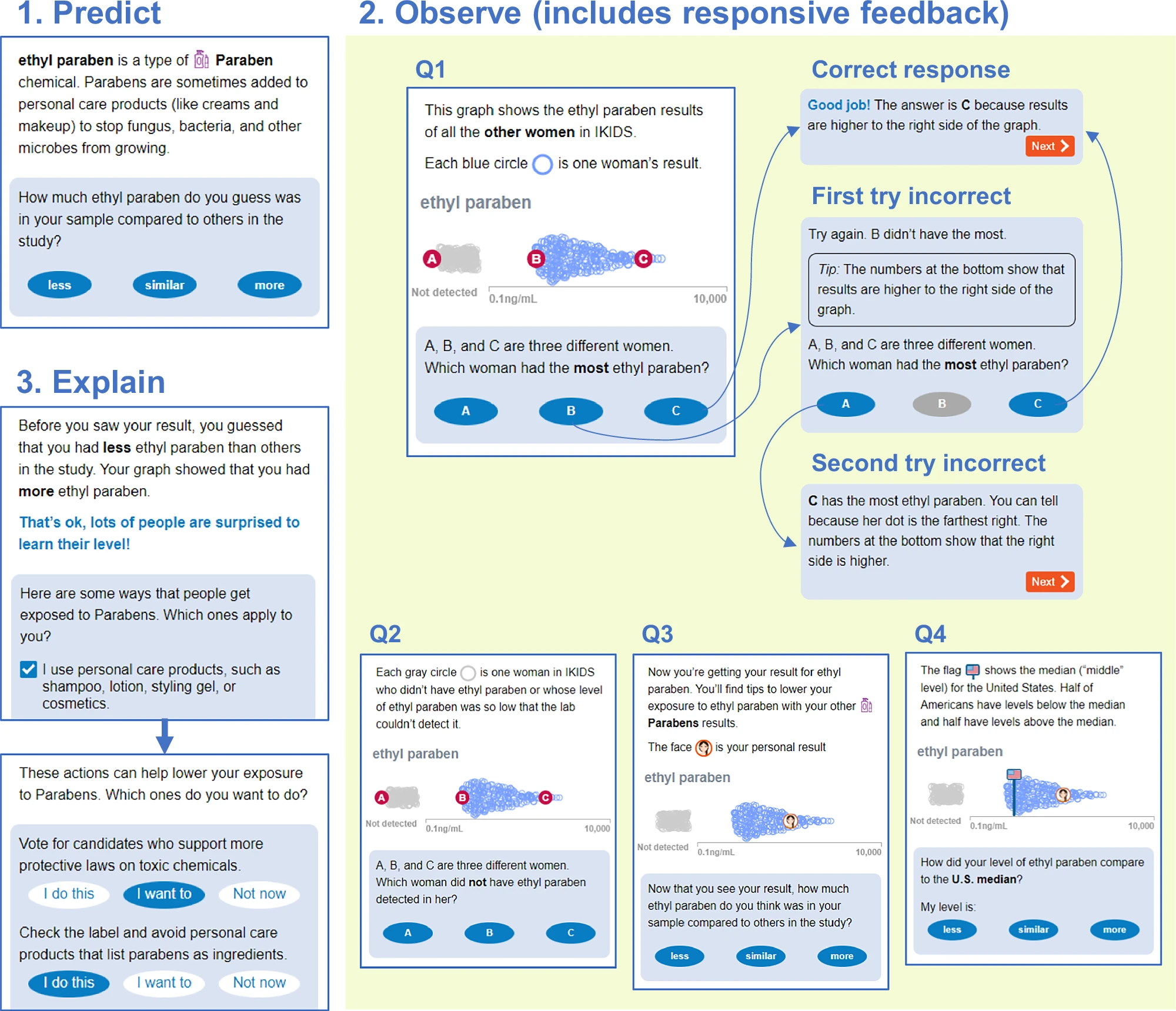
Collaborators at the Silent Spring Institute and UCSF created a smartphone-based tutorial for mothers who participated in two cohort studies, including IKIDS, that walked participants through their chemical exposure results and offered personalized recommendations for reducing contaminants in the future.
According to their study published this February, the tutorial helped study participants understand graphs that detailed their own chemical exposures, aimed at accessibility to participants of all education levels and backgrounds.
The digital interface showed participants how their own chemical exposure levels compared against other mothers collectively in both the study and nationally, then offered pointers to reduce exposure to endocrine-disrupting contaminants.
Some practical recommendations shared in the study: eating more fresh and frozen food, opting for drinks in glass bottles instead of cans, moisturizing with natural oils like shea butter or avoiding household products that are advertised as “antimicrobial.”
The tutorial proved effective at “creating intentions to adopt health-protective behaviors,” the study’s authors wrote, while providing a report-back tool that scaled for participants across different socioeconomic and educational backgrounds.
The tricky part, Geiger said, is framing risks in the proper dose. Since many of these chemicals are still being researched, investigators must give participants their best guidance off of incomplete or evolving information.
“We have to think really hard about how to report these levels back—it’s a little bit of a double-edged sword because we’re getting grants to study these chemicals simultaneously,” Geiger said. “It’s still emerging research with many of these chemicals, so we don’t always have that hard and fast guidance to give back.
“We’re continuing to do this work and hoping that, at the policy level, we become more aware that we may be doing damage to children at these crucial developmental stages, by dosing them with chemicals that are not tested or understood commensurate with the value that our children hold for the future.”
Editor’s note
To contact Sarah Geiger, email smurphy7@illinois.edu
Share on social
May 13, 2026 | Ethan Simmons
AI could revolutionize disease prevention—but flawed data risks deepening health inequalities

In the view of University of Illinois public health researcher Bruno Nunes, artificial intelligence shapes up as a potent tool to predict and prevent public health problems, such as chronic diseases.
But before AI-powered models are deployed in public health settings, they must be trained on richer data sets so they don’t amplify inequalities that exist in our healthcare system and society.
“To reach this future, we need to have better data to develop these models,” said Nunes, associate professor at the Department of Health and Kinesiology at the College of Applied Health Sciences. “Machine learning is a data learning process. It’s not just about using the fanciest algorithm—the problem is if you don’t have good data, you won’t have a good model.”
Trained as an epidemiologist, Nunes is focused on public health strategies: how to prevent chronic disease and promote positive health outcomes at the population level, in some cases before people visit the doctor’s office.
Artificial intelligence is already widely deployed in healthcare settings to better diagnose patients, especially reading medical imagery like X-rays, MRIs and CT scans.
With machine learning’s superior ability to detect patterns using huge tranches of data, Nunes envisions a future where models can accurately predict the risks of developing chronic diseases and allow populations to intervene earlier than before.
Part of this, Nunes argues, is AI may help us untangle “multimorbidity.” Many healthcare patients show up to the doctor’s office with two or more diseases, such as hypertension combined with diabetes or high cholesterol, which complicates management and quality of life.
“Our health system and services are tailored to one disease. But in most cases, especially when talking about populational aging, most people are presenting different diseases at the same time,” Nunes said. “And the worst part of that is when we aren’t able to manage this patient well because they have such complex conditions and interactions.”
His recent research has tested machine learning models on their ability to predict real-world outcomes. One recent study showed that machine learning models can predict a population’s dental service usage with solid accuracy but show poorer results with certain demographic subgroups.
Machine learning is a data learning process. It’s not just about using the fanciest algorithm—the problem is if you don’t have good data, you won’t have a good model.
Bruno Nunes
HK Associate ProfessorNunes collaborated on a study that used an AI model to predict dental service use for adults in Southern Brazil. The model used 47 different characteristics—sociodemographic data, behavioral traits and oral and general health markers—to predict whether participants went to the dentist in the past year from a cohort study in Pelotas.
Though the machine learning model’s predictions were largely accurate, it performed significantly worse across the board for mixed-race individuals in the study compared to Black and white participants, making the model unsuitable for real-world implementation in its current form.
“None of the models are perfect: they present an error rate, and we need to deal with it,” Nunes said. “But if this error rate is higher for a subgroup of the population, the subgroup may be under- or over-diagnosed.
“If the model is not so good for people who already present with historical inequalities in the health system, the model can amplify these inequalities instead of decrease them.”
Nunes tries to teach his students to frame the right questions in his new class, Artificial Intelligence in Public Health, which debuted in fall 2026 in HK.
Through critical discussions, he hopes to get students to think more about how “AI can fit into the big picture of public health,” and construct their own models around the right questions.
“In most cases we tend to develop models for disease-related consequences or for problems which we already have an effective public health strategy, for example—but what if we could create equitable models to predict the problems in advance or issues without scalable solutions?” Nunes said.
“You can’t just press a button to develop a machine learning model. You must have prior knowledge of the topic, skills and abilities to interpret the model considering public health principles. How can it be useful to solve the disease burden at the population level?”
Editor’s note:
To reach Bruno Nunes, email nunesb@illinois.edu
“Dental services use prediction among adults in Southern Brazil: A gender and racial fairness-oriented machine learning approach” is available online.
DOI: 10.1016/j.jdent.2025.105929The database is publicly available: https://dataverse.harvard.edu/dataset.xhtml?persistentId=doi:10.7910/DVN/BTLAAD
Share on social
May 13, 2026 | Kim Graber
Hello faculty, staff, alumni and friends,

As we move through another dynamic semester in the Department of Health and Kinesiology, I am continually struck by the breadth and impact of the work happening across our department. This spring, our faculty, students and alumni have advanced important conversations at the intersections of health, behavior and society—work that not only contributes to scholarship, but also to real-world understanding and change.
Among our recent highlights, Jacob Allen and Elisa Caetano-Silva’s work on inflammatory bowel disease and stress-related colitis is helping to deepen our understanding of how physiological and psychological factors interact in complex ways. Similarly, Thayna Flores and Pedro Hallal’s research on toddler diets is offering fascinating insight into how early nutrition may shape not just physical development, but cognitive and behavioral patterns as well.
We are also excited to share an upcoming story on iPALS, which underscores the power of alumni engagement and support in sustaining meaningful programming. This story reflects the strong community that continues to define our department.
Our faculty are also pushing into emerging and interdisciplinary areas. Bruno Nunes’ work exploring the relationship between artificial intelligence and mortality raises compelling questions about the future of health analytics and prediction. Sarah Geiger’s early childhood investigations continue to illuminate foundational stages of development, adding depth to our understanding of lifelong health trajectories.
Additional articles highlight the impactful work from Laura Rice (research on fall prevention and management) and Sandraluz Lara-Cinisomo (postpartum depression and pain during and after childbirth in racial/ethnic minority women), as well as Soyoung Choi’s interdisciplinary collaborations and Robyn Gobin’s work in areas of Veterans’ health and mental health research.
Thank you for being part of a community that values curiosity, collaboration and meaningful impact. I look forward to all that the remainder of the semester will bring.
Warm regards,
Kim Graber
Department Head, Health and Kinesiology
Share on social