AHS Faculty Q&A: Robyn Gobin understands trauma as both professor and clinician


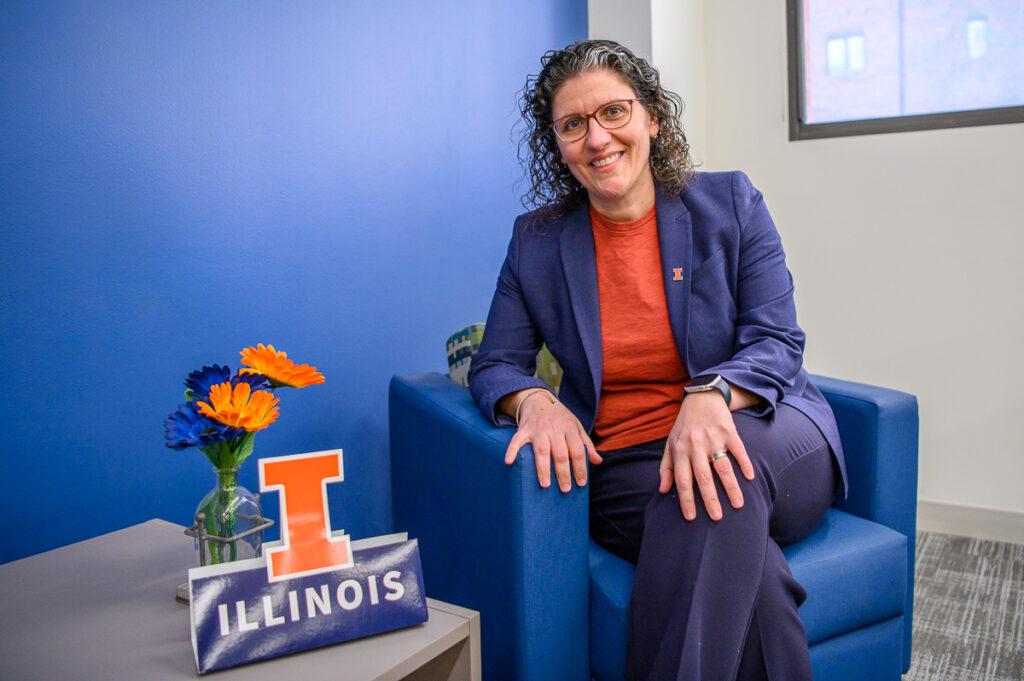
Robyn Gobin said the authenticity of research participants and clients motivates her work. (Photo provided)

Health and Kinesiology Associate Professor Robyn Gobin inhabits many roles—teacher, researcher, psychologist, author—which continue to influence each other. Gobin is a trauma specialist: she works with domestic violence survivors and military Veterans and has published studies about their experiences.  

Gobin joined the Department of Health and Kinesiology in 2015, after clinical and research fellowships at UCSD and Brown University. She obtained her Ph.D. in Clinical Psychology from the University of Oregon in 2012, then worked at the VA Providence Healthcare System’s PTSD Clinic and the VA San Diego Healthcare System, as an Advanced Women’s Health Research Fellow and postdoctoral clinician.

Part of what keeps Gobin motivated to do this work is “the authenticity and courage” she witnesses from research participants and clients as they navigate their healing journeys.   

“It is a privilege to contribute, in both small and meaningful ways, to people reclaiming their sense of self and well-being in the aftermath of trauma,” she said. 

Gobin reflected this semester on her background and ongoing work for the College of Applied Health Sciences. 

Why did you want to become a psychologist? When did academia and the research world come into the picture for you? 

Growing up, I always knew I wanted to have a career that would allow me to help the people in my community experience less stress and have more joyful and fulfilling lives. I discovered the field of psychology during my senior year in high school when I took an AP Psychology course. What attracted me most to the field was that it would allow me to enjoy the best of both worlds: research and practice. I knew I wouldn’t be limited to using just one skill set. Psychology gives me the freedom to use many gifts and talents. As a research psychologist who is also licensed to practice, I get to help shape the knowledge that informs interventions in clinical and community settings, while my work with clients helps shape the way I conceptualize my research.

What brought you to the University of Illinois and the College of Applied Health Sciences? 

As a trauma specialist, I’ve had the opportunity to receive both research and clinical training as a predoctoral and postdoctoral fellow at several Veterans Affairs hospitals. It has truly been an honor to work with military Veterans. When my postdoctoral fellowship concluded, I knew I wanted to continue serving this population. During my job search, I stumbled across a tenure-track faculty position affiliated with the Chez Veterans Center, housed in the College of Applied Health Sciences. I was immediately drawn to the opportunity to continue my Veteran-centric research in a university setting. 

What is it like to occupy the roles of therapist, researcher and professor? Are there ways that each role affects the others for you personally? 

It provides a meaningful balance. I enjoy work that keeps me on my toes by offering opportunities to engage different parts of my brain. One of my core values is being of service and having a direct impact in the community, and these three roles allow me to integrate service and impact into my professional identity. Teaching and therapy allow for immediate, direct impact while collaborative research allows me to contribute to longer-term, broader impact by generating knowledge that can shape practice and policy. Each role is influenced by the others. 

My clinical work grounds my research in real-world experiences and helps ensure it remains relevant and responsive. My research strengthens my teaching and clinical practice by providing evidence-based frameworks and keeping me abreast of emerging topics and the latest research in the field. Teaching allows me to draw directly from both my clinical experiences and research to facilitate rich, nuanced conversations about the complexities of trauma and mental health while engaging learners at all levels, from undergrad and graduate students to new and experienced clinicians. 

You co-authored two recent papers detailing the responses of women who experienced intimate partner violence about their beliefs and practices around forgiveness. What was it like to collaborate on these studies, and what did you learn from them? 

These projects were very special because I got to collaborate with former graduate student Kristen Golden, Ph.D., around our shared passion for enhancing well-being and supporting healing among women survivors of domestic violence. 

I always consider it an honor when survivors are willing to share their stories with us. As a trauma researcher who embraces feminist and intersectional frameworks, one of the biggest takeaways for me was that it matters how we socialize women and girls around forgiveness both in communities and in religious contexts where expectations are often shaped by the intersection of gender, race, culture and faith. 

When women internalize beliefs around forgiveness that align with rigid gender role expectations, they may make choices that inadvertently increase risk for continued harm. However, when women are supported in adopting more expansive beliefs about forgiveness that are not solely about nurturing others but also allow them to retain agency (i.e., believing that it is possible to forgive their abusers without reconciling), they are better positioned to make choices that prioritize their safety and well-being. 

Your research areas and mental health practice undoubtedly expose you to profound grief and trauma of your clients and participants. How do you manage this as a practitioner, and what keeps you motivated to work in this field? 

I manage this by being highly devoted to my self-care practices. Having a nourishing morning routine, setting boundaries and intentionally creating space to recharge allow me to do this work from a grounded and resourced place. I also prioritize time with family, friends and community, which helps sustain me both personally and professionally. What keeps me motivated is radical hope and the belief that we can work collectively to reduce harm and create safer environments where women and girls are better protected from sexual violence and all other forms of interpersonal trauma. 

I am also inspired by the authenticity and courage I witness in research participants and clients as they navigate their healing journeys. It is a privilege to contribute, in both small and meaningful ways, to people reclaiming their sense of self and well-being in the aftermath of trauma. 

Is there anything else you’re working on right now that you’d like to share?

I have several exciting new collaborations with colleagues at the University of Illinois and other institutions. This work includes examining the influence of radical hope on psychological and physiological responses to race-based stress; conducting community-engaged research on intellectual health and scholarly identity as pathways to promoting educational equity and well-being among Black youth; exploring cultural betrayal trauma theory in Black men; and developing patient-centered, community-engaged strategies to enhance mental health outcomes for military sexual trauma survivors.

Is there anything in particular you would like students or others working in the college to know about you? 

My work is inspired, in part, by Dawna Markova’s poem, “I Will Not Die an Unlived Life.” It serves as both an inspiration and a continuous invitation to live and work with intention:

“I will not die an unlived life 

I will not live in fear 

of falling or catching fire. 

I choose to inhabit my days, 

to allow my living to open me, 

to make me less afraid, 

more accessible, 

to loosen my heart 

until it becomes a wing, 

a torch, a promise. 

I choose to risk my significance; 

to live so that which came to me as seed 

goes to the next as blossom 

and that which came to me as blossom, 

goes on as fruit.”

Editor’s note:

To reach Robyn Gobin, email rgobin@illinois.edu.
 

Share on social

Related news

Researcher Soyoung Choi pushes Pilates toward evidence-based wellness


Health and Kinesiology Assistant Professor Soyoung Choi, left, handles various Pilates-related books and research materials with her doctoral students, Hyun Seo Ko and Diego Soto at Freer Hall. (Photo by Ethan Simmons)

In the age of algorithm-driven fitness trends and curated wellness aesthetics, reformer Pilates has become a cultural phenomenon, celebrated as much for its sleek studios and celebrity endorsements as for its exercise benefits. But beneath the social media sheen, Soyoung Choi, an assistant professor in the Department of Health and Kinesiology at the University of Illinois Urbana-Champaign, is asking a more grounded question: what does the science actually say?

Choi’s research challenges some of the most popular assumptions surrounding Pilates, especially the idea that it is a reliable path to weight loss. According to her recent meta-analysis, the evidence does not support strong claims that Pilates significantly reduces body weight. 

“Pilates primarily focuses on strengthening the core musculature,” she said, noting that it typically does not generate enough caloric expenditure for meaningful weight reduction. 

That conclusion might surprise practitioners who associate reformer classes with lean physiques and body transformations. But Choi said the disconnect lies not in the effectiveness of Pilates itself, but in how it is framed. Rather than positioning the workout as a fat-burning solution, she believes it should be understood as part of broader physical activity recommendations that support long-term health.

Evidence from her research suggests that Pilates delivers measurable improvements in areas that are often less visible but deeply meaningful for overall well-being: core strength, muscular endurance, flexibility, balance, posture and functional movement. These benefits can translate to reduced injury risk, improved daily mobility and better quality of life.

“Pilates has a strong mind-body component,” Choi said, pointing to its emphasis on breathing, concentration and controlled movement. These elements may help with stress management and encourage sustained exercise participation—factors that public health experts increasingly view as critical for lasting health behavior change.  

Still, Choi is careful to distinguish what research can confidently support from what remains uncertain. Studies show clear gains in flexibility, especially in the hamstrings and lower back, as well as improvements in functional stamina measured through walking-based endurance tests. Some evidence even points to reductions in systolic blood pressure.  

But when data from multiple studies are combined, several popular claims about Pilates lose strength. The research has not consistently demonstrated significant effects on body mass index, body fat percentage, cholesterol levels, bone mineral density or agility. Choi said inconsistent program designs, varied exercise intensity and uneven reporting standards make it difficult to draw stronger conclusions. In other words, Pilates is not ineffective; it is simply more nuanced than is often suggested.

“Too often, the fitness industry is designed around a ‘standard’ population.”

Soyoung Choi

HK assistant professor

That nuance becomes even more complicated when filtered through modern fitness culture. Choi’s work in health behavior and literacy has led her to examine how cultural narratives about body ideals shape exercise motivation. When Pilates is framed primarily as a path to thinness or a certain aesthetic, she said, participants may focus on appearance rather than health.

“That kind of motivation can be short-lived,” she said, especially when visible changes fail to appear quickly. The emphasis on external results can overshadow less obvious but meaningful outcomes like improved mobility, reduced pain or increased body awareness. 

Social media intensifies this tension. Online, reformer Pilates is frequently showcased through images of toned bodies and minimalist studio spaces, visuals that can create unrealistic expectations. Choi said that the scientific evidence supports flexibility, functional fitness and core strength more consistently than dramatic body reshaping. When expectations collide with reality, participants might feel discouraged even though they are making genuine health gains.  

Bridging this gap between research and public perception, she said, is essential for promoting informed decision-making around wellness.

Choi’s broader academic work also widens the conversation beyond aesthetics and trends. Much of her research focuses on accessibility in physical activity, particularly for disability populations. From that vantage point, mainstream Pilates reveals another challenge: inclusivity.

Most classes rely heavily on visual demonstrations, assuming participants can watch and replicate precise movements. For individuals with visual impairments, this creates an immediate barrier. Likewise, routines that assume full mobility can exclude people who use wheelchairs or have limited range of motion.  

“Too often, the fitness industry is designed around a ‘standard’ population,” Choi said. When accessibility is overlooked, entire groups miss opportunities for health promotion, contributing to broader disparities over time. 

In response, her lab is developing an audio-guided Pilates program specifically for menopausal women with visual impairments. Instead of relying on demonstration, the program uses structured verbal cues to guide movement. The goal is not only inclusion but reimagining how exercise instruction can adapt to diverse needs.

Her work in health literacy also informs how she views influencer-driven wellness culture. Health literacy, she said, involves more than understanding information—it means evaluating whether claims are evidence-based or shaped by marketing. In digital spaces dominated by appearance-focused content, distinguishing science from promotion can be difficult.

When fitness messaging centers narrowly on weight or shape, people might adopt definitions of health that ignore functional ability or mental well-being. Choi believes strengthening critical thinking around health information is increasingly necessary in a landscape flooded with simplified advice.

Looking ahead, Choi hopes research on Pilates and similar trends will evolve beyond short-term outcomes and aesthetic narratives. Longitudinal studies that track mobility, injury prevention, cardiovascular health and healthy aging could provide a clearer picture of Pilates’ role across a lifespan. Mental health outcomes, such as stress, anxiety, confidence and body awareness, also need more rigorous investigation, she said.  

Equity is another priority. Many existing studies involve relatively homogeneous groups who already have access to expensive studios or wellness resources. That limits how widely findings apply. Choi suggests that researchers should design studies from the outset with accessibility and diversity in mind, rather than treating inclusion as an afterthought.

Ultimately, her perspective reframes Pilates not as a quick fix, but as a tool whose value depends on how society chooses to define health. The question, she suggests, is not whether Pilates lives up to social media hype, but whether fitness culture is ready to embrace a broader understanding of wellness.

As trends come and go, Choi’s research serves as a reminder that the most meaningful benefits of exercise may be the ones that don’t always show up in a mirror.

Editor’s note:

To reach Soyoung Choi, email soyoung@illinois.edu.
 

Share on social

Related news

Jeff Woods’ retirement closes a chapter in the College of Applied Health Sciences 


Jeff Woods, center, got a rousing sendoff from faculty and staff at the AHS college meeting on May 7. (Photo by Ethan Simmons)

After a noteworthy tenure spanning more than three decades at the University of Illinois,  Jeffrey Woods, Ph.D., the associate dean for research in the College of Applied Health Sciences and a national leader in exercise physiology research, has announced his retirement, marking the end of an era for one of the campus’ most influential scholars in health and aging studies. 

Woods, whose work has reshaped scientific understanding of how physical activity benefits the immune system and human health, retires as one of the College of Applied Health Sciences’ most honored researchers and mentors. Named the inaugural Mottier Family Professor in Applied Health Sciences in 2019, Woods leaves a legacy of groundbreaking research and institutional leadership that has influenced both scholars and students alike.  

“When Jeff started his career at Illinois 32 years ago, life looked very different. His days began with an hour-long commute from Charleston, Illinois, to the University of Illinois. Even in tough winter conditions, he never complained; he simply did what needed to be done,” said Amy Woods, the James K. and Karen S. McKechnie Professor and associate dean for faculty affairs in AHS and Jeff’s wife. 

“All the while, his impact extended far beyond home. He traveled widely, shared his expertise with colleagues around the world and contributed to NIH grant reviews, helping to shape the future of research in his field. Now, he has a well-earned chance to slow down and enjoy life on his own terms. Jeff’s dedication and integrity have made a lasting difference, and this milestone is so richly deserved. We are so proud of him and so grateful for the life we’ve built together.” 

Woods earned his B.S. from the University of Massachusetts at Amherst, an M.S. from Springfield College and his Ph.D. in Exercise Science from the University of South Carolina. He joined the University of Illinois faculty in 1994, eventually holding appointments across multiple disciplinary programs, including the Departments of Health and Kinesiology, Nutritional Sciences and the Carle-Illinois College of Medicine.  

In his retirement announcement, Woods credited the undergrad and graduate students he worked with, as well as faculty and staff, whom he called the “unsung heroes” of the university.

“It has been a great career at a great university,” he wrote. “I look forward to observing your future success through the lens of my emeriti role.”

Throughout his career, Woods became internationally respected for his pioneering research into how regular exercise counteracts inflammation, bolsters vaccine responses in older adults and, perhaps most notably, alters the gut microbiome in ways that promote health independent of diet. His research findings have appeared in over 140 peer-reviewed publications and helped define new directions in the study of aging and preventative health.  

“Jeff has been a defining presence in the College of Applied Health Sciences—as a scientist, as a mentor and as a leader. His career represents the very best of our mission: rigorous research, collaborative innovation and an unwavering commitment to improving human health,” said Cheryl Hanley-Maxwell, dean of the College of Applied Health Sciences. “From the moment he arrived, he brought with him a spirit of curiosity and a deep belief in the transformative power of research.” 

In addition to his pioneering scientific contributions, Woods served in numerous leadership capacities on campus. He was associate dean for research in the College of Applied Health Sciences and director of the Center on Health, Aging and Disability, where he guided interdisciplinary collaborations and championed integrative research programs aimed at improving the quality of life for aging populations.  

Jeff has been a defining presence in the College of Applied Health Sciences—as a scientist, as a mentor and as a leader.

Cheryl Hanley-Maxwell

Dean, College of Applied Health Sciences

Colleagues and students will also remember him as a committed mentor. Over the years, Woods supervised more than 30 graduate students and served as a guiding force for early-career researchers, helping to cultivate a new generation of scholars in health sciences. His leadership extended beyond campus, with roles in national organizations and review panels that have shaped federal research agendas. 

“One thing I’ve always appreciated about Jeff is the space he gave his trainees to grow,” said Jacob Allen, an associate professor in Health and Kinesiology. “As his Ph.D. student, he trusted me early on to think independently, take risks and develop my own scientific voice—practicing over and over how to communicate science clearly. That’s what ultimately matters: making an impact with your science. Jeff always reiterated that. That kind of environment is not easy to create, and it made a lasting impact on how I approach mentorship and science today. Now Jeff gets to apply that same approach to his golf game—plenty of time, plenty of reps, … but now no deadlines! Though he may still need a little extra ‘scientific creativity’ when his ball ends up in the woods.” 

The Mottier Family Professorship, established through a generous estate gift honoring Charles and Audrey Phyllis Mottier, was awarded to Woods in recognition of his outstanding contributions to both science and education. At the investiture ceremony in 2019, Woods spoke warmly of the collaborative spirit of his colleagues and his gratitude for their daily challenges and inspirations.  

As he steps away from his official duties, Woods said he looks forward to continuing to engage in collaborative projects, writing and opportunities to speak on issues at the intersection of exercise, aging and public health. 

Editor’s note:

To reach Vince Lara-Cinisomo, email vinlara@illinois.edu.
 

Share on social

Related news

Roots and reach: Malandraki named Khan Professor in Applied Health Sciences 


Georgia Malandraki, center, called the professorship a milestone and a homecoming (Photo by Mike Heiniger)

The investiture of Georgia Malandraki as the Shahid and Ann Carlson Khan Professor of Applied Health Sciences was, in many ways, a story about roots and the far-reaching branches they sustain. 

Held at Huff Hall, the ceremony brought together university leaders—such as Provost John Coleman—faculty, family, mentors and donors to celebrate Malandraki’s appointment to one of the college’s most prestigious endowed positions. The event underscored both her global impact as a scientist and clinician and the philanthropic vision that made the professorship possible. 

“This is a special occasion, not only for our college and university, but for the broader community,” said Cheryl Hanley-Maxwell, dean of the College of Applied Health Sciences. She described endowed professorships as among the most meaningful traditions in academia, recognizing excellence while enabling innovation through donor support. 

The professorship is funded by Shahid Khan and Ann Carlson Khan, whose longstanding ties to the university date back to their time as students. Their contributions span multiple colleges and initiatives, including major investments in facilities, academic programs and community outreach. 

Shahid “Shad” Khan, who arrived in the United States from Pakistan to study industrial engineering, built a business empire after purchasing automotive supplier Flex-N-Gate. Ann Carlson Khan, who studied business at Illinois, later turned her focus to philanthropy, helping guide the family’s charitable efforts through the Khan Foundation. Together, they have supported causes ranging from education and the arts to healthcare and community development. 

“It’s absolutely a joy and a privilege to be here … and all the ideas and thoughts we’ve had (and) what we wanted to do here, and it’s wonderful to see it come to life,” Shad Khan said. 

Their gift establishing the Khan Professorship reflects a commitment to advancing research and leadership in applied health sciences. “Because of you, we are able to support leaders like Dr. Malandraki, whose work is improving lives across the globe,” Hanley-Maxwell said. 

For Malandraki, the honor marks both a professional milestone and a personal homecoming. 

An internationally recognized expert in swallowing disorders, she returned in January to her alma mater, Illinois, as head of the Department of Speech and Hearing Science after building a distinguished career at Purdue University. There, she led pioneering work in the Imaging, Evaluation, and Treatment of Swallowing Research Laboratory and Clinic, advancing understanding of how the brain controls swallowing and developing new approaches to rehabilitation. 

Her research—supported by the National Institutes of Health and other major funders—has explored cutting-edge interventions, including telehealth and wearable technologies designed to expand access to care. Her work has earned numerous accolades, including the American Speech-Language-Hearing Association’s Early Career Contributions in Research Award and designation as an ASHA Fellow. 

Yet in her remarks, Malandraki focused less on accolades and more on the journey that led her to the moment. 

“I’m profoundly humble to be given this distinguished honor and opportunity,” she said. 

Born and raised in Crete, Greece, Malandraki is a first-generation college student whose path to academia was shaped by family, perseverance and early exposure to the transformative power of education. She recalled leaving Greece in 2002 for the United States with a book gifted by her sister, containing a handwritten Cretan poetic verse (mantinada) that would come to define her outlook: “Tree branches must never forget their roots, for when the roots run dry, the branches wither, too.” 

Those roots, she said, began with her parents, Maria and Andreas Malandrakis, who never had the chance to attend college but insisted their children would. Education was not optional in their household; it was woven into daily life. 

“My earliest memories are of our family gathered around the kitchen table, everyone studying,” she said. “Reading and education were simply part of daily life. My mother survived World War II as a child. (My parents) raised six children, and I was, believe it or not, the sixth. My mother often joked that raising me felt like raising six more all at once. Despite the issues they faced, including raising me, there was never any debate in our home. Their children would have the opportunities today they themselves did not.” 

Tree branches must never forget their roots, for when the roots run dry, the branches wither, too.

Georgia Malandraki

SHS Department Head and Professor

Another formative influence was her nephew, Telemachus, who was born when she was 10 years old. Telemachus was diagnosed with autism at a time when speech and support services were scarce. Watching her family navigate those challenges helped shape her decision to pursue speech and language therapy, first in Greece and later in the United States. 

“Growing up alongside Telemachus, I witnessed firsthand both his challenges and my family’s determination to support him, an experience that profoundly shaped my career path,” she said. 

She earned her bachelor’s degree at the Technological Educational Institute of Patras, followed by a master’s degree from Ohio University and a doctorate from Illinois, making her return to campus especially meaningful. 

“This moment is a full circle,” Hanley-Maxwell noted in introducing Malandraki. 

Colleagues describe Malandraki as a leader who blends rigorous science with compassion and mentorship. Beyond her research achievements, she has served in key leadership roles, including as president of the Dysphagia Research Society, and is widely recognized for her commitment to evidence-based care and collaborative scholarship. 

In accepting the professorship, Malandraki emphasized gratitude and responsibility. 

“I accept the Khan Professorship with humility, gratitude and a deep sense of responsibility,” she said. “To my family, mentors, trainees, collaborators and colleagues, thank you for being my roots, my support system and my inspiration.” 

Kim Graber, left, Georgia Malandraki, center, and Wendy Rogers, far right, are the three Khan Professors of Applied Health Sciences, as endowed by Shahid Khan, right. (Photo by Mike Heiniger)

She framed the honor not as an endpoint, but as a platform for continued impact, particularly in improving access to care and advancing research that bridges science and clinical practice. 

“May our work continue to grow strong branches, deeply rooted in those who came before us, and reaching ever higher toward a future that improves lives,” she said. 

The ceremony concluded with closing remarks from Hanley-Maxwell, who highlighted the collective effort behind the achievement, from donors and university leadership to colleagues and family members. 

“Dr. Malandraki, congratulations once again,” she said. “We are proud to celebrate your achievements and excited for the impact you will continue to make as the Khan Professor.” 

As attendees gathered for a reception following the ceremony, the significance of the moment lingered, not just as a celebration of one scholar’s accomplishments, but as a testament to the interplay of opportunity, philanthropy and purpose. 

In the language of Malandraki’s sister’s verse, the investiture honored both the strength of the roots and the promise of the branches yet to grow. 

Editor’s note:

To reach Vince Lara-Cinisomo, email vinlara@illinois.edu.
 

Share on social

Related news

RST student brings equity-focused research to national science policy advocacy workshop 


Malaika Bigirindavyi is a doctoral candidate in the Department of Recreation, Sport and Tourism (Photo provided)

For Malaika Bigirindavyi, science has never existed in a vacuum. It lives in communities, in policy decisions and in the lived experiences of the people her research aims to center. That belief guided her to the AAAS Catalyzing Advocacy in Science and Engineering Workshop, a national program hosted by the American Association for the Advancement of Science in Washington, D.C. 

The workshop, commonly known as CASE, brings together graduate students from across the country to learn how federal policy shapes scientific research, and how scientists can shape policy in return. 

Bigirindavyi, a first-year doctoral student in the Department of Recreation, Sport and Tourism in the College of Applied Health Sciences at the University of Illinois Urbana-Champaign working with Assistant Professor Yannick Kluch, said the opportunity immediately aligned with her academic and personal interests. 

“I have thoroughly enjoyed working on policy co-creation, implications and developing communal accountability measures,” she said. “This opportunity sounded like a perfect chance to expand my understanding of how policy can be used for social justice and equity-oriented work.” 

Her research focuses on the lived experiences of Black women student-athletes and how they build community within their institutions—work she describes as deeply rooted in a commitment to diversity, equity and inclusion. That connection made the workshop especially timely, as many researchers grapple with shifting federal priorities and increased scrutiny of DEI-related funding and scholarship. 

At CASE, Bigirindavyi joined students from a wide range of disciplines, from engineering to public health. Despite their varied fields, she said a common thread quickly emerged: concern over federal funding and the role of advocacy in protecting research. 

“The larger scientific community has experienced alienation and funding cuts,” she said. “That was one of the main unifying concerns across disciplines.” 

One of the workshop’s central goals is to demystify the federal budget and appropriations process, a system that can feel opaque even to seasoned researchers. For Bigirindavyi, that clarity was one of the most valuable takeaways. 

“There are a lot of misconceptions and confusion about how the federal government is structured and run,” she said. “The presenters made sure everyone was on the same page before diving into the budget process.” 

She described learning about the intricate network of stakeholders, timelines and decision points that determine how federal research dollars are allocated. Understanding those details, she said, is essential for scientists who want their work to be heard. 

“There are specific times in the fiscal year that are more effective for connecting with policymakers,” she said. “There are also relationships, like how leadership at agencies is appointed, that can signal future priorities.” 

For graduate students, particularly those early in their careers, that knowledge can be empowering. 

“It gives you a roadmap,” Bigirindavyi said. “You’re not just doing research and hoping it matters. You’re learning how to advocate for it in spaces where decisions are actually made.” 

Beyond the policy lessons, the workshop also offered something less tangible but equally important: community. 

Bigirindavyi said she was most excited to meet other graduate students and learn about their work, and that those conversations became a highlight of the experience. 

“Everyone was super welcoming and friendly,” she said. “It’s always great when you can find connections between your work and others.” 

Those connections reinforced another key message of the workshop: that science and policy cannot afford to remain separate. 

“There’s often this idea that science and policy are siloed,” she said. “But when there’s a disconnect, there can be catastrophic outcomes.” 

Malaika Bigirindavyi, right, outside of the office of Rep. Nikki Budzinski (D-Ill.) (Photo provided)

She pointed to issues such as climate change, vaccination and gender and sexual health as areas where gaps between scientific evidence and policy decisions have already had real-world consequences. 

“A lack of engagement can lead to misinformation or false information spreading,” she said. “That’s why it’s so important for scientists to be part of those conversations.” 

Now back on campus, Bigirindavyi is already thinking about how to apply what she learned. 

One goal is to share her knowledge with peers, particularly when it comes to navigating the federal system. 

“I want to help demystify the budget process for others in my department,” she said. “Knowledge is extremely powerful. The more researchers understand the system, the more effective our advocacy can be.” 

She also plans to continue integrating advocacy into her own work, both in research and in the broader academic community. 

“Advocacy is a key component of my approach,” she said. “The research I want to publish is grounded in transforming systems and policy for racial and gender equity and justice.” 

That vision extends beyond academia. Bigirindavyi hopes her work will not only inform policy, but also empower the communities she studies. 

“I want participants in my research to develop an understanding of advocacy for themselves and their communities,” she said. 

For other graduate students interested in science communication or policy, Bigirindavyi offers a simple but direct message: use your voice. 

“Student voices have been the pillars of so many social and political movements,” she said. “There are endless ways to communicate and advocate—speaking, writing, signing petitions, showing up.” 

Her experience at CASE underscored that advocacy does not require abandoning science; it requires strengthening it. 

As debates over funding, equity and the role of research continue at the national level, programs such as the CASE workshop aim to prepare the next generation of scientists not just to conduct research, but to defend and advance it. 

For Bigirindavyi, that mission feels personal. 

“Science impacts people’s lives,” she said. “If we care about our work and the communities it serves, then we have to be willing to advocate for it.” 

Editor’s note:

To reach Malaika Bigirindavyi, email mjb18@illinois.edu 

Share on social

Related news

Budzinski visits DRES, comes away with appreciation for adaptive sports


From left, Heather Stout, Brian Siemann, Maureen Gilbert, Jacob Tyree, Matthew Poland, Martrell Stevens, Stephanie Wheeler, U.S. Rep. Nikki Budzinski (D-Illinois) and Adam Bleakney (Photo by Ethan Simmons)

U.S. Rep. Nikki Budzinski (D-Illinois) spent part of her Tuesday on the campus of the University of Illinois Urbana-Champaign, where she toured Disability Resources and Educational Services and met with some of the coaches and athletes behind its nationally recognized adaptive athletics programs.

Budzinski met with a cross-section of DRES leadership, staff and athletes, including Director of Operations and Services Heather Stout; Maureen Gilbert, the coordinator of the office of campus life, wheelchair track coach Adam Bleakney, wheelchair basketball head coaches Stephanie Wheeler and Jacob Tyree and assistant coach Matthew Poland, DRES senior access specialist and Paralympian Brian Siemann and wheelchair basketball player Martrell Stevens.

Together, they highlighted both the day-to-day impact of DRES services and the broader significance of adaptive sports at the collegiate levels.

After seeing the main floor, Budzinski’s visit included a stop into DRES’ training facility, which was certified in September 2014 as a U.S. Paralympic Training Center. The basement facility, long regarded as a pipeline for Paralympic talent, served as a backdrop for conversations about access, equity and the future of disability services in education and athletics.

Bleakney showed Budzinski the adjoining Human Performance and Mobility Maker Lab, where he produces 3D-printed wheelchair racing gloves and collaborates on design projects with campus researchers. Siemann, who works with Illinois students with learning disabilities for DRES, showed Budzinski the two bronze medals he won in the 2024 Paris Paralympics as a wheelchair racer for Team USA.

The coaches, athletes, Gilbert and Stout all emphasized to Budzinski the importance of DRES for University of Illinois students, since more than 5,600 students applied for accommodations through DRES in academic year 2025-26. They also made sure Budzinski knew of the trailblazing work of DRES founder Tim Nugent, known as the “father of accessibility.” Nugent, who died in 2015, founded DRES in 1948 to help those returning from World War II.

Nugent advocated on the Urbana campus for wheelchair-accessible buses, curb cuts and other amenities that those with disabilities now take for granted. Many of his ideas have been adopted nationally. Nugent also helped create the National Wheelchair Basketball Association, as well as wheelchair football, track, archery and square dancing.

At the end of the tour, Budzinski was asked about the importance of sustained federal investment in programs like DRES. She underscored how policy decisions in Washington directly shape opportunities on campuses like Illinois.

Coach Adam Bleakney showed Nikki Budzinski the Human Performance and Mobility Maker Lab (Photo by Ethan Simmons)

“I’ve been supportive at the appropriations level of making sure that we’re supporting all of our sports, that we’re supporting the able-bodied and the disabled community to be able to fully participate in all athletics,” Budzinski said. “And you could do that through the appropriations process. I’ve been a big advocate of that for federal funding. I’m one of the bigger champions of Special Olympics as well. I lead our appropriations letters as it relates to that. So, I think just finding more opportunities through our appropriations process to invest in programs like this is so critically important, and we’ve made it a priority in the House.”

Budzinski’s comments connected federal appropriations work with on-the-ground outcomes—something visible in the athletes she met. DRES leaders also spoke about building programs that not only compete at the highest levels but also create pathways for students with disabilities to thrive academically and socially.

Editor’s note:

To reach Vince Lara-Cinisomo, email vinlara@illinois.edu.
 

Share on social

Related news

From Huff Hall to national impact: American Lung Association CEO visits his alma mater


Harold Wimmer, left, with Applied Health Sciences Dean Cheryl Hanley-Maxwell, got his undergrad and master’s degrees in AHS. (Photo by Ethan Simmons)

When Harold Wimmer returned to the College of Applied Health Sciences at the University of Illinois, it wasn’t just a professional visit—it was a homecoming shaped by decades of purpose, mentorship and public health leadership.

Wimmer, president and CEO of the American Lung Association, first walked the halls of what was then the College of Applied Life Studies as a student searching for direction. His visit offered a glimpse into how early moments of uncertainty can evolve into a career leading one of the nation’s most influential health organizations.

“I came into this college because as a freshman, I started in (the College of Liberal Arts & Sciences), more general studies, and I was really trying to find where I would best fit,” said Wimmer, who’s been working with the American Lung Association since 1978, the year he earned his master’s in health administration from the University of Illinois. He also got his undergrad from what is now Applied Health Sciences.

That sense of searching is familiar to many undergraduates. For Wimmer, the turning point came not from a formal advising session, but from a conversation with a roommate. It was a simple nudge—one that ultimately redirected his entire career trajectory.

“And it happened that my roommate was in kinesiology,” he said. “He talked about his experiences and the courses. I certainly had a passion for personal health and community also and working with others, so I came to (AHS) in my sophomore year.” 

The decision to transfer to community health set the foundation for everything that followed.

If Wimmer’s story has a central theme, it is the power of mentorship. During his time at Illinois, he found not only academic rigor but also a network of professors who helped shape his thinking and ambitions.

“I got connected with Tom O’Rourke, Larry Olsen (and) Bill Creswell,” he said, listing faculty members who left a lasting impression. “Those individuals just really impacted me in so many different ways.” 

What stood out wasn’t just their expertise, he said.

“They were also accessible. If you had any issues … their doors were always open. And that’s something that I remember.” 

Wimmer’s academic focus quickly sharpened once he entered the community health curriculum. Courses in epidemiology and population health proved challenging, but transformative.

“I certainly fell in love with the curriculum and the work that’s behind it in terms of community health, public health,” he said. 

What I studied here really aligned with the work of the American Lung Association.

Harold Wimmer

Applied Health Sciences alumnus and CEO, American Lung Association

He credits those classes with giving him a framework that still underpins his work at the national level.

“They were tough courses, but they were ones that have helped me throughout my career in terms of how to really work through public health … using sound data and epidemiology to help track diseases from the earliest points to a way to treat disease also.” 

That emphasis on data-driven decision-making has become even more critical in today’s public health landscape, where emerging diseases, environmental challenges and health disparities require evidence-based responses.

Wimmer’s path to the American Lung Association began in an unexpectedly local way—with a job posting.

“I was fortunate to come across a job posting that the American Lung Association had in the office here at Huff Hall,” he said. 

At the time, he admits, he didn’t know if he was prepared for the setting.

“I wasn’t really sure what I was getting into going into a nonprofit health organization,” he said. 

But the alignment between his education and the organization’s mission quickly became clear.

“What I studied here really aligned with the work of the American Lung Association,” he said. “The mission … is not only about assisting patients with a lung disease, but it’s also working to prevent lung disease.” 

That dual focus—treatment and prevention—is a hallmark of public health and one that reflects the principles taught in AHS.

Harold Wimmer became president and CEO of the American Lung Association in 2013 (Photo by Ethan Simmons).

Wimmer, who became president and CEO in 2013, oversees a nationwide organization tackling issues ranging from air quality to chronic lung disease. Yet when asked what skills matter most, he doesn’t point first to technical expertise.

Instead, he emphasizes communication.

“One thing that I think is really key in community health or public health is to have good communication skills and to be able to interact with individuals … and also groups,” he said. 

For Wimmer, those skills were nurtured during his time at Illinois, through classroom discussions, group work and faculty mentorship.

During his visit, Wimmer—who met with AHS Dean Cheryl Hanley-Maxwell as well as taking visits to Carle Illinois College of Medicine, the Cancer Center at Illinois and the Beckman Institute—also offered practical advice to students eager to make an impact in public health, a field that has gained renewed visibility in recent years.

“I would say really study epidemiology and population data,” he said. “I think [that] is really critical in the field today.” 

But technical knowledge alone isn’t enough. He stressed the importance of understanding diverse communities and advancing health equity.

“Having great communication skills, the ability to communicate with others in really diverse populations … health equity is very important,” he said. 

It’s a message that aligns closely with the college’s current mission—demonstrating how its core values have remained consistent even as the field has evolved.

Like many alumni, Wimmer’s visit also prompted reflection. When asked what advice he would give his younger self, his answer was both practical and revealing.

“I would have probably looked at a minor in finance on the business side,” he said, noting how much of his current role involves budgeting and financial management. 

It’s a reminder that careers in health aren’t confined to science alone—they often require a blend of skills, including leadership, strategy and financial acumen.

He also acknowledged a lingering curiosity about further education.

“I always think I would have liked to continue my education to get a Ph.D.,” he said, before adding with a laugh, “but I think I’m OK where I’m at.” 

Editor’s note:

To reach Vince Lara-Cinisomo, email vinlara@illinois.edu.
 

Share on social

Related news

Carter Schott is rethinking assistive technology and designing independence


Carter Schott is the founder of Innovative Independence, a venture dedicated to designing assistive products that center the real, everyday needs of wheelchair users. (Photo by Deana McDonagh)

The College of Applied Health Sciences within the University of Illinois has long been known as spearhead of accessibility, thanks to the trailblazing work of Tim Nugent. Nugent, who died in 2015, was the founder of what is now Disability Resources and Educational Services, a pioneer for disability rights and known as the “father of accessibility.” For student entrepreneur Carter Schott, that environment didn’t just shape his education—it reshaped his understanding of what independence could look like.

Schott, a graduate student in the Master of Science in Management program in the Gies College of Business, is the founder of Innovative Independence, a venture dedicated to designing assistive products that center the real, everyday needs of wheelchair users. His work blends engineering, empathy and lived experience into products that aim not just to function, but to empower.

“DRES taught me that accessibility is not just about compliance; it’s about empowering people,” said Schott, who earned his Bachelor of Science in Mechanical Engineering in The Grainger College of Engineering. “Working in an environment where accessibility is valued helped me see the value of people’s performance when they don’t have barriers in their way. It’s not just about accommodations; it’s about designing for independence.”

That philosophy is the backbone of his work—and it began taking shape early in his time at Illinois. Schott is affected by a disease called spinal muscular atrophy, a form of muscular dystrophy. He has limited mobility and has used a power wheelchair since he was four.

Living in Beckwith Residential Support Services, Schott found himself surrounded by other students with disabilities, each navigating the world in different ways. The experience proved formative.

“Living in Beckwith and being immersed around other students with disabilities was a big deal for me,” he said. “Seeing how people adapted differently and where existing solutions were lacking encouraged me to think like a designer. This encouraged me to think about real-world usability rather than theory, which is something that impacted Sol.”

Sol, his flagship product, is a wheelchair-mounted visibility light designed to increase safety in crowded or low-light environments. At first glance, it’s a simple idea. But like many impactful innovations, it emerged from a gap hiding in plain sight.

“Sol started with a basic but essential problem statement: visibility,” Schott said. “I realized the difficulty that wheelchair-bound people faced in being seen in crowded or poorly lit spaces, such as our campus environment. There was no solution that was both effective and well-designed, so I set out to create one.”

The emphasis on both effectiveness and design is intentional. Schott noticed early on that many assistive technologies met functional needs but fell short in aesthetics, usability or user experience.

“I also saw a disconnect between existing assistive products and the needs that people actually had in their daily lives,” he said. “There was a lot of old or poorly designed technology out there. I wanted to make products that people would be excited to use, that would enhance their lives without making them feel like they were compromising.”

That mindset reflects a broader critique of the assistive technology industry, one Schott believes is long overdue.

“The biggest gap is in user-centered design,” he said. “There are too many products designed without a deep understanding of the people who will be using them. There is a gap in how to make assistive technology look and feel modern and appealing, not just functional.”

At Illinois, Schott found the rare ecosystem capable of addressing that gap. DRES, he explained, isn’t just a support system, it’s a catalyst.

DRES is not just integrated; it’s embedded. It’s not just accessible; it’s empowering.

Carter Schott

Student and entrepreneur

“Illinois is unique in that DRES is not just integrated; it’s embedded,” he said. “It’s not just accessible; it’s empowering. With housing, academic support and innovation spaces like the (dis)Ability Design Studio, students are supported and empowered to create solutions, not just provided solutions.”

Inside the (dis)Ability Design Studio—whose leadership team includes Susann Sears, the assistant director of Academic Services at DRES and Deana McDonagh, professor of Industrial Design in the School of Art + Design—ideas are tested against reality. Students don’t just theorize—they build, iterate and refine alongside the very people their designs aim to serve.

“DRES provides the foundation for innovation by bringing real users and real problems together,” Schott said. “Students have access to real-life experiences and real-life resources, which is not very common. This leads to meaningful innovation.”

That process, he added, is anything but linear.

“It’s taught me that no two users are the same. Creating assistive technology is a constant feedback loop. I’ve learned that simplicity and flexibility are key. In theory, something might work perfectly. But in practice … not so much.”

Collaboration has also played a crucial role in shaping his approach. At Illinois, disciplinary boundaries blur—especially when solving complex human-centered problems.

“Working with individuals from different fields, like engineering, design and healthcare, has been very important,” Schott said. “This ensures not only that the solution you are coming up with is technically viable, but also ‘usable’ and ‘meaningful.’ The (dis)Ability Design Studio really challenges you to think outside your own discipline.”

That cross-functional mindset is embedded in Innovative Independence itself. Schott doesn’t see Sol as a standalone product, but as the first step in a much larger vision.

Sol is a wheelchair-mounted visibility light designed to increase safety in crowded or low-light environments. (Photo provided)

“Yes, definitely. Sol is just the beginning,” he said. “I’d like to continue creating more products that help people be more independent in their daily lives, especially those with limited mobility. There are a lot of needs that are yet to be met, and I see this as a long-term business.”

His ambition reflects both optimism and urgency. While awareness of accessibility has grown in recent years, Schott believes institutions, especially universities, still have untapped potential to drive innovation.

“There are more things universities can do by providing students with opportunities to work directly with users with disabilities,” he said. “Universities can provide access to users, fund prototypes and provide collaboration spaces. When students can test ideas in a real environment, the quality of the ideas improves significantly.”

For Schott, the lesson is clear: meaningful design begins with listening, and meaningful innovation requires proximity—to people, to problems and to lived experience.

At Illinois, he found all three.

And through Innovative Independence, he’s working to ensure that future assistive technology doesn’t just meet standards but raises them.

Editor’s note:

To reach Carter Schott, email carters7@illinois.edu.
 

Share on social

Related news

Oksana Masters adds five medals to her record Paralympic total


Oksana Masters won five medals in Milano Cortina ( Photo by Mark Reis/USOPC)

Oksana Masters, who trains at Disability Resources and Educational Services at the University of Illinois, finished with five medals at the Milano Cortina 2026 Paralympic Winter Games, including four golds in biathlon and cross-country skiing events.

Masters, 36, also won a bronze medal in the 20km Para cross-country skiing event, bringing her career Paralympics total to 24 medals. She had a third of Team USA’s 15 total medals at Milano Cortina, extending her legacy as the most decorated Winter Paralympian in U.S. history.

“To look back now and it’s my eighth games and I have 24 medals that I’ve brought home for Team USA … It’s just incredible,” Masters told reporters. “It’s something that I just could not have achieved on my own and I have so many people helping me and I’m so thankful for that.”

Other Team USA Paralympic competitors from the University of Illinois were Aaron Pike, who finished fourth in the men’s 12.5km biathlon, and Travis Dodson, who helped bring home Team USA’s fifth-straight gold in sled hockey.

Share on social

Related news

Oksana Masters adds to Paralympic medal count


Oksana Masters has won three gold medals in Milano-Cortina (Photo by Mark Reis, USOPC)

Oksana Masters, who trains at the University of Illinois’ Disability Resources and Educational Services, continued her amazing run at the Milano Cortina 2026 Paralympic Winter Games in Italy.

Masters captured gold in the women’s sitting 10km to secure her third gold medal of these Paralympic Winter Games after completing the four laps and crossing the finish line in a time of 26:31.6. The victory brings Masters’ remarkable Paralympic medal count to 22, including 12 gold medals, continuing to add to one of the most decorated careers in Paralympic sport.

“I don’t even know what to think and I can’t believe it’s actually happening,” Masters told reporters. “I woke up very sore, and I knew it was going to be a really tough race right out of the gates. Our team was incredible, they were screaming and giving me updates out on the course and said, ‘How bad do you want this?’ I wanted it badly. This is an amazing team effort.”

Share on social

Related news

College of Applied Health Sciences
110 Huff Hall
1206 South 4th Street
Champaign, IL 61820
(217) 333-2131