RST capstone a chance to learn about change, compassion


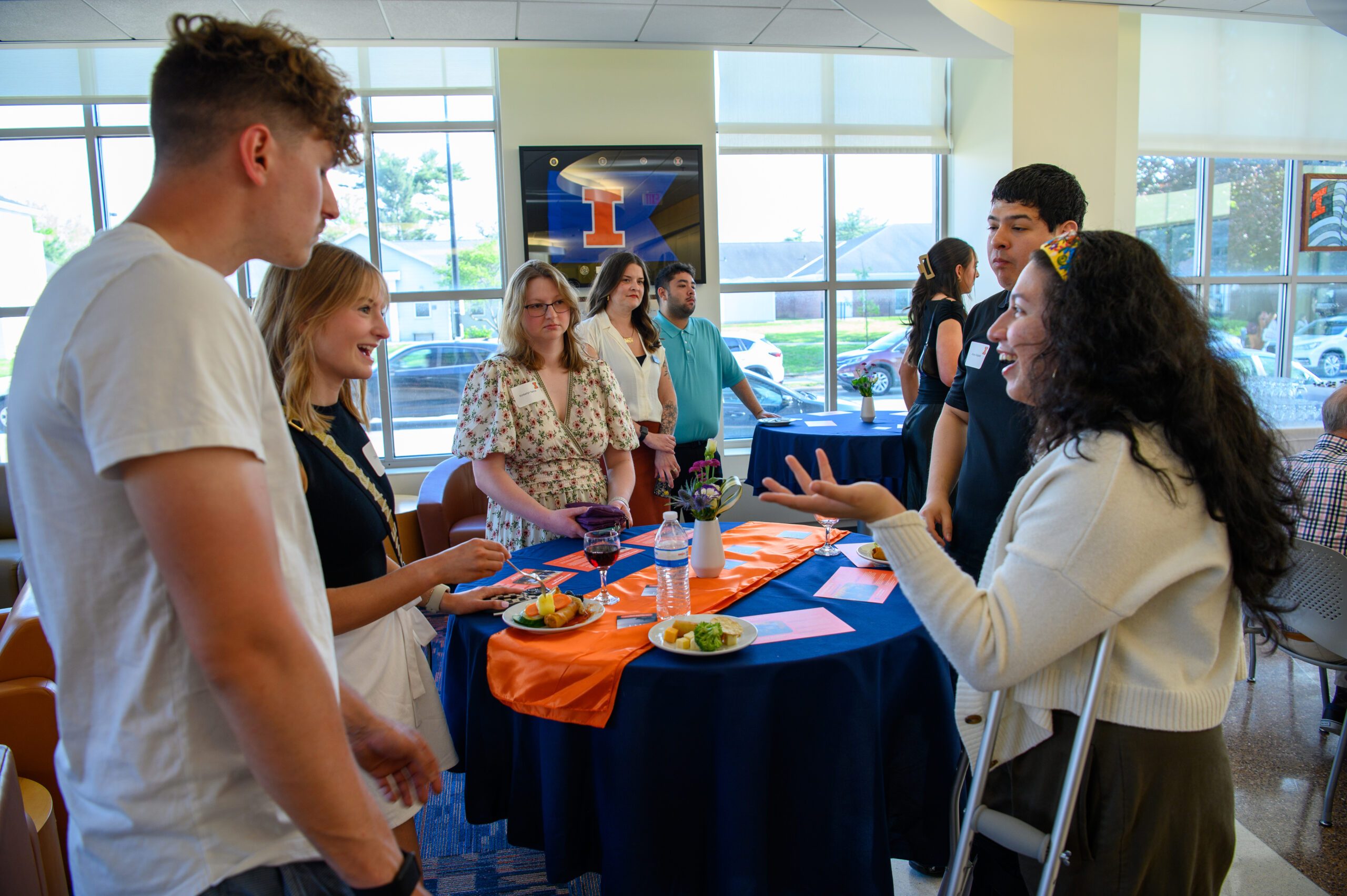
One Winter Night is an annual event that provides a powerful opportunity for our community to learn about homelessness, raise awareness for our friends without an address, and experience a bit of what it might be like to be outside, overnight, in the cold

As a faculty member, you can hope that your course will make a lasting impact on students, and you hope they’ll learn from it. But the lofty, sometimes-elusive goal is that students will come away feeling that they can make a difference in someone’s life by utilizing what they’ve experienced.

That is the aim of RST 460 Event Management, and RST 465 Event Implementation and Evaluation. The two-course, event capstone series, taught by Teaching Associate Professor Mike Raycraft and adjunct instructor Robyn Deterding in the Department of Recreation, Sport and Tourism, examines the core basics from idea generation through initial planning stages, according to the course description, and then through execution. The two-course sequence was introduced into the curriculum three years ago.

The event planning classes involve students working with one of 13 local agencies (such as the Champaign Park District, the Parkland College Office of Student Life, University Housing at Illinois, Research Park, and Don Moyer Boys and Girls Club) to develop and plan an event from conception to execution. The students work in groups of anywhere from three to 17, depending on size of the event, and then they have deliverables to the instructor (Raycraft and Deterding), as well as to the agency liaison.

“The students do an amazing job,” Deterding said. “Part of this (course) is we’re trying to get them ready; these are senior-level students, so they’re going to be going out and doing their internships (next).”

For example, one project RST students are working on currently is One Winter Night, CU at Home’s annual fundraising event that gives the community the opportunity to raise awareness of homelessness.

“They do everything from marketing to (managing) the volunteers to management of the box dwellers,” Deterding said. “It just it depends on what (CU at Home Community Outreach and Development Director) Rob (Dalhaus) needs and what his team needs.”

“I decided to work with CU at Home because driving through Chicago you can see people sleeping outside, in tents, and under bridges,” said RST senior Diego Acosta, one of the five students working on the One Winter Night event. “I always find it really sad to see people living outside, especially in the harsh Chicago winters. So when I saw the opportunity to work with an organization that provides resources to people in that situation, I immediately jumped on board.”

For the first time this year, One Winter Night—which because of heavy snowfall moved its main location in downtown Champaign to the parking lot north of event headquarters, The Venue CU, 51 E. Main St.—will have a satellite site on the Quad on the UIUC campus, Dalhaus said. “I am super excited for the One Winter Night event mainly because this is the first year CU at Home is partnering with the University of Illinois and hosting a satellite location on the Main Quad as well as the original location in downtown Champaign,” Acosta said. “I am really excited for the university community to be able to witness the event and hopefully even participate.”

On Feb. 4, when the event is scheduled to take place, RST students will be on hand at both the main One Winter Night site and the Quad. But the culmination of the event is just the final step in a long process, with heavy involvement from the students.

“One of the students is helping put together PowerPoint presentation of all of our business sponsors that will be played throughout the night of the event,” Dalhaus said. “We’re actually livestreaming the event for 13 hours, so we’ve got a student working on that, putting all the business sponsors on the slides. We’ve got one student that’s focused on hospitality that night, so overseeing all of the food and drinks and those types of things that’ll be at the event headquarters. We’ve got a couple of guys working on kind of social media presence. We’ve got another student who is helping out with registration. We’ve got another one that’s going to be helping with accounting that night.”

Dalhaus expects approximately 150 people to turn out on Feb. 4, but expects that more people will be involved and donate, thanks to the livestream.

“Adding the live stream, adding the online giving, adding Venmo, those types of things have really expanded our abilities to collect those donations,” he said.

For Acosta, the chance to work on a “real-world event” was one of the most important parts of the capstone courses.

“It is not a made-up event that I have created and need to write a paper on it,” Acosta said. “I am a big fan of real-world work compared to traditional schoolwork. The classes also expose students to organizations that they may not even know existed. In my case, I had no idea CU at Home was an organization before taking the classes. I am glad I can help them organize such an important event to be able to help the Champaign-Urbana homeless community.”

Editor’s note:

To reach Nancy Averett, email naverett@illinois.edu.
 

Share on social

Related news

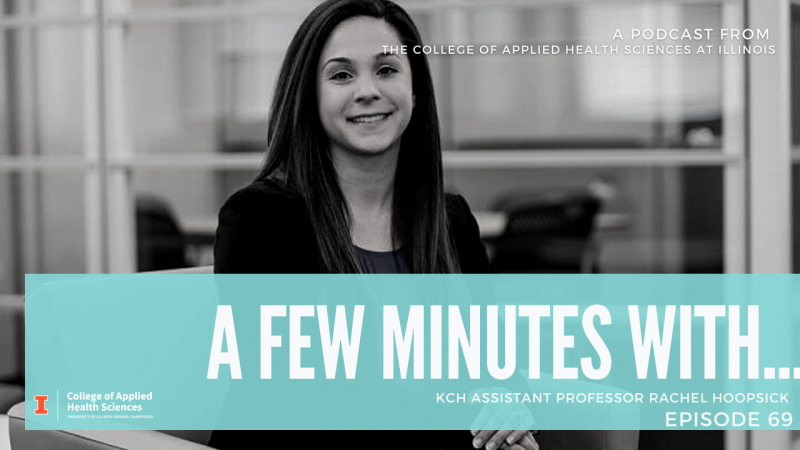
A Few Minutes With … Rachel Hoopsick


Transcript

VINCE LARA: Hi, and welcome to another edition of A Few Minutes With, the podcast that showcases Illinois’ College of Applied Health Sciences. I’m Vince Lara and today I’m speaking with KCH Assistant Professor Rachel Hoopsick about her research inspiration, dealing with the pandemic, and her current projects.

Rachel, so commonly when I do these interviews, I ask people what inspired them to choose their path. And so I’d like to start off with that. How did you decide you wanted to be a teacher? Did you always want to teach and go down this line?

RACHEL HOOPSICK: Oh, gosh. Yes and no. So I was always interested in health and health care. But I think that the idea of being a University professor was completely out of the realm of possibilities for me as far as what I would be doing when I grew up. So I was the first person in my family to go to college. So I didn’t grow up with role models around me in this type of a career. So as a young child, my dad worked in a factory that manufactured vehicle engines, and my mom worked in an administrative support role at a chemical manufacturing plant. So as a first-gen student, I ended up finding myself working as a tutor a lot. And partly, it was out of interest in teaching, but it was mostly out of necessity to support myself. So once I finished my master’s degree in public health, a colleague of mine took a chance on me and hired me as an adjunct instructor to teach health courses. And I continued to adjunct while earning my PhD. And here I am nine years later with a wealth of different teaching experiences that I have wholeheartedly enjoyed. And I eventually became a health education specialist and also briefly worked as a health educator in a program that served pregnant women with substance use disorders. So collectively, all of those experiences made me realize that I enjoyed all of the different aspects of public health, including research, practice, and teaching.

VINCE LARA: Now, why did you pick your line of research? I’m always interested in that. Was there something in your past, was there something in your history that made you decide, this is what I want to study, and this is what I want to look at?

RACHEL HOOPSICK: Sure. So I grew up in a fairly low-income neighborhood in New York State that was just absolutely decimated by the opioid overdose crisis. And those communities were just riddled with social and environmental justice problems. And looking back, that’s probably how I ended up in public health and researching substance use in mental health specifically.

Most of the research on substance use and mental health tends to focus on individual-level risk factors, so meaning the characteristics or attributes of the person that put them at risk for problematic substance use or poor mental health. But we don’t live in bubbles. People don’t live in bubbles. So in my research, I try to consider other factors, so how our relationships with other people affect our health, the communities that we live in and the resources and social norms within those communities, policy-level factors and how that shapes our outcomes, including the war on drugs, and organizational-level factors. So what are the practices, programs, and policies in workplaces that affect our risk and resilience to psychiatric problems? And I think to that end, my work has focused primarily on populations with high-stress occupations and life circumstances.

So military-connected families obviously deal with a lot of stress. And serving in the military is a stressful occupation. As a PhD student, I was fortunate enough to be able to start working on my mentors cohort study that followed military-connected families over time, focusing on their mental health and substance use across the lifespan. And that experience really solidified for me my interest in working with populations with high-stress occupations, because I think that there are a lot of practical things that we could and should be doing in workplaces to protect the health and well-being of workers beyond just addressing hazards to physical health.

VINCE LARA: I gotcha. Now, you said you’re from Upstate New York. You’re from Buffalo, if I can say that. So why the University of Illinois? You lived in a cold place. You came to another cold place. So you weren’t looking for a lifestyle change, necessarily. But what about UIUC drew you here?

RACHEL HOOPSICK: I will say this– that we do get much more snow in Buffalo, so this is actually a step up in climate for me. So this is great. All joking aside, the University of Illinois, and I think the Department of Kinesiology and Community Health in particular, made it really easy for me to know that I was accepting the right position when I was looking for a faculty position in public health. So I interviewed for multiple positions across the country and was really struck by U of I and how different they were from most of those other institutions, and particularly with respect to both diversity and the role of public health within those institutions.

So now, when you think about the time that we’re living in, we’re really going through a reckoning with the legacy of systemic inequity, racial injustice amidst a global pandemic. So it was really imperative for me to be a part of an institution that shares my values. And in my interactions with faculty, staff, and students in the College of Applied Health Sciences, it became really apparent to me that by accepting a position in kinesiology and community health, I would be stepping into a role where kindness and compassion are valued and public health is paramount. So I absolutely love the U of I community.

VINCE LARA: That’s great. Speaking of COVID and speaking of– yeah, I mean you–

RACHEL HOOPSICK: How could we not go there?

VINCE LARA: Exactly you almost cannot bring it up, right? So as an epidemiologist what has surprised you most about COVID and how people have dealt with it?

RACHEL HOOPSICK: I have many thoughts about COVID as an epidemiologist. So I think the most surprising thing about this pandemic is the way in which we, collectively as a country, are continuing to rely on a vaccine-only approach to the pandemic, which places the burden on the individual to protect themselves when there are a lot of other non-pharmaceutical interventions that we could also be leveraging in addition to vaccines. So in essence, we’re attempting to solve a collective public health crisis with individual-level measures only. And I think that strategy was a bit doomed from the start. So I’ll preface this by saying that my perspective here is shaped not only by my experience and training as an epidemiologist, but also as a parent of an immunocompromised child with complex medical needs who’s too young to be vaccinated. So from my perspective, we have many other tools in our public health toolkit to address this pandemic and do a better job at protecting our most vulnerable community members, but they’re severely underutilized, including mask mandates– although we’re fortunate here in the state of Illinois to have a state mask mandate, that is certainly not the case across the country. We could be leveraging vaccine mandates, expanding access to free masks and testing, and also thinking about socioeconomic measures like a temporary paid shutdown, hazard pay for frontline workers, temporary moratoriums on evictions and student loans. I think the list goes on and on. There are many other things that we could be doing to address issues around the pandemic that we’re not leveraging at least at this point. So I think what’s most surprising is not anything related to the virus itself. It’s doing exactly what viruses do. But for me, I think the surprising piece is more how our elected officials have chosen to address the problem, prioritizing economic factors over human factors.

VINCE LARA: Interesting. Speaking of that, speaking of our elected officials– so recently, there have been reports that the Biden administration has thought about at least advising a way for us to live with COVID rather than eradicating it. It doesn’t appear the virus is going anywhere. So are you of the opinion that we have to deal with living with COVID for probably years?

RACHEL HOOPSICK: So I think that, yes, we’re going to have to continue to deal with COVID-19 for an extended period of time. But I also really dislike the framing of this being the, quote unquote, “new normal.” So I don’t think that, as a society, that we should be normalizing our hospitals being overflowed and being stretched beyond their functional capacity. We shouldn’t be normalizing poor access F to testing and quality masks. And we certainly shouldn’t be normalizing mass death to the tune of thousands of people per day dying from coronavirus.

So learning to live with the virus, I think, requires you to ignore all of these things that collectively are very traumatic. We are nowhere near reaching a level of endemicity or– that is, COVID-19 is not an endemic state or at being at an ongoing low level. We are very much in a surge right now. And it’s actually the worst point of the pandemic so far as far as cases per day.

So I think instead of learning to live with things the way that they are, we also need to be thinking about implementing policies that shape a better normal from where we are right now. A lot of the folks shaping policy that frames the acceptance of this ongoing mass infection, disability, and death are also the same folks who have the luxury of being fully vaccinated, having easy access to masks and testing, and who are able to safely work from home.

We need to demand a public health response that considers some of our most vulnerable people in our communities, so thinking about front-line workers who are working in unsafe conditions, thinking about disabled and immunocompromised people, and also thinking about our children, most of whom are not fully vaccinated. So I think that in this framing of the pandemic, we need to be lifting up the voices of those people instead of normalizing the pandemic itself.

VINCE LARA: I think there’s been a big question about how to reach the people who are vaccine-hesitant, let’s say, who are maybe subject to misinformation or just don’t have the ability to get the information they need. And I’m wondering how– and I’m sure you get questions, given what you do, about vaccines. How do you reach those people, and what do you tell them?

RACHEL HOOPSICK: Sure. Number one, I would say that if you are waiting for the science before you get vaccinated, we have it. It’s here. More than 9 billion doses of the COVID-19 vaccines have been administered globally, and it is the best individual action that you can take to protect yourself against severe illness, hospitalization, and death. But unfortunately, many people do remain unvaccinated, including all children under age five who are currently ineligible for COVID-19 vaccination at this point. So those trials are still ongoing.

But I do want to point out that throughout the pandemic, not all of the people who are unvaccinated are truly vaccine-hesitant. So we’ve had some real problems with vaccine equity and reaching populations in underserved communities, particularly when you think about front-line workers who might be unable to take time off of work to receive a vaccine or who are unable to get time off of work to rest after the vaccine. So we know that many people feel a little under the weather after their first or second dose or even the booster. And more importantly, many of the people who are working in front-line jobs also can’t afford to take unpaid time off of work to either get the vaccine or recover from it.

So there’s a lot more that we can do to reach these populations. And there are a number of different policies that we could put into place to make vaccination less burdensome. And on a global level, we have even worse issues related to vaccine distribution. Much of the Global South remains unvaccinated or only partially vaccinated. So here we have a real need to address patent issues around the manufacturing of the vaccines to create better vaccine equity on a global level, which will be absolutely critical to eventually, hopefully, ending the pandemic and the ongoing new variants of concern. We have to think about this issue on a global scale.

VINCE LARA: Illinois is an R1 university, as you know. And so the projects that you’re working on are always top of mind for researchers. So what projects are you currently working on that you’re excited about? I’m sure you’re all excited about all of them, but–

RACHEL HOOPSICK: Yeah. So I’ll briefly tell you about– there are three major projects that I’m working on at the moment, two of which I carried over with me from the university at Buffalo. So right now, I’m currently a co-investigator on a study called Operation SAFETY, which stands for Soldiers And Families Excelling Through the Years. So this is a longitudinal study of the health and well-being of US Army Reserve and National Guard soldiers and their partners. And that study is primarily focused on substance-related outcomes and is funded by the National Institute on Drug Abuse.

A second study that I’m a co-investigator on is a longitudinal study that compares the outcomes of people who use opioids, who are participating in the nation’s first opioid intervention court, to people who are participating in a traditional drug treatment court program. So when you think about drug treatment court programs, oftentimes they can be seen as coercive. And there are some punitive measures that are involved. So for example, in traditional drug treatment court, if an individual who uses opioids tests positive for opioids during the course of their participation in that program, the judge may sanction them and send them to jail.

So in Buffalo, New York, they have implemented an opioid intervention court which takes a little bit more of a public health approach to addressing the opioid overdose crisis in that region. So the court system there recognized that traditional drug treatment court was not working because they had so many court participants who would die, fatally overdose between their visits with the court judge. So they implemented a new program that puts rapid access to evidence-based treatment at the forefront and really gets rid of those punitive measures like sending someone to jail for continuing to use that substance. So that’s the second project that I’m working on from the University of Buffalo. Something brand new that I’m working on here at the University of Illinois with some lovely undergraduate research assistants from our department here in Kinesiology and Community Health is a pilot study focused on health care worker stress. So working in the health care industry was, I think, a stressful occupation even prior to the COVID-19 pandemic. But now it is just– the stress working in the health care industry has exponentially increased.

So our team is working on a pilot study that will examine the social and environmental influences on substance use, mental health, and suicidality of people who are working in health care settings, particularly as it relates to all of those workplace policies, programs, and practices that are implemented or not implemented during the ongoing COVID-19 pandemic. A bit of what we know about health care workers already with respect to substance use and mental health has really focused on physicians.

So we know that burnout is really high among physicians, and physicians are at risk for suicide and addiction and other psychiatric problems. But I would also argue that physicians are also in a very high-wage occupation. They have much more social capital, more resources and support and autonomy over their positions than many other people who are also working in health care settings.

So through this pilot study, I’m hoping to gather data from a range of health care occupations, including those low-wage health care occupations, so thinking about perhaps certified nurses’ aides, LPNs, dietary staff, housekeeping and maintenance staff. So these are other people who are also collectively experiencing this very stressful pandemic working in a high-risk, high-stress occupation but who don’t have as many systems and support in place, perhaps, as physicians might. So this is my next new, exciting project. And I have a really great team of folks who are working with me to make this happen.

VINCE LARA: That’s great, Rachel. Thanks so much for taking the time to talk with us today.

RACHEL HOOPSICK: It was wonderful. Thanks for chatting with me as well, Vince.

VINCE LARA: My thanks to Rachel Hoopsick. For more podcasts on Illinois College of Applied Health Sciences, search A Few Minutes With on iTunes, Spotify, iHeartRadio, radio.com, and other places you get your podcast fix. Thanks for listening, and see you next time.

Editor’s note:

To reach Vince Lara-Cinisomo, email vinlara@illinois.edu.
 

Share on social

Related news

Mejia plans voice-assistant study at the McKechnie Family LIFE Home


Shannon Mejía.

The newly dedicated McKechnie Family LIFE Home is getting ready to play host to several research opportunities for graduate and undergraduate students in 2022.

As with most of the research agenda for the LIFE Home, the focus is to support healthy aging in midlife and older adulthood. KCH Assistant Professor Shannon Mejia is spearheading some of the research opportunities, including one that involves a voice assistant that guides participants through a study.

“We’re testing ideas that people, in the future, are using these types of devices to provide task assistance,” Mejia said.

Mejia said she and a collaborator—Jesse Chin, an assistant professor in the School of Information Sciences—are studying the outcome of enrichment seeking, which she describes as “the process of this willingness to go out and challenge yourself” as opposed to the idea of learning to dependence.

“Your entire room is connected and automated, or your kitchen is automated … Why cook for yourself when your voice assistant and kind of run the show for you?” Mejia said.

But Mejia said the objective is to provide conversations with a voice assistant that is “supporting the motivation to be independent.

“So, even though you could ask (the voice assistant) to turn on a light for you from the nature of your interaction with her you’d almost be compelled to try to do it yourself.”

Starting in February, some 70 participants will be going through the LIFE Home five days a week, Mejia said, led by a voice assistant, taking part in a series of games designed to cognitive well-being, on a tablet. The voice assistant will guide participants through the games and gauge their feelings after each game.

The study participants will spend about two hours in the LIFE Home dining/living room area and the home office. The LIFE home mimics a natural environment and the home illusion, , Mejia said, allows us to accurately measure participants’ cognitive and emotional responses during the study.

The hope, Mejia said, is that they conduct science that can optimize voice assistant technology so that it can encourage more exploration over exploitation and build independence.

“Then, even as people are bringing technology into their home, they can do it that could, in a way, increase independence,” she said.

Editor’s note:

To reach Shannon Mejía, email stmejia@illinois.edu.
 

Share on social

Related news

KCH researchers get grant to help Community Health Workers


For Department of Kinesiology and Community Health researchers Andiara Schwingel and Susan Aguiñaga, the concept of helping place Community Health Workers has a personal meaning.

Schwingel, a KCH associate professor, and Aguiñaga, an assistant professor in KCH, recently received a grant of $100,000 for their project entitled, “Online Certificate Programs for Community Health Workers: From Overlooked and Under‑Researched Employees to Well‑equipped Frontline Agents in the Fight to Reduce Health Disparities in Communities of Color. Drs. Schwingel and Aguiñaga plan to establish a coalition that includes Community Health Workers (CHWs) and other stakeholders to develop, evaluate, and disseminate online learning strategies through certificate programs that will train CHWs to address community health needs.

CHWs are full- or part-time employees of health systems. With at least a high school diploma, CHWs receive on-the-job training and work in multidisciplinary teams focused on primary health care, prevention, and health promotion, the researchers said. Although the CHW model is widely utilized across the globe, the U.S. and Illinois have only recently begun to recognize its importance and develop the infrastructure that supports these grassroots health workers. No online training is currently available in Illinois, a gap that Schwingel and Aguiñaga said they want to fill. Illinois is currently developing recommendations for training and certification programs, and, the researchers said, significant progress has been made in Illinois where House Bill HB5412 passed in February 2021, building momentum for CHWs training and this project.

The researchers sought the grant because they believe CHWs are ideal members of collaborative healthcare and prevention teams working with vulnerable populations and underserved communities as they complement the work of formally trained healthcare professionals.

“As I have lived in many different countries, I am very familiar with universal health care systems that adopt the CHW model,” Schwingel said. “I have seen firsthand the important role they play at community settings as frontline workers visiting homes, being a resource and serving as the go-to people for the community. They also carry the voices and opinions of community members to local healthcare teams. I have seen how effective CHWs are in bringing people to clinics for immunization programs and health promotion events.”

Schwingel said she was motivated to address healthcare systems when she moved to the United States about 12 years ago.

“I found that through my research I could contribute to addressing disparities in health by testing the feasibility of using the CHW model with Hispanic communities in this country.”

Schwingel said her goal is to greatly increase the number of CHWs locally.

“That way, when my research funding ends, the community is left with important human resources to continue the endeavors. Over the years, I have experienced a number of challenges working with volunteer CHWs due to the lack of a state/national reimbursement system for these workers. Nonetheless, my interest has only grown, and I have seen increasing interest in this space by grass roots organizations, healthcare employers, and even state and national agencies.”

One of the vital parts of building a CHW pipeline in Illinois is that the CHWs know well and have easy access to hard-to-reach groups such as historically underrepresented populations of African Americans and Hispanics (which includes undocumented individuals), the researchers said, adding that CHWs are members of the communities that they serve, they share culture, language, income, and life experiences. The CHWs can serve as liaisons between health and social services, especially as the percentage of the underrepresented population rises; in fact, by 2050, that population projects to represent 43 percent of the state and national population by 2050.

The researchers said they will work with partners such as the University of Illinois Extension, the Illinois Community Health Workers Association, a group of CHWs that serve African American and Hispanic communities, and a group of CHW employer organizations.

Schwingel and Aguiñaga also plan to use what they call a “culturally and linguistically sensitive approach.” For two women of color, that is especially important, Schwingel said, calling it a “transformational” process.

“It makes use of a patient’s language and culture as tools to improve outcomes for that individual. By tailoring services to an individual’s culture and language preference, health professionals can help bring about positive health outcomes for diverse populations,” she said.

Editor’s note:

To reach Andiara Schwingel, email andiara@illinois.edu.
To reach Susan Aguiñaga, email saguina2@illinois.edu.

Share on social

Related news

Stodolska, Shinew get grant to combat systemic racism in access to nature


Undergraduate and graduate students Fredy Quevedo, Lateshia Dove, Jared Gleason, and Kristel Ong are actively involved in the study.

Two researchers from the Department of Recreation, Sport and Tourism in the College of Applied Health Sciences are among the recipients for this first year of Call to Action funding from the Office of the Chancellor.

RST Professors Monika Stodolksa and Kim Shinew received a grant of $93,428 for their project entitled, “Combating Systemic Racism in Access to Nature, Open Spaces, and Parks and Recreation.” Drs. Stodolska and Shinew plan to give a formal evaluation of continuing efforts by the Urbana Park District (UPD) to increase access to nature and recreation opportunities among diverse residents, as well as create a blueprint that can be shared nationwide on how to dismantle systemic racism and increase access to nature and recreation among people of color.

Parks and recreation services play critical roles in making neighborhoods and cities livable, the researchers said, helping to improve mental and psychological health, increase physical activity, decrease obesity and hypertension, and increase community pride. The critical roles of nature and recreation in people’s health and wellbeing have been underscored by the COVID pandemic, Drs. Stodolska and Shinew said.

Data collection is underway and undergraduate and graduate students Fredy Quevedo, Lateshia Dove, Jared Gleason, and Kristel Ong are actively involved in the study.

Drs. Stodolska and Shinew said the study builds on the research project their team conducted in 2016-2017 that evaluated the needs, interests, benefits, and constraints regarding the utilization of Urbana Park Districts’ programs among underserved residents. This area of research is important, they said, due to historical and contemporary systemic racism and exclusionary practices that have caused people of color to have fewer opportunities to access recreation services and natural environments at the community and national levels, making them less likely to obtain the physical and mental health benefits these types of experiences provide.

The previous study, Drs. Stodolska and Shinew said, showed that constraints such as fees, transportation, racial tensions, lack of knowledge of opportunities, safety, and language barriers negatively affected minority residents’ ability to access parks and recreation programs.

Thanks to the results of the researchers’ previous study, the UPD has, over the past four years, implemented a number of steps to improve the provision of their services to underserved residents that included the establishment of the new Outreach and Wellness Division, staff diversity trainings, development of a new action plan, translation services, multi-language signage, restoration of local parks, changes in marketing campaigns, new programs delivered on-site in low-income underserved neighborhoods, targeted outreach efforts, and a new “You Belong Here” campaign.

The UPD also was able to leverage resources from local grants to provide on-site scholarships to reduce the cost of recreation programs for low-income residents, the researchers said. The UPD staff estimated that the new outreach efforts resulted in more than 2,000 “new” users—mostly African American and Latinx children—being able to access play opportunities, recreation programs, and nature in Champaign County.

“Such efforts undertaken by the UPD are pioneering and, thus, have the potential to serve as a model for recreation agencies across the U.S. on how to dismantle obstacles to accessing nature and recreation opportunities that have roots in the historical systems of oppression,” Drs. Stodolska and Shinew said.

Editor’s note:

To reach Vince Lara-Cinisomo, email vinlara@illinois.edu.
 

Share on social

Related news

Aguiñaga looks at the benefits of dance


Can dancing slow cognitive decline and improve health of middle-aged and older Latinos?

Can dancing slow cognitive decline and improve health of middle-aged and older Latinos? That’s something that KCH Assistant Professor Susan Aguiñaga is seeking to find out.

Aguiñaga has a new publication entitled, “BAILAMOS With mHealth Technology! Improving Physical Activity and Well-Being in Middle-Aged and Older Latinxs: A Pre–Post Feasibility Study” in the journal Health Education and Behavior. Aguiñaga and her collaborators looked at the physical activity and health outcomes of middle-aged and older Latino and Latina adults in BAILA TECH—an intervention that combines the BAILAMOS™ Latin dance program with mobile health technologies (such as a Fitbit Charge 2). The study found that participants in the intervention increased physical activity and fitness levels, social support, quality of life, and executive function.

BAILAMOS™ (Balance and Activity In Latinos, Addressing Mobility in Older Adults) is a Spanish-language, Latin dance program for older Latinos that was created by Dr. David Marquez at the University of Illinois at Chicago and Miguel Mendez, a professional dance instructor, Aguiñaga said.

For Aguiñaga, a Latina, the study is personal.

“I have witnessed how the social determinants of health create disparities that negatively impact my Latino community,” she said. “As a physical activity researcher, I know that many health disparities can be ameliorated through physical activity. I have chosen to create physical activity interventions that are community-based and culturally responsive for Latinos to reduce the burden of disease in this population.”

Aguiñaga said the study aim is to increase Latinos’ physical activity levels and improve cognitive performance and/or slow cognitive decline in this population that is at high risk of health disparities, and particularly increased risk of developing Alzheimer’s disease.

Aguiñaga said the most surprising result was an increase in 34 minutes of moderate-to-vigorous physical activity at post-testing. The data was collected in Pilsen, a predominantly Mexican neighborhood in Chicago, she said.

The next step, Aguiñaga said, is to assess the efficacy of combining BAILAMOS™ with a culturally tailored diet program to see if it improves cognition further in middle-aged to older Latinos.

Editor’s note:

To reach Susan Aguiñaga, email saguina2@illinois.edu.
 

Share on social

Related news

It’s not a Stretch to see future opportunities for this robot


The project involves the use of Stretch, a research robot designed for homes

Kinesiology and Community Health Professor Wendy Rogers is no stranger to robots.

She began working with robots more than two decades ago at the Georgia Institute of Technology, where she was a professor in the School of Psychology, and director of the Human Factors & Aging Laboratory. It was at Georgia Tech where Rogers connected with Professor Charlie Kemp, director of the Healthcare Robotics Lab at Georgia Tech.

Now the two are collaborating on a robot that can help people age in place, a vital part of Rogers’ research agenda.

Rogers and her collaborators, which include Dr. Harshal Mahajan and Dr. Travis Kadylak from KCH, received a Phase I Small Business Innovation Research Grant from the National Institute on Aging—a division of the National Institutes of Health—for a project entitled, Stretching Their Reach: Robotic Support for Domestic Activities for Older Individuals with Mobility Limitations.

Rogers is the Principal Investigator for the University of Illinois, and Dr. Aaron Edsinger is the Principal Investigator for Hello Robot, the company he co-founded with Kemp. The grant amount is $256,064. The project involves the use of Stretch, a research robot designed for homes. The research will identify home tasks for which support is needed; develop tools to enable Stretch to effectively perform these tasks; and design an easy-to-use interface that older adults can use to control Stretch to carry out their desired tasks.

Developed by Kemp and Hello Robot co-founder Aaron Edsinger, former robotics director at Google, Stretch weighs about 50 pounds and costs less than $20,000. A robot resides at the McKechnie Family LIFE Home, which Rogers directs, where researchers are assessing how Stretch can support tasks around the home, investigating facilitators and barriers to usage, comparing different ways of controlling the robot, and determining the level of instructional support necessary to make it user friendly.

When Kemp and Edsinger created Stretch, it was immediately clear to them who they wanted to work with.

“Dr. Rogers was one of the first people Hello Robot spoke with when we were exploring viable research and commercial paths for Stretch,” Edsinger said. “Dr. Rogers and her team are doing incredible work to support the independence of people aging in place. We thought Stretch would be a great tool to advance her team’s research on robots as assistive devices.”

In fact, in a new course offered this semester at Illinois called Human-Robot Interaction in Community Health, Rogers is focusing on how robots can be used to improve health and well-being in populations with diverse needs and abilities.

Edsinger said the goal of the SBIR grant is to “demonstrate the feasibility of Stretch as an assistive device for older adults with mobility and cognitive impairments. We plan to obtain feedback from older adults and explore tasks and tools that could be beneficial. These will be valuable steps towards our long-term goal of assisting older adults with disabilities.”

Edsinger even sees potential commercial applications for Stretch.

“Stretch is intentionally designed to be used around people. We envision a future where Stretch is a platform that equips people to create a variety of businesses with mobile manipulators.”

One thing is certain; this collaboration between Hello Robot and Rogers is not the last.

“Hello Robot deeply respects the work Dr. Rogers and the Illinois team are doing to promote the independence of adults aging with physical and cognitive disabilities,” Edsinger said. “We hope that this is just the beginning of a long-standing collaboration to advance the usefulness of robots as assistive devices in people’s homes. “

Share on social

Related news

Husain sees use of brain imaging as vital to studying hearing disorders


Department of Speech and Hearing Science Professor Fatima Husain received $125,000 in seed grant funding from the Discovery Partners Institute for her proposal titled “Hearing Health Institute.”

Fatima Husain’s grant will allow for the collection of brain imaging data (Photo by Brian Stauffer)

The main objective for Husain’s proposal is to establish an international center of excellence for hearing research that transforms the field by using artificial intelligence and Big Data to translate research into practical clinical solutions.

“I think insufficient resources (are being) directed towards studying hearing disorders using brain imaging,” Husain said. “The idea, the crux of it (is), can we create a public repository of previously-collected brain imaging data of individuals with normal hearing and various hearing disorders Brain imaging can be very valuable but it is also expensive. It’s extremely insightful in a condition like tinnitus, which is a subjective disorder. It can be very helpful in figuring out the impact of hearing loss and aging and differentiating between the two.”

Husain’s team will develop AI and Big Data tools to address three main areas: (1) prediction of clinical outcomes to motivate early intervention, (2) biomarker development to accelerate development of new and effective treatments, and (3) developing patient-centered treatment strategies to restore healthy hearing especially targeting underserved communities.

The idea of Big Data comes in with the creation of the Hearing Health Institute, which will allow for the collection of brain imaging data from about 500 study participants with partner institutions such as Northwestern University and Washington University in St. Louis, Husain said. The team intends to expand the repository by bringing in other affiliate labs.

“We are not just focused on only the hearing aspect of it. We have acquired data from a number of questionnaires testing different things. Other labs may have a lot more of neuropsychological workup, for instance. This additional data is necessary to make sense of the brain images and to compare groups. The images by themselves are not very useful. The metadata about patient characteristics along with the brain imaging big data will allow us to accelerate translational research.”

Another focus for the Hearing Health Institute is to motivate early intervention, Husain said. According to one large-scale longitudinal study Husain cited, as you get hearing loss you seem to cognitively age earlier.

“The idea then, is can we mitigate this kind of cognitive impairment by giving early intervention? By giving amplification earlier, how does it help? (What) we want to do with HHI is to map changes in brain function across the lifespan as a result of hearing loss and include intervention studies where available.

“Like among 55-year-olds, for instance, they show people with hearing loss tend to be slower at doing certain tasks. And that’s because they can’t hear very well. These are individuals with mild to moderate hearing loss who do not wear hearing aids yet. They have slightly different emotional network engagement and other possible changes. So if we map this out a little better it will motivate, perhaps, early interventions.”

Husain’s project also wants to find a way to better serve underserved communities.

“We’re trying to have a sort of the summer internship program, if everything goes well, next summer. And, we are trying to see if college students from Chicago and Champaign-Urbana, from underrepresented groups who have expertise is STEM and get them interested in hearing health and neuroscience.”

“We also want to partner with corporations to devise cheap solutions for hearing health, such as, smart phone-based apps.”

Editor’s note:

To reach Vince Lara-Cinisomo, email vinlara@illinois.edu.
 

Share on social

Related news

McKechnie Family LIFE Home opening a milestone for Wendy Rogers


Jim and Karen McKechnie are the primary donors for the McKechnie Family LIFE Home

Even for someone as accomplished as Kinesiology and Community Health Professor Wendy Rogers, the night of Oct. 7 represented a milestone.

Rogers has so many appointments and affiliations—she is a Khan Professor of Applied Health Sciences; she directs the Collaborations in Health, Aging, Research, and Technology, or CHART, initiative in AHS; the Health Technology Education Program, which offers a one-of-a-kind master’s degree in health technology; and the Human Factors and Aging Laboratory—that during her introduction for the dedication of the McKechnie Family LIFE Home on Oct. 7, College of Applied Health Sciences Dean Cheryl Hanley-Maxwell had to pause and catch her breath.

But with all the federal funding Rogers has received and the collaborations she’s sparked, the McKechnie Family LIFE Home holds a special and unique place for her.

The McKechnie Family LIFE Home is a cutting-edge research center focused on innovations in home environments. This facility mimics existing home dwellings as well as provides space for the development of next generation smart homes that would allow people of all ages and abilities to live fuller, healthier, and autonomous lives.

“I am delighted that the name of the facility is the Family LIFE Home because that is what home is all about—family,” Rogers said during the dedication ceremony. “Family has always been at the heart of my life and my work. I am the youngest of six children. I grew up in a small house in Massachusetts—we had eight people in a three-bedroom home with one bathroom—imagine that. We had no choice but to be close.”

Rogers said that of her inspiration for creating a facility such as the LIFE Home is that because of the support of her and her siblings, her parents were able to continue living until their final days in the family home.

“I remember when my Dad was near the end of his life (back in 2005) and we were all coordinating his care, he said to me, “We need more of that smart technology of yours,”’ Rogers told attendees of the dedication ceremony, which included University of Illinois Chancellor Robert Jones and Jim and Karen McKechnie, the primary donors of the LIFE Home.

“After he died and my mom, was alone we certainly relied on technology tools to remain connected with her and to provide the support she needed,” Rogers said.

That is Rogers’ goal for the McKechnie Family LIFE Home.

“Our vision is to develop technologies that can support quality of life in the home for everyone, people of all ages and abilities. We want to think about all of the activities that occur in the home from fundamental activities of daily living such as bathing, eating, mobility through to the enhanced activities of daily living such as social engagement, community participation, and lifelong learning.”

For Chancellor Jones, the opening of the facility was the culmination of what the university sought in bringing Rogers aboard.

“Professor Rogers, in some ways, today marks the completion of a full circle for the two of us,” Jones said. “I had the honor of speaking at your investiture ceremony just a few months after I came here to Illinois. You were recruited here under one of the initiatives laid out in the university’s Visioning Future Excellence strategic plan. And now, just four years later, we can draw a bright and clear line from that starting point to today’s dedication of the McKechnie Family LIFE Home.”

To an observer, the LIFE Home looks like someone’s home: it has two bedrooms, a bathroom, an open-concept kitchen—we all know, thanks to HGTV how popular that is these days—a living room, dining room and even some green space outside. But the LIFE Home is foremost a research facility. The site is available for use by researchers from within and outside the university, or for collabortions with companies who want to use the facility to conduct research and test new products.

You can find more information about the McKechnie Family LIFE Home here.

“It is a space in which researchers from across the campus, industry partners, healthcare providers, and community stakeholders can come together to develop and test technologies that support all dimensions of healthy, socially connected, independent living,” Dean Hanley-Maxwell said.

Chancellor Jones praised the McKechnies for their generosity and said, “I don’t think there are any more visible examples of the impact of private investment in public universities. These gifts are direct investments in ideas and in human potential. They are feeding the true heart of this college and this university.”

And as much as the dedication ceremony of the facility proved to be a key step, Rogers said there was much still to do.

“It really has been a labor of love –we are all passionate about improving people’s quality of life and believe in the potential of this space to support that mission. This is only the beginning.”

Editor’s note:

To reach Vince Lara-Cinisomo, email vinlara@illinois.edu.
 

Share on social

Related news

Illinois alum finds ‘Amazing way to give back’ through caregiving, internship


Caregivers often lack the resources and time to properly care for themselves

Denise Brown and Katherine Lim attended the University of Illinois more than three decades apart, but they have plenty in common.

Both Brown, an Illinois alum, and Lim, a senior in the Department of Kinesiology and Community Health, are caregivers and have a desire to give back. That is where they intersect.

Brown, who graduated in 1985 from UIUC’s College of Liberal Arts & Sciences, now operates the Caregivers Years Training Academy, where Lim interned this past summer.

The idea of caregiving has long been a way of life for both.

Brown has been a caregiver, and currently takes care of her dad (90 years old) and mom (87). She started supporting caregivers in 1990.

“I launched my first business with a newsletter for family caregivers called Caregiving,” she said. “And then I launched an online caregiving community in 1996, which I managed and operated through March of 2020.”

For Lim—who calls herself a 1.5 generation Korean immigrant, meaning she was born in Korea but came to the United States when she was little—caregiving is a way of life.

“I think in Asian culture, caregiving for your elder relatives is almost a given,” she said. “And for me personally, I took care of my grandmother. And right now, I take care of my mother because since she can’t speak English, I make different vaccination appointments for her. I make other doctor’s appointments for her. I sometimes even read her legal documents for her. And it’s navigating through the system that I help her with.”

Despite their different upbringings and age gap, Brown and Lim both understand the challenges of being a caregiver.

“You are managing a fragile house of cards,” Brown said. “You’re trying to keep so many categories of your life moving forward, even as you are working your way through the health care system, which is complicated and overwhelming. You’re managing family dynamics, which can be just as difficult as the health care system. And you’re really doing what you can to manage your own stress. But there’s so many worries that the stress really is just, at some times, overwhelming throughout the experience.”

Lim agreed, calling the language barrier the one of the biggest issues.

“Most of the time, their relatives cannot speak English. So that’s one of the biggest ones. And within that, when they need to follow them to physician appointments, the medical vocabulary—they don’t have an M.D. degree in another language. So it’s very hard for them to translate that into their native language accurately because they actually might know very little of it, or none.”

Lim also cited technological barriers and diet as hurdles for caregivers.

“Relatives might be more used to their own cultural palate, and they’re cooking at home,” she said. “If they’re at a long-term care facility or aftercare centers, they have a hard time adjusting to the nursing home’s diet. And the facilities have difficulty accommodating all the different cultural foods for their patients. So they particularly have a hard time with diet. The intermediary solution is for their relatives to cook home-style meals, while meeting their nutritional needs at the same time, and then bringing it over to them.”

With these commonalities, it is not a surprise Lim sought to intern for Brown in the summer. Brown’s organization provides training to people who are caring for a family member, or have recently cared for a family member and their caregiving experience has ended.

“Katherine went through our training to become a certified caregiving facilitator, with the goal of creating support groups for students at U of I who might be worried or helping care for a family member, whether it be a grandparent, parent, or sibling,” Brown said.

For Lim, the idea of learning more about caregiving “really hit home.”

“I really wanted to dive in deeper on minority disparities in health care system through organizations that already take part in research. I think the internship (KCH Assistant Professor) and Dr. (Mina) Raj’s research was a great opportunity for me to actually learn more on the subject and help identify how I can give back to the community. I’m starting a registered student organization based on campus for student caregivers.”

For Lim, the internship has helped to shape her future.

“Learning through this research opportunity definitely has got me thinking about my future career path. I want to work towards improving the health care system and later on get a doctorate in this field. I think this research gave me a little taste in many more opportunities I can partake in the future to make an even bigger impact on this issue.”

For Brown, hearing Lim talk about her work on campus makes her smile. It’s the very reason she offers internship opportunities.

“I really feel blessed to be able to be a mentor to students at U of I,” she said. “I enjoy connecting with them. I enjoy hearing about their life as a student. And I feel proud to be able to impact not only their experience at U of I, but what their career path will be. And I think it’s really just an amazing way to give back.

“It’s a way to keep the relationship with the university in a way that creates all these wins. It’s a win for me to have an intern. It’s a win for the intern when they connect to a program that’s going to help them in their career path. And certainly, it’s a win for the university because of the relationship between someone like myself and an intern.”

Editor’s note:

To reach Vince Lara-Cinisomo, email vinlara@illinois.edu.
 

Share on social

Related news

College of Applied Health Sciences
110 Huff Hall
1206 South 4th Street
Champaign, IL 61820
(217) 333-2131